
Microsoft Aion Leak Shows Copilot-First AI Operating System


 3 min. read
  Published on
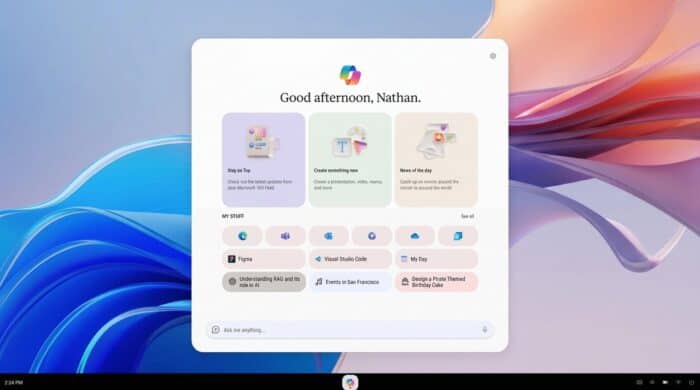
A leaked Microsoft Aion video reportedly shows the company exploring a dedicated AI-focused operating system, as Windows Central reports. The project, codenamed Aion, appears to place Copilot at the center of the desktop experience while relying on Microsoft Edge, web technologies, and cloud-first apps.
The video was reportedly first shared on the BetaWiki Discord server. Sources cited in the report claim the video is real, but allegedly dates back to 2024.
Microsoft Aion Leak Shows a Copilot-First Desktop
Aion appears to rethink the desktop around Copilot instead of traditional Windows apps.
The interface looks somewhat similar to Windows 11, with a centered Taskbar-like area and a Start menu-style launcher. However, the main input box appears to use Copilot as the core way to interact with the system, open files, apps, or websites.
This design suggests Microsoft was exploring a more agent-driven desktop, where users ask the system to perform actions instead of manually navigating menus.
Aion Reportedly Uses a Lightweight Win3 Codebase
The leaked video reportedly shows Aion running on a lightweight Windows codebase called Win3.
Win3 is described as a stripped-down version of Windows. Because of that, it reportedly does not support Win32 apps, which means traditional Windows desktop programs would not run on this version of Aion.
That limitation would make Aion very different from standard Windows 11. However, it could also allow Microsoft to focus on better battery life, stronger security, faster system updates, and a simpler web-first experience.
Without legacy Win32 app support, Aion would function more like a lightweight AI and web operating system than a normal Windows desktop.
The leaked details also suggest Microsoft explored another Aion version that runs on top of Windows 11. That version could support Windows apps because it would use Windows 11 as the underlying platform.
Spaces Could Reopen Groups of Apps and Websites
One of the most notable Aion features is called Spaces.
Spaces appears in the Taskbar-like interface and the Start menu-style launcher. The feature automatically groups apps and websites into buckets, allowing users to return to related sessions later.
For example, a user working on a project could reopen multiple relevant websites and apps with one click. This would make Aion feel more like a session-based desktop than a traditional app launcher.
The feature also fits Microsoft’s broader AI direction. Instead of simply opening apps, the system could understand work contexts and help users resume tasks faster.
Microsoft Has Not Announced Aion
There is currently no indication that Microsoft plans to ship Aion in the form shown in the leaked video.
The project appears experimental, and the video allegedly comes from 2024. Microsoft has not commented on Aion, and there is no confirmed release plan.
In other Microsoft news, Claude AI agent is coming to Teams, Teams is getting a new AI feature that will listen to meetings, and Copilot in Excel will receive better search capabilities.

Read our disclosure page to find out how can you help Windows Report sustain the editorial team. Read more



Improve this guide


User forum
0 messages