
ASRock Releases Beta BIOS to Address Ryzen 9000 Failures on AM5 Boards


 2 min. read
  Published on
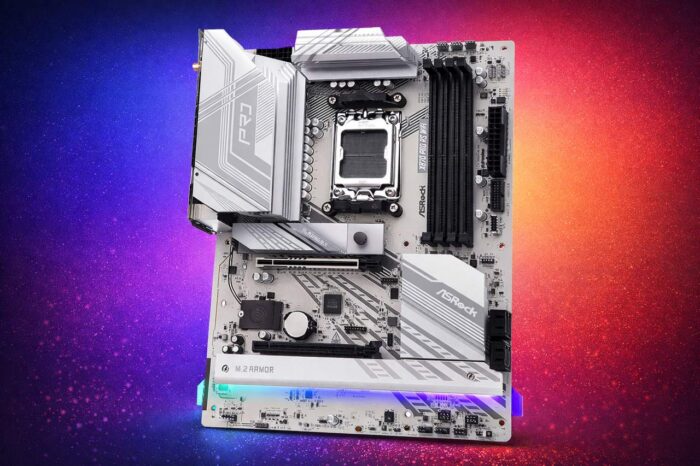
ASRock has acknowledged widespread Ryzen instability reports and quietly released a new beta BIOS aimed at addressing AM5 boot issues. As VideoCardz reports, the company has published BIOS version 4.07.AS01 for select AMD 800-series motherboards.
The update arrives after weeks of user complaints about Ryzen failures on ASRock boards, particularly involving no-POST behavior and memory instability. ASRock did not issue a standalone press release for the BIOS, instead posting it directly to product support pages.
New BIOS update addresses boot failure issues
BIOS 4.07.AS01 uses AGESA ComboAM5 PI 1.3.0.0a, which suggests close coordination with AMD to improve platform stability. According to the release notes, the update introduces three changes:
- Optimized memory compatibility
- Resolved a boot failure occurring on certain CPU configurations
- General AGESA update
ASRock does not clarify whether the boot fix directly targets Ryzen 9000 processors, and the notes avoid naming any specific CPU family.
Affected motherboards
As of February 7, the following AMD 800-series boards have received the beta BIOS:
- X870 Pro RS
- X870 Pro RS WiFi
- X870 Pro-A WiFi
- X870 Riptide WiFi
- X870 Steel Legend WiFi
- X870E Nova WiFi
- X870E Taichi
- X870E Taichi Lite
These boards support Ryzen 7000, 8000, and 9000 CPUs, which makes it unclear how narrowly scoped the fix is.
Most failure reports remain tracked by the community on Reddit, where users describe Ryzen 9000 no-POST issues on ASRock motherboards. Community-maintained tracking currently lists 183 reported failures for the Ryzen 7 9800X3D alone, highlighting the scale of the problem.
Earlier this month, ASRock issued an official statement confirming internal reviews and ongoing work with AMD to improve firmware behavior on AM5 platforms. The release of BIOS 4.07.AS01 appears to be the first tangible outcome of that effort.
While the new BIOS may reduce future boot and stability problems, ASRock does not confirm whether it can recover systems with CPUs that already fail to boot. For affected users, the update looks more like an initial mitigation step than a complete resolution, with further AGESA revisions likely required to fully address Ryzen 9000 stability on AM5.

Read our disclosure page to find out how can you help Windows Report sustain the editorial team. Read more



Improve this guide



User forum
0 messages