
ChatGPT and Codex Text Will Get Invisible Watermarks in the EU, OpenAI Confirms


 2 min. read
  Published on

OpenAI is finally bringing invisible watermarks to ChatGPT and Codex text in the European Union. The move comes as the EU’s AI transparency rules take effect, but OpenAI is being crystal clear about the technology’s limitations.
ChatGPT text is about to get an invisible signal
OpenAI says eligible ChatGPT and Codex text outputs in the EU will receive an invisible watermark over the coming weeks. API customers worldwide can also opt into watermarking for select models, although it will remain disabled by default.
The technology is called textGrain. It adds a statistical signal to the model’s word choices, which a dedicated detector can then search for. OpenAI says textGrain performed as well as or better than other approaches it tested, including SynthID for text. However, the company says strong test results do not guarantee reliable detection everywhere.
That difference could become important because the watermark is not designed to prove who wrote something. It also cannot determine ownership, responsibility, accuracy, or how much human work went into the text.
Editing the text can bypass the watermark, though
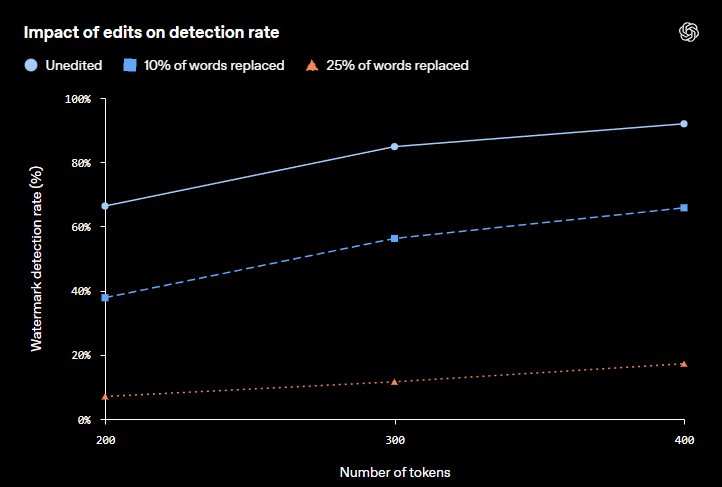
OpenAI’s own testing highlights one particularly interesting weakness. Replacing just 10% of words with synonyms reduced detection from about 92% to 66%. Replace 25% of the words, and detection dropped to just 17%. Shorter text and subjects with limited word choices can also make detection harder.
Because of those limitations, OpenAI will initially restrict its detector to approved researchers and expert organizations. The company says it will not publicly release the detector yet. The EU’s Article 50 requires providers to make AI-generated content machine-readable and detectable where technically feasible. Those transparency requirements began applying on August 2, 2026.
OpenAI says it plans to keep improving text provenance while studying how watermarks survive editing and translation. It also plans to open-source textGrain so others can build on the technology.

Read our disclosure page to find out how can you help Windows Report sustain the editorial team. Read more



Improve this guide




User forum
0 messages