
DeepSeek Reportedly Develops AI Chip to Reduce NVIDIA Reliance


 4 min. read
  Published on
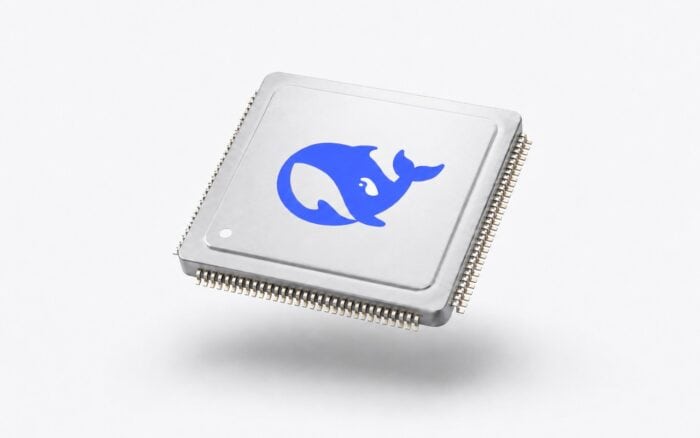
DeepSeek AI chip plans are reportedly moving forward as the Chinese AI company looks to reduce its reliance on NVIDIA and Huawei hardware.
Reuters reported the development, citing people familiar with the matter. The chip will reportedly focus mainly on AI inference, which means running AI models after they have already been trained.
That focus matters because inference now drives a major part of AI infrastructure costs. If DeepSeek can build hardware around its own models and workloads, it could lower costs and gain more control over performance.
DeepSeek Reportedly Wants Its Own AI Inference Chip
DeepSeek has become one of China’s most closely watched AI companies, but it still depends on outside chip suppliers.
The company has previously used NVIDIA and Huawei chips to train and run its models. Its reported in-house AI chip would not immediately replace the most powerful training GPUs, but it could help DeepSeek handle inference more efficiently.
Inference chips do not need to match top-tier training GPUs in every area. They need to run models quickly, cheaply, and reliably at scale. That makes them especially useful for AI products that serve millions of user requests.
For DeepSeek, developing its own custom silicon could provide several key benefits, including reducing reliance on restricted foreign chips, tailoring hardware specifically to its AI models for better performance, and lowering long-term operating costs for its AI services.
China Wants More Domestic AI Hardware
DeepSeek’s chip project fits into China’s broader push for domestic AI infrastructure.
Chinese AI companies still rely heavily on NVIDIA GPUs, even after years of export restrictions. Some firms have reportedly obtained restricted NVIDIA chips through unofficial or illegal channels, showing how important those chips remain for the industry.
At the same time, China wants local companies to build alternatives. Huawei currently leads China’s domestic AI chip market and has already outlined plans for next-generation AI hardware.
A DeepSeek chip would add another major name to that effort. It would also show that China’s AI companies do not want to depend only on Huawei or imported GPUs.
Why NVIDIA Restrictions Matter
NVIDIA remains the world’s most important supplier of AI accelerators, but Chinese companies face limited access to its latest hardware.
The latest Blackwell GPUs are reportedly banned for China. Chinese firms can only access certain older or cut-down NVIDIA chips, such as the H20 and H200, depending on export rules and availability.
That creates a problem for Chinese AI companies. They need powerful hardware to compete, but they cannot freely buy the best chips on the market.
DeepSeek’s reported chip project may not solve that problem immediately. However, it gives the company a path toward more independence.
DeepSeek May Not Threaten NVIDIA Yet
DeepSeek’s first AI chip may not become a serious NVIDIA rival right away.
Analyst Richard Windsor reportedly said the chip may not pose a major threat to NVIDIA. One reason is that DeepSeek may struggle to attract large customers outside China.
That means the chip’s early impact could stay mostly inside the Chinese AI market. It may help DeepSeek and possibly domestic partners, but it may not compete globally with NVIDIA’s strongest AI hardware business.
Alibaba and Baidu Are Also Building AI Chips
Chinese technology giants Alibaba and Baidu have also worked on in-house AI silicon. Their efforts reflect a larger industry trend where major AI companies want custom chips for their own models, services, and cloud platforms.
This mirrors the global AI market. Large companies want to reduce costs, improve model performance, and avoid supply chain risks.
For AI companies, custom chips can offer better control. For chipmakers, the trend creates a long-term challenge.
DeepSeek’s Hardware Move Shows a Bigger AI Shift
DeepSeek’s reported AI chip project reflects a larger change in the AI industry.
AI companies no longer want to rely only on outside chip suppliers. They want more control over cost, supply, performance, and model optimization.
Even if DeepSeek’s first chip has limited reach, the direction is clear. AI companies are moving closer to owning the full stack, from models to chips.
That could reshape the AI hardware market over the next several years, especially in China, where export restrictions have made domestic alternatives more urgent.
In other AI news, Microsoft could reportedly turn to DeepSeek V4 to cut costs. Alibaba is also banning Claude Code after Anthropic accused the company of distilling its models.

Read our disclosure page to find out how can you help Windows Report sustain the editorial team. Read more



Improve this guide




User forum
0 messages