
Microsoft Still Offers Vulnerable Intel Driver Through Windows Update Despite Defender Warnings


 2 min. read
 Published on
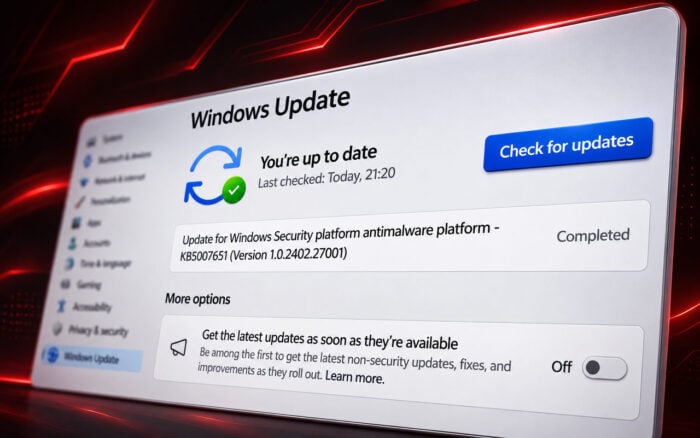
Microsoft is reportedly distributing an outdated Intel driver containing a potentially vulnerable WinRing0 component through Windows Update, even though Microsoft Defender flags the driver as a security risk.
According to DeskModder, the issue surfaced on an 11th-generation Intel NUC system.
Windows Update continues offering the vulnerable Intel driver
The affected package is Intel Performance Driver Extension version 1.0.0.38, which belongs to the Intel NUC Software Studio Service. The driver is nearly four years old.
Despite removing the driver and disabling its associated service, Windows Update continued offering the same version for installation.
Further inspection revealed that the package contains WinRing0 driver components embedded in OpenHardwareMonitorLib.dll.
More concerningly, the package appeared to carry valid digital signatures from Microsoft Windows Hardware Compatibility Publisher, raising questions about how the potentially vulnerable driver continues to reach Windows users.
WinRing0 vulnerability could allow attackers to gain elevated privileges
The security concern involves CVE-2020-14979, a known WinRing0 vulnerability that could allow attackers to gain elevated system privileges by exploiting a vulnerable kernel driver.
However, having the affected driver installed does not automatically mean a computer has malware or has been compromised. The concern is that attackers could potentially exploit the vulnerable component if the system meets the necessary conditions.
DeskModder has not yet completed a final comparison between the embedded WinRing0 components and the driver originally flagged by Microsoft Defender. Therefore, the findings remain preliminary.
Nevertheless, the report raises concerns about Microsoft’s driver validation process, especially when Windows Update continues offering an outdated package associated with a known security vulnerability.
Microsoft and Intel should investigate the findings and determine whether Windows Update needs to stop distributing the affected driver.
The report follows the discovery of another Windows security threat involving hackers distributing Vinci RAT malware through the Microsoft Store using a fake Snipping Tool installer.
Microsoft is also dealing with NTLM authentication failures following November’s Windows updates and has reportedly entered Code Red mode to improve outage recovery times following a major service disruption.
Via Neowin

Read our disclosure page to find out how can you help Windows Report sustain the editorial team. Read more


Improve this guide



User forum
0 messages