
YouTube is Making AI Video Labels Impossible to Miss Now


 2 min. read
  Published on
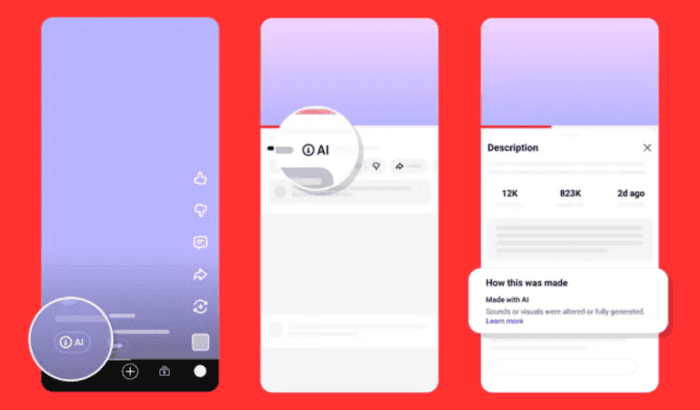
YouTube is making AI-generated content visible even more by changing the placement of AI labels. The platform just announced a major overhaul for how AI-generated videos get labeled, including new automatic AI detection systems that can flag content even when creators do not disclose it themselves.
AI labels are moving directly in the video description
Up until now, YouTube mostly tucked AI labels away inside video descriptions or less noticeable sections. Well, that is changing. For long-form videos, AI labels will now appear directly below the video player itself. Meanwhile, Shorts will start displaying AI disclosures as overlays directly on the video.
The company says this new system specifically targets “photorealistic” and “meaningfully AI altered” content. Less realistic or lightly edited AI content still may keep disclosures hidden deeper inside expanded descriptions instead.
Putting it simply, YouTube wants viewers spotting AI-generated media instantly without digging around for context.
YouTube now will detect AI videos automatically
Starting this month, YouTube says it is rolling out internal systems capable of automatically identifying AI-generated content. If creators fail to disclose major AI usage themselves, YouTube now can reportedly apply labels automatically.
That being said, creators still can appeal or modify disclosures if they believe the system flagged content incorrectly. However, some labels apparently will become permanent no matter what. Videos made using YouTube’s own AI tools like Veo or Dream Screen automatically stay tagged, alongside content containing C2PA metadata tied to fully generative AI systems.

YouTube says labels will not hurt monetization
Interestingly, YouTube specifically clarified that these AI labels alone will not impact recommendations or monetization eligibility. The platform clearly understands creators already are nervous about AI disclosures affecting reach, ad revenue, or algorithm visibility.
Over the past year, AI-generated videos, fake celebrity clips, deepfakes, and synthetic Shorts exploded across nearly every major platform online. Needless to say, YouTube increasingly looks less interested in simply asking creators to self-report honestly and more interested in building systems that verify it independently.

Read our disclosure page to find out how can you help Windows Report sustain the editorial team. Read more



Improve this guide




User forum
0 messages