
ChatGPT & Codex Can Now Remember Your Recent Mac Activity with Computer Memory


 2 min. read
  Published on
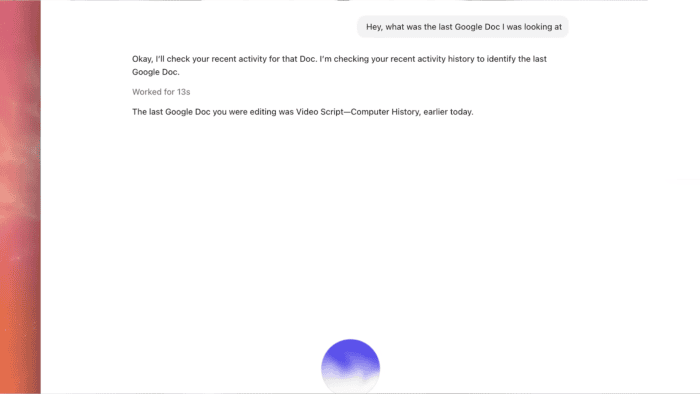
In addition to expanding ChatGPT Ads across five new countries, OpenAI is rolling out a much more personal feature. Computer History now allows ChatGPT and Codex use recent Mac activity as context, helping them understand what you were working on. The feature is rolling out globally through the ChatGPT desktop app for Pro, Business, and Enterprise users. The company has confirmed that access for the EEA, UK, and Switzerland is expected in the coming weeks.
OpenAI wants ChatGPT to pick up where you stopped
For those unaware, Computer History creates a timeline from interaction events across allowed apps and websites. ChatGPT and Codex can use that context to answer questions about recent work without requiring users to reconstruct everything manually.
That could make the feature useful after interruptions. Users can ask what they were doing before a break or identify a document they viewed earlier. The system can also identify repeated workflows. It may suggest turning those routines into reusable skills or scheduled tasks, giving Codex another way to automate repetitive work.
Privacy remains the biggest question
Computer History does not record screenshots, screen recordings, microphone input, or system audio. It instead records interaction events, including clicks, typing, shortcuts, and app switches. The feature is off by default, and users choose which apps and websites can contribute. They can also pause collection, delete history, or exclude specific sources.
OpenAI says temporary event files remain on the Mac for up to 48 hours. It also says that those event files are not retained for model training after processing. For Business and Enterprise users, administrators must first grant access. Each individual must then opt in separately, so the rollout does not automatically activate monitoring.

Read our disclosure page to find out how can you help Windows Report sustain the editorial team. Read more



Improve this guide




User forum
0 messages