
What the Quantum Control Stack Actually Does


 7 min. read
 Published on
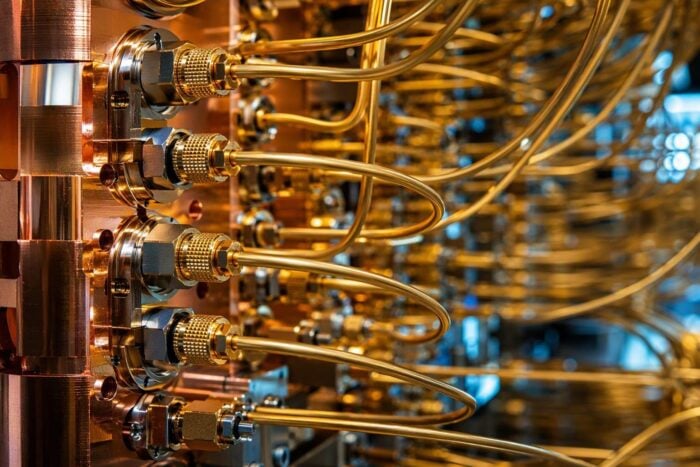
No quantum program interacts directly with a qubit. Because qubits live in physical analog hardware, every quantum computing system relies on an essential intermediary layer called the control stack. This critical bridge translates high-level digital instructions into precisely shaped physical signals and interprets the processor’s faint quantum responses.
In short, a control stack converts abstract code into timed pulses that manipulate qubit states, then translates physical measurements back into classical data. It coordinates multi-channel timing and supports low-latency feedback, letting mid-experiment results steer subsequent operations. Bridging software algorithms to physical qubit manipulation requires sophisticated hardware and system engineering—a central challenge that every specialized quantum computing company faces when designing the control electronics and signal lines surrounding a quantum processor.
+——————————————————-+
| Quantum Software |
| (Algorithms, High-Level Operations, User Code) |
+—————————+—————————+
|
v
+——————————————————-+
| Scheduler & Sequencer |
| (Instruction Ordering, Precise Hardware Timing) |
+—————————+—————————+
|
v
+——————————————————-+
| Signal Generation & Readout |
| (Pulse Shaping, RF/Microwave/Laser Conversion, ADC) |
+—————————+—————————+
|
v
+——————————————————-+
| Qubit Processor |
| (Superconducting Loops, Spin Qubits, Trapped Ions) |
+——————————————————-+
How Signal Generation and Readout Drive Execution
The control stack runs on a continuous, orchestrated cycle of pulse generation and signal readout across every active channel.
- Pulse Generation: Manipulating a qubit’s quantum state requires physical signals parametrized by frequency, amplitude, phase, shape, and duration. Superconducting qubits depend on carefully modulated microwave pulses, semiconductor spin qubits often require a combination of microwave pulses and fast voltage tuning, and optically addressed architectures rely on precision laser control.
- Signal Readout: Readout electronics capture, amplify, and filter the weak analog signals returning from the quantum device. High-speed analog-to-digital converters (ADCs) sample these signals, allowing digital processing logic to integrate the data over a designated measurement window and classify the final outcome as a classical binary 0 or 1.
Because readout signals are inherently vulnerable to environmental noise, thermal fluctuations, and instrumentation drift, accurate state classification is rarely straightforward. Furthermore, a measurement projects the qubit into a definite state, yielding binary classical data rather than revealing its complete underlying quantum wave function.
Real-Time Synchronization and Low-Latency Feedback
Precision timing and phase alignment ultimately dictate whether a quantum program succeeds or fails. A centralized clock reference ensures all control and readout channels remain tightly synchronized, preventing timing jitter—tiny variations in signal arrival times—from degrading overall gate fidelity. Deterministic execution is mandatory; hardware operations must follow strict microsecond or nanosecond schedules without relying on standard operating systems that introduce unpredictable delays.
+——————+ Pulse +—————–+
| Control Logic | ————-> | Quantum System |
+——————+ +—————–+
^ |
| Feedback Readout |
+———————————–+
Fast, deterministic feedback enables techniques such as active state reset and real-time error correction. When control hardware detects an unexpected state during a mid-circuit measurement, local decision logic can issue a corrective pulse within the qubit’s brief coherence window. While a standard host computer manages overall experiment orchestration and batch data collection, dedicated real-time control hardware handles ultra-low-latency loops where processing delays are intolerable.
Scaling Control Systems Alongside Qubit Counts
Scaling a quantum processor involves far more than fabricating additional physical qubits on a chip. As qubit counts grow, control complexity increases non-linearly across several dimensions:
- Crosstalk & Dynamic Calibration: Operating multiple adjacent channels introduces signal bleed. A control pulse calibrated for an isolated qubit often requires dynamic adjustments when neighboring channels fire simultaneously.
- Thermal & Electrical Load: More physical control lines increase wiring density, adding physical volume and unwanted thermal leakage into cryogenic cooling units.
- Real-Time Data Overhead: Running continuous quantum error correction cycles significantly increases the volume of measurement data and feedback decisions the system must process per second.
Consequently, headline qubit counts offer an incomplete picture of total system capability. Overall performance depends as much on the control stack’s ability to coordinate timing, maintain precise calibration, and execute low-latency feedback under dense operational workloads as it does on the qubits themselves.
Key Technical Questions
- Does the control stack handle quantum error correction? The control stack provides the fast measurement and feedback loops needed for error mitigation, but fault tolerance depends on hardware latency, error-correcting codes, and underlying qubit quality. For a deeper theoretical foundation on how microwave drives interface with quantum circuits, review the foundational research on circuit quantum electrodynamics concepts and architecture.
- Can optimized control electronics improve gate fidelity? High-precision electronics reduce phase noise, amplitude drift, and timing jitter, directly boosting gate fidelity. However, as explained in the detailed overview, A Quantum Engineer’s Guide to Superconducting Qubits, control improvements cannot overcome baseline physical constraints like material defects or intrinsic decoherence.
- Is control hardware cross-compatible across qubit architectures? While high-level scheduling and sequencing principles are transferable, physical hardware interfaces differ fundamentally. Microwave control chains engineered for superconducting circuits cannot directly drive the optical setups used in trapped-ion systems or the precise voltage sources needed for semiconductor spin qubits.


Read our disclosure page to find out how can you help Windows Report sustain the editorial team. Read more


Improve this guide


User forum
0 messages