
Microsoft Pushes Back Against Critics Over Windows 11's Non-Draggable Taskbar


 2 min. read
 Published on
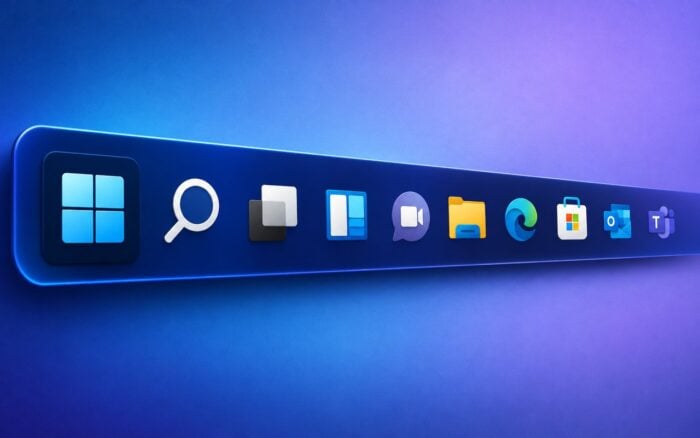
Microsoft has clarified that drag-and-drop repositioning of the Windows 11 taskbar could still return, despite previously explaining why the feature remains unavailable.
The company recently explained why users cannot drag the Windows 11 taskbar with a mouse. However, Microsoft’s Vice President of Design, Diego Baca, has now emphasized that the decision isn’t permanent.
“Nothing is beyond reconsideration,” Baca said, responding to claims that Microsoft had completely ruled out the feature.
Microsoft explains why locking the taskbar isn’t a simple solution
According to Baca, Windows 10 experienced a significant number of accidental taskbar movements, although Microsoft hasn’t shared specific figures.
Some users have suggested bringing back the option to lock the taskbar, but Baca explained that this approach could create other usability problems.
For example, users would need to unlock the taskbar before moving it, adding extra steps to the process. A locking mechanism could also interfere with rearranging pinned applications and moving system tray icons.
Microsoft believes managing taskbar positioning through Windows Settings offers a more predictable experience and reduces accidental changes.
Microsoft hasn’t ruled out taskbar drag-and-drop
Baca clarified that Microsoft never said drag-and-drop taskbar repositioning would never return to Windows 11.
The company continues to evaluate feature requests using Windows telemetry, Feedback Hub submissions, social media discussions, and internal research.
Microsoft previously confirmed that it was considering additional taskbar customization options, including different taskbar positions for individual monitors and drag-and-drop repositioning.
Baca acknowledged that Microsoft’s design decisions aren’t always perfect and can change based on user feedback.
However, Microsoft hasn’t announced plans or a timeline for restoring drag-and-drop taskbar movement.
Microsoft supports third-party taskbar customization tools
Baca also expressed support for third-party applications that extend Windows functionality, including utilities that allow users to drag and reposition the taskbar.
He explained that Microsoft’s design decisions must account for accessibility, technical limitations, consistency, and the needs of more than a billion Windows users.
For now, Microsoft prefers Settings-based taskbar customization, but Baca’s comments suggest that the company remains open to reconsidering drag-and-drop functionality.
In other news, Microsoft confirmed that Windows 11’s new internet speed test was built with AI in just one day, while Windows 11 KB5127936 introduced a new Restore Summary feature to simplify PC migration.
Via Windows Latest

Read our disclosure page to find out how can you help Windows Report sustain the editorial team. Read more


Improve this guide

User forum
0 messages