
How to Remove the Out of Office Status from Microsoft Teams


 5 min. read
  Updated on

If Microsoft Teams is stuck on Out of Office even after you’ve returned, it’s likely syncing incorrect data from Outlook. This issue can also appear as “status stuck,” “unknown,” or persistent away messages. Here’s how to reset it across platforms.
How to Disable Out Of Office Status on Teams
Table of contents
1. Remove Outlook invites with Out of Office status
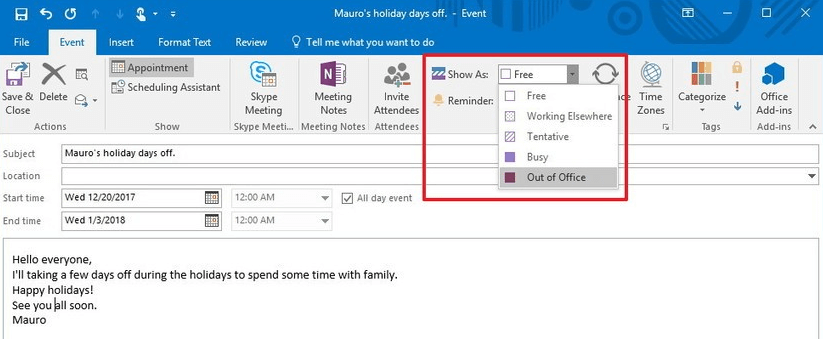
This seems to happen often when a new release of Teams is installed. If someone sends you a calendar invite with date ranges from today until the future with Out of Office selected, or if you create future Out of Office appointments, then Teams is somehow changing the status.
The easiest fix is to check if any invitation is mentioned as Out of Office. If you find such an invitation, then remove it from your calendar. Any difference now? If not, check out the following solutions.
2. Turn off Don’t send automatic replies
- Go to Outlook Web App.
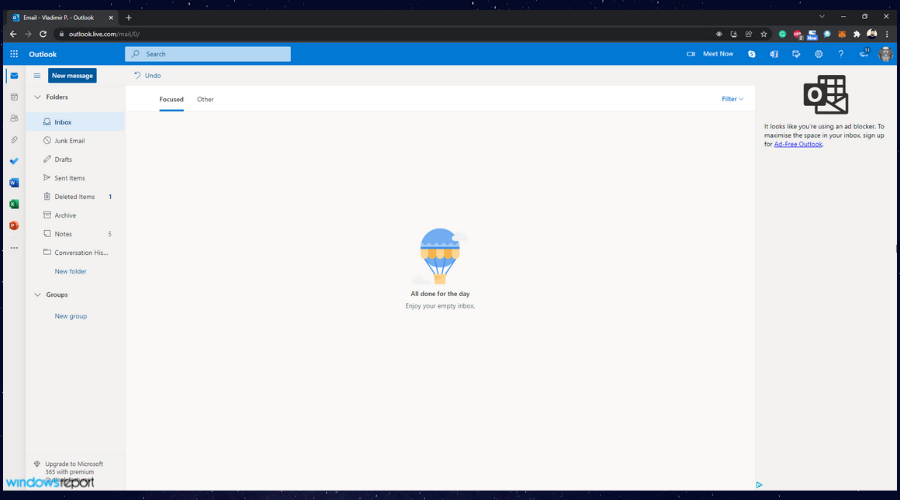
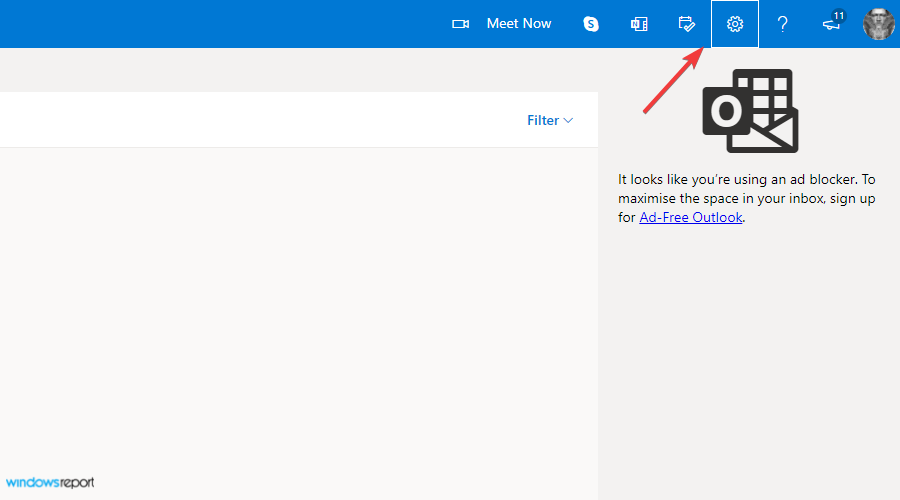
- Click the gear button.
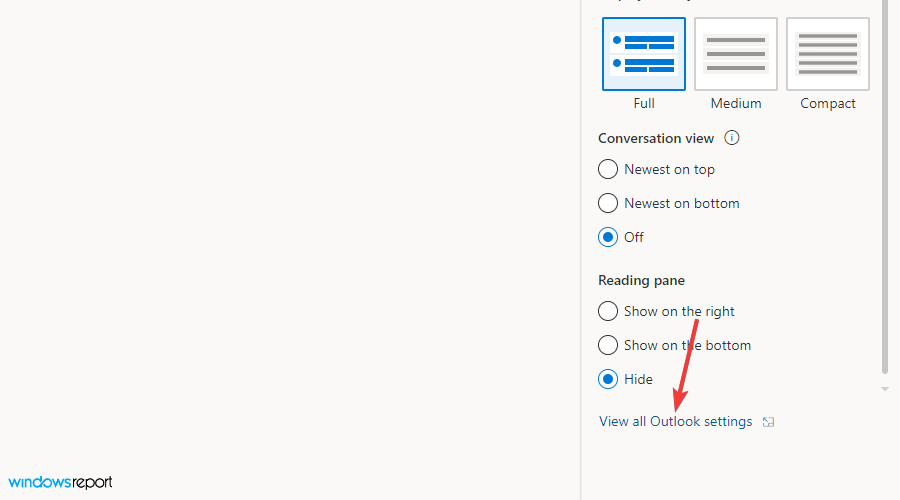
- Click the View all Outlook settings link.
- Choose Email from the left side menu.
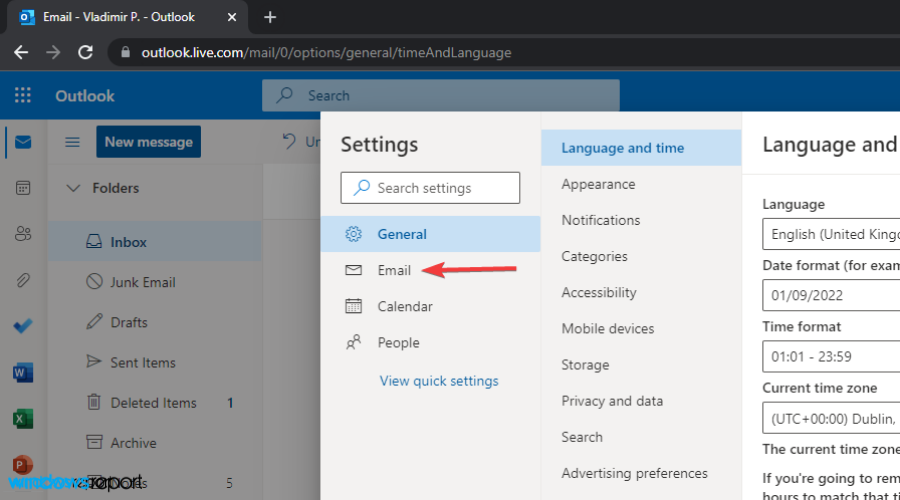
- Click Automatic replies.
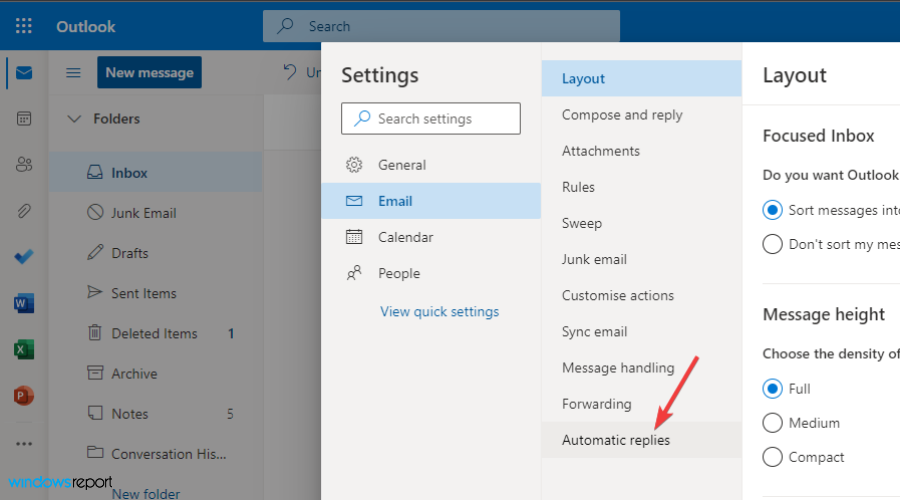
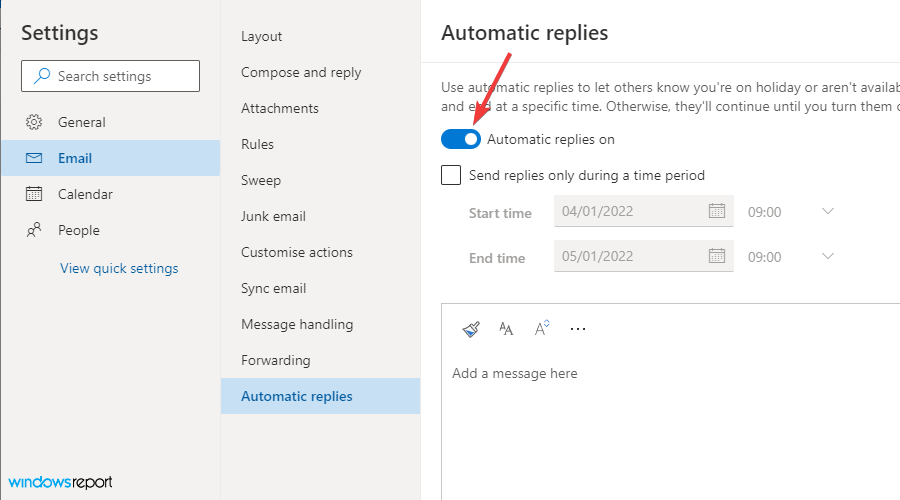
- Toggle the Automatic replies on the option to Off.
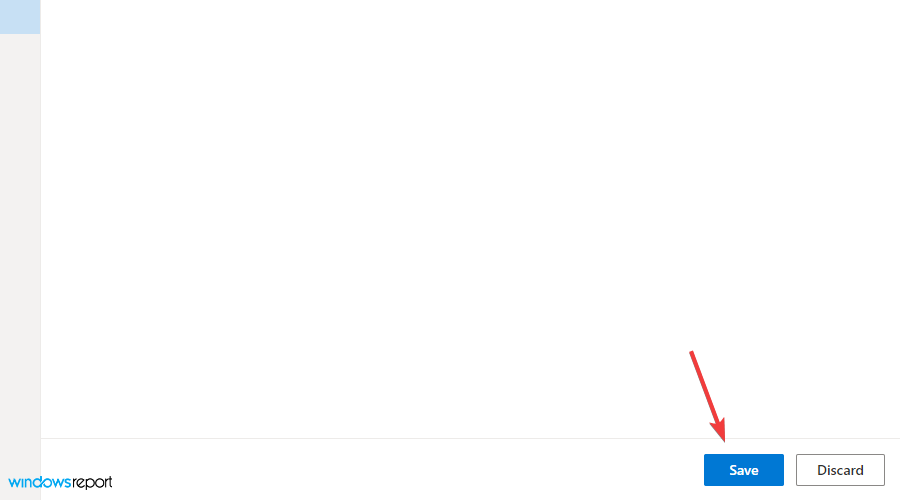
- Click the Save button at the bottom of the respective screen.
3. Change your Status Message in Teams
- Go to your profile at the top of Teams.
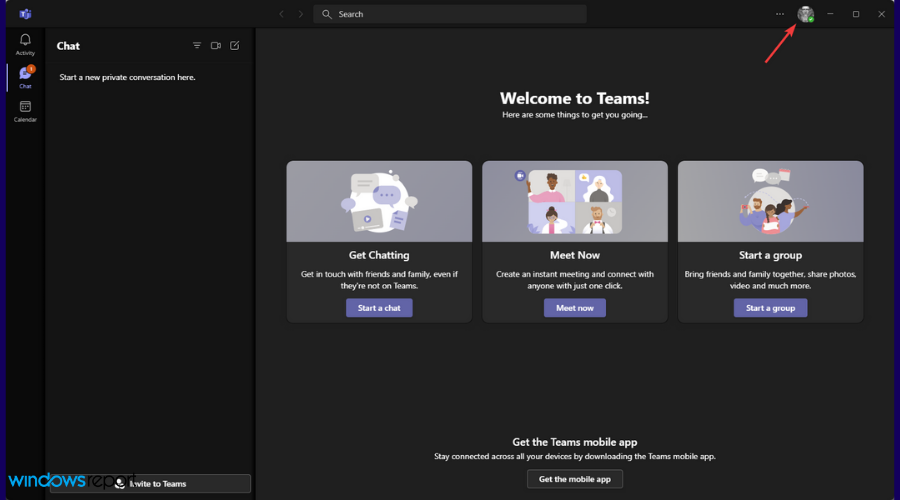
- Click Set status message.
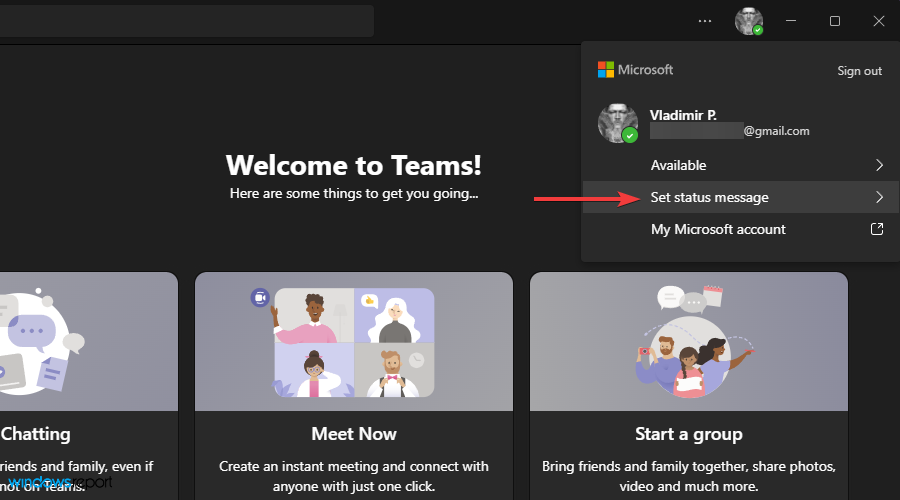
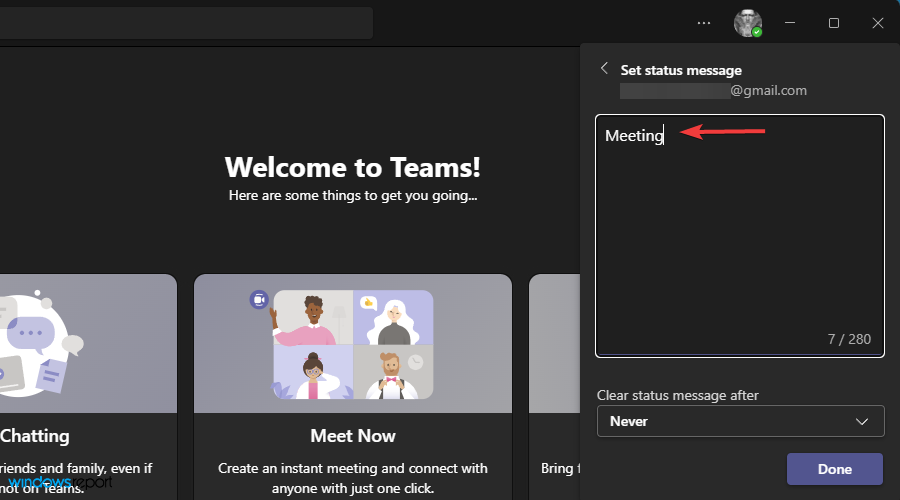
- Then, type the message that you want to show to other people in the box.
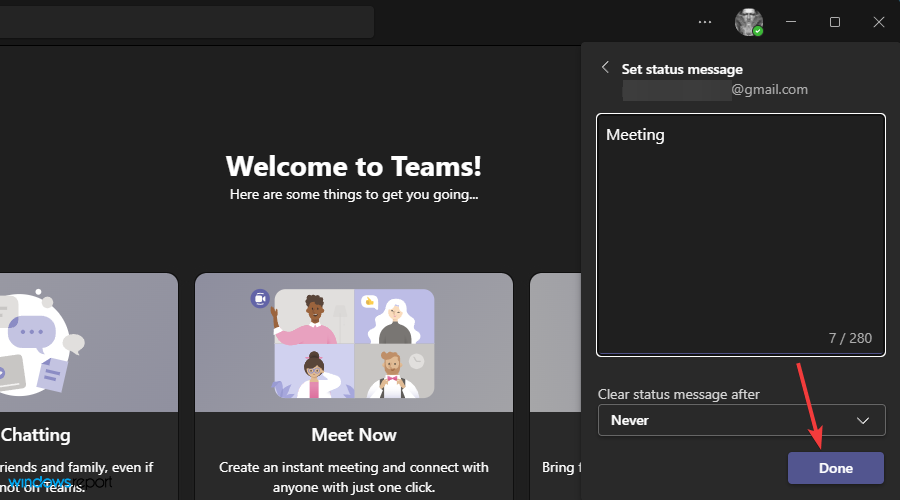
- Click Done and you’re all set. Teams will refresh.
- You may now delete the status, by clicking on your profile again and selecting the recycle bin icon next to the status.
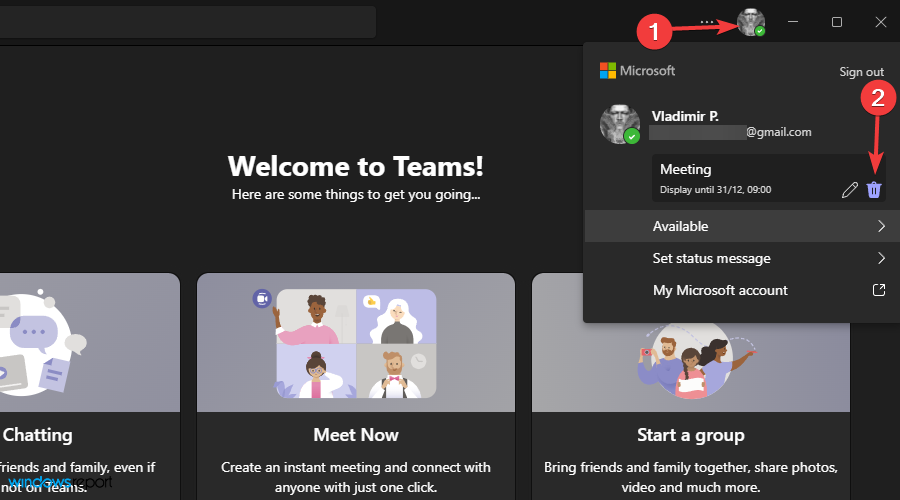
This overwrites and remove the Out of Office reply that is pulled from Outlook but only in Teams. This WILL NOT overwrite what is in Outlook.
Moreover, when you change your Status Message in Teams it will sync immediately.
4. Move or Delete Settings.json file
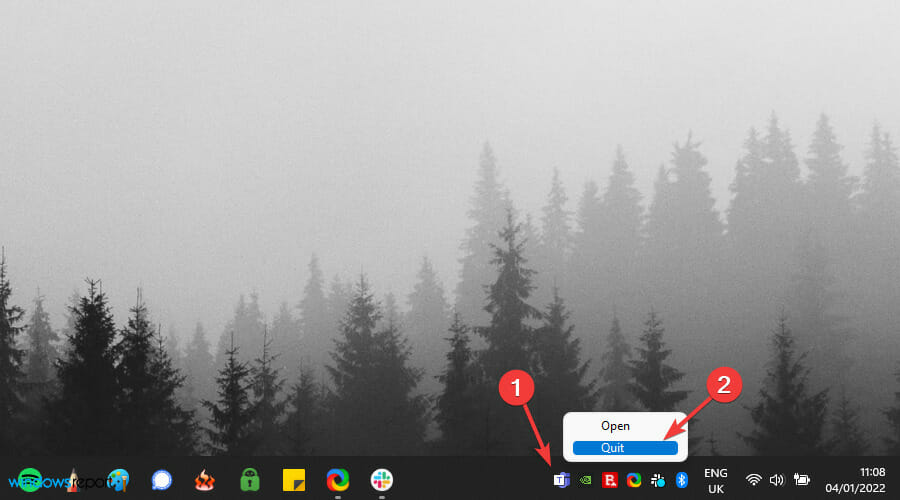
- Click the X in the corner of the Teams window to close it.

- Right-click the Teams icon found in the taskbar, and choose Quit.
- Navigate to the location:
C:/Users/*YourUsername*/AppData/Roaming/MicrosoftTeams - Look for the file Settings.json and move it to another location.
- Next, sign in to Teams to see if the issue is solved.
5. Remove Custom Status Message in Teams
If you had a custom note like “Back Monday” or “Vacation until Friday”, it may still display even after your status changes.
- Go to your profile picture in Teams.
- Select Set status message.
- Delete the text or click Clear status message.
This step ensures Teams isn’t displaying outdated manual messages alongside your status.
6. Clear Teams App Cache
Sometimes, cached data causes Microsoft Teams to continue showing an incorrect status on desktop.
- Fully exit Teams by right-clicking the icon in the taskbar and selecting Quit.
- Open the following folder:
C:\Users\[YourUsername]\AppData\Roaming\Microsoft\Teams - Delete all folders inside and restart Teams.
Clearing the app cache forces Teams to reload your status from the server.
 NOTE
NOTE
Other users also tried to uninstall Teams and closed all Office apps after reinstalling it or clearing its cache and were pleased by the results. Please note that these options are based on third-party suggestions rather than first-hand experience.
And if these steps seem too lengthy, you can always block a user on Teams and unblock them once that annoying status is gone.
FAQs related to removing out of office status in Microsoft Teams
Teams syncs your Out of Office status with Outlook and Exchange. If automatic replies are still enabled in Outlook or you have a calendar event marked as Out of Office, Teams may continue showing the status even after you return.
Open Teams > Settings > General > Out of Office, turn off Automatic replies, and save the changes. If you originally enabled Out of Office in Outlook, you’ll also need to disable it there because the settings sync between both apps.
This usually happens because Outlook automatic replies are still active or your Outlook calendar contains an event with its Show As status set to Out of Office. Teams automatically syncs with these settings and may restore the status after a few minutes.
No. Teams uses Outlook and Exchange as the source for Out of Office information. As long as Outlook automatic replies remain enabled, Teams will continue displaying the Out of Office status.
Try resetting your Teams status, sign out and back in, and check your Outlook calendar for events marked as Out of Office. If the problem persists, clearing the Teams cache or waiting for Microsoft 365 to finish syncing usually resolves the issue.
In most cases, the status updates within a few minutes after disabling automatic replies. However, Microsoft notes that synchronization between Outlook and Teams may take a little longer depending on your organization’s Microsoft 365 environment.
Do you have further suggestions or questions? If so, welcome to post here. We are always here to further help you.

Read our disclosure page to find out how can you help Windows Report sustain the editorial team. Read more



Improve this guide




User forum
10 messages