
Windows Recall Security Concerns Return After TotalRecall Tool Release
Microsoft is aware of the concerns but does not classify them as a problem


 3 min. read
  Published on
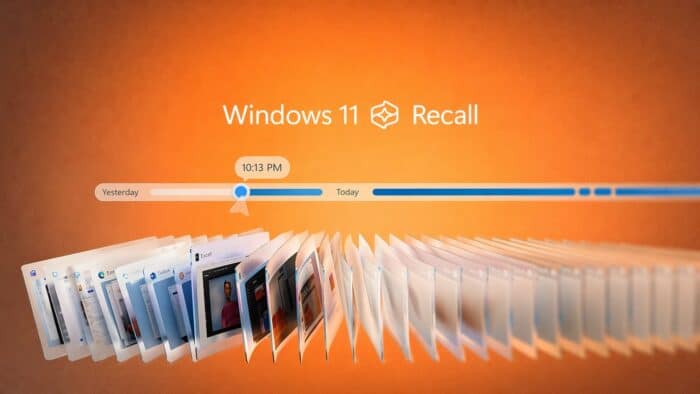
Windows Recall remains one of the most controversial Windows features, and new research suggests its problems are far from resolved. A recently updated tool shows that sensitive data can still be extracted, raising fresh concerns about user privacy.
According to The Verge, security researcher Alexander Hagenah released an updated version of the TotalRecall tool, claiming that Recall data remains vulnerable even after Microsoft’s previous changes. The tool is publicly available on GitHub and demonstrates how attackers could access stored snapshots.
TotalRecall reveals weaknesses in Recall’s architecture
The research focuses on a key Windows process called AIXHost.exe, which handles Recall data rendering. Hagenah found that this process lacks several critical protections, making it easier to exploit.
Unlike more secure system components, AIXHost.exe does not use Protected Process Light (PPL), AppContainer isolation, or strict code integrity enforcement. This combination allows attackers to inject code and extract data after user authentication.
Attack can happen after Windows Hello authentication
The attack method does not require constant access or advanced exploits. Malware can simply wait for the user to authenticate using Windows Hello and then silently extract Recall snapshots in the background.
The issue becomes more serious because AIXHost.exe cannot properly verify which components request access. It treats internal data as trusted, which opens the door for unauthorized extraction once access is gained.
Cached snapshots may be accessible without authentication
Another concern involves cached Recall data. The TotalRecall tool reportedly retrieves stored snapshots without always triggering Windows Hello prompts.
This suggests the main weakness does not lie in the encrypted vault itself, but in how data gets delivered and rendered to the system. Even if storage remains secure, the access layer introduces risk.
Researcher says core protection needs redesign
Hagenah clarified that the Recall vault uses strong security measures. However, the surrounding infrastructure, especially the rendering and delivery pipeline, requires stronger protection.
He recommends securing the rendering process and tightening access controls to prevent unauthorized data access. Without these improvements, Recall may continue to expose sensitive user activity.
Microsoft does not classify it as a vulnerability
Microsoft has responded to the findings but does not consider TotalRecall a security bypass or vulnerability. This position suggests the company views the behavior as expected within the current system design.
That stance may draw criticism, especially given Recall’s history of backlash from privacy advocates and security researchers.
In parallel developments, users reported that updates KB5083769 and KB5082052 may trigger unexpected BitLocker recovery prompts. Microsoft also recently addressed the Windows Server auto-upgrade issue and patched 167 vulnerabilities in its latest Patch Tuesday rollout.
Via Neowin

Read our disclosure page to find out how can you help Windows Report sustain the editorial team. Read more



Improve this guide



User forum
0 messages