
NVIDIA Gaming Revenue Drops 13% as DRAM Shortage Tightens Supply


 2 min. read
  Published on
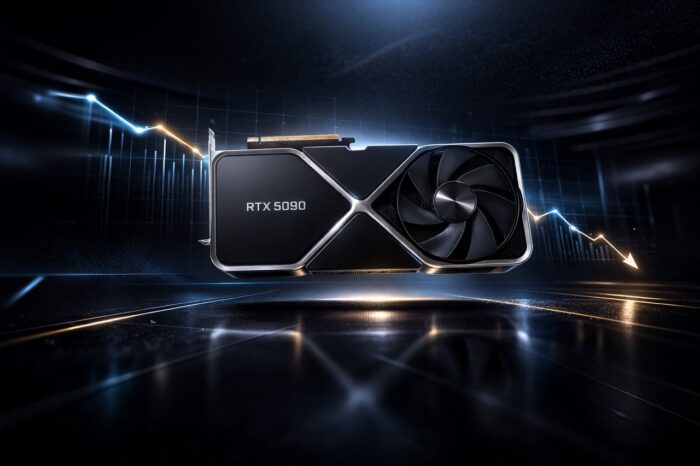
NVIDIA’s gaming business is starting to feel the pressure from ongoing DRAM shortages, even as annual growth remains strong.
The company’s Q4 FY2026 earnings show that gaming revenue declined 13% quarter-over-quarter, landing at $3.7 billion. Despite the sequential drop, revenue still climbed 47% year-over-year, driven largely by demand for its Blackwell-based GPUs.
What’s driving the gaming revenue dip and what it means for GPU supply
NVIDIA officially attributed the quarter-over-quarter decline to inventory moderation following strong holiday sales. After an aggressive Q3, the company appears to have adjusted shipments to rebalance channel stock.
However, analysts and broader market indicators suggest that tight memory supply played a significant role. CFO Colette Cress acknowledged that securing enough memory remains a major challenge, and the company expects supply conditions to remain “very tight” for the next several quarters.
That outlook signals potential pressure on GPU availability throughout 2026.
Memory constraints ripple across the GPU market
The DRAM shortage is not isolated to NVIDIA. A significant share of global memory production is currently being allocated to AI accelerators and data center infrastructure, leaving less capacity for consumer GPUs.
At the same time, newer GPU generations demand more memory and higher-bandwidth configurations, which further strains supply chains.
Retail pricing already reflects these constraints. Recent surges in high-end GPU prices, including RTX 5090 and RTX 5070 models, indicate that limited availability continues to affect the market. Reports also point to potential delays in next-generation launches across the industry, with rumors suggesting that future architectures could slip further out than previously expected.
Short-term caution, long-term recovery
NVIDIA’s gaming outlook now leans more heavily on year-over-year recovery rather than near-term acceleration. While Blackwell demand remains strong, the company does not expect memory conditions to ease quickly.
Industry observers similarly anticipate that GPU supply and pricing may remain volatile for several quarters. Stabilization will likely depend on improved DRAM output and a better balance between AI-driven infrastructure demand and consumer hardware production.
Beyond gaming, NVIDIA continues to expand its broader portfolio, with developments in laptop CPU initiatives and next-generation AI architectures potentially coming into focus at upcoming events such as GTC 2026.
For now, the key takeaway remains clear: even strong demand cannot fully offset structural supply constraints in the memory market, and the impact is starting to show in quarterly gaming results.
Via Wccftech

Read our disclosure page to find out how can you help Windows Report sustain the editorial team. Read more



Improve this guide



User forum
0 messages