
Google Expands AI Verification Tools Across Gemini, Search, Chrome, and Pixel
SynthID and Content Credentials are expanding across Google products


 3 min. read
  Published on
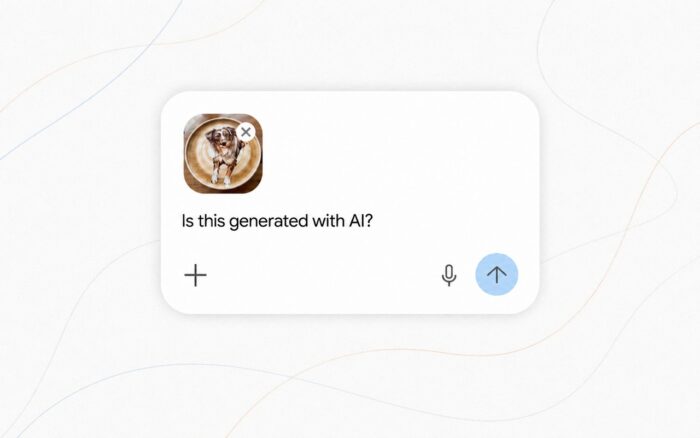
Google is expanding its AI content transparency and verification tools across Gemini, Search, Chrome, Pixel devices, and Google Cloud. The company says the goal is to help users understand where online media came from and whether it was edited or generated with AI.
The move comes as AI-generated images, videos, and audio become increasingly difficult to distinguish from authentic media. Google says users need simpler ways to verify content directly inside the products they already use every day.
SynthID reaches 100 billion watermarked files
Google revealed that its SynthID watermarking system has already been used on more than 100 billion AI-generated images and videos. SynthID embeds invisible markers into AI-generated media, allowing the content to be identified later without changing how it looks or sounds to users.
The company says SynthID verification inside the Gemini app has already been used more than 50 million times globally. Google is now expanding those verification tools to Search and plans to bring them to Chrome in the coming weeks.
Users will eventually be able to ask questions such as “Is this AI generated?” or “Was this made with AI?” through products like Gemini, Lens, Circle to Search, AI Mode, and Gemini in Chrome.
Content Credentials expand to Pixel cameras
Google is also pushing wider adoption of C2PA Content Credentials, an industry standard designed to show how digital media was created or modified. These credentials can reveal whether content came directly from a camera, whether editing software altered it, or whether AI tools generated parts of the media.
According to Google, authentic camera-captured content is becoming just as important to identify as AI-generated material.
The Google Pixel 10 became the first smartphone to support Content Credentials directly inside the camera app for images. Google is now expanding support to video recording on Pixel 8, Pixel 9, and Pixel 10 devices. The company says this creates stronger proof that media originated from a real camera rather than an AI model.
Google also confirmed that support for checking C2PA Content Credentials will roll out in Gemini first before arriving later in Search and Chrome.
OpenAI, NVIDIA, and Meta join the effort
Several major AI companies are joining Google’s watermarking initiative. Google says partners including OpenAI, ElevenLabs, and Kakao will use SynthID technology in their AI-generated content workflows.
The company is also working with NVIDIA to watermark AI-generated video produced through Cosmos models.
Meanwhile, Meta plans to support Content Credentials labeling on Instagram. This means media captured natively on supported Pixel devices may appear as verified authentic camera content when uploaded to Instagram.
Google Cloud gets new AI detection tools
Google is additionally launching a new AI Content Detection API through Google Cloud’s Gemini Enterprise Agent Platform. The API will allow businesses to detect AI-generated content created by Google and other popular AI models.
Google says the technology could help with content labeling, moderation, fraud prevention, feed sorting, and fact-checking systems.
The broader rollout shows Google pushing harder into AI transparency as synthetic media becomes more common across the internet.
In other recent announcements, Google also expanded the Gemini app with additional AI features and introduced the new Gemini Omni Flash and Gemini 3.5 Flash models.

Read our disclosure page to find out how can you help Windows Report sustain the editorial team. Read more



Improve this guide



User forum
0 messages