
Laptop prices could increase nearly 40% as memory and CPU costs spike, TrendForce warns


 2 min. read
  Published on

Laptop prices may soon be heading into unfamiliar territory, unfortunately. After several years of relatively stable pricing for mainstream laptops, growing pressure on key components could force manufacturers to raise prices sharply. If current supply trends continue, the next wave of laptops could cost significantly more than what buyers are used to paying today.
Rising memory and CPU costs could bump up notebook pricing in 2026
A new industry analysis report from TrendForce suggests the global notebook market may face a difficult year in 2026 (via TechPowerUp). The firm warns that rising component costs and uneven supply conditions could push retail prices for mainstream laptops dramatically higher.
According to the TrendForce report, the slowdown in memory supply has been a massive issue for manufacturers since the start of 2026. Phison CEO even warned that consumer tech may face both DRAM & NAND shortages until 2030. That’s the very reason many memory suppliers, including Samsung plans to significantly raise NAND prices during the second quarter of 2026, after already implementing increases earlier in the year.
These memory components normally account for around 15 percent of a notebook’s bill of materials. However, after several quarters of price increases, that share could exceed 30 percent by the first quarter of 2026. To illustrate the impact, TrendForce modeled a baseline system. A mainstream laptop that carried a $900 MSRP in early 2025 could see its retail price rise by more than 30 percent simply to maintain current profit margins across manufacturers and distribution channels.
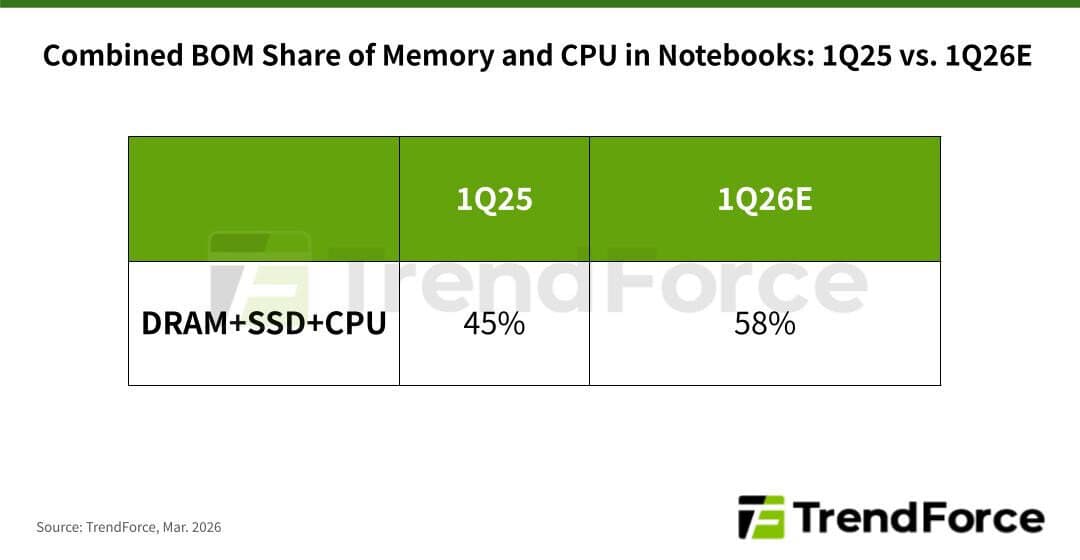
CPU pricing is also adding fresh pressure to the notebook market. According to supply chain observations cited by TrendForce, Intel has already raised prices on certain entry-level and older notebook processors by more than 15 percent, with further increases expected for mainstream and mid-to-high-end platforms in the second quarter of 2026. Because processors already make up one of the largest portions of a notebook’s bill of materials, rising CPU and memory costs together could push their combined share from about 45 percent to nearly 58 percent.
Trendforce further notes that major notebook brands may handle the situation better due to stronger supplier relationships and larger purchasing volumes, while smaller manufacturers could face higher costs and supply risks. Vendors have also been adopting multi-platform strategies that include AMD chips, though some entry-level AMD platforms are now reportedly facing supply pressure as well. All that said, tough days are ahead if you are looking to buy high-configuration notebooks later this year.

Read our disclosure page to find out how can you help Windows Report sustain the editorial team. Read more



Improve this guide



User forum
0 messages