
OpenAI Expands Codex With Shareable Plugins and Team Workflow Tools


 2 min. read
  Published on
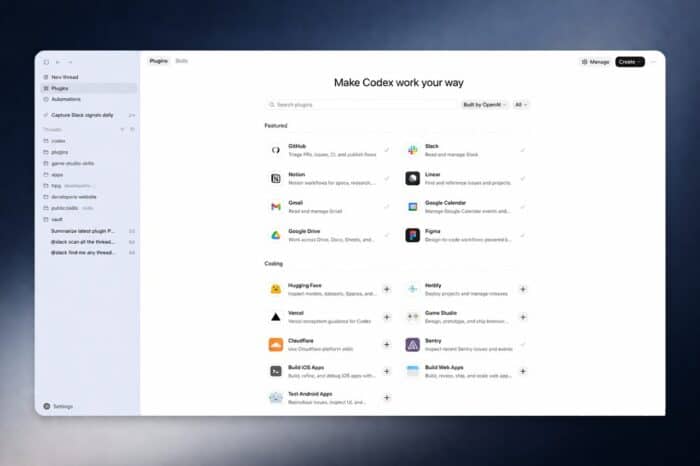
OpenAI continues to expand its developer ecosystem after bringing the Codex app to Windows, and now the company is rolling out plugin support aimed at making workflows more powerful and collaborative.
According to Neowin, OpenAI has introduced a new plugin system for Codex, alongside broader incentives such as offering ChatGPT Pro access to open-source developers who actively use the platform.
Codex plugins bring reusable workflows and integrations
The newly announced plugins act as installable bundles that package reusable workflows and integrations into a single unit. These plugins can include tools such as predefined skills, app connections, and MCP server configurations, allowing developers to quickly extend Codex functionality.
OpenAI is making plugins available across its entire Codex ecosystem, including the Codex app, Codex CLI, and IDE extensions. All available plugins are organized inside a centralized Codex Plugin Directory, giving developers a single place to discover and install new capabilities.
Plugins vs skills: what’s the difference?
OpenAI is also clarifying the distinction between skills and plugins, which serve different purposes within Codex.
Skills remain personal or project-specific workflows that are not designed for sharing. Plugins, on the other hand, are versioned, reusable, and built to be shared across teams or even published publicly.
This separation allows teams to standardize tooling and workflows across multiple projects, improving consistency and collaboration in development environments.
Early integrations include Slack, Figma, and Notion
The first wave of plugin integrations already connects Codex with widely used tools such as Slack, Figma, Notion, Gmail, and Cloudflare. These integrations enable developers to automate tasks, pull data, and interact with external services directly from within Codex.
OpenAI also confirmed that self-serve plugin publishing and management features are on the way. Developers will soon be able to submit their own plugins to the official directory, further expanding the ecosystem.
Focus on extensibility and secure development
This update highlights OpenAI’s push to make Codex more extensible and collaborative, positioning it as a central hub for modern developer workflows.
Alongside plugin support, the company recently introduced a Codex Security AI Agent designed to help ensure code safety and reduce potential vulnerabilities during development.
With these additions, OpenAI is doubling down on making Codex not just a coding assistant, but a full platform for building, managing, and securing software projects.

Read our disclosure page to find out how can you help Windows Report sustain the editorial team. Read more



Improve this guide



User forum
0 messages