
NVIDIA Ships First Vera Rubin VR200 AI Rack Samples to Customers


 2 min. read
  Published on
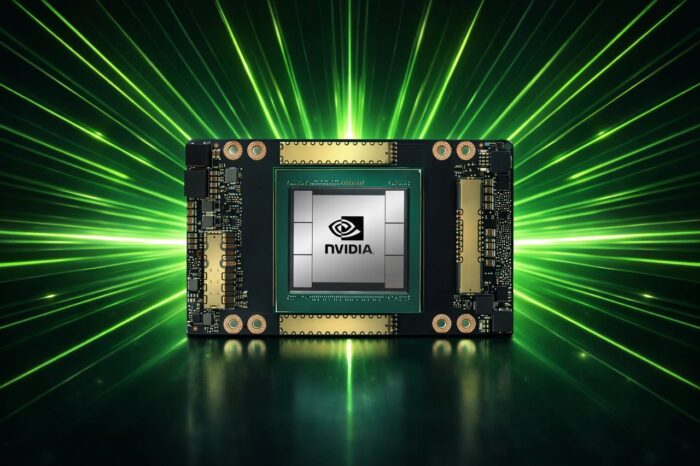
NVIDIA has reported full-year 2025 revenue of $215.9 billion, including $68.1 billion in Q4. Despite the record-breaking year, gaming revenue fell 13% due to ongoing DRAM shortages that continue to pressure GPU supply.
According to TechPowerUp, NVIDIA has begun shipping the first Vera Rubin VR200 rack samples to customers, marking an important step in its next-generation AI infrastructure rollout.
Vera Rubin VR200 enters early customer hands
NVIDIA confirmed that it has started shipping Vera Rubin VR200 rack samples to select customers. Volume production shipments of full Vera Rubin systems are scheduled for the second half of 2026.
The Vera Rubin platform combines the Vera CPU, Rubin GPU, NVLink 6 switch, ConnectX-9 SuperNIC, BlueField-4 DPU, and Spectrum-6 Ethernet switch into a unified AI infrastructure stack. NVIDIA says the system is designed to power trillion-parameter AI models while improving efficiency compared to previous generations.
The company claims Rubin may require only one-fourth the number of GPUs compared to Blackwell for certain workloads and could reduce inference costs by up to 10 times.
Rubin architecture and performance details
Each Rubin GPU delivers around 50 PetaFLOPS of FP4 compute, while the two-GPU Superchip configuration reaches roughly 100 PetaFLOPS of FP4 performance. The GPU integrates two reticle-sized compute chiplets and eight HBM4 memory stacks, resulting in 288 GB of HBM4 per GPU and approximately 576 GB per Superchip.
Rubin also introduces a modular, cable-free tray design aimed at improving resiliency and simplifying servicing compared to the Blackwell platform.
Vera CPU and system memory
The Vera CPU features 88 custom Armv9.2 “Olympus” cores with 172 threads. The system supports up to 1.5 TB of LPDDR5X memory in the SOCAMM form factor, enabling large-scale AI workloads with high bandwidth and low latency.
NVIDIA expects strong adoption from major cloud model builders as companies continue scaling next-generation AI models.
Feynman chips and ARM laptop CPUs on the horizon
Looking ahead, NVIDIA may unveil additional silicon at GTC 2026. CEO Jensen Huang has hinted that previously unseen chips will debut at the event, with industry reports pointing to possible Feynman AI processors.
In parallel, NVIDIA is reportedly preparing a return to laptop CPUs with ARM-based N1 chips, signaling broader ambitions beyond GPUs and data center accelerators.
With record revenue, expanding AI infrastructure, and new architectures in development, NVIDIA continues to shift its center of gravity toward AI, even as its gaming segment faces short-term supply challenges.

Read our disclosure page to find out how can you help Windows Report sustain the editorial team. Read more



Improve this guide


User forum
0 messages