
AMD Radeon RX 9000 Series Prices Drop in Japan as Demand Weakens


 3 min. read
  Published on

The graphics card market is seeing a major shift in Japan right now as AMD Radeon RX 9000 series GPUs are experiencing significant price drops. After a massive price spike triggered by the recent VRAM shortage, costs for the RDNA 4 lineup are finally retreating. The hardware is returning to its pre-hike price levels, providing some much-needed relief for PC builders who have been waiting out the volatile market.
Recent Gazlog market share data reflects exactly how much these pricing swings have changed buyer behavior over the last quarter.
The drop in demand is changing the GPU market in Japan
For those unaware, late last year, a global memory shortage triggered a 30 to 40 percent price increase across many hardware regions. By the end of January, the highly sought-after Radeon RX 9070 XT reached an average peak of 140,000 Yen, which translates to roughly $876. People simply stopped buying.
Notably, the gamers essentially abandoned the RX 9000 series, which caused a sudden and sharp decline in overall sales volume. This massive drop in demand forced AMD and local Japanese retailers to drastically adjust their pricing strategies to move stagnant inventory and win back builders who had paused their upgrade plans. In a similar case, when AMD launched the Ryzen 7 9850X3D, the 9800XD received a price drop.
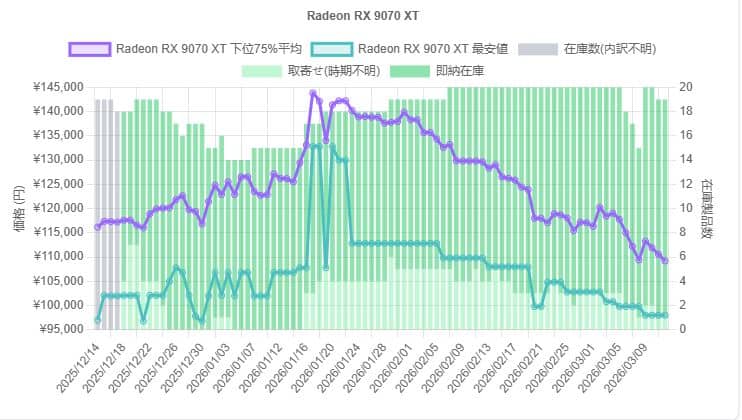
As a result, buyers who had the patience to wait are finally seeing real financial relief. The average price of the flagship RX 9070 XT has dropped to 109,000 Yen, roughly around $682. That represents a nearly 22 percent drop from the January peak and almost a 19 percent decrease month-over-month. During recent Japanese spring sales events, the lowest selling prices have even dipped under the critical 100,000 Yen mark. We’ve seen a similar price drop on this GPU last month as well.
Other models in the lineup, including the standard RX 9070 and the more budget-friendly RX 9060 XT, are experiencing similar downward trends. They are rapidly returning to pricing structures last seen in November 2025, essentially erasing the inflated costs of the winter months.
Let’s talk about the competition in the GPU market
What this really means is that AMD is becoming highly competitive again due to high necessity. The market situation looks very different from NVIDIA GPUs. While AMD hardware is getting significantly cheaper, NVIDIA’s competing GeForce RTX 50 series has not seen much price relief.
In fact, mid-range and budget NVIDIA cards have actually experienced slight price increases in the Japanese market over the same period. For hardware enthusiasts looking to upgrade their systems today, the recent price drops make the entire Radeon lineup a much more financially compelling option compared to the alternatives.
Via wccftech


Read our disclosure page to find out how can you help Windows Report sustain the editorial team. Read more



Improve this guide



User forum
0 messages