
Microsoft's Q3 2026 Revenue Jumps 18% Fueled by Cloud & Azure Growth


 2 min. read
  Published on

Microsoft has reported its fiscal year 2026 Q3 earnings with revenue $82.9 Billion, rising $12.8 billion (18%) YoY, driven primarily by growth in Microsoft Cloud services. Specifically, Intelligent Cloud revenue increased, supported by continued strength in Azure (up by 40% YoY). Meanwhile, Productivity and Business Processes also grew, fueled by Microsoft 365 Commercial cloud adoption.
Azure and Cloud push Microsoft growth as Xbox weakens further
However, More Personal Computing revenue declined due to lower hardware sales across Devices and Gaming, although Search advertising growth helped offset part of the drop. Meanwhile, Windows OEM and Devices revenue fell 2%, reflecting continued pressure in Microsoft’s hardware segment.
Moving on, gaming revenue declined 7%, while Xbox content and services revenue dropped 5%. As expected, Xbox hardware revenue plunged 33%, marking the steepest decline across Microsoft’s consumer portfolio.
In addition, cost of revenue increased $4.9 billion, representing a 22% rise, mainly due to higher demand and expansion across Microsoft Cloud. As a result, gross margin increased $7.9 billion, up 16%, with gains across all major segments. That said, gross margin percentage declined due to continued investment in AI infrastructure and rising AI product usage, though efficiency gains across Microsoft Cloud helped reduce the impact.
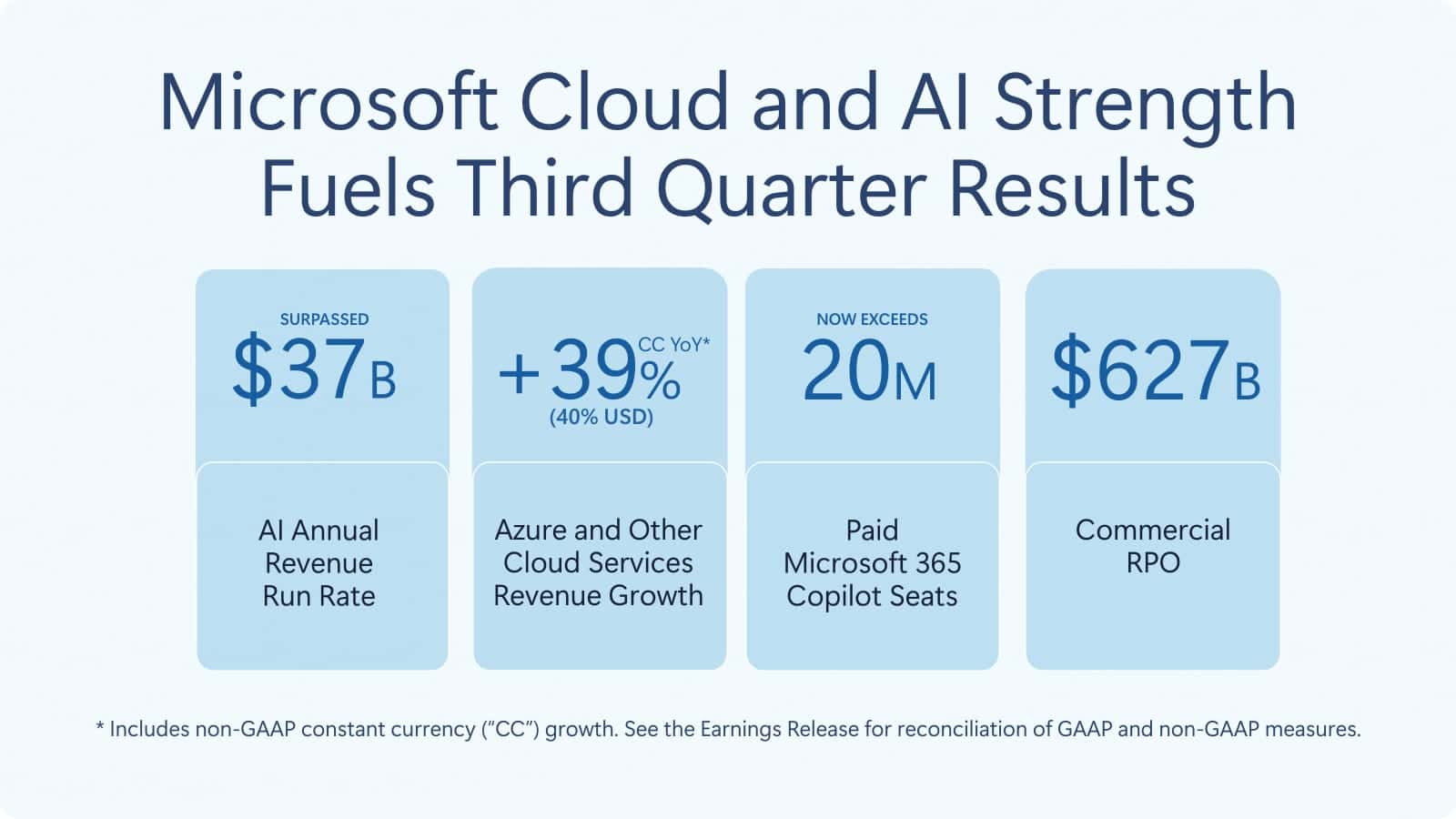
Notably, Microsoft Cloud gross margin percentage decreased to 66%, reflecting heavier AI-related spending. Even so, efficiency improvements in Azure and Microsoft 365 Commercial cloud partially balanced the pressure from increased usage and infrastructure costs.
At the same time, operating expenses rose $1.5 billion, up 9%, driven by ongoing investments in research and development, compute capacity, AI talent, and data required for product development. Despite this, total company headcount declined year over year, showing tighter workforce management alongside rising investment intensity.
Furthermore, operating income increased $6.4 billion, up 20%, supported by strong growth in Productivity and Business Processes and Intelligent Cloud segments. Foreign exchange also played a role, contributing a favorable impact of 3% on revenue, 3% on gross margin, and 4% on operating income, while cost of revenue saw an unfavorable impact of 2%. Finally, net income and diluted EPS were impacted by OpenAI-related investment losses.

Read our disclosure page to find out how can you help Windows Report sustain the editorial team. Read more



Improve this guide




User forum
0 messages