
FIX: Wireless adapters incompatible with Windows 10/11


 4 min. read
  Updated on

Wireless adapters are essential for connecting your PC or laptop to Wi-Fi networks. However, many users face issues when their wireless adapters are incompatible with Windows 10 or Windows 11. This often results in dropped connections, error messages, or complete inability to detect Wi-Fi signals.
Table of contents
Why Wireless Adapters May Not Work With Windows 10/11
Several factors can cause incompatibility between wireless adapters and Windows 10/11. Common reasons include outdated drivers, lack of manufacturer support, missing protocols, or unsupported hardware. In some cases, a wireless adapter that worked with Windows 7 or 8 may stop working after upgrading to Windows 10 or 11.
- Driver support dropped: Some manufacturers no longer provide updated drivers for older adapters.
- Protocol mismatch: Adapters that only support outdated standards like 802.11b/g may not perform correctly.
- Hardware limitations: Older chipsets may not fully support Windows 10/11 networking features.
- Secure boot or compatibility issues: Windows security improvements can block unsupported drivers.
Common Wireless Adapters Known To Cause Issues
Based on user reports and official manufacturer notes, several wireless adapters have been flagged as problematic or outright incompatible with Windows 10 and Windows 11:
- Broadcom 802.11n adapters – Known for frequent disconnects and missing driver updates.
- Qualcomm Atheros AR956x – May fail to recognize Wi-Fi networks after upgrading.
- Realtek RTL8188/8192 series – Users report driver crashes and unstable speeds.
- Intel Centrino Wireless-N 1000/1030 – No official Windows 10/11 drivers available.
- Older USB Wi-Fi dongles – Many generic brands lack long-term driver support.
How To Check If Your Wireless Adapter Is Compatible
Before upgrading to Windows 10 or 11, it’s important to confirm whether your wireless adapter will work properly. You can check compatibility using these steps:
- Open Device Manager → Expand Network Adapters.
- Note the model number of your wireless adapter.
- Visit the manufacturer’s website to see if Windows 10/11 drivers are listed.
- If only Windows 7/8 drivers are available, compatibility issues are likely.
Howow to fix internet connection problems for older Wi-Fi adapters in Windows 10
The main gap between Windows 10 and your old Wi-Fi adapter is an outdated driver. If you current driver is not compatible with Windows 10, there’s no chance you can connect to internet normally. So, the solution for this problem is obvious, you just need to update your Wi-Fi adapter driver, and you should be able to connect to internet in Windows 10.
However, updating a driver for an older piece of hardware is slightly more complicated than updating a driver for newer software. The method is still quite similar, but it requires more work. So finally, here’s what you need to do to properly update your older Wi-Fi adapter’s driver in Windows 10:
- Go to your wireless adapter manufacturer’s website, and find and download the latest driver for your Wi-Fi router. Even if it says that the driver is only compatible with older versions of Windows.
- It will probably come as a .zip file, so extract everything from a zip file to an empty folder.
- Now, go to Search, type devicemng, and open Device Manager.
- Find your wireless adapter from the list of installed hardware, right-click it, and select Update Driver Software.
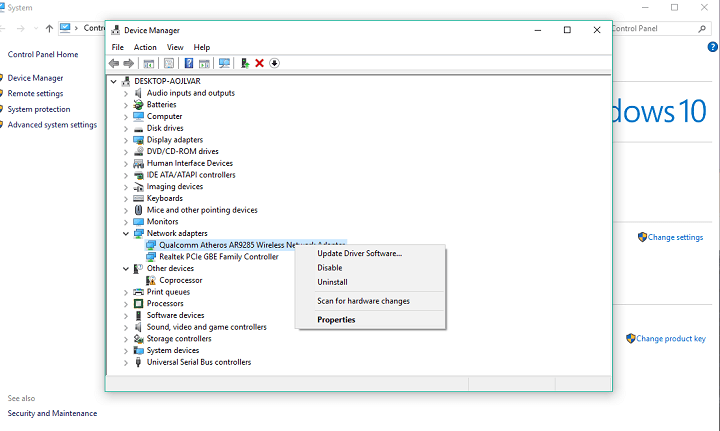
- Now, instead of searching for a driver automatically, click Browse my computer for driver software.
- Click Browse to locate the adapter driver.
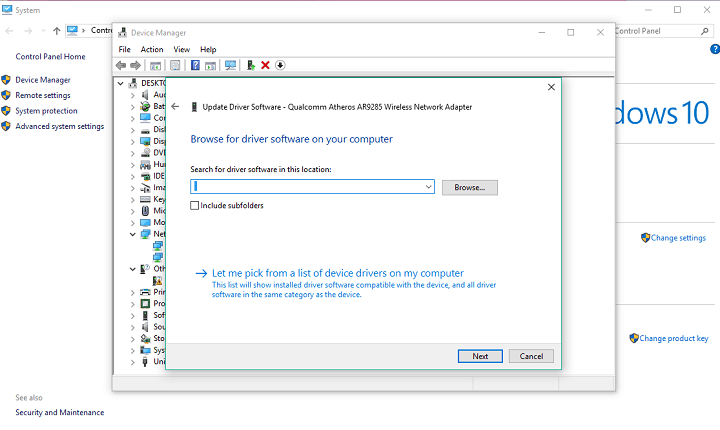
- Check the Include subfolder option.
- Click Next to complete the task and install the new driver.
- Restart your computer
Even after performing this, there’s no guarantee that your Wi-Fi adapter will start work normally. Solution for that is to actually keep experimenting with different versions of a driver for your Wi-Fi adapter. So, if one version doesn’t get the job done, download anther one, and repeat the process, don’t get discouraged if the first try fails. You’ll have to do this until a manufacturer releases a Windows 10-compatible driver for your device. If that ever happens.
Also, even if you managed to get your Wi-Fi adapter working with the current version of Windows 10, there’s no guarantee that it will stay functional after Microsoft releases a new major update for Windows 10, like the Redstone 2 update.
In case a major update causes your Wi-Fi adapter to stop working again, the only solution you’ll have is to actually replace it with a new one. At the end of the day, that shouldn’t be a problem either, as Wi-Fi adapters are not that expensive, plus you’ll be saved from the pain of installing driver software over and over again.
That should be all for our article about fixing compatibility problems with older Wi-Fi routers. In case you have any comments, questions, or suggestions, just let us know in the comments below.

Read our disclosure page to find out how can you help Windows Report sustain the editorial team. Read more



Improve this guide



User forum
0 messages