
Google Tests Rollback Option for Chrome’s Tracking Protection Amid Third-Party Cookie Phase-Out Plans
A new Chrome Canary flag shows Google is preparing a backup plan as it pushes ahead with third-party cookie blocking under Privacy Sandbox.


 3 min. read
  Published on

Google is proceeding cautiously with its plan to phase out third-party cookies in Chrome, part of its broader Privacy Sandbox initiative. While Tracking Protection has already started rolling out on desktop and Android, the company is now testing a rollback option hidden behind a flag in Chrome Canary.
The new flag, named “Rollback for Mode B,” is available across Mac, Windows, Linux, ChromeOS, and Android. When enabled, it provides a backup option in case websites or services stop working due to blocked third-party cookies.

After restarting the browser, users see an infobar at the top of Chrome that reads: “Your current Chrome settings have been updated to allow websites to access third-party cookies. You can change this anytime in settings.” The prompt offers quick actions: “Got it” to accept or direct access to settings to adjust protections.

Why Google is testing a rollback for Third-party cookies in Chrome
This testing suggests Google is preparing for cases where stricter cookie rules affect the web experience more than expected. While Tracking Protection also includes features like IP protection in Incognito mode (expected in Q3 2025), third-party cookie blocking remains the centerpiece
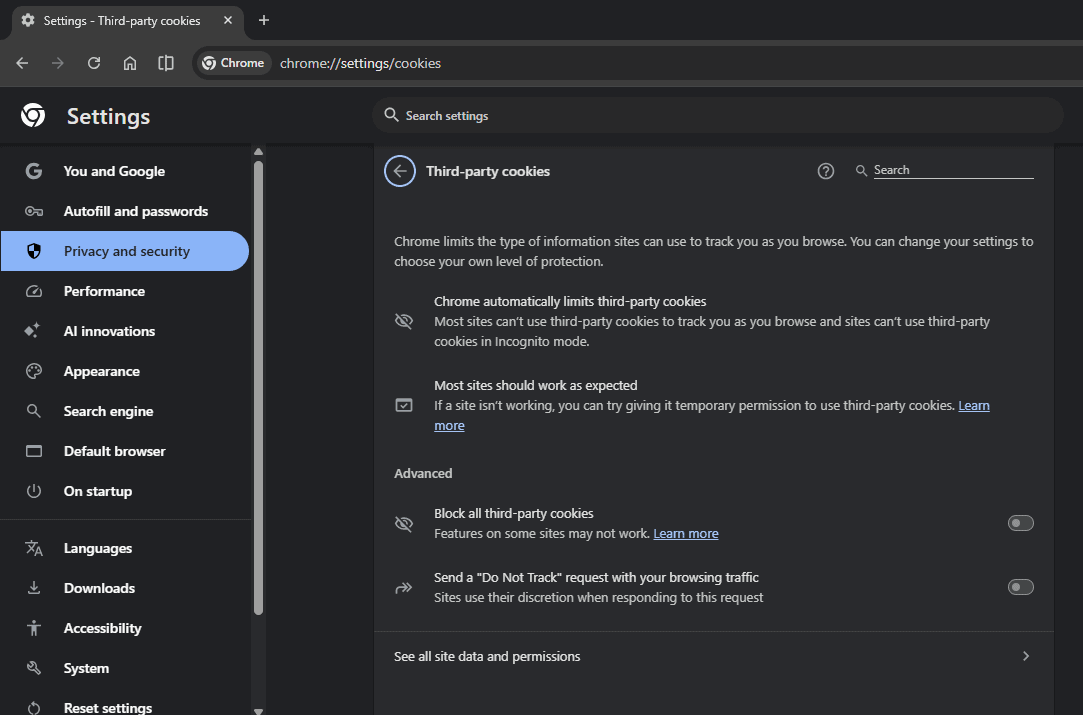
Earlier this year, Google confirmed it will not introduce a standalone prompt for third-party cookies. Instead, users can manage the setting under Chrome’s Privacy and Security menu.
Importantly, third-party cookies are still allowed by default in normal browsing, but they are blocked by default in Incognito mode. That split shows how Google is trying to balance privacy with compatibility.
Moving away from third-party cookies is not simple, with developers, advertisers, and regulators all involved. We don’t know if this change will ever reach all users, but it shows that getting rid of third-party cookies will be difficult.
That’s not all. Chromium browsers on Windows 11 will soon use the GPU for smoother video playback, and Chrome may use Gemini AI to finalize checkout prices for BNPL payments.
Additionally, Chrome’s new tab page and bookmarks will load faster thanks to a prefetching technique.


Read our disclosure page to find out how can you help Windows Report sustain the editorial team. Read more



Improve this guide

User forum
0 messages