Microsoft says Copilot can you help you land a job

Microsoft says Copilot is a game changer for students and graduates navigating the often overwhelming post-graduation job and internship search.

In a blog post, the Redmond-based tech giant says Copilot is designed to help users stand out in a competitive job market by offering a suite of AI-driven tools tailored to tackle key aspects of the application process.

One standout feature is its ability to refine resumes. Copilot analyzes job descriptions, identifies relevant skills and experience, and ensures resumes are polished and tailored to specific roles. The same level of detail and customization is applied to cover letters, as Copilot crafts compelling narratives that align with potential employers’ requirements.

Beyond traditional application materials, Copilot guides users in optimizing their LinkedIn profiles—an essential tool for professional networking in today’s digital-first world. It offers suggestions for profile improvement, ensures keywords are included for visibility, and even provides tips on engaging with professional communities.

Additionally, Copilot shares advice on building networking strategies, which are critical for connecting with industry professionals and uncovering hidden job opportunities. These insights will encourage users to take proactive steps in their career development.

The Redmond-based tech provided a list of comprehensive prompts to address to Copilot to get the AI model to come up with the best results on how to make your CV shine. You can read all about it here.

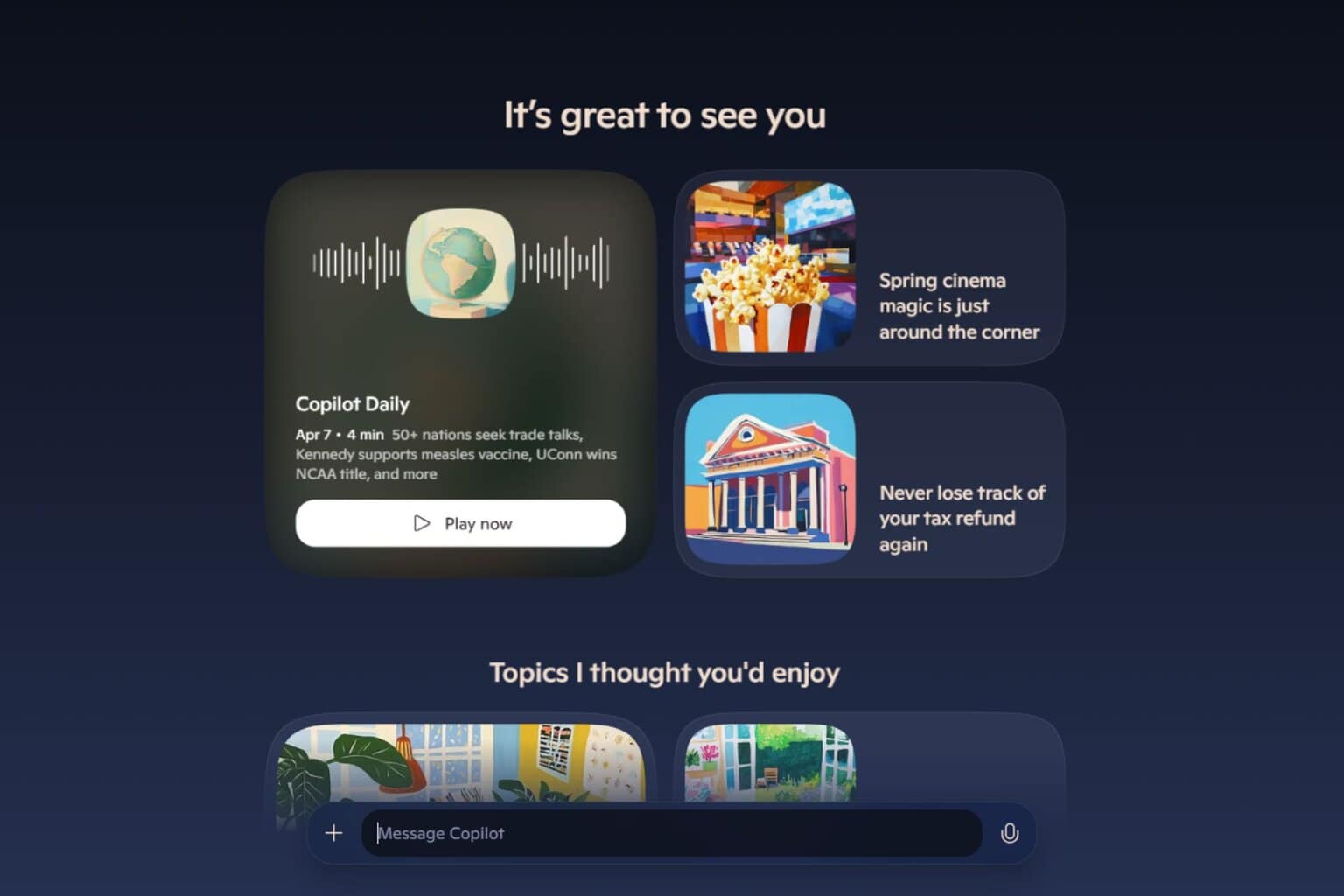
Or, you know, you can always ask it to come up with a podcast on how to land a job.

The apps using the sprotect.sys driver will crash Windows 11 24H2, but Microsoft is working on a fix

Microsoft has recently put a safeguard hold on the Windows 11 24H2 update for specific devices. This is due to a compatibility issue with the sprotect.sys driver, which is linked to specialized security software designed for encryption protection.

The affected driver has been causing severe problems during the update process, including system freezing and blue or black screen errors, but Microsoft has acknowledged the issues.

To address this, Microsoft has temporarily blocked the update from being installed on impacted devices. This proactive measure ensures that users won’t encounter disruptions while resolving the issue.

According to the Release Health Dashboard, Microsoft is actively working with the vendor, SenseShield Technology Co, to identify and implement a fix.

Microsoft is working with SenseShield Technology Co on a compatibility issue between Windows 11, version 24H2 and the sprotect.sys driver. This issue causes affected devices to become unresponsive and display a blue or black screen error. The sprotect.sys driver provides encryption protection and is used by specialized security software and enterprise solutions. This driver can be automatically introduced into a system as part of the installation process of many different applications. The issue impacts devices with any version of the sprotect.sys driver (1.0.2.372 and 1.0.3.48903).

The Redmond-based tech giant advises not to manually install the update until a resolution is provided.

Have you experienced this issue?

Copilot will be enhanced with a memory capability that will remember prior conversations

Microsoft is introducing significant updates to Copilot, enhancing its functionality across multiple platforms.

From generating personalized podcasts to being enhanced with Avatars that will bring popular assistants, such as Clippy, back, the Redmond-based tech giant will also enhance Copilot with a memory, the Copilot Memory.

Copilot Memory, announced at the special conference celebrating 50 years of Microsoft, offers users a personalized experience in which the assistant remembers preferences, interests, and prior interactions.

This feature aims to deliver context-aware responses tailored to individual needs, but it will also consider previous interactions to provide a meaningful conversation.

Memory is essential for creating a true AI companion. With Memory, Copilot can remember important details: your favorite food, the types of films you enjoy and your nephew’s birthday and his interests. As you interact with Copilot, it notes your preferences, building a richer user profile and offering tailored solutions, proactive suggestions and timely reminders. Copilot prioritizes security and privacy, giving you control through the user dashboard and the option to choose which types of information it remembers about you or to opt out entirely. You remain in control.

Below, you can watch a trailer for the new capability.

What do you think about this new capability?

Firefox to Use AI to Generate Link Previews on Hover: Hands-On

Mozilla has ramped up its efforts when it comes to using AI in the Firefox browser. Most recently, the company has quietly started testing AI-powered link previews on hover-over. Here is our first look and hands-on experience.

When you come across a website with links to some articles, link previews help readers decide which ones to click and view by checking the contents in the preview. The link preview will be especially useful when you are dealing with search results, where hovering over a link helps determine whether the article is worth visiting.

Firefox aims to give users this useful feature powered by Artificial Intelligence. Here is how the feature works in Firefox.

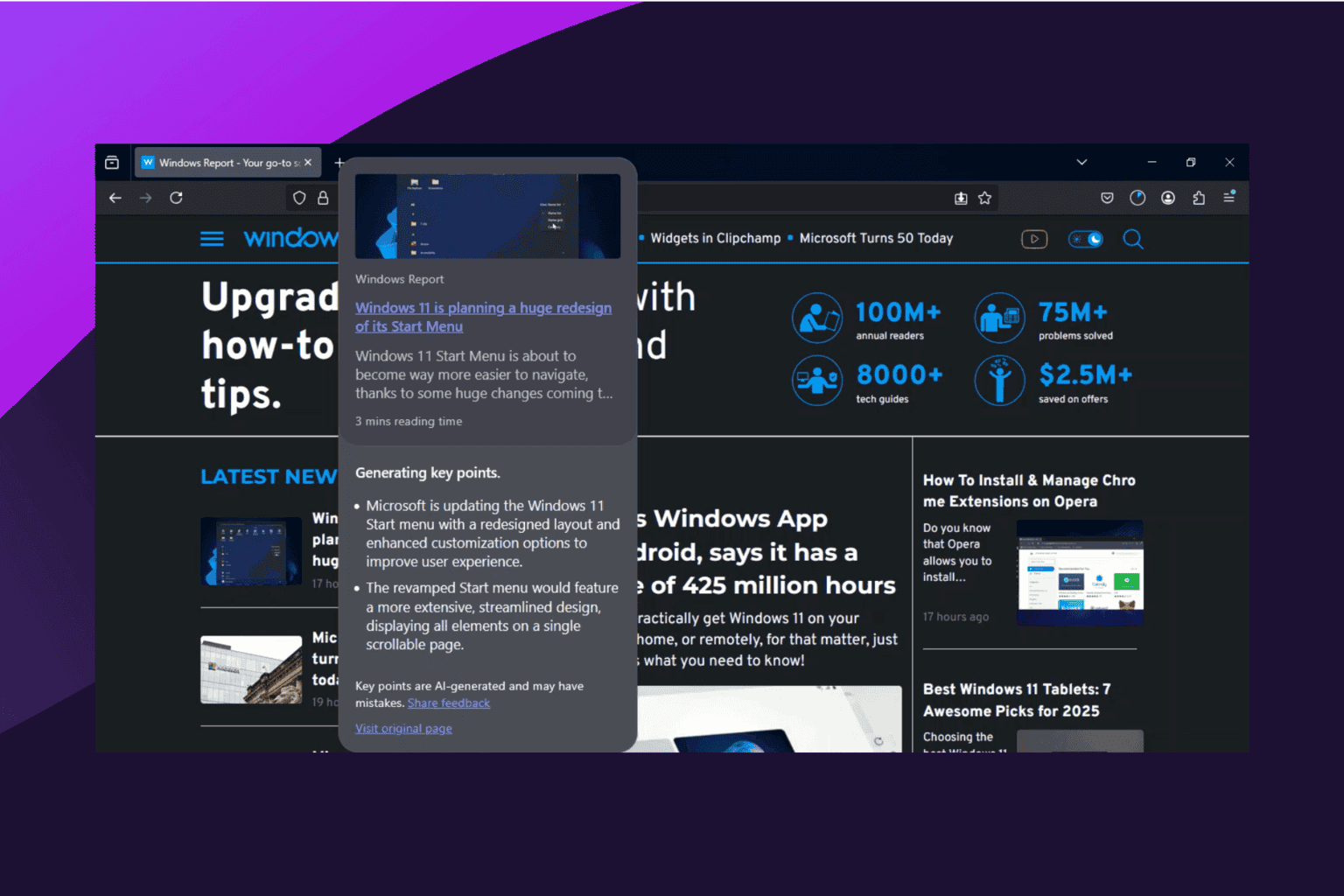
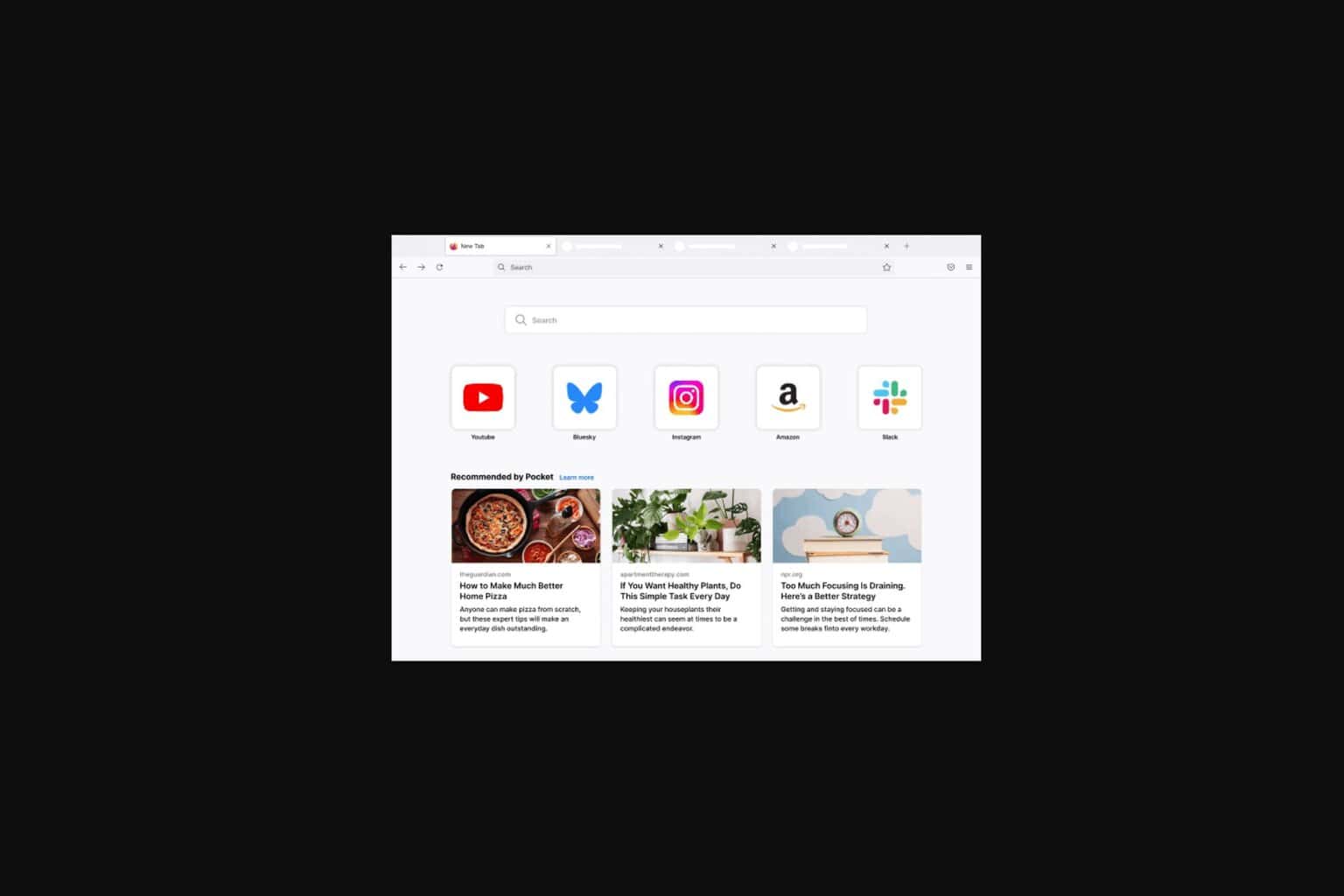
When active, hovering over a link with a shortcut generates a preview with a summary of the article and a list of “key points” below. While generating content, the preview panel states, “Key points are generated by AI and may contain mistakes,” with a link to the original page at the bottom.

Image Credit: WindowsReport

The preview with a summary at the top also contains a link to the article with an “estimated reading time”, which helps you decide whether it’s worth spending your time on it.

Image Credit: WindowsReport.

The link preview (or preview panel) will close when you press Esc or click any empty space on the page.

Image Credit: WindowsReport.

Mozilla is testing the feature, and shortcuts will be available for Firefox on Windows and Mac. As we said at the beginning, the link preview feature is especially useful on search results with multiple links, such as Google, Bing, DuckDuckGo, etc.

Image Credit: WindowsReport.

In our testing, the feature worked quite well with most of the sites, but AI-generating key points in the preview panel might take some time. We hope this will speed up as the feature development progresses, and that Mozilla will also take care to ensure no offensive words are created by AI.

Image Credit: WindowsReport.

Link previews are not new. Google rolled out this feature to Chrome publicly in a release version sometime back after extensive testing. Chrome offers a right-click option for previewing a link, as well as a keyboard shortcut (Alt + Hover). However, Chrome doesn’t use AI—here, Firefox is, and that’s the difference.

The Link Preview feature in Firefox is still being developed and is in the testing phase. Since it’s an AI feature, it might be made completely optional and generally not enabled by default.

That’s not the only feature Firefox is using AI for. The browser is also using AI for tab group suggestions, as well as creating alt text for PDF Images and hosting various AI assistant chatbots available in the sidebar, such as DeepSeek, Gemini, and others, with a proofreading prompt.

What’s your take on Firefox’s AI-powered link preview feature? Let us know your thoughts in the comments below.

Copilot will generate personalized podcasts for users

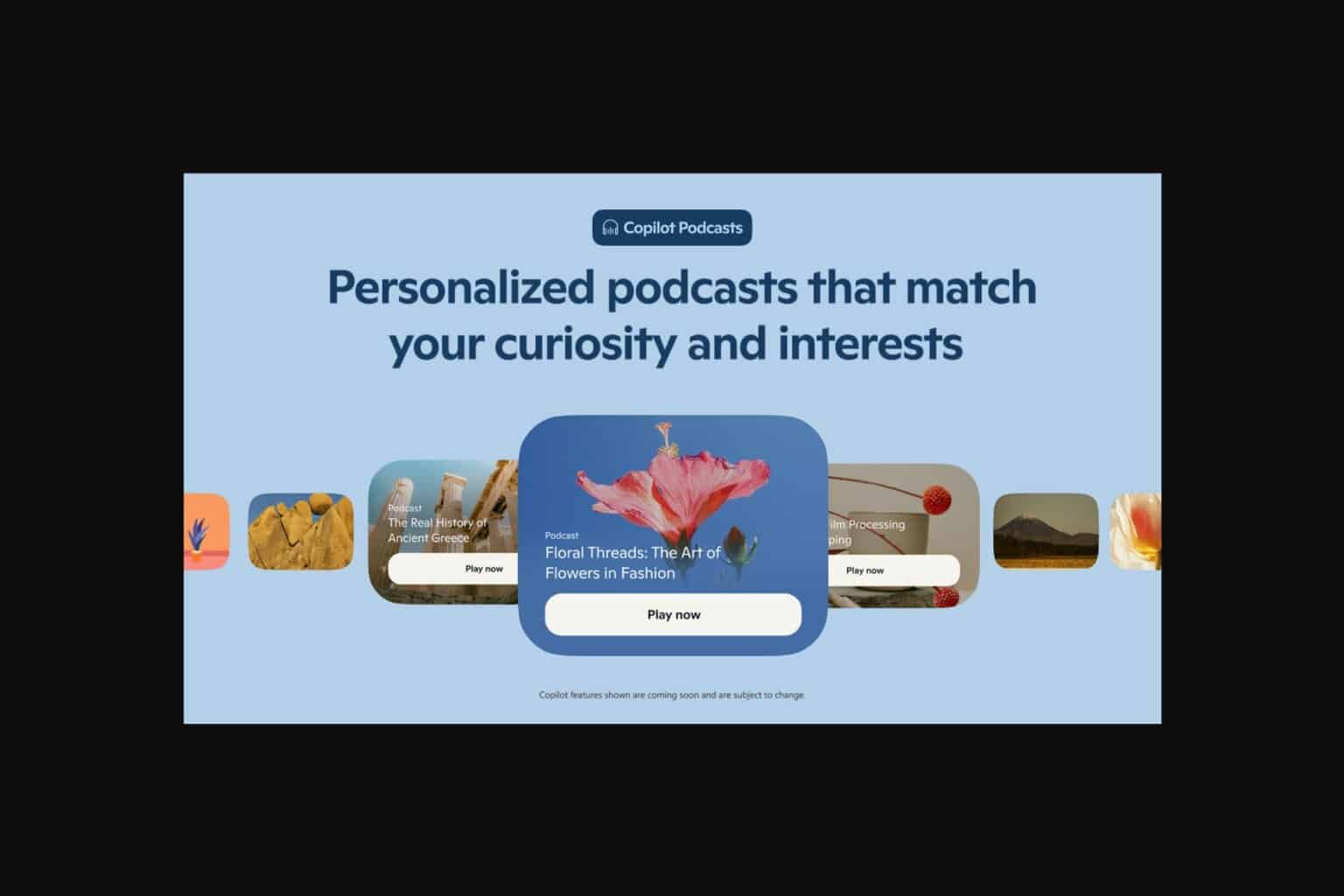
Microsoft has introduced an innovative feature for Copilot that is poised to revolutionize how people consume information: personalized AI-generated podcasts.

According to the announcement, this new capability allows users to create podcasts tailored to their interests and needs. Whether summarizing web content, distilling insights from user-provided sources, or delivering engaging narratives, Copilot adapts its podcast content to suit each user’s preferences.

What’s truly groundbreaking is the dynamic and interactive nature of these podcasts. Users can actively engage with Copilot during the podcast, asking questions, seeking clarification, or exploring additional topics.

This transforms the traditional one-way podcast listening experience into a two-way conversational interaction, making learning and entertainment more engaging and personalized.

Announced last week to celebrate Microsoft’s 50th anniversary, this feature is part of the Redmond-based tech giant’s broader strategy to enhance Copilot’s capabilities and establish it as a versatile AI assistant beyond conventional functions.

With Copilot’s new podcast feature, Microsoft is also positioning itself as a strong contender against Google’s NotebookLM. Given how many Windows users have access to Copilot, the company might succeed.

Copilot will also be enhanced with an Avatar capability coming to the AI model later this year. Microsoft says it’s trying to make the AI model more fun, engaging, and useful.

What are your thoughts on this?

With Copilot Avatar, Microsoft will finally bring Clippy back

Microsoft turned 50 last week, and as part of the celebration, the Redmond-based tech giant announced some big things coming to Copilot, including a Copilot Avatar capability.

You know how we said not so long ago that Microsoft should bring all assistant characters back after it teased Clippy at the beginning of the year?

Well, it seems the company might do just that: Among the innovative features, Copilot Avatar will allow users to customize Copilot’s appearance with a virtual face or body.

This feature aims to add a layer of personality and relatability to the AI, making interactions more engaging.

There’s speculation about bringing back nostalgic characters like Clippy in a modernized form, which could resonate with long-time Microsoft users.

But the other characters are not out of the question. Assistants such as Rover, Mother Earth, F1, Earl, The Dot, or even Cortana, for that matter, might make a comeback.

For now, though, Microsoft hasn’t specified when this feature will be available to the public, and it only said that it’s early in development. Still, the goal is to make Copilot more engaging, fun, and customizable. However, the Redmond-based tech giant will announce to users when the preview is available.

What do you think about this?

Windows 11 is planning a huge redesign of its Start Menu

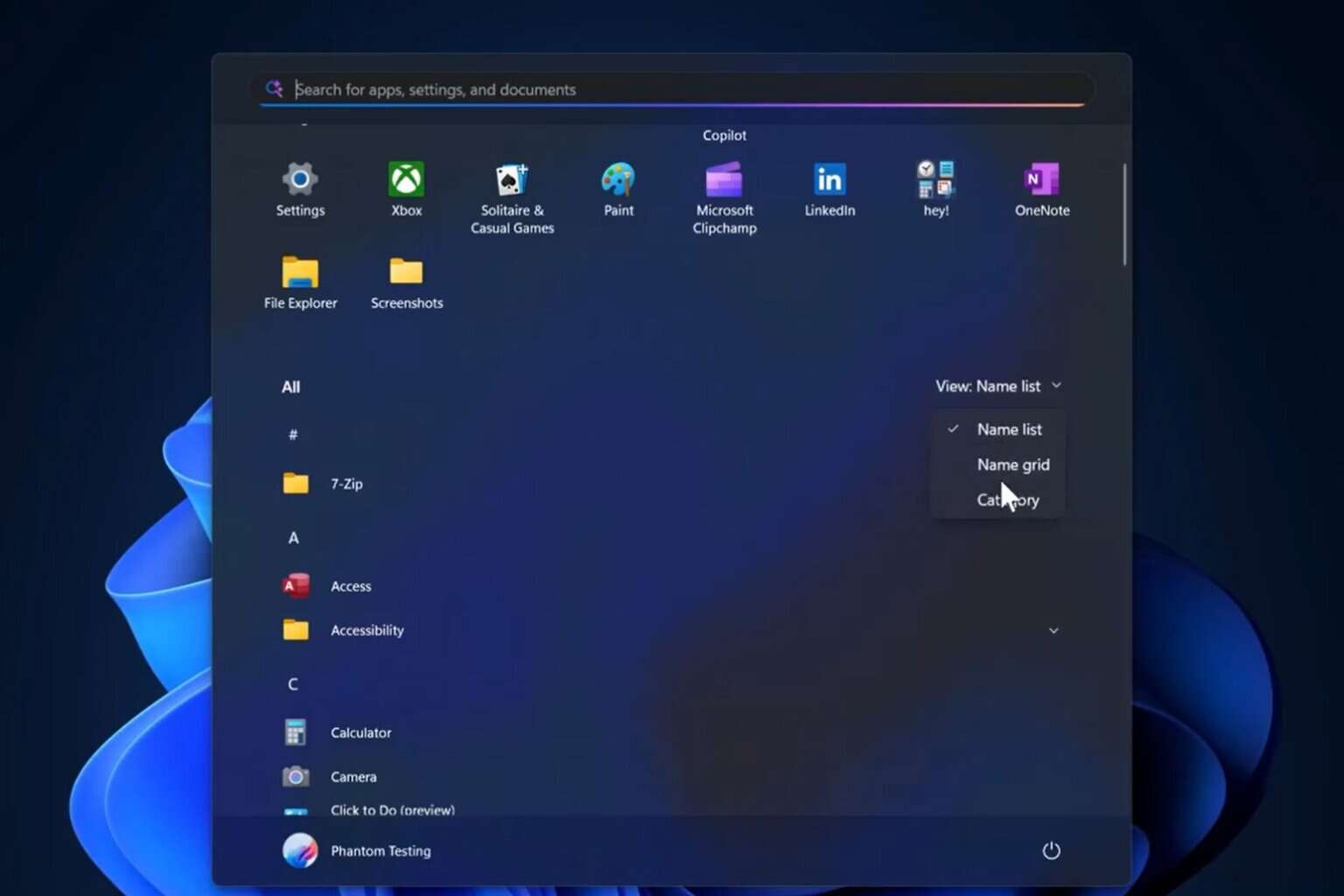
Microsoft plans to redesign the Windows 11 Start menu with a refreshed layout and enhanced customization options to improve user experience.

The revamped Start menu would feature a more extensive, streamlined design, displaying all elements on a single scrollable page. The “All Apps” list, which showcases installed applications, would be located below the recommendations section for easier access.

One of the biggest changes is the ability to turn off the recommendations section entirely, granting users more control over their Start menu. This customization option has been highly requested by users seeking a cleaner interface.

Additionally, the “Pinned” apps list, which highlights frequently used applications, will be adjusted to display only two rows by default. However, users can expand this section to include more apps if needed.

Tech enthusiast @phantomofearth discovered the change in the latest Dev and Beta channel cumulative updates (CUs). For now, it’s hidden, meaning Microsoft doesn’t want Windows users to see it yet. However, the feature can be uncovered using the special third-party app Viveool.

What do you think about these major changes coming to Windows 11’s Start menu?

Photo credits: @phantomofearth

Microsoft is turning 50, today, and it’s one of the most impressive stories of the tech world

To put it in perspective, Microsoft was founded on April 4, 1975, by Bill Gates and Paul Allen, precisely 50 years ago, or half a century. Ever since, the two childhood friends’ company has grown to be, at times, the most prominent organization in the world.

While Microsoft will hold a conference later today, where it will probably discuss new products and services and even the latest Xbox console, it’s also worth examining the tech giant’s legacy.

Despite turning 50, Microsoft is still more powerful and bigger than ever. One of the leading companies in the world, the tech giant has not only survived fierce competition (Apple, for example) but also the touchscreen era of smartphones, tablets, and laptops.

The company has reinvented itself over and over again. Despite its mistakes when it comes to providing the best services (the whole Windows 10 vs. Windows 11 debacle), or the best marketing (renaming products and services over and over again, as well), the Redmond-based tech giant has achieved incredible things: look at Xbox, and the Xbox Game Pass, which is now the gaming industry’s standard. Look at its Surface laptops; they are some of the best (and I don’t say this lightly since I own one) devices around. Look at its investemnts in AI.

So, Microsoft as a tech company turning 50 is a huge deal. It’s one of the companies with such a good reputation that it looks good on any CV. And I’m not writing this to praise them, because it also has its negative parts. Despite these, the company has always managed to push through and deliver better and sometimes underrated products, such as Microsoft Edge.

Microsoft is not going anywhere anytime soon!

What do you like about the company? Which Microsoft services and products are your favorite? Let us know in the comments section below.

Make sure to catch the event today.

Microsoft Teams will warn users when sensitive content is shared in virtual meetings

Microsoft Teams will be enhanced with a new feature to alert users when sensitive content is shared in virtual meetings.

This innovative technology safeguards this kind of content during presentations by actively detecting sensitive information displayed on shared screens and alerting the presenter and meeting organizers when such content appears.

The feature was announced in a recent entry to the Microsoft 365 Roadmap, and it works seamlessly by monitoring the shared content in real time and identifying any confidential or private material, such as personal data or classified documents.

Once detected, the presenter receives an alert, allowing them to address the situation promptly and ensure the privacy of sensitive information.

This addition aims to minimize the risk of accidental exposure of sensitive material during meetings, supporting professional and personal settings where confidentiality is crucial.

Here’s what the entry says:

Screen content shared during a meeting is protected by detecting sensitive content and alerting the presenter and organizers when it appears.

Microsoft says the new feature will be added to Teams in May and available to all users.

Speaking of sensitive content, Teams Rooms on Windows will be enhanced with facial recognition and Cloud IntelliFrame capabilities.

Microsoft’s new Copilot Search wants to take on Google Search, and it might be able to

Microsoft wants to take on Google with its latest innovation, Copilot Search, a feature designed to enhance the search experience by integrating advanced AI capabilities. This move positions Microsoft as a strong competitor to Google’s AI-powered search tools.

As the name suggests, Copilot Search leverages generative AI to provide users with more contextual and conversational search results.

Unlike traditional search engines, this feature allows users to interact with the AI more naturally and intuitively, making finding relevant information more straightforward and completing tasks efficiently.

For example, we used Microsoft’s new Copilot Search to search for Windows Report, and the results were impressive. Not only did it suggest Windows Report, as the main result, but it also offered additional resources on the same topic – Microsoft and Windows-related subjects, as you can see below.Microsoft Copilot Search

The feature is part of Microsoft’s broader strategy to integrate AI across its ecosystem, including Windows, Office, and Azure. By doing so, Microsoft aims to redefine how users interact with technology, offering a seamless and intelligent experience.

You can access it here.

Intel Unison, one of Phone Link’s best alternatives, will be deprecated

Intel has announced that its Unison app, which connects Windows PCs and smartphones, will be discontinued by the end of June 2025. The app, which debuted at Intel’s Innovation 2022 event, offered features such as making phone calls, sending text messages, viewing notifications, and transferring files between devices.

The decision to discontinue the app comes as Intel shifts focus away from this utility. While the app will cease functioning for most platforms by June 30, 2025, Lenovo Aura platforms will retain service throughout the year.

Intel Unison was praised for its seamless integration with iOS and Android devices, making it a popular alternative to Microsoft’s Phone Link app.

Users are encouraged to explore other multi-device experience alternatives, such as Microsoft’s Phone Link app, which now supports iPhones and offers deep integration with Windows 11.

For more details, you can visit the official announcement here.

Microsoft makes Windows App available on Android, says it has a total usage time of 425 million hours

Microsoft has officially launched the Windows App on Android, marking the end of the Remote Desktop app on the platform. This new application serves as a unified access point for Microsoft’s virtualization services, including Remote Desktop, Windows 365, Azure Virtual Desktop, and Microsoft Dev Box.

The Windows App brings several enhancements over its predecessor, such as a redesigned user interface, improved user experience, and support for Chrome OS. Additionally, the app introduces passkey support for modern security and authentication, ensuring a safer and more streamlined connection process.

Microsoft has been gradually phasing out the Remote Desktop app across various platforms, with support for the app set to end on May 27, 2025. The Windows App is now available on macOS, iOS, web, and Android and can also be downloaded on Windows, where it will eventually replace the old Remote Desktop app.

The company reports that the Windows App has already logged over 425 million hours of usage across all platforms. While the new app has been praised for its functionality, some users have expressed concerns about its name, finding “Windows App” less intuitive than “Remote Desktop App.”

The Windows App came just in time, as the new Windows 365 Link device became available worldwide. If you don’t know, this pocket-sized device is the newest Cloud PC from the Redmond-based tech giant.

Microsoft’s On-Premises Server Products just got more expensive

Microsoft has unveiled significant updates to the licensing and pricing structure for its on-premises server products, set to take effect in July 2025.

Key updates include the general availability of Exchange Server Subscription Edition and Skype for Business Server Subscription Edition. These products will transition from a three-year version cycle to a “version-less” model, offering regular updates under the Modern Lifecycle Policy. To deploy these subscription editions, customers must have active Software Assurance (SA) or cloud subscription licenses for all users and devices accessing them.

Additionally, Microsoft has announced a 10% price increase for standalone on-premises server products, including SharePoint Server, Exchange Server, and Skype for Business Server. The Core CAL Suite and Enterprise CAL Suite will see price hikes of 15% and 20%, respectively. These adjustments aim to support ongoing maintenance and updates for on-premises solutions.

Significantly, these changes will not impact pricing for cloud-based services such as SharePoint Online, Exchange Online, or Microsoft Teams, available through Microsoft 365 licenses.

In a blog post, Microsoft says these changes reflect the company’s commitment to supporting customers who rely on on-premises deployments while aligning with modern lifecycle policies.

However, the changes might not go well with customers, as we could see earlier this year when the Redmond-based tech giant increased the prices for Microsoft 365 subscriptions.

For more details, you can visit the official announcement here.

With KB5055625, Windows 11 finally lets users to scale the icons of their taskbar

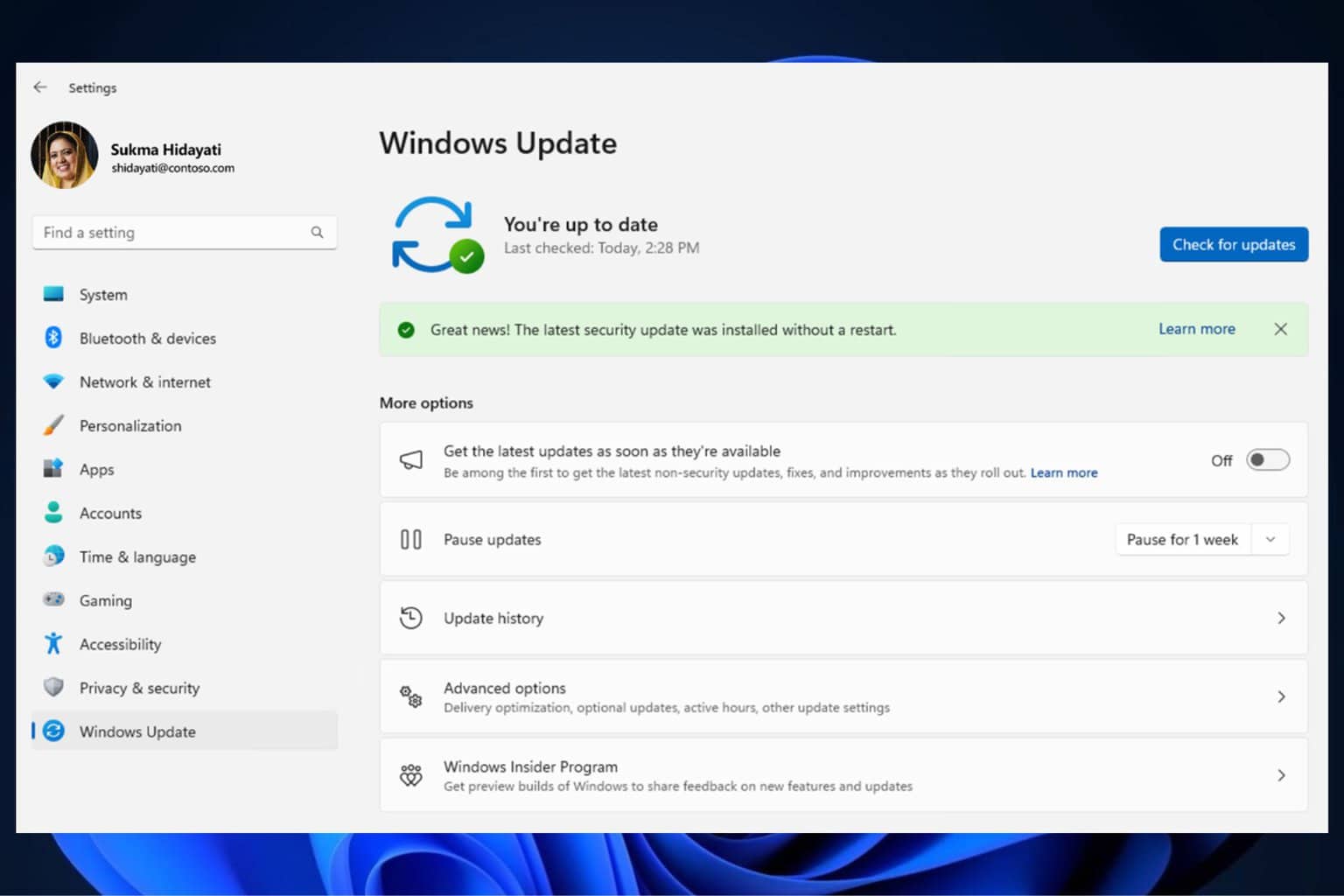
Microsoft has released Windows 11 Insider Preview Build 26200.5518, KB5055625, to the Dev Channel. This build introduces several new features and improvements to enhance user experience and productivity, including a revamp of File Explorer. Here’s how:

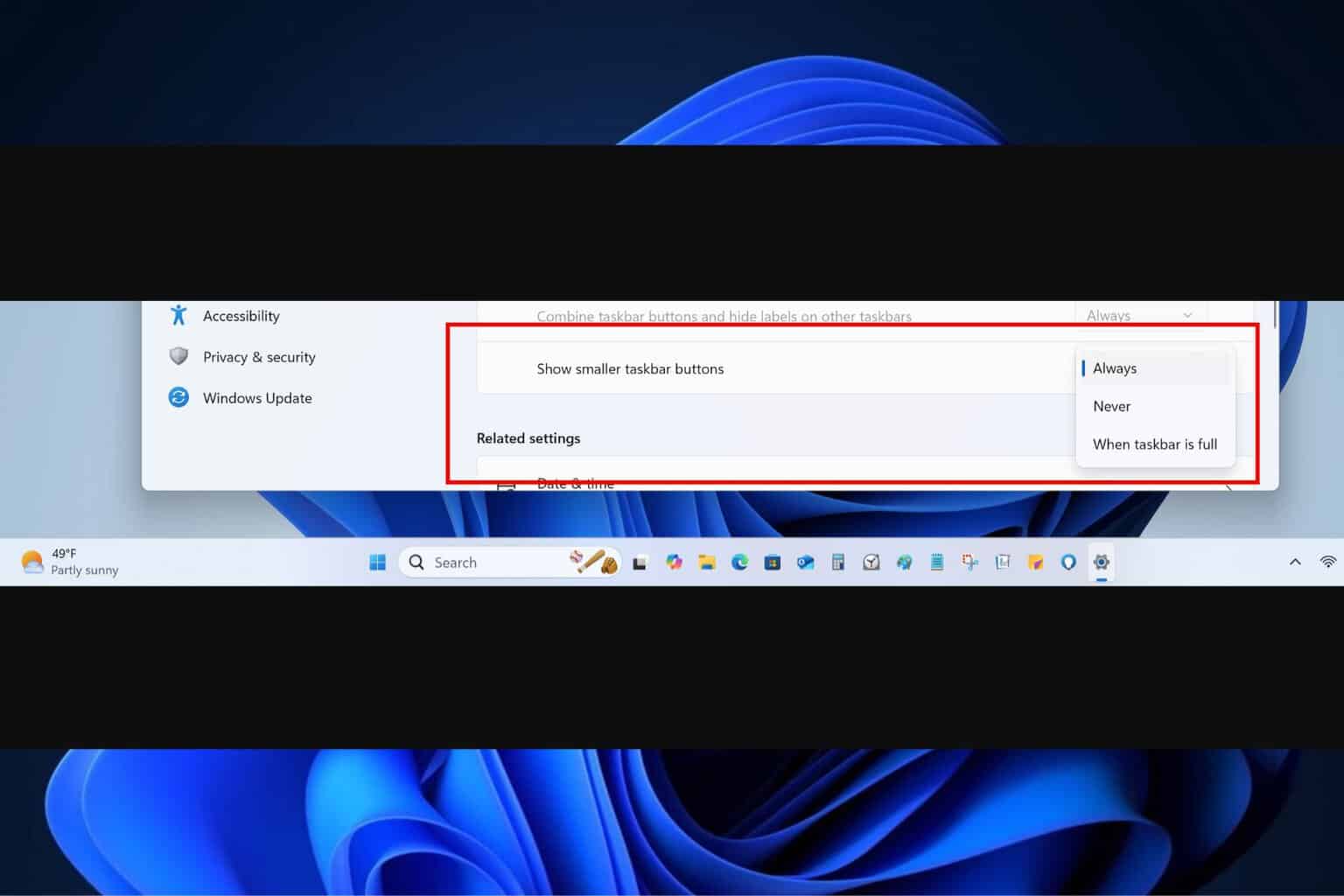
One of the standout features is taskbar icon scaling, which allows users to manage crowded taskbars more efficiently. Icons will automatically scale down when the taskbar becomes full, ensuring quick access to apps without diving into secondary menus.

Users can customize this feature to suit their preferences, choosing between “Always,” “Never,” or “When taskbar is full” settings.

Another notable addition is the drag tray feature for file sharing. This feature simplifies sharing files by displaying a tray at the top of the screen when a file is dragged.

Users can drop the file into one of the displayed apps or open the Windows share window for more options.

KB5055625 also brings Click to Do to the Dev and Beta Insiders. The feature allows you to send selected text or images to Copilot and let the AI model perform a series of actions on them, such as summarising, creating a list, or rewriting.

As for known issues, Quick Assist will not work for non-admin users, and despite making Windows Sandbox available in the operating system, Microsoft says it is not available in this build.

For more details, you can visit the official announcement here.

Bill Gates unveils the Altair BASIC source code, ‘the coolest’ he’s ever written

In a nostalgic nod to Microsoft’s origins, co-founder Bill Gates has released the source code for Altair BASIC, the software that marked the beginning of the tech giant’s journey.

This release coincides with Microsoft’s 50th anniversary, which will take place this Friday. Gates describes this milestone as both “bittersweet” and a celebration of innovation.

Altair BASIC, written by Gates and Paul Allen in 1975, was the fledgling company’s first product. It was designed for the Altair 8800 microcomputer, a groundbreaking device that inspired Gates and Allen to create software to make computing accessible to more people.

The source code, which you read here, written in Intel 8080 assembly language, is over 150 pages long and represents a pivotal moment in the history of personal computing.

Gates reflected on Microsoft’s early days, recalling the long hours spent coding on a PDP-10 computer at Harvard. He described Altair BASIC as “the coolest code I’ve ever written” and expressed pride in its role in shaping the PC industry.

This Friday, the Redmond-based tech giant will turn 50, and according to reports, Microsoft might also hint at the company’s future by unveiling some big surprises.

Microsoft enhances Clipchamp for Windows with a Widget that should make it easier to use the tool

Microsoft will enhance its video editing tool, Clipchamp, with widgets and a refreshed camera interface to improve users’ accessibility and functionality.

According to a recent entry on the Microsoft 365 Roadmap, Windows 11 users will benefit from a new Clipchamp widget to simplify workflows. The widget provides a quick and easy way to launch essential Clipchamp tools, such as screen recording, camera recording, and video project creation. This integration aims to make video production more accessible for creators of all levels, whether recording tutorials, presentations, or creative projects.

Here’s what the entry says:

With Microsoft Clipchamp Windows widget, Windows 11 users will have a quick way to launch screen recording, camera recording and create video projects.

Another entry on the Microsoft 365 Roadmap unveils that the camera feature in Clipchamp’s editor will be updated to a newer version, offering enhanced controls and options for content creators. The improved recording controls provide users with greater precision and customization, allowing them to tailor their recordings to their needs. The command bar will also be refined to make navigation more intuitive and visually streamlined, enabling creators to work more efficiently.

Camera in our editor will be updated to a newer version with improved recording controls and command bar options.

Both enhancements will be added to Clipchamp for Windows in May, and all users will be able to access them.

The video editing platform has recently been updated with a media library of over 5 million images and 300,000 videos, all copyright-free and ready to use in your commercial content.

Microsoft will enhance the Defender platform with 3 new Advanced Hunting tables for Teams

Microsoft will introduce three new Advanced Hunting tables to bolster security measures within organizations. These tables are designed to facilitate the tracking and analysis of Teams messages containing URLs, with the aim of identifying potential security risks and ensuring a safer digital environment by providing detailed visibility into shared links.

The announcement was made in a recent entry to the Microsoft 365 Roadmap.

Why is this important? Malicious actors have increasingly targeted these platforms with the rise in remote work and collaboration tools like Teams. The new Advanced Hunting tables empower IT administrators to investigate and mitigate risks associated with suspicious URLs shared in Teams conversations.

In other words, this feature allows organizations to uncover threats proactively and maintain robust security standards.

Here’s what the entry says:

We are introducing three new Advaned Hunting tables designed to facilitate hunting of Teams messages containing URLs within your organization.

Microsoft will add the enhancements to the Defender platform in May, but it will preview them first this month.

In other similar news, Microsoft recently retired Defender’s Privacy Protection. We found out that the capability was underused, and the Redmond-based tech giant preferred to invest budget in other ways to provide a safer environment.

Claude is now the first AI that encorages users to think and try to find the answer without its input

Anthropic, a leading AI technology company, has unveiled “Claude for Education,” a specialized version of its AI chatbot designed to transform the educational landscape.

This initiative aims to integrate artificial intelligence into teaching, learning, and administrative processes, fostering innovation and critical thinking in academic institutions.

Claude for Education introduces a unique “Learning Mode,” which encourages students to develop their reasoning skills rather than simply providing answers. This feature guides learners through complex problems and motivates students and users to build their own independent thoughts on the topic.

Students can use Claude to draft literature reviews, solve calculus problems, and receive feedback on thesis statements.

For educators, Claude offers tools to streamline workflows, including creating rubrics aligned with learning outcomes, providing personalized feedback on essays, and generating subject-specific content like chemistry equations.

Administrative staff can also benefit from Claude’s capabilities, such as analyzing enrollment trends, automating email responses, and converting policy documents into accessible FAQs.

According to the official announcement, Anthropic has partnered with prominent institutions, including Northeastern University, the London School of Economics and Political Science (LSE), and Champlain College, to provide campus-wide access to Claude. These collaborations aim to equip students and faculty with cutting-edge AI tools, preparing them for an increasingly AI-driven world.

Additionally, Anthropic has launched initiatives like the Claude Campus Ambassadors program and API credits for student-led projects, encouraging innovation and hands-on experience with AI technologies.

Since its release, Claude has been one of the most performant AI models. It competes with OpenAI’s ChatGPT, Google’s Gemini, and the more recent DeepSeek. However, of all the models, Claude strives to be the most human one. Even in 2023, when the model gained popularity, it was touted as incredibly reasonable and polite to users.

What do you think about this initiative?

Mozilla’s Thundermail wants to become Gmail’s main competitor

Mozilla has unveiled its latest innovation, Thundermail, an open-source email service designed to rival Gmail and other major players in the email ecosystem. It would be a significant step for Mozilla’s Thunderbird team.

According to Ryan Sipes, one of Thunderbird’s execs, Mozilla’s broader strategy is transforming Thunderbird from a traditional email client into a comprehensive productivity platform, and the competitive layer only encourages the team to do just that.

The service is built on the open-source Stalwart Mail Server and supports modern protocols like JMAP, IMAP4, POP3, and SMTP. Thundermail also aims to provide users with a privacy-focused alternative to mainstream email services, ensuring that user data is not used for advertising or AI training.

In addition to Thundermail, Mozilla is introducing several complementary tools to enhance the user experience:

  • Thunderbird Appointment: A scheduling tool simplifies meeting coordination by allowing users to share calendar links.
  • Thunderbird Send: A secure file-sharing service inspired by the former Firefox Send, offering end-to-end encryption.
  • Thunderbird Assist: An experimental AI-powered assistant developed with Flower AI, focusing on privacy and local inference.

For now, Thundermail is in its experimental phase, with a beta waitlist for interested users. You can find out more about it here.

It’s worth mentioning that Thunderbird would also find a serious competitor in Outlook. While Outlook email is not as popular as Gmail, the platform itself has many capabilities, and the Redmond-based tech giant is updating it regularly.

Microsoft is turning 50 this week and it’s offering free Dynamic Backgrounds for Xbox users

Microsoft is marking its 50th anniversary with exciting digital offerings for Xbox users and fans of its iconic games. To celebrate five decades of innovation, the company is introducing new dynamic backgrounds, profile themes, badges, and even a special Microsoft Solitaire theme.

The 50th Anniversary Dynamic Background features beloved characters from Microsoft’s gaming legacy, including Master Chief, Marcus Fenix, Vault Boy, and Doom Slayer. These backgrounds are designed to honor the memories and milestones of gaming over the years. Xbox users can easily apply these dynamic backgrounds through the personalization settings on their consoles.

For those who love a touch of nostalgia, Microsoft has unveiled new profile themes, including Gamerpics, featuring classic icons like the old Windows cursor, a floppy disk, and Clippy. These themes allow users to relive the charm of earlier Microsoft eras while customizing their profiles.

Microsoft is offering a 50th Anniversary Badge for Xbox profiles as a token of appreciation for its community. To claim this badge, users must join the Xbox Insider Program and follow simple steps to add it to their profiles.

Additionally, the celebration extends to Microsoft Solitaire, a game that has been a staple for many users over the years. The 50th Anniversary Theme for Solitaire includes a custom background, deck style, and card backs, bringing a festive touch to the classic game.

Microsoft is turning 50 this week, and the Redmond-based tech giant will hold a special conference on Friday where it might unveil some of the future services and products. Don’t get your hopes up, but there is a chance the company might talk about the next version of Windows, the next Xbox console, and so on.

Microsoft wants users to forget about Office and upgrade to Microsoft 365

Microsoft has issued a call to action for users still relying on older versions of Microsoft Office: upgrade to Microsoft 365. The Redmond-based tech giant says there are plenty of benefits.

Unlike legacy versions of Microsoft Office, which are one-time purchases and do not receive updates after their lifecycle ends, Microsoft 365 operates on a subscription-based model. This means users can access the latest features and security patches, reducing vulnerabilities and enhancing functionality. Key advantages include:

  • Cloud Integration: Seamless collaboration across devices and locations, allowing real-time updates and file sharing.
  • Regular Updates: Subscribers benefit from continuous enhancements, including new tools, features, and stronger security measures.
  • Cross-Platform Compatibility: Optimized for use across desktops, tablets, and mobile devices, enabling flexibility in various work environments.

However, this doesn’t always mean good things. For example, earlier this year, the Redmond-based tech giant raised the prices for all Microsoft 365 subscriptions because AI is now part of the apps. This angered many users, who claimed that they weren’t using AI (aka Copilot) at all and that there should be an option to not have it.

While there is a way to return to the old subscription price, it’s shady, and it’s a sign Microsoft is pushing it too far. Even though the company provides extensive resources, including step-by-step guides, customer support, and training materials, to make the service as attractive as possible, it’s still not entirely transparent.

It’s worth mentioning that the subscription model is particularly advantageous for organizations that foster collaboration and streamline processes. Features like Microsoft Teams, AI-driven insights, and integrated cloud storage provide businesses with tools to enhance productivity while maintaining robust security.

But if you’re using it for your personal business, then Microsoft Office should be enough. Sure, you won’t get cloud or AI, but there are ways to store and protect your files.

What do you think about this?

Microsoft’s Windows 365 Link, the pocket-sized cloud PC, is now generally available

Microsoft has announced the general availability of groundbreaking features for Windows 365, including the Windows 365 Link, a purpose-built Cloud PC device that the Redmond-based tech giant announced last year. The small-to-fit-a-pocket device connects securely to Windows 365 in seconds, and it’s quite affordable, as well.

Priced at $349.99 in the United States, it offers seamless connectivity and ensures data security by deleting user profiles after sign-out. Is it worth it? The Windows 365 Link device is designed to streamline IT management and improve efficiency, particularly for desk-based or frontline workers.

It’s also very mobile, and it can be easily carried given that users have monitors to connect it to. Microsoft is also making it available to the other parts of the world for a similar price:

  • AUD639 in Australia
  • CAD519.99 in Canada
  • EUR419 in Germany
  • JPY56,800 in Japan
  • NZD739 in New Zealand
  • GBP349 in the United Kingdom

Along with the general availability of the Windows 365 Link, the Redmond-based tech giant also enhanced the shared mode for Windows 365 Frontline. This mode now allows multiple employees to access a single Cloud PC, making it ideal for retail staff, contractors, and training environments.

Microsoft has also introduced disaster recovery capabilities with Windows 365 Disaster Recovery Plus, providing rapid recovery options for Cloud PCs. Furthermore, the Windows App for Android is now generally available, expanding access to Windows virtualization solutions across major platforms.

This blog post provides more information about these Windows 365 Link and the upcoming enhancements to cloud technology.

Microsoft enhances Windows 11 Enterprise with Hotpatch, allowing devices to update without requiring a reboot

Microsoft has announced the availability of hotpatch updates for Windows 11 Enterprise, version 24H2, on x64 (AMD/Intel) systems.

This innovative feature allows organizations to install security updates without requiring a reboot, minimizing user disruptions. Hotpatching applies updates directly to in-memory processes, ensuring immediate protection against vulnerabilities.

The updates follow a quarterly cycle, with cumulative baseline updates requiring a restart in January, April, July, and October. In the following months, hot patch updates are applied without the need for a reboot.

QuarterBaseline update 
(requires restart)
Hotpatch update
(no restart required)
1JanuaryFebruary and March
2AprilMay and June
3JulyAugust and September
4OctoberNovember and December

The Windows 11 Hotpatch feature has some considerable benefits. In the official announcement, the Redmond-based tech giant says it will greatly help organizations by offering immediate security without the need to disrupt actions.

To enable hot patching, organizations need a Windows 11 Enterprise subscription and devices meeting specific requirements, including Virtualization-based Security (VBS) enabled.

To enable hotpatching for Windows client devices, you will need:

  • A Microsoft subscription that includes Windows 11 Enterprise E3, E5, or F3, Windows 11 Education A3 or A5, or a Windows 365 Enterprise subscription
  • Devices running Windows 11 Enterprise, version 24H2 (Build 26100.2033 or later) and with the current baseline update installed
  • An x64 CPU including AMD64 and Intel (Note: Arm®64 devices are still in public preview)
  • Microsoft Intune to manage deployment of hotpatch updates with a hotpatch-enabled Windows quality update policy
  • Virtualization-based Security (VBS) enabled

While currently available for x64 systems, hot patching remains in public preview for ARM64 devices.

You can read more about it here.

In other similar news, Microsoft recently released the Quick Recovery Machine for Windows 11, which allows the operating system to fix itself when it encounters a screen of death.

Windows 11 is now the most popular Windows version amongs Steam gamers

Microsoft’s Windows 11 is rapidly becoming the operating system of choice for gamers, according to Valve’s latest Steam Hardware and Software survey for March 2025.

The survey reveals that Windows 11 now holds a commanding 55.34% share among Windows users on Steam, marking an 11.24-point increase from the previous month.

This surge has propelled Windows 11 back into the top spot, overtaking Windows 10, which now accounts for 40.58% of the market—a decline of 12.76 points.

The growing popularity of Windows 11 among gamers is attributed to its advanced gaming features, such as Auto HDR and DirectStorage, which enhance performance and provide a more immersive gaming experience. These features have made Windows 11 an attractive option for gamers looking to optimize their setups.

Despite the decline in Windows 10’s market share, the operating system remains significant on Steam. With support for Windows 10 set to end in October 2025, its continued popularity highlights the reluctance of some users to upgrade, even as newer technologies become available.

Windows remains the dominant platform for gaming, with an overwhelming 96.10% share on Steam. Linux and macOS trail behind, holding 2.33% and 1.58% of the market, respectively. Among hardware preferences, the Nvidia RTX 3060 remains the most popular graphics card, followed by the RTX 4060 and its laptop variant.

What do you think about these stats? Are you still using Windows 10, or have you migrated to a newer version?

Microsoft 365 Copilot makes it incredibly easy to share images from mobile devices

Microsoft has unveiled a new feature for its Microsoft 365 Copilot, enabling users to upload images directly from their mobile devices to their desktop or web applications.

This update simplifies workflows and enhances productivity by eliminating the need for intermediate steps like emailing images or using third-party tools.

With this feature, users can now take a photo or select an image from their phone’s gallery and upload it directly to Microsoft 365 apps such as Word, Excel, and PowerPoint.

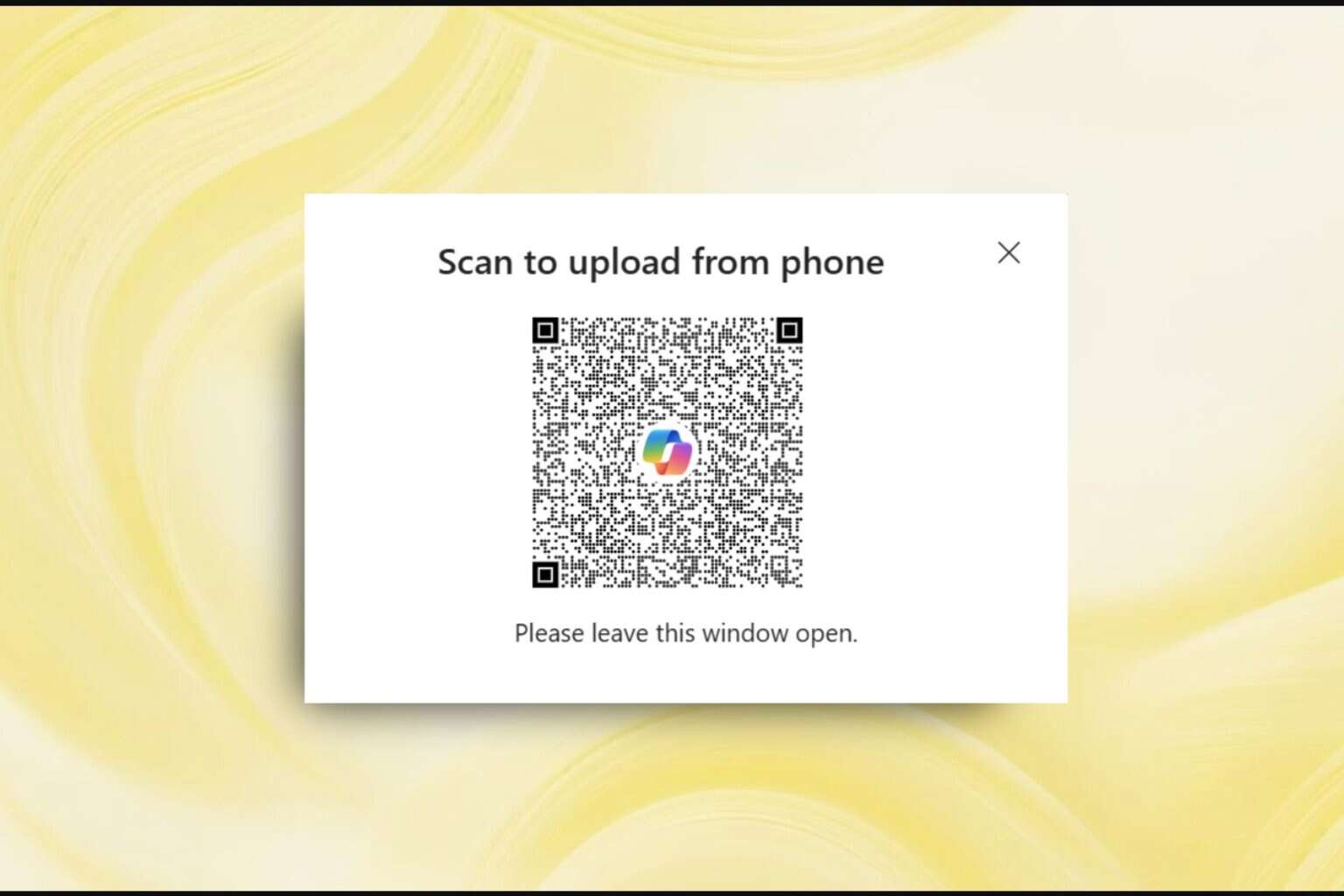
In a blog post, the Redmond-based tech giant explains the process: It involves scanning a QR code generated within the Copilot interface and redirecting users to a web page where they can upload their chosen image. Once uploaded, the image will appear in the Copilot chat box on the desktop or browser and be ready for further use.

This functionality is particularly useful for tasks like transcribing handwritten notes, summarizing whiteboard brainstorms, or digitizing receipts. It streamlines data collection and allows users to supplement their documents with minimal disruption to their workflow.

Currently, this feature is available for Microsoft 365 apps on Windows and the web and requires an Enterprise Copilot license. Users must also make sure their Office version meets the requirements to access this capability.

In other similar news, Microsoft has enhanced Copilot with the capability to summarize really big books: around 3000 pages per document. So, if you want to read A Song of Fire and Ice but don’t have the time, Copilot can summarize it for you.

Windows on ARM (quite literally): Running Windows on a Smartwatch

In a plot twist, a developer successfully brought Windows on ARM to an unexpected smartwatch platform. The project, detailed in a recent blog post, showcases the potential of modern wearable technology and the adaptability of Windows on ARM.

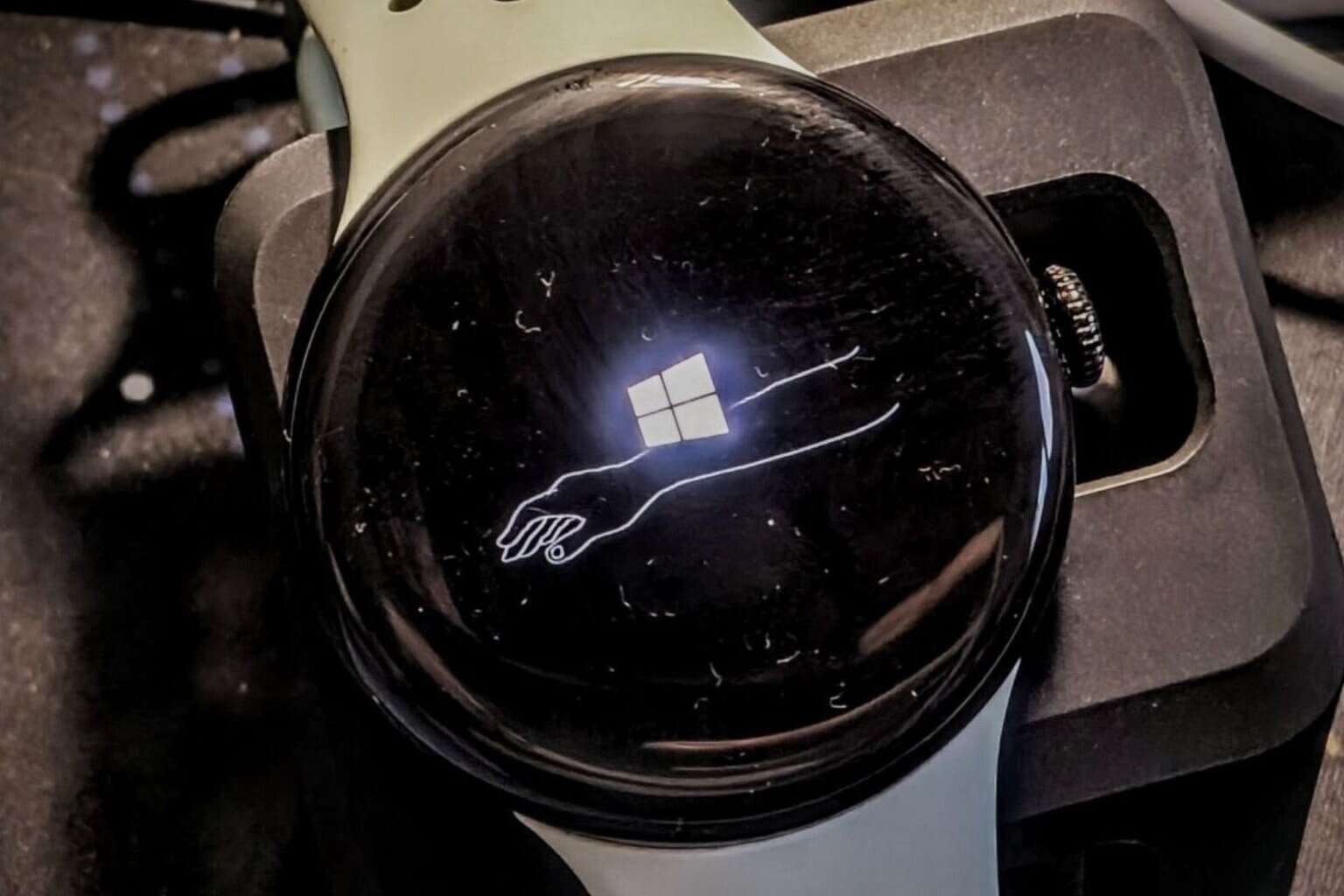
The experiment involved running Windows on a Google Pixel Watch 3, a smartwatch with impressive hardware, including a quad-core ARM Cortex-A53 processor, 2GB of RAM, and 32GB of storage.

The watch’s high-resolution OLED display and advanced connectivity features, such as Wi-Fi 6E and LTE, make it a surprisingly capable device for such a project.

The developer had quite the journey, and it involved many steps, such as tweaking the device, and even coming up with entire pieces of software to make Windows on Arm bootable on it. It worked.

Of course, the project only proves Windows’s adaptability on ARM and the technical challenges associated with porting an operating system to a platform it was not originally designed for: Windows is fully responsive and functional on such a small device.

It also sparks curiosity about the potential broader applications of Windows on ARM in the wearable market. Could this experiment pave the way for smartwatches and other wearables to take on tasks currently handled by smartphones or even laptops? While this project is purely experimental, it certainly opens the door for further exploration.

I could certainly think of one application: gaming smartphones. Forget handheld consoles, and let’s try full-on gaming on mobile phones. Or turning our smartphones into fully fledged computers.

PS: The developer released the blog post on April 1st, but they say it’s not a joke. You can read more about it here.

Microsoft’s Teams Rooms will be enhanced with Facial Recognition and Cloud IntelliFrame

Microsoft is going to enhance Teams Rooms on Windows with facial recognition technology and Cloud IntelliFrame capabilities.

According to the entry where we spotted the enhancement, this innovation aims to create a more seamless connection between in-person and remote participants. In other words, it will be available in hybrid meetings.

It will be available exclusively with Teams Rooms Pro, which allows organizations to enable facial recognition through their policies. Once activated and with user profiles enrolled via Teams settings, Teams Rooms can identify individuals, automatically listing them in the meeting roster.

In addition, the Cloud IntelliFrame feature optimizes camera views, ensuring every participant is displayed in the best possible manner. This helps make hybrid meetings feel more immersive—almost like everyone is in the same room together.

Here’s what the entry says:

If facial recognition is enabled in organization policies and you’ve enrolled your profile via Teams Settings, Teams Rooms on Windows using Cloud IntelliFrame will recognize you, list you in the meeting roster, and optimize camera views for participants making hybrid meetings feel like you are all in the room together. This feature available with Teams Rooms Pro.

Microsoft will release the enhancement to Teams Rooms Pro in June 2025, and it will be generally available to all users.

SharePoint will integrate AI Agents on Site Pages

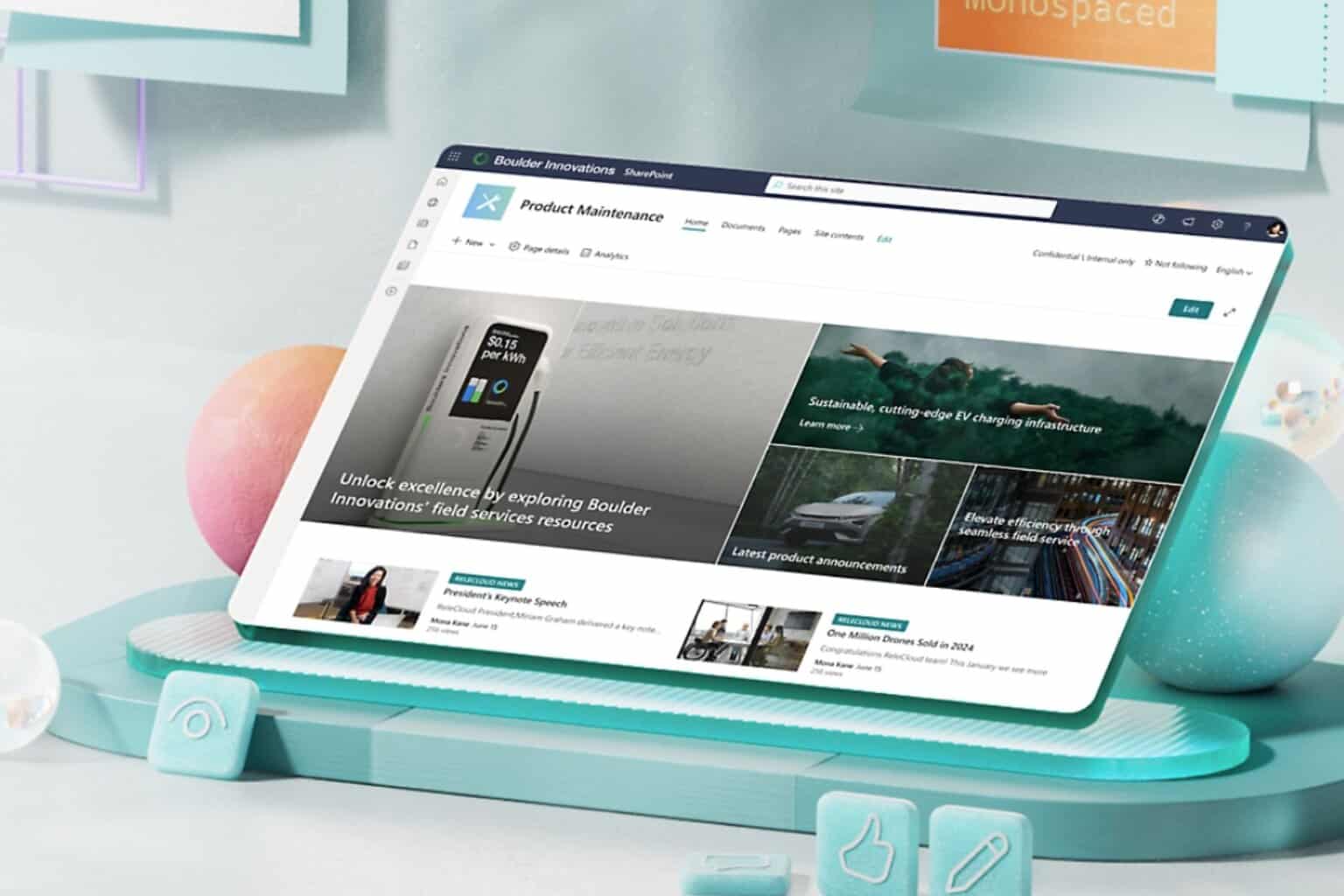
Microsoft has unveiled a new feature for its SharePoint platform. This feature allows site page authors to add “SharePoint agents” directly to their pages. The enhancement, announced in a recent entry to the Microsoft 365 Roadmap, simplifies interactions for end users and provides a more efficient and seamless experience.

SharePoint agents are designed to assist users with tasks like navigating pages, locating information, and engaging with content. By utilizing the newly introduced “agent web part,” authors can easily embed these agents into site pages.

Once added, visitors can access and interact with the agents without leaving the page, streamlining their experience and reducing the need for external tools or navigation.

Here’s what the entry says:

SharePoint site page authors can add SharePoint agents to their pages with an agent web part, allowing end users to easily access and interact with SharePoint agents directly from the site pages.

Integrating SharePoint agents offers a practical solution for organizations looking to provide tailored support and guidance to their users directly within their site pages.

The integration will happen in July.

Sony engineers worked on greatly enhancing Microsoft’s exFAT File System on Linux

Microsoft’s exFAT (Extended File Allocation Table) file system is receiving a significant performance upgrade on Linux, thanks to contributions from Sony engineers.

This marks another milestone in Microsoft’s collaboration with the open-source community, following the company’s decision to support exFAT on Linux in 2019.

The latest improvements focus on optimizing the exFAT file system’s performance, particularly in scenarios involving large files and extensive data operations. One notable enhancement is the introduction of batch processing for the “discard mount” option.

This feature informs storage devices about blocks no longer in use, enabling real-time discard operations. By discarding contiguous clusters in batches, the new optimization dramatically reduces the time required for file deletion (but you can always convert exFAT to FAT32). For example, deleting an 80 GB file now takes under 2 seconds, compared to nearly 5 minutes—a staggering 172-fold improvement.

Sony’s contributions also address random stack corruption, incorrect error returns, and endless loops in certain operations. These fixes enhance performance and improve the stability and reliability of the exFAT file system on Linux.

You can read more about it here.

Microsoft Copilot is now capable of summarizing books with thousands of pages

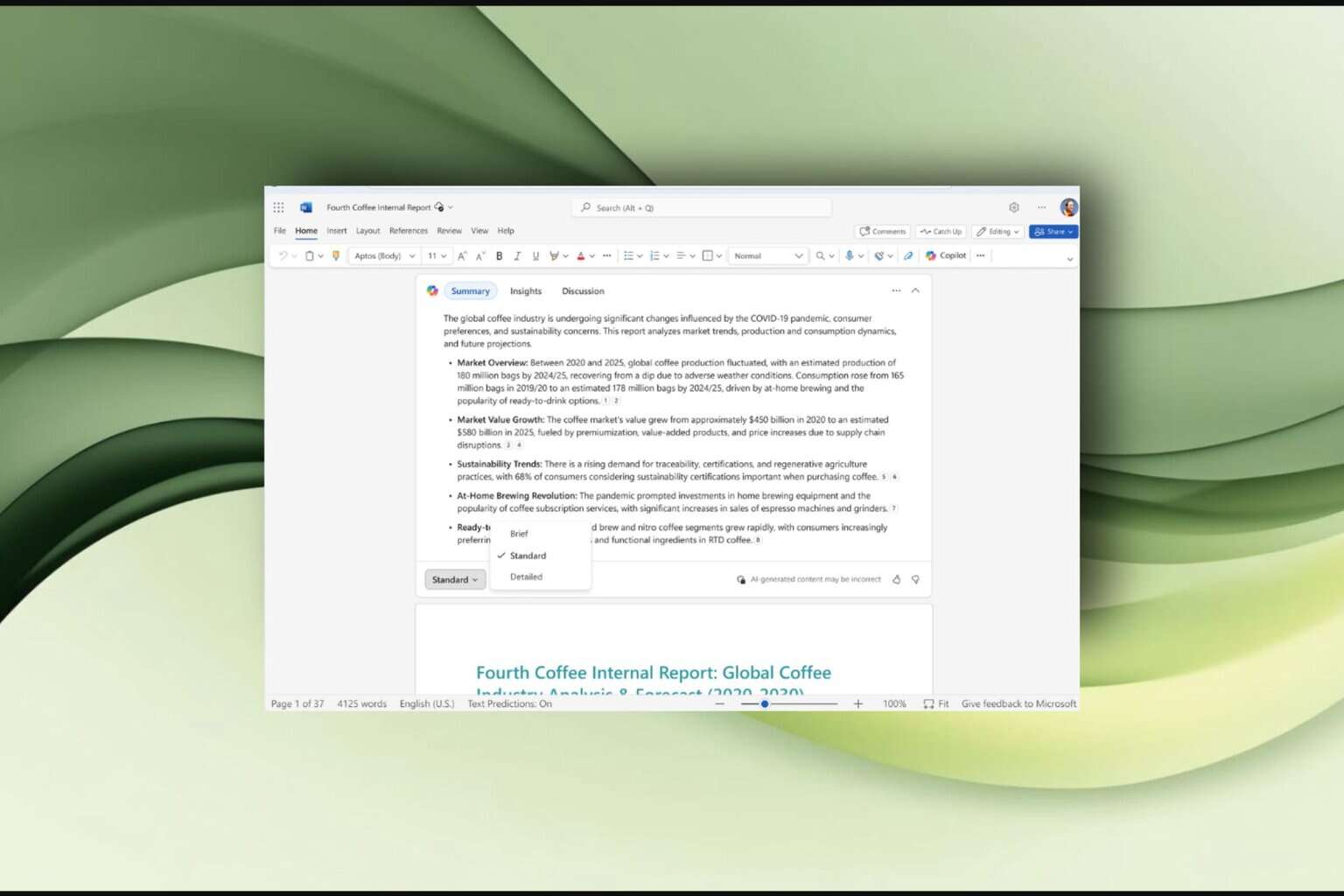
Microsoft has announced exciting updates to its Word application aimed at improving the summarization of lengthy documents, and one of the key updates is the ability to summarize documents up to 3,000 pages long, a significant increase from the previous limit of around 300 pages.

This tenfold improvement ensures that even the most extensive documents can be condensed into concise summaries, making it easier for users to grasp key points without sifting through thousands of pages.

In a blog post, Microsoft has introduced a new feature that allows users to toggle between different summary lengths. Users can now choose from Brief, Standard, and Detailed summaries. This flexibility caters to varying needs, whether users require a quick overview or a more comprehensive understanding of the document’s content.

These features are currently available in Word for the web and are rolling out to desktop users on Windows and Mac. To access these tools, users can navigate to the summary section at the top of their document or use the Copilot feature to generate a summary.

You can read more about it here.

Microsoft publishes the official solution for installing Windows 11 without Internet connection

In a move acknowledging the demand for flexibility in the Windows 11 setup process, Microsoft has unveiled an official method to bypass the requirements for an internet connection and a Microsoft Account during installation.

This development comes after Microsoft tightened its policies last month, including discontinuing the popular BYPASSNRO workaround, which had been a favorite among tech-savvy users.

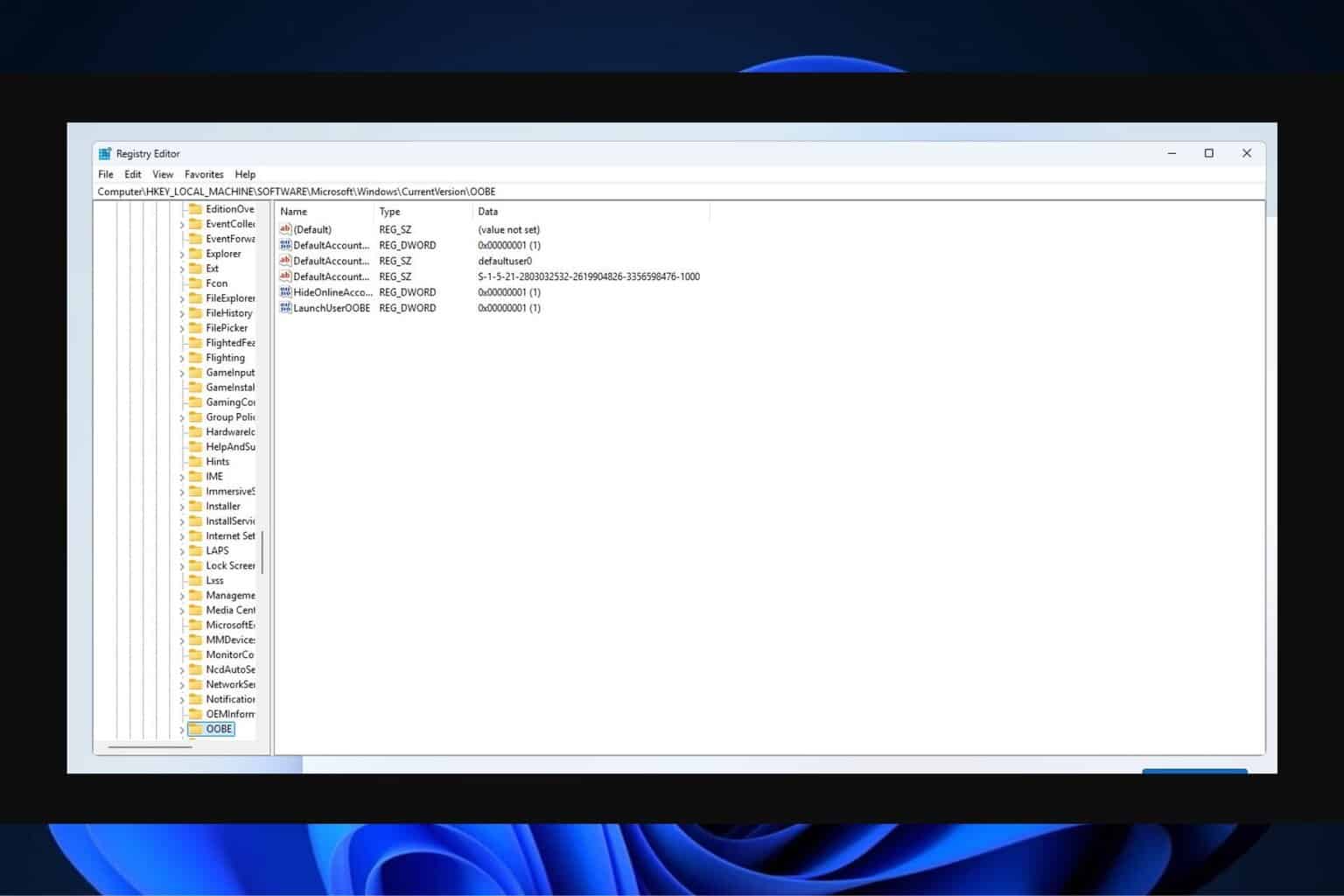
The Redmond-based tech giant revealed a new workaround that involves adjusting specific registry settings within the Windows 11 setup process.

One critical modification is enabling the “HideOnlineAccountScreens” value, which allows users to create a local account instead of being forced to connect to the internet and use a Microsoft Account during the Out-of-Box Experience (OOBE).

This registry tweak primarily aims at enterprises, helping IT administrators streamline deployments. However, Microsoft has not restricted this method solely to organizations, meaning any user with the necessary technical know-how can utilize this approach.

Editing the Windows Registry has inherent risks, and users should proceed with caution or talk with someone who knows their way around it.

As always, users should remember that bypassing certain requirements might impact their experience or the availability of some features on Windows 11. Those interested can consult Microsoft’s official documentation for further details or instructions on implementing these changes.

Did Microsoft Play a Prank? Google and Other Search Engines Missing in Edge

Microsoft, notorious for pushing its products and services in Edge, seems to have removed Google and other search engines such as DuckDuckGo, Yahoo. We noticed this yesterday in the Canary version, which coincidentally falls on April 1st. But with today’s update, Edge Canary has restored these search engines, so was that a possible bug that only affected me or others, or did Microsoft make some fun of its users?

Microsoft Edge, irrespective of which version you use—release/stable, beta, Dev, and Canary—comes with Bing as the default search engine, with SEs also available for users to make default, such as Yahoo, DuckDuckGo, and Google.

With the new Edge settings, you can see the main search engine used in the address bar by visiting Settings > Privacy, search, and services > Search and connected Experience > Address bar and search. No surprises here: Microsoft favors its own Bing and it is the search engine used by users unless they change their search engine to others, which is also easy—they can select one from the dropdown and set as default.

Image Credit: WindowsReport.

Microsoft Edge also shows all address bar search engines in the same section when you click Search engines.

What surprised or quizzed us was yesterday’s, except Bing, other search engines were missing. Since we heard no chatter about this from others, we thought we were only affected but were interested to know what happens with the Edge Canary update. With today’s update, Version 136.0.3234.0, Microsoft Edge restored those search engines and they are available.

Google, DuckDuckGo, Yahoo SEs missing in Edge canary. Image Credit: WindowsReport.

So what could’ve gone wrong? We have not removed any search engines intentionally nor played with flags for that outcome. In case you have still not updated Edge Canary today or noticed this change, let us know your thoughts on this in the comments below.

Apart from this mishap, Microsoft will soon let users personalize Edge with dual themes—image and color—from its appearance settings. Additionally, Edge could replace the Tab Actions menu with a dedicated Tab Search button, similar to Chrome.

Windows 11 has just gained the most market share it has ever since its release

The adoption of Windows 11 is accelerating as users prepare for the end of mainstream support for Windows 10, scheduled for October 2025. According to recent data from Statcounter, Windows 11 experienced its most significant market share increase in three years during March 2025, climbing to 42.66%. Meanwhile, Windows 10 saw a substantial decline, dropping to 54.23%.

This shift reflects a growing wave of migration as users transition to Microsoft’s latest operating system. Windows 11’s year-over-year growth reached 15.98 percentage points, while Windows 10’s market share fell by 14.84 points over the same period.

Despite the momentum, convincing users to upgrade remains challenging, particularly those with hardware that does not meet Windows 11’s stringent requirements, such as TPM 2.0.

Microsoft has introduced an Extended Security Update program for Windows 10 users, offering an additional year of security updates for $30. However, this option is expected to appeal primarily to businesses, as individual users will likely opt for the free upgrade to Windows 11.

While Windows 11 continues to gain ground, older versions of Windows, such as Windows 7 and Windows XP, maintain small but steady market shares. Windows 7 currently holds 2.22%, while Windows XP accounts for 0.33%.

As the October deadline approaches, Microsoft must ensure a smooth transition for users while addressing concerns about hardware compatibility and design changes in Windows 11.

Upgrading to Windows 11 might crash GPO provisioned printers, according to users

Organizations relying on Group Policy Object (GPO) provisioned printers have reported challenges following Windows 10 to Windows 11 upgrades in domain environments.

While the printer provisioning system—using Package Point and Print for security reasons—works seamlessly on Windows 10 devices and newly installed Windows 11 computers, upgraded systems are experiencing problems for existing domain users.

According to reports on Reddit, printers fail to appear for users who had previously logged into the upgraded devices, despite GPOs being correctly applied and no related errors showing in Event logs.

However, newly created user accounts on the same devices experience no issues, with printer provisioning working properly.

What to do? Temporary fixes include disjoining and rejoining the device to the domain or deleting the affected user profiles to reset configurations. These workarounds are not ideal for IT administrators managing large-scale deployments because they can be extremely disrupting.

Experts suggest investigating cached profile settings, registry keys related to printers, or any discrepancies in GPO processing during the upgrade process. Administrators are advised to monitor permissions and services such as the print spooler to diagnose the issue’s root.

Microsoft has yet to comment on the problem. Have you encountered any issues with GPO provisioned printers in Windows 11?

Microsoft will enhance the shared mailbox interface in Outlook for Windows

Microsoft is rolling out a new update to the Outlook for Windows experience, aligning the behavior of Shared Mailboxes with classic Outlook functionality. The new functionality was announced in a recent entry to the Microsoft 365 Roadmap, and the Redmond-based tech giant developed it based on users’ feedback.

This means Shared Mailboxes will now be displayed in the same way as Accounts, providing a more consistent and intuitive user experience.

At the same time, Microsoft is introducing a unique Shared icon to help users visually distinguish between standard and Shared Mailboxes.

Here’s the entry:

To conform with the behavior of classic Outlook for Windows, we are moving Shared Mailboxes to be displayed in the same way that Accounts are displayed and adding a Shared icon to give users a visual distinction between standard mailboxes and Shared Mailboxes. #newoutlookforwindows

This addition makes sure that users can quickly identify and manage Shared Mailboxes while also simplifying navigation and enhancing productivity.

In more recent news, Outlook for Windows will also be enhanced to support a full offline mode, allowing users to search for emails while completely disconnected from the Internet.

8BitDo’s latest Jade Green Controller pays homage to the original Xbox

Gaming accessory maker 8BitDo has introduced a new addition to its Ultimate 3-mode controller lineup: the Jade Green Controller. This latest model, announced on X, features a translucent green design inspired by the original Xbox console’s special edition, adding a fresh aesthetic to the existing black-and-white variants.

The Jade Green Controller boasts advanced hardware, including Hall effect analog joysticks and impulse triggers, which provide precise control and vibration feedback. It also includes two programmable Pro buttons on the back grips, updated bumpers, a D-pad, and a standard 3.5mm audio jack for headset connectivity.

Designed for versatility, the controller supports multiple connection modes:

  • Wireless connectivity via a 2.4G USB dongle for Windows PCs.
  • Bluetooth compatibility with Apple and Android devices.
  • Wired USB connection for Xbox Series X|S and Xbox One consoles.

The onboard mode-switching button allows users to easily switch between Xbox, PC, and Android platforms. Additionally, the controller allows the creation and storage of up to three custom profiles through the 8BitDo Ultimate Software application.

The Jade Edition includes a multifunctional charging dock priced at $69.99. Pre-orders are now available on Amazon, and the official release date is set for May 15, 2025.