You asked and Microsoft’s Visual Studio team listened. Announced today, August 15, 2016, developers will have fewer sign in hurdles to jump through when accessing their development tools through Visual Studio.
The keychain we released with Visual Studio 2015 made it possible to manage multiple identities in VS and gave you single sign-on across the IDE. In the last few updates, we’ve made changes to core services like licensing and roaming, which allow you to refresh your license or roam your settings for up to a year or more without a prompt for credentials. We also updated the Windows Store publishing features to use the keychain for single sign-on with the rest of the IDE. Still, if you developed against Azure using a Microsoft account (e.g. @outlook.com, @hotmail.com, or @live.com) as many of us with MSDN subscription credits do, Visual Studio prompted you to sign in every 12 hours to access Azure resources from the IDE.
We’re excited to share that we completed the deployment of some improvements that allow users to safely stay signed in and eliminate the forced sign-in every 12 hours.
It now appears that the next time developers are met with a sign in prompt, Visual Studio will now enact the updated authentication flow which will allow users to sign into the IDE, thus mitigating the need to have them reenter credentials every 12 hours. As this is a server side update, not only will the new sign in flows be reaching users immediately, but the update encompasses fixes to all compatible VS versions supporting Azure development as old as VS 2012.
Per companywide mandate, it seems that the Visual Studio team is requesting that users continue to submit feedback, questions, and suggestions. All submissions can be sent through Visual Studio UserVoice section and the team seems confident in the next round of user-influenced improvements, noting “Keep an eye out for more improvements to come in Visual Studio 15 and beyond.”
Let us know in the comments below, what has been you most used or least favorite part of Visual Studio over the years.
Due to the fact that the Windows 10 Anniversary Update has now dropped worldwide, all attention at Microsoft now is now shifting towards building the next update to Windows 10. While the future may have a lot to hold, Zac Bowden of Windows Central has managed to draw out a few early conceptual plans of some new items that may be coming to the next generation of Windows 10. Of course, the ideas are nothing but early concepts and are not set in stone, but are still noteworthy of mention.
At the top of the list for Microsoft is integrating Office 365 into Windows. According to Zac, Microsoft wants to integrate an Office Hub into Windows 10 in order to give users easy users access to Office documents, emails, and so on. The feature may supposedly be available via the Cortana hamburger menu (complete with an Orange themed color!) and/or via its own button on the taskbar or area in the Action Center.
According to Zac, along with the Office Hub Integration, Microsoft is also looking to integrate Office in Cortana, Action Center, and the Microsoft Edge Browser though new collaboration tools. One of these tools and new features is apparently “Working Sets,” which will organize files, and find documents, reference material, and people under one “set.”
These sets can also be added to the start menu (as a live tile,) pinned to the taskbar, or hooked into the Action Center. Furthermore, these sets will also include live updates, jump lists, and recent activity on shared documents. Cortana will also float up when a set is being worked on, and will gain new functionality such as turning off notifications during working hours.
Additionally, Microsoft is supposedly also working to improve the search function of Cortana and the File Explorer. Similar to what was seen in the soon to be discontinued REACHit extension, Microsoft is interested in having File Explorer and the Cortana digital assistant searches pull emails and other information from more specific time periods.
Last up is the fact that Microsoft wants to make Windows 10 and Office 365 more intergrated. According to Zac, Microsoft’s OneClip idea (of bringing all your clipboard information from all devices into one) is not dead, and more information will be shared soon.
Again, these features are not set in stone, and are based on pure internal concepts. A release date for the features is also uncertain, so it’s best to stay tuned to learn more. Regardless, we would love to hear what you think, and so be sure to drop us a comment below with your thoughts on these features!
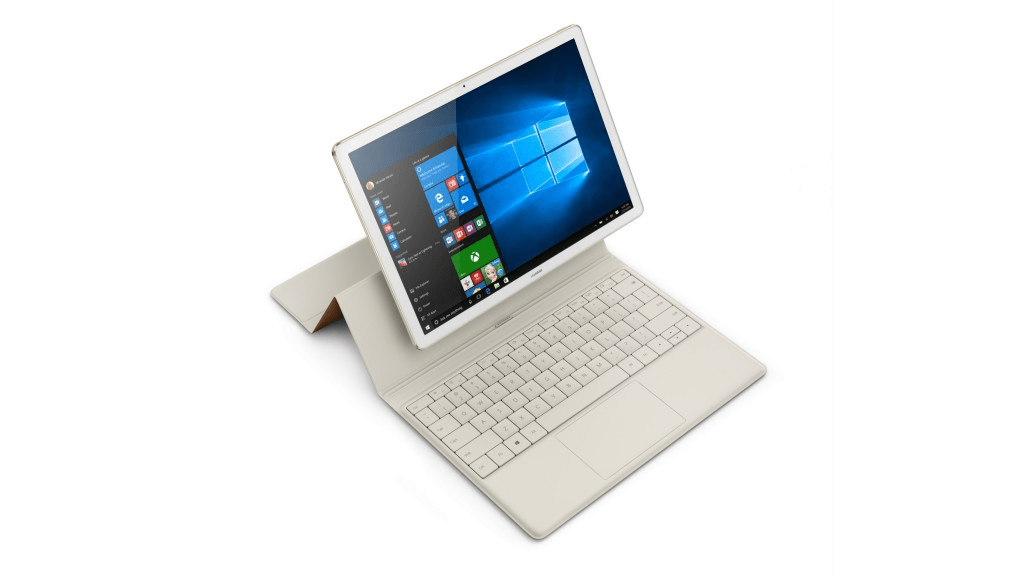
The Huawei Matebook is an interesting Windows 10 tablet that competes directly with the Microsoft Surface Pro 4 and the Samsung Galaxy TabPro S for your 2-in-1 investment. The Matebook is a premium tablet-centric hybrid that offers outstanding battery life, solid specs, and a very Surface-like add-on Portfolio Keyboard.
Right now, the Microsoft Store is offering that very same Portfolio Keyboard (a $129 value) for free with the purchase of a Huawei Matebook (via Windows Central). That means that you can get a very solid Windows 10 detachable tablet for only $699 with 4MBG of RAM and a 128GB SSD. The bundle compares nicely to the not-really-competitive Apple iPad Pro that runs $749 for the 128GB version and requires a $149 Smart Keyboard to become a detachable tablet (with all of the inherent iOS limitations).
Microsoft Store Huawei Matebook with free Portfolio Keyboard.
The deal ends on September 11, 2016, and it’s also while supplies last. And so if you’re interested, you might want to get your credit card swiping sooner than later. Let us know in the comments if you’re thinking about picking up a Matebook and Portfolio Keyboard bundle.
In a new blog series, David Lef, principal network architect at Microsoft IT, holds a Q&A session on how to support a network that moves from a traditional infrastructure to a wireless cloud computing platform, like Azure. Microsoft IT is responsible for the network needs of 900 locations and 220,000 employees and vendors around the world. Lef looks to the future with Azure and discusses the how to meet constantly evolving customer demands in the cloud industry.
David Lef goes over the biggest network challenges when migrating IT-supported services and environments to cloud-based services, like Azure.
“Our network supports over 2,500 individual applications and business processes. We are responsible for providing wired, wireless, and remote network access for the organization, implementing network security across our network (including our network edges), and connectivity to Microsoft Azure in the cloud. We support a large Azure tenancy using a single Azure Active Directory tenancy that syncs with our internal Windows Server Active Directory forests. We have several connections from our on-premises datacenters to Azure using ExpressRoute. Our Azure tenancy supports a huge breadth of Azure resources, some of which are public-facing and some that are hosted as apps and services internal to Microsoft, but hosted on the Azure platform.”
Microsoft IT statistics
Lef notes that Microsoft IT has the people and resources to ensure a smooth user experience whenever a migration to Azure takes place. Their resources help with the migration and training for companies. Microsoft IT makes sure that business processes are running the same or better than the network was before the migration.
Over the last two years, Microsoft has dabbled with wearables with its own range of hardware that can be used as both a fitness tracker and a smart watch. Engineers from Microsoft Research are also looking into the area, but they are not exactly working on your average wearable.
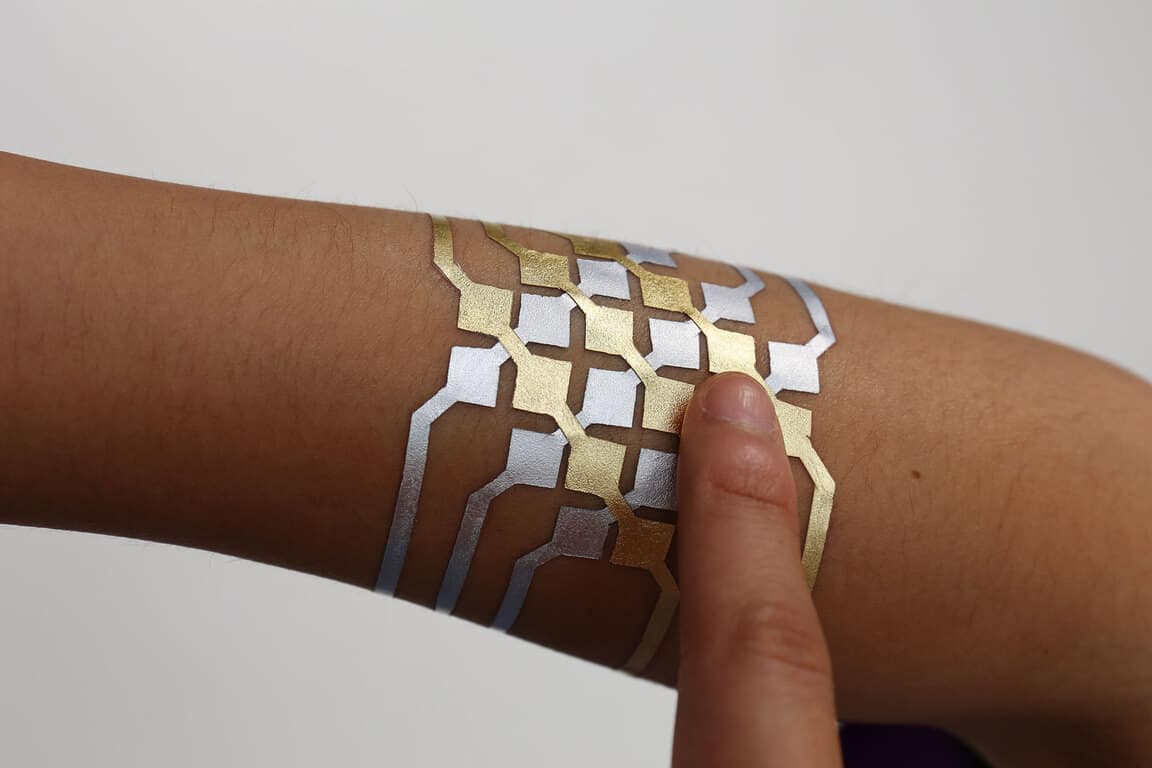
A few months ago, we reported that the researchers published a research paper about Tattio, a proof of concept for a tattoo-inspired temporary connected skin device that could store NFC tags and circuitry while being skin-safe and customizable. Following this first breakthrough, Microsoft engineers have now teamed up with a group of PhD students from the MIT Media Lab to create DuoSkin, a customizable and temporary tattoo that can store information, sense touch input and also display information (via The Verge).
A DuoSkin smart tattoo.
Just like Tattio, DuoSkin uses gold metal leaf which is described as “cheap, skin-friendly, and robust for everyday wear” by the researchers. Smart tattoos are designed with graphic software, and the design process allows the researchers to use metal leaf to achieve a jewelry-like look for the on-skin electronics. Three specific use cases have been detailed by the researchers so far:
Input on skin through capacitive touch sensing, which means that it’s possible to design a trackpad-like tattoo that can interact with other devices. As an example, the researchers asked a group of participants to create a fully functional skin music controller.
Output on Skin through thermochromic resistive heating circuitry, which enables the creation of “soft displays” with colors that changes when heated beyond body temperature. The researchers tested a rose tattoo which petals can switch from red to white depending on temperature changes.
Wireless communication through NFC to exchange data across on-skin interfaces.
“We believe that in the future, on-skin electronics will no longer be black-boxed and mystified; instead, they will converge towards the user friendliness, extensibility, and aesthetics of body decorations, forming a DuoSkin integrated to the extent that it has seemingly disappeared,” explained the researchers. The technology will be presented at International Symposium on Wearable Computers 2016 in Heidelberg, starting September 12th, let us know in the comments if you think wearable tattoos could become mainstream in the future.
More and more features you are familiar with on your PC are becoming available on your Xbox now that the Xbox One can run UWP apps. As we’ve covered before, Xbox apps like Netflix and Hulu will be getting the UWP treatment. And a new Groove Music UWP app is slated to finally bring about background music.
Of course, Microsoft’s legendary video game character turned digital personal assistant, Cortana, is also returning to Xbox One. The Xbox version of the Windows 10 Anniversary update brings Cortana to the console, replacing the previous Xbox voice commands. Originally, Microsoft stated a Kinect sensor was required to speak with Cortana when they announced their plans at E3 2015.
But since then, things have been relaxed and you can also speak with Cortana through a game headset’s microphone attached to your controller. This gave one of the writers at Windows Central an idea. They decided to purchase a small 3.5mm microphone and insert it into the 3.5mm jack on the newer Xbox One controllers.
Xbox Controller with a mini microphone, credit Windows Central
These microphones are 3.5mm jack add-ons to your smartphone. But this turns out to be a viable option to dedicated headphones or a Kinect sensor.
Considering dedicated headphones could run anywhere from $30 to $200, and a Kinect Sensor retails at $99.99, the 3.5mm microphone option is much more cost effective. You can find one on Amazon for $5-$10. The folks at Windows Central even listed a few favorite options at the end of their article.
Presumably, the mini microphone solution won’t work to turn on your Xbox or wake the controller. This is because the Xbox controller would need to be activated to power the microphone and transmit the commands. But the 3.5mm mini microphone is still a great solution. It cost effectively opens up voice commands for getting around your Xbox, and you won’t need a more costly headset or Kinect Sensor. It is still not as great as having a built-in microphone in your controller, but it at least opens the door to speaking with Cortana to more easily command your Xbox One.
Microsoft is rolling out a brand new Xbox One preview build for those of you enrolled in the Xbox Preview Program. This latest build fixes issues with the Xbox Universal Store, along with a sign-in issue and a bug while attempting to use the Weather app. Here’s the full changelog:
OS version released: rs1_xbox_rel_1608.160812-1642 Available: 6:00PM PDT 8/14 (1:00 AM GMT 15/8)
Xbox Universal Store
– Fixed an issue which required users to click twice on the buy button.
– Resolved an issue where some users were experiencing Store crashes.
Sign In
– Resolved an issue that was preventing some users from being able to sign in.
My Games & Apps
– Resolved an issue which could sometimes cause a black screen to appear when attempting to use the Weather App.
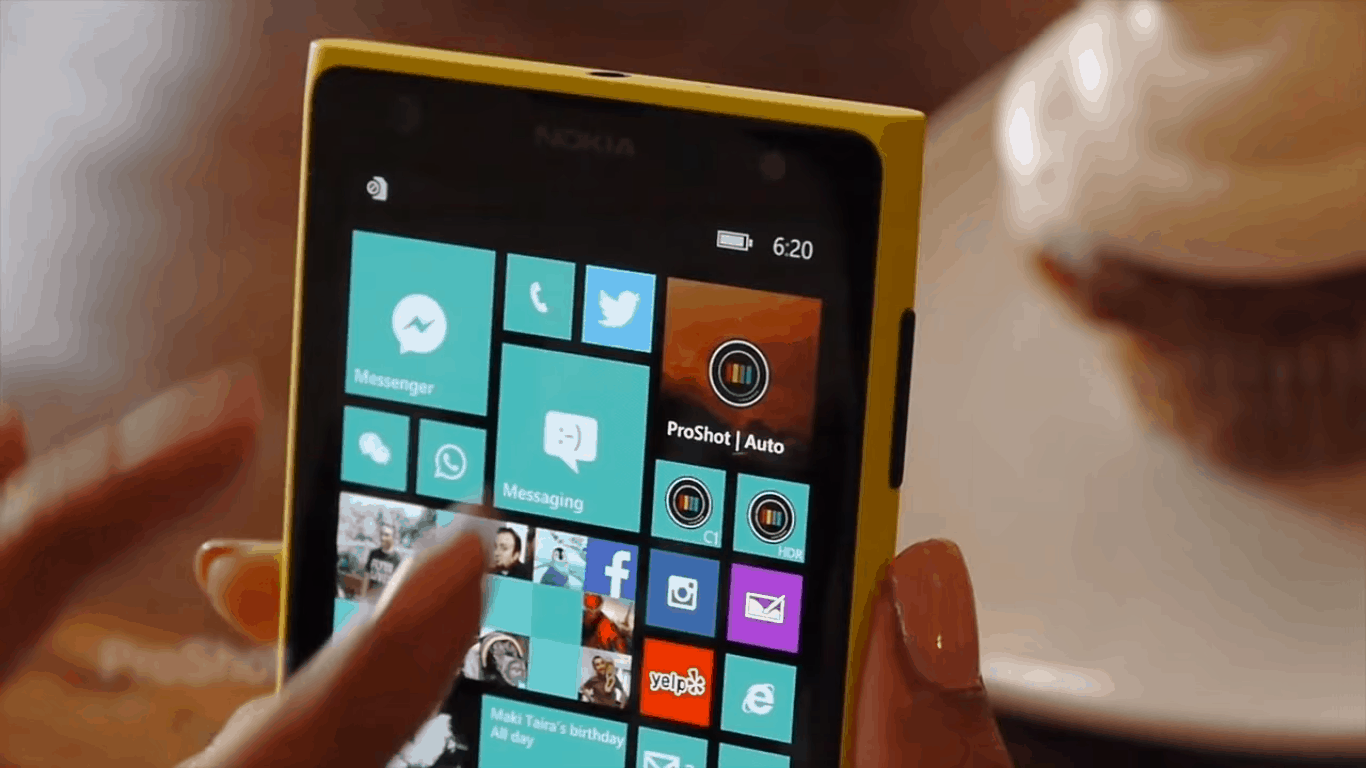
ProShot is a well-known third-party camera application for Windows Phones, it brings advanced features that go beyond that of the stock camera app provided by Microsoft. For quite some time now, the developers behind the app have been working on an upgraded version which utilises the Universal Windows Platform, to bring the app to other Windows 10 devices, such as PC and mobile.
Today, we now know that the all-new ProShot for Windows 10 will be releasing tomorrow – August 15th. Rise Up Games announced the date on their Twitter:
Those who already purchased the Windows Phone version of the app will need to purchase the new Windows 10 version, as there is no upgrade path available, with Rise Up Games claiming it is a completely new and different app:
there is unfortunately no upgrade path from 8.1 to 10 due to things outside our control. Its a completely new and diff app ?
In addition to this, some features will also be broken due to a bug in the Anniversary Update. One of the known broken features is the light painting functionality. The developers will be keeping an eye on any new builds to see if they resolve the issues.
We’ll let you know when the app is available to download in the Windows Store.
A little more than a week after releasing the Anniversary Update for Windows 10, Microsoft just pushed the first post-Anniversary Update Preview build to Windows Insiders. The latest release is called Windows 10 Insider Preview Build 14901, and is considered to be the firstRedstone 2 Preview build available to Insiders.
As usual, the build is currently available to Insiders on the Fast ring, but only on PC. As for Windows 10 Mobile, users still have to receive the Anniversary Update for this version of Windows 10, so we suppose the new preview build will be pushed to Windows 10 Mobile Insiders after the major update gets released. According to Microsoft, they’re very close to releasing the Anniversary Update to Mobile, so we shouldn’t wait for too long for the build either.
Since this is the very first Redstone 2 build for Windows 10 Preview, it brings no major changes or new features, and we shouldn’t expect a next couple of builds to be different. However, the new build actually brings some additions and system improvements.
As Microsoft said, they made some structural improvements to OneCore, which is “the shared “heart” of Windows across PC, tablet, phone, IoT, Hololens and Xbox”. This means that we should see more cross-platform compatibility improvements in the future builds. For now, we don’t have info about possible cross-platform additions, but Microsoft will surely get us updated when everything is ready.
There’s also one actual feature that Microsoft introduced with build 14901. File Explorer in Windows 10 now shows notifications that tell users about various tips, or new features. This is the only change in File Explorer so far, but we also have info that there might be some even bigger changes in the future.
Microsoft warns Insiders that they might encounter various problems, and bugs upon installing build 14901. This is completely normal, since this build is the first release of the new ‘cycle,’ and it’s still far from a stable release. List of known issues in build 14901 was also released by Microsoft, but surprisingly, it contains just two bugs. Here’s what will bother Insiders running this build, according to Microsoft:
“Support for kernel debugging over 1394 has been removed, but will be available in an upcoming kit release. A work-around will be posted to the Debugging Tools for Windows Blog shortly.
Adobe Acrobat Reader crashes when you try to launch it.”
Of course, we expect more bugs and issues to bother Insiders than Microsoft originally said. So, as usual, we’re going to write a report article about all issues that bother users in Windows 10 Preview build 14901, just to let you know what to expect from this build.
In case you already installed the build, and encountered some issues on your own, feel free to let us know in the comments, so we can include your issue in our report.
Welcome back to our weekly “Windows 10 news recap” series where we go over the top stories of the past week in the world of Microsoft’s latest operating system. Let’s get started.
Initial Redstone 2 builds start to deploy to Insiders
Insiders who have been playing around with the new features in Redstone may have been a bit bored for the past week, convinced they would be waiting a long time before Microsoft opened up their doors and started offering new toys to play with. We found out this week, however, that Dona and her big red button are already back at it again and ready to hit Insiders with a brand new world of features. The first true post – Anniversary Update build was dubbed 14901, and marked the official beginning of Redstone 2’s lifespan in the Insider program. Not many features have come out yet to define Redstone 2, but it’s great seeing that Microsoft is already starting to move forward.
Pyramid Flipper laptop set to launch on IndieGogo
Windows 10 laptops are great, and one of the biggest reasons for that is the sheer amount of options that you have when buying one. The team at Eve took that idea of choice to the extreme, basing almost all choices regarding their new 2-in-1 (The Pyramid Flipper) on feedback that’s been given by Eve’s community members for quite a while now. Not all of the specs of the Pyramid Flipper have been confirmed for us yet, but we now know that the device will be ready to pre-order in either late September or early October. Hopefully, by the time that happens, we’ll have a more firm idea of what the 2-in–1 will be packing under the hood.
Windows Store gets a makeover
Looking for a Store with a new look? Look no further. The Microsoft Store has gotten a series of tweaks to its visual design that makes it look way more aesthetically pleasing and less bland, getting a new font and adding in a background image in each Store page to better use up some of that boring white space.
Lenovo teases innovation at IFA
Lenovo, one of the more recognizable hardware developers for Microsoft, is going to be coming to IFA this year in order to show off what’s next for their company. We were given a minute-long teaser that gave us a few vague ideas about what’s coming up, and were promised a “new chapter in tablets” as well as a “whole new kind of intuitive keyboard.” Whatever Lenovo’s August 31st conference is going to have, it’s going to be something interesting.
Microsoft Garage publishes the Video Breakdown preview
Looking for some fancy new technology coming out of the Microsoft Garage program? The program is always full of new, interesting things to wow software aficionados, and this is no exception. This time around, a site called the Video Breakdown preview is astounding by breaking down videos into the core of their parts, recognizing faces, indexing tones, and even more. It’s going to be extremely exciting to see what this one is capable of once it becomes more advanced.
Thanks for joining our weekly “Windows 10 news recap” series where we go over the top stories of the past week in the world of Microsoft’s latest operating system. To keep up on the latest in Windows 10, check out our tag.
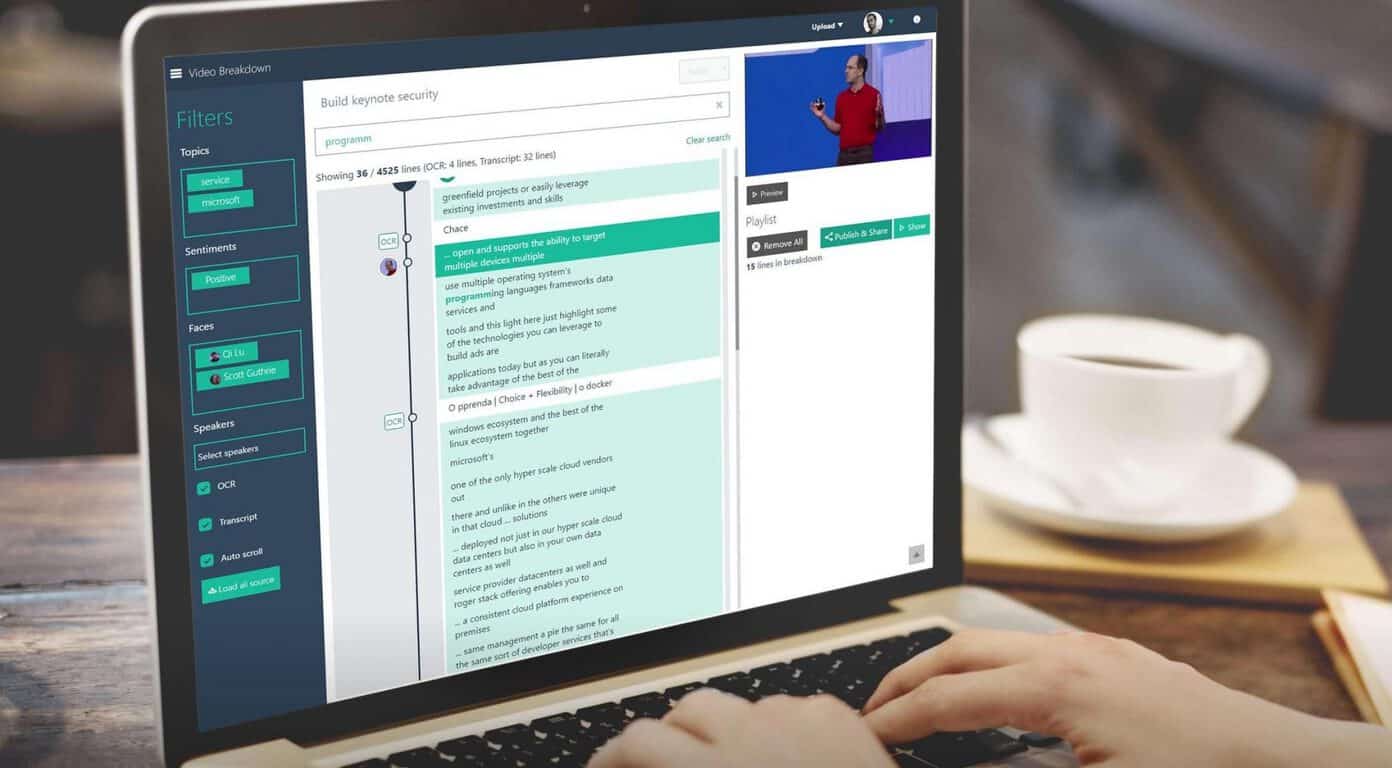
There are a lot of things to be excited about when you immerse yourself in the land of technological marvels that is Microsoft, but few inspire quite as much intrigue as the Microsoft Garage project. For those who don’t know, Microsoft Garage is an umbrella term that encompasses a vast series of experimental projects, each one being tested out and given room to grow as ideas. Today, we’ve got an entry in the Garage program that might just pique your interest.
The project is called Video Breakdown, and it’s a fascinating website that performs cognitive breakdowns of videos, analyzing their tone, keywords, and more. The site is full of videos now – ranging from motivational speeches to keynotes given by Microsoft executives – that have all been broken down in order to break their contents down into data. One of the most noticeable metrics, for instance, is how each video is broken up into positive, negative, and neutral tones. Some of the motivational videos, for instance, are more positive than the relatively neutral keynotes.
If you’d like to do a bit more than marvel at what’s possible with all of this fancy recognition software, you’re out of luck for the time being. As it stands now, you need to either have an invite code to upload a video or you have to be a Microsoft employee with an ID to sign in with. It’s important to note that this is, of course, a preview, and is mostly meant for internal testing right now. For the time being, keep Video Breakdown in mind as a reminder of what fascinating things that the folks at Microsoft are doing with their various cognitive programs.
The Windows 10 ecosystem continues to grow as new devices enter the marketplace. While Dell, HP, and Lenovo are the major first-tier vendors making desktops, notebooks, and 2-in-1 machines that are optimized for Microsoft’s latest operating system, a number of other OEMs are also pushing new machines. Micromax is one example, and the company has launched two new series of Windows 10, the Alpha and the Ignite.
As reported by the Times of India, the Alpha line will debut with two machines, the Alpha LI351568W 15.6″ notebook with Core i3 processor and the Ignite LPQ61408W laptop with 14″ screen and Pentium N3700 processor. Specifications for the relatively low-end machine are as follows:
Micromax LI351568W.
Alpha LI351568W
15.6-inch display of 1366×768 pixels resolution
5th generation Intel Core i3 processor
6GB LPDDR3 RAM
500GB storage
4-cell battery rated at up to 4.5 hours of battery life
Bluetooth, Wi-Fi, USB 3.0 (2) , USB 3.0 (2), USB 2.0 (2) HDMI (1), Ethernet port (1), DC-in (1) and 3.5 mm audio jack (1)
Price: Rs 26,990
Micromax Ignite LPQ61408W.
Ignite LPQ61408W
14-inch display of 1366×768 pixels resolution
Quad-core Intel Pentium N3700 processor
4GB LPDDR3 RAM
1TB storage
4500mAh battery
Bluetooth, Wi-Fi, microSD card reader, USB 3.0, micro-HDMI and LAN
Price: Rs 18,990
The machines are available exclusively at Flipkart. If you’re located in India and looking for a low-cost and low-spec’d Windows 10 machine, then you’ll want to give these two a look.
Plex is one of the better-known solutions for streaming video over a local area network. Set up a Plex server on a central machine, install client apps on the various supported platforms, and then you can access all of your videos from one location. Today, Plex updated their Windows 10 app with some bug fixes and new features, including adding in Cortana support.
Here’s the changelog for version 3.0.43:
NEW
(Home) Redesign of account picker screen (#1724)
(Home) Lock account when account picker is opened (#1757)
(Cortana) Playing and shuffling libraries and playlists is now supported
Blur background art on synced content for better readability – available on Windows 10 Anniversary Update (#1774)
FIX
(Video) Revert transcoding of media with multi-channel AC-3 audio (previously causing stuttering), since it introduced issues for other users (#1767)
(Video) Force transcoding of HEVC files with REXT profile, since it causes the video player to crash if used as-is
(Video) App crashes when updating system transport controls and the media doesn’t have a subtitle
(UI) A bunch of minor tweaks to UI (#1768)
(Playlists) Fix breadcrumb on playlist page (#1768)
(Music) Restore volume at startup (#1775)
(Cortana) Various bug fixes and performance improvements (#1712)
Fix crash when navigating to album by folder
If you’re using Plex, then head over to the Windows Store and hit update. Otherwise, you can download the Windows 10 client via the link below.
The Windows 10 Anniversary Update brought a lot of features to Windows 10 that many have been anxiously waiting for (especially for non-Windows Insiders). But has a lot changed since last year? Windows 10 meant the start of something different. A new Windows to rule them all. A lot of changes to almost every aspect of Windows 10 have come and gone over the past year, here’s a look at some of the big ones.
WinBeta did a comprehensive review last year of Windows 10 and a lot has changed since Windows 10 was released on July 29, 2015. The Windows 10 Anniversary Update added enhancements to Cortana, Edge, Outlook Mail and Calendar, Start menu, and the Action Center. The Anniversary Update added new features too, including Windows Ink.
Windows Ink
Windows Ink made its debut this year, showing off the “power of the pen” in a big way. Windows Ink provides a new space to create and utilize the pen, especially with the new Surface Pro 4, and Surface Book. One the best features of Windows Ink is Sticky Notes, where you can write up reminders for yourself. Cortana can take content from your Sticky Notes, like dates, times, and locations. Cortana can then set reminders for you about any upcoming appointments, meetings, or trips accordingly.
Windows Insider Program
The Windows Insider Program played a big part in helping shape Windows 10 this past year. Without the feedback from Windows Insiders, Microsoft would have been in quite a jam figuring out what its users want. Now that the Anniversary Update is complete, Windows Insiders will be tasked with checking out the new features that will be coming out in 2017; Redstone 2 and Redstone 3. The first Redstone 2 build was actually made available this week.
Dona Sarkar with the Windows team
This year, Windows Insiders saw Gabe Aul pass the big red button to Dona Sarkar. Aul had been at the helm of the Windows Insider program since its inception in September 2014. Sarkar took the reigns and has so far not disappointed any Windows Insiders. Once Sarkar was given the big red button, she has released several Windows 10 Insider Preview builds rather quickly.
Messaging Everywhere
Over this past year, we’ve seen Microsoft bring Messaging Everywhere to Windows 10, then flip-flopping back and forth on how to deploy it. First, Microsoft chose to integrate Messaging Everywhere with Skype, then decided to make it a stand-alone app, then ultimately chose to integrate Messaging Everywhere with Skype. Now, it looks like Microsoft could be bringing back Messaging Everywhere to Windows 10 in the Redstone 2 update.
Windows Store
After the Anniversary Update, the Windows Store provides a more unified buying experience. In most cases, you can install or buy an app or game in the Windows Store and it will work whether you are using a Windows 10 PC, tablet, or phone, Xbox One, HoloLens, and Surface Hub where indicated.
Another bonus for the Windows Store now is that Xbox and Windows 10 apps, games, movies, music, and TV content are now all located in one place. Plus, Windows 10 users can buy app and game bundles, Xbox Live Gold subscriptions, and even pre-order their favorite Windows 10 PC games through the Windows Store.
Windows Store apps and games also feature improved ratings and reviews, and system requirements (a must-have for Windows 10 PC gamers). Windows 10, Xbox, and Play Anywhere (coming soon) games feature trailers, game clips and more. For digital game purchases in the Windows Store, gamers can now choose which storage location they want to use to install their game content.
Surface Pro 4, Surface Book, and Surface Hub
The Surface Pro 4 and Surface Book debuted to much fanfare last year at the Windows 10 Devices Event hosted by Microsoft. Windows Hello also debuted as a new way to login to your Windows 10 PC just by using your irises and face. An additional type cover with a fingerprint reader also made Windows Hello available for Surface Pro 3 users that weren’t quite ready to upgrade to the Surface Pro 4.
The Surface Book was a new iteration of the Surface line of products, bringing users a more powerful Windows 10 experience in the form of a 2-in-1 laptop. While the Surface Book does not have the kickstand like the Surface Pro 4, the Surface Book provides more of laptop experience, with a superior keyboard and touchpad that rivals that of the MacBook Air.
Surface Book and Surface Pro 4
The Surface Hub also became available, offering enterprise users a better workplace experience with Windows 10. The Surface Hub is available in two sizes; a 55-inch HD option and an 84-inch 4K option. The Surface Hub also features integrated cameras, speakers, Bluetooth, NFC, two rechargeable Surface Pens for helping groups to draw, take notes and annotations right on the Surface Hub screen.
Partners like Lowe’s, Greg Lynn FORM, Case Western Reserve University, NASA, and more are using HoloLens in their own business operations. Microsoft is adding new HoloLens partnerships on an almost daily basis. It will be exciting to see what Microsoft has planned next for HoloLens.
Xbox One, Xbox One S, and Project Scorpio
In addition to everything going on with the Surface Pro 4 and Surface Book, the Xbox One S was introduced as an updated version of the Xbox One. The Xbox One S offers true 4k gaming, an integrated power supply, enhanced IR blaster, and many more advantages over the Xbox One. However, if you are already an Xbox One owner, there isn’t enough of a reason to upgrade to the Xbox One S.
Xbox One S
Coming with the Anniversary Update, Microsoft announced a new feature available for Xbox One and Windows 10 games called Play Anywhere. Play Anywhere will allow gamers to buy a game from the Windows Store once and play it on their Xbox One, Xbox One S, Project Scorpio, or Windows 10 device anytime and anywhere. Play Anywhere will be limited to a few game titles starting September 13, 2016, and expand to more game titles in the coming months.
On the other hand, Xbox’s Project Scorpio, set to be released sometime in Fall 2017, has plenty of reasons for Xbox One owners to upgrade. According to Microsoft, Project Scorpio will be the “most powerful console ever made” and have a 2 TFLOP advantage over its competitor, Sony’s Playstation NEO.
“I understand that you are hearing concerns from certain partners about Microsoft’s commitment to the mobile space. Let me be very clear: We are committed to deliver Windows 10 on mobile devices with small screen running ARM processors. We are currently in development of our next generation products and I wanted to reconfirm our commitment to Windows 10 Mobile.
We believe in this product’s value to business customers and it is our intention to support the Windows 10 Mobile platform for many years. We have a device roadmap to support that from Microsoft as well as our OEM partners who will also be selling an expanded lineup of phone devices based on this platform.”
HP Elite X3
Whether or not Microsoft stays true to their word, maybe new phones like the HP Elite X3 might sway more enterprise customers to the platform, but it doesn’t look like Windows 10 Mobile enthusiasts will have much hope for more phone offerings by either Microsoft or other OEMs.
Was Nokia a bad deal? Probably. The recent price cuts on the Lumia 950 XL and Lumia 950 by Microsoft and AT&T (just the Lumia 950), as well as the recent news that Mozo would be cutting back on selling their Lumia back covers; the forecast doesn’t look well for phones. Although, Microsoft could be clearing the way for something big, like the Surface Phone.
Unless Microsoft is working on the long-rumored Surface Phone for 2017, the HP Elite X3 is the only Windows 10 phone available at the moment. With Microsoft and carriers like AT&T quickly dropping the price of the Lumia 950 XL and Lumia 950, there doesn’t seem to be any new Windows 10 phones on the horizon.
Bash and Xamarin
In an effort to bring more developers on board and using Windows 10, Microsoft announced Bash on Ubuntu would run on Windows 10. Windows 10 allows developers with the ability to run common command line utilities (grep, sed, awk, etc.), navigate the file system with those commands, and run bash shell scripts that rely on those commands. Microsoft later announced at Build 2016 that Xamarin would be free with Visual Studio in yet another effort to get more developers to create Windows 10 apps and games.
Microsoft Layoffs
Microsoft cut a total of 7,800 jobs in July 2015, and another 1,850 in May 2016 from Microsoft’s phone division, a part of layoffs related to the Nokia deal. Although the layoffs were not as much as the 18,000 that were cut by the end of October 2014, Microsoft is still cutting down their workforce considerably which doesn’t often bode well for a company’s products and services. Additionally, Microsoft’s layoffs worried many Windows 10 Mobile fans in particular due to the effect it would have on Microsoft’s phone division.
—
Please note: This is my opinion and is likely nothing close to what other WinBeta readers think about Windows 10 this past year. By all means, type your displeasure at what I missed in the comments below.
If you’re a fan of racing games on your Xbox One, there is a good chance that you play with a racing wheel. But if you always wanted to play your Xbox One racing wheel with some Xbox 360 backward compatible games, there is some good news for you. Major Nelson announced on Twitter that three Xbox 360 racing games will now support Xbox One wheels:
Racing Fans: We’ve updated Xbox One Back Compat titles Dirt 3, Dirt Showdown & Grid 2 to support Xbox One Wheels pic.twitter.com/542PjLFddl
While Dirt 3, Dirt Showdown and Grid may not match the popularity of the Xbox exclusive Forza games, all three games have been well received back in the day and playing these racing games with your Xbox One wheel will provide a miles better gaming experience (pun intended). Overall, it’s good to see that Microsoft seems committed to make backward compatible games a seamless experience on the Xbox One, and going forward it may well make a difference to attract more console gamers into the Xbox One ecosystem.
Prison Architect: All Day And A Night Edition and Lies Of Astaroth are both available to buy, download, and play today on Microsoft’s Xbox One video game console.
The game, Lies Of Astaroth, is a combination of a card game and a free-to-play online roleplaying game. The game was originally released on iOS (where it can also be played for free) and this will be its console debut. Here’s the official description: Lies of Astaroth (LoA) is a free-to-play and highly addictive epic fantasy MMORPG card-battle hybrid! With its simple yet deep battle design, the game has long been championed as the combination of best of both worlds, satisfying both hardcore card game fans for strategy depth and causal players for fantasy RPG gameplay.
The Prison Architect: All Day And A Night Edition is a bundle that contains the Prison Architect game and its separate All Day And A Night downloadable content (DLC). Gamers who already own both the game and the DLC shouldn’t have a need for this but it is a nice chance to try out both for those who have yet to buy either.
Here’s the official description: Take control of the building and running of a maximum security prison as the critically acclaimed lock-em-up arrives on Xbox One!
In Prison Architect you will see the impact of your grand design on the lives of your inmates be it a utopic centre for rehabilitation, a brutal Super Max Prison or anything in between.
All Day and a Night contains 8 new wardens, 8 new prison maps and 8 new plots to build on your prison experience and bend the rules!
Expose your prison to a whole host of outrageous characters who will impact your prisons in unique ways, take charge of new prisons and build your penitentiary on exciting new plots!
Back in July, we reported that Microsoft had managed to fix a major security vulnerability that would have allowed hackers to unlock Windows RT tablets and run non-Windows operating systems. According to recent reports, it appears the security patch wasn’t that successful, with the vulnerability still able to be exploited.
Microsoft’s firmware incorporates a feature called Secure Boot which allows devices to only boot up operating systems cryptographically signed by the tech giant. The Secure Boot feature is activated during early startup by the Windows boot manager. But there is a way to disable Secure Boot check using a special policy known as “the golden backdoor key”. If users manage to get their hands on this policy and install it on their devices, then the Windows boot manager will boot any operating system they want.
The tech giant is desperately trying to patch this vulnerability, but some hackers say it’s impossible for Microsoft to invalidate the leaked keys.
[…] Either way, it’d be impossible in practice for MS to revoke every bootmgr earlier than a certain point, as they’d break install media, recovery partitions, backups, etc.
This major vulnerability also revives the debate around the secure golden key feature started by intelligence and security services. Long story short, security services have long pushed software giants to implement a secure golden key system that could grant investigators full access to user computers. But such universal keys can easily fall into the wrong hands, as ethical hackers warn:
A backdoor, which MS put in to secure boot because they decided to not let the user turn it off in certain devices, allows for secure boot to be disabled everywhere! You can see the irony. Also the irony in that MS themselves provided us several nice “golden keys” (as the FBI would say 😉 for us to use for that purpose 🙂 About the FBI: are you reading this? If you are, then this is a perfect real world example about why your idea of backdooring cryptosystems with a “secure golden key” is very bad! […] You seriously don’t understand still? Microsoft implemented a “secure golden key” system. And the golden keys got released from MS own stupidity. Now, what happens if you tell everyone to make a “secure golden key” system?
For the time being, Microsoft is silent as always and has yet to issue any comment on this matter.
The entire report published by the two white hat hackers who investigated this vulnerability is available online.
Two new Microsoft retail stores will be opening up soon in Tennessee and Florida, expanding Microsoft’s retail footprint in the United States, Microsoft tells us. These two new stores will provide access to Microsoft products and services, including an Answer Desk for troubleshooting and repairs, as well as a Community Theater where shoppers can book space to have training sessions, workshops, and more.
Mall at Green Hills in Nashville, Tenn. at 2126 Abbott Martin Rd, Nashville, Tennesse, located on the second floor next to The Gap. This marks Microsoft’s first full-line retail experience in Tennessee. The new store will have 2,865 square feet of retail space and employ 40-50 people, and will be joining West Town Mall (Knoxville) as Tennessee’s second Microsoft Store.
Town Center at Boca Raton in Boca Raton, Florida at 6000 Glades Rd, Boca Raton, Fla., located near Bloomingdale’s Court. This will be Microsoft’s eighth full line retail store in Florida and is expected to employ approximately 25-30 people.
The opening of these two new stores not only offers an easy way to check out and purchase Microsoft’s products and services, but it also creates close to 80 new jobs. If you live in either area, stay tuned for more details on when the stores are scheduled to open.
The Chrome 53 Beta was released on August 4th, a precursor to Google officially killing off Flash in September, following in the footsteps of Apple and Mozilla. This isn’t a huge surprise with Flash no longer stable, and more and more companies ditching it in favor of HTML5.
“Today, more than 90% of the Flash on the web loads behind the scenes to support things like page analytics. This kind of Flash slows you down, and starting this September, Chrome 53 will begin to block it. HTML5 is much lighter and faster, and publishers are switching over to speed up page loading and save you more battery life. You’ll see an improvement in responsiveness and efficiency for many sites.”
The decision to adopt HTML5 will make Chrome 53 more secure, with users enjoying more battery life from their devices. Flash used to be one of the most important pieces of software in the past, but started suffering from the many security holes hackers used to compromise targeted devices.
Both the WHATWG and World Wide Web Consortium took advantage of this situation and developed HTML5, releasing it on October 2014. The software is easy to read by users and consistently understood by computers, it improved the language with support for the latest multimedia and, at the same time, is the perfect candidate for cross-platform mobile applications.
Google added that “In December, Chrome 55 will make HTML5 the default experience, except for sites which only support Flash. For those, you’ll be prompted to enable Flash when you first visit the site.”
Adobe is desperately trying to extend the life of its Flash player but its days are numbered — no matter how many new updates will continue to release.
Survata conducted a survey interviewing 210 online respondents about their insights on using cloud technology. The SADA Systems Public Cloud survey was only given to individuals that were legal adults in the United States. Each resonant had to complete a screening question to be represented in the data.
According to the 210 individuals, nearly 69.5% of them are the sole decision makers for their company’s IT needs. The other percentage were members of group decision makers. The rest of the survey goes into more detail about the cloud structures that they prefer.
Here are some key notes:
84.3% are using public cloud infrastructures compared to the 15.7% that do not
Most of the group (45.2%) took three to six months to migrate to a public cloud. About the same amount of IT administrators varied from less than three months to up than a year.
Over half of the IT administratives polled had some difficulty changing over to the public cloud even though the internal teams were capable.
The major reason to adopt the public cloud was to feel more secure, flexible, and cost-effective.
More IT administrators use a third-party to migrate/manage the infrastructure because it is cost-effective to outsource.
Primarily motivated by security, flexibility, and cost-effective solutions, the survey shows a clear struggle between public cloud infrastructure services. Google Cloud Platform held itself over Microsoft Azure and Amazon Web Services just slightly. More interesting is that there seem to be multiple platforms being used between these IT administrators according to the numbers.
The biggest concern about public cloud providers is the fear of major data breaches or downtime. Other reasons that might sway people’s opinion include an inability to manage the services internally or a slowdown in revenue from major cloud providers. It’s this concern that also keeps many IT administrators from even migrating over to public clouds.
It’s interesting to see these numbers so close together, but with a survey of only 210 individuals, the results remain subject to inaccuracies. Still, the results are interesting and can be particularly useful for cloud providers as each pursue a course for future direction.
Augmented Reality becomes more of a reality for tech enthusiasts every day and the team at Vuforia is helping speed that process along. Vuforia 6, which is an SDK for Augmented Reality developers, is making its way to the Universal Windows Platform, bringing a whole new world of AR possibilities to light. Instead of reading up on the painstaking details of how it might work, you may just want to check out the stage demo that the Microsoft team put up on YouTube – it’s pretty impressive, to say the least.
Vuforia on Windows 10 made it easy for the speaker to grab their PC and materialize a 3D CAT loader, even enabling him to make notes on it. The model has some impressive detail, to the point where you can easily look into the window of the loader and check out what’s going on inside. While the AR features on a Surface were strong, they’re nothing compared to what the HoloLens has going on. If you grab the loader through HoloLens, you can expand it to its real size and inspect it with better a perspective, even changing its configuration so you can identify exactly what you’re looking for.
Vuforia is coming to HoloLens with the next HoloLens development edition release, opening up to any developer who wants to try it out. No application necessary, no random chance to get into the beta, no strings attached. Feel free to play around with it as much as you like.
While not as robust as the recent set of build releases, today’s What’s new section for preview build 14901 brings a bit of a head turner in offering File Explorer notifications.
What’s new in Build 14901
Improving Product Education: As part of an effort to explore new ways of educating our customers on features in Windows 10 – we are testing out new notifications within File Explorer. They’re designed to help customers by providing quick, easy information about things they can do or new features they can try to have a better experience with Windows 10. If you want to opt out of these notifications, you can do so by unchecking ‘Show sync provider notifications’ from the Options menu in the File Explorer View tab.
File Explorer notification
There you have it, the full list of new item(s) to look out for and test in this very first Redstone 2 development build.
Let us know what you think of the idea and implementation of File Explorer notifications in the comment sections.
Microsoft suggested last week that Windows 10 would be its last operating system. At first, support for the OS was set until 2025, but it seems now the company has extended it by one more year.
Last week, the company released the Windows 10 Anniversary Update (also known as version 1607), later refreshing the Windows support lifecycle database to signal a one-year extension for Windows 10 Enterprise. It is good to know that Enterprise is the version that is static and that doesn’t change during its lifespan.
This version of the OS is also named the Long-term Servicing Branch (LTSB) and comes with the best stability, latest features and newest options. The first LTSB build released for the public was back in July 2015 (version 1507). That version, along others launched then, was guaranteed support until October 14, 2025.
It is good to know that the Windows 10 Anniversary Update (version 1607) was also designated as an LTSB build, with Microsoft saying that it would periodically label new upgrades as LTSB so that companies could update if they want to. The newest LTSB build, based on version 1607, will be supported until October 13, 2026.
However, the same good news can’t be said for consumers or small businesses with computers running Windows 10 Home or Windows 10 Pro, as those two will still be supported until October 2025.
As for customers who have adopted the original LTSB version, they will need to replace the LTSB 1507 with this year’s 1607 version in order to extend the support for the Windows 10 Enterprise version until October 2026, or else the support will end in October 2025.
Proud creators of the Eve T1 Windows tablet have been putting their nose to the grindstone to work on their current project, the Pyramid Flipper. Crowdsourced from day one, this device has been built to the specifications and expectations of the growing Eve Community through polls and questionnaires. The 2-in-1 is expected to have best in class battery life, latest 7th Gen. Intel Core CPU, and Thunderbolt 3 connectivity. The Pyramid Flipper landed on its final design just a few months ago, and now Eve Technology is making preparations for it to go on sale.
Eve will be launching pre-orders for the Pyramid Flipper on Indie Go Go nearing the end of September or possibly early October. Devices are planned to be shipped out December 2016 to January 2017. In anticipation of a smooth launch, there will already be 500 devices manufactured and available. Concerning pre-orders after December, the development team had this to say:
After Indie Go Go preorder campaign we would like to run full-scale preorders from our own website in December there we would have more devices available for preorder. Those who bought shipping during Indie Go Go campaign will be guaranteed to have a device available in December batch.
The team still hasn’t said how much the Pyramid Flipper will cost yet. Although they have stated that they ‘will not let us down.’ With the system specs, it would seem that the device will be priced less than $1000 and might contend with the Microsoft Surface Pro. But it remains to be seen exactly how much consumers will be saving by ‘cutting out the middleman’ with Eve Technology.
The community continues to help feedback how the computer should be marketed and sold now. The latest feedback centers around what specifications they should offer for the Pyramid Flipper and if pre-order bonuses should be included with the Indie Go Go campaign. If you want to leave your thoughts behind, jump into the Eve Community and helpdevelop the computer you want.
For those of you with a houses outfitted with Sonos speakers, you may be pleased to find out that another app has entered the Xbox One library to help you manage your sound system. The Sonos app – dubbed Phonos – currently has a preview version available right now on the Xbox Store, ready to go. The interface is relatively clean, matching up to what you’d expect from the Phonos app that’s already made a home on Windows 10 PCs and Windows 10 Mobile.
Some of you may feel using your phone to control your Sonos speakers just isn’t cutting it, but having this app running on your Xbox One can now give you an excellent way to manage your sound system from a centralized hub – your TV. So, if you’re one of the people who could get some use out of this, go ahead and search up “Phonos” on your Xbox One and you’ll be able to grab it. Keep in mind, however, that this is a preview version and you’re likely to run into a few bugs along the way.
XCOM 2 is coming to the Xbox One pretty soon and its arrival will introduce console gamers to the game that’s been praised by PC players for quite a while now. If you’ve been itching to see more of the game, the folks behind XCOM’s Twitter account have released a few new screenshots for you to fawn over. While newly released shots don’t show much that we haven’t seen before from the PC version, we do get a look at the interface that Xbox One users are going to be navigating.
The new interface looks exceptionally clean, using the bumpers to switch between targets and a few buttons to scroll through to allow users to choose their actions. Commands like “overwatch” that you tend to use often are tied to face buttons on the gamepad, so you can quickly move through turns where you’re setting most of your soldiers on alert. Beyond the interface, XCOM 2 is looking gorgeous on Xbox One, matching the high graphical fidelity and exceptional style that the PC version set back in February.
This month’s Patch Tuesday includes nine security bulletins, with five of them rated critical. We see a smaller number of patches because, according to Michael Gray, Vice President of Technology at Thrive Networks, “Microsoft may have kept things simple so as not to over-shadow the release of their Windows 10 Anniversary update.”
Critical
Two of the cumulative monthly fixes are for Internet Explorer (MS16-095) and Microsoft Edge (MS16-096). The first one resolves five memory corruption vulnerabilities and four information disclosure flaws, while the former fixes eight bugs (four memory corruption flaws, three information disclosure holes, and one Microsoft PDF RCE vulnerability).
The third critical fix is MS16-097 and is a security update that addresses RCE vulnerabilities in Microsoft graphics component. MS16-099 fixes three Office memory corruption vulnerabilities, one Microsoft OneNote information disclosure bug, and one graphics component memory corruption vulnerability. Finally, MS16-102 fixes one RCE flaw in Microsoft Windows PDF library and Core Security principal software engineer Jon Rudolph has explained that it’s important to keep an eye out for CVE-2016-3319 aka “Microsoft PDF Remote Code Execution Vulnerability.
Important
According to the change log, MS16-098 fixes four elevation of privilege vulnerabilities in Windows kernel-mode drivers; MS16-100 gets rid of a security feature bypass bug in Windows Secure Boot which would allow attackers to disable code integrity checks and to load test-signed executables and drivers into a target device. The third patch, MS16-101, fixes two elevation of privilege vulnerabilities: a Kerberos EoP flaw and a Netlogon EoP bug.
As for MS16-103, this patch addresses an information disclosure flaw in ActiveSyncProvider for Windows 10 and Windows 10 Version 1511. Microsoft stated that “The vulnerability could allow information disclosure when Universal Outlook fails to establish a secure connection,” adding that “The update addresses the vulnerability by preventing Universal Outlook from disclosing usernames and passwords.”
While Microsoft has often been mocked for its product placement of its Surface line, whether it be showing up on the sidelines of the NFL or in seemingly contrived displays of functionality on TV shows, it’s the real-life niches’ the device fills that has it gaining consumer interest. Take, for instance, attorney Doug Passon who uses his Surface Pro 4 help power his many creative, productive outlets. Passon is not only a lawyer by day but also adds award writing filmmaker, writer, musician, teacher and father to his list of accolades.
The folks over at Surface Product management are reaching out and highlighting real-life Surface users and came across Passon and his multi-faceted lifestyle being powered by a Surface. The marketing team found that not only does the Surface cover Passon’s many productive needs but it is also fostering a sense of community among users.
Thanks to a little influence from his sister who works at Microsoft, Passon has been using a Surface to manage and power his business called D-Major Films. D-Major Films is a passion project of Passon’s the was birthed from his decade-long career as a defense attorney. The intent behind D-Major Films is to teach lawyers the added value of using photos and film in cases while also crafting time-tested storytelling technique that helps create empathy for their clients if necessary.
Doug Passon presentation
However, Passon’s Surface use isn’t limited to just aiding in the courtroom or at his film company; he also makes use creative music-specific apps the built-in Bluetooth to replace a traditional music stand and sheet music.
Instead of a traditional music stand with sheet music, I mount my Surface on a tripod and use a wireless foot pedal to turn the pages during live performances.”
Thanks in part to its appeal as a Windows 10 gaming platform, Passon also finds himself defending his Surface from his avid gaming sons who find the device more powerful than either of their current computers.
Beyond the focus on productivity and versatility, the Surface is also resonating with individuals on sub-culture of distinction. While Microsoft would love to have iPad-like sales of its device, the seeming rarity of seeing a Surface in the wild engenders a level of wow and community from others.
I remember when I was younger, and a friend got a Corvette. I learned that there is this thing between Corvette owners that when one passes another on the street, the driver’s nod at each other. The same kind of thing happens with the Surface. Then the talk inevitably turns to what cool gadgets we use with it, like the Arc Mouse, the wireless adapter, etc.”
Another example Passion uses is the moment he explained to his son about Windows Hello’s facial recognition software built into his Surface Pro 4, “he thought that was about the coolest thing ever.”
Whether intended by design or a pleasant happenstance involving a confluence of evolving mobile computing behaviors, Microsoft’s Surface line of devices (specifically the Pro series) continues to find purpose in the expanding niches of flexible productivity. Passon’s stories echo a similar list of anecdotal experiences the Surface line has engendered from its users and as time goes on, the list continues to grow.
Lenovo is one of the premier makers of Windows 10 machines of all kinds, from desktops to notebooks to various hybrids. Their Yoga series ranges from affordable ultrabooks to high-end 2-in1s, and the ThinkPad line that the company purchased from IBM years ago continues to offer some of the best-made Windows machines around.
Lenovo has a press event scheduled on August 31 during the IFA 2016 event being held later this month (via Windows Central). In preparation, the company has released a video providing a glimpse at some upcoming devices. Of particular interest are flexible screens, a “new chapter in tablets” to a “whole new kind of intuitive keyboard”–all centered around the theme of “different for the sake of better.”
The video is well worth your 49 seconds in gaining a look into Lenovo’s near future. Let us know in the comments if you think Lenovo will be announcing anything particularly interesting to Windows 10 users.
Microsoft promised that the Anniversary Update will drastically improve Windows 10’s battery life. While it was indeed the case for some users, for others the new update for Windows 10 did the opposite.
We found a lot of reports on Microsoft’s forums about battery draining issues in Windows 10 version 1607. Users say that upon installing the update, their devices started draining battery way faster than in the previous version. Here’s what some of people who encountered this problem said:
“After updating to the Anniversary Windows 10, the battery life on my Surface Book has dropped dramatically. Anyone else notice this? Thanks!”
“Yes. My Dell XPS 13 went from an estimated 13 hours full charge to less than 4 after the update.”
“I have a brand new Surface book and the first 3-4 days of use I was able to get 10-12 hours easily of web browsing and using office products. In the two days since I updated to Windows 10 Anniversary Update my battery life has been cut in half. Now after only 6 hours at work my battery is down to 19% with only 45 minutes estimated remaining. Any help in restoring battery life to normal?”
Although Microsoft used to acknowledge battery drain issues in the past, and actually released a few patching updates for previous versions of Windows 10, that doesn’t appear to be the case with this issue. Since the company said nothing about the battery drain problem, we don’t know if a fixing patch will be released at all.
So, users who experienced battery drain problems in Windows 10 Anniversary Update can’t rely on Microsoft’s help, at least for now, but they can try a few things on their own, to get the battery usage on their computers back to normal.
How to deal with battery drain problems in Windows 10 version 1607
Solution 1 – Check your battery saving settings
There’s a chance that the Anniversary Update somehow changed your battery saving settings. And if your battery settings are changed, logically your device is going to consume more battery. So, before doing anything else, go and make sure your battery saving settings remained the same after the Anniversary Update.
To make sure your battery saving settings are same, do the following:
Go to the Settngs app
Now, go to System > Battery
Make sure everything is as you left it before the Anniversary Update
Once you make sure your battery saving settings are okay, it won’t hurt if you quickly check the brightness level of your screen. To check your brightness settings, stay in Settings > System > Battery, and just go to Display.
If you determined that the Anniversary Updated did nothing to your battery saving settings, try with some of the solutions listed below.
Solution 2 – Check your power plan
Just like the Anniversary Update could change your battery saving settings, it might do the same thing with your current power plan. So, the next thing you’re going to do, in order to increase the battery life of your device is to check if your power plan is alright.
To see your current power plan in Windows 10, do the following:
Go to Search, type power plan, and go to Choose a power plan
Make sure your power plan is same as you left it before the Anniversary Update (if you want your battery to last longer, we recommend the Power saver plan)
Solution 3 – Check if your drivers are updated
If a driver of a certain hardware is outdated, battery drain issues might occur. So, if you checked your power saver settings, and power plans, go and check if all your drivers are updated. To find the list of every driver installed on your computer, go to Search, type device manager, and open Device Manager.
Battery drain issue can also be caused if some drivers are not fully compatible with the Anniversary Update. So, it’s important to have all your drivers updated, not just because of the battery drain issue, but to prevent other problems, as well. We recommend you to download this driver updater tool to automatically download all the outdated drivers on your PC.
Solution 4 – Find out which programs drain most battery
Since the Anniversary Update is a brand new version of Windows 10, some programs and apps might just behave different than in the previous version. And by ‘behave different,’ we mean drain more battery. So, go and see which program or app drains the most battery on your system, and either stop using it, or accustom yourself to it.
It would be even better if you have access to a computer that’s still running Windows 10 version 1511, so you can compare two results. Here’s what you need to do, to check which program or app drains the most battery on your system.
Go to the Settngs app
Now, go to System > Battery
And go to Battery usage by app
You’ll now see the list with every program installed on your computer, and how much battery it consumes. Practice has shown us that Google Chrome is actually the biggest battery eater in Windows 10, so if you can’t find another solution for the battery drain problem, try using another browser.
That’s about it, we hope that at least some of these solutions helped you to solve the battery drain problem caused by the Anniversary Update. However, due to various factors that can influence the battery usage on one’s system, we still can’t guarantee that any of these solutions will work for you.
In case you have another solution for this problem, please share it with us in the comments, we’re sure other users who encounter this issue will be thankful.
When the third party HitBox app hit the Windows Store it marked the first moment Windows users could use the streaming platform to watch live broadcasts of the games you love straight from their favorite Windows device(s). Ever since then, we have extensively covered the app and the multiple updates delivered by the hands of developer Jonathan Antoine.
Today, another update has been released that further improves the HitBox on Windows experience.
hello again. Just to let you know that I have updated the app with chat and bitrate/play rate sélection ☺ Have a nice day !
As seen above, Hitbox developer Jonathan Antoine mentioned to our editor Jack Wilkinson on Twitter that the app has just been updated with chat and a bitrate and play section. These are just the latest features, as the app was previously updated a few weeks ago with support for Hitbox accounts and followers.
And so, if you’re using the app please head over to the Windows Store now and press the update button! Even if not, we have done you a favor and have included a download link for you below.
Microsoft Azure continues to be an important and growing element in the company’s transition to focusing on “cloud-first, mobile-first” productivity. Azure revenues jumped 102% year-over-year in Microsoft’s last quarterly financial report, and it’s clear that the cloud services platform will become ever more important in maintaining the company’s profitability and revenue growth.
Today, the Azure blog posted a video that provides a look at the upcoming Azure Stack Technical Preview and some other updates. According to the Azure team:
We have also heard questions around the integrated systems hardware strategy, with concerns around flexibility, cost, and size. So, we asked Vijay Tewari to sit down with us and provide some insights behind our vision and rationale for integrated systems in this short video. The video provides insight into their top engineering design goals, the value of having software tightly connected with specific hardware, and how they ultimately think about lifecycle management of this system. One point worth reemphasizing is the prioritization of integrated systems from Dell, HPE, and Lenovo, as a starting point. As we have done in other cases in the past, we will continue to broaden our support for a diverse hardware ecosystem that allows customer choice and configuration from a certified catalog of solutions.
If you’re interested in Azure or responsible for its use at your organization, then you’ll want to check this video out. Let us know in the comments if you come across anything particularly helpful.
The move to enabling real-time data streaming comes off the back of Microsoft’s analysis of a growing IoT and social media trends that lend themselves to quicker information monitoring. As more IoT devices, sensor hubs, and social media accounts pull in various data at almost lightning speed, service providers are seeking to not only monitor the data more accurately but respond in accordance.
Recently, we’ve seen an explosion of powerful real-time use cases – from factories using IoT sensors to monitor their equipment, to media agencies monitoring their social media campaigns as they go viral.”
Power BI’s new real-time dashboard tile preview is intended to be a lightweight application that fits snugly in a customer’s dashboard allowing quick access to up-to-the-minute data. Similar to other Power BI controls, creating a real-time tile can be as granular or templated as a customer desires with the entire process taking only minutes to produce.
Real-Time data tile
Sirui offers a step by step process on how to create a new real-time tile that explains the getting started in the Power BI REST APIs developed in PubNub and how customers can navigate the new services once completed.
To add a streaming dataset via PubNub, choose “Add streaming dataset” and select the PubNub option. In the next dialogue, provide your PubNub Dataset name, Sub-key, Channel name, and PAM Auth Key (if applicable). if you’re not sure what these are, sign into your PubNub account, and go to the PubNub Admin portal.”
On top of the new real-time tile preview, the Power BI team has also made some improvements to its existing Power BI REST APIs. The new set of improvements is intended to work in conjunction with the new real-time preview, thus making the entire experience easier to manage as a whole. Creating a streaming data set now seems to be even easier than before.
For anyone interested in taking the real-time dashboard and tile for a spin, the Power BI team is offering sample streaming datasets at GitHub. New to the entire process, but still interested? Sign up for either the Power BI’s newsletter or visit the Microsoft Power BI blog for more information.
Microsoft previously stated that it would not be supporting devices running Windows 7 or Windows 8.1 past 2018. However, it appears Microsoft has had a change of heart. Today, Microsoft announced that it will extend support for Windows 7 and Windows 8.1 devices that are running 6th generation Intel Core (Skylake) processors.
Microsoft is changing their 6th generation Intel Core (Skylake) support policy. Instead of ending the Skylake support period on July 17, 2018, Microsoft will extend the Skylake support dates for Windows 7 and Windows 8.1. Microsoft will also provide all necessary security updates for Windows 7 and Windows 8.1 too. Microsoft made the policy change based primarily on user feedback from their enterprise customers.
Please note that this policy only applies to enterprise customers and does not affect customers that are already running Windows 10. Here is a list of the changes for enterprise customers still running Windows 7 and Windows 8.1:
Today Windows 7 is in extended support and support will end for Windows 7 on January 14, 2020, and support for Windows 8.1 will end January 10, 2023.
6th Gen Intel Core devices on Windows 7 and Windows 8.1 will be supported with all applicable security updates until the end of support for Windows 7 and Windows 8.1.
This change is made possible through the strong partnership with our OEM partners and Intel who will be performing security update validation testing and upgrade testing for 6th Gen Intel Core systems running Windows 7 and Windows 8.1 through the end of support dates.
As previously communicated earlier this year, future silicon platforms including Intel’s upcoming 7th Gen Intel Core (Kaby Lake) processor family and AMD’s 7th generation processors (e.g. Bristol Ridge) will only be supported on Windows 10, and all future silicon releases will require the latest release of Windows 10.
Relying mainly on user feedback, Microsoft will continue to provide its customers the best Windows experience possible. Changing their Windows 7 and Windows 8.1 support policies will allow enterprise customers extra time to buy more modern hardware and prepare to deploy their current systems to Windows 10.
If you belong to an organization that uses both SharePoint sites and OneDrive for Business, then you might have had a need in the past to copy files and folders directly from the latter to the former. Until now, that’s not been possible, but Microsoft today announced on the Office support site that files 50MB or smaller can now be transferred directly between the company’s cloud storage solution and its content management platform.
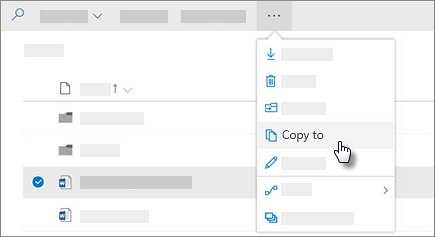
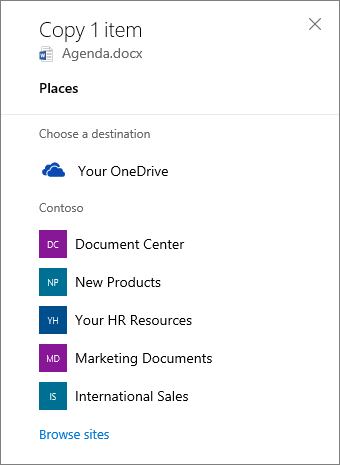
The process is as simple as selecting “Copy to” via the options for a file and selecting a SharePoint Team Site as the place to copy. You can do the same for folders.
Files and folders can now be copied to SharePoint sites.Simply select a SharePoint Team Site as the destination for a copied file or folder.
Microsoft makes note of two limitations for the feature:
50MB file limit Currently, the size of files and folders you can copy at one time is limited to 50MB. Support for larger files is coming.
Scripting must be turned off for personal sites If scripting is turned on for personal sites in your organization, the Copy command is restricted to copying within your OneDrive.
In addition, scripting for personal sites must be turned off in SharePoint in order for the copy feature to be available. Generally, Microsoft recommends turning scripting off as a security measure to protect sites from cross-site scripting attacks.
Microsoft continues to integrate their various services to provide the best “cloud-first, mobile-first” productivity solutions for their customers. Let us know in the comments if the ability to copy files from OneDrive for Business to SharePoint will be welcome in your organization.
While the app is not available to download yet, here is the official description:
HP Workspace enables users to run their Windows desktop apps (x86 and x64) when docked on a Windows Mobile device with Continuum. Using HP Workspace, users can bring the Windows desktop experience, with large-screen, keyboard and mouse support, to their Windows 10 Mobile device, and without the cost of server hardware and IT administration challenges of traditional app virtualization services. A subscription is required to access this service.
Earlier this week, we had the chance to ask some questions to HP’s Vice President and General Manager of the Mobility and Retail Solutions GBU Michael Park, who explained why this app virtualization technology can make the Elite x3 a “3-in-1” device that could meet all of the computing needs of business customers. We invite you to read our full article to get more details about HP’s Windows 10 Mobile strategy with the Elite x3.