Razer’s Project Hazel Smart Mask garnered a lot of attention when it was first announced back during CES 2021 with its futuristic design, stylish exterior lights, functional interior lights, a built-in voice amplifier, and high quality filtration that actually makes it a functional tool during this seemingly endless global pandemic.
This smart mask concept proved so popular that Razer soon approved it for mainstream production with the aim to release it in late-2021.
While no specific release date has yet been given for Razer’s mask, it seems as if its launch could be very close with a number of Razer employees recently seen testing early models in the wild and the official Razer socials reminding interested consumers to sign up for the product’s mailing list so that they can be among the first to buy Project Hazel and even participate in some kind of community beta test.
A few Team Razer folks across our global offices have started to trial the latest version of the Project Hazel Smart Mask. Stay up to date as we bring you more details, which may include a community beta test, register your interest here: https://t.co/NC6ZwFCt68pic.twitter.com/gGJepIJ8qr
The above tweet is the first time that there’s been a mention of a beta program for the mask and it’s unclear what exactly this could entail. It’s possible that this could simply be an early access type of program before the mask releases in stores for the general public. More details should be announced soon.
As mentioned above, those interested in picking up a Razer Project Hazel Smart Mask are encouraged to sign up for the mailing list here.
If masks are here to stay, you may as well look cool while wearing one and invest in one that actually does what it promises.
What do you think? Are you planning on buying a Razer Project Hazel Smart Mask? Let us know why or why not in the comments below and then follow us on Twitter and Pinterest for more tech news.
The official list of changes and adjustments made to the Twitter web app over the past month has been published.
Among the more noteworthy changes made in July were the addition of the ability to change the reply preferences of a tweet after it’s been published, added support for login via a Google account, and improved support for voice tweet playback.
Mid-Conversation Controls: We’ve introduced the ability for you to adjust conversation control settings for a Tweet after it’s been sent. This allows authors to adjust the scope of a conversation as it evolves, and empowers authors to pause replies from people outside their network or altogether.
Promoted Tweets: We’ve made improvements around ensuring proper density of promoted Tweets within timelines.
Spaces: You’ll now be able to see the presence of an active Space through profile image rings in search results and on the profile screen. You can click the avatar to join the Space.
Third Party Sign-On: You can now use your Google account to sign up and sign in to your Twitter account.
Voice Tweets: Voice Tweets are now fully supported on Twitter.com, including improved controls, audio dock playback, and captions.
Updated
Accessibility: Clear buttons present in editable fields will now be properly focusable and labelled to make it easier for screen readers and voiceover to access.
Accessibility: Improved labeling and screen reader behavior for expandable menu items in the Topics suggestion flow.
Accessibility: There’s been a lot of work done to improve video caption behavior across browsers and devices. We’re currently experimenting with improvements to caption positioning, and will be enabling these fixes for everyone soon.
Misinformation Labels: Prevent labelling applied to Quote Tweets of labelled Tweets.
Spaces: The Spaces dock will now take advantage of the full screen height on mobile devices.
Video: You can now toggle video captions on and off using the ‘c’ key when the video is focused.
Video: The video player now supports quick scrubbing to playback percentages through the keyboard number keys (0 – 9), and also jumping to the start and end of playback using ‘home’ and ‘end’.
Fixed
Accessibility: Input fields with animating transitions will no longer animate when reduced motion is enabled.
Accessibility: Fixed discrepancies around when user avatars are accessible or not.
Composer: Resolved problems with tapping to create and edit polls on mobile devices.
Composer: Improved alignment of components within the composer.
GIFs: Resolved an issue where searching for multiple results in the GIF picker would show an empty state after the initial search.
Inline Reply: Typeahead results displayed in popover elements will now properly scroll with the composer within timelines.
Lists: Fixed an issue where List timelines would automatically scroll down when opened.
Lists: Adding or removing someone from a List through the editor modal and dismissing without saving will no longer incorrectly persist those changes within a session.
Spaces: Improved synchronization of timing between captions and audio playback.
Spaces: Popover elements opened from within the Spaces dock will no longer scroll with the content behind it.
Timelines: Improved scrolling behavior when dismissing elements such as search dropdowns, and maintaining scroll position between different search result pages.
Toasts: Corrected display issues with toasts that contain an action button.
As we all know by now, especially the ones involved in the active testing of Windows 11, in order to be able to take the future OS for a test drive, you have to become a Windows Insider.
But what happens when you want to part with this experience and stop being an Insider and receiving new builds altogether?
Do not be discouraged if you want to take this leap, as the process is not hard or time-consuming, so you can just do so whenever you feel like this new experience has run its course.
How to get out of Windows Insider program
Rest assured that we will guide you through this process and make sure you understand the necessary steps that you need to perform.
So, if you made up your mind and no longer want to be an Insider, here’s what you need to do in order to opt out of this service if you are a Windows 10 user.
Access the Settings menu on your device.
Click on the Update and Security button.
Select the Windows Insider Program tab and click on Leave the Insider program.
Follow the steps listed by Microsoft.
So, as you can see, this is a simple process and it will only require a few minutes of your time. Only do this if you are absolutely sure that you are done with being an Insider.
How to opt out of the Windows Insider program on Windows 11
Yes, you can also leave the Insider experience behind on Windows 11, but if you also want to roll back to Windows 10, you have to be in a certain user category in order to do so.
First thing’s first, you have to still be in a so-called trial period, which is 10 days long and starts to be measured since the first time you’ve installed a Windows 11 preview build on your device.
But let’s get back to leaving the Insider program on Windows 11. Don’t be alarmed, as this is a fairly simple process that we are prepared to guide you through. Here’s what you need to do:
Access the Settings menu on your Windows 11 device.
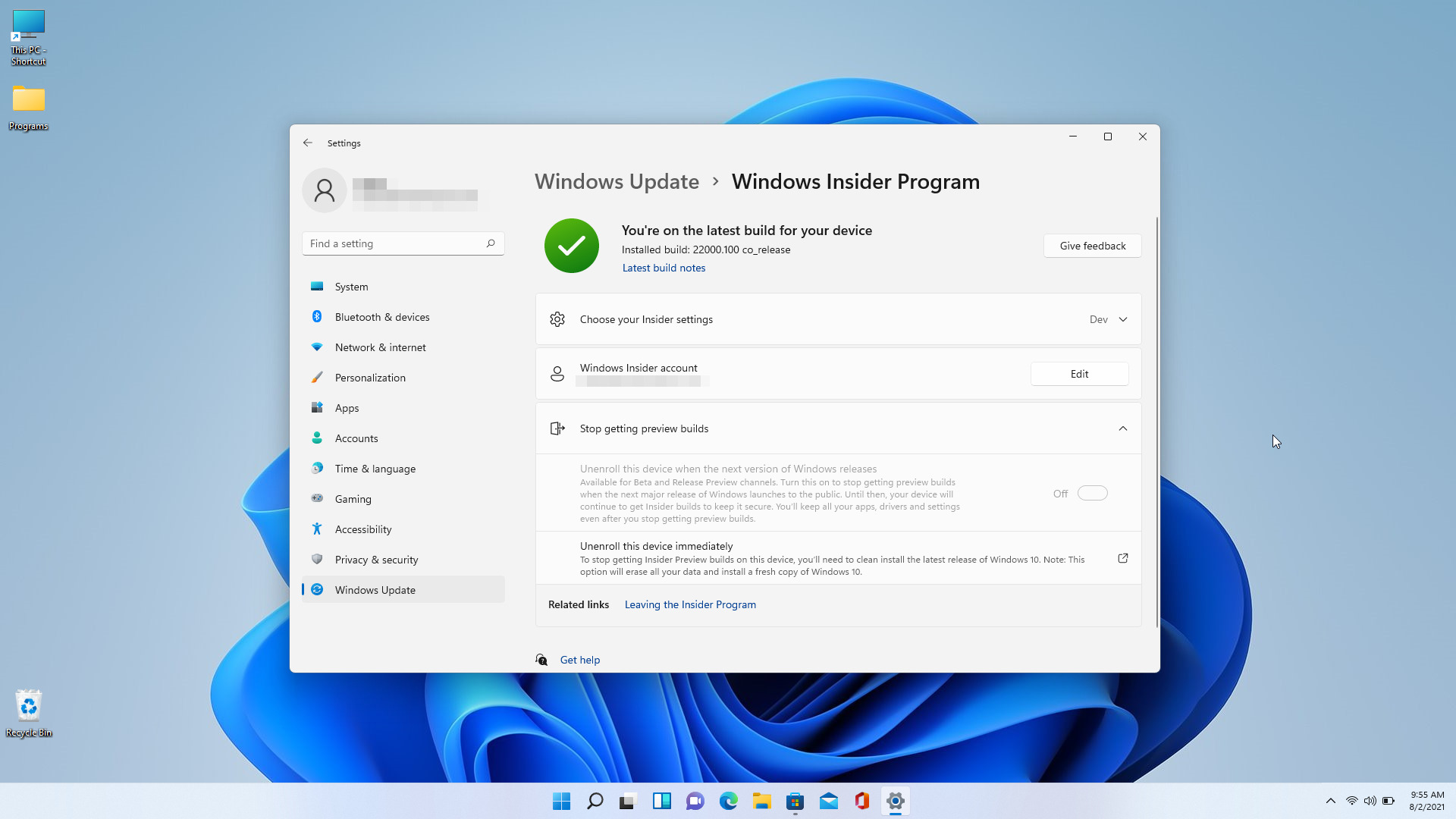
Select the Windows Update tab and click on the Windows Insider Program button.
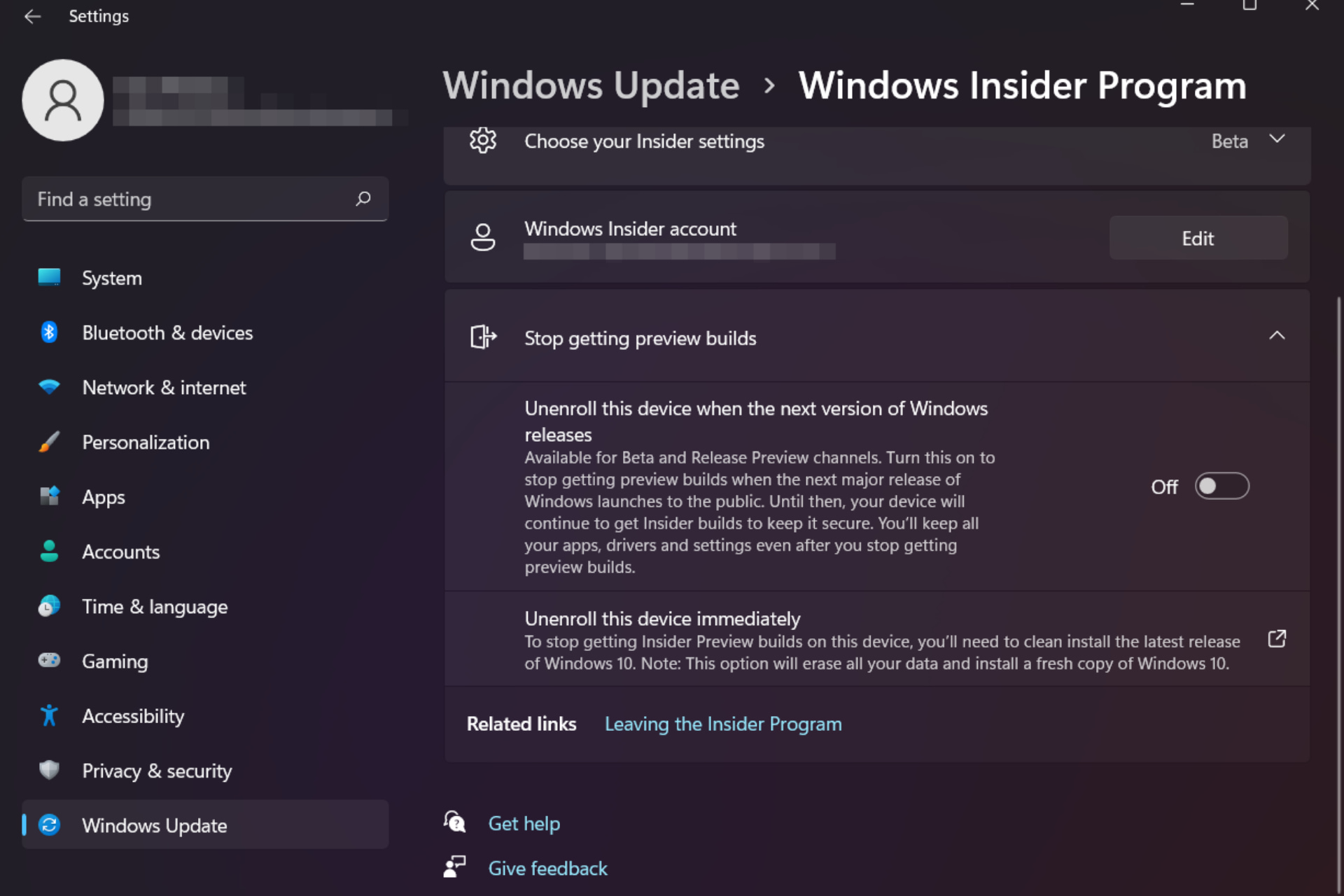
Click on the Stop getting preview builds button.
If you just want to stop receiving new builds everytime Microoft releases one, switch the Stop getting preview builds option to On.
If you want to leave the Windows Insider Program, click on the Unenroll this device immediately and follow the listed steps.
That’s pretty much all there is to it. As we said, nothing too complicated or time-consuming, so you might want to get on that whenever you have 2 free minutes, if that is really what you want to do.
What can I do if the Unenroll button is greyed out?
There are, however, scenarios in which the Stop getting preview builds option is inaccessible to some users, and it appears totally greyed out.
Rest assured that there is a reason why this is happening, so don’t think of it as an error.
That option will be available when it’s going to release to the public or when an insider build will be the RTM build.
For those unfamiliar with the term, RTM is a document used to ensure that the requirements defined for a system are linked at every point during the verification process. It also ensures that they are duly tested with respect to test parameters and protocols.
Basically, in order for this to work, you need to provide compatibility information to Microsoft, so they can know what they are dealing with.
In order for this information sync to work you need to turn on the diagnostic data options in the Settings menu.
Access the Settings menu on your device.
Selct the Privacy & security tab and then click on the Diagnostis & feedback button.
Turn the Send optional diagnostics data setting to On.
Why leave the Windows Insider program?
Well, this is a bit of a tricky question because nobody is forcing you to do anything. And being a Windows Insider is not a time-limited membership so you can do whatever you please.
If you want to keep testing new Windows features and apps, and even the upcoming OS, then the Windows Insider Program is where you actually need to be.
However, if you got bored with this experience or you are using a production build, which is much more stable, then you can choose to opt out of this service by following the above-listed steps.
There are no mandatory factors here, just your own desire.
Have you decided to leave the Insider program? Tell us in the comments section below if these steps have helped you achieve your goal.
Since Windows 11 is all about new design and experiences, we’re about to present to you another new element that Microsoft is bringing to the table.
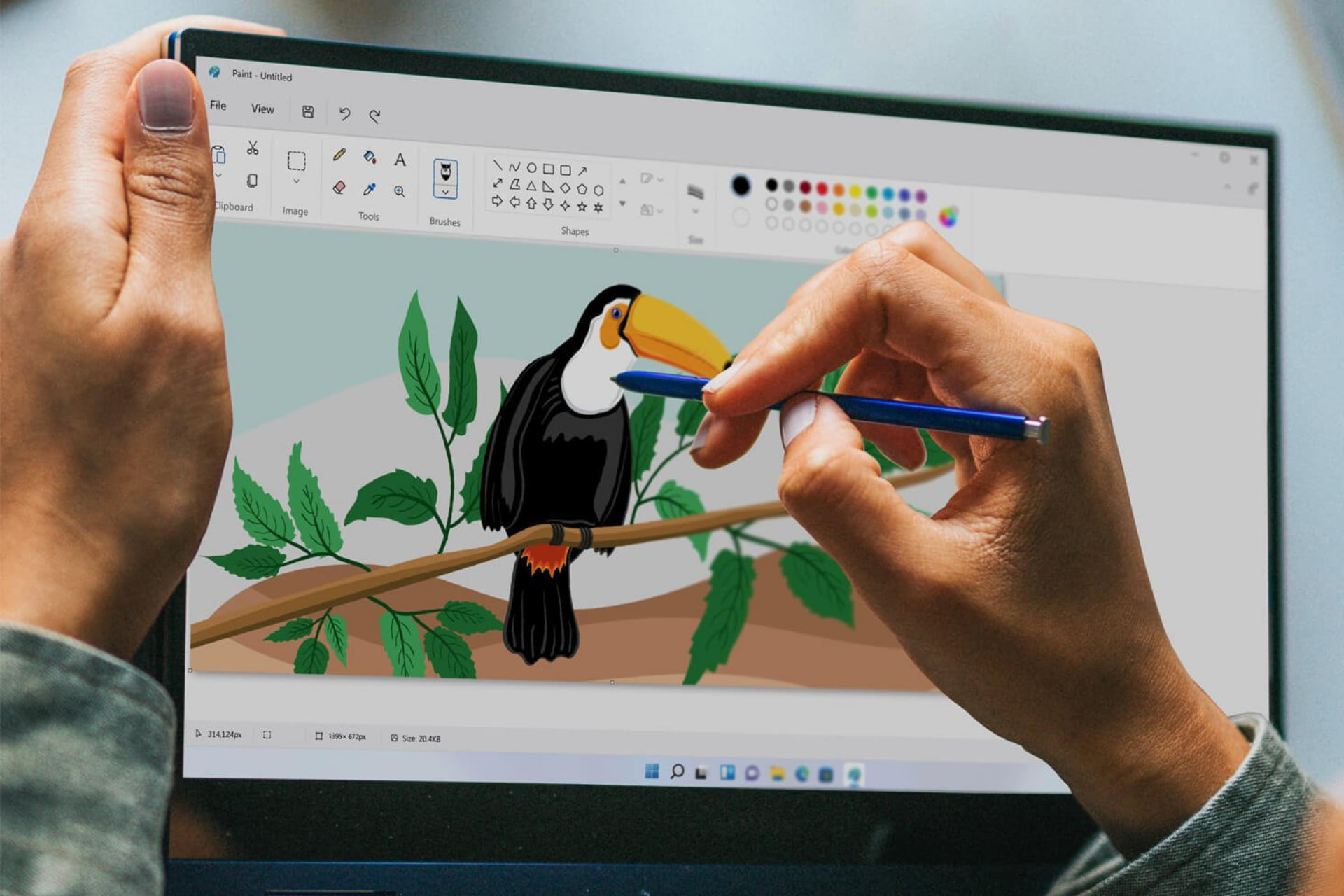
If you weren’t aware, know that an official stock photo of the upcoming redesign of the Microsoft Paint application has been leaked and we must say that it seems to be pretty great.
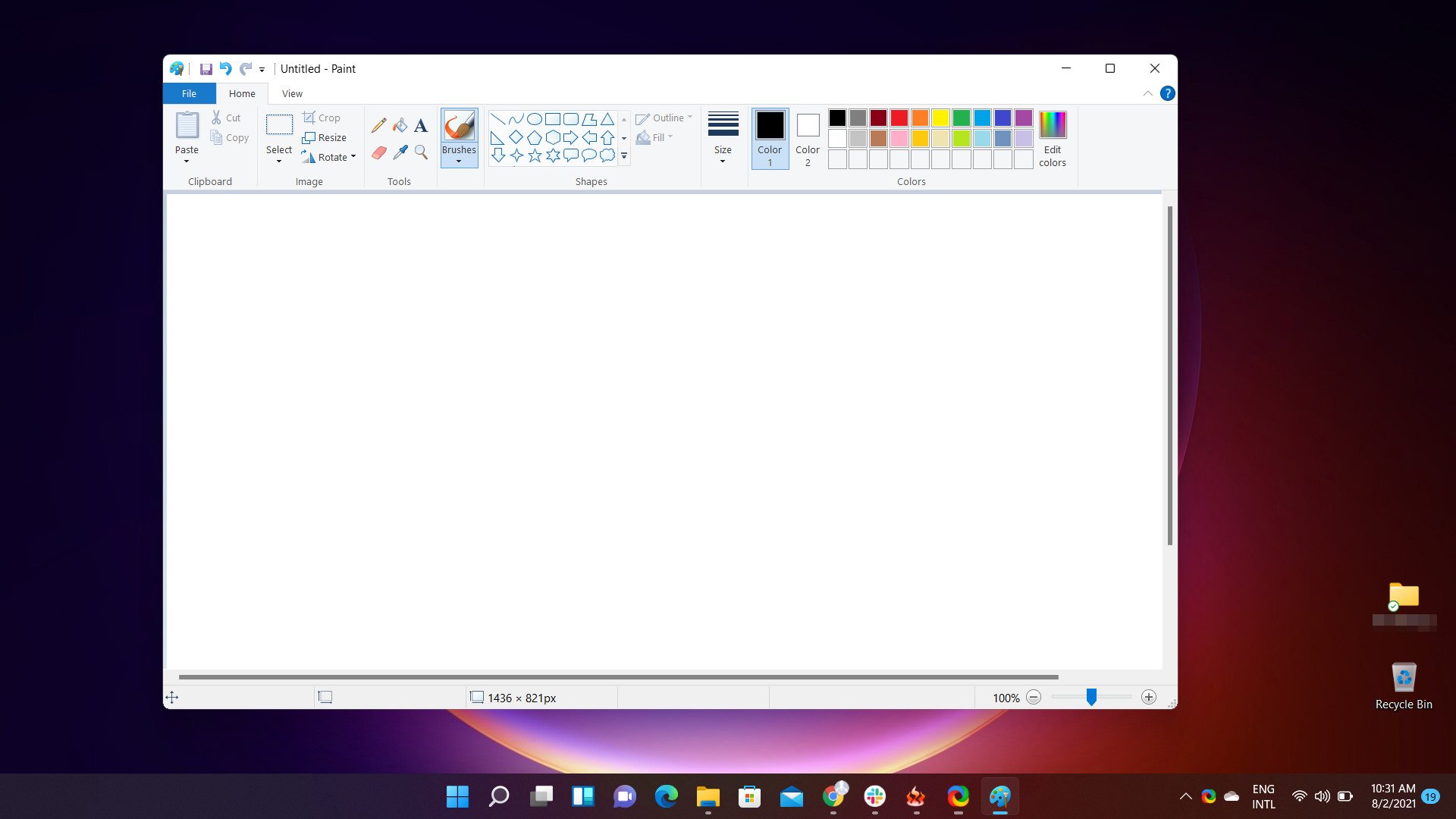
Microsoft Paint was introduced with the first release of Windows in 1985, and while it is not the most advanced tool, it has become a fixture of the operating system.
For those of you who are Windows veterans, you surely remember that Paint was introduced with the first release of Windows in 1985.
It’s not one of the most advanced tools, like PhotoShop, but it has become somewhat of an everpresent feature for the Microsoft OS.
New Windows 11 Paint photos leaked
Here’s another interesting fact about Paint, since we were on this topic. While most of us only use it from time to time to randomly doodle or slightly modify some pictures, others are on a whole new level.
It’s true that, over the years, Paint hasn’t really evolved much, and Microsoft decided to turn it into an optional feature in Windows 10.
Also, while most of the Windows apps are getting an interface makeover with the new OS, Paint is pretty much sticking to the old one.
However, all this is about to change, judging by the official Windows 11 stock photo that the Redmond tech company uploaded to Unsplash.
This gives us all a glimpse of an upcoming version of Paint with a modern user interface. Microsoft has decided to revamp the interface with new icons, rounded color selectors, and a much more modern feel.
Windows 11’s Paint app now has a more simplified toolbar. The already existing ribbon interface has been replaced with a new Fluent header and it comes with all important options, such as File, Edit, brushes, and more.
Photos is also getting revamped
The photo viewing app generically known as Photos is also getting the same visual treatment. It will feel brand new and give us that overall Windows 11 futuristic fluent vibe.
This app has been going through a lot on Windows 10, and it definitely needed a change. Therefore, it is now getting a redesign, joining the new Paint, Snipping Tool, Calendar, Mail, and Calculator.
Ironically, the Windows Photos application has had the Video Editor functionality for quite a while.
Likewise, the Redmond company decided to keep the video editing functionality. The app’s overall design consists of five sections: Collection, Albums, People, Folders, and Video Editor. You can choose any given photo to open in another section.
All the available options are now at the center inside a floating toolbox rather than spreading across the entire top bar.
It also has an all-new file info panel, so you can easily see descriptions, view the photo’s geolocation (if any), and more. The UX’s overall design matches the Windows 11 aesthetic and makes it convenient to use the app.
Coming as a major UI change, you can now view all the photos in the bottom navigation bar, similar to other OEMs such as Apple.
From there, you can even select multiple photos to initiate batch actions. Above all, you can even view multiple photos at once.
Note that these versions are not yet available in Windows 11, but as the OS it is getting closer to its official release as a complete and stable product, we should expect to see it soon.
And even if Paint does not make it into the RTM, for some reason, Microsoft will be updating the program through Windows Feature Experience Packs.
This means that it could be updated and delivered to users at any point outside of Microsoft’s normal update cycle.
What’s your opinion on this new Paint revamp? Share your thoughts with us in the comments section below.
The Organization Explorer feature allows users to find co-workers or teams with similar skills to help them complete their work. “Many of us are also interacting with new colleagues for the first time through email or online chat. Org Explorer can quickly supply you with vital information about their title, group, manager, peers, and more, and aid you in developing strong working relationships,” the Office Insider team explained.
To try out this feature, Office Insiders will need to turn on the “Coming Soon” toggle button available at the upper-right corner of the screen. Once enabled, go to the left app bar and then select the Org Explorer icon. Now navigate to the Search bar, type the name or an email alias of any co-worker, and then choose the name from the list. Finally, click on the card for more information about the person as well as their organization. Alternatively, users can also open Organization Explorer in a dedicated window.
It is important to note that the feature is rolling out in a staggered manner, and not all Outlook users will see it right away. Microsoft will keep listening to the user feedback to improve the experience in the coming weeks before making it generally available to everyone. The Organization Explorer option is only available to enterprise customers with licenses for Microsoft 365 Business, Microsoft 365 E3, or Microsoft 365 E5.
Microsoft news recap is a weekly feature highlighting the top Microsoft news stories of the past week. Sit back, grab some coffee, and enjoy the read!
Microsoft’s FY21 Q4 earnings: Commercial Cloud is a broken record of success for the company, 36% growth YoY
Microsoft’s FY21 Q4 earnings are out, and it has shown yet another quarter of impressive results. Overall, revenue reached $46.2 billion, an increase of 21%. Take a look at the breakdown of the results by business area.
Microsoft acquires Spend Intelligence company Suplari
Suplari, a Seattle-based company that provides AI-automated analytics and insights, has been acquired by Microsoft. The financial details of the acquisition have not been disclosed. The acquisition will help bolster Microsoft’s Dynamics 365 offering.
LinkedIn joins companies who ‘trust’ employees to work-from-home
As some companies are beginning to ask employees to return to the office, others are taking an approach of trusting employees to continue working from home, if they wish to do so. Microsoft’s LinkedIn has joined the roster of those trusting employees to work from home, a reversal of its previous strategy to increase the number of people in offices, as infections begin to rise once again.
LinkedIn looks to expand its ‘Premium Platform’ after announcing $10B annual revenue
Microsoft’s latest earnings report showed that LinkedIn drove a 46% year-on-year increase in revenue, rising to $10B. Following this, it is reported that LinkedIn is looking to expand its Premium Platform, specifically its experimental Premium News service, to include more publishers, expected to come aboard in the coming weeks.
@LinkedIn’s revenue surpassed $10 billion for the first time this fiscal year, up 27%. It’s a testament to how mission critical the platform has become to help people connect, learn, grow, and get hired over the course of their careers.
Microsoft Teams to get auto-delete meeting recording option in September
In September, Microsoft Teams is set to gain a new feature to help manage meeting recordings. It will be possible to set recordings to be automatically deleted on a given expiration date.
Microsoft Teams hits 250 million monthly active users milestone during pandemic
Through the pandemic, Microsoft Teams has seen strong growth as more people work-from-home and find themselves needing to communicate digitally. In its latest update on the usage of Teams, it has been reported that there are now over 250 million monthly active users.
Microsoft Teams now provides phishing protection against malicious links
To protect users against malicious links, phishing protection is now built-in to Microsoft Teams. Leveraging Defender for Office 365 Safe Links protection, organisations will be able to configure Safe Links policies to keep employees safe.
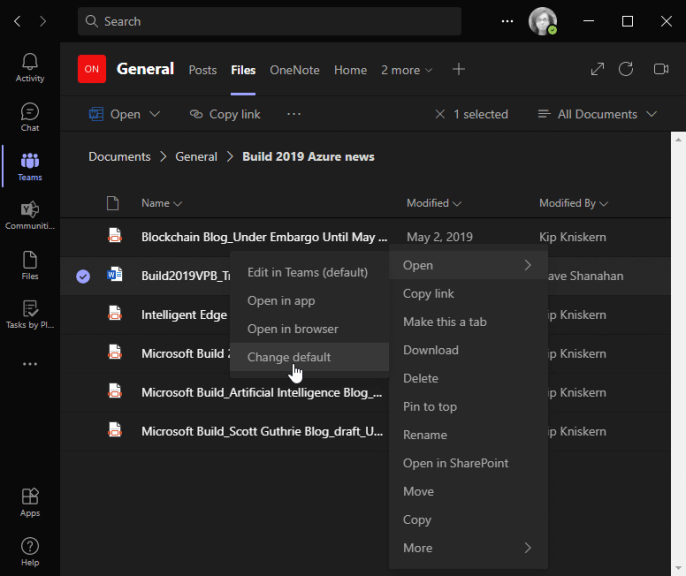
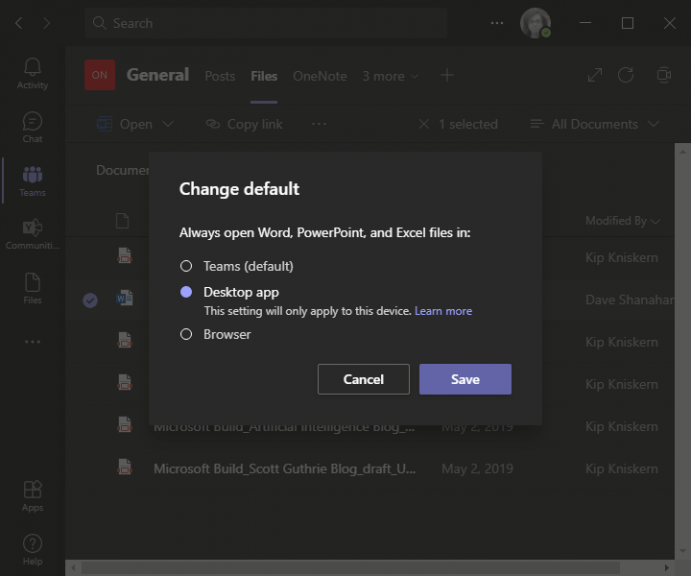
Microsoft Teams public preview now lets users choose where to open Office files
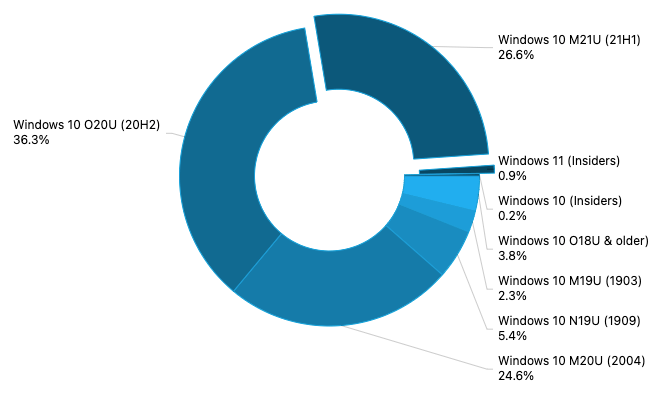
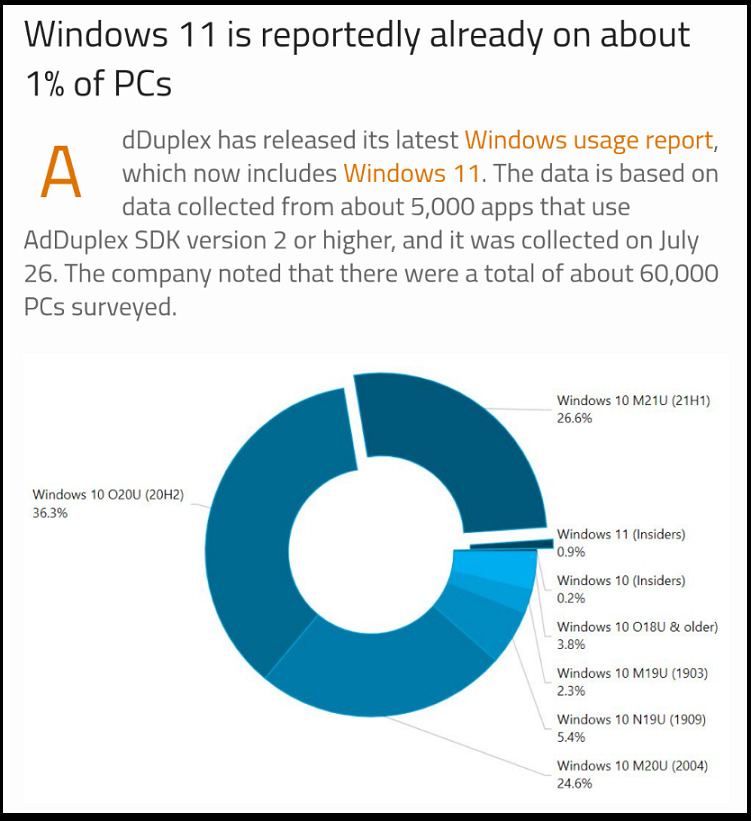
AdDuplex: Windows 10 version 21H1 reaches 26.6% market share in July
According to the latest AdDuplex data, Windows 10 version 21H1 has reached a market share of 26.6% in July, whilst version 20H2 sits at 36.3%.
Microsoft talks about commercial Windows 11 upgrade blocks, update paths & more in AMA webcast
In a 48-minute-long AMA, Aria Carley, a program manager at Microsoft, sought to answer questions about Windows 11, with a particular focus on the commercial side of it all. One hot topic has been Windows 11’s stricter hardware requirements, and specifically on commercial devices, Microsoft has noted that if the device doesn’t meet the new requirements, it won’t be able to install Windows 11.
New optional patches are available for Windows 10 version 21H1 and older
Can you imagine a software release that is perfect? And by perfect we mean it’s free of all the bugs, glitches, or crashes.
You can’t? Well, neither can we. Because such a release is not possible. All software must be tested prior to its debut and, of course, Microsoft’s products are not an exception to the rule.
Throughout this article, we will list as many of them as we can find, so stay tuned for more updates on this topic.
Windows 11 22000.100 Beta bugs
New build causes Invalid data access traps
While some users are enjoying some of the new features that Windows 11 has to offer, others are struggling with getting their systems to work, after the update.
Luckily, if you are in the same situation, there is a quick and easy workaround that will help you move past this.
Apparently, using CCleaner to remove all unused registry keys, and then restarting your system will solve the issue and you no longer have to worry about it.
Windows 11 has Windows 10 taskbar after installing Beta channel
Some Windows users that have just installed the Beta preview version for Windows 11 were more than surprised to notice that not all elements of the OS actually transitioned to their new models.
I installed the new windows 11 beta update today and my taskbar didnt update. its stuck on the windows 10 taskbar and doesnt react to inputs from the windows key on my keyboard. i cant open it when i click it. i alsp cant “shift restart” my pc to delete the update and go back to windows 10.
Furthermore, as if this wasn’t already strange enough, when he logs a different account on the same PC on which the Beta channel is now active, the taskbar seems to be updated.
Upon switching back to his account, the taskbar is back to Windows 10 standards.
Edit: I’m currently running the beta preview when i logged into another account on that pc, the taskbar was normal but when i switched to my normal account the taskbar is broken again.
This is definitely something that Microsoft should look into as soon as possible.
Taskbar flickers continuously
Since we were on the taskbar topic, here’s another glitch that totally ruins the experience of Windows 10 users trying to transition and enjoy the upcoming OS.
If you remember, we’ve reported similar taskbar problems even on the previous Windows 11 builds. Even though the taskbar is an important element of the Windows operating system, there are a lot of things going wrong with it lately.
Battery icon not available on the taskbar
We’ve recently talked about how important is to be aware of your battery usage, if you are using Windows 11 on a portable device, to keep track of which apps drain your battery faster.
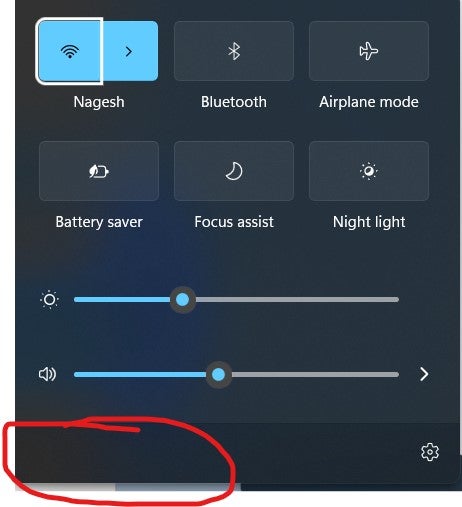
Of course, it’s not impossible, as you can go to the Settings menu and get the same results, only this is not as accessible as the option that is currently missing.
Calendar widget no longer showing any events
Here’s one Windows built-in tool that nobody has mentioned ever since the new OS became available for public testing.
However, after the Beta release, users are starting to notice that something went wrong with it. According to reports, this widget is no longer displaying events, as it did before.
I’m not sure exactly when this happened, but, I’ve got a ProtonMail account registered with my Microsoft account (so no Hotmail, Outlook) and the Microsoft Account Calendar worked flawlessly, I mean I was able to see my events in Windows 11 Widgets.
Since I can’t tell when (but at least a few days by now) it just won’t display any events. Clicking on “learn more” will take me to a 404 Ms page.
Clean install won’t do the trick. I’m sure it’s somehow an API bug or whatever but it just doesn’t work, making (if the account domain is what’s causing this) widgets useless for many, including me.
Even though these issues might seem small and not that important or system-threatening, some users actually rely on these tools in order to get stuff done.
We’re hoping that Microsoft takes all these opinions into consideration and improves the overall experience.
No sound and no Fn key utility
Here’s an issue that has been flagged by users throughout the Windows 11 experience so far, on all builds.
Nobody knows what triggers these conflicts and Microsoft, apparently, hasn’t found a way to prevent this from
Windows Store not recognising installed Win32 apps
If there is one pattern that is visible throughout the flagged issues for Windows 11, it’s definitely the taskbar-Store-Start menu one.
These seem to be the most affected Windows elements at this moment. And since we brought up the Store, here’s another issue to watch out for while testing Windows 11.
Based on Reddit reports on this topic it would seem that the Store app won’t recognize already installed Win32 apps on your device.
The Microsoft shell based winget identifies installed software on someone’s PC even if it wasn’t installed via the command.
Currently it appears that the Windows Store does not identify existing installed software. For example Zoom was already installed on this computer, but the Windows Store offered to ‘install’ it despite it already being installed.
Appreciate the Windows 11 Store is in beta but would assume it would mimic functionality already available through Microsoft’s other tools.
The start menu icon, as well as the other icons that were supposed to be pinned to the taskbar, are simply floating in thin air.
If you are also struggling with such issues, make sure to leave a memo in the FeedbackHub, in order for Microsoft to take it into consideration.
Start menu won’t open and no Search bar function
This is another problem that was reported by multiple Insiders during the testing of previous builds.
Based on their reports, after switching to Beta, the Start menu no longer works. You can click on the icon all you want and even try Ctrl+ Esc. You won’t get any results.
Even the Search function of your Windows 11 OS is going to be compromised by this bug. So don’t bother trying to search for anything because you won’t be able to.
No snapping feature available
As flagged by another Windows Insider, and others during previous builds, updating the Windows 11 version actually breaks the snapping features for windows.
My snapping feature hasn’t been fully functional for the past few days now. It does snap apps to one half of a screen or to a corner, but it does not offer me to snap other apps to other corners or the other half of the screen.
I have “When I snap a window, show what I can snap next to it” enabled.
This is not the first time such a problem arises after a build update and it probably won’t even be the last time, during the whole Windows 11 trial period.
Gaming on Windows 11 still results in massive FPS drop
One of the most inaccessible experiences on the future OS is gaming, unfortunately for many users who desire to continue playing their favorite games even if they are actively testing Windows 11.
However, with Microsoft still ironing out vital wrinkles in the operating system’s core functions, they haven’t had any time to perfect this side of it.
While some games don’t even work on Windows 11, others are playable but at the cost of performance.
Just remember that Windows 11 has just reached its Beta testing phase so there still are issues to be sorted.
Until Microsoft gets around to fixing all these visual bugs, there’s little we can do but provide feedback and wait.
Downgrading back from Windows 11 to Windows 10 causes huge FPS issues
Here’s another report from a Windows 11 user that decided to game on the new OS. After installing the beta version for Windows 11, he actually enjoyed a smoother gaming experience.
But since certain Destiny 2 features weren’t working on the new operating system, he decided to revert back to Windows 10, only to find out that it was a big mistake.
I am a casual destiny player with a couple hundred hours spent in-game with a potato laptop (GTX 1050, 8GB, Intel i7 5th gen). Yesterday, I thought it would be a good idea to upgrade to windows 11 as I heard that upgrading to Windows 11 (even though it is the beta version) helped many people get better frame rates. After downgrading back to Windows 10, I am getting only like 10-15 FPS in D2.
We will keep an open eye for all the reports concerning bugs, glitches, and crashes that occur after the transition from Dev to Beta.
Hopefully, Microsoft can sort these situations out soon, so that we can all enjoy a much smoother, bug-free experience.
What issues did you encounter since transitioning to the Beta channel? Let us know in the comments section below.
As if Windows, as an operating system, didn’t have enough problems, one of the more recent updates for BIOS is actually breaking the OS for many users.
Just as you might have imagined, the community is absolutely enraged, as their devices were rendered unusable after a simple Windows update.
And although this is not the first time that a BIOS update compromised entire systems, most of us thought that we were over such periods.
However, a lot of users are reporting that they are having major troubles with their devices, following the most recent updates applied to BIOS.
BIOS update will brick your PC again
As flagged by multiple users that were victims of this latest software fiasco, after a seemingly simple Windows 10 update, their entire operating systems collapsed.
The problem seems to be embedded in the addition brought to BIOS, through this update. And the way that this issue affects devices is surely driving users crazy.
Hi all I am pulling my hair out! My Lenovo 330 Ideapad updated automatically the bios. Now my dvd/cd drive is not recognized and I tried everything.Also my laptop wont wake up from sleeping mode when I close the lid. It takes forever to turn on or off. There are some issues that came from the latest bios. I have looked on youtube channels for help.I tried to go in and reset the bios but for some reason my laptop would not pop off in the middle when taking it apart. I could sure use help on manually flashing the bios back. Thanks!
Many of the people affected by this update blunder now fear they might lose all the data stored on their hard drives.
Such issues could indeed lead to data loos for some of the parties involved if appropriate measures are not taken.
Of course, formatting your drive will get rid of this problem, but it will also get rid of everything that you have stored on said drive.
You might want to hold back from doing that just yet, while exploring other available less invasive options.
Rest assured that all your data is still salvageable, with the right actions. Note that this issue only destroys your OS, not your drive, and not your data.
Using an alternative boot drive, such as a new HDD, external storage, or a USB stick, you should be able to treat your old broken boot-HDD as a standard storage drive.
Thus, all your data should still be intact and you can transfer it out before reformatting the drive.
In case not already mentioned and you haven’t already zapped it all, this is what I suggest you do if you want to save any data (I’ve done this a million times):Use an adapter or dock to copy your drive contents over to a USB hard drive or flash drive if isn’t too large for the flash drive.
Another alternative is to boot from a live CD,DVD, or USB flash drive version of Ubuntu Linux or another. While there, browse to your files and copy them to a USB storage device.
It looks like it’d be pretty easy to get the hard drive/SSD out of your laptop. If you’re unsure, search on YouTube for your exact model #. I did just now and first hit was showing how to pull it all apart. For the drive, you just have to remove the bottom panel with a handful of screws, then unscrew and remove the HDD/SDD (assuming it’s a 2.5 SATA drive). I did not research to see if possible for M.2 or some other connected drive. It should be doable either way.
So just make sure you’ve explored all viable paths before taking drastic measures that could lead to data loss. Researching this topic a bit more could also prove useful.
How do I stop Windows updating BIOS?
We know you are probably wondering: Isn’t there any way in which you could actually reverse all the changes applied and stop them from reoccurring?
Although the answer is yes, doing so might prove to be trickier than you expected.
Most modern boards have a BIOS recovery, but it may require downloading the flash from another device and could also involve getting access to the mainboard.
If you can still boot your OS, downgrading your BIOS version can be easy. Here’s how you can do it:
Download the Bios version you need from the desired manufacturer.
Save the BIOS files on a FAT32 formatted USB disk.
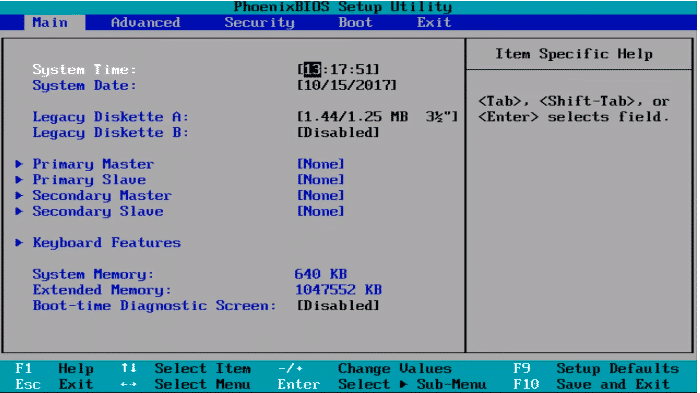
Press [F2] during POST to get into BIOS setup menu.
Select the Instant Flash utility under [Tool] menu to execute it.
Instant Flash will automatically detect all devices and only list those BIOS versions which are suitable for your motherboard.
Select the suitable BIOS version and click Yes to flash the BIOS.
The system will start to flash the BIOS.
On the off chance you cannot boot your operating system anymore, the process is a bit trickier but totally doable with a bit of patience. Here’s what you need to do:
Download and save the Recovery BIOS file to a temporary directory.
Copy the recovery file (*.BIO) to a USB device.
Plug the device into a USB port of the target computer.
Shut down the computer and unplug the AC power adapter.
Open the chassis and remove the BIOS Configuration Jumper. See the Technical Product Specification for details including the location of this jumper.
Power the computer on.
Wait 2–5 minutes for the update to complete.
The computer turns off when the recovery process is completed, or prompts you to turn it off.
Remove the USB device.
Replace the BIOS Configuration Jumper (image 2 above).
A Docker registry is a centralized and distributed storage system where Docker-named files and images can be stored to ease the software development process.
They contain multiple versions of the same file so developers can work hassle-free without worrying about creating the same images again and again.
A Docker registry is made up of Docker repositories. The repositories containing all the versions of a specific image or file.
The company JFrog developed an end-to-end solution that covers the full lifecycle of your Docker registry, allowing you to manage development, analyze vulnerabilities, do continuous integration and delivery, and control artifact flow and distribution.
What does JFrog Artifactory provide?
The JFrog platform provides unlimited access to the Docker Hub and the Docker Official Images. This will result in simplified cloud-native application development without the usual Docker Hub image pull limits.
The service is available to SaaS cloud JFrog Platform subscribers, including free subscriptions offered on AWS, GCP & Azure.
SaaS subscribers to JFrog’s DevOps Platform offered on AWS, GCP & Azure will get unfederated and unlimited access to the Artifactory Docker Hub.
Features
Multiple secure, highly available Docker registries
Artifactory Docker Registry allows users to create lots of Docker registries per instance. You can also use local repositories as private Docker registries to share the images across your entire organization.
Additionally, proxy and cache remote Docker registries with repositories, and aggregate them under a single virtual Docker registry to access everything from a URL.
Confident Docker production
The Artifactory REST API allows companies to create fully automated Docker promotion pipelines by only promoting Docker images that pass certain quality assurances at every stage.
This way, the resulting image that ends up in the production systems or downloaded by end-users has been fully tested and approved by the automated process.
Go fully automated with the REST API and JFrog CLI
The REST API has an extensive number of features available during the development cycle, allowing you to automate UI processes.
The JFrog CLI simplifies and optimizes automation scripts to make them more efficient, more readable, and easier to maintain.
Ready for Enterprise
Artifactory provides premium stability, accommodating any number of users, and offering massively scalable storage that can sustain terabyte-laden repositories.
Moreover, security is ensured thanks to the advanced replication options, facilitating disaster recovery anywhere in the world.
Build optimization
Artifactory removes any internet or networking-related issues when your Docker images are accessed through local repositories. The CI servers or the developers will not encounter any problems.
Universal Solution
Artifactory is a universal repository, it supports all major package formats, providing the same fully-featured management for any technology.
It also has integration for all the major build tools, CI servers, thus sitting comfortably at the heart of any development ecosystem.
Pricing
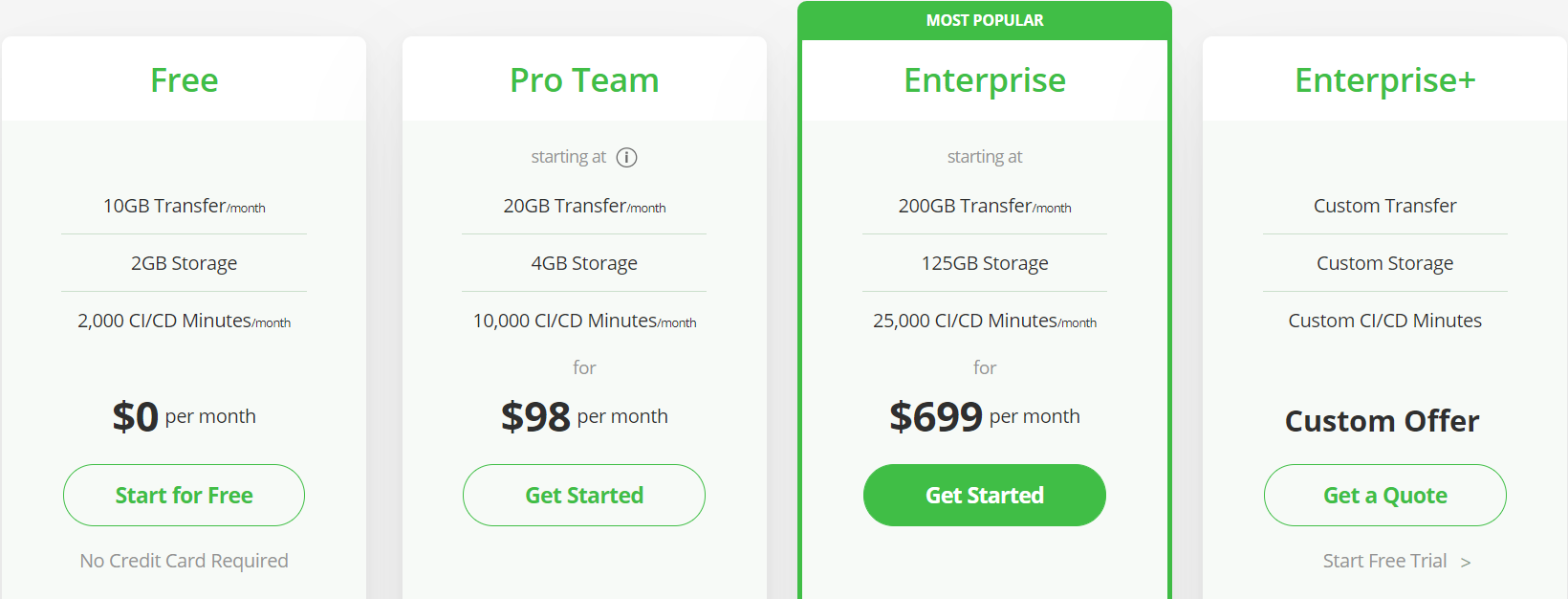
JFrog Artifactory has 4 different price plans, including a free one, a business-oriented one, and custom offers depending on your needs.
Each plan has different features, the free one is the most limited, obviously, but still good enough for an individual or small startup use.
You can check everything they have to offer on their dedicated page. It also contains a comprehensive comparison between all the plans.
Jfrog Artifactory
A great end-to-end Enterprise solution, covering the full lifecycle of your docker registry.
Needless to say, ever since the Redmond tech company first announced Windows 11 as the future OS, there has been endless talk about some of the hardware requirements that devices need to fulfill.
Many didn’t agree with the imposed TPM 2.0 restrictions and this subject has sparked reactions of all kinds from Windows users.
Microsoft held its ground and kept reassuring people that this TPM requirement is for their own safety, because of the enhanced level of protection it was going to offer.
However, some experts recently found that even with these security chips in place, we still can’t be entirely safe from malicious entities, on the off chance that someone gets their hands on our Windows 11 device.
We’re not as safe as Microsoft wants you to think
The tech giant showed an iron will when it came to not cracking under public pressure, especially after the backlash that the TPM 2.0 requirement brought with it from the community.
Trusted Platform Module (TPM) technology is designed to provide hardware-based, security-related functions. A TPM chip is a secure crypto-processor that is designed to carry out cryptographic operations. The chip includes multiple physical security mechanisms to make it tamper-resistant, and malicious software is unable to tamper with the security functions of the TPM.
Experts from Dolos Group found out that, in fact, if one of us were to lose his laptop or have it stolen, TPM could do little to prevent hackers from wreaking havoc.
At the time of this writing, BitLocker does not utilize any encrypted communication features of the TPM 2.0 standard, which means any data coming out of the TPM is coming out in plaintext, including the decryption key for Windows. If we can grab that key, we should be able to decrypt the drive, get access to the VPN client config, and maybe get access to the internal network.
By using this exploit together with other ingenious schemes, researchers were able to take a stolen corporate laptop (as a scenario) and effectively gain access to its associated corporate network, leaving data exposed and vulnerable.
As they further described, after cracking open said laptop, a pre-equipped attacker would use a SOIC-8 clip instead of individual probes, in order to compromise the TPM security chip.
The clip would make it extremely simple to connect to the chip and shave a couple of minutes off a real-world attack.
The entire process is explained in full detail and it is an interesting read if you have a vast technical background and are into this kind of knowledge.
This is disconcerting news, considering that Microsoft made such a big deal about us upgrading to devices that already have such security features integrated.
With that being said, the Redmond-based tech company could do a better job at offering a more secure future for BitLocker, one where such hacking methods are no longer possible.
Trying out Windows 11, until today, meant that we had to install the Dev preview. No problem there, except the fact that Microsoft said this version was for highly technical users as it has rough edges.
This beta version is supposed to be less volatile, with builds being validated by Microsoft. Considering all this, you will still probably want to install Windows 11 on a test device or a separate partition.
Microsoft finally opens up the beta Insider channel
Now that the testing period has been going on for quite some time, Microsoft said that it will be paying close attention to how 7th Gen Intel and AMD Zen 1 CPUs perform with Windows 11.
This means that it’s possible for such system builds to actually run the beta but most likely not the final release as well.
With the beta announcement, many users are expecting that we won’t have to deal with such grotesque issues, as we did in the past weeks.
However, the fact that Windows 11 has entered its beta testing phase does not mean that the system will be free of bugs or glitches.
Au contraire, we will still run across many of them, but the Redmond company said that this will in fact be a much smoother experience than the previous one.
We are very excited to announce we are releasing Windows 11 Insider Preview Build 22000.100 to Windows Insiders in the Beta Channel! We highly recommend Insiders in the Beta Channel check out this blog post from June 28th that highlights all the new things in Windows 11 to check out and give us feedback on as you use it! As always, be sure to check out the list of known issues in the blog post below on anything that could impact your experience on your PC. We have also added a few new known issues discovered from Insiders in the Dev Channel since the release last week.
But, putting aside all the bugs, crashes, and missing features, it’s still good practice for when the real deal comes out.
Microsoft has even put together a whole list of current issues that Windows 11 still has, in which it also says that the Teams Chat feature that we have in the Dev channel isn’t currently available for beta users.
Some of the other problems that we’re bound to stumble upon on this version include:
Links to specific Settings pages are not navigating to the correct page in Settings unless Settings is already open.
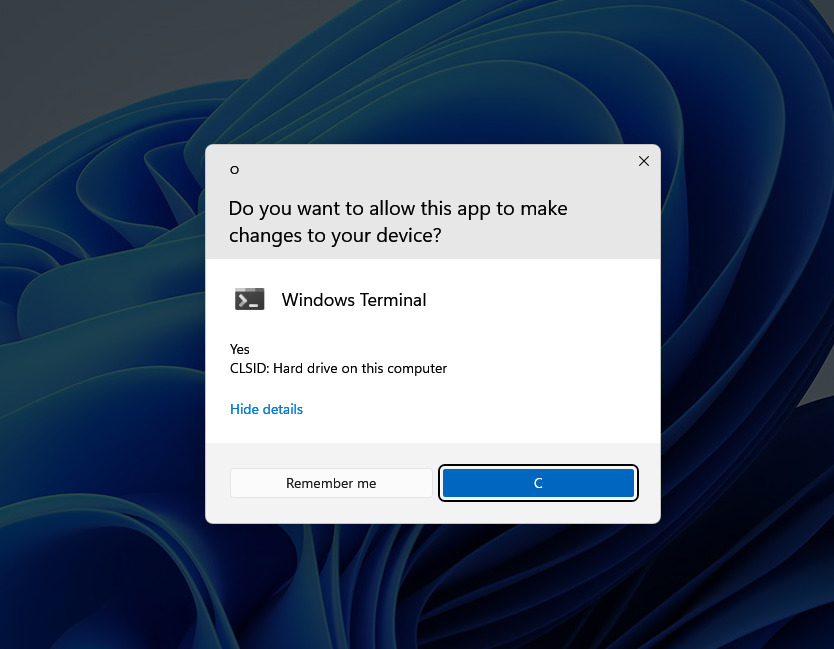
For some Insiders, the text is not displayed correctly in the UAC dialog. This issue impacts Insiders not running under EN-US.
Windows Sandbox.
So, on the off chance you are an early adopter and were looking for an opportunity to try out Windows 11 in a much stable environment, this is your big chance.
How do I install Windows 11 Beta?
You don’t have to be the most technically gifted on the planet in order to get this done, but it will require a few minutes of your time.
Before you get started though, make sure you’ve joined the Windows Insider community. Here’s what you need to do:
Access the Settings menu.
Click on the Update & Security button.
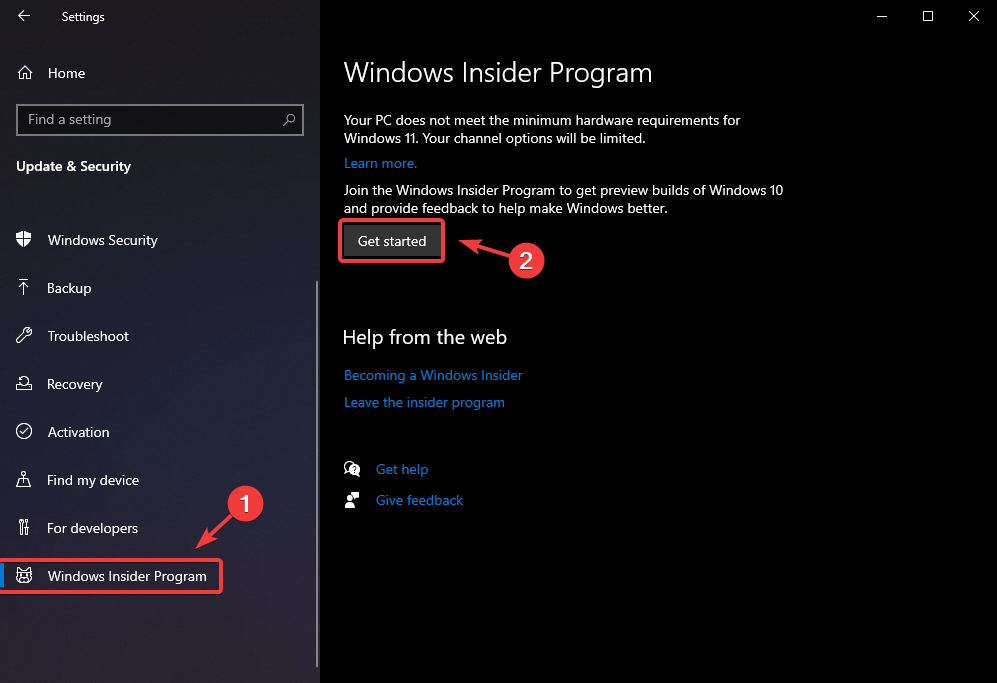
Select the Windows Insider Program tab and click on Get Started.
Link your Microsoft account.
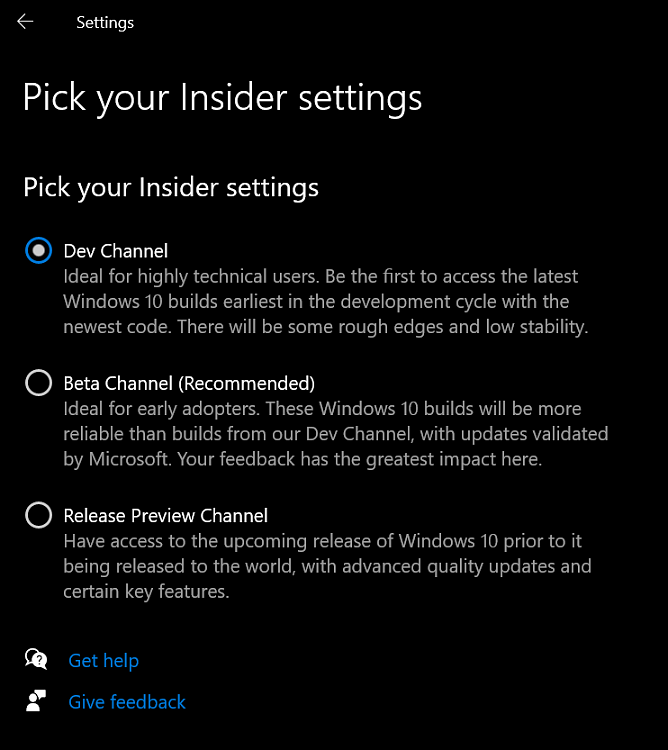
Selct which channel you want to join.
Restart your device.
Check for updates.
Can’t install Windows 11 Beta
Even though it’s been quite some time now since Microsoft provided availability for Windows 11, for testing purposes, there are users that unfortunately still can’t install the OS on their devices.
We’re just going to talk about the Beta version now. Recently, some reports indicate that there are people that haven’t even gotten around to installing Windows 11, because of error code 0x80070002.
The Fortnite video game’s next big major concert event has been announced and it’s set to happen next week from August 6th through to the 8th on Xbox One, Xbox Series X, Windows PC, and all other supported platforms.
Officially, all that’s known about this event is that it’ll be an in-game music event called the Rift Tour, it will revolve around players being teleported to various realities, and that it will feature a “record-breaking superstar.”
Unofficially? This is going to be the Ariana Grande concert that leakers have been teasing for almost a year now.
The official announcement of Grande’s involvement is expected to happen on August 2nd when Epic Games has promised to reveal more details but a large number of leakers on Twitter with incredibly strong track records have confirmed that this is what the Drift Tour is and there’s very little reason to doubt them at this point.
Ariana Grande x Fortnite Concert will happen on August 6th, 7th & 8th!
The Rift Tour will debut on August 6th and will then replay once on the 7th and then three times on the 8th. It’ll likely be similar to last year’s mind-bending Travis Scott Fortnite concert. Local times are available in-game via the new Rift Tour tab.
Three related quests are currently live in Fortnite for all players to unlock and leakers have discovered an event-exclusive Battle Royale umbrella in the game’s files that will be given to everyone who attends at least one of the concerts.
The umbrella is clearly based on the popular Cuddle Team Leader Fortnite outfit. Interestingly, Cuddle Team Leader was recently featured as a Fortnite Crew skin and was even given a mini story arc told through wallpaper images about her traveling through a rift (portal) to a high tech reality and eventually powering up to become the robotic Mecha Cuddle Master.
This connection has made fans wonder if the Drift Tour will take players to that reality though there’s also a bit of an Ariana Grande connection here as the singer has previously posed in a pink bear onesie on her Instagram.
Cuddle Team Leader and Ariana Grande
Officially, it’s supposed to be the character Ramirez in the Cuddle Team Leader costume but it would be a fun twist if it turned out to be Ariana Grande all along.
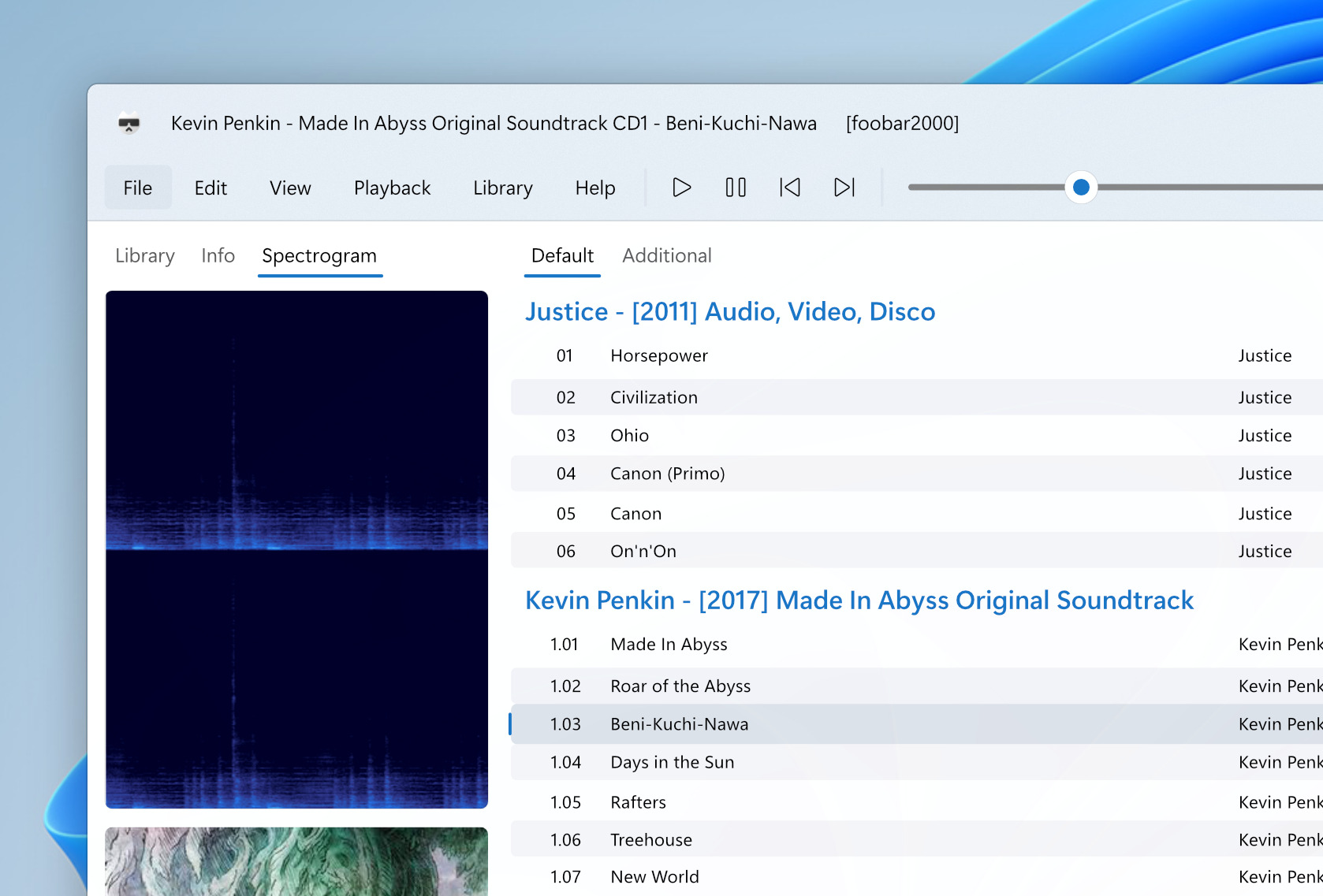
Even though there are so many aspects of the new operating system to be analyzed and discussed, ever since it became available for testing, everything seems to revolve around one main topic: aspect.
Windows 11 users state that their favorite element of the upcoming OS is by far the new fluent aspect.
There are, however, certain software choices that can’t adopt this new design style just yet, due to certain incompatibility issues.
This doesn’t stop people from wanting this design applied to all their favorite apps, and the ones that know their way around a PC to design concepts that deliver just that.
One thing is for sure, which is that this probably won’t stop until Microsoft takes heed of all these requests and delivers an OS that includes more of these popular demands.
The Windows 11 design language is requested on more apps
First, let’s all understand what design language means. This is a more technical term that refers to an overarching scheme or style that guides the design of a complement of products or architectural settings.
In this case, since we are talking about Windows 11, it applies to the OS itself. To be more exact, Insiders that already took the future operating system for a spin want its fluent design, with rounded corners, applied to absolutely everything.
Throughout these weeks in which Windows 11 was available for testing via the Windows Insider program, we’ve witnessed different concepts and software solutions for applying this much-coveted design to more and more apps.
But that now that everyone has got a taste of this new style, it will be hard to stop. And with new concepts surfacing every day, soon enough Microsoft will have to find a way of making every app compatible design-wise.
Daily, specific forums and social media platforms are absolutely bombarded with new ideas on how to bring the fluent style to our most used applications.
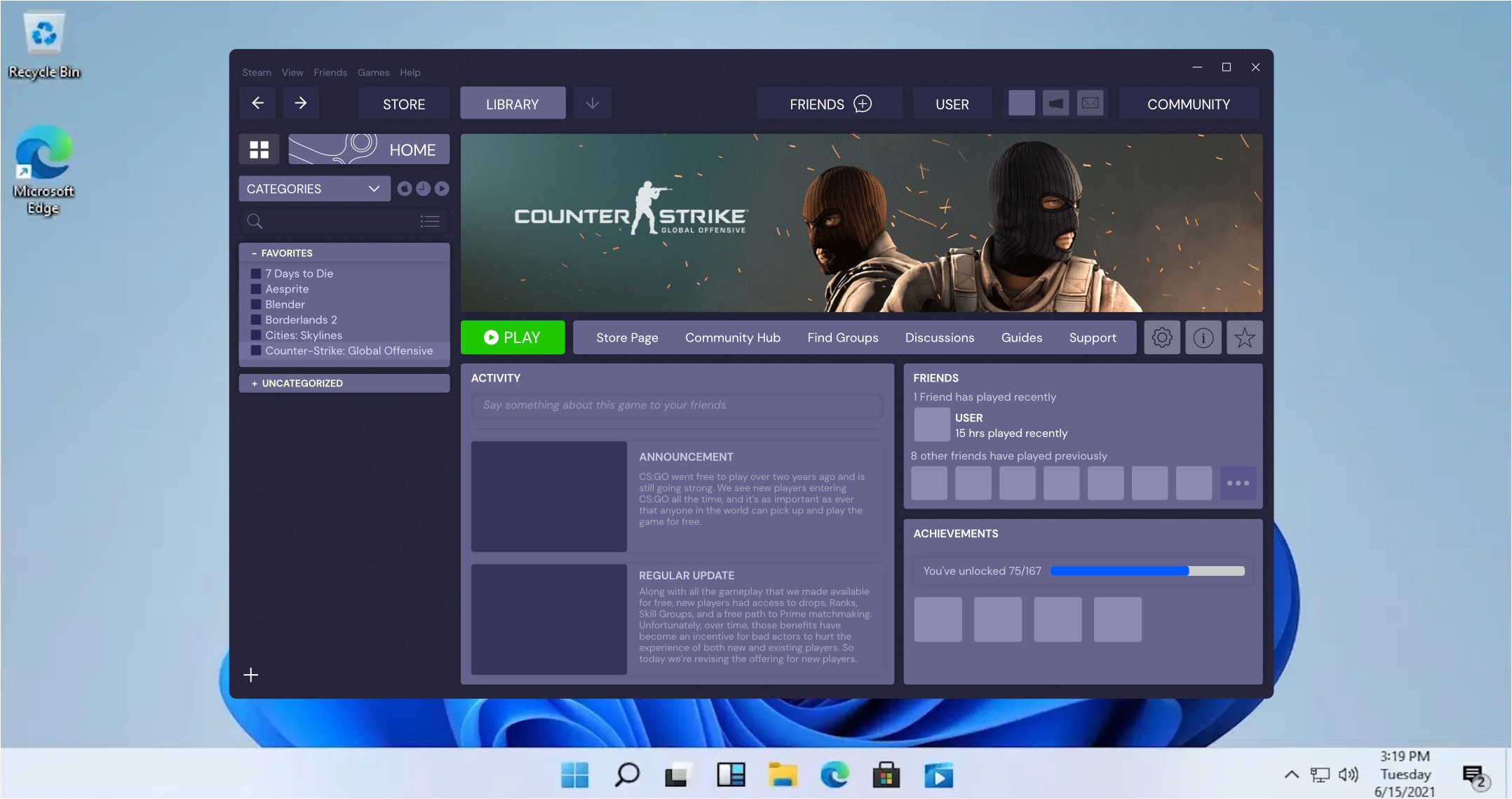
In the screenshot above, you can see the design concept for Adobe XD, one of the more popular apps that users have requested to be redesigned according to Windows 11 standards.
The list is vast, as you can imagine because everyone wants to be able to use their favorite applications and be visually pleased, further enhancing the feeling of using new software.
You’ve probably also asked yourself the following question: what’s with all the hype about this new Windows design?
Well, the answer is pretty simple and it has to do with the way we perceive change and react to it. Of course, after using a certain UI for so long, a newly re-designed, better-looking one will certainly be far more appealing.
Furthermore, there has been a lot of talk during these years in which we used Windows 10, about how other operating systems such as macOS, look far better than Windows ever did.
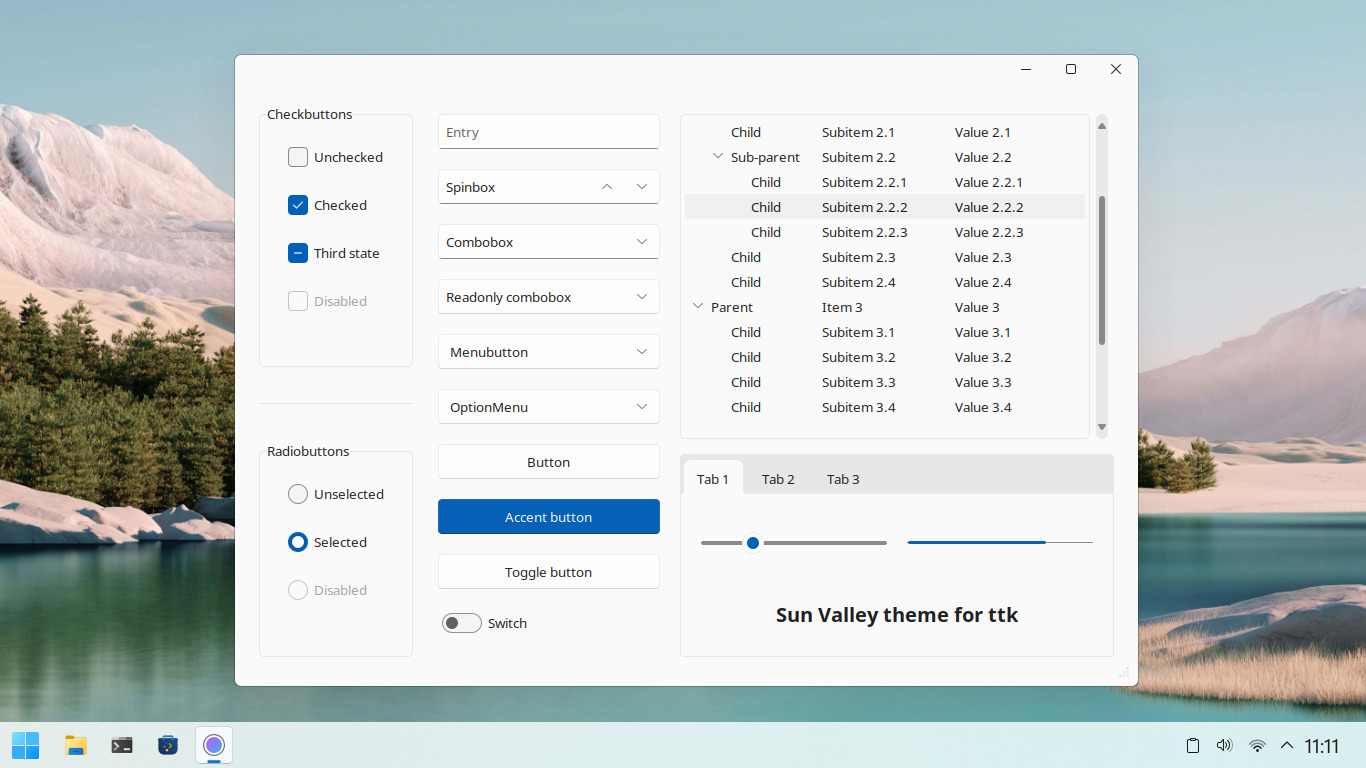
And Microsoft did have a plan to give the OS a complete makeover with the Sun Valley project, but it seems that they’ve just decided to offer us a completely new experience instead.
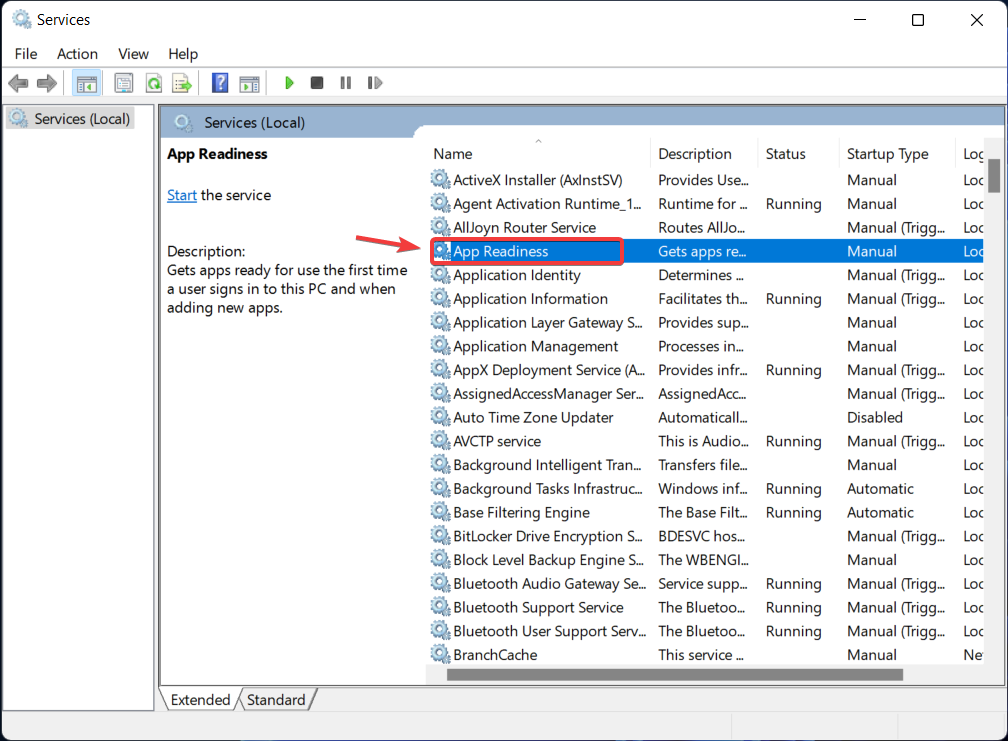
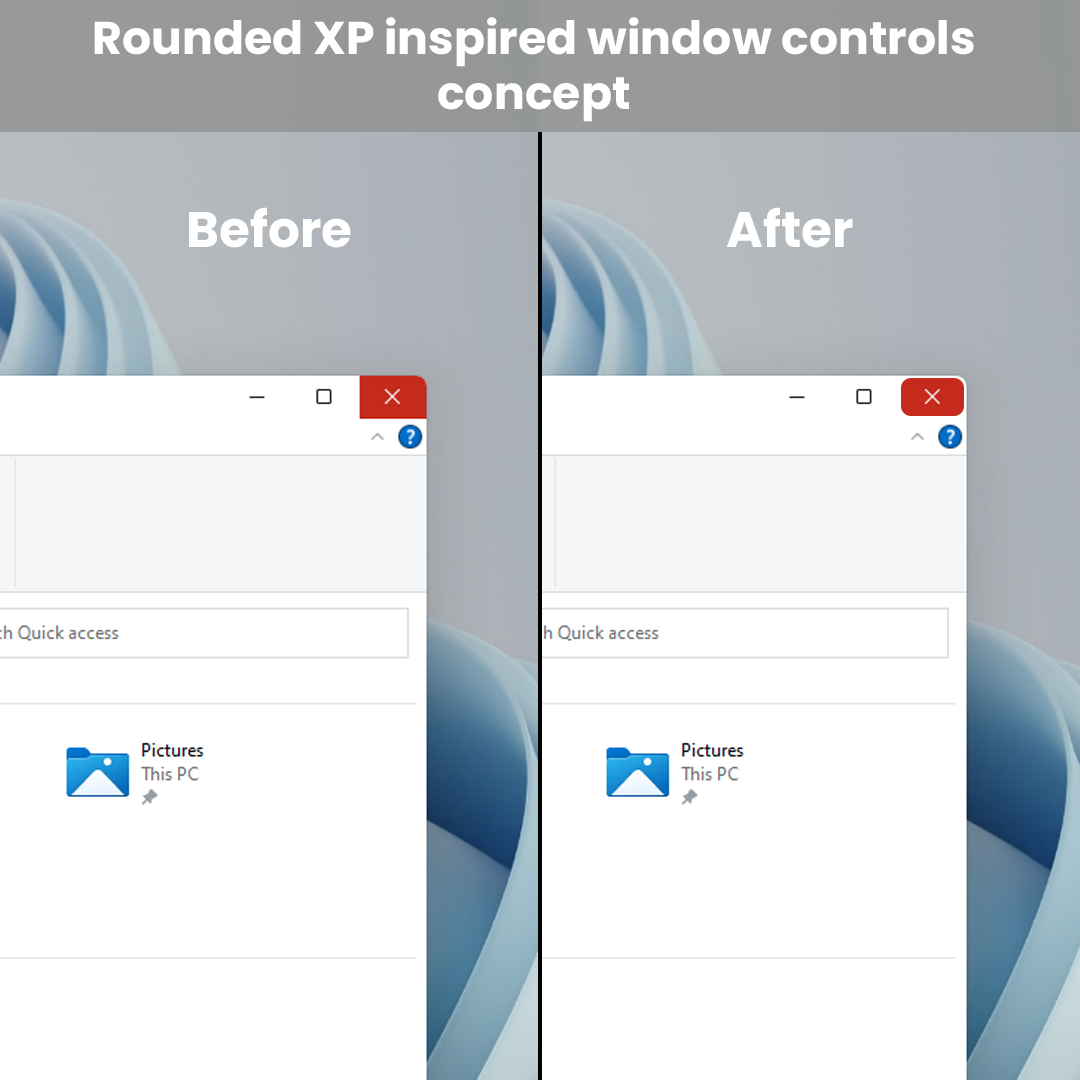
This makes the buttons look like on Windows XP and you can see what this looks like in the screenshot below. However, not everyone agreed with this new choice, calling the new button appearance childish and impractical.
There seems to be a fine line on how much one can actually tweak the new OS, using these fluent design elements, before it starts becoming tacky and forced.
However, this isn’t really about the built-in elements that Windows comes with as a package. What users really desire is for this design language to be applied to their favorite software.
And believe us when we tell you, that list is a long one. But these are not outrageous demands, as it would feel normal for downloaded and installed software to take the same aspect as the OS it runs on.
This will make the certain app feel like a system native and create an overall harmony of shapes that will surely delight users.
Microsoft Flight Simulator 2020 is one of the most beautiful titles on PC. You can hop in a virtual airplane and fly anywhere in the world, and enjoy seeing famous sights like the Eiffel Tower, Statue of Liberty, Golden Gate Bridge, and more.
As promising as that sounds, it might not be easy to get started for some people. But just like driving simulators, you can tweak your settings to your own liking to make things easy and fun. Today, we have a look at 5 tips and tricks which can help improve the Microsoft Flight Simulator 2020 experience for you.
Tip 1: Use an Xbox Controller for the best experience
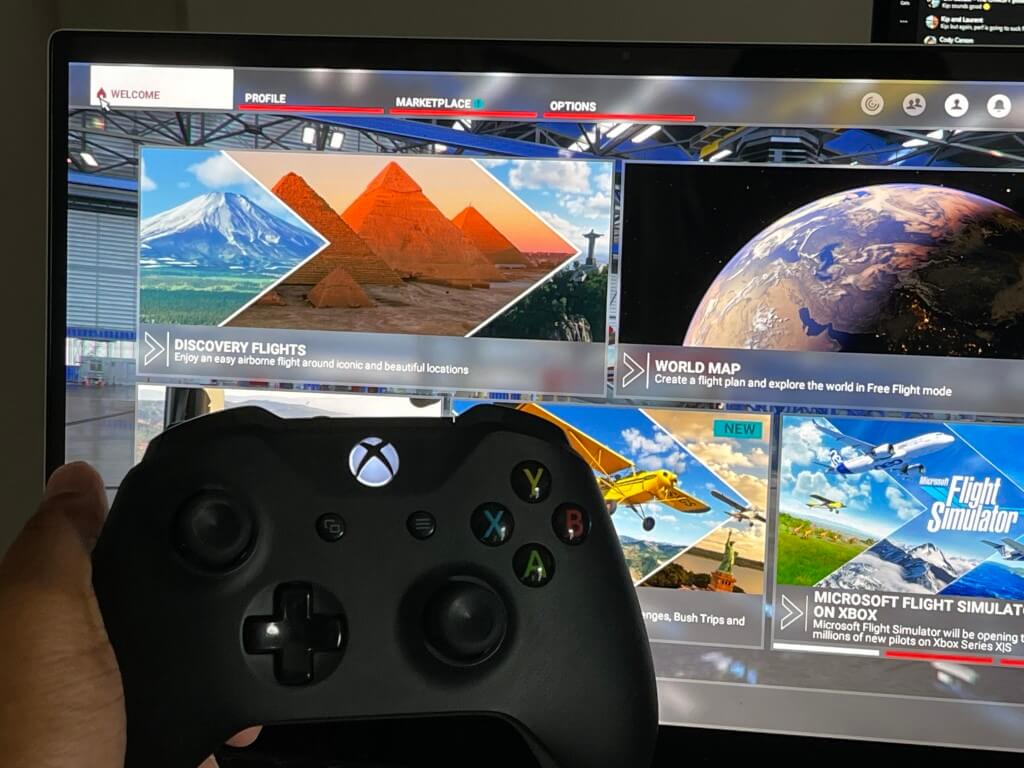
One of our most obvious tips involves the way to play the simulator. You can indeed use your keyboard and mouse to play Microsoft Flight Simulator 2020, but the best experience happens when you use an Xbox Controller. This makes the simulator a lot easier to play, and a bit like a driving game like Forza Motorsport. For example, the A &B buttons can control the throttle speed, the control sticks change direction and allow you to switch the view, and the directional pad controls flaps, and trim on select airplanes. It really helps improve your gameplay and makes things a lot less frustrating.
Tip 2: Set departure points in the air for easier flights
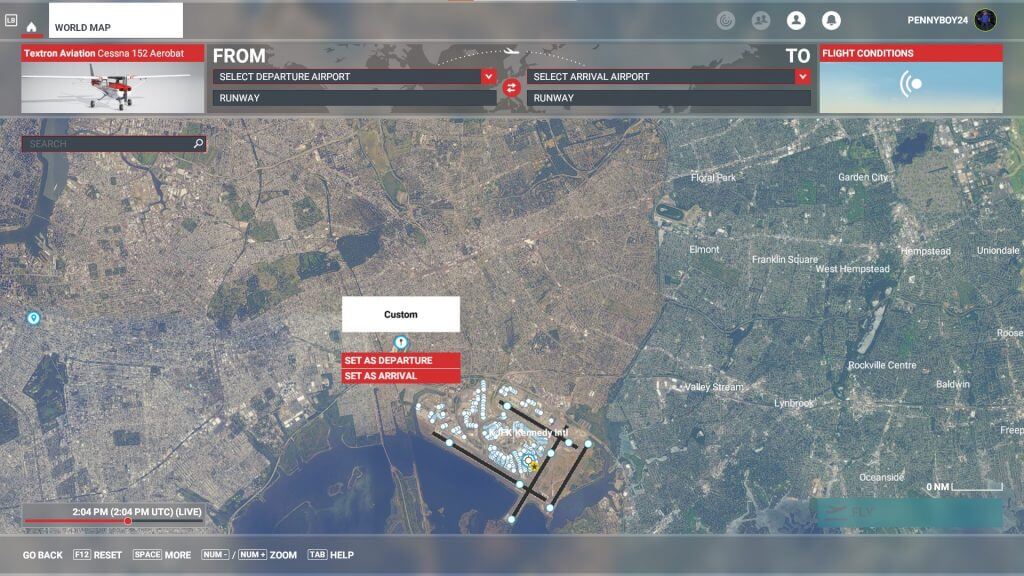
Our second tip is for novice flyers. Taking off from an airport can be quite tricky. You need to watch your speed then make sure you pull back on the control stick at the right time to hit the air. You then need to keep your altitude without stalling the airplane. If you’re not careful during takeoff, you might end up crashing. This is why we suggest zoom in on the map and set departure points in the air, nearby the airport, so you can get into your flight more easily. Doing this is simple, just right-click anywhere on the map and you’re good to go. No need to set an arrival airport.
Tip 3: Change the sim settings to make things easier
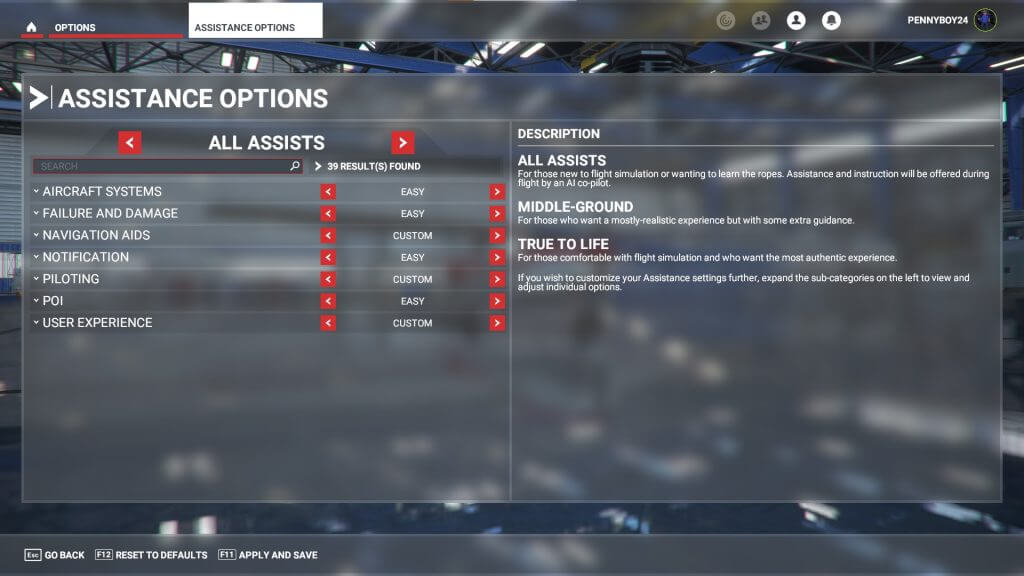
Third up we have a tip on the simulator settings. By default, you’ll get messages about “you overstressed the aircraft and caused critical damage” if you go over the maximum airspeed, or if you make maneuvers that can damage the plane. You can turn all this off if you want. Just visit the in-simulator settings by clicking Options at the top, choose Assitance Options. You can then go through each of the categories to switch things up as we listed below.
Aircraft Systems: Easy: All other switches to On
Failure and Damage: Easy: All other switches to disabled.
Navigation Aids: Easy: All Switches to On and Auto
Notification: Easy: All Switches to On
Piloting: Easy: All Switches to On
POI: Easy: All Switches to On
User Experience: Easy: All switches to On.
With the settings, your experience will be a lot more noob-friendly. You can take to the skies and make unrealistic banking maneuvers, and fly like a crazy pilot. You won’t face any issues, and you can always switch back to regular settings at any time.
Tip 4: Tweak your graphics settings
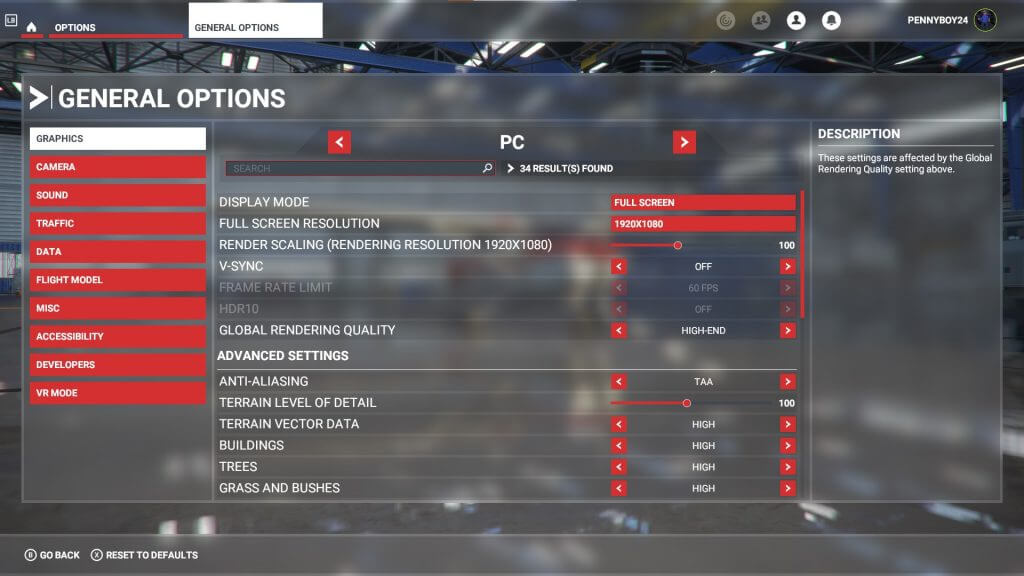
If you’re playing Flight Simulator and your PC is struggling to keep up, we suggest you tweak your graphics settings a bit. The sim offers a lot of graphics options for high-end, low-end, and mid-range systems. You can tweak all kinds of different settings for rendering quality, terrain details, buildings, trees, grass, reflections, and more. If your PC really isn’t high-end, we suggest settings things to low, as you’ll still be able to fly, and enjoy the title without crashes and freezes. You can play around with the settings as you see fit until things match up right. Oh, and make sure you’re up and running with the latest version of Microsoft Flight Simulator 2020 as it introduces performance improvements as well as faster load times.
Tip 5: Use Active Pause and AI Auto Pilot
Our final tip involves Active Pause and AI Auto Pilot. We mentioned that Flight Simulator is quite beautiful, so if you’re flying and see something you want to take a closer look at, you can! Just hover your mouse to the top middle part of the screen to bring up the mini-menu and choose the play and pause button. This freezes your aircraft mid-flight and will let you look around. If you’re using an Xbox controller you can summon this menu by clicking down on the left control stick, and then using the stick to pick the play/pause button.
We also want to mention the AI Auto Pilot, too. If you enable this option (second icon from the left of the screen,) you can have the AI fly the airplane for you, while you look around the air and the land below you. It’s helpful for landings, too, if you’re not good at putting the airplane down on the ground. There are other options here, too for route markers, the air traffic controllers, and more. Play around and find the settings that are right for you!
Safe flights!
Our guide mainly covers the PC version of Microsoft Flight Simulator 2020, but the simulator recently made its way to Xbox, too. Xbox gamers have reported issues with not being able to navigate menus, but using a mouse and resetting controller profiles seems to fix the issue. A lot of our tips (asides from the graphics settings and the controller tip) apply to the Xbox version of Microsoft Flight Simulator, so be sure to try on Xbox, too. And, check out our Laurent Giret’s impression post, too.
Microsoft announced yesterday that it had acquired Suplari, a Seattle-based company providing AI-automated analytics & insights, for an undisclosed amount. Suplari helps finance, procurement, and business leaders to optimize their spending by using AI and analytics to predict and manage costs, and Microsoft will use its technology to improve its existing Dynamics 365 offering.
“Together with Dynamics 365, the Suplari Spend Intelligence Cloud will help customers maximize financial visibility by using AI to automate the analysis of current data and historical patterns from multiple data sources. It will also help customers enhance financial decision-making by predicting the best spend management actions moving forward,” explained Frank Weigel, VP of Microsoft’s Dynamics 365 Insights Product Group.
For now, nothing will change for existing customers of the Suplari Spend Intelligence Cloud. “Given Microsoft’s AI, cloud and data investments, customers can expect that Suplari will continue to deliver more AI-driven, predictive & prescriptive insights and integrated workflows for finance, procurement, & supply chain teams,” said Suplari CEO Nikesh Parekh in a separate blog post.
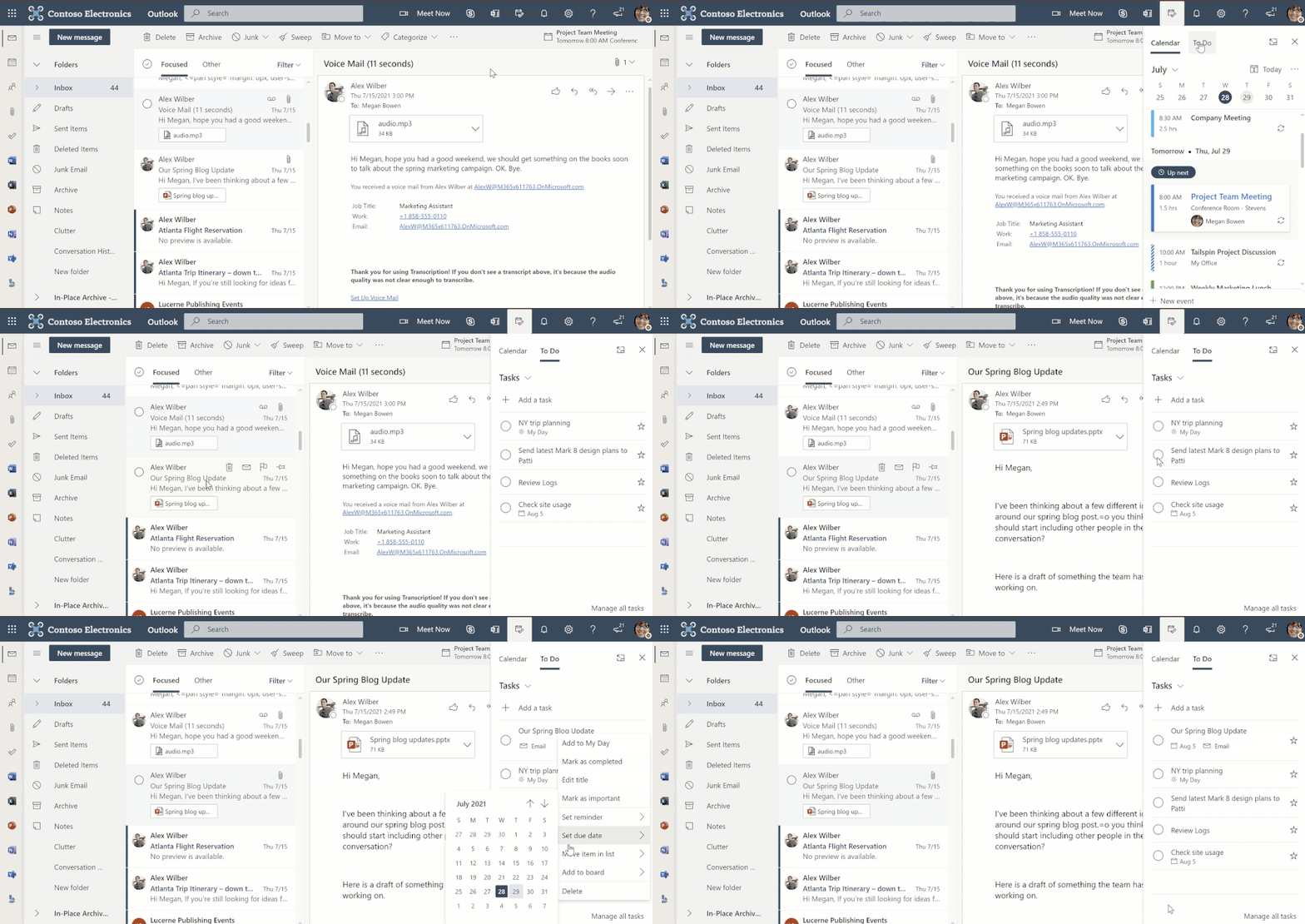
“Context switching comes with a loss of efficiency. Every time you move between your emails, calendar, and tasks, you lose productive time returning back to where you were. In order to help you be more productive and save your time, we’re bringing you a side-by-side view of your mail, calendar, and tasks in Outlook Web as you navigate through your work,” the company explained in the blog post.
Microsoft says that the feature lets Outlook users quickly create tasks or events by simply dragging and dropping emails from their inbox to the My Day side-pane. Users will be able to find these tasks in the default Tasks list, and each of them will contain a link to the relevant emails. This feature should make it easier for users to keep track of their tasks without switching between both apps.
In addition, Outlook users can create a task by selecting a part of the text in an email and editing it in the sidebar. The To Do tab available in the My Day side-pane also supports dragging and dropping a task into the calendar.
To try out this feature, users will first need to go to Outlook.com, navigate to the header and click the My Day option available besides the notifications icon. They can then switch between the To Do and calendar tabs to manage their tasks and events.
Some other features available in the My Day side-pane include the ability to view due tasks from the Calendar tab and right-click any specific task to add a due date or a reminder. The side pane also provides an option to open the Microsoft To Do web app in a separate tab. Let us know in the comments below if you think that this feature will help you to manage your day-to-day work.
Fortnite’s Crew Pack for August 2021 has been revealed and it’ll likely please quite a few longtime players.
The August Fortnite Crew Skin is Summer Skye, a variant of one of the Chapter 2 Season 2’s Battle Pass characters. Much like the original Season 2 version, Summer Skye also features a light and dark look and comes with a sword that can be used as a back bling or an axe.
The Summer Sky skin also comes with two different wraps to match her light and dark aesthetics, a loading screen featuring both the Season 2 and Summer versions, and the usual bonus 1,000 V-Bucks.
All of the content for the August 2021 Fortnite Crew Pack should unlock for subscribers on August 1st. Those with an active Crew subscription before then will also receive the July 2021 Crew Pack featuring Marvel’s Loki.
In addition to the above Crew Pack news, several social accounts today teased an upcoming Fortnite collaboration with the new Suicide Squad movie. The video, which could possibly be the first of several, shows Idris Elba revealing that his Suicide Squad character, Bloodsport, is coming to Fortnite.
As the video says, more information on this collaboration is coming tomorrow. It’s unclear if the Suicide Squad content will coincide with the debut of Superman, another DC Comics character, in Fortnite in two weeks or the new UFO countdown that started earlier this week.
From August 2nd through to the 22nd, Krispy Kreme will be selling official Xbox donuts throughout their various stores and third-party sales points in the United Kingdom and Ireland. They’ll also be available to order online within the same regions.
The Xbox donut, officially referred to as The Nexus Level Doughnut, will be available on its own or as part of a 12-donut box. A box of 12 donuts will include two Xbox donuts, an assortment of 10 other Krispy Kreme donuts, and an entry form for an Xbox Series S console giveaway.
All entries in the competition will receive a code for one free month of Xbox Game Pass (for new subscribers only) regardless of whether the entrant wins or not.
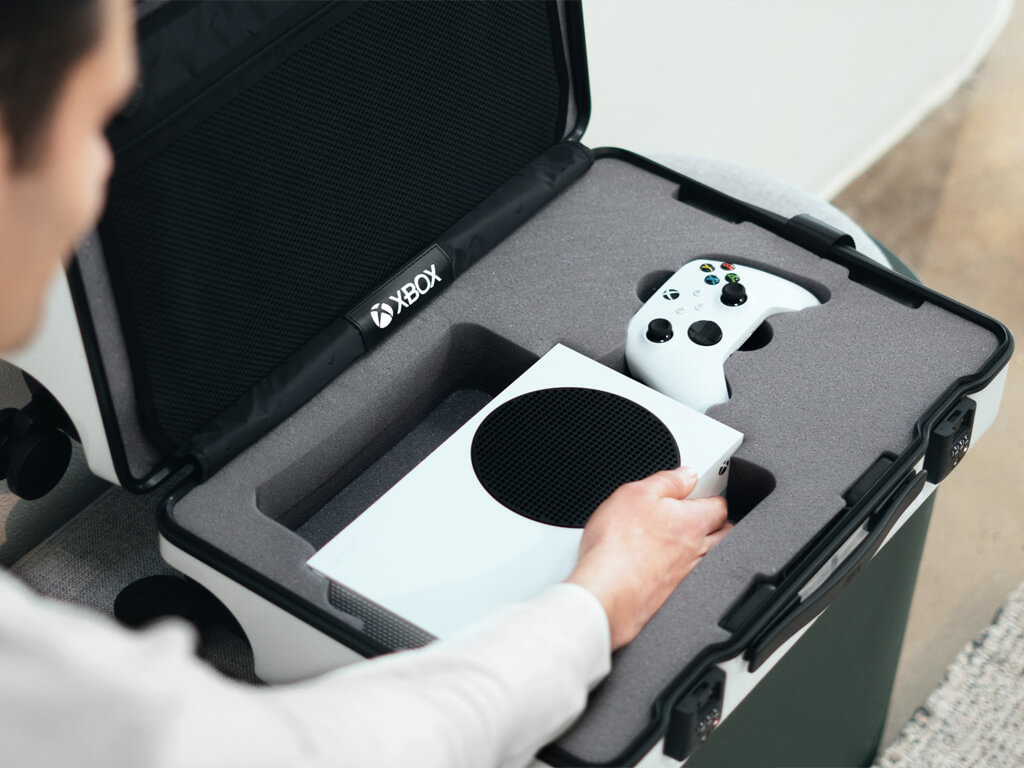
Microsoft really seems to be pushing their new Xbox Series S console lately with the company announcing a different promotion for the console in Australia and New Zealand earlier in the week. While the Xbox ANZ promotion didn’t include any donuts, it did surprise Xbox enthusiasts with the unveiling of a limited edition suitcase inspired by the Xbox Series S console’s aesthetic.
The Redmond-based tech company has published its quarterly income and statistics data and some of the numbers seen there reflect the large differences between the different services they provide.
Given the fact that we went through serious isolation phases during this pandemic, you would even expect Xbox gaming services to have generated much more than they did before.
And even though they’ve sold a lot of new generation consoles for a lot of money, recording an 11% revenue growth, Xbox content and services revenue decreased 4%.
However, Microsoft scored big with products that tailor to a much wealthier niche, addressing all the growing needs of enterprises and capitalizing on the high demand.
Microsoft 365 service sales sky-rocketed
We’ve just mentioned the COVID-19 pandemic and the impact it had on companies all around the world. In order to keep up and continue existing, they’ve all turned to hybrid work as an alternative.
In turn, this paved the way for companies like Microsoft to score big, by providing services especially designed to suit such needs.
Hybrid work meant that more people were going to use Teams as a means of communications, and also resort to Microsoft 365 services in order to keep up productivity.
Just to give you an example, Microsoft 365 consumer subscribers increased to 51.9 million. In turn. this increase meant that Office consumer products and cloud services revenue increased by 18%.
Also, Office commercial products and cloud services revenue increased by another 20%. If we were to translate this into actual money, the sums would be in the order of hundreds of millions.
Furthermore, Microsoft’s server products and cloud services revenue increased by a staggering 34%. This is just to give you a better understanding of how much the global situation has influenced the supply and demand chain.
Overall, Microsoft revealed $46.2bn in revenue during the quarter ending June 30th, 2021, an increase of 21%. Operating income was $19.1bn (up 42%), with net income hitting $16.5bn (a rise of 47%).
Our results show that when we execute well and meet customers’ needs in differentiated ways in large and growing markets, we generate growth, as we’ve seen in our commercial cloud – and in new franchises we’ve built, including gaming, security, and LinkedIn, all of which surpassed $10 billion in annual revenue over the past three years.
Azure, Linkedin and Dynamics are also huge earners for Microsoft
The tech company’s FY21 Q4 report also revealed that its commercial cloud revenue grew by 36% each year, to a grand result of $19.5 billion.
Microsoft’s new CEO, Satya Nadella, praised the Azure department for its incredible results. And rightfully so, considering that the company’s Azure department generated giant revenue growth of 51%.
Also on the top scorer list was LinkedIn, as the business-focused social network brought a revenues increase of 46%, which was fuelled by a 97% growth in its marketing solutions.
Not surprising, considering that user numbers grew by 30% with record engagement. All of this lead to LinkedIn surpassing $10bn in revenues for the first time.
Another one of the Redmond giant’s MVPs for the last quarter is Dynamics, which also contributed generously to the company’s income, with products and cloud services revenue increasing by 33%.
What’s next for Microsoft?
Everyone is now excited about the new operating system and this will for sure be another great turning point in the company’s history.
Many of the companies that can technically perform a transition to the new OS, and can also afford it, will surely opt for this option.
This will again translate into great revenue increases for Microsoft. It’s already going great, considering that we’re still in the early testing stages of Windows 11 and there are already a lot of new OS users.
The waters haven’t exactly settled yet and a lot of employees are still working from home. This means that Microsoft-designed business solutions will still be in high demand for a long period of time.
While some thought that consumer products were going to top this list, enterprise-based services continue to be top earners for Microsoft.
We’re eager to check out the report for the next quarters and compare it to this one.
What’s your opinion on this statistical analysis? Share your opinion with us in the comments section below.
Multimedia entertainment is one of the most popular pastimes of the modern age, with movies and songs taking up a substantial part of any user’s digital library.
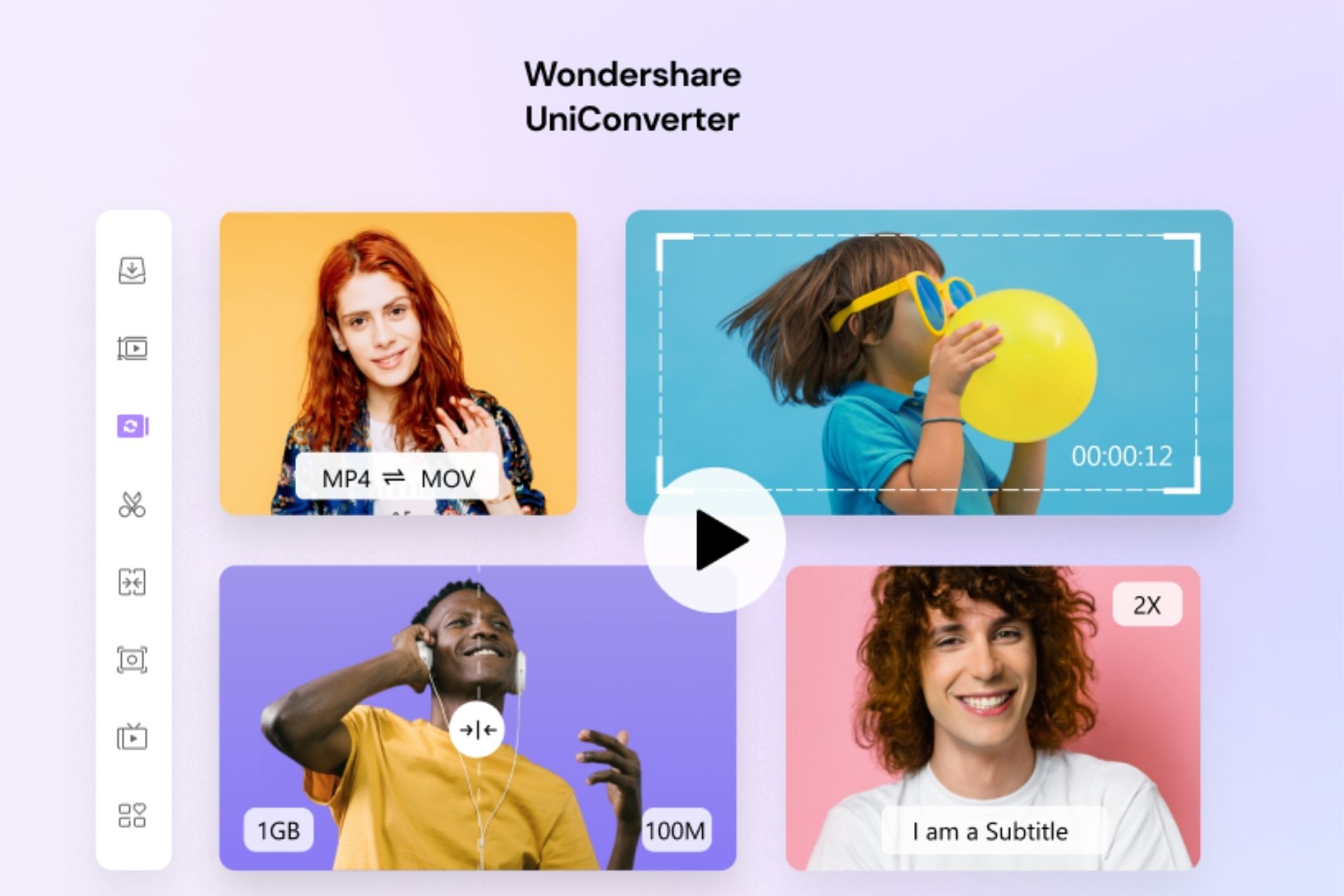
However, being on the same page isn’t always possible, so converting and editing audio and video to meet your criteria is one of the reasons why audio and video tools have become so popular. Wondershare UniConverter is a great example to take into consideration.
This article comes as a detailed review of Wondershare UniConverter. We’ll take a closer look at its features, what it can do, and whether or not it is worth using.
What is Wondershare UniConverter?
Labeling Wondershare UniConverter as just a convertor would be an understatement since this tool acts as multiple programs packed into a single one. However, if we were to mention the primary features that it has, they would be the following:
Audio & video compressor
Audio & video converter
Audio & video editor
CD & DVD burner
Screen recorder, and more…
The software is available for download, and all of the tools are available from within a single menu, acting as a standalone product and not an entire software suite with separate included tools.
Speaking of which, UniConverter’s interface just received a facelift, and it looks more modern and compact than ever before, allowing users of all experience levels to enjoy it to its full potential, and maybe even enjoy using it.
What are Wondershare UniConverter’s features?
Convert to and from thousands of formats easily
Wondershare UniConverter started off as a simplistic audio and video converter and has been enriched beyond measure during the past few months.
This was possible by expanding the range of supported audio and video formats, making video conversion faster via GPU acceleration, introducing bulk conversion, support for multiple device formats, and not only.
Keep in mind that it enables you to convert more than 1,000 video and audio formats and supports a wide range of video conversions such as WEBM to MP4, TS to MP4, MP4 to MPEG, AVI to MOV.
UniConverter also supports several VR devices and 4K video formats like MP4, AVI, MOV, MKV, etc. with new formats being constantly added with each new update.
Most importantly, you don’t have to worry about the quality loss when it comes to video conversion since it is powered by the industry-leading APEXTRANS technology which converts videos with zero quality loss or video compression.
A very handy video editor
Once you’ve converted the videos, you can also tweak them, even more, to suit your needs by using UniConverter’s video editor.
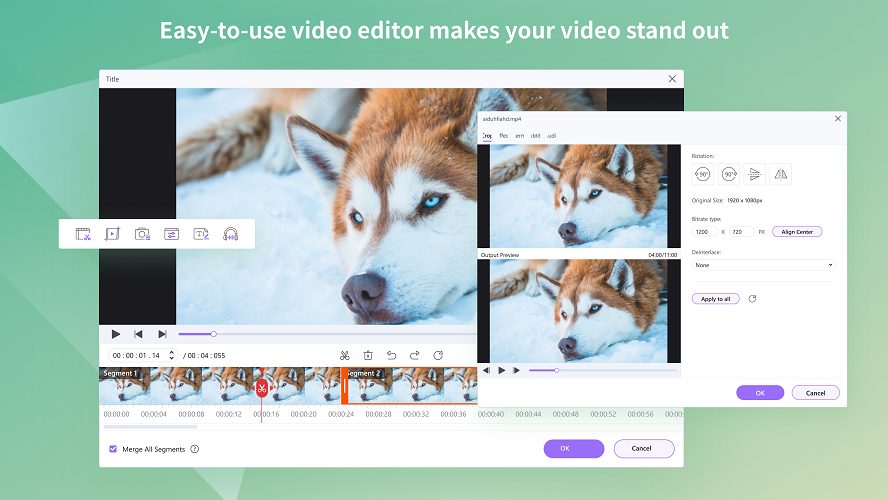
While not as fully equipped as professional video editors, it has all the basic tools that you may ever need to tweak a video to make it better, including video cutting, cropping, resizing, changing playback speeds, trimming, and more.
If you’re planning to edit commercial movies or making movies for foreigners, you can use UniConverter to add subtitles to them as well.
You can even use the tool to merge multiple short clips to create elaborated video collages, making it great when you want to spend quality time with your loved ones.
A reliable video compression tool
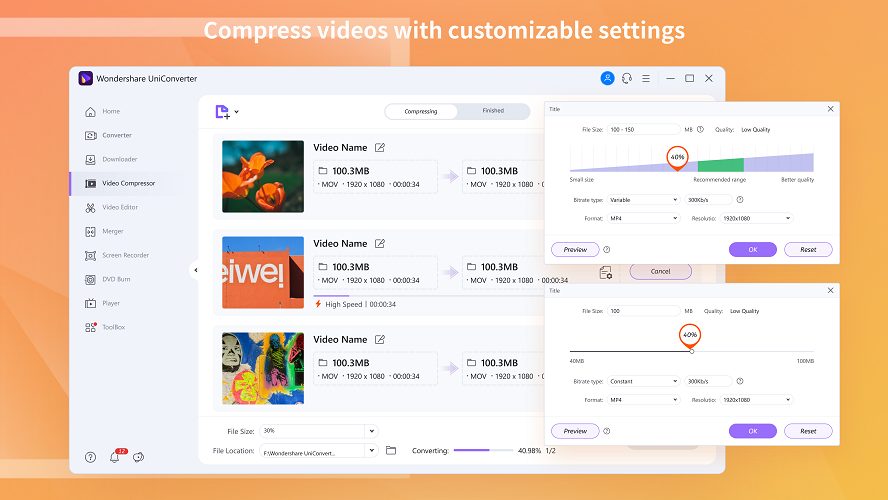
You can compress the videos using customizable settings so that they take up less storage space, which is especially useful when you’re converting and editing videos meant for mobile devices.
Compressing entire batches of videos is easy by using a single command, and you won’t have to wait too much either, since the speeds are lightning-fast.
In fact, UniConverter is so powerful that you can even use it to compress 8K videos, so turning something that would go well on a wall-sized TV into something iPhone compatible will be easy.
Record your entire screen easily
Streamers and those of you who love making online tutorials will enjoy UniConverter’s built-in screen recorder, especially since it can record full screen, custom screens, games, webcams, video calls, system audio, and microphones.
You can customize the recording frames to capture just small sections of your screen, or simply record everything and edit it afterward.
The framerate and image quality can also be changed, making this feature adjustable depending on what your hardware can deliver.
If you’re not interested in screen capturing and only in recording your webcam, you can do that as well, and use UniConverter to overlay it over custom backgrounds to make the video more engaging.
Recordings can also be edited while screen capturing, with brushed and pencil tools allowing you to doodle, or you can also add entire segments of texts, and you’ll only need one click to remove them all and start over. As for audio editing, feel free to set UniConverter to capture your microphone audio-only.
An efficient video tool to save videos
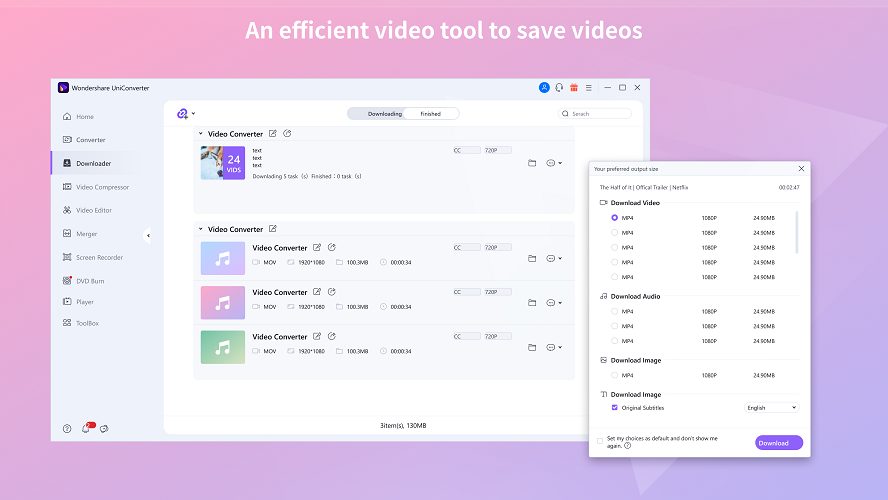
It’s hard to edit and convert videos if you don’t have them in the first place, and that is why UniConverter allows you to download free videos from over 10000 websites.
Up next, you can automatically convert them to compatible formats for playback on TVs, smartphones, or other devices, or you can save them to perform some editing first.
If you’re interested in more than just one video, you’ll be glad to know that UniConverter supports playlist downloads as well, so it doesn’t matter if you’re talking about one video or 100, UniConverter will get them all as soon as possible.
Keep your data stored on CDs and DVDs easily
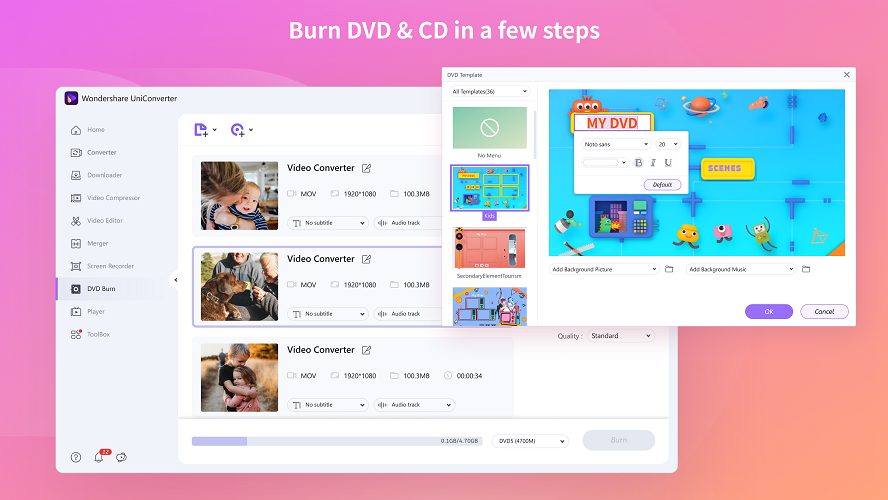
Once you’ve downloaded, edited, and converted a video, the next natural step is to store it on some form of media, and many users still like keeping their audio and video files on CDs, DVDs, or even Blu-ray disks.
Of course, this is a feature that UniConverter fully supports, and it also lets you handle disks that already have data on them as well, allowing you to convert DVDs to any format, copy DVDs to other DVD disks, or burn audio files to CDs.
How do I use Wondershare UniConverter?
As with all Wondershare tools, the main focus of UniConverter’s is for the interface to be as intuitive and simplistic as possible, allowing anyone to get started right away with using it.
That being the case, here’s what you need to do in order to use Wondershare UniConverter:
The new version of UniConverter brings a lot of new and exciting features that we definitely need to mention below.
Intuitive Interface – The redesigned interface makes UniConverter 13 more intuitive, and users can quickly find the functions with Favorites
Enhanced Video Converter – UniConverter 13 supports more types of GPU acceleration and enhances the batch conversion speed by 200%, hence saving much valuable time
Improved Compressed Video Quality – Users can quickly get smaller and better-quality compressed video through the enhanced video compressor with variable bitrate
Smart Trim – Quickly editing silent clips through intelligent analysis video volume, this feature helps users save several hours to cut video
Automatic Subtitle Editor –With the automatic subtitle generation feature, users eliminate the need for manual transcription. It will also reduce the chances of human errors to the minimum
Integrated 8K Video Player – The built-in video player supports media files of up to 8K resolution. As a result, users will no longer need third-party programs to watch videos
Closing thoughts
Pros
Affordable
Simplistic UI
A wide variety of tools
Very resource-efficient
Easy to learn and master
Reliable video editing features
Supports +10.000 for video download
Cons
Video editor could use some extra features
We tried going full cycle in terms of using Wondershare UniConverter, from downloading a video off of mainstream media to editing it, converting it to a different format, compressing it, and then finally burning it on a DVD, and we have to admit that it went smoothly every step of the way.
The interface was welcoming, the controls were intuitive, and the conversion/compression and burning speeds were as fast as they could be.
All in all, if you’re a music or video lover, streamer, teacher who creates online tutorials, and pretty much any other type of user that works with multimedia, we recommend that you give Wondershare UniConverter a shot since it is more than worth it.
No less important, media.io converts MP4, MP3, WAV, MOV, and more to any format online, and it is user-friendly with online solutions.
Have you tried Wondershare UniConverter yet? If so, let us as well as other users know what you think of it by using the comments section below.
There has been endless debate on this topic, ever since Microsoft first provided testing availability for their new operating system.
However, this is an important question, as drivers are necessary to ensure the proper functionality of our hardware. But, relating to Windows 11, there really aren’t many to choose from.
Still, people want to know which drivers are better suited for them, whether for gaming or just for everyday use.
The big question now is: should you opt for manufacturer or OEM drivers?
Manufacturer or OEM drivers for your Windows 11 laptop/PC?
As you can probably imagine, due to the novelty of the upcoming OS, there aren’t many drivers available, for a multitude of reasons.
The first one would be that many companies haven’t quite gotten around to creating a stable one, while others are still waiting for a more stable operating system build in order to release drivers.
Still, there are big companies, such as Nvidia or Intel, that have provided Windows 11 compatible drivers for the public, so you might want to look into that as well.
Windows Update drivers are not in such high demand right now, because the company is mainly focusing on stabilizing the OS, rather than developing drivers for all the hardware types out there.
But still, lots of users rely on them, as they represent stability in the eyes of many. Furthermore, keep in mind that many of the drivers you get through Windows Update rarely come from Microsoft.
The OEMs submit them to Microsoft, and if they passed WHQL, which Microsoft no longer tests, the manufacturers actually do, they get bumped up to the Windows Update pack.
Why should I stick with OEM drivers?
You could stick with OEM (Original Equipment Manufacturer) drivers, as they are by far the most reliable ones. Another solution would be to just get manufacturer drivers. What’s the difference you ask?
Well, you should know that most of the computer addon hardware will rely on a specific chip or chipset, which the OEM usually purchases from a third party.
The chip/chipset manufacturer will often release a set of basic drivers that should work with any hardware that uses the chip/chipset from any OEM.
So, this could be useful if the OEM supplier decides not to support the hardware for a new OS.
Also keep in mind that OEM drivers tend to get easily updated, especially if the particular OEM produces new hardware on a regular basis, like Nvidia or AMD.
If you were thinking about gaming on Microsoft’s upcoming OS, the general belief is that manufacturer drivers are the best choice, at least for the time being.
However, gaming is not the most pleasant experience on Windows 11, as many users have pointed so far.
But, if you are a Windows Insider and are currently testing the new operating system, you will definitely need drivers to carry on your work. Why are drivers important?
Here’s why:
Solve Compatibility errors with your system or other peripherals.
Get the latest features.
Fix existing bugs.
Get the latest firmware version.
Fix communication between hardware and software.
Get an external device recognized on your system.
Fix malfunctioning hardware.
How do I update my drivers?
There are a few methods you can use to make sure that your drivers are up to date, and we are about to list them for you.
You can install drivers directly from your computer, using the Device Manager built-in tool.
You can also search for each individual driver you need online.
You can download and install these updates directly from the OEM website or via their provided utilities.
Get the necessary drivers via Windows Update.
Enable automatic OEM driver updates through Windows Update.
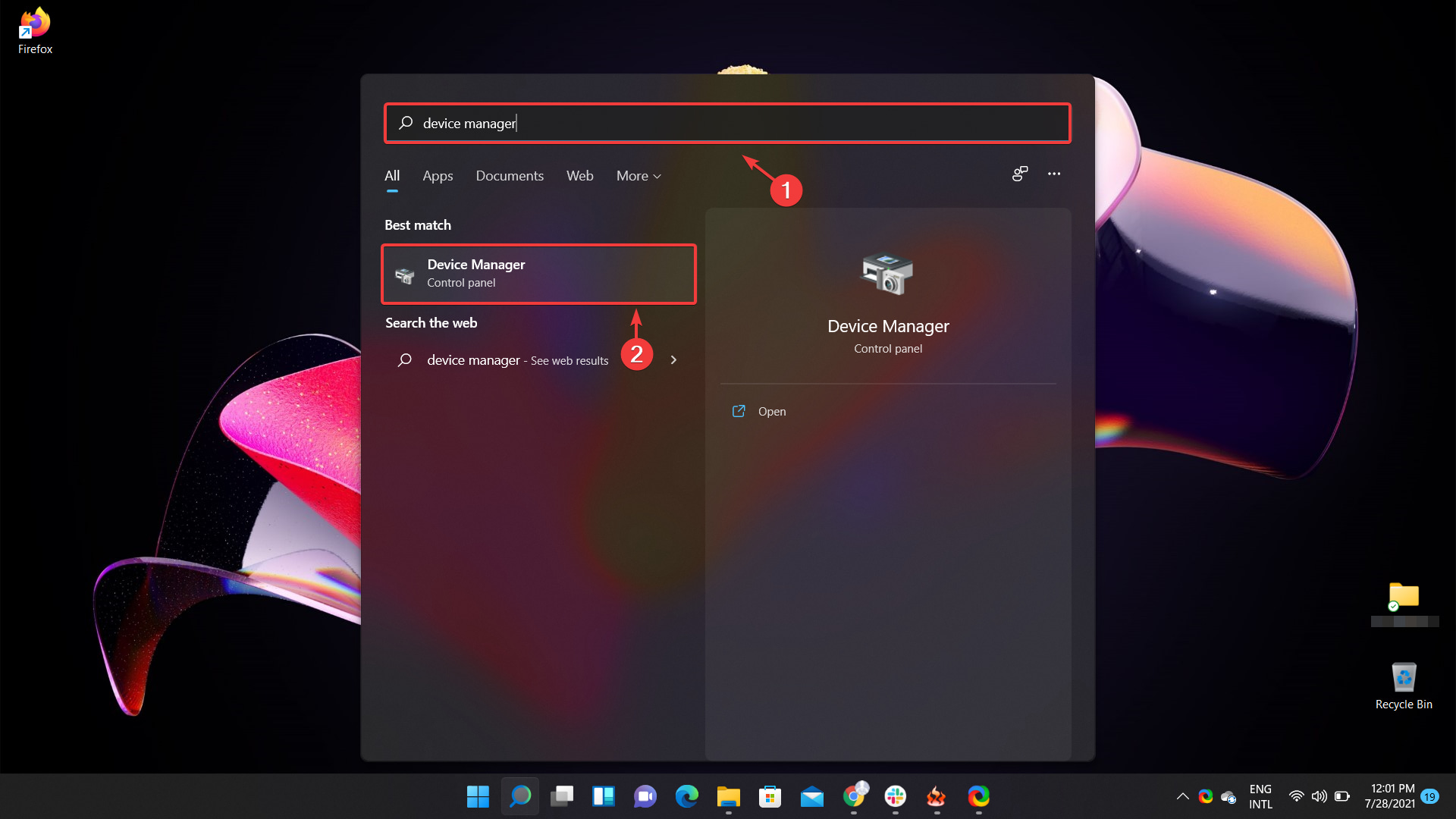
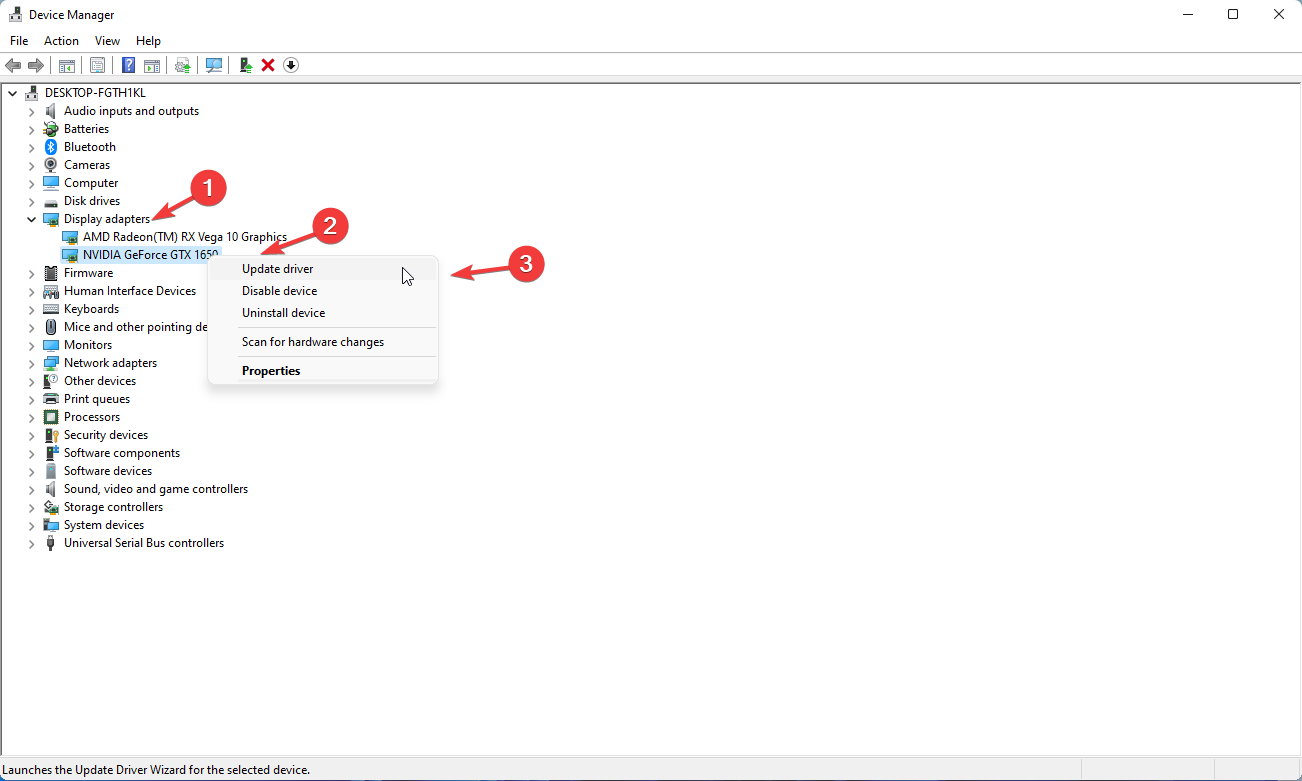
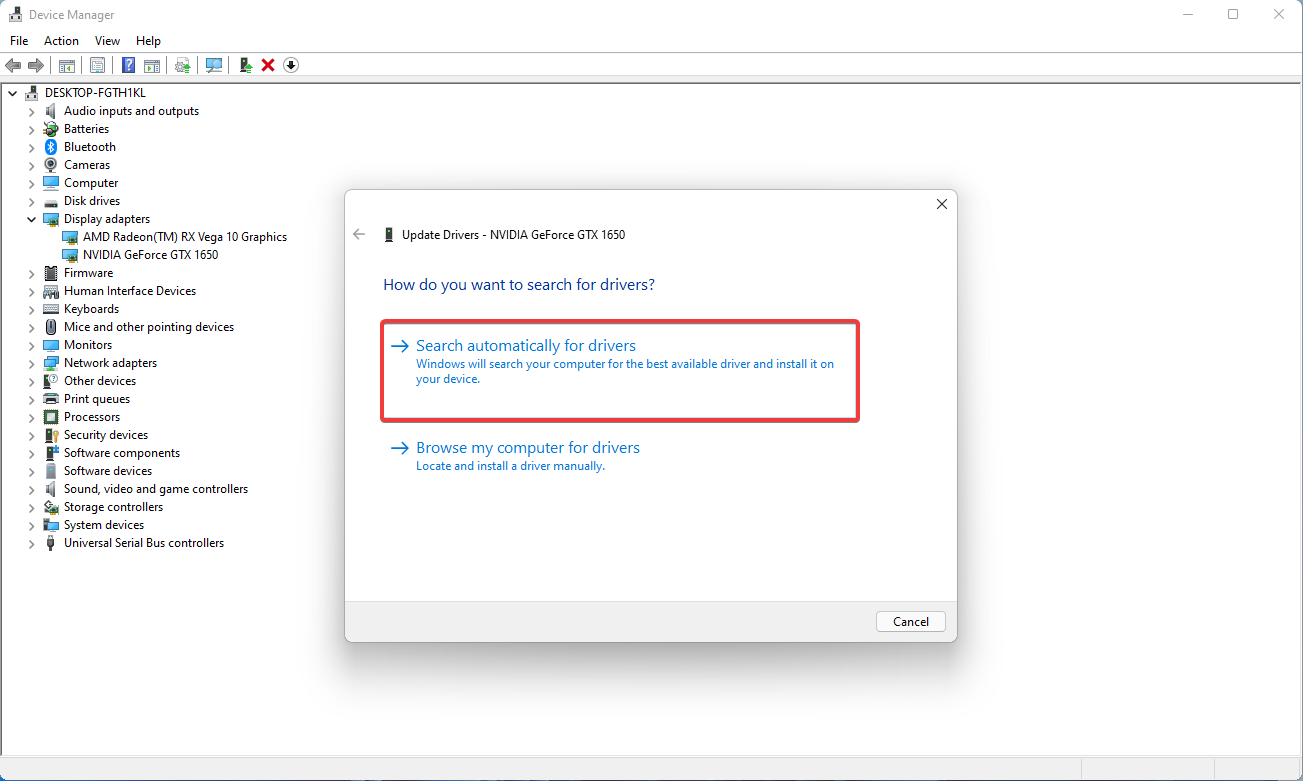
The easiest way to update your drivers on Windows 11 is as follows:
On your search bar, type Device Manager, then click on the first result.
2. Select the hardware for which you want to update drivers, right-click on it and select Update driver.
3. Click on Search automatically for drivers.
Can I install Windows 10 drivers on Windows 11?
The answer to this question is yes, as Windows 11 is a new experience layer running on the same CoreOS used by Windows 10.
So, technically, drivers that function on the previous OS should do so without any issues on the new one. There are, however, some that haven’t really worked on Windows 11.
The only way to know for sure if this is the case is to go ahead and install these drivers, see if they function for you as well.
These are the choices that we have, for the time being, when dealing with the Windows 11 operating system. Many more options are on their way and will become available as OS stability progresses.
Remember that Windows 11 is still in its beta testing phase so many of its features and accessories are not yet available.
For what type of drivers have you opted on your Windows 11 device? Let us know in the comments section below.
Sony’s PlayStation 5 and Microsoft’s Xbox Series X|S are officially the fastest-selling consoles in the two companies’ history, with Sony announcing today that it had crossed the 10M sales milestone for the PS5. This is quite impressive considering the ongoing chip shortage, but it seems that both Sony and Microsoft ordered more consoles to kick off this new console generation compared to previous launches, and stock has been selling out very quickly since November.
“Demand is still extremely strong everywhere, and the sales data for individual countries are simply a reflection of inventory allocation decisions. We’ll learn a lot more as we get further into 2021 and 2022,” said SIE CEO Jim Ryan to Gamesindustry.biz. The exec also emphasized that PS5 sales got a boost from a strong line-up of first-party games such as Spiderman: Miles Morales or Ratchet and Clank: Rift Apart. “Engagement on the platform is the highest that we’ve ever seen whichever way you look at it,” Ryan said.
If we still don’t have any Xbox Series X|S sales figures from Microsoft, CEO Satya Nadella said yesterday during the company’s FY2021 Q4 earning calls that “The Xbox Series S and X are our fastest selling consoles ever, with more consoles sold life-to-date than any previous generation.” According to Niko Partners analyst Daniel Ahmad, Microsoft could have sold 6.5M Xbox Series X|S consoles as of June 30, 2021, which is higher than the company’s estimates for the Xbox One and Xbox 360 in the same timeframe.
We estimate that the Xbox Series X|S total sell in was 6.5m as of June 30, 2021.
Compared to our estimate of 5.7m for Xbox One and 5.0m for Xbox 360 in the same timeframe.
Supply for Series X|S improved in the past quarter, with hardware revenue up 20% QoQ. https://t.co/ypHqyTqZzo
For many years now, Microsoft has been more interested in talking about Xbox Live active users and the company announced a new milestone of 100 million monthly active users last year. However, things are currently looking good in the US according to NPD, as Microsoft’s Xbox Series X|S were the highest-grossing consoles in the market last month while Nintendo Switch led in unit sales. It certainly helps that Microsoft opted for a two-pronged approach for its new console generation, having both the most powerful hardware with the Xbox Series X and the most affordable next-gen console with the Xbox Series S.
Still, Sony will likely continue to benefit from its massive PlayStation 4 install base (over 110M consoles), high-quality first-party games, and exclusivity deals that will lead some Bethesda games such as Deathloop and Ghostwire Tokyo to launch first on PlayStation 5. However, Microsoft’s Xbox Game Pass subscription service, which is welcoming new Xbox Game Studios titles such as Microsoft Flight Simulator on day one still has no real serious competition, and the $9.99/month offer should become even more attractive when AAA games like Halo Infinite and Forza Horizon 5 launch later this year.
“Yammer usage doubled year-over-year and now supports tens of millions of monthly active users worldwide. New integrations and capabilities will bring these community experiences and scale directly into Viva, offering immediate value and growth opportunities for our customers. We’re bringing the superpowers of Yammer, including communities, open conversation, and discovery experiences into Viva,” explained Jeff Teper, Corporate Vice President for Microsoft 365.
Since the world is still dealing with a global pandemic that made hybrid work the new normal, Microsoft plans to roll out the integration of its Yammer Communities app across Microsoft Viva and other Office apps in the coming months. First of all, the Viva Connections feed will now feature all the announcements and conversations from the community in the form of interactive discussions. The Viva Connections app will also let users comment on news posts and interact with their communities.
Employees will be able to open a more detailed topic page that will include community discussions, question and answer cards, and all information about experts based on their engagement in Yammer communities. On the Viva Topics page, employees will also see an option to ask questions, and the app will automatically assign dedicated experts to answer them.
The Communities app for Microsoft Teams is also being improved, with the tool add support for some new features and capabilities such as deep-linking, notifications, and suggested communities. The firm says that it’s updating the app to modernize the design and make it consistent with Microsoft Teams.
In addition to these enhancements, Microsoft has announced today that it’s adding Yammer communities to Outlook on the web. This new Communities app will soon allow Outlook users to join live events, interact with their colleagues in conversations, and more directly within the Outlook app. This update is also coming to Outlook for Windows later this year.
Microsoft Teams is also getting support for a new Q&A experience which will let presenters conduct an open or moderated questions and answers session during virtual meetings. Thanks to this feature, participants can ask and answer questions before and during a meeting. The app will let designated presenters/organizers pin posts, moderate chats, screen responses, and choose the best answers.
This Q&A experience is currently available in private preview, and it will start rolling out to the general public in the coming month. This feature could be beneficial for large meetings, workshops, community events, presentations, and webinars.
Last but not least, the Redmond firm is listing two new features that should facilitate collaboration and communication between team members. These include the addition of a new “Followers” section on the Yammer topic pages, which brings unique capabilities like the ability to follow a specific topic and find experts and collaborators who are also following it. Additionally, there is also a feature that allows approved Yammer users to post on behalf of someone else in their organization.
Microsoft announced this week that their Microsoft Teams collaboration tool now boasts over 250 million active monthly users across all supported platforms.
The stat was dropped during the company’s Q4 FY21 earnings announcement and is a noticeable improvement from the 145 million daily active users reported back in April. While the shift to monthly users over daily users makes it hard to discern growth specifics, the massive leap of 105 million users makes it clear that Microsoft Teams usage is still increasing at a rather fast pace.
As part of the earnings call (via ZDNet), Microsoft revealed some more details about how Teams is being used and who is using it. Apparently around 80 million users are using Microsoft Teams on their phone throughout the month while 124 organizations now have over 100,000 users who use the service for communicating and collaboration.
3,000 organizations boast over 10,000 users on the platform.
Part of the reason for Microsoft Teams’ sudden growth is due in large part to the ongoing global pandemic which has forced numerous companies and groups to work remotely. Microsoft has also made a number of Microsoft Teams features available for free over the past year which has made the service significantly more approachable to the non-corporate individual who had been curious about Teams but were unable to use it until now.
The real test for Microsoft Teams will be over the next year or two as many workers begin to transition back to working in a traditional in-person workspace.
Windows 11 might already be out for beta testing with Windows Insiders, but the minimum requirements mean that a lot of hardware is unable to run the new Microsoft operating system. This has been a source of controversy for many people which is why Aria Carley, a program manager at Microsoft, attempted to address the commercial side of all that and a lot more in a 48-minute long AMA.
First spotted by Tom’s Hardware, there are a couple of notable parts in the AMA video (which was published to the Microsoft Tech Community YouTube with comments turned off.) These cover downloading Windows 11, the upgrade blocks, and a bit more.
The first question in the AMA has to do what will happen with commercial Windows 10 devices if they’re incompatible with Windows 11 — and what will happen on Windows Update. According to Carley, commercial PCs won’t be able to download the Windows 11 upgrade if it doesn’t meet the standards, and Microsoft gets that “it sucks.”
Please note this is a commercial-focused AMA. Carly’s answers mainly cover the non-consumer side of Windows 11 and shouldn’t really be taken out of context. But we’ll still let you be the judge. In her own words from around the 6-minute mark in the video:
“So we talk about this new hardware floor of what devices are eligible and which aren’t and we know it sucks that some aren’t gonna be eligible for Windows 11. But the reason we’re doing that is to keep devices more productive, have a better experience, and most importantly have better security than before so they can stay protected in this new workforce.”
Secondly, Microsoft also went on to talk more about the update mechanism for Windows 11. Carley says Microsoft has delivered the Windows 11 enforcement “inbox” on Windows 10 so that commercial devices will be targeted for Windows 11 without wasting downloads. Carley explained at the 7-minute mark in the video:
“You’ll be able to use update compliance and Endpoint to see if Windows 11 is not eligilble for a device. Whether you’re using our first party analyics solutions or the scripts we’re going to provide you’ll be able to see that those devices aren’t eliglble and explain why those devices won’t get Windows 11.”
Third up, Microsoft also talked about situations where IT admins might want to use Group Policy to bypass Windows 11 upgrade blocks. According to Carley, commercial users can’t use a Group Policy to get around the hardware block in Windows 11. There’s a couple of reasons for this, according to Carley as heard in the 10-minute mark of the video.
“That group policy will not enable you to get around the hardware enforcment for Windows 11. We’re still gonna block you from upgrading your device to an unsupported state since we really want to make sure your devices stay supported and secure.”
Other topics covered in the AMA include rolling back to Windows 10 from Windows 11, the speed at which patches are released (19-minute mark,) documenting known issues, and safeguard holds and transparency (22-minute mark,) This video is very interesting, to say the least, as it’s one of the first times that Microsoft has gone on camera to talk about issues with Windows 11. Give it a watch and let us know what you think in the comments below.
It’s no longer a mystery that Teams is becoming an essential and integral part of Microsoft’s strategy when it comes to online collaboration and communication.
Thus, the Redmond tech company provides regular updates packed with new features, ensuring a deeper integration for the software in Windows 11.
The latest feature to come out of the Microsoft factory is enhanced protections against phishing for the Teams app.
Teams is about to receive enhanced phishing protection
Microsoft specified that, based on its surveys and statistics from the past 18 months, Teams is being heavily used by organizations.
What the tech company is trying to underline with this affirmation is that hybrid work is most likely here to stay.
Thus, it has become even more essential to provide these companies with the latest security features.
So, the Redmond-based tech giant will now use Safe Links in Microsoft Defender for Office 365 to protect Teams users from phishing attacks that use malicious URLs.
To give you a better understanding of what this means exactly, know that Safe Links provides time-of-click validation of URLs to scan URLs once a user clicks on them, and then issue a warning if it is malicious in nature.
Microsoft stated that this represents an extremely important security check because, according to its experts, attackers utilize more than two million unique URL-based payloads each month.
The numbers are astonishing, as over 100 million phishing emails are detected and blocked by the company’s systems.
This happens because malicious third parties send apparently safe URLs to a target and then have them redirect to unsafe websites after being clicked on.
You will surely be pleased to know that Safe Links is already available in Microsoft 365 apps on desktop, phone, and online and is also present in emails.
At this point, Microsoft’s quarterly cloud growth is becoming a broken record of success with the company posting another blowout quarter of revenue earnings and profit.
For its FY21 Q4 earnings report, Microsoft just announced the company produced $46.2 billion in revenue, which adds up to a 21% increase year over year for the three months including April through June. As far as net profit is concerned, Microsoft added $16.6 billion in the bank and investors will see a diluted earnings per share of $2.17 representing a 49% increase from this time last year as the company returns $10.4 billion to shareholders in total.
As the tech industry settles into a slow-paced hardware engineering morass while chipset constraints continue to be a reality, Microsoft’s software and cloud-centric portfolio has taken lead once again for the company with its Commercial Cloud forging ahead with 35% growth and $19.5 billion in revenue for the quarter.
However, not everything is roses for Microsoft investors looking beyond the current earnings valley. Microsoft’s Gaming, Surface and Windows sectors all saw declines YoY with the Surface division posting the highest decline at 20% for the quarter. Despite the warm gaming community reception, Microsoft’s Xbox content and services also saw a 4% decline as well as Windows OEM revenue which brings up the rear of declines with 3% year over year.
For more details and context, below are the investor’s notes:
Productivity and Business Processes
Revenue in Productivity and Business Processes was $14.7 billion and increased 25% (up 21% in constant currency), with the following business highlights:
Office Commercial products and cloud services revenue increased 20% (up 15% in constant currency) driven by Office 365 Commercial revenue growth of 25% (up 20% in constant currency)
Office Consumer products and cloud services revenue increased 18% (up 15% in constant currency) and Microsoft 365 Consumer subscribers increased to 51.9 million
LinkedIn revenue increased 46% (up 42% in constant currency) driven by Marketing Solutions growth of 97% (up 91% in constant currency)
Dynamics products and cloud services revenue increased 33% (up 26% in constant currency) driven by Dynamics 365 revenue growth of 49% (up 42% in constant currency)
Intelligent Cloud
Revenue in Intelligent Cloud was $17.4 billion and increased 30% (up 26% in constant currency), with the following business highlights:
Server products and cloud services revenue increased 34% (up 29% in constant currency) driven by Azure revenue growth of 51% (up 45% in constant currency)
More Personal Computing
Revenue in More Personal Computing was $14.1 billion and increased 9% (up 6% in constant currency), with the following business highlights:
Windows OEM revenue decreased 3%
Windows Commercial products and cloud services revenue increased 20% (up 14% in constant currency)
Xbox content and services revenue decreased 4% (down 7% in constant currency)
Surface revenue decreased 20% (down 23% in constant currency)
Microsoft returned $10.4 billion to shareholders in the form of share repurchases and dividends in the fourth quarter of fiscal year 2021, an increase of 16% compared to the fourth quarter of fiscal year 2020.
Despite a phenomenal earnings quarter, Microsoft has it eyes set on shifting global economic headwinds that foresees as potential problems in the coming months.
Microsoft has an investors call scheduled for 5:30 PM ET / 3:30 PT later today, but the company has already included some Forward-Looking Statements on its website that it will address that include but are not limited to:
intense competition in all of our markets that may lead to lower revenue or operating margins;
increasing focus on cloud-based services presenting execution and competitive risks;
significant investments in products and services that may not achieve expected returns;
acquisitions, joint ventures, and strategic alliances that may have an adverse effect on our business;
impairment of goodwill or amortizable intangible assets causing a significant charge to earnings;
cyberattacks and security vulnerabilities that could lead to reduced revenue, increased costs, liability claims, or harm to our reputation or competitive position;
disclosure and misuse of personal data that could cause liability and harm to our reputation;
the possibility that we may not be able to protect information stored in our products and services from use by others;
abuse of our advertising or social platforms that may harm our reputation or user engagement;
the development of the internet of things presenting security, privacy, and execution risks;
issues about the use of artificial intelligence in our offerings that may result in competitive harm, legal liability, or reputational harm;
excessive outages, data losses, and disruptions of our online services if we fail to maintain an adequate operations infrastructure;
quality or supply problems;
government litigation and regulatory activity relating to competition rules that may limit how we design and market our products;
potential consequences under trade, anti-corruption, and other laws resulting from our global operations;
laws and regulations relating to the handling of personal data that may impede the adoption of our services or result in increased costs, legal claims, fines, or reputational damage;
claims against us that may result in adverse outcomes in legal disputes;
uncertainties relating to our business with government customers;
additional tax liabilities;
the possibility that we may fail to protect our source code;
legal changes, our evolving business model, piracy, and other factors may decrease the value of our intellectual property;
claims that Microsoft has infringed the intellectual property rights of others;
damage to our reputation or our brands that may harm our business and operating results;
adverse economic or market conditions that may harm our business;
catastrophic events or geo-political conditions, such as the COVID-19 pandemic, that may disrupt our business;
exposure to increased economic and operational uncertainties from operating a global business, including the effects of foreign currency exchange and
the dependence of our business on our ability to attract and retain talented employees.
Just like Windows 10, Windows Server used to receive bi-annual updates, but Microsoft will soon change that with the upcoming Windows Server 2022. Indeed, the company announced yesterday that it was dropping its Semi-Annual Channel for Windows Server, with the Long-Term Servicing Channel to become the primary channel providing new major releases for the server OS every 2 or three years (via ZDNet).
“The Semi-Annual Channel in previous versions of Windows Server focused on containers and microservices, and that innovation will continue with Azure Stack HCI,” the company explained yesterday. Windows Server version 20H2, the latest release coming from the Semi-Annual channel will be supported until May 10, 2022, but going forward the Long-Term Servicing channel will provide customers a longer servicing option with 5 years of mainstream support and 5 years of extended support.
Windows Server 2022, the next LTSC release of the server OS is expected to be released later this year alongside Windows 10 version 21H2, the next Windows 10 Enterprise LTSC release, and the brand new Windows 11 that Microsoft has started testing with Insiders in the Dev Channel.
We’ve previously reviewed the GameSir X2 Bluetooth Mobile Gaming Controller and found that it was an amazing controller for Xbox Cloud Gaming. Since then, GameSir has gone on to release a new controller, the F7 Claw.
Though this one isn’t specifically designed around cloud gaming services, it is rather all about boosting experiences in other tablet games like Call of Duty: Mobile. We were provided a sample unit for review, and here’s why it’s a nifty little grip that can make your tablet gaming a lot easier.
Design
For $40, The F7 claw is quite simply designed, but we do have an important note. This isn’t really intended as a traditional full-on controller. Instead, it’s a plastic tablet grip, with the addition of some buttons that can be useful during gaming sessions. You’ll need to see if your tablet game supports custom on-screen controls if you’re planning on buying the F7 Claw. This is so that you can slide the in-game buttons around on the screen to adapt to how you’re placing the grip on your tablet.
The grip has four tactile buttons on the front (two on each side,) which touch the screen and help activate the in-game virtual buttons. There’s also a trigger button on each controller, as well as another secondary button near a turbo switch. These can be used to control your game in supported titles like Call of Duty Mobile.
The connection happens via Bluetooth, but it is optional. The grip’s front buttons work without power and touch the screen with a rubber pad. If you plan to use the controller’s other trigger and rear buttons, be prepared to get up to 120 hours of play, and 200 days of standby. In our month with the claw, we only charged it once. Charging happens via USB-C, and you even plug it into your device while you play to charge.
If you’re wondering how this thing attaches to your device, it happens via suction cups on the inside of the grips. You can attach a sticker to your tablet to help give the cups some “grip” to stay put, but on my iPad Pro, the controller stayed attached without the sticker. Overall, there’s not much to the design, and it’s pretty straightforward.
Experience
I tested the GameSir F7 claw in Call of Duty Mobile. It was one of the only games that I actively play on my iPad that support the controller and custom button layouts. I tried using the grip with Xbox Cloud Gaming, but I had some issues. Because of the bezels on my iPad Pro, the way the F7 lines up on the screen caused it to get in the way of the on-screen controls in many Xbox games like New Super Lucky’s Tale.
Depending on the size of your tablet, this isn’t something to buy if you’re using video game streaming services. We think it is solely for dedicated games like Fortnite or PUBG where you can tweak the locations of your on-screen button layouts. It also might work in custom games or other emulators, but this wasn’t something we tested.
Anyway, in games where the F7 Claw did work, it was a huge improvement over holding a heavy iPad Pro in our hands. The grip did its job and made the iPad Pro feel a bit light, and a lot comfier. Trigger buttons and the four tactile buttons made reloading guns, throwing grenades, aiming, and running around in Call of Duty: Mobile really easy and fun. We didn’t have to worry about dragging our fingers left and right in the middle of gaming sessions, thanks to the physical buttons on the front of the grip.
Turbo buttons could also be used on Android to record, gameplay, but this isn’t something we tested as it’s not supported on our iPad.
A good tablet grip with some caveats
Depending on the size of your tablet, the F7 Claw might be perfect for you. We love the concept of the claw, and how simple it works in some games like Call of Duty: Mobile, but this isn’t something for use in cloud gaming services. The use of the grip also depends on your tablet size. The F7 claw works as intended in some games, and could be worth if you’re the kind of person that’s always tablet gaming.
In addition to looking like the recently released Xbox console, the suitcase also comes with an actual Xbox Series S, two controllers, and a portable monitor, all of which fit perfectly within the suitcase due to the custom interiors.
To participate in the giveaway, interested gamers are encouraged to follow the official Xbox Australia and New Zealand Twitter account and reply to and retweet the below tweet.
Where's the first place you'll fly to in Microsoft Flight Simulator on Xbox?
The promotion is open to all Australia and New Zealand residents aged 13 years old and over. Those under 18 will need a parent or guardians to participate however. The full details can be read here.
The Redmond tech giant has reminded its customers that, starting with August 17, 2021, Microsoft 365 apps and services will cease support for the legacy Internet Explorer 11web browser.
So, after the end of support is reached for this popular but obsolete browser, users still trying to connect to Microsoft 365 will experience connection failures, as this action will no longer be possible.
No more Microsoftt 365 support for Internet Explorer 11
According to the tech company, users that will experience issues when attempting to access Microsoft 365 apps or services after August 17, using IE 11, will not be offered any support.
These apps and services will phase out over weeks and months to ensure a smooth end of support, with each app and service phasing out on independent schedules.
Furthermore, no new features will be released by the company, and the daily experience will most likely get steadily worse until the Microsoft 365 apps and services slowly phase out.
More than that, using the new Microsoft Edge’s Internet Explorer mode will not help extend IE11 access to Microsoft 365 products beyond the end of support.
Basically, this will pretty much be the 365 experience for Internet Explorer 11 users starting with August 17th:
Outlook Web App: Users logging in with AAD accounts will still receive the full OWA experience but will not receive new features beginning August 17, 2021, while users logging in with Microsoft Accounts (MSA) will be redirected to the Outlook Web App Light experience.
Open with Explorer/View in File Explorer (SharePoint): We understand that some customers may continue to use Open with Explorer and View in File Explorer (only accessible in IE11) to access document libraries. To avoid disruption, these customers will be able to use these features for now when they go to a document library in IE11. These features remain in maintenance mode and aren’t receiving further development. We encourage all customers to move to a modern browser and OneDrive sync for a better user experience and easier access to files. For more information on how to prepare your SharePoint environment for end of support on IE11, please read this Docs article.
All other apps and services will phase out over weeks and months to ensure a smooth end of support with each app and service phasing out on independent schedules.
So you might want to start making new plans for the future if you are in the above-mentioned category. Updating your browser or changing it entirely is the best choice you have, according to the Redmond tech company.
Also, Microsoft Teams has already dropped support for Internet Explorer 11 on November 30, 2020.
Microsoft already announced that it wants to retire the legacy browser on some Windows 10 versions on June 15, 2022, replacing it with the new Chromium-based Microsoft Edge.
We have to get used to the fact that Microsoft will start dropping support for more and more old apps that we used throughout the years.
Are you still using Internet Explorer 11? What browser will you opt for once 365 support for this one will be gone? Let us know in the comments section below.
Microsoft may soon take its Surface hinge technology and engineering to the next level with a new patent revealing a “stabilizing” and friction strip assembly.
According to a new patent surfaced by Patentscope and initially reported on by Windows United, it appears Microsoft is thinking about expanding the ways people interact with its future 2-in-1 devices beyond articulating and fulcrum hinges. The Abstract of Microsoft International Publication Number WO 2021/145886 A1 is as follows:
A hinge of a computing device includes a primary support connecting a display to a stand. As the display rotates about the stand, the primary support slides along a friction strip, which stabilizes the display with respect to the stand. A stabilizer may connect the stand to the base or the stand to the display.
A hinge of a computing device includes a primary support that connects a display to a stand. When the display rotates around the stand, the primary support slides along a friction strip that stabilizes the display in relation to the stand. A stabilizer can connect the stand to the base or the stand to the display.
Based on the explanation and accompanying images, Microsoft’s concept 2-in-1 sort of resembles 2021 HP’s Elite Folio, Acer’s ConceptD 3 Ezel, fan art from 2020, but mostly, the chunky underrated Acer Aspire R7 from 2013.
Back in 2013 both Sony and Acer introduced 2-in-1’s similar to today’s patent reveal that were then powered by Windows 8. The Acer Aspire R7 was a heavy 5lb tablet computer with a 15-inch screen that relied on a dual hinge design versus a five-part accompanying “friction strip” to help offer users five different modes to engage with Windows 8.
The Sony VAIO Duo was a slightly more compact implementation with a 13-inch screen and weighing 2.9lbs, however, it also made use of a more contemporary dual hinge.
Microsoft’s patent of a more sophisticated “friction strip” is a bit of a headscratcher as modern implementations from companies such as HP and even its own ageing Surface Studio have been successful without all the proposed additional hardware. Even in its explanation, Microsoft appears to be still mulling over the intended implementation of the new patent.
“[0097] In some embodiments, a computing device may be in the laptop configuration. In the laptop configuration, a display may be rotated about a display hinge such that the display is parallel to a stand. As the stand is rotated about a base hinge with respect to the base, the display ay be rotated as well. Thus, in the laptop configuration, the computing device may resemble a traditional laptop, in that the display is located at the angle relative to the base, and a majority or an entirety of the base/and or an input device is exposed. Including both a studio configuration and a laptop configuration increase the versatility of the computing device by providing for use in many situations as noted above.”
Last year, artist Ryan Smalley from the Yanko Design blog conceptualized a new Microsoft Surface that could resemble a miniaturized Surface Studio with a display-width hinge connected to a mid-point swivel joint and attached keyboard as the company’s next hardware offering.
The stylish piece of concept art surfaced roughly around the time Apple introduced its Magic Keyboard for the iPad Pro and looks to take some liberal inspiration from Cupertino’s implementation.
The more important part of the concept art was the distinct Surface like attention to detail paid to swivel points and minimalism. Leveraging a now tried-and-true dual joint hinge design, the concept Surface takes much of the Surface Studio and Surface Book elements and combines them into potential Surface Book replacement.
Microsoft doesn’t go into detail about what the device patent is called, or references, let alone dubbing it a Surface. The patent was granted July 22, 2021, and it’ll probably be a while before we see Microsoft expound on this concept, if at all.
Previously, Microsoft Teams on the desktop used to open Microsoft Office files via its built-in Office viewer, but this new feature now lets users set a default option for opening Word, Excel, and PowerPoint files shared in Teams chats or channels. “The Teams desktop and web apps for Windows and Mac now enable users to configure the default app used to open Word, Excel, and PowerPoint files that have been shared in Microsoft Teams. Users can configure Teams to open the file directly in Teams (default), open in the web browser, or open in the Word, Excel, or PowerPoint desktop apps,” the company explained.
To change the default setting, users will need to click their profile picture, then navigate to Settings >> General >> and find the Files section by scrolling to the bottom of the page. Finally, use the dropdown menu to choose between the “Teams,” “Desktop app,” and “Browser” options.
Alternatively, users can also manually choose the target app for viewing or editing a specific Office file without changing their default setting. To do this, navigate to the file, and select the More options menu ( … ). From there, click the “Open” option and then select any target app from the list. The menu also provides an option to change the default app used to open Office files.
This new feature should make it easier for users to open and edit documents, presentations, or spreadsheets, and it’s available for all public preview users running Office version 16 or higher. However, it only supports Office files for now, and the app will continue to use Office viewer to open PDF documents. Have you received this update on your PCs? Sound off in the comments down below.
With Microsoft now pushing Teams as a solution for families and in your personal life, you might be wondering how you can add a personal account to your Teams app so you can use it alongside your regular work or guest accounts. We have your back and today we’ll be showing you how you can add and switch between personal and work accounts in the Microsoft Teams app.
Before starting we do have an important note. Our steps in this tutorial deal with the current “Electron” public non-beta version of the Microsoft Teams app. If you’re a Windows Insider beta testing Windows 11, then these steps won’t apply to you as there is a new version of Teams personal that is integrated directly in the Taskbar (and that so far doesn’t work with work/school accounts).
Step 1: Start Fresh and log out of all other accounts
To get started for the first time, we suggest you start from fresh to make things easy. Make sure you log out of all of your other accounts in Teams and then quit the app. You can do this by clicking your profile icon and then choosing Sign Out.
Note: If you don’t want to sign out of your work account to add a personal account to Teams, you can just tap the profile icon, then choose manage accounts and click add a personal account to add a personal account this way. We just suggest signing out first to make things a little less confusing.
Once you sign out, you should relaunch the app and see the Microsoft Teams welcome message. If you’ve logged into your PC using a Microsoft Account, your default Microsoft account email (if tied to Teams) will show up in the list. If this email is tied to a personal Teams account, then click it to continue. If not, choose use another account or sign up. You’ll be prompted to log in and will be sent right into Teams’ personal aspects.
Step 2: Add your work or other accounts
Once you’ve added a personal account to Teams, you can go back in and tweak it to add your work account. Just tap the profile icon, and choose the add work or school account option. Sign in with your work account, and then it will pop up in its own space! You can quit the open work account window at any time, and then get back to it by clicking your profile icon, and then choosing that specific account.
Switching and managing accounts
Currently, it is not possible to use more than one personal or more than one work account in Microsoft Teams. You can only use one work account and one personal account at a time. You can, however, manage any added accounts via Microsoft Teams. Tap your profile icon and then choose Manage accounts. After that, you can see a list of all accounts added to Teams. You can sign out of personal and guest accounts, and manage work accounts.
About to be a lot easier
Microsoft is currently in the process of beta testing Windows 11. With the new Windows release, Microsoft is integrating Teams within the operating system. You can currently try this out with personal accounts via the new “chat” app in the Taskbar. The experience is limited a bit, but you can currently use it on top of the regular Teams app to chat with family and friends.
Microsoft news recap is a weekly feature highlighting the top Microsoft news stories of the past week. Sit back, grab some coffee, and enjoy the read!
Microsoft Edge version 92 starts rolling out with new Password Health dashboard and more
The latest update for Microsoft Edge has brought a new Password Health dashboard with it, providing a central place to look at any problems with your saved passwords to help you improve your online security. Another interesting feature is the use of natural language in the address bar when searching browsing history. It will now allow you to type, for example, “cake recipe from last week” and it will show you your browsing history that was related to cake recipes from last week.
Outlook’s new Calendar Board view (formerly Project Moca) begins general roll out, brings together calendars, tasks, and notes
Hey @MasterDevwi , on some devices with edge canary, PWA notifications look like this. On other devices, it's the classic Edge notification. Is this A/B testing or did i miss a flag somewhere ? pic.twitter.com/SLQawfkuCS
Cloud Infrastructure Entitlement Management provider, CloudKnox Security, has been acquired by Microsoft. The aim of the acquisition is to improve Microsoft’s cloud security, with a view to folding CloudKnox’s unified privileged access and entitle management into Microsoft 365 cloud, particularly Microsoft Azure Active Directory.
This week in Microsoft Teams
Microsoft Teams’ Presenter mode to add new Reporter and Side-by-Side layouts next month
Two new Presenter Modes are coming to Teams in August. First up is Reporter mode, attendees will set the video feed and content above the presenter’s shoulder, similar to a news anchor report. Second is the Side-by-Side mode, which is where the video feed will be displayed next to the content.
Microsoft Teams will let users change the playback speed of meeting recordings
Microsoft’s new broadcast development kit for Teams is tailored for cloud production workflows
Integrating Teams into production studios’ cloud production workflows has been made easier thanks to a new broadcast development kit. The open-source project will require an Azure virtual machine to pull the audio and video feeds of Teams meetings directly from the Microsoft Cloud, where it can be accessed by media producers who then use their online cloud studio without using any desktop app.
Microsoft Teams on the desktop will use native OS notifications by default for new users
Microsoft Teams adds support for Meetings apps on mobile
Meetings apps are coming to mobile on iOS and Android, allowing for third-party apps to be added on PCs, but then be accessible on mobile devices.
Microsoft Teams now lets users translate slides in PowerPoint Live presentations
It is now possible to translate slides in PowerPoint Live presentations. The Slide translate feature allows attendees to convert the slide show content in their own language while in private view.
That’s it for this week. We will be back next week with more Microsoft news.