Following the launch of the Surface Pro 7 and Surface Laptop 3 last month, Microsoft’s ARM-powered Surface Pro X is available today with prices starting at $999. This is Microsoft’s first ARM tablet since the Surface 2 running Windows RT, though the Pro X runs full Windows 10 with some compromises due to the ARM chip.
So far, early reviews of the Surface Pro X have been pretty mixed. It’s worth noting that Microsoft apparently sent review units to just a few media outlets, including popular tech blogs such as The Verge and Engadget. Most reviews highlighted that the custom-designed Microsoft SQ1 ARM processor seem to deliver good performance, but it seems that the tablet fails to deliver the advertised 13 hours of battery life, especially when using emulated Win32 apps.
The tablet also received criticism for its buggy software, the lack of headphone jack, and the Surface Type Cover: It seems that adding a slot for the new Surface Pen makes the Type Cover a bit wobbly, and that it can hide the Windows 10 task bar when a certain amount of pressure is applied.
I haven’t seen many Surface Pro X reviews mention this, but it’s a major problem to me. The keyboard is really wobbly, and as a result it’s often wonky or even cuts off the taskbar when it’s on your lap. Depends how you sit, but it’s a regression imo pic.twitter.com/GHfHePsURz
There’s obviously a lot to like about the Surface Pro X hardware, but it’s still early days for Windows 10 on ARM and the Surface Pro X probably won’t appeal to many due to the compatibility issue with x64 apps. Our own Arif Bacchus has pre-ordered the Surface Pro X, so stay tuned for our full review of the new tablet coming very soon.
The other new product that Microsoft launched this week is the Xbox Elite Wireless Controller Series 2, which we got the chance to try at gamescom in August. The new controller, which Microsoft claims to be the world’s most advanced game controller, comes with new interchangeable thumbstick and paddle shapes, a a wrap-around rubberized grip, a built-in battery lasting up to 40 hours, and a charging case. $179.99 is a lot to ask for a game controller, though keep in mind that all Xbox controllers will be compatible with Project Scarlett when the next-gen Xbox console launches in holiday 2020.
With all of Microsoft’s cross-platform initiatives in 2019, you’re technically no longer limited to just Microsoft devices like a Surface. Generally speaking, the same Microsoft apps and services you enjoy on Windows 10 are also available across other platforms like iOS, macOS, and Android.
So with the recent wave of reviews and talks about Google’s new Pixelbook Go, I really wondered, can this cute little device serve as a “Microsoft” laptop keen to a Surface? With my Surface Pro X still on the way, I’ve been spending the last few days with it as my main laptop, and here’s the answer to that question, straight from the mouth of someone who is heavily integrated into Microsoft’s ecosystem.
A Microsoft laptop that’s all about the Google Play Store
Although Chrome OS was initially limited to the Chrome web browser and PWA apps, in recent times Google unlocked the platform’s true potential with access to the Google Play Store. Over the few days I’ve been spending with the Pixelbook Go, I realized that it is this that sort of makes the Pixelbook Go like a true Microsoft laptop. It essentially feels like the same way you could turn an Android Phone into a Microsoft Phone, just by using Microsoft apps.
Anyway, I quickly discovered that some of the core apps I typically use on my Windows 10 laptops are all available on Chrome OS. For me, this includes Microsoft Teams and Slack for work. Then, for personal use, there are the other Office 365 apps like Word, Excel, and PowerPoint. There are even some other Office 365 apps like OneDrive and Outlook. Other apps like Xbox are not available on Chrome OS, however.
In combination with my work in WordPress in the Chrome web browser, these apps get the same workflow I would on Windows 10. I’m able to write a draft of stories in Microsoft Word, respond to emails through the Outlook app, and keep in touch with colleagues across my two jobs with Slack and Teams. But, is it pretty as it is on a Windows 10 laptop? The short answer is No.
Some of the apps I use on my Pixelbook Go
It’s great as a Microsoft laptop, but there are some limits
As great as having all these apps are, there’s one important point to note. Most Microsoft apps available on Chrome OS via the Google Play Store are simply just ports of Android apps. This means they’re not optimized for Chrome OS laptops and aren’t the full fledged desktop apps as seen on Windows 10. While you can use these apps to get your tasks done, in some cases, that also means they aren’t as powerful or feature complete. This could perhaps be a reason that many people can’t see the Pixelbook Go as a “Microsoft” laptop.
For instance, both the Microsoft Teams and Slack app offers me a different user interface and layout than it would on Windows 10. The overall experience of these apps is a bit similar to how it would appear it would appear if set my Android phone to landscape mode. Coming from using a Surface and Windows 10 as my main device, this was a bit frustrating. To switch between channels in Teams I constantly needed to press the back button, and head back to the main page. There’s also no sidebar from within the app, as is on Windows 10. Most times, I did find myself using the web versions of these apps instead.
The Teams app on ChromeOS is horribly clunky
Additionally, some of these Microsoft apps on the Chrome OS Google Play Store are not as fully-featured as they are on Windows 10. For instance, the OneNote application feels like an oversized Android app. There’s no dark mode support, you can’t resize the sidebar, and overall navigation and touch interface isn’t as intuitive as it is in Windows 10.
There’s even an integration with OneDrive in the ChromeOS Files Explorer when the OneDrive app is installed, but that too is limited. Unlike on Windows 10, you can’t drag and drop files between the OneDrive section of the Files app in Chrome OS. Files in OneDrive are stuck in a “Read Only” mode, though you can still right-click to copy them out to the download folder in the Chrome OS system. But to copy files to a OneDrive account, from Chrome OS you’ll still need to head to the dedicated OneDrive app.
It even syncs up with your Android phone, and Timeline in Windows 10
Microsoft has made great progress with its Your Phone app on Windows 10. As we’ve extensively covered, you’re able to get texts, photos, and notifications from your Android device over on your PC. You even can see the items you’ve started on your Phone, on your PC with the power of Windows Timeline and the Microsoft Edge app. Quite obviously, these features are not present on a Pixelbook Go, but there are Google alternatives and workarounds for it for those hoping to use it as a “Microsoft laptop”
For one, the Google Messages app allows you to send and receive text messages from your Android phone on the Pixelbook Go or any other PC. Other apps from my Android phone (like Snapchat, ESPN, Instagram) are also available on the Pixelbook Go, so if I log into these apps on the laptop, I’ll get the same notifications I normally would. As for my synced photos, when I opened up the OneDrive Android app on my Pixelbook Go, most of my photos from my phone that have been backed up to my OneDrive, appeared on my Pixelbook Go.
Text messages with Google Messages
Finally, there’s the need to address Windows Timeline. While Timeline usually syncs up activities from Edge on mobile, it’s important to note that while the Edge browser is technically available on the Chrome OS Google Play Store, it is almost unusable. In my time, the app would install and launch, but it refused to navigate to webpages at all. This means that on the Pixelbook, you’re stuck with using Google Chrome. However, I did find that there is an extension that can be installed for Chrome on ChromeOS that will sync activities in Timeline. This means that the same websites I opened in Chrome, later appeared back on my Windows 10 PC, and even on my Android phone.
Microsoft apps in the ChromeOS Google Play Store
The hardware is just like a Windows 10 or Microsoft Laptop
Finally, there’s the need to address the physical hardware aspect of the story. Microsoft is known for its excellent hardware, and so is Google. So, does the Pixelbook Go have the same quality and feel like a premium Microsoft laptop or Surface? The answer is yes.
My full thoughts on the build quality and design of the Pixelbook Go are available over at my other job, but seeing as though I’m a Microsoft-fan, I think it’s just as good as anything Microsoft ever made. I’ve never quite seen a Windows laptop that’s quite as petite and compact as the Pixelbook Go. For a clamshell laptop, it feels very portable, slim, and light and is very curvy.
Overall, it really reminiscent of what you can get with a Surface Go. The screen, however, is bigger than what’s on the Surface Go, and there’s the clamshell format too. The keyboard is also much better than anything I’ve ever found on a Surface. Keys have a nice soft-feeling and there’s some bounce back when typing.
Unlike Microsoft which has stuck to strange gimmicks like an Alcantara keyboard to make it’s clamshell devices unique, Google really nailed the hardware aspect of the Pixelbook Go. In going back to a clamshell format, there are no gimmicks. Someone who is used to a traditional Windows 10 laptop can just pick one up and feel right at home.
The short answer is yes, depending on your needs
At the end of the day, I think the Pixelbook Go can serve as a Microsoft laptop if you really want it to. The apps and services you need are all there to enjoy everything Microsoft related, but you might run into some frustrations since you’ll be relying on Android and web experiences or apps.
It is perhaps similar to what Windows 10 Mobile fans once experienced when Microsoft gave up on the platform. You can move yourself to Google’s Android or Chrome OS, but only enjoy it if you stick to the Microsoft apps and services Google Play Store.
Putting it all together, you’re still using a Google product, and there’s nothing better than taking the $650 spent for Pixelbook Go and buying a real Windows 10 machine. You might even enjoy the Surface Pro X, which we’re planning to review next.
As we migrate more and more services to the cloud we are faced with the questions related to how our systems will perform in these new environments. Azure allows us the flexibility of hosting our services and applications across many regions which is very powerful and convenient. But selecting the best location for your systems still remains crucial to ensuring your customers are getting the best possible experience.
Azure Internet Analyzer is the perfect tool for that job. This client-side measuring platform allows you to quantify the performance impact your customers will experience based on your network and infrastructure configurations. By embedding a small JavaScript client into your application you can measure latency from various regions by running multiple side-by-side tests allowing you to evaluate the performance of your web application from an end user’s perspective.
What does that mean exactly? Let’s say your application mainly serves an audiences based in the continental United States, but you have some users reporting performance or latency issues with your systems in the northeast. By leveraging this new tool you can quickly make informed decisions as to what the best location for your application should be to provide a consistent experience your audience.
This system is still in preview and should not be used for mission critical or production environments at this point. Now that we got that disclaimer out of the way I can tell you its extremely easy to configure and use. There are three basic steps involved. You start by setting up a new Internet Analyzer resource in Azure, then installing the JavaScript client into your application. The final step is collecting the results and using them to find and address potential latency issues which could you be impacting your customers. How you tackle that problem is up to you. There are many approaches, one of the most comprehensive and effective is utilizing a CDN or Content Delivery Network, which Microsoft also offers. You can learn more about Azure CDN here.
When a user visits the Web application, the JavaScript client selects two endpoints to measure across all configured tests. For each endpoint, the client performs a cold and warm measurement. The cold measurement incurs additional latency beside the pure network latency between the user and endpoint such as DNS resolution, TCP connection handshake, and SSL/TLS negotiation. The warm measurement follows just after the cold measurement completes and takes advantage of modern browsers’ persistent TCP connection management to get an accurate measure of end-to-end latency.
There is a ton of news coming out of MS Ignite 2019, but this one is very exiting for me! Do you share your enthusiasm? Although others tools like it exist, do you find having this functionality as part of Azure’s offering appealing?
If you’re up and running with Windows 20H1 preview build 19013, it is time to head to Windows Update for some goodies from Microsoft. The company has just announced the release of Windows 10 20H1 build 19013.1102 to Fast Ring Windows Insiders. This is just a minor update and primarily fixes an issue with Remote Desktop.
Fast ring Insiders: There's an update coming your way to fix a bug causing issues with remote desktop. Build 19013.1102 is now available. See the blog post for more details: https://t.co/5ugcL868X0
According to Microsoft, this build fixes the issue where DWM in the Remote Desktop app would start crashing and the session window would either go totally black, experience black flashes or sign out of the remote desktop session altogether. The release of this new build comes just three days after build 19013.1000 (KB4528332) was pushed out to Windows Insiders. That release didn’t come with any other fixes or changes and rather tested the servicing pipeline.
Despite their holiday 2020 projected release dates, Microsoft’s dual 9-inch Duo and dual 5-inch Neo mobile devices are popping up in the wild this year.
During Microsoft Ignite 2019, several company executives and keynote speakers have been freely demoing use case scenarios of Microsoft’s various enterprised focused development tools and software on both devices, on stage.
Most notably, was a session discussing the upcoming platform updates to Microsoft 365 where Sharepoint and Visio executive Jared Spataro popped open his Surface Neo to showcase how the company is integrating Microsoft 365 with its future hardware initiatives.
Surface Neo uses the thinnest LCD screens ever produced. Surface Duo got a mention at the Microsoft 365 #MSIgnite keynote too but no demo. pic.twitter.com/8NYzXOm1at
Spataro wasn’t the only Microsoft employee to be wielding a future device from the company as two other executives on the conference floor were also helping CEO Satay Nadella express the business vision of Microsoft 365 and tightly integrated hardware.
With the Surface Duo slated to be running Android, it’ll be interesting to see how much of Microsoft 365’s special sauce makes it to that device in the future.
Either way, it should be encouraging to see the company’s new foldable devices in the wild this early out from its proposed release date, allowing real-world usage to help iron out further potential bugs, hardware glitches or other potentially show-stopping issues.
Microsoft has unloaded a truckload of new product announcements at this year’s Ignite, including a launch date for Edge Chromium, new integration for the Power Platform including a newly renamed Flow (it’s Power Automate now), new tools for Microsoft Teams, and a new service from Azure called Arc, which lets IT pros manage cloud services across cloud platforms (read: on AWS). Microsoft seems intent on broadening the scope of Ignite as the scope of IT itself broadens, not being shy about Surface product placements and developer focused news.
Along that front, Microsoft made two significant dev related announcements today. First up is that Visual Studio Online has launched. This extension of Visual Studio Code Remote Development allows devs to work from anywhere there’s a browser. Trends in today’s development environment heading towards more remote and freelance work, with more collaboration, and working with cloud based workloads that don’t require a powerful dev machine, and Visual Studio Online is built to handle that new way of working. You can learn more about Visual Studio Online over at Microsoft Docs, and try it out now in the browser, connected via Visual Studio Code, or with the Visual Studio Private Preview.
In addition, Microsoft took time to point out some recent enhancements for developers, including the Alpha of WinUI 3, the developer implications of Edge Chromium nearing launch, and improvements to WSL2 (the Windows Subsystem for Linux). You can read more about all of the latest developer news on Kevin Gallo’s blog post.
Despite Microsoft investing heavily in OneNote for Windows 10, the legacy OneNote 2016 desktop app still has its fans. Microsoft is well aware of it, and that’s why the company announced this morning that the popular note-taking app will continue to be supported for years to come.
NEW! "We hear you loud and clear — you want to keep your notes your way!"????
First of all, Microsoft has extended mainstream support for OneNote 2016 through 2023 (and extended support through to align with Office 2019). Starting in March 2020, OneNote 2016 will also be automatically installed with Office 365 and Office. As you may recall, OneNote 2016 was removed from the Office 2019 installer last year, in favor of OneNote for Windows 10, which isn’t as feature complete as the legacy app it’s supposed to replace.
That’s all good news for OneNote 2016 fans, but Microsoft also plans to bring new features to the popular note-taking app. The first addition is dark theme support, which is now rolling out. The OneNote team will also be listening to user feedback to improve the app, and we’re looking forward to seeing what other new features will be coming to OneNote 2016.
In an effort to shrink our carbon footprint on this planet while creating and consuming unprecedented amounts of data, companies have been exploring a multitude of alternative solutions to reduce, reuse and recycle the size of devices, infrastructure, research and development and that includes businesses trafficking cloud data.
At Microsoft’s Ignite 2019 conference, CEO Satya Nadella showed off a portion of the company’s long-term data storage solution with Project Silica, first announced two years ago, where ultrafast laser optics are used to store data in quartz glass by femtosecond laser processes.
Using the example of storing the entire Superman movie on a piece of glass no thicker than a quarter, Nadella highlights the potential of Project Silica’s ability to massively reduce the amount of space apps, or services could take in the future.
Project Silica challenges and re-thinks traditional storage design. Spoiler alert: it involves quartz glass. #MSIgnitepic.twitter.com/Bxtni4NY8x
With a predicted 100 plus zettabytes of data stored in the cloud by 2023, Microsoft is building a group up new technology procedures that should help the company co-design storage systems that can run parallel with”future hardware and software infrastructures in the cloud.”
The rather impressive demo is in early phases and Microsoft is looking to staff up with highly qualified individuals with knowledge in Research in Storage Software and Optical Systems.
Project Silica thus far has been a two-year collaborative project with the University of Southhampton Optoelectronics Research Centre as part of a broader Optics for the Cloud initiative started by Microsoft Research Cambridge.
Just a few days ago Microsoft quietly rolled out an update to its Microsoft Launcher that presumably brought some bug fixes and optimizations as well as the ability to test out a “System Settings” theme selection. Today, November 4, 2019, that same version of the launcher hits the Google Play Store as beta build 5.10 and seemingly becomes an official beta release.
Launcher theme can now follow your system theme on supported devices running Android 9 and above through the new System theme option in Launcher settings, and the dark theme is darker now to improve readability and make content easier on your eyes in the low-light condition.
General bug fixes and performance improvements.
With Microsoft announcing its plans to release the foldable Microsoft Duo next year presumably preloaded with a custom Microsoft-centric launcher, we should expect to see further strides in Microsoft Launcher development that will eventually get ported over to the company’s future mobile device.
Keep in mind, this is a beta build and those interested will need to register either online or in the Google Play Store as a beta participant.
Microsoft is kicking off its Ignite 2019 conference in Orlando, Florida today, which is the company’s annual event for technology leaders. A lot of news have been announced this morning on the first day of the event, and we’ve tried to include all the highlights in one easy-to-digest post. There will be a lot of Microsoft 365 news during the week, but consumers should definitely pay attention to some of the announcements, especially those regarding Microsoft Edge and Office.
Microsoft is targeting January 15, 2020 for the release of a stable version its new Chromium-based Edge browser for Windows and Mac. A release candidate build is available to download today in more than 90 languages, and you can install it alongside the Canary, Dev, or Beta channels.
We heard about this new all-in-one Office app for mobile a couple of weeks ago, and Microsoft is making it official today: The new Office Mobile app for iOS and Android will combine Word, Excel, and Powerpoint functionality in a single app, similar to the old Office Hub on Windows Phone 7/8. The new app also comes with an “Actions” pane, with easy access to common tasks, including scanning documents.
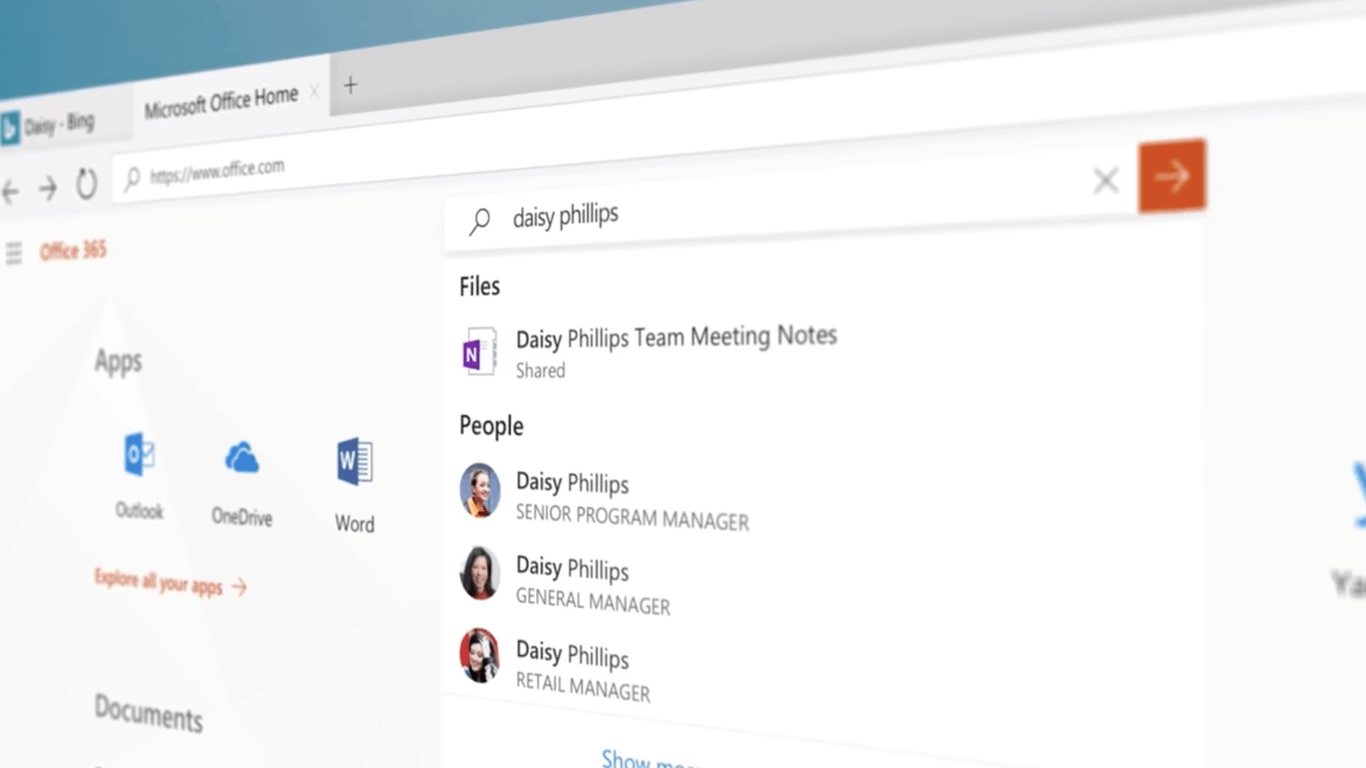
Microsoft Search, the company’s intelligent enterprise search experience built in Bing is getting new features including the ability to search for people using natural language, as well as Acronyms search and office location search (including floor plans). The enterprise search experience is also coming to the Bing mobile app on iOS and Android, as well as the Microsoft Edge Search Bar, which uses Bing by default. Lastly, Microsoft also announced the Microsoft Graph connectors preview program, with already 100 connectors from Salesforce.com, Box and more.
Microsoft Teams, the fastest-growing app in the Microsoft 365 ecosystem is getting some love with the introduction of secure private channels, pinned channels, multi-window chats and meetings. There are also new integrations with To Do, Planner, Outlook, Yammer, Power Platform, and the revamped Microsoft Project.
Microsoft Flow, the company’s alternative to IFTTT is being renamed to Power Automate. The name change has been decided to better align with Power Platform, Microsoft’s suite of tools already including PowerBI and PowerApps. The new Power Automate is also getting new features with Robotic process automation (RPA) for automating complex processes that span legacy and modern applications.
Microsoft introduced today Project Cortex, a new Microsoft 365 app that will use AI to analyze enterprise data to turn it into a knowledge network. The app will be able to organize data into projects and customers, and make it easier for employees to find important info that can be buried in documents, conversations, or videos.
Microsoft is launching today the preview of Azure Arc, which will allow customers to enable Azure data services on any infrastructure, including ones from competing cloud vendors. The Azure Arc for management of Windows and Linux servers on any infrastructure is available in preview starting today, along with the preview of Azure Arc for management of Kubernetes clusters.
Microsoft’s Ignite conference will last through Friday, November 8, and you can watch the introducing Vision keynote here. Ignite is Microsoft’s last big event of the year, and so far the company didn’t disappoint with lots of exciting announcements for users of the company’s popular apps.
Microsoft is using its Ignite 2019 conference as the stage to announce some key changes to Microsoft Teams. The popular collaboration app is picking up new features and integrations with Microsoft To-Do, Microsoft Outlook, and much more.
According to Microsoft, all these features are responses to requests from its top customers. Soon, users will be able to enjoy some new features of Teams such as secure private channels, multiwindow chats, meetings. Importantly, Microsoft is also bringing over task integrations with To-Do and Planner. And, to boost its collaboration abilities, Microsoft is introducing abilities to send an email thread to a Teams channel for discussions. “With the new Teams Chat button in Outlook it is easy to move back-and-forth email conversations out of email into a Teams chat,” explained Frank Shaw, Corporate Vice President, Communications.”
Additionally, Microsoft is also integrating Yammer into Teams. It will be added to the left-hand rail and will make Teams not only a hub for collaboration, but also for workplace communities. Other changes coming to Teams include a new experience and tools for healthcare and Firstline Workers. These people can now create and conduct consultations through Teams. This will pair up with features like SMS Sign-in and Global Sign out.
Finally, for those Teams users who are on Linux devices, Microsoft will finally be launching a Teams app for Linux. The Teams client will support abilities like chats, meetings, and calling. It will be available in the .deb and .rpm formats and will start rolling out as a preview later this year.
Microsoft announced today an important new milestone in its strategy to support hybrid clouds for its customers that working with multiple cloud vendors. At its Ignite conference in Orlando this morning, the company launched the preview of Azure Arc, a new set of technologies that will extend Azure management of Windows and Linux servers on any infrastructure.
“Hundreds of millions of Azure resources are organized, governed and secured daily by customers using Azure management. Azure Arc extends these proven Azure management capabilities to Linux and Windows servers, as well as Kubernetes clusters on any infrastructure across on-premises, multi-cloud and edge,” explained Julia White, CVP of Azure. “Customers can now have a consistent and unified approach to managing their different environments using robust, established capabilities such as Azure Resource Manager, Azure Shell, Azure Portal, API, and Azure Policy.”
The fact that Azure Arc will allow customers to enable Azure data services on any infrastructure should be a pretty big deal, especially when you take into account the ability to use Azure capabilities to manage on-premises infrastuctrures. The Azure Arc for management of Windows and Linux servers on any infrastructure is available in preview starting today, along with the Azure Arc for management of Kubernetes clusters.
At its annual Ignite conference, Microsoft is announcing some key changes for its core business products. One of these involves Microsoft Flow, which has now been renamed as Power Automate.
According to Hames Phillips, Corporate Vice President of Business Applications, Microsoft has opted to rename Microsoft Flow as Power Automate to better align it with the rest of the Power Platform. Alongside this, it will be picking up new features accordingly. This includes new Robotic process automation (RPA) which will help deliver better end-to-end solutions to span AI, APIs, and the UI of the Microsoft Power platform.
Businesses will now be able to use RPA to automate complex processes that span legacy and modern applications. According to Microsoft:
Robotic process automation (RPA) has rapidly become a key technology to address many of these scenarios but generally requires a patchwork of automation services that need integration and management before the real work can get done. Power Automate simplifies these end-to-end scenarios through a unified automation platform that can bridge the gap between API-based automation and UI-based automation.
In addition to the above, Microsoft is also announcing new Power Virtual Agents, security enhancements to Power BI, and tighter integrations between Power Platform and Microsoft Teams. There even is a new set of pre-built models for AI builders. The company explains what these new Power Platform features mean:
Power Virtual Agents—a no-code approach to creating and deploying intelligent, AI-powered bots that will democratize bot creation.
A host of new security enhancements for Power BI, that add industry leading data security capabilities no matter where your analytics data is used and accessed.
Tighter integration between the Power Platform and Microsoft Teams bringing the world’s most popular collaboration app and Power Platform closer together.
A new set of prebuilt models for AI Builderthat add even more advanced AI models to Power Automate and Power Apps that are available to everyone.
All these new features come as part of Microsoft’s efforts to advance the Power Platform and “enable everyone to analyze, act and automate across their organization to transform businesses from the ground up.” More information on these new features will be available during a keynote at Ignite 2019.
Anyone interested in testing out the new Microsoft Edge or moving to a more stable release of the browser can download it right now, here.
Still hesitant about early access usage, Microsoft plans to have a generally available offering come January 15, 2020, with support for over 90 localized languages.
Microsoft has been testing its Chromium-based browser for a little over 11 months now and in most instances provides a very Google-Chrome-like experience that brings the full support of the Chrome Web App extension store to Windows 10 with only a portion of the memory hit.
Microsoft announced some important updates regarding Microsoft Search, the company’s intelligent enterprise search experience at Ignite 2019 this morning. If Microsoft Search was already great for finding information contained within an organization, the Redmond giant is continuing to make it more useful for searching content outside of Microsoft 365.
The new Microsoft Search updates that Microsoft announced today include the ability to search for people using natural language, by mentioning details such as title, team name, or office location. Microsoft Search will also be able to tell what company acronyms mean, and provide floor plans for directions when you search for an office location. Microsoft Search is already available across Bing, Office, Outlook, SharePoint, OneDrive, and Windows, but Microsoft is now bringing it to the Bing mobile apps on iOS and Android. This should certainly help employees save time when searching for information while on the go.
In addition to these new Microsoft Search capabilities that are now generally available, Microsoft also announced some new features coming in private preview. There’s a new Microsoft Graph connectors preview program, which will allow companies to bring more information to their employees using Microsoft Search. The software giant already announced 100 connectors from Salesforce.com, Box and more that will be available in the first half of 2020.
Moreover, Microsoft Search will become available within the search bar in Microsoft Edge, which uses Bing by default. Microsoft also announced today that the new Chromium-based Edge will be available in a stable version in January, and a release candidate is available to download today.
Microsoft has just announced their new service, Project Cortex, for enterprises to help them organize their corporate data. The service uses the power of artificial intelligence to analyze data within documents, and organize them into shared topics such as team projects. Additionally, the service will also be able create topic cards and pages to provide relevant knowledge to individuals within the organization.
Microsoft also explains that Project Cortex can also serve useful as a knowledge repository. The service uses AI and machine learning to obtain information from documents, conversations, meetings, and even videos for individuals to access. It uses content stored on SharePoint to help users manage their information with the promise of built-in security, compliance, and workflow.
Microsoft has been heavily invested in AI solutions for some time now, so it’s no secret the company wants to be well ahead of other players in the game. Project Cortex is part of the company’s knowledge investment area—which also brings an advanced people lookup tool to Microsoft Search in the new Edge—in addition to the other core investment areas: productivity, workflow, security, compliance, and management.
How do you think your organization can incorporate Project Cortex into its workflow? Be sure to share your thoughts in the comments area below.
Microsoft is kicking off its annual Ignite conference for tech leaders today, and the introducing “Vision” keynote featuring CEO Satya Nadella is about to begin at 9AM EST. There will be a livestream on YouTube, and you can watch it below.
Ignite is Microsoft’s last big event of the year, and you can expect a lot of news about Microsoft 365, Office, and Azure. Stay tuned to OnMSFT as we’ll be covering all the big announcements coming this morning.
Microsoft has been on a mission to redesign some of the icons across some of its most famous programs. We’ve already seen new icons for Word, Excel, and PowerPoint, and now it would appear as though the company’s Chromium-based Edge browser is finally getting a new icon that frees the app from Edge and Internet Explorer’s past.
Seen in the featured image above, and as reported by The Verge’s Tom Warren, this new icon is shaped like a lowercase “e.” It is also similar in appearance to a wave and features blue colors on the bottom and greens at the top. It’s not clear what Microsoft’s reasoning was behind choosing this new icon, or if it’s official as of yet, but it can be assumed that there’s a subtle reference to “surfing” the web.
The reveal of this icon was apparently part of a mini-game and easter egg hunt set forth by Microsoft within the Edge Canary version of the browser. Clues were posted on Reddit last week, and Microsoft employees also participated by posting additional clues on social media. As Tom Warren explains:
It all led to a series of words discovered in seven clues, which were then inputted into a Javascript function on Microsoft’s Edge Insider website. This reveal which words needed to be pulled from a video for the final instructions to discover the secret surfing game (edge://surf/) and the new logo when you complete it.
With Microsoft’s annual Ignite conference coming up next week, you can expect the company to explain more about this new icon then. The software giant could perhaps officially launch the Chromium-based browser then, as download links for the stable version recently appeared online.
Surface app updated with Pen Slim support ahead of Surface Pro X launch
The Surface app has received an update to add support for Microsoft’s upcoming products, including the Surface Pro X. The app now supports the Pen Slim.
Microsoft makes using UWP APIs available for Win32 apps
Going forward, developers will be able to use UWP APIs in WIn32 apps, as Microsoft is making the APIs available to a wider developer audience.
Microsoft is “elevating” the Phone Screen experience by removing its dependency on Bluetooth
If you have already installed the Windows 20H1 preview build 19013 that Microsoft pushed to Fast Ring insiders earlier this week, Microsoft has just released a small update for this build that includes no new features and fixes. As the Windows Insider team explained, the purpose of this release is to test the servicing pipeline for future updates.
Fast ring Insiders: there's a small update coming your way. Build 19013.1000 (KB4528332) is available. We are validating our servicing pipeline and you may see an additional LCU release early next week continuing this effort. Thank you!https://t.co/wuF4YZmm66
The updated blog post included a note about Features On Demand (FOD), which in the latest 20H1 builds are available from the Optional features section in the Settings app:
If you try to install a Feature On Demand (FOD) while this update is pending and you restart your PC, it will not trigger this update to successfully install. As a workaround, you can pause updates, un-pause updates, and then scan for updates to get out of this state if this happens to you.
According to the team, Fast Ring Insiders may see a similar update bringing no changes next week. According to a recent report, the 20H1 update may reach “RTM” status as soon as next month to follow Azure’s development cycle, though it may get a couple more months of Insider testing ahead of its expected release in the first half of 2020. In the meantime, it shouldn’t be long before Microsoft announces the release of the Windows 10 November 2019 Update (19H2), which may start rolling next week on Patch Tuesday.
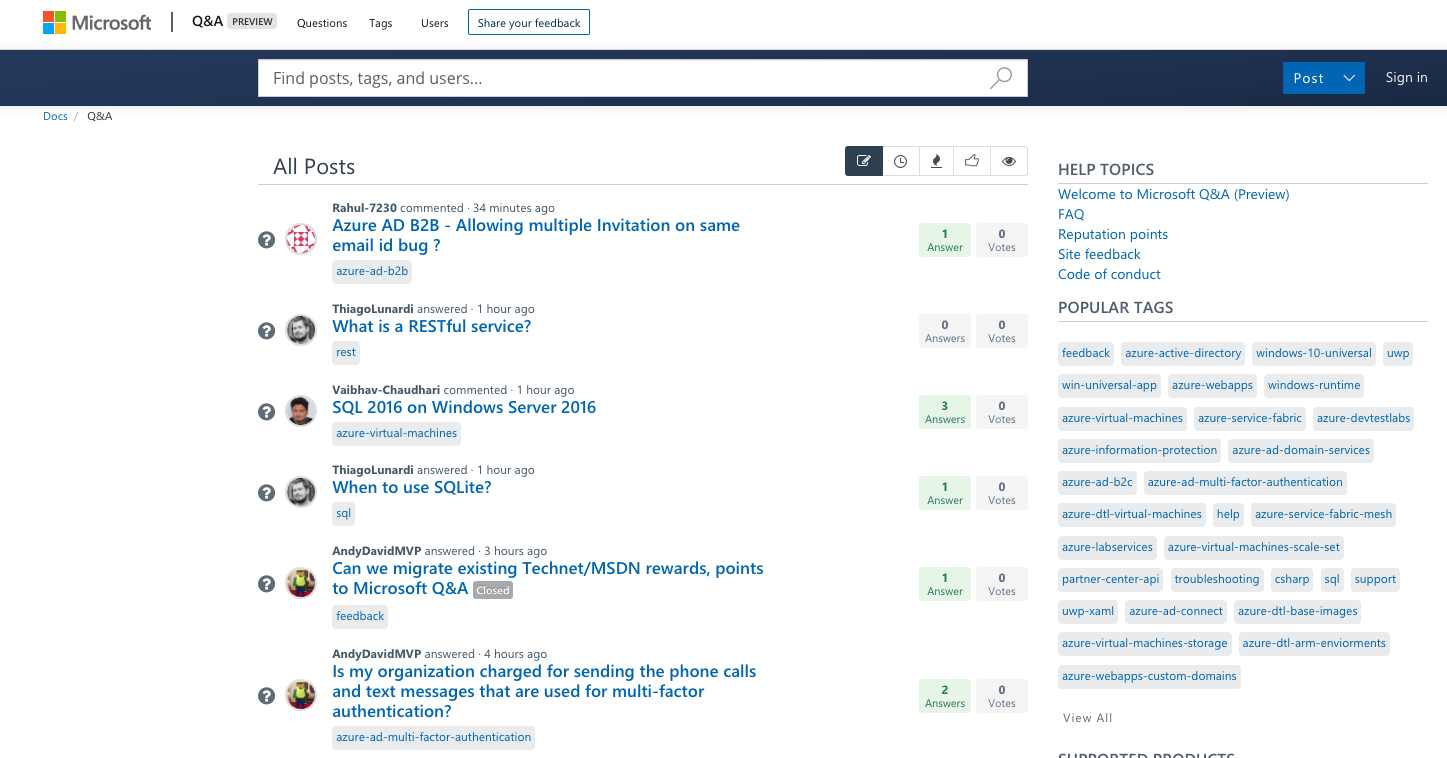
Microsoft has just announced the launch of a new “Microsoft Q&A” website that is set to replace the MSDN and TechNet Forums for any technical questions you have about Microsoft products. The new Q&A website is currently in preview, and Microsoft says that it’s an extension of its docs.microsoft.com platform which already includes a lot of technical information about Azure, Windows, and other Microsoft technologies.
Microsoft Q&A currently lets you ask questions on Microsoft products and services to a community of experts, and the website lets you follow posts, tags or people to be notified about updates. The search bar also provides suggested answers to help you find existing answers as you type.
Microsoft expects to complete the transition from MDSN and TechNet to Microsoft Q&A by mid-2020. “To ensure a smooth transition and minimize any disruption for users, we’ve broken down the migration into multiple phases,” the team explained, and as of this writing the preview version of Microsoft Q&A currently includes content about Azure, the Universal Windows Platform, and the Partner Center API.
EA’s Battlefield V video game is getting a kind of re-release on Microsoft’s Xbox One consoles as the Battlefield V Year 2 Edition. This new version contains the main game, which is still on sale separately, plus a DLC pack that contains a variety of content that was released in the year after the original release such as 13 primary weapons, four vehicles, two epic soldier outfits, 10 weapon skins, and four vehicle skins.
Here’s the official description for the Battlefield V Year 2 Edition:
The best way to join Battlefield V. Experience WW2 as you’ve never seen it before with a vast arsenal, including a catch-up of all weapons and vehicles delivered across year one of the Battlefield V Tides of War Chapters. Stand out on the battlefield with the most popular weapon and vehicle skins released during the year and customize your Company with two Epic soldier outfits. Battlefield V Year 2 Edition includes the Battlefield V base game and 33 Chapter Reward items released in the game’s first year.
For those of you that frequently join discussion boards for whatever reason, you surely know about Yahoo Groups. Back in its prime, Yahoo Groups was arguably the biggest discussion boards available.
Users could typically join groups that revolved around any topic without any charge at all and discuss anything. They could also post content to these groups directly using a web browser or by using email.
The end of an era for Yahoo Groups
However, Yahooannounced that the following changes will come to Yahoo Groups:
On October 28, 2019, all upload functionality will be removed from the site
On December 14, 2019, all content ever posted up to that date will be removed permanently from the site
Yahoo Groups’ privacy settings will also be going through some changes. For example, all public groups will be set to private or restricted.
Any admins and existing members will retain access but new group members will only be able to join once they receive an invitation from the group administrators.
How can I download Yahoo Groups data before it’s gone
Since the December date is drawing more and more closer, you will want to know how to back up any data from Yahoo Groups before it gets deleted.
Select whatever data you want to be included in your download
Click Next
Keep note that processing a download request can take up to 30 days, and only afterward will the download become available
Enter an email address you’d like to be notified at when the download is ready.
Click Request Download
Once you receive an email notification stating that your download is ready, visit the Privacy Dashboard again
Scroll down to Download a summary of your data
Click Your download requests
Right next to your download request, there will be a Download button
Click the Download button
Yahoo Groups is not as popular as it once was, and maybe that is the main reason behind the change.
For those of you that might miss the deadline, the Internet Archive also revealed that it plans to save as much data as possible before the changes take place to preserve the content.
What do you think about the major changes that are coming to Yahoo Groups? Will you try to download any of your data before it disappears for good? Let us know in the comments section below.
RELATED ARTICLES YOU SHOULD CHECK OUT:
Outlook.com gets Groups feature to improve sharing
Everyone that uses Mozilla Firefox is probably used to the browser displaying extended information for sites with Extended Validation certificates.
However, Firefox changed that when they removed the displaying of the Extended Validation certificates entirely. The reasoning behind this change would be that more and more websites are now using the more secure HTTPS than they did in the past.
Because of this, Mozilla stated that it would be more efficient to have a form of signaling in regards to websites that don’t have HTTPS, instead of the ones that do.
However, those that were used to the way things used to be displayed weren’t so pleased, and that is why we’ve created a guide on how to bring back the Extended Validation certificates in the Mozilla Firefoxbrowser.
How do I bring back the EV certificates in Firefox?
LaunchMozilla Firefox
Type in the following line in the Firefox address bar:
about:config
Click on Yes, I accept the risk!
Type in the following line:
security.identityblock.show_extended_validation
Set the preference to TRUE
By following these steps, all the secure sites will now also display their EV certificates in the address bar. If you want to reverse this change, simply follow the steps above, but replace the TRUE value with FALSE.
If you are looking for some extra security, you can also enable the display of non-secure sites.
How do I display a non-secure website?
LaunchMozilla Firefox
Go to about:config page again
Type in the following line:
security.insecure_connection_text.enabled
Set the value of the preference to TRUE to enable not secure or FALSE to disable it.
By following these steps, Firefox will display a crossed-out padlock icon in the address bar when a site that does not use HTTPS. By doing this, the browser will also display the not secure text next to the address bar as well.
Keep in mind that by doing this, you do not directly improve Firefox‘s security level. Instead, this will simply give you an extra visual signal regarding the security of a website you are visiting.
Do you think removing the Extended Validation certificates was a good idea? Share your opinion with us in the comments section below.
Tor Browser is an Internet browser probably most well-known for its securityfeatures. These features allow it to be extremely safe when navigating websites, as it protects your identity and data in pretty much every way imaginable.
Another thing that makes Tor Browser efficient is that it gets frequent updates. One such update introduced the New Identity feature, which allows users to reset their identity when browsing.
One thing you should know is that this is the first version in a long time to be based on Firefox 68 ESR, and not Firefox 60.x.
The feature is only available in the latest version of the browser, which can be found on their official website, completely free of charge. Those of you that already use the browser can simply perform an update to get the latest features.
How do I use the New Identity feature in Tor Browser?
LaunchTor Browser
Navigate your cursor to the upper-right part of the menu
Press the broom icon
A warning message will appear telling you it will close all windows and tabs
Press Yes
The browser will automatically restart
Resume browsing
You may repeat the process as many times as you like, especially if you think your activity is starting to get tracked. However, remember that the browser will not remember what tabs you had open, and you will have to go back on all the websites manually.
According to the Tor website, this option is useful if you want to prevent your subsequent browser activity from being linkable to what you were doing before. This makes it especially useful in extended browsing sessions where your data could be tracked.
Using New Identity it will close all your tabs and windows, clear all private information such as cookies and your browsing history, and use a new set of Tor circuits for all connections.
Basically, it spares you the trouble of closing, restarting and establishing new connections. This makes it great when you need to browse privately, but time is short.
Do you think that the New Identity feature in Tor Browser will further improve the browser’s powerful privacy protection potential?
The Your Phone app is a neat little project that Microsoft has been working on for some time now. It has been updated frequently and enriched with a host of cool new features.
One new feature that Microsoft has been working on is the ability to make actual phone calls from the Your Phone app.
After some hands-on experience, we’ve compiled a guide as to how you can use the Phone Calls feature efficiently
How can I make phone calls with the Your Phone app?
Launch the Your Phone app
Pair your Android smartphone to Windows 10 via Bluetooth
Click on Calls on the right side of the menu
Click on the dial pad to form a phone number
Press the green button to make the call
Additionally, you can look up your contacts using the Search Bar, or by looking them up in the Recent Calls list.
One interesting feature is that the phone and the PC don’t need to be on the same Wi-Fi network in order to work. Thanks to this, you can keep your Android phone on its independent 4G network, disconnected from the Wi-Fi, and the calls from your PC will still work.
Also, since the PC and the Android phone will be linked via Bluetooth, the call will be made instantly. This handy feature has been a long time coming, especially for an app that calls itself Your Phone.
The limits of the Calls feature
The only limitation to this feature is that since the two devices are paired via Bluetooth, the app‘s usefulness is limited by the Bluetooth range. This greatly reduces the number of things you can use this new feature for in real-life applications.
More so, Microsoft has been struggling to make the Your Phone app more stable for public use. This can be easily seen from the number of issues reported by users.
Regardless of which, the Calls feature can be viewed as an experiment to test out the compatibility between devices, and how they can be applied. Whether it is a success or not, only customer feedback will tell.
Do you think that making calls via the Your Phone app is a great improvement? Let us know in the comments section below.
If you’re tired of bootable DVDs or USB sticks, then you should know there is an alternative. You could try adding an Advanced Startup Options context menu, which will greatly speed up the process of rebooting the OS.
However, by modifying registries, you can get over all these steps easily. This solution can also come in handy if you are encountering any sort of issue, that can not be solved using the regular Windows 10 environment.
This includes the need to overwrite or delete some in-use files. By following these steps you too can speed up the process of accessing the Advanced Startup Options menu with just a few clicks.
How do I add an Advanced Startup Options menu in Windows 10?
Before starting, make sure that the user account has administrative privileges.
Why should I add an Advances Startup Options menu?
Normally, if you’d want to access the Advanced Startup Options, you’d have to do the following:
Press Win + R
Select Settings (the cogwheel-shaped button in the start menu)
Click Updates & Security
Got to Recovery
Press Restart Now under Advanced Startup
Wait for the PC to restart to enter the Advanced Startup Options
Given how many steps are needed, it’s obvious why you would want to simplify the process. More so, since the process is reversible, there is no need to worry about making irreparable changes to your PC.
Does adding an Advanced Startup Options context menu seem useful to you? We await your feedback in the comments section below.
Cloud storage services are the latest trend when it comes to keeping your file safe. They let you keep files online so that you won’t have to fill your hard drive with too much data.
There are many cloud storage services out there, one of which is Dropbox, and it is actually one of the best services of its kind, and it is even free to some extent.
However, since our storage is limited, both physical and cloud, we wouldn’t want all of our files to be synced, just a select few.
Dropbox lets you create such a list with a feature called Selective Sync. If you’re a Dropbox Plus, Dropbox Professional, or Dropbox Business user, Smart Sync is available instead.
How do I selectively sync in Dropbox?
First of all, make sure you have the Dropbox app installed on your PC since the Selective Sync feature is not accessible from Dropbox‘s website.
Click the Dropbox icon in your system tray or menu bar
Click on your profile picture
Select Preferences…
Select Sync
Click Selective Sync…
A list of all of your synced data will appear
Uncheck the boxes next to any file or folder that you no longer need to be synced
When finished, select Update
Any folder that you have unchecked will no longer be synced with Dropbox, and neither will any of the containing subfolders. Whatever you upload to the Dropbox app will only be stored online and accessible from dropbox.com, thus saving you personal storage space.
What happens if I uncheck a folder that is shared?
The unchecked folder won’t sync to your computer anymore, and neither will its subfolders.
You will still be a member of that shared folder, and it will still be available in your account on dropbox.com. The shared folder will also remain available for other members of that folder.
If you want to remove yourself from that shared folder, all you need to do is leave the shared folder from the Dropbox website. If you are the owner, you can simply unshare it.
Did this trick help you save up any hard drive space? Let us know how helpful this guide was in the comments section below.
OneDrive is a file hosting service hosted and developed by Microsoft and it is part of the Office 365 Suite of programs.
It act’s as the default cloud storage program for anyone that is using Office 365. This makes it widely used among users, especially those in work environments.
However, some user’s have reported having issues with OneDrive:
We have added a user recently to our companies O365 installation. We have noticed that her OneDrive is not working. When we look in the Admin section of the portal under her user settings, OneDrive settings it says “OneDrive is not provisioned for this user”
It would seem that when the admin account was created, OneDrive was provisioned but permissions failed to apply. As such, the admin needs to grant the account permissions manually to “Create Personal Site”, which is required for OneDrive.
By following these steps, all of the users in your Office 365 workgroups will be granted full access to all OneDrive features.
How do I fix OneDrive provisioning for a user?
Keep note that you need to be an Office 365 administrator in order to make these changes.
First of all, make sure you have assigned the SharePoint Online license to the affected user in Office 365 admin center. You can do this by following these steps:
Go to Users
Select Active Users
Check the user’s name
Click Edit in Product licenses section
Once you are done, you will need to grant the affected user the right to create a My Sites site in the SharePoint Admin Center.
Go to the SharePoint Admin Center
Click User profiles
Go to the People section
Click Manage User Permissions
Add the users who require permissions to create their My Sites site
This setting is set to Everyone except external users by default
Add the user, users, or group
Select t the added user, users, or group
Scroll to the Permissions section
Select the checkbox next to Create Personal Site
Click OK
Have the user browse to the OneDrive page to create the site
As soon as you granted them permission, let the user go to Office 365 portal and click OneDrive in the App Launcher. This is to check if the user can use OneDrive for business.
If the OneDrive icon keeps displaying Setting up in the App Launcher, wait for 24 hours and then try access OneDrive again. If the issue persists, consider contacting Microsoft support for more help.
Did you find the guide useful? Let us know in the comments section below.
Microsoft is continuing its efforts with Cortana, as can be seen in a leaked video showing off some of Microsoft’s virtual assistant’s new capabilities.
The video shows off Cortana integration on the Outlook mobile app for iPhone. The assistant is able to read conversations out loud, and receive commands via the user’s voice for actions such as “flag the conversation.” Users will also be able to set Cortana’s voice in the app to either the traditional Feminine voice or the alternative Masculine voice.
On Windows, Cortana is also seen in the video with a fresh new look and better integration with Office. Outlook on the web seems to also be getting Cortana integration as well, as is shown emailing users a daily briefing in the video, and will additionally be able to schedule appointments straight from the web app.
Microsoft hasn’t spoken much about Cortana in recent months, but the video further highlights the fact that it wants to push for business use for the assistant. While other assistants like Alexa, Siri, and Google Assistant focus more on consumer needs, Microsoft seems to be moving Cortana towards the enterprise space instead.
What do you think of the capabilities seen in the leaked video? Share your thoughts in the comments area below this post.
Remember the PowerToys project from the Windows 95 era? Well, following up on a lot of feedback and suggestions, Microsoft recently released PowerToys v0.12.
The new version adds a couple of neat features meant to help power users further improve their Windows experience.
Use PowerRename to batch rename your file collections
Along with support for Dark Mode and some improvements to FancyZone, the biggest change comes in the form of PowerRename:
PowerRename is a Windows Shell Context Menu Extension for advanced bulk renaming using simple search and replace or more powerful regular expression matching.
This is a very welcomed addition, as a lot of Windows 10 users were waiting for it.
Besides the fact that the extension is easy to use and you can live preview the changes from search and replace input fields in the preview area, you also have a lot more options to better control the rename process.
PowerRename uses the ECMAScript grammar, which is ideal for advanced users that take advantage of Regular expressions. But you can also stick with search and replace, as the tech giant explains:
PowerRename was designed to cover the majority of bulk rename scenarios while still striving for simplicity for the average user.
If you want more options, check out this useful article and find the best apps that can batch rename your files.
As we already mentioned, besides the new PowerRename utility there are some other improvements and changes in PowerToys v0.12. Check out the full changelog:
General:
Microsoft signed binaries and installer
Dark Mode for the Settings and for ShortcutGuide
Fixed a bug that was preventing the PT Settings to be opened on some Windows configurations.
Various improvements for other UI/UX bugs.
FancyZone:
Editor now supports multi-monitor
Hotkey to open FZ Editor is now configurable (Win+~ was unavailable on several non-US keyboards)
Fixed a bug that was preventing from activating zones for applications with custom title bars
FZ Editor can now be used on small screens
Improved zone activation when dragging a window, smaller zones have precedence over larger zone (community contribution)
Fixed a crashing bug in FZ on some localized version of Windows (community contribution)
Fixed bug preventing from resizing zone when zone edge is on the right or bottom screen edge
Fixed bug that was causing the task bar and other special system windows to be snapped into zones
Improved application detection for FZ history
Change a FZ default settings to avoid interfering with full screen applications.
You can’t really talk about UWP, Microsoft’s “universal platform platform” without touching on the “is it dead?” controversy. As we said before, it’s really a tale of two UWPs, one, a family of APIs that introduce new abilities like “BackgroundTasks, Notifications, LiveTiles, Share and more,” and the other a now disbanded concept of having all app development for Windows move to a new “Universal” programming model, writing once to deploy on phones, tablets, and PCs alike, with apps available only from the Microsoft Store.
Late yesterday, Microsoft announced upcoming changes that remove some more of the constraints of using the UWP APIs in non “UWP” apps, making the APIs more readily available, and further distancing UWP from the idea that an app using these features has to be available in the Microsoft Store. These changes will be available in Windows 10 build 19000 and up.
Up until now, the programming model for using the UWP APIs like background tasks and share, etc. required that any app written using these interfaces follow a couple of rules, as outlined in a post on the Windows Developer blog:
Identity – The need for package or application identity to identify the caller, and an identifier to scope data and resources.
Registration – The need for configuration of machine state during application deployment, which is required by the API and indexed by the package or application identity.
UWP apps require both identity and registration, and they have only been available through an appmanifest xml file, and tied to the app’s registration in the Microsoft Store. Now, however, Microsoft is opening up these requirements to make them available through a new <allowExternalContent> element, and/or a Win32 type Runtime Behavior type, among others. What this all means is that developers can now, by setting some new configurations, use UWP APIs in Win32 apps.
Microsoft posted much more on the how-tos of using these new configuration features, if you’re a Win32 developer looking for guidance, be sure and check out the documentation. For the rest of us, what this all means is that all kinds of Windows apps and applications will now be able to incorporate some of the features available up until now only to Microsoft Store apps, features like notifications, background tasks, and share.
Microsoft is continuing, as it has said, to invest in UWP APIs, and this is another step toward removing the constraints originally placed on these features to now make them more widely available.
Are you a Windows developer? Do these changes make developing for Windows easier and more interesting for you? Let us know in the comments below
If you’re sporting an Android phone in 2019, there are so many synergies you can get between Windows 10 and your smartphone. Your text messages, recent photos, and notifications can all now sync up to your Windows 10 PC through the Your Phone app.
And, if you’re a Windows Insider, you also can enjoy the ability to mirror your apps and get your phone calls on your PC. Lucky consumers with newer Samsung Galaxy phones can even enjoy similar built-in “Link to Windows” Android to Windows synergies.
But before Microsoft realized the cross-platform potentials between Android and Windows 10, Dell technically went there first. We previously went hands-on with Dell’s Mobile Connect app with an iPhone, but now we’ll be revisiting the app on the Android side of things, and comparing it to Microsoft’s Your Phone experience. This is especially important with the recent news that Microsoft is “elevating” the Your Phone phone screen experience by removing its dependency on Bluetooth.
A rant, and some quick tidbits before starting
Before starting the comparison, there are some quick tidbits to note. Importantly, we want to point out that Microsoft’s Your Phone app is available on all PCs running the Windows 10 October 2018 Update or newer. Dell Mobile Connect, meanwhile, is an app that’s downloaded through the Microsoft Store, but with some important limitations to running on newer Dell PCs only.
Your Phone, however, is a native app built into Windows 10, and everyone can experience some of its core functions (syncing texts, photos, and notifications from a phone with Android 7.0 or higher) regardless of what type of PC they own. Microsoft is also always tweaking the experience and tests new features with Windows Insiders first, so not everyone has access to new features like App mirroring, or phone calls.
It’s also noteworthy to mention that the core Your Phone features depend on the WiFi or 4G LTE on your linked Android device to sync up to your PC through the Microsoft Cloud. With these features, you WON’T need your Android phone to be connected to your PC via Bluetooth, if configured via the settings.
However, other features of Your Phone like the Android app mirroring used to require just Bluetooth to work, but now have become exclusive to phones with the “Link to Windows” functionality. As we discuss later, the app mirroring now only works on the devices seen below. It also requires a smartphone with Android 9 or higher.
Samsung Galaxy Fold
Samsung Galaxy Note 10/ Note 10+
Samsung Galaxy S10/S10+/S10e
Samsung Galaxy A30s/A50s/A90
The Your Phone app in Windows 10
On the other end of the spectrum, Dell’s Mobile Connect app is exclusive to newer Dell PCs. You only can install the app from the Microsoft Store if you’re using a new Dell XPS Inspiron, G Series, or Vostro purchased in January 2018 or later. It also is 100% dependent on Bluetooth and WiFi, so you’ll need to make sure your Android phone is always by your PC’s side. However, all features work with almost any modern Android device, unlike with Microsoft, where app mirroring ability now needs newer Android devices.
For most consumers, both experiences also require a companion app to be downloaded to an Android or iOS device With Microsoft, it’s the Your Phone Companion app, except if you own one of the devices mentioned above, where the linking is done without the use of an app. With Dell, it’s the Dell Mobile Connect app.
However, Dell Mobile Connect is a bit more cross-platform, as it works with iPhones, and allows you to make, accept, or send text messages from your iPhone to your Windows 10 PC. This is something that currently isn’t possible with Your Phone.
Settings for Your Phone and Dell Mobile Connect
The core user interfaces
Anyway, to begin our deep dive in the comparison, we’ll talk about the user interface. This the core aspect of any app, and between Dell Mobile Connect and Your Phone, both are fairly similar. Please note we won’t talk about Phone Calling or App Mirroring here, but rather in the sections below.
Starting first with Your Phone, you’ll notice a column of icons on the right side of the app. For non- Windows Insiders, these include Photos, Messages, and Notifications.
Clicking messages will show a thread of messages, just like on your Android Phone. You’ll then be able to expand it out and see the entire conversation on the right side of the screen. For photos, clicking the photos icon will expand out and show a list of the 25 most recent photos on your Android device. Finally, app notifications from Android phones will show up in a list with a plain white background.
Texting on Dell Mobile Connect and Your Phone
As for Dell Mobile Connect, the experience is a bit more complex. You’ll still see icons on the right side of the app, but when clicking on them, things are a bit different. When you click on the messages icon, it will show you a thread of messages. Once you click to a message, the thread disappears and you’ll be in the entire conversation. For photos, meanwhile, clicking through to photos will show you all your photos from your Android phone, and not just the last 25.
There is also an ability to see videos, music, and documents from your Android Phone on Windows 10, something that currently isn’t possible in Your Phone. Finally, in the notification area, you’ll see them appear in a similar fashion to an Android Phone, with a gray backdrop.
The calling feature
Now, for the calling feature. We’ll start this section first with Your Phone. As we previously detailed, it’s rather simplistic. You’ll see all your recent calls in the middle portion of the screen. On the right side, meanwhile, is a white-colored dial pad to place calls. Above that will be a search box, where you can search for your contacts. When calling, you’ll get a pop-out box with the ability to transfer the call back to your phone or see the dial-pad. This feature also doesn’t rely on WiFi, and once paired via Bluetooth, your PC won’t need to be on the same network as your Android Phone for it to work.
With the Dell Mobile Connect app, things are different. Pressing on Contacts in the Phone section of the app will list out your contacts, similar to how it is on your Android Phone. You also can search the list to find a specific contact. The dialer meanwhile, is significantly larger and is more prominent. Unfortunately, though, there is no pop-out box to control the calls, and everything happens in-app. You’ll also need to stay connected to Bluetooth and the same WiFi network as your phone for it to work. But, you can transfer calls made from your PC back to your Android phone, with the “Private” icon on the dialer pad.
The texting features
Moving onto the texting features, we again turn our attention to Your Phone. Your Phone shows the text messages in a thread and gives you the option to reply via a text box on the bottom. You can also reply to texts with GIFS, emojis, or a photo. MMS messages even appear in your thread, which isn’t possible with Dell Mobile Connect. Messages will even stay on your PC once you turn your Android phone off, which is something that Dell Mobile Connect also can’t do.
On Dell Mobile Connect, however, the options to reply are a bit different. You’ll see an option to reply with emojis, or by text, but there is no GIF or photo option. The app, though, does have a bonus ability to call the contact directly, with a phone icon at the top of the screen.
Messaging threads on Dell Mobile Connect and Your Phone
The Android mirroring feature
And now, for the coolest part of both apps. Previously, if you’re a Windows Insider, you were able to mirror your Android Phone over to Windows 10 with the Your Phone app if paired via Bluetooth and connected via WiFi. However, Microsoft is now planning to make this feature a bit more exclusive to select Samsung phones, with a new “Link to Windows” functionality built-in. If your Android device doesn’t support “Link to Windows,” you won’t see this feature in the Your Phone app.
The same Android app mirroring can also be done with Dell Mobile Connect, but it’s a standard feature that anyone can use on a compatible Dell PC or any Android Phone with Android 6 or higher. Both work as expected, and you can mirror Android apps over to Windows 10, such as Snapchat, WhatApp, and more. However, The Dell Mobile Connect app has an extra button on the bottom, which gives you the Android controls buttons for going home, etc. These make navigation easier than Your Phone, which doesn’t have this.
The Notifications
Finally, there are notifications. On Dell Mobile Connect, you’ll be able to reply to texts and answer calls from notifications that appear on the top right of the screen. The same can be done from the Your Phone app, which integrates with the Action Center. However, Your Phone has an interesting ability when pressing on notifications from certain Android apps. If you get a notification from an app like Snapchat, it will automatically attempt to launch a mirror session and launch Snapchat or the respected app if you click the notification. This is quite cool.
Your Phone wins for now
Despite Microsoft shutting out older Android phones from enjoying the app mirroring feature, Your Phone appears to be the better of the two apps on Windows 10. Compared to Dell Mobile Connect, its core functions work with all Windows 10 PCs, and almost any modern Android smartphone. However, some newer features like Phone Screen are reserved for newer Samsung phones with “Link to Windows” functionality.
Still, though, the features of Your Phone aren’t reliant on Bluetooth or WiFi, and you can truly keep your phone in your pocket to enjoy your calls, texts, photos, and notifications on your Windows 10 PCs Plus, Microsoft is always tweaking the Your Phone experience, and is always looking for feedback and adding new features.
But, if you have an iPhone, then Dell Mobile Connect wins hands-down. As we found in our original hands-on time, you’re able to use the app from an iPhone to text from your Windows 10 PC, accept and make phone calls. This currently isn’t possible with Your Phone in Windows 10 and gives Dell Mobile Connect one big advantage.
The classic Aladdin and The Lion King video games are playable once again in the Disney Classic Games: Aladdin and The Lion King two-in-one release that came out on Microsoft’s Xbox One consoles today.
This re-release, which was first leaked a few months ago, features multiple versions of each game including the original Super Nintendo, Sega Genesis, and Nintendo GameBoy releases, each upgraded to 1080p resolution and given a variety of presentation options to choose from. This release also comes with a good dose of bonus content such as interviews with the developers and a music player for listening to the classic video game versions of the Aladdin and The Lion King soundtracks.
Here’s the official game description:
Two of the most beloved Disney games of all time make their long-awaited return to modern consoles in Disney Classic Games: Aladdin and The Lion King! This unforgettable package of Disney classics is filled with tons of new features, enhancements, game modes, and display options, plus multiple versions of the games! Join Aladdin and his sidekick, Abu, as they race through the marketplace toward their date with destiny. Relive Aladdin’s classic adventure as you travel through Agrabah, the Cave of Wonders and more to defeat Jafar and rescue Jasmine. Jump, fight, dodge and carpet-ride your way through this adventure, collecting gems along the way. The Lion King brings to life the majesty and mystery of Africa through the tale of Simba, a lion cub faced with the challenging transition to maturity. Now, you too can be part of the adventure! Driven into the wilderness by his evil uncle Scar, Simba finds salvation and Hakuna Matata with Pumbaa the warthog and Timon the meerkat. Tackle heinous hyenas in the elephant’s graveyard, avoid the trampling hooves of stampeding wildebeest as you battle through 10 levels to ensure Simba claims his rightful place as The Lion King.
Are you going to buy Disney Classic Games: Aladdin and The Lion King for your Xbox One? Which version of each game will you play? Share your thoughts with the community in the comments below and then follow us on Pinterest for more Xbox content.
The official iOS and Android Xbox apps updated today with a new feature that enables push notifications for when recorded screenshots and game clips have finished uploading to the Xbox Live cloud.
This feature was recently added to the Xbox One consoles themselves so it makes sense that this option would come to the mobile and tablet apps to provide feature consistency.
Here’s the official release notes for this update:
Get notified when your game clip or screenshot is uploaded to Xbox Live! We’ve added push notification options for game clips and screenshots, so you can watch and share your game media faster than ever, all from the Xbox mobile app.
This update also includes several bug fixes and performance updates to the app.
In addition to backing up recorded media of Xbox One video game gameplay, uploading clips and screencaps to Xbox Live also makes it easier to download the files on other devices and upload them to social media apps for sharing.
Microsoft just released Windows 10 Insider build 19013 for Fast Ring Insiders, and along with some new kaomoji and some improvements to WSL, there’s a long list of changes, fixes, and improvements, along with some known issues. These include a fix for missing preinstalled Windows apps (like Calculator), some Wi-Fi fixes, and continued work on fixing issues with the Windows 10 sync engine. Wallpaper and theme syncing should now work as of build 19013.
Here’s the full list of changes, improvements, and fixes:
We fixed an issue resulting in frames being skipped, starting with Build 19002, when running games and videos fullscreen.
We fixed an issue where initiating “Reset this PC” with the cloud download option wasn’t working when started from Windows RE.
We fixed an issue resulting in preinstalled apps (like Calculator) and other UWP apps being missing from the Apps & Features page in Settings.
We appreciate your patience while we worked on our sync engine. As of this build, wallpaper and theme syncing is now up and running again.
We fixed an issue resulting in Wi-Fi unexpectedly resetting (turning off and back on) frequently in recent flights.
We fixed an issue where Wi-Fi Settings might get stuck saying Connecting, even though the network flyout (correctly) indicated that you were Connected.
We fixed an issue where an update being temporarily suspended would result in an 0xc19001e1 error being displayed in Windows Update history.
We fixed an issue resulting in the “Open location” search result option not working if the search result was a folder.
We fixed an issue where if you moved Cortana’s window to certain places on your screen, and then closed the window, the minimize animation wouldn’t go towards Cortana’s icon on the taskbar.
We fixed an issue resulting in File Explorer not rendering correctly sometimes when using multiple monitors with different DPIs on the previous flight.
We fixed an issue where you could get into a state where it wasn’t possible to set focus to File Explorer’s search box in order to type your query.
We fixed an issue that could result in the app thumbnail disappearing when you right clicked it in Task View.
We fixed an issue that could result in the Send Message button in certain notifications not being visible when using High Contrast White.
We fixed an issue where the notification following WIN+Shift+S might have a blank space for the screenshot (rather than actually displaying the screenshot).
We fixed an issue resulting in Resource Manager unexpectedly not showing any disk activity.
We fixed an issue where, if you called SUBST with a path ending with a \ it would give a Path not found error.
We fixed a memory leak with running apps that repeatedly sent calls to adjust gamma.
Some of you have reached out about when trying to shutdown, seeing a message saying that an app named “G” was preventing shutdown. We investigated and found an issue where windows related to GDI+were only referenced as “G.” We’ve fixed this, so going forward, these will now have the name “GDI+ Window (<exe name>)”, where <exe name> will show the .exe name of the app using GDI+.
We fixed an issue resulting in speechruntime.exe using an unexpectedly high amount of CPU on the previous flight.
We fixed an issue resulting in Bluetooth devices potentially not reconnecting as expected after closing then reopening the device lid for certain devices.
We fixed an issue resulting in the Surface Dial not scrolling in recent builds if you switched to something like zoom and then back to scrolling.
Thank you Insiders who shared feedback about the 2-in-1 convertible tablet experience improvements we discussed here. For the time being, we’re returning to the current experience in retail.
We fixed an issue where Narrator would sometime report focus as the page instead of reporting the actual focused control within Chrome.
We fixed an issue where Narrator would not automatically start reading the Narrator user guide webpage and the YouTube webpage.
We corrected Narrator’s “Next Table” command so that it would work in Excel.
We fixed an issue where the text cursor indicator was visible on top of the lock screen background picture.
We fixed an issue where the text cursor indicator preview wasn’t displaying correctly in Settings when using dark theme.
We fixed an issue where when using dark theme, the hardware keyboard text prediction candidate window was unreadable due to black text on a dark grey background.
We fixed an issue that could result in the touch keyboard flickering when inputting emoji.
We fixed an issue where English punctuations were outputted when using the Chinese Pinyin and Wubi IMEs, even if input mode was set to Chinese under the default IME settings. Thanks for your feedback.
We’ve fixed an issue where the character width of alphanumeric characters when using the Traditional Chinese Bopomofo IME would change from half width to full width unexpectedly in some input fields. Thanks for reporting it! If you feel this issue hasn’t been fully addressed in the new version of Bopomofo IME, please let us know your feedback.
We’ve fixed an issue where after successfully updating to a new build, the Windows Update Settings page may have shown the same build needed to be installed.
We’ve fixed an issue where Optional drivers were failing to install.
As for known issues, the same BattlEye anti-cheat problems are still with us, there’s a problem with Settings for some Insiders, and some crashing problems with Remote Desktop. Here’s the full list:
BattlEye and Microsoft have found incompatibility issues due to changes in the operating system between some Insider Preview builds and certain versions of BattlEye anti-cheat software. To safeguard Insiders who might have these versions installed on their PC, we have applied a compatibility hold on these devices from being offered affected builds of Windows Insider Preview. See this article for details.
We’ve heard that Settings still isn’t available outside of launching via the URI (ms-settings:) for some Insiders and are investigating.
If you use remote desktop connection and the target PC is on this build, within about an hour (if not sooner), DWM may start crashing, and the session window will either go totally black, experience black flashes, or you may get signed out of the remote desktop session altogether. We appreciate your patience.
You can download and install this latest Fast Ring build now. Be sure to let us know what you think!

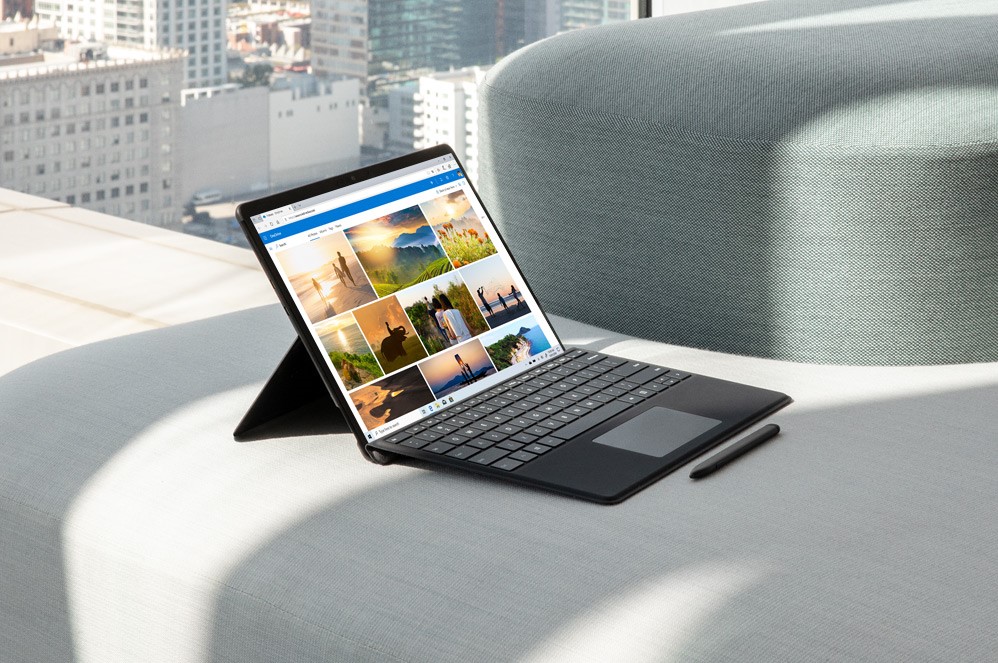


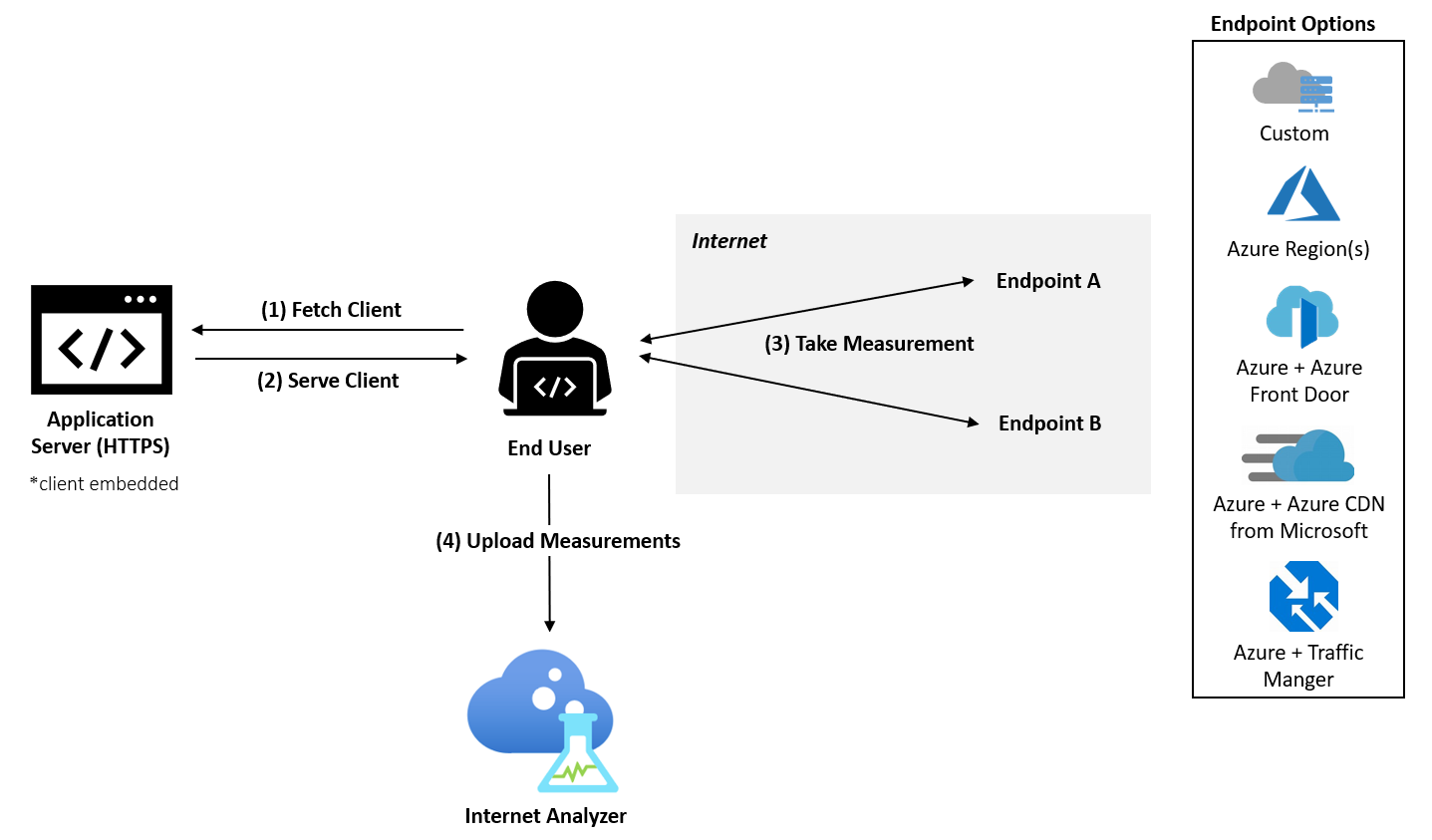
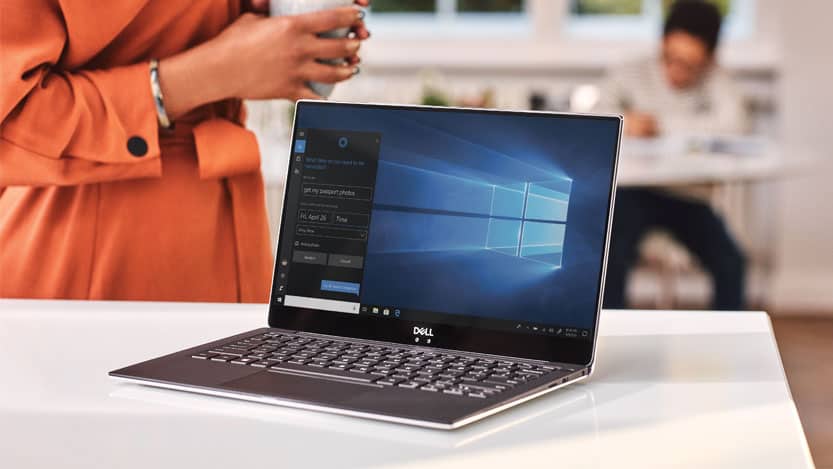
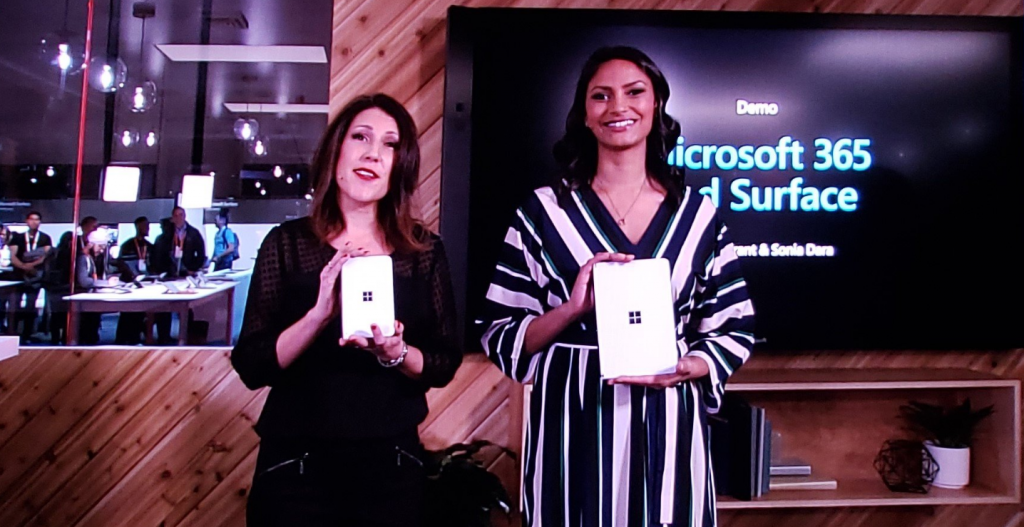

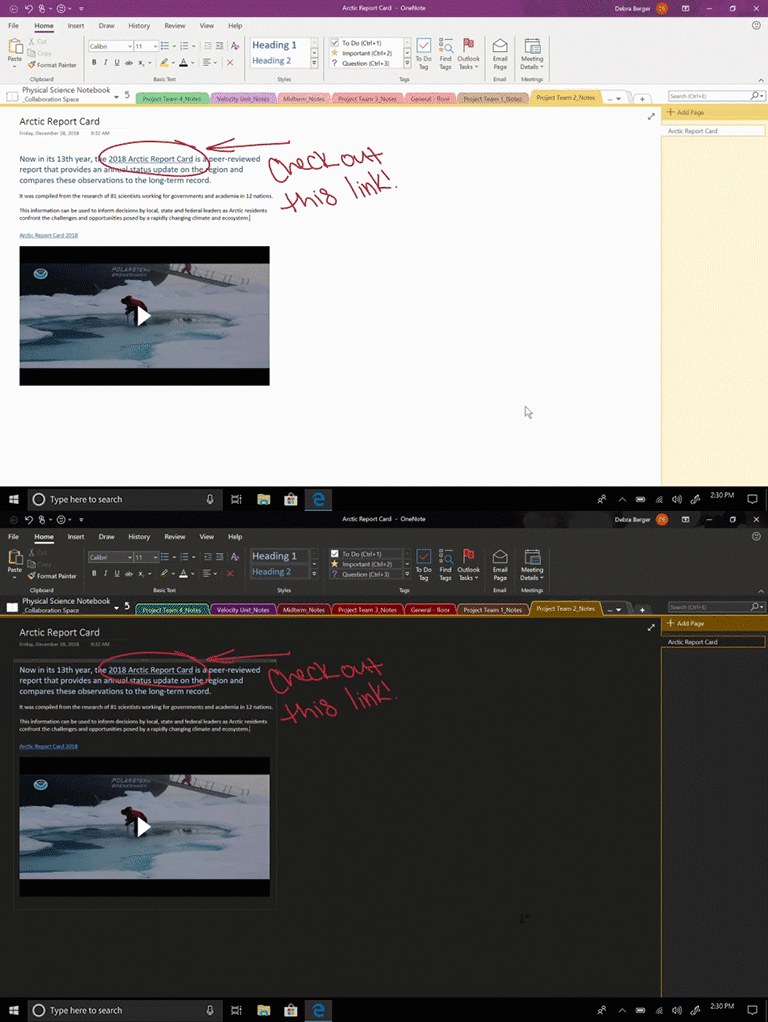





 Additionally, Microsoft is also integrating Yammer into Teams. It will be added to the left-hand rail and will make Teams not only a hub for collaboration, but also for workplace communities. Other changes coming to Teams include a new experience and tools for healthcare and Firstline Workers. These people can now create and conduct consultations through Teams. This will pair up with features like SMS Sign-in and Global Sign out.