If you’re tired of bootable DVDs or USB sticks, then you should know there is an alternative. You could try adding an Advanced Startup Options context menu, which will greatly speed up the process of rebooting the OS.
However, by modifying registries, you can get over all these steps easily. This solution can also come in handy if you are encountering any sort of issue, that can not be solved using the regular Windows 10 environment.
This includes the need to overwrite or delete some in-use files. By following these steps you too can speed up the process of accessing the Advanced Startup Options menu with just a few clicks.
How do I add an Advanced Startup Options menu in Windows 10?
Before starting, make sure that the user account has administrative privileges.
Why should I add an Advances Startup Options menu?
Normally, if you’d want to access the Advanced Startup Options, you’d have to do the following:
Press Win + R
Select Settings (the cogwheel-shaped button in the start menu)
Click Updates & Security
Got to Recovery
Press Restart Now under Advanced Startup
Wait for the PC to restart to enter the Advanced Startup Options
Given how many steps are needed, it’s obvious why you would want to simplify the process. More so, since the process is reversible, there is no need to worry about making irreparable changes to your PC.
Does adding an Advanced Startup Options context menu seem useful to you? We await your feedback in the comments section below.
Cloud storage services are the latest trend when it comes to keeping your file safe. They let you keep files online so that you won’t have to fill your hard drive with too much data.
There are many cloud storage services out there, one of which is Dropbox, and it is actually one of the best services of its kind, and it is even free to some extent.
However, since our storage is limited, both physical and cloud, we wouldn’t want all of our files to be synced, just a select few.
Dropbox lets you create such a list with a feature called Selective Sync. If you’re a Dropbox Plus, Dropbox Professional, or Dropbox Business user, Smart Sync is available instead.
How do I selectively sync in Dropbox?
First of all, make sure you have the Dropbox app installed on your PC since the Selective Sync feature is not accessible from Dropbox‘s website.
Click the Dropbox icon in your system tray or menu bar
Click on your profile picture
Select Preferences…
Select Sync
Click Selective Sync…
A list of all of your synced data will appear
Uncheck the boxes next to any file or folder that you no longer need to be synced
When finished, select Update
Any folder that you have unchecked will no longer be synced with Dropbox, and neither will any of the containing subfolders. Whatever you upload to the Dropbox app will only be stored online and accessible from dropbox.com, thus saving you personal storage space.
What happens if I uncheck a folder that is shared?
The unchecked folder won’t sync to your computer anymore, and neither will its subfolders.
You will still be a member of that shared folder, and it will still be available in your account on dropbox.com. The shared folder will also remain available for other members of that folder.
If you want to remove yourself from that shared folder, all you need to do is leave the shared folder from the Dropbox website. If you are the owner, you can simply unshare it.
Did this trick help you save up any hard drive space? Let us know how helpful this guide was in the comments section below.
OneDrive is a file hosting service hosted and developed by Microsoft and it is part of the Office 365 Suite of programs.
It act’s as the default cloud storage program for anyone that is using Office 365. This makes it widely used among users, especially those in work environments.
However, some user’s have reported having issues with OneDrive:
We have added a user recently to our companies O365 installation. We have noticed that her OneDrive is not working. When we look in the Admin section of the portal under her user settings, OneDrive settings it says “OneDrive is not provisioned for this user”
It would seem that when the admin account was created, OneDrive was provisioned but permissions failed to apply. As such, the admin needs to grant the account permissions manually to “Create Personal Site”, which is required for OneDrive.
By following these steps, all of the users in your Office 365 workgroups will be granted full access to all OneDrive features.
How do I fix OneDrive provisioning for a user?
Keep note that you need to be an Office 365 administrator in order to make these changes.
First of all, make sure you have assigned the SharePoint Online license to the affected user in Office 365 admin center. You can do this by following these steps:
Go to Users
Select Active Users
Check the user’s name
Click Edit in Product licenses section
Once you are done, you will need to grant the affected user the right to create a My Sites site in the SharePoint Admin Center.
Go to the SharePoint Admin Center
Click User profiles
Go to the People section
Click Manage User Permissions
Add the users who require permissions to create their My Sites site
This setting is set to Everyone except external users by default
Add the user, users, or group
Select t the added user, users, or group
Scroll to the Permissions section
Select the checkbox next to Create Personal Site
Click OK
Have the user browse to the OneDrive page to create the site
As soon as you granted them permission, let the user go to Office 365 portal and click OneDrive in the App Launcher. This is to check if the user can use OneDrive for business.
If the OneDrive icon keeps displaying Setting up in the App Launcher, wait for 24 hours and then try access OneDrive again. If the issue persists, consider contacting Microsoft support for more help.
Did you find the guide useful? Let us know in the comments section below.
Microsoft is continuing its efforts with Cortana, as can be seen in a leaked video showing off some of Microsoft’s virtual assistant’s new capabilities.
The video shows off Cortana integration on the Outlook mobile app for iPhone. The assistant is able to read conversations out loud, and receive commands via the user’s voice for actions such as “flag the conversation.” Users will also be able to set Cortana’s voice in the app to either the traditional Feminine voice or the alternative Masculine voice.
On Windows, Cortana is also seen in the video with a fresh new look and better integration with Office. Outlook on the web seems to also be getting Cortana integration as well, as is shown emailing users a daily briefing in the video, and will additionally be able to schedule appointments straight from the web app.
Microsoft hasn’t spoken much about Cortana in recent months, but the video further highlights the fact that it wants to push for business use for the assistant. While other assistants like Alexa, Siri, and Google Assistant focus more on consumer needs, Microsoft seems to be moving Cortana towards the enterprise space instead.
What do you think of the capabilities seen in the leaked video? Share your thoughts in the comments area below this post.
Remember the PowerToys project from the Windows 95 era? Well, following up on a lot of feedback and suggestions, Microsoft recently released PowerToys v0.12.
The new version adds a couple of neat features meant to help power users further improve their Windows experience.
Use PowerRename to batch rename your file collections
Along with support for Dark Mode and some improvements to FancyZone, the biggest change comes in the form of PowerRename:
PowerRename is a Windows Shell Context Menu Extension for advanced bulk renaming using simple search and replace or more powerful regular expression matching.
This is a very welcomed addition, as a lot of Windows 10 users were waiting for it.
Besides the fact that the extension is easy to use and you can live preview the changes from search and replace input fields in the preview area, you also have a lot more options to better control the rename process.
PowerRename uses the ECMAScript grammar, which is ideal for advanced users that take advantage of Regular expressions. But you can also stick with search and replace, as the tech giant explains:
PowerRename was designed to cover the majority of bulk rename scenarios while still striving for simplicity for the average user.
If you want more options, check out this useful article and find the best apps that can batch rename your files.
As we already mentioned, besides the new PowerRename utility there are some other improvements and changes in PowerToys v0.12. Check out the full changelog:
General:
Microsoft signed binaries and installer
Dark Mode for the Settings and for ShortcutGuide
Fixed a bug that was preventing the PT Settings to be opened on some Windows configurations.
Various improvements for other UI/UX bugs.
FancyZone:
Editor now supports multi-monitor
Hotkey to open FZ Editor is now configurable (Win+~ was unavailable on several non-US keyboards)
Fixed a bug that was preventing from activating zones for applications with custom title bars
FZ Editor can now be used on small screens
Improved zone activation when dragging a window, smaller zones have precedence over larger zone (community contribution)
Fixed a crashing bug in FZ on some localized version of Windows (community contribution)
Fixed bug preventing from resizing zone when zone edge is on the right or bottom screen edge
Fixed bug that was causing the task bar and other special system windows to be snapped into zones
Improved application detection for FZ history
Change a FZ default settings to avoid interfering with full screen applications.
You can’t really talk about UWP, Microsoft’s “universal platform platform” without touching on the “is it dead?” controversy. As we said before, it’s really a tale of two UWPs, one, a family of APIs that introduce new abilities like “BackgroundTasks, Notifications, LiveTiles, Share and more,” and the other a now disbanded concept of having all app development for Windows move to a new “Universal” programming model, writing once to deploy on phones, tablets, and PCs alike, with apps available only from the Microsoft Store.
Late yesterday, Microsoft announced upcoming changes that remove some more of the constraints of using the UWP APIs in non “UWP” apps, making the APIs more readily available, and further distancing UWP from the idea that an app using these features has to be available in the Microsoft Store. These changes will be available in Windows 10 build 19000 and up.
Up until now, the programming model for using the UWP APIs like background tasks and share, etc. required that any app written using these interfaces follow a couple of rules, as outlined in a post on the Windows Developer blog:
Identity – The need for package or application identity to identify the caller, and an identifier to scope data and resources.
Registration – The need for configuration of machine state during application deployment, which is required by the API and indexed by the package or application identity.
UWP apps require both identity and registration, and they have only been available through an appmanifest xml file, and tied to the app’s registration in the Microsoft Store. Now, however, Microsoft is opening up these requirements to make them available through a new <allowExternalContent> element, and/or a Win32 type Runtime Behavior type, among others. What this all means is that developers can now, by setting some new configurations, use UWP APIs in Win32 apps.
Microsoft posted much more on the how-tos of using these new configuration features, if you’re a Win32 developer looking for guidance, be sure and check out the documentation. For the rest of us, what this all means is that all kinds of Windows apps and applications will now be able to incorporate some of the features available up until now only to Microsoft Store apps, features like notifications, background tasks, and share.
Microsoft is continuing, as it has said, to invest in UWP APIs, and this is another step toward removing the constraints originally placed on these features to now make them more widely available.
Are you a Windows developer? Do these changes make developing for Windows easier and more interesting for you? Let us know in the comments below
If you’re sporting an Android phone in 2019, there are so many synergies you can get between Windows 10 and your smartphone. Your text messages, recent photos, and notifications can all now sync up to your Windows 10 PC through the Your Phone app.
And, if you’re a Windows Insider, you also can enjoy the ability to mirror your apps and get your phone calls on your PC. Lucky consumers with newer Samsung Galaxy phones can even enjoy similar built-in “Link to Windows” Android to Windows synergies.
But before Microsoft realized the cross-platform potentials between Android and Windows 10, Dell technically went there first. We previously went hands-on with Dell’s Mobile Connect app with an iPhone, but now we’ll be revisiting the app on the Android side of things, and comparing it to Microsoft’s Your Phone experience. This is especially important with the recent news that Microsoft is “elevating” the Your Phone phone screen experience by removing its dependency on Bluetooth.
A rant, and some quick tidbits before starting
Before starting the comparison, there are some quick tidbits to note. Importantly, we want to point out that Microsoft’s Your Phone app is available on all PCs running the Windows 10 October 2018 Update or newer. Dell Mobile Connect, meanwhile, is an app that’s downloaded through the Microsoft Store, but with some important limitations to running on newer Dell PCs only.
Your Phone, however, is a native app built into Windows 10, and everyone can experience some of its core functions (syncing texts, photos, and notifications from a phone with Android 7.0 or higher) regardless of what type of PC they own. Microsoft is also always tweaking the experience and tests new features with Windows Insiders first, so not everyone has access to new features like App mirroring, or phone calls.
It’s also noteworthy to mention that the core Your Phone features depend on the WiFi or 4G LTE on your linked Android device to sync up to your PC through the Microsoft Cloud. With these features, you WON’T need your Android phone to be connected to your PC via Bluetooth, if configured via the settings.
However, other features of Your Phone like the Android app mirroring used to require just Bluetooth to work, but now have become exclusive to phones with the “Link to Windows” functionality. As we discuss later, the app mirroring now only works on the devices seen below. It also requires a smartphone with Android 9 or higher.
Samsung Galaxy Fold
Samsung Galaxy Note 10/ Note 10+
Samsung Galaxy S10/S10+/S10e
Samsung Galaxy A30s/A50s/A90
The Your Phone app in Windows 10
On the other end of the spectrum, Dell’s Mobile Connect app is exclusive to newer Dell PCs. You only can install the app from the Microsoft Store if you’re using a new Dell XPS Inspiron, G Series, or Vostro purchased in January 2018 or later. It also is 100% dependent on Bluetooth and WiFi, so you’ll need to make sure your Android phone is always by your PC’s side. However, all features work with almost any modern Android device, unlike with Microsoft, where app mirroring ability now needs newer Android devices.
For most consumers, both experiences also require a companion app to be downloaded to an Android or iOS device With Microsoft, it’s the Your Phone Companion app, except if you own one of the devices mentioned above, where the linking is done without the use of an app. With Dell, it’s the Dell Mobile Connect app.
However, Dell Mobile Connect is a bit more cross-platform, as it works with iPhones, and allows you to make, accept, or send text messages from your iPhone to your Windows 10 PC. This is something that currently isn’t possible with Your Phone.
Settings for Your Phone and Dell Mobile Connect
The core user interfaces
Anyway, to begin our deep dive in the comparison, we’ll talk about the user interface. This the core aspect of any app, and between Dell Mobile Connect and Your Phone, both are fairly similar. Please note we won’t talk about Phone Calling or App Mirroring here, but rather in the sections below.
Starting first with Your Phone, you’ll notice a column of icons on the right side of the app. For non- Windows Insiders, these include Photos, Messages, and Notifications.
Clicking messages will show a thread of messages, just like on your Android Phone. You’ll then be able to expand it out and see the entire conversation on the right side of the screen. For photos, clicking the photos icon will expand out and show a list of the 25 most recent photos on your Android device. Finally, app notifications from Android phones will show up in a list with a plain white background.
Texting on Dell Mobile Connect and Your Phone
As for Dell Mobile Connect, the experience is a bit more complex. You’ll still see icons on the right side of the app, but when clicking on them, things are a bit different. When you click on the messages icon, it will show you a thread of messages. Once you click to a message, the thread disappears and you’ll be in the entire conversation. For photos, meanwhile, clicking through to photos will show you all your photos from your Android phone, and not just the last 25.
There is also an ability to see videos, music, and documents from your Android Phone on Windows 10, something that currently isn’t possible in Your Phone. Finally, in the notification area, you’ll see them appear in a similar fashion to an Android Phone, with a gray backdrop.
The calling feature
Now, for the calling feature. We’ll start this section first with Your Phone. As we previously detailed, it’s rather simplistic. You’ll see all your recent calls in the middle portion of the screen. On the right side, meanwhile, is a white-colored dial pad to place calls. Above that will be a search box, where you can search for your contacts. When calling, you’ll get a pop-out box with the ability to transfer the call back to your phone or see the dial-pad. This feature also doesn’t rely on WiFi, and once paired via Bluetooth, your PC won’t need to be on the same network as your Android Phone for it to work.
With the Dell Mobile Connect app, things are different. Pressing on Contacts in the Phone section of the app will list out your contacts, similar to how it is on your Android Phone. You also can search the list to find a specific contact. The dialer meanwhile, is significantly larger and is more prominent. Unfortunately, though, there is no pop-out box to control the calls, and everything happens in-app. You’ll also need to stay connected to Bluetooth and the same WiFi network as your phone for it to work. But, you can transfer calls made from your PC back to your Android phone, with the “Private” icon on the dialer pad.
The texting features
Moving onto the texting features, we again turn our attention to Your Phone. Your Phone shows the text messages in a thread and gives you the option to reply via a text box on the bottom. You can also reply to texts with GIFS, emojis, or a photo. MMS messages even appear in your thread, which isn’t possible with Dell Mobile Connect. Messages will even stay on your PC once you turn your Android phone off, which is something that Dell Mobile Connect also can’t do.
On Dell Mobile Connect, however, the options to reply are a bit different. You’ll see an option to reply with emojis, or by text, but there is no GIF or photo option. The app, though, does have a bonus ability to call the contact directly, with a phone icon at the top of the screen.
Messaging threads on Dell Mobile Connect and Your Phone
The Android mirroring feature
And now, for the coolest part of both apps. Previously, if you’re a Windows Insider, you were able to mirror your Android Phone over to Windows 10 with the Your Phone app if paired via Bluetooth and connected via WiFi. However, Microsoft is now planning to make this feature a bit more exclusive to select Samsung phones, with a new “Link to Windows” functionality built-in. If your Android device doesn’t support “Link to Windows,” you won’t see this feature in the Your Phone app.
The same Android app mirroring can also be done with Dell Mobile Connect, but it’s a standard feature that anyone can use on a compatible Dell PC or any Android Phone with Android 6 or higher. Both work as expected, and you can mirror Android apps over to Windows 10, such as Snapchat, WhatApp, and more. However, The Dell Mobile Connect app has an extra button on the bottom, which gives you the Android controls buttons for going home, etc. These make navigation easier than Your Phone, which doesn’t have this.
The Notifications
Finally, there are notifications. On Dell Mobile Connect, you’ll be able to reply to texts and answer calls from notifications that appear on the top right of the screen. The same can be done from the Your Phone app, which integrates with the Action Center. However, Your Phone has an interesting ability when pressing on notifications from certain Android apps. If you get a notification from an app like Snapchat, it will automatically attempt to launch a mirror session and launch Snapchat or the respected app if you click the notification. This is quite cool.
Your Phone wins for now
Despite Microsoft shutting out older Android phones from enjoying the app mirroring feature, Your Phone appears to be the better of the two apps on Windows 10. Compared to Dell Mobile Connect, its core functions work with all Windows 10 PCs, and almost any modern Android smartphone. However, some newer features like Phone Screen are reserved for newer Samsung phones with “Link to Windows” functionality.
Still, though, the features of Your Phone aren’t reliant on Bluetooth or WiFi, and you can truly keep your phone in your pocket to enjoy your calls, texts, photos, and notifications on your Windows 10 PCs Plus, Microsoft is always tweaking the Your Phone experience, and is always looking for feedback and adding new features.
But, if you have an iPhone, then Dell Mobile Connect wins hands-down. As we found in our original hands-on time, you’re able to use the app from an iPhone to text from your Windows 10 PC, accept and make phone calls. This currently isn’t possible with Your Phone in Windows 10 and gives Dell Mobile Connect one big advantage.
The classic Aladdin and The Lion King video games are playable once again in the Disney Classic Games: Aladdin and The Lion King two-in-one release that came out on Microsoft’s Xbox One consoles today.
This re-release, which was first leaked a few months ago, features multiple versions of each game including the original Super Nintendo, Sega Genesis, and Nintendo GameBoy releases, each upgraded to 1080p resolution and given a variety of presentation options to choose from. This release also comes with a good dose of bonus content such as interviews with the developers and a music player for listening to the classic video game versions of the Aladdin and The Lion King soundtracks.
Here’s the official game description:
Two of the most beloved Disney games of all time make their long-awaited return to modern consoles in Disney Classic Games: Aladdin and The Lion King! This unforgettable package of Disney classics is filled with tons of new features, enhancements, game modes, and display options, plus multiple versions of the games! Join Aladdin and his sidekick, Abu, as they race through the marketplace toward their date with destiny. Relive Aladdin’s classic adventure as you travel through Agrabah, the Cave of Wonders and more to defeat Jafar and rescue Jasmine. Jump, fight, dodge and carpet-ride your way through this adventure, collecting gems along the way. The Lion King brings to life the majesty and mystery of Africa through the tale of Simba, a lion cub faced with the challenging transition to maturity. Now, you too can be part of the adventure! Driven into the wilderness by his evil uncle Scar, Simba finds salvation and Hakuna Matata with Pumbaa the warthog and Timon the meerkat. Tackle heinous hyenas in the elephant’s graveyard, avoid the trampling hooves of stampeding wildebeest as you battle through 10 levels to ensure Simba claims his rightful place as The Lion King.
Are you going to buy Disney Classic Games: Aladdin and The Lion King for your Xbox One? Which version of each game will you play? Share your thoughts with the community in the comments below and then follow us on Pinterest for more Xbox content.
The official iOS and Android Xbox apps updated today with a new feature that enables push notifications for when recorded screenshots and game clips have finished uploading to the Xbox Live cloud.
This feature was recently added to the Xbox One consoles themselves so it makes sense that this option would come to the mobile and tablet apps to provide feature consistency.
Here’s the official release notes for this update:
Get notified when your game clip or screenshot is uploaded to Xbox Live! We’ve added push notification options for game clips and screenshots, so you can watch and share your game media faster than ever, all from the Xbox mobile app.
This update also includes several bug fixes and performance updates to the app.
In addition to backing up recorded media of Xbox One video game gameplay, uploading clips and screencaps to Xbox Live also makes it easier to download the files on other devices and upload them to social media apps for sharing.
Microsoft just released Windows 10 Insider build 19013 for Fast Ring Insiders, and along with some new kaomoji and some improvements to WSL, there’s a long list of changes, fixes, and improvements, along with some known issues. These include a fix for missing preinstalled Windows apps (like Calculator), some Wi-Fi fixes, and continued work on fixing issues with the Windows 10 sync engine. Wallpaper and theme syncing should now work as of build 19013.
Here’s the full list of changes, improvements, and fixes:
We fixed an issue resulting in frames being skipped, starting with Build 19002, when running games and videos fullscreen.
We fixed an issue where initiating “Reset this PC” with the cloud download option wasn’t working when started from Windows RE.
We fixed an issue resulting in preinstalled apps (like Calculator) and other UWP apps being missing from the Apps & Features page in Settings.
We appreciate your patience while we worked on our sync engine. As of this build, wallpaper and theme syncing is now up and running again.
We fixed an issue resulting in Wi-Fi unexpectedly resetting (turning off and back on) frequently in recent flights.
We fixed an issue where Wi-Fi Settings might get stuck saying Connecting, even though the network flyout (correctly) indicated that you were Connected.
We fixed an issue where an update being temporarily suspended would result in an 0xc19001e1 error being displayed in Windows Update history.
We fixed an issue resulting in the “Open location” search result option not working if the search result was a folder.
We fixed an issue where if you moved Cortana’s window to certain places on your screen, and then closed the window, the minimize animation wouldn’t go towards Cortana’s icon on the taskbar.
We fixed an issue resulting in File Explorer not rendering correctly sometimes when using multiple monitors with different DPIs on the previous flight.
We fixed an issue where you could get into a state where it wasn’t possible to set focus to File Explorer’s search box in order to type your query.
We fixed an issue that could result in the app thumbnail disappearing when you right clicked it in Task View.
We fixed an issue that could result in the Send Message button in certain notifications not being visible when using High Contrast White.
We fixed an issue where the notification following WIN+Shift+S might have a blank space for the screenshot (rather than actually displaying the screenshot).
We fixed an issue resulting in Resource Manager unexpectedly not showing any disk activity.
We fixed an issue where, if you called SUBST with a path ending with a \ it would give a Path not found error.
We fixed a memory leak with running apps that repeatedly sent calls to adjust gamma.
Some of you have reached out about when trying to shutdown, seeing a message saying that an app named “G” was preventing shutdown. We investigated and found an issue where windows related to GDI+were only referenced as “G.” We’ve fixed this, so going forward, these will now have the name “GDI+ Window (<exe name>)”, where <exe name> will show the .exe name of the app using GDI+.
We fixed an issue resulting in speechruntime.exe using an unexpectedly high amount of CPU on the previous flight.
We fixed an issue resulting in Bluetooth devices potentially not reconnecting as expected after closing then reopening the device lid for certain devices.
We fixed an issue resulting in the Surface Dial not scrolling in recent builds if you switched to something like zoom and then back to scrolling.
Thank you Insiders who shared feedback about the 2-in-1 convertible tablet experience improvements we discussed here. For the time being, we’re returning to the current experience in retail.
We fixed an issue where Narrator would sometime report focus as the page instead of reporting the actual focused control within Chrome.
We fixed an issue where Narrator would not automatically start reading the Narrator user guide webpage and the YouTube webpage.
We corrected Narrator’s “Next Table” command so that it would work in Excel.
We fixed an issue where the text cursor indicator was visible on top of the lock screen background picture.
We fixed an issue where the text cursor indicator preview wasn’t displaying correctly in Settings when using dark theme.
We fixed an issue where when using dark theme, the hardware keyboard text prediction candidate window was unreadable due to black text on a dark grey background.
We fixed an issue that could result in the touch keyboard flickering when inputting emoji.
We fixed an issue where English punctuations were outputted when using the Chinese Pinyin and Wubi IMEs, even if input mode was set to Chinese under the default IME settings. Thanks for your feedback.
We’ve fixed an issue where the character width of alphanumeric characters when using the Traditional Chinese Bopomofo IME would change from half width to full width unexpectedly in some input fields. Thanks for reporting it! If you feel this issue hasn’t been fully addressed in the new version of Bopomofo IME, please let us know your feedback.
We’ve fixed an issue where after successfully updating to a new build, the Windows Update Settings page may have shown the same build needed to be installed.
We’ve fixed an issue where Optional drivers were failing to install.
As for known issues, the same BattlEye anti-cheat problems are still with us, there’s a problem with Settings for some Insiders, and some crashing problems with Remote Desktop. Here’s the full list:
BattlEye and Microsoft have found incompatibility issues due to changes in the operating system between some Insider Preview builds and certain versions of BattlEye anti-cheat software. To safeguard Insiders who might have these versions installed on their PC, we have applied a compatibility hold on these devices from being offered affected builds of Windows Insider Preview. See this article for details.
We’ve heard that Settings still isn’t available outside of launching via the URI (ms-settings:) for some Insiders and are investigating.
If you use remote desktop connection and the target PC is on this build, within about an hour (if not sooner), DWM may start crashing, and the session window will either go totally black, experience black flashes, or you may get signed out of the remote desktop session altogether. We appreciate your patience.
You can download and install this latest Fast Ring build now. Be sure to let us know what you think!
After releasing new Windows Server and SDK preview builds earlier today, Microsoft has just started rolling out the Windows 10 20H1 build 19013 to Windows Insiders in the Fast Ring. This build is another minor update which brings a couple more kaomoji to the Windows 10 emoji picker, as well as some performance improvements for the Windows Subsystem for Linux (WSL) 2.
You can get more details about what’s new below:
More kaomoji
As some of you may know, with Windows 10 version 1903, we updated our WIN+(Period) / WIN+(Semicolon) keyboard shortcut to not only include emoji, but to also now contain kaomoji and special characters. What are kaomoji? Basically, they’re faces with expressions you can make by combining various characters–for example, you might be familiar with the shruggie:
¯\_(ツ)_/¯
In any case, based on your feedback, in this build we’re updating our kaomoji list with a few more favorites, including:
ヾ(⌐■_■)ノ♪
ლ(╹◡╹ლ)
(⊙_◎)
( ͡~ ͜ʖ ͡°)
ಠ_ರೃ
(∩^o^)⊃━☆
/ᐠ。ꞈ。ᐟ\
And more! Enjoy (❁´◡`❁)
Windows Subsystem for Linux (WSL) 2 will now release unused Linux memory back to your Windows machine
Previously, your WSL 2 Virtual Machine’s (VM) memory would grow to meet the needs of your workflow, but would not shrink back down when the memory was no longer needed. With this change, as memory is no longer in use in the Linux VM, it will be freed back to Windows, which will shrink in memory size accordingly.
As usual, this new build also comes with several quality improvements, including a fix for an issue resulting in Wi-Fi unexpectedly resetting (turning off and back on) frequently in recent flights. You can check out the full list of bug fixes and known issues in our separate post.
Lastly, Microsoft also announced other updates for Insiders today, including a new version of PowerToys with a new utility called PowerRename. Moreover, the “Link to Windows” feature that made its debut on the Galaxy Note 10 is now available and more Samsung Galaxy phones, and it no longer requires a Bluetooth connection to your PC. You can learn more details about these updates on our dedicated post.
If you’re testing Microsoft’s new Edge Browser and are in the Dev channel, you’re in for an update. Microsoft has just announced the release of build 79.0.309.5. While this build doesn’t come with any new features, it appears to be well-balanced with lots of fixes, as Microsoft says it will be the candidate for the next release in the Beta channel.
Some of the biggest tweaks in this new build is a fix for when the browser would crash when some users were logging in to it. There also is an important fix for an issue where typing in the address bar would cause the browser to crash.
Other fixes improve things with the first-run experience, theme settings, Application guard windows, and more. The full list of fixes can be seen below.
Disabled hardware acceleration in Application Guard windows to prevent them from hanging on certain machines.
Fixed an issue where certain webpages don’t open in Application Guard windows even though they should.
Fixed an issue where files that should be downloaded in Application Guard windows aren’t.
Fixed an issue where an extra “Work” browser profile gets automatically created for some users (note that this may not remove the extra profile; a future fix will ensure that).
Fixed an issue where the Mac Touch Bar sometimes doesn’t show the proper content.
Fixed an issue where the Settings page constantly shows “looking for updates” without ever completing.
Fixed an issue where certain settings are changeable even when they’re disabled.
Fixed an issue where certain settings that are supposed to be enabled by default are disabled after performing a settings reset.
Fixed an issue where the Delete button does not appear next to downloads that have been blocked by SmartScreen.
Fixed an issue where the warning not to close the browser because a download is in progress appears even though the user isn’t downloading anything.
Fixed an issue where websites that are blocked by SmartScreen aren’t removed from history.
Improved scrolling behavior on the new tab page.
Fixed some issues with the PDF toolbar’s hiding behavior.
Fixed an issue where switching between IE mode tabs and non-IE mode tabs leaves webpages at the wrong zoom level on certain devices.
Fixed an issue where no sites open in IE mode tabs when a certain combination of IE mode policies is applied.
Fixed an issue where tooltips in Collections all say “collection content” instead of the actual content.
Fixed an issue where certain print preview content is hard to read in dark theme.
Microsoft promises that builds will come back to normal next week, so be on the lookout for new features then. In the meantime, you can catch up on all the Edge Insider news via our news hub.
For anyone hesitant about Google’s slow ingestion of the internet, today’s news of the company’s .new website shortcuts initiative may give you further pause, but for others, the expansion of PWA integration may be a welcomed convenience.
In 2018 Google unveiled its .new links to help create shortcuts linking to Google Docs and today the company expanded that link portfolio to now include domains open to the public and Microsoft has been among the first to sink its teeth into this integration by registering “word.new” to enable word doc linking and creation.
Other businesses that have jump on board the .new train include Medium, Spotify, Webex, Stripe Canva and Bitly. Unfortunately, the integration is less seamless than Google’s own implementation due to login issues. With .new for Google, users of Chrome typically tend to be signed into their services automatically, but for other services to offer the same sort of experience they need to be signed into the services before spinning up a .new shortcut link.
At the moment, it’s unclear how Microsoft plans to work around the log in issue as the shortcuts aren’t quite ready for primetime, but presumably they will work in a similar fashion when using Edge on Windows, Android or Mac and will follow the same rules as every other service when not linked to a Microsoft service prior.
Google claims that any company can register their domains that include .dev, .page, and .app to secure HTTPS connections. Interestingly enough, the .new domains will be available for limited public consumption as soon as December 2, 2019, while trademark owners will have to wait until January 14, 2020, to register their trademark .new domains.
Microsoft has just released some new bits for Windows Server Insiders and app developers. First, of all, the Windows Server Insider build 19008 build is now available, which brings no new features except that Windows Server Core Container Images Are now 20% Smaller. You can download this new build from the Windows Server Insider Preview download page.
The Windows 10 SDK build 19008 has also been released today, and it can be used in conjunction with the Windows 10 20H1 build 19008 released last week. There are also no new features in this build except some API changes, and you can learn more in the full release notes. To download this new SDK, head over to the developer section of Microsoft’s Windows Insider website.
If you’re a “regular” Windows Insider, we hope to get a new 20H1 build with more bug fixes later this week. According to a recent report, the next major update could be completed as soon as December to follow the Azure development cycle.
News on Microsoft’s augmented reality front has been relatively quiet as the company presumably ramps up development on its sequel to its HoloLens.
As a teaser of what HoloLens 2 will be capable of in the future, Epic Games released its HoloLens Apollo 11: Mission AR demo, according to a report from Road Tovar. The Epic Games Apollo demo was first revealed earlier this year during Microsoft’s developer conference in May and since then the studio has gone on to refine the refine its interactive experience of famed astronaut Neil Armstrong’s first steps on the Moon in 1969.
Other interactive sessions in the Apollo demo include the lunar landing and a Saturn V launch, all comprised of over 7 million polygons rendering physically-based environments with fully dynamic lighting and shadows as well as layered and volumetric animations for a more realistic experience.
While Microsoft has hinted at the power of the upcoming HoloLens 2 headset, it seems that Epic Games used a bit of an end-around to deliver its holographic bits to the device that included real-time wireless streaming to the device from a network PC running the studio’s most current version of Unreal Engine, UE 4.23.
UE 4.23 is the Epic Games latest version, which now comes with support for HoloLens 2 development that houses tools for emulation, finger tracking, voice input, spatial anchoring, meshing, gesture recognition, and native deployment.
Per a company spokesperson, HoloLens 2 isn’t due for release until sometime later this year (2019), at which point, enthusiasts, developers, and enterprise will finally be able to test the limits of Microsoft’s latest vision for augmented reality.
Microsoft has updated the Surface app for its line of tablet and notebook computers, bringing Surface Pen Slim support to users, according to MSPU. The pen still has yet to be released, and will share the launch date of November 5 with the Surface Pro X, the company’s new ARM-powered tablet with built-in LTE connectivity.
As per the app’s changelog, it also introduces a new “first run experience for Pen users”, which will launch automatically when a user undocks the it or touches and holds the tip to the screen for about a second, allowing them to quickly learn about configure the accessory for use in apps. According to the release notes:
In the Oct 2019 release (Surface app version 42.602.139.0), we have added the following features:
First run experience for Pen users. The experience launches immediately on 2 Pen triggers: a) undock the pen from its charger or b) touch the pen tip to the screen (for about a second). The experience guides the user through setting preferences and explaining pen usage in Office and other apps. The experience will only happen once per user, it should not launch once it has finished.
If you have yet to update the app, you can do so using our link we’ve provided below. Be sure to let us know what you think about the new setup experience as well as your thoughts on the Surface Pen Slim in the comments area. below.
One of the benefits of having Office 365 is its ability to save to OneDrive. Thanks to the power of Microsoft’s cloud, you can have your documents save automatically, and even recover lost files. But what if you don’t want to deal with OneDrive, and prefer to save everything to your PC? In this latest Office 365 guide, we’ll show you how you can save files locally, and work your way around OneDrive saves in Office 365.
Saving files locally Microsoft Word, Excel, and PowerPoint
To get started with saving files locally, you’ll need to open a new document. Once you do, head up to the File tab and choose Options on the bottom left corner. Once done, choose Save from the pop up window. You’ll then want to uncheck the box that says AutoSave OneDrive and SharePoint Online files by default on Word.
You’ll also want to make sure that the Save to Computer by default box is checked. When finished, press OK. You’ll need to restart Word, Excel, or PowerPoint for these changes to take effect.
What happens when you save locally?
So, what happens when you work around OneDrive and instead save locally in these Office 365 apps? Well, for one, you’ll no longer have access to the version history feature of Office 365. This means that you won’t be able to see all of your changes to a file, from the web, or computer without worrying about manual saves. You also won’t be able to experience any of the built-in collaboration features in Office 365, meaning you can’t share edits with your friends or coworkers.
On the bright side, for those who prefer saving files locally, going this route makes life easier. You’ll no longer have to click through to the Other Locations menu when saving files in Word, Excel, or PowerPoint. Instead, each of the core apps Office will show you your default local save location in the right side column and under the Recent menu. You’ll be able to select a folder without having to select multiple menus.
It’s important to note that by following our steps above, you’re not turning off or removing the OneDrive feature in Word, Excel, or PowerPoint. The feature is still there by default, and you’re just working your way around it. If you’re looking to remove OneDrive from Office 365 entirely, there are no methods to do that just yet, as OneDrive is part of the Core Office 365 experience.
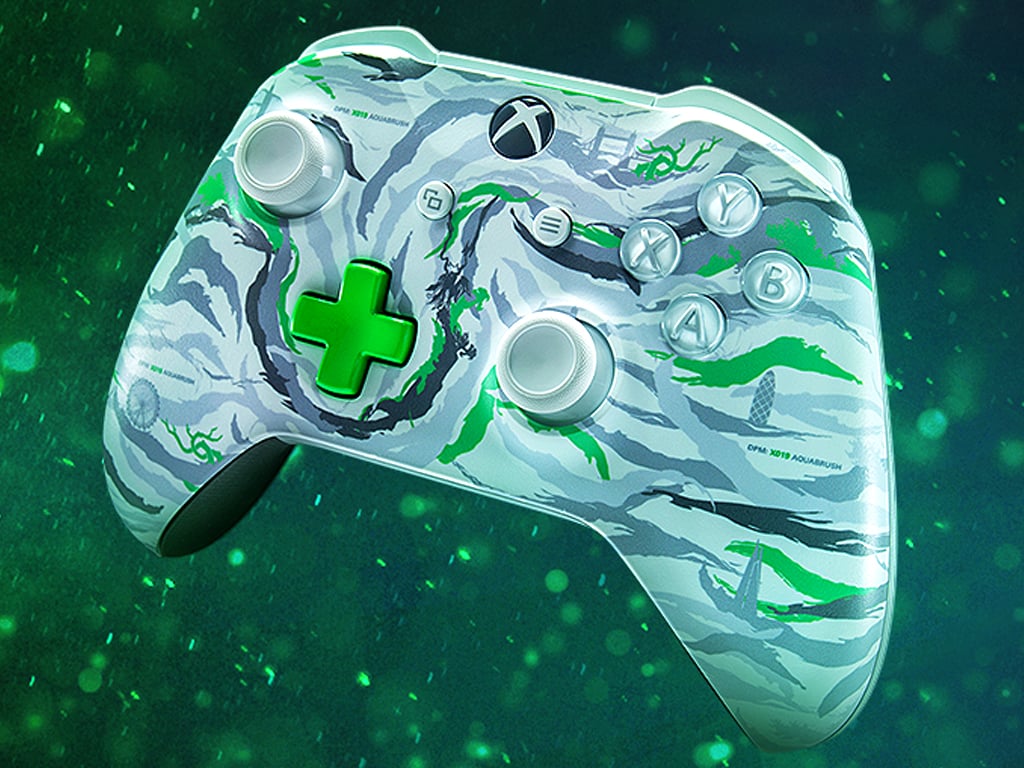
Microsoft today announced a collaboration with London fashion label, maharishi, that will see a new Xbox Controller and several Xbox Official Gear clothing items designed by the studio go on sale both at the XO19 event in London next month and online on the Microsoft website.
The new Xbox Controller and clothing items feature a newly-created camo pattern designed by maharishi’s DPM Studio that draws upon European and Asian influences and incorporates several subtle nods to the city of London. An official video detailing what went into the collaboration and the final designs has been released which you can watch below.
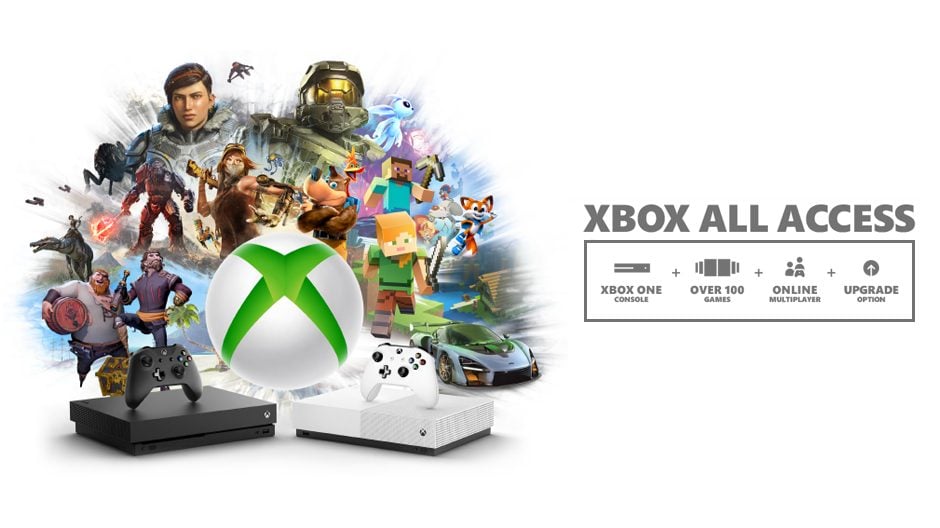
Microsoft’s new Xbox All Access payment plan was officially announced today as coming to Australia, the UK, and the US over the next few weeks.
The program is pretty cool as it allows consumers to obtain and Xbox One S or Xbox One X console immediately and pay it off in monthly payments as they would a mobile phone plan. What’s particularly interesting is that those that select the Xbox One X console plan have the option to upgrade to the next gen Xbox console launching in late-2020 that’s currently going by the codename, Project Scarlett. This is a very clever way to make sure the launch of the next console has an even larger install base than it does already… but this option is only available in the UK and US.
Upon inspecting the official Xbox All Access page on the Telstra website, the exclusion of any reference to a next gen upgrade option becomes obvious. Also notable is the lack of any plan for the Xbox One S All-Digital console.
Australian gamers were quick to ask the official local Xbox Twitter account about the absent upgrade option and were quickly told that plans relating to an upgrade option, if it happens at all, will be shared next year.
We will share more news on upgrade options and offers for new and existing customers early next year.
It’s unclear why Telstra isn’t offering any plan for the Xbox One S All-Digital console, though an entirely likely reason could simply be that internet data plans and speeds in Australia are pretty awful and Telstra, despite being one of the major telco’s in Australia with a history of partnering with Microsoft, probably doesn’t want to be on the receiving end of numerous complaints from customers about slow download speeds and people reaching their monthly data caps after downloading a single game.
With Edge being rebuilt atop Chromium, the browser now fully supports “installation” of websites with a valid web app manifest. These sites are commonly referred to by users as “PWAs,” although the term actually describes a broader set of technologies and concepts. Web app installation is just one possible feature of a PWA.
When you choose to install a compatible site, it integrates into your system in the same way as a native app. In the case of Windows 10, this results in the app showing up in the Start menu and within the Settings app.
The first challenge is to find a website which presents a web app manifest and so makes itself installable. Microsoft is simplifying this by automatically scouring the web for such sites and creating app listings in the Microsoft Store. However, for this guide, we’re focusing on installing apps via the Edge browser, as you use the web.
Edge will identify sites which are installable. After you land on a page with a web app manifest, you’ll see an “Install” button briefly appear in the address bar. After a few seconds, it condenses down to a “+” icon.
Click the button or icon to display the installation prompt. Click “Install” to add it to your system. The app will then launch in its own window, like any other app on your machine. You’ll see the site now shows up with its own identity in the taskbar. Open the Start menu and you’ll see a new entry for the app.
You can now use the app in its standalone context, without having to open Edge Insider. In reality, it’s still Edge’s Chromium browser engine that is rendering the page, but it looks and feels like a unique app.
You can keep the PWA installed on your system indefinitely. It should auto-update over time, as the site developers update the site it’s driven by. Most – but not necessarily all – PWAs will also work offline, another “app-like” characteristic made possible by modern web APIs.
When it comes time to uninstall the PWA, you can do so in multiple ways. One approach is to use Windows 10’s Settings app, or to right-click the app in the Start menu and choose “Uninstall.” You can also uninstall from within the PWA itself – click the menu dots icon in the top-right and press “Uninstall.” This also contains an option to open the app in Edge Insider directly, should you wish to escape the PWA for a traditional browsing experience.
As we’re heading into the holiday season, Microsoft has just announced that it’s bringing back its Xbox All Access subscription bundles that include an Xbox One console, 24 months of Xbox Game Pass Ultimate, plus the option to upgrade to the next-gen Project Scarlett console when it launches in Holiday 2020. That’s a pretty good plan to keep consumers in the Xbox ecosystem when the PlayStation 5 launches next year.
For the first time ever, Microsoft is also making Xbox All Access available in Australia starting tomorrow, October 29 through Telstra, as well as in the UK through GAME and Smyths Toys starting November 5. For consumers in the US, Xbox All Access will be available online via Amazon starting November 18, and here’s how it will work.
Consumers will be able to choose between three different bundles starting at $19.99/month for 24 months, all of them including an Xbox One console with its wireless controller, and 24 months of Xbox Game Pass Ultimate. You’ll get to keep the console after paying for the bundle for 24 months, and Microsoft says that all the different plans, which you can find below, represent over $100 in savings:
$30.99/mo for 24 months for an Xbox One X, or $743.76 in total
$22.99/mo for 24 months for an Xbox One S, or $551.76 in total
19.99/mo for 24 months for an Xbox One S All Digital Edition, or $479.76 in total
All subscribers will have the option to upgrade to the next Xbox console after 18 months (or 12 months if you choose an Xbox One X) by trading in the console originally purchased with Xbox All Access, though there will be an upgrade fee for consumers upgrading from the Xbox One S All-Digital Edition.
You can get more details about Xbox All Access on this page. Even though we don’t know all details about Project Scarlett yet, today’s announcement is a good way to generate excitement about the next-gen console.,
The upcoming 20H1 update for Windows 10 will reportedly be completed a bit sooner than expected. According to new information from Windows Central, the 20H1 update may go RTM as soon as December.
“It was marked as feature-complete internally back in August, and Microsoft has been mostly focused on fixing up bugs and polishing the OS for release ever since,” explained Zac Bowden from Windows Central. “This is why Insiders have not seen any substantial new features in 20H1 builds for a couple of months, because the 20H1 release is done. We’ve got a month or so left of development before Microsoft signs-off on 20H1 in mid-December.”
This December completion date is apparently the result of the recent realignment of the Azure/Windows 10 development cycles, as it was reported earlier this year by ZDNet’s Mary Jo Foley. This change is the reason why we got to test 20H1 bits so early this year, and also why the upcoming November update (19H2) will be minor release instead of a proper feature update like 20H1.
A standalone Cortana app is one of the main new features in the Windows 10 20H1 update.
With Microsoft being almost done with the 20H1 update, the company will reportedly go back to two major updates per year in 2020. The Windows 10 20H2 update, which will ship in the second half of 2020, should soon make its way to the Windows Insider Skip Ahead ring. Windows Central reports that this new coordinated Windows 10/Azure development cycle means that the 20H2 update should go RTM in June, alongside Windows 10X, the new version of Windows 10 that will ship on the dual screen Surface Neo.
Now that 20H2 can RTM earlier in the year under the new dev schedule, Microsoft can use 20H2 as the shipping version of Windows 10X that’s preloaded onto devices like the Surface Neo. This means Windows 10X will RTM in June alongside 20H2, and not with 20H1 as we had initially assumed. Microsoft needs the extra development time to make sure Windows 10X is as good as it can be at launch.
Now that Microsoft is set to complete new Windows 10 feature updates in December and June of each year, does this mean that we can expect these updates to roll out sooner to the public. That’s not guaranteed yet according to Windows Central, which believes that “Microsoft may decide to keep pushing out new feature updates in the spring and fall, utilizing the Slow and Release Preview ring for extensive testing of the final build before it goes to the public.” This would probably be for the better, as the public rollout of Windows 10 version 1903 wasn’t exactly smooth sailing (again). As an example, it took months for Microsoft to fix a compatibility issue affecting its own Surface Book 2 hardware.
Microsoft’s Designed for Xbox program to include new mobile gaming accessories made for Project xCloud
With Project xCloud in public preview, some were wondering if Microsoft would release their own mobile gaming accessories for the service. Instead, it turns out, the Designed for Xbox program has been expanded to include accessories for mobile gaming.
Microsoft Q1 FY 2020 earnings show a need for new hardware while cloud continues to grow
The 1st quarter of 2020 has shown that Microsoft needs new hardware across its Surface and Xbox divisions, due to a decline in revenue and flat revenue, respectively. On the other hand, its cloud portfolio continues to see strong growth across all businesses.
EU unhappy with Microsoft’s GDPR compliance, company says “contractual changes” coming
Microsoft has come under fire from the EU, as the bloc appears unhappy with MIcrosoft’s GDPR compliance. The EU’s preliminary results found “serious concerns” in Microsoft’s contracts with European institutions. Microsoft says changes are coming.
That’s it for this week. We’ll be back next week with more Microsoft news.
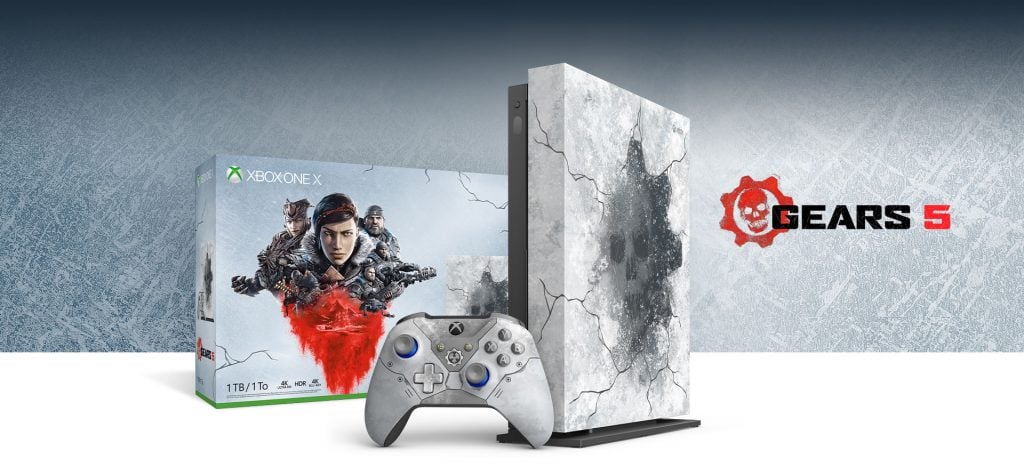
Even though Black Friday is still a couple of weeks away, Microsoft is currently offering up to $100 discounts off select Xbox One X bundles, including the Xbox One X Gears 5 Limited Edition console. The custom-designed hardware featuring the Crimson Omen immersed in ice is quite something to look at, and it also comes with the Kait Diaz Limited Edition Xbox controller. For $399, the bundle also includes a digital edition, plus the four first Gears of War games for free.
The Xbox One X NBA 2K20 Special Edition Bundle, which includes a white “Hyperspace” console featuring a featuring a night sky design is also $399 for a limited time. If you prefer the regular white Xbox One X, there are also two $399 bundles with either Gears 5 or NBA 2K20.
All these discounts will be available through November 3 at Xbox.com, Microsoft Stores and major North America retailers, but we hope to see even more interesting Xbox deals for Black Friday.
Tabs revolutionised how we browse the web. Many, if not most, users work with dozens of tabs at a time, some of which remain open in the background throughout the day. These tend to house email clients, streaming music services and continually updated news feeds, ready for you to switch back to in a spare moment.
You can clean up your tab strip by pinning these constantly active tabs. Pinned tabs are a staple of modern web browsers, Edge Insider included. To pin a tab, right-click it and choose “Pin tab.”
Pinned tabs take up much less space on your tab strip. Only the tab icon is displayed, leaving more space for the tabs you’re actively using. Pinned tabs will still be included when you switch tabs using the Ctrl+Tab/Ctrl+Shift+Tab keyboard shortcuts, so you can quickly cycle back to your email or music.
Edge Insider automatically restores pinned tabs at launch. You won’t need to spend time at the start of the day reopening your mail app. Tabs are “lazy loaded” so they won’t all restore at once, consuming all your network bandwidth. The tab will be loaded when you select it for the first time.
Pinned tabs are a great way to cut down on clutter while keeping your most-used services easily accessible. Used effectively, they can save you time and help you concentrate on the task at hand. You might want to combine pinned tabs with the “Mute tab” right-click option. This can help minimise distractions from email alerts and other notifications.
Should you need to unpin a tab, right-click it and select “Unpin tab.” The tab will be reverted to a regular fullsize tab. You can close pinned tabs without unpinning them by using the Ctrl+W keyboard shortcut.
Using its beta channel, Microsoft has issued a small version update that now brings an additional option to the Launcher Settings page.
Android owners using the Microsoft Launcher in the beta can now jump into the Themes portion of the settings and choose between Transparent, Light, Dark and a new fourth option of System Theme. Unlike the Dark option available to all current Microsoft Launcher users which offers a matte grey palette, the new System Theme, as well as the updated dark option, will now display a deep black color option across settings, widget panel, app drawers, and icon folders.
Other than using the beta, users will also need to be as up to date on software as recent as Android 9, unfortunately.
What’s new for 5.10:
Launcher theme can now follow your system theme on supported devices running Android 9 and above through the new System theme option in Launcher settings, and the dark theme is darker now to improve readability and make content easier on your eyes in the low-light condition.
General bug fixes and performance improvements.
Once again, the new update is rolling out to beta users and may or may not be coming to the general public soon. To test it out, you can head to the Google Play Store or use the link below.
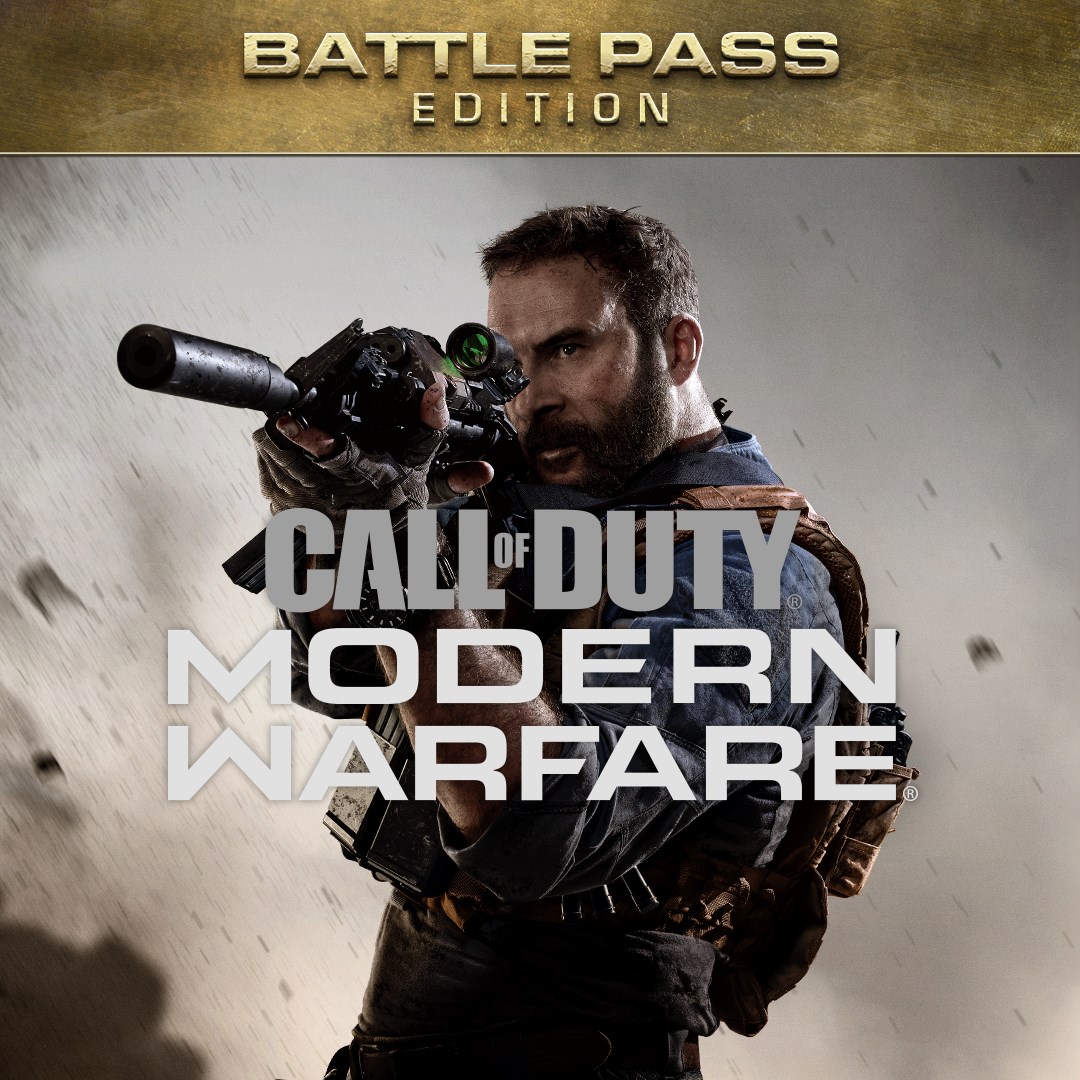
The latest entry in the popular Call of Duty (COD) video game franchise, Call Of Duty: Modern Warfare, is now live on Xbox One.
Call Of Duty: Modern Warfare features a new single-player story campaign, support for local two-player games, and online multiplayer in several different modes with up to 20 players. The game will also support 4K Ultra HD when played on an Xbox One X console and comes in three different digital versions.
The Call of Duty: Modern Warfare Digital Standard Edition comes with the base game, a custom in-game Tactical Knife, and a XRK Weapons Pack while the Operator Edition comes with everything in the Digital Standard Edition plus the All Ghillied Up, Crew Expendable, and War Pig Operator Pack digital content. The Operator Enhanced Edition comes with everything in the other two versions but also includes 3,000 Call of Duty Points.
Potentially by coincidence, though likely as part of a strategy on Microsoft’s part, popular streamer Shroud, who made the jump to the Microsoft-owned Mixer platform from Twitch just this morning, began streaming Call Of Duty: Modern Warfare as soon as it went live and has been garnering well over 25,000 concurrent viewers as of the time of this writing.
Shroud, who already has over 325, 000 followers on his Mixer channel, likely brought over a large number of his Twitch followers who wanted to see him play the latest COD title as soon as possible. Like with Ninja, it will be interesting to see how much of his audience sticks with him on Mixer for the long term or chooses to go back to Twitch.
The Outer Worlds is a Science Fiction roleplaying video game with a strong focus on exploration and quests. The game has been receiving a lot of praise from critics and players with many enthusing the strong writing, characters, and combat.
Here’s the official game description:
The Outer Worlds is a new single-player sci-fi RPG from Obsidian Entertainment and Private Division. As you explore the furthest reaches of space and encounter a host of factions all vying for power, who you decide to become will determine the fate of everyone in Halcyon. In the corporate equation for the colony, you are the unplanned variable.
Lost in transit while on a colonist ship bound for the furthest edge of the galaxy, you awake decades later than you expected only to find yourself in the midst of a deep conspiracy threatening to destroy the Halcyon colony. As you explore the furthest reaches of space and encounter a host of factions all vying for power, who you decide to become will determine the fate of everyone in Halcyon. In the corporate equation for the colony, you are the unplanned variable. Welcome to the future – try not to break it.
Tech enthusiasts out there are probably already excited about the launch of the Surface Pro 7, and many of you have probably already pre-ordered the device.
If you’re one of them, You’ll be glad to know that Microsoft already announced the first firmware update for the Surface Pro 7.
As such, you should already have an update pending in Windows Update, and it is strongly advised that you install it because of the many new features it brings.
What does the new Surface Pro 7 update bring?
The October 21 firmware update brings in a host of new features that will certainly make your experience with the device more enjoyable.
For example, some updates were made to how the device manages battery consumption, which is generally vital for a portable device, and two updates to Surface Integrations bring improved integration between services.
The audio driver is also getting a significant improvement. This will not only bring general audio updates, but it will also allow an improved Cortana speech experience.
One thing you must know is that you need to have the Windows 10 October 2019 Update and newer to install it. Fortunately, the device comes with the Windows 10 May 2019 Update pre-installed.
No issues associated with the Surface Pro 7 firmware update have been reported yet.
Things to remember when updating the Surface Pro 7
First of all, firmware updates can’t be uninstalled, and you can’t perform rollbacks either.
Another thing you should remember is that when you install the latest update, you’ll also get all the previous updates if your Surface lacks them.
Lastly, always remember to restart the device after you perform the update because some updates will not take effect immediately.
What are your opinions on the Surface Pro 7? Let us know in the comments section below.
RELATED ARTICLES YOU SHOULD CHECK OUT:
A malware ZAP toggle will improve security in Office 365
Microsoft is currently rolling out a new feature for Microsoft Office 365 called Unverified Sender.
The unverified sender feature is described on the official Microsoft Roadmap as follows:
Unverified sender is a new Office 365 feature that helps end users identify suspicious messages in their inbox. In order to help customers identify suspicious messages in their inbox, we’ve added an indicator that demonstrates Office 365 spoof intelligence was unable to verify the sender.
While it may sound like more of a visual update, Microsoft states that the way it chooses to tag users as unverified or not is quite complex.
How does the Unverified Sender feature work?
The Unverified Sender feature works by providing you with a distinct visual indicator. Instead of the typical name card consisting of their avatar or contact initials, they will have a question mark displayed.
This greatly increases the chances for Office 365 users to quickly detect potential phishing attacks or potential sender spoofing attempt.
However, it was stated that the Unverified Sender filter will not analyze any emails from a certain sender if the user has set the sender as a Safe Sender in their inbox.
Additionally, it won’t analyze messages that were delivered via an admin allow list.
What criteria will Outlook use to mark emails?
For the question mark in the sender image to not be applied, the message has to pass either SPF or DKIM authentication and receive either a dmarc pass, or a composite authentication pass from Office 365 Spoof Intelligence.
For the via tag, the domain from the From address needs to be the same as the one from the DKIM signature or the SMTP MAIL FROM.
Otherwise, Outlook will display the domain in one of those two fields, with a preference for the DKIM signature.
Are you excited by the new Unverified Sender feature? Let us know in the comments section below.
RELATED ARTICLES YOU SHOULD CHECK OUT:
A malware ZAP toggle will improve security in Office 365
As Microsoft prepares for the November 2019 Update, it has released the finishing touches before going live.
These touches come in the form of cumulative update KB4522355, which has been released for the Release Preview ring. More precisely, this update will affect those devices running Windows 10 19H1 and 19H2.
For those of you that don’t know Windows 10 19H1 is also known as Windows 10 May 2019 Update (or version 1903).
Windows 10 19H2 is expected to be launched next month and is referred to as Windows 10 November 2019 Update (or version 1909).
The next major update is going live soon
In typical Microsoft fashion, changelogs are not available for Release Preview Ring updates.
However, Windows Insider users who are currently in the Release Preview ring and are running Windows 10 19H1 build 18362.448 are updated to 18362.449 after installing KB4522355.
On the other hand, Windows Insider users that are running Windows 10 19H2 build 18363.448 will see it bumped up to build number 18363.449 after the update.
An official statement from Microsoft made it public how they plan on delivering the update:
Once Windows Insiders are on the final 19H2 build (Build 18363.418) – we will continue to improve the overall experience of 19H2 on customers’ PCs as part of our normal servicing cadence. This means we will continue to iterate and release new Cumulative Updates for 19H2. Last week, Windows Insiders on 19H2 received Builds 18363.446 and 18363.448. This is normal as part of that process[…]
No further details have been given regarding what the Windows 10 November 2019 Update will bring. However, users have great expectations especially since this is supposed to be the second major update of the year.
Their expectations are also fueled by the fact that the October 2019 updates didn’t bring much new to the table. As such, users are hoping this latest update will focus on fixing general issues and bringing major improvements.
According to some sources, Windows 10 November 2019 Update could go live on November 12.
What are your thoughts regarding the Windows 10 November 2019 Update? Share them with us in the comments section below.
Microsoft has just released a new optional cumulative update for Windows 10 version 1903. The new build 18362.449 (KB4522355) includes a lot of quality improvements, including fixes for issues preventing Start menu, the Cortana Search bar, Tray icons, or Microsoft Edge to stop responding in certain circumstances.
Updates an issue that prevents Microsoft Narrator from working in certain touch mode scenarios.
Updates an issue that starts assistive technology (AT) (such as Microsoft Narrator, Magnifier, or NVDA) after signing in when you’ve configured it to start before signing in.
Updates an issue that causes Magnifier to stop working in certain scenarios, and you have to restart it manually.
Updates an issue that causes Microsoft Narrator to stop working in the middle of a session in certain scenarios.
Updates an issue that might prevent a scroll bar from being selected.
Updates an issue that allows a device to go to Sleep (S3) even if you configure the device to never sleep.
Updates an issue that prevents you from shrinking a window in some cases.
Updates an issue that prevents you from connecting to a virtual private network (VPN).
Updates an issue that causes screen flickering or is slow to display the screen when you show application thumbnails on a monitor that has high dots per inch (DPI).
Updates an issue that causes the tile for the Photos app to appear larger than expected in the Start menu under certain conditions.
Updates an issue that causes the system to stop responding at the sign-in screen.
Updates an issue that might cause a black screen to appear the first time you sign in after installing a feature or quality update.
Updates an issue that causes the Start menu, the Cortana Search bar, Tray icons, or Microsoft Edge to stop responding in certain scenarios after installing a monthly update.
Some users have reported that camera on their laptop doesn’t work after the upgrade to Windows 10. Luckily, we have a couple of solutions for this problem, and I hope they’ll be helpful for you, if you’re facing this issue, as well.
What to do if Laptop camera doesn’t work in Windows 10?
1. Load BIOS Defaults
First thing we’re going to try is to load BIOS defaults, because if something is messed up in your BIOS, some devices, including camera are unlikely to work. To load BIOS Defaults, follow these steps:
Restart your computer
On the next startup enter BIOS settings (you can do that usually by pressing Del, but it depends of the computer)
Find Load BIOS defaults option and press Enter (It’s usually in Exit tab, but if your BIOS is different, look for it on other tabs)
Now log back to your computer and see if camera works now
2. Reinstall Drivers
The next thing we’re going to try, and probably the most obvious solution from this article, is to reinstall camera drivers on your computer. In case you’re not sure how to do that, do the following:
Go to Search, type device manager and open Device Manager
Expand Imaging devices section, and right click on your camera
Choose Update driver software, and if there are any updates, let the installer finish updating
Restart your computer, and check if camera works now
You can also go to your laptop‘s manufacturer’s website and look for drivers for your camera.
The next thing we’re going to try is to remove LowerFilters and UpperFilters files from your registry, in order to make your imaging device work. Here’s exactly what you need to do:
Navigate to C:windowssystem32drivers, and rename the file lvmvdrv.sys to lvmvdrv.sys.backup (if there is no such file, that’s fine, just move to next step)
Now, open the Registry Editor (Go to Search, type regedit and press Enter) and navigate to the following path:
First thing first, create a backup of that Registry folder. Right click on {6BDD1FC6-810F-11D0-BEC7-08002BE2092F}, select Export and save it on the safe location
Now when we created a backup of this registry folder, right-click on LowerFilters or UpperFilters on the right side of the scree, and delete it (in my case I had no LowerFilters, just Upperfilters, so i deleted Upperfilters only)
Reboot your system, and check if your camera is working now (if something goes wrong, you have a backup of the registry folder, so just open it, and it will load the default registry values)
4. Reinstall Windows 10
If nothing else helps, and you really need to use your camera, you can try reinstalling your Windows 10 operating system. But before you do anything, create a backup of your files, because otherwise, if you make a mistake, you’ll lose everything. Of course, Windows 10 resetting options give you an option to choose whether you want to delete all your files or not, but extra certainty won’t do any harm. If you’re not sure how to reset your Windows 10, go to Settings>Update and Recovery>Recovery and go to Reset this PC option.
That’s it, I hope these solutions helped you to solve the camera problem on your laptop. If you have any comments, questions and suggestions, please reach in the comment section, below.
Earlier this week, former Microsoftie and noted straight-shooter James Whittaker took to Medium to post his thoughts on Microsoft and its culture with “Speaking Truth to Power: Reflections on My Career at Microsoft.” It’s well worth a read, as Whittaker not only provides some history and insights into Microsoft’s current corporate structure, but offers some legitimate criticisms as well.
The post has quickly become fodder across the technosphere for a broader discussion on “why Windows is a mess.” Whittaker laments that “made men” (with obvious correlations to the Mafia version of tenure, where once you’re in, you’re set for life), still have a strong hold in the company. Especially in the oldest and historically most powerful bastion of old-guard power, Windows, Microsoft is still rife with made-men, says Whittaker:
It’s worth noting that cultural transformation didn’t happen in places, like Windows, where Nadella simply rearranged the made-men deck chairs. Instead of following his culture-change playbook, he simply swapped Windows’ made-men with Windows Phone’s made-men. The same people unable, over the course of a decade, to craft a winning strategy for mobile were suddenly tasked with crafting a winning strategy for the desktop. The unsurprising result is that Windows continues its tradition of boring, buggy software and consistently fumbled updates. Made-men aren’t fixable, and the real talent in Windows, and the diversity of ideas it possesses, remains anonymously buried under layers of made-men above it.
We’re not going to get into the politics of old white men running damn near everything, and how that needs to change, except to say that it’s a problem that reaches far wider than Windows or Microsoft (it may be especially prevalent at Windows, granted). This also isn’t about the relative importance of Windows to Microsoft. It’s clear that while Windows is and will be crucial as a desktop operating system for years to come, the leading edge of computing no longer flows through Windows. The best and brightest minds are working on AI and IoT and Azure and beyond, and that’s as it should be.
What we do want to focus on, however, is the state of Windows itself. Regardless of the culture producing it, or it’s relative importance to the company, is Windows really that much of a mess?
First, a bit of history: back in about 2014, Microsoft eliminated its long standing three tiered approach to software development, creating a new “Combined Engineering” approach that eliminated the “Software Development Engineer in Test (SDET) from the SDE/SDET/PM paradigm. This placed the onus of testing software development on the SDEs themselves, and has long been a point of contention anytime the subject of buggy software comes up.
This change came about at the same time as Microsoft announced Windows 10, and at the same time as a move to a much more aggressive update cycle, from 3 years to every 6 months. It’s easy, then, to find a bug and blame it on either one or both of these sea changes, and that’s what happened last year with the delayed launch of Windows 10 1809.
But as Microsoft noted in a blog post, the data loss that caused Microsoft to pull the Windows 10 October 2018 Update (1809), was very, very limited:
While the reports of actual data loss are few (one one-hundredth of one percent of version 1809 installs), any data loss is serious.
In fact, although there were scattered incidents of data loss reported in the Feedback Hub, it wasn’t until noted Microsoft watcher Rafael Rivera tweeted about the problem (the tweet has since been deleted, we captured it here) that the problem came to light. It could be argued that rather than Windows 10 being extra buggy, the nature of the way we receive information in the age of Twitter had a material effect on 1809’s delay. Certainly this wasn’t the first time that serious problems shipped in Windows, dating all the way back to well before the elimination of SDETs or a more aggressive release schedule. Fingers were pointed, however, and although it affected only a very few under very specific circumstances, the bug dominated the tech news cycle, and something had to be done.
We also, it should be noted, have earlier (and buggier) access to Windows than ever before. That the Windows Insider Program offers unprecedented opportunities to test Windows as it’s being written shouldn’t color the perception of the operating system as being buggy, if those bugs are being surfaced (and ultimately fixed thanks to input from Insiders) when they never would have been before.
So here we are, and the narrative is “Windows 10 is buggy” and as Whittaker says, “Windows continues its tradition of boring, buggy software and consistently fumbled updates.” Yet, Windows 10 usage share continues to grow, and continues to refine itself with a steady stream of regular, timely useful updates (along with some not so useful ones, I see you 3D Paint).
In comparison, Windows 8.x was software that looked and acted like it was developed by “made-men.” Full of compromises that satisfied no one, developed in an atmosphere of secrecy and back-stabbing that was the source of the famous guns pointing everywhere meme, and that ultimately ended in the firing of one of the epitomes of made-men, Steven Sinofsky. Now that was a mess (this is an opinion piece, right?), one that played out with poor sales in the marketplace.
And it’s not like previous versions of Windows, complete with SDETs and “A Team” (see: “B-teamers”) management, weren’t just as buggy, if not more, than Windows 10. Windows XP required 3 Service Packs to clean up the OS, and Windows 7 wasn’t bug free, either.
What do you think? Is Windows 10 a buggy mess, or is it a fast, efficient, powerful operating system good enough to run on some 900 million devices? We posted a poll on Twitter, you can take it here and/or leave us your thoughts in the comments below.
Since Microsoft kicked off the public preview of Project xCloud in select markets, we were wondering if the company was planning to launch its own series of accessories for the new streaming service. As of today, Project xCloud requires an Android phone or tablet and a Bluetooth-enabled Xbox controller, and early adopters are likely to purchase a controller clip to play on the go.
As it turns out, Microsoft won’t be launchings own Project xCloud accessories, but the company has just announced an expansion of its Designed for Xbox program to mobile accessories. The new MOGA Mobile Gaming Clip for Xbox Wireless Controllers is the first Designed for Xbox product from a third-party manufacturer created for Project xCloud.
“Designed in partnership with the Xbox Industrial Design team, this is an adjustable clip made to fit all Xbox Wireless Controllers that secures your phone in place while you play. Expertly engineered, the clip features dual locking articulation points so you can always set up the perfect viewing angle and fits most phones up to 3.12” (79mm) wide,” the Xbox team explained.
The MOGA Mobile Gaming Clip for Xbox Wireless Controllers will be priced at $14.99, and it will start shipping in November. 8bitDo, Gamevice, HORI, PowerA, Razer, and more are also working on their own Designed for Xbox mobile accessories that will be available at a later date.
Microsoft’s Shocktober sale is officially kicking off, and the company is offering steep discounts on games in time for the holiday.
Anthem, the online action RPG from EA that was released early this year, is currently 67% off right now, bringing it to just $19.79. The Deluxe Edition of Borderlands 3 is also taking a $17 discount, bringing it to only $63.99.
A ton of games are also half off right now, making them hard to pass up if you’ve been planning on expanding your gaming library. These titles include Devil May Cry, Metro Exodus, and Resident Evil 2 now only $29.99 each, plus World War Z for only $19.99 and Stranger Things 3: The Game for just $9.99 during the sale.
If your budget’s tight or you’d rather play a ton of games without spending a ton, Taco Bell is also giving away two weeks of free Xbox Game Pass Ultimate to customers who purchase the $5 Double Chalupa Box.
Which games are you thinking about purchasing? Let us know in the comments area below.