If you’re one of the folks who live in Canada and have a CraveTV Subscription, then we have some good news for you. As noted by Windows Central, the Canadian streaming service CraveTV is now available for download on the Xbox One.
Availability on the Xbox One means that CraveTV customers can now enjoy a massive library of video titles straight from the comfort of their Microsoft gaming console. However, in case you’re curious, a one month free trial of the $7.99 a month service is available. Many popular titles, including shows from HBO, and other series such as Seinfeld, are available through this service.
Were you aware of CraveTV? Which streaming services do you use on your Xbox One? Are you excited to see an app for yet another streaming service hit the Xbox One? As always, let us know your answers to these questions, and your other thoughts, by dropping us a comment below!
It made for a convenient and intuitive way to incorporate streaming into the console’s operating system but the benefits were very much limited to those using the Xbox One to produce their video and excluded those who preferred to stream via their own personal PC setups. That changes today with Twitch rolling out support for Xbox Live integration in capture card streams on PCs.
All a streamer needs to do is link their Xbox Live account to their Twitch account on the Twitch website and correctly identify a game before streaming. After those two steps are completed, any future stream involving an Xbox One game will automatically be promoted across Xbox Live as if it were being streamed natively from an Xbox One.
Are you a game streamer who’ll be taking advantage of this functionality? Let us know in the comments below.
Subway Surfers received a new update that takes players to Venice where they can embark on a new adventure and surf the canals of the city.
If you choose to visit Venice, don’t forget to improve your collections because you can unlock a soaring board and a new outfit at this location.
You can also earn great Weekly Hunt prizes if you search and find enough colorful carnival masks.
The complete changelog is also available on the official game description from the Microsoft Store, and it also appears on your phone once you download the latest game update.
The new location also offers you the opportunity to dress accordingly. Your character can choose to wear the specific Venetian Mask Outfit or the Noble Outfit. When in Venice, dress as the Venetians dress.
After choosing your outfit, select the board you want to rock on and add one of the available superpowers to make it more powerful.
If you’re curious to see how Venice looks in Subway Surfers, check out the gameplay images below:
Other features include:
Join the Subway Surfers World Tour in beautiful Italy
Run through old city halls and cruise the canals of enchanting Venice
Soar through the Subway on the new smooth drifting Orni board
Unlock a new Outfit and surf the tracks with Marco, the charming boat boy
Collect colorful carnival masks to earn great Weekly Hunt prizes
Subway Surfers recently dropped support for Windows 8, returning to Windows 10. While it remains playable, it will no longer receives updates and patches.
Microsoft launched the latest Windows 10 build last Saturday, proving that its Insider Team is working around the clock to implement user feedback into reliable builds. Build 14385 is the newest Windows 10 build available to Insiders, yet Dona Sarkar is already using an even newer build.
This can only mean one thing: the upcoming Windows 10 build is around the corner and will soon land on your machines. Taking into account Microsoft’s latest build release pattern, it’s only a matter of time until the build is released to Fast Ring Insiders. Actually, the build could come as soon as today or even tomorrow.
Rumors suggest that the upcoming build will bear the code name 14388. As usual, it should bring only bug fixes and system improvements, as Microsoft is no longer focusing on adding new features. Right now, the Windows Insider Team’s goal is to make Windows 10 as stable as possible.
Most likely, build 14388 will be available for both PC and Mobile, as the latest builds have been released for both platforms.
The Anniversary Update is scheduled to improve Microsoft Edge by allowing users to download extensions. While Insiders can already do this, Microsoft wants the general public to get their hands on this feature as quickly as possible.
The Anniversary Update will also create a single Store for all Microsoft platforms, as the Windows Store and the Xbox Store will soon converge. Speaking of the common Store, communication between Windows 10 and Windows Mobile will improve as more user actions will translate to the other platform.
Meanwhile, don’t forget to check the available updates because you never know when Dona Sarkar will press the release button for the next Windows 10 build.
Oh yeah, along with all those Windows 10 Insiders builds, Xbox One is in preview mode too, getting ready as well for the upcoming Anniversary Update launch. While not quite as fast on the red button trigger finger, Xbox One Preview builds are picking up the pace too, and Microsoft’s Mike Ybarra announced today via Twitter that another one is headed our way:
New Preview build at 6PM tonight. Gives some gamer choice options to use Cortana or Xbox commands and more. See forums. #Xbox
Some Xbox One users have been a bit frustrated with having to use Cortana commands, but in this latest preview, those affected by the recent change will now be able to choose between Cortana or the more traditional Xbox commands, according to the tweet.
For more info, stick by your Xbox One with the Preview app installed, and check out the latest build!
The open and available information spread across the internet is always a growing concern for users and businesses. Personal and confidential information spreading through hacks or carelessness can be a very real threat. Microsoft has always maintained a stance that privacy is a fundamental human right and after the collapse of the US-EU Safe Harbour agreement last autumn, the company was quick to offer solutions to bring back safety and security. Today, the European Commission released a press release announcing the official launch of the EU-US Privacy Shield.
After the European Court of Justice ruled last October that the Safe Harbour framework was invalid, a new framework was necessary to take its place with more defined requirements. The European Commission and the U.S. Government reached an official agreement on February 2, 2016 to build a framework that would better protect the personal data being transferred.
The proposal draft was submitted on February 29, 2016. Not surprisingly, Microsoft was the quickest to sign up to support the new framework just a few weeks later. After months of dedication and resolutions, the EU-US Privacy Shield was officially adopted today, July 12, 2016.
Taking a page from Microsoft’s book, the press release states that the EU-US Privacy Shield will protect the “fundamental rights of anyone in the EU whose personal data is transferred to the United States as well as bringing legal clarity for businesses relying on transatlantic data transfers.”
The EU-U.S. Privacy Shield is based on the following principles:
Strong obligations on companies handling data: under the new arrangement, the U.S. Department of Commerce will conduct regular updates and reviews of participating companies, to ensure that companies follow the rules they submitted themselves to. If companies do not comply in practice they face sanctions and removal from the list. The tightening of conditions for the onward transfers of data to third parties will guarantee the same level of protection in case of a transfer from a Privacy Shield company.
Clear safeguards and transparency obligations on U.S. government access: The US has given the EU assurance that the access of public authorities for law enforcement and national security is subject to clear limitations, safeguards and oversight mechanisms. Everyone in the EU will, also for the first time, benefit from redress mechanisms in this area. The U.S. has ruled out indiscriminate mass surveillance on personal data transferred to the US under the EU-U.S. Privacy Shield arrangement. The Office of the Director of National Intelligence further clarified that bulk collection of data could only be used under specific preconditions and needs to be as targeted and focused as possible. It details the safeguards in place for the use of data under such exceptional circumstances. The U.S. Secretary of State has established a redress possibility in the area of national intelligence for Europeans through an Ombudsperson mechanism within the Department of State.
Effective protection of individual rights: Any citizen who considers that their data has been misused under the Privacy Shield scheme will benefit from several accessible and affordable dispute resolution mechanisms. Ideally, the complaint will be resolved by the company itself; or free of charge Alternative Dispute resolution (ADR) solutions will be offered. Individuals can also go to their national Data Protection Authorities, who will work with the Federal Trade Commission to ensure that complaints by EU citizens are investigated and resolved. If a case is not resolved by any of the other means, as a last resort there will be an arbitration mechanism. Redress possibility in the area of national security for EU citizens’ will be handled by an Ombudsperson independent from the US intelligence services.
Annual joint review mechanism: the mechanism will monitor the functioning of the Privacy Shield, including the commitments and assurance as regards access to data for law enforcement and national security purposes. The European Commission and the U.S. Department of Commerce will conduct the review and associate national intelligence experts from the U.S. and European Data Protection Authorities. The Commission will draw on all other sources of information available and will issue a public report to the European Parliament and the Council.
Yesterday, Microsoft made a statement about the decision, citing it as “an important achievement for the privacy rights of citizens across Europe and for companies across all industries that rely on international data flows to run their businesses and serve their customers.” Microsoft’s Vice President of EU Government Affairs John Frank’s full ovation for the launch of the EU-US Privacy Shield can be read on the EU Policy Blog.
Microsoft continues to push its vision of bots and conversational computing with a new partnering that intends to explore the opportunities in co-creating a next-gen government based on the use of digital services called Smart Nation. During the World Cities Summit this year, Minister of Foreign Affairs and Minister-In-Charge of the Smart Nation Initiative for Singapore announced that it will partner with Microsoft to embark the creation of next-generational government services backed by conversational computing.
According to the Singapore News Center,
In the mobile-first and cloud-first world that we all live in, citizens and constituents want public and business services that can interact with their digital lives – intelligent services that respond, act and communicate in fundamentally new ways that can augment human abilities and experiences and do so in a trustworthy manner. The Infocomm Development Authority of Singapore (IDA) will explore with Microsoft on a new computing proof-of-concept (POC) that builds conversational intelligence into public services, with the aim of making them more anticipatory, accessible, engaging and inclusive for citizens and constituents.”
The IDA’s exploration into prioritizing the combination of human language, artificial intelligence, and machine learning appear to be the first steps in the much larger picture that Microsoft is painting, wherein, everyday interactions with informational sources are made better by use of the cloud.
As everything around us becomes more digitized, Conversations as a Platform is a new shift that applies the understanding of human language to computers and computing, which can transform every industry. We’re excited to partner with organizations like the Government of Singapore to help transform its engagements with citizens and businesses to seize the opportunities ahead.”
Satya Nadella
Satya Nadella, chief executive officer of Microsoft Corp., gestures as he speaks during the Future Decoded technology event at ExCeL in London, U.K., on Monday, Nov. 10, 2014. Microsoft recently unveiled an activity-tracking wristband and related Internet-based service that can track and analyze health, fitness and sleep data, jumping into the crowded wearable-computer market. Photographer: Jason Alden/Bloomberg
As for IDA’s rollout of the POC, it will be done in three phases that cover the use of information absorption into intelligent chatbots, the expansion of chatbot capabilities based on user interactions with government website and finally enabling interactions between chatbot and user based on personalized queries.
Phase One will see chatbots drawing from a vast database to answer simple factual questions from users of selected public services.
This will transit into Phase Two, where chatbots expand their capability to help users complete simple tasks and transactions within government websites.
Following this, Phase Three will see chatbots responding to personalised queries from users, further enhancing user engagement by providing an interactive conversational experience.
While Microsoft spoke of using Skype as its premier test bed for chatbot interactions during Build 2016 this year, it seems a much broader implementation is just around the corner. With an entire government willing to explore the possibilities, perhaps Microsoft’s vision for a world moving beyond app jumping and silos of information is much closer than first discussed. Building a chatbot experience into government services should yield much richer data points as to how Microsoft will continue to develop its chatbot experiences in the future.
What goes around, comes around: these words of wisdom have never been truer for Microsoft. After months of user complaints against Microsoft’s Windows 10 forced upgrade methods, the time has come for Microsoft to offer some serious explanations about its upgrade strategy. This time, in front of New York’s Attorney General.
The tech giant recently lost a Windows 10 upgrade lawsuit and had to pay $10,000 in damages after its upgrade tricks caused a businesswoman to almost lose her business.
NY Attorney General Eric Schneiderman and his team are actively investigating a new Windows 10 forced upgrade case and are gathering evidence and user complaints against Microsoft’s unfair upgrade tactics. The lawmen have been helped by the Rockland County Times newspaper, which forwarded them a series of Windows 10 upgrade complaints.
NY state is not the only state actively investigating user accusations against Microsoft’s Windows 10 upgrade methods as other states are also beginning to actively pursue cases against Microsoft on their residents’ behalf.
This wave of lawsuits against Microsoft has even convinced some of the company’s fans to conclude that these events are being orchestrated by Microsoft’s competition. Google has never hidden its intention of stealing 80% of Microsoft’s business client pool, and many Windows users fear the search engine giant has recently raised the stakes.
Microsoft recently revamped its Windows upgrade window, which is now a full-screen pop-up. Judging by this behavior, it appears that Microsoft is not afraid of these lawsuits and will continue to try to convince users to upgrade to Windows 10.
Whether or not there’s someone who’s pulling some strings in the back to fuel these lawsuits against the tech giant, it’s a good thing that such legal actions against corporations do exist. Irrespective of the field they’re activating in, corporations are aware of their influence and sometimes tend to push things too hard. Such actions represent a guarantee that consumer rights are well protected.
A new post done by Jason Leznek over at the Windows Blog is showing that Windows 10 is reducing the posts of IT, Security, and Productivity. The post goes into the details of a study done by Forrester Consulting, which was commissioned by Microsoft to conduct a Total Economic Impact (TEI) study of Windows 10.
Findings of the Forrester Study
Overall, the study looked at four enterprise organizations, including a government health department, a multinational food and beverage conglomerate, a global IT services firm and a professional auto racing team. These four organizations (clearly from different industries) were early adopters of Windows 10. Based on interviews with these four organizations, the following highlights and benefits of Windows 10 were established:
Windows 10 requires less IT administration time to install, manage, and support, with easy-to-use features and more self-service functions. One customer found that deploying Windows 10 was quicker and easier by as much as 50% from their last operating system upgrade and overall IT administrators estimate a 15% improvement in IT management time with Windows 10 — valuable time back to help in other key IT areas.
With new features such as Credential Guard, Device Guard and improved security features such as BitLocker, security events related to client device management requiring IT remediation are reduced or avoided altogether. Forrester estimated some of the businesses could be saving up to nearly $700,000 a year by enabling security features in Windows 10.
Improvements, such as faster boot times, convenient access to corporate applications, increased security, and better mobility tools help IT and users increase productivity and complete work more quickly and effectively. Employees, especially mobile workers, estimate they have 25% more time to get work done than they did before.
These three areas are very key to the adoption and daily use of an operating system in the business world, and so it is good to see some positive Windows 10 statistics and findings. As always, though, we would love to hear your take on this set of news, so be sure to drop us a comment below!
Microsoft had a vision of allowing businesses to create and deploy their own private clouds using its Azure Stack tools. The idea was simple; businesses would be able to build private Microsoft clouds that leveraged similar, if not, the same software they were already using on a public version of Azure and through it all, Microsoft’s Azure Stack would be the spine for development.
Microsoft began putting things into motion to bring that vision into reality, but according to a report from CIO, the vision of enabling companies to build private clouds on the back of Azure Stack is hitting a delay snag. Businesses interested in Microsoft’s proposal will have to wait now until mid-2017 before getting their hands on the tools in an official capacity.
However, since the release of the technical preview, there has been little to no new on how and where the company was in the development and release schedule for Azure Stack to general customers. It now seems Microsoft has opted to do a bit more handholding leading up to the release of Azure Stack.
The new strategy in place by Microsoft now has the company pushing its release out further, to offer Azure Stack with more integrated systems building partnerships with businesses. Microsoft’s new approach, opposes its original proposal for Azure Stack, in that, instead of providing hardware configurations and the Azure Stack tool set, the company will now issue prevalidated hardware to simplify the process.
Microsoft’s Server and Tools division general manager Mike Schutz believes that the new change will yield more successful deployments, presumably, because Microsoft will be there in lock step to provide support and answers at each phase of the rollouts.
While the delay may be a bit annoying or irritating for those hoping to use Azure Stack soon, all is not lost. Smaller businesses can spin up an instance of Azure Stack beta on a single server for now and for larger businesses, Microsoft is urging the use of Cloud Platform Systems.
For now, there is no set date as to when Azure Stack will be released, but the technical preview and beta are still available for businesses interested in Microsoft’s vision.
According to Microsoft, Windows Server 2016 will deliver “new layers of security and Azure-inspired innovation for the applications and infrastructure that power your business.” The upcoming release will come in three different editions:
Datacenter: This edition continues to deliver significant value for organizations that need unlimited virtualization along with powerful new features including Shielded Virtual Machines, software-defined storage and software-defined networking.
Standard: This edition is ideal for organizations that need limited virtualization but require a robust, general purpose server operating system.
Essentials: This edition is designed for smaller organizations with less than 50 users.
Additionnaly, the blog post explains that there will be three installation options for the Standard and Datacenter editions (Nano Server, Server Core and Server with Desktop experience). This will have implications for the servicing experience, as companies who go for the Nano server installation will get periodic releases known as “Current Branch for Business” (CBB) releases, which the company also describes as “a more active servicing model similar to the experience with Windows 10.” However, customers who opt for the full Windows Server 2016 with a desktop experience or Server Core will still get 5 years of mainstream support plus 5 years of extended support, which will now be known as the “Long Term Servicing Branch” (LTSB).
Servicing guidelines for Windows Server 2016.
Overall, Microsoft hopes that Windows Server 2016 will “meet businesses and organizations where they are today, and introduces the innovation needed for the transition to cloud computing when ready.” The three editions will be available for purchase on October and you can get details on pricing over here. If you already tried Technical Previews of Windows Server 2016, let us know in the comments if you like the new capabilities of the server operating system.
While it’s great to see Microsoft iterating relatively quickly on Windows 10 while also being open with its development process with the Windows Insider program, I think that the company has still some work to do on its own native apps to make Windows 10 an OS that is really enjoyable to use. As of now, some of Microsoft apps are currently better on Windows 10 devices than on iOS and Android (the Groove music app and the Xbox app come to mind), but other parts of the OS still feel like Redmond hasn’t truly nailed the basics yet. This is even more important as I’m talking about native apps that ship with the OS, and Microsoft can’t really afford to provide a sub-par Windows 10 experience out of the box when both iOS and Android had years to achieve an undeniable state of polish.
And so, I took a look at five Windows 10 native apps that I think could be improved to provide a better experience to Windows 10 users. If you’re familiar with the Android and/or iOS versions, then you may better understand some of our remarks below.
Number 1: The Office Mobile apps can only open one document at a time
If Office is recognized today as the gold standard for productivity on the desktop, I can’t really say the same about the Office Mobile apps. Right now, the three Office Mobile apps (Word, Excel and PowerPoint) ship on all Lumia devices and are free to use for all of their functionality, but users on Windows 10 devices with screens bigger than 10 inches must have an Office 365 subscription to use them for anything other than viewing documents.
On Windows 10, the Office Mobile apps are a currently an interesting solution for those of you who prefer to use lightweight apps over the more full-featured Win32 alternatives. However, using these apps on a Windows 10 PC can feel quite frustrating as these apps are not able to open multiple documents in separate windows as you can do with the Win32 apps (or third-party alternatives like Libre Office).
To be clear, if you set up Office Mobile apps as the default apps to open Office documents on your PC, then opening new Office documents will make your previously open document disappear as the newly opened file replaces it immediately (your previous document will be saved, however). This functionality may be a technical limitation of Windows 10 UWP apps, though Microsoft could use an easy workaround to give users more flexibility.
Word Mobile on Windows 10.
Indeed, if you tried to use the Windows 10 Maps recently, you may have spotted that the app has been updated with a handy tab feature that allows users to perform different searches simultaneously. This is currently the only Windows 10 app to allow this and we think it’s an obvious feature to add to the Office Mobile apps to make them more usable in a productivity setting. Indeed, the Office Mobile apps should just work like a web browser: open a new document, find it in a new tab while your previous documents are accessible in background tabs. Wouldn’t that be handy?
Tabs in the Windows 10 Maps app.
Number 2: The OneNote app isn’t a Notepad replacement yet
As a member of the Office family of productivity apps, OneNote is a free note taking app that currently ships on all Windows 10 devices. It’s also ubiquitous, as the app is also available on iOS, Android, and Macs.
While the app currently packs solid features for those of you who need a versatile note taking app in their everyday life, one of the app’s biggest limitations is that it can’t be used without being logged in with a Microsoft account. In other words, it’s not possible to use it with a local account that would store notes locally and not on Microsoft’s cloud. This limitation is pretty strange as the other Office Mobile apps don’t require you to log in to use them.
You can’t use OneNote without being signed in.
This seems more problematic on Windows 10 Mobile: in case you would rather not log in with a Microsoft account on a Windows 10 Mobile phone, not being able to use OneNote means that you would have no easy way to write notes on your phone (it’s not possible to download a third-party Notes app from the Windows Store either).
Number 3: Outlook calendar can’t sync all your past appointments
Outlook Mobile on Windows 10, which is actually a combination of the Outlook Mail and Calendar apps, is a massive improvement over the Windows 8/Windows Phone 8 built-in apps. As the Outlook apps have been decoupled from the OS to become standard Windows Store apps, Microsoft has also been able to update them more frequently than before. However, Outlook Mobile on iOS and Android (a rebranding of third-party apps from Acompli that Microsoft bought in 2014) can still claim some exclusive features such as the integration with third-party apps and services into your Outlook calendar.
As of now, the Outlook Mobile apps on Windows 10 lack consistency: while the Outlook Mail app allow users to change their mailbox sync settings, the Outlook calendar is currently not as configurable. Whether you’re using an Outlook.com account or a Google account, the Outlook calendar app can’t sync with calendar appointments that are more than 3 months old. There is no setting to change how you synchronize your past calendar entries, and this limitation seems really unfortunate for an app that sports the well-known Outlook brand.
You can’t sync all your past calendar appointments with Outlook Mobile.
Number 4: Microsoft should streamline how to set reminders
Microsoft currently has multiple tools to set reminders. On Windows 10, Cortana may be the easiest way to set reminders, but many of you probably use Outlook tasks or Microsoft’s Wunderlist app to manage your to-dos. But among these three solutions, Cortana reminders are the only tool to be natively integrated into Windows 10.
However, those of you familiar with Windows Phone 8.1 may recall that Cortana reminders used to coexist with Outlook tasks from the native calendar app back in the day. Outlook tasks had their advantages as if you were using an Exchange account or an Outlook.com account on your Windows Phone, you could sync your Outlook tasks with both the Outlook desktop app and the Outlook web apps.
Outlook tasks on Windows Phone 8.1.
On Windows Phone 8.1, Cortana reminders were better than Outlook tasks in certain ways as they were featured directly in the calendar app, and it was also possible to pin a Cortana reminders tile to your home screen. However, Cortana reminders lived on your Windows Phone and you could not sync them the desktop Outlook app or Outlook.com.
You could pin Cortana reminders on Windows Phone 8.1.
Windows 10 changed a lot of things: Outlook tasks are no longer supported in the Outlook calendar app, so Cortana is now the only “native” way to set reminders on Windows 10 devices. However, Cortana reminders are no longer pinnable to your start screen, which makes them a little harder to use. As of now, it takes too many steps to access them from the Cortana app (they’re in the hamburger menu).
On Windows 10, Cortana reminders are hidden in the hamburger menu.
Worse, Cortana is still not available in several markets, which means that all Windows 10 users who don’t have access to Cortana can’t set reminders with an integrated solution on their Windows 10 device. It’s not clear how MS could solve this. At least, the company should bring back support for Outlook tasks in the Outlook calendar app to enable a basic reminder functionality on all markets.
But maybe Windows 10 needs a dedicated reminder app which would give users more flexibility. Do you really need the cloud to set reminders on your device?
Number 5: The Movies & TV app needs to be integrated with OneDrive
Do you remember the Xbox Music app on Windows 8.1/Windows Phone 8.1? It was far from great, but one of its best features was that Microsoft made it a cloud music locker. You could just put all your music in OneDrive and your content would magically appear in the Xbox Music app. Of course, the Groove Music app on Windows 10 still does this, and the app has also been recently updated with the addition of curated playlists based on your own music.
The Groove Music app can play your tracks from OneDrive and even create curated playlists from them.
Compared to the Groove Music app, the Movies & TV app seems pretty useless as of now. As a basic media player, it’s probably not as good as VLC or other third-party apps, so unless you’re buying a lot of content on the Windows Store you’re probably not using it very much. However, integrating this app with your OneDrive content would make it much more useful: it would be a straightforward way to stream your own videos stored on OneDrive without wasting precious storage space on your devices.
Microsoft, please integrate your Movies & TV app with OneDrive.
Microsoft must do better with its Windows 10 apps
I can’t deny it, Windows 10 is a massive improvement over its predecessor, and the fact that already 350 million people are actively using it after nearly a year in the market is definitely impressive. However, the new operating system is still very young and the upcoming Anniversary Update may not pack enough new features to make Windows 10 truly enjoyable. Moreover, Microsoft has yet to prove that Universal Windows 10 apps could ultimately replace legacy Win32 apps, as Microsoft’s own UWP apps often pale against their legacy counterparts.
If Microsoft wants users to love Windows 10, then the company has to make sure that its core native apps built on the UWP framework are versatile and easy to use. Microsoft’s own apps should always be best on Windows 10 devices, which should also prove third-party developers that the Universal Windows Platform is a valuable addition to a market where Apple and Google are too often controlling the narrative.
Chat bots are going to be an essential part of Microsoft’s and the computing world’s future, according to CEO Satya Nadella; as such, the company has already built a lot of tools to get developers started in developing artificial intelligence. One of them, the MS Bot Framework, just got a new how-to on the MSDN blog.
Specifically, the post discusses how to make a simple “low-friction “chit-chat bot” that can do linear conversations and fulfill requests using a turn-by-turn approach. What sounds simple may be made complicated as users do more than just progressing through the conversation, like going back to a previous questions: to deal with this, MS Bot Framework introduces “FormFlow”, which allows the bot to understand non-linear requests.
Microsoftie Jamie Dalton – the author of the post – who is apparently closely related to England, provided an interesting example of a bot he created for the one of the hottest political event this year: England’s departure from the EU, more commonly known as “Brexit”. Aptly named “Brexit Bot”, Dalton’s bot help voters to decide whether they should go for “Remain” or “Leave”, through a series of questions.
Introducing the Brexit Bot (might be too late though). Credits: Jamie Dalton
The bot can be made very quickly (taking “the entire duration of the England vs Iceland game in the Euro 2016 Cup”, which Dalton seems to want to forget, as a true Englishman), and with very low resources, two critical criteria for businesses, especially for new, unproven services like chat bots. Dalton also provides a series of insights to track with telemetry, to determine if customers will take to chat bots.
Conversational channels are increasingly becoming valuable for businesses to reach customers, and chat bots might be the answer to this new marketing channel. If you want to up your marketing game, MS Bot Framework might be a good way to start; get the latest release, v3.0, on the main page, or chat with a bot to get to the complete code on GitHub (and experience first-hand the framework’s power.)
Microsoft Worldwide Partner Conference has already moved to day 2, and today’s introducing keynote was all about how Microsoft can help its partners and businesses embrace digital transformation. To that end, Microsoft’s Corporate Vice President for Windows and Devices Group Yusuf Mehdi announced today that the company will launch new subscription options for both Windows 10 and Surface devices.
Windows 10 Enterprise E3 for CSP
While Windows 10 is already running on 350 million devices, Medhi shared that Microsoft is looking for better ways to help business confronted to high security risks to upgrade to the more secure OS. That’s the purpose of Windows 10 Enterprise E3 for Cloud Solution Provider channels (CSP): with this new offering, CSP partners will be able to provide businesses a subscription to Windows 10 Enterprise and get Microsoft’s “full IT Stack” including Office 365, Dynamics, Azure and CRM as a per user, per month offering.
Medhi added that customers will be able to scale up or down this offering according to their needs, and that this is “ideal for businesses who do not have dedicated IT resources or limited IT staff, and want their licensing and IT needs managed by a trusted and experienced partner.”
Windows 10 has enhanced security features for enterprises.
Key features will include:
Increased Security: Offering the sophisticated security features of Windows 10 to help businesses secure sensitive data and identities, help ensure devices are protected from cybersecurity threats, give employees the freedom and flexibility to access sensitive data on a variety of devices, and help ensure controlled access to highly-sensitive data.
Simplified Licensing & Deployment: Helping businesses lower up-front costs, eliminating the need for time-consuming device counting and audits, and making it easier to stay compliant with a subscription-based, per-user licensing model. This new offering allows businesses to easily move from Windows 10 Pro to Windows 10 Enterprise E3 without rebooting.
Partner-managed IT: Configuring and managing devices by a partner experienced in Windows 10 and cloud deployments. Partners can also help businesses develop a device security and management strategy with the unique features of Windows 10. Businesses can view subscriptions and usage for Windows 10 Enterprise, and any other Microsoft cloud services purchased, in their partner portal for easier management with one contract, one user account, one support contact, and one simplified bill.
Windows 10 Enterprise E3 in CSP will be available Starting this fall at just $7 a seat per month, but Windows 10 Enterprise will continue to be available through the company’s regular licensing programs and the newly-announced suites Secure Productive Enterprise E3 and E5 launching later this year.
The Surface as a Service Program and the expansion of the Surface Enterprise Initiative
By bringing to the market its Surface range of hybrid tablets, Microsoft contributed to define a new product category and Medhi emphasized how “innovative devices shift people’s behavior, inspire ideas, catalyze collaboration, accelerate progress, and transform business.” The exec also outlined that the Surface Business has grown significantly in the past year, going from generating $1B in revenue in a year to $1B in revenue per quarter.
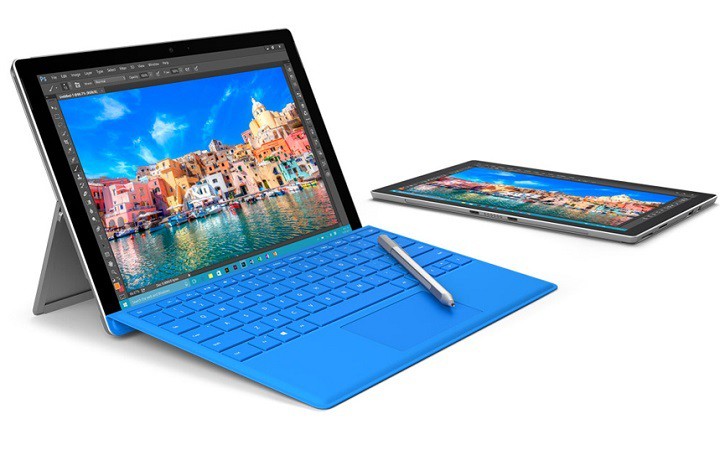
Microsoft’s Surface Pro 4
However, Redmond is looking for accelerating the shift towards more versatile devices with the help from its partners. To that end, the company announced today that all Cloud Solution Partners (who are also Surface Authorized Distributors) will be able to sell Surface as a Service, which means that all of them will be able to “offer Surface devices through a managed service offering to all of our resellers and customers, alongside managed cloud services, Office 365, Windows 10, and relevant ISV software.” This new offering with start with leading CSP ALSO and will allow customers to get up do date devices in a more flexible way.
Medhi also announced an expansion of the company’s Surface Multi-National Purchasing Program with the addition of CDW, Insight, SHI and Zones. According to the exec, This will provide businesses “added choice in how they purchase Surface devices, benefit from a streamlined path for getting Surface on company-wide standards lists, and see cross-country adoption for line of business scenarios.”
Lastly, after Dell partnered with Microsoft to sell the Surface Pro and offer enterprise service and support last year, Medhi announced today that IBM and Booz Allen Hamilton have joined the company’s Surface Enterprise Initiative “to deliver industry specific solutions to our shared customers.”
In the end, Microsoft hopes that these new initiatives will “provide great opportunities for our partners and for our customers to transform their businesses to a more modern way of working.” Let us know in the comments what do you think of this latest announcements.
Microsoft’s Partner of the Year Award is a way for Microsoft to recognize it’s country level partners that have developed and delivered Microsoft based solutions over the last year. Yesterday Microsoft named Infusion as their 2016 Country Partner of the Year in Canada.
The honor comes for Infusion demonstrating excellence in innovation and implementation of customer solutions based on Microsoft technology, as well as representing excellent subsidiary engagement in Canada. In a statement seen on Yahoo News, Alim Somani, President of Infusion said,
“Infusion is thrilled to be recognized as Microsoft’s Canadian Partner of the Year for 2016… We pride ourselves in building close relationships with industry-leading organizations like Microsoft to develop and deploy unique technology solutions for our clients. In the last year, we’ve worked on several innovative projects using Microsoft technologies such as Azure and HoloLens. It’s an exciting time, and we are happy to team up with Microsoft to keep pushing the boundaries of what’s possible in the digital space”
As noted by Yahoo, the award also recognizes Infusion as succeeding in effective engagement with its local Microsoft office while showcasing innovation and business impact, driving customer satisfaction, and winning new customers.
Among the Xbox exclusives hyped for a near future release on Microsoft’s gaming platforms, Scalebound stands out for its interesting double-team of protagonists, it’s expansive world and epic battles, and the fact that it’s made by over-the-top action game veteran Platinum Games, at the helm of which is legendary figure Hideki Kamiya, maker of greats like Devil May Cry and Okami. GamesBeat was able to catch up to the man at E3, and apparently he had some very good things to say about his current partners from Redmond, reports VentureBeat.
Specifically, what impressed Kamiya the most about Microsoft compare to Platinum Games’ other partners is, somewhat unsurprisingly, the size of the company. It’s no secret that Microsoft is a behemoth not just in gaming, but in many different parts of technology, with an expansive portfolio of computing-enhancing products, and enormous resources both financial and technological. It should be impressive, then, when the company put this power behind a project, like in the case of Scalebound, which is “a big bet” for Microsoft, according to Kamiya.
What’s interesting in Kamiya’s remarks is how he talks about Microsoft as a whole and not just the Xbox division, that Redmond is using every on of its resource in tandem to “make a big vision come to life” with Scalebound. This sounds very much in tune with part of the culture shift spearheaded by current CEO Satya Nadella, which, along with the unification of the company’s software chops, also brings the company’s divisions closer together.
Sure enough, according to Kamiya, Platinum Games team have been able to “learn a lot from people they wouldn’t otherwise be exposed to and grow in interesting ways.” Microsoft is a humongous company, and we can’t help but be excited to see what the company will be able to achieve when it focuses resources into a project and work with talented partners like Platinum Games. Kamiya promises us “a big game”, and you will get to see how big in 2017, when Scalebound comes out.
The world’s largest industrial technology fair Hannover Messe 2016 gave Microsoft a chance to show off their latest innovations for aeronautical engines. Rolls-Royce, one of the leading producers of aero engines for civil aircraft and corporate jets, announced their collaboration with Microsoft. Their hopes were to build the next generation of intelligent engines that would improve performance and reduce maintenance costs.
The step forward is marketed towards the general public as “every journey for every passenger taking off and landing on time, every time”. The focus of the slogan is to emphasize their products as taking less time to diagnose and fix engines, making flight delays minimal for a constantly moving society. But what the use of Azure IoT Suite and Cortana Intelligence Suite do to live up to these promises is all under the hood.
Diagnostics can be easily run with the Microsoft technology, making it a quicker process to check the engines and prepare it for the next flight. In the hands of mechanics, these tools are invaluable. Besides the customer satisfaction rate, both companies expect to make millions of dollars in savings, according to CBR Online.
Information on engine health, air traffic control, route restrictions and fuel usage will be collected from hundreds of sensors to detect anomalies and trends. These insights will then allow airlines to fly more efficient routes and cut fuel usage, which is a huge savings coup as a 1% fuel saving equates to $250,000 per aircraft per year.
President of Civil Aerospace at Rolls-Royce shared with the site that the company is glad to be embracing big-data technologies to ring in a new era of repair and maintenance to their engines. He also states that with the full diagnostics reported over time from the Azure IoT Suite and Cortana Intelligence Suite, there are sure to be new innovations for aerodynamics in the future. More particularly for optimizing the least amount of fuel used, more efficient and safer engines, and less disruption in flight schedules.
Microsoft has just kicked off the second day of its Worldwide Partner conference in Toronto, and today’s introducing keynote will be all about Windows, Office and the cloud. Corporate Vice President for Office 365 Client Applications Kirk Koenigsbauer, EVP of the Cloud Scott Guthrie and Corporate Vice President for Windows and Devices Group Yusuf Medhi will share the stage to share the company’s vision about digital transformation and what it means for businesses of all sizes.
Digital transformation will be a key topic during WPC 2016.
With over 15,000 attendees, and 144 countries represented, Microsoft’s Worldwide Partner Conference is the most important event of the year for businesses looking to grow their businesses, and strengthen ties with Microsoft. You can watch the live stream of the keynote over here, and we also invite you to read our recap of yesterday’s introducing keynote over here. Stay tuned on Winbeta to get all the news about Worldwide Partner Conference 2016.
You now have the chance to get the Trials of the Blood Dragon for free. However, in order to do this, you will need to finish the demo version of the game before July 22, 2016.
Trials of the Blood Dragon was released last month for Xbox One, PS4 and Windows PC. As expected, the game came with elements found in the previous games of the series. In addition, the game comes with some racing features a wide array of vehicles and accessories like rocket packs, tanks, other bikes and more.
Below you can see the story trailer of the Trials of the Blood Dragon:
Ubisoft is now trying to promote this game by offering people a free download of the demo version of Trials of the Blood Dragon for Windows PC. Gamers who play and complete the demo by July 22, 2016 while having no more than 15 faults, will receive a free version of the full game.
Trials of the Blood Dragon can be purchased from Steam for $14.99 and you can download the demo from Uplay application. Once you install the demo version of the game on your device, you will be able to start testing your skills and see if you are able to grab the full version of the game for free.
Will you try to finish the demo of this game with less than 15 faults or you will prefer to purchase it? Tell us your thoughts about this game!
Dark Matter is a Canadian science fiction TV series that was released back in 2015 and since then has become quite popular in a short time. It was created by Paul Mullie and Joseph Malozzi, based on their comic book and developed by Prodigy Pictures in association with Space channel.
In Dark Matter, a crew of an abandoned spaceship awakens without any memories as to how did they get there or who they are.
They will need to face threats along the way, and the only way they can do it is by working together in order to survive. The show is full of hidden secrets and if you like sci-fi or thrillers, then Dark Matter is surely one of the TV series that you will enjoy watching.
Season 2 of Dark Matter premiered on July 1, 2016. New episodes will be released each Friday and we have some good news for the fans of this TV series as all the new aired episodes are already available on the Microsoft Store. Upcoming episodes can also be purchased from the same store.
Each episode from season 2 of Dark Matter costs $1 each, but you can also purchase a season pass and receive all current and future episodes from this season. The season pass of the Dark Matter Season 2 HD can be purchased for $26.99, while the SD version of the season costs only $17.99.
It is good to know that the Dark Matter TV Series has a 7.4/10 rate (from 19.148 users) on IMDb. Have you watched Dark Matter yet? Tell us your thoughts about this TV series!
There are a good amount of people who have Windows OS installed on their computers, and over 350 millions of them are using the latest Windows 10 OS. However, Google doesn’t want to bring its services to this popular platform yet outside of its basic Google Search app.
However, that doesn’t mean other developers can’t do that. A developer named Rajat Singh has released a new application for Windows 10 OS called Maps App Discovery that uses Google Maps’ API to deliver Google Maps on Windows 10 OS.
Here are the features that Maps App Discovery comes with:
Street View
Earth View
Satellite imagery
Ability to drag maps
Detailed directions.
As expected, the application allows you to insert your destination and will show you the shortest way from your location to the place you want to reach. It’s good to know that this application is supported by Windows 10 PC, Windows 10 Mobile and Surface Hub. In addition, the application is completely free and you can download it right now from the Windows Store.
We are not sure why Google hasn’t released its own application for the popular Windows OS until now, but maybe now that Rajat Singh has released Maps App Discovery, the company will have some second thoughts and will finally launch an official Google application for Windows 10 and Windows 10 Mobile.
Have you tested Maps App Discovery on your Windows 10 PC or Windows 10 Mobile yet? Tell us your thoughts about this new map application and if you have complaints about it, let us know!
The Windows Insider engineer team is working at full thrust to integrate the suggestions they receive on the Feedback Hub into Windows 10 builds as quickly as possible. Their boss, Dona Sarkar, gives them no time to rest, as the team started rolling out builds even on weekends.
Unfortunately, not all Insiders were able to test out the Windows 10 build 14385, as many Surface Pro 4 owners reported they couldn’t even download the update. The build gets about 17% installed after reboot and then continues to reboot on end, without actually going beyond the 17% installation threshold.
Insider Build 14385, like 14383 before it wont install, gets about 17% installed after reboot and then reboots again and starts rollback. Is there a log file I can review to debug the problem? There is also an Intel IRIS 540 graphics driver update that comes along with the windows upgrade. the install history shows it as having installed but each time I try the update it shows up.
Surface Book users are plagued by the same issue as well, as the troubleshooting solutions provided by Microsoft’s Support engineers proved to be useless:
Having the same issue with my SurfaceBook. Can not update Windows 10 Insider Preview Build 14383 to 14385 . Already ran the Troubleshooting steps given by Sayan_Ghosh that didn’t fix the issue . Also ran sfc /scannow that didn’t fix the issue.
If you encounter this upgrade problem, you can also try to remove any 3rd party antivirus programs. You shouldn’t just disable the antivirus as the code still remains on your computer and Windows Installer does not like it.
All in all, for the time being there is no solution available for this issue. If you’ve come across a fix or workaround that really works, do share your experience in the comment section below.
With Microsoft being among the oldest of the tech giants, it seems more often than not that the company bleeds more brain power than it attains through non-acquisition hires. Again, it is not always the case, but stories of former Microsoft employees leaving to graze at the pastures of other competing companies or venturing off into the great unknown of startup-village seem more commonplace than when the company snags an employee from a rival company.
However, Microsoft managed to do just that with its new hire of former Google software engineer and founder of Kubernetes, Brendan Burns.
Big changes for me! Tomorrow I start at Microsoft Azure.
Continuing to work on Kubernetes and helping with Azure Resource Manager and more.
Burns will be joining Microsoft’s expanding Azure team as a development manager for the Azure Resource Manager software tool. Famed author and Microsoft Azure CTO Mark Russinovich shared the news via his Twitter as he explained his excitement towards gaining Burns’ software knowledge.
Excited that Brendan Burns (@brendandburns), one of the architects of Kubernates, started today as dev manager for Azure Resource Manager!
Interestingly enough, Burns will retain his involvement with his open-sourced application container software in Kubernetes while working at Microsoft, according to his announcement on Twitter. As Microsoft continues to work on open-source projects, perhaps, the company will make use of Burns’ scalable container solution in future offerings.
Once again, Microsoft is looking to bolster its cloud services offerings while building a top to bottom solution that can enclose the gap between one of its largest rivals in the industry. To help achieve those goals, Street Insider is reporting that Microsoft has partnered with GE in a deal that helps integrate Predix into Azure as a solution for industrial customers looking to utilize a public cloud offering.
The inclusion of Predix in Azure will now give Azure customers the ability to harness a flexible but secure data set collected from the various machines and intelligence systems already connected and utilized. Also, Predix customers will now have access to additional features and business tools such as natural language technologies, artificial intelligence, advanced data visualizations, and enterprise integration, among others.
Connecting industrial machines to the internet through the cloud is a huge step toward simplifying business processes and reimagining how work gets done,” said Jeff Immelt, CEO of GE. “GE is helping its customers extract value from the vast quantities of data coming out of those machines and is building an ecosystem of industry-leading partners like Microsoft that will allow the Industrial Internet to thrive on a global scale.”
The combination of Microsoft’s Azure with GE’s Predix will only continue to grow as the two company look to integrate further the two solutions throughout their portfolios that enable customers to use the solutions alongside Azure IoT Suite, Cortana Intelligence Suite, Office 365, and Power BI.
As with most recent Microsoft offerings, the company will be issuing a developer preview towards the end of 2016 with the hope that the integrated solutions will be ready for commercial consumption by the second quarter of 2017. Microsoft and GE plan to offer more details on the new partnership during the upcoming Predix Transform in Las Vegas July 25 through the 27.
Microsoft has named its Government Cloud Solution Partner award for 2016, and ICT Group is the recipient. The winning project was ICT’s “Energie Koploper” endeavor, which aimed to create a smart balance between energy supply and demand.
Our broad experience with remote asset management resulted in the current ICT IoT Suite+ solution. We maintain our strategy which is built in close alignment with the Microsoft IoT and Cloud roadmap.” John Koot, IoT Business Development Manager ICT Group, comments. “In the last years we have built several solutions in Microsoft’s Public Cloud. This has resulted in innovative, scalable and profitable projects for our customers.
Microsoft Netherland’s Director Public Sector, Harco Enting, had this to say:
It’s great to recognize the innovation and value ICT Group brings to her customers based on Microsoft technology. A perfect example of making cities smarter in The Netherlands and beyond.
Microsoft has a number of initiatives aimed at recognizing how various entities are using technology to impact various aspect of society. Let us know in the comments what you think about this particular initiative.
For many, the next phase of computing involving dynamic cloud processing symbolizes nothing more than a place to store old smartphone photos, tax documents, and college reports perhaps mixed with an occasional voice query of the internet. Where businesses and large enterprises have been chided for their pace of consumer-facing trends of adoptions, they are using the cloud at a much more sophisticated level.
Clearing the regulatory bar, Microsoft has now been given the green light to become the public cloud and back-end support for the eHealth agenda in New Zealand.
For Microsoft’s part, the company is pleased to offer its cloud platform for health care to the area.
At the same time, the Microsoft cloud will provide another important platform with which to operate their business models, develop and deploy innovative solutions for the local and international markets and advance this country’s ability to be a leader in the delivery of high quality, responsive and personalized health outcomes.”
As with many cloud-based solutions, the Ministry of Health’s decision to use Microsoft’s Cloud comes with its set of benefits beyond data storage. Now, the Ministry can build upon a scalable foundation that will enable its employees to take advantage of new technologies and faster data response times when providing healthcare.
New Zealand Ministry of Health employee
Gabe Rijpma, the senior director of health and social services Asia at Microsoft, helps echo the sentiment in which the Ministry of Health’s adoption of Microsoft’s Cloud was decided upon.
The Ministry of Health’s decision to accept the use of Microsoft’s public cloud for storage of personal health records will help transform the eHealth agenda in New Zealand. It comes at exactly the right time, as globally we are at an inflection point of all of this innovation in the sector.
The local health tech sector has already been rapidly adopting the public cloud to develop futuristic solutions, but until the announcements this week have only been able to sell those solutions in international markets.”
As companies such as Amazon, Microsoft, IBM, and Google continue to gobble up landscape in fierce cloud-based competition, perhaps Microsoft’s play in healthcare attention could see it become the unseated backbone of the health industry in the future. Let us know in the comments what you think of Microsoft’s latest cloud initiative.
Frank notes what the Privacy Shield will do for Microsoft in the on both sides of the Atlantic:
“This is an important achievement for the privacy rights of citizens across Europe, and for companies across all industries that rely on international data flows to run their businesses and serve their customers. The successful and rigorous negotiations also demonstrate progress between Europe and the United States on a vital issue for transatlantic coordination. While we rely on different legal frameworks, we share the same privacy values on both sides of the Atlantic.
I believe the Privacy Shield now meets each of those requirements. The Privacy Shield secures Europeans’ right to legal redress, strengthens the role of data protection authorities, introduces an independent oversight body, and it clarifies data collection practices by U.S. security agencies. In addition, it introduces new rules for data retention and onward transfer of data. Importantly, key Privacy Shield provisions will also be extended to alternative data transfer mechanisms, such as EU Model Clauses.
The Privacy Shield puts data flows between Europe and the U.S. on a solid legal foundation. For me, one of the key points in the decision is the annual review clause. This makes the Privacy Shield a living framework. It can evolve over time, adapting to changes in data practices, technology and privacy laws. Our customers, our vast network of partners in Europe and Microsoft itself will all benefit from a stable legal framework, with flexibility built in. The Privacy Shield ensures that enduring values remain protected at a time when technology changes ever more quickly.”
Earlier today, Microsoft held the introducing keynote for its Worldwide Partner Conference 2016 and Microsoft’s CEO Satya Nadella made it clear during his introducing speech that the main theme for this three-days event would be digital transformation. But while over 85 percent of the Fortune 500 are already using the Microsoft Cloud today, Nadella explained that “every operation is going to be connected”, which means that this digital transformation is going to affect all types organizations, big or small.
On a blog post on the Official Microsoft blog, Microsoft’s new Channel Chief Gavriella Schuster added that Microsoft aims to be both a technology partner and a business partner to companies going through digital transformation. She added:
Our partners drive creative implementations of our technologies and build partnerships with each other to delivery complementary services that power new revenue streams. It’s incredible to watch our partners embrace digital transformation through Microsoft’s cloud by taking advantage of the scalability and flexibility combined with the power of intelligence and security.
Predix on Azure will offer customers “the largest cloud footprint available today, along with data sovereignty, hybrid capabilities, and advanced developer and data services.” Moreover, General Electric and Microsoft also announced the upcoming integration of Predix with Microsoft’s Azure IoT Suite, Cortana Intelligence Suite and Microsoft business applications such as Office 365, Dynamics 365 and Power BI, which will make it possible to connect industrial data with business processes and analytics.
Ecolab, a leading global provider of water, hygiene and energy technologies is also leveraging Microsoft technologies such as Azure IoT Suite, Power BI and Dynamics 365 to help other companies reduce their water usage. By collecting and analyzing data about its worldwide customers, the company aims to conserving up to 300 billion gallons by 2030 – equaling the annual drinking needs of more than 1 billion people. You can learn more about this use case in the video below:
Lastly, Microsoft showcased today how Japan Airlines used the HoloLens mixed-reality headset to develop two proof-of-concept programs to provide training for engine mechanics and for flight crew trainees who want to be promoted to co-pilot status. Using the HoloLens, trainees will be able to see and interact with virtual cockpit devices and switches, while the headset will provide visual and voice guidance.
An airliner’s cockpit, as seen through Microsoft HoloLens (credit: Japan Airlines).
Microsoft’s Worldwide Partner Conference is just getting started and Microsoft will have much more to share with its 16,000 attendees looking for guidance through their digital transformation. Stay tuned on Winbeta to learn more about the new opportunities for Microsoft’s partner community throughout the week.
Some of the information revealed at BitSummit is the fact that in the three years since the program started, ID@Xbox has allotted hundreds of millions of dollars in revenue for independent developers on Xbox One. The inner workings of the ID@Xbox program, as revealed by Chris Charla, included the following:
ID@Xbox Developers can ship games on Xbox One and Windows 10 with full access to all platform features, from Xbox Live to HDR.
ID@Xbox Developers can get the exact level of access as any other publisher.
ID@Xbox Developers have free access to 2 Xbox One dev kits and Unity for Xbox One.
ID@Xbox Developers have all games sold on the same marketplace (On Xbox, a game is a game)
ID@Xbox Developers have the ability to seamlessly ship games on Xbox One and Windows 10 with Xbox Live.
Microsoft provides ID@Xbox partners with a robust and sustainable worldwide marketplace in which to sell games.
Through transparency and communication, Microsoft listens to and implements feedback from developers and players to make ID@Xbox the best experience possible.
With ID@Xbox there are NO paid fees to Microsoft for certification or updates, and no limits on updates.
One worldwide submission process.
Local account support in Japan.
Development support and promotional application.
ID@Xbox Process (Graphic from dualshockers.com)
The process for joining the ID@Xbox Program was also detailed by Charla, and as dualshockers.com notes, is relatively simple. Having a team, signing an NDA, Registering, Submitting a concept, building, and publishing is all it takes to being part of the ID@Xbox Program.
Promoting ID@Xbox games (Graphic from dualshockers.com)
Additionally, it was also noted that Microsoft helps ID@Xbox developers promote their games. This is done through the dashboard, through the store, social media, and large events. Key factors in a release of a title were also explained by Charla, and information on Launch timing, box art, and awareness wrap up the inner workings of the ID@Xbox Program.
Microsoft’s Worldwide Partner Conference, WPC 2016, is officially underway today in Toronto. With over 15,000 attendees, and 144 countries represented, Microsoft Partners from around the world are expected to be at the event. The event is a can’t miss experience for those who are looking to grow their businesses, and strengthen ties with Microsoft, so we will be covering the biggest news coming from the event throughout the week.
To follow the keynotes at WPC, you can tune into the WPC home page from 8:45 AM to 10:45 AM Eastern Time on July 11, 12, and 13th. Top Microsoft executives, including C.E.O. Satya Nadella, Executive VP Judson Atlhoff, President & Chief Legal Officer Brad Smith, and Corporate Vice President, Worldwide Partner Group Gavriella Schuster are all expected to speak at the Vision Keynote at WPC.
WPC Vision Keynote speakers
Additionally, there are other general WPC sessions which will feature Chris Capossela, Phil Sorgen, and many more notable Microsoft employees. Of course, break out sessions, workshops, and panels are also expected to occur at WPC. These events will feature Dona Sarkar, and other noted speakers from Microsoft partners from across the globe.
For the complete list of speakers you can check out this official WPC Webpage. Then, you can click here for information on the Partner of the Year Awards, and here more information about partner stories.
We Happy Few is taking another step towards its official release date on July 26. And while the game can now be seen on the Xbox Store, no pre-download option is available.
As we already reported, the We Happy Few Game Preview will have an initial price tag of $29.99. You should purchase it only if you are really interested in the game and are comfortable with the current unfinished state.
Compulsion Games, the game’s developer, has been very generous in details and offered a fabulous description of the game:
Set in a retrofuturistic 1960s, you will find a city ravaged by war and rebuilt by delusionally happy people. Everything appears to be happy in Wellington Wells, including the roads, the people, and its omnipresent television personality, Uncle Jack! However, it’s a beautiful world on the brink of collapse. […]
If you act out of turn, or you’re not on Joy (the local happy pills), the locals will become suspicious and will rapidly turn your frown upside down! Forcefully. You will need to practice conformity, stealth and combat if you want to survive long enough to escape.
The characters themselves are not your typical video game heroes. They are extremely flawed and haunted by the collective trauma.
We Happy Few’s characters […] are flawed and not particularly heroic, warped by the trauma their world has been through. Each character has their own storyline that reacts to the events of the world around them, and their place within it.
Other game features include:
A procedurally generated world, meaning that everyone’s experience will be unique.
Three modes: sandbox, story and Wellie mode.
You’ll have to collect recipes, scavenge items and craft dozens of weapons, tools and devices, fight with your bare hands or the crazy weapons you create.
Watch out for traps, or learn how to use them to your advantage.
This game is definitely not for the faint-hearted!
ADR1FT is a first-person-shooter game that takes place in space. The game aims to immerse you as much as possible by having realistic physics, beautiful graphics and more.
The PS4 release has been scheduled for next week, but no exact information on the Xbox One release has been released. The release is expected later this year as the Xbox Store lists September 16th as the release date. This could be a mistake and the game could arrive sooner or later than that, as there is a lack of any official announcements, however, for those wanting to get their hands on the game, it looks set to be the release date for Xbox One.
The same listing says that the game will cost around $20, although, this could decrease if the game is older by the time it releases for Xbox One.
While Twitter has its own official app on Windows 10, in the form of a Universal App, it’s not the same case for its secondary service, Periscope. Periscope enables live streaming of video and Twitter sessions, which your followers can be alerted of when you go live, so they can tune in from any of their devices.
Easyscope, discovered by WindowsBlogItalia, is a new third-party app that aims to fill the void left by the lack of a Windows 10 app for Periscope. It is in beta for the time being, and appears to lack actually starting a streaming session, but you are able to view live streams around the world and take a look at your own profile.
According to its store listing, the app currently supports the following features, with more to come:
List of subscriptions
Find accounts and manage subscriptions
Manage your profile and view others profiles
View broadcast information and comments
Comment on broadcasts
The app is available on PC, Windows 10 Mobile and the Surface Hub.
It is available now on the Windows Store. Give it a try and let us know what it’s like.
Welcome back to our weekly “Windows 10 news recap” series where we go over the top stories of the past week in the world of Microsoft’s latest operating system. Let’s get started.
Struggling to link to your Feedback Hub items? A Windows enthusiast makes it a little easier
Sharing your Feedback Hub items across the internet can be a painful and tedious task, with there being no universally accepted URL schema available. A Windows enthusiast has made efforts to reduce the pain involved with an all-new Link Generator.
Microsoft may have finally worked out what it is doing with SMS integration in Windows 10
Acer announces its TravelMate X349 notebook running Windows 10
Bringing performance and looks with a reasonable price, Acer unveiled its TravelMate X349 notebook on Microsoft’s Windows blog, offering up a nice device for work on-the-go and travelling.
Task View improvements will be arriving in the Anniversary Update
New Windows 10 devices are appearing all over the place and ASUS is no exception. The company is releasing its ZenBook Flip UX360CA, providing a mid-range 2-in-1 device at a price of $799.
Microsoft working to provide a workaround for Build Expiration notices
Build expiration notices have been appearing some of the recent Insider builds, prompting users that their build will expire and not be usable soon. Microsoft is working to provide a workaround for these in the upcoming Insider Preview builds.
Stronger security will be arriving in Windows 10’s Anniversary Update thanks to Windows Information Protection
Microsoft (MSFT) news recap is a weekly feature highlighting the top Microsoft news stories of the past week. Sit back, grab some coffee, and enjoy the read!
This week has been a little calmer than usual in the run-up to the Anniversary Update, however, several leadership changes have taken place, along with a few other headlines: Windows Store Anime Month, a bold statement from Microsoft’s CEO Satya Nadella saying Excel is Microsoft’s greatest product, changes in Microsoft China and France and more. Let’s get right into it!
Satya Nadella makes a bold statement about Excel begin “a symbol of what Microsoft is al about”
Greater China CEO moves up, Microsoft France President takes over, new CVP for Latin America
Several leadership changes took place at Microsoft this week, where Ralph Haupter is moving up the ladder to become Microsoft’s Asia Pacific president, and also gain the title of worldwide senior vice president. His place will be taken by Alain Crozier, who has been leading Microsoft France as its president.
Moving to America, Cesar Cernuda will be in charge of six subsidiaries as the new Corporate Vice President for Latin America, moving from the position of leading Microsoft’s business in Asia Pacific for the last three years.
Microsoft announces Australia Partner Awards finalists highlighting cloud transformation innovation
Microsoft’s chief operating officer, Kevin Turner, leaves for Citadel Securities, and Satya Nadella updates on the topic
Microsoft is not done with changes in their management. Chief Operating Officer, Kevin Turner, who was previously in charge of Microsoft’s global sales operation, has left the company.
Data centre expansion continues, by leasing space, most recently in Northern Virginia
Data space is something that businesses constantly need more of. Major cloud providers are trying new technologies to increase available space, and lately, Microsoft has been pretty influencing.
Back in May, Microsoft quietly released an app, together with Windows 10 build 14316. With builds following that, the app couldn’t be launched from the app list, instead, you had to open Cortana and search for it there.
This changed in build 14383. The app can now be launched by anyone directly from the app list. The app is a TeamViewer competitor, that aims to help system admins in helping users remotely. It features a clean, simple design and ease of use, unlike its bigger sister, Remote Desktop.
This app could eliminate the need for third-party tools, by other software vendors, be less clunky, and easier to use. It is pretty simple and works as expected. You open the app, either request or provide assistance, and you’re good to go.
Some of the features include:
Pen input support
Smooth display mirroring
Easy to use interface
Pausing of current session
Right now, the app is pretty rough, and may not be ready for daily use, but because of its inclusion in the latest Insider build, it is expected that the app should be ready for use when the Anniversary Update rolls out to users, on August 2nd.