According to a recent entry to the Microsoft 365 Roadmap, Microsoft will enhance the Move To option in Outlook for Windows and Web and add it to the pop-out menu in the platform.
This update should make managing emails smoother and more consistent. It makes it easier to organize your emails because you can move messages to any folder without having to go back to the main window.
The “Move To” option is now available in the pop-out ribbon in New Outlook and Outlook for Web, making it easier to organize emails. Quickly move messages to any folder without switching back to the main window. This update ensures a seamless and consistent email management experience. #newoutlookforwindows
However, as the entry mentioned, this feature is only available to the new version of Outlook, and users will have to wait until June, when the Redmond-based tech giant will roll it out.
Microsoft has announced a new feature for its Teams platform: allowing users to edit their display names during meetings. This update, which enhances user experience and personalization, is now available for members of the Teams Public Preview or Microsoft 365 Targeted release.
With this new feature, meeting organizers can enable participants to change their display names by selecting “Meeting options” and allowing name edits.
According to the official blog post, participants can then hover over their names in the Participants pane, select “More options,” and choose “Edit display name.” This allows users to tailor their display names for specific meetings, whether for privacy, conciseness, or adding context such as job titles or nicknames.
Edited names will be marked with an “(Edited)” label to notify others of the change. However, these changes will only apply to the duration of the meeting and will not affect the original names on participants’ People cards. Permanent meeting artifacts like attendance reports and transcriptions will also retain the original names.
Organizations must enable this feature in the Teams admin center to access it, as it is turned off by default. Users must also use the new Teams client on Windows, Mac, or the web.
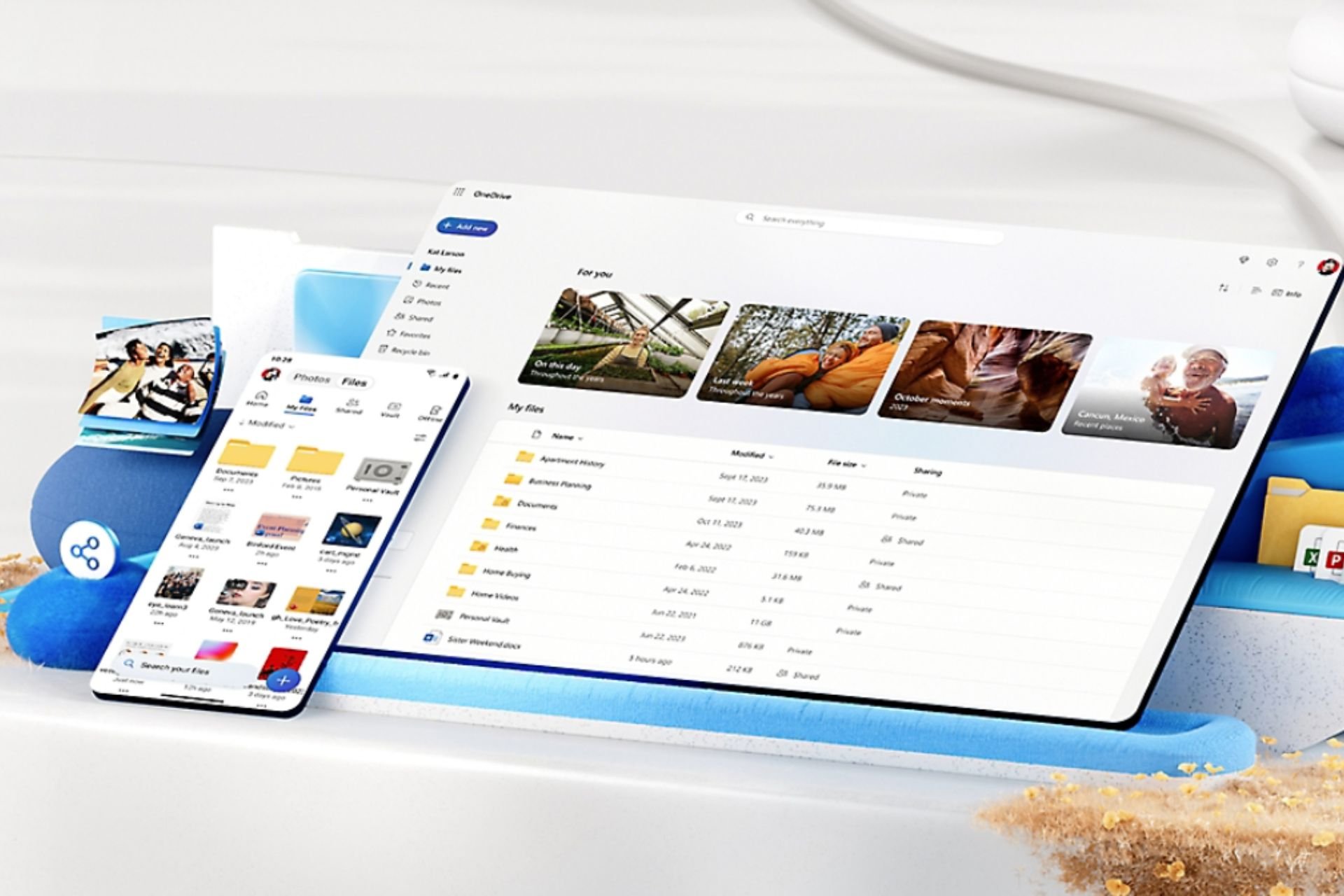
Starting mid-March 2025, Microsoft will begin prompting users of its Microsoft 365 apps for Windows to back up their files to OneDrive.
These prompts will be displayed in Word, Excel, and PowerPoint, encouraging users to enroll in OneDrive Known Folder Move (KFM). The company announced this feature in a recent Microsoft 365 Message Center entry.
The rollout will first be available in public preview until early April 2025 and will be made generally available worldwide by early May 2025.
The message, “BACK UP THIS DOCUMENT: Share and work with others in this and other files using OneDrive,” will encourage users not yet enrolled in KFM to do so while using familiar desktop apps.
After selecting the “Open OneDrive” button, users can choose the folders they want to back up in OneDrive.
Microsoft has stated that these OneDrive backup prompts will not be displayed for users whose organizations have blocked OneDrive KFM.
The company advises admins to notify users of this change and provides the option to block KFM to ensure the rollout does not reach their endpoints.
This initiative is part of a broader effort to increase the number of Microsoft customers using the company’s OneDrive personal cloud storage service. Recently, Microsoft also started testing ad-supported versions of its Office desktop apps, allowing Windows users to create and edit documents with limited features, including only saving documents to OneDrive.
Even though Edge has become one of the fastest and most capable browsers on the market right now (and our editors agree), it seems Microsoft still hasn’t taken time to make it work properly on the Xbox app.
We have known for a while that Edge is not working as it should on Xbox. While there are solutions to fix it on certain Xbox consoles, on newer consoles, such as Xbox Series S and X, Edge seems to appear as a blurry browser with low resolution, causing frustration to many users.
On Reddit, for example, after one user reported the issue, several others said they were affected by the same problem, and no matter the workarounds: restarting the app, then the console, and so on, nothing would work.
Every single other game I’ve played works very well, and Netflix, Disney+, etc works with no problem. However, the Microsoft Edge app is super blurry and just impossible to use. I’ve configured the display settings correctly already, and I’ve also restarted my Xbox who knows how many times. Please help
Some users insist that Microsoft must solve this issue because anything else just doesn’t work. Others agree that users should try installing a different browser.
Either way, the issue seems to have spread and is affecting many people at this point. Maybe Microsoft should do something about it.
Microsoft has quietly rolled out support for the JPEG XL image format in the latest Windows 11 24H2 update. This new feature, available through an extension in the Microsoft Store, promises to enhance image quality and compression capabilities, which makes it great for photographers and web developers alike.
JPEG XL, a royalty-free image format, offers significantly better image compression than traditional JPEG files while maintaining high quality. Unlike newer image formats such as HEIC, AVIF, and WebP, which originated from video codecs, JPEG XL was specifically designed to give photographers more control over their images. The format supports a wider color gamut, faster encoding and decoding times, and can save up to 75% of storage space.
To enable JPEG XL in Windows 11, you need to download the JPEG XL Image Extension from Microsoft Store. This extension is currently only compatible with Windows 11 version 24H2, but it only works if your Windows 11 version is 26100 or higher.
In tests conducted by Windows Latest, images in the JPEG XL format were found to have nearly the same quality as their JPEG counterparts but with a file size reduction of approximately 47.90%. However, it was noted that the Photos app does not yet support opening JPEG XL files, although thumbnails and file previews are visible in File Explorer.
Bladee, the mysterious Swedish rapper who has been gaining a huge following thanks to his ethereal music, has partnered with Microsoft to develop Sanctuary, an immersive AI project that resembles a horror video game.
In the latest blog post for Unlocked, the Redmond-based tech giant has released a video blog that features Bladee, in a rare appearance, and James Ferraro, talking about Sanctuary and the possibilities of AI in creating moving pieces of art.
Not much is revealed other than Sanctuary is an immersive experience, that features a shifting labyrinth where mythic archetypes and technology intertwine, per Microsoft’s description.
Step into an endless digital labyrinth where mythology and technology collide, blurring the lines between ancient archetypes and modern storytelling. Bladee partnered with experimental artist James Ferraro to create Sanctuary, an interactive world designed to challenge perceptions of artificial consciousness and symbolic representation. Participants engage with digital entities that reflect deeper cultural and historical narratives allowing for philosophical interactions. “I think that is like the point of the game—being interactive lets people access this vast body of material and extract meaning from it,” Bladee explains.
Based on the material posted in the blog, Sanctuary looks like a horror video game similar to the legendary Silent Hill 2, where AI translated Bladee’s poem into uncanny, and terrifying 3D spaces.
You can watch the interview below.
At the same time, if you’re interested in playing Sanctuary, you should know you can already do it, for free, by just accessing the game here. You’ll be asked to type in your email, and once the game is loaded, you can play it.
It’s creepy, and quite terrifying at times, and as any other horror-like game, it might be worth playing it at night, for a whole immersive experience. You can play it directly in your browser and move around using your mouse and keyboard. You might also want to put in your headphones, but beware, the atmosphere can creep you out. If you’re a fan of the Silent Hill franchise, you should give Sanctuary a try.
And, of course, let us know your experience with it.
Microsoft will enhance the new version of Outlook for Windows with a new feature called “2-click view” for encrypted emails.
This means that before you can open an encrypted email, you need to click twice to confirm that you want to see it. This helps keep your email secure by ensuring only you can open encrypted messages.
Announced in a recent entry to the Microsoft 365 Roadmap, the Redmond-based tech giant says admins can set this up so that everyone has to confirm before accessing these secure emails.
New Outlook for Windows will now support 2-click view for encrypted emails. This feature enables admins to require user confirmation before allowing access to encrypted emails. #newoutlookforwindows
It’s an extra layer of protection to keep sensitive information safe. Starting in April, it will be generally available in the New Outlook for Windows.
Microsoft has rolled out the latest update for its Edge Dev Channel, bringing the version to 135.0.3168.2. This update introduces several new features and improvements, enhancing the overall user experience across various platforms, including Windows, macOS, iOS, and Android.
One notable addition in this update is the inclusion of the browser icon in the update menu item, making it easier for users to identify and access updates. Additionally, the Adjust campaign has been added to the extension hub, providing users with more options and flexibility when managing their extensions.
The update also addresses several issues that have been affecting users. For instance, a problem where a saved tab group caused the browser to crash has been resolved.
Similarly, the browser will no longer crash after clicking on the Feedback icon in Guest Mode. Other fixes include resolving issues with clearing data when logging out of an MSA account on iOS, and crashes occurring while loading FRE/Soft FRE in incognito mode.
Regarding behavior changes, the update ensures that the Copilot side pane will close when the new tab page is closed without interacting with the auto-opened side pane. Additionally, the Game Assist browser can close tabs by clicking the mouse scroll wheel.
The update resolves issues related to VPN reconnection, landscape mode spacing, and the reading aloud feature for iOS users.
Android users will benefit from smoother zooming in and out of online PDFs, and the browser will no longer automatically switch to the user’s work profile.
Mac users will see improvements in the flash welcome page experience and the correct display of ‘Create account’ instead of ‘Sign in to sync’ during FRE when no account is detected.
Microsoft has issued a reminder to users on how to prevent automatic random updates on Windows 11 and Windows 10, addressing a common concern among users who find these updates disruptive.
Automatic updates are designed to keep systems secure and up-to-date with the latest features and security patches. However, they can sometimes occur at inconvenient times, causing interruptions to work and other activities. To mitigate this, as spotted by Neowin, Microsoft published a support article with several methods to control when and how updates are installed.
1. Pause updates temporarily: You can pause updates for up to 35 days. This can be done by navigating to Settings > Update & Security > Windows Update and selecting Pause updates for 7 days. This option can be extended multiple times.
2. Set active hours: By setting active hours, you can specify the times when you are typically using your device, preventing updates from occurring during these periods. This can be configured in Settings > Update & Security > Windows Update > Change active hours.
We recommend keeping systems updated to ensure security and performance, but you can always do it on your own time and terms. Disabling your Windows updates completely could leave your system vulnerable to security threats.
Google Chrome has officially scrapped its plans to ship “auto dark mode” for web pages as a standard browser feature. Instead, the experimental flag that enables this feature will remain available indefinitely, due to its overwhelming popularity among Windows users. Google states that removing the flag would be “non-trivial.”
What’s happening?
The “Auto Dark Mode for Web Contents” flag, introduced as an experimental option, aimed to automatically render web pages in a dark theme, even if the website didn’t natively support dark mode. The feature was particularly useful for users who preferred a uniform dark mode experience across all websites, regardless of their design.
Auto Dark Mode for Web Contents flag. Image Credit: WindowsReport.
Chrome Auto Dark Mode won’t be a Feature, will Stay as a flag Forever
Initially, the flag was designed to test a similar functionality widely used in WebView, a system component for rendering web content in Android apps. In WebView, the feature is available as an API and has been well-received by developers and users alike.
However, Google’s attempt to integrate this functionality directly into Chrome was not successful. The company confirmed in a commit message that there are “no long-term plans to expose this more widely on the web.”
Despite its experimental nature, the “Auto Dark Mode for Web Contents” flag became one of the most popular flags among Chrome users, especially on Windows. Its widespread adoption made it a steady feature for many users who rely on it to reduce eye strain or prefer a darker browsing experience.
Originally, like most experimental flags, this one was set to expire. However, Google has now decided to extend its availability indefinitely, citing: “This is one of the top enabled flags on Windows, which makes removing it non-trivial.”
For now, users can continue to enable the “Auto Dark Mode for Web Contents” flag by navigating to chrome://flags and searching for the feature.
While forcing dark mode on unsupported websites can sometimes lead to rendering issues, the flag remains useful for those who prefer a darker browsing experience. However, it’s worth noting that the flag’s indefinite availability doesn’t mean it will receive updates or improvements. Google’s focus remains on encouraging websites to adopt native dark mode support.
Microsoft recently unveiled that Copilot, its AI model, will become native on Windows, and it will rely on NPU systems to complete tasks, which is excellent news, as the tool might finally become popular amongst users; however, there is good reason to believe that the Redmond-based tech giant might turn Copilot into a multi-modal AI chatbot, and we have found evidence for it in a recent published paper that talks about a tool capable of communicating with users through all sorts of media-based responses.
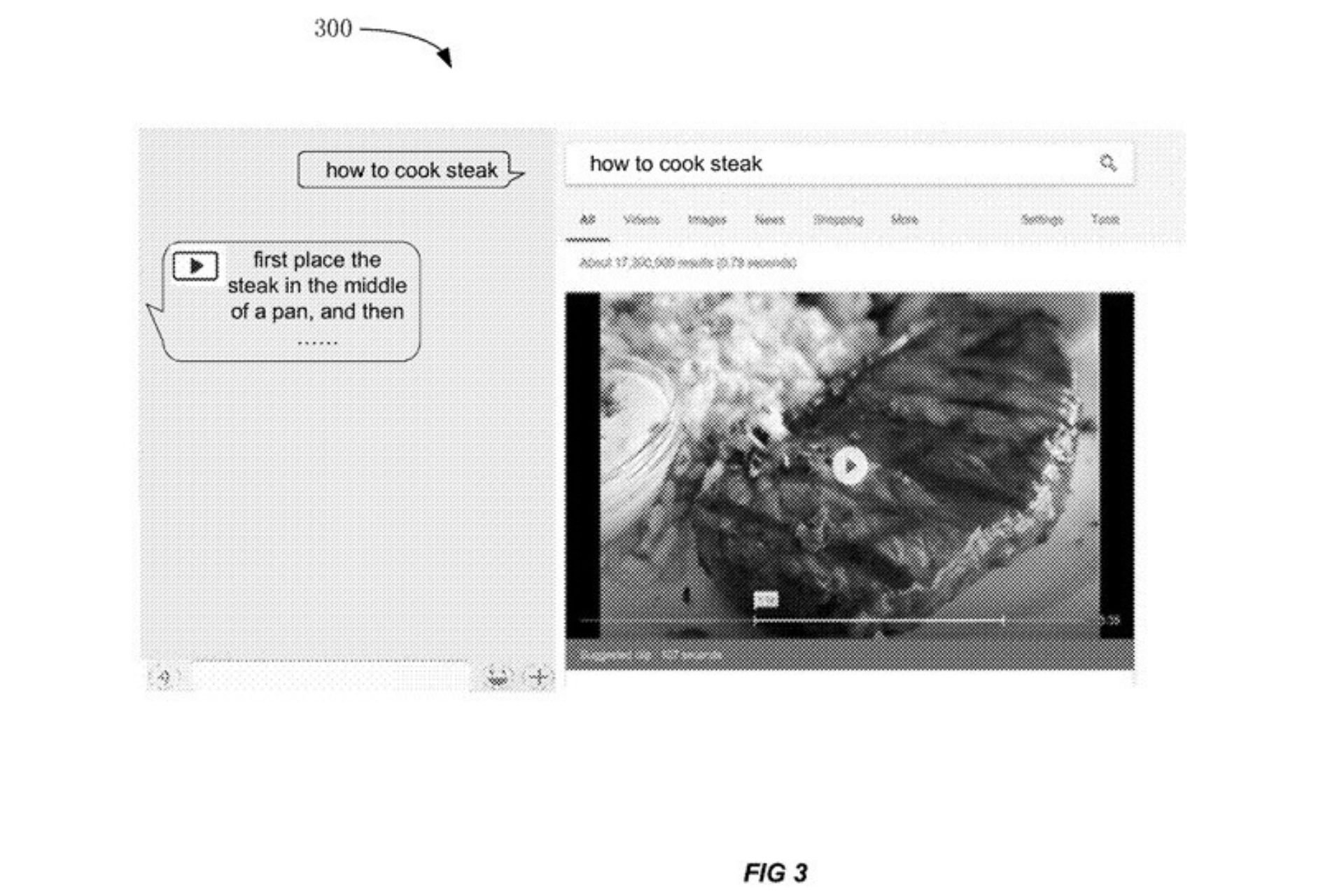
The paper, called Videochat, discusses a new chatbot technology called “multi-modal chatting.” This technology allows chatbots to interact with humans using different responses, including text, images, videos, and sounds.
Instead of replying to users with text (but it can still respond with it, if the users want to), Microsoft envisions this multi-modal chatbot capable of communicating using various types of media (like pictures, videos, etc.).
The goal? First, Copilot could express itself in more diverse and affluent ways using different responses. This would make the conversation more engaging and enjoyable for users and easier for them to get along.
Second, a Copilot capable of multi-modal responses in a natural way would make it more practical in the context of an operating system, such as Windows. The way the paper describes the videochat-based multi-modal chatbot is similar to a search engine, such as Google, or Bing, but capable of understanding the user.
For example, the tool uses a video search engine to take users’ queries and respond to them accordingly when communicating through videos.
Could it be possible? Surely, so. The technology could potentially open dozens of opportunities for Microsoft: the AI model can become Windows’ de facto search engine, without having to access Google. It can also act as a video aggregator, showcasing videos, and other forms of content.
Microsoft has announced the introduction of two innovative AI agents, Sales Agent, and Sales Chat, aimed at revolutionizing sales processes within organizations. These new agents are designed to enable sales teams to focus on higher-value activities and drive sales success.
According to Microsoft, the Sales Agent operates autonomously, performing tasks such as researching leads, setting up meetings, and reaching out to customers. For low-impact leads, the Sales Agent can even complete a sale independently. By leveraging data from CRM systems, the web, and Microsoft 365, including emails and meetings, the Sales Agent personalizes every response to potential leads.
The Sales Chat agent assists sales representatives in preparing for new account customer meetings by providing information based on CRM data, presentations, discussions, emails, and the web. Sales reps can use natural language prompts to request actionable insights, such as identifying deals at risk of falling through or creating plans to close deals.
Both AI agents will be available in public preview in May 2025 for Dynamics 365 and Salesforce. They can be accessed through Microsoft 365 Copilot and Microsoft 365 Copilot Chat, allowing sales teams to nurture and close deals without needing to open their CRM systems.
In addition to the new AI agents, Microsoft has announced the AI Accelerator for Sales program. This program aims to help customers transform their sales organizations using Microsoft 365 Copilot and agents, as well as migrate from legacy CRM system vendors. The program includes prebuilt agents for common sales processes, custom agents with Microsoft Copilot Studio, and model fine-tuning by Microsoft AI experts.
The AI Accelerator for Sales program will be available for select customers starting April 1, 2025. Although the news might seem disturbing, if you’re a salesperson reading, know that an AI tool will not replace you. At least not entirely. However, it will help you with many tasks, finding leads and managing potential clients.
Copilot for Sales is already out there. The new agents are only a continuation of automating sales processes. If you’re using AI sales tools, let us know what you think in the comments below.
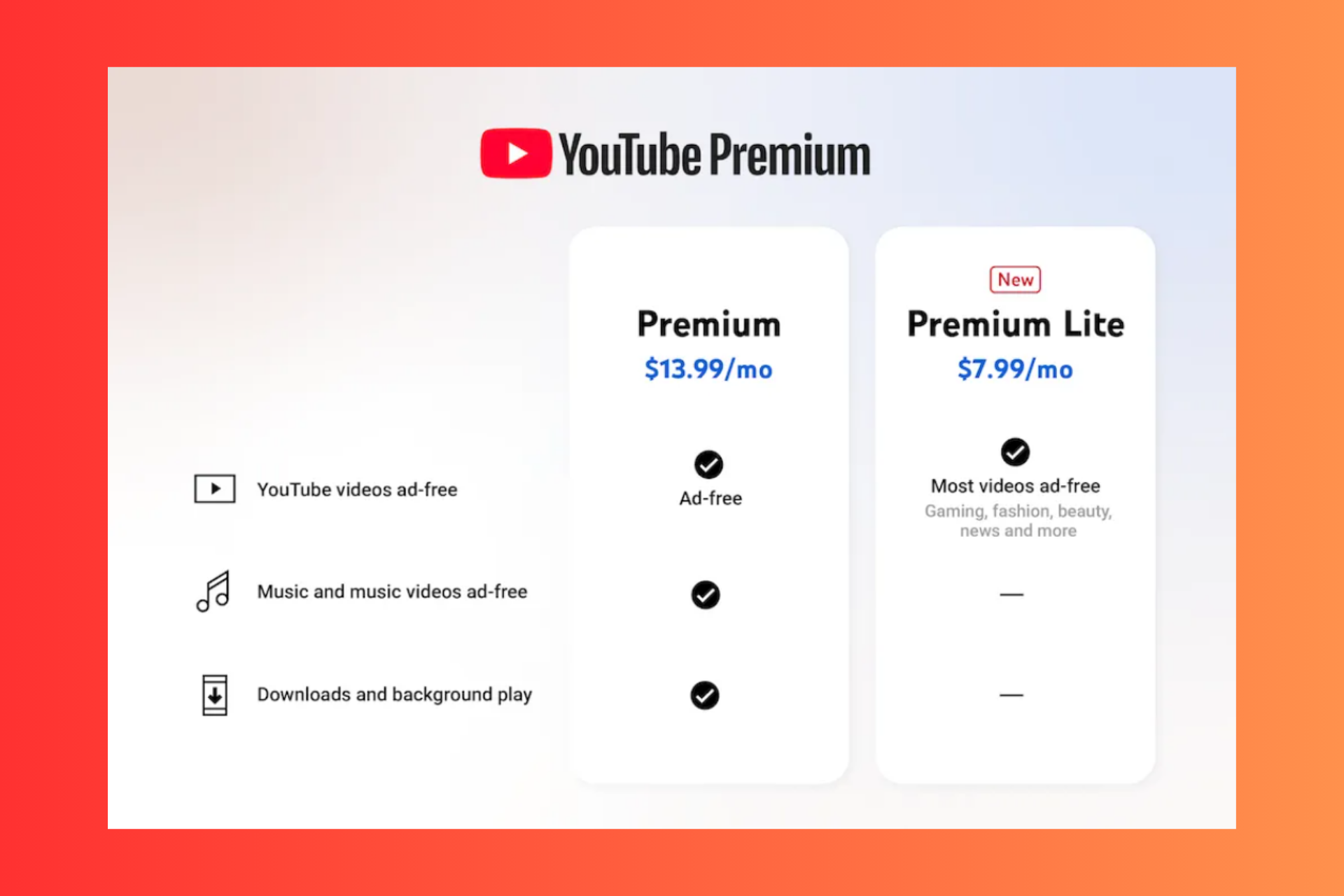
Google just launched a new YouTube subscription plan called YouTube Premium Lite in the US. It offers an ad-free experience on most videos for just $7.99 a month.
So, what’s the deal with Premium Lite? Well, it’s a more affordable option compared to the regular YouTube Premium, which costs $13.99 a month. Now, the part with most videos is not really clear. Google mentions gaming, fashion, beauty, news, and more. You won’t have free access to YouTube Music so, you’ll probably still see ads on music content, music videos, and Shorts.
Another thing to note is that Premium Lite doesn’t include some of the perks that come with the full Premium plan. For example, you won’t be able to download videos for offline viewing or play videos in the background.
Google has been testing Premium Lite in a few countries, and now it’s finally available in the U.S. They’re also planning to expand it to more regions, including Thailand, Germany, and Australia, in the coming weeks.
So, if you’re looking for a cheaper way to enjoy YouTube without some of the ads, Premium Lite might be worth checking out.
You certainly remember the Black Basta hacker group exploits. Well, according to a new Zscaler security experts report recorded by Bleeping Computer, they discovered links between the Black Basta and Cactus ransomware gangs, with both groups employing similar social engineering tactics and utilizing the BackConnect proxy malware for post-exploitation access to corporate networks.
In January, Zscaler discovered a Zloader malware sample containing a new DNS tunneling feature. Further investigation by Walmart indicated that Zloader was deploying a new proxy malware called BackConnect, which contained code references to the Qbot (QakBot) malware. BackConnect acts as a proxy tool for remote access to compromised servers, allowing cybercriminals to tunnel traffic, obfuscate their activities, and escalate attacks within a victim’s environment without detection1.
Both Zloader, Qbot, and BackConnect are believed to be linked to the Black Basta ransomware operation, with members utilizing the malware to breach and spread through corporate networks. These ties were further strengthened by a recent Black Basta data leak that exposed internal conversations, including those between the ransomware gang’s manager and an individual believed to be the developer of Qbot1.
In a new report by Trend Micro, researchers found that the Cactus ransomware group is also utilizing BackConnect in attacks, indicating a potential overlap in members between both groups. In the Black Basta and Cactus attacks observed by Trend Micro, threat actors employed the same social engineering tactic of bombarding targets with an overwhelming number of emails. The attackers then contacted the targets through Microsoft Teams, posing as IT help desk employees, and tricked victims into providing remote access via Windows Quick Assist.
Right now, no one knows whether Cactur ransomware is a distinct group or just a branch of Black Basta. Coincidently or not, we also recently reported about a massive botnet attack on Microsoft 365 attacks. We’re going through hard times when cybersecurity is of high-level importance for any organization.
Teams will finally allow managers and organizers of webinars and virtual meetings to choose the right time to show shared content to participants.
According to a recent entry to the Microsoft 365, an improvement to the ‘Manage what attendees see’ feature lets organizers and presenters decide when to show shared content to attendees. This feature works for Meetings, Webinars, and Town Halls.
In other words, organizers and presenters now have better control over when attendees can see the content shared during different events.
An enhancement to the ‘Manage what attendees see’ feature, allowing organizers and presenters to control when shared content is visible to attendees. This capability is available for Meetings, Webinars and Town halls.
The new enhancement will be rolled out to Microsoft Teams in April 2025, and it’s quite useful for preventing uncomfortable situations, such as sharing the wrong content in webinars.
Microsoft will enhance Edge with a new way to deploy and manage organizational passwords. According to a recent entry to the Microsoft 365 Roadmap, the secure password deployment feature in the Edge management service helps administrators (admins) give encrypted shared passwords to a group of users.
This allows users to easily log into websites without seeing the actual passwords, reducing the chance of unauthorized access and making the organization more secure overall.
The secure password deployment feature in the Edge management service enables admins to deploy encrypted shared passwords to a set of users, allowing them to log into websites seamlessly without ever seeing the actual passwords. This reduces the risk of unauthorized access and enhances the organization’s overall security posture.
The enhancement will be previewed this month, and in April, Microsoft plans to roll it out generally to all users.
The enhancement should make the case for Edge to become the preferred browser for organizations: it will be harder for phishing actors to hack corporate infrastructures.
Coupled with another recently released enhancement that makes the browser 40% faster, Microsoft Edge is now on par with Chrome in terms of performance.
After Qualcomm launched its Snapdragon X and X Elite CPUs, everyone expected a revolution around the ARM, but it was more like a gust of wind, not a storm. The chips didn’t prove to be that great on gaming, and they had a few shortcomings running Windows native apps.
Recently, Qualcomm announced their cheapest SoC, to be installed on $600 budget laptops. Now, everyone is waiting for their new generation of processors, taunted as Snapdragon X2. The first rumours of the newest chips came from Windfuture. According to their sources, the next-generation Snapdragon X2 chips are expected to feature up to 18 Oryon V3 CPU cores. Obviously, it’s a substantial increase from the 12 cores offered by the first-generation Snapdragon X Elite for PCs.
Allegedly, the new Snapdragon X2 processors will employ a System-in-Package (SiP) configuration, integrating memory and storage into a single package. The new design is anticipated to enhance the chips’ performance in both single-threaded and multi-threaded applications.
According to reports, the flagship chip in the Snapdragon X2 lineup will boast 18 CPU cores, 48GB of SK Hynix RAM, and a 1TB SSD, all within a single package. This configuration is expected to provide Qualcomm with a competitive edge against industry giants AMD and Intel in the high-end PC market.
Apparently, the Snapdragon X2 chips are part of Qualcomm’s broader strategy to expand its presence beyond the laptop segment and into the desktop market. The company is reportedly testing the SC8480XP chip with an all-in-one liquid cooler, indicating its potential use in desktop PCs.
What we do know for sure is that the latest rumors are to be taken with more than a grain of salt. It would be clearly a step forward for Qualcomm to venture into the desktop PC area, but competing with AMD and Intel on gaming looks like a tiny spot on the horizon.
We have learned about this from TechSpot. Tell us what you think about the latest Qualcomm Snapdragon X2 rumors in the comments below.
Good news for PowerPoint users: Microsoft Designer will use Copilot to create complex PowerPoint presentations based on all the data the AI model has access to. The new enhancement was announced in a recent entry to the Microsoft 365 Roadmap.
Microsoft Designer is a tool for creating slides and presentations by suggesting layouts, designs, and templates. Its integration with Copilot means Copilot can use Designer’s features to help you even more.
For example, the AI model can suggest different slide layouts and templates when working on a presentation. This makes it easier to create visually appealing slides without spending too much time on design.
These suggestions from the Designer are displayed in a vertical gallery, making browsing the options simple and choosing the ones you like.
Designer is now part of Copilot. Copilot Suggestions now brings you familiar Designer slide layout and presentation template suggestions in a vertical gallery, along with new capabilities.
The new enhancement is rolling out to users this month, and it should be generally available to all by the end of March.
Thanks to a new ad, Microsoft is letting users experience Copilot in Bing when searching for other AI models on this engine. We noticed the new trend in Edge Dev, and every time we looked for other models, such as ChatGPT or Claude, Bing would pop up a separate box at the top of the page, allowing us to ask Copilot a question.
However, Microsoft doesn’t stop here. We also discovered Edge plasters Copilot ads in the browser’s Settings page. We spotted it on Edge Canary, so it seems that the strategy is to attract as many users as possible to try out Copilot.
Given Microsoft’s ways of forcing its customers to bump into ads for its services and products, this shouldn’t be a surprise.
This method, though, is new and also quite frustrating for promoting this AI model. Just like Microsoft has done it with Edge in the past through all sorts of bad-positioned ads, the Redmond-based tech giant is now doing it on Bing, and it might hurt the chances of this search engine becoming more popular.
Users might realise that Bing will first focus on ads and then show relevant search results. As Google’s main competitor, Microsoft should consider toning it down, at least in Bing.
If the newly discovered ad in Edge Setting is acceptable, the one in Bing could backfire, making users turn away from it.
What do you think about this new Copilot ad in Bing?
Microsoft introduced the Rewrite feature in Notepad in November last year, but back then it was only available in selected countries for Copilot Pro subscribers. In February, Microsoft decided to offer this feature for free to anyone.
Recently, I wrote a story about Notepad’s Rewrite feature and its ability to collect data for safety purposes in you log into the app with your Microsoft account. Rewrite uses Copilot to summarize your text, or make it longer, change the tone (even to humor) and the format.
Going through the format option, I stumbled upon an interesting one: Poetry. And what better test for a poet than to transform a utilitarian, pragmatic, and technology-oriented text into poetry?
So, I went ahead and pasted a passage from our guide about the causes of BSoD to test this amazing feature and I was not disappointed. Here’s what Copilot wrote in Notepad as a result:
The Blue Screen of Death, a sight so grim, Stops your PC from going out on a whim. Drivers and hardware that just can’t cope, Leave you staring, devoid of hope.
When this screen pops up, your work’s in the bin, Ignoring it now? Well, that’s a sin! Here are some tips to banish despair,
Restart your PC, give it some air, A quick reboot might tidy the mess, Fixing the error, reducing the stress.
Update or ditch those drivers gone bad, For many a BSOD, this makes you sad. Faulty hardware can also be a pain, Tossing the trouble can make it all gain.
If you made changes and the screen showed up, A system restore might fill your cup. Scan for malware, those pesky little bugs, Can make your system feel like it’s been mugged.
In desperate times, when files start to flee, A clean install might just set you free.
To be fair about Copilot’s effort, I also changed the tone to Humor, to make things even more entertaining for you. Probably the verses In desperate times, when files start to flee, a clean install might just set you free, will permanently remain stuck in my head for days.
Of course, when you’re facing a BSoD, the least you want at that moment is to decipher a poem on how to fix it. It can only be filed as a humorous application for this purpose, but you must agree that Copilot did the absolute best with what it was tasked with. Not only that, but it provided no less than 6 versions of the poem to choose from.
What would you transform into poetry using Notepad? Leave your thoughts in the comments section below.
Following Chrome, Microsoft has begun highlighting its AI Assistant, Copilot, within the Edge browser. An advertisement at the bottom of Edge’s Canary settings prompts users to seek Copilot’s assistance to find solutions when encountering problems.
Microsoft has integrated Copilot into the Edge browser. You can ask it questions and generate page and video summaries anytime by clicking on its icon at the upper right of the Edge browser. Copilot will open in the sidebar where you can submit your queries and get answers.
Recently, we reported that Google Chrome has started nudging users to open Gemini from the tab bar with notifications. This could be a coincidence, or Microsoft wants users to know and ask about the AI Assistant available in the Edge browser.
At the bottom of the settings page in Edge Canary, you’ll now see an ad that says, “Running into a problem? Ask Copilot to offer known solutions.”
Clicking “Ask Copilot” opens Copilot in the sidebar with a pre-filled query regarding Edge Copilot AI assistance for the WebUI2 version of Edge settings, which Microsoft recently began rolling out.
Copilot further informs users that it will limit the current session to providing specific guidance on questions related to Microsoft Edge and will wait for user input before responding.
Copilot, powered by advanced AI, is designed to provide real-time assistance by offering solutions based on commonly known browser issues. While this could be a convenient feature for some users, the direct promotion of AI assistance in a settings menu raises questions about Microsoft’s approach to integrating ads within the browser’s interface.
Given Microsoft’s strong focus on AI integration, including recent tests on the inclusion of AI History Search, Microsoft may push even more ads to make users aware of Copilot’s presence in the Edge browser.
Why do we call this an ad or Microsoft’s promotion of Copilot in the Edge browser? Because, Copilot has been deeply integrated, appearing on the sidebar and in the right-click context menu for highlighted text as “Ask Copilot.” Microsoft has indeed shown Edge Copilot prompts in settings to educate users about Edge settings via Copilot, but this one is a targeted ad.
What do you think of Microsoft showing Copilot Ads in Edge Settings? Do you use Copilot? Let us know your thoughts in the comments below.
As you might know already, Copilot is now a native Windows app. This means it won’t be based on the Cloud to complete tasks; instead, it will rely on the device’s NPU systems to respond faster and generally get things done more easily.
However, as tech enthusiast @TheBobPony smartly noted, Copilot cannot open Windows apps independently. After being asked to open the Notepad app, Copilot came up with the classic answer of guiding users to open it themselves.
Copilot is finally a native app in Windows! ? It still can't open apps for me. ? pic.twitter.com/EkkJG3c4CT
Or, wouldn’t it be cool for Copilot to complete this kind of task? I remember when Microsoft first introduced Copilot in Windows, back in 2023. In the trailer for it, the Redmond-based tech giant showcased how Copilot can automatically set the dark theme in Windows 11 on.
I have always assumed a native Copilot could complete such tasks. Why? Because it would make the AI model truly useful. Imagine just how useful it would be to have Copilot enable options or open apps in Windows, especially if you’re not knowledgeable of the Windows infrastructure.
The tool could actually end up being a popular tool inside the operating system, and it would make Windows users appreciate AI more than they do now.
Let’s not forget that Microsoft’s actions are turning AI into a nuisance for many users. From raising the price of Microsoft 365 plans only because they included AI to plastering the technology everywhere, the Redmond-based tech giant’s actions are counterintuitive: they’re not introducing this technology naturally, in a way that combines its capabilities with practicality, and instead, the company trusts its users to know what to do.
It doesn’t work that way. Let’s hope Microsoft will learn this soon.
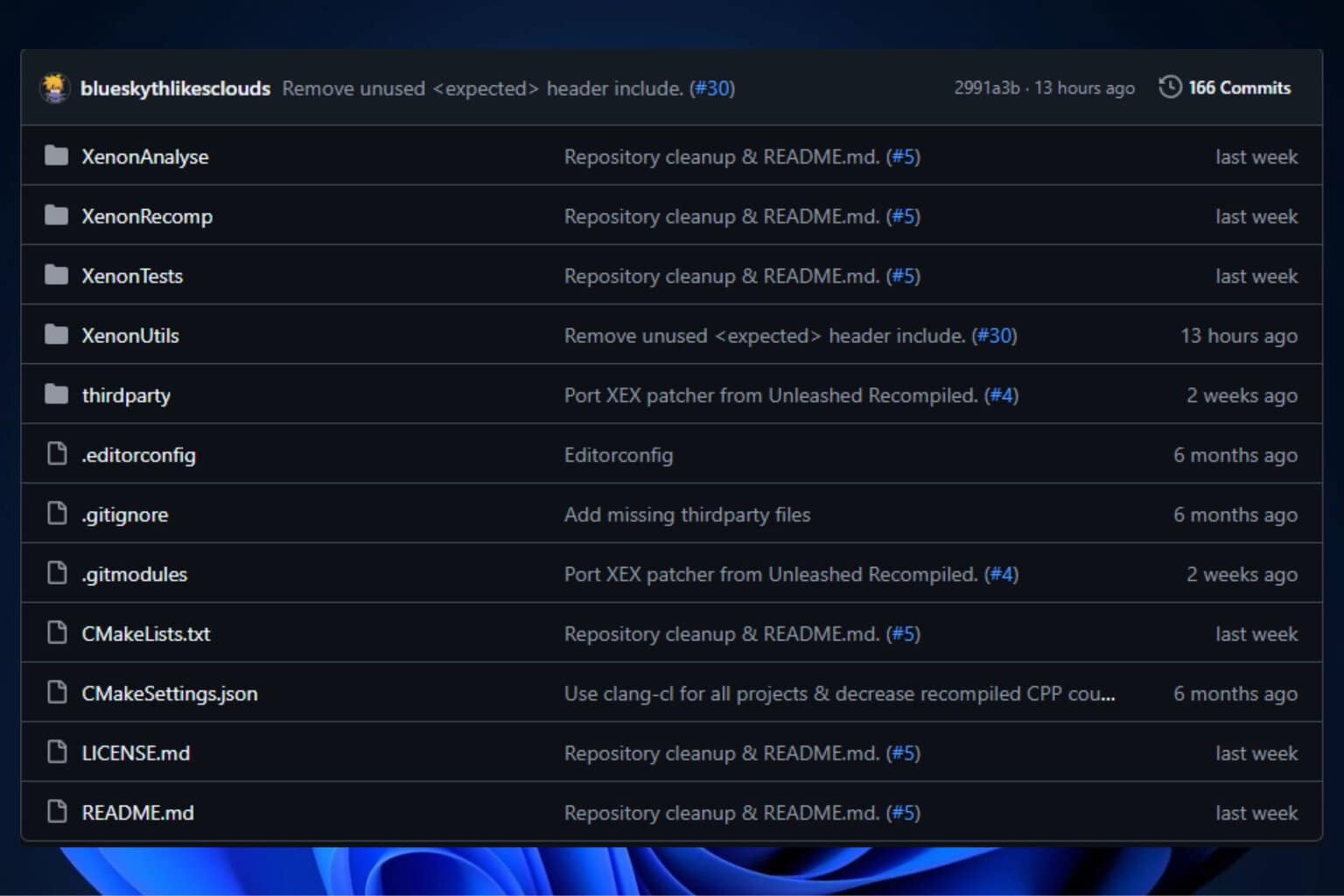
We have some good news for the gaming community: XenonRecomp, a cutting-edge tool developed by hedge-dev that converts Xbox 360 executables into C++ code, enabling them to be recompiled for any platform, has been released. This innovative project, inspired by N64: Recompiled, aims to bring Xbox 360 games to a broader audience by making them accessible on various platforms.
XenonRecomp is designed to convert Xbox 360 executables into C++ code, which can be recompiled for any platform. The tool currently supports x86 platforms due to the use of x86 intrinsics. Why should gamers be excited about it? It has the potential to breathe new life into classic Xbox 360 games.
The tool directly converts instructions without making them resemble decompiled code. The CPU state is passed as an argument to every PPC function, including definitions for every PPC register and their current values at execution. The second argument is the base address pointer, as the Xbox 360 CPU uses 32-bit pointers.
One of the key features of XenonRecomp is its handling of memory loads and stores. Since the Xbox 360 is a big-endian machine, the memory load instructions swap endianness when reading values, and memory store instructions reverse it to big-endian before writing. This ensures accurate emulation of the original hardware.
While the tool is still in development, many PPC instructions have already been implemented. Some instructions, like the D3D unpack/pack instructions, do not support all operand types. A warning is generated when a missing case is encountered, or a debug break is inserted into the converted C++ code.
XenonRecomp is a promising tool that has the potential to revolutionize the way Xbox 360 games are experienced on modern platforms. The team behind it also promises the tool will be further enhanced and improved in the following weeks.
Xbox 360 is arguably Microsoft’s most popular console. During its lifetime, the Redmond-based tech company produced three versions that were available to purchase: the original Xbox 360, released in 2005, the redesigned slim model Xbox 360 S, released in 2010, and the final model, Xbox 360 E, released in 2013.
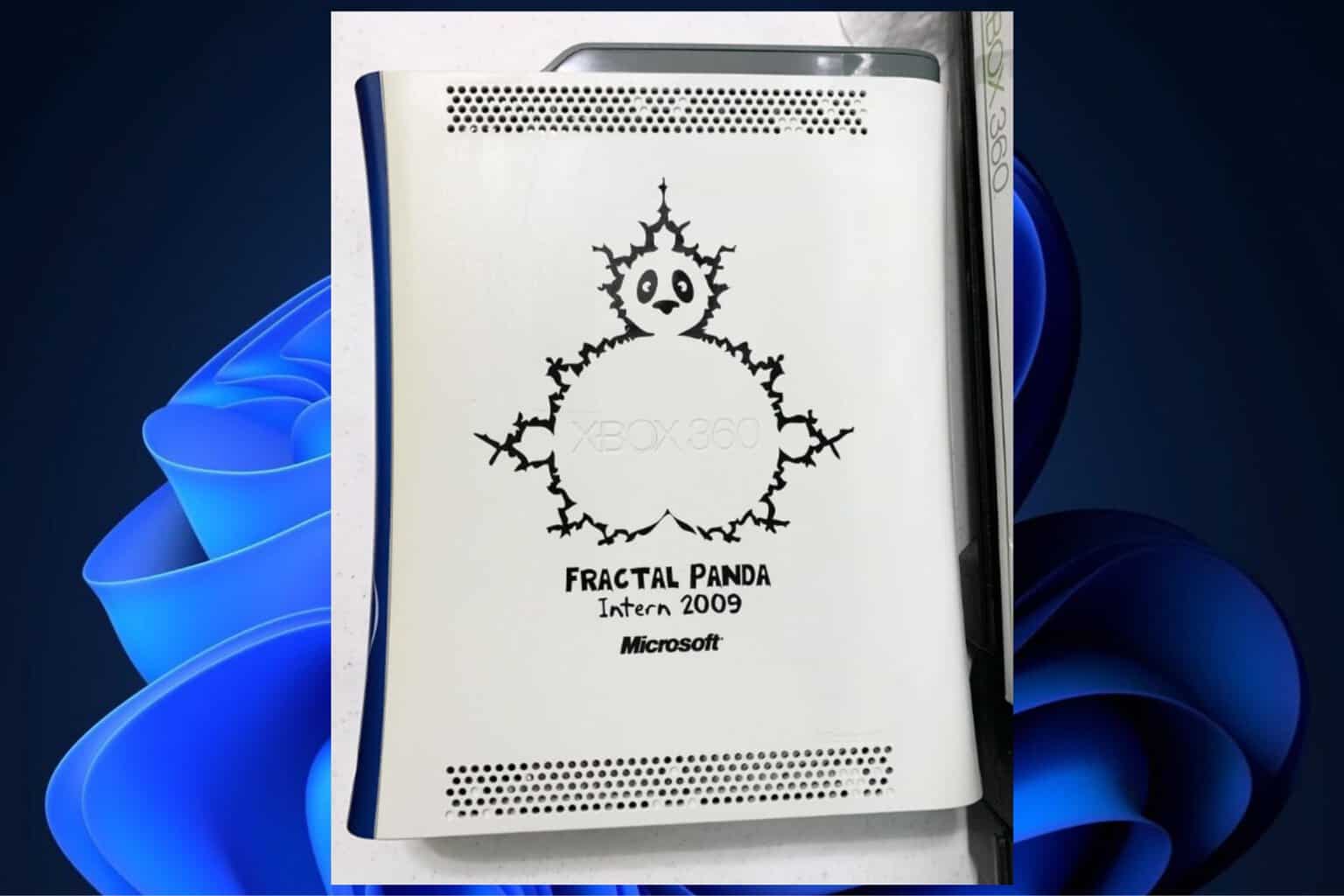
However, most people don’t know that Microsoft also released rare versions of the Xbox 360 consoles, including one called Fractal Panda, which was made explicitly for Microsoft interns and released in 2009.
The console resembles the PlayStation 5 of today in many ways: it is slim, with rounded angles and a similar port design. The Fractal Panda Xbox 360 console has a unique logo: Fractal Panda Intern 2009 Microsoft.
The console is quite rare, with a score of 76 on Console Variations. According to the site, between 100 and 500 such consoles were produced in the US. The Reddit user claims that these consoles were specifically made only for Microsoft interns, and they are one of the rarest versions of the Xbox 360.
There were about 150 of us in the program. About 25 people left the program early. More than half aimed for jobs at Microsoft instead of Xbox, so only about 50 people ordered the special edition system. I’ve been told this is one of the rarest versions of the xbox 360.
Take a look at it. What do you think, does it look similar to PlayStation 5?
It’s worth noting that you can still play on the Xbox 360 console, if you have one, but as you might know already, Microsoft retired the Xbox 360 Marketplace over a year ago.
D3dx11_42.dll is a component of DirectX which is critical especially when playing games. You may be unable to launch or play games if this DLL file is missing.
How do I fix d3dx11_42.dll not found error?
1. Perform DISM and SFC scans
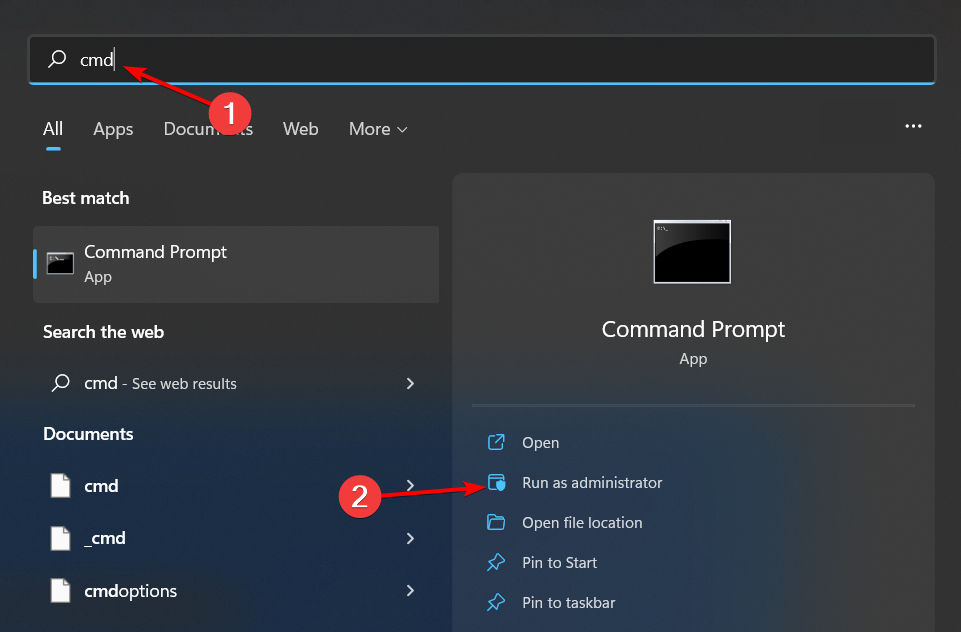
Hit the Start Menu icon, type cmd in the search bar, and click Run as administrator.
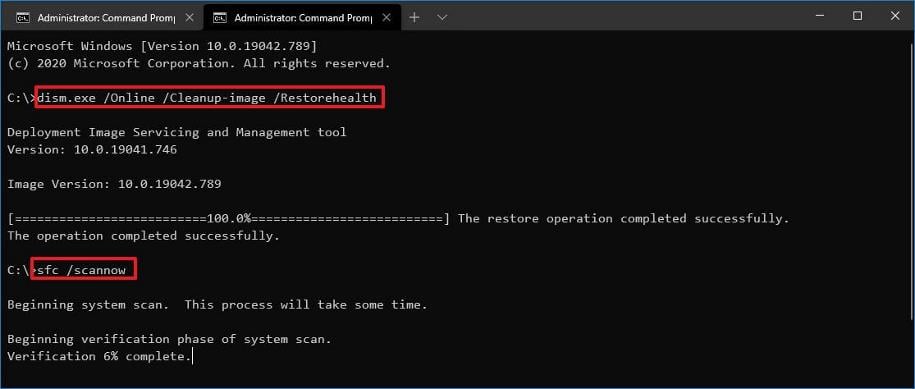
Type the following commands and press Enter after each one:DISM.exe /Online /Cleanup-Image /Restorehealthsfc /scannow
2. Reinstall DirectX11
Press Windows + R to open the Run window.
Type dxdiag and click OK to open DirectX Diagnostic Tool.
Go to the System tab and check the DirectX Version; it should be DirectX 11.
Press the Windows key + X and select Device Manager.
Double-click the Display adapters option to expand it and right-click the device there.
Now, select Update driver.
Finally, click Search automatically for drivers and install any available updates.
4. Verify game files
Press the Windows key, type steam or in the search box, and click Open.
Go to Library, right-click the game, then select Properties from the context menu.
From the left pane, click Installed files, then click Verify Integrity of Game Files.
The scan will start, and all the missing or damaged game files will be replaced with healthy files.
5. Re-register the DLL file
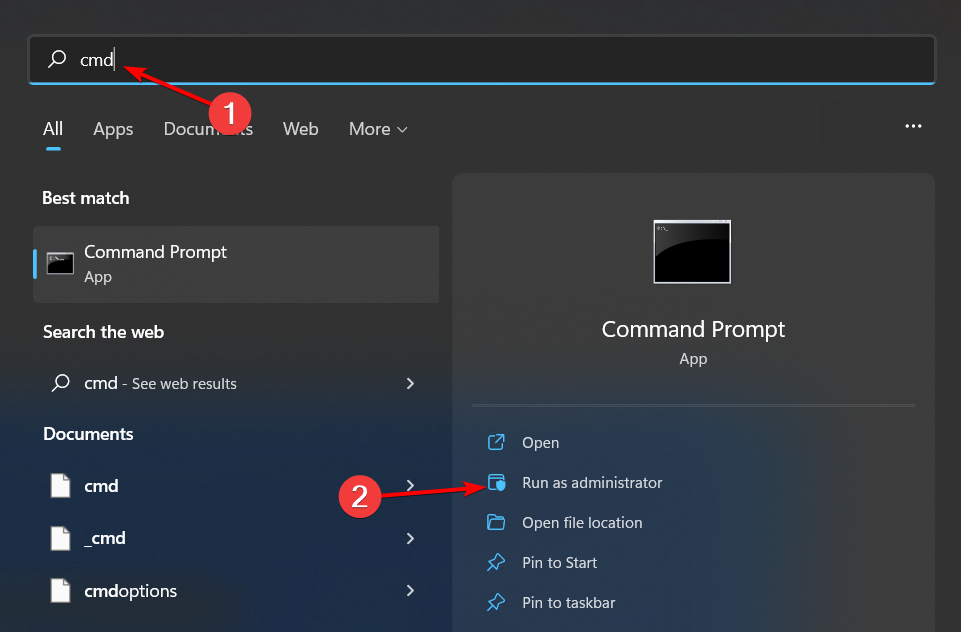
Hit the Windows key, type Command Prompt right-click on it, and select Run as administrator.
Type the following command and press Enter: regsvr32 d3dx11_42.dll
This command registers the missing DLL file. However, if more than one DLL file is not registered, you can use the following command: for %1 in (*.dll) do regsvr32 /s %1
Visit the DLL-Files website, search d3dx11_42.dll, choose an appropriate option, and click Download.
Double-click the downloaded folder to open, locate, and copy the .dll file.
Press the Windows + E keys to open the File Explorer.
Navigate to the specific game’s folder and paste it there
Close your File Explorer and try to launch the game and see if the error persists.
7. Reinstall the game
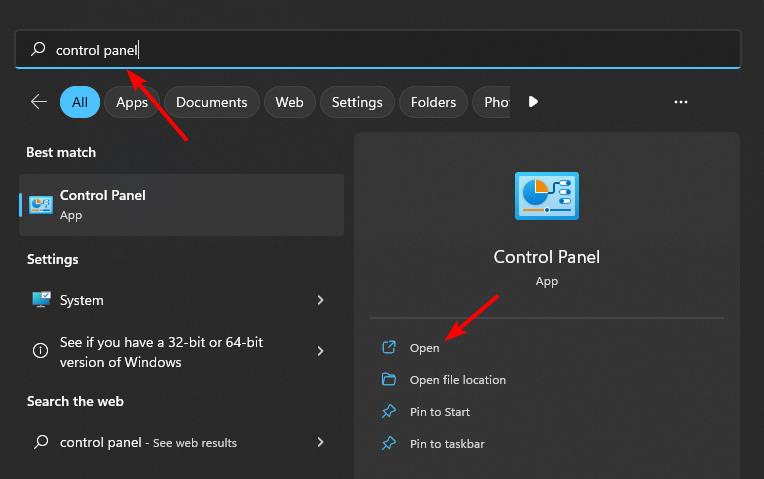
Go to the Windows Search Bar and type in Control Panel.
Under Programs, select Uninstall a Program.
Find the problematic game, right-click on it, and select Uninstall.
After the game has been successfully uninstalled, install it again.
Also, ensure your OS is up-to-date to resolve any compatibility issues that may be causing the d3dx11_42.dll file not to be found. For any other DirectX errors, we have compiled a comprehensive list to resolve them.
Further, if your device specs allow, we recommend getting DirectX 12 Ultimate for extra features to enhance your gaming experience.
That’s all we had from this article but do let us know if you tried any other solutions not mentioned here but worked for you in the comment section below.
Windows 7’s Aero style is probably one of the most popular aspects of the now-gone operating system. The translucent UI made the operating system look like something out of a science fiction movie.
Nonetheless, the Aero style had and still has many admirers. There are so many of them that some even took the time to reimagine Windows 8, 10, and 11 through the lens of the Aero style, and to be honest with you… it’s looking interesting, to say the least.
The reimagined versions were posted on Reddit, and it was a matter of days, the post gained thousands of reactions, meaning Windows users are pretty nostalgic about this particular style.
Here’s how Windows 8 would have looked if enhanced with the Aero style.
Windows 10, below:
And, finally, Windows 11:
Of course, Windows users are excited about these possibilities, and many wish Microsoft would bring back the popular style.
I’m drooling, these images seem like a dream.
Dear God, I want that fullscreen start menu it’s so cool.
This probably would have saved windows 8
This is not entirely news, as every year, the nostalgia hits. Last year, for example, people were excited about the possibility of Windows 11 being enhanced with the Aero style. This year, however, that includes Windows 8, and 10, as well.
We have to admit, Windows 8 looks quite good. The rest of them, maybe not. But what do you think?
Microsoft has announced the rollout of delivery and read receipts in Outlook for Android and iOS, enhancing the email experience for mobile users.
This new feature allows users to track their emails’ delivery and reading status, providing greater transparency and control over their communications.
Delivery receipts confirm that an email has been successfully delivered to the recipient’s mailbox, while read receipts indicate that the recipient has opened the email.
These features are useful for those who must ensure that their intended recipients have received and read important messages.
To enable delivery and read receipts in Outlook for Android and iOS, users can navigate to the settings menu and select the appropriate options under the “Tracking” section. Once enabled, users will receive notifications in their inbox when an email is delivered or read.
The new feature is available to Outlook Android and iOS users as part of the latest app update. Microsoft continues to innovate and improve its suite of productivity tools, ensuring that users have access to the best possible email experience on their mobile devices.
Outlook for Mobile was recently enhanced to recall accidental emails. Users can now unsend emails if they want to.
Microsoft is turning Copilot in Windows into a native app, which could run locally very soon. The enhancement was discovered in the Windows Insider Program, and shared on Reddit, with tech enthusiast @phantomofearth confirming it too.
There's a new Copilot app update, 1.25023.106.0, out in Insider channels that actually has a pretty much* fully native WinUI 3 UX (chat UI and everything), with bonus launch speed improvements. FINALLY. (first spotted here: https://t.co/XGmxLiqYU5 ) pic.twitter.com/QwfJ7rgUEH
Copilot will have a fully native WinUI UX, including the chat and all of its abilities, which means the AI model should be much faster from then on.
Being a native app means the app should also be able to run locally without having to rely on the Cloud for the job. It will instead rely on the device’s NPU to complete tasks and provide answers—all of these, of course, at a formidable speed.
For now, the enhancement is only available to Insiders, but Microsoft should release it to all Windows users later this year.
Opera has announced the launch of Browser Operator, a pioneering AI agent that marks a significant shift in web browsing.
This innovative feature allows users to perform browsing tasks through natural language commands, transforming the browser from a mere display engine to an intelligent assistant capable of executing tasks on behalf of the user.
Browser Operator is designed to enhance user efficiency by allowing them to delegate tasks such as online shopping, booking tickets, and searching for information.
Users can instruct the browser in natural language, and the AI agent will carry out the tasks while keeping the user informed and in control throughout the process.
One of the Browser Operator’s key features is its ability to run natively within the browser. It utilizes the DOM Tree and browser layout data to understand and interact with web pages.
This approach ensures faster performance and better privacy protection, as it does not rely on cloud servers or virtual machines.
Opera’s Browser Operator is currently available as a feature preview and is expected to be rolled out to users soon as part of the Opera Feature Drop program.
In similar news, Opera recently unveiled a new browser, Opera Air, that aims to reduce anxiety and negative feelings when browsing the Internet.
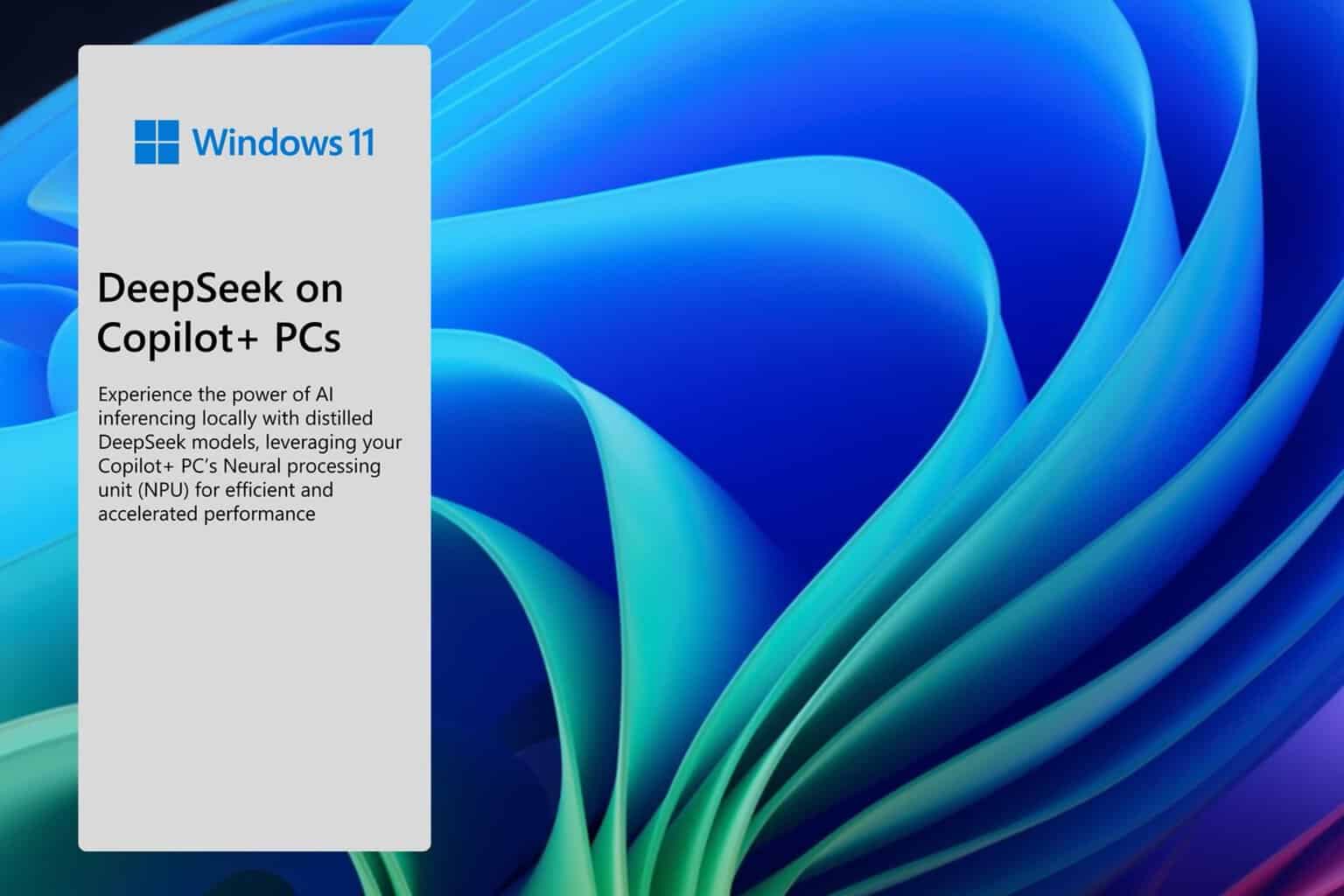
Microsoft has announced the availability of DeepSeek R1 7B and 14B distilled models for Copilot+ PCs via Azure AI Foundry. These new models build on the company’s vision of integrating AI seamlessly across cloud and edge systems, enabling developers to harness powerful AI capabilities directly on their devices.
The DeepSeek R1 7B and 14B models are optimized to run on Neural Processing Units (NPUs) in Copilot+ PCs, starting with Qualcomm Snapdragon X processors, then Intel Core Ultra 200V and AMD Ryzen processors. This optimization allows for efficient AI computation with minimal impact on battery life and thermal performance, freeing up CPUs and GPUs for other tasks.
The introduction of these models enables developers to build AI-powered applications that were previously not possible. The ability to run 7B and 14B parameter reasoning models locally on NPUs democratizes access to large-scale machine learning models, allowing for sustained AI compute power with less impact on device resources.
Microsoft has launched Dragon Copilot, an AI assistant tailored to medical situations. The solution combines the advanced speech recognition capabilities of Dragon Medical One (DMO) with the ambient AI technology of DAX Copilot, creating a unified voice assistant optimized for patient care.
According to Microsoft’s official announcement earlier this week, Dragon Copilot leverages technology from Nuance Communications, a speech recognition and AI leader, which the Redmond-based tech giant acquired for $19.7 billion three years ago.
The new AI assistant is built on a secure architecture with healthcare-specific compliance safeguards, and its goal is to provide the highest data protection standards.
At Microsoft, we have long believed that AI has the incredible potential to free clinicians from much of the administrative burden in healthcare and enable them to refocus on taking care of patients. With the launch of our new Dragon Copilot, we are introducing the first unified voice AI experience to the market, drawing on our trusted, decades-long expertise that has consistently enhanced provider wellness and improved clinical and financial outcomes for provider organizations and the patients they serve.
Dragon Copilot offers a range of features designed to streamline documentation and surface information and automate tasks. Clinicians can dictate medical notes during patient visits, search for medical information from trusted sources, and automate tasks such as conversational orders and clinical evidence summaries. The AI assistant also supports multilanguage ambient note creation, personalized style and formatting, and natural language dictation capabilities.
The new AI assistant will be available via the Microsoft Cloud for Healthcare. It will initially launch in the US and Canada in May, followed by later availability in the UK, Germany, France, and the Netherlands.
It will be interesting to see how the healthcare industry adopts this model, if it will happen at all. Nonetheless, a healthcare-focused AI model is not exactly unexpected from Microsoft: the company has already patented several similar technologies, all involving artificial intelligence taking care of healthcare-based tasks.
Microsoft is enhancing OneDrive to make it easier to edit PDF files. According to the most recent entry to the Microsoft 365 Roadmap, the Redmond-based tech giant will add a new annotation layout and tools for PDF editing.
The new PDF annotation layout has been designed to be more user-friendly. Previously, you might have searched different menus to find the tools needed to add notes or comments to your PDF files. These annotation tools are now conveniently placed in a single row at the top of the screen. This means you can quickly access and use them without any hassle.
Additionally, there’s a new eraser tool that allows for exact editing. This tool lets you easily remove parts of your annotations, even down to the smallest detail. This means you can erase specific portions of your notes or drawings one bit at a time, correcting mistakes or making precise adjustments easier.
The new PDF annotation layout features a more intuitive design where all annotation tools are now conveniently located in a single row at the top of the screen. A new type of eraser has been added to allow for more precise editing which can remove annotations pixel by pixel.
The new layout and tools aim to make annotating PDFs simpler and more efficient, allowing you to work more smoothly and effectively.
It will be rolling out this month, on all platforms.
Back in December last year, Steam had 39 million online concurrent users, but now, according to the latest charts, they reached the 40 million mark. That peak activity is bigger than the number of people in most countries in the world, and a new landmark proving that PC gaming strongly outpaced console gaming.
To be fair, this peak number that was achieved during the weekend totals all the gamers that were using the Steam platform at a particular moment. According to The Gamer, only 12,812,379 users were actually playing a game. The rest were just browsing through their libraries, chatting, or doing other things. They added that the top games that were played during the 40 million event were Counter-Strike 2, Monster Hunter Wilds, Dota 2, and others.
For years, Steam has been the go-to platform for gamers around the globe. From blockbuster releases to indie gems, it’s been where people gather, chat, trade, and debate the latest game strategies. Now, with 40 million users online simultaneously, it’s clear that the platform’s influence is only growing. Whether it’s during big sales events, major game launches, or just a typical busy evening, Steam’s numbers keep setting new standards.
Steam is definitely not perfect. It had, has, and will have a lot of issues, but it stayed strong when developers included AI-generated graphics without acknowledging that. It has clearly became the gathering place for the majority of PC gamers worldwide and it’s probably going to be that way for a long time.
Microsoft has officially announced the release of TypeScript 5.8, the latest version of its popular programming language that builds on top of JavaScript by adding syntax for types. This new release brings several enhancements and features to improve the developer experience and code quality.
One of the key highlights of TypeScript 5.8 is the introduction of granular checks for branches in return expressions. This enhancement allows the type system to catch bugs more effectively by checking each branch of a conditional expression against the declared return type of the containing function. It also helps developers identify and fix issues that might have been missed in previous versions.
Another significant update is the support for require() of ECMAScript modules in the --module nodenext option. This change addresses the interoperability challenges between CommonJS and ECMAScript modules, making it easier for developers to work with both module systems in their projects.
TypeScript 5.8 also introduces the --erasableSyntaxOnly option, the --libReplacement flag, and preserved computed property names in declaration files. These features give developers more flexibility and control over their code, improving optimization and maintainability.
Additionally, TypeScript 5.8 includes optimizations on program loads and updates and notable behavioral changes in lib.d.ts and restrictions on import assertions under the --module nodenext option. These updates aim to enhance the overall performance and reliability of TypeScript.
It’s worth noting that the company has already started working on TypeScript 5.9, with plans to introduce even more exciting features and improvements shortly.
Microsoft has introduced a new USB settings page in Windows 11, designed to enhance user experience and simplify the management of USB devices. In a blog post, the Redmond-based tech giant says the latest update brings a centralized location for users to view and manage their USB4 hubs and devices, ensuring optimal performance and ease of use.
The USB4 standard, also known as USB 40Gbps, offers faster data transfer speeds, improved power delivery, and better performance, and it was added to Windows 11 last year. The second revision, USB 80Gbps (USB4 V2), doubles the maximum data transfer rate to 80Gbps and supports 120Gbps in specific configurations.
This means faster file transfers and enhanced video output, making it ideal for high-performance applications, such as video editors, or other content editing apps.
One key feature of the new USB settings page is the ability to receive notifications when a USB device is connected. Windows 11 is an assistant that notifies users of a USB connection problem, allowing them to take immediate action and resolve any issues.
Additionally, Windows 11 can notify users if their PC is charging slowly over USB. This can be due to various reasons, such as using an incompatible charger, a charger that isn’t powerful enough, or a charging cable that doesn’t support the required power levels.
Overall, the new USB settings and notifications in Windows 11 aim to provide a seamless and user-friendly experience, making it easier for users to manage their USB devices and stay informed about any potential issues.
Nvidia has just rolled out a new Windows hotfix driver, version 572.65, specifically crafted to tackle a frustrating display issue. According to reports, users with DisplayPort connections have been experiencing a dreaded black screen during boot, and this update looks set to put an end to that headache.
Over the past few months, several Nvidia users took to online forums and social media to vent their frustrations about their systems failing to display anything on boot. The culprit? A hiccup in how Nvidia’s drivers interact with the Windows boot process when a DisplayPort monitor is connected. A black screen on boot is more than just a minor inconvenience—it effectively leaves users in the dark, quite literally, until they can troubleshoot the issue.
Enter hotfix driver 572.65. Nvidia’s engineers have dived into the problem and quickly put together a fix designed to smooth over this boot-time miscommunication. The update is straightforward: it addresses the blackout that some users have been left facing, ensuring that the system boots up normally, and your monitor lights back on without any frustrating delays. The bug was especially present on devices with the RTX 5000 series GPUs.
What’s great about this hotfix is that it’s available to all those affected by the issue on Windows. Nvidia is now urging users experiencing these boot-related woes to download and install driver version 572.65. The installation process is just like any other Nvidia driver update, meaning that even less tech-savvy users should have no trouble getting the patch applied.
For those who may have been stressed out by unexpected black screens every time they started their computer, this update is a welcome relief. Nvidia’s proactive approach to addressing the issue means that users can get back to their gaming, work, or creative sessions without the interruption of a blank display.
If you’re one of the many who’ve been hit by this frustrating glitch, make sure to head over to Nvidia’s official website or your usual driver download platform to grab the 572.65 hotfix. With this patch in play, you can look forward to a smoother, brighter boot-up experience, and a lot less downtime troubleshooting a black screen issue.
Recently, Nvidia also issued a hotfix driver to counter Valorant crashes. Let us know in the comments below if you have problems after installing the Nvidia hotfix driver on your device. We have learned about this story from Neowin.