India AI Impact Summit 2026: From OpenAI to Google, U.S. AI Powerhouses Gather in New Delhi

India is officially hosting its first major global AI summit this week, and more than 250,000 delegates are expected to be in New Delhi. Not to mention, the India AI Impact Summit has quickly turned into a high-profile showcase for the country’s tech ambitions. At a time when AI investment worldwide is picking up the pace, India is making it clear that it wants a central role.

Sam Altman, Sundar Pichai, and Bill Gates lead the U.S. AI charge at the India AI Impact Summit 2026

Among the biggest names attending are Sam Altman, Sundar Pichai, Dario Amodei, and Bill Gates. The presence of all the named AI leaders is understandable given that India has become one of their largest markets. Worth noting that Sam Altman recently confirmed that India has 100 million monthly active ChatGPT users.

Meanwhile, Pichai, representing Alphabet, joins peers at Microsoft and Amazon in committing massive investments toward AI and cloud infrastructure in India through the end of the decade. Not to forget, Demis Hassabis of Google DeepMind is also slated to speak at the India AI Impact Summit 2026 (Live Updates).

The presence of U.S. AI leadership under one venue suggests how important India has become, not just as a user base, but as a talent and infrastructure hub.

India is pitching itself as an AI talent powerhouse, with government backing and billions approved for semiconductor and tech projects. At the same time, the country’s IT services industry, valued at over $280 billion, faces potential disruption as automation expands.

All that said, the real question now is whether these high-profile visits from U.S. AI chiefs translate into long-term commitments. That’s something time can only tell. We’ll be delivering updates from the India AI Impact Summit 2026 as the week progresses.

Article feature image source: Government of India

Germany Temporarily Bans Acer & ASUS PC Sales as Nokia Patent Battle Disrupts the Market

Acer and ASUS are temporarily banned from selling PCs and notebooks in Germany following a court ruling in a patent dispute with Nokia over the H.265 (HEVC) video standard.

As reported by German media outlet HardwareLUXX, a Munich Regional Court found that both manufacturers infringed standard essential patents held by Nokia and were not willing to license them under fair, reasonable, and non-discriminatory terms.
As a result, the court issued injunctions preventing Acer and ASUS from offering, selling, importing, or distributing affected devices in Germany. Since HEVC support is heavily integrated into modern hardware and software, the decision impacts a large portion of current PC and notebook models.

Acer has temporarily suspended sales of notebooks and desktop PCs through its official German store, limiting offerings to monitors and accessories. ASUS product pages for many systems in Germany are also currently unavailable, which effectively halts direct sales. Both companies cite maintenance work on their German websites.

Image credit: HardwareLUXX

It’s important to note that the latest ruling affects the manufacturers, not retailers. Platforms such as Amazon and major electronics chains can continue selling existing inventory, but are unlikely to receive new stock until the legal situation changes.

At the center of the case are several European patents from Nokia’s HEVC portfolio, covering core video compression technologies. Nokia filed lawsuits in 2025 against Acer, ASUS, and Hisense. Hisense has since reached a global licensing agreement with Nokia, but the conflict with Acer and ASUS has escalated.

While there’s no word on his matter from ASUS and Acer, both are expected to appeal the ruling. In the meantime, negotiations over licensing terms are likely to continue, as Germany remains one of Europe’s most important PC markets.

Article feature image source: Unsplash

OpenClaw Creator Joins OpenAI as AI Agent Race Heats Up

OpenClaw has been one of the most talked-about AI tools in recent weeks. No wonder it grabbed the eyeballs of many AI companies and users alike. Well, the big news here is that the OpenClaw creator, Peter Steinberger, has joined OpenAI.

OpenAI hires OpenClaw creator Peter Steinberger to lead next-gen AI agents development

The decision comes at a time when OpenClaw has been trending across the AI industry for positioning itself as the “AI that actually does things,” promising real-world execution rather than simple text replies.

From managing calendars to booking flights and interacting with other AI agents, the project stood out in a crowded space increasingly focused on autonomous tools. Originally launched as Clawdbot, the project was renamed after Anthropic reportedly raised concerns over similarities to Claude. It later became Moltbot before finally settling on OpenClaw, a change Steinberger said simply felt right.

In a blog post announcing his decision, Steinberger said building a large standalone company around OpenClaw was not his end goal. “I did the whole creating-a-company game already, poured 13 years of my life into it, and learned a lot. What I want is to change the world, not build a large company, and teaming up with OpenAI is the fastest way to bring this to everyone,” Steinberger wrote.

Meanwhile, OpenAI CEO Sam Altman also confirmed the hire on X, hinting that Steinberger will focus on the next generation of personal agents inside the company.

As for OpenClaw itself, Altman indicated that the project will move into a foundation and continue as an open source initiative, with OpenAI offering ongoing support.

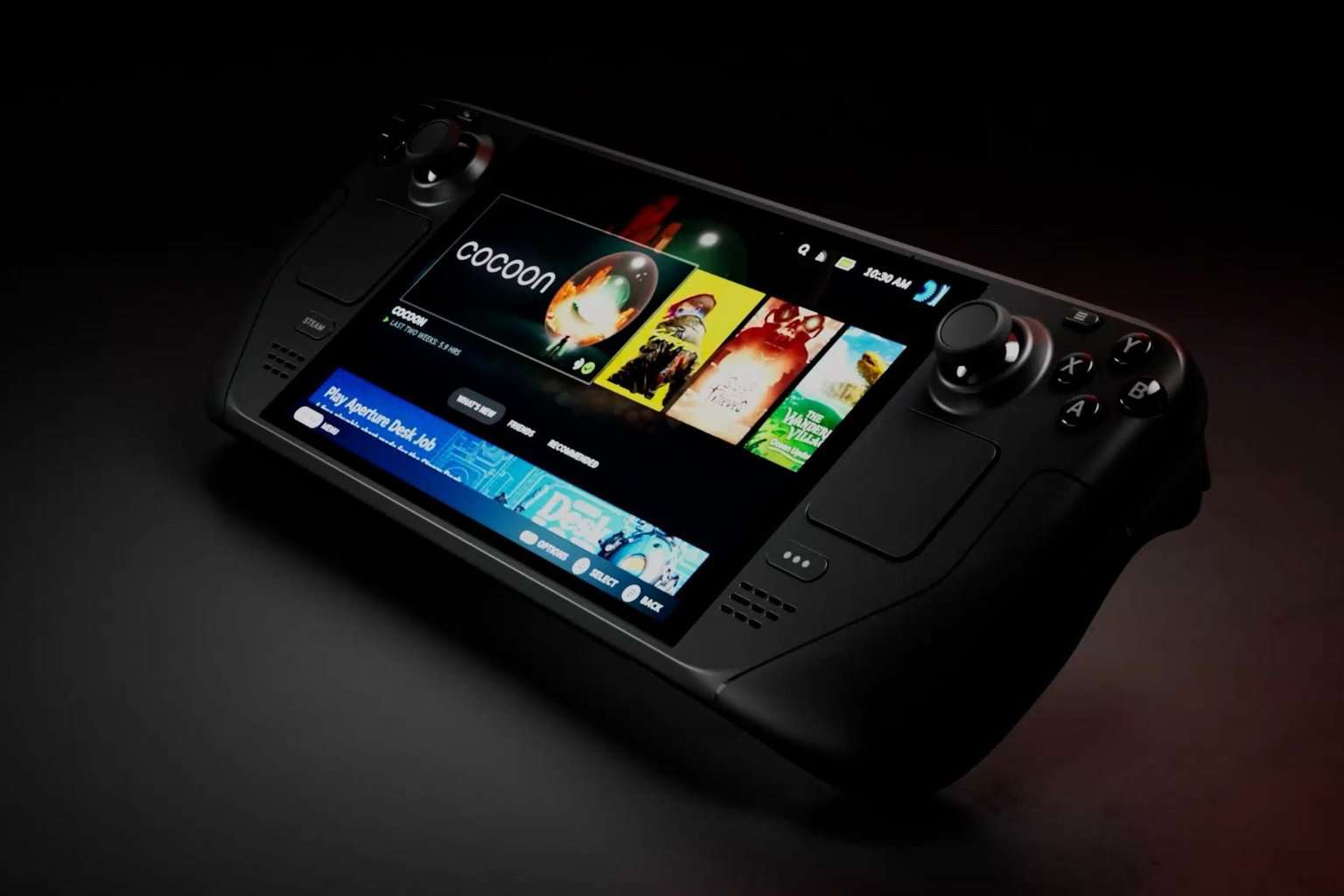
Valve’s Steam Deck OLED Goes Out of Stock in the U.S. as Supply Concerns Mount

Valve’s Steam Deck has quietly gone out of stock across multiple regions. Late last week, users started noticing an “Out of stock” label on the official Steam store page in the United States. All three listed models, including the 256GB LCD, 512GB OLED, and 1TB OLED variants, are currently unavailable. The only option for interested buyers is to add the device to a wishlist.

Steam Deck OLED is all sold out in America store.steampowered.com/steamdeckapparently still available in other countries

— Wario64 (@wario64.bsky.social) 2026-02-11T03:47:14.732Z

As you may know, Valve has already ended production of the 256GB LCD model, meaning only the OLED versions are expected to return once inventory is replenished. However, there is no confirmed timeline for when that will happen.

With component pricing rising sharply due to ongoing AI-driven demand for memory and related hardware, some believe that the Steam Deck is the latest device to feel the pressure. Valve previously acknowledged that increased component costs delayed its upcoming Steam Machine launch, with analysts now pointing toward a first-half 2026 release at a higher price than initially expected.

Although it’s unclear that memory constraints are behind the Steam Deck shortage, the concern is still there. For the uninitiated, Valve’s hardware division operates at a smaller scale compared to companies such as ASUS and Lenovo, which may complicate component sourcing at competitive pricing.

For now, it remains unclear whether this is a temporary production hiccup or an early sign of widespread hardware shortage in 2026.

Ryzen 7 9800X3D Dies Overnight, Sparks Fresh AM5 Stability Fears

After days of Ryzen 9000 No-POST reports and multiple firmware updates from ASRock, a new Ryzen 7 9800X3D failure has now surfaced, but this time on an ASUS board.

The incident adds fresh concern to ongoing AM5 platform stability discussions.

Ryzen 7 9800X3D reportedly dies overnight during a light workload

According to user reports on Reddit, the Ryzen 7 9800X3D system was running under very light load, roughly 10% usage, with mostly background applications active. The PC had been left powered on overnight.

When checked the next morning, the system appeared frozen. The power LED was blinking while the fans ramped to 100%, suggesting a hardware-level failure rather than a software crash.

A hard reset did not resolve the issue.

No POST and orange DRAM Q-LED

After rebooting, the system failed to POST and produced no display signal. The motherboard’s DRAM Q-LED remained lit in orange.

Although that indicator typically points to memory problems, users note that CPU failures on AM5 do not always trigger the dedicated CPU LED. In some cases, the DRAM LED remains active instead.

To verify the issue, the owner installed a different processor. The system immediately returned to normal operation, confirming that the original Ryzen 7 9800X3D had failed.

No burn marks, bent pins, or visible socket damage were observed.

EXPO and PBO enabled, no manual overclocking

The affected system had AMD EXPO memory profiles and Precision Boost Overdrive enabled, but no manual CPU overclock was applied.

The BIOS version in use was reportedly an early 2025 release and not the latest firmware available for the board.

This detail could prove relevant, especially considering that ASRock recently pushed a second firmware update to address widespread Ryzen 9000 No-POST issues. While that situation primarily involved ASRock boards, the new report shows that isolated failures may not be limited to a single manufacturer.

This follows a separate recent report of a sudden Ryzen 5 7500F failure on an ASRock motherboard, where the CPU also stopped functioning without visible physical damage.

At this stage, there is no confirmed pattern linking the incidents. However, multiple reports across different AM5 boards raise questions about firmware maturity, voltage behavior under automated boosting features, or other platform-level factors.

For now, users running Ryzen 9000 series processors may want to ensure they are on the latest BIOS version and monitor system behavior closely, especially if using EXPO or PBO features.

Via Wccftech

XeSS 3 Multi-Frame Generation Expands to All Intel Arc Graphics

Intel has released a new WHQL graphics driver that significantly expands support for XeSS 3 Multi-Frame Generation. The update broadens compatibility across discrete and integrated Arc graphics platforms.

According to VideoCardz, driver version 32.0.101.8509 is now available for Windows and supports Intel Arc B-Series (Battlemage), Arc A-Series (Alchemist), and Intel Core Ultra processors with Arc Graphics.

XeSS 3 Multi-Frame Generation Expands Platform Support

The key highlight of this release is expanded support for XeSS 3 Multi-Frame Generation across more Intel GPUs.

XeSS Multi-Frame Generation now works on:

  • Arc B-Series discrete GPUs
  • Arc A-Series discrete GPUs, including Arc A380
  • Arc graphics in Core Ultra Series 2 (Lunar Lake, Arrow Lake-H)
  • Arc graphics in Meteor Lake processors

This marks the first official public driver note confirming Multi-Frame Generation support on integrated Arc graphics.

What XeSS Multi-Frame Generation actually does

XeSS Multi-Frame Generation can insert up to three AI-generated frames between rendered frames, reaching a potential 3:1 ratio.

The full XeSS stack now includes Super Resolution, Frame Generation, and Xe Low Latency. Frame Generation requires Xe Low Latency to be enabled in order to function properly.

Rather than introducing a brand-new feature, this update mainly expands compatibility across more hardware tiers.

From unofficial tweaks to official support

Before this official rollout, users found workarounds that enabled XeSS 3 on unsupported models. Some reports even showed triple framerate gains on the Arc A380.

With official driver support, stability and performance should improve compared to those unofficial methods.

Intel is effectively bringing advanced frame generation technology to older GPUs like the Arc A380, extending their lifespan in modern titles.

Performance will vary depending on GPU capability and workload.

Entry-level GPUs may struggle with 4x multi-frame generation, especially in fast-paced games. Lower modes such as 2x or 3x could prove more suitable, particularly in slower-paced or single-player experiences.

Fast competitive titles may see limited benefits due to hardware constraints and latency considerations.

Users can download driver version 32.0.101.8509 directly from Intel’s official driver page.

Microsoft Blocks Windows 11 Insider ISO Downloads, Rufus Also Affected

Microsoft is staying busy with updates like KB5077178, KB5077180, and KB5077374. However, some users now report issues downloading certain Windows Insider Preview ISOs.

According to Neowin, multiple users have flagged download failures tied to specific preview builds.

Windows 11 Preview Build Downloads Suddenly Blocked

Reports point to problems with Windows 11 Canary build 28020.1611 (KB5077221) as well as Windows Server preview build 29531. Users attempting to download these ISOs encounter errors suggesting their IP addresses are being blocked.

One forum user shared error code 715-123130, despite using a normal residential internet connection and no VPN or anonymizer. Similar complaints have surfaced from users on standard providers such as Google Fiber, indicating the issue is not limited to unusual network setups.

Rufus And Fido Script Also Impacted

The issue does not appear to be limited to manual downloads. Rufus, the widely used Windows media creation tool, also fails to fetch the affected ISOs.

Pete Batard, the developer behind Rufus, suspects Microsoft introduced backend changes that detect and block unofficial download methods. The Fido script, which Rufus relies on to retrieve official Microsoft ISOs, now appears to be flagged and restricted.

Batard believes this behavior likely results from a deliberate backend adjustment rather than a temporary outage.

Is Microsoft Limiting ISO Downloads?

One theory suggests Microsoft wants users to rely exclusively on the official Media Creation Tool (MCT) when downloading Windows images.

Similar incidents reportedly occurred in the past, with restrictions later lifted. Users have already reported the problem through Feedback Hub, claiming it affects multiple Insider Preview channels, not just Canary.

With Microsoft rolling out frequent updates and Insider builds, it remains unclear whether this block reflects a new policy direction or a temporary technical issue.

In related Windows news, a former Microsoft executive recently explained the reasoning behind removing the vertical taskbar in Windows 11.

Former Microsoft Executive Explains Why Windows 11 Removed the Vertical Taskbar

Microsoft may be reconsidering the Windows 11 vertical taskbar after renewed user demand, and now a former executive has revealed why it was removed in the first place.

According to Neowin, former Microsoft executive Mikhail Parakhin said he “fought hard” against the decision to remove the vertical taskbar when Windows 11 launched.

Former Microsoft executive says he opposed the decision

Parakhin, who previously served as Corporate VP of Technology from 2019 to 2021 and later as CEO of Advertising and Web Services at Microsoft, confirmed there was internal disagreement over the taskbar redesign.

He stated that a vertical taskbar offers clear productivity benefits, especially on modern widescreen monitors where horizontal space is limited but vertical space remains abundant.

His remarks contradict earlier messaging that the feature lacked importance for most users.

Why Microsoft removed the movable taskbar

According to Parakhin, Microsoft’s design vision for Windows 11 focused on symmetry.

The system placed notifications and system controls on the right side, while Weather, Widgets, and News occupied the left. That layout pushed the Start menu into the center, creating a balanced visual structure.

A vertical taskbar, he explained, would conflict with those side panes and disrupt the intended layout consistency.

In short, the decision was design-driven rather than technical.

In related news, Microsoft recently released KB5077181 and KB5075941 as part of the February Patch Tuesday rollout.

However, KB5077181 has already drawn complaints from users reporting boot loop issues and login failures after installation.

While Microsoft has not yet confirmed a fix, affected users are monitoring the situation closely as the company investigates.

With both UI feature reconsiderations and update-related stability concerns in focus, Windows 11 continues to evolve amid strong community feedback.

Microsoft Under Fire as Brazil Investigates Edge Pressure on OEMs

Microsoft has long promoted Edge aggressively, even adding a new shortcut that lets users set it as the default browser in a single click. Now, attention is shifting beyond consumers, as the company appears to be encouraging OEMs to preinstall Edge on their devices as well.

According to Neowin, Brazil’s antitrust regulator, the Administrative Council for Economic Defense (CADE), has opened a formal investigation into major PC manufacturers over the preinstallation of Microsoft Edge on devices running Microsoft Windows.

Brazil investigates Microsoft Edge preinstallation on Windows PCs

The probe stems from a complaint filed by Opera, which claims that Microsoft indirectly pressures OEMs to prioritize or exclusively preinstall Edge through its “Jumpstart” program. Regulators are now examining whether the program influences how browsers and other third-party software appear on new Windows PCs sold in Brazil.

OEM agreements and data requests under review

CADE has sent detailed information requests to several global and regional PC manufacturers, including Dell, HP, Lenovo, Asus, Acer, Samsung, LG, Positivo, Multilaser, and Daten.

Authorities are seeking sales and shipment data covering the period from 2020 to 2025. This includes details on PC shipments by operating system, units sold under the Jumpstart program, and systems shipped with Windows in S mode. The regulator also wants insight into the financial and commercial consequences OEMs might face if they choose to withdraw from the program.

Contract terms and competitive impact

The investigation extends to contractual and commercial arrangements between Microsoft and its hardware partners. CADE is assessing whether agreements include penalties for non-compliance and whether the terms are negotiable or effectively presented as “take-it-or-leave-it.” Regulators are also reviewing which third-party applications, including competing browsers, OEMs are permitted or restricted from preinstalling under the Jumpstart framework.

The Browser Choice Alliance, whose members include Opera, Google Chrome stakeholders, Vivaldi, and Midori, has welcomed the probe. The alliance argues that tying incentives or commercial terms to Edge preinstallation could limit consumer choice and undermine fair competition in the browser market.

The case adds to broader regulatory scrutiny surrounding Microsoft’s Windows ecosystem, particularly around default browser settings, bundling practices, and relationships with OEM partners. The outcome of Brazil’s investigation could carry implications beyond its borders, potentially shaping future competition policy debates over how browsers and other software are distributed on Windows PCs.

In related developments, Microsoft has recently redesigned site permission settings in Edge and introduced a new option that allows users to hide Copilot within the browser interface.

Microsoft Locks Down Login Prompts After Windows Hello Injection Flaw

February 2026 Patch Tuesday updates introduced a new Windows security hardening change that alters credential autofill behavior across authentication dialogs.

Microsoft confirmed the change is intentional and addresses a Windows Hello input injection vulnerability tracked as CVE-2026-20804. The update tightens how Windows processes credential input, especially during remote sessions and automated login workflows.

Microsoft fixes Windows Hello input injection vulnerability (CVE-2026-20804)

According to Neowin, security changes target risks where malicious tools could simulate keyboard input and tamper with authentication prompts. Windows authentication dialogs now ignore virtual keyboard input originating from remote desktop connections, screen-sharing tools, or automation scripts.

This means credential prompts will only accept input from trusted local sources, including a physical keyboard, approved accessibility tools with UIAccess privileges, or properly elevated applications.

Microsoft designed this mitigation to block untrusted input injection that could interfere with Windows Hello and other secure authentication interfaces.

Autofill and automation workflows impacted

As a result of the update, some apps may no longer autofill login details in specific scenarios. Scripted authentication processes that relied on simulated keyboard input can also fail.

Remote desktop software, screen-sharing platforms such as Teams, and third-party automation tools may see Windows credential dialogs become unresponsive to automated input. This affects environments where IT teams depend on remote credential submission during support sessions.

Microsoft advises developers and IT administrators to transition to supported Windows authentication UI methods instead of relying on simulated keystrokes. Using official APIs ensures compatibility with the new security model.

For organizations that still require legacy behavior, Microsoft notes that running remote credential-submission tools with administrator privileges may temporarily restore functionality. The company recommends this only in tightly controlled and secure environments.

The February rollout also included updates KB5077178, KB5077180, and KB5077374, bringing changes to Windows Recovery Environment and Secure Boot components.

Separately, CISA issued a warning about a critical vulnerability affecting Microsoft SCCM, urging administrators to review and patch affected systems promptly.

With this latest hardening change, Microsoft continues to prioritize authentication security, even if it means breaking older automation workflows in the process.

Windows 11 Updates KB5077178, KB5077180, KB5077374 Deliver WinRE and Secure Boot Changes

Microsoft has rolled out its February 2026 Patch Tuesday updates for Windows 11, including KB5077181 and KB5075941. Users may notice a subtle but important authentication-related change after installing the cumulative updates.

However, KB5077181 has already drawn attention due to reported boot loop problems, and Microsoft has yet to issue an official fix for those cases.

According to Neowin, this month’s release also includes several new Dynamic Updates aimed at improving setup and recovery processes.

KB5077178, KB5077180, KB5077374 Updates Improve Setup and WinRE

Alongside the main cumulative patches, Microsoft shipped new Setup and Recovery Dynamic Updates. These updates enhance the Windows Recovery Environment (WinRE), also known as Safe OS, and refresh core Setup binaries used during installations and upgrades.

Dynamic Updates are applied to Windows images before deployment. They help ensure smoother upgrades while preserving Language Packs (LP) and Features on Demand (FODs).

VBScript, currently classified as a Feature on Demand in Windows 11 version 24H2, remains preserved through these mechanisms.

WinRE and Secure Boot Changes Detailed

KB5077178 targets Windows 11 26H1, while KB5077180 applies to versions 24H2 and 25H2. Both updates deliver improvements to the Windows Recovery Environment.

For Windows 11 23H2, KB5077374 introduces a significant Secure Boot adjustment. The update replaces the older 2011-signed bootmgfw.efi with a 2023-signed version on systems that already trust the Windows UEFI CA 2023 certificate.

Microsoft warns that resetting the Secure Boot database or toggling Secure Boot afterward could trigger Secure Boot violation errors. In rare situations, affected systems may require recovery media.

Another 23H2 update, KB5076124, resolves an issue where KDNET debugging DLLs such as kdstub.dll and kdnet.dll could stop responding when Boot Manager debugging is enabled at startup.

Microsoft confirms that both Setup and Recovery Dynamic Updates install automatically through Windows Update. Users do not need to manually download or deploy them.

Those seeking new experimental features can also check out KB5077221, which Microsoft has released to the Canary channel.

Critical Microsoft SCCM Vulnerability Under Active Attack, Warns CISA

Malware keeps evolving, and recent reports showed hackers abusing Gemini AI tools to assist malware campaigns. Now, an older Microsoft security flaw has resurfaced and is under active attack.

The vulnerability affects Microsoft Configuration Manager, formerly known as SCCM, a platform widely used by enterprises and government agencies to manage large fleets of Windows servers and workstations.

CISA Confirms Active Exploitation of CVE-2024-43468

CVE-2024-43468 is a critical SQL injection vulnerability that allows unauthenticated remote attackers to execute arbitrary commands with the highest privileges on the affected server and site database.

Because Configuration Manager often runs with elevated access across enterprise networks, successful exploitation could grant attackers deep control over managed environments.

Microsoft originally patched the flaw in October 2024 and classified it as “Exploitation Less Likely” at the time. However, security researchers from Synacktiv later released proof-of-concept exploit code in November 2024, significantly increasing the likelihood of weaponization.

Federal Agencies Face March 5 Deadline

Following confirmed exploitation, CISA has ordered Federal Civilian Executive Branch agencies to secure their systems under Binding Operational Directive 22-01.

Agencies must apply patches and mitigations by March 5 or take alternative remediation steps. While the directive applies specifically to federal systems, CISA strongly urges private-sector organizations to patch immediately due to ongoing attacks.

This incident follows a series of recent security concerns involving Microsoft products. The company recently addressed a critical Notepad vulnerability and warned administrators about insecure Windows Deployment Services configurations after KB5074109.

Security experts continue to warn that enterprise management tools represent high-value targets because they provide centralized control across entire IT environments.

With active exploitation confirmed, organizations running Microsoft Configuration Manager face mounting pressure to update immediately and review their security posture before attackers gain further footholds.

Via Bleeping Computer

Chrome tests mobile passkey unlock for desktop sign in

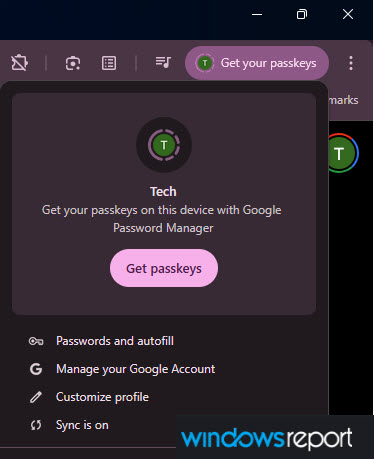
Google is testing a new passkey access flow in Chrome Canary. A fresh entry inside the browser’s profile menu now invites users to “get passkeys on this device using Google Password Manager”.

Selecting the option opens a verification screen that requests the screen lock PIN of a linked Android phone. Chrome explains that the PIN is required to unlock encrypted data stored on that device before passkeys become available on the desktop browser.

This step verifies the device owner and keeps saved passkeys locked before desktop use.

Chrome Canary shows a new “Get your passkeys on this device” prompt in the profile menu. Image Credit: Venkat | WindowsReport.

Desktop access to mobile-stored passkeys has required QR confirmation or phone approval. The new Canary behavior adds a direct unlock path tied to the Chrome profile and sync system. Cross-device authentication now moves closer to the main browser interface.

Since 2024, Google, Apple, and Microsoft have accelerated passkey rollout across browsers, operating systems, and built-in password managers. Sign-in screens now promote passkeys during account creation, store them securely on trusted devices, and sync them across devices and platforms. This lowers phishing risk and removes the need to remember complex passwords. Account access stays linked to devices the user controls.

Chrome now includes a phone-secured passkey unlock option in the profile menu. The browser treats passkey access as part of its core sign-in experience instead of relying only on an external phone authenticator.

For now, the prompt appears only in Chrome Canary, which Google uses to trial unfinished features. The interface and verification method are not final and may change later. Even at this stage, direct passkey unlock from a linked mobile device brings password-free desktop sign-in closer to daily use.

Bethesda Pinball DLC Brings Fallout, DOOM and Skyrim to Pinball M

Fallout 3 and Fallout: New Vegas remasters are not arriving anytime soon, and The Elder Scrolls VI will also take years to complete. While fans wait for proper next-gen returns, Bethesda’s worlds are making an unexpected comeback.

According to PSX Extreme, Zen Studios has released a new Bethesda-themed DLC pack for Pinball M.

Bethesda Pinball DLC details revealed

Instead of traditional remasters, Zen Studios introduces three Bethesda-inspired pinball tables inside Pinball M. The DLC includes:

  • A Fallout table focused on Wasteland exploration
  • A DOOM table set inside a UAC facility
  • A Skyrim table built around RPG progression systems

The pack supports cross-compatibility. Buying it in Pinball M also unlocks the same tables in Pinball FX, giving players access across both platforms.

Fallout table focuses on factions and Vault raids

The Fallout-themed board sends players into the Wasteland. Objectives include joining factions, raiding Vaults, and collecting iconic Bobbleheads.

RPG-style mission flow blends with arcade mechanics, creating a condensed Fallout experience.

DOOM table delivers fast-paced demon combat

The DOOM board centers on chaotic action inside a UAC facility. Players battle demons, trigger multiball events, and progress as the DOOM Slayer.

The table emphasizes speed and intensity to reflect the franchise’s combat style.

Skyrim table recreates RPG mechanics in pinball form

Inspired by The Elder Scrolls V: Skyrim, this table integrates crafting, magic use, armor upgrades, mining, trading, and side quests.

Players ultimately confront Alduin as the Dragonborn, turning key story beats into gameplay objectives.

Zen Studios continues expanding its licensed catalog, which already includes The Texas Chainsaw Massacre, The Thing, Chucky, System Shock, and Duke Nukem.

While this DLC does not replace the remasters fans still hope for, it offers a nostalgic crossover format for players who enjoy arcade-style experiences.

Elsewhere in gaming, Sony recently announced a God of War trilogy remake, though development remains in early stages.

Microsoft Stock Trades Slightly Higher Today as White-Collar Automation Timeline Fuels Fresh Debate

Microsoft stock (NASDAQ:MSFT) traded at $403.99 as of 2:09 PM EST on Friday, up $2.15, or 0.54%, from its previous close of $401.84. The stock opened at $404.45, climbed to an intraday high of $405.54, and slipped to a low of $398.05 before stabilizing in afternoon trading. Stock price remained modestly higher despite fresh remarks by Microsoft AI chief, Mustafa Suleyman around artificial intelligence and white-collar job.

Microsoft Stock bumps up as AI white-collar automation forecast shakes market narrative

Per Suleyman, artificial intelligence could automate most professional white-collar tasks within 12 to 18 months. The projection suggests AI systems are nearing human-level performance across roles such as legal research, accounting, and even software development. Internally, Microsoft engineers are reportedly already relying on AI-assisted coding for significant portions of their workflow.

One of the standout takeaways from the announcement is the speed of the timeline. A 12-to-18-month window for widespread automation marks one of the most aggressive forecasts yet from a major technology company. That equally raises concerns about employment disruption and regulatory response, especially in service-heavy economies.

As far as market metrics are concerned, Microsoft currently carries a market capitalization of roughly $3.00 trillion. The Microsoft stock trades at a price-to-earnings ratio of 25.28 and offers a dividend yield of around 0.90%. These figures suggest investors continue to value Microsoft as a long-term platform leader rather than reacting to short-term uncertainty.

While the idea of rapid white-collar job automation could spark wider economic debate, Friday’s price movement of Microsoft stock indicates investors are focused on AI-driven growth potential.

Disclaimer: This article is for informational purposes only and does not constitute financial or investment advice. Stock market investments carry risk, and readers should conduct their own research or consult a qualified financial advisor before making any decisions. Stock prices and percentages reflect the time of writing and may change due to market volatility. Please verify current quotes before acting on any information.

Samsung 96GB LPCAMM2 at 9600 MT/s Spotted in Lenovo Post

Samsung has announced HBM4 memory, and other manufacturers are nearing HBM4 validation. However, the company continues advancing other memory technologies as well.

Samsung 96GB LPCAMM2 Module Leaks With 9600 MT/s Speed

While HBM4 targets AI accelerators and data centers, Samsung is still pushing innovation in laptop memory. A Lenovo ThinkBook product manager posted a photo on Weibo showing a Samsung LPCAMM2 (LPDDR5X CAMM2) module labeled with 96GB capacity and a 9600 MT/s data rate.

According to VideoCardz, the post described the module as “dual 96” and confirmed that it has not yet entered mass production.

96GB Capacity Breaks Current LPCAMM2 Limits

The most notable detail is the 96GB capacity. Many current LPCAMM2 configurations top out at 64GB.

Samsung’s published LPCAMM2 specifications currently highlight capacities up to 64GB and speeds around 8,533 Mb/s. Micron has also referenced LPCAMM2 support for speeds up to 9,600 Mb/s, matching the speed shown on the leaked Samsung module.

If Samsung moves this 96GB 9600 MT/s configuration into mass production, it would mark a clear step forward for thin laptops and mobile workstations.

What LPCAMM2 Means for Laptops

LPCAMM2 is a removable memory standard that uses LPDDR instead of traditional DDR memory. It delivers LPDDR-level power efficiency while allowing upgrades, unlike soldered RAM.

The module mounts flat to the motherboard and aims to replace the SO-DIMM in thin and high-performance laptops. JEDEC has already standardized LPCAMM2, and vendors promote it for compact systems that require higher bandwidth and better power efficiency.

Intel Core Ultra Series 3 Platform Support

Intel documentation for Core Ultra Series 3 (Panther Lake) mobile platforms references LPDDR5X speeds reaching up to 9600 MT/s. That suggests platform readiness for such high-speed modules.

Actual supported speeds will still depend on the CPU memory controller, motherboard design, and vendor validation. A memory rating alone does not guarantee full performance in every system.

Embedded systems already use LPCAMM2 modules with up to 96GB LPDDR5X at 8,533 MT/s, which shows that high-capacity LPCAMM2 configurations are technically viable today.

Samsung is also expanding beyond LPDDR5X. The company has reportedly shipped LPDDR6X samples to Qualcomm, signaling early development of next-generation mobile memory.

Together, the 96GB LPCAMM2 module and LPDDR6X samples show that Samsung continues to invest across multiple memory segments, not just HBM4.

ASRock Updates AM5 Firmware Again Amid Ryzen Boot Failure Reports

ASRock has released another BIOS update following last week’s firmware patch aimed at Ryzen 5 9600X failures and Ryzen 9000 No-POST reports. The new release continues efforts to stabilize affected AM5 systems.

According to VideoCardz, BIOS version 4.10 introduces AGESA ComboAM5 PI 1.3.0.0a, improved memory compatibility, and fixes for certain no-boot problems that can appear even after a system has been working normally.

BIOS 4.10 Brings AGESA ComboAM5 PI 1.3.0.0a

The updated firmware integrates AMD’s latest AGESA ComboAM5 PI 1.3.0.0a microcode. ASRock also highlights enhanced memory compatibility and overall platform stability improvements.

The company specifically references boot failures that may occur after a previously stable period. That pattern closely resembles a recently reported Ryzen 5 7500F failure on an ASRock board, where the system stopped posting despite earlier normal operation.

Affected Motherboards Include B650 and B850 Models

Supported boards include B650M-HDV/M.2, B850 Rock WiFi 7, B850M Challenger, B850M Challenger WiFi, and B850M Rock WiFi. Exact BIOS versions differ depending on the motherboard revision.

ASRock has not identified any specific Ryzen CPU model as the root cause and has not linked the issue to a particular Ryzen generation. The company positions the update as a firmware-level fix rather than a confirmation of hardware defects.

If your system still boots normally, ASRock recommends updating through the UEFI Instant Flash utility. Users must download the correct BIOS file for their exact motherboard model and revision before proceeding.

For systems that fail to POST, only motherboards with BIOS Flashback support can typically be updated without a functioning CPU. In that case, users can apply the update using PSU power and the dedicated Flashback USB port and button.

ASRock notes that while the BIOS fix may resolve boot instability or POST errors, it is unlikely to restore CPUs that fail to POST across multiple different motherboards.

Users should carefully confirm their motherboard model and hardware revision before flashing. Using an incorrect BIOS file can result in compatibility issues or a failed update.

With this second firmware release in quick succession, ASRock continues working to address Ryzen-related boot concerns across its AM5 lineup.

Ryzen 5 7500F Reportedly Dies on ASRock B850 RS Pro WiFi After 7 Months

ASRock faced scrutiny last week over Ryzen 9600X failures on ASRock motherboards. Now, a new report involves a Ryzen 5 7500F allegedly failing on an ASRock B850 motherboard.

Ryzen 5 7500F reportedly dies after months of normal use

A Reddit user claims their AMD Ryzen 5 7500F (65W TDP) suddenly stopped working while installed on an ASRock B850 RS Pro WiFi motherboard.

According to the post, the system powered off unexpectedly after around seven months of normal operation. Upon attempting to reboot, the CPU Debug LED and DRAM LED remained lit. That combination often signals a CPU or memory initialization failure during POST.

The user shared images showing no visible burn marks or bent pins on the processor or motherboard socket. This leaves the root cause unclear.

RAM placement debate unlikely to be the culprit

Some commenters suggested incorrect RAM placement, specifically using the B1 slot instead of the commonly recommended A2/B2 configuration.

However, the owner stated they tested multiple RAM slots without success. Since the PC reportedly worked for several months before the failure, improper RAM placement seems unlikely as the trigger.

Unusual case for a 65W Zen 4 chip

The Ryzen 7000 series, including the 7500F, generally operates within standard power envelopes and does not carry a reputation for widespread failures.

A 65W processor failing under normal conditions stands out as unusual, especially without signs of electrical damage or overheating.

This report follows recent attention around ASRock and POST issues affecting some Ryzen 9000 series chips. Those problems prompted a BIOS update aimed at improving compatibility and system stability.

Despite scattered online claims, Ryzen 7000 and 9000 processors maintain average RMA rates overall. There is no confirmed evidence of a systemic failure trend at this time.

For now, the incident appears anecdotal. Proper diagnostics, BIOS updates, and potential manufacturer investigation will determine whether this case reflects an isolated hardware fault or something more significant.

Via Wccftech

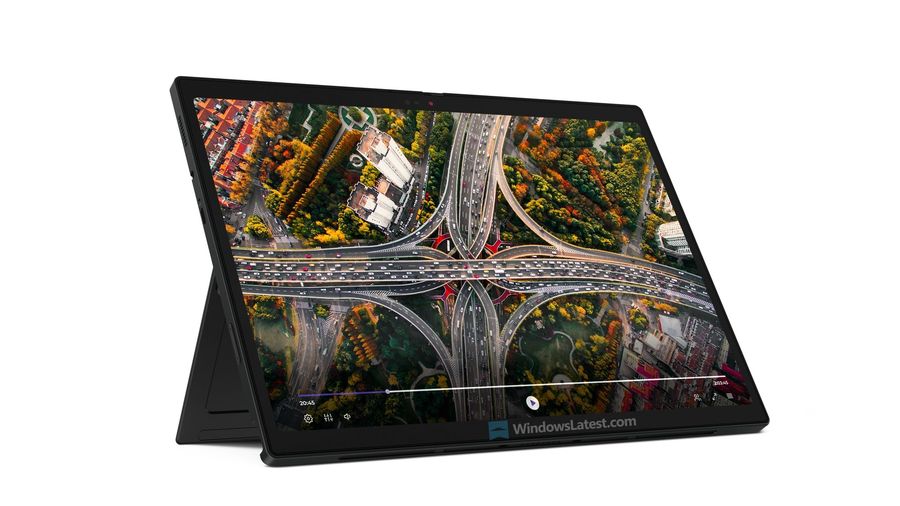
Lenovo ThinkPad X13 Detachable Leaks With Surface-Style 2-in-1 Design

Lenovo ThinkPad X13 Detachable leak suggests a new 2-in-1 business tablet is coming, potentially debuting at MWC Barcelona with updated Intel hardware.

A new photo-based leak hints that Lenovo is preparing to refresh its detachable ThinkPad lineup. Despite recent warnings about a looming memory shortage, the company appears ready to introduce fresh hardware aimed at professionals.

Lenovo ThinkPad X13 Detachable leaked ahead of MWC

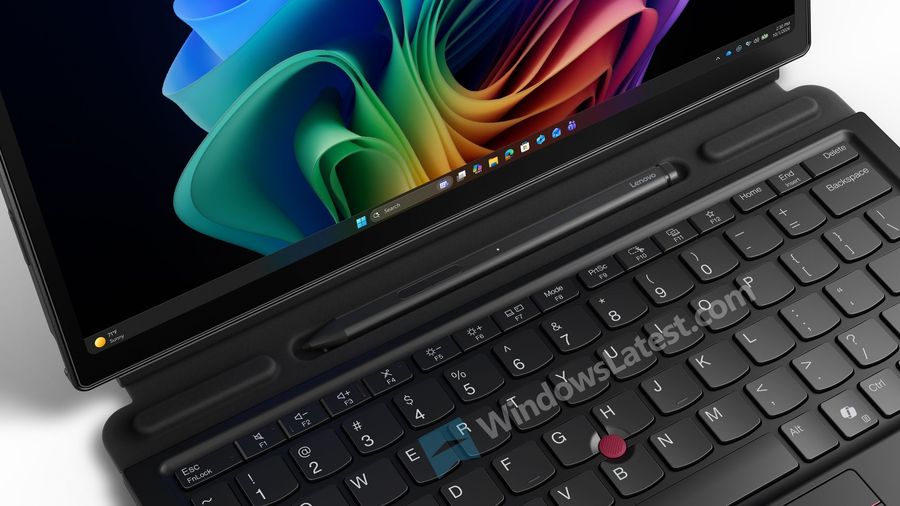
According to Windows Latest, leaked images reveal what appears to be the upcoming ThinkPad X13 Detachable in an Eclipse Black finish. The device could make its official debut at Mobile World Congress in Barcelona.

The design follows a familiar detachable 2-in-1 format, combining a kickstand-equipped tablet with a magnetically attached keyboard. The concept closely resembles Surface Pro-style systems but retains classic ThinkPad elements.

Source: Windows Latest

Images show noticeably slimmer display bezels compared to the previous ThinkPad X12 Detachable, which featured a 12.3-inch screen. The reduced borders suggest Lenovo may increase the screen size while keeping a compact footprint.

Source: Windows Latest

Classic ThinkPad features in a detachable form factor

Despite its tablet-first design, the leaked X13 Detachable keeps hallmark ThinkPad features. The keyboard connects through magnetic pogo pins and includes the iconic TrackPoint along with dedicated TrackPoint buttons.

A recessed slot for the Lenovo Digital Pen appears integrated into the keyboard area, highlighting a focus on productivity and stylus-based workflows. The keyboard deck also shows a round fingerprint reader positioned near the touchpad.

Security options seem comprehensive, as the device is expected to include Windows Hello facial recognition alongside the fingerprint scanner. Lenovo clearly targets enterprise and professional users who prioritize layered authentication.

Business-focused ports and potential Thunderbolt support

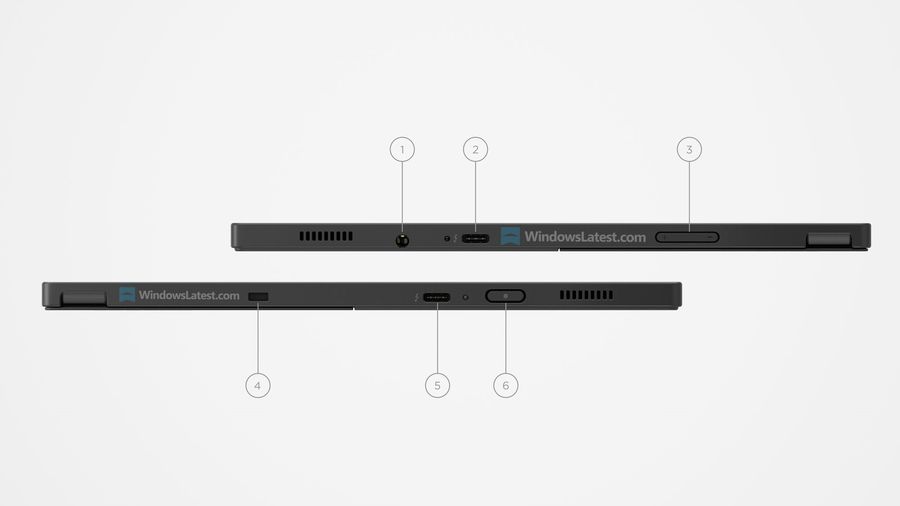
Port selection looks tailored for business flexibility. The tablet features USB-C ports on both sides, enabling convenient charging regardless of orientation.

Leaked images show lightning icons next to the USB-C ports, hinting at possible Thunderbolt-class connectivity, although specifications remain unconfirmed. Additional ports include a 3.5 mm audio jack, physical power and volume buttons, and a Kensington-style lock slot.

Source: Windows Latest

Core specifications such as processor, RAM, and display resolution remain unknown. However, the device is rumored to use newer Intel platforms, potentially from the Core Ultra 300 series, also known as Panther Lake.

The overall design signals that Lenovo continues to invest in detachable business devices rather than shifting entirely toward consumer-focused hybrids. With its combination of traditional ThinkPad input tools, robust port selection, and security features, the X13 Detachable appears positioned squarely at enterprise customers.

In related laptop news, Samsung recently showcased its Galaxy Book 6 lineup, while Qualcomm’s Snapdragon X2 Elite reportedly posted strong benchmark results against Apple’s upcoming M5 chips, underscoring intensifying competition in both x86 and ARM-based systems.

Via VideoCardz

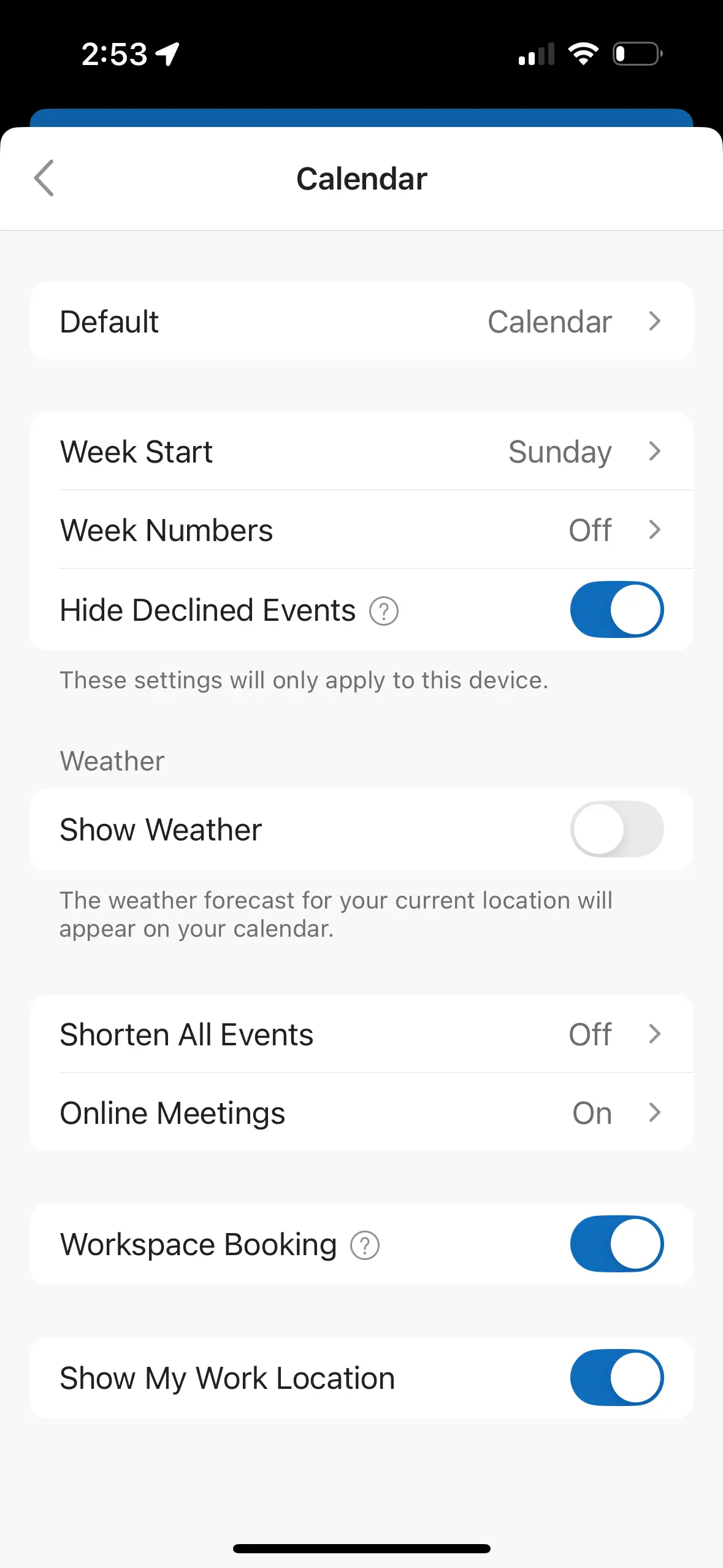
Outlook Mobile can now hide declined meetings to help keep your calendar clutter-free

Microsoft is updating Outlook Mobile to let users hide declined meetings, so that you have a decluttered busy calendar. The feature brings the mobile app in line with New Outlook and Outlook for the Web, where users can already choose to show or hide declined events. This change aims to give users a simpler, more focused view across devices.

What users can expect

Once the setting is available, users can toggle declined meetings on or off directly in the app. This gives calendars a cleaner appearance by removing events that were declined, without affecting other settings. Importantly, this feature respects existing preferences set on web and desktop versions, and no changes are required from admins. Microsoft also notes there are no compliance implications associated with the update.

Image: Microsoft

Organizations may want to inform helpdesk teams or update internal documentation so employees know about the new option. Aside from awareness, there’s no required action, making adoption straightforward.

Rollout timeline and availability

While the Microsoft 365 Roadmap still shows rollout in January 2026, a report by Neowin now hints that the rollout actually began in early February, but it won’t reach all users until mid-February. With just a few days left, everyone should have access soon.

Users who previously enabled “Show declined meetings” in New Outlook or on the web will now see the same option appear in Outlook Mobile. At a time when calendar overload is common, this update could improve productivity for mobile users who juggle multiple meetings. That said, adoption may vary depending on user habits and awareness of the new toggle.

Will decluttering calendars on mobile finally make scheduling less stressful for busy teams? Let us know in the comments below.

Congatec Unveils Panther Lake Modules With DDR5, LPDDR5X, and LPCAMM2 Support

After reports suggested Intel canceled the Core Ultra 9 290K Plus, attention now shifts to a different segment. Instead of chasing desktop headlines, Intel appears to be strengthening its position in embedded and edge AI markets.

According to VideoCardz, Congatec has introduced five new computer-on-modules (COMs) built on Intel Core Ultra Series 3, also known as Panther Lake, aimed squarely at industrial and AI-driven deployments.

Intel Core Ultra Series 3 heads to embedded AI

Rather than targeting consumer PCs, these modules focus on edge computing scenarios that require strong on-device AI performance without relying on discrete accelerator cards.

Each module supports up to 16 CPU cores, paired with Xe3 integrated graphics featuring up to 12 Xe cores. They also integrate an NPU5 engine capable of delivering up to 50 TOPS of AI performance.

Congatec states that total platform AI throughput can reach as high as 180 TOPS when combining CPU, GPU, and NPU resources. That level of performance positions Panther Lake as a serious contender for AI inference tasks at the edge.

The inclusion of a full 12 Xe core configuration indicates that these designs rely on higher-end Panther Lake variants, though they exclude the X-Series chips.

Multiple form factors and memory support

Congatec’s lineup includes five embedded board variants that support several memory standards, such as LPDDR5X, DDR5 SO-DIMM, and LPCAMM2.

Module / VariantMemory TypeCapacity (Max)Speed (Max)Notes
COM Express Type 10 conga-MC1000Soldered LPDDR5XUp to 32GBUp to 8533 MT/sOnboard (soldered) memory
COM-HPC Mini conga-HPC/mPTLSoldered LPDDR5X32GB–96GB8533 MT/sStarts at 32GB configuration
COM-HPC Client Size A conga-HPC/cPTLLPDDR5X (LPCAMM2)Up to 96GBUp to 7466 MT/sUses LPCAMM2 slot
COM Express Compact conga-TC1000DDR5 SO-DIMMUp to 128GBUp to 7200 MT/sUser-replaceable SO-DIMM
conga-TC1000r (ruggedized)LPDDR5X (LPCAMM2)Up to 96GBUp to 8533 MT/sRugged variant, LPCAMM2-based

Form factors span COM Express Type 10, COM Express Compact, COM-HPC Mini, and COM-HPC Client. Board sizes range roughly from 84 × 55 mm up to 95 × 120 mm, covering a broad spectrum of industrial and enterprise deployment needs.

The company has not disclosed pricing or availability. Interested buyers must contact Congatec directly, reinforcing that these products target enterprise and industrial customers rather than retail consumers.

The announcement comes at a time when both Intel and AMD reportedly face server CPU shortages, highlighting ongoing supply constraints in the data center market.

Intel also recently strengthened its TDX security technology in collaboration with Google, signaling continued efforts to enhance confidential computing capabilities alongside its AI push.

While desktop enthusiasts may feel disappointed about canceled high-end SKUs, Panther Lake’s embedded rollout shows that Intel continues to prioritize AI acceleration across multiple segments beyond the traditional PC market.

OpenAI Releases GPT‑5.3‑Codex‑Spark for Real-Time Coding

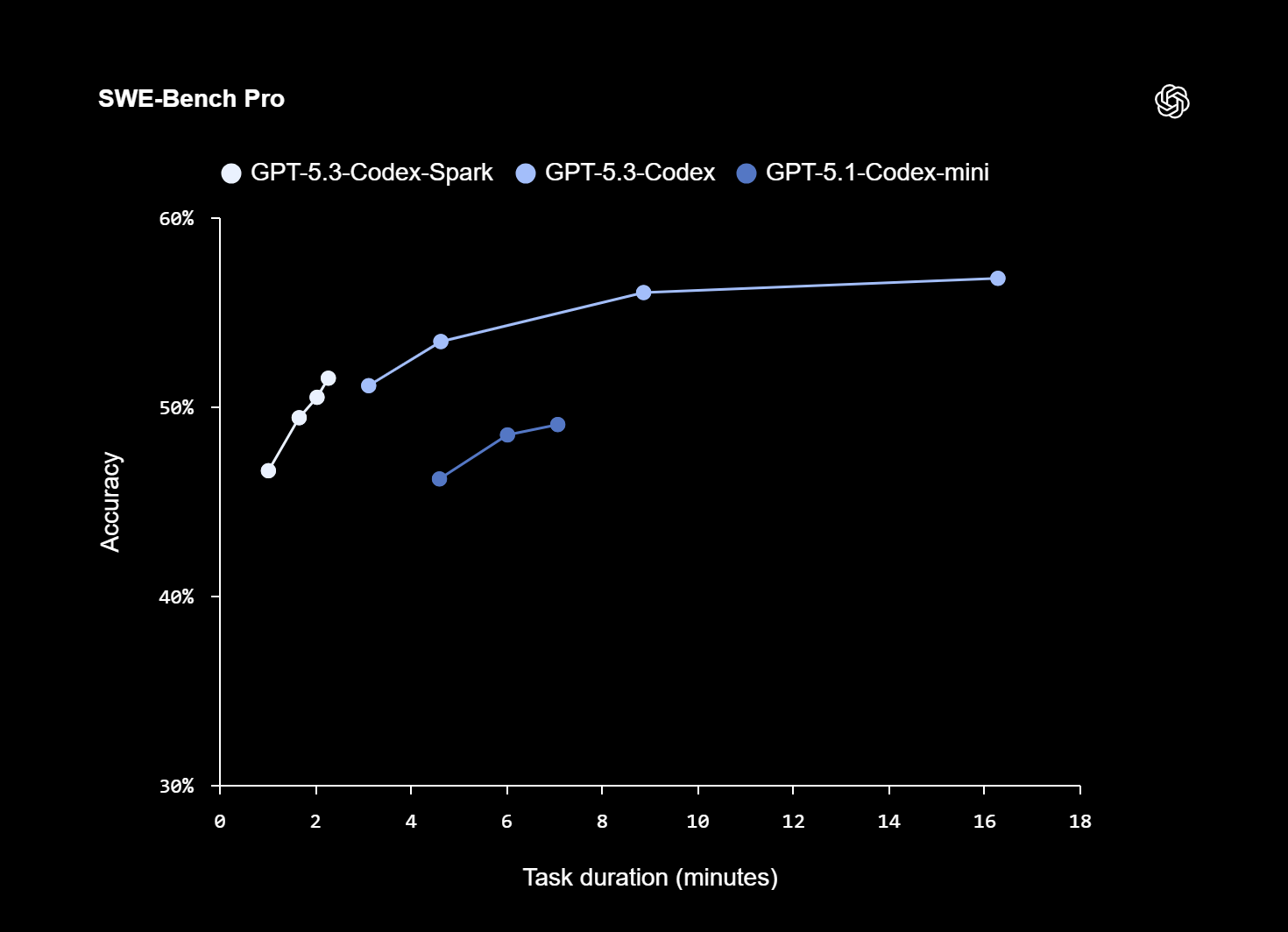
OpenAI today unveiled a research preview of GPT‑5.3‑Codex‑Spark, a smaller, speed-optimized version of GPT‑5.3‑Codex designed for real-time coding. This comes just a few days after the company unveiled the GPT-5.3-Codex to take on Anthropic’s Claude Opus 4.6.

Notably, the release of GPT‑5.3‑Codex‑Spark marks the first milestone in OpenAI’s collaboration with Cerebras, which aims to deliver coding results almost instantly on ultra-low latency hardware. Codex-Spark can produce more than 1000 tokens per second while remaining capable of real-world development tasks.

Codex-Spark optimized for speed and interactivity

Unlike previous Codex models, Codex-Spark focuses on interactive coding. It’s designed to make specific edits, refine logic, and update interfaces in real time. The model has a 128k token context window and currently supports text-only interactions. Users can collaborate, interrupt, and redirect their work instantly, making it suitable for rapid iteration and hands-on coding experiments.

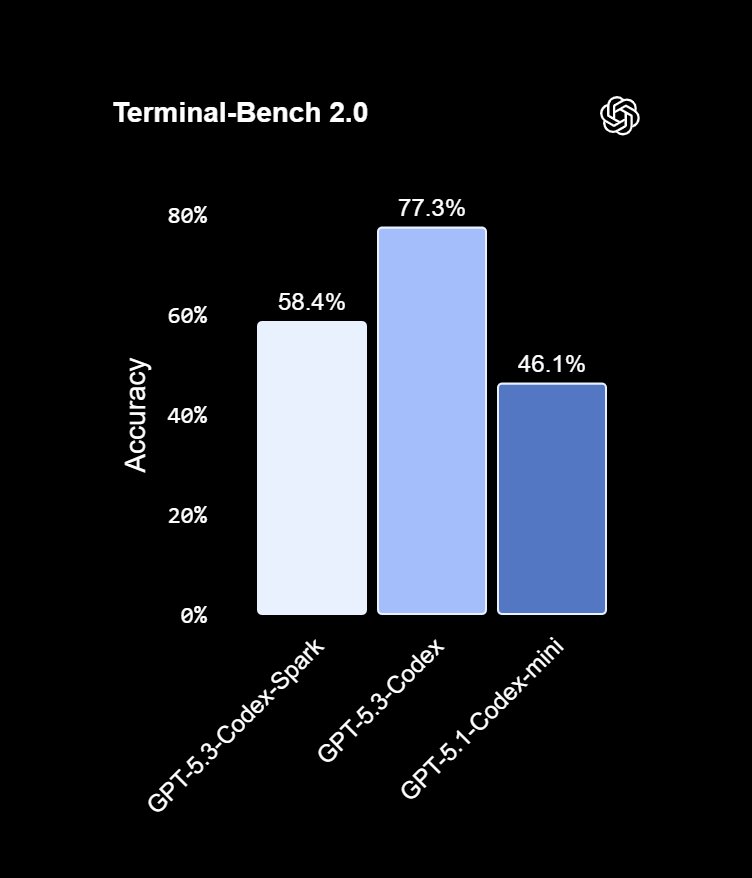
Early benchmarks show Codex-Spark completing tasks far faster than its predecessor while maintaining strong accuracy. On SWE-Bench Pro and Terminal-Bench 2.0, the model reduced task durations significantly, confirming that speed improvements are not just token-level but across the full request-response pipeline. OpenAI also introduced WebSocket-based persistent connections, cutting per-token overhead by 30% and time-to-first-token by 50%.

Powered by Cerebras, Complementing GPU Infrastructure

Codex-Spark runs on Cerebras’ Wafer Scale Engine 3⁠, a purpose-built AI chip for ultra-low latency inference. GPUs remain central for training and broad usage, while Cerebras handles workflows where minimal lag matters most. Sean Lie, Cerebras CTO, emphasized the model’s potential to reshape developer workflows, introducing new interaction patterns and use cases.

Available now as a research preview for ChatGPT Pro users, Codex-Spark comes with separate rate limits during the preview. Moreover, OpenAI plans to expand access gradually and integrate user feedback to refine the model’s real-time capabilities, while keeping safety safeguards in place.

NVIDIA Rubin to Drive HBM4 Demand as Samsung, SK Hynix, and Micron Near Validation

TechPowerUp reports that NVIDIA’s upcoming Rubin platform will play a key role in accelerating HBM4 adoption once mass production begins. The next-generation AI platform could significantly increase demand for advanced high-bandwidth memory as cloud providers scale AI infrastructure.

Rubin’s commercial ramp will likely coincide with broader AI server expansion, especially across North American cloud service providers that continue to increase inference workloads.

Samsung, SK Hynix, and Micron Near HBM4 Validation

The three major memory suppliers, Samsung, SK hynix, and Micron, are in the final stages of HBM4 validation. Completion is expected by the second quarter of 2026.

Samsung, which recently announced its HBM4 progress, is projected to secure certification first, thanks to strong product stability. SK Hynix and Micron are expected to follow shortly after, forming a three-supplier HBM4 ecosystem.

TrendForce expects NVIDIA to source HBM4 from all three vendors. Strong demand, complex design requirements, and sheer volume needs make it difficult for a single supplier to handle the total capacity.

Diversified Supply Seen as Strategic for Rubin Ramp-Up

Reliance on a single memory supplier could slow Rubin’s rollout. A diversified HBM4 supply chain reduces risk and ensures smoother AI server deployment.

SK hynix may maintain a strong bit allocation advantage due to its long-standing partnership with NVIDIA in the HBM segment. Micron trails slightly in validation progress but remains on track to complete HBM4 validation by 2Q26 and participate in supply shipments.

Samsung currently leads validation progress and is expected to begin phased mass production after completing validation in the second quarter of 2026.

AI Infrastructure Boom Fuels HBM Demand

Since late 2025, rising AI infrastructure expansion and growing inference workloads have boosted HBM demand momentum. NVIDIA remains cautiously optimistic about Rubin’s commercial outlook as cloud service providers accelerate AI server deployments.

At the same time, broader memory shortages and rising conventional DRAM prices are pressuring supply dynamics. The profitability gap between HBM and standard DRAM has narrowed, prompting vendors to adjust capacity allocation.

Memory manufacturers are now balancing HBM production with conventional DRAM output to maintain revenue growth while honoring customer commitments. Many suppliers are also shifting toward shorter-term contracts amid ongoing market instability.

In related developments, Samsung has shipped LPDDR6X samples to Qualcomm. While separate from HBM4, the move highlights continued competition and rapid innovation in advanced memory technologies.

As Rubin approaches commercialization and HBM4 validation nears completion, the next phase of AI memory competition appears set to intensify across all three major suppliers.

Microsoft Moves to Reduce OpenAI Reliance With In-House AI Push

As Neowin reports, Microsoft wants to reduce its reliance on OpenAI and move toward what AI chief Mustafa Suleyman calls “true AI self-sufficiency.” The company plans to build more of its AI stack in-house while still maintaining strong ties with OpenAI.

Microsoft targets AI self-sufficiency beyond OpenAI

Microsoft has already started scaling its own AI infrastructure. This includes the Maia 200 AI accelerator chip and the Fairwater network of large-scale AI data centers and supercomputers.

The company also secured a deal with SK Hynix for HBM3e memory, a key component for high-performance AI workloads. These investments show that Microsoft wants tighter control over both hardware and model development.

The strategy follows a revised October 2025 partnership with OpenAI. Under the updated agreement, Microsoft can build its own frontier AI models and work toward AGI, while retaining a 27% stake in OpenAI and long-term access to its models and intellectual property through 2032.

OpenAI models still power Copilot and Azure services

Despite the push for independence, Microsoft is not cutting ties with OpenAI. OpenAI models will continue powering products like Copilot in the near term.

This shift represents diversification rather than separation. Microsoft sees reliance on a single AI supplier as a strategic risk, especially since any disruption at OpenAI could directly impact Copilot, Office, Azure, and other AI-driven services.

By developing in-house foundation models optimized for its ecosystem, Microsoft expects greater flexibility, improved cost efficiency, and stronger long-term control.

Microsoft already supports multiple leading AI models on Azure. Alongside OpenAI offerings, Azure hosts Anthropic’s Claude, Meta’s Llama, and Mistral models.

This multi-model approach gives enterprise customers more choice while reducing dependency on a single provider. It also positions Microsoft as a neutral AI platform that supports competing frontier models.

Overall, Microsoft’s strategy reflects a hedge against uncertainty in the fast-moving AI race. The company is maintaining its partnership with OpenAI while simultaneously investing heavily in its own chips, data center infrastructure, and foundation models to strengthen long-term technological independence.

In parallel, Microsoft is also exploring the adoption of high-temperature superconducting (HTS) technology as a way to improve data center efficiency by minimizing energy loss and enhancing power delivery for increasingly demanding AI workloads.

Metal Gear Solid Master Collection Vol 2 Announced, MGS4 Finally Goes Multiplatform

Konami showcased several major titles during PlayStation’s State of Play, including Silent Hill: Townfall and Castlevania: Belmont’s Curse. The publisher also delivered a major surprise with the announcement of Metal Gear Solid: Master Collection Vol. 2.

According to Game Informer, the new collection brings some of the most requested entries in the franchise to modern platforms.

MGS4 Finally Comes to Modern Platforms

The biggest highlight of the collection is the return of Metal Gear Solid 4: Guns of the Patriots. Originally released in 2008 as a PlayStation 3 exclusive, the title remained locked to Sony’s aging hardware for years.

Its inclusion in Master Collection Vol. 2 marks a major accessibility milestone for fans who could not revisit the game without original PS3 hardware.

Peace Walker and Bonus Content Included

The collection also features the HD version of Metal Gear Solid: Peace Walker, the 2010 PSP entry focused on Big Boss and the expansion of the Metal Gear saga.

Both MGS4 and Peace Walker include bonus materials such as screenplay books, a Master Book, and a digital soundtrack. Konami also confirmed that the Metal Gear Solid 4 database will be part of the extras package.

Promotional materials additionally reference Metal Gear Ghost Babel from the Game Boy Color era as bonus content, though Konami has not fully clarified how it will be implemented within the collection.

Launch Date and Platforms

Metal Gear Solid: Master Collection Vol. 2 launches on August 27 for PlayStation 5, Xbox Series X/S, PC, Nintendo Switch, and Nintendo Switch 2.

The announcement adds to an already packed State of Play event, which also featured the God of War trilogy remake and a newly revealed John Wick game, highlighting a strong lineup of classic franchises returning in new forms.

Exchange Online PowerShell Drops -Credential Support as MFA Push Continues

Microsoft is deprecating the -Credential parameter in Exchange Online PowerShell, marking another step in its push toward stronger cloud security.

According to a report from Neowin, Microsoft is removing the parameter because it relies on the legacy Resource Owner Password Credentials (ROPC) authentication flow.

Why Microsoft Is Removing -Credential

The ROPC flow does not support multi-factor authentication (MFA). This directly conflicts with Microsoft’s broader enforcement of stricter security baselines across Microsoft 365 services.

Microsoft has already begun requiring Microsoft 365 administrators to enable MFA or risk losing access. Removing the -Credential parameter aligns with that policy and eliminates reliance on outdated authentication methods.

Support for -Credential will continue until June 2026. After that deadline, Microsoft will fully remove it from the Exchange Online PowerShell module.

Organizations that continue using the parameter beyond that date risk script failures, automation breakdowns, and administrative access issues.

Recommended Alternatives for Administrators

Microsoft advises administrators to stop using -Credential immediately when connecting with the Connect-ExchangeOnline cmdlet.

For interactive access, the company recommends Modern Authentication with MFA using standard interactive sign-in.

For automation scenarios outside Azure, App-Only Authentication with certificate-based or secret-based app registrations serves as the preferred replacement.

For automation inside Azure services such as Functions or Automation Accounts, Managed Identity authentication removes the need to store credentials or secrets altogether.

Part of a Broader Security Shift

The deprecation fits into Microsoft’s wider effort to retire legacy authentication protocols and enforce MFA across its cloud ecosystem.

In related news, Exchange Web Services (EWS) retirement will begin later this year, with EWS for Exchange Online scheduled to fully shut down in 2027. Administrators should begin migrating to supported APIs and authentication methods to avoid service disruptions.

Microsoft urges organizations to transition now to ensure uninterrupted scripts, workflows, and administrative processes in Exchange Online.

Windows 11 Canary Build KB5077221 Adds Built-In Sysmon

Following this month’s Patch Tuesday release, users began reporting boot loop problems with KB5077181. Microsoft is working on addressing those issues, but in the meantime, the company has now rolled out a new Windows 11 Insider Preview build to the Canary Channel.

The latest release, KB5077221 (build 28020.1611), introduces native Sysmon integration directly into Windows. Microsoft also confirmed that the current desktop watermark shows an incorrect build number, which will be corrected in a future update.

KB5077221 Brings Sysmon to Windows 11

The biggest addition in this build is native Sysmon support. Sysmon, originally part of Sysinternals, allows users to capture detailed system events for threat detection and advanced security monitoring.

With this update, Windows now includes Sysmon as an optional built-in feature. It remains disabled by default, and users must enable it manually.

To activate built-in Sysmon:

  1. Open Settings
  2. Go to Optional features
    Optional features
  3. Select More Windows features
    browser ftp not working
  4. Enable Sysmon

Alternatively, users can run the following command:

Dism /Online /Enable-Feature /FeatureName:Sysmon

After enabling the feature, run:

sysmon -i

This command works in PowerShell or Command Prompt.

Users who previously installed Sysmon from the Sysinternals website must uninstall that version before enabling the integrated Windows version.

The native Sysmon logs directly to Windows Event Log, ensuring compatibility with security tools and custom event filtering setups. Microsoft confirmed that documentation for the new integration will appear in official Windows documentation soon, though Sysmon’s core functionality remains unchanged.

Interestingly, this feature already appeared in KB5074177 for the Beta Channel, signaling a broader rollout strategy.

OneDrive Sharing Improvements

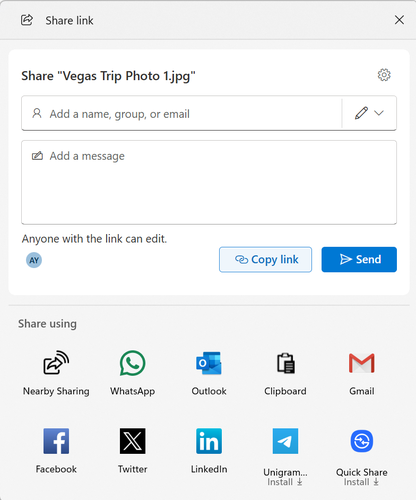
Microsoft also updated the Windows Share experience. Users can now access new “Share using” options when copying OneDrive cloud file links, making it easier to send files through other apps directly from the share window.

Source: Microsoft

These enhancements roll out only to Windows Insiders signed in with a Microsoft account and located outside the European Economic Area.

This build includes a general fix to correct the desktop watermark so it displays the accurate build number going forward.

For those who prefer testing features in more stable Insider branches, Microsoft also released KB5077201 to the Beta Channel and KB5077202 to the Dev Channel.

Canary Channel users can download KB5077221 now and explore the new built-in Sysmon functionality ahead of its broader release.

Castlevania: Belmont’s Curse Announced at State of Play, Launching in 2026

Sony’s latest State of Play delivered major surprises, from the new John Wick game to the God of War trilogy remake. But one of the biggest reveals was a brand-new 2D Castlevania title.

According to the official PlayStation Blog, Castlevania: Belmont’s Curse is in development for PlayStation 5 and is scheduled to launch in 2026. The game is being co-developed by Konami, Evil Empire, and Motion Twin.

Castlevania: Belmont’s Curse takes place in 1499 Paris

The story takes players to Paris in 1499, where monstrous creatures suddenly invade the city and plunge it into darkness. Players step into the role of the successor of Trevor Belmont, continuing the legendary vampire-hunting bloodline.

Armed with the iconic Vampire Killer whip, players will battle through corrupted city streets and a looming castle filled with horrors.

Whip-Based Combat and Traversal

The legendary whip serves as more than just a weapon. It functions as a core gameplay mechanic, allowing players to swing across gaps, maneuver through vertical spaces, and engage enemies in fast-paced encounters.

The reveal trailer also showcased additional weapons, including a sword designed for balanced and reliable attacks. Combat will focus on strategy and resource management, encouraging players to switch tools and abilities depending on the threat.

Classic Castlevania Elements Return

Fans can expect secret chambers, hidden items behind breakable walls, and recognizable enemies such as Zombies. The level design leans heavily into exploration, with challenging areas and collectible secrets reinforcing a classic Metroidvania structure.

The new art direction blends gothic aesthetics with a more colorful visual style, aiming to modernize the franchise while staying faithful to its roots.

With State of Play delivering multiple high-profile announcements, Castlevania’s return stands out as a major moment for fans of classic 2D action. Meanwhile, horror fans also got a glimpse of Silent Hill: Townfall, which was showcased during the same event.

Silent Hill: Townfall Gets New Trailer Showcasing First-Person Horror

Ahead of the Silent Hill Transmission stream, fans anticipated a new game announcement, and Konami did not disappoint. The company showcased a brand-new trailer for Silent Hill: Townfall during Sony’s latest State of Play event, offering the first proper look at gameplay since its 2022 reveal.

This is no surprise, especially because Silent Hill F won Horror Game Awards 2025, reinforcing Konami’s renewed momentum with the franchise.

According to the PlayStation Blog, Townfall aims to deliver a narrative-driven and atmospheric horror experience, staying true to the psychological roots of the series while introducing a new setting and characters.

A new town, new threats, and first-person horror

Townfall takes place in a completely new location within the Silent Hill universe. Players will encounter fresh enemies, story-driven puzzles, and themes centered around mystery, tragedy, and psychological tension.

Unlike many previous entries, the game unfolds entirely in a first-person perspective. The design enhances immersion, environmental interaction, and hands-on puzzle solving.

A central mechanic is the CRTV device, a modern reinterpretation of the franchise’s iconic radio. Instead of merely emitting static near enemies, the CRTV actively scans surroundings, detects hidden signals, uncovers narrative broadcasts, and helps locate threats.

Players can raise the device in real time during exploration, using retro-style video signals to reveal clues and progression paths.

Tense combat and stealth-focused survival

Combat in Townfall remains deliberately stressful and survival-oriented. Players gain access to melee and ranged weapons, but the game frequently encourages stealth, distraction, hiding, and escape over direct confrontation.

Enemies react dynamically to player behavior. They hunt using their senses, which makes noise management and tactical movement essential.

The first-person approach supports mechanics such as peeking around corners and interacting closely with the environment, intensifying encounters.

On PlayStation 5, DualSense features such as haptic feedback and adaptive triggers simulate nearby danger and environmental tension, adding another layer of immersion.

A narrative-heavy Silent Hill entry

Konami positions Silent Hill: Townfall as a sophisticated, story-focused installment. The game emphasizes atmosphere, intellectual puzzle design, and refined aesthetics while preserving the signature tone fans expect from the franchise. Wishlist options are now live on the PlayStation Store, with more details promised in future updates.

State of Play also delivered other major announcements, including confirmation that a God of War trilogy remake is in development and the reveal of a new John Wick game, highlighting a strong showcase for horror and action fans alike.

Sony Announces God of War Trilogy Remake and Surprise Sons of Sparta Spin-Off

Sony closed its latest State of Play with one of the most unexpected announcements of the showcase. Alongside a new John Wick game reveal, the company confirmed major plans for the God of War franchise.

Original God of War trilogy remake enters early development

According to the PlayStation Blog, Sony is marking the 20th anniversary of God of War, which first launched in March 2005 on the PlayStation 2. The franchise follows Kratos and his transformation from a Spartan general to the Ghost of Sparta, becoming one of PlayStation’s most iconic characters.

As part of the celebration, Sony officially confirmed that the original God of War trilogy is being remade.

The remake project remains in very early development. Sony did not share gameplay footage or a release window, but more details will arrive at a later date.

The announcement featured TC Carson, the original voice actor of Kratos during the Greek era. His appearance signaled a strong focus on honoring the series’ roots and longtime fans.

God of War: Sons of Sparta is revealed and out now

In addition to the remake, Sony revealed a brand-new spin-off titled God of War: Sons of Sparta, which is available now on PlayStation 5.

Sons of Sparta takes a different approach from the modern cinematic entries. It delivers a 2D action platformer experience set during Kratos’ youth, when he trained in the Agoge alongside his brother Deimos.

The story is written by members of Santa Monica Studio, the team behind God of War and God of War Ragnarök. The narrative centers on duty, honor, and brotherhood, expanding the Greek mythology timeline in a canon way.

TC Carson returns to voice the adult Kratos as the narrator, marking his first time reprising the role in over a decade.

Classic combat meets 2D gameplay

Sons of Sparta blends traditional God of War combat elements with 2D mechanics. Players use spear and shield combat, unlock divine artifacts known as the Gifts of Olympus, and battle a wide range of enemies from Greek mythology.

The game features hand-drawn pixel animation and recreations of iconic enemies from the original trilogy. It also introduces new mythological creatures developed by Mega Cat Studios.

God of War: Sons of Sparta is available digitally on PS5. The Standard Edition costs $29.99, while the Digital Deluxe Edition is priced at $39.99.

With a full trilogy remake on the way and a new spin-off already playable, Sony’s anniversary celebration positions God of War for another major era.

In other gaming news, Dying Light has surpassed 50 million players worldwide, and players are receiving a new Infected Outbreak event to celebrate the milestone.

John Wick AAA Game Officially Announced at State of Play

Sony used its latest State of Play showcase to officially confirm a brand-new AAA John Wick game for PlayStation 5. The project immediately drew attention as one of the most talked-about reveals from the event.

Saber Interactive is developing the title, with the official name and release date set to be announced at a later time.

John Wick Game Created in Partnership With Film Creators

According to the PlayStation Blog, Saber Interactive is working directly with director Chad Stahelski, Keanu Reeves, and Lionsgate. This close collaboration aims to ensure the game remains authentic to the tone, style, and world established in the films.

Rather than serving as a simple adaptation of one movie, the game will explore a specific period in the John Wick timeline. Developers plan to expand the universe with both iconic characters and entirely new additions created specifically for this project.

An Original Story Expanding the Franchise

The narrative is being developed jointly by Saber’s writers, Chad Stahelski, and Lionsgate. The story will focus on a significant phase in John Wick’s life, offering fans a deeper look into his world while maintaining continuity with the film series.

This original storyline allows the studio to introduce new missions, locations, and character arcs without retelling events from the movies. The goal is to create a meaningful expansion of the franchise’s lore.

Cinematic Action Meets Interactive Gameplay

Core elements from the John Wick films will translate directly into gameplay. Players can expect stylized neo-noir environments, cinematic camerawork, intense driving sequences, and the franchise’s signature gun-fu combat.

Saber Interactive is building a brand-new combat system from the ground up. The system aims to replicate the fluid, tactical, and highly choreographed action that defines the films, giving players full control over fast-paced shootouts and close-quarters encounters.

Detailed environments and mission locations will emphasize the franchise’s distinctive visual identity. Developers describe the experience as highly immersive, designed to blur the line between cinema and video games.

Designed Specifically for PS5

The studio is crafting the game as a premium AAA experience tailored for PlayStation 5 hardware. By leveraging the console’s performance capabilities, Saber aims to deliver high-quality visuals, smooth action, and a cinematic presentation that matches the intensity of the films.

While many details remain under wraps, the announcement signals a major step for the John Wick franchise in the gaming space. More information, including the official title and release window, is expected in the coming months.

In other PlayStation news, Spider-Man 2 and additional titles are joining the PlayStation Plus catalog. Meanwhile, Xbox players can check out newly added games available through Free Play Days this weekend.

Microsoft Edge redesigns site permissions with one-time access and auto-removal starting March 2026

Microsoft is redesigning how site permissions work in Microsoft Edge. The change brings clearer controls and stronger privacy protection across the browser.

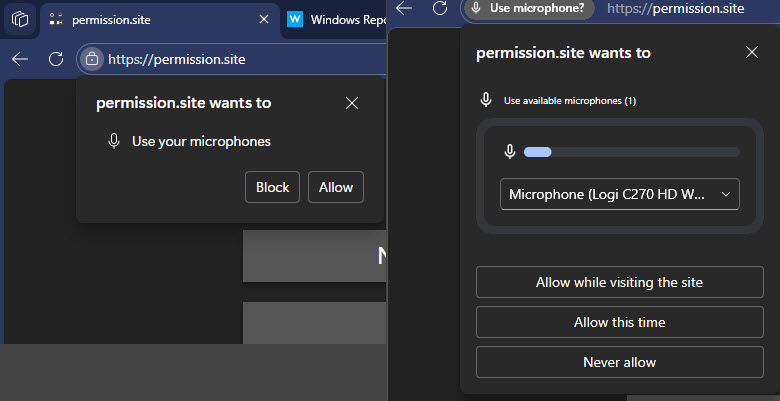
A new permission prompt now offers more choice when a website asks to use sensitive features such as the microphone. Instead of a simple Allow or Block decision, the prompt includes temporary access options and lets users choose which microphone the site can use.

Users can grant access for a single visit, allow it for the current session, or block the request entirely.
Control stays close to the page, without the need to open deeper settings.

Old and new Microsoft Edge microphone permission prompts with one-time access and device selection. Image Credit: Venkat | WindowsReport.

The Site permissions section in Edge Settings has also been reorganized. Recent activity now appears at the top, followed by core permission categories such as location, camera, microphone, and notifications.
Content controls and extra security options sit below in a clearer order that is easier to review.

Users can open this page from Settings > Privacy, search, and services > Site permissions.

Redesigned Site permissions page in Microsoft Edge Settings. Image Credit: Venkat | WindowsReport.

Edge also adds a toggle that removes permissions from sites that have not been used for a period of time. This reduces the risk that older websites keep access to the camera, microphone, location, or other sensitive data.

Toggle that removes permissions from unused sites in Microsoft Edge.

Microsoft describes the change in the Microsoft 365 roadmap:

“To better align with user expectations, site permissions are changing to look and work both in context on a website that is requesting permissions and when navigating to permissions from Settings.”

The roadmap lists rollout starting in March 2026, with availability planned for a future Edge version.

Xbox Confirms GDC 2026 Plans With First-Ever Dev Summit and Ecosystem Focus

Microsoft has confirmed its plans for GDC 2026, detailing an ecosystem-focused strategy under the tagline “Build for What’s Next.” The annual Game Developers Conference will take place from March 9 to March 13 at the Moscone Convention Center in San Francisco.

Bryce Baer, Senior Director of Xbox Ecosystem Marketing, says the event will center on empowering developers to build and release games across console, PC, cloud, and other devices. This year, we’ll have the first-ever Xbox Dev Summit.

The Xbox Dev Summit will be held on March 11 in West Hall Room 3001/3003, kicking off at 10:10 am with Jason Ronald, VP of Next Gen. The session will reflect on Xbox’s 25-year anniversary and walk through how the platform is evolving toward a more connected future.

Besides the keynote, Microsoft plans to host six sponsored sessions during the summit. Speakers from Xbox, Windows, Activision, Bethesda, Blizzard, and King will cover tools, services, and development workflows aimed at simplifying multi-device releases.

At the show floor, attendees visiting the Xbox Lounge in Moscone South Lobby will be able to explore an exhibit highlighting major moments from 25 years of Xbox. The company will also host partner meetings and sponsor events such as the IGF Awards and the ESA Foundation’s Nite to Unite.

For developers unable to attend in person, Microsoft is directing them to its Game Development Resource Hub and dedicated GDC 2026 online portal for updates and session details.

While no new hardware announcements have been confirmed, the emphasis on flexibility, the Play Anywhere, and simplified onboarding hints at Xbox’s broader ecosystem-first strategy for this year, too.

Microsoft Stock Price Surpassed Previous Close Today, Top Investor Remains Bullish on Long-Term Outlook

Microsoft stock (NASDAQ:MSFT) was at about $402 Thursday afternoon, a little, about 0.4% lower for the day, and a good bit under its $555 peak for the last fifty-two weeks. This small dip continues the larger decline since the end of January that has taken over ten percent off the share price. However, it is recovering and surpassed yesterday’s close of $404.37.

The decline followed the company’s saying it would spend a large $37.5 billion on capital in the second quarter of its 2026 fiscal year. However, a lot of this expense is related to AI hardware. Although income was $81.3 billion, fifteen percent up on the year before, if currency rates are not varied, and Microsoft Cloud made over $50 billion in a quarter for the first time, investors seem to be concentrating more on how much the company is spending.

The share price began the day near $405, went under $400 during the morning, and tried to recover a bit by the early afternoon. This movement during the day shows the larger uncertainty about the stock: good increases in income, alongside big spending.

A top investor sees the pullback as an opening rather than a warning sign

A few market analysts hint that the changes to the current price of Microsoft Stock may be down to short-term worries about profit, not real, lasting problems with the company. As reported by TipRanks, 5-star investor Adam Levy says, “Investors sold off Microsoft shares after its earnings report, but the long-term outlook remains extremely positive.”

The future projections are already sitting at around $625 billion, 110% up on the year before, hinting that a large amount of income already agreed with customers. Even if you take out what the company has promised to OpenAI, the number shows that demand will continue.

Although investment is reducing it, free cash flow still came to $5.9 billion in the quarter. This means Microsoft can still pay for more data centres without immediate trouble. Now that the stock is valued at about twenty-five times what it is expected to earn in the future, the argument is whether the market is taking too much off what the company is expected to make.

Disclaimer: This article is for informational purposes only and does not constitute financial or investment advice. Stock market investments carry risk, and readers should conduct their own research or consult a qualified financial advisor before making any decisions. Stock prices and percentages reflect the time of writing and may change due to market volatility. Please verify current quotes before acting on any information.

Microsoft May Finally Restore the Movable and Resizable Taskbar in Windows 11

Microsoft is reportedly preparing to reverse one of Windows 11’s most criticized design decisions. According to Zac Bowden from Windows Central, Microsoft plans to bring back the movable and resizable Taskbar.

The feature is reportedly now in active development and could be unveiled this summer if timelines hold. The change would allow users to position the Taskbar at the top, left, or right side of the screen. That flexibility has been missing since Windows 11 launched in 2021.

Back in the Windows 95 era, moving the Taskbar was standard functionality. That option disappeared when Microsoft rebuilt the interface for Windows 11. Fortunately, it appears that the company is ready to revisit that call. Bowden’s sources further hint that Microsoft is also working on letting users resize the Taskbar, adjusting how much screen space it occupies.

Engineers are reportedly ensuring that flyouts, system tray elements, and pinned apps behave correctly in alternate orientations, something that may explain the long delay. If you could remember, last month’s report by Bowden mentioned that the company wants to make changes to Windows 11 from the ground up. Now, it seems the company is finally doing something.

All that said, the company has not publicly confirmed the Taskbar changes, so it’s possible that plans might shift. Would bringing back a movable Taskbar be enough to win you back, or has Microsoft already pushed you too far from Windows 11? Let us know in the comments below.

Dying Light Surges Past 50 Million Players; Gets New Limited-Time ‘Infected Outbreak’ Event

Techland has marked a major milestone for its long-running zombie franchise, as it confirmed that the Dying Light series has now surpassed 50 million players worldwide. The update arrives 11 years after the original game launched, and roughly one year after the studio last reported 45 million players.

Image credit: Techland

That steady five-million jump suggests the series still has strong legs, even as attention begins shifting toward 2025’s Dying Light: The Beast. Besides the big milestone, Techland shared a few eye-catching stats. Players have collectively eliminated more than 30 billion zombies across the franchise, completed over 1.2 billion quests, and earned a staggering 28.3 trillion in in-game currency.

Those figures span Dying Light (2015), Dying Light 2: Stay Human (2022), and the upcoming Dying Light: The Beast. To mark the anniversary, Techland is also rolling out fresh content across its active titles. The original Dying Light will see the return of two fan-favorite events, while Dying Light 2 is getting a brand-new, three-week limited-time event called “Infected Outbreak.”

The event will flood the city of Villedor with larger swarms of infected, including tougher, volatile enemies and two experimental variants created specifically for the celebration. Players must work together in a global effort to stabilize the city. If the community falls behind, conditions reportedly become more punishing for everyone.

Rewards include a special skin that transforms Aidan into Kyle Crane, nodding to The Beast. There’s also a paid “Black Hand” bundle featuring a new outfit, katana, handgun skin, charm, glider cosmetic, and additional objectives. Besides combat, Techland is adding Lunar New Year decorations, new collectibles tied to the broader lore, and extra bounties through the Dying Light Outpost.

While no new details were shared about Dying Light: The Beast, continued support across the franchise suggests Techland isn’t slowing down. With 50 million players already in, the question now is how much further this post-apocalyptic parkour universe can expand.

via: Insider Gaming