Lenovo is no stranger to high-quality devices, however, such devices usually aren’t the most affordable.
If you’re looking for a new laptop, you’re in luck since ThinkPad X1 Carbon Gen 11 is on discount, so don’t miss it.
You can get ThinkPad X1 Carbon Gen 11 without breaking the bank
As reported by Digital Trends, this model is available at a discount, and if you’re not familiar with it, here are its specs:
Display:
14-inch WUXGA, IPS touch display, 400 nits, 60Hz, LED backlight
CPU:
13th Generation Intel Core i7-1365U vPro, up to 5.20 GHz
GPU:
Integrated Intel Iris Xe Graphics
RAM:
32 GB LPDDR5-6000MHz
Storage:
1 TB SSD M.2 2280 PCIe Gen4
Ports:
USB-C Thunderbolt 4 / Power in, USB-C Thunderbolt 4, 2x USB-A 3.2 Gen 1, HDMI 2.1 with 4K and 60Hz support, headphone and mic combo
Security:
Integrated fingerprint reader, facial recognition software that works with IR camera, TPM
This model can provide users with instant wake, all-day battery life, and improved cooling, so it’s perfect for long business sessions.
It’s worth noting that RAM isn’t expandable, but 32GB will be enough for most users. If you’re interested, you can get this model for $2,135.40 from Lenovo’s website, so don’t miss it.
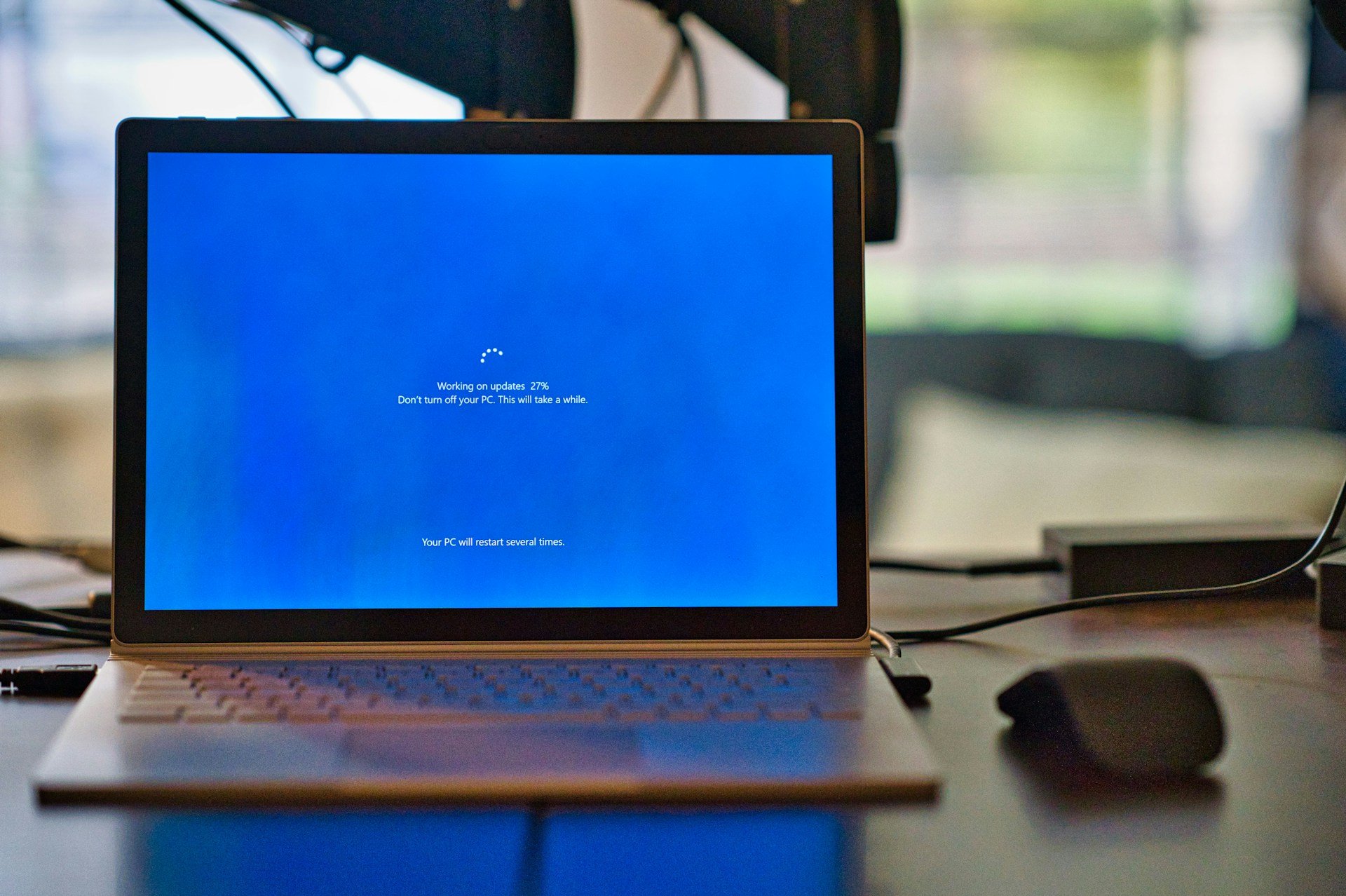
Windows 10 is, by most standards, the best operating system ever released by Microsoft. But who knew that upgrading to Windows 10 in 2024 would be such a challenge? Besides, the lack of clarity around the subject and process makes it all the more complex!
A lot has changed since Windows 10 was first rolled out in 2015. Earlier, Microsoft offered a year-long period (until July 29, 2016) for free upgrades to devices running Windows 7 and Windows 8.
After that ended, users could still install and activate Windows 10 on PCs, likely because the activation servers were never shut down. That changed on September 20, 2023, when Microsoft discontinued free upgrades to Windows 10.
Microsoft’s free upgrade offer for Windows 10 / 11 ended July 29, 2016. The installation path to obtain the Windows 7 / 8 free upgrade is now removed as well. Upgrades to Windows 11 from Windows 10 are still free.
Then came the uncertainty. Can you upgrade to Windows 10, or can you not? No one knew at this point, and honestly, no one still does!
As it turns out, there are several reports of Windows 7/8 users being able to upgrade to Windows 10 and even complete the activation successfully. In a forum post, a user illustrated installing an activated copy of Windows 10 on a VM running Windows 7.
For others, while installation remains as seamless as ever, the activation never goes through. And I am talking about the vast majority here!
So, activation is indeed a challenge. And if you run unactivated Windows, personalization settings and certain features will be unusable. Besides, you will be left with a less secure version of Windows that is prone to malware and online threats.
If you are planning to upgrade to Windows 10, I would suggest you give it a try. First, back up all the data on the PC to an external drive or use an effective backup software.
Now, download the Windows 10 installation media from Microsoft’s official website > run the setup > follow the on-screen instructions > choose Upgrade this PC > wait for the installation to complete.
Upon reboot, go to the activation settings and verify whether the Windows license is activated. If not, run the Windows 10 Activation Troubleshooter and see if that helps. Or you could try our tips to activate Windows 10!
With a little over a year to go, I personally feel upgrading to Windows 10 is too much hassle. You will, anyway, be running an unsupported, less secure version of the OS after Oct’25 unless you subscribe to the paid Windows 10 extended security updates (ESU).
My suggestion is that if you have an unactivated copy of Windows 10 and are really bothered about it, switch to a lightweight ChromeOS or Linux. Google is offering ChromeOS Flex as a free upgrade to Windows 10 users!
Microsoft hasn’t left you with a lot of options. If you are in luck, the Windows 10 copy will be activated post-install. Otherwise, you will have to choose between an unprotected PC, switching OS, or getting a new computer.
Which of these do you think is the best option? Share with us in the comments section.
Are you encountering Error Code 45 on your disk partition? I know how frustrating it can be, especially when it interferes with your system’s performance. This article will help you understand what this error means and provide a step-by-step guide to fix it. I’ll use the Windows 10 version for demonstration.
Let’s begin!
What Is Error Code 45 on Your Disk Partition?
Error Code 45 typically appears when Windows can’t connect to the hardware device because it’s not physically connected to your computer. However, even when the device is connected, this error can occur due to corrupted system files, outdated drivers, registry issues, etc.
The error message usually reads, “Currently, this hardware device is not connected to the computer. (Code 45)”.
So, how do you fix the issue?
How To Fix Error Code 45 on Your Disk Partition
Before doing anything more involved, try these common and quick fixes first:
Update Windows: Go to Settings, click on Update & Security, then select Windows Update to check for and install any available updates.
Restart your computer: Click on the Start menu, select Power, and choose Restart.
Check the connection: Ensure all cables are securely plugged in and try reconnecting any loose connections.
Check for hardware issues: Try the disk on another PC and confirm it’s working.
If these didn’t help, read on to resolve Error Code 45 on your disk partition:
1. Run Windows Troubleshooters
Windows has built-in troubleshooters that can automatically detect and fix many common problems including Error Code 45. However, there are two different ways to troubleshoot, depending on whether your OS version is before or after Windows 10 build 1809.
I’m running a version that came after Windows 10 build 1809 and it doesn’t have Hardware and Devices Troubleshooter in the Control Panel. Here are the steps:
Type Windows PowerShell on the search button beside the Windows icon and hit Enter.
Select Run as administrator.
Type msdt.exe -id DeviceDiagnosticto open Hardware and Devices Troubleshooter.
Tap “Next.”
Wait for the process to complete then follow the instructions on the screen.
Reboot your PC and check if the issue is solved.
If your OS version is BEFORE Windows 10 build 1809, follow the below steps:
Press the Windows Icon and letter R keys simultaneously, type “control panel” and hit Enter.
Tap “Troubleshooting.”
Click “Hardware and Sound.”
Hit “Hardware and Devices.”
You’ll see the troubleshooter wizard. Tap “Next” to begin.
Follow the instructions on your screen to complete the process then restart your PC.
Did the fix work? Here’s another one.
2. Update the Device Driver
Outdated or corrupt drivers can often cause hardware errors. Updating them is crucial for maintaining hardware compatibility and performance.
Here’s how to do it:
Press Windows + X and select Device Manager.
Find the device causing the issue, right-click it, and select Update driver.
Choose Search automatically for drivers.
Follow the prompts to install any available updates then restart your PC to check if the error is solved.
This task can also be accomplished faster with the help of professional software such as Fortect Driver Updater. In just a few minutes you can download the updated driver and fix errors that may have occurred from this issue.
3. Run System File Checker
System File Checker can scan and repair missing or corrupted system files, which might be causing the hardware not to connect properly.
Here are the steps to follow:
Press the Windows key on your PC, type cmd then hit Enter.
Click “Run as administrator.” If prompted for permission, click “Yes.”
Type sfc /scannowand hit Enter.
Windows will now verify the system files and automatically fix any detected issues. Once the verification is complete, exit Command Prompt. Then, reconnect your hardware device and check if it’s working properly.
4. Run DISM Scan
Deployment Imaging Service and Management Tool (DISM) can repair a corrupted system image, potentially fixing deeper Windows issues that SFC can’t address.
Type cmd on the search button beside the Windows Icon and tap Enter.
Pick “Run as administrator.” If prompted for permission, click “Yes.“
Type DISM /Online /Cleanup-Image /RestoreHealth and press Enter.
Allow the process to complete.
5. Uninstall and Reinstall the Drivers
If updating the driver doesn’t work, try uninstalling and then reinstalling it to reset any corrupt configurations.
Follow the below steps:
Press Windows + X and select Device Manager.
Right-click the problematic device, select Uninstall device, and tap “Uninstall.”
Restart your computer. Windows will attempt to reinstall the driver automatically.
6. Run CHKDSK
Running CHKDSK is important for identifying and repairing disk-related issues affecting hardware connectivity and performance. This utility ensures that the disk is free from errors.
Follow these steps:
Press the Windows key, type cmd, and tap Enter.
Select “Run as administrator.” If prompted for permission, click “Yes.”
Typechkdsk.exe /f /rand press Enter.
If prompted to schedule the scan at the next restart, type Y and press Enter.
Restart your computer to let CHKDSK scan and fix disk errors.
Note: Running a disk check can be time-consuming. If you can’t run it during your next boot, you can skip it and reschedule by following the above steps.
If troubleshooting doesn’t resolve the issue, consider replacing the faulty hardware component with a new one.
Conclusion
Encountering Error Code 45 on your disk partition can be frustrating, but with these troubleshooting steps, you can fix it easily. Regular maintenance, such as keeping your drivers updated and running periodic system checks, can help prevent such issues from arising in the future. Also, if you’re having trouble with the same error on your printer, I’ve got you covered.
At the most recent Google I/O, Google came up with AI teammates, which are AI agents that work and use company data to answer any questions related to a variety of company topics, quickly and efficiently. The tech giant sees it as the perfect teammate, others see it as a possible replacement for a real manager, as the tool can easily act like one when the real manager is away.
Needless to say, the technology is similar to Copilot in Microsoft 365, but it’s more engaged in daily conversations, and it’s acting like an interactive workmate.
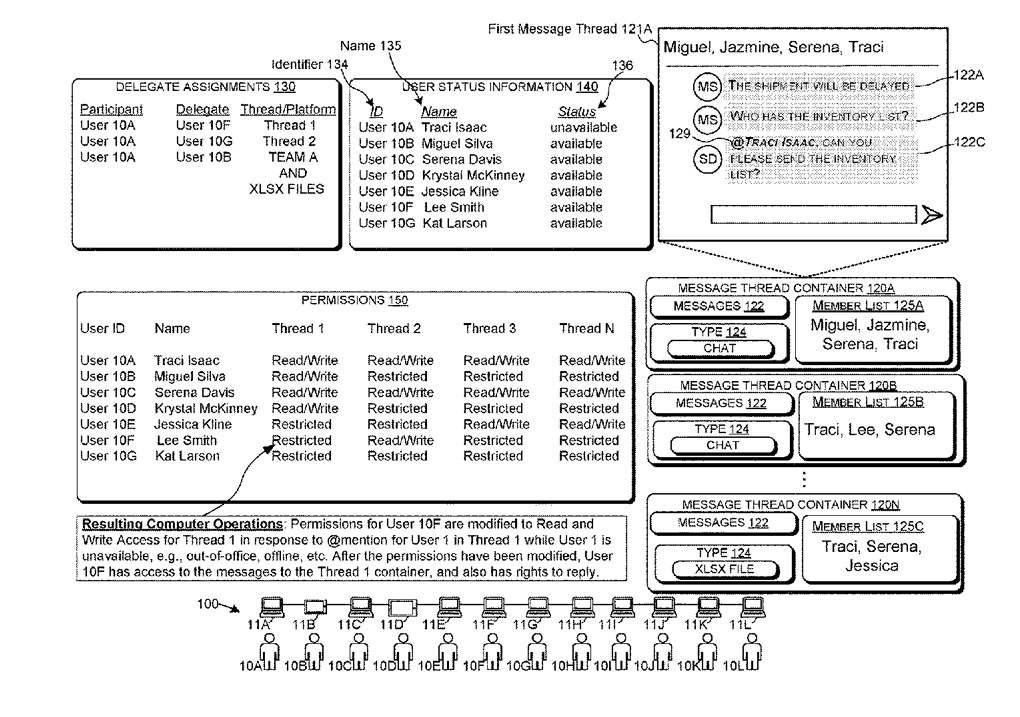
However, you would be surprised to know that Microsoft has already been thinking about a similar technology, that does the same thing, more or less, but it doesn’t forget about the human side. According to a recent patent, the Redmond-based tech giant is working on Delegates, a capability that will most likely be implemented in platforms like Microsoft Teams.
While the actual technology is not officially called Delegates, the patent describes it as a system that helps when someone is mentioned in a conversation (like a chat or email) but they’re not available. And here comes the interesting part: when the system sees that a person (let’s call them the main person) is mentioned in a message (like when someone uses @name) and knows that this person is out of the office or not available, it automatically finds another person to take their place, a delegate if you wish.
So, basically, this could be Microsoft’s take on Google AI Teammates. A Copilot 2.0 that uses company data to delegate sub-managers, and facilitate human interaction above all.
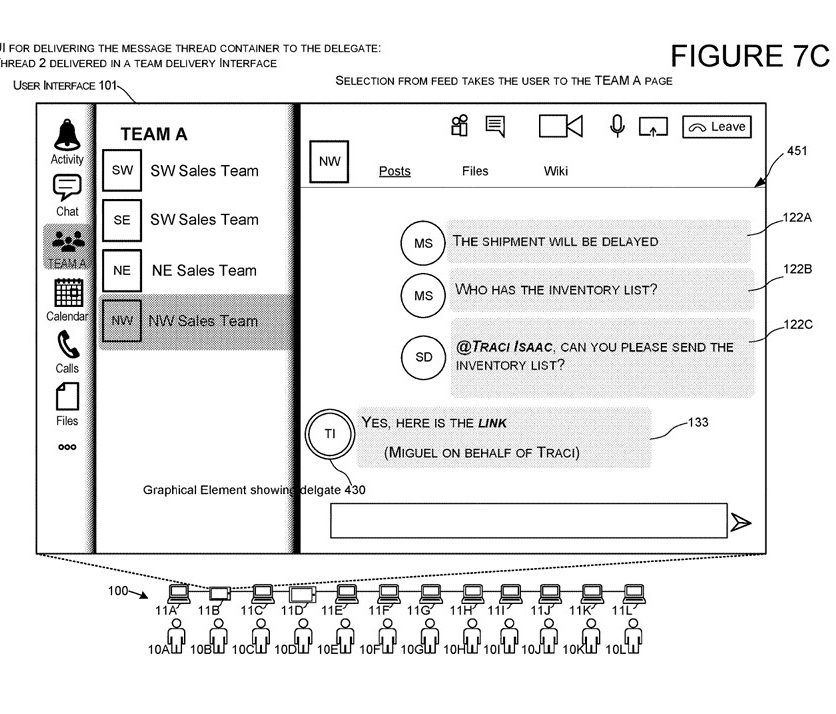
If someone needs an answer from a manager, but the manager is away, the system takes the message where the manager was mentioned and the conversation around it and sends it to the delegate.
It also changes the permissions so that the delegate’s computer can show and send messages in the conversation on behalf of the main person. When the delegate replies, the system makes sure this reply goes back to the main conversation.
In case you’re wondering about sensitive data leakage, know that the system has in place some processes that stop it from accidentally causing such situations. It will automatically remove the managing privilege of the delegate, once the manager is back online.
The techniques disclosed herein grant each delegate with permissions to access threads and to reply to those threads when a thread participant is marked as unavailable, and the system can also remove the delegate appointments and the granted permission when the thread participant is marked as available.
The technology can work with virtually any kind of interface that allows threaded messaging, including Microsoft Teams, or any other communication platform. And the paper mentions Microsoft Teams as the main example of it.
Other examples of a delivery interface can include a Teams, Channels, document, or any other collection of data that can be displayed with messages of a message thread.
So, while Google is coming with AI-based managers that can provide you assistance with virtually anything, Microsoft sees it the other way: through technology, Teams delegates managers. At least until the real ones show up.
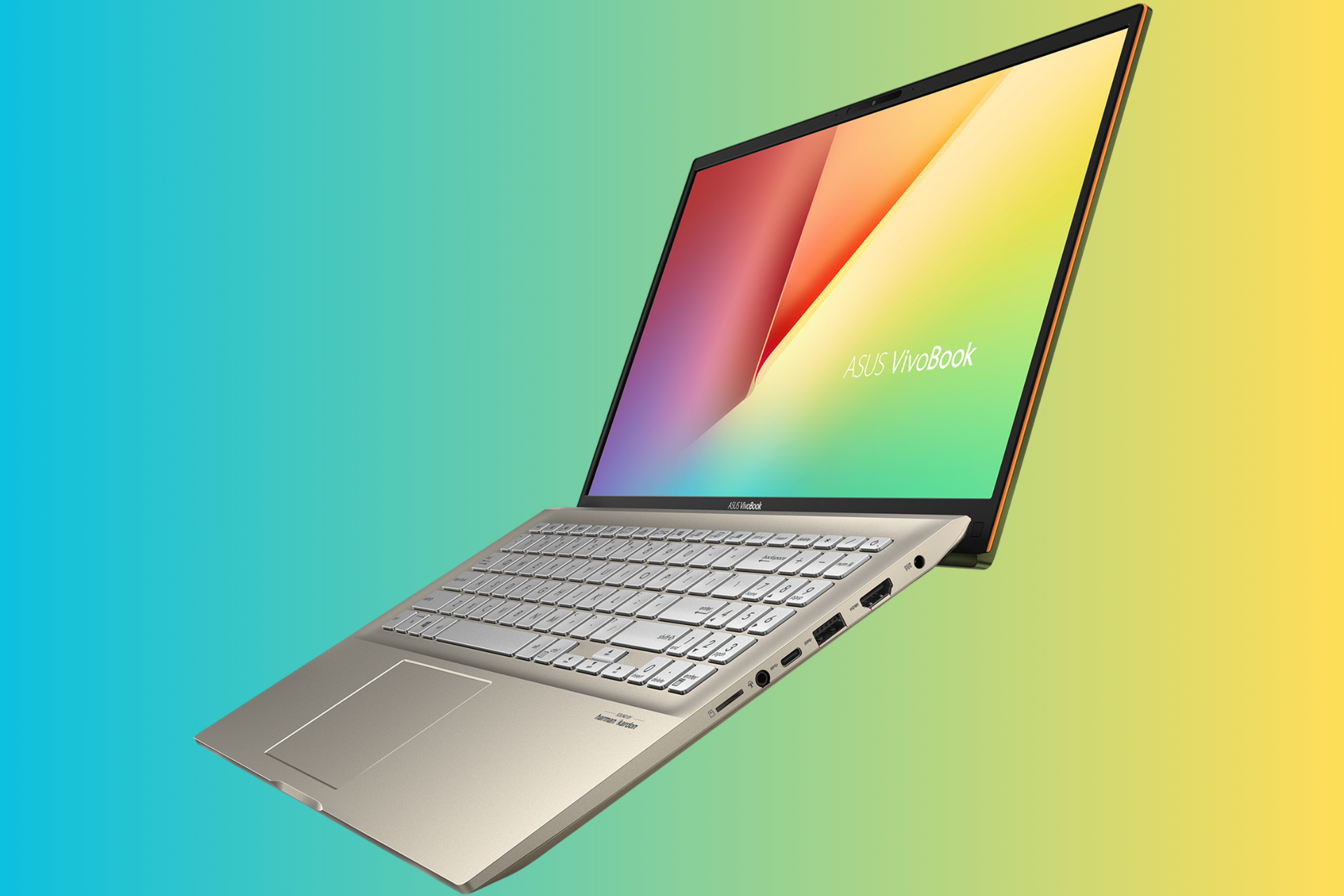
In a surprising fumble, ASUS Vietnam accidentally let the cat out of the bag about their first laptop boasting the Snapdragon X Elite CPU. The leaked model, carrying the Vivobook S 15 OLED badge, boasts some eye-popping specs that have tech enthusiasts buzzing.
The leak was spotted by Roland Quandt, who posted a screenshot of the ASUS Vietnam page featuring the new laptop on X.
Here's ASUS' first Snapdragon X Elite laptop, that was listed on their vietnamese store for some time. pic.twitter.com/3mCKn0nVto
Leaked tech specs of Vivobook S15 OLED Snapdragon X Elite
At its heart lies the Qualcomm Snapdragon X Elite X1E-78-100 SoC, a powerhouse with 12 cores. This beast is not just about brute force; it’s smart, with a 75 TOPs AI engine to boot.
The machine packs 32 GB of LPDDR5X memory and a standard 1 TB PCIe 4.0 NVMe SSD. But that’s not all. The display is a glossy, 15.6-inch 2,880 x 1,620 resolution OLED, boasting 600 nits peak brightness. For connectivity, it seems to have all the essentials covered, including an HDMI out and USB Type-C ports.
Quandt hints that the price might be around €1,500 ($1,626), but it would be wise to wait for the official announcement for that.
Let’s be honest, the laptop is not a revolutionary device. ASUS just updated their existing Vivobook S15 OLED laptop to accommodate Qualcomm’s CPU. What’s fascinating is the broader context. The Snapdragon X Elite notebook is part of a wave of ARM-based laptops that are challenging the traditional x86 dominance. This shift could redefine what we expect from our laptops in terms of performance, battery life, and connectivity.
However, the real test will be in the user experience. Can these ARM-based laptops deliver on their promise? Will they be able to handle everything from everyday tasks to more demanding applications? We will probably know more about all this during Microsoft’s Build 2024 where some of the focus will also be about Windows on Arm.
Clearly, the laptop market is about to get a lot more interesting. And for us tech enthusiasts, that’s always a good thing. So, let’s keep our eyes peeled and our minds open. We’ve learned about this from NotebookCheck.
What do you think about the new ASUS Vivobook S15 OLED Snapdragon X Elite laptop? Let’s talk about that in the comments below.
Microsoft Teams is a great collaboration tool for both small and larger teams, and Microsoft is constantly improving it with new features.
Speaking of which, we have some new features related to both channel creation and archival, so let’s dive in and see what’s new.
Microsoft Teams got updated, making it easier to manage channels
Faster channel and team creation
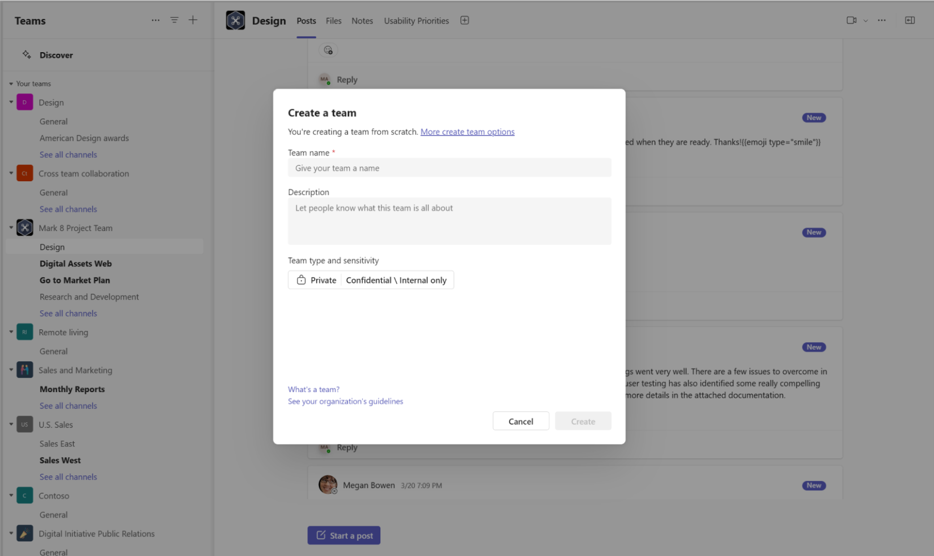
It’s now faster than ever to create a new team, as creating a team from scratch is now the default option, but you can still use templates if you prefer them.
Creating channels is also faster, and you can create a channel from the same menu that you use to create teams.
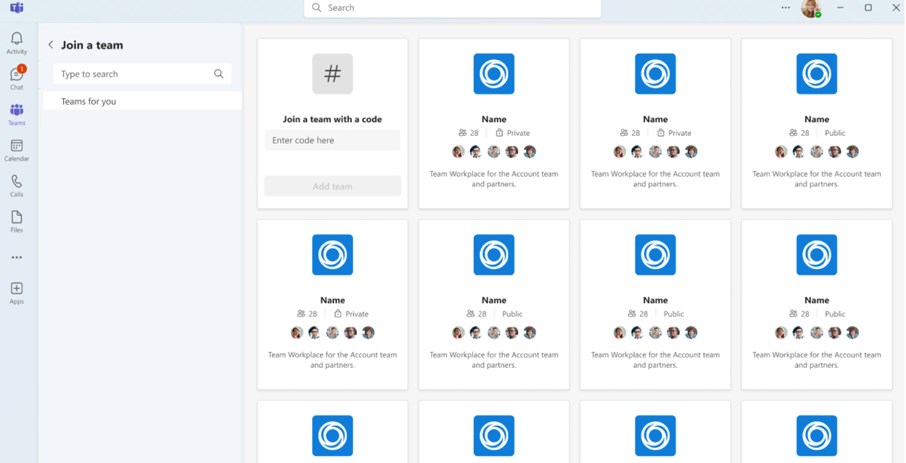
To avoid creating unnecessary teams, users can now search for public and private teams and join them when needed. Of course, private teams can be hidden by the administrator if necessary. All the previously mentioned features are already available.
As for upcoming features, when you join a team, you’ll be able to show only channels that are relevant to you. This is perfect if you have multiple channels in an organization and you need to focus only on specific ones.
This feature isn’t ready yet, but it will become available by the end of the year.
Improved channel collaboration
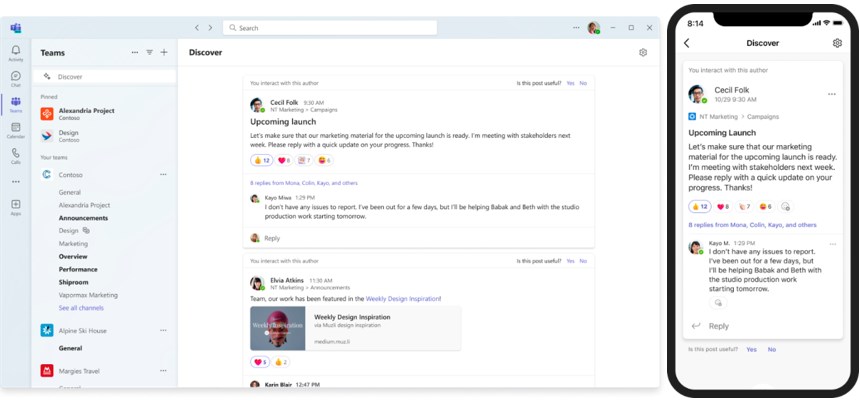
Teams now have a Discover feed that uses the power of AI to bring you the most important content from the channels that aren’t in your channel list.
By doing so, you can discover important posts based on people you work with and the topics that might interest you. This feature is available, and you can start using it today.
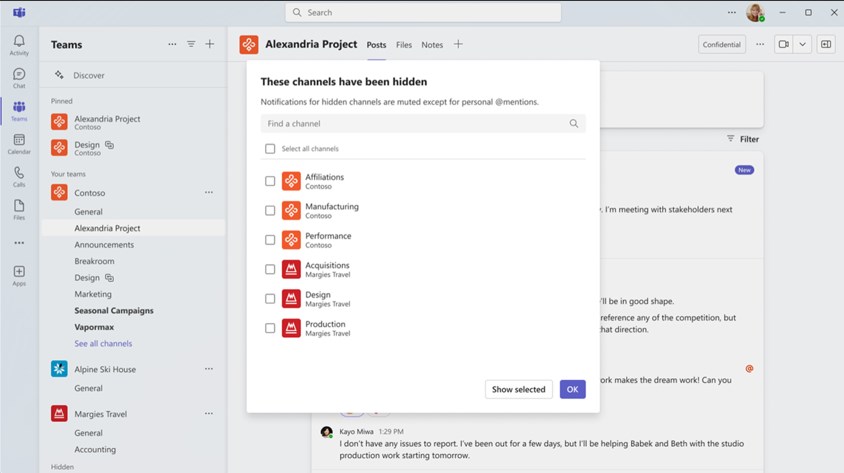
You can also now hide the general channel to declutter the list of channels, and in the future, it will be possible to rename the general channel.
Speaking of channel removal, Teams will be able to automatically detect and hide inactive channels you haven’t interacted with in the past 45 days.
This is an optional feature, and you can disable it, or you can choose the channels you want to keep. We expect to see this feature in the third quarter of the current year.
Another similar option is also available allowing channel owners to archive a channel that is no longer needed. The channel will be hidden, and members won’t be able to participate anymore, but its content will remain saved.
Archiving is already available, so you might want to give it a try.
Notification improvements
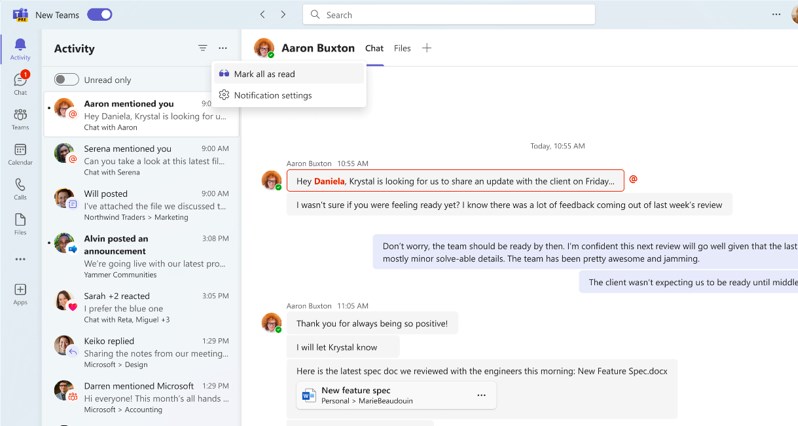
You can now choose to see notifications in the activity feed and show a banner, or turn them off completely. Speaking of activity feed, you also have the option to mark all notifications as read and clear them easily.
This feature has already landed in Teams, and we can start using it today.
It will also be possible to mute all notifications from a specific channel post, allowing you to focus only on the important tasks. This feature is coming in the second quarter of the year.
You’ll also be able to customize the sound of notifications, thus allowing you to have different sounds for urgent messages for example, or mute them entirely. As for availability, we should see it in Q3 of this year.
Lastly, you can now invite a colleague to join a discussion by sharing a link to a channel, post, or reply. The feature is already available, so you can go ahead and start using it.
There are a lot of interesting features available, with more on the way, and if you want to learn more, we suggest reading Microsoft’s blog post.
Ever since Starfield was released in September last year, players had been complaining about there not being a major update. It looks like the developers heard them because the latest Starfield update, version 1.11.36, is said to be the biggest to date!
With the update boasting a wide array of new features, performance enhancements, and increased stability for both PC and Xbox, your Starfield experience will certainly go up a few notches.
Developers have made significant improvements to the Xbox Series X’s display settings, allowing players to customize their experience for the best gameplay. And initial reviews coming in suggest that these do improve things!
Here are the highlights of the latest Starfield update, 1.11.36:
– Improved surface maps – We’ve heard your feedback, and we’ve made some big improvements to surface maps, so you’ll always know just where to go and no longer “get lost” on the way to your parents’ place (and they weren’t buying that excuse anyway, you should really go visit them).
– New gameplay options – For those of you who like a bit of an extra challenge or want to make some aspects of the game easier, you can customize your experience with brand new options in the Settings menu. Want to make ground combat harder but ship combat easier? You can do just that!
– Added Ship Decoration mode to the interior of Ships – now you can decorate your ships just like you can with Outposts!
– Added Tabs to Container menus to make managing your inventory easier.
– Added the ability to change Traits and appearance after entering the Unity.
– Added Dialogue camera toggle in the Settings.
– Added Display settings for Xbox Series X to prioritize Visuals or Performance, adjust Frame Rate Target, and toggle VSync (Series X).
With the latest update, Bethesda has managed to boost optimism amongst players that future Starfield updates will be more aligned with their needs, i.e., deliver more optimized gameplay. This was important, considering it took developers over a decade to launch Starfield.
This is sad news for all the fans of the game, but the company has decided to give their users one last gift.
Thank you all for your continued support.
We’re working to release the physical edition of Hi-Fi RUSH with our partners at Limited Run Games, as well as a final patch to address some minor issues releasing later today.
In addition to the final update of the game that will address some minor issues, Tango Gameworks will also bring a physical edition of the game thanks to the collaboration with Limited Run Games.
If the game ever gets removed from online stores, the fans will be able to install it and play it thanks to the physical copy.
Google Chrome is working on bringing its Reading Mode feature to Google Docs. This will allow you to view your documents in a clutter-free format within a dedicated side panel. The integration of Google Docs in Reading Mode is currently being tested in Chrome Canary.
Reading Mode in Chrome removes ads and distractions from web pages, making it easier to focus on the content. You can access it through the page context menu or a pinned toolbar icon. You can further customize the reading experience by adjusting text appearance, and font size, disabling links, and switching to dark mode.
Chrome’s Reading Mode Integration with Google Docs
Previously, Reading Mode wasn’t compatible with Google Docs, meaning you couldn’t view documents in the side panel. Google is changing this by integrating the feature directly with Docs. This integration is currently behind a flag (experimental feature).
Previously, Chrome’s Reading Mode didn’t support Google Docs, preventing you from viewing documents in the Side Panel. Google is working to make this possible. The feature is being added behind a flag.
The feature implementation suggests Chrome will use a local Side Panel when using Reading Mode in Google Docs. This ensures your privacy by keeping Reading Mode for Google Docs isolated from other tabs, with no data sharing.
How to enable and use Reader Mode for Google Docs in Chrome
Launch Chrome.
Visit chrome://flags in the address bar.
Search for “Reading Mode Google Docs Integration.“
Select “Enabled” from the dropdown menu.
Restart Chrome for the changes to take effect.
While Chrome with Google Docs open generally complains from the Side Panel that “Reading Mode can’t find the content of the page,” it suggests highlighting the text for the feature to work. We noticed Chrome showing the Reading Mode icon for a Google Docs page; using it, or the Reading Mode icon on the toolbar, may produce the output in the Side Panel in a readable format.
In the last few years, AI has become integral to most tech corporations around the globe, including emerging economies. A recent survey by Microsoft and LinkedIn highlights how India is leading the charge in AI adoption!
The survey results suggest that 92% of the Indian workforce is using AI, much higher than the global average of 75%. That’s a massive increase in just a year!
Leaders are encouraging AI adoption in India
The results of Microsoft’s survey show that 91% of leaders across organizations are encouraging AI adoption, leading to an increasing workforce using AI-powered tools to outperform the competition.
When the top echelon promotes AI integration, the workforce is bound to follow, as has been the case with India. Regular training programs play an important role in generating awareness and increasing AI adoption.
Sheila Jordan, Chief Digital Technology Officer at Honeywell, says,
To stay ahead of the curve, we’ve made AI training a priority to ensure everyone can leverage the power of Copilot for Microsoft 365 and other AI solutions. We also launched the GenAI Academy, supporting employee growth and development with the aim of increasing ambassadors and GenAI power users across the globe. We are already seeing benefits that are transforming the way we work and innovate
But there’s another side to it. Roughly half the workforce, 54%, believes their organization is not keeping up with the changing landscape. And that’s where AI assistants come into the picture, helping individuals use generative AI to seamlessly perform work-related tasks.
On the bright side, 72% of the workforce doesn’t rely on employers but integrates available AI tools on their own. This highlights a critical aspect: an increase in awareness amongst the workforce.
The survey also highlights the potential amongst the workforce and the eagerness to adopt AI. With the right approach, organizations can tap into it and boost their revenue while spending only a fraction.
While speaking to Microsoft News, Irina Ghose, Managing Director, Microsoft India and South Asia, said,
Data from the Work Trend Index shows that AI is now a reality at work, with India having one of the highest AI adoption rates among knowledge workers, at 92%. The rate of diffusion we’re seeing across sectors, from BFSI to healthcare to ITES and the public sector has been very encouraging. This AI optimism presents a tremendous opportunity for organizations to invest in the right tools and training, to unlock efficiencies for employees and ultimately drive long term business impact.
Our survey on Microsoft Copilot suggests that employees use the AI assistant to perform searches, write emails, and automate tasks.
Microsoft Copilot
Microsoft’s survey also highlights how AI power users (ones who are well-versed with the idea and extensively rely on AI tools) are 20% more likely to be selected for training programs and 65% more likely to communicate with the CEO.
Looking at these numbers, it’s clear that integrating AI into work won’t be optional anymore. It’s a critical skill one must excel in!
Even the hiring pattern in India suggests this. 75% of the respondents say they will never hire someone without AI skills, higher than the global average of 66%.
In a country with high unemployment levels among graduates, AI could be a skill that gets you shortlisted for interviews. According to the survey, 80% of the employers in India would prioritize AI skills over experience.
Similar trends will emerge across the globe
While AI adoption is rising exponentially among the Indian workforce, the trends are somewhat similar across the globe, although the rate is lower. And it shall soon attain the same levels or even higher, a key factor being the encouragement from the top leadership!
For our readers, it’s essential to understand that artificial intelligence is here to stay. AI skills are now vital in securing one’s job and outperforming the competition.
Windows 11 is a great operating system, but many aren’t too pleased with it and are looking for similar alternatives.
Deepin Linux V23 is one of those alternatives, and many users are wondering if it is a good alternative, so in today’s guide, we’re going to answer this question.
Deepin Linux V23, a flawed Windows 11 alternative from China
Many have been looking for a Windows 11 replacement, and we saw several distros, such as Wubuntu, that try to emulate the look and feel of Windows.
As BetaNews reports, we have a new contender in the form of Deepin Linux that has just received its release candidate.
In terms of looks Deepin Linux does resemble Windows 11 with its centered Taskbar, but it’s much closer to the macOS in our opinion.
This version brings a lot of improvements, such as an optimized installer, and the ability to try the software before installing it.
UI has been improved as well, and its launcher and taskbar have been revamped. The new version also allows mouse and keyboard sharing, clipboard sharing, and more.
However, release candite has various issues such as shutdown blocking, application installation errors, and blurry picture on high-resolution screens. Some older bugs, such as taskbar crashes with dual screens haven’t been fixed yet.
Users who have tested it reported issues with recognizing the US International keyboard. It’s worth mentioning that preinstalled applications are available in Chinese which makes the apps harder to use.
A few users were also quick to mention alleged hidden backdoors, but we weren’t able to confirm that.
Even the Reddit community had to say few things about this distro, thus raising privacy concerns. The following is a quote from Deepin EULA which is concerning:
When you use deepin community to post,reply,send a private message to other users or do other interactive behaviors,we will collect the content (including text,pictures or videos) and your behavior information (ie,Likes,Collections,Comments and Reporting information) to achieve relevant regulatory requirements in various regions.
Others were quick to recommend other distros over Deepin, so to be on the safe side, we’d do the same. The bugs in the release candidate are expected, but the privacy concerns are what put off many users from using Deepin Linux.
Microsoft commissioned Public First to research how AI could improve the UK’s economic growth. The consultancy used a mix of comprehensive economic data modeling and surveyed over a thousand senior business decision-makers to gather results. In addition, Public First analyzed digital technology opportunities, necessary investments, and current barriers to AI adoption.
How will AI affect the UK GDP?
According to the report, the GDP of the United Kingdom could increase by £550 billion ($679,1 bn) by 2035. For that, the UK should adapt to AI and cloud technologies. Also, the predictions estimate that for every £1 spent by companies, the economy could rise by £5. Thus, the estimated Return on Investment (ROI) could get higher than 5:1 in the next decade.
In addition, the United Kingdom has the most advanced tech sector in Europe. On top of that, in 2021, the UK government launched the National AI Strategy, a 10-year action plan. Also, since 2016, more than £20 ($25,3 bn) billion has been invested privately into the country’s AI companies. However, according to the report, if there are AI advancement delays, the economy could lose £150 billion ($190 bn) by 2035.
What could delay the AI advancements of the United Kingdom?
The UK faces a few challenges that could slow down AI advancements. The first bottleneck is the country’s infrastructure. The United Kingdom covered 1.3% of global computing capacity in 2022. On top of that, AI development requires adequate data centers, an advanced digital technology infrastructure, a supply of powerful hardware, and experienced AI users.
The second issue is that 47% of small and medium UK enterprises don’t use AI, and 31% don’t use cloud services. Thus, there aren’t many experienced AI users. The country should help small and medium businesses harness the power of AI and digital technology to fix the issue.
The last challenge is fixing the digital skill shortage. According to the research, two-fifths of businesses barely find people with IT and data analytics knowledge. On top of that, it is harder to find employees with specific AI-related skills like prompt engineering.
The UK could also use AI to improve its public sector. In doing so, the country could save £17 billion ($21,5 bn) by 2035. However, that’s just enough to cover the salaries of 330,000 nurses, according to the report. Also, the National Health Service (NHS) uses AI tools to support early cancer and disease detection.
Will AI create jobs?
Contrary to some beliefs, AI will not lead to job losses, especially in the short-to-medium term. After all, there is an increase in AI job demands. Additionally, employees could use it to develop new skills and to work more efficiently. For example, people could learn data and prompt engineering.
Microsoft UK made a huge investment to train one million people to use AI. After all, AI can help in financial services, professional services, health, biotech, and science. In addition, Microsoft invested £2.5 billion ($3,1 bn) in AI skills, security, and the infrastructure of its UK data centers in 2023. Also, the company helps the UK to advance AI development. Also, the government invested £1.5 billion ($1,9 bn) in computing capacity.
Ultimately, the UK needs to make a few improvements to keep its AI growth rate. In addition, the government must find ways to help small and medium enterprises adopt AI faster. Besides, Microsoft will continue supporting the United Kingdom’s goal to become an AI superpower.
Will the UK continue being the most advanced tech sector in Europe? Let us know in the comments.
Microsoft has been adding many useful features to its web versions lately, one of which was a new way to animate PowerPoint presentations.
Now, the Redmond tech giant is planning to integrate another feature into PowerPoint for the web. With the new addition, you will effortlessly generate accurate captions for your videos using PowerPoint for the web.
In the official blog, Peter Wu, Principal Engineer on the PowerPoint team, said:
We are on a journey to make it easier for everyone to create accessible content. Captions in videos are an essential part of the long-term vision and a key accessibility feature that ensures your PowerPoint videos can be enjoyed by all. Not only are captions vital for people who are deaf and hard of hearing, studies show that most people prefer watching videos with captions. One poll found that 86% of people who use video captions are not deaf or hard of hearing. This is a classic example of the inclusive design principle of “design for one, extend to many.
The Redmond tech giant mentions that the captions will be generated using state-of-the-art speech recognition AI. It will be so efficient that it can caption a 2-hour video in 3 minutes and support 63 languages.
Once generated, you can also review the captions for accuracy. For that, click the Edit Captions button and make the edits as it suits you from the Captions pane.
While you are editing a text cue, the associated video segment will play automatically so that you can compare it for accuracy.
The official blog post also included tips and tricks which could help you use the feature better:
You can also add speaker names and descriptions of important sounds to help your audience understand the video.
Automatic speech recognition isn’t perfect, so be sure to review your captions for accuracy!
You also have the option to translate your captions into additional languages right in PowerPoint. (Currently, 76 languages are supported.) Also, be sure to review the translation for accuracy.
Captioning your videos makes a world of difference! The improved accuracy and synchronization make it much easier for audiences to understand than live captions.
You can also create captions in other apps and services and then insert them into PowerPoint for the web in WebVTT format. Learn how
This feature will roll out in June in PowerPoint for the web. Are you looking forward to using this feature? If so, share your thoughts in the comments section below.
Microsoft released a firmware update for the Surface Pro 7, a 12.3-inch touchscreen notebook. The May update, dated May 14, 2024, includes security updates, addresses overheating issues, and enhances energy efficiency.
Here is what the release notes say:
Addresses a potential security vulnerability related to Intel® Security Advisories:
INTEL-SA-00923 – Uncontrolled resource consumption for some Intel® SPS firmware versions may allow a privileged user to potentially enable denial of service via network access.
INTEL-SA-00929 – Race condition in BIOS firmware for some Intel(R) Processors may allow a privileged user to potentially enable escalation of privilege via local access.
INTEL-SA-00950 – Sequence of processor instructions leads to unexpected behavior for some Intel(R) Processors may allow an authenticated user to potentially enable escalation of privilege and/or information disclosure and/or denial of service via local access.
Prevents overheating and maintains energy efficiency of the device.
And this is the list of new drivers added:
Windows Update Name
Device Manager
Intel – System – 8.7.10802.26924
Intel(R) Dynamic Tuning Processor Participant – System Devices
Intel – System – 8.7.10802.26924
Intel(R) Dynamic Tuning Battery Participant – System Devices
To install this update, you need Windows 10 version 21H2 and higher or Windows 11 version 21H2 and newer.
You can install the latest firmware update from Settings> Windows Update. However, if you prefer to download it manually, visit the official website, choose the version compatible with your device’s OS, and download it. Once done, double-click the file to initiate the installation. The file size is 680MB, so make sure you have enough space available.
Have you installed this firmware update for Surface Pro 7? If so, share your experience with us in the comments below.
Newer versions of Windows are not everyone’s cup of tea so if you want to download OneDrive for Windows 7, we show you how to go about it.
Microsoft ended support for Windows 7 in 2023 but with a few tweaks, you can keep using Windows 7 forever. Windows 11 may have dropped with a bang when it was first released but after a while, it seems to be losing market share so it’s no surprise a lot of users are going back to older versions of the OS.
Unfortunately, OneDrive does not come pre-installed in earlier versions of Windows so you’ll have to go the old-fashioned way to download it manually.
How do I download OneDrive for Windows 7?
1. Check system requirements
A fast processor
At least 2GB RAM or more and 4GB storage space
A Microsoft account and a fast and stable internet connection
If you’re having trouble installing OneDrive or the installer keeps failing before it completes, try running it as an administrator. Sometimes, you just don’t have the requisite permissions.
When the OneDrive app fails to launch after a successful installation, the issue is probably a corrupt download. Ensure you download it from an official source and run an antivirus scan before installation.
If the OneDrive app is frequently crashing after installation, it is probably an issue of outdated drivers. Ensure you’re running the most recent and up-to-date drivers for your Windows 7.
Ultimately, while these tips may fix the issue, the results may be short-lived and the issues will resurface in due time. Even with the use of OneDrive diagnostic tools, you cannot beat problems from no longer supported versions of OSes.
Windows 7 has already reached its end of support and even if you are able to quiet down the end of support alerts, the fact remains that running this OS is a security risk.
To cushion you from loss of files, ensure you have alternative backup options in case OneDrive fails. That’s all we had on how to download and install OneDrive on your Windows 7.
If you’ve recently reverted to an older version of Windows such as Windows 7, what has been your experience with OneDrive? Are there still some benefits that outpace those in newer Windows versions? Let us know in the comment section below.
According to the company’s latest sustainability report, Microsoft’s pursuit of injecting most of its services and products with artificial intelligence is significantly increasing its carbon footprint.
Despite several environmental pledges to reduce its carbon footprint by reaching carbon neutrality by 2030, its recent AI endeavor will not only set Microsoft’s carbon-negative roadmap back by a substantial amount but could threaten its ability to even achieve the stated goal altogether.
Microsoft’s 2024 Enviornmental Sustainability Report shows a thirty percent increase in the company’s carbon footprint since last year, and that it can contribute much of the growth to resource intensive AI development.
However, its 2022 partnership with the Los Angeles based startup CarbonCapture last year appears to be the more vital collaboration for Microsoft going forward as the company is on record emitting 15.357 million metric tons of carbon dioxide during its fiscal calendar in 2023.
While renewable energy will go a long way to powering these resource intensive AI models, the fact that they are spewing more carbon than they are consuming electricity is quickly creating an environmental imbalance Microsoft will need to soon address.
Microsoft’s does offer a handful of future-leaning solutions to help combat the onslaught of environmental consequences that come with its continued AI development as well as regular business output that include improving measurement and efficiencies in its operations.
Microsoft’s plans to build more efficient data centers with servers in low-power states and reduce peak power consumption overall. Other solution posited by Microsoft include infrastructure decarbonization, innovations in low-carbon concrete, improving measurements across its supply chain, partnering with businesses more transparent about their emissions, reducing emissions in Cloud Logisitics, purchasing carbon-free electricity, and measuring semiconductor emissions among other items.
Microsoft’s Sustainability reports isn’t a damning profile of AI pursuit by the company, but a bellwether to the environmental toll this nascent technology already claims.
Hopefully, Microsoft can realign its AI ambitions with its 2020 environmental commitments and get back its original 2030 goal of net negative carbon emissions while providing Copilot services and products to more people.
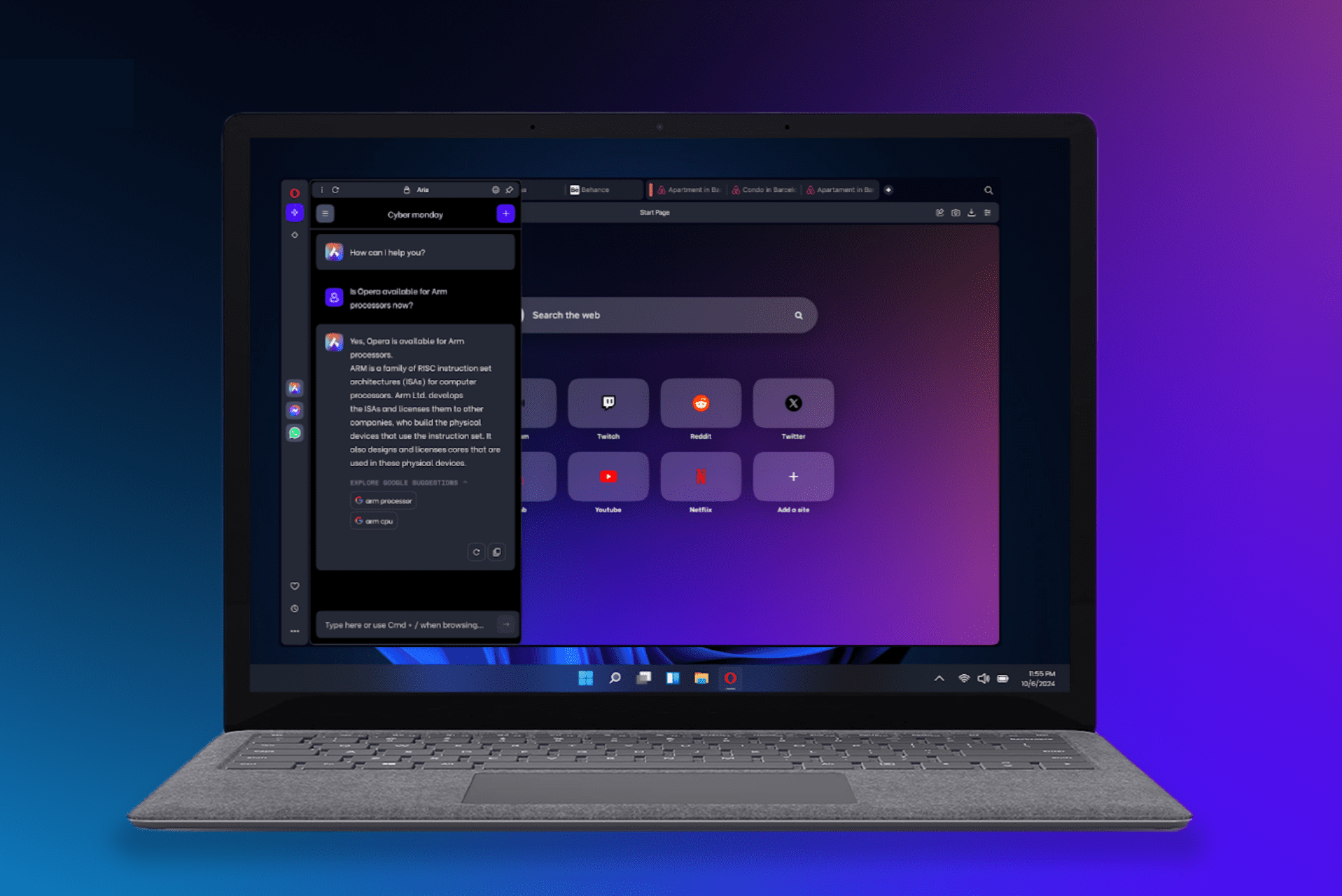
As the demand for Arm-powered Windows PCs grows, developers are optimizing their applications for the more energy-efficient and performance-oriented counterpart. The latest to join the list is Opera, with its ARM-optimized browser for Windows.
According to Opera’s official blog post, its browser is now designed to make full use of the capabilities present in Arm processors, including the Snapdragon X Elite series from Qualcomm. The Arm-optimized Opera has an enhanced AI-powered feature set that uses the built-in NPU (Neural Processing Unit) to perform AI tasks seamlessly.
Highlighting the benefits of the Arm-optimized Opera browser for Windows, the blog post reads,
With Arm-based systems, you’re likely to experience faster processing times when running local LLMs on your machine. This means quicker training and analysis of your custom language data, leading to more responsive and accurate results. Whether you’re using these models for text generation, sentiment analysis, or custom voice commands, you’ll notice a significant improvement in their overall effectiveness.
Opera then discusses how the browser’s built-in battery saver, combined with the power-efficient design of Arm processors, will result in extended battery backup without compromising on performance.
Image source: Opera
To download the Arm-optimized version of Opera, head to the official website. Make sure you are using an Arm-based Windows PC when doing so!
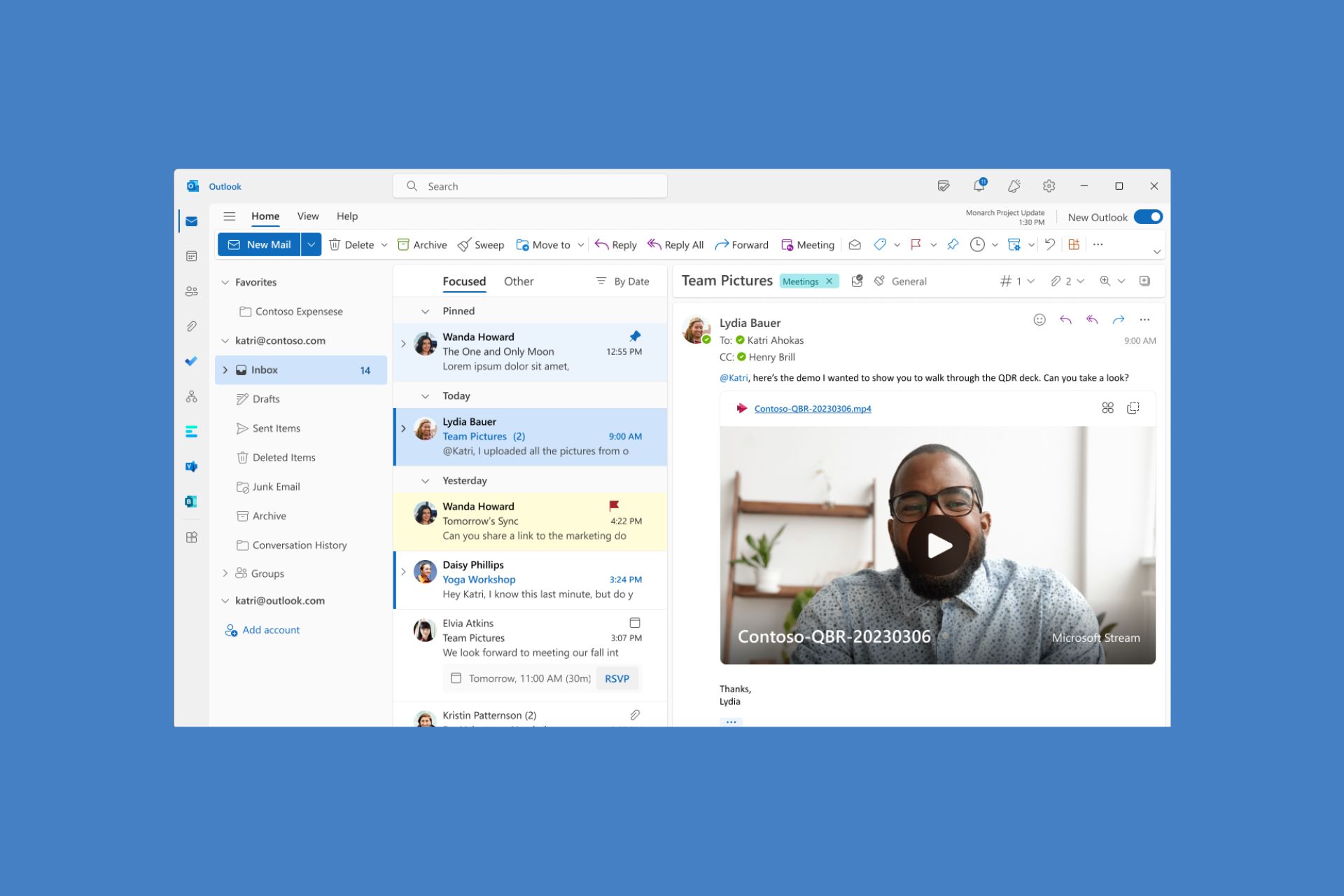
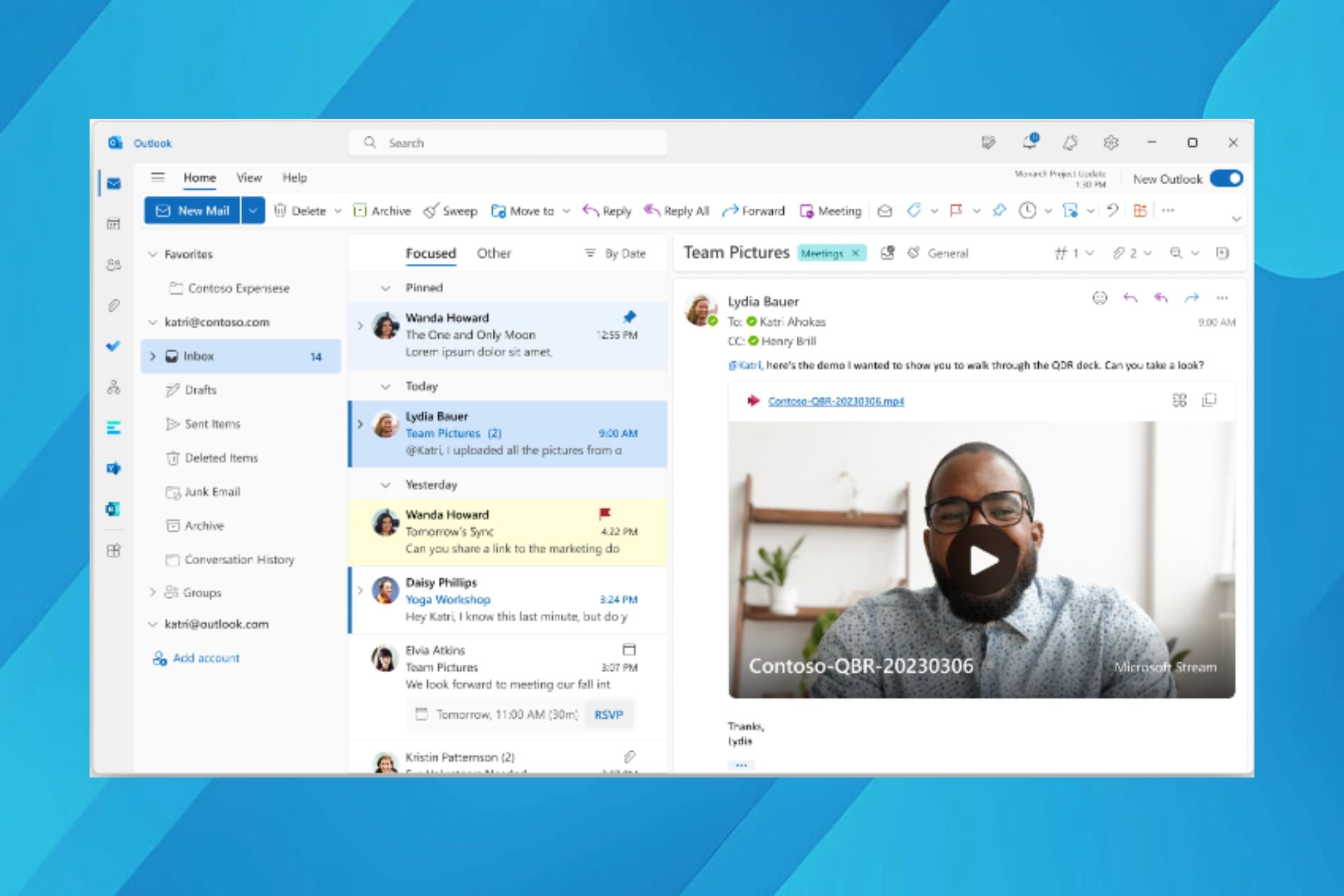
In recent developments, Microsoft introduced an inline video playback feature in the new Outlook for Windows and Outlook on the Web. This feature allows you to share Microsoft Stream videos in your emails, allowing email recipients to watch the embedded videos right in their inboxes.
This step will improve the engagement of media and will make sure your message is seen by the recipients across the company.
How does it work?
Open Outlook on the web on your preferred browser or launch the new Outlook for Windows. Click New mail to start composing an email, then copy and paste a stream video share link into the body.
Another option would be to attach a video from OneDrive or upload & share a video to OneDrive. Once pasted, the link will change to an embedded media player.
In case you want to change the embedded video to a link, right-click the video file name from the inline player, then choose Link Styles>Link
You can also manage the video permissions by right-clicking the video file name at the top of the inline player.
To use this feature, you need to have a reliable internet connection and use the new Outlook for Windows or Outlook on the web. Also, the video you need to send should be saved in OneDrive or SharePoint. Soon, the feature will be available in Outlook for Windows (Classic).
What do you think about the Outlook’s new functionality? Share your opinions with our readers in the comments section below.
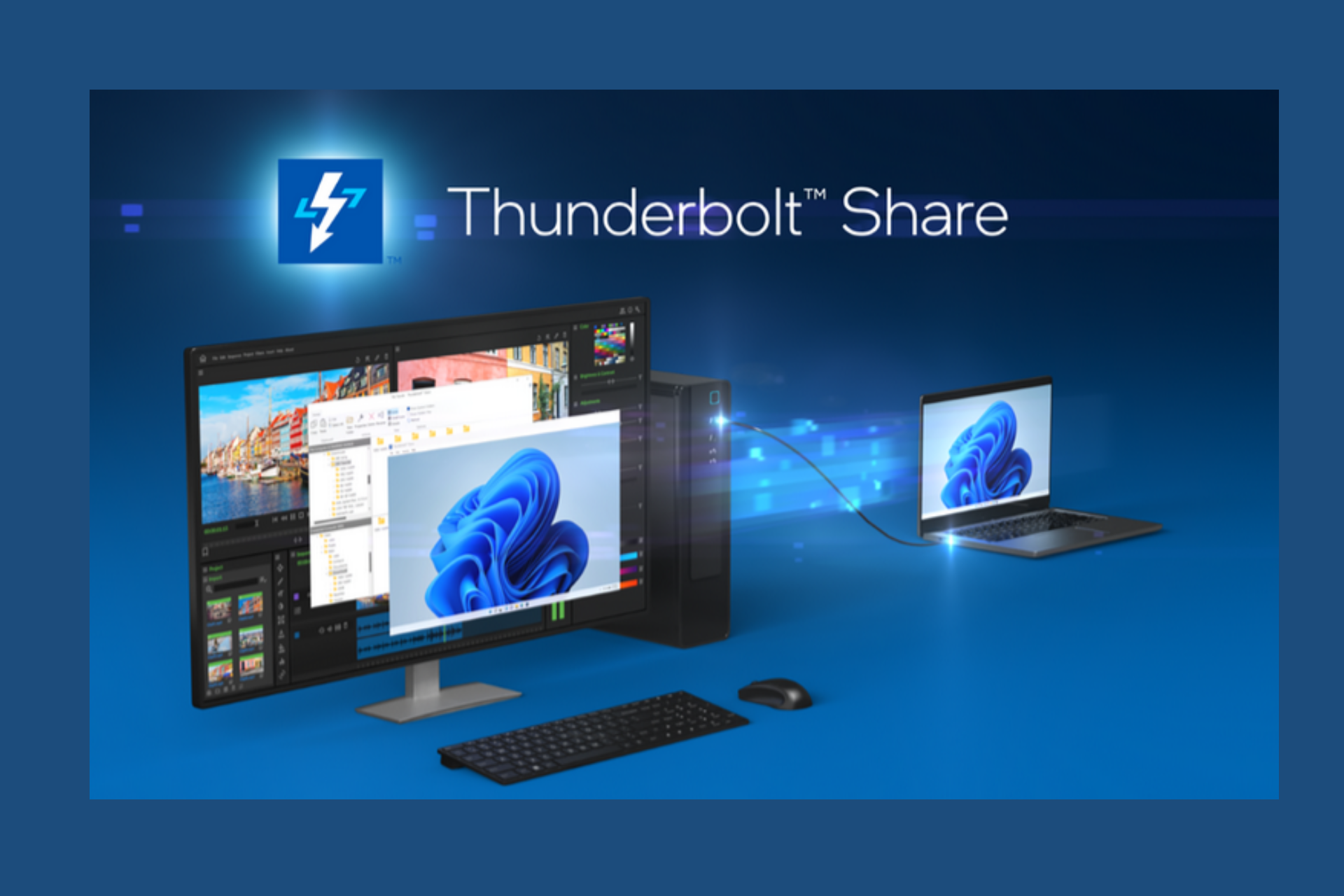
Intel announces Thunderbolt Share, a new software solution that allows screen sharing and quicker PC-to-PC file transfers via PCs’ Thunderbolt ports. This technology could benefit users with multiple PCs.
Intel vice president and general manager of the Client Connectivity Division said:
We are excited to continue to lead the industry in connectivity solutions with Thunderbolt technology. Thunderbolt Share delivers on our aspiration to bring innovative solutions to the market and deliver new experiences for users to get the most out of their PCs. Now users can seamlessly access one PC from another at Thunderbolt technology speeds. It truly changes how users can be more productive and efficient.
Thunderbolt Share is compatible with Thunderbolt 4 or Thunderbolt 5 PCs running Windows OS and uses Thunderbolt technology’s high bandwidth and low latency.
Features of Thunderbolt Share
Smooth screen sharing between PCs, with ultra-responsive mouse and keyboard control for a seamless visual experience.
Enable fast file transfers between two PCs with a simple drag-and-drop functionality, folder synchronization, and easy file migrations from one old PC to a new PC.
Facilitate simple collaboration between users sharing large files.
Establish a connection directly between PCs or via Thunderbolt accessories like docks or monitors with multiple ports.
A private and secure connection without affecting Wi-Fi, Ethernet, or cloud network performance.
Hardware-based security – SMB/commercial friendly
Thunderbolt Share will be available on selected PCs and accessories in the second half of 2024. This technology can be found in devices from various manufacturers, including MSI, Lenovo, Belkin, Acer, Razer, Kensington, Promise, OWC, Plugable, and others.
What do you think about Thunderbolt Share? Share your opinions with our readers in the comments section below.
If you actively use Google Chrome, it’s time to update the web browser. The latest version, Google Chrome 125.0.6422.60, introduces a patch for an actively exploited zero-day vulnerability, CVE-2024-4947!
The vulnerability, assigned a Security Severity rating of High, was reported to Google by Vasily Berdnikov and Boris Larin from Kaspersky. The National Vulnerability Database describes it as,
Type Confusion in V8 in Google Chrome prior to 125.0.6422.60 allowed a remote attacker to execute arbitrary code inside a sandbox via a crafted HTML page.
Type Confusion vulnerabilities are critical and must be resolved immediately. These grant threat actors out-of-bound memory access, allow them to execute code, and might even trigger a crash.
Along with CVE-2024-4947, the latest Chrome update brings security fixes for nine other vulnerabilities, including CVE-2024-4948, CVE-2024-4949, and CVE-2024-4950.
Depending on the operating system, you will need to download the following browser versions:
Linux: Chrome 125.0.6422.60
Windows/macOS: Chrome 125.0.6422.60/.61
To update Google Chrome > launch the browser > click the Customize and control Google Chrome option (ellipsis) near the top right > hover the cursor over Help > select About Google Chrome > wait for the update to install > then relaunch the browser.
Updating Google Chrome
The update is being gradually rolled out, so it might take a while to show up on your PC. Until then, be careful and don’t let threat actors exploit the CVE-2024-4947 vulnerability to attack your system.
Videos in emails are not a new phenomenon but playing them without leaving your inbox, well, that’s a first and with Microsoft Stream, you can do that in your Outlook mail.
You can still attach videos to your Outlook mail the traditional way but this method proves to be tedious. Further, it is not embedded so you have to view and play it using your local video player. On the other end, the recipient must also download the video to play it.
With Microsoft Stream, all you have to do is copy and paste a video link and you can play it directly without even sending it. And once the recipient on the other end receives it, they a]only have to click play and save storage space.
How do I play videos in Outlook with Microsoft Stream?
Click on New mail to start writing one and copy a Stream video link.
Paste the link in the email body and it will automatically be embedded to a media player. Now click on the play button and the video will start playing right away.
The same case applies when you receive a new email with the Stream video attached. All you have to do is click and play.
Note that only videos within the Microsoft 365 environment can be copied and pasted to your email and then embedded into a playable video. Videos from your local storage may not meet the requirements and hence will be incompatible and can not be played.
Troubleshooting common issues with Microsoft Stream videos
Buffering in videos – An unstable network connection or network congestion can cause throttling so try switching to another network or limit other devices on your network.
Video not playing – Microsoft Stream is available on the latest versions of Outlook so ensure your app, browser and OS are up-to-date to resolve any compatibility issues.
Unsupported format – Microsoft Stream is only compatible with Microsoft 365 apps so common video formats like MP4 may not be supported. You can however use video conversion tools and try your luck.
Insufficient permissions – Most organizations manage Microsoft Streams and have restrictions on who can share and view the videos. If you’re unable to play videos, check with your administrator.
Video not embedding – Most email clients have a cap on the size of videos that can be uploaded. If yours exceeds the maximum size allowed, try a video compression tool or trim it. And if it’s the copy-paste function not working on Outlook, we have a remedy for this.
Best practices for video playback
Test video playback – Before sharing your Microsoft Stream video, test it out by first sending it to yourself. If you add multiple accounts on Outlook, this will ensure it plays and also confirm it is the right video.
Check permissions – Before sharing a video, ensure you configure the set permissions and verify that the recipients can view it. Also, when deleting the video, inform the recipients as they will get a This video is no longer available message. You can also ask them to react to your Outlook mails as a sign that they can lay the video.
Optimize video playback – To ensure the recipients enjoy the video shared, ensure the resolution, aspect ratio and file size are well-balanced.
Onto more graphics you can view and play on your Outlook mail, we have an exciting article on how to add and view GIFs in Outlook.
That’s a wrap from us but if you have any additional thoughts, we’re always looking forward to hearing from you so drop us a comment down below.
— Microsoft Casual Games (@MSCasualGames) May 15, 2024
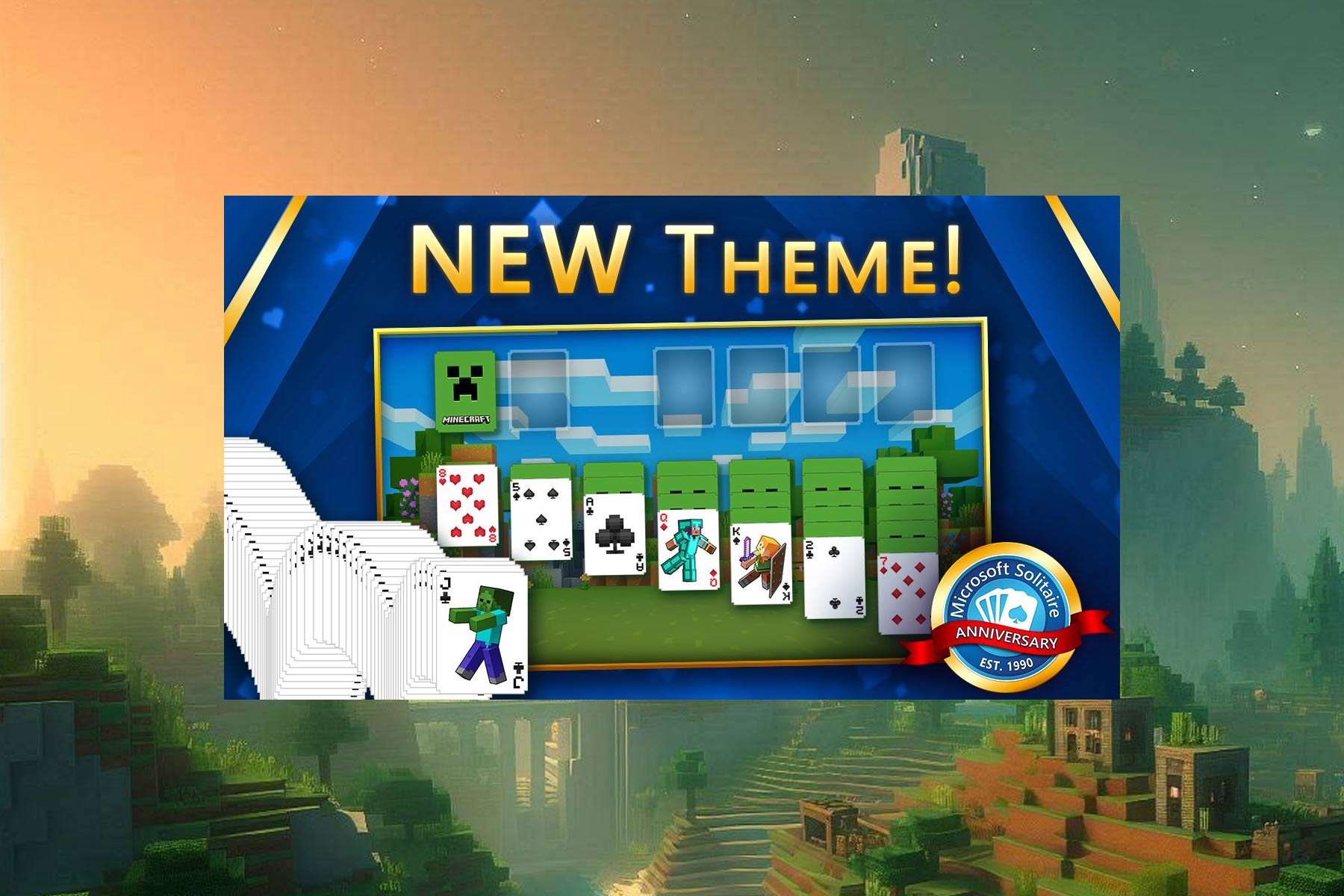
This theme comes with a custom background and a new deck inspired by Minecraft. All cards have a pixelated design that matches the Minecraft aesthetic.
The cards also have a Minecraft logo on the back and characters from the game as face cards. This is a welcome addition to the game, so if you’re a fan of both games, be sure not to miss this new theme.
Also, you might want to check the latest Minecraft Realms Plus update, especially if you want to build a server and play with your friends.
Last year, Microsoft announced the closure of the Xbox 360 Store, 17 years after it was first launched. Now, with the closure set for July 29, 2024, fast approaching, Microsoft has decided to offer steep discounts, as high as 90%, on games in the Xbox 360 Store.
To celebrate the legacy of Xbox 360, we’re working with our amazing publishing partners to bring you as many price reductions from our online store or from the Xbox 360 Store on the console. We’ll be updating this list with more games on June 18, 2024, and on July 16, 2024, bringing you as many repriced games as possible before the end of July. These price reductions will remain in place for each game through the 360 store closing on July 29, 2024.
A few of the titles that received a 90% price cut include,
The first list of 66 games focuses on titles that are not backward compatible with Xbox One or Xbox Series X|S in a bid to keep them alive after the Xbox 360 Store closure. We may see similar games being added to the list on June 18 and July 16.
Any games purchased during the limited-period sale will remain playable even after the closing of the Xbox 360 Store. Besides, you will also be able to play supported titles on Xbox One and Xbox Series X|S through backward compatibility
This is the perfect opportunity to expand your Xbox 360 game collection while spending only a fraction of the earlier prices!
Microsoft is set to introduce several Copilot-related enhancements this month. Firstly, the Redmond-based tech giant is bringing the helpful Copilot Lab to Microsoft 365 mobile users on Android and iOS devices this month.
Then, Microsoft will also enhance Copilot with a catch-up experience, also coming this month, according to the latest entry in the Microsoft 365 Roadmap.
What is this catch-up experience? Well, let’s say you’ve forgotten about a certain meeting, and you haven’t prepared for it that much.
With this new experience, Copilot will catch up with you on it: not only reminding you of it but also providing you with information and data on a group of cards, which you can use to prepare a presentation or get yourself acquainted with the topic of the meeting. This way, you won’t have to cancel or postpone meetings.
Copilot will also update you with the most important information regarding these meetings, and the new catch-up experience can be used in both Microsoft Teams Copilot and Microsoft 365 Chat. It will have a special tab on the homepage so that users can access it easily.
Catch-up is a new experience in Copilot which aims to proactively help users catch up and take action on important updates. It contains a group of cards. Each card has an update related to an important meeting or document. It will work in M365chat and Teams Copilot. It shows up as a tab on the home page.
Microsoft
The experience will be introduced to all the web versions of Copilot in Microsoft 365, by the end of this month, but the roadmap hasn’t mentioned anything about it coming to mobile devices, which would be a pity, considering the catch-up updates could be quite handy on the go, for instance.
However, many Copilot updates were released on mobile devices as well (such as Copilot Lab), eventually, so the new catch-up experience might be coming to Android, and iOS devices soon.
Windows is always evolving, and Microsoft is frequently testing new features in the Insiders program.
Speaking of which, a new build has been released to the Canary channels and it brings some changes related to the AI.
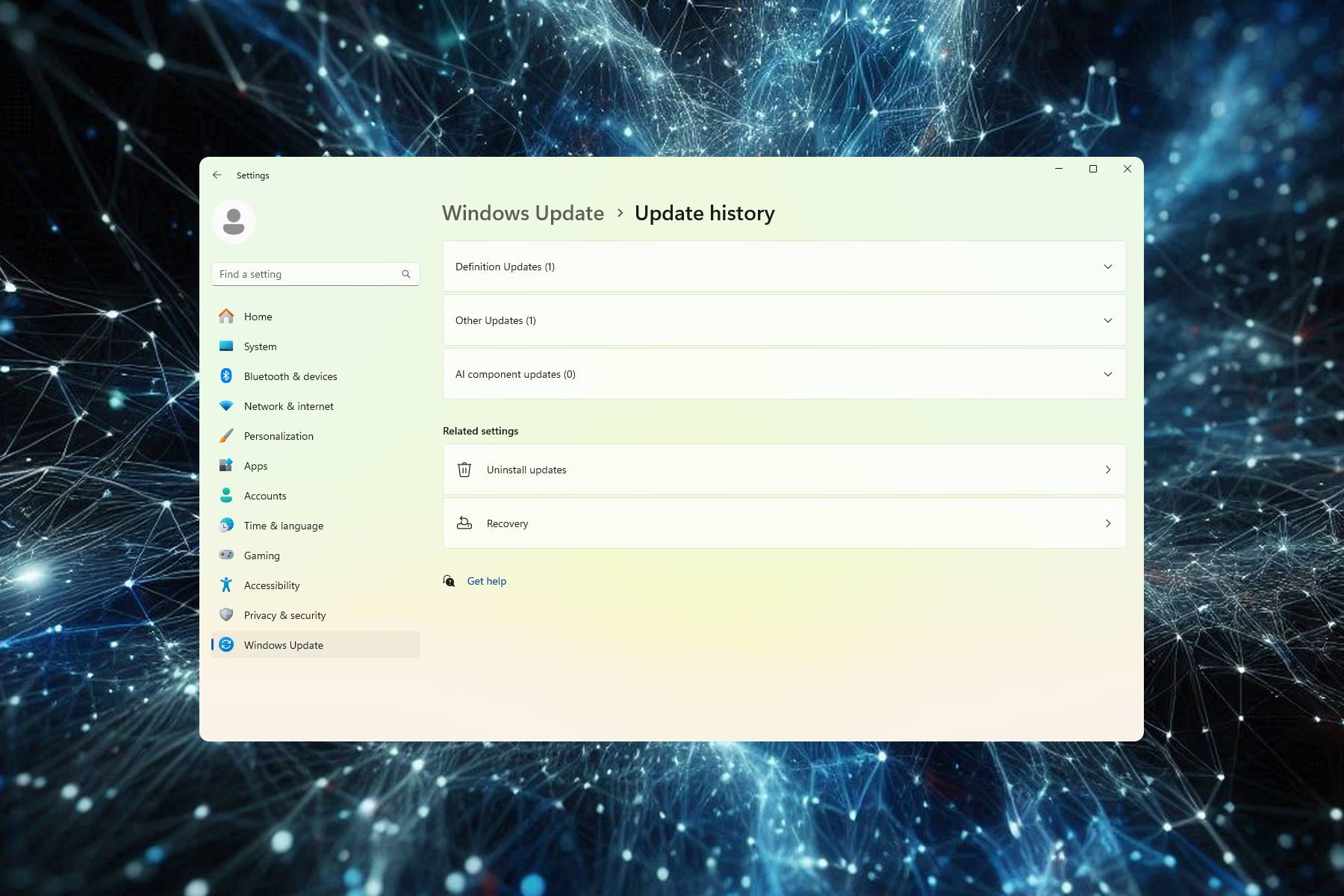
AI component updates have landed in the Update history section
Windows 11 Build 26217 is rolling out to the Canary channel, and with Microsoft focusing more on AI, it’s no surprise to see more AI-related features included.
An X user, PhantomOcean3 has spotted a new option in Windows Update called AI component updates.
As Windows Latest reports, using this option we should be able to see and manage updates for AI components, similarly to the security updates.
That’s not all, as musupdatehandlers2.dll.mui has references to the AI component updates, but this doesn’t reveal any additional information about this feature.
Currently, this page doesn’t show anything since AI components aren’t being updated, but that will change in the future.
This isn’t the only reference to AI in this build, and there’s a new AIHost.exe that is associated with Screen understanding and AIX.
There are also AIXLib\AIXLib.lib and ContextEngineLib.lib files that are associated with the upcoming AI Explorer.
We’re glad to see Windows 11 is getting new features, but for now, the AI components updates section works as a placeholder, but we’re sure Microsoft will put it to good use soon.
Microsoft will require its Azure users to set up their Multi-Factor Authenticator (MFA). The company wants to introduce its new passwordless systems. However, many of us prefer using passwords over MFAs because even if they are less secure, they are faster.
How do MFAs work?
MFAs require you to add two or more methods of authentication. For example, you can use your phone number to receive authentication codes whenever you log in from another account. Additionally, there are various other MFAs like security questions, biometrics, and specialized software.
In addition, the Azure MFA enforcement could be Microsoft’s way to prevent future breaches and protect your data from cybercriminals. After all, even if they get your credentials, they will require access to your phone, codes, or other security measures to use your accounts. Besides, according to a Microsoft report, MFAs can block 99,2% of the account attacks.
Remote and hybrid workers are at a higher risk of being attacked by hackers. On top of that, if you work on a personal device, you increase the chances of getting your work accounts compromised.
When will Microsoft enforce MFA on Azure?
The exact roll-out dates for the MFA enforcement on Azure are unknown. However, the change will take place in July, and Microsoft will send you personalized roll-out dates via email and Azure Portal notifications. The company will gradually roll out MFA enforcement to help users adapt to the changes.
Azure users who don’t want to wait for the MFA enforcement to roll out can immediately set up their authenticators. Doing it comes with plenty of benefits. For example, MFAs add extra layers of security to your accounts. Besides, cloud service providers require them. Also, MFAs are a way to ensure that only authorized users can use the resources and services of your company.
Ultimately, the MFA enforcement for Azure can prevent future breaches and protect your account. You can easily set it, and it won’t take long. However, some users complain there might be problems with the service accounts. Others are asking if guests in Entra tenants will need to set MFAs. Also, users want to know which MFA methods will be enforced and allowed.
Microsoft announced the Proteus Controller via Xbox Wire, a game-changer for Xbox gamers with disabilities. However, if you look at it, you will notice that it’s actually for everyone who wants something different. Designed by ByoWave as part of the Designed for Xbox program, the Proteus Controller stands out with its modular design, featuring small cubes with interchangeable faceplates.
These include all the essentials: controller buttons, a directional pad, and analog sticks. But here’s the kicker: these snap and play parts can be combined in over 100 configurations, offering a level of customization that caters to gamers with a wide range of physical disabilities. The controller is expected to ship in the fall, but for those eager to get their hands on it sooner, a pre-order is available at a discounted preorder price of $255. Now, it’s obvious that Proteus Controller for Xbox is a lot more complex but even the promotional price is five times higher that that of a regular one.
What’s so special about the Proteus Controller?
Proteus Controller can be customized to adapt to the gamer, not the other way around. Whether you’re a one-handed gamer or have other accessibility needs, this controller aims to ensure you can enjoy gaming comfortably and on your terms. The buttons are remappable via a companion app, adding another layer of personalization. However, it’s worth noting that at launch, the Proteus Controller will be compatible with Xbox Series X/S, Xbox One, and Windows 10 and 11, leaving PlayStation 5 and Nintendo Switch gamers to hope for future support.
In addition to the Proteus Controller, Microsoft hasn’t forgotten about its $99.99 Xbox Adaptive Controller, which has been a lifeline for gamers building adaptive setups since 2018. An upcoming firmware update will expand its capabilities, allowing each USB port to support a wider range of accessories. This update is expected to roll out to Xbox Insiders in the coming weeks and to the broader public in the next few months.
As much as we appreciate ByoWave and Microsoft’s endeavor to provide a better controller for people with physical challenges, we just can’t unsee that huge $255 price.
Would you buy Proteus Controller for Xbox? Let’s talk about that in the comments below.
In the last few days, I have come across countless reports of users being unable to send messages in groups chats on Skype and being constantly kicked out. Even upon rejoining, they are automatically removed from the group within hours.
For some, the recent messages are not visible. Although it’s clear that these are not deleted, since users can manually search for them. Test messages to self are not going through. Besides, even recently read messages are automatically marked as unread.
All these bugs are present on the latest version of Skype, i.e., 8.119.0.201, as confirmed by users.
Typical workarounds like reinstalling Skype, clearing the cache, or switching network connections fail to work!
Microsoft is aware of the issue and is requesting users to share the logs, according to a post by Microsoft employee in the dedicated forum. You could do so from the Skype Insider App, which will prove the most helpful to Microsoft, or even use the regular Skype app.
To submit your Skype logs for assessment, click on the More icon (ellipsis) > choose Settings > go to Help & Feedback > select Report a problem on the right > explain the issue in detail > finally click on Send report with logs.
I recommend you send the logs to Microsoft at the earliest, so that the the bug can be analysed and a patch for it released alongside the next update.
Skype users report being kicked out from group chats, older messages displayed in the left pane
Upon checking the forums, I found almost everyone on Skype version 8.119.0.201 facing a similar set of issues.
This recently happened. I can no longer send messages to group chats I am already added to. When I am added back then after a few minutes, the messages do not get sent.
I have already reinstalled the app on my desktop. I have the app installed on my laptop as well but have not reinstalled on that one. I also have uninstalled the mobile apps on my 2 Android phones thought it might be causing the issue.
Skype version is Skype version 8.119.0.201 on Windows 11 build 22631.3527
My messages can’t be sent, not to groups, not to myself, not to copilot. I tried on all PC/Web/Android version of Skype.
Same issue with me. When you open the chat it loads the newer messages (or the person messages you) as unread so you have 99+ even after closing it and need to repoen it.
Since the bug has been acknowledged by Microsoft and they are working on a fix, I expect a patch to be out soon, and you should then be able to send messages to groups in Skype.
In case you have a small workforce, consider switching to a Skype alternative in the meanwhile.
Were you unable to send messages to groups on Skype? Share your experience with our readers in the comments section.
The other one is for Windows Server 2019, KB5037765, which is a security update. It brings the version to OS Build 17763.5820 and also includes quality bug fixes for issues like VPN connection failure and IE mode stopping responding.
What are the issues faced while installing KB5037765?
Some users complained that when they tried to install the KB5037765 update, it failed with the error code 0x800f0982. When WindowsLatest asked Microsoft, they informed them they were aware of the issue, which usually happens in France, Germany, Spain, and other countries.
Also, the server-side issue only appears if the English language pack is not installed, and the Redmond tech giant also mentioned that a fix would be rolled out to everyone in a few hours.
How can I fix the 0x800f0982 error manually?
Installing updates with aninternet connection
Press Windows + I to open Settings, then go to Language>Time & language. Select Language from the left pane, and click Add a language from the right pane. Look for English (United States) and click Next.
Now, choose Install Language Pack and click Install to install the US language pack on your device. Once you’ve done this, go to Settings, head to Updates & Security, and click Check for updates.
2. If installing an update without an internet connection
First, download the server ISO file multi-language pack from Microsoft’s official website. Once downloaded, right-click the ISO file and select Mount. In the mounted file, navigate to x64>langpacks, then locate Microsoft-Windows-Server-Language-Pack_x64_en-us.cab. Now copy & paste the file on the desktop.
Next, press Windows + R to open the Run window, type lpksetup.exe and click OK. On the Install or uninstall display languages window, click Install display languages. Select Browse on the next page, and choose the file you saved on the desktop. Follow the on-screen instructions to complete the process.
Here are the improvements mentioned in the release notes:
This security update includes improvements. When you install this KB:
This update affects next secure record 3 (NSEC3) validation in a recursive resolver. Its limit is now 1,000 computations. One computation is equal to the validation of one label with one iteration. DNS Server Administrators can change the default number of computations. To do this, use the registry setting below.
This update includes quarterly changes to the Windows Kernel Vulnerable Driver Blocklist file, DriverSiPolicy.p7b. It adds to the list of drivers that are at risk for Bring Your Own Vulnerable Driver (BYOVD) attacks.
This update addresses an issue that affects Active Directory. Bind requests to IPv6 addresses fail. This occurs when the requestor is not joined to a domain.
This update addresses a known issue that might affect domain controllers (DC). NTLM authentication traffic might increase.
This update addresses an issue that might affect Virtual Secure Mode (VSM) scenarios. They might fail. These scenarios include VPN, Windows Hello, Credential Guard, and Key Guard.
Have you faced the same installation error while updating to KB5037765? Then, try these fixes and let our readers know if they helped in the comments section below.
The Data API builder has been in the works for nearly 3 years. The tool is aimed at reducing the friction developers face when accessing databases in their client applications. Fast forward to today, Microsoft announced the general availability of Data API builder (DAB) for Azure.
In broader lines, this tool offers developers a secure, feature-rich way to create REST and GraphQL endpoints over databases without writing a single line of code. And best of all, it’s open-source and free, even for on-prem databases.
Here are some details about Data API builder
The architecture behind it is a dynamic, container-based, configuration-driven runtime. It’s an ASP.NET project crafted in C# and available under the MIT license. The use of ChilliCream’s Hot Chocolate for GraphQL and FusionCache for in-memory caching, among other libraries, makes it a robust solution for API projects. DAB offers REST endpoints with native OpenAPI support and Swagger for developers, ensuring easy access and interaction. It doesn’t stop there; GraphQL endpoints come with automatic schema generation, making it extremely flexible for various solutions.
Whether you’re aiming to expose a data clearinghouse, enable a mobile application, or simply tinker with an Azure database, DAB has got your back. It supports multiple backend stores and databases, making it a pretty good choice for many in the tech community. The container-based approach of DAB means it’s Docker-friendly, stateless, and scalable, fitting perfectly in any environment, cloud or on-prem.
For enterprises, DAB offers features like Microsoft Entra Identity integration and Application Insights, along with CI/CD support. And for those leveraging Azure, DAB integrates seamlessly with Azure Static Web Apps, Azure Container Apps, and more, offering a cutting-edge solution for database and front-end application integration.
The feature-rich nature of DAB means every endpoint comes with a retry policy, comprehensive logging, in-memory cache, and solid documentation. It simplifies the engineering process, reducing codebases, eliminating suites of tests, and shortening CI/CD pipelines. Rapid development is another highlight, with developers able to create APIs in hours and amend endpoints in minutes, leading to significant time and carbon savings during the development process.
Being open source means collaboration and transparency. The Data API builder team encourages feedback and contributions, hosting monthly community standups and managing discussions on GitHub. Their comprehensive documentation and CLI tools make getting started a breeze, enabling developers to spin up endpoints on various platforms with ease.
In conclusion, if you’re a developer, now you can interact with databases a lot more easier and faster. If Microsoft left out some things that you need along the way, let’s talk in the comments below.
Copilot Lab is a platform announced by Microsoft last year, where users, especially organizations, can learn how to work with Copilot better and more efficiently. The hub was released last year, alongside Microsoft 365 Copilot, and since then the Redmond-based tech giant has been updating it with hundreds of prompts.
Because yes, Copilot Lab is meant to be a hub, where you can share ideas and suggestions with other colleagues, such as learning to write prompts and come up with new recommendations on how to work with an AI tool.
Initially available to only to the desktop-based users of the Microsoft 365 suite, the Redmond-based tech giant is bringing it to the mobile app by the end of this month, according to the latest entry in the Microsoft 365 Roadmap.
Copilot Lab will allow users to browse and use suggested prompts in Copilot for Microsoft 365 on mobile platforms.
Microsoft
So, now, you’ll be able to have access a variety of Copilot prompts on the go, so that you can use the AI model at the best of its capabilities in any situations. You’ll also have access to dozens of training videos, and tools to understand how Copilot works. This could be quite useful when preparing for presentations, and checking up those last details.
Plus, one of the best features of this platform is the community. Copilot Lab will bring all of your co-workers together, and you can share ideas or get ideas about how to use the AI model from them. Then, based on your needs, you can access Copilot Lab on your mobile to get the best prompts from your colleagues for platforms such as Word, Excel, or PowerPoint.
Copilot Lab should be available to all Microsoft 365 Mobile users on Android and iOS devices by the end of this month.
Mozilla is constantly releasing Firefox updates and bringing new features, and speaking of which, the new version has been recently released.
To enhance the multimedia experience, Mozilla and Nvidia have teamed up to bring RTX video to Firefox.
Firefox has just added support for AI-powered NVIDIA RTX video
Firefox 126 brought several new improvements, and among them support for NVIDIA RTX video. Using the RTX video, you can improve the quality of videos played using the power of the AI.
Using this feature, you can make videos look sharper and more detailed without using a high-resolution source.
To achieve this, the RTX Video Super Resolution feature upscales the low-resolution video by using AI and deep learning to predict how a high-resolution version should look.
After doing that, RTX Video HDR analyzes video content using AI-neutral networks and adds HDR information thus enhancing the visibility, details, and vibrancy of the video.
According to Nvidia’s blog, this feature is now available in Firefox, and Firefox’s Bobby Holley had to say the following:
Video is a core pillar of the modern web, and we are committed to delivering a great experience for our users.
Mozilla is integrating RTX Video into Firefox to improve video quality for our users with compatible GPUs.
Firefox isn’t the only browser that supports this feature, and Chromium browsers already have support for it.
To use this feature, you need to have the latest Nvidia drivers installed and HDR enabled in your Display settings in Windows.
Lastly, you need to enable Super Resolution and High Dynamic Range in the Nvidia Control Panel. Keep in mind that this feature requires an NVIDIA GeForce RTX GPU and an HDR10-compatible monitor to work.
As you might already know, Microsoft brought Copilot to Outlook a while ago, on both the classic version (which is still going strong, and will still be supported up until 2029), and the new Outlook, giving users access to AI capabilities to edit, compose, summarize, and schedule their emails.
It seems that the Redmond-based tech giant will take things a bit further, and will allow Outlook users to have Copilot generate background themes for them, according to the latest entry in the Microsoft 365 Roadmap.
What does this mean? Well, you can customize your Outlook app just the way you like it, by telling Copilot to generate visuals for you.
According to the roadmap, the new capability will be introduced in July 2024, and it will be available to all Android, and iOS users.
Make Outlook yours with themes generated by Copilot. You will be able to find these themes in Settings.
Microsoft
In case you’re interested in this new capability, but don’t know where to start, if your organization uses Microsoft 365 as the main productivity platform, you can hop in Copilot Lab, where you can learn how to ask Copilot to generate the most intricate visuals properly.
This way, you’ll make sure Microsoft Copilot generates the best Outlook themes for you.
The Copilot Lab is a place where users can learn how to create the best prompts aka the things you say to Copilot, so that you can take the best advantage of what the AI model is capable of. Microsoft announced the platform last year, and made it available to Microsoft 365, as a way to increase the number of Copilot users.
18 years and thousands of requests later, Google has finally added the much-needed table formatting in Sheets, its native spreadsheet application and a free Excel alternative. It’s surprising that Google took so long to introduce the feature, which had been available in Excel for quite some time.
With table formatting finally available, you can seamlessly structure and format the rather unorganized data within seconds, according to a post by the Google Sheets team.
To convert a set of data into a table, select and highlight the data range > open the Format menu > choose Convert to table.
Convert to table in Google Sheets (Image source: Google)
When converted to a table, the data automatically appears in a more structured form, with separators to easily distinguish between the different rows and columns. And there’s much more to it, including column types, colour coding, filters, and dropdown menus, among other features.
Customizations like changing colours or readjusting row heights are effortless in tables on Sheets. Upon choosing a column type, all the entered data automatically assumes the formatting, and anything that doesn’t fit the formatting throws a warning. Besides, for more macro-level changes, you can directly adjust the table instead of individual rows and columns.
With the new Create group by view option, you can sort the data into different sets based on values in a specific column. Not to forget, there are also pre-built table templates that you can start working on right away.
Pre-built tables in Google Sheets
Table formatting in Google Sheets is being gradually rolled out and is not yet available for everyone. When I checked, it wasn’t there, but Google has confirmed that the feature should be available to all by June 6, 2024!
Microsoft issued a Threat Intelligence report to signal an elaborate social engineering scam involving Microsoft’s tech support tool Quick Assist. According to the post, since mid-April 2024, a cybercriminal group named Storm-1811 has been exploiting this tool that facilitates remote assistance between users, to orchestrate attacks and deploy the notorious Black Basta ransomware.
What makes it even more worrying is that Black Basta was also signaled by CISA and FBI to be the culprit in a lot of industry organization attacks.
The Quick Assist scam is not new, but it evolved into something more elaborate, with a more complex mechanism. Some people also complained on Reddit about the same scam over a year ago, and as you will learn, the approach is similar.
Quick Assist, typically a benign tool enabling remote support, has become a Trojan horse in the hands of Storm-1811. By masquerading as trustworthy entities such as Microsoft technical support or IT professionals, these threat actors gain unauthorized access to devices. They are using a blend of voice phishing (vishing) and the delivery of malicious tools, including remote monitoring and management (RMM) tools like ScreenConnect and NetSupport Manager, and malware such as Qakbot and Cobalt Strike, setting the stage for the final act: ransomware injection.
In other words, you may receive emails or direct calls from scammers pretending to represent Microsoft. They will will offer their tech support skills to help you with alleged issues on your PC, asking you to log into a fake interface with your security code and take over your PC to fix the problem.
The narrative doesn’t end with the initial breach. Once inside, the attackers execute a series of maneuvers designed to deepen their foothold within the compromised system. They employ scripted commands to download malicious payloads, leveraging tools like Qakbot for remote access and Cobalt Strike for establishing persistence, all while masquerading their activities as legitimate operations. This meticulous preparation paves the way for the ultimate payload delivery: Black Basta ransomware, a particularly virulent strain known for its stealth and efficiency.
In their warning announcement, Microsoft says that they are enhancing Quick Assist’s security features to thwart such misuse. They’re incorporating warning messages to alert users to potential tech support scams and improving the transparency and trust between users. For those seeking to fortify their defenses, Microsoft recommends blocking or uninstalling Quick Assist if it’s not in use, alongside educating users on the hallmarks of tech support scams and the importance of vigilance.
In the face of this sophisticated threat, organizations are urged to adopt a multi-layered defense strategy. This includes educating users on recognizing and reporting phishing attempts, enabling cloud-delivered protection, and investing in advanced anti-phishing solutions.
How to protect against the Storm-1811 Quick Assist scam?
So, as with any phishing scams, it’s a matter of awareness and lucidity. If someone calls you pretending to be from the Microsoft tech support team, make sure you requested that service in the first place and certainly don’t provide anyone access to your PC.
As usual, we recommend restraining from opening unsolicited emails, downloading the contents of suspicious attachments or untrusted applications.
Have you been targeted by such emails or calls recently? Let’s talk about this in the comments below.