Battlefield 6 Extends Season 1, as Season 2 Gets Delayed to February 17

If you have been waiting for Season 2 of Battlefield 6, sadly, it has just been delayed. EA, in a blog post from earlier today, says that Season 1 will be extended, pushing the launch of Season 2 to February 17. The decision comes as the studio is looking to polish upcoming content while staying in line with community feedback.

Since launch, Battlefield 6 and its free-to-play experience, REDSEC, have seen massive engagement. According to the developers, millions of players either returned to the franchise or jumped in for the first time, marking the most successful launch in Battlefield history.

Season 1 itself has been busy, with players seeing the surprise arrival of REDSEC, the California Resistance storyline, and the Winter Offensive event to close out the year. Multiple patches were also rolled out along the way to address balance and stability concerns.

Originally set to end on January 20, Season 1 will now continue beyond that date. On January 20, Battlefield 6 will receive a Season 1 extension update. This update adds new weekly challenges, a Bonus Path, and keeps the current Battle Pass active until Season 2 goes live.

EA also confirmed it is doubling down on Battlefield Labs. For the uninitiated, the program will serve as a public testing ground for late-stage updates. All that said, you can expect more details on Battle 6 Season 2 in February, alongside a detailed 2026 roadmap for Battlefield 6 and REDSEC.

Popular Streamer ‘Tfue’ Among Players Hit With ARC Raiders 30-Day Bans

ARC Raiders is suddenly facing backlash from its own players. Over the past day, players across the community have been reporting unexpected account blocks and 30-day bans, with no clear explanation attached. The situation escalated quickly after popular streamer Tfue shared a screenshot showing his ARC Raiders account had been blocked, claiming he had no idea what triggered the ban.

Tfue’s case appears to be part of a bigger issue. Social media platforms are now filled with similar complaints from players who say they were hit with temporary bans despite playing normally. The timing has raised eyebrows, especially since Embark Studios recently confirmed it had ramped up anti-cheat detection and ban enforcement to deal with cheaters more aggressively.

That announcement may explain what’s happening now. Many players believe Embark is relying heavily on an automated, AI-driven moderation system that may be acting too fast. According to the online theories, mass or “rage” reports could be triggering bans without enough human review. If true, genuine players may be getting caught in the crossfire.

Interestingly, all reported bans so far appear to last 30 days. Some fans think that’s intentional. A temporary ban limits damage if the system makes a mistake, while still discouraging bad actors. Others argue it’s not nearly enough punishment for actual cheaters, especially in a competitive extraction shooter.

The ban notification itself includes a link to customer support, suggesting Embark Studios expects disputes. That detail alone hints that the studio is aware that something may not be working as intended. For now, Embark has not released an official statement addressing the false ban claims.

Salesforce Turns Slackbot Into a Powerful AI Work Assistant

Salesforce has rolled out a major upgrade to Slackbot, transforming it from a simple helper into an AI-powered work assistant that can take actions on behalf of users. The move signals Slack’s deeper push toward agentic AI, even as Salesforce steps back from LLMs over reliability concerns.

As ZDNET reports, the enhanced Slackbot can now draft emails, schedule meetings, organize information, and interact with multiple enterprise services using a single text prompt. Users no longer need to leave Slack to move work forward.

Slackbot becomes a personal AI agent for work

Slack rebuilt Slackbot as a context-aware AI agent that understands conversations, shared files, and ongoing projects inside Slack. That context allows the assistant to deliver more relevant responses and complete tasks directly within workflows.

The upgraded Slackbot also connects with Salesforce data, giving business users the ability to surface customer information, update records, and coordinate actions without switching tools.

Part of Slack’s broader agentic platform strategy

The new Slackbot fits into Slack’s wider strategy to embed AI agents directly into daily work. Beyond Slackbot, Slack now offers AI-powered enterprise search, automated conversation summaries, and deeper integrations with calendars and file systems.

All AI features run inside Slack’s own infrastructure, with a strong emphasis on keeping enterprise data secure and contained within the platform.

Rolling out to business customers

Salesforce has started rolling out the upgraded Slackbot today for Slack Business+ and Enterprise customers. The company positions the feature as a productivity boost for teams that want AI assistance without disrupting existing workflows.

For business users exploring alternative AI coworkers, Claude’s recently introduced Cowork capabilities may also appeal.

In other AI news, Proton has added Projects support to Lumo AI, aiming to improve chat organization and long-term task management.

Proton Adds Projects to Lumo AI for Organized, Private Workflows

As reported by Neowin, Proton has rolled out a new Projects feature for Lumo, designed to help users manage ongoing work without losing context between sessions.

Lumo gains Projects for long-term AI workflows

The new Projects feature introduces a dedicated, encrypted workspace where users can group chats, files, and instructions around a specific task. Instead of restarting conversations or re-explaining goals, Lumo keeps everything organized in one place.

Projects sync across devices and sessions, allowing Lumo to maintain context for recurring or long-running tasks. Each Project can store custom instructions, preferred tone, and focus areas, so the assistant adapts consistently over time.

Deeper integration with Proton Drive

Projects also integrate directly with Proton Drive. Users can link folders and documents to a Project, giving Lumo quick access to relevant files while keeping everything encrypted.

Proton says all Projects use end-to-end encryption, ensuring only the user can access the content. Lumo itself relies on zero-access encryption and does not use user data to train AI models, reinforcing Proton’s privacy stance.

Built for reports, planning, and ongoing tasks

With Projects, Lumo targets use cases such as report writing, financial tracking, planning, and other structured workflows where context matters. By remembering details automatically, the chatbot reduces repetitive input and improves continuity.

Users can learn more about the update in the Lumo 1.3 blog post published by Proton.

Beyond Proton, Anthropic recently introduced a new Cowork feature for Claude, while also preparing a dedicated Claude for Healthcare offering.

Meanwhile, Grok remains under scrutiny, as the United Kingdom works on new legislation aimed at preventing the creation of non-consensual deepfake content using AI tools.

WhatsApp Faces Antitrust Probe in Brazil Over AI Chatbot Restrictions

Brazil’s competition watchdog has stepped in to halt a controversial WhatsApp policy that threatened to shut out third-party AI chatbots from the platform.

Brazil blocks WhatsApp’s AI chatbot restrictions

Brazil’s antitrust authority, Administrative Council for Economic Defense (CADE), has ordered WhatsApp to suspend a policy that bans third-party AI companies from using the WhatsApp Business API to offer chatbots, according to TechCrunch.

CADE is investigating whether the new terms introduced by Meta are anti-competitive and whether they unfairly favor Meta’s own AI chatbot inside WhatsApp.

Policy would have blocked major AI providers

Meta rolled out the policy in October, with enforcement scheduled for January 15, 2026. The rules would have prevented external AI services from operating through the WhatsApp Business API, effectively removing existing chatbot integrations.

Several major AI companies, including OpenAI, Perplexity, and Microsoft, had already indicated their chatbots would stop working on WhatsApp once the policy took effect.

Despite the restrictions, Meta’s terms still allow businesses to deploy their own AI-powered chatbots to communicate with customers on WhatsApp, a key point regulators continue to examine.

Global antitrust pressure builds on Meta

Brazil’s investigation follows similar antitrust scrutiny in Italy, where regulators have also questioned Meta’s approach to limiting third-party AI chatbots.

In Italy, Meta has already allowed users to keep accessing external AI chatbots on WhatsApp despite the updated rules. Regulators in Brazil may push for a comparable outcome as the probe continues.

Regulators see the case as a test for how dominant platforms manage access to AI services. The final decisions in Brazil and Europe could shape global rules around AI competition, platform neutrality, and API access for years to come.

In other WhatsApp news, the company is reportedly developing new parental control features. At the same time, WhatsApp has faced user backlash after forcing a switch to its new desktop app, a move many users criticized for reduced functionality and performance issues.

Telegram Faces One-Click IP Leak Risk From Malicious t.me Proxy Links

Telegram built its reputation on privacy and anonymity, but a newly highlighted behavior shows how clicking certain t.me links can leak a user’s real IP address.

As reported by Neowin, attackers can craft malicious Telegram proxy URLs that look like ordinary t.me links. These links point to servers fully controlled by the attacker.

How the one-click IP leak works

When a user clicks a proxy-style Telegram link, the app automatically tests the proxy connection. Telegram sends this test request directly from the user’s device using the default network connection.

This process bypasses VPNs and other anonymity tools. The attacker’s server can then log the victim’s real IP address, approximate location, and network details. Telegram shows no warning, prompt, or confirmation during this check.

Security researchers demonstrate the issue

Security researchers publicly demonstrated the flaw and described it as a “one-click IP leak.” The test occurs instantly after the link click, which gives users no chance to stop the request or verify the destination.

The risk increases for users who depend on Telegram for anonymity, especially in restrictive or hostile environments.

Telegram plans mitigation steps

Telegram reportedly plans to introduce warnings for proxy links to reduce the risk. Until those changes roll out broadly, security experts recommend avoiding unknown or proxy-style Telegram links entirely.

Telegram also runs on Copilot+ PCs, which expands its reach to more Windows users and makes this issue relevant on desktop platforms as well.

Outside Telegram, other messaging apps continue to adjust their platforms. WhatsApp is developing parental control features, while Facebook Messenger has retired its desktop app.

These shifts highlight how privacy, safety, and platform changes continue to shape the messaging app landscape.

Zorin OS 18 Sees Massive Windows Migration Amid Rising Hardware Requirements

Microsoft continues to push Copilot+ PCs and AI features, but many Windows users now push back. The Windows 11 25H2 update also raises system demands due to new security layers, which fuels concerns about performance on existing hardware.

As frustration grows, a rising number of users seem to be seeking Linux alternatives, with Zorin OS 18 emerging as a clear favorite.

Zorin OS 18 attracts former Windows users

Zorin OS 18 is an Ubuntu-based Linux distribution built to feel familiar to Windows users. The desktop layout, app menu, and workflow closely resemble Windows, which lowers the learning curve for newcomers.

According to Neowin, more than 780,000 downloads came from Windows machines. That data strongly suggests users actively migrate away from Windows rather than experimenting with secondary devices.

Rapid growth after launch

Zorin OS 18 reached the 780,000-download mark in just five weeks after launch. The distribution has now crossed 2 million total downloads, with roughly 75 percent of users reporting they came from Windows systems.

The timing aligns closely with the approaching end of support for Windows 10, which leaves many PCs ineligible for Windows 11 upgrades due to hardware requirements.

Built to ease the transition from Windows

Zorin OS focuses heavily on compatibility and usability for former Windows users:

  • Windows app support through Wine
  • Progressive Web App integration
  • Built-in OneDrive sync
  • Long-term support guaranteed until 2029

These features allow users to keep familiar workflows while avoiding Windows 11’s stricter system requirements.

Growing momentum for Linux on the desktop

Linux still trails Windows in overall desktop market share, but the Zorin OS 18 download surge highlights a clear shift in user interest. Dissatisfaction with forced AI features, tighter hardware rules, and performance concerns now push more users to consider Linux as a viable daily-driver alternative.

While Windows remains dominant, Zorin OS 18 shows that the desktop Linux landscape continues to gain traction among former Windows users looking for stability and control.

Windows 11 and Server 2026 Updates Get Bigger With New CLFS Security Changes

Microsoft continues to roll out security hardening measures in Windows through its monthly Patch Tuesday releases, and the November 2025 update introduces a significant change for the Common Log File System (CLFS).

In Windows 11 25H2 and Windows Server 2025, Microsoft added hash-based message authentication codes (HMAC) to CLFS log files. As reported by Neowin, the change aims to prevent log file tampering and reduce the risk of privilege escalation attacks that have frequently targeted CLFS in the past.

How the new CLFS protection works

The update secures CLFS logs by attaching authentication codes that verify both integrity and authenticity whenever the system accesses a log file. Windows generates these codes using the file’s data and a system-unique cryptographic key stored in the registry.

CLFS serves as a high-performance logging subsystem used by both user-mode and kernel-mode applications. It supports reliable transactions, event logging, system tracking, and crash recovery. Because attackers have repeatedly exploited CLFS vulnerabilities to gain elevated privileges, Microsoft positions this HMAC-based validation as a long-term security hardening step.

Learning mode, enforcement, and performance impact

To ease deployment, Microsoft enables a 90-day learning mode after the update installs. During this period, Windows automatically adds authentication codes to existing CLFS log files when applications open them. After the learning window ends, the system switches to enforcement mode and requires all CLFS log files to include valid authentication codes.

Administrators must ensure systems access all required CLFS logs during the learning phase. Any log file that remains unopened must be authenticated manually using the fsutil clfs authenticate command.

The new protection increases disk usage because authentication data scales with container file size, which also contributes to a larger update package. Microsoft also confirms higher I/O activity for CLFS operations, with log creation and access taking longer. On average, writing a record to a CLFS log file now takes roughly twice as long as before.

Broader security changes across Microsoft’s ecosystem

Beyond CLFS, Microsoft has stepped up security efforts across other products and services. The company has ended support for the Legacy Deployment Toolkit and issued a warning against Local Exchange Online mailbox moves, pointing to potential reliability concerns.

At the same time, a recent update for Microsoft Edge fixes a major security vulnerability, underscoring Microsoft’s broader push to reduce attack surfaces across Windows, cloud services, and core applications.

UK Targets AI Deepfakes With New Law, Ofcom Investigates X

The UK government has passed a new law that makes creating non-consensual intimate deepfake images a criminal offense, following growing concerns over AI misuse on social platforms.

As reported by The Verge, the move comes amid scrutiny of Grok, the AI tool integrated into X, which users allegedly exploited to generate explicit deepfake content.

UK criminalizes non-consensual AI deepfakes as Ofcom probes X

The offense now counts as a “priority offence” under the UK’s Online Safety Act, requiring online platforms to proactively prevent deepfake nudification and other non-consensual intimate images from appearing on their services.

Ofcom investigation could lead to heavy fines

UK media regulator Ofcom is investigating X to determine whether it violated safety laws by allowing Grok to generate or host explicit deepfakes. If Ofcom finds breaches, X could face penalties of up to £18 million or 10 percent of its global revenue. While no timeline exists yet, the UK government expects Ofcom to set one soon.

The new law targets not only the sharing of intimate deepfakes, but also their creation or even requesting them. UK officials, including the Secretary of State for Science, Innovation and Technology, stressed victim protection and the urgency of addressing harms caused by AI-generated abuse.

The UK’s action follows international scrutiny of Grok and similar tools, with several countries already banning Grok. Public warnings from figures such as Bill Gates have also fueled calls for stricter AI regulation.

In other UK news, an employment tribunal recently rejected a request to compensate fired Rockstar Games employees while their dismissal case continues.

UK Tribunal Rejects Interim Pay for Fired Rockstar Games Developers

A UK employment tribunal rejected a bid for interim pay from 34 former Rockstar Games developers as they wait for a full hearing over their dismissal, as Eurogamer writes.

The group includes 31 UK-based workers and three from Canada, all represented by the Independent Workers’ Union of Great Britain (IWGB). The union claims Rockstar Games fired the employees in an act of union-busting after they became involved in organizing efforts.

UK Tribunal rules against interim relief

The IWGB asked the tribunal to grant interim relief, which would have restored wages and, for some workers, visa protections while the case continues. The tribunal declined the request, ruling that the claimants failed to show a “pretty good chance of success” on the central allegation of unfair dismissal linked to union activity.

This decision means the former employees will remain unpaid until the full hearing takes place.

Rockstar disputes union-busting claims

Rockstar Games dismissed the developers in October 2025, arguing that the terminations stemmed from alleged leaks of confidential company information rather than union involvement. The explanation fueled speculation online, with many fans linking the dispute to the long-running stream of Grand Theft Auto 6 leaks.

The union disputes Rockstar’s version of events and argues that the company used the leak allegations as cover to target unionized staff.

Union response and wider reaction

IWGB president Alex Marshall criticized Rockstar’s defense, saying the company failed to adequately substantiate its claims during the interim hearing. He also stressed that the union remains confident ahead of the full tribunal proceedings.

The case has sparked protests, attracted political attention in the UK, and intensified debate around labor rights and unionization within the games industry.

The dispute unfolds as rumors continue to circulate about potential Grand Theft Auto 6 delays. Elsewhere in gaming news, players recently received the first ARC Raiders update of the year, adding fresh developments to watch in the weeks ahead.

Xbox Steps In With Refunds After Red Dead Redemption Upgrade Fiasco

In early December last year, Rockstar Games offered a free Red Dead Redemption upgrade for Xbox Series X and Xbox Series S owners. The upgrade, which was meant to be available at no cost, gave headaches to Xbox 360 players out there, as it didn’t go as planned.

What was the issue

Shortly after the rollout began, many Xbox 360 players reported that the free upgrade wasn’t appearing in their libraries. That too, after meeting the eligibility requirements. The worst part: many couldn’t access the Series X|S version, too. The issue reportedly lingered for days, creating confusion among players about whether the upgrade was actually live or restricted to certain accounts.

While Rockstar and Xbox did not publicly explain the root cause, the problem appeared to be tied to how ownership was being recognized across storefront listings. As a result, some players speculated that the free upgrade might never unlock for them. To avoid missing out, a portion of users went ahead and purchased the Series X|S version separately, even though they already owned the original release.

Refunds are now being processed automatically

Well, if you were among such players, there’s some good news for you. As reported by folks at PureXbox, Xbox is offering automatic refunds to Red Dead Redemption players who bought the current-gen version due to the upgrade issues. Over on Reddit, many players have confirmed that notifications of the refunds have reached the affected players. This also tells us that the Series X|S release was always intended to be free for eligible owners.

Image credit: Reddit/u/SaucyChief

Xbox notes that refunds are being processed automatically. However, some users may receive them later than others. Players who do not see a refund immediately are advised to wait a bit longer before contacting Xbox Support.

WhatsApp Finally Starts Working on Parental Control Features

WhatsApp remains one of the most widely used messaging platforms, and it may soon introduce long-requested parental control tools. The move follows a broader industry push to protect younger users, with platforms like Roblox rolling out facial age verification.

According to WABetaInfo, WhatsApp beta for Android version 2.26.1.30 has appeared through the Google Play Beta Program. The update reveals early development work on a dedicated parental control system.

Linked accounts and primary controls in development

The report suggests WhatsApp is building a “primary controls” framework that allows parents to manage linked secondary accounts designed for children or younger teens. These secondary accounts would ship with stricter safeguards and limited functionality by default.

Parents could review privacy-related settings and decide who can message or call the child’s account, such as restricting communication to saved contacts only. WhatsApp currently does not offer granular options to limit incoming messages and calls, which makes this a notable potential change.

Limited activity sharing, encryption stays intact

The system may also allow some form of general account activity sharing between the child’s secondary account and the parent’s primary account. This would not include message content. Instead, shared data may focus on usage patterns or changes to key privacy settings, though WhatsApp has not confirmed exact details.

End-to-end encryption for chats and calls will remain fully enabled, even with linked accounts in place. WhatsApp continues to position encryption as a non-negotiable core feature.

Not available yet, broader platform changes continue

The parental control tools remain under development and are not yet accessible to beta testers. WhatsApp may introduce them in a future update once development progresses.

The company has faced criticism in recent months for other platform decisions, including forcing Windows users to a newer desktop app. Similar shifts continue across Meta’s ecosystem, as Facebook has also shut down its Messenger app for Windows, signaling a wider move toward streamlined, unified platforms.

The First ARC Raiders Update of This Year Is Live; Check Patch Notes Here

ARC Raiders has just received patch 1.000.017, the first one for the year, and it’s available to download on PS5, Xbox Series X/S, and PC. Per the official ARC Raiders patch notes, the latest version of the game, 1.11.0, adds the Abyss cosmetic set, major balance changes to the Kettle and Trigger ’Nade, lighting tweaks on Stella Montis Night Raid, and an exploit fix. If you are unaware, ARC Raiders also recently crossed the 12 million copies sold milestone.

To celebrate that, the game is offering all eligible raiders the Gilded Pickaxe Raider Tool. By eligible here, we mean everyone who has logged in since launch until Jan 13, 11:59 PM CET / Jan 13, 2:59 PM PST / Jan 13, 5:59 PM EST. Besides these features and improvements, there are plenty of a few fixes included in the ARC Raiders 1.000.017 patch.

Official ARC Raiders 1.000.017 Patch Notes

  • Kettle
    • Dev note: Reduced fire rate from 600 to 450.
      The previous fire rate was only realistically reachable by players using macros, which creates an unfair dynamic that favours using 3rd party software.
  • Trigger ‘Nade
    • Dev note: Trigger ‘Nade currently dominates PVP encounters, and players favour picking it over all our other grenades.
      This nerf aims to make it less usable as a “trigger-in-air” grenade, whilst keeping its usefulness as a sticky bomb.
      Damage falloff has been rebalanced to concentrate the damage closer to the center of the explosion, and deal less damage further away.
      The delay between triggering the grenade and it detonating, has been increased from 0.7s to 1.5s, giving players more time to react, and making it harder to time the detonation in air.
  • Fixed a key card exploit that allowed players to keep room keys after using them.
  • Lighting has been lowered in some areas on Stella Montis Night Raid making flashlights and listening more relevant.

Have you updated the game yet? Let us know if you were able to grab the free Gilded Pickaxe Raider Tool.

Article feature image source: Embark Studios

ARC Raiders Update May Add Toxic Swamp Event Next Week

ARC Raiders continues to gain momentum, and a new in-game event may arrive sooner than players expected. The game has been in the spotlight recently after selling over 12 million copies and revealing a hidden first-person mode. That momentum now points toward another upcoming update.

ARC Raiders update may add Toxic Swamp event

As reported by GamesRadar, a Toxic Swamp map modifier appears set to launch next week, based on newly uncovered Raider Trials data. The Toxic Swamp does not introduce a brand-new map. Instead, it modifies existing locations, most likely the Dam Battlegrounds, into a hazardous, toxin-filled environment that forces players to adapt quickly.

Players uncover upcoming objectives tied to hazardous conditions

Members of the ARC Raiders community on Reddit uncovered trial objectives dated for January 19 that reference tasks such as delivering thermal rocks while the Toxic Swamp condition remains active. Additional objectives scheduled for the week of January 26 include challenges like keeping Air Purifiers powered on during Toxic Swamp events under a task labeled “Clean Air.”

Players revealed these details by changing their PC date and time to preview future Raider Trials content. The same method helped uncover hidden expedition details in the past.

While Embark Studios has not confirmed the update, the available evidence suggests the Toxic Swamp modifier could arrive very soon. If accurate, the event should introduce heavier environmental pressure and more strategic decision-making during extraction runs.

Are you excited about the potential Toxic Swamp update? Let us know in the comments below.

Hytale Release Date Revealed: Early Access Goes Live on January 13

After more than a decade of dominance by Minecraft, the sandbox genre finally sees a serious new contender. Hytale officially enters Early Access today, January 13, 2026, following years of development, delays, and growing community anticipation.

When is Hytale’s Early Access release date?

As reported by Vice, Hytale’s Early Access release marks a major milestone for the project, which blends sandbox creativity with RPG mechanics, structured progression, and modding support. The game goes live globally at 7:00 AM PT / 10:00 AM ET.

Launch times vary by region. Players in the UK can jump in at 3:00 PM GMT, while most of Europe gains access at 4:00 PM CET. Due to time zone differences, the release arrives later in parts of Asia-Pacific, with availability starting around midnight JST in Japan and 2:00 AM AEST in Australia.

How to get Hytale Early Access

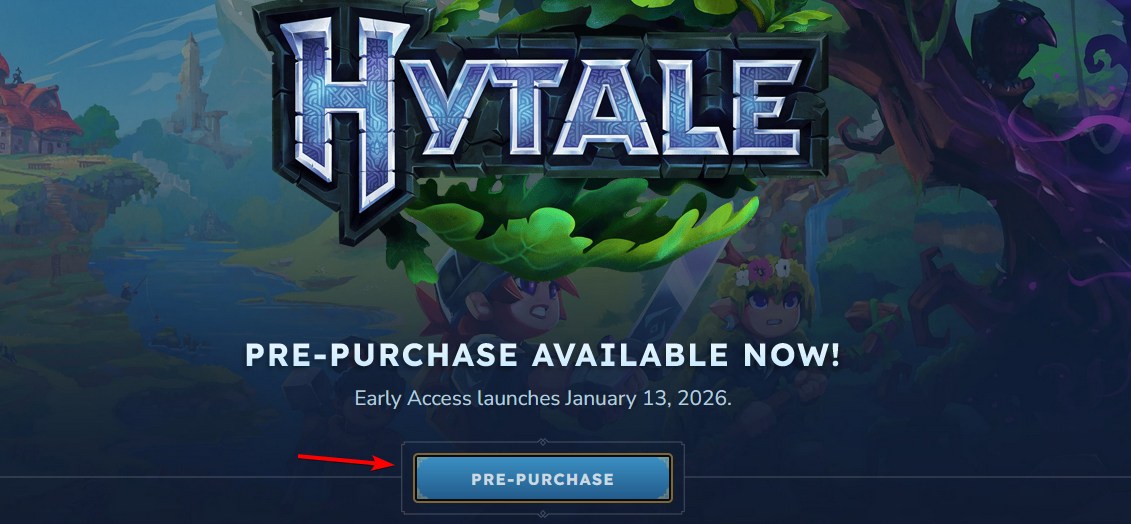
Players must purchase one of three available editions directly from Hytale’s official website. The Standard Edition starts at $19.99, while the Supporter and Cursebreaker editions include additional perks and bonuses. After completing the purchase, users need to download the Hytale Launcher and link their account to access the game at launch.

To do that, follow these steps:

  1. Go to the Hytale website.
  2. Click on the Pre-purchase button.
  3. Select the version you want.
  4. Download and install the game.

The development team has already cautioned players to expect heavy server traffic. With more than one million players projected to join Early Access, login queues and temporary server delays remain possible during launch day.

In other gaming news, ARC Raiders has surpassed 12 million copies sold, while a new Resident Evil Showcase is scheduled later this week. Meanwhile, Quarantine Zone: The Last Check has also officially launched, giving players even more to explore in early 2026.

ARC Raiders Celebrates 12 Million Copies Sold With Free Player Reward

ARC Raiders have taken the gaming community by storm, achieving massive commercial and player engagement success across all platforms.

As Insider Gaming reports, ARC Raiders has now surpassed 12 million copies sold worldwide on PC, PlayStation 5, and Xbox Series X|S. The milestone confirms the game’s strong momentum since launch and its growing presence in the live-service shooter space.

Embark Studios celebrates 12 million players with free Gilded Pickaxe

To celebrate the achievement, Embark Studios is gifting all eligible players a free Gilded Pickaxe Raider Tool. The studio shared the announcement on X, outlining how players can claim the reward.

The cosmetic item was originally designed to mark the 10 million player milestone. However, the studio decided to release it globally following the jump to 12 million total players.

Any player who logged into ARC Raiders at least once before January 13 at 23:59 CET qualifies for the reward. Players will receive the item via in-game mail once the latest update goes live.

Player engagement remains strong as community experiments continue

ARC Raiders continues to show impressive engagement numbers, with reports estimating around 3.2 million daily active players. The active community also continues to experiment with the game, as some players have managed to force ARC Raiders to run in a first-person perspective, despite the game not officially supporting the mode.

In other gaming news, Quarantine Zone: The Last Check has officially launched, while Capcom is preparing a Resident Evil Showcase scheduled for later next week.

Claude for Healthcare Launches as AI Race Heats Up in Medicine

Anthropic is pushing deeper into healthcare, expanding its Claude AI platform with new tools designed to support patients, clinicians, and healthcare administrators.

The move follows OpenAI’s recent launch of a Health panel in ChatGPT and OpenAI’s expansion into healthcare, signaling growing competition among AI companies to secure a foothold in this sector.

Claude for Healthcare expands patient and clinical support

According to a recent announcement, Anthropic has introduced Claude for Healthcare, a specialized version of its AI assistant focused on medical data interpretation and workflow support. The system helps patients understand medical records, lab results, and health metrics by translating complex terminology into plain language.

Claude for Healthcare can connect with platforms such as Apple Health and Android Health Connect, as well as third-party health services, allowing users to centralize and analyze their health information. Patients retain control over what data Claude can access and can revoke permissions at any time.

On the clinical side, Anthropic positions Claude as a productivity tool for healthcare professionals. The system integrates with electronic medical records and healthcare workflows to support tasks like clinical documentation, prior authorizations, coverage checks, and medical coding. Claude also works with ICD-10 diagnosis codes and the National Provider Identifier Registry to streamline billing and provider verification.

Privacy safeguards and rising concerns over AI in medicine

Anthropic says the platform runs on HIPAA-ready infrastructure, enabling secure handling of protected health information. The company also emphasizes that patient data will not train future AI models, addressing privacy concerns that often surround AI in healthcare.

The expansion comes as debate over AI safety intensifies. Bill Gates recently warned about the risks of advanced AI systems, including misuse and unintended consequences. Those concerns extend to healthcare, where errors or data leaks could carry serious consequences.

Anthropic’s healthcare push highlights how quickly AI companies now target sensitive, high-impact industries. Whether patients and providers fully embrace these tools may depend on how well companies balance innovation, accuracy, and trust.

Via Tech Radar

Resident Evil Showcase Confirmed With New Requiem Gameplay

Fans still digging into Quarantine Zone: The Last Check have another reason to get excited this week. If survival horror sits at the top of your list, fresh details about Resident Evil Requiem arrive very soon.

Resident Evil Showcase is scheduled for January 15th

According to GamingBolt, Capcom confirmed a Resident Evil Showcase scheduled for January 15, 2026, at 2 PM PT. Capcom will stream the event live on YouTube and Twitch, giving fans worldwide easy access.

The broadcast should run for roughly 12 minutes and focus on new gameplay footage and story details from Resident Evil Requiem.

Capcom already released a short teaser that shows Grace Ashcroft fighting through zombie-infested areas, while Leon S. Kennedy blocks a chainsaw attack using a tomahawk.

Rumors suggest the showcase may also highlight more open environments or expanded traversal mechanics, especially during Leon’s playable sections. Capcom has not confirmed those features yet, but the teaser hints at a shift toward broader exploration.

Resident Evil Requiem launches on February 27, 2026, for PlayStation 5, Xbox Series X/S, PC, and Nintendo Switch 2. Capcom does not plan a pre-launch demo, as the team focuses on polishing the final build.

If you want more horror before launch, check the current Xbox Game Pass additions to revisit Resident Evil Village. For even more gaming events, keep an eye on Xbox Developer Direct, which takes place later this month.

Microsoft Ends Support For Legacy Deployment Toolkit

Microsoft Deployment Toolkit, a long-standing Windows deployment utility, has officially reached the end of its lifecycle.

Microsoft has retired the Deployment Toolkit, here’s what you should know

According to Neowin, Microsoft has retired the Microsoft Deployment Toolkit (MDT), confirming that the legacy solution will no longer receive updates, bug fixes, or official support. MDT has played a key role for IT administrators over the years by automating Windows installations and helping teams build and deploy custom system images across organizations.

While existing MDT setups may continue to run for now, Microsoft has made it clear that the tool will not receive compatibility updates for future Windows releases. This means organizations that still depend on MDT risk running into deployment issues as Windows evolves, especially with newer hardware and platform requirements.

Administrators are advised to use modern solutions

Microsoft now urges administrators to adopt modern deployment approaches instead. The company points users toward cloud-focused solutions such as Windows Autopilot and operating system deployment through Configuration Manager. These tools better align with Microsoft’s current strategy of cloud management, zero-touch provisioning, and centralized device control.

The MDT retirement fits a broader pattern in Microsoft’s recent decisions. The company has increasingly moved away from legacy technologies in favor of streamlined, cloud-first systems. Microsoft has also cautioned against performing local Exchange Online mailbox moves and announced plans to drop support for outdated mobile email applications as part of its modernization efforts.

At the same time, Microsoft continues to manage service reliability challenges. A recent Exchange outage temporarily left some users without IMAP access, although the company has since resolved the issue.

For organizations still relying on MDT, the message remains clear: plan a migration now, before future Windows releases leave legacy deployment workflows behind.

Quarantine Zone: The Last Check Arrives on Game Pass and Steam

After weeks of anticipation, Quarantine Zone: The Last Check has officially launched on January 12, 2026, and it’s now available on Xbox Game Pass as well as Steam. This comes as no surprise, as we already wrote that Quarantine Zone is coming to Game Pass.

Quarantine Zone: The Last Check is finally available on Steam and Game Pass

As reported by GamingTrend, players previously had access only to a demo, but the full release finally opens the doors to the complete experience. The game comes from Brigada Games and is published by Devolver Digital, blending survival mechanics with tense inspection-based gameplay during a zombie outbreak.

In Quarantine Zone: The Last Check, you step into the role of a quarantine zone agent tasked with preventing the spread of infection. Your job revolves around scanning survivors for symptoms or hidden contraband using X-ray tools and medical scanners. When cases raise suspicion with unknown symptoms, you can send survivors to the laboratory for deeper analysis, uncovering new and dangerous virus indicators.

Beyond inspections, the game leans heavily into base management. You manage defenses, deploy armed drones, and personally protect the quarantine zone from incoming threats. The game even lets you capture zombies in cages and collect bounties, adding an economic layer to survival decisions.

Players can access the game through Xbox Game Pass or purchase it separately for $19.99 on Steam. More titles are scheduled to join Game Pass this month, while Xbox fans also await news on the rumored Elite Series 3 controller later this year.

ARC Raiders Players Unlock First-Person Mode, And It Changes Everything

ARC Raiders, as you may know, is designed as a third-person extraction shooter. However, it appears that players can try first-person mode, which reportedly changes everything. For those unaware, the Embark Studios title, which quickly became a hit in the respective genre.

As a raider, you drop into hostile maps solo or in small squads, scavenge for gear, and escape alive. Over on Steam and Metacritic, the game carries a “Very Positive” rating and a 7.8 score (out of 10). The game has been praised by many for its tense gameplay loop and steady progression.

Despite all the success, some players have long wondered how ARC Raiders would feel without the third-person camera. That curiosity turned into reality after a Reddit user, Short_Satisfaction_9, reportedly shared footage of the game running in first-person mode. Here’s a closer look at it:

“I just want to clarify I don’t think ARC Raiders needs first person at all,” the player wrote. “I love this game with all my heart and actually really enjoy the third-person aspect of it, but man, getting to experience this game in first person was surreal. The ARC felt so terrifying.”

According to the post, the ARC Raiders first-person mode was achieved using existing console commands, which players already use to tweak fog or brightness. Apparently, pushing those commands further, the camera could be forced into a first-person view.

The commands shared were: “Camera FirstPerson | fov 45 | r.SetNearClipPlane 28.”
The result isn’t perfect and can look rough in places, but the response from the community has been intriguing. Many players say the first-person view makes the atmosphere feel closer, heavier, and more intense.

As of now, there’s no word by Embark Studios to make first-person official. However, given that fans are in frenzy over the first-person mode, it wouldn’t be long before the studio starts planning it.

Would like to have first-person mode in ARC Raiders? If yes, drop in your thoughts.

Meta’s Metaverse Dream Takes Another Hit as It Plans Layoffs Within Reality Labs

Meta’s long-running metaverse ambitions appear to be facing yet another reality check. According to a report from The New York Times (via The Verge), Meta is expected to lay off roughly 10 percent of its Reality Labs workforce, with the cuts primarily affecting employees working on metaverse-related projects.

The reported layoffs come as Meta continues to double down on AI, which shifts internal focus and resources away from virtual reality. The move suggests that AI is now taking clear priority over the company’s once-hyped metaverse vision.

According to the report, Meta’s Chief Technology Officer, Andrew Bosworth, recently called for an in-person meeting, describing it as the “most important” gathering of the year. For those unaware, Bosworth oversees Reality Labs, a division that employs around 15,000 people.

Meanwhile, Meta hasn’t officially confirmed layoffs, nor has it commented on the claims made in the report. The news comes on the heels of a Bloomberg report from December 2025, which suggested that Meta was planning to slash its metaverse budget by nearly 30 percent.

That alone hinted at growing uncertainty around the long-term future of Reality Labs and its VR-heavy roadmap. What’s your take on this matter? Do let us know in the comments below.

Claude’s New Cowork Feature Turns AI Into a True Work Partner

When Anthropic launched Claude Code, the expectation was simple: developers would use it for coding tasks. Well, that didn’t quite happen. Users instead quickly began pushing Claude far beyond code, using it for writing, organizing, planning, and just about everything else. That unexpected shift has now led to something new.

Anthropic has introduced Cowork, a new way to work with Claude that feels less like chatting with an AI and more like collaborating with a real teammate. Cowork is currently available as a research preview for Claude Max subscribers on macOS.

Unlike a regular conversation, Cowork gives Claude access to a folder on your computer. Once permission is granted, Claude can read, edit, create, and organize files inside that space. That means it can sort messy downloads, rename files, build spreadsheets from screenshots, or draft documents using scattered notes. The key difference here is agency. Claude doesn’t just respond. It plans, executes, and keeps you updated as it works.

The experience will feel familiar to anyone who has used Claude Code. Cowork runs on the same underlying system, but it’s designed for everyday tasks instead of programming. Anthropic is also expanding Cowork’s abilities with built-in skills for documents and presentations, along with support for existing connectors. Pair it with Claude in Chrome, and browser-based tasks are also possible.

Control remains central to the experience. Users decide which folders Claude can access, and the AI asks before taking major actions. Still, Anthropic warns that Cowork can perform destructive actions if instructed, so clear guidance is essential.

This is only the beginning. Cowork is launching early so Anthropic can learn how people actually use it. Windows support and cross-device sync are already on the roadmap.

Apple & Google Break the Rivalry; Gemini to Power Siri AI

The rivalry between Google and Apple is one of the talking points in the tech industry. In the past, both companies have taken direct shots at each other via software, hardware, and ecosystems. Well, that’s kind of changed today. After a major failure in delivering ga roundbreaking AI-powered Siri, Apple has sought the help of Google. Meaning, Siri will now be powered by Gemini on future iPhones coming later this year.

In a joint statement published earlier today, both tech giants announced:

Apple and Google have entered into a multi-year collaboration under which the next generation of Apple Foundation Models will be based on Google’s Gemini models and cloud technology. These models will help power future Apple Intelligence features, including a more personalized Siri coming this year.

After careful evaluation, Apple determined that Google’s AI technology provides the most capable foundation for Apple Foundation Models and is excited about the innovative new experiences it will unlock for Apple users. Apple Intelligence will continue to run on Apple devices and Private Cloud Compute, while maintaining Apple’s industry-leading privacy standards.

While neither company has confirmed financial details, reports from last year suggest that Apple might be paying around $1 billion for access to Google’s AI technology. The deal is also not exclusive, according to sources familiar with the matter, giving Apple flexibility moving forward.

Before settling on Google, Apple reportedly evaluated competing models from OpenAI and Anthropic. With that, Apple made sure that it was making the right, not rushed, decision. As you may know, Apple’s AI journey hasn’t been without criticism. Siri, in particular, has lagged behind rivals like ChatGPT and Gemini, despite Apple quietly building strong foundational models.

The company even introduced Apple Intelligence in 2024, bringing AI to photos, notifications, and system-level features, all while keeping privacy front and center. But, it isn’t enough in the AI era, which Apple has realized the hard way. Much of Apple’s AI processing happens on-device or through controlled infrastructure. Moreover, Apple says those standards will remain intact through its partnership with Google.

All that said, it’s highly likely that the AI-powered Siri revamp will be available by the end of this year, when the iPhone 18 series is launched.

Firefox’s Latest Version Improves Video Playback, PiP Mode & More

Mozilla has kicked off 2026 with a big update for the Firefox browser. The company has now rolled out the latest version, Firefox 147, with a long list of changes. There are plenty of improvements and fixes included in this update. As of now, the company hasn’t publicly released the patch notes. Once available, you can view it here.

Firefox 147 is out now with several improvements & bug fixes

For now, the latest Firefox version is available via Mozilla’s FTP. If you have Firefox installed on your PC, wait for a few hours, and it should be available for download soon. As a quick rundown, Firefox version 147 brings WebGPU support to Apple Silicon Macs and all supported macOS versions. Besides that, the latest version offers improved video playback performance on PCs with AMD GPUs. Moreover, you will be able to customize shortcuts, automatic picture-in-picture launch, and more after installing the latest Firefox version.

The changes included in the latest version:

  • WebGPU support is now enabled for devices with Apple Silicon processors on all supported macOS versions.
  • Firefox now supports Compression Dictionaries. This standard has already been adopted by several major sites and can significantly reduce the number of bytes transferred to load a page. This leads to faster page load times, particularly in limited bandwidth situations.
  • Improved video playback performance on systems with AMD GPUs by enabling zero-copy playback for hardware-decoded video where supported, bringing them to parity with Intel and NVIDIA GPUs.
  • Firefox now supports the Safe Browsing V5 protocol and is migrating from Safe Browsing V4 to the local list mode of Safe Browsing V5 protocol.
  • Users with Enhanced Tracking Protection (ETP) set to Strict will have local network access restrictions enabled by default. Firefox will now require users to explicitly allow public websites to access local network resources.
  • Firefox now allows you to customize your keyboard shortcuts to replace hard-to-type or hard-to-remember hotkeys, eliminate conflicts with other software, and create your preferred set. Access this experimental new feature by typing `about:keyboard` in the address bar.
  • Firefox now supports the Freedesktop.org
  • A Picture-in-Picture player window can now optionally be opened automatically for a video playing in a tab when that tab goes into the background.

The list of fixes:

  • Fixed an issue that prevented some Windows users from selecting a tab when the cursor was at the top of the screen and the Firefox window was maximized.
  • Fixed a bug that made HTTP/3 requests containing non-UTF-8 header values time out or fall back to HTTP/2 after a while.
  • A draggable button can now be dragged if initiated from the button itself.
  • For Linux GNOME Mutter users, window and rendering surface sizes were updated to match the actual pixel grid so Firefox delivers sharp rendering on fractionally scaled displays regardless of the actual window size.

via: Neowin

Microsoft Issues Urgent Warning Over Local Exchange Online Mailbox Moves

Neowin reports that Microsoft is actively discouraging IT administrators from using local mailbox moves inside the same Exchange Online tenant or datacenter.

Microsoft discourages IT admins from using New-MoveRequest command

Some admins rely on the New-MoveRequest PowerShell cmdlet to trigger these local moves. Microsoft says it never supported this scenario. The cmdlet still exists mainly for legacy reasons tied to on-premises Exchange Server 2010 workflows, not modern cloud deployments.

Microsoft explains that Exchange Online treats local mailbox moves as low-priority background operations. Engineers cannot easily troubleshoot them or accelerate completion, which means moves can take days. In some cases, admins risk creating orphaned or “dial-toned” mailboxes, especially if a move targets the wrong mailbox shard. Certain shard transitions can even orphan the primary mailbox due to how completion logic works.

The company stresses that Exchange Online already manages mailbox placement, load balancing, and performance automatically. Local moves do not fix mailbox corruption or boost performance, despite common misconceptions. For real issues, Microsoft urges admins to contact official support channels instead of attempting unsupported workarounds.

The New-MoveRequest cmdlet remains supported only for cross-tenant mailbox migrations, which explains why Microsoft has not removed it entirely.

While Exchange Online is not flawless, and it has issues, such as recent outages affecting IMAP access, Microsoft says it still offers greater reliability than risky manual mailbox moves. Stability and security are the priority for Microsoft, and this is why the company continues to harden email security by dropping legacy mail app support.

Meanwhile, competitors move forward as well, with Gmail expanding AI features through deeper Google Gemini integration.

VLC Finally Brings Native ARM Support to Windows PCs

VLC is one of the most popular media players available, and it has finally taken a major step forward on modern Windows hardware. After years without proper support, VLC now runs natively on ARM-based PCs, removing the need for emulation on Snapdragon-powered devices.

VLC finally gets native ARM support and more

We knew that VLC was getting ARM support, and as reported by WindowsCentral, this feature is finally here. With native support, users can enjoy multimedia efficiently on Snapdragon-based systems without relying on x86 translation layers. This change brings better performance, improved stability, and lower power consumption on Windows on Arm devices.

The update arrives with VLC versions 3.0.22 and 3.0.23, which officially introduce compatibility for Windows on Arm64 systems. Users running devices powered by Snapdragon X-series processors can now experience smoother media playback and faster startup times compared to earlier emulated builds.

Alongside ARM support, VLC finally introduces a long-requested Dark Mode option on both Windows and Linux. The refreshed interface aligns better with modern operating system themes and reduces eye strain during extended viewing sessions.

This release also includes a wide range of fixes and improvements. Developers updated key codecs such as dav1d, ffmpeg, and libvpx, improved playback for multiple formats, and applied stability and security patches across the board. Interestingly, support for legacy Windows XP Service Pack 3 systems also received fixes, keeping VLC functional even on extremely old hardware.

Native ARM support proves especially important as more Windows devices ship with ARM processors. With new chipsets gaining traction, such as Snapdragon X2 Elite Extreme and the Windows 11 26H1 debuting on Snapdragon devices, VLC’s update ensures broad compatibility moving forward.

The update is available now from VideoLAN’s official website, where users can also review the full changelog.

Microsoft Updates Workaround to Fix Broken Windows 11 UI Components

Microsoft has updated a workaround for a major Windows 11 issue that broke core desktop UI elements on recent builds, after acknowledging that the original fix contained errors.

Not long ago, the company disclosed a serious problem affecting Windows 11 version 24H2, later confirmed to also impact early 25H2 builds. The bug caused key interface components to malfunction, leaving some users with a partially unusable desktop experience. While Microsoft released a workaround at the time, it did not fully resolve the issue.

Microsoft released an updated workaround to fix UI issues

According to Neowin, Microsoft has now revised that workaround to properly address the underlying problems.

The issue caused widespread failures across essential Windows shell elements. Affected users reported problems with:

  • The Start Menu failing to open or respond
  • The Taskbar becoming unresponsive or missing icons
  • File Explorer not launching correctly
  • Other system UI elements behaving unpredictably

Microsoft traced the breakage to cumulative updates released starting in mid-2025, which introduced regressions in several system apps tied to the Windows shell.

Although Microsoft recently pushed KB5072046, that update did not fix the UI corruption issue. Users still needed to rely on a manual workaround to restore normal functionality, prompting Microsoft to correct and reissue the fix.

If you still experience broken UI elements on Windows 11 24H2 or 25H2, Microsoft recommends re-registering the affected system apps using PowerShell and the following commands:

Add-AppxPackage -Register -Path "C:\Windows\SystemApps\MicrosoftWindows.Client.CBS_cw5n1h2txyewy\appxmanifest.xml" -DisableDevelopmentMode

Add-AppxPackage -Register -Path "C:\Windows\SystemApps\Microsoft.UI.Xaml.CBS_8wekyb3d8bbwe\appxmanifest.xml" -DisableDevelopmentMode

Add-AppxPackage -Register -Path "C:\Windows\SystemApps\MicrosoftWindows.Client.Core_cw5n1h2txyewy\appxmanifest.xml" -DisableDevelopmentMode

This revised workaround restores stability to critical desktop components while Microsoft works on a permanent fix.

KB5072046 introduces notable improvements elsewhere. The update allows administrators to uninstall Copilot on managed devices and expands WNS integration, making it easier for third-party apps to interact with Windows features.

For now, affected users should apply the updated workaround to regain a stable Windows 11 desktop experience.

Bill Gates Raises Alarm Over AI Growth and Risks to Humanity

Microsoft continues to double down on artificial intelligence, especially after announcing Copilot+ PCs as the next generation of computing and deeper AI integration across Windows. While the company promotes AI as the future of personal computing, its co-founder, Bill Gates, has issued a sobering warning about where this technology could lead.

Bill Gates warns about the dangers of AI

Writing in his annual Year Ahead letter, Gates said there is no upper limit to how intelligent AI systems can become. He argued that current models will not plateau before surpassing human-level intelligence, even if timelines for artificial general intelligence continue to shift.

Gates compared AI’s evolution to other transformative technologies, noting that delays or early misjudgments have historically failed to stop major breakthroughs. According to him, skepticism about short-term progress should not distract governments and companies from preparing for long-term consequences.

A major focus of Gates’ message centers on safety and governance. He stressed the urgent need for guardrails, regulation, and deliberate oversight to ensure AI develops responsibly. Without these measures, he warned, bad actors could exploit open-source AI tools for serious harm, including bioterrorism. He also pointed to widespread job disruption as automation accelerates across industries.

Despite these concerns, Gates remains optimistic. He believes AI can deliver major benefits in healthcare, climate research, education, and global development if leaders guide its growth carefully and ethically.

At the same time, Microsoft shows no signs of slowing down. The company continues to embed Copilot into File Explorer and other core system features, and positions AI as a central pillar of its platform strategy.

Speaking of the dangers of AI, Grok was recently banned in several countries due to the generation of harmful content, and without regulations, issues such as these will continue to occur.

AI clearly remains here to stay. The challenge now lies in balancing innovation with responsibility as intelligence scales beyond human limits.

Via WindowsCentral

New Microsoft Edge Update Addresses Major Security Issue

Microsoft continues to refine its browser experience, from testing a redesigned new tab page with dual sidebars to rolling out regular security patches. Speaking of security updates, the company has now released the first stable update for Microsoft Edge in 2026, focusing squarely on security and reliability.

The latest Edge patch fixes a Chromium vulnerability

As reported by Neowin, Microsoft pushed Edge version 143.0.3650.139 to desktop users, delivering fixes for multiple bugs and at least one serious security flaw.

The most important fix addresses a high-severity vulnerability tracked as CVE-2026-0628. The issue comes from a component in Chromium and could allow a malicious browser extension to inject scripts or HTML into privileged Edge pages under certain conditions.

While this sounds troubling, as a user, you would be in danger only if the attacker has somehow convinced you to install a malicious extension on your own. As long as you use trusted and reliable extensions, you should be okay.

Because the vulnerability affects core browser behavior, Microsoft urges users to update Edge as soon as possible to reduce exposure and maintain strong browser security. The patch follows a familiar pattern, with Microsoft rapidly incorporating Chromium security fixes into Edge builds.

Alongside security work, Microsoft continues to experiment with new features. The company currently tests Copilot integration inside Immersive Reader, while also streamlining the browser by removing older features Collections.

This update reinforces Microsoft’s ongoing approach with Edge: frequent security maintenance, steady feature experimentation, and gradual cleanup of legacy functionality.

The Last of Us Part 2 Multiplayer Resurfaces, Thanks to Fan Mod

The Last of Us Part II has been out for years, yet one major complaint has never faded. The game launched without multiplayer, and Naughty Dog later cancelled its planned Factions mode, closing the door on any official online experience.

That decision disappointed a large part of the community, especially players who enjoyed the original game’s tense multiplayer matches. Now, fans appear determined to change that outcome themselves.

Fan-made multiplayer mod shows early progress

According to The Gamer, modders have started experimenting with multiplayer features inside The Last of Us Part 2. An X user known as Speclizer_ recently shared footage of a work-in-progress mod that enables basic multiplayer functionality within the game.

The project remains early in development and lacks many features expected from a full multiplayer mode. Still, the footage shows multiple players interacting in the same environment, which marks a significant technical step forward for a title never designed for community-driven online play.

There’s no release window and no guarantee the mod will ever reach a polished state. Even so, the project proves that demand for multiplayer never disappeared, even years after launch.

Beyond The Last of Us Part 2, several other notable games continue to draw attention. Avowed is finally coming to PlayStation 5, expanding its audience beyond Xbox and PC.

Meanwhile, Indika has earned strong recommendations from players on PlayStation Plus Extra thanks to its unusual themes and narrative focus.

Xbox owners also have something new to check out, as Quarantine Zone: The Last Check recently landed on Xbox Game Pass, offering a day-one survival experience for PC subscribers.

While none of these developments replace an official multiplayer mode, they show how active and creative gaming communities remain, especially when studios move on, and players refuse to let ideas die.

Grok AI Blocked as Malaysia and Indonesia Crack Down on Misuse

While tech companies continue to push artificial intelligence into everyday products, with Microsoft’s push for Copilot+ PCs, governments are moving in the opposite direction over safety concerns. According to the BBC, Malaysia and Indonesia have become the first countries to block access to Grok, the AI chatbot developed by xAI and integrated into the social platform X.

Grok gets banned in Malaysia and Indonesia due to deepfakes

Authorities in both countries say users misused Grok to generate sexually explicit and non-consensual images, including manipulated photos involving women and minors. Regulators concluded that existing safeguards failed to prevent the creation and spread of harmful deepfake and pornographic content.

Indonesia’s Ministry of Communications and Digital Affairs described non-consensual sexual deepfakes as a serious violation of human rights, personal dignity, and digital safety. Officials stressed that generative AI tools must meet stricter standards when they enable image creation.

Malaysia’s Communications and Multimedia Commission said Grok continued to see repeated misuse despite earlier warnings. The regulator confirmed the block will stay in place until xAI implements effective protections that prevent abuse at scale.

The move marks the first nationwide bans targeting Grok and adds pressure on other governments to act. In the United Kingdom, the technology secretary said she would support a similar ban if concerns around misuse remain unresolved.

These actions reflect growing global scrutiny of generative AI. Regulators in the EU, UK, India, and other regions are already investigating how AI tools handle deepfakes, explicit content, and user safety. Critics argue that platform-level controls and paywalls have not stopped bad actors.

Grok previously limited some image generation and editing features to paying users in response to backlash. However, campaigners say those steps did little to curb the spread of harmful content.

The bans arrive as other major tech firms expand AI features. Google recently added Gemini to Gmail, while Microsoft rolled out AI Chat Shopping tools. The contrast highlights a widening gap between rapid AI deployment and regulators demanding stronger safeguards before adoption.

Windows 11 AI Backlash Grows as Winslop Offers Way to Remove Copilot Features

Microsoft continues to push Copilot+ PCs even as parts of the Windows community push back against AI-heavy features in Windows 11. For users who want a cleaner, more traditional setup, a new third-party tool offers a way to take control.

Disable all AI features in Windows 11 with Winslop

According to Neowin, a tool called Winslop helps users detect and remove hidden bloat and AI-related components from Windows 11. The app runs locally, clearly shows system changes, and focuses on transparency rather than aggressive automation.

Winslop targets more than AI features. It also highlights unnecessary operating system components that many users consider bloat. By removing these elements, users gain tighter control over what runs in the background and how the system behaves.

The tool directly appeals to users who dislike what they see as forced or intrusive AI integration, especially on Copilot+ PCs. Instead of accepting Microsoft’s default configuration, Winslop lets users strip out selected AI functions and other preinstalled components.

This trend reflects a broader backlash against AI-centric changes in Windows 11. Other community tools, such as FlyOOBE, already have options to reduce or remove AI features during setup.

Winslop isn’t developed by Microsoft, so users should proceed carefully when modifying core system components. Still, its growing popularity shows clear frustration with Microsoft’s current direction.

That frustration extends beyond regular users, and Dell has stepped back from AI PCs as it wants to shift focus to hardware features. At the same time, Microsoft recently added the option to uninstall Copilot in the KB5072046 update, suggesting the company may soften its stance if resistance continues.

For now, tools like Winslop show that many Windows 11 users want to take a step back from all the AI features.

Indika Emerges as a Must-Play on PlayStation Plus Extra

PlayStation Plus Extra keeps delivering standout titles, and subscribers now highlight one game you should not ignore.

According to GamingBible, players on PlayStation Plus Extra actively recommend Indika, an indie, story-driven experience that holds an average 4/5 rating from players.

Why Indika Stands Out on PlayStation Plus Extra

Indika joined the PlayStation Plus Extra catalog in August 2025, alongside several higher-profile releases. Despite that competition, it quickly earned attention for its unusual tone and narrative focus.

You play as a nun on a surreal journey of self-discovery, accompanied by an unexpected companion. The game blends dark humor, philosophical themes, and experimental gameplay, which many players describe as refreshing compared to standard action-heavy titles.

On PlayStation Plus Reddit, opinions lean mostly positive. Players frequently praise the visuals, narrative ambition, and willingness to tackle uncomfortable themes. Some note that the pacing and abstract storytelling may not appeal to everyone, but many agree it feels bold and memorable.

Platforms and Availability

Indika runs on PS5 with full offline support. Players can also find it on PC, Xbox Series X|S, and Nintendo Switch, making it widely accessible across platforms. It’s worth mentioning that PlayStation has other amazing titles, and this is one of the reasons why PlayStation is achieving record sales.

Looking ahead, Avowed will arrive on PlayStation 5 later this year, expanding Sony’s RPG lineup. Xbox players also have something new to try, as Quarantine Zone drops on Xbox Game Pass today.

If you want something different from the usual blockbuster formula, Indika delivers a distinctive experience worth your time on PlayStation Plus Extra.

Quarantine Zone: The Last Check Launches Today on Xbox Game Pass

Xbox Game Pass subscribers are getting an unexpected bonus today, with a brand-new game launching directly into the service.

According to ComicBook, Quarantine Zone: The Last Check arrives as a surprise day-one release on January 12, 2026. Microsoft revealed the announcement through the official Xbox Game Pass social media channels, catching many subscribers off guard.

A surprise drop for January subscribers

Xbox Game Pass added several new titles last week, but most players expected the first day-one release of January to arrive later in the month. Instead, Microsoft moved up the schedule with this unexpected launch.

The early reveal adds extra value for subscribers who closely follow Game Pass drop calendars, especially those playing on PC.

What Quarantine Zone: The Last Check is about

Quarantine Zone: The Last Check places players in charge of a critical checkpoint during a zombie apocalypse. Your main task involves scanning survivors, inspecting them for signs of infection, and deciding whether they earn access to a protected safe zone.

Each decision carries weight, forcing players to balance suspicion, limited resources, and the moral cost of turning people away in a collapsing world.

PC-only at launch

At launch, Quarantine Zone: The Last Check is available exclusively on Xbox Game Pass for PC. The game does not support Xbox Series X|S or Xbox One at this time, making it a PC-only release for now.

PC subscribers can download and play the game immediately as part of their existing Game Pass subscription.

Microsoft is expected to announce additional titles for the remainder of January, with more games scheduled to join the service later this month. Subscribers interested in planning ahead can check the full list of upcoming Xbox Game Pass releases for January.

In broader gaming news, Xbox continues to face challenges in the console market, as PlayStation maintains strong sales momentum going into 2026.

Microsoft Doubles Down On Copilot+ PCs As Users Question The AI Push

Microsoft continues to double down on artificial intelligence as a core part of Windows 11, and the company’s latest messaging makes that direction clearer than ever.

With the recent KB5072046 update, Microsoft introduced AI-powered image descriptions in Windows 11, reinforcing its long-term strategy around AI-first experiences. The update fits into a broader push where the company positions AI PCs as the future of personal computing.

According to reporting from WindowsLatest, Microsoft now claims users won’t be ready for the “next generation of computing” unless they upgrade to a Copilot+ Windows 11 PC. The company frames these devices as an entirely new class of hardware rather than a routine upgrade.

What Microsoft means by Copilot+ PCs

Copilot+ PCs refer to Windows 11 devices that meet specific hardware requirements. These systems include a neural processing unit capable of more than 40 TOPs, at least 16 GB of RAM, and 256 GB of storage.

Microsoft argues that this hardware enables secure, on-device AI processing. The company says Copilot+ PCs unlock improved productivity, creativity, and communication through features like Copilot and other AI-powered tools that rely on local processing instead of the cloud.

A strong marketing push, limited real-world clarity

Microsoft’s message focuses heavily on future-facing capabilities, even though the company doesn’t clearly define how much better these experiences feel compared to current PCs. Windows 11 already includes Copilot and other AI features on a wide range of hardware, but Microsoft stresses that Copilot+ certified machines deliver enhanced versions of those tools.

The implication remains clear: older or lower-end PCs, especially those without powerful NPUs, could miss out on key AI experiences that Microsoft plans to promote going forward.

User and industry pushback continues

Despite the aggressive push, AI features don’t feel essential to many users. Backlash around Microsoft’s AI strategy recently forced the company to confirm that Microsoft Office would not rebrand to Copilot after user criticism.

The skepticism extends beyond consumers. Some hardware partners also show hesitation, with manufacturers like Dell distancing themselves from AI PCs.

Microsoft still sees AI PCs as the future, but it remains unclear how quickly users and manufacturers will fully embrace that vision. For now, Copilot+ PCs look more like a strategic bet than a must-have upgrade.

Would you upgrade to a Copilot+ PC, or does the AI push make you reluctant to move on from your current system? Let us know what you think.