Microsoft CEO Satya Nadella Reaffirms Commitment to Xbox’s Future During a Recent Internal Q&A Session

Microsoft’s gaming division underwent a massive leadership change last month. Long-time CEO of Microsoft Gaming, Phil Spencer, retired, while Xbox CEO Sarah Bond also moved on. Asha Sharma is now the new CEO of Xbox, who recently teased the next-gen Xbox console codenamed “Project Helix.” Per Sharma’s words, the next gaming console will “lead in performance” and will let users play Xbox and PC games together. Rumors also suggest that next-gen console may see up to 6x graphics jump and 20x Ray Tracing upgrade.

Well, if you are someone who has been quite worried about Xbox’s future and where Microsoft keeps it in its priorities, the company’s CEO Satya Nadella may have just addressed that (via Windows Central). As part of a recently held Q&A session with Xbox employees, Asha Sharma hosted Microsoft CEO Satya Nadella to discuss the company’s long-term gaming strategy and vision. The meeting was reportedly held to reassure Microsoft’s commitment to gaming amid online backlash and speculation around the future of Xbox.

Nadella calls gaming a core identity of Microsoft

During the Q&A session, Nadella reaffirmed that gaming remains one of the fundamental pillars of the company alongside its wider technology ecosystem. He explained that the company’s identity is built around several core areas that have defined Microsoft for decades.

“There are core identities in this company. I don’t think Microsoft will exist without these identities continuing to thrive. We’re a platform company, a developer company, a knowledge worker company, and gaming. These are the main identities of what Microsoft has always meant and will always mean,” said Satya Nadella while addressing Xbox employees.

Nadella said these identities shape Microsoft’s long-term direction and ensure the company continues innovating across multiple industries, including gaming. Xbox has been under a lot of scrutiny from players over the internet. There have been growing concerns about Microsoft’s gaming strategy. Nadella appears to be fully aware of all of that and has reassured that the company will continue to invest in the Xbox ecosystem and the gaming sector at large. “For me, we’re long on gaming. We’ll continue to invest, and we’ll always do so,” said Microsoft CEO Satya Nadella.

Nadella reportedly also referenced the historical role gaming played in advancing GPU technology. In his view, NVIDIA may not have existed in its current form if it were not for gaming. “Think about it, without DirectX, I don’t think the entire GPU revolution or the acceleration would’ve happened,” said Nadella, highlighting how specific technologies helped drive the broader graphics and gaming hardware revolution.

All the online rumors around Nadella handing over a blank check is false, as Microsoft communications chief Frank Shaw rubbished those claims, clarifying that Nadella never made such a statement during the Q&A session.

Nadella’s appearance during the Q&A also drew attention internally, as it appears to have served as reassurance to Xbox employees that gaming remains a central part of Microsoft’s long-term vision. The latest comments coming from the Microsoft CEO should also ease growing frustrations among fans and players alike who have been complaining about the company killing its own franchises, Game Pass price hikes, the value offered, and more.

What do you think about Satya Nadella’s comments? Do you think the promises made will be delivered by the company? Let us know your thoughts in the comments below.

Article feature image source: X/@tomwarren

Microsoft Debunks Viral “Microslop” Ban Claim After Reddit Backlash

Microsoft has confirmed that the word “Microslop” is not banned in Microsoft Store reviews after a viral Reddit post claimed the company censored the term.

The controversy started when a Reddit user alleged that Microsoft blocks the nickname in reviews for the Xbox PC app on the Microsoft Store. The post included a screenshot of what appeared to be a Microsoft Digital Safety email claiming the review violated platform policies.

The claim quickly gained traction online. According to reporting by Windows Latest, the Reddit thread collected more than 17,000 upvotes and over 600 comments, with many users assuming the moderation claim was real.

Viral Reddit Rumor Ignites Backlash Against Microsoft

The screenshot shown in the Reddit thread suggested that Microsoft had removed the review due to policy violations. However, the notice referenced “Off Topic Comments” rather than identifying any specific banned word.

Subreddit moderators later added a note to the thread warning that the post was “possibly misleading.”

The screenshot did not actually demonstrate that the nickname “Microslop” triggered the moderation action.

Microsoft says moderation is policy-based, not word-based

Microsoft later clarified to Windows Latest that the term itself is not prohibited in Microsoft Store reviews.

Testing by the publication showed that a review containing the word “Microslop” could be submitted successfully and appeared normally on the platform.

Microsoft explained that reviews are moderated based on policy violations rather than specific insults or nicknames. Reviews may still be removed if they break platform guidelines or if moderators determine that they are unrelated to the product being reviewed.

Because the policy notice referenced “Off Topic Comments,” the original Reddit post did not prove that the nickname caused the review removal.

The temporary Discord filter likely caused confusion

Microsoft has restricted the word in the past, but only in a limited context.

The company previously added a temporary filter for the term on its Copilot Discord server during a spam attack. That filter served as an anti-spam measure rather than a permanent content rule.

The temporary Discord restriction appears to have contributed to confusion around the recent rumor.

Rumor spreads amid ongoing Microsoft criticism

The incident highlights how quickly misinformation about large tech companies can spread online.

Microsoft has faced growing criticism from some users over the increasing number of artificial intelligence features appearing across its products. While the company has recently signaled a shift away from pushing AI everywhere, it still describes Copilot as its top productivity application.

Despite the backlash, Microsoft continues expanding AI functionality. The company recently introduced Copilot Tasks, a feature designed to turn Copilot into a more capable AI agent that can complete complex actions for users.

The viral Reddit claim ultimately turned out to be false, but it demonstrates how existing frustration with AI features can make unverified rumors easier to believe.

Windows 11 May Finally Let Users Remove Unwanted Quick Actions Again

At the start of the year, Microsoft promised that it would move away from the AI-everywhere strategy in Windows 11 and start focusing more on fixing the OS from the ground up, suggesting that user feedback will finally be taken care of more often. Well, if you have been waiting for Microsoft to bring back the Quick Settings customization feature, your wish might finally come true.

Windows 11 could finally bring back the ability to customize Quick Settings

The new feature has reportedly surfaced in Windows 11 Insider Preview Build 26300.7965 (KB5079385) that Microsoft released in the Dev Channel last Friday. As spotted by popular Windows tipster phantomofearth on X, the hidden interface changes suggest Microsoft is experimenting with a new way to manage Quick Actions.

In earlier versions of Windows, users were allowed to control which toggles appeared inside the Action Center, through which users could add or remove features like Wi-Fi, Bluetooth, airplane mode, and Night Light based on personal preference.

To catch you up, Microsoft pulled that feature in previous Windows 11 updates. The Quick Settings panel eventually became a fixed, scrollable list where users could rearrange controls but not remove them entirely.

Now, new preview builds suggest that the limitation may not last much longer. Hidden changes inside Build 26300.7965 indicate that certain Quick Actions could soon become removable again, though the functionality does not fully work yet.

If the changes remain in development, Windows 11’s Quick Settings panel could become far more customizable again in future updates. For now, the feature remains hidden in preview builds, leaving its final form unclear.

Energy Saver’s quick setting could also get a dedicated submenu

PhantomOfEarth, in a separate post on X, also suggests that Microsoft is working on a new submenu inside the Quick Settings control center. The updated Energy Saver quick setting has reportedly been turned into a split toggle with a currently blank subpage. The tipster hints that the section will likely display energy-saving recommendations in a future Windows 11 preview build.

Speaking of preview builds, late last week, Microsoft also released Windows 11 Canary Update KB5079381, which adds voice typing for File Explorer and improves storage cleanup. Meanwhile, Beta and Dev updates, KB5079382 and KB5079385, fix File Explorer’s annoying white flash issue.

Article feature image source: X/@phantomofearth

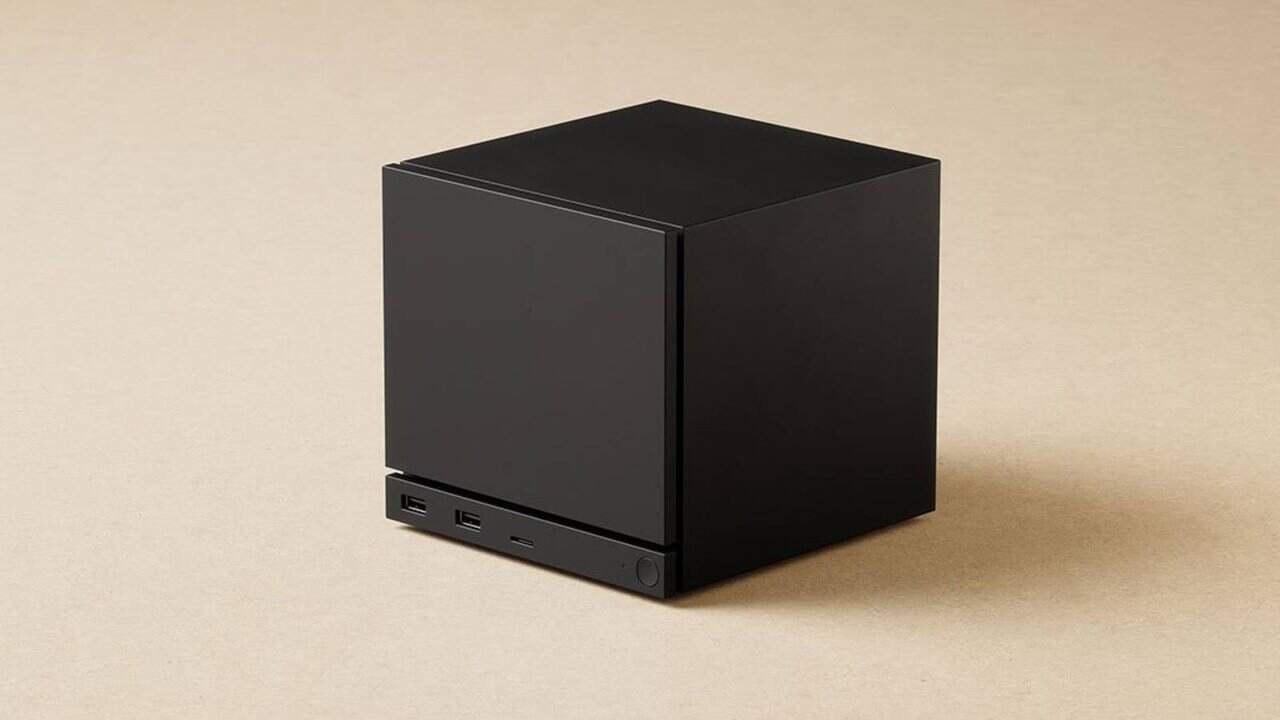
Steam Machine Launch Back on Track as Valve Confirms 2026 Release

Valve has confirmed that the long-awaited Steam Machine console will still launch in 2026 despite earlier concerns about hardware shortages.

The company recently warned that supply constraints affecting memory and storage components could delay the launch of its upcoming hardware lineup. Those concerns raised speculation that the console might slip beyond its expected release window.

However, Valve has now updated its official blog post with a more optimistic message.

Valve Now Says All Three Hardware Products Will Ship This Year

In the earlier version of the post, the company said it hoped to ship the device in 2026 but noted that memory and storage shortages had created challenges. Valve also stated that it would share more information once plans were finalized.

The updated message now confirms that the company plans to release all three announced hardware products this year.

According to the revised statement, Valve acknowledged the supply difficulties but clarified that the Steam Machine, Steam Controller, and Steam Frame will all ship in 2026.

The confirmation marks a significant shift from the earlier uncertainty surrounding the launch timeline. Semiconductor supply issues have affected multiple industries over the past few years, often forcing companies to delay or scale back hardware releases.

Valve’s updated statement suggests that the company has now secured enough components to proceed with production.

Steam Machine has generated strong interest among PC gaming fans, especially those looking for a console-like device built around the Steam ecosystem. The platform aims to bring PC gaming to the living room with a more streamlined experience similar to traditional consoles.

Industry observers have also noted that the device could position itself as a potential competitor to consoles from companies like Sony if the platform gains traction.

With Valve now confirming that the entire hardware lineup will ship in 2026, gamers may not have to wait much longer to see how the new Steam-focused devices perform in the console market.

Via PC Gamer

Microsoft Restores Secure Boot FAQ Details Ahead of 2026 Certificate Expiration

Microsoft is reminding users that Secure Boot certificates must be updated before 2026, after confusion briefly emerged over missing information in its official support documentation.

The company originally announced in early 2024 that Secure Boot keys used across Windows systems will expire in 2026 after roughly 15 years of use. To prevent disruptions and maintain platform security, Microsoft began distributing updated certificates through Windows Update and warned users to update before the original certificates expire.

Recent updates delivering the new certificates include Windows 11 patches KB5077181 and KB5075941, as well as KB5075912 for Windows 10.

Microsoft restores Secure Boot explanation after FAQ confusion

Microsoft recently published a support article explaining how the Secure Boot certificate update works and what users should expect before the deadline. However, a section describing the consequences of missing the update was temporarily removed from the FAQ.

According to reports from Neowin, that removal caused confusion among administrators and users trying to understand the risks of not installing the new certificates.

Microsoft later restored the information and expanded the explanation. The company also moved the clarification to the first question in the support article to make the guidance easier to find.

Devices will still boot, but security protections may weaken

Microsoft’s updated guidance states that systems without the newer 2023 Secure Boot certificates will continue to boot normally and receive regular Windows updates. However, those devices will gradually lose certain security protections tied to the early boot process.

Without the updated certificates, systems may no longer receive protections related to Windows Boot Manager, Secure Boot databases, revocation lists, and mitigations designed to block newly discovered boot-level vulnerabilities.

Over time, this gap could make devices more exposed to advanced threats such as bootkits that target the system startup process.

Microsoft also noted that some security features relying on Secure Boot trust could be affected, including certain BitLocker hardening mechanisms and compatibility with third-party bootloaders.

Updates should arrive automatically through Windows Update

For most users, the new Secure Boot certificates will install automatically through Windows Update before the June 2026 deadline.

In some cases, hardware manufacturers may also distribute firmware updates to support the transition. Microsoft recommends keeping devices fully updated to ensure Secure Boot protections remain active.

The clarification arrives as Microsoft continues rolling out other security improvements across the Windows ecosystem. The company recently refreshed Windows Defender definitions for installation images, ensuring newly installed systems start with up-to-date malware protection.

Together, the Secure Boot certificate transition and updated Defender signatures aim to strengthen Windows security from the earliest stages of system startup.

Microsoft Updates Defender Signatures Across Windows Installation Packages

Microsoft continues strengthening its security ecosystem with a new Windows Defender update that refreshes malware protection included in Windows installation images.

The company frequently releases security intelligence updates to help Defender detect newly discovered malware threats. These updates ensure systems remain protected against emerging attacks.

However, installation images such as WIM, VHD, and ISO files often contain older Defender definitions, which can briefly expose newly installed systems to threats until updates are downloaded.

Updated Defender definitions added to Windows installation images

To reduce this security gap, Microsoft periodically refreshes the Defender components included in Windows installation media.

According to Neowin, the latest update adds security intelligence version 1.445.6.0 to official Windows images. The Defender package version included in the refresh is also 1.445.6.0.

This update applies to several Windows versions currently used by enterprises and organizations, including Windows 11, Windows 10 ESU, Windows 10 Enterprise LTSC 2021, Windows 10 Enterprise LTSC 2019, Windows 10 Enterprise LTSB 2016, Windows Server 2022, Windows Server 2019, and Windows Server 2016.

The package includes updated Defender components designed to improve detection and threat analysis.

Updated component versions include platform version 4.18.26010.5, engine version 1.1.26010.1, and security intelligence version 1.445.6.0.

These definitions expand Defender’s ability to detect multiple types of malware, including trojans, backdoor exploits, AutoKMS activators, and other malicious software.

Closing the security gap after Windows installation

Without updated Defender definitions inside installation images, newly deployed systems may briefly run with outdated protection until Windows Update downloads the latest signatures.

By refreshing the Defender components inside Windows images, Microsoft ensures that new installations start with more recent protection.

This approach helps reduce the window of vulnerability for organizations deploying Windows across large fleets of devices.

Microsoft continues tightening security across its ecosystem

The update arrives during a broader series of security changes across Microsoft services.

The company recently confirmed that Microsoft Authenticator will eventually block access from rooted Android devices and jailbroken iPhones due to the security risks associated with modified operating systems.

Microsoft Defender for mobile will also drop support for devices running iOS 16 and earlier starting April 30, 2026.

At the same time, security researchers recently reported attacks that abused legitimate digital certificates to install malware on work computers, highlighting the importance of keeping protection tools and definitions up to date.

Valve’s Steam Machine Delay Possible as Hardware Shortages Affect Plans

Valve is still planning to launch its upcoming Steam Machine in 2026, but the company has not confirmed a final release date, raising the possibility of delays.

The uncertainty reportedly stems from ongoing global market conditions and shortages of key hardware components, particularly RAM and storage.

Valve originally planned a first-half 2026 launch

Valve originally unveiled three new hardware products in late 2025: a redesigned Steam controller, a new VR headset, and the Steam Machine hybrid PC-console. At the time, the company expected these devices to arrive during the first half of 2026.

However, Valve later acknowledged that industry-wide memory shortages forced the company to reassess its launch timeline. Limited availability of RAM components has affected production planning and made it harder to commit to a specific release window.

In its most recent update, Valve said it still intends to ship the Steam Machine sometime in 2026, but the company has not provided a precise timeframe for the launch.

Steam Machine aims to combine console simplicity with PC gaming

The Steam Machine is designed as a hybrid system that blends console simplicity with PC-level flexibility. The platform will run SteamOS and give users access to their existing Steam library while supporting controller-based gameplay in a living-room environment.

This approach aims to make PC gaming more accessible while still offering the openness and performance advantages associated with traditional gaming PCs.

Competitors are also preparing next-generation platforms

While Valve continues to refine its plans, competitors are already preparing their own next-generation hardware strategies.

Microsoft is reportedly working on a PC-console hybrid platform internally known as Project Helix. According to earlier reports, AMD has indicated it could support a potential 2027 launch window for Microsoft’s next system if necessary.

At the same time, rumors surrounding Sony’s next console remain mixed. Some reports have suggested that the PlayStation 6 could slip to 2028 due to rising hardware costs, although other leaks indicate the company is still targeting a late-decade release.

Industry sources also claim that Sony views Valve’s Steam Machine as a potential future competitor, especially if the device successfully merges PC gaming with the accessibility of a traditional console.

With several companies exploring hybrid gaming platforms, the coming years could reshape how players access both PC and console titles. For now, Valve’s Steam Machine remains planned for 2026, although the final launch timing still appears uncertain.

Via Insider Gaming

OpenAI Launches Codex Security AI Agent for Automated Code Security Analysis

OpenAI has been in the spotlight recently following the launch of GPT-5.4 and Microsoft’s rapid integration of the new agentic coding model into GitHub Copilot. Now the company is expanding its developer tools portfolio with a major security-focused upgrade.

OpenAI has rebranded its security researcher agent Aardvark as Codex Security, introducing the tool in research preview through the Codex web interface.

Codex Security is currently available to ChatGPT Pro, Team, Enterprise, and Edu users. OpenAI says the tool will remain free to use during the preview period until next month.

Codex Security focuses on automated vulnerability detection

The new system aims to help developers automatically detect and fix security vulnerabilities in software repositories.

Developers can connect the tool to a code repository, allowing Codex Security to continuously analyze the codebase and suggest fixes for potential security issues. The system uses agentic reasoning combined with automated validation to determine which vulnerabilities are likely to have the highest impact.

According to OpenAI, the tool is designed to address two growing challenges in modern software development.

First, the amount of AI-generated code has increased dramatically, making manual security reviews more difficult and time-consuming.

Second, traditional vulnerability scanners often produce large numbers of low-impact alerts or false positives, forcing developers to spend time reviewing issues that may not represent real threats.

Codex Security attempts to filter out these low-value alerts and prioritize issues that require immediate attention.

Improvements based on Aardvark beta testing

The new system builds on OpenAI’s earlier Aardvark project, which was tested privately with security teams before the public research preview.

During testing, OpenAI observed significant improvements when the system repeatedly scanned the same repository. The amount of noise in vulnerability reports dropped by 84 percent compared to early beta results.

Accuracy improvements were also substantial. Over-reported severity levels decreased by more than 90 percent, while false positives across repositories dropped by more than 50 percent.

OpenAI says these improvements allow security teams to focus on genuine threats instead of spending time triaging incorrect alerts.

The company also expects Codex Security’s signal-to-noise ratio to continue improving as the system processes more real-world development environments and security workflows.

AI development tools continue expanding

The launch of Codex Security comes as AI companies continue expanding developer-focused automation tools.

Meanwhile, Microsoft has also upgraded its Bing Video Creator service to use OpenAI’s Sora 2 AI video generation model, expanding the company’s generative media capabilities.

Codex Security marks another step toward AI systems that not only generate code but also help maintain its reliability and security at scale.

Via Neowin

Microsoft to Add Granular File Restore to Microsoft 365 Backup

Microsoft has recently previewed updates across its Microsoft 365 ecosystem, including improvements to Copilot in Word and Teams. Now the company is also enhancing its backup and recovery capabilities.

According to a Microsoft 365 Message Center update (MC1245216), Microsoft is introducing granular restore capabilities to Microsoft 365 Backup. The change will allow administrators to recover individual files and folders instead of restoring entire SharePoint sites or OneDrive drives.

Microsoft 365 Backup introduces file and folder-level recovery

Previously, backup recovery in Microsoft 365 operated only at the site or drive level. This meant that recovering a single deleted or corrupted file required administrators to restore an entire SharePoint site or OneDrive drive.

With the new update, administrators can browse and search backup restore points and recover only the data they need.

The feature enables administrators to locate specific files or folders inside backup snapshots and restore them directly without affecting the rest of the environment.

This approach should significantly reduce recovery time and simplify incident response when data loss occurs.

Feature limited to organizations using Microsoft 365 Backup

Granular restore will only be available to organizations that already have Microsoft 365 Backup enabled.

Additionally, only administrators with the SharePoint Backup Administrator role will be able to perform these restore operations.

Microsoft says the changes will not affect end users directly because backup recovery remains an administrative task performed behind the scenes.

Preview rollout begins ahead of broader release

The granular restore capability entered public preview in early March 2026.

Microsoft expects the feature to reach general availability between late April and early May 2026 for organizations worldwide.

Before the rollout completes, Microsoft recommends that organizations review their SharePoint and OneDrive backup coverage, train backup administrators on the granular restore workflow, and update internal recovery procedures to account for file- and folder-level recovery scenarios.

Microsoft continues expanding Microsoft 365 capabilities

The backup improvements arrive as Microsoft continues expanding features across the Microsoft 365 platform.

The company is currently developing a built-in screenshot tool for Copilot that will allow users to capture and attach screenshots directly inside Microsoft 365 apps. In enterprise environments, Microsoft has also delayed the automatic migration from classic Outlook to the new Outlook client until March 2027, giving organizations more time to prepare for the transition.

The granular restore feature aims to make Microsoft 365 Backup more practical for day-to-day recovery tasks while helping administrators respond faster to accidental deletions and data loss incidents.

Via Bleeping Computer

Latest Windows 11 Canary Update KB5079381 Adds Voice Typing for File Explorer & Improves Storage Cleanup

Microsoft has rolled out a new Preview Build 28020.1685 (KB5079381) for Windows 11 Insiders in the Canary Channel. The latest build introduces a small set of improvements focused on storage management and File Explorer usability.

One of the key updates in this release is support for voice typing when renaming files in File Explorer. After installing the update, users can press Windows key + H to dictate a file name instead of typing it manually. The feature integrates with Windows’ existing voice typing system and aims to make file management faster when working with long or complex file names.

Microsoft has also improved the reliability of removing Windows Update files and the windows.old folder via Settings > System > Storage. These files usually appear after major Windows updates and can take up a significant amount of space. The improvement should make cleanup through Storage settings more consistent.

Not to forget, the Dev and Beta channel update released alongside have fixed File Explorer’s white flash issues and more.

Windows 11 Beta & Dev Update, KB5079382 & KB5079385, Fixes File Explorer’s Annoying White Flash Issue

Microsoft ended the week with three new Insider Preview builds. Among them, one each landed in the Dev and Beta Channel for Windows 11 Insiders. The Beta channel received Insider Preview Build 26220.7961 under KB5079382, whereas the Dev channel gets Preview Build 26300.7965 under KB5079385. Both Preview Builds bring several improvements across the system, while File Explorer received a fixes for a few headache. The update also includes improvements to sharing tools and changes to administrator protections.

File Explorer now supports voice typing when renaming files. Users can press Windows key + H and dictate the file name instead of typing it manually. Thankfully, Microsoft has also fixed File Explorer’s annoying white flash issue, which gave headache to users when new windows or tabs was set to launch to This PC. The same issue sometimes appeared for many while resizing interface elements. Both issues have now been addressed.

Besides File Explorer fixes, Microsoft has also improved the process for unblocking files downloaded from the internet, which should make it easier to preview them directly inside File Explorer. Apart from that, Microsoft is re-enabling Administrator Protection. For those unaware, it is a feature designed to limit free-floating admin rights by using just-in-time privileges. The option remains turned off by default and can be enabled through policy settings.

The update also makes changes to the drag tray in Windows sharing, introducing a smaller peek view to reduce accidental triggers when interacting near the top of the screen.

Powerpoint just got supercharged with powerful, new image editing tools

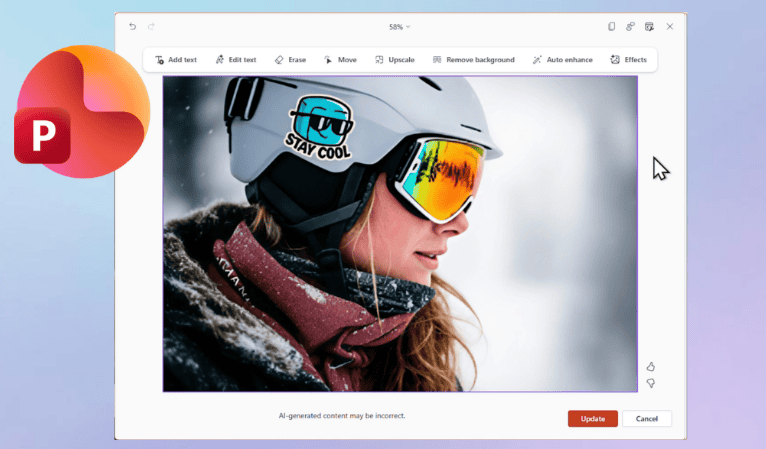
Microsoft is expanding PowerPoint’s capabilities with a new set of built-in image editing tools. The company says the feature will let users enhance visuals directly inside a presentation without switching to another app. Per the official Tech Community blogpost, the update is currently rolling out to PowerPoint for the web and Insider builds on Windows and Mac. Once available, users can edit images directly on slides using a new Edit Image option in the Picture Format menu.

Microsoft brings handy image editing tools to PowerPoint

As part of this update, PowerPoint can now handle several common image edits on its own. Users can remove backgrounds, erase unwanted objects, move elements inside an image, or upscale resolution to improve quality. Microsoft has also added tools such as Auto Enhance, text editing inside images, and visual effects. The goal is to help presenters quickly refine visuals without interrupting their workflow.

To use the feature, users can simply select an image on a slide and click the Edit Image button in the ribbon or right-click menu. From there, edits can be previewed in real time before applying the final changes to the slide. Microsoft says the tools should be useful for tasks like cleaning up screenshots, improving low-resolution images, adding annotations, or removing distracting elements from photos.

The feature is rolling out gradually to PowerPoint for the web and Insider versions on desktop. It is available on Windows starting with Version 2510 (Build 19422.20000) and on Mac with Version 16.104 (Build 25121423). As with many Microsoft 365 updates, the company notes that features may appear gradually while it monitors quality and performance. Some preview features could also change before mass rollout.

Samsung Could Double NAND Prices in 2026 Amid Exploding AI Demand

Samsung has been making headlines recently with the introduction of its HBM4 and power-efficient HBM4E memory, designed for next-generation AI workloads. Now, reports suggest the company is also preparing a major price increase for another key memory technology: NAND flash.

According to Sedaily, Samsung plans to significantly raise NAND prices during the second quarter of 2026, after already implementing increases earlier in the year. If the strategy moves forward as reported, the combined price hikes could push NAND costs up by more than 200% throughout 2026.

AI demand is reshaping the memory market

The move reflects rapidly growing demand from the AI sector. As hyperscalers expand infrastructure for training and running large AI models, storage capacity has become just as important as compute power.

NAND flash, which powers SSDs used in servers and data centers, plays a critical role in storing training datasets and handling long-context workloads. Industry sources say memory manufacturers now hold stronger negotiating power in supply discussions, allowing them to push through aggressive price adjustments.

Companies that rely heavily on large-scale storage systems often have limited alternatives, especially during periods of high demand.

Other NAND manufacturers are expected to follow

Samsung is not the only supplier expected to raise prices. Other major NAND producers, including SK hynix and Kioxia, are reportedly preparing similar increases as the memory market tightens.

The NAND market has already experienced extreme volatility. Prices reportedly surged by around 450% last year as manufacturers balanced production between DRAM and NAND while demand for AI hardware accelerated.

AI infrastructure driving storage demand

AI infrastructure increasingly depends on high-capacity SSD storage to support massive datasets. Modern AI platforms, including NVIDIA’s Vera Rubin systems, require large volumes of fast storage to process training data efficiently and maintain extended context windows during inference.

Major memory vendors such as Samsung, SanDisk, SK hynix, and Kioxia are now attempting to capitalize on strong hyperscaler demand tied to AI expansion.

Potential impact on consumer hardware

If the projected price increases materialize, the effects could extend beyond the data center. Higher NAND costs would likely translate into more expensive SSDs, tighter supply for PC manufacturers, and rising prices for consumer hardware.

Analysts expect the NAND market to follow a trajectory similar to the recent DRAM supply crunch, though some forecasts suggest NAND price growth could be even more aggressive due to AI-driven demand.

In related news, Samsung is reportedly in discussions with ByteDance about developing a custom AI chip designed for large-scale AI workloads.

Via Wccftech

Xbox Project Helix’s Latest Rumor Points to 6x Graphics Jump and 20x Ray Tracing Upgrade

Next-gen Xbox console is officially under development with codename Project Helix, as shared in an update by new Xbox CEO, Asha Sharma. Although, Sharma teased that the new Xbox console will lead in performance and allow you to play Xbox and PC games, we didn’t hear much about specs, pricing, and official release timeline. Well, if you have been lurking on the internet looking for these details, we may have something to share with you, all thanks to prominent tipster Moore’s Law is Dead.

Per Moore’s Law Is Dead latest YouTube video, Project Helix could deliver a massive performance leap over the current Xbox Series X. The next-gen system is said to feature a custom AMD Magnus APU designed to push console hardware much closer to modern gaming PCs. The report claims Project Helix could offer roughly a six-times increase in rasterization performance compared to the Xbox Series X. Ray tracing performance may see an even bigger jump, reportedly reaching up to twenty times higher.

Much of that improvement would reportedly come from AMD’s RDNA 5 graphics architecture. While the chip may only include around 30 percent more Compute Units than the Series X, each unit is reportedly about 65 percent faster. That architectural change alone could dramatically bump up the performance. That’s not all; frame rate targets could also climb. The console is said to aim for gameplay beyond the traditional 120 FPS ceiling that many current systems target.

Early estimates place the console somewhere between $999 and $1,200, though final pricing will depend on how aggressively Microsoft decides to subsidize the hardware. The next Xbox is currently expected to arrive sometime in 2027.

Project Helix is also rumored to feature a hybrid CPU configuration. Early information points to a combination of up to three Zen 6 performance cores alongside eight Zen 6c efficiency cores. This layout could help the system handle both traditional console games and PC titles. If the reported specs orove accurate, Project Helix could mark one of the biggest generational leaps the Xbox platform has seen.

Sony’s PlayStation 6 Still Expected in 2027 or Early 2028, Leaks Suggest

We saw several gaming devices facing delays in recent years, including the Steam Machine. However, new reports suggest that Sony’s next-generation console is still progressing according to schedule.

According to Wccftech, the PlayStation 6 is still expected to launch in 2027 or possibly early 2028, despite rising hardware costs affecting the industry. A major delay to 2029 appears unlikely based on insider information shared by Moore’s Law Is Dead.

PlayStation 6 Development Continues as Sony Prepares Next-Generation Hardware

Reports indicate that Sony has already secured production capacity for the console’s Orion APU using TSMC’s 3nm process. Manufacturing is reportedly scheduled to begin in the second quarter of 2027.

Delaying the console could cause Sony to lose its manufacturing priority at TSMC. That could push production back significantly and create additional complications for the company’s hardware roadmap.

Sony has already invested tens of millions of dollars into the development of the PlayStation 6 APU. Because of that investment, postponing the console would introduce additional financial risks.

Rising RAM prices may not delay the console

Memory costs have increased significantly in recent months, but insiders claim the situation may not force Sony to delay its next console.

Reports suggest that paying higher prices for memory components is still less expensive than delaying the entire production pipeline. A delay could disrupt chip production schedules and increase long-term costs.

Sony previously navigated similar market conditions during the PlayStation 5 launch. The console launched during the pandemic despite major supply chain disruptions across the technology industry.

At the time, GDDR6 memory prices were also elevated. Sony even relied on expensive air freight to ensure early units reached retailers.

Early 2028 release still possible

A small delay into early 2028 remains possible while keeping the current manufacturing schedule intact. In that scenario, Sony could begin chip production in Q2 2027 and gradually build inventory.

The company could then proceed with final console assembly once memory prices stabilize or improve.

Reports indicate that Sony will likely finalize the launch window in early 2027, closer to the start of large-scale production.

Industry competition could also influence Sony’s timing strategy. Reports claim that Sony views the Steam Machine ecosystem as a potential rival in the home console space.

At the same time, Microsoft is reportedly developing new hardware initiatives, including the rumored Project Helix platform.

With several companies exploring new hardware strategies, the next few years could bring major changes to the console market as the next generation of gaming hardware begins to take shape.

Hackers Abuse Bing AI Search to Spread Malware Through Fake OpenClaw Installers

Microsoft has recently warned about hackers abusing OAuth applications for phishing, and earlier incidents showed attackers spreading malware using legitimate digital certificates. Now researchers say malicious actors have used Bing’s AI-enhanced search results to distribute malware.

Attackers promoted fake OpenClaw installers hosted on GitHub, which Bing’s AI search recommended when users searched for the Windows version of the open-source AI agent.

OpenClaw is an open-source AI agent that has become popular among developers and AI enthusiasts. Threat actors attempted to exploit that popularity by publishing malicious GitHub repositories that impersonated legitimate OpenClaw installers.

Security researchers at Huntress discovered the campaign after identifying several repositories that appeared legitimate at first glance.

The attackers attempted to make the projects look trustworthy by using a GitHub organization name similar to the real one, such as openclaw-installer. The repositories also copied code from the Cloudflare moltworker project to give the appearance of authentic development activity.

Source: Huntress

Bing’s AI search reportedly recommended one of these repositories when users searched for a Windows version of OpenClaw, directing victims to the malicious installation instructions.

macOS users targeted with Terminal command

The attack chain for macOS relied on social engineering through installation instructions.

Users were told to run a bash command in Terminal, which downloaded additional files from another GitHub repository controlled by the attackers.

The downloaded payload ultimately installed Atomic Stealer, a macOS information-stealing malware designed to extract sensitive data from infected machines.

Windows installers deployed multiple malware loaders

Windows users encountered fake installers such as OpenClaw_x64.exe, which delivered several malicious executables.

Many of the payloads were Rust-based malware loaders designed to deploy additional malware after the initial infection.

Researchers identified two major malware families used in the campaign.

One was Vidar infostealer, a credential-stealing malware that retrieves command-and-control instructions through Telegram channels and Steam profiles.

The other was GhostSocks, a backconnect proxy malware that converts infected systems into proxy nodes that attackers can use to route malicious traffic.

Infected machines could be used for credential theft and proxy networks

Once installed, the malware could allow attackers to steal credentials and other sensitive information from victims’ devices.

Compromised systems could also bypass fraud detection systems or route malicious traffic through the infected machine, helping attackers conceal their activity.

Researchers tracked several GitHub accounts and repositories involved in the campaign and reported them to GitHub.

The incident highlights a growing trend in cybercrime where attackers exploit trusted platforms and tools to spread malware.

Security experts recommend downloading software only from official repositories or verified project pages and bookmarking trusted sources instead of relying solely on search results.

In separate cybersecurity news, researchers have also warned about a Google-themed phishing campaign currently circulating online that attempts to steal account credentials.

Via Bleeping Computer

Windows Terminal Update Adds Extensions Page, Faster Performance, and New Languages

Microsoft has recently focused heavily on improving its cloud services and AI features, introducing additions such as a built-in screenshot tool for Copilot and better support for spotting bots during Teams meetings. However, the company continues to invest in its core developer software as well.

Microsoft has now released Windows Terminal 1.24 to the stable channel, alongside Windows Terminal Preview 1.25, introducing new settings tools, performance improvements, and expanded localization.

While Windows Terminal is not a daily tool for most casual users, it remains a key utility for developers, IT professionals, and power users who rely on command-line environments.

Windows Terminal 1.24 adds new extension tools and improvements

The stable Windows Terminal 1.24 update introduces several usability improvements aimed at simplifying customization and improving performance.

One of the most notable additions is a new Extensions Settings page, designed to make extension management easier. Users can now view and configure installed extensions more conveniently without navigating through multiple configuration sections.

The update also expands language support in the Command Palette, allowing more users to interact with Terminal features in their native language.

Another technical improvement is support for Synchronized Output (DEC private mode). This feature helps reduce screen tearing and flickering when Terminal renders large amounts of output, improving readability in high-activity sessions.

Windows Terminal Preview 1.25 introduces new testing features

For users who want to try upcoming capabilities early, Windows Terminal Preview 1.25 brings several additional enhancements.

One of the most practical additions is a new settings search feature. Users can now quickly locate built-in settings, profiles, color schemes, extensions, and actions through a single search interface, making configuration much easier.

Source: Microsoft

The preview build also improves keybinding customization, allowing users to modify actions and define specific behaviors for the New Tab menu.

Source: Microsoft

Microsoft also added support for the Kitty Keyboard protocol, which improves how keyboard input is handled in advanced terminal workflows.

Localization support has also expanded, with new languages added, including Serbian (Cyrillic) and Ukrainian.

Performance gains and visual updates

Alongside feature updates, Microsoft introduced several technical improvements designed to improve reliability and speed.

The update includes better Unicode character rendering, ensuring more accurate display of complex text and symbols. Performance has also improved, with 10–20% faster I/O throughput thanks to guided build optimizations.

To create a more unified developer experience, Windows Terminal now includes VS Code Modern Dark and Modern Light color schemes, bringing visual consistency between Terminal and Visual Studio Code.

As expected with a new release, Microsoft also included numerous bug fixes and stability improvements.

Microsoft typically releases smaller incremental updates to Windows Terminal, while larger feature updates arrive every few months.

In related news, Microsoft recently shut down the Copilot Real Talk feature, ending the experimental conversational mode that aimed to make the AI assistant more emotionally aware.

Via Neowin

Firefox’s Massive UI Redesign ‘Nova’ Hints at Curved Design, Shift to Gradients & More

Mozilla has introduced a bunch of changes and interesting feature updates for Firefox last year. The ability to toggle off all AI features has to be one of the most talked one. Now, it seems Mozilla is in for a massive design overhaul. The report, first shared by a web developer and tech blogger Söeren Hentzschel, claims that Mozilla is working on Firefox’s next UI update under the internal codename “Nova” (via OMG! Ubuntu)
Hentzschel, in the report, clearly mentioned that the mockups shared by him aren’t from Mozilla. However, the preview of the next UI update offers a glimpse at where the design might be heading as development continues.

Firefox’s “Nova” redesign focuses on rounded elements and a shift from solid color tones to gradients

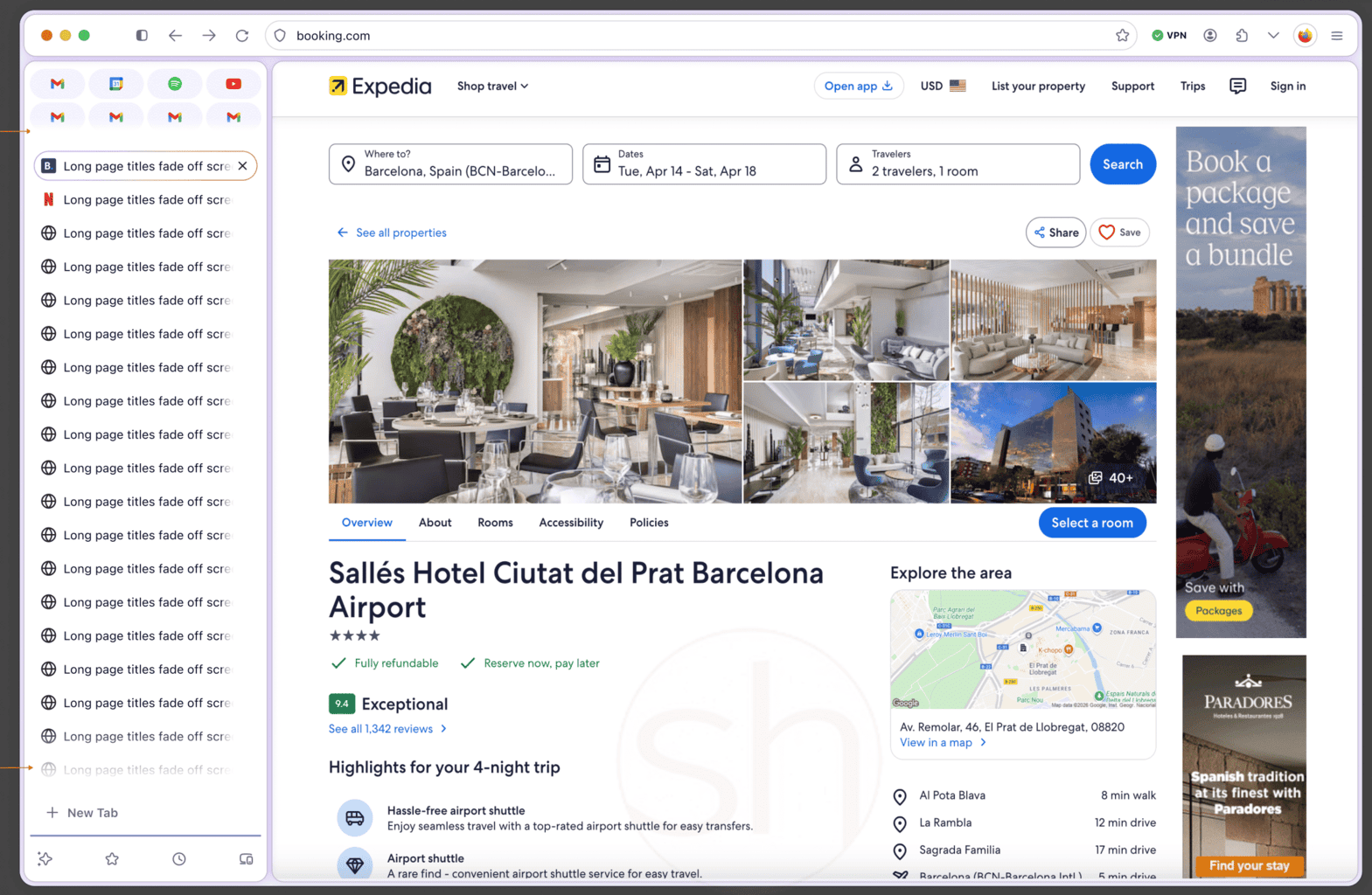
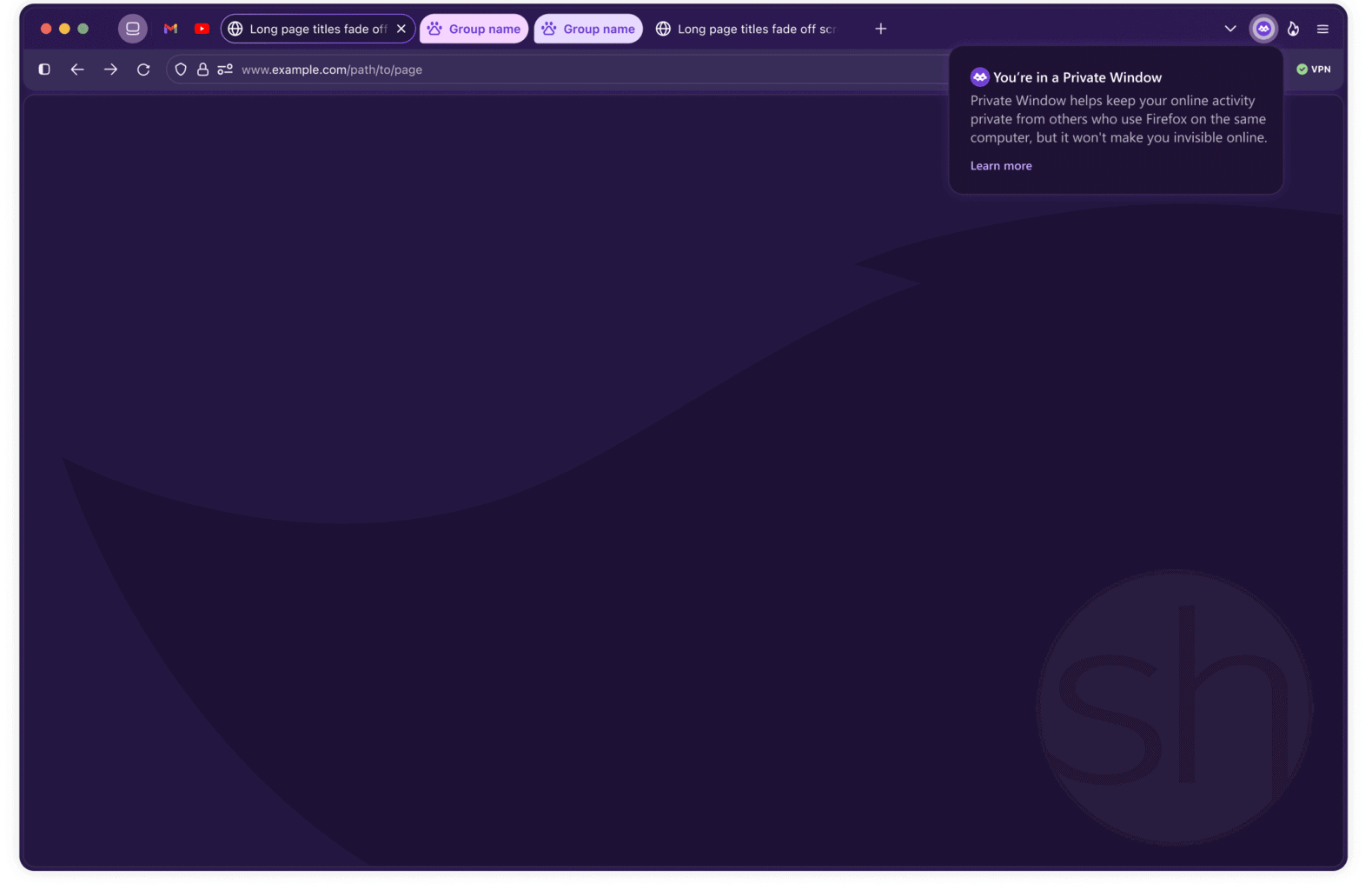
Based on the early preview seen below, Mozilla appears to be moving towards rounded elements. Tabs appear significantly more curved, while the address bar adopts a subtle shape. The tab bar and navigation toolbar also appear visually connected, forming a single rounded block at the top of the browser.

Other interface sections follow the same design language. The sidebar launcher, website content container, and even the Firefox start page appear grouped into rounded panels. Interestingly, the UI color is reportedly also changing.

Image credit: Söeren Hentzschel

All this time, the Firefox UI mostly used solid color surfaces. Nova, meanwhile, is likely to bring subtle gradients across different UI layers. The mockups show a visible choice of violet tones, although this may depend on themes or user settings. One aforementioned example even shows a mint-green start page with a matching interface accent. The early mockups also hint at several functional tweaks. Vertical tabs also appear to be supported in the Nova UI redesign leak.

Image credit: Söeren Hentzschel

Another preview shows two tabs displayed side by side, suggesting Mozilla is experimenting with split-view browsing. To catch you up, Mozilla has been experimenting with this feature for quite some time now. We reported on it last September and even went hands-on with the feature.

Image credit: Söeren Hentzschel

Moving on, the screenshots also include a visible Compact Mode toggle. Firefox technically still supports this mode today, but it requires enabling a hidden setting. From the looks of it, Nova could bring that option back as an official feature again. Last but not least, Hentzschel shared some redesigned panel mockups, too.

Image credit: Söeren Hentzschel

Are you excited about the possible Nova redesign coming to Firefox? Let us know in the comments below.

Article feature image source: Söeren Hentzschel

Microsoft Authenticator Will Block Rooted Android and Jailbroken iOS Devices in 2026

Microsoft continues tightening security across its services, and Microsoft Authenticator is the latest tool to receive new protections. According to Windows Latest, the company will soon detect rooted Android phones and jailbroken iPhones and gradually block them from using the Authenticator app.

The change was spotted in the Microsoft 365 Admin Center and currently applies to organizations using Microsoft Entra identity services. Microsoft says the policy aims to reduce the risk of compromised devices accessing sensitive authentication data.

The rollout has already started for Android devices and will expand to iOS soon.

Rollout begins on Android and arrives on iOS in April

The new security enforcement began rolling out to Android devices in the last week of February 2026. Microsoft plans to start the iOS rollout in April 2026, with full deployment expected by mid-2026.

The update cannot be disabled by administrators or users. Once enforcement reaches its final stage, devices detected as rooted or jailbroken will no longer be able to use Microsoft Authenticator.

Microsoft warns that modified operating systems can expose authentication tokens and other sensitive information, which could allow attackers to bypass security protections.

Three-phase enforcement will gradually lock compromised devices out

Microsoft will introduce the restriction in three stages so organizations and users have time to transition away from modified devices.

The first stage introduces a warning mode. Authenticator detects a rooted Android device or a jailbroken iPhone and displays security alerts inside the app. Users can still sign in temporarily during this phase.

The second stage enables blocking mode. At that point, users will no longer be able to sign in with work or school accounts, and features such as two-factor authentication and passwordless sign-in stop working. The app effectively becomes unusable for account authentication.

The final stage activates wipe mode. Microsoft Authenticator logs the user out automatically and removes all stored account data from the device. Users must contact their organization to restore access from a compliant device.

Microsoft gives users time to switch to secure devices

Microsoft expects the full enforcement of the policy to finish by June 2026. The company says the phased rollout gives users time to move to devices that run official operating systems without root or jailbreak modifications.

Restrictions like these already appear in many banking and financial apps, which often block compromised devices to prevent credential theft and unauthorized account access.

The Authenticator change arrives as Microsoft continues strengthening security across its ecosystem. The company recently confirmed that Microsoft Defender will drop support for devices running iOS 16 or earlier. Microsoft has also delayed the forced migration to the new Outlook for enterprise customers, giving organizations more time to prepare for that transition.

Microsoft Defender for Mobile to Drop Support for iOS 16 Devices

Microsoft is preparing another platform support change across its security ecosystem. According to the Microsoft 365 Admin Center, Microsoft Defender for mobile will soon stop supporting devices running older versions of Apple’s mobile operating system.

The announcement appears in Admin Center message ID MC1245219 and confirms that support for iOS 16 and earlier versions will officially end on April 30, 2026.

Microsoft Defender will stop supporting iOS 16 devices

After the cutoff date, devices running iOS 16 or earlier will no longer receive security updates, new features, or technical support through Microsoft Defender for mobile. The company will also prevent new installations of the Defender app on devices running those unsupported versions of iOS.

Microsoft explained that the change aligns Defender with the lifecycle of Apple’s iOS platform and ensures the security tool can rely on newer operating system capabilities and protections.

Existing Defender installations on unsupported devices may continue running temporarily, but they will not receive updates once support ends.

Older iPhones will lose Defender protection

Several Apple devices cannot upgrade beyond iOS 16, which means they will lose official Microsoft Defender support once the deadline passes.

These devices include the iPhone 8, iPhone 8 Plus, and iPhone X, which Apple no longer supports with newer iOS releases.

Organizations that still use these devices in corporate environments may need to replace them or transition to newer iPhones capable of running iOS 17 or later.

Microsoft recommends preparing before the deadline

Microsoft advises organizations to begin preparing for the change before April 2026. IT administrators should identify devices still running iOS 16 using mobile device management tools and encourage users to update their devices where possible.

In cases where hardware cannot support newer versions of iOS, organizations may need to replace those devices to maintain Defender protection. Microsoft also recommends updating internal documentation and notifying affected users so they understand the upcoming change.

The company has not clarified whether telemetry or reporting data from iOS 16 devices will continue to appear in the Defender XDR dashboard after support ends.

Microsoft continues tightening security policies

The Defender mobile change comes amid broader security developments across Microsoft’s ecosystem. In separate incidents, researchers recently reported cases where attackers managed to bypass Windows Defender protections, while other campaigns abused legitimate digital certificates to compromise PCs.

Microsoft has also introduced authentication changes in enterprise services. PowerShell for Exchange Online is moving away from the Credential parameter in favor of mandatory multi-factor authentication as the company continues strengthening its security posture.

Via Neowin

Microsoft Office Apps Deliberately Highlighted on Macbook Neo to Steal Windows Users

Apple and Microsoft have spent decades in the computing world and are considered fierce rivals. However, every so often, the two tech giants cross paths in unexpected ways. That appears to be happening again with the newly launched $599 MacBook Neo.

The latest budget MacBook feels like a masterstroke from Apple, which is clearly aimed at winning over as many Windows PC buyers as possible. Interestingly, the Cupertino giant is reportedly pitching its new MacBook by showcasing Microsoft’s popular Office apps.

Apple’s latest MacBook Neo is making Windows users look at it twice

As reported by folks at Windows Central and Windows Latest, Apple is showcasing several Microsoft Office apps in the marketing promos of MacBook Neo. In the “Get the highlights” carousel of the MacBook Neo product page, you can see Microsoft Office apps highlighted. Among them are Microsoft Word, Excel, and PowerPoint. These apps sit alongside Slack and Canva, but the presence of Microsoft’s Office suite stands out the most.

Apple-highlights-Microsoft-PowerPoint-and-Word-among-other-apps-as-your-go-to-apps-in-macOS-
Image credit: Apple, Microsoft

Not to mention, it’s a cheeky way to pull in Microsoft customers. Apple is reportedly also telling potential buyers that the apps they already rely on will run smoothly on macOS. The news outlet also notes that the same theme also appears in Apple’s MacBook Neo introduction video (embedded below), in which the narrator of the video is heard saying that it is easy to add the apps you already use. In that very frame, three Microsoft Office apps, Word, PowerPoint, and Excel, show up in the recently used apps list.

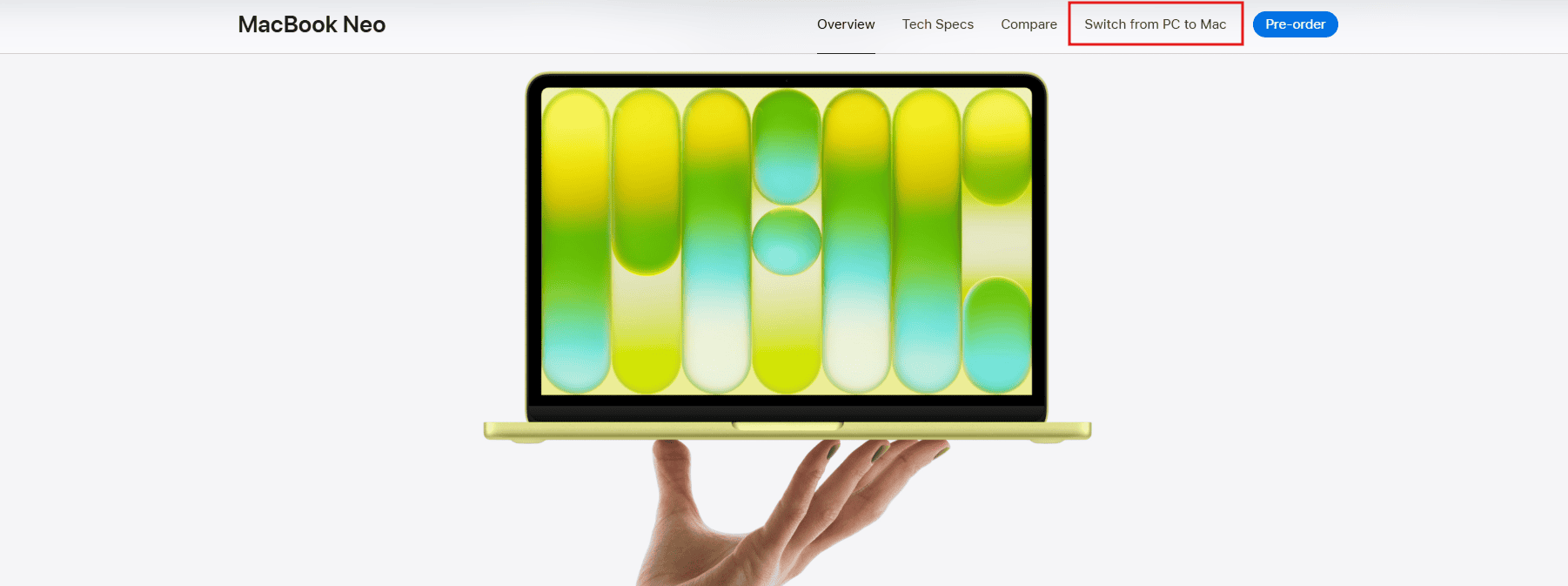
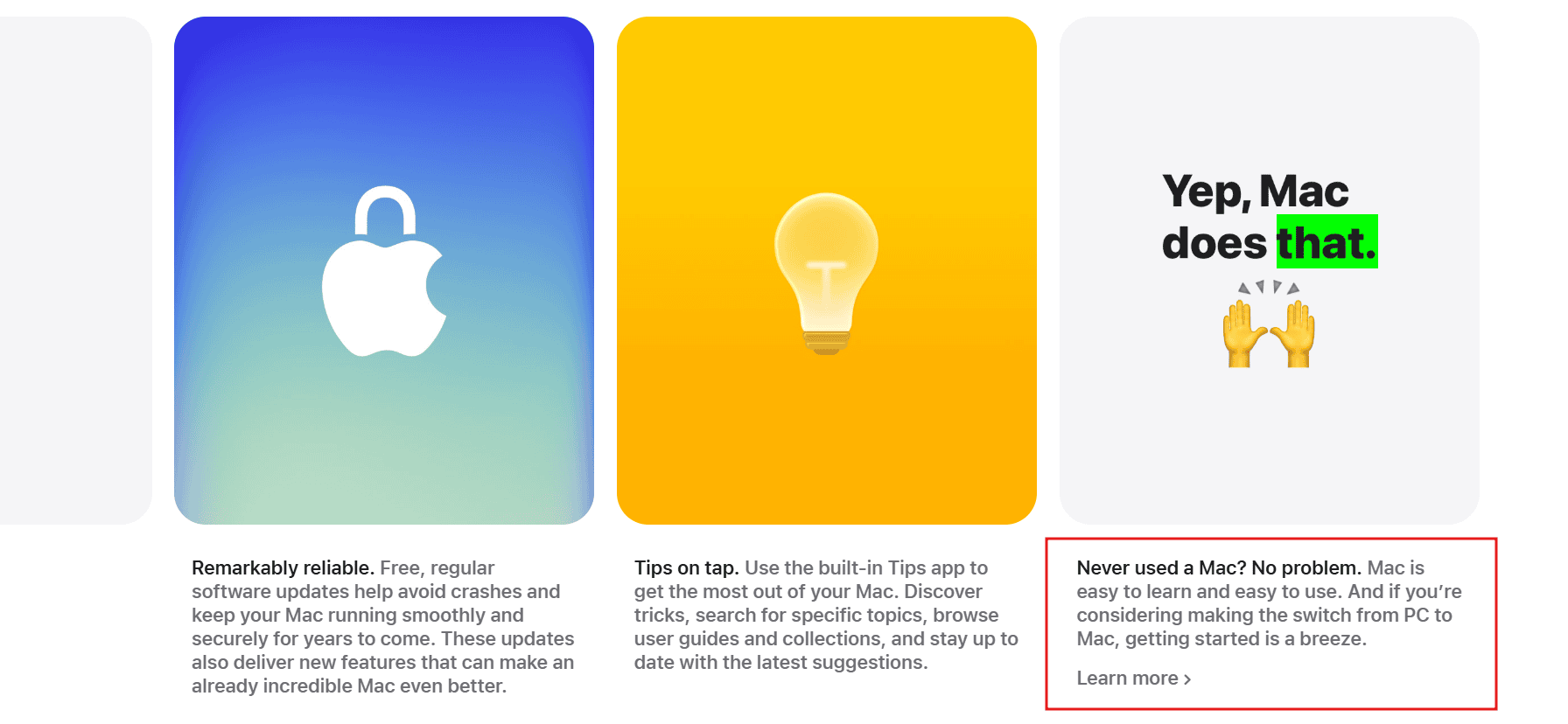
Undoubtedly, the company has deliberately chosen to showcase Microsoft Office apps. Apart from the subtle marketing tactic, Windows Latest also notes that the MacBook Neo includes a dedicated “Switch from PC to Mac” section on its product page. The page walks users through moving files and apps from Windows to macOS.

Image credit: Apple | Via: Windows Latest

Apple even claims that a Mac can do everything a Windows PC can do, while suggesting that existing apps will run even faster. With the $599 price point, Apple appears to be chasing Windows users who, all this time, may have wanted to jump to Mac but couldn’t because of the pricing.

If you are on Windows, my question to you is: are you leaning toward the new MacBook Neo? Are you willing to make a switch at the given price point? Let us know in the comments below.

Microsoft Pushes Back New Outlook Migration for Enterprises to March 2027

Microsoft has been rolling out several improvements to Outlook recently, including Search Folders enhancements and automapped calendars. Despite promoting the new Outlook experience, it appears the company will not require enterprise users to switch as soon as originally planned.

According to Windows Latest, Microsoft has delayed the automatic migration to the new Outlook for enterprise customers.

Automatic migration to new Outlook pushed back by one year

The company originally planned to begin automatically switching enterprise users to the new Outlook in April 2026. With the updated schedule, that rollout will now begin in March 2027.

This means organizations will not be automatically moved from Outlook Classic to the new Outlook next year as previously expected.

Under the earlier plan, opening Outlook Classic after April 2026 would automatically toggle users into the new Outlook interface. Users would still have the option to switch back to the classic version if they preferred the older client.

Microsoft now says organizations will receive an additional twelve months to prepare their environments before the automatic migration begins.

Outlook Classic support remains available until 2029

Even though Microsoft continues to promote the new Outlook experience, enterprise customers will still be able to use Outlook Classic for several more years.

The company confirmed that Outlook Classic will remain supported until April 2029. This extended timeline gives large organizations additional time to adjust their workflows, test compatibility, and prepare their infrastructure for the transition.

While Microsoft has already moved consumer users to the new Outlook by retiring the Mail and Calendar apps, enterprises are receiving a slower transition because corporate environments typically require longer testing and deployment cycles.

IT administrators can still control the migration

Organizations will be able to manage the switch to the new Outlook through administrative policies and registry settings.

To block the automatic migration, administrators can navigate to the following path:

HKEY_CURRENT_USER\Software\Policies\Microsoft\office\16.0\outlook\preferences

There, they need to create the NewOutlookMigrationUserSetting key and assign it one of the following values:

  • 0 = block automatic migration
  • 1 = allow automatic migration

These controls allow IT teams to decide when employees should move to the new Outlook experience.

Outlook Classic remains widely used in enterprises

Many organizations still rely heavily on Outlook Classic because it is a native desktop application with strong integration into existing enterprise workflows.

The classic client is often considered faster and more reliable in large mailbox environments, and it still supports certain features that are limited or unavailable in the new Outlook. One of the most commonly cited examples is stronger support for PST files, which many companies still use for archiving and data management.

Microsoft says adoption of the new Outlook continues to grow, but the delay in the forced migration timeline suggests that many enterprise customers are not yet ready to fully transition.

It is also worth noting that Outlook occasionally faces usability issues. Some users recently reported problems such as an invisible cursor in Outlook Classic, which can make navigation and email editing difficult.

Pragmata Release Date Moves Up, Now Scheduled for Apri 17

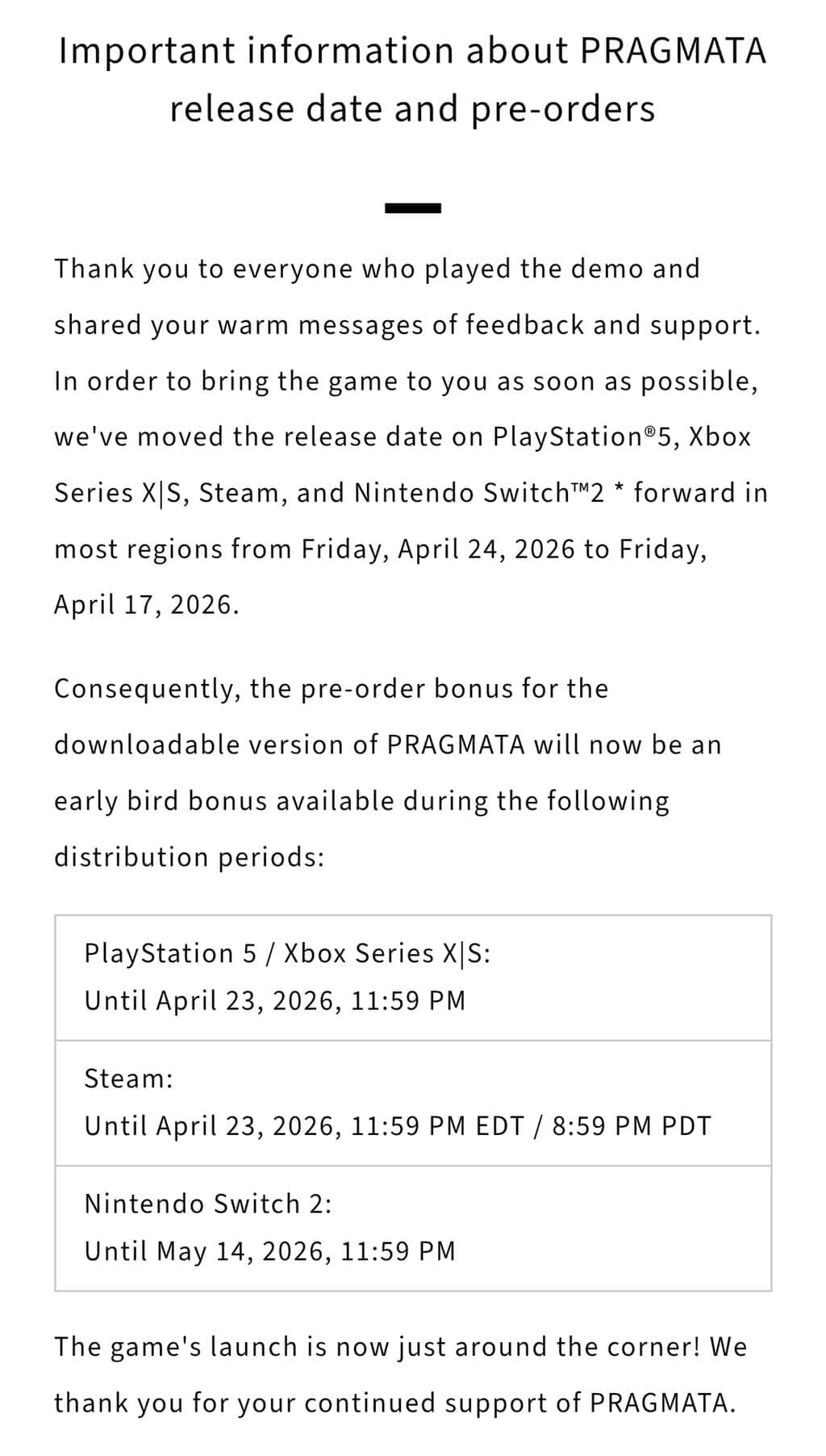
Capcom’s long-awaited sci-fi adventure Pragmata is arriving earlier than expected. The company has moved the release date up by a week, suggesting growing confidence in its upcoming title. The announcement came at yesterday’s Capcom Spotlight showcase.

Capcom moves Pragmata release one week earlier

The game was originally scheduled for April 24. However, the game will now release on April 17, 2026. That means players will get their hands on Capcom’s new IP slightly sooner across major platforms. Pragmata will release on PlayStation 5, Xbox Series X|S, Nintendo Switch 2, and PC via Steam. Check out the official notice below:

Image credit: Capcom

The game marks one of Capcom’s most ambitious new projects in years. It is a sci-fi action adventure set on a lunar research station in a near-future world. Players follow astronaut Hugh and an android girl named Diana as they work together to survive hostile AI systems and find a way back to Earth.

Per Capcom, the gameplay focuses on cooperation between the two characters. Hugh handles combat and exploration, while Diana can hack enemy robots and expose their weak points. This dual-character mechanic is one of the game’s defining features.

Capcom also shared new gameplay footage alongside the date change. The trailer highlights new environments on the moon and introduces additional areas within the Shelter, a base where players can customize items and unlock bonuses.

The earlier launch comes after years of uncertainty. Pragmata was first revealed in 2020 and went through multiple delays before finally securing a firm 2026 release window.

Are you excited for Pragmata? Let us know in which platform will you be playing Capcom’s upcoming title.

Microsoft Shuts Down Copilot Real Talk as It Refines AI Strategy

Microsoft continues to expand Copilot with new capabilities, such as the upcoming built-in screenshot tool for Copilot in Microsoft 365. However, the company sometimes removes experimental features while refining its broader AI strategy.

According to Windows Latest, Microsoft has now shut down Copilot’s Real Talk mode, and the feature is no longer available to users.

Microsoft Archives Real Talk Chats After Shutting Down the Feature

Users can no longer start new conversations in Real Talk mode. Existing chats have been archived, meaning they remain visible but cannot continue.

Microsoft confirmed that Real Talk was always intended as an experimental feature designed to test new conversation styles for Copilot.

The feature launched in January and focused on making Copilot interactions feel more human-like and emotionally aware.

Designed to make Copilot more conversational

Real Talk differed from the standard Copilot assistant in several ways.

The system could challenge or disagree with a user’s ideas instead of simply agreeing with them. It also showed more personality and conversational depth, using reasoning to better understand the user’s perspective.

Microsoft also added a “Depth” setting, which allowed users to control how emotionally detailed responses would be. For example, conversations could run in a “standard” mode or a more compressed style.

The feature used a writing style that felt more natural and conversational compared to traditional AI assistant responses.

Real Talk could also access stored user context and memory, allowing it to personalize replies and continue conversations more intelligently.

Lessons from the experiment

Although Microsoft removed the feature, the company says the experiment provided valuable insights.

According to Microsoft, testing Real Talk revealed that many users want more from AI assistants than simple validation or neutral answers.

Instead of maintaining Real Talk as a separate feature, Microsoft now plans to integrate its ideas into the main Copilot experience.

This means future Copilot updates could include more personality, deeper reasoning, and better understanding of user perspectives.

Even as some experimental features disappear, Microsoft continues to expand Copilot across its ecosystem.

The company is currently developing new tools such as improved screenshot support inside Copilot interfaces. This upcoming feature aims to let users capture screenshots directly in apps like Excel, Teams, Word, and PowerPoint and send them to Copilot for analysis.

In other recent AI news, Microsoft has also added the GPT-5.4 coding model to GitHub Copilot, expanding the capabilities of its AI developer tools.

Microsoft Upgrades Bing Video Creator With OpenAI’s Sora 2 AI Video Model

Microsoft has upgraded Bing Video Creator with OpenAI’s Sora 2 video generation model, bringing improved AI video capabilities to the free tool, according to Neowin.

The upgrade follows several recent AI announcements, including the release of GPT-5.4 and Microsoft adding the GPT-5.4 coding model to GitHub Copilot. With the latest change, Bing Video Creator now generates more advanced videos directly from text prompts.

Bing Video Creator Now Powered by Sora 2

Bing Video Creator originally launched in June 2025, allowing users to create short videos simply by describing a scene in text. The feature quickly became popular because Microsoft made it available for free to Bing users.

Microsoft has now upgraded the service to OpenAI’s Sora 2 model, which was first revealed in October 2025.

Sora 2 significantly improves the quality of AI-generated videos compared to the earlier model. The system delivers better instruction following, improved scene consistency, and stronger world-state persistence across multiple shots.

With the new model, videos generated in Bing Video Creator now feature more dynamic motion, richer visuals, and improved photorealism.

Audio Support and Higher Visual Quality

The upgrade also expands what AI-generated videos can include. Generated clips can now feature integrated audio elements, including sound effects, voices, and background audio tracks.

These improvements allow the system to produce more cinematic and realistic outputs than earlier versions.

Microsoft also confirmed that every AI-generated video will include visible watermarks that clearly label the content as AI-created.

In addition, generated videos will contain C2PA credentials, an industry standard designed to help verify the origin of digital media and identify AI-generated content.

Free Generations and Microsoft Rewards Integration

Microsoft continues to offer Bing Video Creator for free, but with limits on fast video generation.

Users receive 10 fast video generations at no cost. After that limit is reached, the service switches to a slower generation mode that remains available without restrictions.

Users who want additional fast generations can unlock them using Microsoft Rewards points. The number of points required varies depending on video settings and generation parameters.

Once Microsoft Rewards support is enabled for the feature, the required points are automatically deducted each time a new video is generated.

Microsoft Continues Expanding Copilot AI Features

The Bing Video Creator upgrade is part of Microsoft’s broader push to expand AI tools across its ecosystem.

At the same time, Microsoft is preparing several new Copilot features. Upcoming updates may allow Copilot to open links directly inside the app, reducing the need to switch to a browser.

Microsoft is also developing a built-in screenshot tool for Copilot in Microsoft 365, which would allow users to capture images directly inside the assistant and attach them to prompts for better context.

These additions highlight Microsoft’s ongoing effort to integrate AI more deeply into Bing, Copilot, and the wider Microsoft ecosystem.

Microsoft Is Developing a Built-In Copilot Screenshot Tool for Microsoft 365

Microsoft recently introduced GPT-5.3 Instant to Copilot, expanding the AI assistant’s capabilities across Microsoft services. However, that is not the only improvement the company is preparing for its AI ecosystem.

According to a new Microsoft 365 roadmap entry, Microsoft is developing a built-in screenshot feature that will allow Copilot users to capture and attach screenshots directly inside the app.

Copilot screenshot tool in development

The new feature appears in the Microsoft 365 Roadmap under entry ID 558105. It aims to simplify the process of sharing visual information with Copilot by allowing users to capture screenshots without leaving their current application.

Instead of opening Windows screenshot tools, saving an image, and manually uploading it to Copilot, users will be able to take a screenshot directly inside the Copilot interface and attach it to their prompt.

This should make it easier to provide visual context when asking Copilot for help, allowing the AI assistant to analyze images and deliver more accurate responses.

Integration across Microsoft 365 apps

Microsoft plans to integrate the screenshot feature into several Microsoft 365 applications that already include Copilot. These include Excel, Teams, Word, and PowerPoint.

For example, a user working inside Excel could capture a screenshot of a spreadsheet and send it directly to Copilot. The AI assistant could then analyze the data, highlight patterns, or suggest formulas and improvements.

The feature is expected to work inside desktop Copilot interfaces first, although Microsoft has not confirmed whether mobile versions will receive the same functionality later.

Part of broader Copilot improvements

The screenshot capability comes alongside other Copilot improvements currently in development.

Microsoft is also preparing support for opening links directly inside the Copilot interface, removing the need to switch to a browser when interacting with web content.

Combined with the recently added GPT-5.3 Instant model, these changes suggest Microsoft is focusing on making Copilot more integrated and capable inside everyday productivity workflows.

Microsoft has not yet confirmed an official release date for the screenshot feature, but the roadmap listing indicates the tool is actively in development.

In related Microsoft 365 news, the company has also previewed updates to OneDrive along with new Copilot features in Word and Teams that will arrive in upcoming releases.

Via Neowin

Sword Art Online: Echoes of Aincrad Announced for PS5, Xbox Series X|S, and PC

As The Outerheaven writes, Bandai Namco has officially revealed Sword Art Online: Echoes of Aincrad, a new action RPG set in the iconic world of Aincrad. The game takes a different approach from previous titles by letting players experience the story from a completely new perspective rather than playing as Kirito.

The upcoming RPG focuses entirely on Aincrad, the original setting that launched the Sword Art Online series. Many fans have long requested a full RPG experience centered around surviving the deadly floating castle, and the new title aims to deliver exactly that.

Sword Art Online: Echoes of Aincrad Offers a Fresh Perspective Inside Aincrad

Unlike most previous Sword Art Online games, Echoes of Aincrad does not place players in the role of Kirito. Instead, players will create their own character and explore Aincrad from a fresh point of view within the world.

The idea of living through Aincrad as a different player has appeared before in Sword Art Online: Integral Factor, a mobile title that explored a similar concept. However, that game was limited by the mobile platform. Echoes of Aincrad aims to expand the idea into a full action RPG designed for modern consoles and PC.

Real-time combat and deep character progression

Echoes of Aincrad will feature real-time action combat combined with RPG progression systems. Players will be able to upgrade weapons, equipment, attributes, and special skills to develop their own preferred playstyle.

Customization plays a major role in the gameplay loop. As players progress through Aincrad’s dangerous floors, they can refine their builds and unlock new abilities that improve combat performance and survivability.

Two-character party system

The game introduces a unique two-character party structure. Players select a single NPC partner to accompany them during missions.

Each partner brings unique abilities and customizable skills that influence combat strategy. As players spend more time fighting alongside their partner, their bond grows stronger, unlocking new skills and more powerful abilities.

Traditional Sword Art Online parties often consist of four members, so the two-character format could increase both difficulty and specialization during encounters.

However, the reveal trailer hints that two-player teams may sometimes join other groups. This could suggest co-op features or four-player mission scenarios where multiple teams combine forces.

Release date and platforms

Sword Art Online: Echoes of Aincrad is scheduled to launch on July 10, 2026. The game will release on PlayStation 5, Xbox Series X|S, and PC.

In other gaming developments, Slay the Spire 2 recently entered Early Access and quickly surged in popularity. The launch appears to have impacted Marathon on Steam, where player counts dropped shortly after the deck-building sequel became available.

Meanwhile, this weekend’s Xbox Free Play Days lineup has also been revealed, giving players a chance to try additional titles for free for a limited time.

Slay the Spire 2 Shatters Steam Concurrent Player Record After Early Access Launch

The long-awaited sequel Slay the Spire 2 has exploded onto Steam and has shattered all the franchise’s previous concurrent player records just hours after launching in Early Access.

Early Access launch drives massive player count

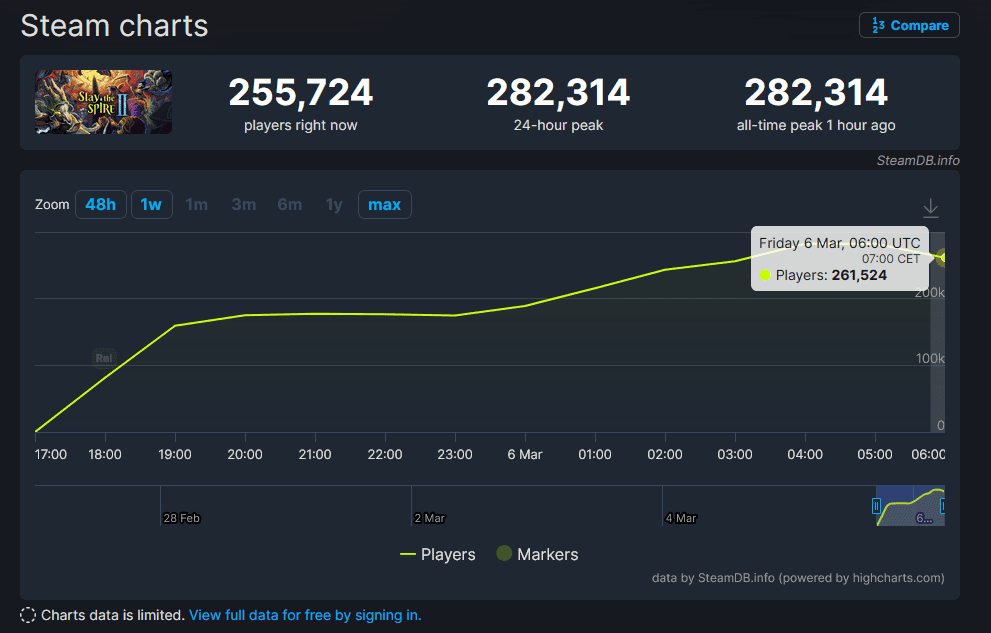
At the time of writing this, SteamDB shows that the roguelike deck-builder has reached over 255,000 concurrent players, instantly surpassing the original game’s all-time peak and becoming one of the most played titles on the platform shortly after release.

Image credit: SteamDB

To catch you up, the original Slay the Spire reached its highest recorded concurrent player count of around 57,000 players, a record set only recently during the 2025 Steam Winter Sale surge.

The sequel surpassed 100,000 concurrent players within the first hour of release and quickly climbed beyond 150,000 players, hinting at a massive demand from longtime fans of the genre-defining deck-builder. The strong debut immediately pushed Slay the Spire 2 into Steam’s top charts, overtaking several high-profile releases like Marathon and Resident Evil Reqeuim.

Developed by Mega Crit, Slay the Spire 2 is set 1,000 years after the events of the original game and brings new characters, cards, relics, and enemies while expanding the series’ roguelike deck-building formula. One of the biggest additions is four-player co-op, which allows players to climb the Spire together for the first time, alongside new team-based mechanics and expanded gameplay systems.

The game is expected to remain in Early Access for more than one year as developers improve the experience and add additional content. With concurrent player counts continuing to climb, Slay the Spire 2 appears poised to remain one of Steam’s biggest PC launches of the year.

Marathon Steam Charts Drop as Slay the Spire 2 Dominates Early Access Launch

Marathon achieved a strong launch and even reached 143,000 concurrent players, but the start of Slay the Spire 2 Early Access has shifted attention on Steam. Early player data shows the roguelike deck-builder quickly pulling ahead of Bungie’s shooter.

Marathon Player Count Slips as Slay the Spire 2 Surges in Early Access

According to Express, within its first 24 hours, Slay the Spire 2 reached a peak of around 209,000 players on Steam. By comparison, Marathon hit a peak of about 87,661 players shortly after launch.

Daily Steam charts also reflect this difference in momentum. Slay the Spire 2 climbed to third place, while Marathon landed around eleventh.

Despite strong launches, neither title currently appears among Steam’s most-played games. Those positions are typically dominated by esports titles and major blockbusters.

One of the biggest recent releases, Resident Evil Requiem, continues to draw large audiences and recently surpassed 5 million copies sold.

Steam User Ratings Remain Strong for Both Games

Even with lower player numbers compared to Slay the Spire 2, Marathon still enjoys a strong reception from players.

The game currently holds a “Very Positive” rating on Steam based on roughly 2,500 reviews.

Meanwhile, Slay the Spire 2 has earned an “Overwhelmingly Positive” rating with around 1,800 reviews, suggesting early access players are responding extremely well to the sequel.

Slay the Spire 2 Expands the Roguelike Deck-Building Formula

Slay the Spire 2 builds on the formula that made the original game a hit. The early access version introduces new cards, relics, potions, enemies, and expanded mechanics that add more depth to each run.

A major new feature is co-op multiplayer, allowing players to tackle runs together, something the first game did not offer.

Marathon remains available on PC, PlayStation 5, and Xbox Series X|S, but a recent rating listing created some confusion.

The ESRB page briefly listed PlayStation 4 and Xbox One versions, suggesting possible last-generation releases. Bungie has not confirmed those versions, and the listing may simply be an error.

For now, both games continue to attract attention on Steam, though early data shows Slay the Spire 2 currently leading the player charts.

Microsoft Teams Will Soon Let Organizers Spot Third-Party Bots Before They Join Meetings

Microsoft has been constantly improving Teams as it one of the most popular collaboration tools to exist. Recently, Microsoft tweaked its upcoming Teams work-location feature again, this time making it opt-in after user backlash.

Now, the company is preparing a new update for Teams that focuses on improving meeting transparency and security. According to the latest Microsoft 365 Roadmap entry (Feature ID 558107) spotted by Neowin, Teams will soon clearly label bots attempting to join meetings, which allows organizers to review them before granting access.

Teams organizers will get clearer control over bots

The feature is currently in development, with a rollout expected to begin in May 2026. Once available, meeting organizers will see a clear indication whenever an external third-party bot attempts to enter a meeting lobby.

With the update in place, bots will appear as clearly labeled participants. Organizers will then need to explicitly admit these bots into the meeting if they decide the bot is necessary for the session. Microsoft says the feature is designed to prevent situations where bots accidentally get admitted alongside regular participants. By requiring a separate approval, the feature ensures that organizers remain fully aware of automated tools attempting to access meetings.

The company notes that the update will give meeting hosts stronger control over which automated services are allowed to participate, especially as bots and AI-powered assistants become more common in collaboration tools. Per the roadmap entry, the feature will roll out to standard worldwide tenants as well as GCC environments.

The update is scheduled to be available across a wide range of platforms, including Android, iOS, desktop, Mac, and Linux versions of Microsoft Teams.

Microsoft Brings OpenAI’s GPT-5.4 Agentic Coding Model to GitHub Copilot

OpenAI’s latest model has quickly found its way into Microsoft’s developer tools. Merely hours after OpenAI announcenced GPT-5.4 models, Microsoft rolled it out to GitHub Copilot. The company says that the new model brings improved reasoning and top-notch performance for real-world software development tasks.

Microsoft, in its announcement, describes the GPT-5.4 as OpenAI’s “latest agentic coding system,” which is designed to handle complex workflows that require multiple steps and tools. Per the company, early testing suggests GPT-5.4 performs better across a range of development scenarios, especially when dealing with intricate coding tasks.

GPT-5.4 rolls out across GitHub Copilot tools and platforms

Microsoft says GPT-5.4 will be available to Copilot Pro, Pro+, Business, and Enterprise users. Once enabled, developers can select the model directly through the Copilot model picker. Support spans a wide range of development environments. Developers will be able to use GPT-5.4 in Visual Studio Code version 1.104.1 and later across chat, ask, edit, and agent modes. Visual Studio version 17.14.19 and later also supports the model in agent and ask modes.

The rollout extends beyond Microsoft’s tools as well. JetBrains IDEs version 1.5.66 and later include support in ask, edit, and agent modes. Xcode version 0.48.0 and newer supports the model in ask and agent modes, while Eclipse version 0.15.1 and later also integrates GPT-5.4.
Developers using GitHub’s web platform and mobile apps are included too. The model will appear on GitHub.com, the GitHub CLI, and GitHub Mobile on both iOS and Android.
GitHub notes that while GPT-5.4 appears across these versions, the best results come when developers upgrade to the latest releases of each environment.

Microsoft further adds that administrators must first enable access by activating the GPT-5.4 policy in Copilot settings for organizations using Copilot Business or Enterprise plans. Once enabled, teams can begin testing the new model across supported tools.

Xbox’s New CEO Unveils Next-Gen Console’s Codename ‘Project Helix,’ Says It “Will Lead in Performance”

Next-gen Xbox console just got its first official codename. Yesterday, the newly appointed Xbox CEO Asha Sharma revealed that Microsoft’s upcoming console is currently being developed under the codename Project Helix. In a post on X from yesterday, Sharma said that in a meeting with Team Xbox, she had discussion focused on the company’s renewed push toward what she called the “return of Xbox.”

The update from Sharma comes two weeks after Phil Spencer retired as Microsoft Gaming CEO, alongside Xbox president Sarah Bond, who also stepped down from her role. Sharma, who previously served as president of Microsoft’s CoreAI division, now leads the Xbox. Long-time Xbox executive Matt Booty has also been promoted to Chief Content Officer.

With AI taking over almost every industry, fans wary of heavy AI involvement in future Xbox titles due to Sharma’s background. However, in an internal email published after Sharma assumed the role, she has reassured teams that games will remain human-driven creative works, stating that games are and always will be art crafted by people.

Next-gen Xbox console will focus on top performance, Xbox and PC games

According to Sharma, Project Helix will focus heavily on performance while maintaining compatibility across Microsoft’s broader gaming ecosystem. She noted that the system will let you play both Xbox and PC games. This is a clear hint that Microsoft’s long-standing push toward a unified platform is intact. That being said, Sharma’s post didn’t reveal hardware details, pricing expectations, or a release timeline of the next-gen Xbox console.

However, Sharma confirmed that she will attend the upcoming Game Developers Conference (GDC) next week, where she plans to speak with developers and partners about the future of Xbox, including Project Helix. Comsoles remain a focus for Microsoft and Asha Sharma has hinted that the company won’t slowdown on making them despite ongoing push for cloud gaming.

If you are looking for more details about Project Helix, don’t forget to watch the GDC livestream next week, where Asha Sharma will be addressing developers around the world.

Pentagon Officially Declares Anthropic a Supply-Chain Risk in the US

The Trump administration had already labeled Anthropic a Supply-Chain Risk after it denied Department of Defense (DOD) unrestricted use of its tech due to ethical and safety concerns. Anthropic previously said that it would challenge the desigation in court. However, reports came in yesterday hinting that Anthropic and Pentagon are yet again on the negotiations table.

Now, it seems the talk hasn’t gone in the direction Pentagon may have wanted, as it has officially notified Anthropic that its products are being treated as a Supply-Chain Risk, even though it reportedly used Claude to strike targets in Iran.

Anthropic officially designated a Supply-Chain Risk label in the U.S.

U.S. Defense Secretary Pete Hegseth confirmed the development to Bloomberg, saying “DOW officially informed Anthropic leadership the company and its products are deemed a supply chain risk, effective immediately.” For those unaware of the whole situstion, Pentagon clash centers on unrestricted use of Anthropic’s AI. The dispute reportedly intensified after talks between Anthropic CEO Dario Amodei and defense officials broke down.

Anthropic had been seeking assurances that its AI systems would not be used for certain activities, including mass surveillance of Americans or the deployment of autonomous weapons. Defense officials reportedly pushed back against those conditions, arguing that vendors can not impose limits on how the military uses critical technologies for lawful purposes. In a post on X from last week, Pete Hegseth said “the Department of War must have full, unrestricted access to Anthropic’s models for every LAWFUL purpose in defense of the Republic.” According to the Pentagon, allowing companies to restrict operational use could risk undermining national security missions.

For Anthropic, the supply chain risk designation raises immediate concerns. With the decision now in effect, any contractor, supplier, or partner that works with the US military can no longer conduct commercial business with the company. Prior to the Pentagon-Anthropic dispute, the US military has depended heavily on Anthropic’s tech in recent years. The company’s Claude Gov system had been one of the few AI tools capable of operating within the Pentagon’s classified cloud environment.

Anthopic’s stance has been applauded by users

To catch you up, Pentagon handed the deal to OpenAI, immediately after the Trump Administration blacklisted Anthropic. OpenAI faced masive backlash due to this, which also triggered ChatGPT users to cancel subscriptions. Users are now praising Anthropic for its ethical stance in the ongoing situation. This reportedly resulted in users turning to Claude. The response was almost immediate, as Anthropic’s AI assistant climed at the top of the U.S. App Store in terms of number of downloads. OpenAI, meanwhile, is in talks with the Pentagon to amend its deal by adding clearer ethical language stating that its AI systems must not be intentionally used for domestic surveillance of U.S. persons, including any deliberate tracking, monitoring, or use of commercially obtained personal data. All that said, it will be interesting to see whether Anthropic challenges Pentagon’s decision in the court.

OpenAI launches GPT-5.4, its most “capable” model yet with Thinking and Pro variants

OpenAI has announced GPT-5.4, which the company calls its the most capable and efficient frontier model yet for professional work. The new model drops with multiple versions designed for different workloads, including a standard model, a reasoning-focused variant called GPT-5.4 Thinking, and a high-performance option labeled GPT-5.4 Pro.

The announcement also highlights major upgrades under the hood. For developers, the API version of GPT-5.4 now supports context windows as large as 1 million tokens, easily the largest context capacity OpenAI has offered so far. The company says the new model can solve the same problems while using significantly fewer tokens than GPT-5.2, pointing to notable efficiency gains for large workloads.
Benchmarks show major gains for knowledge work

OpenAI says GPT-5.4 provides strong results across several evaluation benchmarks focused on real world tasks. The model reportedly achieved record scores in OSWorld-Verified and WebArena Verified, both of which measure computer interaction capabilities. It also scored 83 percent on OpenAI’s GDPval benchmark, a test designed to measure performance on knowledge work tasks.

Image credit: OpenAI

Another benchmark result comes from Mercor’s APEX-Agents evaluation, which focuses on professional skills in areas such as finance and law. GPT-5.4 apparently also performs specifically well when creating long form deliverables, including slide decks, financial models, and legal analysis.

OpenAI also says the new model improves reliability. Compared with GPT-5.2, GPT-5.4 is 33 percent less likely to make incorrect claims, while overall responses are 18 percent less likely to contain factual errors.

Alongside the model launch, OpenAI has also updated how the GPT-5.4 API handles tool calling, introducing a new system called Tool Search. Rather than loading definitions for every tool in system prompts, the model can now retrieve tool details only when needed. This change helps reduce token usage and can make large systems faster and cheaper to run.

Leak Claims Capcom Has Started a New Resident Evil 1 Remake

A new Resident Evil 1 remake may already be in development, according to industry leaker Dusk Golem, as reported by Insider Gamer. The timing alone makes the claim easy to understand: the original Resident Evil launched in 1996, which puts the survival-horror classic at 30 years old.

Capcom already revisited the first game once in a major way. The 2002 Nintendo GameCube remake modernized visuals, expanded environments, and refined the overall feel while keeping the core identity intact. That version now sits more than two decades behind us, and the age gap fuels fresh speculation that Capcom wants to rebuild the mansion for modern hardware again.

The leak points to “full production,” but the timeline sounds long

The report claims the new remake recently moved into full production, while the project remains in very early development. That combination matters. Early production usually signals real momentum, but “very early” also means the team can still change direction, re-scope features, or even shelve the concept.

The leak also suggests fans should not expect this soon. If Capcom ships the remake at all, the release window could land four to seven years out based on the current development timeline mentioned in the report. That estimate lines up with how long big-budget remakes can take when studios aim for modern visuals, expanded systems, and broader platforms.

Capcom’s remake strategy keeps paying off

Capcom has spent years investing heavily in Resident Evil, often juggling new entries and remakes at the same time. That approach built steady momentum for the franchise, with the series now sitting at nearly 200 million copies sold worldwide.

Recent results also support the idea that Capcom sees remakes as a reliable pillar, not a side project. Resident Evil Requiem reportedly sold more than 5 million copies in under a week, which adds even more pressure to keep the pipeline full with both fresh games and reimagined classics.

Other rumored remakes keep circulating

The rumor mill does not stop at Resident Evil 1. The same broader wave of chatter has included talk of a Resident Evil: Code Veronica remake, with Requiem’s success adding fuel to those expectations. Fans have asked Capcom to revisit Code Veronica for years, so any sign of movement tends to travel fast.

Still, leaks rarely guarantee anything. Studios explore concepts, build prototypes, and cancel projects all the time, especially when priorities shift or schedules tighten. That risk grows when a project sits in early development, where teams still test direction and scope.

RE Engine likely sits at the center of the plan

If Capcom does greenlight another Resident Evil 1 remake, the most likely technical foundation is the RE Engine. Capcom has used it across recent Resident Evil releases, including Resident Evil Village and several modern remakes, which makes it the obvious choice for another high-profile rebuild.

Using a familiar engine also lets Capcom reuse pipelines, tools, and expertise across multiple teams. That helps explain how the company can keep both new entries and remakes moving at once, even when each project demands a polished, cinematic presentation.

Nothing in this report counts as confirmation, so the next real milestone would come from Capcom itself. Fans will likely watch for hints like internal staffing shifts, long-lead marketing beats, or an official remake roadmap that frames what comes after the current slate.

Until that happens, this remains a compelling rumor with a long runway. The franchise’s anniversary timing fits, the remake track record fits, and the sales momentum fits. Only Capcom can turn it into a real announcement.

In other news, Ubisoft has confirmed an Assassin’s Creed Black Flag remake, and fresh chatter suggests Tencent could face pressure around its influence across several gaming studios.

Xbox Free Play Days Brings Sonic Racing CrossWorlds, Black Desert, Black Ops 7 & More This Weekend (March 5-8)

[UPDATE: March 5, 2026 | 11:11 IST] Xbox Free Play Days is back for another weekend. This time around, Microsoft is highlighting two titles for Game Pass members, while a couple of additional games are also available for all Xbox players to try for a limited time. According to the official Xbox Wire blog post, Xbox Game Pass Ultimate, Premium, and Essential members can play Sonic Racing: CrossWorlds and Black Desert between Thursday, March 5 and Sunday, March 8. Both games are included as part of the Free Play Days promotion, allowing subscribers to try them without purchasing the full title. In addition to the Game Pass titles mentioned above, Microsoft confirmed that FBC: Firebreak and Call of Duty: Black Ops 7 are also available as free trials for all Xbox members during the same weekend. These additional trials do not require an Xbox Game Pass subscription.


[ORIGINAL STORY] We saw some interesting games coming to Xbox Game Pass in March, and Microsoft already kicked things off by revealing Wave 1 for the month. The first batch adds more variety across genres, with a mix of new drops and familiar staples designed to keep the schedule moving through early March.

Free Play Days Leak Adds Two More Games to Try

That’s not all, as upcoming Free Play Days games have been leaked. The leak comes from a Reddit user named Oliomono, who claims the next Free Play Days window will run from now until Monday, March 9, around 7 PM UTC, and include:

  • Sonic Racing: CrossWorlds
  • Black Desert

Free Play Days usually ends on Mondays at 7 PM UTC, and part of the lineup can often start earlier, typically around Wednesday at 11 PM UTC, depending on the region and subscription tier.

What Players Can Expect From the Two Picks

Sonic Racing: CrossWorlds offers quick, arcade-style racing built around speed, drifting, and momentum-heavy boosts, making it an easy weekend try.

Black Desert sits on the other end of the spectrum as a long-running MMORPG with action combat and deep progression systems, so the limited-time access works well for testing a class and getting a feel for its pacing.

In other Xbox Game Pass news, the service reportedly added 39 new games to its Stream Your Own Game library, expanding the list of owned titles players can stream without installing locally.