FIX: MTG Arena fatal error in GC GetThreadContext failed

Magic: The Gathering Arena is the digital version of the Magic: The Gathering card game. The game received positive reviews since its launch for Microsoft Windows .

However, people raised some issues about errors that appear at launch or during gameplay. Next, we’ll give you some solutions how to get rid of the fatal error in GC ‘GetThreadContext failed’ error message.


How do I fix the GetThreadContext failed error in MTG Arena?

1. Turn off or uninstall FACEIT Client.

FACEIT is a solution, for clients and servers, that aims to detect cheats in online games or software that could help players break rules during the game.

If it’s installed on your system, simply turn it off and try launching MTG Arena. If the problem persists, uninstall FACEIT client, reboot your computer and try again.

This time, you should have more success.


2. Add MTG Arena to your antivirus exception list.

Antivirus-general-image

Like in many other cases, when it comes to security solutions, these could also stand in the way of perfectly legit applications. Users have reported that after an update to their antivirus software, a fatal error in GC GetThreadContext failed suddenly appeared.

For some of them, it was just as simple as adding MTG Arena on the exception list of their AV. Unfortunately, this doesn’t work all the time. You may need to resort to another security software.


Looking for a solid antivirus tool? Check out this detailed article for our top picks!


3. Turn off DEP for MTG Arena in Windows 10.

system-advanced-system-settings
System-advancedsettings-advanced-performance
data-execution-prevention-tab
  1. Open Control Panel, go to System, and then click on Advanced system settings in the left upper corner.
  2. Now, System Properties window should be open.
  3. Go to the Advanced tab, and click on Settings in the Performance area.
  4. In the Performance window, go to the Data Execution Prevention tab
  5. Make sure you check Turn on DEP for all programs except those that I select and click on the Add button.
  6. At this last step, you need to navigate to the executable of the application, select it and then click Apply.
    • DEP should not be a problem anymore for MTG Arena.

Though usually, DEP doesn’t affect the running of newer applications, we can’t exclude it from our set of solutions. To turn off DEP for MTG Arena follow the steps listed above.

These are the fixes to help gamers eliminate the annoying fatal error in GC GetThreadContext failed in MTG Arena.

We also have a new guide on MTG Arena network error, so don’t miss it. Many users encountered Asset error detected in MTG Arena, but we covered that one in a separate guide.

Let us know which of the solutions listed above helped you solve your MTG issue by leaving us a message in the comments section below.
Will upcoming Windows 10 21H1 bring Win 32 containers?

It’s almost a month now since Microsoft accidentally revealed that Windows 10 21H1 would hit the Fast ring toward the end of June 2020. Well, the build is likely to go live today, according to a tweet by Alumia.

Yesterday, build 20H2 left the Fast ring, which means that the channel has or will get a new occupant soon. But what features is 21H1 bringing?

Windows 10 21H1 set to go live in the Fast ring

Twitter user Alumia-Italia, who has build credibility for leaking accurate prerelease info on Windows and other Microsoft apps, posted a screenshot of Windows 10 21H1 download options.

The image includes the preview build’s number, 21050.

Alumia adds that 21H1 is going live today, and the package will include ISOs for the OS.

Well, speculations that Microsoft would push 21H1 to Windows insiders around this week started surfacing last week.

As you may know, 21H1 is a major Windows 10 update, unlike 20H2, which hit the Slow ring yesterday. The build is likely to offer a much-improved user interface with a new Start menu, for starters.

But not everything is clear about what specifically 21H1 brings. For example, will it offer insiders an opportunity to test Win32 app containers?

Containerization would be a major change for Windows. That’s because it’s a revolutionary architecture that allows apps a significant level of independence from the operating system.

Originally, the container technology was coming to Windows 10X. But rumors have it that such core features may be available in other versions of Windows 10 too.

What’s more, Microsoft appears to be shifting away from the tradition of tying new features to specific OS releases. As such, if you test any new feature in, say, 21H1, it may not necessary become available with the release of that specific build.

In other words, even if Windows 10 21H1 preview build 21050 supported Win32 containers, the feature could end up in another release version of Windows.

As always, you can share your thoughts or ask any questions in the comments section below.
[wl_navigator]

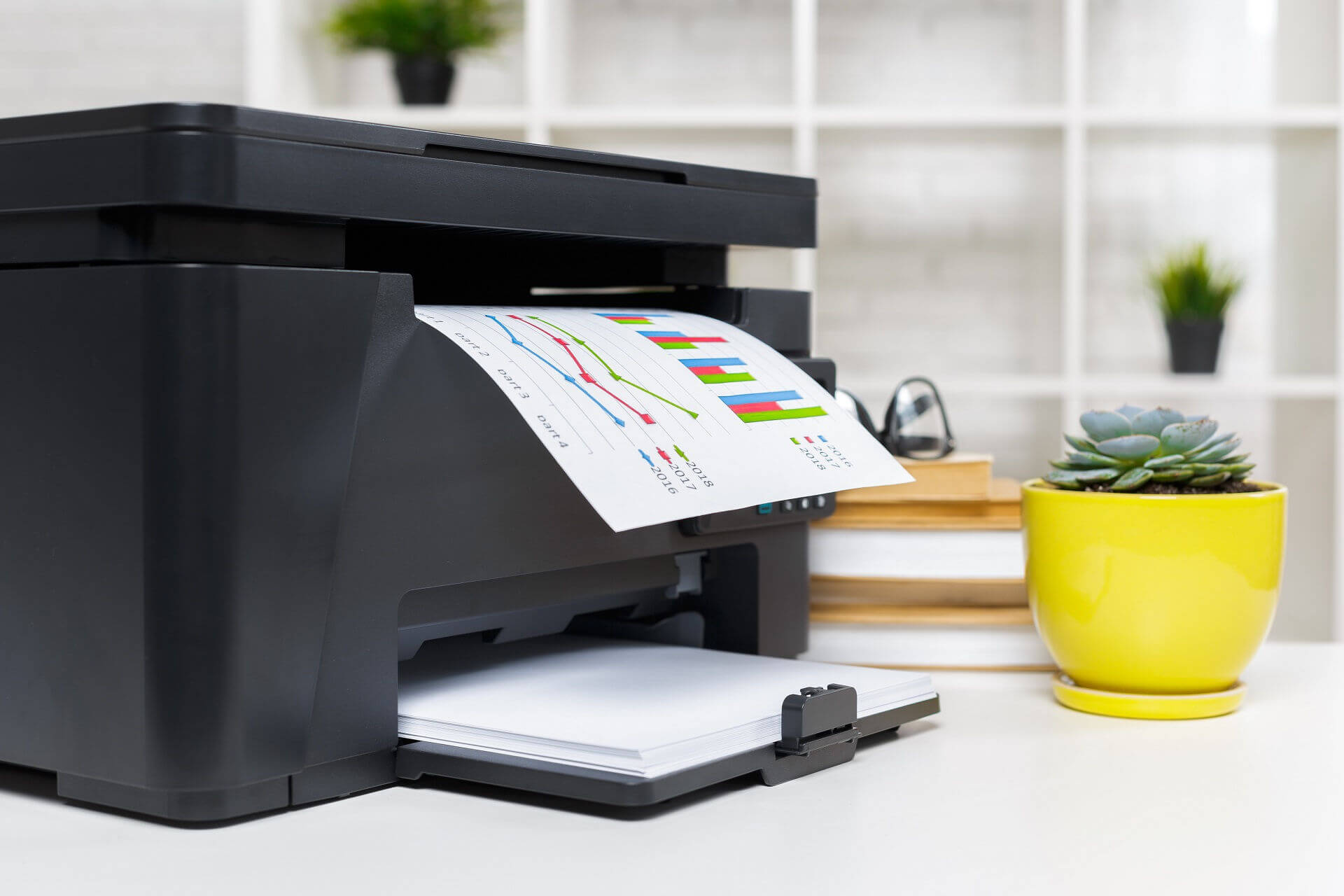
Microsoft fixes Windows 10 printer issues after June updates

Microsoft announced in the Message center that they issued new out-of-band updates to fix the printing problems that occurred for some users after the updates released in June.

It probably sounds complicated but we will clear this out. We previously reported about a Patch Tuesday update that causes printing problems and more.

To refresh your memory, this is Microsoft’s known issue:

After installing this update, certain printers might fail to print. The print spooler might throw an error or close unexpectedly when attempting to print, and no output will come from the affected printer.

The issue might also affect software-based printers, such as when printing to PDF.

As they were many users affected by this problem, Microsoft issued updates for every major build from 1803 to 1909.

How can I download and install the updates?

First of all, Microsoft advises that only the users that are affected by this printing problem should download and install these patches.

The KB4567512, KB4567513, and KB4567514 are optional updates and are available only on the Microsoft Update Catalog.

That means that you won’t find them in Windows Update and will not install automatically.

For Windows 10, version 1803, you need to install KB4567514

For Windows 10, version 1809, you need to install KB4567513

For Windows 10, version 1903, you need to install KB4567512

For Windows 10, version 1909, you need to install KB4567512

Microsoft added that for other affected versions of Windows they will issue updates in the coming days.

How can I see what is my Windows 10 version?

If you don’t know what version of Windows 10 you have installed, it’s easy to check.

Press the Windows key + R, type winver and select OK. The version will be shown in the second row.

How to check Windows 10 version

Do you have problems with your printer since the update? Tell us your story in the comments section.

[wl_navigator]

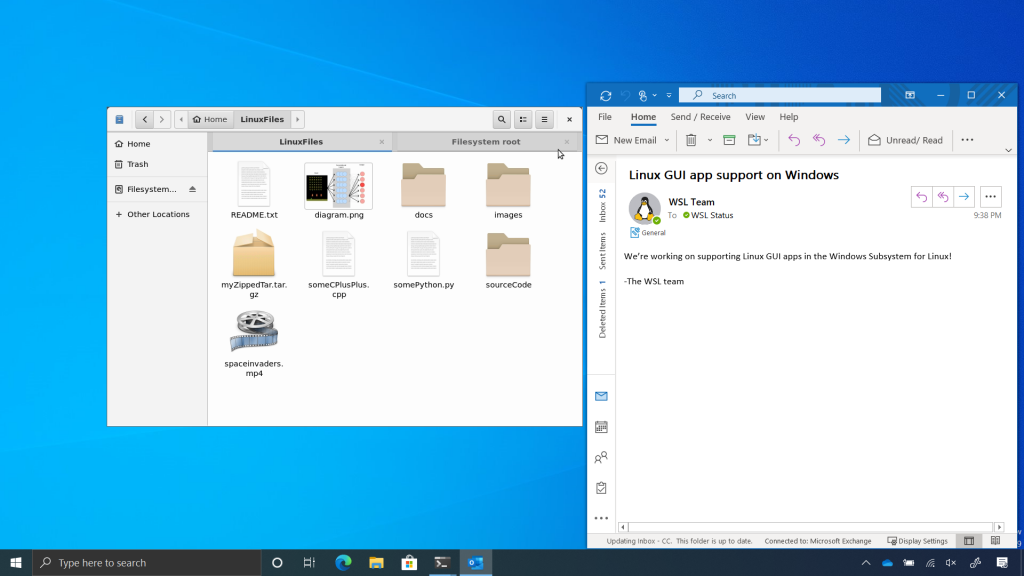
Windows 10 Insider build 20150 is out in the Fast Ring with WSL updates

Microsoft has just announced the release of the Windows 10 preview build 20150 for Windows Insiders in the Fast Ring, which will soon become the “Dev channel.” Despite the big bump in the build number, there are no major changes in this build, though the Windows Subsystem for Linux is getting some love.

Three new WSL features are available in this build with GPU compute, WSL install, and WSL Update. Fast Ring Insiders will also find an updated Maps app that now uses TomTom data, as well as minor improvements for the Settings apps.

You can find the full list of new features, bug fixes, and known issues below:

What’s new in Build 20150

Three new Windows Subsystem for Linux (WSL) features: GPU compute, WSL install, and WSL update

This build contains three new exciting WSL features. The first is GPU compute: a feature that allows your Linux binaries to leverage your GPU, which makes it possible to do more machine learning development and data science workflows directly in WSL. Secondly, we’ve added a new command: `wsl –install` which allows you to install WSL with just one command. Lastly, we’ve added `wsl –update` which gives you the ability to easily manage the Linux kernel version used by WSL 2 distros. To view a summary of these announcements please read this post on the Windows Command line blog, and for in-depth details on GPU compute in WSL please read this post on the Windows Developer blog.

A TensorFlow Docker container running an ML training script inside WSL 2 along with Task Manager showing GPU activity.

Other updates for Insiders

Updating the map data in the Maps app

Earlier this month, the Bing Maps Team announced they’ve started gradually rolling out the new TomTom base map data to Bing Maps and Microsoft first party products. As part of this process, we’re slowly updating the Maps app for Windows Insiders in the Dev Channel (Fast ring) to use the new map data from TomTom. We’re asking Insiders to submit feedback on any issues they see as a result of this change directly from the Maps app by selecting Suggest a change at the lower right corner of the app.

General changes & improvements

  • With this week’s build, we’ll be starting to roll out the new search box on the default app settings pages As part of this, we’ve done some work to improve the performance of the search box.
  • The new Korean IME is now available again for Insiders to use.
  • Based on feedback, we’re updating the text of the Settings > Privacy > Location page to clarify that the icon displayed when your location is being used will be displayed in the taskbar.

Fixes

  • We fixed an issue resulting in Visual Studio windows not consistently accepting clicks.
  • We’ve fixed an issue where the Documents and Downloads sections in Settings > Privacy was showing a broken icon next to their name (just a rectangle).
  • We fixed an issue where, if you paused Windows Update while a new build was downloading and then closed Settings, when you reopened Settings the Windows Update page may appear blank.
  • We fixed an issue where updates made when editing VPN networks in Settings might not persist.
  • We fixed an issue where the copy button under Settings > Network & Internet-Status > Properties wasn’t actually copying the content to the clipboard.
  • We fixed an issue resulting in the data usage number in Network & Internet Settings not displaying correctly in Japanese if the data usage was less than 1 MB.
  • We fixed a crash some Insiders were experiencing when opening Sound Settings.
  • We fixed an issue where the Optimize Drives window position wasn’t preserved on elevation.
  • We fixed a typo in the group policies under User Configuration > Administrative Templates > Windows Component > File Explorer > Do not move deleted files to the Recycle Bin.
  • We fixed an issue resulting in the On-Screen Keyboard no longer displaying text predictions.
  • We fixed an issue where double-clicking a OneDrive file in File Explorer might unexpectedly show a notification saying, “Windows Defender SmartScreen is downloading from OneDrive.”
  • We fixed an issue where Resource Monitor could end up showing CPU usage at more than 100 percent.
  • We fixed an issue that could result in qaa-Latn unexpectedly appearing in your list of keyboards after upgrading.
  • We fixed an issue where, with multiple input methods, typing in your password incorrectly on the login screen would result in your keyboard changing back to your default input method (if that’s not what you were typing with).
  • We fixed an issue where the touch keyboard space bar label would disappear when pressing it while using Japanese curve-flick input in abc mode.
  • We fixed an issue that could result in your browser not launching in the foreground after selecting a web link from another app.
  • We fixed an issue that could result in Search not accepting typed input.
  • We fixed an issue where, if pinned to Start, the Windows Security app tile would be missing an icon when the tile was medium sized.
  • We’ve made some updates to improve performance of the Windows Security app if there are a large number of detections.
  • We fixed a few issues that could result in your PC bugchecking.

Known issues

  • We’re working on a fix for an issue causing some systems to crash with a HYPERVISOR_ERROR bugcheck.
  • We’re looking into reports of the update process hanging for extended periods of time when attempting to install a new build.
  • We’re aware of an issue where Notepad might fail to reopen files which were automatically saved during a PC upgrade (or restart, if enabled in Settings). Documents can be recovered from %localappdata%Notepad.

In case you missed it, Microsoft announced some big changes for the Windows Insider program earlier this week. The Fast Ring will become the new Dev channel later this month, but it will keep receiving builds with experimental features that are not tied to a specific Windows release. The Slow ring is also becoming the Beta channel and should receive new builds more frequently, and Microsoft actually released the first 20H2 build for those Insiders yesterday.

Update 1PM PT: ISOs for the build 20150 are also available to download from the Windows Insider Preview Downloads page.

Microsoft Defender ATP gets new UEFI scanner

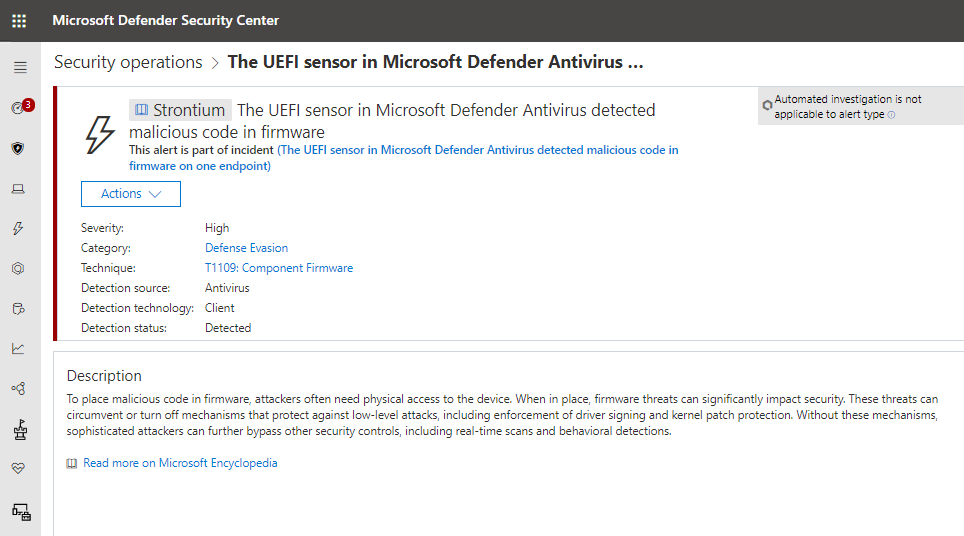
Microsoft Defender Advanced Threat Protection, Microsoft’s preventive technology designed to help enterprise users detect and respond to security threats, is getting a new UEFI scanner to protect against hardware attacks. In a blog post today, Microsoft announced that it’s expanding the protection capabilities of Microsoft Defender ATP to the firmware level by introducing a new Unified Extensible Firmware Interface (UEFI) scanner.

The new UEFI scanner basically interacts with the motherboard chipset by reading the firmware file system at runtime. “The UEFI scanner is a new component of the built-in antivirus solution on Windows 10 and gives Microsoft Defender ATP the unique ability to scan inside of the firmware filesystem and perform security assessment. It integrates insights from our partner chipset manufacturers and further expands the comprehensive endpoint protection provided by Microsoft Defender ATP,” explained the Microsoft Defender ATP Team.

According to Microsoft, the UEFI scanner uses various new solution components including the UEFI anti-rootkit, full filesystem scanner, and detection engine in order to perform dynamic analysis for threat detection. Microsoft Defender ATP customers will get the threat detection alerts in the Microsoft Defender Security Center, and they can then analyze them to respond to suspicious activities at the firmware level in their organizational environments. Moreover, your security operations teams can hunt for these threats with the help of the advanced hunting capabilities in Microsoft Defender ATP.

Overall, this is a welcoming change for companies using Windows Defender ATP, and it should beef up Microsoft’s efforts to protect its enterprise customers. “With its UEFI scanner, Microsoft Defender ATP gets even richer visibility into threats at the firmware level, where attackers have been increasingly focusing their efforts on,” said the Microsoft Defender ATP Team today. “Security operations teams can use this new level of visibility, along with the rich set of detection and response capabilities in Microsoft Defender ATP, to investigate and contain such advanced attacks.”

Microsoft touts reduced memory usage for Microsoft Edge on the Windows 10 May 2020 Update

Microsoft’s new Chromium-based Edge browser is running more efficiently on the freshly-released Windows 10 May 2020 Update, the company said today. Microsoft claims that the new browser can use close to 30% less memory on the new version of the OS due to segment heap memory improvements for Win32 apps.

“With the Windows 10 May 2020 Update, Microsoft Edge has leveraged the Windows segment heap memory improvements now available for Win32 applications to manage memory more efficiently. Early internal testing results of devices on the May 2020 Update are showing a memory usage reduction of up to 27% when browsing with Microsoft Edge,” the company explained.

It’s important to note that Microsoft Edge’s memory usage should vary across PCs, but Microsoft still expects users to have a “better experience” when using its new browser on the May 2020 Update. That may well convince more Chrome users to give Edge a try, as Google’s web browser is notorious for being a memory and battery hog.

Microsoft has started rolling out its new Edge browser to all Windows 10 PCs via Windows Update, which will replace the legacy Edge that is no longer in development. The upcoming Windows 10 20H2 update, to be available later this fall, will also be the first version of Windows 10 to ship with the new Microsoft Edge, the software giant announced yesterday.

PowerPoint Live is now generally available

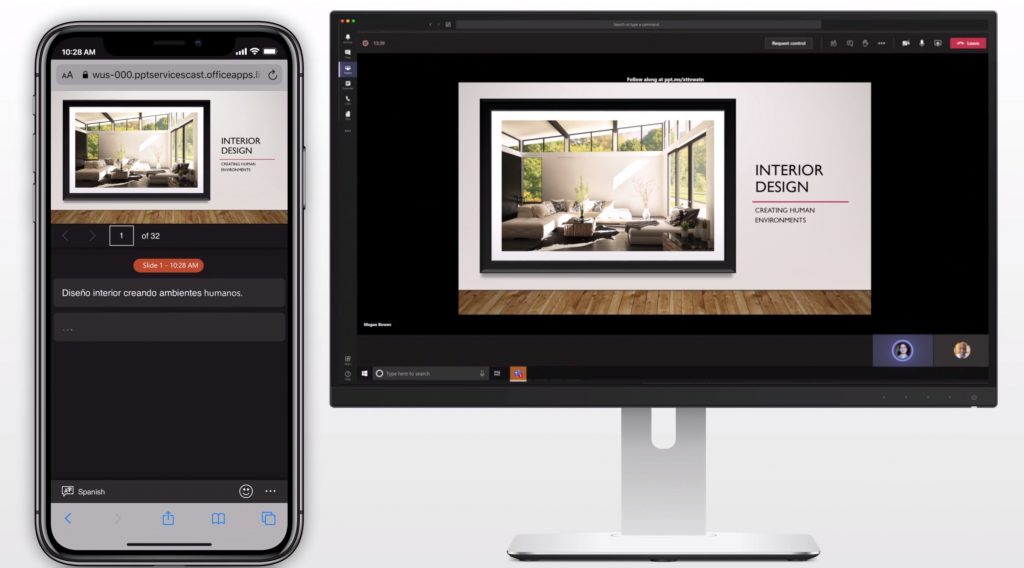
PowerPoint Live is now generally available. Earlier this year, Microsoft announced new AI-enabled experiences for Powerpoint, Word, and Excel. This latest announcement comes directly from Microsoft in a post on the Microsoft 365 blog. Here’s a video look at how Live Presentations work in PowerPoint works.

Now, when giving a PowerPoint Live presentation, presenters can keep their audience engaged by allowing them to access your presentation on whatever device they are using. PowerPoint Live also allows the audience to look through your PowerPoint slides at their own pace without the need to interrupt your presentation.

In addition to all these capabilities, Microsoft uses the power of artificial intelligence (AI), so that your audience can access your presentation using their own preferred settings on their device, including live subtitles in their preferred language and assist any audience members with hearing disabilities.

After the PowerPoint Live session, audience members can provide feedback to the presenter, with an optional survey provided by Microsoft Forms to help the presenter improve their presentation skills. In addition, PowerPoint Presenter Coach for Android is now generally available, allowing you to get feedback and coaching on how to best deliver your own upcoming presentation using your mobile Android device.

Windows 10 20H2 installs faster and includes Microsoft Edge

Microsoft’s Director of Program Management, Windows Servicing, and Delivery, John Cable, announced on the Windows Blog the new update plans for future releases on Windows 10.

And those plans started with the release of the Windows 10 20H2 for the Insiders in the Beta Channel, the former Slow ring.

What is new about Windows 10 20H2?

First of all, Microsoft cleared out the numerical naming scheme and decided on the year and period version.

So if this is the Windows 10 20H2 build, it’s because it’s going to be released for the general public in this year’s second half.

However, in a small note, they specified that they will still use a friendly name, such as the May 2020 Update, in communication with consumers.

As for the new features of the Windows 10 20H2, Cable was pretty brief:

Windows 10, version 20H2 will offer a scoped set of features to improve performance and enhance quality.

It will also be the first version of Windows 10 to include the new Microsoft Edge, based on Chromium.

In a nutshell, that means that this is a minor release in the style resembling a cumulative upgrade rather than a major one. However, things can still change until the fall release.

It’s worth mentioning that the new build 20H2 Build 19042.330 for the insiders, also includes fixes from the KB4557957 update.

Windows 10 20H2 will install quicker

Anyone running the May 2020 Update and updating to Windows 10, version 20H2 will have a faster installation experience because the update will install like a monthly update

, mentioned Cable in the blog post.

However, if you own an older build, you will wait longer, just like for a major update.

The Microsoft official added that the main focus of the 20H2 feature update will be on improved performance and quality, rather than on a large number of brand-new features.

How can I install the new Windows 10 20H2 update?

Windows 10 20H2 is available only for Insiders who joined the Beta Channel and look for the update in Settings > Update & Security > Windows Update.

Once you download and install it, you will get regular 20H2 updates via Windows Update.

What do you think about the new Microsoft approach? Leave us your thought in the comments section below.
[wl_navigator]

How to use filters in Microsoft Teams to find the messages and items you need most

The more you use Microsoft Teams, the more it will get populated with messages and other items such as files. This might make it tricky to find things like a specific document your colleague left you, or a specific message which mentioned something important. Luckily, Microsoft Teams makes it easy to find these things with its filter function. Here’s a look at how you can use it.

How to filter your search

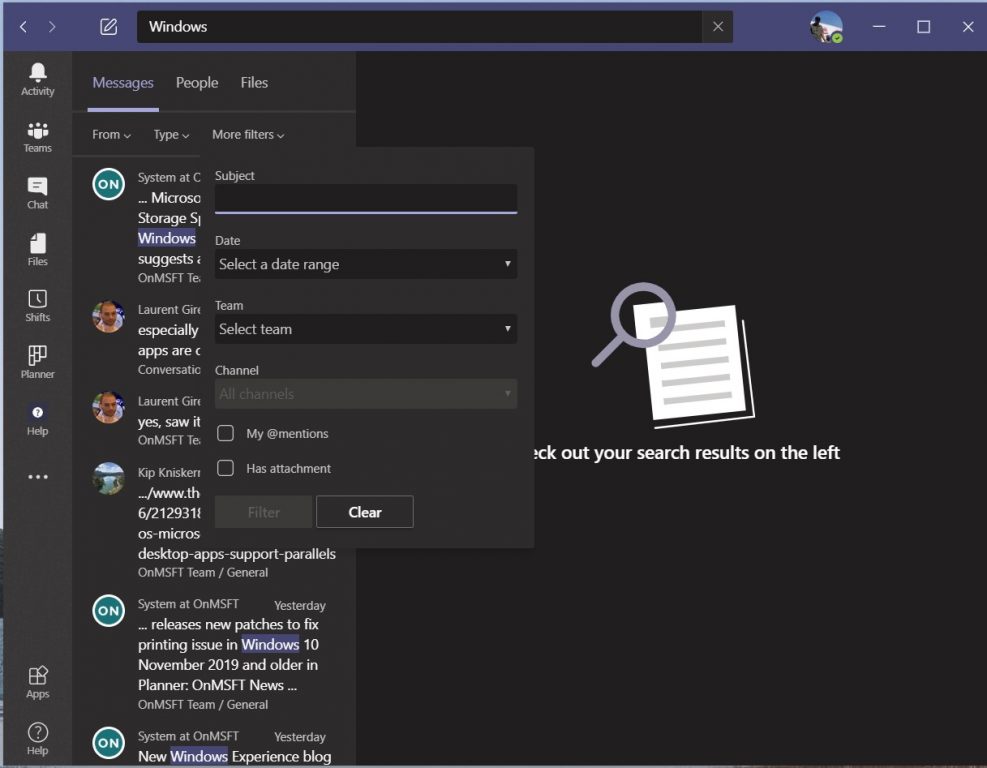
Once you run a search in Microsoft Teams, you’ll notice that you’ll see some tabs along the top of the search results. It will say Messages, People, and Files. This is your first way of filtering. It the item you’re looking for is a message, click messages. If it is a person, click people, and if it is a file, click Files. These separate things out a bit to help make finding what you’re looking for easier.

Additionally, you do have access to other filters below that. When looking for messages, you can click the From box and type a name to narrow down who the message originated from. You also can choose Type to narrow down where the message originated from, be it a channel or a chat. Finally, you’ll also see options for more filters. This includes by subject, date range, the Team the message is from, or the Channel. You even can choose if it has an attachment, or if you were @ mentioned.

When searching for files specifically, you’ll find some helpful filters, too. You can use the filter to see which Team the file came from, the file type, as well as when it was last modified.

How to filter your chats

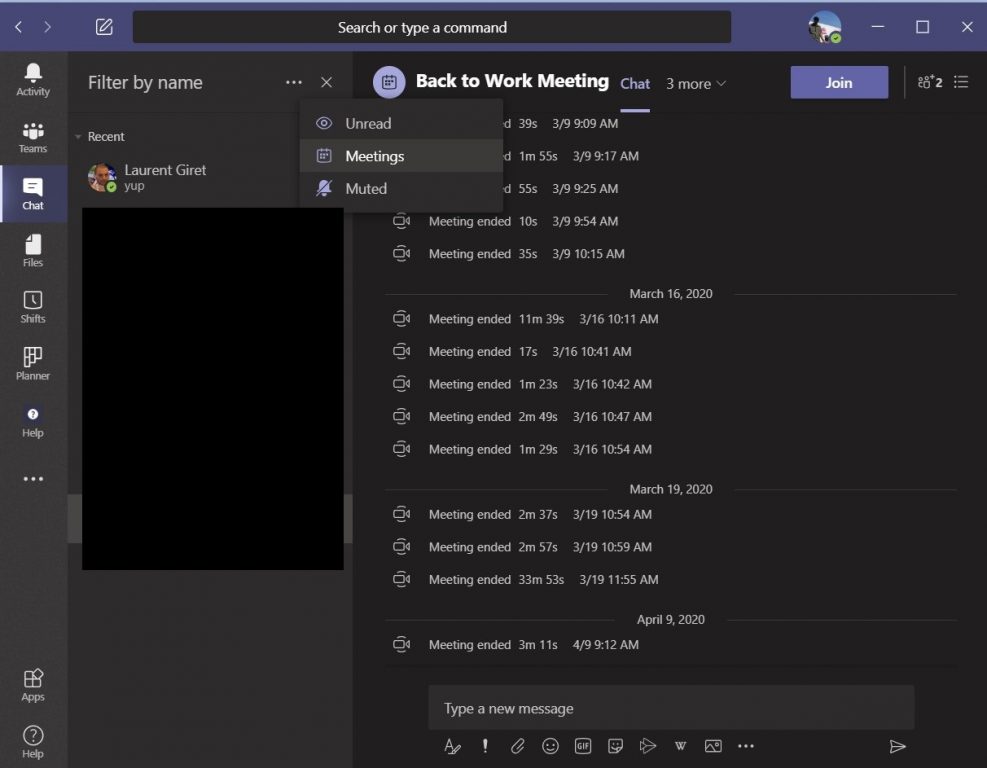
Filtering goes beyond the search. If you’ve got a lot of chat messages in Teams, you also can filter through the list with some additional controls. By default, the filter is by name, but if you press the . . . you also can filter beyond that to include unread messages, muted conversations, or meetings. It’s a great way to get the messages or things you need first, without worrying about clicking through a long list.

How to filter your channels and Teams

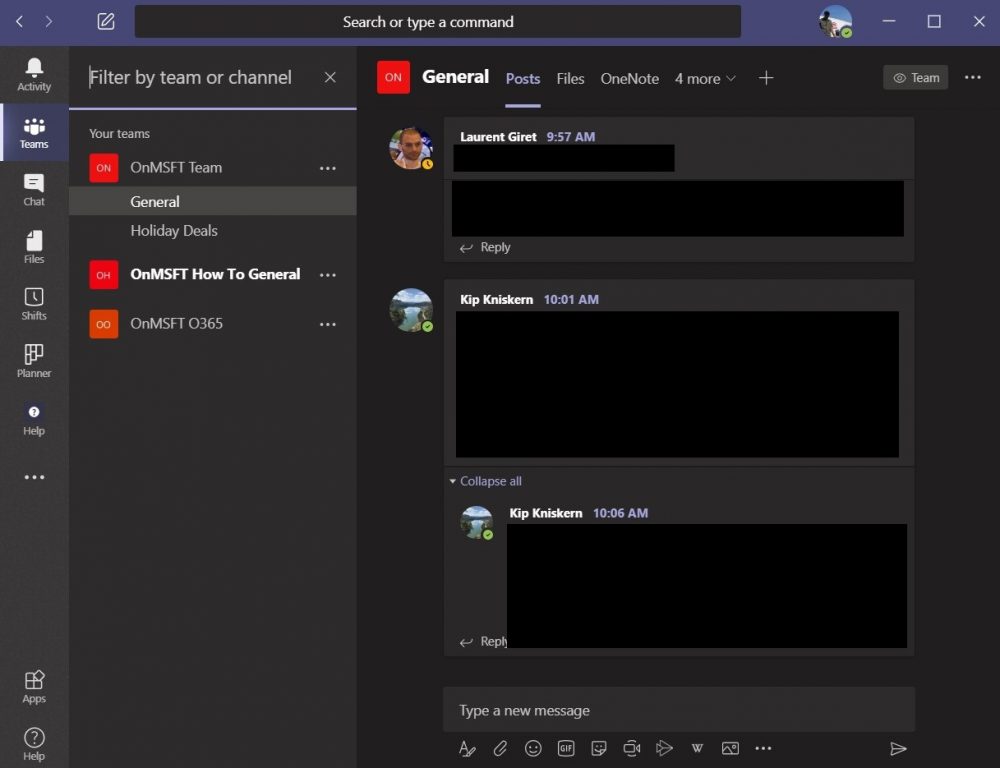
Finally, there is the ability to filter your channels and your Teams. To do this, you’ll want to look for the icon next to where it says Teams. It looks like an upside-down beaker. When you click it, you’ll be able to narrow down your list of teams and channels. From here, you can sort through and search for teams or channels. It’s useful if you’re in more than one channel or team.

Tips for chat, and more

Our tips for filtering in Teams are just one area of our recent coverage. We’ve been going over all kinds of Teams topics. These include some tips for how you can get the most out of chat in Teams, how to manage your notifications, get the most out of your camera, and more. If you have some tips of your own let us know in the comments below!

Get one month of EA Access for just 99 cents and play more than 80 EA games on Xbox One

Xbox One owners can get a cool deal on EA Access subscriptions this week. For a limited time, EA is offering one month of EA Access for just 99 cents instead of $4.99, and for that price, you’ll be able to play more than 80 EA games for free including Star Wars Battlefront 2, FIFA 20, or Battlefield 5.

EA Access was the first game subscription service to launch on Xbox One consoles back in 2014, three years before Microsoft launched its own Xbox Game Pass alternative. EA Access went to launch on PlayStation 4 last year, and it’s also coming to Steam very soon.

EA Access is much cheaper than Xbox Game Pass at just $4.99 a month, or $29.99 a year, though subscribers usually need to wait six months or more before new EA games join the catalog. Microsoft does it differently with Xbox Game Studio titles, which are now available on Xbox Game Pass on day one.

Still, EA Access remains a really good deal if you’re a fan of EA’s game franchise. The service also offers 10% off on EA digital purchases from the Xbox Store, as well as 10-hours “Play First” trials for upcoming games.

While there’s no E3 2020 this year, EA will hold an “EA Play Live” digital event tomorrow at 4PM PT. The company is expected to reveal more details about Star Wars: Squadrons, its new space combat simulation game that will ship on Xbox One, PlayStation 4, and Windows on October 2, 2020.

EA Play
EA Play
Developer:
Electronic Arts
Price:
$5.99

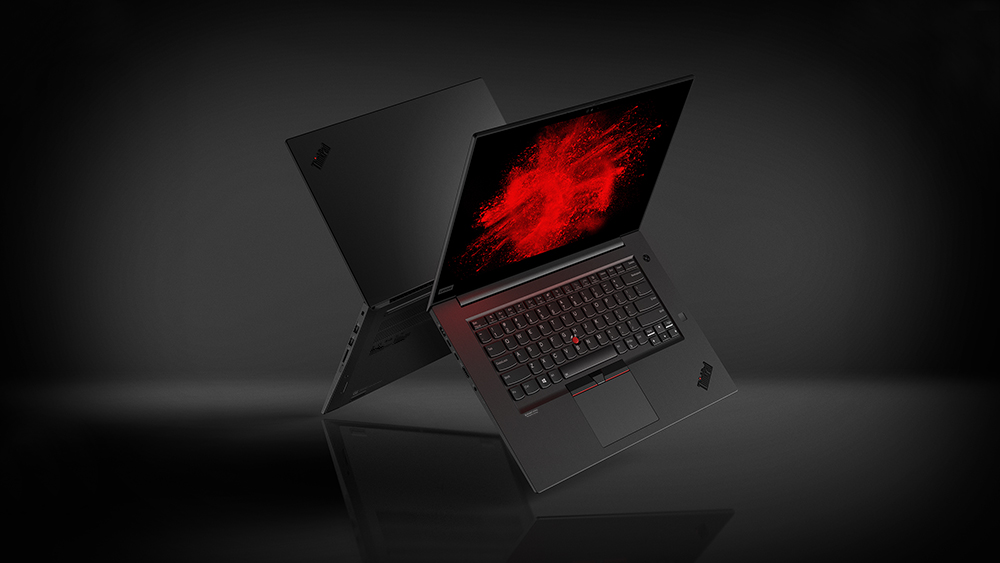
Lenovo updates its ThinkPad line with brighter screens, larger batteries and LTE options

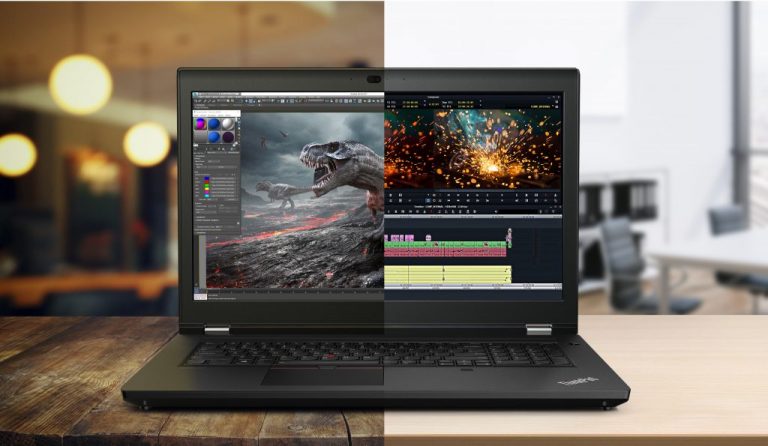
Lenovo just announced updates to its ThinkPad P Series Mobile workstations that bring more control and more configurations to the SMB crowd.

Some of the latest improvements include new screen sizes, Ultra Performance Modes, the latest 10th Gen Intel Core processors, rebuilt chassis with up to 30 percent larger CPU heat sinks, and larger battery sizes just to list a few.

For those unaware, Lenovo’s new ThinkPad P series includes the ThinkPad P15, and P17 (successors of the P53 and 73) and the beast ThinkPad P1 Gen 3.

As previously mentioned, Lenovo is priding itself on its redesigned airflow makeup that adds up to 13 percent more airflow for the P15 and P17,  this time around. Leveraging the new airflow design are two other components that should help boost overall productivity from the device that includes a larger CPU heat sink for the devices as wells as Lenovo’s Ultra Performance Mode that allows users to tax the processors more before hitting that fan noise barrier.

As part of a customization initiative, Lenovo also opted for a new daughtercard design for CPU and GPU placement which forgoes the tried and true soldered solutions of the past and allows the company to offer more customized GPU and CPU configurations out of the box. For instance, the ThinkPad P15 and P17 come equipped with NVIDIA Quadro RTX GPU’s but offer support for higher GPU wattage if necessary.

“Professionals across industries require the highest level of power and performance from their mobile workstations to meet the demands of their workflow,” said Sandeep Gupte, senior director of professional visualization, NVIDIA “Powered by NVIDIA Quadro RTX, Lenovo is offering a truly customizable and full-powered workstation experience – whether people care on the go or at home.”

Other niceties coming to the P lineup also include new 84WHr batteries, configuration support of up to 4TB of storage, UHD Dolby Vision HDR displays, and a possible 128GB DDR4 memory options for the P15 and P17 devices.

Moving over to the flagship P device in the ThinkPad P1 (the P version of the X1 Extreme) customers will now get a slightly redesigned chassis housing that improves speaker quality, an anti-smudge coating on the cover, and brand new UHD LCD display option that kicks out 600-nits of brightness. There will also be available in select markets, an LTE WAN configuration for remote workers.

Last but not least, Lenovo is tossing in an update to its ThinkPad X1 Extreme Gen 3 and ThinkPad P15v device that will offer a 10th Gen Intel processors with support up to i9 options, NVIDIA GeForce 1650Ti or Quadro P629 GPU graphics support, 15 and 15.6-inch displays that also push out their own 600-nits of brightness and optional CAT16 LTE-A Wireless WAN support.

What’s new:

  • All equipped with high-performance 10th Gen Intel H series mobile processors
  • Feature the new Ultra Performance Mode, exclusive to these systems, allowing users to take full control of their performance setting
  • The ThinkPad P15 and P17 (Follow-ons of the P53 and P73) will boast additional shared features – including a new 94WHr battery and up to 4TB of storage, along with up to 128GB DDR4 of memory and UHD Dolby Vision HDR displays
  • The P15v offers increased flexibility within the 15” space. With a UHD 600-nit LCD display and the NVIDIA Quadro P620 GPU
  • X1 Extreme Gen 3 offers new WiFi 6 and optional CAT16 LTE-A Wireless WAN

Most of Lenovo’s latest updates will begin shipping in July at the earliest.

  • The ThinkPad P15 and P17 will be available from July, starting at $1,979 and $2119, respectively.
  • The ThinkPad P1 Gen 3 will be available from July, starting at $2,019
  • The ThinkPad P15v will be available from July, starting at $1,349.

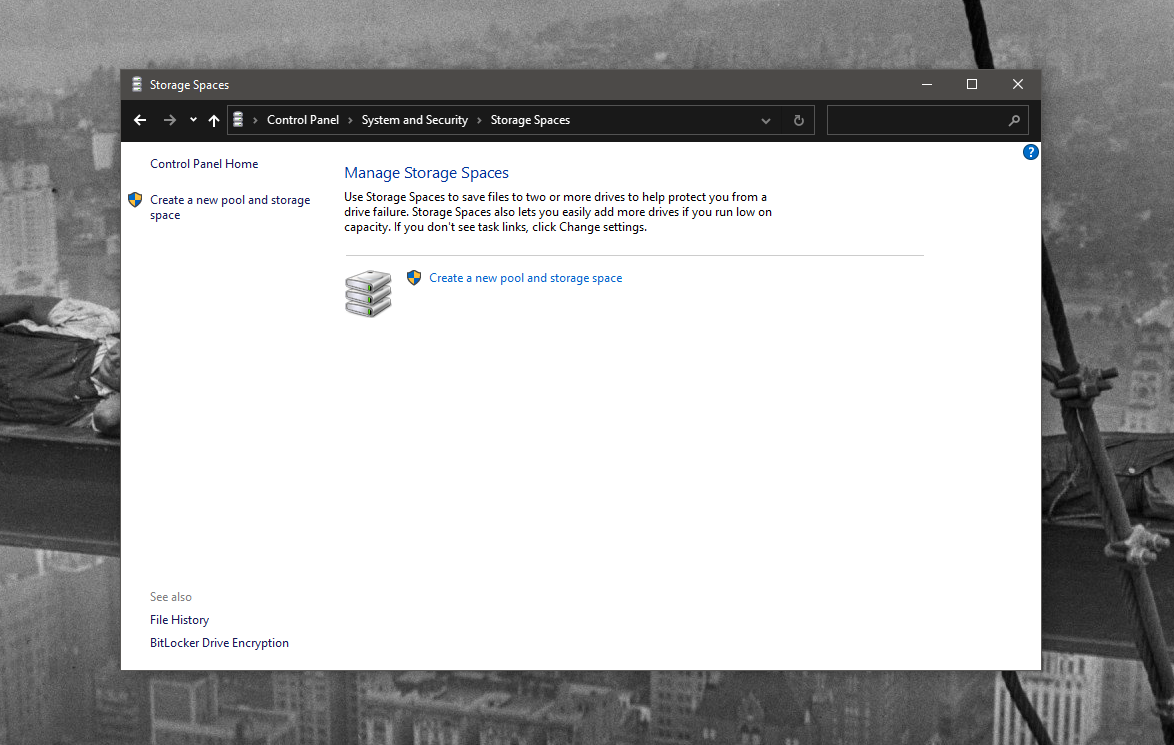
Microsoft acknowledges Storage Space issues in the Windows 10 May 2020 Update, suggests a fix

Microsoft has acknowledged a new bug that appears to be plaguing users running the Windows 10 May 2020 Update. In a support document today (via Techdows), Microsoft confirmed that it is currently investigating reports from users currently unable to create a storage pool using the Storage spaces feature on the Windows 10 May 2020 Update.

“Devices using Storage Spaces might have issues using or accessing their Storage Spaces after updating to Windows 10, version 2004 (the May 2020 Update) and Windows Server, version 2004. When using some configurations, partition for Storage Spaces might show as RAW in Disk Manager. We do not recommend running the chkdsk command on any device affected by this issue,” the support document reads.

If you rely on Storage Spaces, Microsoft recommends that you should follow these steps to mark them as read-only:

  1. Open Start menu, type PowerShell, Right-click on Windows PowerShell, and then select Run as administrator.
  2. Once the PowerShell dialog opens on your screen, type the following command and hit the enter button: get-virtualdisk | ? WriteCacheSize -gt 0 | get-disk | set-disk -IsReadOnly $true

This command will automatically set your Storage Spaces to read-only, and you will no longer be able to write on them. It is worth noting that your device will still be usable, and previously corrupted volumes should remain readable. Alternatively, you can also roll back to a previous version of Windows 10 until Microsoft releases a permanent fix for this problem.

In a separate announcement, Microsoft said that the company is now using machine learning to pick devices that are compatible with the Windows 10 May 2020 Update. “Today we are slowly beginning the training of our machine learning (ML) based process used to intelligently select and automatically update devices approaching end of service,” Microsoft said yesterday. If you haven’t been able to install the Windows 10 May 2020 Update so far, you may want to give Windows Update another look.

Pavilion Gaming 16 vs Pavilion Gaming 17: Which is better?

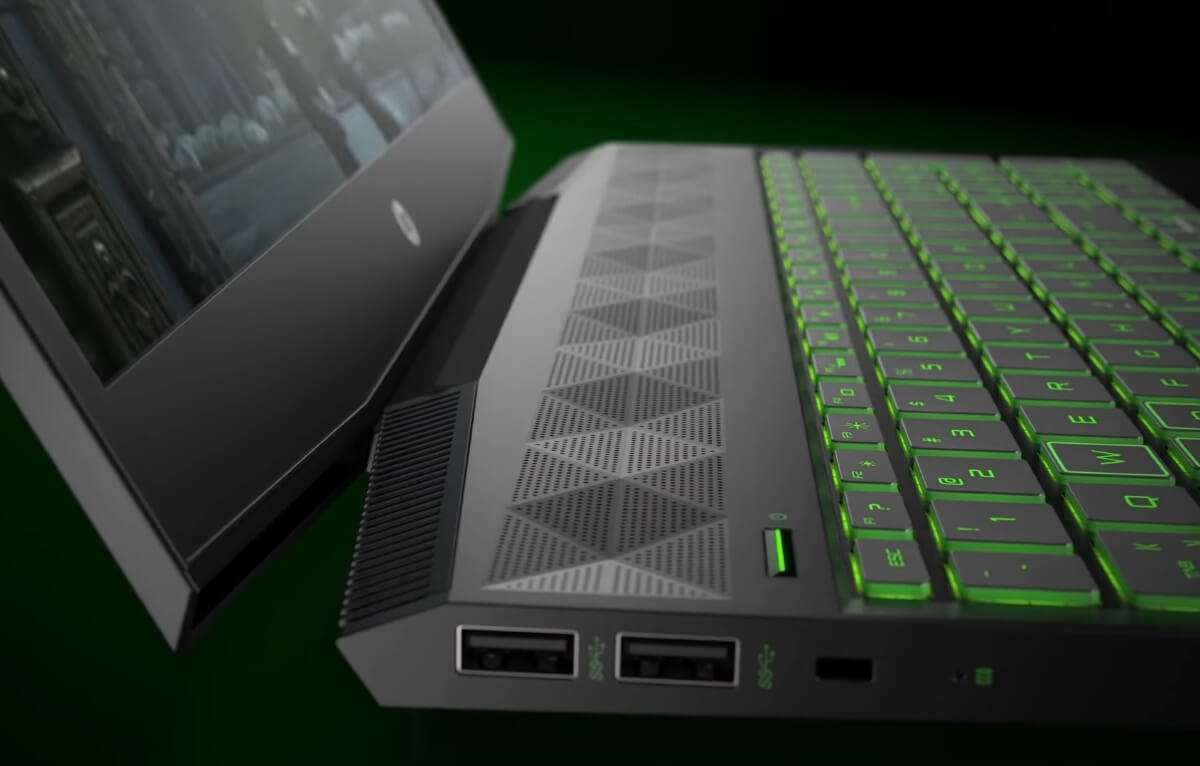
HP Pavilion Gaming 16 launched on June 2, 2020, and you can buy it for $799.99. There are very few gaming laptops of its size (16.1-inch), although its predecessor, Pavilion Gaming 17, is certainly larger.

If you’re wondering whether upgrading from model 17 to 16 makes sense, a look at critical specifications can settle the question. Since both are gaming laptops, key differentiators in areas like GPU, processor, and RAM should help you decide.

What are HP Pavilion Gaming 16 specs?

If you enjoying playing video games on a Windows 10 PC, HP Pavilion Gaming 16 has the ideal hardware specs for you. The device supports up to 10th Gen Intel Core i7 processor, which should deliver sufficient computing power for CPU-intensive games.

In addition, it sports NVIDIA GeForce RTX 2060 with Max-Q design graphics. The GPU is relatively fast and ideal for games that utilize real-time ray-tracing. The device boasts DDR4 RAM.

The incorporation of Max-Q design enables the laptop to harness the full power of the NVIDIA GPU without compromising thermal efficiency. Laptops with this type of a GPU are usually perfect for a quiet, superfast gaming experience.

Also, this 16-1-inch laptop sports micro-edge bezels that let you have more acres of display space. A refresh rate of 144 Hz and screen resolution of 1080p combine to give a seamless gaming and viewing experience.

Similarly, the HP Pavilion Gaming 16 supports WiFi 6.0, which is the fasted Wi-Fi standard available today.

In addition, HP claims that the latest Pavilion laptop for gamers features dual storage configurations. As such, it lets you utilize an SSD drive for your OS and a traditional drive for your other storage needs.

A comparison with HP Pavilion Gaming 17

HP gaming laptop

Both HP Pavilion Gaming 16 and its predecessor are Windows 10 gaming machines. The two devices sport a similar exterior look too, starting with their angular black chassis and the green keyboard trims.

Likewise, both laptops include the WiFi 6.0 connectivity option. According to HP, the devices offer fast battery charge (50% in 45 minutes with the device shut down).

Display-wise, the older model is larger, at 17.3-inch. But both come with an anti-glare feature, and they support a full high definition resolution of up to 1080p. Their refresh rate is also the same (144 Hz).

The two laptops though differ in an area that impacts gaming performance in a big way—graphics capabilities. While both sport midrange gaming GPUs, the latest model has a more advanced and powerful graphics card.

Looking at the specs for GTX 1660 Ti (on Pavilion Gaming 17) and RTX 2060 (on Pavilion Gaming 16), you may easily see that the latter is superior in key areas like ray tracing. Generally, the entire RTX family offers better graphics and DLSS processing.

Also, don’t forget to take processing power into account. Both devices can support multiple Intel processor models, but Gaming 16 comes with up to 10th gen Intel Core i7 processor.

The older Pavilion supports up to 9th gen Intel Core i7 processor, which also packs a punch.

SpecsPavilion Gaming 16Pavilion Gaming 17
ProcessorUp to 10th gen Intel Core i7Up to 9th gen Intel Core i7
GraphicsUp to NVIDIA GeForce RTX 2060 with Max-Q design graphicsUp to NVIDIA GeForce GTX 1660 Ti
Display size 16.1"17.3"
ResolutionFHD 1080pFHD 1080p
ConnectivityWiFi 6.0WiFi 6.0

HP Pavilion Gaming 16 is an improvement on its predecessor

In a nutshell, HP Pavilion Gaming 16 gives you superior options for hardware specs. It performs better in areas that matter to gamers, including processing power. Plus, a comparison of the supported GPUs for each model reveals that the latest Pavilion offers the better graphics performance.

If things like screen size are important to you, then Pavilion Gaming 17 has a clear advantage over its successor.

But you probably still want to buy Gaming 16 if you consider the price factor. For starters, both devices are for the budget-sensitive gamer. However, you get more in the latest model for a starting price of roughly $800.00.

Are you ready to explore the HP Pavilion Gaming 16 laptop? Kindly let us know by commenting via the comments section below.

[wl_navigator]

GameInput issue affecting Windows 10 2004 users resolved

Installing Windows 10 2004 can cause multiple bugs that affect different types of PC software and hardware, as you may already know.

As such, Microsoft applies a safeguard hold on affected machines in some cases. As a result, users of these PCs can’t download and install the Windows 10 May 2020 update until a solution is available.

But the company has so far fixed some of the bugs. In addition, it has lifted the temporary compatibility block it had put on some of the affected PCs.

The incompatibility issue affecting apps or games with GameInput Redistributable is a perfect case in point.

Windows 10 2004 GameInput compatibility block is no more

After Microsoft rolled out the new Windows 10 version 2004, it applied a compatibility block on devices with GameInput Redistributable installed. It had discovered an incompatibility issue preventing affected apps and games from accepting mouse input.

Usually, the shareware installs in the background as part of an app or game installation. As such, you may not even know that you have it on your machine.

Well, Microsoft lifted the compatibility block on May 2020 Update machines with the app. It made this decision after figuring out that the compatibility bug didn’t impact any version of the appliaction that’s currently on Windows 10 PCs.

After further investigation, we have found that this issue does not affect any version of GameInput Redistributable in use. The safeguard hold has been removed.

This news means that you can now install Windows 10 version 2004 on a PC with GameInput Redistributable. In addition, the software shouldn’t prevent apps and games that use it from capturing mouse input.

Also, the Windows 10 Resolved issues page mentions that Avast solved a bug preventing some users from opening Microsoft Office apps.

Installing KB4557957 caused the glitch, which affected various versions of Windows 10, including 2004, 1909, and 1903.

Are you able to install Windows 10 2004? If you’re encountering any issues, please let us know via the comments section below.

[wl_navigator]

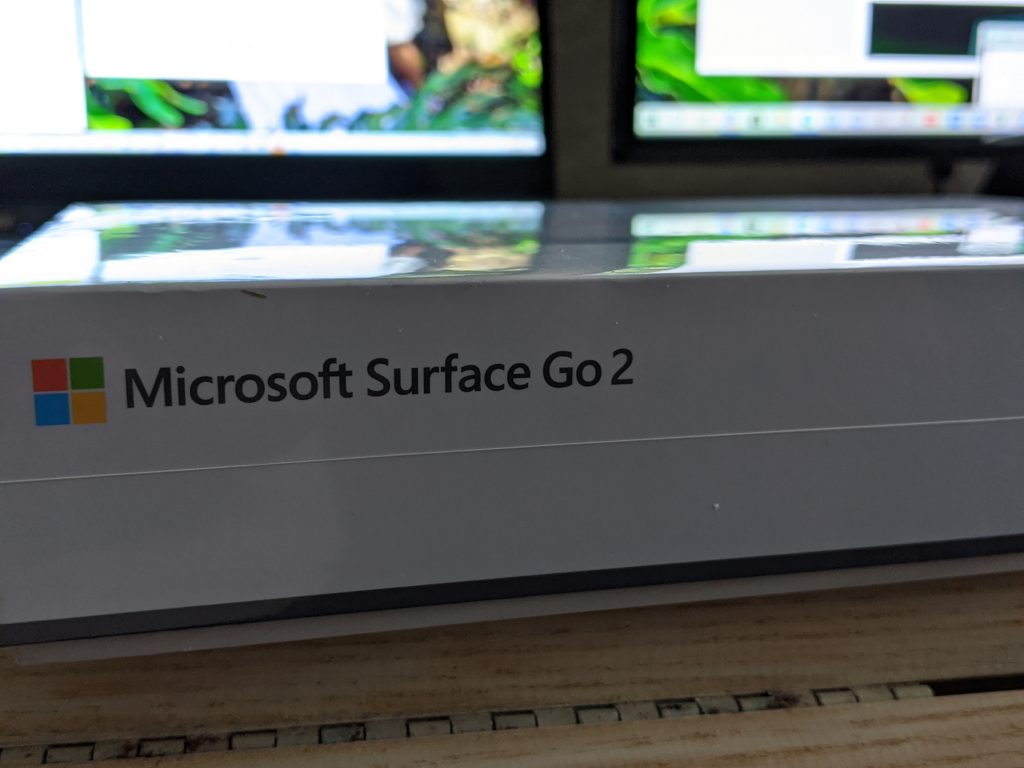
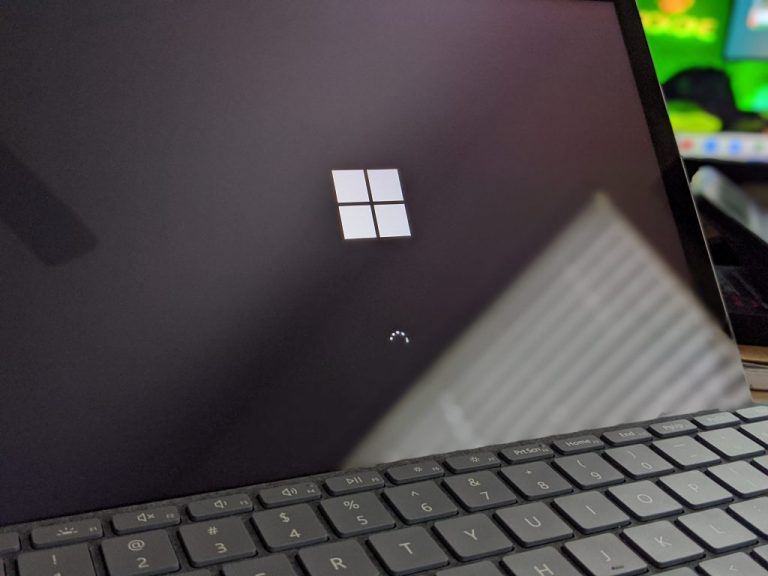
Microsoft Surface Go 2 first impressions: Lots of potential

Microsoft’s Surface Go line seemed to be an answer in search of a question when the company first unveiled it, actually, many questions. Among some of the questions, people might have had when weighing the options between a relatively pocketable mini Surface or its bigger well known Pro brother is, why?

Over the next few weeks, I’ll see if this little device can answer that question.

On paper, the Surface Go is only a shadow of the Pro with a less powerful processor, smaller screen, smaller keyboard attachment, and handcuffed with Windows 10 S out of the box, but hell if it isn’t a well-crafted piece of hardware that warrants a double-take when looking at future PC purchases.

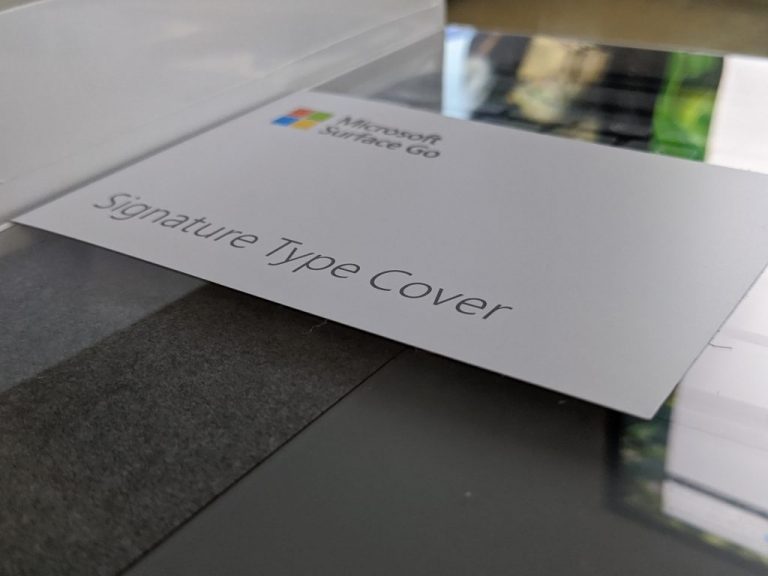
The Surface Go 2 comes with the same meticulously and almost child-proof packaging as any other Surface device, but when you finally claw the device out of its outer sarcophagus, you’re met with the relatively lightweight PC, long-held proprietary charging cable and seemingly unnecessary paperwork. For those fortunate enough to afford the attaching keyboard, there is some extra packaging to go through, but you won’t cut yourself or lose part of a fingernail in the process.

Together, the attached Microsoft Signature keyboard and Surface Go 2 feel about a heavy as Moleskin notebook (give or take a few ounces), and because of the size, I found myself toting it back and forth between rooms similar to my paper and pen notebook. Unfortunately, the review unit I received didn’t include the majestic Surface Pen, so a requisite review will be done san 4,096 points of pressure sensitivity.

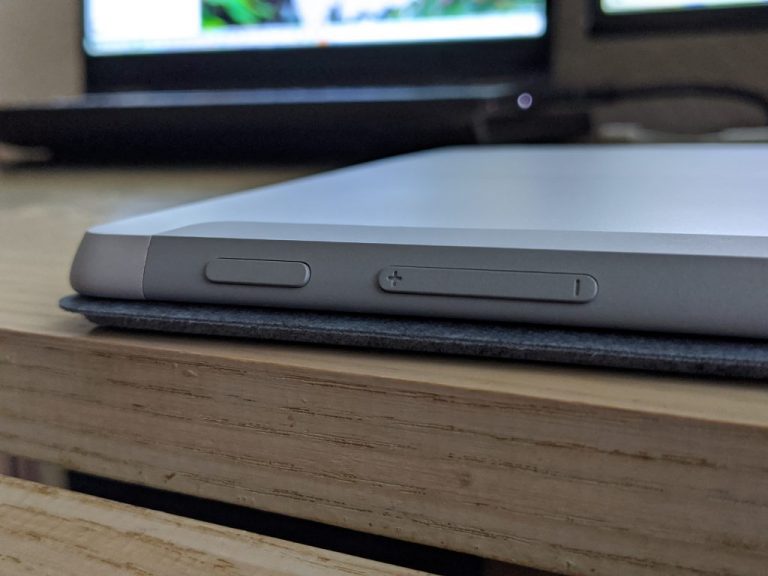
The Surface Go 2 looks and feels like a mini Surface by all accounts, the bezels are similar, the aspect ratios (albeit shrunken) are similar, camera and speaker placements are the same and even the miniature keyboard attachment connects the same pogo pins with the same satisfying click noise.

So far, my experience with the Surface Go 2 has been relatively positive. I’m limiting myself to working in Windows 10 S like anyone else who purchases the device. Right off the bat though, the limitations of Windows 10 S became apparent, downloading the new Xbox app on Windows 10 couldn’t be performed. While I was able to download games such as State of Decay and Minecraft Dungeons, actually playing them were no-gos.

Disappointing.

My game testing on this device might be limited to just the remastered Streets of Rage game.

As for productivity, everything else has worked surprisingly well. Opening Excel and PowerPoint projects were a breeze and web browsing was pretty smooth.

Perhaps, due to the processor, there is a noticeable lag in opening apps for someone coming from a 16GB Intel i5 workstation.

I’ll be putting it through its paces over the next couple of weeks. At $600 plus, Microsoft has a steep asking price for the whole package, but from what I’ve used it for in my limited experience, it’s served well for writing and researching a few articles and catching up Avatar the Last Airbender on Netflix quite nicely.

GTA Online Packet Loss: What is it and how to fix it?

Sometimes, GTA Online players are facing high ping/latency, jitter, crashes, random disconnections, or the much-dreaded packet loss. The issues occur whenever data packets that you send/receive never make it to their destination. As a result, you might experience high latency, rubberbanding, or even connection timeouts (crashes). First thing to try is to check the GTA Online latency.

How to fix packet loss in GTA Online

1. Use a VPN

  1. Download Private Internet AccessPIA with GTA Online
  2. Install it on your computer
  3. Launch it and log in with your PIA credentials
  4. Connect to a fast server of your choice
  5. Launch GTA Online and check if the problem still persists

Private Internet Access is a reliable, all-round VPN service brought to you by Kape Technologies. It can save you from a lot of hassles such as packet loss, high ping, and geo-restrictions.

Private Internet Access

Private Internet Access

GTA Online leaking packets? PIA might come in handy.
$2.85/mo. Buy it now

Note that using a VPN will only alleviate the issue if it’s on your ISP’s side. Nevertheless, it’s a good idea to invest in a good VPN for its privacy protection features, the ability to secure your connection, and geoblocking bypassing.

2. Troubleshoot your connection manually

  • Run a packet loss test using pathping (rule out you or ISP leaking packets)CMD pathping
  • Check the status of the GTA Online servers
  • Perform a speed & packet loss test with the Speedtest by Ookla Windows 10 app
  • Switch to a wired connection if you’re currently on wireless (Wi-Fi leaks packets more often)
  • Check if you’re not behind a double NAT
  • Open the following ports on UDP: 6672, 61455, 61457, 61456, 61458
  • Perform a router reset
  • Call your ISP if you notice packet leaks on their side
  • Change/repair/replace any faulty component on your home network (including Ethernet cables)
  • Toggle UPnP on or off on your router or system and notice if there’s any improvement
  • Update your router’s firmware
  • Try turning your VPN off and see if there’s any improvement
  • Make sure that no antivirus or firewall is filtering GTA Online traffic

Granted, these are a lot of steps, but you don’t have to perform them all. Sometimes the devil’s in the details and doing something as little as replacing a cable, or switching to a wired connection might improve your GTA Online packet loss dramatically.

Keep in mind that Rockstar doesn’t host any GTA Online servers, as the whole experience is designed around a P2P model.

Rockstar only handles matchmaking and then pairs various players together by making game packets transfer from player to player instead of handling them themselves.

Therefore, the best solution if you experience packet loss might be simply looking for a new session.

GTA Online packet loss crisis averted

If you’re playing GTA Online and notice packet-loss-specific behavior such as rubberbanding or sluggish movement, try finding a new session. Using a trustworthy VPN can surely help, but only if the ISP is throttling your bandwidth.

When everything else fails, try using our suggestions above one at a time, and notice if there’s any improvement.

As opposed to other online games, GTA Online is based on a P2P design, which means that packets are transferred from player to player, instead of being handled by Rockstar-run servers.

Users invited to help fix Microsoft Edge auto launch error

The new Microsoft Edge has been getting a lot of love lately. Take, for instance, its recent updates, such as automatic profile switching and Immersive Reader improvements.

Similarly, during Microsoft Build 2020, the company announced impressive features coming to the browser, including Pinterest integration.

Notwithstanding all these enhancements, multiple bugs causing problems to users may slow the journey to success for the Chromium-based browser.

Some users are now reporting particularly undesirable Edge behavior: automatically launching on startup. Microsoft has confirmed that it has the Edge dev team looking into the problem, though.

Microsoft Edge automatically running on startup

Adding programs to the Windows 10 system startup folder should work in your favor when you need to quickly get started on your everyday workflows and tasks. But in the case of Edge, the browser may auto-launch on startup even if you haven’t configured it to do that.

Microsoft adds that it’s not aware of any other erratic behavior associated with the auto startup bug in Edge. Keep in mind that different versions of the browser have this problem.

Some versions of Microsoft Edge are automatically launching whenever users start their PCs and log into Windows, regardless of their selection in edge://settings/onStartup. It’s currently unknown whether there are any accompanying behavioral changes with this bug.

As the dev team looks into the bug, Microsoft invites you to help with the debugging process. Some technical skills, especially with the command prompt, will come in handy here.

You typically need to run a couple of cmd commands to diagnose the bug, and save your findings to a file. You may then submit the diagnostic data via the Edge feedback tool.

Hopefully, the next Edge update fixes this bug once and for all.

Have you had any trouble with the new Microsoft Edge, especially after logging into Windows 10? Feel free to share your experience or ask any questions via the comments section below.

[wl_navigator]

New Microsoft Launcher preview starts rolling out to beta testers

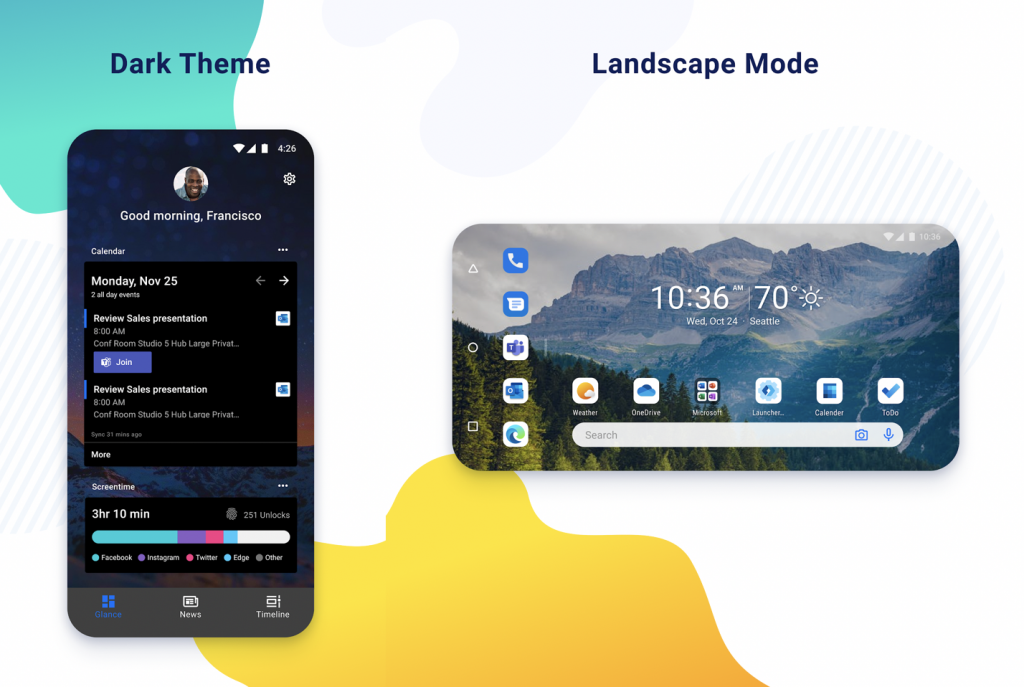
Earlier today, German-based publication Dr.Windows.de revealed that Microsoft’s Android launcher would be getting an update in the Google Play Store that is unlike any others before it. As Microsoft preps for a possible July release of its hotly anticipated dual-screen Surface Duo device, today’s Microsoft Launcher 6.0 release highlights a splintered path of development that has been slowly converging since January of 2020.

At the end of 2019, the Microsoft Launcher team began redesigning its Android launcher experience with more Google-Pixel like design and feature sets and using the beta channel as its testing bed for other sorts of functional development. However, today’s launcher update comes to the Play Store as a beta release but marks a rebuild rather than a simple redesign of the consumer-facing version of the Microsoft Launcher and many believe it’s going to become the predominant launcher experience for both foldable and single screen Android devices going forward.

Over the past six months, the rebuilt, beta version of the Microsoft Launcher has gone through several feature set updates that have brought it back on par with the current public version, and in some instances, surpassed it. Items like landscape rotation and support for hidden app functionality were all brought to the consumer-facing version of the Microsoft Launcher, however, as part of the rebuild, there have been several features that the Microsoft Launcher development team has scrapped in favor of performance or utility, such as blurred backgrounds and the way it handles timeline content fetching as well as no longer supporting landscape switching.

Presumably, many of these will return in a future update to the launcher before it’s released as the main interaction point on its flagship foldable device possibly in July.

For now, anyone signed up for the beta launcher program can head over the Google Play Store and grab the update to test out. Anecdotally, the experience is relatively bug-free, but noticeably lacks the same sort of polish the public launcher enjoys.

The app was not found in the store. ?

Redesigned Microsoft Edge Add-ons site now available for all users

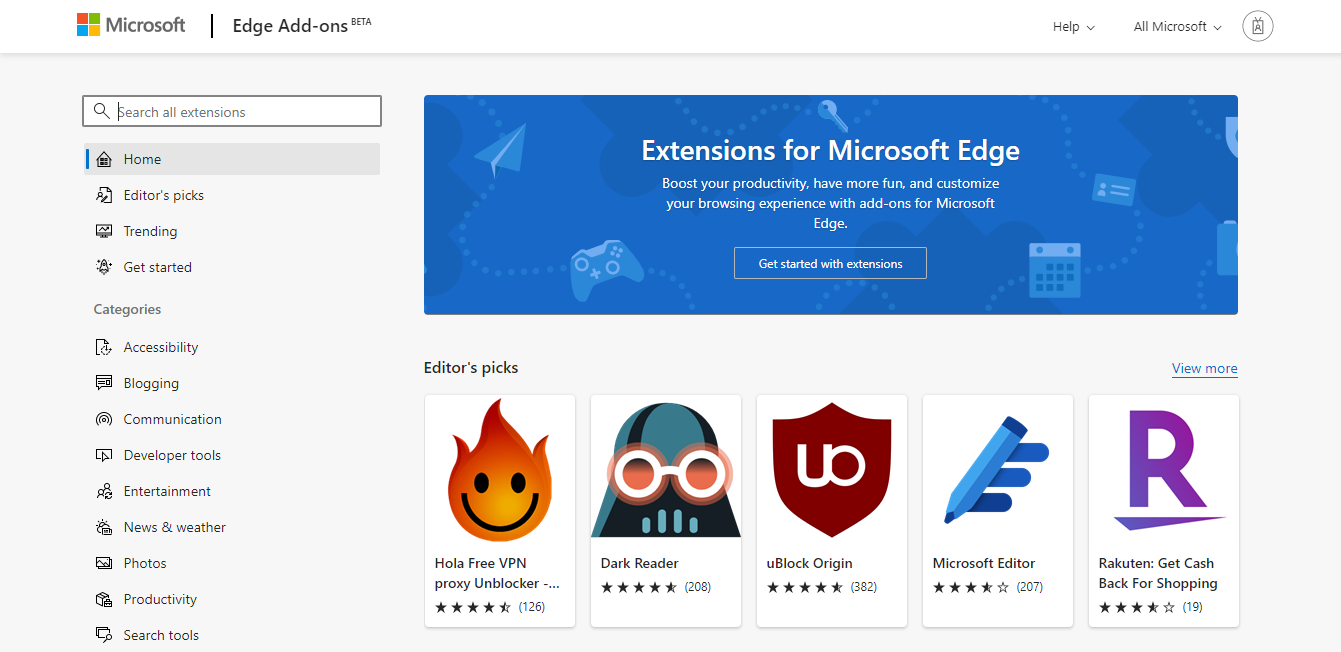
At Build 2020 last month, Microsoft announced that its Edge Add-ons site would receive a major update, with better search and curated collections. In a blog post today, Microsoft has announced that the new Microsoft Edge Add-ons website is now live for everyone across the globe, addressing users’ “key concerns” related to the usability of the platform.

A first look at the new Edge Add-ons site indicates that it’s now divided into various categories such as entertainment, accessibility, and productivity. To help users easily find their relevant extensions, the site now features a carefully curated home page with a series of new collections. The company has also redesigned the search page which now offers detailed insights into the search result while improving navigation at the same time.

Moreover, a dedicated section lists the most popular add-ons, while another one provides recommendations from the editors. In order to improve hand-holding for its users, Microsoft has introduced some new enhancements to the add-ons site as well as the extensions manager page. The company said that the new website has been re-designed to be more accessible with high contrast or narrator options.

While the Edge add-ons site is the easiest way for Edge users to install extensions, it’s still possible to get extensions from other established sources including the Chrome web store. That’s one of the main advantages of Microsoft Edge now leveraging the Chromium open source project.

Windows 10 May 2020 Update Clears Chrome, Edge Logins

The Windows 10 May 2020 Update doesn’t surprise anybody with the issues it’s causing for some users. It may not be a massive OS upgrade, but it’s certainly bigger than the regular cumulative updates that cause all manner of Windows 10 PC problems.

Already, Microsoft has acknowledged more than a dozen bugs affecting Windows 10 version 2004. Some originate in the OS itself, while others stem from installing one or more of the most recent Patch Tuesday updates.

The latest such bug is causing login problems for some Chrome and Edge users.

Windows 10 May 2020 Update website login issues

It appears that installing the Windows 10 May 2020 Update may cause your Chrome or Edge browser to clear or otherwise lose saved login details.

One user shared to the Windows 10 Subreddit how they’re forced to re-authenticate into websites after each PC boot. They claim that this problem started after installing Windows 10 v2004.

In addition, the browsers are unable to remember the user’s OneDrive and Google login details. So, the user has to supply their user name and password each time they boot their PC.

Anyone else having this issue? After the 2004 updates, I need to log-in after each boot and reauthenticate myself. It’s also doing flakey thing with my Chrome and Edge log-ins as well into Goggle. Especially Chrome, it doesn’t remember any of my log ins after an hour or so, or after reboots. It sometimes happens with Edge as well.

This is not the first time users are reporting browser issues after installing the May 2020 update.

According to some reports, the update may cause Chrome to clear all your cookies. Not only is the bug deleting saved passwords, but it’s also clearing sync configurations.

Microsoft hasn’t confirmed these issues yet.

Are you experiencing any browser issues after installing the Windows 10 May 2020 Update? Kindly reach for the comments section below and let us know.

[wl_navigator]

Obsidian Entertainment launches limited-time demo of Grounded on Xbox One and PC

Grounded, one of the upcoming Xbox Game Studios titles developed by Obsidian Entertainment is getting a first limited-time demo today. Only select Xbox One users will get access to the demo via the Xbox Insider Hub, but the single-player demo will be available for everyone on Steam.

The demo will allow players to get a look at the single-player experience of Grounded, explained Mikey Dowling, Obsidian Entertainment Director of Communications. “Upon choosing their character, players will be thrust right into the heart of the backyard at sunrise, and will quickly discover that life is different when you’re only one centimeter tall. “Over the course of one in-game day, this experience will allow players to craft tools and weapons, build structures, and survive against the various perils of being small.

If this first Grounded demo is actually timed, you’ll be able to replay it anytime you want through Monday, June 22. Obsidian Entertainment is mostly known for its critically-acclaimed RPGs such as Fallout: New Vegas and The Outer Worlds, and it will be interesting to see the developer trying something different with this new survival game. Grounded is expected to hit Xbox Game Preview and Steam Early Access on July 28, 2020, and it will also be available on that date for Xbox Game Pass members.

Grounded
Grounded
Developer:
Xbox Game Studios
Price:
Free

Microsoft details its technical response to COVID-19 with Azure and Teams

In a pair of new blog posts, one on Azure and one on Teams, Microsoft detailed its technical response to the COVID-19 Coronavirus pandemic, and how they’ve advanced their systems in the time of crisis. Penned by Mark Russinovich, the Chief Technology Officer of Microsoft Azure, the posts cover all the kinds of strategies the company embarked on, from resiliency, capacity forecasting, scaling resources, optimizations, and more.

Some interesting highlights from the Teams post point out that Microsoft employed some resiliency strategies to protect Teams during high demand. This includes active-active fault-tolerant systems, resiliency-optimized caches, a circuit breaker, bulkhead isolation, timeouts, and more. “When COVID-19 stay-at-home orders started to kick in around the world, we needed to leverage the architectural flexibility built into our system, and turn all the knobs we could, to effectively respond to the rapidly increasing demand,” said Mark Russinovich.

In addition, Microsoft also planned for the future. The company built and iterated models that could anticipate where growth would occur in both raw users and usage patterns. When Teams usage peaked, the company had to build new models to take the growth in global demand for Teams into account. That was due to new usage patterns from existing users, new usage from existing but dormant users, and new users, too. “Throughout the process, we erred on the side of caution and favored over-provisioning—but as the usage patterns stabilized, we also scaled back as necessary,” explained Russinovich.

Interestingly, since Teams is power by Azure, Microsoft made moves to scale their compute resources. Microsoft provisioned resources to take on certain demands in regions across the globe.  The company says it increased the total number of regions per geography, decreased the total amount of spare capacity each region needed to hold to absorb emergency load, and reduced the total capacity needs. “Dealing with load at this new scale gave us several insights into ways we could improve our efficiency,” said Russinovich.

Other high points in the blog post highlight that Microsoft optimized its networks and routine strategies to leverage the idle capacity when most people aren’t using Teams at night. To improve storage, the company also stored cache states in a binary format rather than raw JSON, as well as compressed data before sending it to the cache.

Of course, there is a human side to it too, for the folks that work on Teams. Microsoft says Every on-call engineer had at least 12 hours off between shifts. They also brought in more incident managers from across the company and deferred all non-critical changes across services.

Microsoft Edge PDF Reader is getting text notes, digital signatures, and more

Microsoft has announced this morning a slew of new features coming to the built-in PDF Reader in Microsoft Edge, with most of them rolling out in the coming months. In a recent blog post, Microsoft noted that the company is currently working on a bunch of new features including Table of Contents, Highlight mode, Text notes, Digital signatures, as well as a smoother scroll experience and accessibility improvements.

In addition to the aforementioned features, Microsoft Edge’s PDF Reader is also getting the ability to view the sensitivity labels of protected pdf files. Here is a quick look at what’s to come for the new Microsoft Edge browser:

  • Smoother scroll experience: We are bringing the smooth scroll of Legacy Edge to the modern browser.
  • Table of Contents: You will soon be able to view the contents of PDF files and navigate through the file with the same.
  • Highlight mode: In this mode, you will be able to create highlights directly by selecting text, without the need of clicking on a highlight button.
  • Text notes: With this, you will be able to add their own notes to text in PDF files. These notes will travel with the PDF.
  • Protected PDF files: Microsoft Information Protection adds a layer of security to your documents. It ensures that only the users who have certain permissions as view, copy, annotate can take those actions on the file. Hence, no matter where the document goes, the data of your organization remains secure.
    • Viewing labels of protected files: You will soon be able to view the sensitivity labels
    • Viewing MIP files protected in other tenants: This will enable you to view the files protected in other organizations, or in other tenants in the organization.
  • Digital signatures: View and validate certificate based Digital signatures on signed files.
  • Accessibility improvements: With this, you will be able to fill PDF forms using screen readers, and navigate through PDF documents using caret mode.

Since Microsoft released the first Edge Insider builds last year, it’s good to see that the browser is getting new features on both Mac and Windows. Again, it will take sometime before it happens, but it’s likely that you will see all these features in one of the preview builds (Canary and Dev Channels) that are available for Microsoft Edge soon.

Microsoft Bing app for Xbox One launches in preview in the US

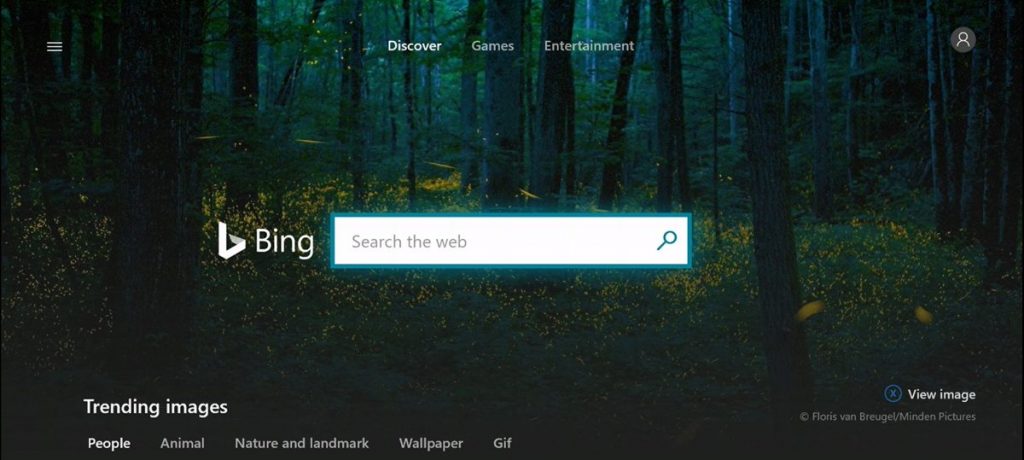
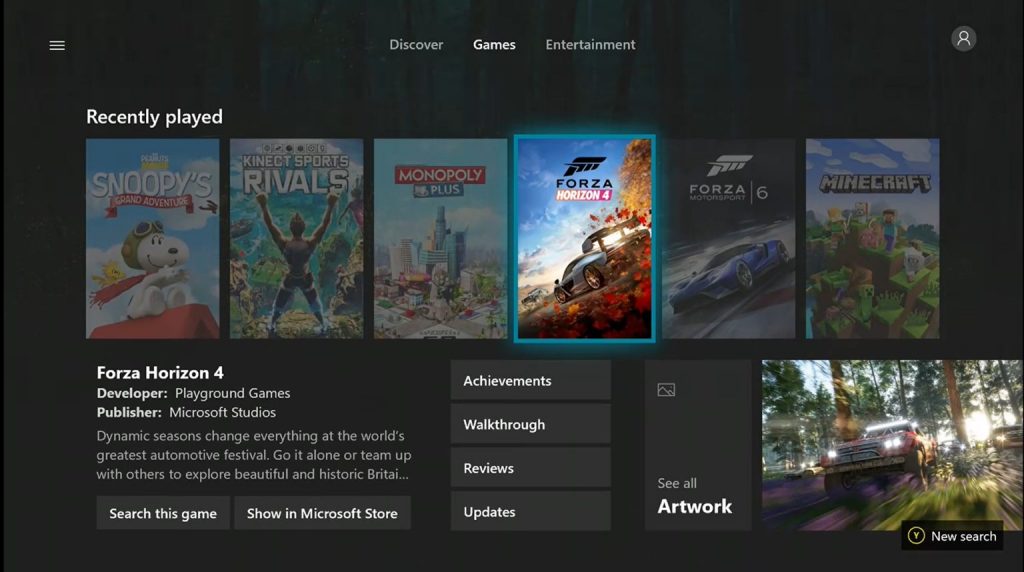
Microsoft is launching a new Bing app for Xbox One consoles in the US. If it’s currently in preview, the Bing app provides quick access to web search, as well as entertainment and gaming news. The app also comes with the beautiful daily wallpapers that most Bing users seem to enjoy.

If you’re in the US, you can try this new Bing app on your Xbox One by signing up for the preview in the Xbox Insider Hub app. Once installed, the app can be added to groups or pinned to the Home Dashboard for easier access.

As you may know, Bing used to be front and Center in the Xbox 360 dashboard, but the Xbox One later came with a better and more versatile web browser, which is now the legacy Edge. This new Bing app is no replacement for Microsoft Edge on the Xbox One, but it does come with a new UI that’s optimized for the console.

It’s not clear yet when Bing for Xbox One will be available in other markets, but we’ll sure let you know when it happens. In the meantime, let us know in the comments if you think this new Bing app should be a useful addition on the console.

PSA: Windows 10 Fresh Start feature is still there in the Windows 10 May 2020 Update

Yesterday, we reported that some users have discovered that the Fresh Start feature has been removed beginning with the Windows 10 May 2020 Update. Well, Microsoft has quietly updated its official support document (via Windows Latest) this morning to explain what is actually happening with Fresh Start in the latest Windows release.

According to the updated support page, the recovery tool has not been removed in the latest version, and it has just been moved to another place. “Fresh start is available for Windows 10 versions prior to 2004. For version 2004 and after, Fresh start functionality has been moved to Reset this PC,” the company explained.

Microsoft explains that to access the Fresh Start feature, you simply need to follow the steps mentioned below:

  1. Head over to Start > Settings > Update & Security > Recovery > Reset this PC > Get Started to use Fresh Start on PCs running the May 2020 Update or later.
  2. Click “Keep my files” option when prompted, choose between the local or cloud recovery option.
  3. Finally, select “No” when prompted “Restore preinstalled apps?”

However, Microsoft said that the preinstalled apps recovery option is only available if your machine has some preinstalled apps that are configured by the PC manufacturer. Microsoft has also confirmed that users running the Windows 10 November 2019 Update or older can still go to Settings > Update and Security > Windows Security > Device performance & health > Additional info > Get Started to access the feature.

It is worth noting that the Fresh Start references are still present in other parts of the OS (Update & Security section of the Settings menu), but in reality, the Fresh Start option has been removed from there, and it has been merged with the “Reset this PC” option under Recovery settings. Now that Microsoft is aware of the broken link in the Windows Security app, it’s likely that the software giant will remove them in future updates.

Lenovo brings high speed connectivity to its laptops starting with the Flex 5G

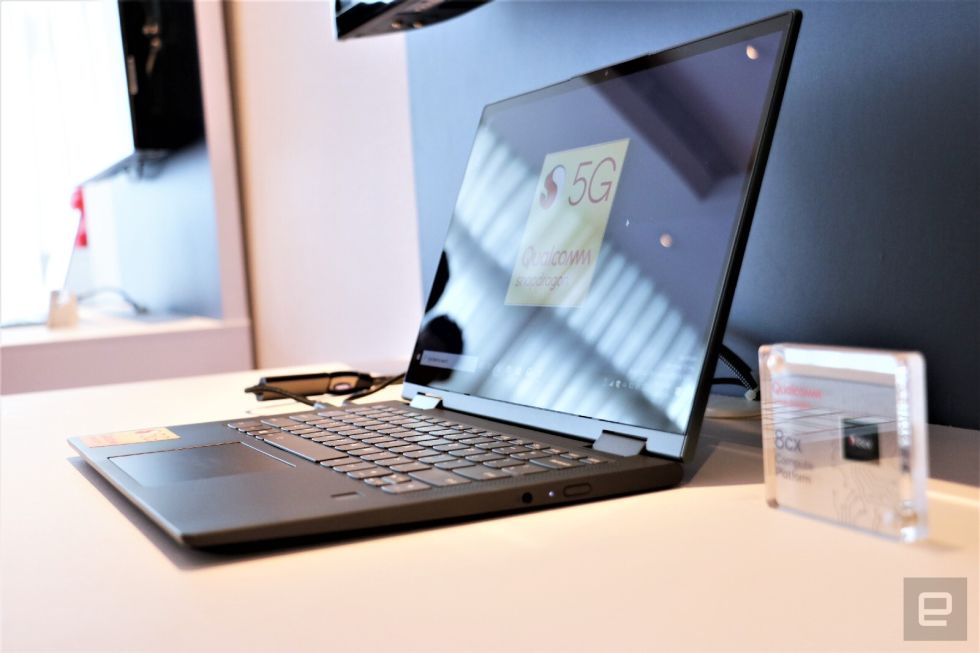
Lenovo will finally bring a 5G-enabled PC stateside with its Lenovo Flex 5G, also known as the Lenovo Yoga 5G in other select markets. Announced today, Lenovo will not only be selling a new 5G-enabled PC, but it will be doing so with backing from leading 5G service providers that include Verizon, EE, Sunrise, and CMCC.

The Lenovo Flex 5G will be powered by the latest Qualcomm Snapdragon 8cx 5G chipset, allowing users to connect to speeds up to 10 times faster than current 4G/LTE PCs on the market.

“Lenovo introduced the world’s first 5G laptop in market to equip the mobile generation with smarter technology for always-on connectivity and computing. The hardware is just the first step,” says Johnson Jia, Senior Vice President and General Manager of the Consumer Business Segment in Lenovo’s Intelligent Devices Group. “With our strategic partnerships with global 5G network carriers, consumers will now be able to access easier, faster, and more secure connectivity seamlessly from virtually anywhere. As 5G computing holds the power to transform user experiences, we believe it can ultimately disrupt the PC industry for the better.”

And, because it’s housing the Snapdragon 8cx, Lenovo is promising seemingly pie-in-the-sky battery life claims of up to 24-hours. Other notable specs include an integrated Qualcomm Adreno 680 GPU, 8GBs of LPDDR4X memory, and 256GB of UFS 3.0 storage. There’s also a fingerprint reader housed in a 2.97lb frame with a 14″ FHD glossy multi-touch display that can pump out 400nits of brightness.

Starting June 18, customers in the US will be able to purchase the Lenovo Flex 5G online at Verizon or through the My Verizon app. Verizon will provide installment payments through its Verizon Device Payment Plan with 0% APR for $58.33 for 24 months for those who qualify, otherwise, the device can be had for the full MRSP of $1,399.99.

As for international markets, Lenovo will have the Yoga 5G available via its own website later this year. International customers will need to wait until telecom carriers in their region release more info about pricing, availability, and compatible frequency bands.

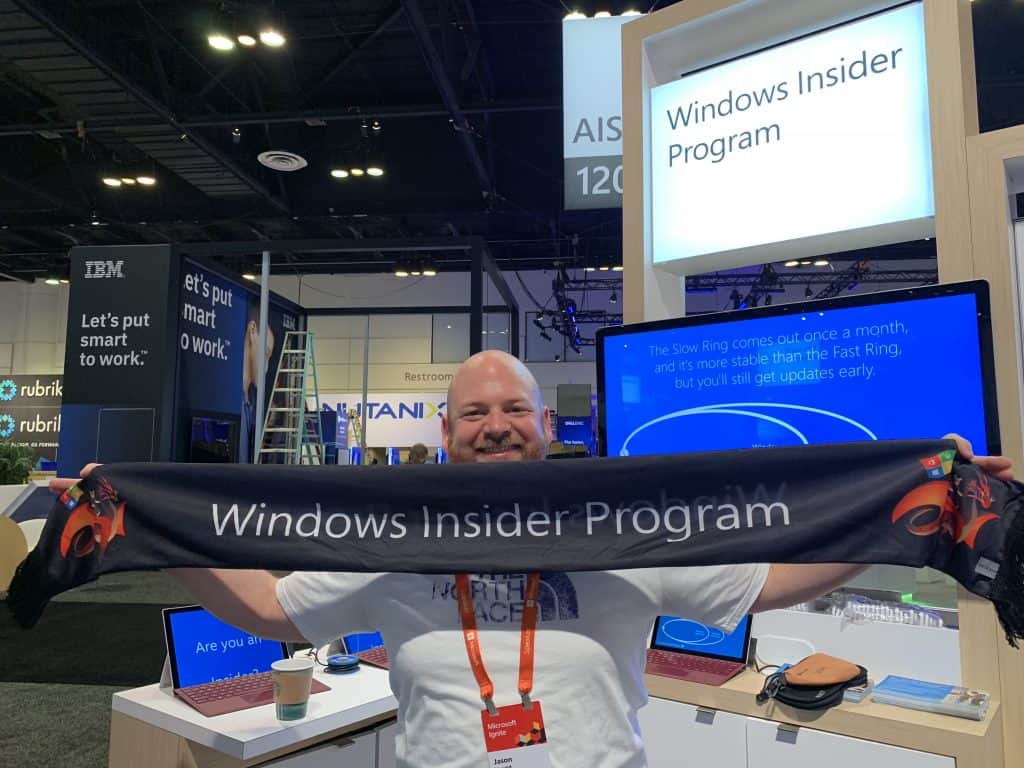
New Windows Insider Channels to sync with Office

In an overhaul of the Windows Insider program, Microsoft has announced the syncing of new Windows Insider Channels with Office.

The insider program gives users an opportunity to sample prerelease versions of the Windows OS at various stages of development. Since its inception in 2014, it has enabled Microsoft to improve various builds of the OS based on feedback from technical and regular users.

The platform itself keeps evolving, and today, Microsoft revealed that insider rings are changing to channels later this month.

Restructuring Windows Insider Channels

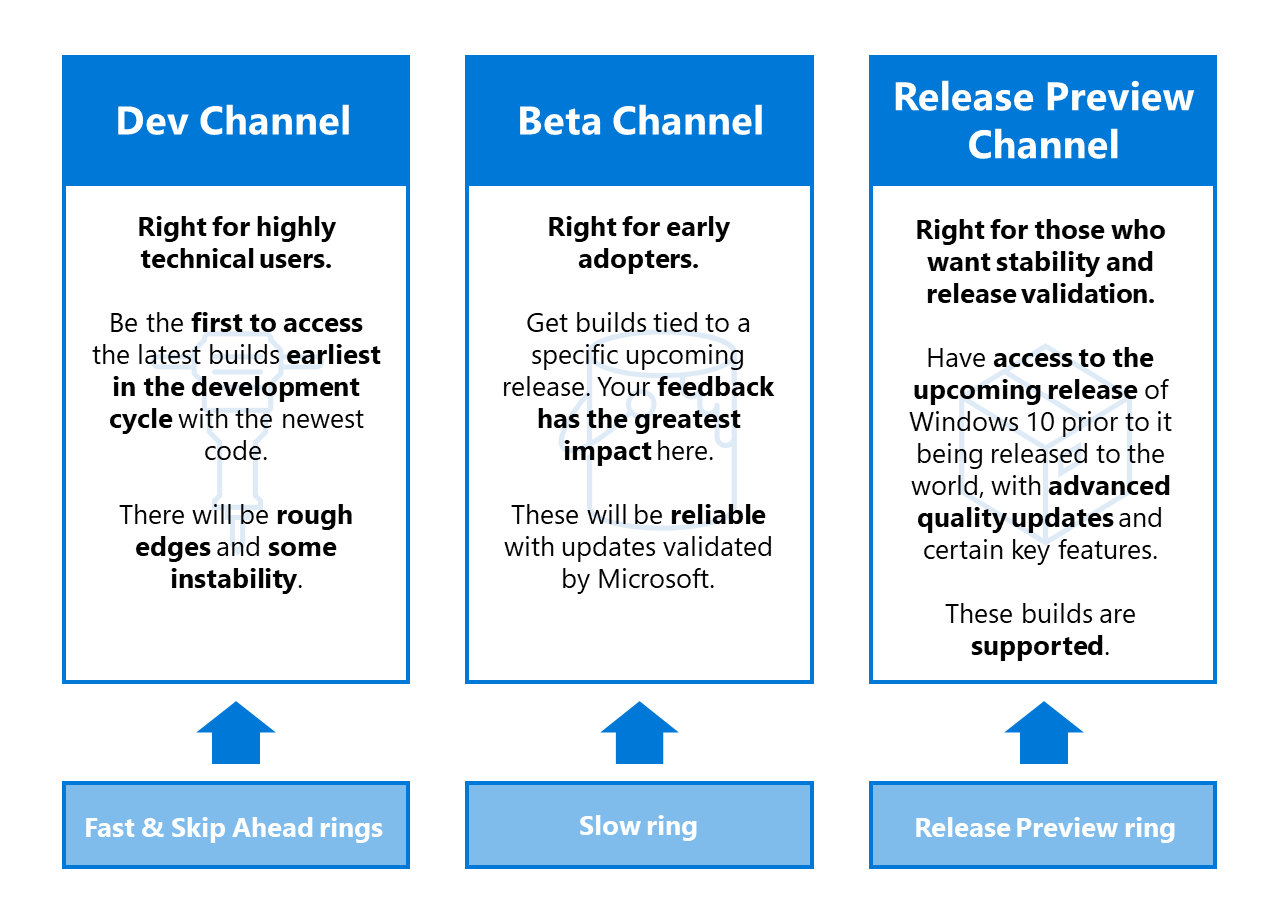
With the current Windows Insider program, you sign up for the Fast ring, Slow ring, or Release Preview ring based on how frequently you wish to access prerelease Windows 10 builds.

But the new model focuses on the quality of the builds rather than the frequency at which they come out.

Insiders can pick a channel that represents the experience they want for their device based on the quality they are most comfortable with. Our intention is to ensure Insiders will continue to receive frequent updates no matter which channel they’ve chosen.

The changes are as follows, briefly:

Dev Channel

The Fast ring changes to the Dev Channel. It will offer the latest OS builds with the newest code. Expect some instability and bugs here and there.

The Dev Channel is ideal for technical testers.

Beta Channel

The Beta Channel is the new Slow ring. It offers more stable builds that are linked to a specific upcoming release.

Release Preview Channel

This channel contains OS builds at their final stage of development just before release to general availability. You can join it to download upcoming versions of Windows 10 that include advanced quality updates and a host of core features.

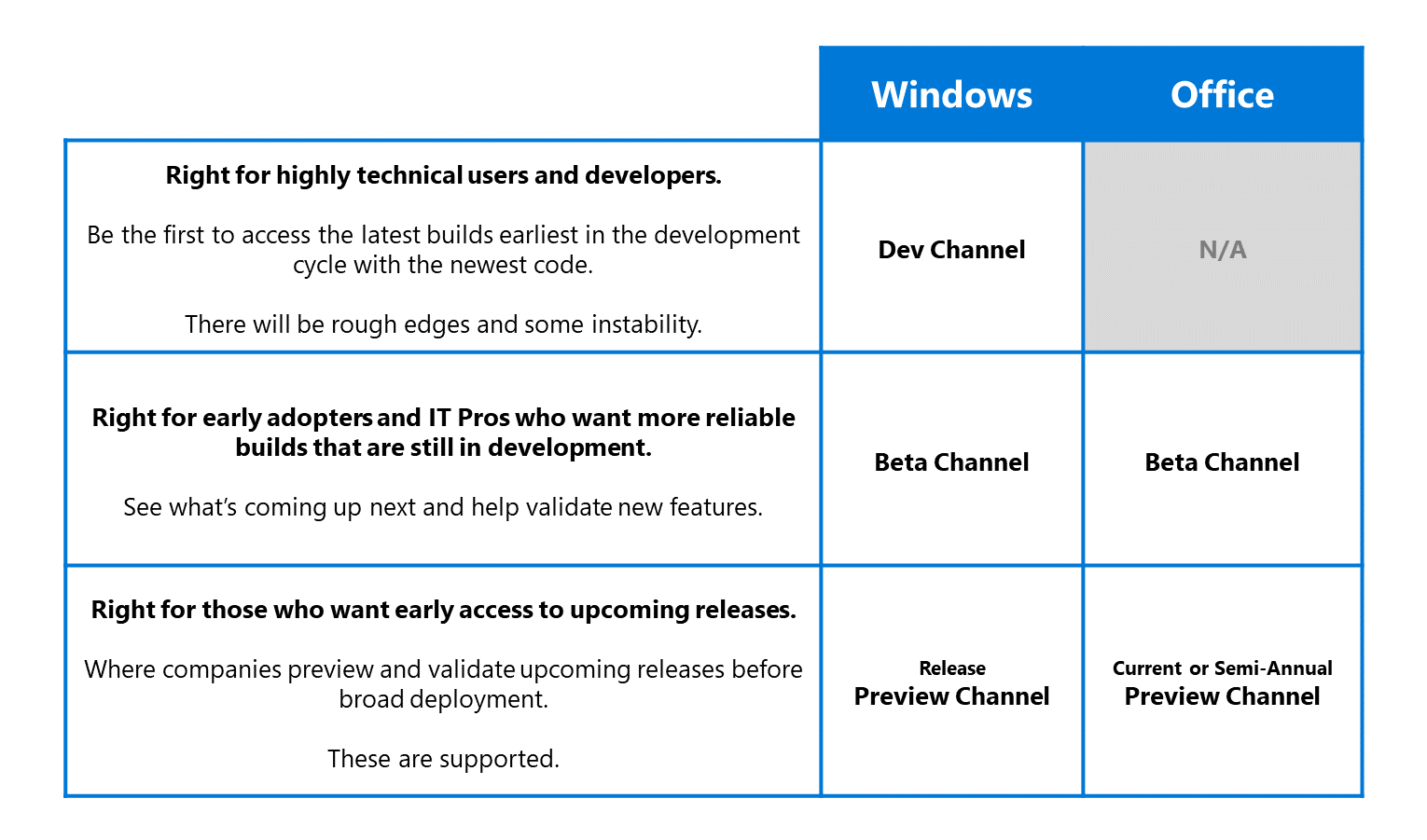
Apart from that, Microsoft intends on harmonizing the new insider channels with channels for Microsoft Office apps.

So, for each Windows Insider Channel, there’ll be an equivalent channel for prerelease Office apps. Also, the experience, in terms of stability of the product and bugs, should be similar across same-level channels.

Are you excited about the new Windows Insider Channels? Let us know what you think (or ask any questions) via the comments section below.

[wl_navigator]

Windows Community Toolkit 6.1 introduces Tokenizing TextBox

The Windows Community Toolkit 6.1 is now live. As always, each time a new version of the platform emerges, it brings features and improvements that make life a lot easier for developers.

Last year, version 6.0 introduced ARM64 support. It also came with new features, such as the EyeDropper control.

Version 6.1 brings a host of new features and controls as well, including the tokenizing textbox and improvements on notifications helpers.

The new Windows Community Toolkit 6.1

The latest additions to the Windows Community Toolkit should make work a little easier for developers creating Windows 10 UWP applications.

Microsoft says that the toolkit’s new tokenizing textbox isn’t an autosuggest box, even though it may seem like it. Instead, it’s a bit more advanced because it lets you pick multiple options.

The feature tokenizes all the items you’ve selected, making them easier to pick out and manipulate further as you’d wish.

It may look like an AutoSuggestBox at first, but it allows the user to choose more than one option. Once the user has selected one, it ‘tokenizes’ it and provides them a clear indication of their selections which can be manipulated easily afterwards.

According to Microsoft, the tokenizing textbox has been one of the most requested controls for the toolkit. It will be very useful to developers when organizing items, picking contacts, and numerous other dev use cases.

Additionally, the Windows Community Toolkit 6.1 will be handy to developers building apps for Windows 10 platforms such as desktops, laptops, Xbox, and even HoloLens. You may also develop any existing win32 app using the toolkit after converting it to UWP using the Desktop Bridge.

Just like with the previous versions, the latest version is an outcome of joint efforts involving Microsoft and the GitHub community.

What are your views on the latest Windows Community Toolkit 6.1 enhancements? You can always ask any questions or leave your suggestions in the comments section below.
[wl_navigator]

Microsoft to fix printing bug caused by KB4560960

As you may already know, Patch Tuesday is that day of the month when Microsoft releases security fixes and improvements for Windows. On June 9, 2020, the Redmond giant rolled out solutions for more than a hundred security flaws. However, just like several updates that went live that day, KB4560960, is causing problems for many users.

Previously, we covered how installing KB4560960 leads to internet issues, especially for LTE modem users.

Apart from that, it now appears that the package is also causing printing problems.

KB4560960 triggers print failure

Microsoft acknowledged that installing KB4560960 may cause print malfunction. Thus, instead of generating output when you try to print, the printing system gives an error.

After installing this update, certain printers might fail to print. The print spooler might throw an error or close unexpectedly when attempting to print, and no output will come from the affected printer.

The tech giant also said the update may affect the applications from which you’re attempting to print. So, your app will either crash or generate an error message.

Similarly, you could get an error if you try printing your file to an electronic copy, such as a PDF.

Microsoft said that it’s developing a solution to the problem, and it’ll roll it out in an upcoming update.

Other issues

Apparently, some users are unable to launch certain applications after installing KB4560960. You’re more likely to experience the problem when trying to open Microsoft Office apps.

The bug may also generate this message:

Windows cannot find “c:program filesmicrosoft officerootoffice16winword.exe” Make sure you typed the name correctly, and then try again.

However, it appears that only PCs with certain versions of Avast had that problem. There’s good news for the affected users though—updating the antivirus software patches the bug.

Did you install update KB4560960? If you did, have you encountered any software or hardware issues after installing it? Feel free to let us know or ask any questions in the comments section below.
Windows 10 2004 users report Chrome cookies, sync bugs

When Windows 10 2004 started rolling out on May 27, 2020, nobody expected that it would have zero flaws. As such, the many bugs users are reporting after upgrading to the latest version of Windows 10 don’t come as a surprise.

While the update installed perfectly for the vast majority of Windows 10 2004 users, it has caused hardware and software problems for others.

Right now, it appears that the update might cause cookies stored in Chrome to disappear once you close the browser.

Windows 10 2004 causing cookies issues in Chrome

The Google support forum is flooded with complaints about the unexplainable disappearance of cookies in Chrome. So, each time an effected user launches the browser and tries to log into a site, they have to supply their credentials afresh.

Most users claim that this problem started after upgrading to Windows 10 2004.

For example, one Chrome user says they tried uninstalling and installing different versions of the browser to no avail.

Ever since the new Windows 2004 update Google Chrome keeps syncing out, tried reinstalling, adding google‘s domains to the cookie exception list and so on. Also cookies do not get deleted after closing Chrome. I even tried installing different versions of Chrome, canary and the beta. Nothing works.

Moreover, the update appears to turn off syncing in Chrome. That is causing problems for Windows 10 users that log into website accounts from multiple devices.

What is even more peculiar is the fact that the deletion of cookies and pausing of sync seems to affect only Chrome. According to yet another user, Chromium Edge cookies remain intact even after upgrading to the May 2020 update.

All the reported bugs may be a quality of life issue, but they have a significant impact on the browsing experience for the users.

Let’s hope that Microsoft uses next month’s Patch Tuesday updates to address the issues.

Have you installed Windows 10 2004 yet? Any trouble with Chrome cookies? Feel free to share your experience via the comments section below.
[wl_navigator]

3 best VPNs for Divinity: Original Sin 2 to fix lag

Divinity: Original Sin 2 is an RPG that you can play on Windows, macOS, PlayStation 4, Xbox One, and Nintendo Switch. It features online PvP and co-op if you want to create a party with three other players. We think it’s one of the best offline games for PC, which also shines in the multiplayer edition. You can find it on Steam. However, many users report Divinity: Original Sin ping when trying to play it online with their friends. If you’re one of these users, you can use a VPN to reduce your ping and improve your overall gaming experience. The role of a virtual private network solution isn’t only to hide your IP address and encrypt your traffic, but also to fix packet loss and speed up your Internet connection for gaming.

What are the best VPNs to fix Divinity: Original Sin 2 lag?

Private Internet Access

use CyberGhost VPN to fix Divinity Original Sin 2 stuttering

If you’re looking for a quick Divinity: Original Sin 2 lag fix, shift your attention to Private Internet Access (PIA). It’s one of the fastest VPNs for desktop, mobile, and console that can minimize jitter. It gives you access to a wide range of VPN servers: over 3,300 spread across 47 countries.

PIA is a product of Kape Technologies, which provides you with useful security options to significantly improve your gameplay, as well as eliminate reduce Divinity: Original Sin 2 lag and ping.

This VPN solution supports static and dynamic IP addresses, exclusive DNS servers, and a built-in kill switch. Plus, you can forward ports, which comes in handy whenever you need to host game servers for your friends. It has 24/7 live chat support.

What else you must know about PIA:

  • Up to 10 connections at once
  • Works with Windows, Mac, PS4 4, Xbox One, Switch
  • Zero-logging policy
  • Great for fixing Divinity: Original Sin 2 extreme lag
  • 30-day money-back guarantee (no free trial)
Private Internet Access

Private Internet Access

Quickly fix Divinity: Original Sin 2 multiplayer lag with the help of this fast and secure VPN.
$2.85/mo. Buy it now

CyberGhost VPN

use CyberGhost VPN to fix Divinity Original Sin 2 stuttering

Another excellent way to minimize Divinity: Original Sin 2 lag is by turning to CyberGhost VPN. It’s the only free VPN app on this list and does a great job optimizing your network traffic for gaming. It’s owned by Kape Technologies.

CyberGhost VPN has an extensive network of servers: more than 6,400 in 89 countries. It’s equally impressive when it comes to security features. For instance, you can use split-tunneling mode to create whitelists and blacklists to better manage your bandwidth.

With the aid of this VPN service, you can fix Wi-Fi packet loss and get rid of Divinity: Original Sin 2 lag when saving. It supports private DNS servers and DNS leak protection.

What else you must know about CyberGhost VPN:

  • Allows 10 connections at the same time
  • Compatible with Windows, Mac, PS4 4, Xbox One, Switch
  • Strict no-logs privacy policy
  • Provides a Divinity: Original Sin 2 Definitive Edition lag fix
  • 45-day money-back guarantee (1-day free trial)
CyberGhost VPN

CyberGhost VPN

Eliminate Divinity 2 lag and refine your gaming experience using this reliable VPN app.
$2.75/mo. Buy it now

NordVPN

use NordVPN to reduce Divinity Original Sin 2 ping

NordVPN offers a fast and easy Divinity 2 lag fix. It’s a great virtual private network solution that has servers optimized for gaming, secure browsing, streaming, and torrenting. You can also use it to evade geoblocks.

Developed by Tefincom & Co., NordVPN provides you with over 5,400 servers spread across 59 countries. You can use it to fix Xbox packet loss, encrypt your Internet traffic, and speed up your network connections.

NordVPN can swiftly repair Divinity: Original Sin 2 lag by redirecting all network traffic through the VPN. It supports the OpenVPN protocol and also integrates a network lock that can automatically turn off your VPN in case of connection drops.

What else you must know about NordVPN:

  • Permits 6 simultaneous connections
  • Can be installed on Windows, Mac, PS4 4, Xbox One, Switch
  • No logs
  • Provides a quick Divinity 2 lag fix
  • 30-day money-back guarantee (no free trial)
NordVPN

NordVPN

Don't worry about Divinity: Original Sin 2 lag when you can use this VPN solution to improve your gaming traffic.
$3.49/mo. Buy it now

Whenever you’re experiencing slow internet connections, high ping, stuttering, delays, and lag while playing Divinity: Original Sin 2, use a VPN to fix network congestion.

This way, you can eliminate connectivity issues that prevent you from enjoying the game with your friends. Besides, you can also minimize packet loss with a VPN to improve the quality of your gameplay.

[wl_navigator]

Here’s how to backup saved game files in Windows 10

Just as you regularly back up your PC is not be a bad idea to start thinking about ways you can do the same for your games saved files.

In case you will be replacing your laptop or if one of the files gets corrupted having a backup could save you some time and a lot of frustration.

We compiled a list of how you can back up games save files in Windows 10.

How do I back up saved game files on my PC?

1. Manually back up saved game files

  1. Click the File Explorer button on Windows 10’s taskbar
  2. Open the folder that includes the game’s save file subfolder save files backup
  3. Select the saved game file subfolder
  4. Press the Copy to button on the Home tab.
  5. Select a folder to copy it to from the menu
  6. Insert a USB flash drive in your desktop or laptop to back up the folderback up games' save files
  7. You can back up single saved files much the same
  8. Open the game’s save folder
  9. Select a file and press Copy to

The paths for game save files can vary, but you can usually expect to find a saved game subfolder within games’ primary folders. Your My Documents (or Documents) folder might also include saved game file subfolders.


Check out our best game maker software for more game development options


2. Back up games with Game Backup System

GameBackupSystem CTA

Manually backing up files is fine but who’s got time for that? You need to know the exact place where the game files are stored, copy them to the destination and keep doing this.

And, it’s not like you always have the same games installed, right? Not when there are so many cool new games being launched. That’s why you need a simpler solution.

Game Backup System was specifically designed to help any user with having perfect copies of the games they own.

Here’s what’s so good about Game Backup System:

  • It creates a perfect 1:1 copies of all the favorite games you own
  • Helps avoid getting the disks scratched and unusable
  • Works with all operating systems
  • Clear instructions that are easy to follow

⇒ Download Game Backup System


3. Back up game save files with File History

  1. Press the Cortana button on the left of the Windows 10 taskbar
  2. Enter the keyword backup in the search box
  3. Select Backup settings file history backup
  4. Insert a flash drive, or another external hard drive, in a USB slot
  5. Press the Add a drive button, and select a backup drivefile history backup
  6. The Automatically back up my files option is selected by default. You can select further configuration options by clicking More options
  7. Click the Add a folder option
  8. Select the subfolders to back-up your saved game files from
  9. Select your desired interval for back-up
    file history backup
  10. Press the Back up now button
  11. You can restore a backup by clicking the Restore files from a current backup option shown in the snapshot directly belowrestore files file history backup
  12. You can also restore backup copies from within File Explorer by right-clicking a file and selecting Restore previous version
  13. Select an earlier file from the previous version tab

Don’t know what game audio recorder software is the best? Read here for more details


These are the three ways you can back up games save files. This software guide provides further details for some of the best backup utilities you can also back up game save files with.


[wl_navigator]

PoE Failed to Connect to Instance: 7 Troubleshooting Tips

The Failed to connect to instance error in PoE signals an obvious network problem. It could be on the server’s end, or on your end. Occasionally, DDoS attacks could also be at fault.

Below, we’ll help you figure out how to get rid of this error and identify the underlying cause in your particular case. So, if you want to be able to reconnect to the Path of Exile servers ASAP, keep reading.

How to fix PoE failed to connect to instance

Start by checking the Path of Exile server status to make sure that there aren’t any widespread issues. If the servers are fine, follow these steps below.

1. Change the server

  1. Go to the Options menu in the game.
  2. Navigate to the Server settings.
  3. Select a different server, preferably one in a nearby region.path of exile server list

If you encounter connection issues on PoE, it’d be a wise thing to change the server. The Failed to connect to instance error may occur when too many people are on the same server.

It also happened when a specific server was DDoSed, so playing on another one, at least temporarily is a good idea.

2. Close bandwidth-intensive tasks

  1. Pess Ctrl + Shift + Esc to open Task Manager.
  2. Go to the Processes tab and click on Network to sort tasks by network usage.sort processes by network usage
  3. Check the processes that consume a lot of resources, select those that you’re not currently using and click End Task.

3. Verify the integrity of game files

  1. Open Steam and go to the Library.
  2. Right-click on Path of Exile and select Properties.
  3. Click on the Installed Files tab, then select Verify Integrity of Game Files.game files

4. Clear DNS cache

  1. Open Command Prompt as Administrator.
  2. Type ipconfig /flushdns and hit Enter.ipconfig flush dns
  3. Restart your PC and try playing Path of Exile again.

Clearing DNS cache is a good maintainance practice that can prevent and stop PoE connection issues that prompt Failed to connect to instance error.

5. Update your graphics card drivers

  1. Go to Device Manager.
  2. Locate the Display Adapters section.
  3. Pick your current graphics card, right-click on in and select Update.update driver to fix AnselSDK64.dll
  4. Select Search automatically for drivers and wait for the process to complete.

Keeping drivers up to date ensure proper performance. It can also help with related issues such as PoE FPS drops or PoE not recognizing graphics card.

6. Allow PoE through the Windows Firewall

  1. Open the Control Panel and select System and Security.
  2. Click on Windows Defender Firewall > Allow an app or feature through Windows Defender Firewall.allow app or feature firewall
  3. Find Path of Exile in the list and ensure both Private and Public are checked.
  4. If it’s not in the list, click Allow another app and browse to the Path of Exile executable.allow app through firewall

The Windows Firewall occasionally stops legitimate, safe apps from connecting to the internet. If it does this with PoE, you will not be able to connect to the servers and get a Failed to connect to instance error.

Adding the game as an exception will put an end to this.

7. Use VPN

  1. Choose a reputable VPN provider and install it on your device. For games like PoE we recommend ExpressVPN because it’s very fast, has servers all around the globe and offers unlimited bandwidth.installing expressvpn
  2. Connect to a server that is geographically close to the Path of Exile region you wish to play on.
  3. Go back to the game and try to connect again.

If the error stems from slow internet, ISP blocks, and DDoS attacks, using a VPN can help.

That’s because a VPN reroutes your connection through a different server, bypassing regional issues or throttling by your ISP, and potentially connecting you to a more stable network path.

ExpressVPN

ExpressVPN

Ditch PoE errors by connecting to lightning-fast servers all around the globe!
Check price VIsit website

What does failed to connect to instance PoE mean?

If you’re any familiar with PoE, you know that a lot of it revolves around finding maps that you can load and join with your peers. Some maps are rarer than others. Thus, it’s easy to see why crashing in the middle of a rare map can be frustrating.

Many players report that, upon attempting to enter maps, they get booted by the game. The Failed to connect to instance error is vague enough that you can’t immediately figure out what’s wrong with the game.

New leagues get players all worked up and, as a result, network congestion steadily occurs. Therefore, it might appear like the best suggestion in this case is waiting for things to settle down before giving the new leagues a try.

Following the steps above should help you fix the PoE failed to connect to instance error. Feel free to ask any questions in the comments below.

Money in Excel is now available for Microsoft 365 Personal and Family subscribers in the US

To make it easier for Microsoft Excel users to track their finances, Microsoft announced a new feature called Money in Excel on March 30. In a blog post today, Microsoft has announced that the Money in Excel feature is now generally available to all Microsoft 365 Personal and Family subscribers in the US.

Money in Excel is basically a dynamic template/add-in for Excel that connects to your bank, credit card, investment, and loan accounts, and allows you to securely import transactions and account balances into an Excel spreadsheet. Once the data is imported into a spreadsheet, you can easily keep an eye on your monthly expenditures, and analyze the “Snapshot” sheet to see how much you are spending across various categories including groceries, household items, rent, and more.

If you’re a Microsoft 365 Personal or Family subscriber, you can access this feature by following these steps. We also invite you to check out our hands-on with the experience by clicking here.

  1. Head over to the official Microsoft Office templates page to install the template.
  2. Open the Excel template and follow the on-screen instructions to link your bank accounts.
  3. The plug-in will verify your account details, and then Excel will pull in your transaction history to fill your spreadsheet

Money in Excel will also provide proactive alerts for changes such as overdraft charges, increases in your subscription fees, as well as major purchases made during the current month. Moreover, the customizable template lets you create your own spending categories or charts to suit your specific goals and needs. We invite you to check out the official blog post to learn more about its features.

Do you like the Money in Excel feature? Let us know in the comments down below.
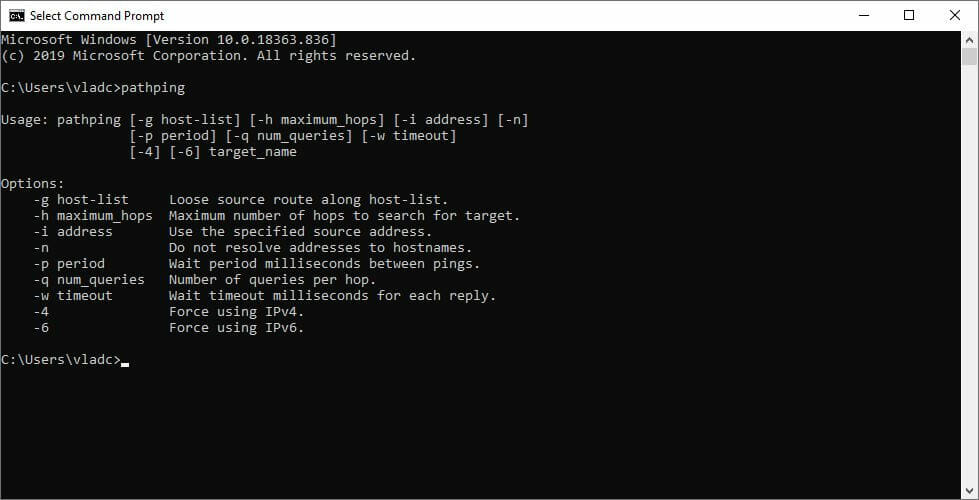
New Windows Insider Channels to replace existing Rings, with bigger focus on quality

Amanda Langowski, the new head of the Windows Insider program announced some pretty big news for Insiders today. This month, the existing Ring system will be replaced by new Windows Insider Channels, which reflect an increased focus on quality and consistency with other Microsoft products such as Office and Microsoft Edge.

“As we continue to evolve the way we release Windows 10 and the diversity of Insiders we serve is greater than ever, it is critical that Insiders have a flighting option that is tailored to their needs. We believe the best way to do this is to shift focus from frequency to quality. Insiders can pick a channel that represents the experience they want for their device based on the quality they are most comfortable with. Our intention is to ensure Insiders will continue to receive frequent updates no matter which channel they’ve chosen,” explained Langowski.

The Dev channel will replace the Fast Ring later this month, while the Beta channel and Release Preview channel will replace the Slow and Release Preview rings, respectively. The Dev channel will continue to receive more unstable builds that are not tied to a specific Windows release, and this channel will still be used for testing experimental features. On the other hand, the Beta channel (previously Slow Ring) will get builds tied to a specific release (that should soon be 20H2), and Microsoft recommends this channel for most early adopters and IT professionals looking for “relatively reliable updates that are validated by Microsoft.”

The new Release Preview channel (previously Release Preview ring) will continue to get early access to upcoming Windows 10 releases, with “advanced quality updates and certain key features.” Importantly, Langowski also said today that “As we continue to evolve the way we’re building and releasing Windows 10 in the future, we may introduce new channels for new experiences for Insiders.”

Microsoft’s new Windows Insider channels system is now more aligned with how things work for the Office Insider program, though the two programs remain separate. However, it’s worth noting that there’s now Dev channel for the Office Insider program, while the equivalent of the Windows Insider Release Preview channel is the Current or Semi-Annual Preview channel.

If you’re already a Windows Insider, you’ll soon be automatically moved to your new corresponding Insider channel. While the name change is one thing, what’s important here is that Microsoft wants each of these new channels to get builds more frequently, while also focusing on code quality. The new system is also a bit easier to understand with one channel (Beta) dedicated to the next Windows release, and hopefully, the new Dev channel will soon receive the experimental features that Fast Ring insiders have been waiting to see for months now.  There’s still the possibility of Microsoft adding more new channels, as Langowski mentioned today, though we hope this won’t be necessary. Let us know what you think of these latest changes in the comments below.

Xbox Game Pass games will be able to support Smart Delivery when Xbox Series X launches

As Microsoft is currently getting ready for its big Xbox Game Studios showcase next month, the company is sharing some new information about Smart Delivery today. For those unfamiliar, Smart Delivery is a new feature that will allow developers to automatically provide the best version of the game optimized for your Xbox console, at no additional cost.

All upcoming Xbox Game Studios titles will support delivery, in addition to existing games such as Gears 5: if you already own the latter and want to play it on Xbox Series later this year, the next-gen Xbox will get a version of the game optimized for the new hardware, with graphical enhancements and support for up to 120FPS in multiplayer.

It will be up to developers to support Smart Delivery, and we already know that Destiny 2, Cyberpunk 2077, DiRT 5, and Assassin’s Creed Valhalla are some of the biggest AAA games that will support it when the Xbox Series X launches this holiday season. With Smart Delivery, you only have to buy a game once to benefit from free enhancements on Xbox Series X (again, if the developer supports it), and this should definitely be a killer feature for the Xbox ecosystem.

If you’re an Xbox Game Pass subscriber, you’ll also be able to enjoy Smart Delivery with games that support it. “Outside of our Xbox Game Studios titles, it will be up to the individual developer to determine whether they take advantage of Smart Delivery.” Keep in mind that in the case Game Pass games don’t support Smart Delivery, the Xbox Series X should still provide a better gaming experience as even non-optimized games should benefit from smoother frame rates and faster loading times.

Microsoft currently has a list of 14 first-party and third-party games that will support Smart Delivery, but it’s not clear yet if many developers and publishers will embrace this feature. EA apparently won’t, as the company recently announced a limited-time free Xbox Series X upgrade for consumers purchasing the upcoming Xbox One version of Madden NFL 21. Things could get messy if other publishers follow EA’s footsteps, but Microsoft definitely deserves credit for allowing gamers to purchase a game once and get free upgrades when buying a new console. That’s how things always worked in the PC world, so maybe it’s time for the console industry to finally catch up.