Microsoft 365 Copilot Mobile Now Uploads Local Files to OneDrive by Default

Microsoft is testing Copilot Tasks, but recent mobile changes are raising concerns. A new update shifts Microsoft 365 Copilot toward a Copilot-first experience instead of a traditional document viewer.

According to Windows Latest, Microsoft has modified how Microsoft 365 Copilot works on Android and iOS devices. The app now routes opened files directly into Copilot chat rather than launching a standard file preview.

Copilot chat replaces the traditional viewer

Previously known as the Office Hub, the app later became Microsoft 365 and was rebranded again in 2025 as Microsoft 365 Copilot. Over time, Microsoft steadily reduced emphasis on document viewing and increased Copilot integration.

In October 2025, Microsoft already placed the document viewer behind additional taps. A recent update goes further by launching Copilot chat immediately when users open a file.

Microsoft says this design enables instant summaries and quicker file access through conversational prompts. However, real-world tests show a more complex workflow.

Local files are uploaded to OneDrive before analysis

When users open a local document, the app uploads the file to Microsoft OneDrive before Copilot analyzes it. Only after syncing does Copilot attempt to search and summarize the content.

If Copilot fails to process the file, the document may not load at all. In some cases, Copilot reportedly references unrelated OneDrive documents instead of the intended file.

Files already synced with OneDrive continue to open more normally. Unsynced local files, however, require a full upload before access becomes possible.

Viewer access is now hidden inside Copilot

The traditional document viewer has not disappeared entirely, but Microsoft has moved it inside Copilot’s references tab. Users must navigate through Copilot chat to reach the actual document preview.

If the upload or AI processing fails, the file may not appear inside the app. Some users may need to manually upload documents to OneDrive before accessing them through Copilot.

Microsoft suggests using standalone Office apps such as Microsoft Word, Microsoft Excel, and Microsoft PowerPoint for standard file viewing without AI routing.

Copilot-first strategy raises privacy questions

The update effectively transforms the mobile app into a Copilot-centric interface. While Microsoft promotes productivity benefits, critics argue that automatic uploads and AI processing introduce new friction and potential privacy risks.

The concerns arrive shortly after Microsoft acknowledged a Copilot bug that summarized confidential emails without user awareness. Some policymakers have reacted strongly to rapid AI adoption, including restrictions on AI usage within certain government environments.

Microsoft continues testing Copilot Tasks and expanding Copilot features across its ecosystem. Whether users embrace this AI-first direction on mobile may depend on how smoothly file handling and privacy safeguards evolve in future updates.

ASUS Raises ROG Xbox Ally X Price by AU$200 in Australia

ASUS has quietly increased the price of the ROG Xbox Ally X in Australia, adding AU$200 to the handheld’s launch price. The move comes as memory and storage costs continue to rise globally, driven in part by AI data center demand.

According to True Achievements, the ROG Xbox Ally X originally launched at AU$1,599 (around $1,130). It is now listed at AU$1,799 (roughly $1,272) on ASUS’ official website and multiple retailers across Australia.

Price increase confirmed on official listings

The updated pricing appears directly on ASUS’ Australian store page and partner retailers. The standard ROG Xbox Ally model has not seen a price adjustment so far, suggesting the increase currently targets only the higher-end Ally X configuration.

A similar price bump was previously reported in Japan, hinting that the adjustment may not remain limited to one region.

ASUS cites supply chain volatility and memory costs

An internal ASUS document from late 2025 referenced “strategic price adjustments” starting January 5, 2026. While the document did not name specific products, it highlighted global supply chain volatility as the primary driver.

Rising costs of DRAM, NAND flash, and SSD components were specifically mentioned. These parts play a critical role in handheld gaming PCs, especially premium models like the Ally X that ship with high-capacity memory and fast storage.

Industry-wide component shortages tie closely to large-scale AI data center expansion. Major cloud providers continue to secure significant DRAM and NAND supply for AI infrastructure, tightening availability for consumer electronics.

Broader AI demand pressures consumer tech pricing

The surge in AI server deployments has placed sustained pressure on memory and storage production. As manufacturers prioritize enterprise contracts, consumer hardware makers face higher procurement costs.

This environment affects more than handheld gaming devices. Laptops, graphics cards, and even SSD upgrades have seen pricing fluctuations tied to DRAM and NAND market swings.

It remains unclear whether ASUS will extend ROG Xbox Ally X price increases to other regions. Buyers in markets outside Australia may want to monitor official listings closely.

Sony unlikely to raise console prices, may shift to services

While ASUS adjusts hardware pricing, Sony appears less likely to increase the price of the PlayStation 5 itself. Instead, analysts suggest the company could focus on boosting revenue through subscription and digital services.

As for next-generation hardware, reports indicate that a potential PlayStation 6 may not arrive until 2028 or 2029, leaving the current console cycle in place for several more years.

For now, Australian gamers considering the ROG Xbox Ally X face a higher entry price, with further increases possible if supply constraints continue.

Microsoft Exchange Online and Teams Messages Quarantined After Phishing Detection Error

Microsoft has confirmed an Exchange Online issue that mistakenly quarantined legitimate emails due to faulty phishing detection logic. The incident blocked links, triggered false alerts, and removed messages across Microsoft 365 services.

The company has now resolved the issue and is preparing a full post-incident report.

Faulty phishing detection rules trigger widespread false positives

According to BleepingComputer, the problem stemmed from heuristic detection rules designed to catch credential phishing campaigns. A logic error in a security system update caused thousands of legitimate URLs to be flagged as malicious.

Exchange Online began quarantining emails and blocking links in both Outlook and Microsoft Teams messages. Users also received alerts about “potentially malicious URL clicks,” which Microsoft later confirmed were false positives.

The issue was tracked internally as EX1227432 and started on February 5.

Automated systems amplified the impact

The updated detection system flagged URLs at a much higher rate than intended. Automated remediation tools then escalated the problem.

Zero-hour Auto Purge (ZAP) events removed emails and Teams messages containing flagged links. Microsoft Defender XDR also generated alerts related to the same URLs, compounding confusion for administrators.

Other interconnected security tools within Microsoft’s detection infrastructure amplified the disruption. A separate bug in the security signature system delayed the rollback of the flawed rules, extending the incident timeline.

Timeline and resolution details

Microsoft confirmed that the incident ran from February 5 through February 12. The company has since fully resolved the issue.

Administrators who received alerts regarding suspicious URL clicks can now treat them as false positives related to this event. Microsoft has not disclosed the total number of affected users but classified the situation as an official “incident,” signaling noticeable customer impact.

A final post-incident report is expected within five business days of resolution.

This event follows previous Exchange Online issues involving spam filtering errors and incorrect email quarantining. It also comes shortly after Microsoft acknowledged a separate bug where Copilot Chat summarized confidential emails without proper restriction.

Additionally, Microsoft Teams experienced a recent outage, though that issue has already been resolved.

The latest incident highlights the complexity of automated phishing detection systems and the cascading effects of security rule updates across Microsoft’s cloud ecosystem.

Microsoft Tests Pop-Up Postgame Recaps in Xbox App on Windows

Microsoft has recently faced criticism over higher Xbox Gift Card redemption costs. Now, the company is shifting focus back to player engagement with a new feature aimed at PC gamers.

According to Neowin, Microsoft is rolling out a Postgame Recaps feature to Xbox PC Gaming Preview users on Windows.

What Postgame Recaps do in the Xbox App

The new feature delivers a visual and interactive summary after a gameplay session ends.

Postgame Recaps can include screenshots, captured videos, unlocked achievements, total playtime, and key in-game moments. The recap appears as a pop-up inside the Xbox PC app once a session concludes.

Microsoft notes that the pop-up will not trigger after every single game. It will most likely appear when players unlock achievements, capture clips, or launch a title for the first time.

In some cases, first-time sessions may also include personalized game recommendations based on recent activity.

System tray integration and performance impact

To support the feature, the Xbox app will run in the system tray. This allows it to monitor gameplay sessions and generate summaries in real time.

Microsoft claims it has optimized the app to minimize memory usage and performance impact. The company emphasizes that background operations should not affect gaming performance.

Players who prefer a cleaner setup can fully disable Postgame Recaps. Turning off the feature also stops the Xbox app from auto-starting in the system tray.

Users can find the toggle under Settings > App > Postgame recaps.

Built-in feedback system

Microsoft also allows players to submit feedback directly from the recap interface.

Users can report what they found helpful, what felt unnecessary, and what features they would like to see added. This suggests the company plans to refine the tool before a broader rollout beyond preview users.

The move signals Microsoft’s continued effort to make the Xbox PC ecosystem more social and performance-focused, especially as competition intensifies across Windows gaming platforms.

In related Xbox developments, reports indicate that Xbox Ally X prices have increased in Japan due to rising memory costs. Meanwhile, industry speculation points to a potential 2027 launch window for Microsoft’s next-generation Xbox console.

Microsoft Stock Drops 15% in 2026 as AI Spending Faces Investor Scrutiny

Microsoft’s Stock (NASDAQ: MSFT) slowdown is raising fresh questions on Wall Street as shares slide 15% year-to-date and nearly 12% in the past month.

Microsoft Stock Down 15% in 2026

Microsoft shares are trading around $401, roughly 25% below their 52-week high of $555.45. The pullback reflects mounting investor scrutiny over the company’s aggressive AI spending strategy.

Despite the downturn, CNBC’s Jim Cramer remains optimistic, predicting Microsoft could stage a comeback that “blows us away.”

AI Spending Under the Microscope

Investors have grown cautious about Microsoft’s pace of AI monetization. The company plans to invest up to $50 billion in AI infrastructure expansion, a figure that underscores its long-term commitment.

Markets now want proof that these investments will translate into meaningful revenue acceleration.

The concern centers largely on Microsoft Copilot. Reports suggest that only about 3.3% of Microsoft 365 users currently pay for Copilot, raising doubts about adoption speed relative to expectations.

With AI positioned as Microsoft’s next growth engine, slower-than-anticipated uptake has cooled sentiment.

Copilot Not the Final AI Vision?

Cramer suggested that Copilot may represent only the first phase of Microsoft’s broader AI roadmap.

Microsoft continues developing in-house AI silicon, such as the Maia 200 accelerator, while securing advanced memory supply like SK Hynix’s HBM3e to support its data center ambitions. The company has also signaled efforts to reduce reliance on OpenAI as it pursues greater self-sufficiency.

This strategic pivot could allow Microsoft to control more of its AI stack, from hardware to enterprise software deployment.

Waiting for a Turning Point

Microsoft’s stock weakness suggests investors expect a clearer monetization path. Azure growth trends and enterprise AI subscription numbers will likely shape near-term sentiment.

At current levels, expectations have cooled significantly. That lower bar could position Microsoft for a positive surprise if a new AI-driven revenue model gains traction across Windows, Office, Azure, and enterprise platforms.

For now, the market waits for signs that heavy AI spending will translate into measurable returns.

Disclaimer: This article is for informational purposes only and does not constitute financial or investment advice. Stock market investments carry risk, and readers should conduct their own research or consult a qualified financial advisor before making any decisions. Stock prices and percentages reflect the time of writing and may change due to market volatility. Please verify current quotes before acting on any information.

Microsoft Warns US Tech Firms to “Worry” About China’s AI Subsidies

Microsoft President Brad Smith has cautioned that U.S. technology companies should “worry a little bit” about Chinese government subsidies shaping the artificial intelligence race.

Speaking at the AI Impact Summit in New Delhi, Smith said the United States still holds key advantages in powerful chips and innovation, but warned that state-backed competition from China could reshape global markets.

Chinese AI firms benefit from heavy state backing

According to CNBC, Smith highlighted the scale of support Chinese AI companies receive from their government. That support includes a multi-billion-dollar national investment fund and local incentives such as discounted energy and computing vouchers.

Last year, China launched a 60.06 billion yuan (about $8.42 billion) national AI fund aimed at early-stage AI development. In addition, several Chinese cities offer vouchers to reduce the cost of renting computing power, making large-scale AI training more affordable.

Cheap energy also plays a role. Lower power costs can significantly reduce expenses for AI infrastructure, which depends on energy-intensive data centers.

Smith suggested that these financial advantages could make lower-cost Chinese AI models more attractive to developing nations.

Lessons from telecom disruption

Smith compared the current AI race to China’s earlier expansion in the telecommunications sector. State support helped companies like Huawei and ZTE grow rapidly and expand across global markets.

He noted that some American telecom companies disappeared during that period, while European players such as Ericsson and Nokia faced significant competitive pressure.

Today, Chinese tech giants such as Huawei and Alibaba already operate data centers around the world. Smith said it would not be difficult for China to subsidize those global operations if necessary.

Alibaba Cloud, for example, runs services internationally and in some regions partners with third-party infrastructure providers instead of building its own facilities.

Risk of a “China tech sphere”

Analysts have floated the idea of a potential “China tech sphere” forming in developing economies. Under that scenario, countries across parts of Asia, Africa, and Latin America could increasingly adopt Chinese AI models, cloud platforms, and digital infrastructure.

Some experts believe a significant share of the global population could end up using a predominantly Chinese tech stack within the next five to ten years.

Smith argued that Western firms must compete with state-backed rivals through coordinated support from their own governments. He emphasized that market forces alone may not be enough when competitors benefit from direct subsidies and strategic national investment.

Microsoft’s global AI push

Microsoft plans to invest $50 billion by the end of the decade to expand AI capabilities in developing countries. The initiative will focus on infrastructure expansion and reskilling programs across what Smith described as the “Global South.”

The company aims to strengthen its presence in emerging markets before lower-cost alternatives reshape the competitive landscape.

In related developments, Advanced Micro Devices recently announced support for Alibaba’s Qwen 3.5 AI model family, while Jensen Huang, CEO of NVIDIA, has promised to unveil chips “the world has never seen before” at the upcoming NVIDIA GTC event.

Meanwhile, CrowdStrike’s Falcon platform has also become available on the Microsoft Marketplace, further tying enterprise security spending to cloud ecosystems as AI adoption accelerates worldwide.

CrowdStrike Falcon Lands on Microsoft Marketplace With Azure Billing Integration

CrowdStrike and Microsoft have expanded their strategic alliance, allowing organizations to purchase the CrowdStrike Falcon platform directly through Microsoft Marketplace. Customers can now apply Falcon purchases toward their existing Microsoft Azure Consumption Commitment, aligning security spending with cloud investments.

The move aims to streamline procurement, reduce billing complexity, and accelerate the deployment of AI-native cybersecurity tools across enterprise environments.

Falcon is now available via Microsoft Marketplace

The CrowdStrike Falcon platform is immediately available on Microsoft Marketplace with full eligibility for the Azure Consumption Commitment decrement. Organizations can use existing Azure budgets to procure Falcon, eliminating separate purchasing workflows.

By consolidating billing under Azure commitments, companies can optimize cloud spend while strengthening security across endpoints, cloud workloads, identity systems, AI models, and enterprise data.

Microsoft and CrowdStrike say the integration simplifies procurement cycles and reduces operational overhead, allowing security teams to move faster.

AI-native security aligned with Azure commitments

Falcon delivers cloud-native protection powered by artificial intelligence. It uses real-time attack indicators, global threat intelligence, and enterprise telemetry to detect and remediate threats.

The platform’s single lightweight-agent architecture enables rapid, scalable deployment across hybrid and multi-cloud environments.

Microsoft emphasized that security forms the foundation of AI transformation initiatives. As enterprises expand AI adoption, integrated cybersecurity solutions become essential to protect sensitive workloads and data pipelines.

CrowdStrike highlighted the importance of removing procurement friction while maximizing existing cloud investments. By purchasing through Marketplace, joint customers gain greater agility when adopting secure cloud and AI innovations.

Cloud marketplaces reshape enterprise software procurement

Industry analysts note that cloud marketplaces increasingly serve as primary procurement channels for enterprise software. Organizations prefer marketplace transactions because they simplify compliance, contract management, and financial reporting.

By aligning Falcon purchases with Azure consumption commitments, security spending now directly contributes to broader cloud investment strategies.

Joint customers report improved agility and faster time-to-protection as a result of the integration.

In related developments, Microsoft recently addressed a Microsoft Teams outage affecting users in Europe and the U.S., while Microsoft Edge introduced an Enterprise Preview Channel designed to simplify browser rollouts.

The company is also exploring high-temperature superconducting (HTS) technologies to reduce data center energy losses as AI infrastructure demand grows.

NVIDIA Sells Off Remaining ARM Shares in $140 Million Exit

NVIDIA has sold its remaining ARM stake worth about $140 million, according to SEC filings, signaling a financial reset amid shifting AI CPU dynamics.

NVIDIA exits ARM investment as AI CPU race intensifies

According to Wccftech, NVIDIA has divested its remaining stake in Arm Holdings, valued at roughly $140 million. The move formally closes the chapter on NVIDIA’s earlier attempt to acquire ARM outright, a deal that collapsed under regulatory pressure.

The sale comes at a time when CPUs are gaining renewed importance in AI infrastructure, especially for inference and emerging agent-based workloads.

ARM is still central to NVIDIA’s AI roadmap

Despite the divestment, ARM architecture remains deeply embedded in NVIDIA’s data center strategy. The company’s Grace Hopper and Blackwell platforms rely on ARM-based CPU designs, and the upcoming Vera CPUs will also use ARM cores.

NVIDIA’s next-generation Vera chips are expected to power future AI server systems, while Rubin GPUs are projected to drive HBM4 memory demand across hyperscale deployments.

At the same time, NVIDIA CEO Jensen Huang recently teased “chips the world has never seen” ahead of GTC, fueling speculation about future architectural shifts.

CPUs become critical in AI inference and agent workloads

While GPUs still dominate AI training, inference workloads increasingly depend on CPU-side tasks. These include API calls, orchestration, memory lookups, tool execution, and agent coordination.

Agentic AI systems often process millions of microtasks per second. Even minor CPU delays can leave GPUs idle, creating costly bottlenecks in high-performance clusters.

Analysts suggest ARM-based CPUs may struggle with certain AI server use cases, particularly where GPU scheduling efficiency and tight x86 ecosystem integration matter.

x86 regains momentum in data centers

Hyperscalers are currently upgrading server fleets, boosting demand for x86-based CPUs from Intel and Advanced Micro Devices. Enterprise data centers remain heavily optimized around x86 firmware, virtualization layers, and compiled software stacks.

Some reports indicate NVIDIA is exploring deeper x86 integration, potentially through partnerships with Intel for NVLink-based server racks. Such a move could improve CPU-GPU coordination in large AI clusters.

Still, NVIDIA describes the ARM stake sale as a financial decision rather than a strategic withdrawal from ARM. Vera CPUs remain fully ARM-based, and no immediate architectural pivot has been confirmed.

Beyond data centers, AI hardware momentum continues to accelerate. NVIDIA’s Rubin GPUs are expected to increase demand for next-generation HBM4 memory, intensifying competition across the supply chain.

Meanwhile, Intel projects that more than 50% of PCs could qualify as AI PCs in 2026, reflecting growing emphasis on on-device inference and dedicated NPUs.

As AI workloads evolve from large-scale pre-training toward inference and agent-driven systems, CPU architecture choices may become just as critical as GPU performance. NVIDIA’s ARM divestment highlights how fluid that competitive landscape remains.

Google Launches Lyria 3 in Gemini, Letting Users Generate Songs in Seconds

Google continues to expand Gemini’s capabilities after rolling out anti-scam protection in Chrome and Personal Intelligence in AI Search Mode. Now, the company is introducing generative music powered by its new Lyria 3 model.

Lyria 3 is now available as a beta feature inside the Gemini app. The tool allows users to generate original music tracks in seconds using simple prompts.

Create songs from text, images, or videos with Lyria 3

Lyria 3 can turn text prompts, images, or even short video clips into music. Users can adjust vocals, tempo, and musical style without manually writing lyrics.

Currently, tracks are limited to 30 seconds. However, Google positions the feature as a tool for creative expression rather than a replacement for professional musicians.

Each generated track includes custom cover art created by Nano Banana. The music is also embedded with SynthID, Google’s watermarking technology designed to identify AI-generated content.

Built for originality, but not without risks

Google has tested Lyria for several years before launching this public beta. The company says the model broadly mimics artistic styles instead of copying specific artists.

Still, Google admits the system is not entirely foolproof. Copyright complaints could still arise despite safeguards.

Lyria 3 is already integrated into YouTube Shorts through Dream Track. The standalone Gemini rollout is currently live on desktop, with mobile support coming soon.

Who can access Lyria 3?

The feature is available to users aged 18 and older. It supports multiple languages, including English, German, Spanish, French, Hindi, Japanese, Korean, and Portuguese.

The expansion into music signals Google’s ambition to position Gemini as a full creative AI suite, not just a productivity assistant.

In other AI developments, reports suggest threat actors are experimenting with Gemini for cyberattack automation, raising new concerns about misuse as AI tools grow more powerful.

Via Neowin

Samsung Aims for 50% Margins as RAM, NAND Prices Climb in 2026

Samsung’s semiconductor division is staging a comeback as rising RAM and NAND flash prices lift profitability, driven by ongoing global memory shortages and strong AI demand.

Samsung targets $69 billion operating profit in 2026 amid memory boom

Samsung’s chip business appears to be entering a new growth phase after a difficult period marked by weak demand and oversupply. Now, tightening memory availability and higher average selling prices are reshaping the outlook for 2026.

According to ETNews, the company is aiming for an operating profit of $69 billion in 2026, representing a projected 121% year-over-year increase. The strategy centers on improving margins, optimizing production, and focusing on higher-value memory products.

DRAM becomes the main profit engine

The company plans to prioritize high-margin DRAM products, including next-generation solutions such as 96GB LPCAMM2 modules running at 9600 MT/s. These products cater to high-performance laptops and AI-enabled systems, where memory bandwidth and efficiency are critical.

Samsung is also focusing on its sixth-generation 10nm-class DRAM, known as the 1c node. Current yields for this technology reportedly stand at around 60%, below the desired 80–90% range. Improving yields remains key to unlocking stronger profitability.

Memory products already represent Samsung’s largest profit driver, with margins hovering near 50%. Strong AI-related demand has pushed DRAM operating profit above that level, reinforcing the company’s emphasis on server and data center memory.

HBM4 and shifting resource allocation

While High-Bandwidth Memory plays a crucial role in AI accelerators, it currently delivers lower profitability compared to standard DRAM. Samsung recently announced its HBM4 roadmap, signaling long-term ambition in the segment.

For now, the company plans to direct more resources toward server DRAM supply, where margins remain stronger. Once HBM yields stabilize, Samsung intends to increase investment in that segment as well.

This balanced approach allows Samsung to capture immediate gains from high-margin DRAM while preparing for future AI-driven HBM growth.

2nm GAA ambitions and foundry recovery

Beyond memory, Samsung is doubling down on advanced logic manufacturing.

The company aims to boost 2nm Gate-All-Around (GAA) chip orders by 130%. However, current 2nm foundry yields reportedly sit around 50%, highlighting the technical challenges involved.

Samsung projects that its foundry business will return to profitability by 2027, as yield improvements and increased customer orders strengthen its competitive position.

Memory shortage expected to continue through 2026

The broader industry backdrop favors Samsung’s strategy. Rising RAM and NAND flash prices reflect tightening supply conditions across global markets. AI servers, enterprise infrastructure, and next-gen consumer devices continue to drive demand higher.

Samsung expects its margin-focused production adjustments to remain in place through 2026, as memory prices are forecast to stay elevated.

In other company news, Samsung has also launched the Galaxy Book6 lineup in Europe, expanding its PC portfolio while its semiconductor arm powers the infrastructure behind the AI boom.

Via Wccftech

Chrono Trigger Remake Reportedly in Development as Insider Sparks Fresh Hype

The JRPG genre continues to surge in popularity, with rumors pointing to Final Fantasy 7 Rebirth landing on Nintendo Switch 2 and possibly Xbox. Now, another legendary RPG may be poised for a comeback if new claims prove accurate.

Chrono Trigger remake rumors resurface

According to Wccftech, speculation around a remake of Chrono Trigger has circulated for over a year. Earlier reports were largely dismissed as mistranslations or early-stage comments linked to Yuji Horii, one of the game’s original creators.

However, fresh claims have reignited excitement among fans.

A well-known insider, John Harker, recently stated on the ResetERA forums that the project is already in development. His comment appeared in a discussion thread about a Square Enix Team Asano survey.

Insider claims the project is already in development

Team Asano, the studio behind Octopath Traveler and known for its signature HD-2D visual style, has fueled speculation about what form the remake could take.

Harker reportedly wrote, “The Chrono stuff is already in dev,” prompting immediate discussion across gaming communities. When questioned further by forum users, he reportedly stood by his statement.

The insider did not clarify whether the remake would adopt the HD-2D style, follow a full modern remake approach, or take the form of an enhanced remaster.

Caution remains despite the insider track record

The source of the claim remains a public forum post, which means it should be treated carefully. That said, John Harker has built a reputation over nearly a decade for accurate leaks.

Still, Square Enix has not officially confirmed any Chrono Trigger remake. Until an announcement arrives, the project remains in the realm of rumor.

Fans remain optimistic that the game will avoid the fate of other long-rumored projects, such as the much-discussed Final Fantasy IX remake.

In related news, it has been confirmed that Vivi will return in the upcoming Final Fantasy 9 project, further highlighting Square Enix’s renewed focus on classic JRPG franchises.

Jensen Huang Promises “Chips the World Has Never Seen” at NVIDIA GTC

NVIDIA is preparing major silicon reveals at GTC 2026, according to comments made by CEO Jensen Huang and reported by Wccftech. The company has reportedly lined up “new chips the world has never seen before,” setting high expectations for its upcoming keynote.

Huang did not confirm specific product names, but the statement alone has fueled speculation across the AI and semiconductor industry.

Rubin Success Sets the Stage for the Next Leap

At CES 2026, NVIDIA formally introduced its Vera Rubin AI lineup into full production. The platform includes six new chips, combining Vera CPUs with Rubin GPUs, aimed at accelerating AI workloads at scale.

Rubin is also expected to significantly drive HBM4 demand, reinforcing NVIDIA’s influence across the memory supply chain. With Hopper and Blackwell previously optimized for large-scale AI model pre-training, NVIDIA’s newer architectures are increasingly shifting toward inference, latency reduction, and higher memory bandwidth.

Grace Blackwell Ultra and Vera Rubin reflect that transition, targeting real-time AI applications and enterprise deployment rather than purely training-focused clusters.

What Could NVIDIA Reveal at GTC 2026?

The exact chips that will be unveiled remain unknown, but industry observers point to possible Rubin derivatives such as Rubin CPX, or even next-generation Feynman chips.

Feynman remains largely unconfirmed, yet rumors suggest a potentially disruptive design. Reports hint at SRAM-heavy architectures and advanced 3D stacking approaches, possibly integrating LPUs for improved efficiency and throughput.

As AI compute demand shifts from pre-training toward inference-heavy workloads, NVIDIA appears to be evolving its silicon strategy accordingly.

AI as a Full-Stack Industry

Huang described AI not simply as a chip race, but as a full-stack transformation spanning semiconductors, energy infrastructure, hyperscale data centers, cloud platforms, and end-user applications.

He emphasized partnerships, startup collaborations, and acquisitions as core pillars of NVIDIA’s continued leadership in the AI sector. This broader ecosystem approach positions NVIDIA as more than a GPU manufacturer, as it operates as a central infrastructure provider in the AI economy.

NVIDIA’s GTC 2026 keynote is scheduled for March 15 in San Jose, California. The event is widely expected to outline the next phase of AI infrastructure development, potentially introducing silicon that reshapes compute efficiency, memory integration, and inference scaling.

In related news, NVIDIA has also expanded DLSS 4 support across four additional games, while early comparisons show DLSS 4.5 outperforming competing upscaling technologies.

Bungie’s Marathon Breaks PlayStation Pattern With Xbox and Steam Rewards

Bungie and Sony’s upcoming extraction shooter Marathon is already making waves ahead of launch. The FPS quickly climbed Steam’s paid charts as soon as preorders went live, signaling strong early demand.

A temporary bug briefly installed Destiny 2 for some users after preordering Marathon, but the issue has since been resolved.

Marathon Breaks From Sony’s Usual Exclusivity Strategy

As Windows Central notes, Sony frequently leverages exclusivity deals to reinforce its ecosystem. In the past, that often meant games skipping Xbox and, at times, even PC.

Marathon, however, will launch on Xbox Series X|S, PlayStation 5, and PC. That cross-platform approach already marks a shift compared to traditional Sony-backed arrangements.

Many players assumed PlayStation users would still receive exclusive in-game perks.

Bungie Confirms Weapon Charms for All Platforms

Marathon addressed the speculation directly on X, clarifying that certain weapon charms will also be available to Steam and Xbox players.

The charms in question include PlayStation Plus-themed cosmetics inspired by Helldivers 2, Death Stranding 2, and Ghost of Yotei. While PlayStation branding appears central to the promotion, Bungie confirmed that other platforms will not miss out entirely.

It remains unclear whether some cosmetics will stay platform-exclusive or if each ecosystem will receive its own themed rewards.

Speculation Around Platform-Themed Items

The confirmation has fueled speculation about possible Xbox or Steam-themed cosmetics. Some fans have suggested Halo-inspired items for Xbox, given Bungie’s legacy with the franchise.

For Steam, the direction feels less certain. Valve-related nods remain possible, though Bungie could simply expand the existing PlayStation-themed items to PC users. No additional details have been confirmed.

Marathon has faced criticism since its reveal, with some questioning its direction in a crowded extraction shooter market. Reports indicate Bungie revisited parts of development and responded to player feedback.

Recent updates and clearer communication appear to be shifting sentiment. Early preorder momentum on Steam reinforces that perception.

Marathon’s Server Slam runs from February 26 to March 2, 2026. The full release follows on March 5, 2026, for Xbox Series X|S, PlayStation 5, and PC.

With cross-platform cosmetic support now confirmed and preorder interest running high, Marathon enters its final stretch before launch with renewed momentum.

Microsoft 365 Copilot Bug Summarized Confidential Emails Despite DLP Policies

[UPDATE | 9:24 AM GMT+1] A Microsoft spokesperson reached out to us with the following statement: “We identified and addressed an issue where Microsoft 365 Copilot Chat could return content from emails labeled confidential authored by a user and stored within their Draft and Sent Items in Outlook desktop. This did not provide anyone access to information they weren’t already authorized to see.

While our access controls and data protection policies remained intact, this behavior did not meet our intended Copilot experience, which is designed to exclude protected content from Copilot access. A configuration update has been deployed worldwide for enterprise customers.”

[ORIGINAL ARTICLE] Microsoft 365 Copilot is constantly evolving, with new features such as Copilot Tasks reportedly in testing and broader integration planned across Microsoft 365 apps. However, a newly confirmed issue shows that not every Copilot upgrade has gone smoothly.

According to Bleeping Computer, Microsoft has acknowledged a Microsoft 365 Copilot bug that allowed the AI assistant to read and summarize confidential emails without proper authorization.

Copilot Bypassed DLP Policies And Gained Access to User Emails

The issue, tracked under service alert CW1226324, was first detected on January 21. Microsoft says the problem has been occurring since late January.

The bug affected the Copilot “work tab” chat feature. In certain cases, Copilot incorrectly accessed and summarized emails located in users’ Sent Items and Drafts folders.

More concerning, this behavior occurred even when those emails carried confidentiality or sensitivity labels. These labels exist specifically to prevent automated access and enforce Data Loss Prevention (DLP) policies.

Despite DLP protections being configured, Copilot Chat still processed the labeled content. Microsoft later identified the root cause as an unspecified code error that allowed Copilot to pick up emails that should have remained restricted.

Fix Rolling Out, Impact Still Unclear

Microsoft began rolling out a fix in early February and continues to monitor the deployment. The company is also contacting a subset of affected users to verify whether the remediation works as expected.

No final remediation timeline has been provided. Microsoft has also not disclosed how many users or organizations were impacted.

The incident currently carries an advisory classification, which typically indicates limited scope or impact rather than a widespread outage.

Growing Scrutiny Around AI in the Workplace

The disclosure comes as Microsoft pushes to expand Copilot capabilities across Microsoft 365 applications. Reports suggest the company is also testing Copilot Tasks, signaling deeper AI automation inside enterprise workflows.

At the same time, incidents like this highlight why some institutions remain cautious. The European Parliament recently disabled AI features on work devices to reduce the risk of confidential data leaks.

As enterprises increasingly integrate AI assistants into daily operations, ensuring strict compliance with DLP and sensitivity labeling policies will remain critical.

Via Bleeping Computer

Early Ryzen 7 9850X3D and 9800X3D Failures Spark Questions Over AM5 Boards

AMD’s Ryzen 7 9850X3D was released just a few weeks ago, and it’s supposed to be the company’s fastest gaming CPU to date. Now, the first reported failure case has surfaced online, raising early questions about stability on certain AM5 setups.

First Ryzen 7 9850X3D failure report surfaces

A Reddit user claims both a Ryzen 7 9800X3D and its successor, the 9850X3D, became unstable within weeks of use. The 9850X3D launched at the end of last month, edging past the 9800X3D thanks to higher clock speeds while keeping the same core design and 3D V-Cache layout.

According to the post, the user initially paired a 9800X3D with an ASUS TUF X870P WiFi motherboard. After about a week, the system began freezing and occasionally refused to boot. During troubleshooting, the user ran memory tests using OCCT, and all tests passed, but the issue persisted.

The user then purchased the newer 9850X3D, but within a few weeks, similar problems appeared. The new CPU also experienced frequent boot failures, freezes, and repeated WHEA hardware errors during stress testing. WHEA errors typically signal hardware-level instability, often linked to voltage behavior, memory controller issues, or CPU degradation.

The system reportedly included G.Skill DDR5-6000 memory, a 360mm AIO cooler, and a 1000W Corsair PSU. No manual overclocking was applied, and EXPO profiles were toggled on and off during troubleshooting. There were no visible signs of physical damage on either processor.

Early adopter pains or motherboard-side issue?

The Redditor suspects BIOS-level voltage behavior on the ASUS X870 board may be at fault and has ordered an MSI motherboard to rule that out. At this stage, this remains a single-user report, not a confirmed widespread defect.

In previous X3D launches, voltage behavior and motherboard tuning quirks have occasionally caused headaches for early adopters. With the 9850X3D sharing much of its DNA with the 9800X3D, it’s unclear whether this case points to silicon degradation, board-level behavior, or just bad luck.

This is not the only reported issue, as a Ryzen 7 9800X3D previously stopped working on another ASUS motherboard. Similar problems have also affected older models, with one user reporting a Ryzen 5 7500F failure.

Via Wccftech

Perplexity Reportedly Pulls Back on Ads as AI Trust Debate Heats Up

OpenAI’s ad experiment has been the talk of the town since late last year. It was only last month when the company confirmed that it is actually testing ads inside ChatGPT. In fact, the ChatGPT ads have already rolled out for those on the free and Go plans in the US.

OpenAI’s move didn’t sit well with Anthropic, as it recently took a jab at the company through its Super Bowl ad. Sam Altman wasn’t quite impressed and called the campaign “dishonest.”

At a time when the industry is questioning whether a chatbot can both chase ad dollars and maintain user trust, Perplexity appears to be stepping back from its ad trial. The narrative of user trust built by Anthropic through that Super Bowl ad may also have contributed a small part to Perplexity’s decision.

Perplexity pulls back from ads as trust concerns grow

The news comes via Financial Times and Business Insider, which reported that the AI search startup has been phasing out ads introduced in 2024 and is not pursuing new ad deals for now (via The Verge). Executives reportedly acknowledged that advertising can make users “doubt everything,” a risky dynamic for a product built around factual answers.

You may also like: You Can Avoid ChatGPT Ads on the Free Plan, but There’s a Catch

Rather than chasing ad revenue, Perplexity is reportedly looking to move toward subscriptions and enterprise customers, who are likely to pay for accurate results rather than tolerate sponsored responses. It’s unclear whether this move will hold if revenue pressures mount, but for now, the AI industry looks split between ad-backed scale and paid trust.

As a user, what’s your take on ads in AI assistants? Let us know in the comments below.

NVIDIA DLSS 4.5 comes out on top in ComputerBase blind test across six games

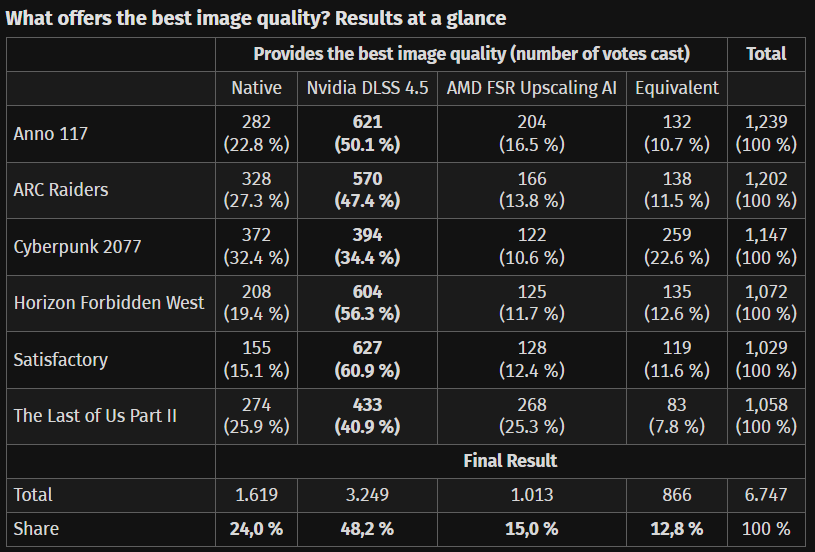
If you ever wondered whether and how upscaling has reshaped the image quality in games, a new community blind test may have just provided all the answers. According to results published by ComputerBase, NVIDIA’s DLSS 4.5 came out as the clear favorite over AMD’s FSR Upscaling AI and even native resolution with TAA across six major games.

At a time when native rendering was once seen as the gold standard, readers were reportedly asked to pick the best-looking option without knowing which tech was active. The comparison covered Anno 117, ARC Raiders, Cyberpunk 2077, Horizon Forbidden West, Satisfactory, and The Last of Us Part II.

Interestingly, out of 6,747 total votes, DLSS 4.5 topped with 48.2% readers selecting it for “best image quality.” Meanwhile, native rendering followed in the second position at 24%. Whereas FSR Upscaling AI grabbed 15% of the total votes. Moreover, at least 12.8% of participants admitted that they couldn’t see a meaningful difference at all. Here’s a comparison chart shared by folks at ComputerBase.

Image credit: ComputerBase

In several titles, DLSS 4.5 pulled far ahead. It captured more than 56% of the vote in Horizon Forbidden West and Satisfactory. Even in Cyberpunk 2077, where the margin was slimmest, DLSS narrowly edged native at 34.4% versus 32.4%.

That being said, ComputerBase made it clear that the poll only tracked first-choice preferences. It doesn’t show which option came second or third in readers’ minds. So, concluding that FSR is outright worse than native would go beyond what the data actually says.

Back in earlier DLSS and FSR cycles, discussions often revolved around softness and shimmering. Now, it appears many enthusiasts believe DLSS 4.5 not only keeps pace with native UHD but may even deliver better stability in motion.

All that said, it’s worth noting that this was a community vote, not controlled lab tests. That also means display type, compression, and personal sensitivity to artifacts likely influenced all the results. With DLSS 4.5 topping all six games in this survey, the spotlight may now turn to AMD’s next move.

via: Videocardz

Samsung Galaxy Book6 Launches in Europe With Premium Pricing, Sales to Start on March 11

Samsung showcased its Galaxy Book6 lineup at CES 2026. Now, all three laptops, the Galaxy Book 6, Galaxy Book 6 Pro, and Galaxy Book 6 Ultra, have officially been launched in Europe. With that, we have European pricing and preorders date in our hands, too. The company further mentioned that the Galaxy Book6 lineup will be up for sale starting March 11.

Galaxy Book6 pricing revealed for Europe, could come to other regions in April

At a time when premium Windows 11 PCs are pushing well past the €1,000 mark, Samsung’s entry point doesn’t exactly undercut the market. The base 14-inch Galaxy Book6 with Intel Core Ultra 5, 16GB RAM, and 512GB storage starts at €1,149 in Europe and £949 in the UK.

Image: Samsung

Meanwhile, the 16-inch variant with the same Core Ultra 5 configuration jumps to to €1,249. The Galaxy Book6 Pro 14-inch starts at €1,399, while the 16-inch Pro starts at €1,699. The most expensive configuration listed so far, the Galaxy Book6 Ultra with Core Ultra 7, 32GB RAM, and 1TB SSD, will set you back by €3,399 (£2,999).

A quick look at pricing

ModelSpecRRP starting from
Galaxy Book6Ultra-Ext16” U7/32G/1TB/5060£2,999
Galaxy Book6 Pro 1616” U5/16/256GB£1,499
Galaxy Book6 Pro 1414” U5/16/256GB£1,399
Galaxy Book6 16 PTLTouch16” U5/16/256GB£1,099
Galaxy Book6 16 PTL16” U5/16/256GB£1,049
Galaxy Book6 14 PTL14” U5/16G/256GB£949

Preorders will open February 25 in select European markets, including Germany, France, Italy, the Netherlands, Spain, the UK, and Ireland. Samsung has also hinted that the laptops will be available in other regions starting in April this year.

Under the hood, the Galaxy Book6 lineup packs Intel’s Core Ultra Series 3 “Panther Lake” chips, with integrated NPUs rated up to 50 TOPS depending on configuration. Meanwhile, the Ultra model is reportedly coming with an NVIDIA GeForce RTX 5060 GPU at launch, though earlier iGPU-only mentions appear absent from the initial lineup.

Now that the pricing is out and preorders are just a few days away, it remains to be seen whether buyers see enough real-world AI benefits to justify a starting price well above €1,000.

Sony Unlikely to Increase PS5 Price in 2026, Eyes Player Spending

It’s not hidden anymore that memory crunch is talimg toll on the entire tech industry right now. Yesterday, reports emerged that Phison CEO has warned that DRAM and NAND shortage might continue through 2030. The effect of rapidly increasing RAM prices may have already delayed Sony’s PS6 console and next-gen Xbox console. Nintendo, meanwhile, is reportedly mulling over increasing the price of Switch 2 due to higher production cost. To be honest, situation is grom for gamers out there.

Valv’s Steam Deck OLED has gone out of stock, with company blaming it on the RAM shortage. Meanwhile, Microsoft has already raised the Xbox Ally X’s price by nearly $200 in Japan. With these news ciruclating throufh your feed, it’s understandsble that you may have multiple qieations related to PlayStation 5, or PS5 as we call it in short.

Sony signals no immediate PS5 price hike, plans to offset RAM surge by monetizing existing players

If you’ve been wondering whether Sony will hike the price of the PS5 anytime soon, there might be some measured relief, thankfully. As previously reported, Sony has secured enough RAM supply to cushion near-term shocks. Speaking during its recent earnings call, CFO Lin Tao has also confirmed that the company has sufficient memory to carry through 2026. “Going forward, we intend to further negotiate with various suppliers to secure enough supply to meet the demand of our customers,” she promised.

That being said, Tao also hinted that Sony plans to offset higher costs by focusing on “monetizing the installed base.” In simple terms, Sony plans to make more money from people who already own a PS5 rather than increasing the console’s price.
That likely means pushing more game sales, in-game purchases, and subscriptions like PS Plus, rather than asking new buyers to pay more upfront for the hardware itself.

Whether that translates into subscription adjustments or more aggressive digital monetization remains to be seen. But, for now, PS5 pricing appears to remain stable. The bigger question is how long Sony can hold that stability if RAM markets continues to remain tight.

Source: Inside (Japanese) | Via: Automation, PushSquare

Windows 11 Adds Native MIDI 2.0 Support After Years of Wait

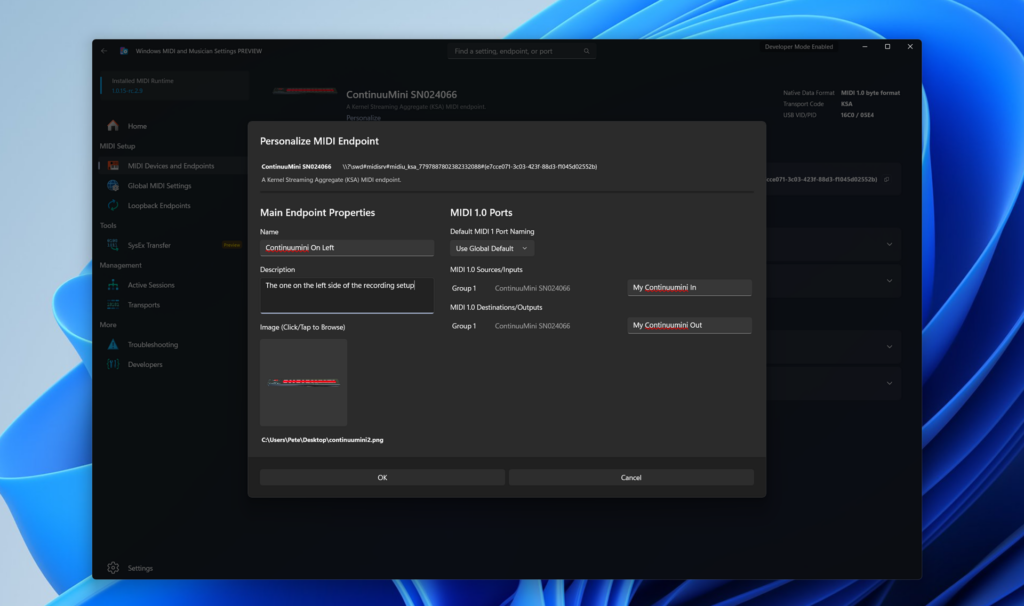
If you are someone who loves creating music, Microsoft finally has some good news for you. After years of demand from music creators, Microsoft yesterday confirmed that Windows 11 now supports both MIDI 1.0 and MIDI 2.0 via the newly launched Windows MIDI Services. Not to mention, this marks the biggest overhaul of MIDI on the platform in decades.

For many, MIDI is more than old .mid files. It’s the backbone of electronic music production, syncing instruments, lighting, effects, and software across studios and stages. While MIDI 1.0 has been helping musicians since 1983, many raised concerns related to its limited resolution, slower transport speeds, and clunky device discovery.

Native MIDI 2.0 support on Windows 11 is here with multi-client support, loopback, and more

MIDI 2.0 fixes all of that. The updated protocol, first introduced by the MIDI Association in 2020, brings bidirectional communication, automatic device discovery, higher-resolution controllers, per-note articulation, and uncapped speeds. With Windows 11 now supporting it natively and MIDI 1.0 rebuilt from the ground up, music creators can breathe easier knowing the experience will now be more stable.

Speaking of MIDI 2.0, one of the biggest upgrades is multi-client support. Multiple apps can now access the same MIDI device at the same time without relying on custom drivers. That should be handy to curb a major frustration for producers juggling DAWs and virtual instruments.

Additionally, there’s also built-in loopback for app-to-app MIDI, automatic translation between MIDI 2.0 and 1.0 devices, and microsecond-level timestamping for better message timing. That’s not all; high-resolution MIDI 2.0 hardware can now seamlessly work with older MIDI-aware apps thanks to automatic scaling inside the service. Moreover, Microsoft has also introduced a new USB MIDI 2.0 class driver and confirmed future plans for Network MIDI 2.0 and additional transports.

Square Enix Confirms Vivi’s Return in New Final Fantasy 9 Release Set for May 2026

Final Fantasy is hands-down one of the most beloved franchises, with Vivi one of the most beloved character in the its universe. The good news is that Vivi is set to make a grand comeback, but not in a way you may have hoped for.

Square Enix has announced a new Final Fantasy IX picture book centered around Vivi, the franchise’s iconic black mage. The new Final Fantasy 9 release will bring him back with an original story set before the events of the classic RPG.

That said, Square Enix isn’t revisting the main adventure, this release rather looks backward. The book will explore Vivi’s life prior to the journey players experienced in Final Fantasy 9, offering fresh context to a character many still consider the emotional core of the game. For longtime fans, that alone is enough to spark interest in the new release.

The new Final Fantasy release is set to arrive in May with a $17.99 price tag. For now, the version listed on Square Enix’s website includes only Japanese text, but it’s likely that an English edition is also in development.

Vivi has remained a standout figure since the game first launched, thanks to his quiet personality and deeply human story arc. Expanding his backstory through a picture book suggests Square Enix is looking to tap into nostalgia while also testing new formats beyond traditional remasters or remakes.

Over the past few years, the publisher has revisited older Final Fantasy titles through ports, merchandise, and cross-media projects. With rumors and speculation around potential remakes constantly circulating, smaller projects like this help keep classic entries in the news without committing to a full-scale revival.

Highguard’s Future in Doubt as Website Goes Down Following Massive Layoffs at the Studio

Wildlight Entertainment’s PvP raid shooter game, Highguard, appears to be in immense trouble. As spotted by many Redditors, Highguard’s official website has suddenly went offline. This comes just days after reports of massive layoffs at the studio.

At the time of writing this piece, we can also see a simple message on the Highguard website, which reads “This site is currently unavailable.” The page has reportedly remained down for nearly 24 hours, fueling uncertainity about the game’s long-term prospects. Notably, the game itself is still playable, but the lack of communication has left fans confused.

Last week, Wildlight Entertainment reportedly laid off a substantial portion of its workforce, part of what appears to be a restructuring effort. The studio has said it plans to continue iterating on Highguard with its remaining team, though details about future updates remain scarce.

As reported by PushSquare, concurrent player numbers on Steam has recently peaked at just 1,507 over 24 hours. That’s a concerning number fo a live multiplayer shooter. While console numbers aren’t available, there’s little indication that momentum is significantly stronger on other platforms.

For those unaware, Tencent was among the major investors backing the project. The involvement of the Chinese tech giant hadn’t been widely publicized before, and the disclosure has prompted questions about the scale of investment.

Fortunately, the game servers are still online. But with layoffs, dropping player numbers, and an offline website, uncertainty hangs over the project’s future. It remains to be seen whether Highguard joins the growing list of short-lived live-service experiments or survives.

Claude Sonnet 4.6 Rolls Out to GitHub Copilot With Improved Agentic Coding Skills

Anthropic’s Claude Sonnet 4.6 is officially rolling out inside GitHub Copilot. The rollout marks yet another expansion of model choice within Copilot, as GitHub continues to integrate third-party AI models for developers alongside its default offerings.

In the announcement, Anthropic called Claude Sonnet 4.6 its most capable Sonnet model yet. The company further lauded its improved performance in agentic coding tasks and search-heavy skills.

In a real-world scenario, the model can better navigate large codebases, pull relevant context, and execute multi-step coding tasks without many hiccups. That said, the model launches with a 1x premium request multiplier, with GitHub noting that pricing remains tentative and could change.

Claude Sonnet 4.6 will be available to Copilot Pro, Pro+, Business, and Enterprise subscribers. Users can select the model through the model picker across multiple environments, including Visual Studio Code (chat, ask, edit, and agent modes), Visual Studio (agent and ask modes), GitHub.com, GitHub Mobile on iOS and Android, the Copilot CLI, and the Copilot Coding Agent.

The model is rolling out gradually. which means some users may not see Claude Sonnet 4.6 in their options immediately. If you’re Enterprise and Business administrators, make sure to manually enable the Claude Sonnet 4.6 policy in Copilot settings before teams can access it. With Anthropic’s latest Sonnet model now in the mix, rivalry among coding assistants is highly likely to intensify.

Microsoft Increases Xbox Gift Card Redemption Costs in Rewards Program

Microsoft has reportedly increased the cost of redeeming Xbox gift cards through its Rewards program in the US, UK, and more. The news comes via TrueAchievements, which first noticed the post on Reddit by multiple users, confirming redemption costs have risen by approximately 5.3%.

Microsoft increases Xbox Gift Card redemption costs by 5% in the US and the UK

For those unaware, Microsoft Rewards allows users to earn points by engaging with Bing, Edge, Game Pass, and other Microsoft services. These points can be redeemed for gift cards, subscriptions, or other perks. For a long time now, many users have been dependent on the program to basically bring down the cost of Xbox Game Pass by redeeming gift cards, but the latest adjustment makes that slightly more expensive.

In the US, a $10 Xbox gift card previously required 9,500 points for Level 2 users. It now costs 10,000 points. In the UK, a £10 gift card is moving from 11,780 points to 12,400 points. No wonder the increase is small, but it definitely affects frequent users who rely on Rewards for free or discounted purchases.

Level 2 users, who earn more points per Bing search and get access to extra earning opportunities, are also impacted, as their discounted redemption rates have shifted upward alongside the base prices. As of now, Microsoft hasn’t issued a statement as to why these costs have gone up.

Notably, the increase comes at a time when Xbox Ally X handhelds have also received over a $200 price bump in Japan. It’s unclear for now whether this price adjustment will be applied in the US and other international markets. Whatever may be the case, in the last year or so, Microsoft has frequently adjusted prices of its services and products, including Xbox consoles.

While the program remains a valuable benefit for users, those who regularly redeem points for Xbox gift cards will need to account for the slightly higher threshold, potentially changing strategies for how they accumulate and spend points.

via: Windows Central

Claude Sonnet 4.6 Releases with 1M Token Context and Advanced Coding Skills

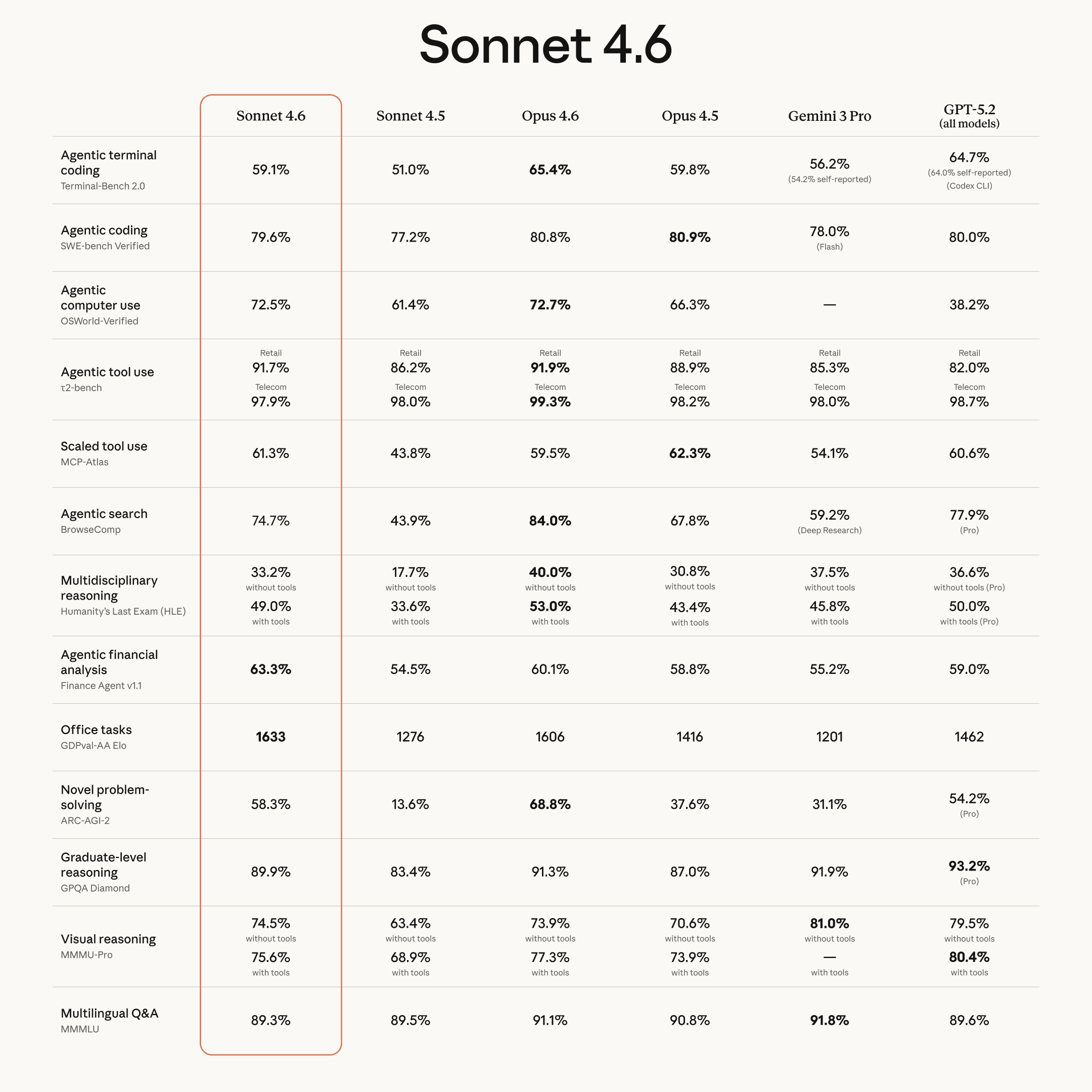
After months of rumors, Anthropic has officially released Claude Sonnet 4.6. The company calls the latest one its “most capable Sonnet model to date.” Claude Sonnet 4.6 introduces major improvements across coding, computer use, long-context reasoning, agent planning, and knowledge work.

One of the biggest highlights is that the Sonnet 4.6 model now supports a 1M token context window in beta, which makes it possible to handle entire codebases, lengthy contracts, or multiple research papers in a single request. Anthropic claims that early testers have reported that the model’s coding skills and instruction-following consistency make it a preferred option over its predecessor, with some even favoring it over the Opus 4.5 model launched back in November last year. Speaking of Opus, let’s not forget that Anthropic has also released the Claude Opus 4.6 model earlier this month.

Claude Sonnet 4.6 brings major improvements across the board

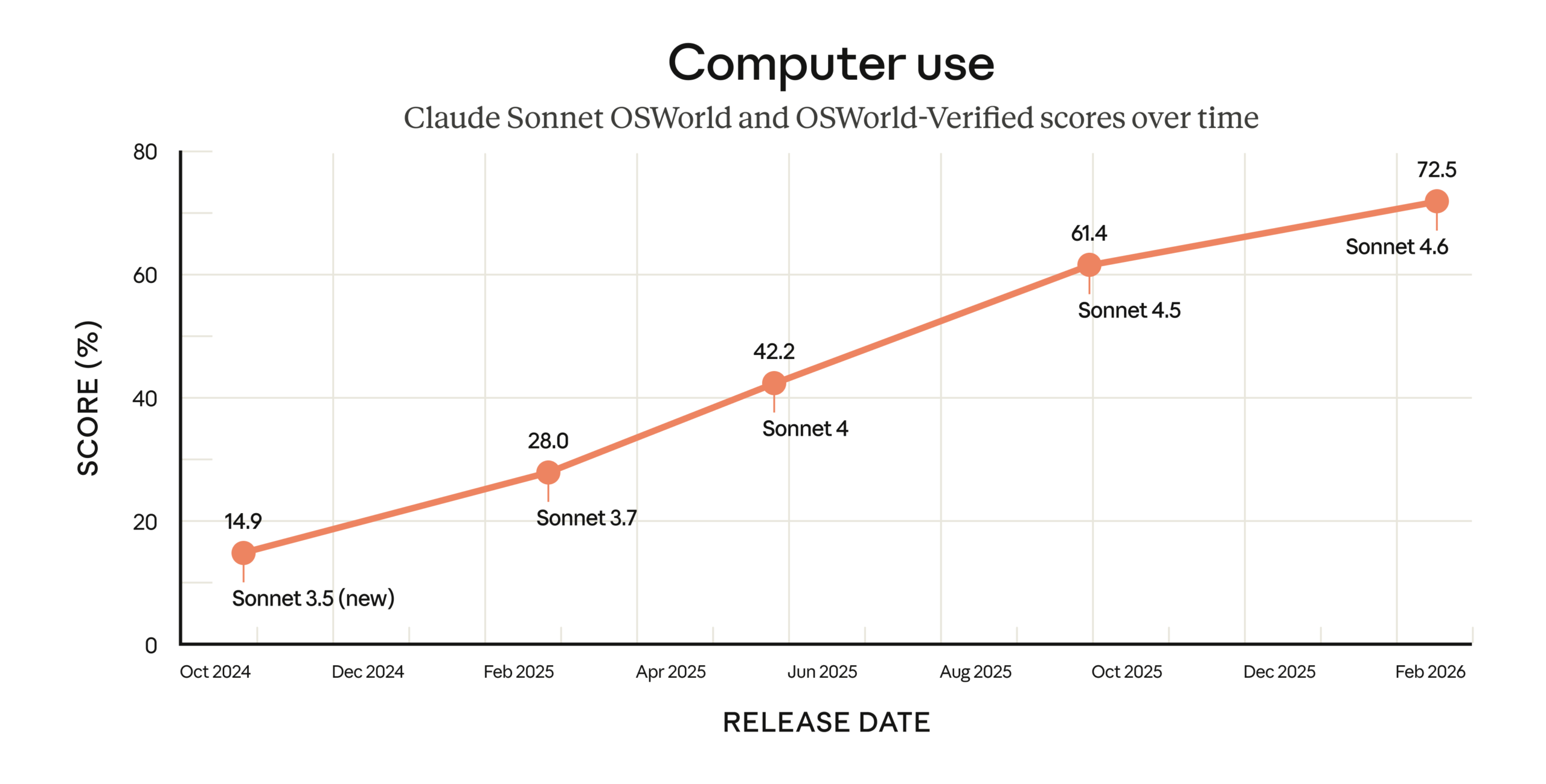
One of the standout upgrades in Sonnet 4.6 is its computer use capability. Unlike previous models that required special connectors or APIs, Sonnet 4.6 interacts with software much like a human would. Think of clicking, typing, navigating multiple windows, and handling complex tasks in spreadsheets or multi-step web forms.

OSWorld benchmark results confirm significant progress, with Sonnet 4.6 showing human-level capability on a wide range of real-world office tasks. Early users have noted smoother navigation, fewer errors, and better context retention across applications. Besides that, the latest Sonnet model also excels in extended reasoning and multi-step planning.

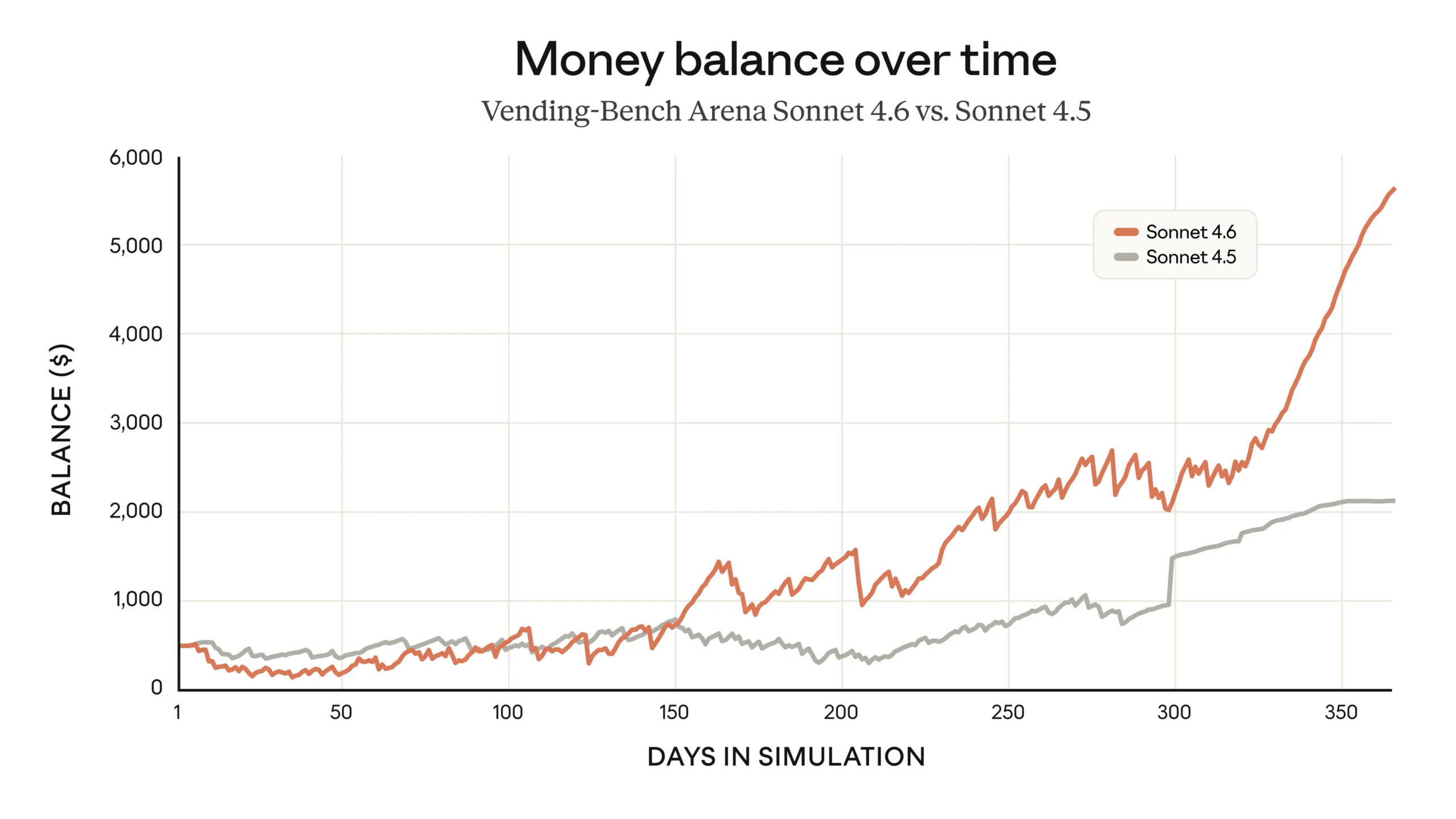
In the Vending-Bench Arena, Sonnet 4.6 showcased a strategic approach by investing in capacity early before pivoting sharply to profitability, which apparently outperformed competitors in both planning and execution. Apart from coding and planning, users have also reported that Sonnet 4.6 produces visually improved outputs, improved layouts, and professional-grade design results with fewer iterations.

Image: Anthropic

As usual, Anthropic is keeping safety as a major focus area. The company notes that extensive evaluations suggest Sonnet 4.6 is at least as safe as previous models, with strong prosocial behaviors, minimal hallucinations, and effective resistance to prompt injection attacks.

Pricing and availability

On the developer front, Claude Sonnet 4.6 now supports MCP connectors in Excel, letting users pull external context from tools like S&P Global, PitchBook, and Moody’s seamlessly into spreadsheets. Moreover, Claude Sonnet 4.6 is available as the default model for Free and Pro plan users on Claude.ai and Claude Cowork, with pricing unchanged from Sonnet 4.5, which is $3/$15 per million tokens. Last but not least, developers and professionals can begin using claude-sonnet-4-6 via the API immediately.

Windows 11 KB5077223 Beta Update Improves File Explorer, Taskbar, and More

Microsoft has released two different builds on the same day. The first one, KB5077241, in the Release Preview Channel, adds improvements to File Explorer, introduces Emoji 16.0, and brings a built-in network speed test directly to the taskbar.

Meanwhile, the second update, KB5077223, released in the Beta Channel bumps systems to Build 26220.7859 and focuses on reliability fixes across the taskbar, File Explorer, nearby sharing, and settings for a smoother Windows 11 experience.

File Explorer, Taskbar, Nearby Sharing, and Settings Improvements

The Beta Channel build brings several incremental fixes for Insiders. In the taskbar, app icons now appear more reliably in the system tray, even when autohide is enabled. File Explorer no longer causes open windows or tabs to unexpectedly jump to Desktop or Home.

That’s not all; Nearby Sharing has also been improved, which makes it easier to send larger files without interruptions. Meanwhile, in Settings, configuring options under Bluetooth & Devices > Wheel has become more reliable.

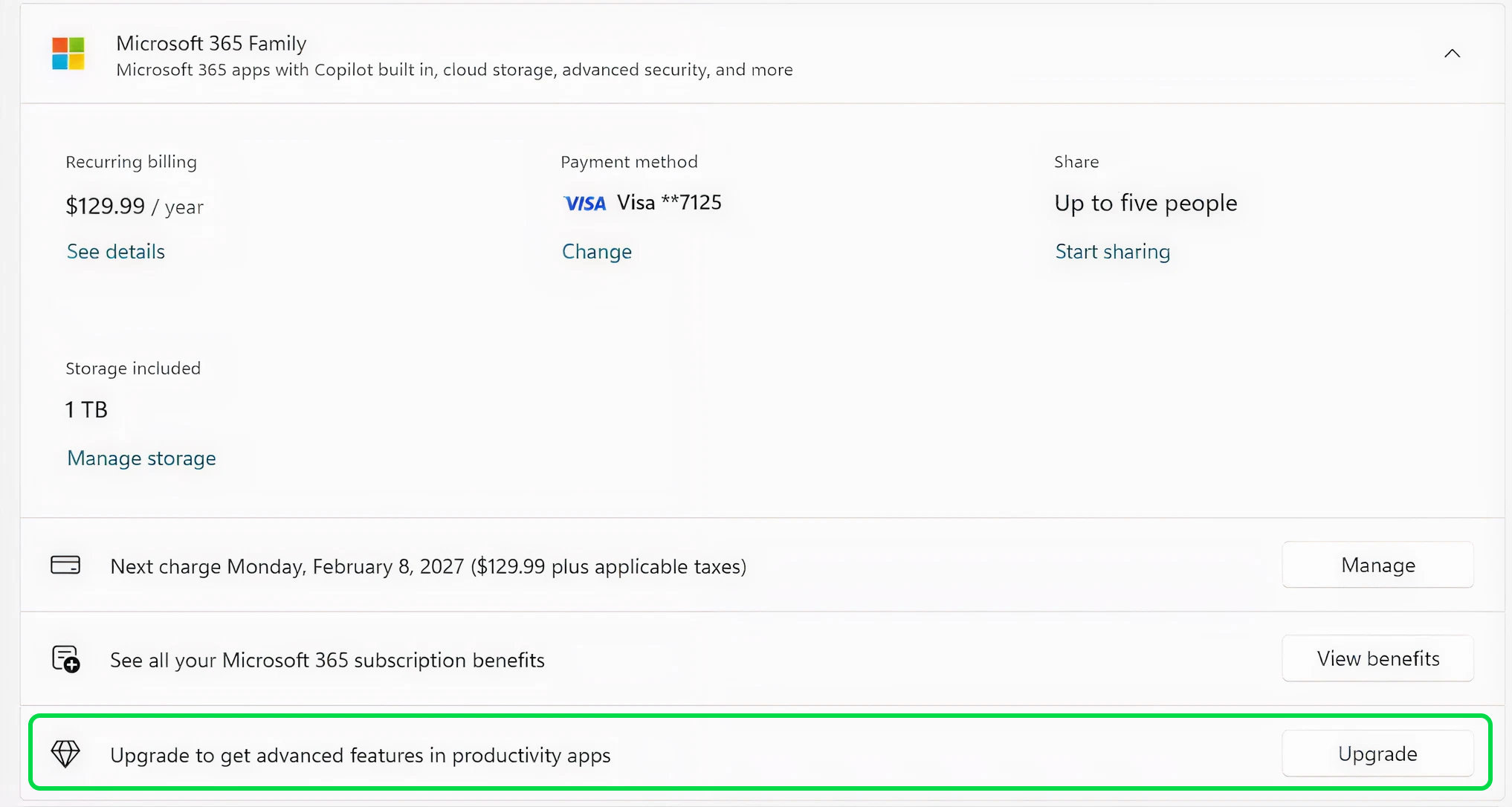
Moving on, the update also introduces a small but useful change for Microsoft 365 Family subscribers. On the Accounts page, users now see an option to upgrade to a different 365 plan, with the flexibility to remove the prompt by turning off suggested content.

Image: Microsoft

Windows 11 KB5077241 Update Enhances File Explorer, Display, and Visual Reliability

Microsoft has released the latest Windows 11 Release Preview update, KB5077241, that bumps systems on version 24H2 and 25H2 Builds 26100.7918 and 26200.7918, respectively. As part of this update, Microsoft is rolling out Emoji 16.0 support, built-in network test speed to taskbar, and a lot more.

KB5077241 brings File Explorer improvements

File Explorer has received notable improvements in this update. A new “Extract All” option now appears on the command bar when browsing non-ZIP archive folders, making it easier to handle compressed files without extra clicks.

Additionally, a long-standing issue where holding Shift and clicking the File Explorer icon on the taskbar, or middle-clicking it, opened the current instance instead of a new one has been fixed. You will also notice improved reliability when displaying devices on the Network page, helping ensure networked devices appear consistently.

Display and Sleep Performance

Display performance has also been optimized in KB5077241. Microsoft focused on reducing resume-from-sleep times on heavily loaded systems, which can make waking from sleep faster and smoother for power users. Laptop users who connect to a docking station while keeping the lid closed will benefit from more reliable sleep resume when switching to AC power, without needing to physically open the device.

Other Visual and System Fixes

The update also addresses minor visual and interface issues across Windows. Fixes include scenarios with an autohide taskbar, improved handling of Windows Security pop-up credential fields, and smoother performance with the print dialog.

KB5077241 Adds Built-In Taskbar Network Speed Test, Sysmon Feature, Camera Controls & More to Windows 11

The latest Builds, 26100.7918 and 26200.7918 (KB5077241), for Insiders in the Release Preview Channel of Windows 11 24H2 and 25H2 not only bring Emoji 16.0, it also tries to make daily workflow better; thanks to Taskbar-related upgrades and more. Not to forget, after installing this update, you’ll also be able to use .webp images as desktop background. But, that’s not all; there are a bunch of changes included in this update. Keep reading!

Taskbar, System Tray, and Connectivity Updates

As part of the KB5077241 Release Preview update, you’ll find a built-in network speed test directly on the taskbar. You can simply open it from the Wi-Fi or Cellular Quick Settings, or by right-clicking the network icon in the system tray. The test launches in the default, Bing browser, allowing you to check Ethernet, Wi-Fi, and Cellular speeds.

Image: Microsoft

For those using an uncombined taskbar, apps with multiple windows now behave smarter in overflow. Only windows without space move to the overflow area, preventing the cluttered, empty look that previously appeared.

Enhanced Accounts, Identity, and Camera Control

Moving on, the lateat update brings a new entry in the account menu on the Start menu, which directs users to the Microsoft account benefits page. In addition to that, Windows now supports Microsoft Entra ID group and role SID resolution, which translates cloud-only security identifiers into readable names for file permissions, local group membership, and access control.

Notably, you won’t require on-premises Active Directory. Not to forget, camera owners also get pan and tilt controls for supported devices, accessible via Settings > Bluetooth & devices > Cameras.

Security, Widgets, and Personalization

Windows now brings Sysmon functionality natively, which allows system event monitoring for threat detection. It must be explicitly enabled via Settings or PowerShell, and users who installed Sysmon manually must uninstall it first. Widgets now open in a full-page experience, while desktop backgrounds can use .webp images, expanding personalization options. There are some small changes that are worth discussing too. Check them below:

  • [Search] Improved: Updated icon for the search process in Task Manager to now show a magnifying glass.
  • [Storage Settings]
    • Improved: Updated some of the dialogs in Storage Settings to have a more modern design.
    • Improved Performance of scanning for temporary files.
  • [Windows Update Settings] Improves the responsiveness of the settings page.
  • [Login and lock screens] Improves the login screen reliability.
  • [Nearby Sharing] Improves the reliability of sending larger files.
  • [Projecting] Improves the reliability of displaying the project pane after pressing the Windows key plus P.
  • [Printing] Improves the Windows print service (spoolsv.exe) to ensure smoother performance and prevent slowdowns during high‑volume printing.

All that said, the latest preview builds brings bunch of changes for Insiders. You should get this update via the Windows Update or Microsoft Update Catalog.

Windows 11 KB5077241 Release Preview Adds First Sign-In Restore for Organizations, Emoji 16.0 & More

Microsoft has released Builds 26100.7918 and 26200.7918 under KB5077241 to Insiders in the Release Preview Channel of Windows 11 24H2 and 25H2. The latest builds bring new features and enhancements designed to improve user experience, device setup, and system recovery.

As part of this update, Windows 11 gets Emoji 16.0, which adds a curated set of new emojis across major categories. It is now accessible via the emoji panel for all users. Another major addition in this update is the first sign-in restore experience for Windows Backup in organizations.

The aforementioned feature automatically restores user settings and Microsoft Store apps during first sign-in on Entra hybrid joined devices, Cloud PCs, and multi-user environments. It ensures a consistent setup process for device refreshes, upgrades, or migrations, making device transitions smoother for IT admins and employees alike.

Moving on, the update also expands Quick Machine Recovery (QMR) to Windows Professional devices that aren’t domain-joined or managed by enterprise endpoints. These devices now automatically receive the same recovery features as Windows Home users, allowing for faster troubleshooting and system restoration. For domain-joined or enterprise-managed machines, QMR remains off unless enabled by the organization, keeping IT control intact. Worth noting that the same update has also added built-in network speed test to taskbar, sysmon feature, camera controls & more to Windows 11.

It should be noted that these features are rolling out gradually, meaning not all Insiders will see the features immediately. If you haven’t seen the update yet, it should pop up for you soon via Windows Update.

[UPDATE: Homepage Back Online] YouTube & YouTube TV Are Down Worldwide

[Update 2: 18 Feb, 2026 | 07:52 IST] YouTube has fixed some of the issues, as noted on X. Homepage appears to be back as well.

https://twitter.com/i/status/2023945995864920506

[Update 1: 18 Feb, 2026 | 07:45 IST] YouTube has finally confirmed the issue on X.

https://twitter.com/i/status/2023939761791242521

[ORIGINAL STORY] YouTube, one of the world’s biggest video platforms, encountered a widespread outage Tuesday evening that left users unable to access key features on both the website and app. Over on Downdetector user reports spiked sharply, with hundreds of thousands reporting errors while trying to browse content or load pages.

Image: Downdetector

According to multiple trackers, users started facing issues early evening U.S. time. Per user reports on Reddit and X, the issue appears to have knocked down homepage and subscriptions feed, as they fail to load correctly, while video playback and navigation are lagging or showing error messages such as “Something went wrong.” We have also experienced similar error on mobile and YouTube website.

Image: Rishaj Upadhyay | WindowsReport

Multiole users says that while direct video playback sometimes works when accessed through search or history, primary features like browsing the feed and homepage are not displaying normally. As mentioned earlier, the outage has reportedly affected both mobile and desktop versions of YouTube, with similar error messages appearing across devices.

Data from crowd‑sourced outage platforms like Downdetector suggest this isn’t a small regional hiccup; at one point, well over 240,000 users in the United States alone were reporting issues with the platform, with similar reports coming from around the world. Some tracking sites even logged more than 280,000 reports in the U.S. and tens of thousands more from other countries within a short window.

If you’re having trouble with YouTube TV, you’re not alone. Reports indicate it is also affected by the ongoing outage. Stay tuned, we’ll bring more updates as Google or YouTube provides official details or service restoration timelines.

This is a developing story…

AMD Releases New Ryzen Chipset Software With Installer Overhaul and Bug Fixes

AMD continues its busy streak with a new Ryzen chipset driver release. After denying delays for its Instinct MI455X and adding support for Alibaba’s Qwen 3.5, the company has now rolled out an updated chipset package for Ryzen systems.

According to TechPowerUp, AMD has released Ryzen Chipset Software version 8.01.20.513, bringing general bug fixes and performance improvements aimed at enhancing overall system stability.

Ryzen Chipset Software 8.01.20.513 Brings General Improvements

The latest chipset update focuses on:

  • General bug fixes
  • Performance optimizations
  • Quality-of-life improvements for Ryzen CPU users

While AMD did not outline specific performance metrics, the release targets smoother operation across supported AM4 and AM5 platforms.

New Install Shield Wrapper

One of the more noticeable changes arrives in the installer itself.

AMD has updated the package with a new Install Shield installation wrapper. This change may improve compatibility and installation reliability across different Windows environments.

However, the update also modifies how certain drivers are handled.

AMS Mailbox and S0i3 Drivers Removed From Package

Version 8.01.20.513 no longer bundles:

  • AMS Mailbox driver
  • S0i3 filter driver

Systems that rely on these drivers must now install them separately. Failing to do so could trigger errors on affected configurations.

AMD also notes that AMS and S0i3 filter drivers may experience issues on non-English operating systems.

Ongoing Regression Issue Between Driver Branches

AMD confirmed an ongoing regression problem between chipset driver branch version 7 and version 6, and users who install version 7.xx.xx.xx or later cannot directly downgrade to version 6.xx.xx.xx or earlier.

Workaround Steps:

  1. Uninstall the newer chipset installer.
  2. Navigate to the Chipset_Software directory.
  3. Delete the “Qt_Dependencies” folder.
  4. Install the older 6.xx.xx.xx (or earlier) version.

Without these steps, the downgrade process may fail.

Known Issues

AMD also highlights several known limitations:

  • Some driver names may appear in English on non-English operating systems.
  • Ryzen PPKG may occasionally fail to install or upgrade.
  • AMS and S0i3 drivers may encounter installation issues on localized Windows builds.

These notes suggest the company continues refining compatibility across global system configurations.

A few days earlier, AMD also published a new optional Adrenalin graphics driver, so you might want to download it as well.

With chipset software 8.01.20.513 now available, Ryzen users may want to review AMD’s release notes carefully before updating, especially if they plan to downgrade or rely on specific driver components.

Panther Lake to Push AI PC Adoption Past 50% in 2026, Intel Claims

While Microsoft appears to move away from its broad “AI Everywhere” messaging, Intel is moving in the opposite direction. According to Wccftech, the company expects AI PC adoption to accelerate significantly with the launch of its Panther Lake platform.

Intel predicts that by 2026, more than half of all PCs could qualify as AI PCs, meaning roughly one in two systems sold would feature dedicated AI acceleration hardware.

Panther Lake brings 50 TOPS of AI compute

Panther Lake sits at the core of Intel’s AI PC strategy. The upcoming SoCs integrate fifth-generation NPUs capable of delivering up to 50 TOPS of AI performance, a major leap in on-device processing capability.

One of the biggest barriers to local AI workloads has been limited compute power. Intel designed Panther Lake specifically to address that limitation and push AI capabilities closer to the user rather than relying entirely on cloud infrastructure.

The company expects that future PC launches will increasingly fall into the AI PC category as hardware becomes more capable.

Buyers still focus on performance and battery life

Despite the marketing push around AI, most consumers do not yet choose AI PCs primarily for AI features. Buyers continue to prioritize strong overall performance and longer battery life, which NPUs help deliver by offloading certain workloads from the CPU and GPU.

Edge AI adoption remains limited, and major frontier AI labs continue to focus heavily on large-scale cloud deployments instead of local inference on consumer devices.

OEMs continue building AI ecosystems

PC manufacturers continue promoting AI-focused services tied to new hardware. Lenovo, for example, pushes its Qira digital twin ecosystem as part of its AI PC positioning strategy.

Intel wants AI PCs to transition from high-end niche systems into the standard definition of a modern PC. The company plans to expand the number of applications that actively leverage AI hardware so consumers eventually purchase AI PCs specifically for AI-driven use cases.

From lukewarm reception to mainstream shift

The AI PC narrative has so far received a mixed reaction from general consumers. Many users still view current AI features as gimmicky or limited in practical value.

Intel believes that stronger on-device computation and the rise of agentic AI will gradually change that perception. Panther Lake represents an early step toward embedding AI deeply into everyday computing rather than treating it as an optional add-on.

In other related developments, Intel confirmed that XeSS 3 is now available across all Intel Arc GPUs. The company has also confirmed the launch of its Xe3P GPU architecture in 2026, signaling continued expansion of its AI and graphics ambitions.

Whether consumers embrace the shift immediately or not, Intel clearly sees AI as the foundation of the next generation of personal computing.

Ericsson Enterprise 5G Connect Brings Seamless 5G to Surface Laptops

Ericsson has announced a new enterprise-grade 5G solution developed in partnership with Microsoft. The platform, called Ericsson Enterprise 5G Connect, has been validated for enterprise use with Microsoft’s 5G-enabled Surface PCs.

The announcement signals a deeper push toward always-connected Windows devices designed for hybrid and remote work environments.

Seamless 5G Connectivity for Surface Devices

Ericsson Enterprise 5G Connect automatically links devices to the best available 5G network in the background. The process runs invisibly, removing the need for manual setup or troubleshooting by end users.

The system supports both private and public cloud networks. It also avoids dependence on a single carrier or specific SIM configuration, making it interoperable across Ericsson’s broader partner ecosystem.

The feature is currently in private preview and has been validated specifically for 5G-enabled Surface PCs, with plans to expand support to additional Windows PCs in the future.

Integrated With Windows 11 and Intune

Windows 11 already includes support for organization-managed cellular connectivity through Microsoft Intune. When combined with Ericsson Enterprise 5G Connect, IT administrators gain centralized control over eSIM provisioning and connectivity policies.

This integration allows businesses to automate the deployment and management of secure, always-connected laptops. Employees using 5G-capable Surface devices can remain connected on the go without needing to manually switch networks or adjust configurations.

Ericsson and Microsoft are positioning the solution as part of a broader shift toward “AI-powered 5G laptops,” aiming to streamline device operations while improving enterprise IT efficiency and remote productivity.

In related networking developments, Qualcomm has previewed upcoming Wi-Fi 8 technology, while Broadcom announced its first enterprise-focused Wi-Fi 8 platform.

Meanwhile, Microsoft has reportedly blocked downloads of certain Windows 11 Insider ISO builds.

Via Neowin

AMD Denies Instinct MI455X Delay, Says H2 2026 AI GPU Shipments Remain on Track

AMD has pushed back against claims that its next-generation AI accelerator faces delays. The company insists the Instinct MI455X remains on schedule for 2026 despite reports suggesting manufacturing setbacks.

According to TechPowerUp, a SemiAnalysis report predicted a delay in AMD’s Instinct MI455X AI mass manufacturing. The forecast argued that AMD’s next-gen AI hardware could enter the market in a weaker position against NVIDIA’s upcoming “Vera Rubin” server GPUs.

AMD Calls Delay Report Inaccurate

AMD’s Corporate VP of AI Software and Solutions, Anush Elangovan, publicly rejected the claims. He described the postponement report as inaccurate and stated the project remains on track.

Elangovan confirmed that MI455X shipments are still planned for the second half of 2026. He also stressed that the final production model will not slip into 2027, directly countering rumors of engineering sample issues and manufacturing hiccups.

The MI455X forms a core part of AMD’s rack-scale “Helios” UALoE72 system, designed to compete in large-scale AI training and inference deployments. Elangovan highlighted rapid execution and platform bring-up speed as key strengths for the complex GPU rollout.

Competitive Pressure in the AI Accelerator Market

The debate underscores the intense rivalry between AMD and NVIDIA in the AI accelerator market. NVIDIA’s next-generation Rubin platform continues to dominate discussions around large-scale AI infrastructure, particularly as hyperscalers prepare for massive AI cluster expansions.

While AMD maintains that its timeline remains intact, questions linger about whether it can match NVIDIA’s large-scale factory output. Volume manufacturing and supply chain execution often determine real-world competitiveness as much as architectural design.

Beyond the MI455X discussion, AMD recently announced support for Alibaba’s Qwen 3.5 models on its Instinct accelerators, strengthening its AI software ecosystem.

At the same time, NVIDIA’s Rubin platform is driving demand for next-generation HBM4 memory. Samsung has confirmed its HBM4 plans and partnership with NVIDIA, signaling how memory vendors align closely with GPU roadmaps in the AI arms race.

As AI infrastructure spending accelerates globally, execution speed and manufacturing scale may prove just as decisive as raw performance numbers in determining who leads the next wave of data center AI hardware.

NVIDIA Rolls Out DLSS 4 Across Battlefield 6 Season 2 and Three New Steam Releases

Battlefield 6 Season 2 has officially launched today, and NVIDIA is marking the update with major performance upgrades. The company confirmed that the new season now supports DLSS 4 Multi Frame Generation, delivering significant frame rate gains on RTX 50 Series GPUs.

RTX 50 Series unleashes up to 460 FPS in Battlefield 6

According to NVIDIA, players using GeForce RTX 50 Series graphics cards can reach up to 460 FPS at 4K Ultra settings when enabling DLSS 4 Multi Frame Generation alongside DLSS Super Resolution. Laptop RTX 50 Series GPUs can reportedly achieve up to 310 FPS under the same DLSS configuration.

NVIDIA claims an average 3.8x performance uplift with DLSS 4 Multi Frame Generation enabled. Battlefield 6 Season 2 supports a full suite of NVIDIA technologies, including DLSS 4 Multi Frame Generation, DLSS Frame Generation, DLSS Super Resolution, DLAA, and NVIDIA Reflex.

Three More Games Gain DLSS 4 Support

NVIDIA also announced expanded DLSS 4 support across three upcoming titles launching on Steam this week.

NORSE: Oath of Blood, launching February 17, 2026, ships with DLSS Frame Generation and DLSS Super Resolution. Players can enable DLSS 4 Multi Frame Generation and DLSS 4.5 Super Resolution through the NVIDIA App.

Star Trek: Voyager Across the Unknown, releasing February 18, 2026, includes native DLSS 4 Multi Frame Generation, DLAA, and NVIDIA Reflex support. DLSS Super Resolution can be upgraded to DLSS 4.5 using the NVIDIA App.

Styx: Blades of Greed, arriving February 19, 2026, supports DLSS 4 Multi Frame Generation and NVIDIA Reflex. Similar to the other titles, its DLSS Super Resolution implementation can be upgraded to DLSS 4.5 via the NVIDIA App.

NVIDIA confirmed that DLSS Dynamic Multi Frame Generation and MFG 6x will launch in April, further expanding its AI-driven frame generation capabilities.

Meanwhile, RTX 5090 and RTX 5070 Ti prices continue to climb, with global GPU prices rising around 15% on average amid tightening supply conditions.

Via VideoCardz

Microsoft Stock Falls Below $400 Amid AI Concerns & Market Pressure

Microsoft’s stock (NASDAQ:MSFT) price has plunged today, leaving investors staring at a sea of red. As of midday on February 17, 2026, MSFT is trading near $395.59. That marks a 1.43% decline from its previous close of $401.32. This isn’t just a bad morning; the stock has been in a clear downward drift, slipping roughly 14% to 22% over recent months as Wall Street’s “AI honeymoon” appears to be fading.

“Software-mageddon” Weighs on Big Tech

Some analysts have dubbed the broader tech selloff “Software-mageddon,” and it has rattled major software names. While Microsoft’s latest quarterly revenue still came in strong at $81.3 billion, investors remain hyper-focused on Azure’s slower growth and the eye-watering costs tied to AI infrastructure. A growing “show me the money” sentiment now dominates trading desks, with investors questioning when massive capital expenditures will begin translating into meaningful bottom-line profit.

Rising Competition and Infrastructure Costs

Adding to the ongoing pressure, China’s Alibaba is promoting its Qwen 3.5 AI models as enterprise-ready alternatives, gaining traction among businesses evaluating AI deployments. Cloud capacity constraints, along with rising power and cooling costs, continue to weigh on near-term margins. That dynamic has left some investors uneasy about Microsoft’s ability to monetize AI at scale in the near future.

Bear Market Territory in Sight

Microsoft stock now trades nearly 27% below its 52-week high of $555.45. On the downside, shares are edging closer to the 52-week low of $344.79, a level that would represent a critical test of investor confidence. A broader rotation out of mega-cap technology into more defensive sectors has intensified the pressure, forcing heavyweights like Microsoft to prove that their AI strategy will generate durable returns rather than become an expensive arms race.

The next earnings report could prove decisive, determining whether AI spending becomes a long-term catalyst for growth or a mounting liability in an increasingly cautious market.

Disclaimer: This article is for informational purposes only and does not constitute financial or investment advice. Stock market investments carry risk, and readers should conduct their own research or consult a qualified financial advisor before making any decisions. Stock prices and percentages reflect the time of writing and may change due to market volatility. Please verify current quotes before acting on any information.