Microsoft Reportedly Eyes AI Startup Acquisitions as It Looks Beyond OpenAI

Microsoft appears to be getting ready for a future where it may not rely on OpenAI as much as it does as of now. You must be aware that after amending the partnership recently, OpenAI broke free from Microsoft exclusivity, which also allowed it to strike a deal with AWS to host its model on Amazon Bedrock.

Now, a fresh report claims that Microsoft is looking at smaller AI startups to bolster its own in-house AI goals. At a time when the AI race is becoming more expensive and competitive, Microsoft seemingly doesn’t want to rely on a single partnership forever.

Microsoft reportedly explores AI startup deals beyond OpenAI

The news comes via Reuters, which reports that Microsoft has been exploring acquisitions of AI startups to secure talent, technology, and new model-building strategies. One of the companies reportedly considered was Cursor, although Microsoft is said to have backed away due to internal concerns around regulatory scrutiny linked to GitHub Copilot.

The news agency further claims that Microsoft is currently in discussions with Inception, a relatively new startup founded by a Stanford-led team in 2024. Interestingly, Microsoft’s venture arm M12 already invested in the startup’s $50 million seed round last year. Sources reportedly say the talks are still ongoing. However, it’s unclear whether a deal will actually happen.

Microsoft seemingly wants more control over its AI future

Back in 2019, Microsoft invested $1 billion into OpenAI long before ChatGPT became mainstream. Since then, the company has reportedly spent more than $100 billion across OpenAI investments, infrastructure, and AI-related expansion efforts. That said, tensions between the two companies have reportedly surfaced multiple times over the years. Most of it was due to restrictions linked to AI model development and cloud access.

Whether the reported startup talks actually turn into acquisitions remains unclear for now. However, it’s not hidden anymore that the AI battle is no longer just about products anymore; it is increasingly becoming a war for talent, infrastructure, and long-term independence.

Xbox Free Play Days Brings Battlefield 6 & More This Weekend (May 14–17)

It’s Thursday, and we are back with another Xbox Free Play Days lineup, courtesy of the usual Reddit leaker Oliomono. To catch you up, last weekend’s Free Play Days lineup included only two games, CATAN and Deadside. The good news is that this weekend, players have more titles to play.

This weekend, from today, May 14 through Sunday, May 17, you’ll have at least three games as part of the Xbox Free Play Days window. Notably, the list includes games like Battlefield 6, Bassmaster Fishing, and JDM: Japanese Drift Master.

As of now, none of these games are available to play as part of the Xbox Game Pass catalog. That said, back in February, Xbox did include Battlefield 6 in the Free Play Days lineup.

As of now, it’s unclear whether the aforementioned games would require players to have Game Pass subscriptions to play free through the weekend. However, at the time, Battlefield 6 was available to play free with Game Pass membership. So, it’s highly likely that you’ll need one to play it for free this weekend as well.

All that said, it goes without saying that we might see some more games added to the lineup later in the day when Microsoft officially announces this weekend’s Free Play Days lineup. Not to forget, all the aforementioned games are now available to buy at heavy discounts. For example, you can grab Battlefield 6 at 45% off, Bassmaster Fishing at 80% off, and JDM: Japanese Drift Master at 40% off.

ARC Raiders is Ditching Monthly Updates in Favor of Two Major Drops Per Year

Embark Studios is changing how it handles updates for ARC Raiders, and the studio says the old monthly schedule was no longer working for the kind of experience it wants to build. While ARC Raiders originally launched with plans for monthly content updates, Embark now says the pace made it harder to work on larger features and long-term improvements for the Rust Belt.

ARC Raiders will now get two major updates every year

Embark confirms that ARC Raiders will now receive two large updates per year instead of smaller monthly drops. The studio says future updates will focus on larger gameplay additions and progression changes rather than lighter monthly content. Regular patches, events, bug fixes, and store rotations will still continue throughout the year.

The developer also says the previous update cycle created limitations for the team internally. According to Embark, the extra development time will allow the studio to spend more time improving progression systems, anti-cheat support, economy balance, and player goals.

The first update under the new structure is called “Frozen Trail,” and it launches this October. Embark describes it as the biggest update released for ARC Raiders so far. The update adds a new Rust Belt area, additional ARC enemy types, expanded progression paths, an updated skill tree, and new story details tied to the origins of ARC.

New trader system lands next week

Before Frozen Trail launches, Embark is also adding a new Trader system next week for late-game players. The Trader unlocks at level 25 and allows players to exchange high-value loot for rotating rewards, cosmetics, and rare items.

More importantly, the system also addresses two of the biggest complaints from longtime players: limited stash space and losing valuable gear during Expeditions. Not to forget, players will be able to unlock extra stash capacity and use a new “Expedition Vault” feature that carries select items between Expeditions.

Microsoft Adds Grok 4.3 to Foundry for Enterprise AI Workflows

Microsoft has added Grok 4.3 from xAI to Microsoft Foundry, expanding its enterprise AI model ecosystem with a stronger focus on agentic workflows and long-context reasoning.

The company describes Grok 4.3 as a production-ready model designed for enterprise automation, autonomous AI systems, and multi-step reasoning tasks.

Microsoft Pushes Agentic AI Workflows

Microsoft says Grok 4.3 improves deep reasoning, long multi-turn conversations, instruction following, and workflow consistency across enterprise deployments. The company also emphasizes stronger tool-calling reliability and reduced hallucination rates for complex AI tasks.

A major highlight is the model’s 200K token context window on Foundry. Microsoft says this allows Grok 4.3 to process large documents, maintain lengthy conversations, and support retrieval-heavy enterprise workflows more effectively.

The release reflects Microsoft’s broader push toward AI systems capable of handling longer-running autonomous tasks without constant user intervention.

Native Productivity and RAG Capabilities

Microsoft positions Grok 4.3 as more than a standard language model. The platform includes native support for web search, X/Twitter search, Python code execution, file search workflows, and retrieval-augmented generation pipelines.

The model also supports Excel generation, PDF generation, and PowerPoint generation directly inside enterprise workflows. Microsoft says these features aim to make Grok 4.3 function more like a productivity and automation platform rather than a traditional chatbot.

Microsoft Highlights Enterprise Use Cases

According to Microsoft, Grok 4.3 performs particularly well in legal analysis, financial workflows, multimodal reasoning, and full-stack web development tasks.

The company claims the model can assist with contract interpretation, regulatory analysis, financial modeling support, and enterprise coding workflows. Microsoft also highlights Grok 4.3’s multimodal capabilities as part of its enterprise positioning strategy.

Azure Safety Protections Enabled by Default

Deployments running through Foundry automatically include Microsoft’s enterprise safety infrastructure.

Microsoft says Grok 4.3 deployments benefit from Azure AI Content Safety protections, jailbreak detection systems, content filtering, governance tooling, monitoring systems, model cards, and internal red teaming capabilities.

The company continues prioritizing governance and safety tooling as enterprise customers increasingly deploy autonomous AI systems into production environments.

Grok 4.3 is currently available in Public Preview on Foundry.

TypePrice
Input$1.25 per 1M tokens
Output$2.50 per 1M tokens
Cached input$0.20 per 1M tokens

The announcement arrives as Microsoft and OpenAI continue expanding enterprise AI infrastructure. OpenAI recently launched GPT-Realtime-2, introduced the Daybreak initiative, and began limited preview access for GPT-5.5 Cyber.

Forza Horizon 6 Early Access & Global Release Times for Xbox and Steam Are Now Official

The hype around Playground Games’ next racing title, Forza Horizon 6, feels impossible to ignore. In case you are unaware, the game leaked over the last weekend, which the studio later confirmed and warned that anyone playing the leaked version will face franchise-wide and hardware bans. Apparently, at least one player has already been banned until the year 9999.

If you are looking to play Forza Horizon 6 the official way, which we also recommend, Playground Games has finally revealed exactly when players can jump in across Xbox, PC, and Steam.

Forza Horizon 6 early access release times revealed

To remind you, players who purchased the Premium Edition will only get access to Forza Horizon 6 starting May 15 in most regions. On Xbox, users in the US can start slightly earlier, with Early Access unlocking on May 14 at 9:01 PM PT and 11:01 PM CST.

Meanwhile, Steam players globally can jump into Forza Horizon 6 at 12:01 AM local time on May 15. The same local-midnight rollout also applies to Xbox players outside the US. Not to forget, you can always pull off the “New Zealand trick” on Xbox by changing the console region to New Zealand. In other words, you can access the game as soon as it hits midnight there, which could unlock the game nearly half a day earlier depending on the region.

The Premium Edition includes four days of Early Access, although it comes at a much steeper price than the Standard Edition.

Forza Horizon 6 Xbox early access launch times

Time ZoneEarly Access Launch Time
PT (Seattle)Thursday, May 14, 2026 | 09:01 PM
CST (Mexico City)Thursday, May 14, 2026 | 11:01 PM
ET (New York)Friday, May 15, 2026 | 12:01 AM
BST (London)Friday, May 15, 2026 | 12:01 AM
CEST (Paris)Friday, May 15, 2026 | 12:01 AM
JST (Tokyo)Friday, May 15, 2026 | 12:01 AM
KST (Seoul)Friday, May 15, 2026 | 12:01 AM
AEST (Sydney)Friday, May 15, 2026 | 12:01 AM
NZST (Auckland)Friday, May 15, 2026 | 12:01 AM

Full launch lands May 19 on Xbox and PC via Steam

For players waiting for the standard release, Forza Horizon 6 officially launches on May 19 globally. Similar to Early Access timing, Xbox users in the US will get access on May 18 at 9:01 PM PT and 11:01 PM CST.

Everywhere else, including Steam, the game unlocks at 12:01 AM local time on May 19. The game will launch across Xbox Series X|S, Xbox on PC, and Steam, while also arriving day one on Xbox Game Pass. Xbox Play Anywhere support is included as well.

Forza Horizon 6 Xbox global release times:

Time ZoneFull Launch Time
PT (Seattle)Monday, May 18, 2026 | 09:01 PM
CST (Mexico City)Monday, May 18, 2026 | 11:01 PM
ET (New York)Tuesday, May 19, 2026 | 12:01 AM
BST (London)Tuesday, May 19, 2026 | 12:01 AM
CEST (Paris)Tuesday, May 19, 2026 | 12:01 AM
JST (Tokyo)Tuesday, May 19, 2026 | 12:01 AM
KST (Seoul)Tuesday, May 19, 2026 | 12:01 AM
AEST (Sydney)Tuesday, May 19, 2026 | 12:01 AM
NZST (Auckland)Tuesday, May 19, 2026 | 12:01 AM

Not to forget, Forza Horizon 6 has already climbed Steam’s best-seller charts before launch. So, are you excited to play Forza Horizon 6? Let us know in the comments below.

Microsoft Pushes WinUI-Native Windows Apps With New AI Coding Agent

Microsoft is continuing its broader Windows K2 initiative by introducing a new AI-powered WinUI coding agent designed to help developers build cleaner native Windows applications.

The company says the goal behind Project K2 remains focused on making Windows 11 feel faster, more responsive, and less dependent on legacy frameworks that can slow down the user experience.

Microsoft wants more native Windows apps

Project K2 focuses heavily on rebuilding Windows components using WinUI 3 while also optimizing the framework itself for better performance.

Microsoft says internal testing already shows noticeable launch-time improvements across apps using newer WinUI-native implementations. The company has spent the past several months pushing UI responsiveness improvements throughout Windows 11 as part of the same effort.

New AI agent targets messy hybrid apps

Microsoft has now introduced a dedicated WinUI agent plugin for both GitHub Copilot and Claude Code.

According to the company, generic AI coding tools often generate inefficient hybrid applications that improperly combine WinUI with older Windows frameworks like WPF or Win32 layers.

The new specialized agent attempts to guide developers toward cleaner WinUI-native development patterns instead of mixed legacy stacks.

Built-in tools focus on native development

Microsoft says the new agent includes eight built-in development skills designed specifically for Windows app creation.

Features reportedly include UI design assistance, code review tools, UI testing capabilities, packaging support, and migration assistance for developers moving older WPF projects to WinUI.

The company also introduced new dotnet new WinUI templates intended to simplify native app development outside of full Visual Studio workflows.

These templates include Fluent Design starter layouts, navigation support, tab-based interfaces, and command-line launch options.

Microsoft claims major token reduction improvements

One of Microsoft’s biggest claims involves AI efficiency. The company says the specialized WinUI agent can reduce token usage by more than 70% compared to general-purpose AI coding workflows.

Microsoft attributes those reductions to localized documentation libraries and WinUI-focused tooling optimized specifically for Windows development tasks.

Visual Studio integration still on the way

While Microsoft continues reducing dependency on traditional IDE-heavy workflows, the company confirmed that Visual Studio support for the new templates is still coming.

That move likely reflects how heavily many Windows developers still rely on traditional Visual Studio-based environments for native application development.

In related Windows news, Microsoft recently released the May 2026 Patch Tuesday update through Windows 11 KB5089549.

Windows Update Will Finally Stop Replacing New GPU Drivers With Older Ones

Microsoft announced major changes to its graphics driver publishing policy designed to reduce situations where Windows Update installs older or less suitable GPU drivers over newer versions already installed by users.

The company says the new system should improve graphics driver matching accuracy while reducing long-standing problems involving driver downgrades, missing features, gaming instability, and broken laptop-specific optimizations.

Microsoft is simplifying graphics driver targeting

Microsoft plans to simplify the driver targeting system used in the Windows Hardware Compatibility Program (WHCP).

The current system relies on a more complex four-part hardware identification targeting framework. Under the upcoming changes, Microsoft will move to a simplified two-part targeting model.

Future graphics driver matching will combine Hardware ID (HWID) and Computer Hardware ID (CHID). Microsoft says the updated approach should improve how Windows Update determines which graphics drivers belong to specific systems.

Goal is to reduce incorrect GPU driver installations

Graphics driver replacement issues have affected Windows users for years.

In many cases, Windows Update replaced manually installed NVIDIA, AMD, or Intel graphics drivers with older versions distributed through Microsoft’s update channels. Users also reported missing GPU control panels, performance regressions, instability in games, and broken manufacturer-specific laptop tuning after updates.

Microsoft believes the new targeting system should significantly reduce those incorrect deployments in the future.

Existing drivers will continue using current framework

Microsoft clarified that the currently published drivers will continue using the existing framework.

The changes mainly affect future graphics driver publishing and distribution policies rather than drivers already available through Windows Update today.

The transition is expected to happen gradually between late 2026 and early 2027.

Microsoft also working on automatic driver rollback

This is not the only driver-related improvement Microsoft is preparing for Windows.

The company recently revealed plans for automatic rollback capabilities for broken drivers distributed through Windows Update. The feature would allow Windows to automatically remove problematic drivers and restore previously working versions without requiring manual troubleshooting.

Microsoft also recently released the Windows 11 KB5089549 Patch Tuesday update, although some users have already reported installation issues following the rollout.

Via Neowin

YellowKey BitLocker Bypass And GreenPlasma Exploit Surface For Windows 11

Two new Windows-focused exploits called YellowKey and GreenPlasma have reportedly been released online by GitHub user Nightmare-Eclipse, as Neowin writes. The proof-of-concept exploits target BitLocker protections and Windows privilege escalation mechanisms on modern Microsoft operating systems.

The release comes just days after another BitLocker bypass tool surfaced publicly, increasing attention around Windows security and recovery environments.

YellowKey reportedly bypasses BitLocker protections

YellowKey allegedly targets BitLocker on Windows 11, Windows Server 2022, and Windows Server 2025. According to the published claims, Windows 10 does not appear affected by the exploit.

The attack reportedly requires physical access to the device, a USB flash drive, and a reboot into the Windows Recovery Environment, also known as WinRE. Researchers claim the exploit can expose unrestricted access to BitLocker-protected volumes after the attack succeeds.

Nightmare-Eclipse speculated that the vulnerable component “feels like a backdoor,” although no evidence currently supports claims of intentional behavior by Microsoft. At the moment, the allegation remains speculation rather than a confirmed finding.

The researcher also claims the suspicious component exists only inside the WinRE image and includes functionality not present in similarly named components found in standard Windows environments.

GreenPlasma focuses on privilege escalation

The second exploit, GreenPlasma, reportedly targets Windows privilege escalation through the Collaborative Translation Framework, commonly referred to as CTF.

According to the claims, attackers could potentially use the exploit to gain elevated privileges, steal data, or damage systems after compromising a machine. The current proof-of-concept reportedly does not provide full SYSTEM shell access, but the researcher warned that more advanced attackers could potentially expand the exploit further.

Security researchers often view privilege escalation flaws as highly dangerous because attackers frequently use them during malware infections and ransomware attacks to deepen system access and bypass security restrictions.

Researchers see greater long-term risk in GreenPlasma

Although YellowKey requires physical access, GreenPlasma may ultimately pose the bigger practical threat if attackers continue refining the exploit.

Privilege escalation vulnerabilities commonly play a major role in post-exploitation activity, especially in ransomware campaigns and advanced malware operations. Researchers have also repeatedly criticized parts of the Collaborative Translation Framework over previous security weaknesses and attack surface concerns.

Microsoft has not yet publicly responded to either exploit. The reports arrive shortly after Microsoft released the Windows 11 KB5089549 May 2026 Patch Tuesday update, which fixed more than 130 security vulnerabilities and included BitLocker-related fixes.

Windows 11 KB5089549 Reportedly Fails to Install for Some Users

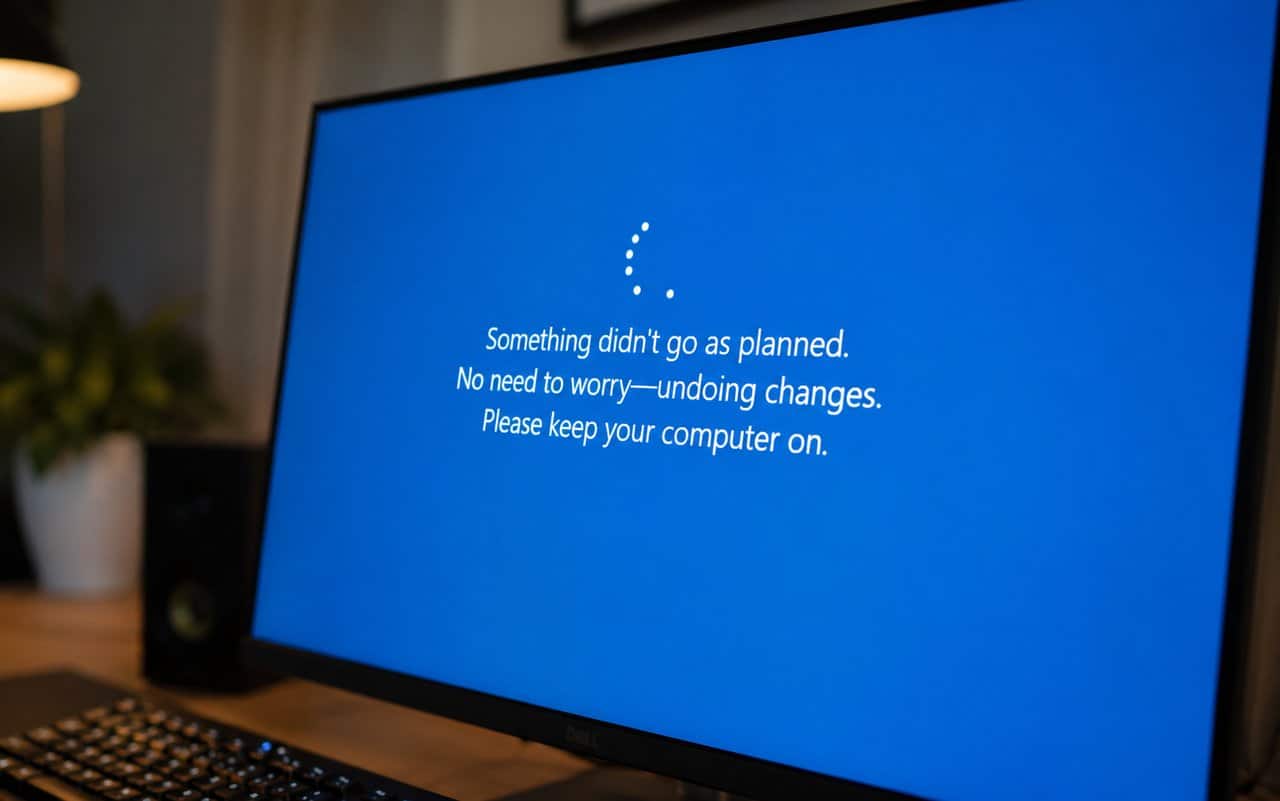
Some Windows 11 users are reportedly having trouble installing KB5089549, Microsoft’s May 2026 Patch Tuesday update for Windows 11. The update appears to download normally, but affected systems fail during installation and automatically roll back the changes.

According to user reports cited by Neowin, the issue ends with the familiar Windows Update rollback message: “Something didn’t go as planned. No need to worry, undoing changes. Please keep your computer on.”

KB5089549 install failures appear to trigger automatic rollback

The good news is that affected PCs appear to recover without major damage. After the failed installation attempt, Windows rolls back the update and returns the device to its previous working state.

This makes the bug less severe than update issues that leave systems stuck in boot loops or recovery mode. However, the repeated failure still prevents users from installing the latest security fixes and quality improvements included in the May 2026 update.

Some users also claim they have seen similar installation failures with recent Patch Tuesday updates. That could point to a deeper compatibility problem on certain systems rather than a one-off issue with KB5089549.

Microsoft has not confirmed a known issue yet

Microsoft has not officially acknowledged an installation problem with Windows 11 KB5089549 at this time. The Windows Release Health dashboard currently lists no active known issues for the update.

That means there is no confirmed cause or official workaround yet. Possible explanations include driver conflicts, Windows Update corruption, security software interference, firmware or BIOS incompatibilities, corrupted system files, or unsupported system configurations.

Users affected by repeated failures may need to try standard Windows Update troubleshooting steps, such as restarting the device, running the Windows Update troubleshooter, checking system file integrity, or waiting for Microsoft to confirm a fix.

Some users also report slow internet after installing KB5089549

A smaller number of users also report slower internet performance or connectivity issues after installing KB5089549. However, those reports appear isolated for now, and Microsoft has not confirmed a widespread networking bug tied to the update.

Until more reports appear, the networking complaints should be treated separately from the installation rollback issue. Patch Tuesday updates can expose existing driver or configuration problems, especially on systems with older network adapters or third-party security tools.

May 2026 Patch Tuesday still includes major security fixes

The KB5089549 problems come as Microsoft’s May 2026 Patch Tuesday rollout delivered security fixes for more than 130 vulnerabilities across Windows and other Microsoft products.

The update cycle also addressed incorrect BitLocker recovery prompt behavior, making it an important release for many users and administrators. However, users who cannot install KB5089549 may remain without the latest security protections until the update succeeds or Microsoft provides additional guidance.

[UPDATE] GTA 6 Pre-Order Date Leaks — Is Trailer 3 Coming Soon?

[UPDATE 5/14/2026 | 4:45 PM CEST] Insider Gaming has confirmed that the emails are legitimate as they come from Impact, an affiliate partner marketplace.


[ORIGINAL STORY] Rockstar Games may finally be preparing to open Grand Theft Auto 6 pre-orders, according to newly surfaced retailer marketing information. The reports appeared shortly after Take-Two CEO Strauss Zelnick once again reaffirmed the game’s release window and hinted that pricing details would arrive closer to launch.
Several creators and gaming accounts recently shared what they claim are affiliate campaign emails connected to Best Buy. The alleged campaign references “GTA 6 Pre Order (Physical Game)” and reportedly runs between May 18 and May 21.

According to the leaked material, affiliates would receive a 5% commission on physical game sales. While Rockstar Games and Take-Two Interactive have not confirmed the information, the timing has fueled speculation that a larger marketing push could begin very soon.

Multiple creators reportedly saw the same campaign

YouTuber Frogboyx1Gaming publicly discussed the alleged email during livestreams and defended its authenticity after screenshots began circulating online. Australian creator TGG also reportedly claimed to have seen the same communication independently.

That does not guarantee the campaign is final. Retailers sometimes prepare placeholder marketing schedules months in advance, especially for major releases like GTA 6. Internal promotional dates can also change before public announcements happen.

Still, many fans believe the leak lines up with recent comments from Strauss Zelnick. The Take-Two CEO recently suggested Rockstar’s marketing campaign would intensify as launch approaches, which many interpreted as a sign that trailers, pre-orders, and special editions could appear soon.

Pricing remains a major question

The alleged retailer material reportedly does not mention pricing for GTA 6. Current speculation across the gaming industry suggests the standard edition could land anywhere between $70 and $100 depending on platform and edition structure.

Special editions, early access bonuses, collector bundles, and online content packages could also influence pricing.

Take-Two has avoided officially confirming any numbers so far, although Zelnick previously hinted the company focuses heavily on delivering value rather than simply matching industry pricing trends.

Rockstar still focused on consoles first

Recent reports continue to suggest Rockstar Games remains focused primarily on the console launch. As expected, the PC version will likely arrive later after the PlayStation 5 and Xbox Series X|S release.

Rockstar followed a similar strategy with previous Grand Theft Auto titles, including GTA 5 and Red Dead Redemption 2, both of which launched on consoles first before later reaching PC players.

Speculation around a potential third GTA 6 trailer continues to grow as May progresses. Many fans believe Rockstar could combine the next trailer release with pre-orders, collector edition reveals, and final pricing announcements.

Until Rockstar officially confirms the date, however, the May 18 pre-order window remains speculation tied to alleged retailer campaign material.

Via Notebook Check

Subnautica 2 Release Time Revealed Ahead of Xbox Game Pass Launch

Subnautica 2 officially launches in Early Access this week on Xbox Game Pass after recent reports claimed leaked builds of the game started circulating online ahead of release.

The survival sequel arrives on Thursday, May 14, 2026 for Xbox Series X|S, PC, and Cloud. Preloading is already available on Xbox consoles, with the download size sitting at roughly 14GB.

While some players reportedly accessed unofficial versions of the game through third-party sources earlier this week, developer Unknown Worlds has not publicly addressed the leak situation so far.

What time does Subnautica 2 come out?

Xbox players can begin playing Subnautica 2 at the following times:

  • Los Angeles — May 14, 2026 (Thu), 08:00 PDT
  • Mexico City — May 14, 2026 (Thu), 09:00 CST
  • New York — May 14, 2026 (Thu), 11:00 EDT
  • London — May 14, 2026 (Thu), 16:00 BST
  • Paris — May 14, 2026 (Thu), 17:00 CEST
  • Berlin — May 14, 2026 (Thu), 17:00 CEST
  • Dubai — May 14, 2026 (Thu), 19:00 GST
  • Beijing — May 14, 2026 (Thu), 23:00 CST
  • Seoul — May 15, 2026 (Fri), 00:00 KST
  • Tokyo — May 15, 2026 (Fri), 00:00 JST
  • Sydney — May 15, 2026 (Fri), 01:00 AEST
  • São Paulo — May 14, 2026 (Thu), 12:00 PM BRT

Early Access launch begins this week

Subnautica 2 does not yet have a full 1.0 launch date. The studio previously confirmed that the game will remain in Early Access while new content, systems, and updates continue rolling out over time.

The launch also highlights a growing problem for major game releases in 2026. Several high-profile titles reportedly leaked before release in recent weeks, including Forza Horizon 6.

Unlike Unknown Worlds, developers behind Forza Horizon 6 reportedly responded immediately by warning users about potential hardware bans for players using leaked builds. The racing game is now also available for preload ahead of its official launch.

Via PureXbox

Microsoft Retires Copilot Mode in Edge, But AI Push Feels Even More Aggressive Now

Microsoft has announced a major update to its Edge browser experience on desktop and mobile, with most of it backed by Copilot powers. Notably, the company is also retiring Copilot Mode. However, it is integrating bunch of AI features directly into the core browsing experience.

Edge moves beyond Copilot Mode with comprehensive AI integration

Microsoft says Copilot features are now deeply embedded in Edge on desktop and, for the first time, in the Edge mobile app. The update brings multi-tab reasoning, allowing Copilot to compare information across open tabs and surface key details without manual switching.

Users can also get more context-aware answers based on browsing history and past chats, with optional long-term memory support. Voice and Vision capabilities are now available as well, letting users interact hands-free by speaking or sharing their screen for guidance and explanations.

Additionally, Microsoft is rolling out a redesigned new tab page and “Journeys,” which is now widely available across desktop and mobile. Journeys organizes browsing history into topic-based cards with summaries and suggested next steps, helping users resume tasks or research more easily.

Edge on Mobile also gets desktop-level Copilot features

The Edge mobile app is also receiving major upgrades. Copilot can now reason across multiple open tabs on mobile, reducing the need to switch back and forth while comparing products or information.

Moving on, Journeys is also arriving on mobile, giving users a structured way to revisit past browsing activity and continue ongoing tasks. Microsoft says this helps users pick up where they left off, whether it’s travel planning, research, or shopping.

A redesigned new tab page is also coming to mobile, combining chat, search, and browsing into a single-entry point. Microsoft is positioning it as a faster starting point for daily tasks.

Edge also adds productivity-focused tools like Study and Learn mode, writing assistance, quizzes, flashcards, and even podcast-style audio generation from tabs. Microsoft says Copilot now adapts more closely to user behavior while keeping controls in user hands.

With Copilot Mode now retired, Microsoft is clearly moving toward a browser where AI is no longer an add-on but part of the core experience.

Xbox Insiders Get Tiered Gamerscore Badges, New Boot Up Experience & More with Latest Console Update

Microsoft is rolling out latest Xbox console updates for Insiders. As announced in the official Xbox Wire blogpost, Insiders are getting new Xbox boot-up, Gamerscore progression, and game library management.

New boot-up experience, tiered Gamerscore badges rollout to Xbox Insiders

The latest Insider update brings a refreshed boot-up experience with a new animation and updated startup sound featuring the Xbox logo. It’s a small change, but it gives the console a slightly more modern feel right from the moment it powers on. The new boot up experience was announced earlier this month by Asha Sharma on X.

Microsoft is also introducing tiered Gamerscore badges based on lifetime achievement. These badges now appear on player profiles and in the Xbox Guide, giving users a clearer way to track long-term progress.

As players earn more Gamerscore, the badge evolves over time, reflecting milestones across their Xbox journey. It’s a simple addition, but it adds more visual identity to profiles without changing core gameplay systems.

Image: Microsoft

Library filters look to clear confusion

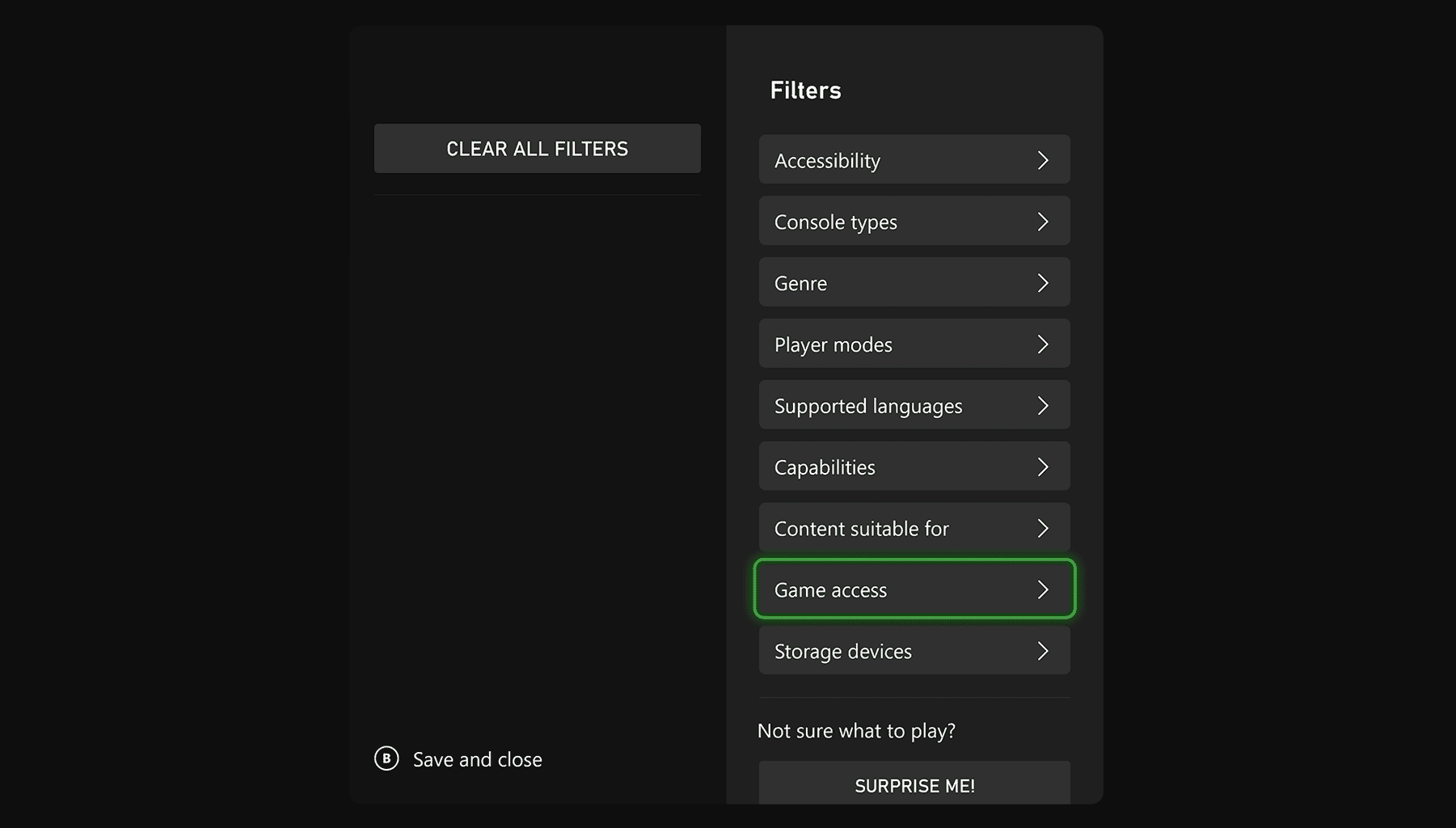
Xbox is also improving how the game library works, adding new filters to separate owned games from shared titles. Players can also more easily spot installed games that are no longer accessible.

Image: Microsoft

This is especially useful for users switching between consoles or using shared libraries, where ownership status can sometimes feel unclear at a glance. The idea is to make the library easier to understand without extra steps. Notably, the update is currently limited to Xbox Insiders, with a wider rollout planned after testing.

[UPDATE] Outlook & Other Microsoft 365 Services Are Down Right Now in Some Regions

[UPDATE: May 13, 2026 | 21:24 IST] In the latest update on X, Microsoft has noted, “We’ve identified a portion of our network infrastructure in South America that was causing intermittent disruption to other regional network links. We’ve scaled up and brought additional resources online, and our telemetry indicates that this has mitigated impact. We’ll continue to monitor and take additional corrective actions if they are needed.”

Stay tuned for updates!!


[UPDATE: May 13, 2026 | 20:37 IST] Microsoft has shared an update on X saying it has “identified a network connection issue in South America affecting connections for users hosted primarily in that region.”


[ORIGINAL STORY] If you live in South America and have been facing issues accessing Outlook or other Microsoft 365 services, Microsoft has an update for you. The company took to its Microsoft 365 Status account on X to acknowledge that it is aware of the issue and is currently investigating it.

As we hear more details, we will keep updating this article. You can get more information on this issue under MO1309330 in the admin center.

This is a developing story….

LinkedIn Reportedly Plans to Lay off 5% of Its Employees

LinkedIn is reportedly planning to lay off around 5% of its global workforce, adding another major name to the ongoing wave of tech-sector layoffs. Notably, this comes shortly after LinkedIn’s leadership transition, with former CEO Ryan Roslansky now leading Microsoft Teams.

LinkedIn restructures as industry pressure builds

The news comes via Reuters, which reports that LinkedIn will start notifying employees about the cuts soon. As reported, the latest move is part of an internal reshuffle rather than a direct response to AI replacing jobs, despite growing industry speculation.

LinkedIn currently employs more than 17,500 people worldwide, which means the layoffs could impact hundreds of roles across different teams. As of now, it’s unclear which divisions will be affected. That said, the restructuring is reportedly aimed at aligning resources with areas showing stronger growth momentum.

It’s highly likely that this isn’t a performance-driven cut. Microsoft recently revealed that LinkedIn’s revenue reportedly jumped 12% in its latest quarter. Although AI is reshaping workflows across Silicon Valley, Reuters sources indicate that LinkedIn’s decision to lay off employees isn’t linked to AI replacing roles.

All that said, LinkedIn isn’t the first company to make such a move. This year alone, Meta, Snap, and even Amazon have announced mass layoffs across different departments within their organizations. Now that LinkedIn’s layoffs plan is out in the wild, it’s possible that an official announcement might come sooner rather than later. If we hear anything from the company, we’ll update this article.

Sony Announces PS Plus Extra & Premium May 2026 Games Lineup

Sony has announced May 2026 games lineup for PS Plus Extra and Premium members. The latest lineup features mix of blockbuster open-world titles, dark fantasy adventures, and indie-heavy surprises. Notably all the games mentioned below are landing on May 19.

Star Wars Outlaws leads the May 2026 lineup dropping players into Ubisoft’s open-world galaxy where crime syndicates, heists, and survival all collide around Kay Vess.

Then there’s Red Dead Redemption 2, making a return through the catalog. Even years later, Rockstar’s Western epic still feels like a massive pull, especially for players who never fully sank time into Arthur Morgan’s story the first time around.

Alongside those headliners, Sony is filling out the catalog with very different tones. Bramble: The Mountain King brings a dark folklore-driven journey inspired by Nordic myths, while The Thaumaturge brings psychological storytelling and supernatural combat systems.

Meanwhile. Flintlock: The Siege of Dawn rounds things out with a souls-lite structure built around gods, gunpowder, and collapsing civilizations.

Over in PlayStation Plus Premium, Time Crisis is back, bringing the old-school arcade shooter into modern hardware with gyro aiming and updated controls, while still keeping its cover-shooting identity intact.

Microsoft Confirms Office Installation Issues on Windows 365 Devices

Microsoft has confirmed a new issue affecting Office downloads and installations on Windows 365 devices. The problem appeared after a recent service configuration change and currently impacts users attempting to install Microsoft Office through normal deployment methods.

The incident is internally tracked as WP1309017.

Microsoft says a service update caused the issue

According to Microsoft, a recent service update introduced a configuration change that disrupted Office installation processes on Windows 365 environments.

Affected users may experience failed downloads, installation errors, or incomplete Office setup attempts when deploying Microsoft Office on cloud PCs.

Microsoft currently classifies the issue as an advisory instead of a major outage. This suggests the company believes the impact remains partial rather than affecting every Windows 365 customer globally.

Microsoft is working on a fix

Microsoft says it is actively developing a fix and validating deployment before releasing it broadly.

The company also warned customers that the resolution process may take time because engineers still need to complete rollout validation steps before deployment begins.

Microsoft expects to provide another status update on Friday.

Any Windows 365 customer installing Office could be affected

Microsoft stated that any Windows 365 user attempting to install Office may encounter the issue.

The advisory mainly affects organizations provisioning new cloud PCs, deploying Office to employees, or reinstalling Microsoft 365 apps on existing Windows 365 systems.

Temporary workaround already available

Until Microsoft releases a permanent fix, affected users can manually download Office directly from the Microsoft 365 portal.

This workaround allows users to bypass the affected installation path while Microsoft continues remediation efforts.

In related Microsoft 365 news, Microsoft recently urged users to migrate away from Office LTSC 2021 as support deadlines approach. The company also acquired Fintool and plans to integrate its capabilities into Microsoft 365 services.

Microsoft additionally introduced a revamped Copilot experience across its productivity apps to make AI features easier to access.

Via Bleeping Computer

EFF Criticizes Meta After Instagram Removes End-to-End Encryption

Instagram has removed end-to-end encryption from direct messages, ending an optional privacy feature that Meta says very few people used.

The change means Instagram DMs still use standard encryption in transit, but they no longer include the stronger protections that prevent platform operators from accessing message contents.

Meta Says Very Few Users Enabled It

According to Meta, adoption of Instagram’s encrypted chats remained extremely low. The feature was optional, buried behind multiple setup steps, and never enabled by default.

Privacy advocates argue that low usage was predictable from the start. Groups like the Electronic Frontier Foundation say most users likely never even knew the feature existed.

Critics also point out that opt-in security features historically struggle with adoption because average users rarely search for hidden privacy settings manually.

Meta Previously Promoted Encrypted Messaging

The removal marks a noticeable shift from Meta’s earlier messaging strategy.

In 2022 and 2023, Meta publicly discussed expanding encrypted communications across Messenger and Instagram DMs, describing the goal as creating a “trusted private space” for users.

Instead of continuing development, Meta now directs users seeking stronger privacy protections toward WhatsApp, where end-to-end encryption remains enabled by default.

Privacy Critics See a Major Reversal

Privacy advocates argue encrypted messaging should exist across all major Meta platforms, not only WhatsApp.

Some critics see the decision as Meta backing away from long-term privacy commitments after spending years promoting secure messaging initiatives publicly.

Meta also still reportedly has not delivered end-to-end encryption support for Messenger group chats, another point frequently raised by privacy organizations.

Instagram Now Lags Behind Rivals

The move comes while other technology companies continue expanding encrypted communication systems.

Apple and Google are actively working on end-to-end encrypted RCS messaging, while Signal continues focusing heavily on privacy-focused usability improvements.

That contrast makes Instagram’s decision stand out even more, especially as encrypted messaging increasingly becomes an industry standard expectation.

What Changes for Users

Without end-to-end encryption, Instagram messages remain encrypted while traveling between devices and Meta’s infrastructure.

However, Meta still retains server-side access to message contents. That means messages could theoretically be accessed through moderation systems, law enforcement requests, internal tools, or future security breaches.

For users who prioritize private communications, platforms like WhatsApp or Signal may now offer significantly stronger protections.

The encryption removal also arrives during a difficult period for Meta. The company has recently faced criticism over AI monitoring initiatives and reports of planned layoffs affecting thousands of employees.

For critics, Instagram’s E2EE removal adds to growing concerns that Meta is prioritizing platform control and AI expansion over earlier privacy-focused commitments.

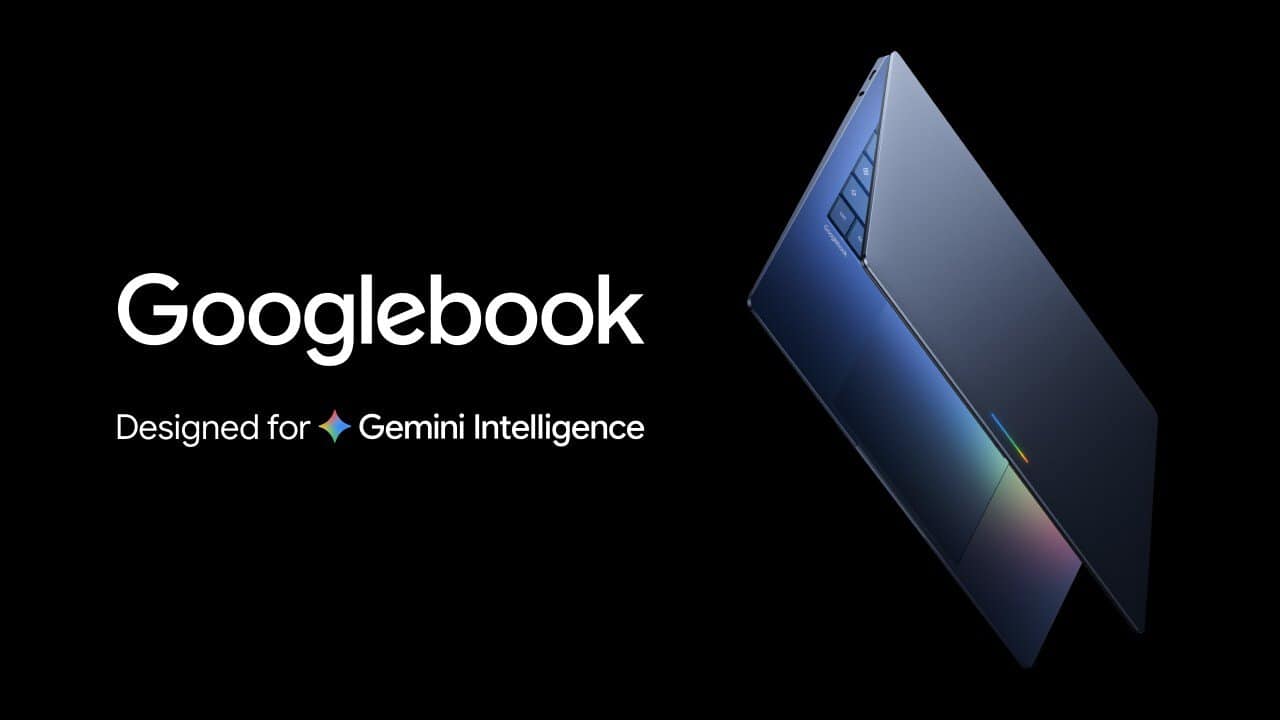
Intel’s New AI Chips Could Be the Heart of Googlebook, Here’s Why

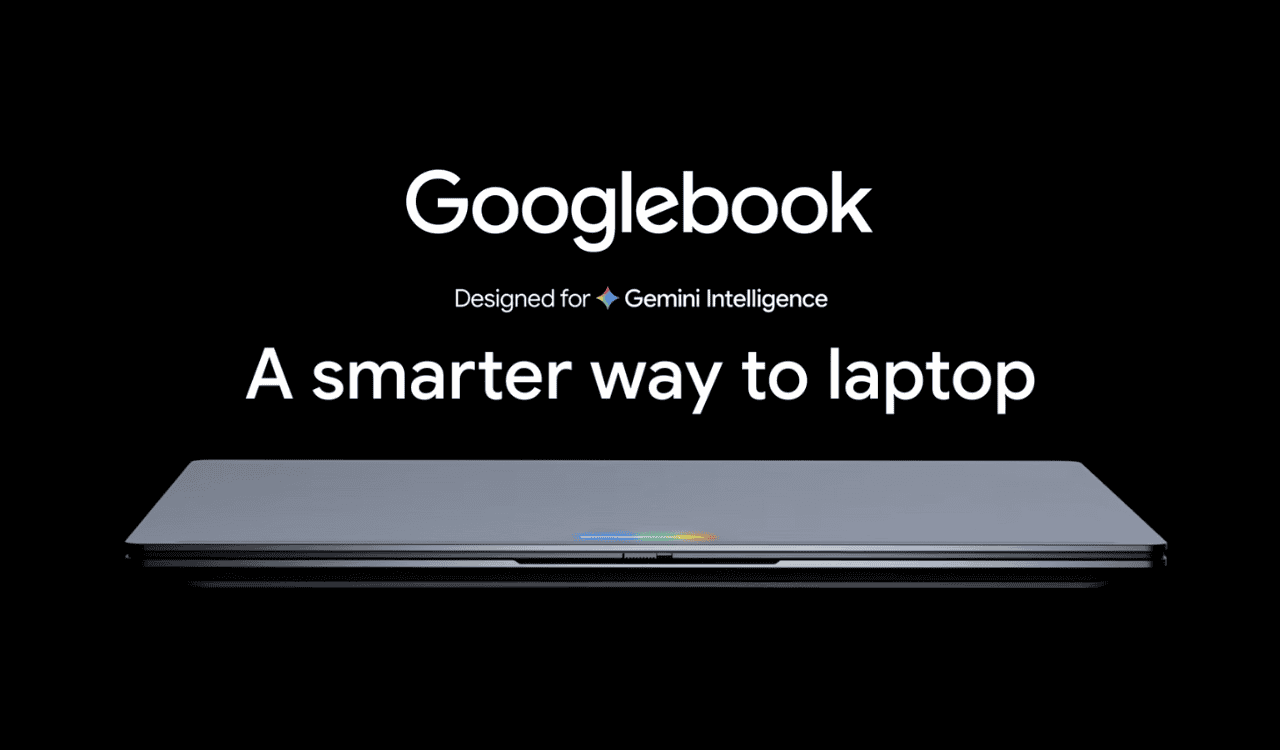
At The Android Show | I/O Edition yesterday, Google announced the Googlebook. In the company’s words, the Googlebook is designed with deep integration with Gemini Intelligence and come with “featherweight design and heavyweight power.” When the company first announced its Gemini-powered laptop vision yesterday, many wondered what exactly would power these machines under the hood. Well, it turns out that Intel is very much part of the plan.

Intel’s new “Wildcat Lake” processors may power the first wave of Googlebook

Shortly after Google unveiled Googlebook, Intel confirmed on X that it has been working closely with Google on the new platform. The company noted, “We’re thrilled to partner with Google on something we’ve been building with them – Googlebook.”

Worth noting that Googlebook is not simply replacing Chromebooks with another lightweight laptop category. In fact, the company is building an AI-first ecosystem, and now it looks like Intel’s upcoming chips may end up doing a lot of the heavy lifting there.

While neither company fully confirmed the exact processor lineup, signs currently point toward Intel’s recently introduced Core Series 300 “Wildcat Lake” platform. These chips are expected to feature a hybrid setup with two Cougar Cove performance cores alongside four low-power Darkmont cores.

Speaking of AI workloads, Intel is also bringing its NPU 5 engine capable of up to 40 TOPS INT8 performance, which sounds perfectly in line with Google’s aggressive Gemini Intelligence push.

Not to forget, the platform also includes Intel Xe graphics, upgraded media engines, and support for lightweight AI tasks happening directly on device rather than fully in the cloud. Considering Googlebook heavily focuses on proactive Gemini experiences, contextual widgets, and AI-assisted multitasking, the hardware pairing actually feels pretty logical. All that said, Intel hasn’t confirmed its plans yet. So, consider this speculation.

Googlebook may not belong to Intel alone

Intel will not be the only silicon partner involved with Googlebook laptops. That’s because, in an interview with ChromeUnboxed (embedded below), Google VP John Maletis confirmed that Googlebook devices will follow strict hardware standards across memory, keyboards, storage, and overall experience (via TechPowerUp). However, launch partners are also expected to include Qualcomm and MediaTek. That likely means Google is preparing both x86 and Arm-powered Googlebooks right from day one. Not to forget, Google has also confirmed that Acer, ASUS, Dell, HP, and Lenovo will join the first launch wave later this fall.

Microsoft’s May 2026 Patch Tuesday Fixes 130+ Vulnerabilities, Including 17 “Critical” Ones

Microsoft has released its May 2026 Patch Tuesday updates for Windows 11 and Windows 10, shipping as KB5089549 and KB5087544. The updates include fixes for more than 130 security vulnerabilities across Windows, Office, SharePoint, DNS components, and core system services, as Bleeping Computer writes.

While no publicly disclosed zero-day vulnerabilities were reported this month, the large number of remote code execution flaws still makes this one of the more important Patch Tuesday releases of 2026.

17 critical vulnerabilities patched

Microsoft patched 17 vulnerabilities rated Critical during the May rollout. Most of them involve remote code execution risks.

The breakdown includes 14 remote code execution vulnerabilities, two elevation of privilege flaws, and one information disclosure issue.

Across the full Patch Tuesday release, Microsoft addressed:

  • 61 elevation of privilege vulnerabilities
  • 31 remote code execution vulnerabilities
  • 14 information disclosure vulnerabilities
  • 13 spoofing vulnerabilities
  • 8 denial of service vulnerabilities
  • 6 security feature bypass vulnerabilities

Enterprise administrators are expected to prioritize systems exposed to external networks or environments handling untrusted files and attachments.

Office vulnerabilities remain a major concern

Several patched vulnerabilities affect Microsoft Office applications including Microsoft Word and Microsoft Excel.

Some of the flaws reportedly allow attackers to trigger code execution simply by convincing users to open malicious documents. In certain cases, exploitation may reportedly occur through the preview pane alone, increasing risk for environments processing large volumes of email attachments.

Organizations using Office heavily across corporate email systems will likely want to prioritize deployment quickly.

Windows GDI flaw can trigger remote code execution through images

One of the more notable vulnerabilities patched this month is CVE-2026-35421, a Windows GDI remote code execution vulnerability.

The flaw can reportedly be exploited using specially crafted EMF image files opened inside Microsoft Paint. Successful exploitation could allow attackers to execute arbitrary code on affected systems.

SharePoint and DNS vulnerabilities also patched

Microsoft also fixed CVE-2026-40365, a remote code execution vulnerability affecting Microsoft SharePoint Server.

The flaw reportedly allows authenticated attackers to execute code remotely over the network, making internet-facing SharePoint deployments especially important to patch.

Another notable vulnerability, CVE-2026-41096, affects the Windows DNS Client service. The issue reportedly allows a malicious DNS server to send crafted DNS responses that trigger memory corruption and potentially remote code execution.

Systems connected to untrusted or compromised DNS infrastructure may face elevated risk until patched.

Windows 11 update also fixes BitLocker recovery issues

Beyond security fixes, the Windows 11 KB5089549 update also resolves issues involving unexpected BitLocker recovery prompts that some users encountered after previous updates.

Microsoft has not reported any actively exploited zero-days this month, which slightly lowers immediate emergency response pressure. However, the unusually large number of remote code execution vulnerabilities still makes rapid deployment highly recommended for enterprise and consumer systems alike.

The New Steam Controller Literally Screams When You Drop It

Valve appears to have managed to sneak in one of the weirdest Easter eggs we have seen in a while inside the new Steam Controller. Apparently, if you accidentally drop the controller from high enough, the controller lets out a dramatic scream mid-fall, almost like it already knows its fate before smashing into the floor below or even padded surface. Yes, seriously, listen to it yourself in the video embedded below.

Valve turned dropping your controller into a comedy sketch

The feature was first spotted by Reddit user RF3D19 and later confirmed by folks at PC Gamer. According to users testing the feature, the scream only works while Steam is running in Big Picture mode. There is also reportedly “a timeout period about a minute long so that you can’t do it over and over immediately.” It seems Valve clearly thought ahead about people repeatedly tossing the controller around just to hear it panic again.

What makes this even stranger is the fact that the new Steam Controller does not appear to include a dedicated speaker. However, the sound seems to come through the controller’s haptics system. In simple terms, Valve may be using vibration motors to recreate the scream effect at low quality. Many would think that it may be bizarre and slightly unnecessary, but I honestly feel it’s pretty cool.

The sound itself resembles the famous Wilhelm scream, which has basically become Hollywood’s favorite stock panic sound effect over the years. So, instead of hearing a sad plastic thud after dropping your $99 controller, you now get a full dramatic send-off before impact.

As you may know, the first round of Steam Controller sales was nothing short of chaos, but it got even worse with scalping issue. Valve is aware of the situation and has confirmed a reservation-based queuing system for the next round of sales. If you haven’t got yours, make sure to line yourself up in the queue so you can try the new controller and maybe hear the dramatic scream at least once.

AMD’s New Ryzen 9 PRO 9965X3D & Ryzen 7 PRO 9755X3D Processors Are Official

AMD is quietly pushing its Ryzen PRO processors into a territory that previously belonged to Threadripper workstations. After launching the Ryzen 9 9950X3D2 with dual 3D V-Cache and 192MB cache, the company has officially expanded its Ryzen PRO 9000 lineup with six new desktop and workstation processors, including its first-ever Ryzen PRO CPUs featuring 3D V-Cache technology.

AMD finally brings X3D to Ryzen PRO workstations

The most notable upgrade for sure is the Ryzen 9 PRO 9965X3D. It packs 16 Zen 5 cores, 32 threads, boost clocks up to 5.5GHz, and a massive 128MB of L3 cache thanks to AMD’s 3D V-Cache tech. The chip also carries a 170W TDP, making it one of AMD’s most powerful PRO desktop CPUs yet. AMD has also launched a standard Ryzen 9 PRO 9965 variant with the same core count but without the stacked cache.

NameGraphics Model# of CPU Cores# of ThreadsMax. Boost ClockBase ClockThermal Solution (PIB)Graphics Core CountDefault TDP
AMD Ryzen 7 PRO 9755AMD Radeon Graphics816Up to 5.4 GHz3.8 GHzNot Included2120W
AMD Ryzen 9 PRO 9965AMD Radeon Graphics1632Up to 5.5 GHz4.3 GHzNot Included2170W
AMD Ryzen 9 PRO 9965X3DAMD Radeon Graphics1632Up to 5.5 GHz4.3 GHzNot Included2170W
AMD Ryzen 5 PRO 9655AMD Radeon
Graphics
612Up to 5.4 GHz3.9 GHzNot Included2120W
AMD Ryzen 7 PRO 9755X3DAMD Radeon
Graphics
816Up to 5.2 GHz4.7 GHzNot Included2120W
AMD Ryzen 9 PRO 9955AMD Radeon
Graphics
1224Up to 5.4 GHz3.4 GHzNot Included2120W

The 3D V-Cache technology is not limited to Ryzen 9 series only. AMD also announced the Ryzen 7 PRO 9755X3D with eight cores, 16 threads, and 96MB of L3 cache. That’s a big jump considering AMD previously kept X3D mostly focused on gaming-focused consumer chips. Now, it appears the company believes cache-heavy workloads matter just as much in professional environments.

Speaking of which, AMD says the new processors are ideal for applications such as 3D CAD, BIM workflows, real-time visualization, simulation, video production, and AI-powered tasks.

Lenovo may become the first major launch partner

As reported by TechPowerUp, AMD has also confirmed that systems powered by Ryzen PRO 9000 chips will begin shipping in the second half of 2026. Lenovo’s upcoming ThinkStation P4 workstation is already lined up for Q3 2026 availability. Interestingly, the new workstation brings liquid cooling and support for up to 256GB memory into a compact chassis. You can read more about it in the official announcement here.

Microsoft Deepens SK hynix AI Partnership Amid Infrastructure Push

Microsoft is reportedly expanding its AI hardware strategy beyond NVIDIA by deepening cooperation with South Korean memory giant SK hynix, according to The Korea Herald. The move appears focused on lowering infrastructure costs while improving inference performance across Microsoft’s growing AI datacenter footprint.

Microsoft continues diversifying its AI supply chain

According to reports, SK hynix has become the sole supplier for Microsoft’s Maia 200 AI inference accelerator. The accelerator is already deployed inside Microsoft datacenters in Des Moines as the company continues scaling its AI infrastructure.

Microsoft reportedly claims Maia 200 delivers around 30% better performance-per-dollar compared to previous-generation hardware. The company appears increasingly focused on improving inference efficiency as AI workloads become more expensive to operate at scale.

The partnership does not signal a split between Microsoft and NVIDIA. Instead, Microsoft appears to be broadening its supplier ecosystem while reducing dependence on a single AI hardware vendor.

SK hynix already plays a major role in the global AI supply chain. The company supplies DRAM, NAND flash, and high-bandwidth memory used across NVIDIA AI GPUs and other enterprise accelerators.

At the same time, SK hynix continues partnerships with major hyperscalers, including Google and Amazon.

CEO Summit 2026 expected to focus heavily on AI infrastructure

SK hynix CEO Kwak Noh-Jung is reportedly attending Microsoft’s CEO Summit 2026 in Redmond. Discussions are expected to center around generative AI, cloud infrastructure, and next-generation AI datacenters.

Kwak is also reportedly expected to attend a formal dinner hosted by Bill Gates during the event.

The partnership comes as Microsoft accelerates investment into AI infrastructure and custom silicon initiatives. The company has increasingly pushed toward internally optimized AI hardware as competition intensifies across cloud providers.

Microsoft simultaneously continues broader internal restructuring efforts tied to AI expansion. Recent reports suggest the company is reshuffling senior Israel-based leadership amid Azure-related scrutiny while also preparing additional employee buyout programs as AI becomes a larger company priority.

Via Neowin

Windows 11 KB5089549 Fixes Incorrect BitLocker Recovery Prompts Triggered by April Patch

Last month, Microsoft released the April 2026 Patch Tuesday updates for Windows 11 versions 23H2 and 24H2/25H2 under KB5082052 and KB5083769, respectively. While the updates introduced several security improvements and networking fixes, they also triggered an unexpected BitLocker Recovery issue on select Windows devices.

Microsoft acknowledged the problem and later published multiple workarounds for affected users and IT administrators. If you are among the users affected by this BitLocker bug, the good news is that it has finally been fixed with the Windows 11 May 20326 Patch Tuesday Update.

Windows 11 KB5089549 fixes random BitLocker Recovery prompts caused by KB5083769

In the changelog of the May 2026 Patch Tuesday Update, KB5089549, Microsoft confirmed that the update “addresses an issue where some devices might enter BitLocker Recovery after updating boot files” on systems using certain Trusted Platform Module validation settings, including invalid PCR7 configurations.

To catch you up, the problem mostly affected enterprise-managed systems rather than regular consumer PCs. According to Microsoft, devices with BitLocker enabled on the OS drive and specific Group Policy settings tied to PCR7 validation were more likely to trigger the recovery screen after restarting. The issue became even more common on systems where Secure Boot reported PCR7 Binding as “Not Possible.”

In affected cases, users were unexpectedly prompted to enter their BitLocker recovery key after installing KB5083769. Thankfully, the prompt usually appeared only once, after which systems resumed normal behavior during future restarts.

At the time, the company also published temporary workarounds to reduce the chances of recovery prompts appearing on impacted devices. Interestingly, one of those workarounds was later pulled without giving any reason.

Now that the issue has been officially marked fixed by Microsoft, you no longer require to rely on those workarounds. Speaking of updates, let’s not forget that Microsoft also rolled out KB5087544 for Windows 10 users, which fixes remote desktop bugs.

Microsoft’s New MDASH Multi-Model AI System Hunts Vulnerabilities at Hyper-Scale

Microsoft is ramping up its efforts on AI-based cybersecurity solutions to a huge extent. Right after OpenAI announced its Daybreak initiative, Microsoft has unveiled MDASH, which stands for Multi-Model Agentic Security Hub. The company explains that this model has the capability of discovering software vulnerabilities even before the threat actors make use of them.

This new model apparently helped to identify a total of 16 vulnerabilities in Windows networking and authentication elements, four of them being severe remote code execution issues related to tcpip.sys and IKEv2 service.

MDASH finds 16 Windows vulnerabilities via more than 100 AI agents

MDASH apparently involves the usage of more than 100 AI agents, which work together on various frontier and distilled models. According to Microsoft, those agents can independently detect bugs, debate exploitability, validate results, and even develop proof-of-concept attacks.

Also, Microsoft published some aggressive benchmark numbers. Per the company, MDASH detected all 21 injected vulnerabilities in a private test driver without any false positives. In addition, MDASH attained 96% recall for five years of validated Microsoft Security Response Center cases in clfs.sys and 100% recall in tcpip.sys.

That’s not all; MDASH scored 88.45% on the public CyberGym vulnerability benchmark for 1,507 publicly disclosed vulnerabilities. This score puts MDASH about five points ahead of the nearest competitor on the leaderboard.

Not to mention, the findings are significant. Microsoft says the system detected multiple remotely exploitable vulnerabilities in tcpip.sys, dnsapi.dll, netlogon.dll, and ikeext.dll. Some vulnerabilities permitted unauthenticated remote code execution, while others facilitated denial-of-service attacks or security bypasses. The patches were released through recent Patch Tuesday updates.

In an era where tech companies are rapidly developing their own autonomous agents, it seems that cybersecurity is becoming one of the most important testing grounds for the industry. To catch you up, Anthropic also recently announced its cybersecurity model, Mythos, as part of Project Glasswing.

According to the company, MDASH has already been rolled out both internally and through a restricted private beta test among select customers.

Microsoft’s Project Saluki and Project Positron Could Reshape Xbox’s Future

Microsoft is reportedly working on two new Xbox initiatives internally called “Project Saluki” and “Project Positron,” according to discoveries inside recent Xbox Insider builds, as Windows Central reports. The projects appear to focus on expanding Xbox into new markets while preparing for a more digital future.

One project reportedly targets the Chinese gaming market, while the other could help physical Xbox game owners transition toward digital licensing.

Project Saluki may target China-focused Xbox Game Pass expansion

Project Saluki reportedly references a new Xbox Game Pass structure designed specifically for China. Microsoft has not officially announced the initiative, but the Insider build references suggest the company may explore multiple regional Game Pass tiers.

The strategy would likely help Microsoft adapt Xbox services to Chinese regulations, approved game catalogs, and local monetization models. China continues to grow rapidly as a gaming market, especially across mobile and free-to-play ecosystems.

Reports suggest Microsoft could place heavier focus on in-game currencies, mobile-connected experiences, and lower-cost subscription options tailored for the region.

The move also aligns with Xbox CEO Asha Sharma’s broader push toward expanding Xbox across Asian markets. Microsoft has repeatedly discussed reaching players beyond traditional console audiences, especially in regions where mobile and cloud gaming dominate.

Project Positron may convert physical Xbox discs into digital licenses

Project Positron appears even more interesting for longtime Xbox users. The rumored system may allow players to convert physical Xbox discs into permanent digital entitlements tied to their accounts.

If accurate, the feature could become important for Microsoft’s next-generation Xbox strategy. Rumors surrounding the upcoming “Project Helix” platform suggest Microsoft may move toward a fully digital console-PC hybrid design without a built-in disc drive.

A disc-to-digital conversion system would help preserve existing physical game libraries while giving players access to cloud gaming features, Xbox Play Anywhere support, and digital portability across devices.

The broader gaming industry already leans heavily toward digital distribution. PC gaming has operated almost entirely digitally for years, while physical Blu-ray game sales continue shrinking across the console market.

Microsoft may prepare Xbox for a fully digital future

Both projects suggest Microsoft continues reshaping Xbox into a broader gaming ecosystem instead of focusing only on traditional consoles.

Project Saluki points toward aggressive international expansion, while Project Positron hints at reducing dependence on physical media before next-generation Xbox hardware arrives.

Project Helix rumors also suggest Microsoft wants future Xbox systems to compete more directly with high-end gaming PCs. However, hardware pricing and availability may face challenges due to ongoing global memory shortages affecting the broader tech industry.

Googlebook is Google’s AI-Powered Successor to Chromebooks

Microsoft is pushing deeper into the laptop market with its Copilot+ PCs, and it seems that Google has finally decided to respond by introducing its own AI-focused device, called Googlebook.

Googlebook puts Gemini at the center

The device offers seamless integration between ChromeOS, Android, and Gemini. Googlebook is built around Gemini, with one of its key features being Magic Pointer. Simply by wiggling the cursor, users can access context-aware suggestions.

This allows them to use Gemini to set up meetings, combine images, and more. This isn’t all, as Googlebook will have the ability to create widgets by using AI prompts.

Widgets will be able to connect to Google services and perform web searches, allowing users to create fully personalized dashboards.

Android integration will make phone access easier

Besides deep Gemini integration, Googlebook offer Android integration, allowing users to browse phone files directly from their laptop without manual transfer. Additionally, users will be able to perform various phone tasks right from their laptops.

All Googlebooks will have a distinctive Glowbar, while the first models are expected to come from major manufacturers, including Acer, ASUS, Dell, HP, and Lenovo.

In other Google news, Chrome is getting redesigned PWA installs, while the Google Desktop App for Windows is now available globally.

Lastly, Google Chrome is getting a new Skills feature, allowing users to save and reuse prompts.

Windows Update Will Soon Automatically Roll Back Broken Drivers

Microsoft has announced a new Windows recovery feature called Cloud-Initiated Driver Recovery, designed to automatically roll back problematic drivers delivered through Windows Update.

The new capability aims to reduce situations where faulty drivers leave PCs unstable, crashing, or unusable for long periods. Instead of requiring users to manually uninstall drivers or wait for OEM fixes, Windows will attempt to recover affected systems automatically.

Microsoft wants faster recovery from broken drivers

Driver-related issues remain one of the biggest causes of Windows instability. A problematic GPU, audio, storage, or chipset driver can trigger crashes, boot failures, or system instability shortly after installation.

At the moment, users often need to enter Safe Mode, manually remove drivers, or rely on vendor-issued hotfixes. In some cases, OEM support tools or third-party recovery utilities become necessary.

Microsoft’s new recovery process attempts to simplify that workflow using the existing Windows Update infrastructure.

How Cloud-Initiated Driver Recovery works

According to Microsoft, the system begins during Windows driver rollout testing and validation stages, including gradual flighting and Shiproom evaluation processes.

If Microsoft identifies a problematic driver deployment, the company can generate a cloud recovery request targeting affected devices.

Windows Update then sends rollback instructions directly to impacted systems. The recovery process removes the rejected driver and reinstalls either a previously working version or another approved compatible release already available through Windows Update.

Microsoft says the system does not require a separate recovery application, OEM utility, or new Windows component.

Recovery depends on approved fallback drivers

The feature does include an important limitation. Automatic rollback only works when Windows Update already has a validated fallback driver available for the affected hardware.

If no approved replacement exists, users may still need to troubleshoot the issue manually or wait for vendors to publish updated drivers.

Even so, the system could significantly reduce downtime during large-scale driver deployment problems.

Rollout starts with testing in 2026

Microsoft plans to begin manual validation and testing between May and August 2026.

Full automatic recovery integration is currently planned for September 2026.

The announcement comes alongside Microsoft’s broader Windows reliability and performance efforts. The company recently released Windows 11 KB5089549 and Windows 10 KB5087544 as part of the May 2026 Patch Tuesday updates.

Microsoft is also continuing work on improving Windows 11 responsiveness through additional WinUI 3 performance optimizations.

Forza Horizon 6 Preload Now Live Ahead of May 19 Launch

Forza Horizon 6 is now available for preload on Steam and the Microsoft Store ahead of its official May 19, 2026 launch. The game has already dominated headlines this week after leaked copies surfaced online and players began testing performance early.

The preload also revealed the game’s massive storage requirements. PC players will reportedly need at least 160GB of free space, while Xbox consoles require around 130GB. That makes Forza Horizon 6 the largest entry in the franchise so far.

Leaked benchmarks suggest strong PC optimization

Despite the large install size, early benchmark reports from users running leaked builds suggest the game performs surprisingly well on modern hardware. Some players tested the title at 4K settings and reported stable frame rates with relatively low stuttering.

NVIDIA has already released a game-ready driver update for Forza Horizon 6 with support for DLSS Multi-Frame Generation. AMD and Intel are also expected to release optimized drivers before launch day.

Developers reportedly issuing hardware bans

The leak situation has become increasingly serious over the past few days. Reports claim developers already started banning players who modified leaked versions of the game.

Players caught running unauthorized leaked copies could also face hardware bans, which would block future access on the affected system. Similar enforcement measures appeared earlier with leaked builds of other major Xbox titles.

Another major game leak hits the industry

Interestingly, the Forza Horizon 6 leak arrived during the same week Subnautica 2 reportedly suffered a similar situation involving unofficial game files circulating online.

The incidents once again highlight growing concerns around preload security and unauthorized early access distribution before official launch dates.

Via Neowin

Microsoft Edge now lets users sign in with Google accounts to sync browser profiles in Canary

Microsoft is quietly testing Google account sign-ins for Edge profiles in Canary. In our testing, the feature worked, and Edge shows the usual profile sync options for a Gmail account.

Until now, Edge profiles have relied on Microsoft accounts for sign-in and sync, not Google accounts. As a result, you could create multiple profiles and use Microsoft accounts made with Gmail addresses. That still did not give you proper Google sign-in or Google-backed sync.

The only options were clumsy workarounds. For example, you could import Chrome data as a one-way transfer, or sign in to Google services by hand in every profile. Back in 2020, Microsoft even said it had no plans to integrate Google services into Edge by default.

How to enable Google account sign-ins for Edge profiles in Canary

Now, Microsoft is testing Google sign-ins for Edge profiles behind flags. Once the flags are enabled, a Google sign-in button appears in the profile menu dialog.

From there, you can pick “Sign in with Google” and follow the usual web flow. Edge asks for permission to access your Google account information. At the end, it may prompt you to protect the Gmail-linked profile with Windows Hello.

After setup, the profile menu displays the Gmail address tied to the new Edge profile, something Edge did not allow before. In our use, Profile Sync is available for that Google-linked account, with sync options turned on for Edge features, much like a Microsoft account.

Browser profiles have usually stayed tied to each company’s own ecosystem. Up to this point, you could not use a Google account to sign in to an Edge profile, just like you cannot use a Microsoft account to sign in to a Chrome profile.

Both browsers let you log in to individual sites with whatever account you like, but the browser profile itself has stayed tied to its own account system.

Microsoft appears to be changing that. For now, this change is limited to Edge Canary. The feature is hidden behind the “Google Sign-in button on profile menu” (edge-swag-m1-Google) and “Sign in with Google” flags in edge://flags, and the company has not announced the feature yet.

Subnautica 2 Reportedly Leaks Ahead of Early Access Launch

Subnautica 2 has reportedly leaked online ahead of its planned Early Access release on May 14, 2026. The leak surfaced only days after Forza Horizon 6 also appeared online before launch, raising fresh concerns about pre-release security across major upcoming games.

Full game build allegedly circulating online

Reports claim the full Subnautica 2 game files are already spreading across piracy and file-sharing groups. Users online also claim the leaked build is playable, while screenshots and gameplay clips have already started appearing across social media and forums.

At the moment, the source of the leak remains unknown.

The timing stands out because developer Unknown Worlds Entertainment reportedly enabled pre-orders and preloading on May 11, only a few days before the planned Early Access release.

Studio has not responded yet

So far, Unknown Worlds Entertainment has not issued an official statement regarding the alleged leak.

It’s worth mentioning that leaked game builds often carry serious security concerns. Modified installers and unofficial files can contain malware, credential-stealing software, or unstable code that may damage systems or corrupt saves.

Forza Horizon 6 leak already triggered bans

The situation follows another major gaming leak involving Forza Horizon 6 earlier this week. Developers reportedly started banning players who modified the leaked version of the game.

Reports also claim hardware bans may target users who accessed or played unauthorized leaked builds before launch.

Large game leaks have become increasingly common in recent years, especially around preload periods and Early Access launches. Developers now face growing pressure to secure distribution systems while trying to balance early downloads, preload convenience, and launch-day stability.

For players, unofficial leaked builds continue to carry major risks, even when the files appear functional.

Via Neowin

[UPDATE: Service Restored] Spotify is Down Right Now in Massive Outage

[UPDATE: 13 May 2026, 02:35 AM IST] Spotify has confirmed on X that the outage has now been resolved.


[ORIGINAL ARTICLE] Did you recently try accessing your playlist on Spotify and find out that the app isn’t working? Well, it’s not only you. Thousands of users are facing the same problem as Spotify is down right now.

Over on X, the official Spotify Status account confirmed the outage, noting, “We’re aware of some issues right now with the app and are checking them out!”

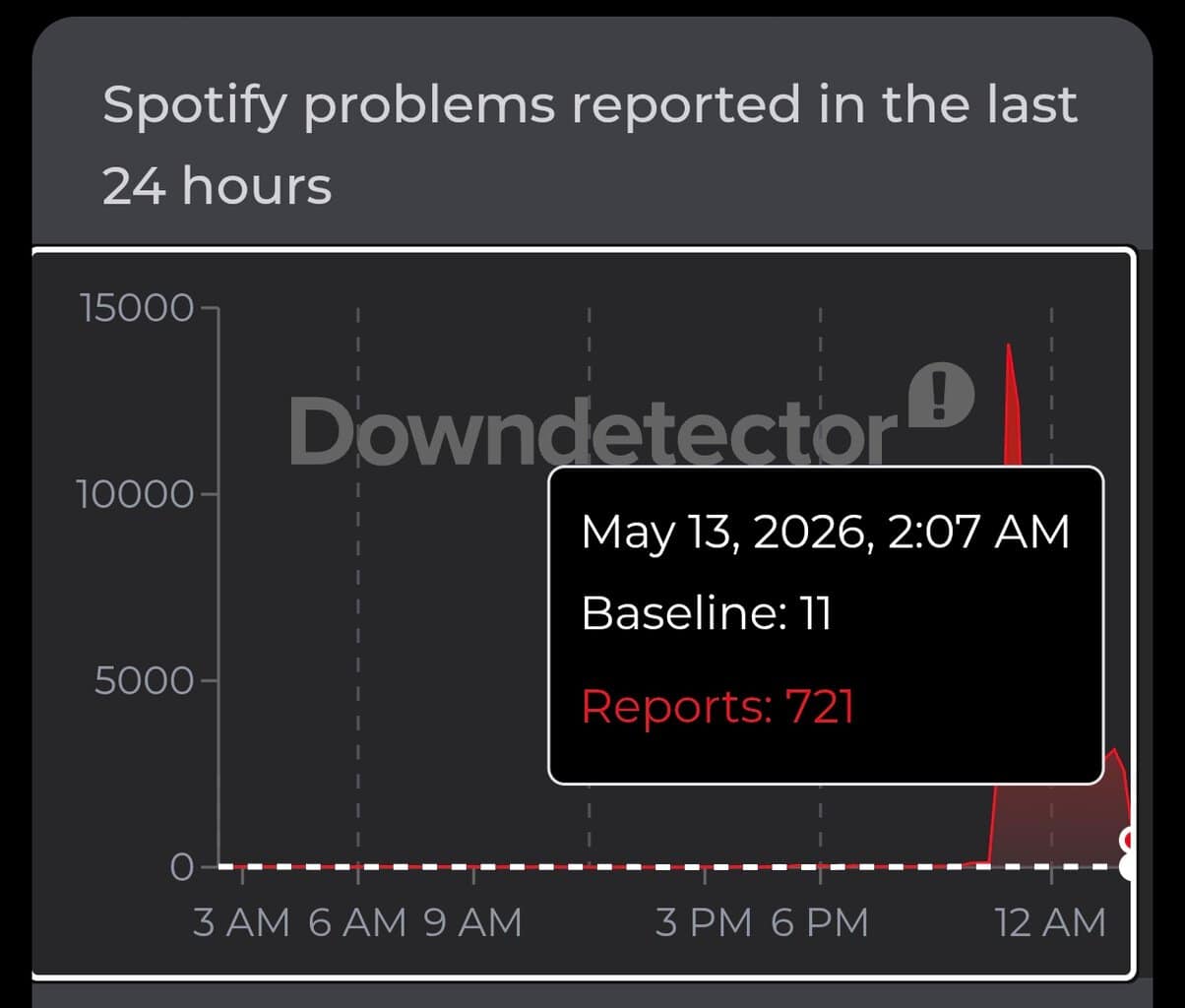
According to multiple reports on X, Spotify users are experiencing login issues, long loading times, and black screens. At one point, DownDetector, the outage tracking site, showed a huge spike, with over 15,000 Spotify users reporting multiple issues when trying to access the service.

At the time of writing this, the spike on Downdetector has settled a little. User reports have come down to under 1,000, hinting that issues with Spotify have largely been resolved.

Image: DownDetector | Timezone: IST

While the service outage banner from Spotify’s support page has been removed, we still await an official update on X. Once Spotify drops an update, we’ll update this article.

This is a developing story…

Windows 10 KB5087544 May 2026 Patch Tuesday Update Fixes Remote Desktop Bugs

Microsoft has released a new Windows 10 KB5087544 update that fixes problems affecting Remote Desktop, Secure Boot reporting, and Daylight Saving Time handling for Egypt.

The update fixes Remote Desktop Connection bugs and more

One of the main fixes targets a Remote Desktop Connection bug introduced after the April 2026 security update KB5082200. Some users reported that security warning dialogs rendered incorrectly on systems using multiple monitors or mixed display scaling setups.

Microsoft also updated Windows Security with support for dynamic Secure Boot status reporting. At the same time, the company continues rolling out new Secure Boot certificates through a phased deployment strategy using what it calls “high confidence device targeting.”

The update also adds a Daylight Saving Time adjustment for Egypt to reflect government DST rule changes introduced in 2023.

The change ensures Windows 10 systems display correct local time information in affected regions.

Microsoft warns about BitLocker recovery issue

Microsoft says some systems could unexpectedly trigger the BitLocker recovery screen after installing the update.

The issue only affects systems meeting several very specific conditions. BitLocker must already protect the operating system drive, a TPM validation policy must be manually configured, PCR7 must be included manually, and the system must already use the Windows UEFI CA 2023 certificate without using the newer 2023-signed Windows Boot Manager.

According to Microsoft, the problem mainly affects enterprise-managed systems and remains unlikely on most home PCs.

Recovery prompt should only appear once

Microsoft says affected systems typically show the BitLocker recovery prompt only during the first reboot after the update installs.

Future restarts should work normally if administrators do not modify existing policies afterward.

The company recommends temporarily changing the “Configure TPM platform validation profile for native UEFI firmware configurations” Group Policy setting to “Not Configured” before installing the update.

Admins should then run gpupdate /force, temporarily suspend BitLocker protection using manage-bde -protectors -disable C:, and re-enable protection afterward with manage-bde -protectors -enable C:.

Microsoft says the update changes Secure Boot certificate handling and modifies parts of the boot manager trust chain.

BitLocker interprets those new boot measurements as a potential security-related boot change, which then triggers the recovery screen on affected devices.

As for Windows 11, it was also updated with a new KB5089549 update.

Windows 11 May 2026 Patch Tuesday Update, KB5089549, Out Now

Microsoft has just released May 2026 Patch Tuesday update, KB5089549, for Windows 11 version 25H2 and 24H2 that bumps respective systems to Build 26200.8457 and 26100.8457. Microsoft has confirmed that the latest Patch Tuesday update includes fixes and improvements previously released through KB5083769 and KB5083631 Preview updates last month.

Notably, the company has also confirmed that KB5089549 May 2026 Patch Tuesday update fixes 137 vulnerabilities that are detailed here. As far as the quality improvements is concerned, check the changelog for the update below:

  • [Secure Boot] With this update, Windows quality updates include additional high confidence device targeting data, increasing coverage of devices eligible to automatically receive new Secure Boot certificates. Devices receive the new certificates only after demonstrating sufficient successful update signals, maintaining a controlled and phased rollout. ​​​​​​​
  • [Boot manager servicing update]
    • This update improves startup reliability after boot file updates, so devices start normally without entering BitLocker recovery.
    • (Known issue) Fixed: This update addresses an issue where some devices might enter BitLocker Recovery after updating boot files on systems with certain Trusted Platform Module (TPM) validation settings, including invalid PCR7 (Platform Configuration Register 7) configurations. This might occur after installing the April 2026 security update (KB5083769).
  • [Connectivity] This update improves the reliability of Simple Service Discovery Protocol (SSDP) notifications to help prevent the service from becoming unresponsive.

If you want to manually download the security update, head over to the official Microsoft Update Catalog website.

Microsoft Targets Sluggish Windows 11 UI With New WinUI 3 Improvement

Microsoft is continuing its internal “K2” initiative aimed at improving Windows 11 responsiveness and overall UI performance. The latest effort focuses heavily on transitioning more Windows components to WinUI 3, Microsoft’s modern user interface framework.

Microsoft says performance is a core priority

Microsoft engineer Beth Pan said performance remains “at the heart” of the company’s WinUI 3 work, with Microsoft optimizing both Windows apps and the framework itself. File Explorer and Notepad reportedly served as key benchmark apps during testing.

According to Microsoft, the latest WinUI optimizations reduced allocations by 41%, cut transient allocations by 63%, lowered function calls by 45%, and reduced time spent in WinUI code by 25%.

Windows 11 performance criticism continues

The changes matter because Windows 11 has faced criticism for sluggish animations, slower context menus, delayed File Explorer responses, and inconsistent UI responsiveness since launch.

Microsoft now appears focused on reducing overhead inside the UI layer itself instead of relying only on hardware improvements.

Low Latency Profile already showed early changes

Some of the K2 initiative has already become visible through Microsoft’s new Low Latency Profile feature, which temporarily boosts CPU clocks during short interactive tasks to improve responsiveness.

While some users criticized the feature online, Microsoft defended the approach and noted similar behavior already exists on other operating systems.

Microsoft is also improving File Explorer performance through preloading optimizations designed to make folders and interface elements appear faster during daily use.

The latest WinUI 3 improvements are expected to arrive in development builds first before expanding into broader Windows and WinUI releases later on.

Via Windows Central

Nintendo’s Limited-Time ‘Switch 2: Choose Your Game Bundle’ Launches This Summer

Nintendo has officially unveiled the new “Nintendo Switch 2: Choose Your Game Bundle,” and honestly, this feels like the kind of offer fans were hoping after the recently announced price hike.

Nintendo announces the new Switch 2: Choose Your Game Bundle

Starting in early June, participating retailers will reportedly begin offering the bundle for $499.99, complete with the console itself and a redeemable download code for one select first-party game.

Rather than locking buyers into one default title, players can pick between three games, namely Mario Kart World, Donkey Kong Bananza, or Pokémon Pokopia. Nintendo says the bundle offers savings of up to $29.99 compared to purchasing the console and game separately

Notably, Nintendo is also using the bundle announcement to promote the Switch 2’s upgraded hardware features. The new handheld gaming console supports gameplay at up to 4K resolution, brings mouse-like functionality through the reworked Joy-Con 2 controllers in compatible games, and adds GameChat features designed to make online sessions feel closer to local multiplayer.

The new bundle will be available for limited time

Here’s what you should pay attention to. Nintendo says the new bundle will only be available for a limited time while supplies last. Considering how quickly Nintendo hardware tends to disappear during launch periods, it would not be shocking if some retailers start running low shortly after pre-orders and summer demand fully kick in.