Microsoft is bring back “The Duke,” Xbox’s original controller

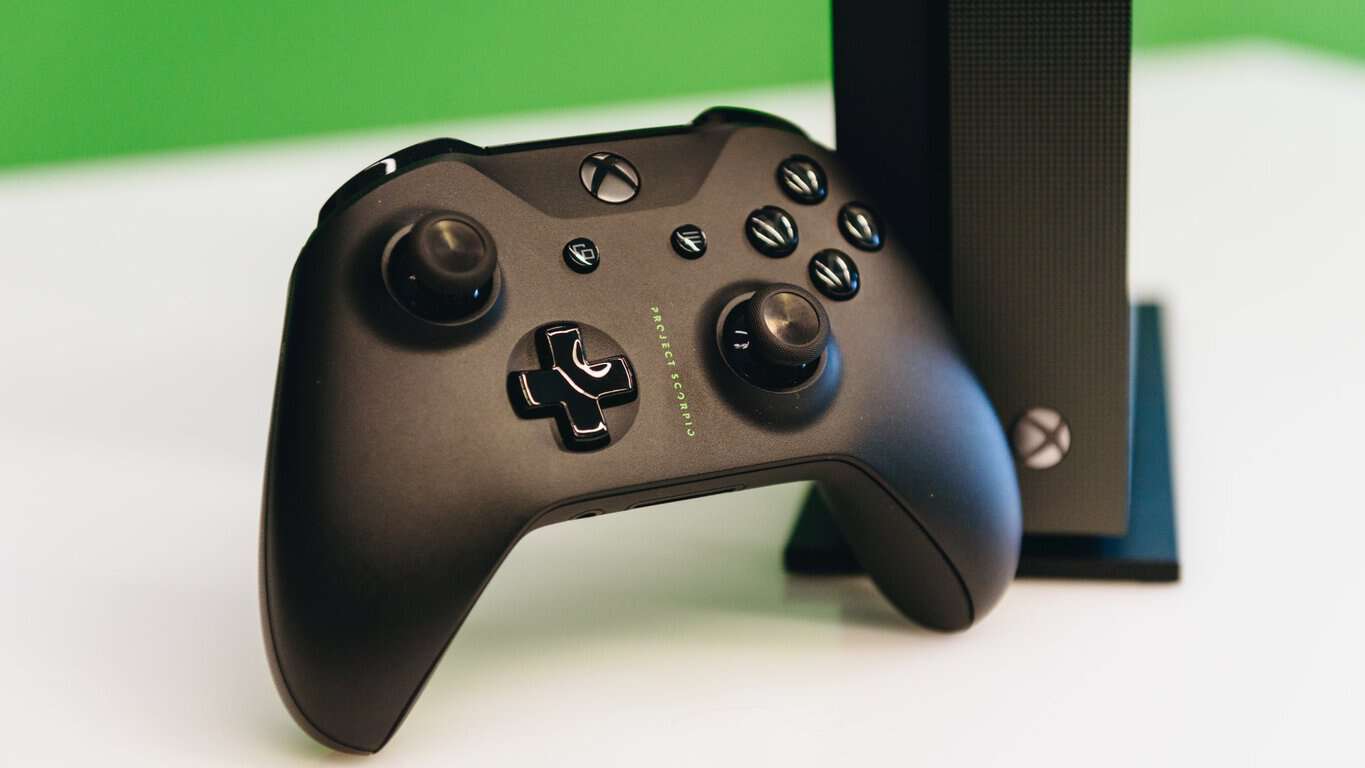
As OnMSFT reported earlier this year, there were plans to bring back “The Duke,” Xbox’ original controller. Now, it looks like we will actually see The Duke soon. In a tweet, the so-called “father of Xbox,” and head of Hyperkin, Seamus Blackley revealed that The Duke will be available at the end of March 2018 for $69.99.

As noted in a report by Eurogamer.net, The Duke is being released in a special partnership with Xbox and Hyperkin. Blackley is not releasing an identical version of The Duke.

The Duke will be updated to work on your Xbox One console. While the button placement and form factor will be nearly identical, The Duke lost its memory card slots and added small shoulder bumpers to make the controller able to play Xbox One games. The Duke is also a wireless controller that can work on your Xbox One console or Windows 10 machine.

Blackley decided to revive The Duke due to fans’ overwhelming requests for the clunky and old Xbox accessory. In this iteration, Blackley was able to design The Duke in the way he originally imagined: complete with a new OLED screen on the center of the controller; When you press the Xbox button, the classic Xbox startup animation will play.

Look for The Duke to be available for $69.99 in March 2018 for sale in the Microsoft Store.

Seattle’s conference center holding dates open for Build 2018 and 2019

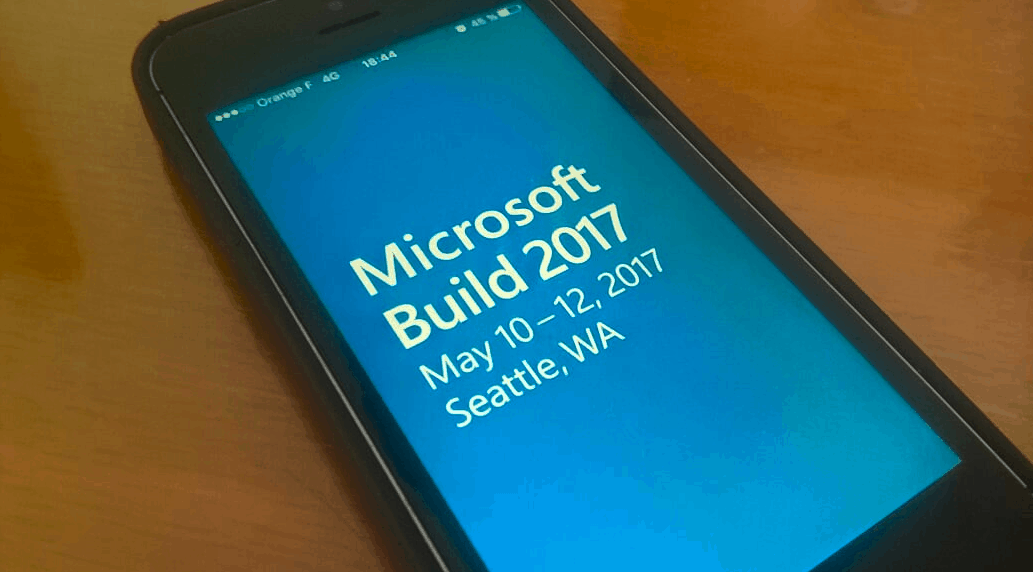
Microsoft’s annual developer conference, Build, up until this past year has been held at San Francisco’s Moscone Center, but that venue was in the middle of a big remodeling project last year, so Microsoft switched things up and held the 2017 event in Seattle. While the Washington State Convention Center, located in the heart of downtown Seattle, had a few issues last year, the location also allowed for much more interaction between attendees and Microsoft employees.

The company hasn’t made any announcements about this year’s Build, but Rafael Rivera came across some interesting notes in the latest Convention Center Board of Directors minutes:

https://twitter.com/WithinRafael/status/951965834108260352

The last line in the entry says “Dates are being held for BUILD in 2018 and 2019.” We should be hearing soon from Microsoft as to the dates and place for Build 2018, the conference is usually held in April or early May.

Will you be attending Build (we will, of course, and will bring you all the latest news)? Do you want to visit Seattle? Let us know in the comments below.

Microsoft’s stock Messaging app gets the Fluent Design treatment on Windows 10

Since Microsoft stopped its “Messaging Everywhere” experiment two years ago, the Windows 10 Messaging app has become pretty useless on PCs. The app can still sync text messages from a Windows 10 Mobile handset as of today, but it can’t be used to send text messages from your PC. To do that, you have to use Cortana or the unreliable “SMS Relay” feature in the Skype UWP app.

Still, the Windows 10 Messaging app received a Fluent Design update in the Windows 10 Insider build 17074 (via Windows Central). The universal app rarely gets updated these days, and for now, this latest version with Fluent Design isn’t available on Windows 10 Mobile.

Why did Microsoft take the time to update this app on the desktop, you may ask? Well, the Windows 10 Messaging app is still useful for PCs with cellular modems, as it can show you texts messages from your mobile operator about your data plan. More importantly, this app as is still a key app on Windows 10 Mobile phones, and we also expect to see it on “Andromeda,” the foldable mobile device with phone capabilities that Microsoft is reportedly working on.

Anyway, Microsoft’s stock Messaging app is apparently here to stay, and we hope it will get more useful in the near future. It should be once Always Connected PCs start to hit the PC market later this year.

Xbox news recap: Xbox One outsells PS4 in December, Xbox One to change theme based on time of day

Welcome to our weekly Xbox news recap series, where we go over the top stories of the past week in the world of Xbox. Let’s get started.

Xbox One outsells PS4 in December

The PS4 has been outpacing the Xbox One since the beginning of the generation. Sony has had a massive advantage for a very long time now, but Microsoft has slowly been catching up. It was reported recently that the Xbox One actually outsold the PS4 in December, marking a pretty great month for Microsoft’s console. It is important to note, however, that the Nintendo Switch – being a much newer console – outsold both of them.

Xbox One to change theme based on time of day

The light and dark themes on Xbox One are a huge asset for people, for several reasons. Some people have trouble focusing on a dark theme, some people prefer a brighter UI, and others just want the extra option to differentiate themselves from the rest of Xbox users. With a new change added to the Xbox Insider program, users can now set their themes to change based on the time of day. Prefer the dark theme during the night time, but want to bask in the light in the morning? You can do that.

The Kodi Xbox One app becomes unavailable

The Kodi media app for Xbox One briefly became unavailable this week, causing making it so nobody who didn’t already have the app could get their hands on it. At the time of writing, the Kodi app has become available again – but Kodi didn’t offer any explanation as to how this happened in the first place. Thankfully, this didn’t end up becoming a long-standing problem.

Plex on Xbox gets several fixes and improvements in new update

Plex has gotten a new suite of changes and improvements in its latest update, giving Xbox users a few more toys in their media center. The app now has new players for photos, audio, and video content, and it also supports several new video containers. Additionally, you’ll find the set of bug fixes that usually come with every update. You can find the full set of patch notes right here.

Thanks for joining us. To keep up to date with all the latest Xbox news, keep a close eye on our Xbox One tag.

Windows 10 news recap: Amazon to bring Alexa to select Windows PC’s, Microsoft launches, then pauses, patches for Spectre and Meltdown

Welcome back to our Windows 10 news recap, where we go over the top stories of the past week in the world of Microsoft’s flagship operating system.

Amazon to bring Alexa to select Windows PC’s

Alexa is now quite possibly the most famous digital assistant, eclipsing even Apple’s Siri as the go-to mascot for electronic helpers. At CES 2018, Amazon announced that they would be tying Alexa in with Windows 10 PC’s, starting with some select Acer, Asus, HP, and Lenovo machines later this year. Amazon’s move is some direct competition for Windows 10’s Cortana, which is already doing some integration with Alexa to give it a presence on Windows 10 PC’s.

https://twitter.com/amazonecho/status/950472430933422080

Microsoft launches, then pauses, patches for Spectre and Meltdown

Microsoft put out some patches earlier in the week to try and deal with the malicious Spectre and Meltdown vulnerabilities, but there’s one issue: Machines that were running AMD processors were not taking the update very well. Several reports came in after the patch was pushed out saying that computers were becoming un-bootable if they downloaded the patch on an AMD processor. Needless to say this was a huge issue, and Microsoft had to pause the update for anyone that could be affected.

Developers can now add paid subscriptions to apps

Subscriptions have long been a successful way to monetize applications, and Microsoft is helping developers take advantage of that payment method in their Windows 10 apps. Developers will receive 85% of the subscription price, minus applicable taxes for apps. For games, developers get 70% of the subscription price, minus any taxes. This should go a long way towards helping developers appropriately price their products, and make a living off of their work.

Windows 10 Fall Creators Update now fully available

After nearly 3 months since its initial roll-out, the Windows 10 Fall Creators Update is now fully available. Microsoft has finished giving every Windows 10 PC the new features and tweaks that the Update brought along – and it should probably be installed for you as we speak. If you still have the Anniversary Update on your computer, you should soon be getting a notification telling you that “Important Updates are pending,” which will prompt you to get the new build.

That’s it for this week. We’ll be back next week with more Windows 10 news!

Download this tool to check if computer is vulnerable to Meltdown & Spectre

Meltdown and Spectre are the two words on everybody’s lips these days. Many computer, phone and server users still worry about the risk of falling victims to this vulnerability, although Microsoft already released a series of updates aimed at patching these security issues.

At the same time, you should also know that these patches may trigger performance issues on certain computers. As a matter of fact, Microsoft already acknowledged this problem officially and is working on mitigating its effects.

So, taking into account this fact, many users are wondering if they should install the latest Windows updates after all since they’re known to cause many issues. Of course, nobody wants to have a computer that’s as slow as a snail, but users don’t want to risk exposing their devices to cyber threats either.

Meet Ashampoo’s Spectre Meltdown CPU Checker

Ashampoo recently introduced a dedicated tool that allows you to verify if your computer is indeed vulnerable to Meltdown & Spectre.

The tool is very easy to use: once you download it, you can start the scanning process and after a couple of minutes, you’ll know whether your PC is in any danger or not.

If the result is positive and your CPU is vulnerable to these threats, you can click on the “What should I do” option to learn how you can protect your computer. The link will take you to Ashampoo’s page where you can read more on how you can keep your machine safe from threats. Basically, the best and quickest solution is to install the latest Windows, BIOS, graphics driver versions and browser updates.

I downloaded the tool and tested my computer and the result was positive.

CPU vulnerability checker

As a result, I installed the latest Windows updates so my good old HP laptop should be safe now.

Download Ashampoo’s Spectre Meltdown CPU Checker.

How to disable ”Microsoft Edge is safer than Chrome” pop-up

Windows 10 updates brought a lot of improvements over time, with mostly positive reactions from the community. However, those pushy notifications, Start-based ads, and all-around irritable advertisement strategy in Windows 10 spoiled it a bit. Just like the notification which benevolently informs you that Chrome/Firefox are bad for your battery life and that Edge is the real deal.

We understand that Windows needs all the instruments in order to make Edge a competitive solution, especially after that inexplicable horror which Internet Explorer was. But not with the constant ads directed against mainstream browsers, like Chrome or Firefox, popping out in Windows.

Fortunately, there’s a simple way to disable this push-notifications, even though they should be off by default. Below is explained how to do it.

How to disable Edge advertisement pop-ups in Windows 10

Imagine using Chrome or Firefox on your laptop and a sudden dialog box appears in the notification area, informing you that Edge won’t hog on your battery like those two. In addition, it’ll inform you Edge is faster and better for you in any manner imaginable. This is just a tip, of course. It’s not a commercial, not at all.

  • READ ALSO: All Windows 10 ads should be disabled by default, users have had enough

Joke and mocking aside, you can disable this in a simple manner, so there’s that. Follow the steps below to disable these irritating tips and continue using your browser of choice. Even if that’s Edge.

  1. Press Windows + I to open the Settings app.
  2. Open the System section.disable microsoft edge is safer than chrome popup
  3. Select Notifications & actions from the left pane.disable microsoft edge is safer than chrome popup
  4. Scroll down and disable Get tips, tricks, and suggestions as you use Windows.disable microsoft edge is safer than chrome popup
  5. Close the window and you should be in the clear.

That’s it. We hope that this practice won’t continue with the further updates since it received a huge backlash from the community, undermining the addition of valuable features and valid improvements to the platform.

What’s your opinion on the subject? Are you bothered with the Microsoft’s approach in the matter?

Make sure to tell us in the comments below.

RELATED STORIES YOU SHOULD CHECK OUT:

Xbox outsells PS4 in December (but Switch outsold them all) says Aaron Greenberg

According to a series of tweets from Microsoft’s Head of Xbox Games Marketing Aaron Greenberg, the Xbox outsold the PS4 in the month of December (via gamesindustry.biz.) The Nintendo Switch still outsold both Xbox and PS4, and Greenberg is citing unreleased NPD group marketing data in his tweets as a reason for his claims.

This is still reasonably significant for Microsoft since December falls in the holiday season, the time when most people are shopping for new consoles as gifts. The Xbox One X also likely contributed to this success and probably resonated with consumers since Microsoft marketed it as the most powerful console ever.

Greenberg, though, mentioned “Xbox One” in his tweet, so the Xbox One S and other Xbox One offerings likely also are considered as part of this data. As you may recall, the Xbox One S sold at the cheapest price ever this year, and Microsoft pushed it as a low-cost holiday alternative.

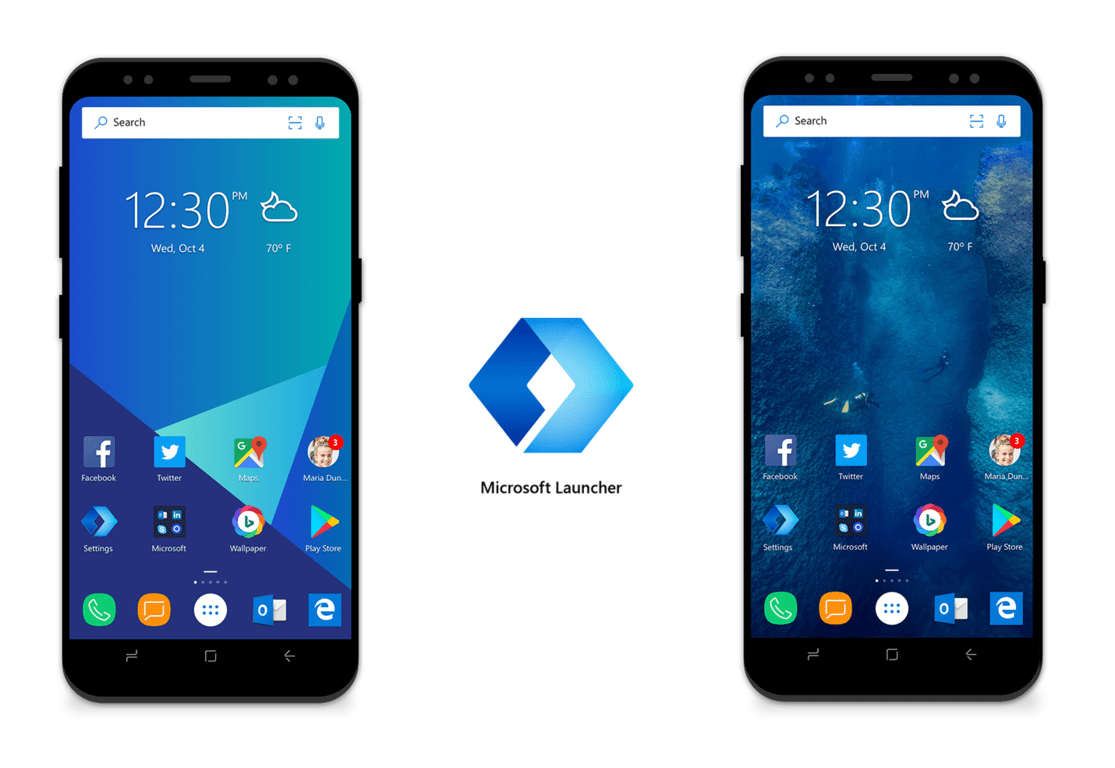
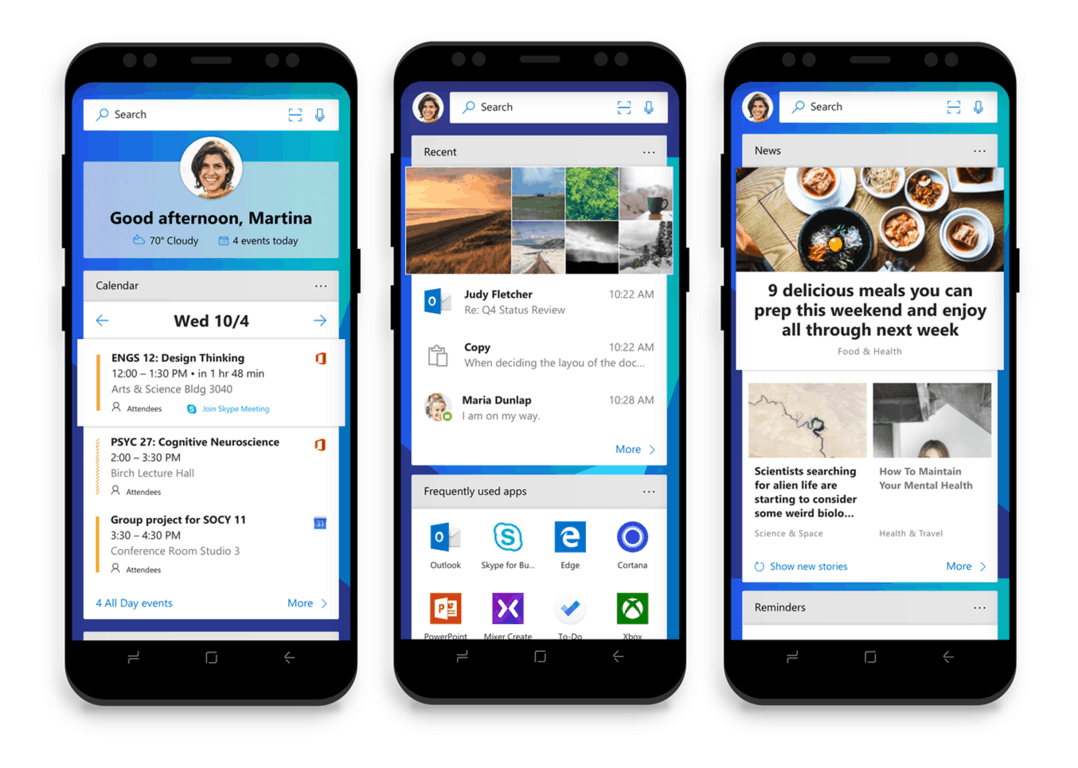
Microsoft Launcher beta testers get a new version, too – here’s what’s new in 4.5

Now that the version 4.4 of Microsoft Launcher is now generally available for Android users, the team is releasing a fresh new update for beta testers. The version 4.5 of the app brings several new features including Microsoft Intune integration, support for Android Oreo app shortcuts and more. Interestingly, an experimental feature also lets you import settings from other launchers.

Microsoft Software engineer Jen Gentleman published a changelog for the update on Twitter yesterday, but a more complete version can be found on the dedicated Google+ community. Here is it in its entirety below:

What’s new for v4.5:

  • Running Late? Now you can let meeting attendees know you’re running late straight from the calendar card.
  • Microsoft Intune integration: Employees whose enterprises leverage Microsoft Intune’s data protection policies can now use the Microsoft Launcher for viewing corporate data. Enterprise data protection policies now apply on all Microsoft Launcher surfaces.
  • Icon size: Adjust your icon size in the app drawer, dock and home screen
  • Set different wallpapers for your home screen and lock screen (Android 7.0+)
  • Add blank Home screen pages in vertical mode;
  • Enable recurring reminders;
  • Support Android Oreo app/widget shortcuts creation;
  • Import from other launchers from Settings -> Backup / Restore (experimental)
  • Reset your launcher from Settings -> Utilities / Reset Launcher; (experimental)

To install this latest beta build, you’ll have to visit the Google Play Beta Store and then select “Become a tester.” As usual, you’re invited to share your feedback on the new features in the Google+ community.

Microsoft Launcher version 4.4 picks up ability to create folders in app drawer, more

After a one month period of testing with beta users, Microsoft has finally rolled out version 4.4 of Microsoft Launcher to the general public. The Microsoft-centric Android launcher picks up the ability to create folders in the app drawer, batch mode on home screen, and more with this update (via Neowin.)

Have a look at the full changelog below. Keep in mind that in addition to these new features, there is also the usual bug fixes, and performance enhancements.

  • Enable creating folders in app drawer;
  • Batch mode on home screen and app drawer – long press menu;
  • Enable/disable dock;
  • App launching animation;
  • Pill count improvements on Line, BBM, Instagram, Yammer, Textra, WhatsApp and more;
  • Weather / Time widget refinement to mitigate weather not refresh issue.

These features are definitely useful, and the 10 million or more Android users who downloaded the launcher will likely appreciate it. You can join the crowd and download Microsoft Launcher via the link below.

Microsoft Launcher
Microsoft Launcher
Price:
Free

Xbox One Plex app gets enhanced media support in latest update

The media-streaming app Plex has been updated on the Xbox One this week, and the latest version 2.1.2 brings several useful features for all your media needs. The app now has new players for photos, audio, and video content, and it also supports several new video containers. Moreover, you’ll find plenty of bug fixes in this latest release. The full releases notes can be seen below:

NEW:

  • Brand new audio, video, and photo players.
  • Support for direct streaming HEVC video on the Xbox One S and Xbox One X.
  • Support for mspeg4v2 and mspeg4v3 in mkv and avi containers and 4K vp9 support in webm containers.
  • Poster and list items titles will automatically scroll when they are too long to display in their entirety.
  • New ‘Play Version’, ‘Mark as Watched’, and ‘Delete’ modals.
  • Show insecure connection fallback options when primary server is unreachable but insecure connections are a possibility.

FIXED:

  • Improve app usability when system high contrast mode is enabled.
  • Fix tracks count on Album Pre-Play pages.
  • Fix loss of focus when exiting/entering player.
  • Fix loss of focus when returning from screensaver without user lock.
  • App no longer occasionally gets stuck in loading state after switching users.
  • Fixed preplay/library item details getting stuck in a loading state after switching users.
  • Shuffled play queues from playlists only containing the first 50 items.
  • Fixed the background of the items in the user switcher screen so they’re no longer tiled.
  • Media Remote play/pause buttons not working in video player when OSD is hidden

Do you use Plex on your Xbox One to play your own media collection? If so, what are the other features you would like to see being added to the app? Let us know below.

Plex
Plex
Developer:
Plex
Price:
Free

Kodi Xbox One app is currently unavailable for download from Microsoft Store

A couple of weeks ago, popular media center app Kodi became available on Xbox One as a preview. Unfortunately, though, it looks as though the app is currently unavailable for download from the Microsoft Store on Xbox One (via Windows Central.)

Though this app is no longer available for download, it is still listed and discoverable in the Microsoft store. Those who already downloaded the app can still use it, but if the app is removed from an Xbox One, it no longer can be reinstalled via the ready to install list.

A member of the Kodi team indicated this may be a technical problem, and added that they’re working with Microsoft on the problem:

We are aware of the problem which has resulted in the disappearance of the XBox version of Kodi from the Microsoft Store. Members of the Team are currently working on resolving the issue. We appreciate your patience and we should have it visible in the Store soon. No need for any further reports from members that it is no longer in the Store.

There’s still no word on when the app will once again be available for download, so it’s best to keep the app installed if you’ve already had a chance to download. Let us know in the comments below if you’ve also experienced this issue.

PUBG crosses 3 million players on Xbox One after just one month

PUBG has quickly been translating its PC success to the Xbox platform, easily crossing 3 million players not long after the game came out. It’s a huge milestone for PUBG, and something that Aaron Greenberg was quick to brag about on Xbox Wire. This is just another notch in the belt of what’s become one of the largest names in gaming, both for the everyday gamer and for the larger streaming community. It’s even been able to garner some serious attention in competitive circles, opening up to an unexpected audience.

For players who just recently got their copy of PUBG – either on its own or alongside their Xbox One X – Microsoft is holding a “Tips and tricks” stream on Mixer, on January 16th. If you’re anything like me and have never come close to winning a game, this should help elevate your skills so you can start competing.

USB power booster solutions for your Windows 10/11 PC

By default the USB power slots can provide a specific amount of output power. This value is following a precise standard and it’s not related with the Windows version that’s installed on your laptop, notebook or computer, or with your system configuration. However, if you feel that this power is just not enough and if you want to increase it, then you can use a few solutions, which we will list below.

Now, the general idea is this one: the USB power limits are kept as a standalone value by a fuse on the USB port. This fuse is resettable so even if you manage to modify the output power the values will be reset on the next system restart (these values will vary only depending on your USB specifications: USB2 / USB3, etc.).

That’s why it’s really hard, if not impossible, to find a program that can help you boost up USB power. What you can do is to use Device Manager in order to adjust this power – do note that from Device Manager you can set which port receives power and adjust general settings; however you won’t be able to boost the output value.

Here are the USB power standards so that you can have a more proper background view over these default values:usb powerstandards

Thus, it’s quite complicated to find a certain software solution for increasing the USB power. But, instead you can use a cheap hardware alternative. For example, you can buy an external powered USB hub. This device can ensure more power for your USB ports without hassle – for example you can fast charge your smartphone while transferring data between your computer and your phone. It’s also a cheap solution as a decent external powered USB hub is usually priced around $15.

Another way in which you can receive more power from your USB ports is by using a USB Y cable. This cable will help you draw power from two USB ports simultaneously. Such cable can be bought for about $6 from amazon or from any other retail you prefer.

Other methods are not recommended as you can damage some hardware components from your system if you choose to tweak the default power that’s supplied by your motherboard – if you are not an electrician the best will be to buy the hub mentioned above or to use the USB Y cable.

As for the stuffs that you can configure from Device Manager, here is what you need to follow for accessing your USB ports:

  1. Right-click on the Windows start icon.
  2. From the list that will be displayed choose the Device Manager entry.device manager windows 10
  3. From Device Manager scroll-down until you see the ‘Universal Serial Bus controllers’ field.
  4. Extend this field by clicking on the arrow next to it.
  5. Right-click on the USB Root Hub device and choose ‘Properties’.
  6. From the Properties dialog box switch to Power Management tab.
  7. You can now restrict power to the USB port, if that’s what you want to achieve.
  8. You can repeat these steps for all your USB Root Hub devices to customize the USB output power.
  9. If you think that your USB port is not running correctly you can also choose to reinstall the associated drivers – you can automatically update device driver or uninstall and then reinstall them manually.

So, those are the essential details that must be reviewed in term of customizing the USB output power. As you noticed it’s not recommended to boost this power through software methods. It’s complicated to do so if you don’t have the right knowledge and experience and if something isn’t set properly you can end up in using a faulty hardware component.

The general idea is that you can boost the USB power output value by using cheap external devices such as an external powered USB hub, or an USB Y cable.

RELATED STORIES TO CHECK OUT:

How to fix performance issues after installing Patch Tuesday updates

The latest Windows 10 updates patch a series of CPU vulnerabilities that could allow hackers to access information on your computer, phone, and servers.

Microsoft recently acknowledged that these updates are actually a double-edged sword. They protect your computer against the latest cyber threats, but at the same time, they trigger performance issues.

What does that mean exactly? Well, to put it simply, you may encounter computer slowdowns.

Here is how this problem manifests itself:

  • Windows 10 computers powered by Skylake, Kabylake or newer CPUs may experience single-digit slowdowns. Microsoft doesn’t expect users to notice a significant impact because the percentages are reflected in milliseconds.
  • Windows 10 computers powered by older silicon processors (CPU manufactured in 2015, Haswell or older) may experience more significant slowdowns. Unfortunately, some users will indeed notice a decrease in system performance.
  • Windows 7  and Windows 8 computer equipped with older silicon CPUs are not as lucky. Users will experience a visible decrease in system performance.
  • Windows Server on any silicon CPU is affected by a more significant performance impact when you enable the mitigations to isolate untrusted code within a Windows Server instance.

Which is the latest version of Windows 10? Find out from our constantly updated article about Patch Tuesday!


And now the question is: How do you fix these problems?

Fix PC performance issues caused by Windows updates

1. Uninstall apps and programs that you don’t need

All those apps and programs that you don’t regularly use put unnecessary strain on your CPU. Simply remove them.

Go to Start > Apps & Features, select the programs that you don’t use and then click on Uninstall.

remove windows apps

2. Stop CPU-hogging software

Now that you have deleted all the unnecessary programs, check if the remaining ones are indeed working properly. If they use too much CPU power, simply disable them.

  • Go to Start > Task Manager > click on the Processes tab > select CPU to filter the programs depending on their CPU impact
  • Right-click the programs that eat up too much CPU > select End task

program hogs CPU

Needless to say, if you’re using a cryptocurrency mining software, the best solution is to temporarily turn off the tool. By their very own nature, cryptominers use an awful lot of computer power to solve complex mathematical problems.

Give your computer a break and start mining again when Microsoft has fixed these performance issues.


Looking for the best software to fix high CPU usage? Here are our top picks.


3. Delete large files and folders

If you use your computer to store large files, try deleting them or moving them to an external storage device. Most importantly, avoid storing large files on the partition where you installed the OS.

4. Disable game streaming

If you’re a gamer, try disabling game streaming. This action should reduce the impact of the latest updates allowing you to direct more computer resources into the game itself.

Yes, we know, streaming your games and sharing your experience with other players is fun, but given the current situation it’s best to refrain from using this feature until Microsoft fixes the problem.

5. Clean your Registry

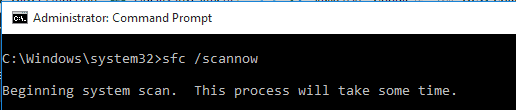
Running a system file check scan (SFC scan) allows you to detect and fix corrupted or missing registry keys.

They may cause various technical issues on your computers, prevent apps from launching, cause the PC to behave erratically, and more.

Here’s how you can repair your Registry:

  • Go to Start > go to the search field box and type CMD
  • Select Command Prompt > launch it as an admin
  • Type the following command and hit Enter:  sfc/scannow


Can’t access Registry Editor? Things aren’t as scary as they seem. Check out this guide and solve the issue quickly.


6. Install a PC optimizer

Tune-up software helps you optimize your computer’s performance so that it runs smoothly irrespective of what you throw at it.

For more information on the best PC optimizing programs that you can use, check out the articles below:

There you go, we hope that these suggestions helped you reduce the negative impact that the latest Windows updates have on your computer.

While it may not be possible to completely eliminate performance problems, the solutions listed above will at least help you mitigate their effects.

RELATED STORIES TO CHECK OUT:

Microsoft PowerShell Core released, runs on Windows, Mac and Linux

Yesterday, Microsoft released the open-source PowerShell 6.0, which works on Windows, as well as Linux and Mac machines. However, there may be some changes coming, as noted by a ZDNet report. While this is exciting news, it should be noted that there are two branches of PowerShell:

“PowerShell Core runs on Windows 7, 8.1 and 10; Windows Server 2008 R2, 2012 R2, 2016 and ‘Semi-Annual Channel’ (the twice-annual feature update to Server); macOS 10.12 and above; and a variety of Unix flavors, including Ubuntu, Debian, CentOS, Red Hat Enterprise Linux, OpenSUSE and Fedora.

As is the case with .NET, there are now two distinct branches of PowerShell: Windows PowerShell, built on .NET Framework, and PowerShell Core, built on .NET Core. Microsoft is not planning to release any new versions of Windows PowerShell. The 5.1 release is the last of that line, but will be supported for the foreseeable future. PowerShell Core can work side-by-side with Windows PowerShell.”

This should come as no surprise, as Microsoft announced their plans to make PowerShell open-source and available on Linux and Mac, back in 2016. Even though Microsoft detailed that they would provide updates to PowerShell just like they will in Windows 10 and Office 365. If you have questions about how the release of Microsoft PowerShell might affect you, be sure to check the FAQ page here.

Microsoft January 2018 firmware updates for Surface Pro, Laptop, Book include Meltdown, Spectre fixes

Microsoft has released a new set of firmware updates for its Surface Pro, Surface Laptop, and Surface Book devices that contain fixes for the recently recognized security vulnerabilities known as Meltdown and Spectre.

In addition to fixes noted in Microsoft security advisories 170012 and 180002, the original Surface Book firmware update includes some bug fixing and performance improvements:


  • Intel (R) Audio Display (v10.22.1.102) improves audio stability.
  • Intel (R) HD Graphics 520 (v22.20.16.4811) improves DirectX 12 and power performance.
  • Intel (R) Management Engine Interface (v11.7.0.1040) improves system stability.

You can check Windows Update on these machines to download and install these important updates.

(via MSPU)


New Microsoft patent describes controlling apps with your mind, no gestures needed

After introducing the possibility to control a Windows 10 PC with your eyes last year, it seems that Microsoft is working on something truly mind-blowing. A new Microsoft patent titled “Changing an application state using neurological data” describes a solution for controlling apps with your mind, no eyes or gestures needed (via CBInsights).

Microsoft filed the patent in May 2016, and it describes a solution for using neurological data (including electroencephalography, or EEG) for facilitating application state changes. The patent also mentions a computer system connected to an EEG sensor, which would be configured for changing the state of an application in response to received neurological user intention data. “In some circumstances, neurological user intention data corresponding to a physical gesture is generated when a user thinks about and/or focuses on a movement in the same way an amputee might think about moving an amputated limb,” the patent reads.

Microsoft explained that this mind control technology could work with several types of applications including games, VR apps, a web browser, a word processor and more. The patent mentioned different types of mind-controlled operations as well:

Operations may include object move operations, build operations, edit operations, animation or actuation operations, data input or output operations, display operations, audio operations, character/object movement or control operations, menu operations, navigation operations, processing operations, or other operations performable within the application to modulate input or output, settings, responses (e.g., visual, audio, and/or mechanical responses), and the like.

This is a pretty fascinating patent overall, and Microsoft certainly isn’t the only company working on new ways to interact with computing devices. Microsoft recently received a lot of criticism for killing off Kinect, but who needs gestures when you can mind-control your apps? It will probably be years before this technology becomes a reality, but the future definitely looks exciting.

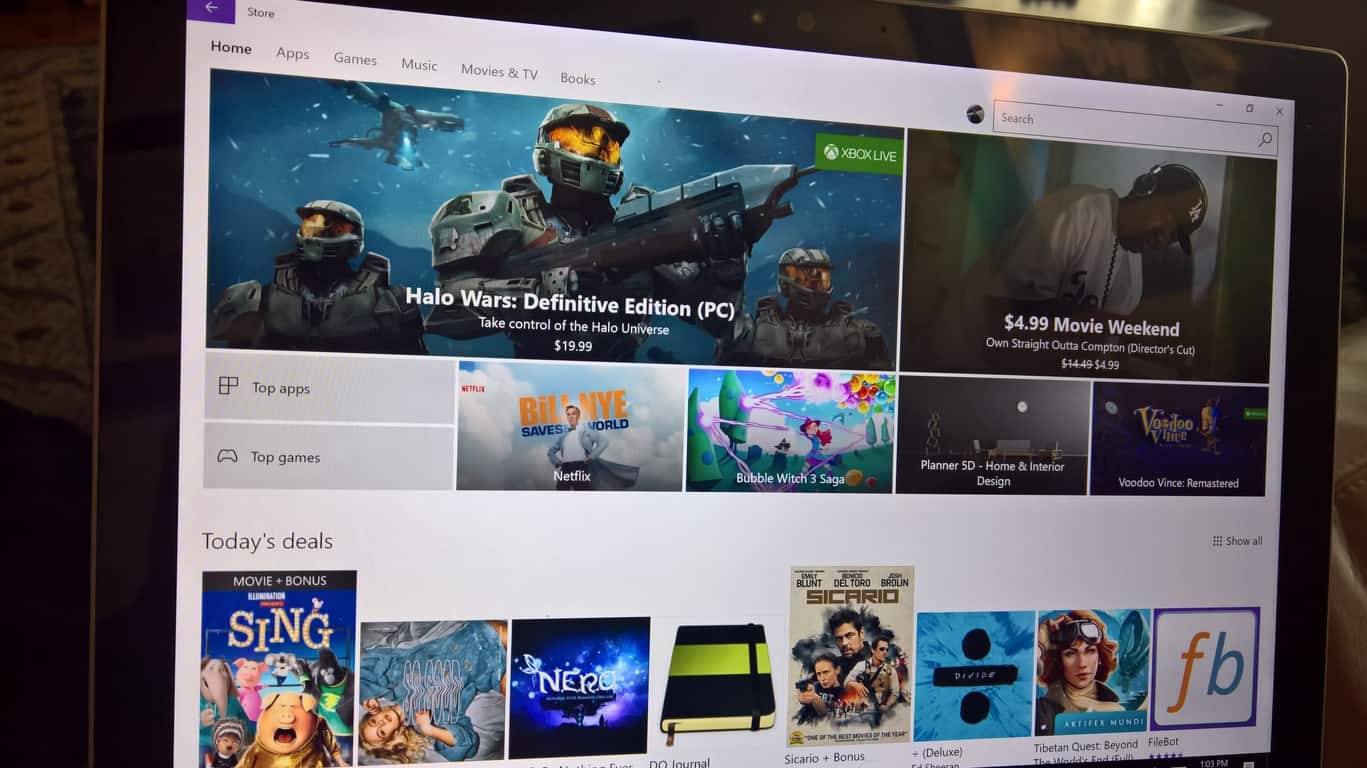
Developers can now add paid subscriptions to Windows 10 apps

Microsoft yesterday announced that Windows developers now have the option to add paid subscriptions and automated recurring billing in all UWP apps. This means developers can sell digital products inside their apps, earning more revenue while also providing Windows 10 users a seamless purchase experience.

Developers can feel free to visit the Microsoft Store App Developer Agreement for more details on the fees related to subscriptions. To enable the feature, a UWP app must also target the Windows 10 Anniversary Update or a later release in Visual Studio.

Subscriptions

Developers will receive 85% of the subscription price, minus applicable taxes for apps. For games, developers get 70% of the subscription price, minus applicable taxes. Windows 10 users can manage any purchased subscriptions from the services and subscriptions page for their Microsoft account.

This is definitely an interesting step in making the Microsoft Store in Windows 10 more enticing for developers. Do you think this will help Windows developers make more money? Drop us your thoughts in the comments below.

Rainway will let gamers play PC games on their Xbox One & Nintendo Switch consoles

Rainway has announced that they’ll be launching their open beta on January 20th. Rainway is an experimental service that aims to provide gamers with a free way to stream PC and mobile video games to their Xbox One and Nintendo Switch consoles. A new trailer shows Rainway in action.

“We’re happy to share with you today our vision for the future of PC and mobile gaming. With Rainway we hope to usher in true device agnostic gaming using our low latency streaming technology,” the YouTube video’s description reads. “Pair Rainway with your favorite console or smart phone for an unprecedented experience.”

The open beta will be for Rainway’s web platform which means that it won’t work on the Xbox One just yet but gamers should be able to try out streaming a PC game from one computer to another or even a tablet or smartphone and play it in the web browser.

Interested gamers can sign up for the open beta on the official Rainway website.

Microsoft launched a similar service within the Windows 10 Xbox app which allows Xbox One console owners to stream their gameplay to a Windows 10 PC that’s on the same Wi-Fi connection. There is no option for streaming a game running on a Windows 10 PC to an Xbox One though so Rainway, if it works as well as it looks in the trailer, could be a popular tool for many people.

Would you like to stream a PC game on your Xbox One console? Let us know in the comments below.

Fix: Can’t connect to Xbox Live after Minecraft update

Major Minecraft updates are mostly well-balanced with both improvements and bug fixes for all available platforms. However, it seems that one of the latest Minecraft updates blocked the Xbox Live connection. Namely, regardless of platform, you’re running Minecraft on, there’s a chance that you won’t be able to sign on Xbox Live.

For that purpose, we enlisted a few solutions that should help you overcome this issue. So, if you’re stuck on the sign-in screen, make sure to check the steps below.

How to resolve Xbox Live connection issues after the Minecraft update

1: Close the game and restart your PC/console

Even though this issues commonly emerge after an update, there’s a chance that the update at hand isn’t the culprit for the inability to connect to Xbox Live servers. So, before you start throwing sticks and stones at Microsoft, make sure that your Xbox Live account is valid. Sometimes the slightest thing is causing the stall. Also, don’t forget that certain features are available only to paid Xbox Live version, called Xbox Live Gold.

Furthermore, we advise you to restart your console or PC and try again. It might resolve some issues, and resolve the halt you’re experiencing with Minecraft.

2: Update/restore the game

Updates are too often the double-blade swords. They bring to the game a lot of improvements, new content, and features, but there’s always (always!) a bug or two. Luckily, more times than not, you can expect a patch that addresses the main issues. So, we advise you to update your Minecraft version and move from there.

If you’re not sure how to update Minecraft, follow the steps below:

  1. Start the Minecraft Launcher.
  2. Click Options.
  3. Select ”Force update!” and wait for the procedure to end.

This will keep your saves but relieve you of mods in the process.

On the contrary, if you’re unable to run the current, updated version, you can restore the previous version and resolve the problem in that manner. Just replace the current ”minecraft.jar” file with the one from the previous version.

3: Don’t use a single account on multiple devices

Some users reported that the issues started when they tried to use a single Xbox Live account on multiple devices. We’re all well aware that this is a standard option and it should work without issues whatsoever. However, never underestimate Microsoft’s ability to implement revolutionary changes (Better together update) in an unpolished manner.

So, until they finally deal with the issues at hand, you won’t be able to run Minecraft in the cross-platform mode with only one Xbox Live account. This includes all platforms, console, PC, and handheld devices.

Also, try to change your current region. Switching between the regions helped some users resolve this issue and they were able to connect to Xbox Live in a seamless manner.

4: Check the connection and the server status

Now, what are the chances for your connectivity to cause this issue immediately after the update? Not large, but it’s, either way, something you should check out. Here are some steps you should take in order to confirm that the connection isn’t causing Xbox Live errors.

    • Use wired connection.can't connect to xbox live after update - MC
    • Restart PC/console and router/modem.
    • Run the Speed Test (Xbox)
      1. Navigate to Settings > Network > Detailed Network Statistics.
      2. Wait for the assessment procedure to end.
      3. If you meet the requirements, everything should be fine. On the other hand, if you haven’t met the requirements — continue with the steps below.
    • Update console’s firmware.
    • Update router’s firmware.
    • Check the NAT. Make sure that the OPEN NAT type is enabled.
    • Forward ports.
    • Check the Server status, here.

5: Make sure that you have a cross-platform supporting version

Another commonly overlooked fact regarding the game versions is the difference between Minecraft: Xbox One Edition and just a unified Minecraft, called simply Minecraft. Furthermore, PCs have an alternative version called Minecraft: Java Edition. So, make sure to run the cross-platform supported Minecraft version while trying to log in.can't connect to xbox live after update - MC

Basically, only one Minecraft version lets you play in the cross-platform model. If you try it with others, you won’t be able to connect to Xbox Live, regardless what you try.

6: Reinstall the game

Finally, our last resort is the reinstallation. Of course, you can always send a ticket report to Xbox Live support team and ask for the resolution. However, it won’t cost you anything except the time to try and reinstall the game. Nonetheless, don’t forget to backup your save files before you move to reinstallation. Follow the instructions below to reinstall the Minecraft:

Windows 10

  1. In the Windows Search bar, enter %AppData% and press Enter.
  2. In the Application Data folder, open the Minecraft folder and move the ”saves” folder to an alternative location.
  3. Get back and delete Minecraft folder.
  4. Run Minecraft.exe and wait for the downloading process to end.
  5. Before running the game, return to the Application Data folder and copy-paste the ”saves” folder you preserved.

Xbox One

  1. Navigate to My apps & games.
  2. Choose Games.
  3. Select Minecraft from the list and press the Menu button.
  4. Choose Manage Game and then Manage All.
  5. Select Uninstall All and then Uninstall.
  6. Navigate to My apps & games and open the ”Ready to install” section.
  7. Highlight Minecraft and select Install.

That should wrap it up. In case you have any questions, suggestions, or alternative solutions, don’t forget to tell us in the comments section below.

RELATED STORIES YOU SHOULD CHECK OUT:

FIX: KB4056890 fails to install or breaks computers

Windows 10 Anniversary Update update KB4056890 patches the CPU vulnerabilities that could potentially allow hackers to steal data from your computer.

At the same time, the update also brings a few issues of its own, sometimes quite severe. Judging by user reports, there are two main issues affecting this release that we will describe below.

Windows 10 KB4056890 reported issues

1. Install fails

If you can’t install this update, well you’re not the only one. Sometimes the install process gets stuck or fails with various error codes such as 0x80070002.

KB4056890 has now failed to install four times and the last two times there has been an error 0x80070002. The registry entry is what another MS site says it should be and the anti-virus software is kts2016 (Kaspersky Total Security).

The good news is that we already published a guide on how to fix error 0x80070002. We hope that the solutions available in the respective article will help you fix the problem. You can also run the build-in Update Troubleshooter from the Settings page. Simply to to Settings >Update & Security > Troubleshoot > select the Update Troubleshooter and run the tool.

windows update troubleshooter

You can also check out the following troubleshooting guides:

2. Windows won’t start

Some users were unable to properly start their Windows session after installing the latest Windows 10 version 1607 update. The only solution to fix this problem was to perform a system restore.

After updating with KB4056890, my Asus suite 3 will not launch.So using system restore, it’s back to working fine. The trouble is this same update wants to reinstall itself. Is their a way of preventing this happening.

Just in case system restore fails to work for you, the guide below may help you:

If you encountered other bugs after installing KB4056890, describe the problems in the comments below.

It’s not just Windows – Linux Ubuntu systems being bricked by Meltdown/Spectre patches, too

As you likely know by now, some users with AMD Windows PCs were reporting boot up issues after installing Microsoft’s Meltdown security patch. This caused the company to eventually pause the update for AMD based PCs. Well, it looks as though Windows is not the only operating system impacted, as the Meltdown patch is also bricking some Linux Ubuntu systems.

Linux and Ubuntu users have apparently been venting about the “bricking” issue on the Ubuntu forums, and also contributing technical info about it on the Ubuntu Launchpad bug tracker. Supposedly only Ubuntu users running the Xenial 16.04 release are experiencing bricked systems after updating to kernel image 4.4.0-108.

Canonical originally released Kernel image 4.4.0.108 on January 9, and a security bulletin notes that this was to correct Meltdown. There have been subsequent Linux Kernel updates, including 4.4.109, and 4.4.0.109.114 which attempt to alleviate the bricking issue, though it has not worked for everyone. Others have also said that rolling back to the previous kernel image also resolves all problems, except for being protected from Meltdown and Spectre, of course.

New Sword Art Online video game is coming to the Xbox One, pre-orders now open

A new video game based on the popular Sword Art Online anime series, Sword Art Online: Fatal Bullet is now available to pre-order on the Xbox One family of consoles. The new game is due for release on February 23rd this year and is a third-person action roleplaying game. Here’s the official game description.

Your fate has just begun… Experience an original story where you are the protagonist in the world of Gun Gale Online. Create your own avatar and explore devasted lands while experiencing exciting third person shooting in this action RPG. Encounter enemies and run into new and familiar faces from the Sword Art Online series.

Journey through a world of guns where after a chance encounter you’ll gain the help of a very rare AI, ArFA-Sys. Along the way, you will have to make choices. But every choice comes with a price… Will you bring hope or despair? This is your adventure… This is your story…

Pre-orders of Sword Art Online: Fatal Bullet will also receive two exclusive costumes and a unique weapon for use in-game. Are you a Sword Art Online fan and are you hyped for this game? Let us know in the comments below.

Xbox One will soon change its theme depending on the time of day

Microsoft has done a last minute update to the release notes for their Xbox Insiders build that was rolled out yesterday. While nothing has been removed from yesterday’s notes, something rather interesting was added; Scheduled Themes. Here’s the new information that was added.

Put your themes on a schedule! You’ll soon be able to switch between light and dark themes based on time of day.

The notes are pretty self-explanatory. There will soon be a setting that Xbox One owners can enable that will automatically change the visual appearance of the console’s user interface at different times of day. This setting will be first offered to Xbox Insiders for testing and feedback and then rolled out to the average Xbox One owner soon afterwards.

Would you enable this feature on your Xbox One? Let us know in the comments below.

How to fix error 0x000000c4 on Windows 7

If you’ve read the latest news reports, you already know that when it comes to updating your Windows 7 computer, the best solution is to simply avoid installing the latest patches – at least for now.

User reports confirm that the latest Windows 7 updates are plagued by a bevy of issues than can sometimes brick your computer.

One of the most common issues caused by KB4056894 is the annoying error code 0x000000c4, as this user reports on Reddit:

This morning I came in to find 3 computers that would not boot – BSOD stop: 0x000000c4. All 3 machines are the same model – HP Compaq dc5750 with AMD CPUs. At first I tried my normal “it won’t-boot” troubleshooting steps and gradually worked my way out of ideas.

Fixing this error is not an easy task since common troubleshooting solutions such as launching various startup modes or reverting BIOS Settings to default won’t work.

How to fix Windows 7 error 0x000000c4

  1. Press F8 during startup and select Repair Your Computer.
  2. Launch Command Prompt and type the following command: dir d:
  3. Hit Enter to run the command and check if the Windows drive is mapped correctly.
  4. Using Command Promp, enter the following command: dism /image:d: /remove-package /packagename:Package_for_RollupFix~31bf3856ad364e35~amd64~~7601.24002.1.4 /norestart
  5. A progress bar should now appear on the screen. The entire process should finish in about 10 minutes. When the progress bar disappears, restart Windows.
  6. Go to the Windows update center and hide KB4056894 to prevent it from reinstalling.

You can also disable Windows Update to make sure that your computer won’t download any patches until you turn the update service back on.

Here’s how to block updates:

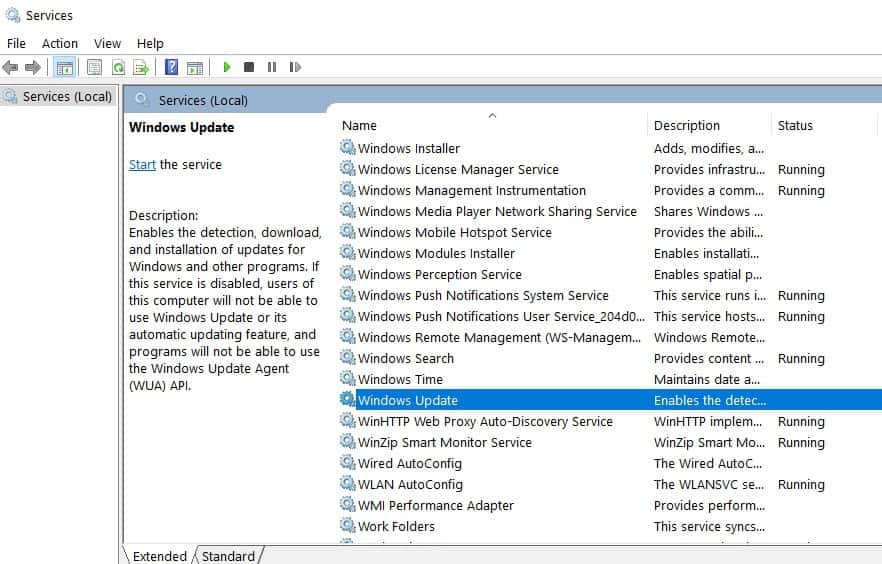
  1. To to Start > type ‘run’ > launch the Run window
  2. Type services.msc > hit Enter
  3. Locate the Windows Update service > double click on it to open itblock windows update
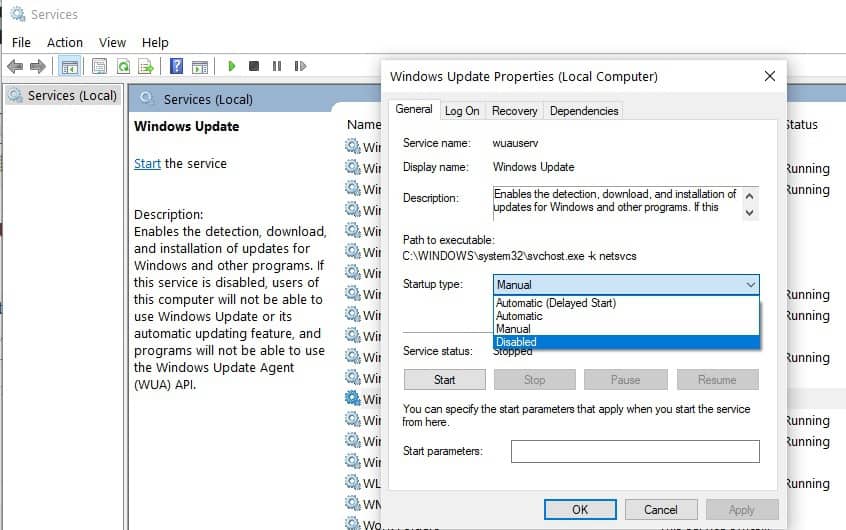
  4. Go to the General tab > Startup Type> select Disabledisable windows updates
  5. Restart your computer > no updates should be installed until you turn on the Windows Update service again.

There you go, this is how you can fix error 0x000000c4 on Windows 7.

Use the comment section below to let us know if this solution fixed the problem for you.

RELATED STORIES TO CHECK OUT:

Microsoft details impact of Meltdown/Spectre fixes for Windows, warns of performance slowdowns

Microsoft, Intel and PC manufacturers are still dealing with the Meltdown and Spectre CPU vulnerabilities these days, and contrary to Intel’s reassuring statements from last week, the fixes will have a performance impact, especially on older PCs. Microsoft chose to be transparent today, with Executive Vice President of the Windows and Devices Group Terry Myerson addressing the issue head-on in a detailed blog post.

The good news is that for Windows 10 PCs with modern Intel processors, the Windows security patches plus the additional firmware updates necessary for addressing a specific variant of the Spectre vulnerability won’t have a big impact on performance. However, for Windows 10 PCs with Intel Haswell CPUs or older as well Windows 8 and 7 systems using these same old processors, the performance impact will be much more significant. Moreover, Myerson added that the software and firmware updates may also cause a “more significant performance impact” on servers.

Here is a summary of what Microsoft’s latest research revealed:

  • With Windows 10 on newer silicon (2016-era PCs with Skylake, Kabylake or newer CPU), benchmarks show single-digit slowdowns, but we don’t expect most users to notice a change because these percentages are reflected in milliseconds.
  • With Windows 10 on older silicon (2015-era PCs with Haswell or older CPU), some benchmarks show more significant slowdowns, and we expect that some users will notice a decrease in system performance.
  • With Windows 8 and Windows 7 on older silicon (2015-era PCs with Haswell or older CPU), we expect most users to notice a decrease in system performance.
  • Windows Server on any silicon, especially in any IO-intensive application, shows a more significant performance impact when you enable the mitigations to isolate untrusted code within a Windows Server instance. This is why you want to be careful to evaluate the risk of untrusted code for each Windows Server instance, and balance the security versus performance tradeoff for your environment.

Overall, owners of modern Windows 10 PCs shouldn’t see a big difference after installing the software patches plus the Intel firmware updates. “For context, on newer CPUs such as on Skylake and beyond, Intel has refined the instructions used to disable branch speculation to be more specific to indirect branches, reducing the overall performance penalty of the Spectre mitigation,” Myerson explained. “Older versions of Windows have a larger performance impact because Windows 7 and Windows 8 have more user-kernel transitions because of legacy design decisions, such as all font rendering taking place in the kernel.”

A couple of days ago, Intel announced its plans to release firmware updates for 90% of processors from the past five years by the end of this week. Today, the company added in a press release that it will issue updates to the remaning 10% by the end of January, and also release patches for other products thereafter. “Based on our most recent PC benchmarking, we continue to expect that the performance impact should not be significant for average computer users,” the company explained. “This means the typical home and business PC user should not see significant slowdowns in common tasks such as reading email, writing a document or accessing digital photos.”

Terry Myerson wasn’t as optimistic today, and the exec promised that Microsoft will publish all of its data on benchmark performance in the coming weeks. “We’re also committed to being as transparent and factual as possible to help our customers make the best possible decisions for their devices and the systems that run organizations around the world,” Myerson added.

Microsoft is working on a new Careers system for Xbox Achievements

Apparently, Microsoft is looking to update Xbox Achievements with a new “Careers” system and other special Avatar bonuses. As noted by Windows Central, Microsoft is looking to enhance Xbox Achievements to complement the new Avatars that were originally slated to arrive in Fall 2017. Since the new Xbox Avatars won’t arrive until early 2018, it looks like Microsoft may be bringing new surprises with Xbox Achievements too.

Microsoft looks to be planning a new website too; “Career.XboxLive.com.” Although the website is not publicly accessible at the moment, the website may further describe how the upcoming Career system would work with Xbox Achievements. Based on the documentation that Windows Central received, here’s how the new Career system might work. 

“It appears that players using this new Career system will be able to obtain levels, and even prestige ranks, obtaining rewards such as loot crates which come with cosmetic items for the new Avatars system. The Career system also comes with Quests to complete specific objectives, such as playing certain games, which will also come with crate and experience points as rewards.”

It is too early to know for sure how the new Xbox Career system will work, if it is ever implemented at all. It may come when the new Avatars are available, or Microsoft might hold off on releasing the Xbox Career system until later in 2018. Unless we get more concrete details or an official comment from Microsoft, nothing is known for certain how the Xbox Career system will work. However, it sure is exciting! Stay tuned!

Microsoft to bring cross platform Message.io chat to Teams

Microsoft is looking for beta testers to test out Messaging.io (M.io) chat to Microsoft Teams.

M.io will help you stay connected and chat with your contacts regardless of what chat platform they use; Slack, SPark, HipChat, and more:

“M.io lets you chat with your contacts on any platform – all from within Microsoft Teams as your central messaging hub. For example, you can chat with your colleagues or external peers that are using Slack all from within Microsoft Teams. It’s some heavy duty magic we’ve been working on and we’re excited to start sharing with the community.”

If you are interested in becoming a beta tester for M.io, you can sign up using your email. It will be interesting to see how M.io works within Microsoft Teams, but it looks like it’ll be an even better way to stay connected and collaborate. Stay tuned for more information on this feature in an upcoming Microsoft Teams update!

Microsoft once again lets users pay with Bitcoin

Yesterday we reported that Microsoft would no longer accept Bitcoin as a form of payment online. Though the company said it was “temporary” measure Microsoft has since pushed back and restored the ability for users to reload their Microsoft account balances using Bitcoin (via Thurrott.com.)

Since the original reports surfaced, Microsoft apparently worked with their provider to correct any issues, and is now once again accepting Bitcoin. A statement from a Microsoft spokesperson confirmed this.

“We’ve restored Bitcoin as a payment option in our store after working with our provider to ensure lower Bitcoin amounts would be redeemable by customers.”

Bitcoin is a bit of a wild currency, especially because values tend to fluctuate higher and then lower every day, and because there is a transfer fee involved. Microsoft previously stopped accepting Bitcoin back in 2016, only to pull back and once again accept it two days later.

Microsoft halts AMD Meltdown and Spectre patches following reports of unbootable PCs

Yesterday reports surfaced on some AMD PCs not booting properly after installing the latest Windows 10 security patch. As a result, many Windows users with AMD powered PCs took to Microsoft’s support forums to complain about the issue. In the face of this criticism, Microsoft has halted the AMD Meltdown and Spectre patches, instead saying it is now working with AMD to resolve the problems and issue another update soon (via The Verge.)

The halt means that AMD PCs will no longer receive the KB4056892 patch which is causing some machines to become unbootable. In fact, the reason many were experiencing issues is that the AMD chipsets would not “conform to the documentation previously provided to Microsoft.”

Microsoft further elaborated on the situation via a statement on their support website:

“Microsoft has reports of customers with some AMD devices getting into an unbootable state after installing recent Windows operating system security updates. After investigating, Microsoft has determined that some AMD chipsets do not conform to the documentation previously provided to Microsoft to develop the Windows operating system mitigations to protect against the chipset vulnerabilities known as Spectre and Meltdown.”

The following security updates are also no longer being pushed to PCs with AMD processors:

  • January 3, 2018—KB4056897 (Security-only update)
  • January 9, 2018—KB4056894 (Monthly Rollup)
  • January 3, 2018—KB4056888 (OS Build 10586.1356)
  • January 3, 2018—KB4056891 (OS Build 15063.850)
  • January 3, 2018—KB4056890 (OS Build 14393.2007)
  • January 3, 2018—KB4056898 (Security-only update)
  • January 3, 2018—KB4056893 (OS Build 10240.17735)
  • January 9, 2018—KB4056895 (Monthly Rollup)

Those who already installed any of these updates are being urged to visit Microsoft’s support website. The website explains how a user can troubleshoot Windows 10, Windows 8.1, and Windows 7 in the event that the operating system is unbootable.

Xbox One begins testing mini game hubs & Do Not Disturb mode

A new Preview Alpha build (1802.180105-1503) is now available for Xbox Insiders. This latest build adds several improvements to the Xbox One’s Guide (i.e. the pop-out menu) relating to Achievements and Game Hubs and also introduces the Do Not Disturb option which was used on the Xbox 360 but hadn’t been integrated into the Xbox One generation of consoles yet. This new option essentially disables notifications while turned on.

Other changes include improvements to the Community feed, inactivity shutdown, and a new avatar option in addition to a variety of bug fixes. Here’s the official release notes.

NEW FEATURES:

We’re excited to return in 2018 with new features that impact the way you access your games and Achievements, how you let your friends know whether you’re able to play, and much more. Over the next several weeks, Xbox Insiders will begin to see a variety of cool new features they can interact with and provide feedback on. Here’s a look forward at some of the excitement still to come:

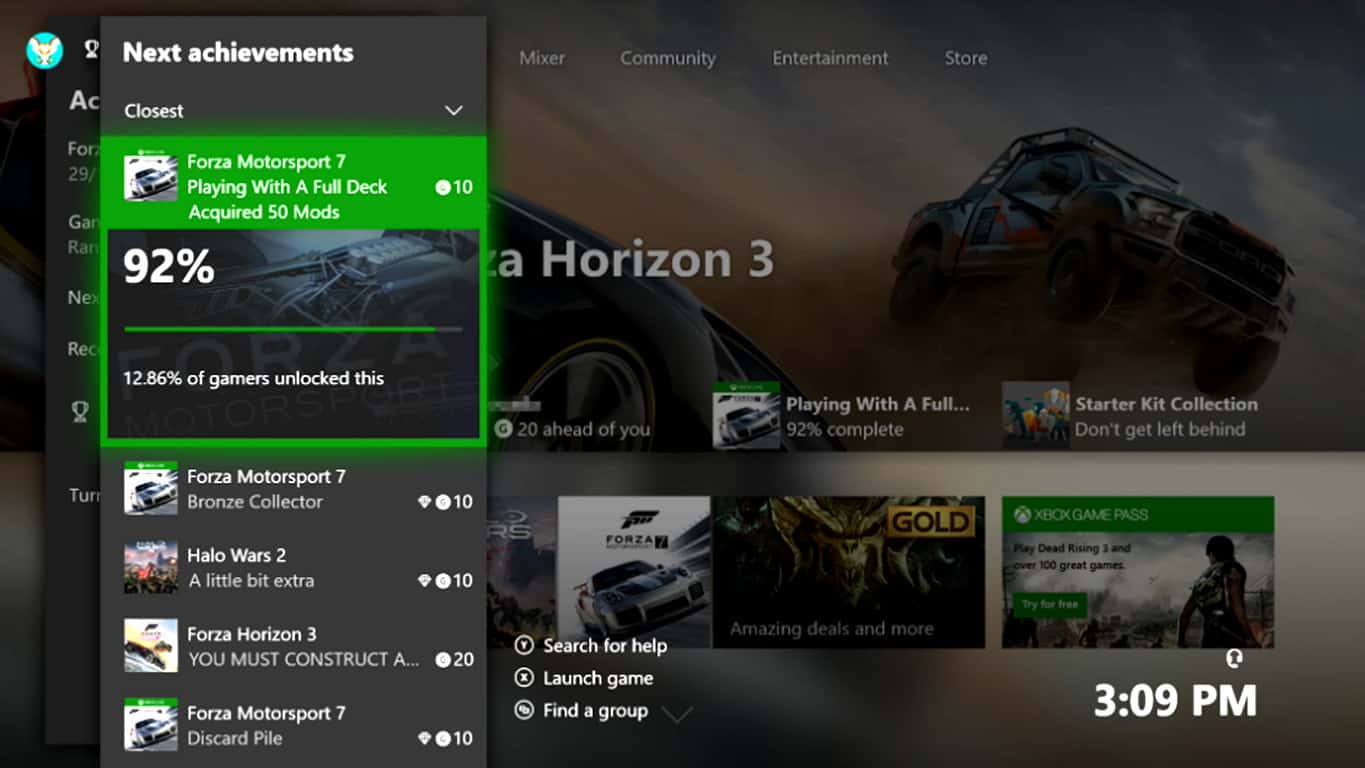
Starting today at 6 p.m. PST, Xbox Insiders enrolled in the Alpha ring will receive the latest Xbox One system update (1802.180105-1503). With this update, you’ll be able to use the “Next Achievements” feature in the Guide, which enables you to view and sort a cross-games list of upcoming Achievements. Easily see which Achievements you are closest to, and quickly launch the game to obtain them. Sort filters allow you to prioritize next Achievements by closest, most common, rarest, most common rare, and highest Gamerscore.

Mini Game Hubs will soon be available right in the Guide. With this feature, you’ll be able to access great content for the games you’ve played recently from a Game Hub without ever having to leave the action. Mini Game Hubs provide an easy way to see friends who are currently playing, upcoming Achievements, Looking for Group posts, and more.

Sometimes all you want to do is avoid all distractions and focus entirely on your game. We’ll be including a “Do not disturb” online status, which will suppress notifications and let your friends know that you’re not available for another game or activity right now.

We’re tweaking the community feed to make it easier to view comments. You’ll soon be able to see a peek of the most recent comment on community posts, with comments rearranged to place those that are most recent at the top. You’ll also be able to see who has liked your comments.

To address user feedback, we’re adding additional inactivity shutdown options to the Power mode & startup menu. In addition to shutting down the console after one or six hours of inactivity, you will be able to select options for two, three, four and five hours.

Alongside the updates listed above, which will work their way naturally through the Xbox One Preview Update rings, a subset of users may also see additional experimental features. These features are only enabled for a portion of the Xbox Insider audience to gauge interest and collect feedback. Your participation in the Xbox Insider Program helps us make the work-in-progress content and features coming to Xbox even better

FIXES:

Narrator

Narrator can read large amounts of text.

KNOWN ISSUES: 

Guide/Home crashing   

We are aware of the Guide and Home crashing and determined the root cause.  A fix is being worked on.

Workaround: In the interim please HARD Reboot (Hold the power button for ten seconds)the console to fix this issue.

Games Installation

Some users are encountering where some games that are installed are failing to launch.

Workaround : If the games are installed to an external drive please copy the game to the internal drive or attempt to delete the title and redownload to fix the launch error.

Display   

We are investigating the inaccurate RGB colors that have been reported when displaying in 4K HDR mode when playing a UHD disc.

Tournaments

The left and right navigation for selecting date and time during Tournament creation is currently reversed when the console language is set to Arabic or Hebrew.

Left and right navigation in Tournament twists is reversed when the console language is set to Arabic or Hebrew.

Left and right navigation in the bracket view of Tournaments is reversed when the console language is set to Arabic or Hebrew

Avatars on Home

Users wishing to represent themselves as an avatar can do so by changing their settings under My profile > Customize profile > Show my avatar.

Are you an Xbox Insider? Let us know if you’re enjoying these new features in the comments below.

USB-C universal receiver: Where can I buy one?

The USB-C connection is going to overtake and eventually replace the standard USB 2.0 technology. The newest MacBook models have only USB-C ports so it’s only a matter of time until this becomes mainstream technology.

But there is one question on the mind of many technology users, and especially laptop owners: ‘Where can I buy a USB-C universal receiver”?

In this article, we’re going to answer that question and offer you more information about this device.

USB-C universal receiver: Everything you need to know

There are many USB-C to USB adapters that you can use but they usually stick out too much from the side of the laptop, as users report:

Regular USB ports are disappearing. Logitech needs to have a USB-C unifying receiver and adapters aren’t a good solution because they stick out an inch from the side of the laptop. ONE MISTAKE where it catches something (a wall, the side of furniture, or anything else) and the laptop jack will be destroyed and most of the time that will take out the other USB-C jacks on that side of the laptop as well.

However, there is no USB-C universal receiver currently available on the market. But the good news is that hardware manufacturers acknowledged the need for such a device and will release it in the near future.

When exactly? Well, we can’t really answer that question either: it could be a few months, a year or even more. However, judging by the current trend and the number of user requests, we dare say that in one year’s time, USB-C universal receivers will be available everywhere.

Buy a USB-C mouse

USB-C universal receiver mouse

If you don’t want to wait until a USB-C universal receiver is available on the market so that you can finally connect your mouse to the USB-C port of your laptop, then buy a brand-new USB-C mouse.

Here’s an article on the best USB-C gaming mice that you can buy right now. You can pair that mouse with these USB-C headphones.

We’ll update this article as soon as new information is available about USB-C universal receivers.

RELATED STORIES TO CHECK OUT:

How to block KB4056892 from installing on your Windows 10 PC

Update KB4056892 is perhaps the most hated patch of the moment. Many users reported that this update often breaks computers, leaving them unable to use their devices.

Taking into account this situation, users are looking for a quick way to prevent KB4056892 from installing on their computers.

KB4056892 is Awaiting restart. Unfortunately, when I did a restart it bricked my system. I had a large windows logo on the screen and it just sat there. I rebooted and was able to trigger a repair. The repair said it was backing out the last update as it would not be completely installed. With KB4056892 is Awaiting restart I did another restart and had the same problem. How do I block it so it doesn’t get installed if I have to reboot the machine?

Simply uninstalling the update doesn’t solve the problem as the OS will download it again and again. So, how exactly can you block KB4056892?

How to prevent KB4056892 from downloading and installing

1. Stop Windows Update

  1.  To to Start > type ‘run’ > launch the Run window
  2. Type services.msc > hit Enter
  3. Locate the Windows Update service > double click on it to open itblock windows update
  4. Go to the General tab > Startup Type> select Disabledisable windows updates
  5. Restart your computer > no updates should be installed until you turn on the Windows Update service again.

2. Pause updates

If you regularly install the latest updates on your computer, and you simply want to avoid installing KB4056892 in particular, then the best solution is to pause updates. Hopefully, this will give Microsoft enough time to fix the problematic updates.

Go to Settings > Updates & Security > Advanced Settings > Turn on the “Pause updates’ toggle

pause windows updates

There you go, these two simple solutions should help you keep KB4056892 at bay. Although you can’t defer the update until an indefinite time, you can block it from installing on your computer at least for a few days.

RELATED STORIES TO CHECK OUT:

Windows 7 KB4056894 bugs: BSOD, black screen, apps won’t open

Last week, Microsoft rolled out a series of updates aimed at fixing a major CPU security vulnerability affecting virtually all Windows computers.

Windows 7 KB4056894 is one of those patches, but judging by user reports, the update caused more harm than good. Many users complained that the update caused their computers to stop working.

As a quick reminder, another major update triggered similar results. Windows 10 version 1709 KB4056892 turned many computers into simple pieces of decoration. Read more about it in this round-up article.

So, if you’re planning to update your Windows 7 computer soon, read this article to learn what are the most common KB4056894 bugs reported by users. Maybe you’ll change your mind and postpone installing the updates, although this means making your PC vulnerable to the latest CPU cyber threats.

Windows 7 KB4056894 issues

1. BSOD and error 0x000000C4

By far, the most frequent KB4056894 bugs is the annoying Blue Screen of Death. Judging by the number of views that this thread got on Microsoft’s forum, there must be tens of thousands of users experiencing this problem.

 After installing the latest Windows updates and rebooting, I got the following error:
*** STOP: 0x000000C4 (0X0000000000000091, 0x0000000000000000, 0xFFFFFF80002C4EFC0, 0x0000000000000000)  I could not boot into Safe Mode. I was able to boot into the recover console and uninstall the latest update that was still in the “Install Pending” state

Again, it seems that this issue is prevalent for AMD computers, and especially those powered by the following chips:

  • AMD Athlon X2 6000+
  • AMD Athlon X2 4800+
  • AMD Athlon X2 4600+
  • AMD Athlon X2 BE-2400
  • AMD Opteron 285
  • AMD Turion X

Somehow, the latest Windows updates appear to be incompatible with AMD CPUs. Although users have been reporting these problems for several days, Microsoft and AMD have yet to issue any comments.

This piece of advice coming from a Windows 7 user who already encountered many issues after installing the update perfectly resume the general user opinion:

Microsoft should update MS KB article 4056894 acknowledging the BSOD problem when KB4056894 is installed on affected AMD CPUs, which they have not yet done. In the meantime, Win7 users using any AMD processor (old or new) should avoid installing the KB4056894 update until MS issues a revised patch or a new one with a different KB number to address the blue screen crashes.

2. Computers won’t boot

Other Windows 7 users warned that installing KB4056894 may lead to boot up issues. More specifically, the OS fails to boot up with various error codes displayed on a black background, but the good news is that you can fix the problem.

Attention KB4056894 Security Update Will Make your AMD X2 Computer unusable Win7 Win 8.1 Win10 and Maybe Other System too

Here’s how to fix boot up issues after installing KB4056894:

  1. Backup the HDD of the computer that won’t boot on another computer. The quickest way to do that is by using a dedicated back up software.
  2. Connect the problematic HDD on a machine powered by an AMD CPU (AMD Phenom CPU Athlon X3 or similar)
  3. Boot the problematic HDD on the second machine. If it fails, located the IDE AHCI Settings in Bios
  4. When the computer boots up, Windows will download and install KB4056894
  5. Uninstall the update and reboot your computer
  6. Go to Windows Update and allow the system to check for new updates
  7. If it finds KB4056894 again and possibly other driver updates, disable KB4056894 and driver updates
  8. Shutdown your computer
  9. Disconnect the problematic HDD from the second PC, connect it to the first machine
  10. Start the computer and check if the issue persists.

Did it work for you?

3. The screen goes black

In some case, the update seems to crash the display driver. Users report that every 15 minutes, the screen goes black without affecting the running programs. In most cases, the problem goes away after a few seconds.

I recently installed KB4056894 […] Prior to doing so, my Dell Inspiron 1420 laptop running Windows 7 Pro had been working just fine. Since the update was installed yesterday, every 10-15 minutes, my screen goes entirely black for about 3-5 seconds, as if the display driver is crashing and restarting. It doesn’t appear to affect any of my running programs, nor does it crash the computer. But clearly, it should not be causing the display to go black.

4. Software failure

If some of your programs recently stopped working after you installed the latest Windows 7 updates, you may want to uninstall the respective patches.

While not as frequent as the three issues listed above, this problem is indeed affecting quite a few users.

I am running Windows 7 Professional and the only recent Windows update was: 2018-01 Security Monthly Quality Rollup for Windows 7 for x64-based Systems (KB4056894).

These are the most common issues triggered by the latest Windows 7 updates. Have you encountered similar bugs after updating your computer?

RELATED STORIES TO CHECK OUT:
Xbox App for Windows 10/11: Everything you need to know
Microsoft Store divided Windows 10 users, and both sides have good arguments to be for or against. However, even though you’re avoiding Windows Store apps like a plague, there are some apps that are irreplaceable for different niches. One such as is the Xbox App that’s basically there to improve overall Xbox experience and unite two Microsoft-powered platforms.

Today, we’ll talk a bit about Xbox app for Windows 10, its usability and design. Of course, we can’t skip on the way to remove it if you’re not really into gaming or not have anything in common with Xbox consoles. Something for everyone so do check it out below.

Why Xbox App is there on Windows 10 and why is/isn’t useful

1. Features and overall usability

Let’s break it simply for you. The cross-platform system that Microsoft offers makes this app quite useful for the Xbox gaming community. Because of that, this is basically a port from the Xbox interface. It’s arguably one of the most useful applications available at the Microsoft App Store, and that’s hardly a complimentary statement.

The main focus is on interactions with other players, stats tracking, and news curating similar to the ones on Steam, Origin, or Battle.net. However, besides being the main player hub, there are not so many extra-important features you can utilize with Xbox for Windows 10.

xbox software for windows 10

It’s basically like a niche-focused social network for gamers around the world, with forum-like Clubs you can join or create a one on your own. You can link your Twitter and Facebook accounts with Xbox app, in order to find friends that also play games on Microsoft platforms. You follow folks and gather followers, basically. The community is pretty respectable, but we can’t be certain how many of those community members use Xbox App for Windows 10 to enroll in Clubs and interact with other players.

There’s also a game library with all your games, In addition, you can track your in-game progress, compare stats with other players, and get yourself various achievements. Again, just like a Steam and similar desktop clients does.

Design-wise, Xbox App offers mediocre user-friendly experience, and we’re certain everything would be much better if the interface isn’t so much bloated with various game ads. Nonetheless, it does a fairly good job. The most distinctive feature that might make it worth a while is the cross-platform streaming from Xbox One to Windows 10 PC. There are a lot of similar solutions that’ll enable you to do so, but it’s a valuable asset, nonetheless.

You can improve your system performance further by reviewing optimized gaming settings for Windows 10 in this helpful Windows gaming settings guide.

  • READ ALSO: Microsoft Brings new Social features to Xbox App on Windows 10

2. How to use it

Thanks to Microsoft’s a ted forced diligence, you’ll find Xbox App just after you install Windows 10. You should find it in the Start menu with all other pre-installed apps. It’ll use your Microsoft Account to automatically sign in, but, of course, you can select an alternative account that’s related to Xbox Live.

Once you log in, you can immediately start with the profile customization. You can change your avatar, Gamertag, and the interface color. Everything is so similar to Xbox One control panel so players should have an easy time moving through the different categories.

  • READ ALSO: Xbox mouse support could land with the next Insider build
xbox software for windows 10

These are the options you can access from the main left pane:

  • Home 
  • My Games – Games library which includes all supported games.
  • Achievements – Your stats, achievements, and current progress.
  • Game DVR – Screenshots and in-game recordings.
  • Clubs –  Community where you can interact with like-minded players.
  • Trending – Curated news from the gaming world and interesting community content.
  • Microsoft Store – The shortcut to Microsoft Store > Games.
  • Search 
  • Connection – This is where you can connect Xbox One to Windows 10 PC.
  • Settings 

3. How to remove it if you’re not really into it

Even though there’s a lot of positive feedback, many users are still annoyed by the fact that Microsoft assumed the Xbox app needs to be pre-installed. Not everyone play games, combined with other lackluster built-in apps with even less importance, can make you mad.

To make the things even worse, Windows 10 won’t let you uninstall Xbox app from the system in the usual manner. We understand the product placement policy, but sometimes (most of the time) you need to give the user an opportunity to choose.

Luckily, there’s a workaround that enables you to completely remove the Xbox app from your Windows 10. Here’s how to do it:

    1. Right-click on the Start button and open PowerShell (Admin).
    2. In the command line, copy and paste the following command and press Enter:

      • Get-AppxPackage Microsoft.XboxApp | Remove-AppxPackage
        xbox software for windows 10

    3. Once the process is finished, exit PowerShell and restart your PC.

That should relieve you of Xbox app for good. Of course, if you find it useful, you can download it later on from the Microsoft Store. And with that, we can wrap it up. If you have questions, suggestions or you’re willing to share your experience with Xbox in Windows 10, make sure to do so in the comments section.

RELATED STORIES YOU SHOULD CHECK OUT: