Latest PowerToys Update Resolves Quick Access Crashes and Command Palette Problems

Microsoft has released PowerToys v0.100.1, a small but important patch update that addresses several bugs and stability issues introduced in PowerToys v0.100.0. The release focuses on improving reliability across multiple utilities, including Keyboard Manager, Power Display, Command Palette, Quick Access, Shortcut Guide, and ZoomIt.

One of the most notable fixes targets Keyboard Manager, where remapped modifier keys were incorrectly sent as system-key events. This caused unexpected behavior in some applications.

Power Display and Quick Access receive important fixes

Power Display also received attention in this release. Microsoft fixed a bug that prevented some monitors from waking correctly from standby when users selected the On option in monitor power-state controls. The update additionally improves built-in display detection and brightness control on dual-GPU laptops where the internal display is connected to a discrete graphics processor.

Quick Access users should notice improved stability as Microsoft fixed crashes that could occur during launch due to unhandled XAML exceptions.

Other fixes in PowerToys v0.100.1 include:

  • Color Picker no longer displays its main window inside the zoomed-in picker view.
  • Shortcut Guide no longer crashes when users switch between sidebar sections.
  • Shortcut Guide now renders number keys correctly in shortcut manifests.
  • Microsoft added a new Postman shortcut manifest.
  • Bundled shortcut manifests now use a literal number-key token for consistent rendering.

Command Palette improvements and PowerToys Run fixes

Microsoft also delivered several improvements to the Command Palette. The company fixed Run history initialization problems in AOT builds and resolved an issue where the Performance Monitor dock item could display “???” after a restart.

The Hibernate command now uses the correct icon instead of the Sleep icon, while the “pin to dock” dialog is limited to displays where the dock feature is enabled.

PowerToys Run also received a compatibility fix for Visual Studio Code. The launcher can once again discover VS Code workspaces after Microsoft moved recently opened workspace information to shared storage.

Additional fixes include:

  • Keyboard Manager now correctly handles modifier keys remapped to non-modifier keys.
  • Quick Access launch crashes have been resolved.
  • Shortcut Guide stability and rendering improvements.
  • ZoomIt fixes a race condition affecting audio initialization during video recording.

PowerToys continues to evolve after v0.100 milestone

PowerToys v0.100.1 arrives shortly after the major v0.100.0 release, which introduced several enhancements across Microsoft’s collection of advanced Windows utilities. While this latest release does not add new features, it focuses on polishing existing functionality and addressing issues reported by users.

In other Microsoft news, the company recently relaunched the Surface Pro and Surface Laptop with 8GB RAM configurations, a move that has sparked discussion among Windows enthusiasts about entry-level hardware specifications.
Microsoft Relaunches 2025 Surface Pro and Surface Laptop With 8GB RAM, Yet Prices Remain High

Memory prices have been climbing for months, component costs remain under pressure, and PC makers are still looking for ways to keep entry prices from spiraling even higher. Microsoft’s latest Surface move appears to be a direct response to that reality, though some buyers may not like how the company chose to solve the problem.

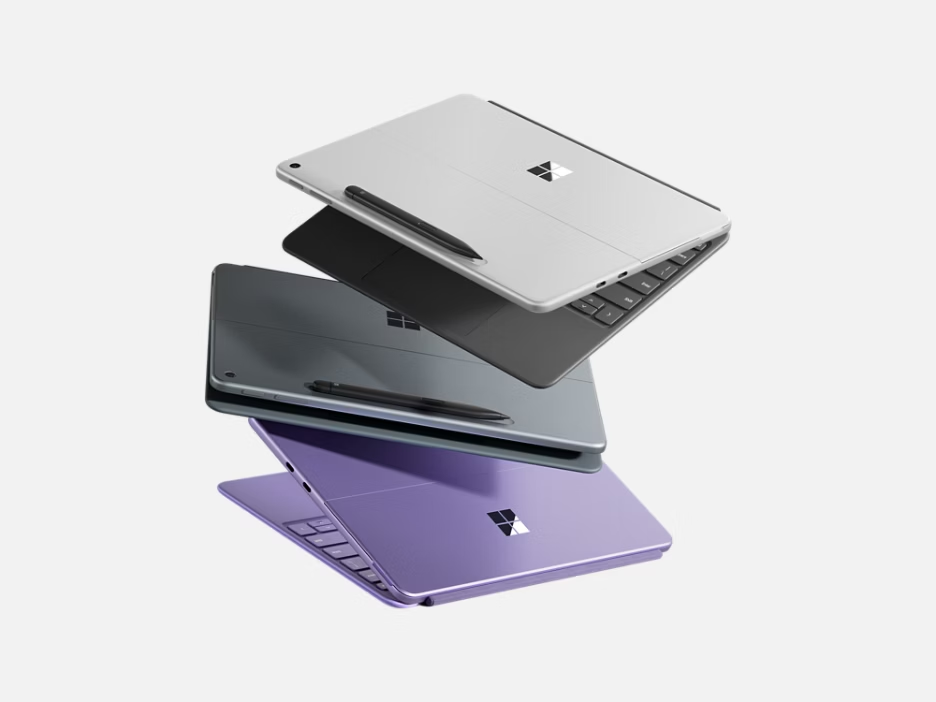
The company has quietly introduced new 8GB versions of its Surface Pro 12-inch and Surface Laptop 13-inch, creating lower-priced entry points while keeping the same Snapdragon X Plus processor and 256GB SSD storage.

Microsoft finds a new way to lower the starting price

On paper, the move sounds straightforward. The new Surface Pro now starts at $849.99, while the Surface Laptop carries a starting price of $949.99.

The catch becomes obvious when comparing them to the original launch configurations. Earlier this year, both devices debuted with 16GB of memory, starting at $799 for the Surface Pro and $899 for the Surface Laptop. Since then, pricing has increased significantly, with current 16GB models now climbing above the $1,000 mark.

Rather than bringing those prices back down, Microsoft has effectively lowered the entry point by reducing memory capacity.

Less memory also means no Copilot+ branding

The RAM reduction creates another consequence. These new models no longer qualify as Copilot+ PCs. Microsoft currently requires at least 16GB of memory for Copilot+ certification, meaning buyers of the new 8GB variants lose access to the same collection of local AI-powered experiences available on higher-end Surface systems.

That being said, Microsoft is still marketing the new devices as suitable for everyday workloads such as browsing, schoolwork, office applications, and general productivity tasks. Customers who want heavier multitasking, more demanding applications, or Copilot+ features will still need to move up to the 16GB configurations.

Interestingly, Microsoft isn’t making this change across the entire Surface lineup. The flagship Surface Pro and Surface Laptop families continue to start with 16GB of memory. For now, the new 8GB configurations appear limited to the smaller 12-inch Surface Pro and 13-inch Surface Laptop, effectively serving as a relaunch aimed at bringing the entry price down without redesigning the hardware itself.

Valve’s Steam Machine Arrives in Asia, All Japanese Models Already Sold Out

Valve’s new Steam Machine is now officially available in parts of Asia, with sales handled by Komodo Station, the company’s authorized distributor for Japan, Taiwan, and Hong Kong. The launch marks the first time customers in these markets can purchase the device through official regional channels.

Unlike Valve’s rollout in the United States and Europe, Komodo Station did not use a reservation queue system. Instead, customers could purchase units directly while stock lasted. Demand appears to have been strong, as all four Japanese configurations are already listed as sold out on Komodo’s online store, according to VideoCardz.

Steam Machine Pricing in Japan

Japanese buyers can choose between four configurations:

  • 512GB Steam Machine: ¥189,980, or approximately $1,175
  • 512GB Steam Machine + Steam Controller bundle: ¥204,980, or approximately $1,268
  • 2TB Steam Machine: ¥249,980, or approximately $1,546
  • 2TB Steam Machine + Steam Controller bundle: ¥264,980, or approximately $1,639

The prices are noticeably higher than those offered in the United States. For comparison, the 512GB Steam Machine starts at $1,049 in the US, while the 2TB version costs $1,349.

The gap between US and Japanese pricing is smaller than it first appears because Japanese retail prices already include the consumption tax. Regional distribution costs, import expenses, and currency fluctuations may also contribute to the difference.

Strong Demand Following Launch

The immediate sellout of all listed Japanese models suggests strong interest from local gamers despite the higher pricing. Valve has not yet announced when additional stock will become available through Komodo Station.

Shortly after launch, Valve confirmed that certain Steam Machine units will use a single 16GB DDR5 memory module rather than two 8GB modules. The change was reportedly driven by supply constraints affecting memory availability.

While dual-channel memory generally offers higher bandwidth, Valve has stated that internal testing did not show a measurable gaming performance difference between the configurations. Independent testing will likely provide a clearer picture once retail units become widely available.

With the Asian launch now underway and early inventory already exhausted in Japan, Valve’s latest hardware release appears to be attracting significant attention across multiple regions.

XBOX CEO Says Demand for Game Adaptations Is Higher Than Ever

Microsoft appears ready to expand its push into film and television adaptations based on XBOX gaming franchises, with company executives pointing to the growing success of projects like Fallout and Minecraft as proof that gaming intellectual property can thrive beyond consoles.

Speaking about XBOX’s entertainment strategy, XBOX CEO Asha Sharma said there is now “more appetite to work with us on titles than ever before,” suggesting that studios and streaming platforms are increasingly interested in partnering with Microsoft on adaptations of its gaming franchises.

While Sharma emphasized that XBOX is not trying to become a traditional entertainment company focused on producing movies and television shows, she argued that modern video games have become a major part of global entertainment culture.

Fallout and Minecraft lead XBOX’s adaptation success

Microsoft’s recent adaptation efforts have produced mixed results.

The company’s biggest recent success came through Amazon’s Fallout television series, which became one of the platform’s most-watched original productions. Sharma noted that Fallout became Amazon’s second most successful show of all time.

The Minecraft movie also delivered a strong performance at the box office. According to Sharma, the film ranked among the five highest-grossing movies of 2025, further validating the commercial appeal of XBOX-owned gaming franchises.

Not every adaptation has achieved the same level of success. Earlier projects such as the live-action Halo TV series and Halo: Nightfall received a more divided response from fans and critics.

Despite those setbacks, Microsoft appears increasingly confident that its gaming catalog can support major multimedia franchises.

Call of Duty’s scale rivals Hollywood’s biggest brands

One of Sharma’s most notable claims involved the size of the Call of Duty franchise.

According to her comments, Call of Duty has generated more than $35 billion in lifetime revenue and sold roughly 500 million copies worldwide. Sharma argued that the franchise is now larger than the Marvel Cinematic Universe in terms of overall commercial value.

For comparison, the Marvel Cinematic Universe has generated approximately $32 billion in worldwide box office revenue across its theatrical releases.

The comparison highlights how some gaming franchises now compete directly with the largest entertainment brands in the world.

Several XBOX adaptations are already in development

Microsoft’s growing confidence is reflected in the number of projects currently in production or development.

Known projects include:

  • A Call of Duty movie is being developed by Paramount, currently scheduled for release in 2028.
  • A live-action Sea of Thieves movie.
  • A Gears of War adaptation in partnership with Netflix.
  • A Wolfenstein television series is being developed for Amazon.
  • An animated Minecraft series for Netflix.
  • A Fallout Shelter-inspired reality competition show is currently filming.

XBOX sees entertainment as an extension of gaming

Although Microsoft’s long-term multimedia roadmap remains unclear, the company appears committed to turning more XBOX franchises into films, television series, and other forms of entertainment.

With Fallout proving that game adaptations can attract mainstream audiences and Minecraft demonstrating strong box office appeal, XBOX appears determined to capitalize on the growing demand for entertainment based on popular gaming properties.

In other XBOX news, the company recently said it is looking for the next Hideo Kojima following recent layoffs. The platform has also faced criticism that XBOX Game Pass lacks enough must-play titles, while one XBOX founding member recently raised concerns about the future of dedicated gaming hardware.

Via Windows Central

GTA 6 Official Price Set for $79.99, Premium Edition Costs $99.99

Months of rumors, retailer leaks, placeholder listings, and endless debates, Rockstar Games has officially revealed how much Grand Theft Auto 6 (GTA 6) will cost, putting an end to speculation that the game could become the industry’s first $100 standard edition blockbuster.

The number many players were waiting for is $79.99. That’s the price Rockstar has announced for the Standard Edition of GTA 6 (previous rumor), while those wanting extra digital goodies will need to spend $99.99 for the Ultimate Edition.

Rockstar finally puts GTA 6 price debate to rest

The announcement arrives just as pre-orders begin rolling out across major storefronts. Over the past week, various retailer listings sparked fears that GTA 6 could launch with a triple-digit price tag, especially after several placeholder pages appeared online with aggressive pricing.

Those concerns can now be put to bed. While GTA 6 is still more expensive than many current-generation releases, it falls below the worst-case scenario some fans had braced for.

Rockstar is also attaching a pre-order incentive to both editions. Anyone who purchases the game before November 20, 2026 will receive the Vintage Vice City Pack. The bonus includes the classic ’55 Vapid Stanier sedan, a garage located on Ocean Beach, retro-themed outfits and hairstyles, plus a weapon skin inspired by Tommy Vercetti’s iconic shirt.

Ultimate edition brings extra digital content

Players opting for the $99.99 Ultimate Edition will receive an exclusive collection of in-game items. Rockstar says the bundle includes unique vehicles, matching revolvers for the game’s protagonists, additional weapon customization options, clothing items, and more digital extras.

Grand Theft Auto 6 launches on November 19, 2026 for PlayStation 5, Xbox Series X, and Xbox Series S.

GTA 6 May Feature Quality & Performance Modes on PS5 & XBOX Series X|S Consoles

Rockstar’s biggest game in the history, Grand Theft Auto 6 (GTA 6), is scheduled to release on November 19, 2026. While the game is still months away, fans are counting down the hours until pre-orders officially kick off on June 25. Yesterday, we cited some findings and reported that GTA 6 pre-order pages are being prepared behind the scenes by some of the major retailers.

Will GTA 6 release with Quality and Performance modes on consoles?

We can’t say that for sure. However, an unexpected leak from a major European retailer has given us our first look at how the game might actually run on home consoles. The news comes via VideoCardz, which spotted a detailed FAQ section for GTA 6 in the MediaMarkt Poland website.

According to the translated text, the console version of GTA 6 will follow modern gaming industry standards by offering two distinct graphics modes: Performance and Quality. The retailer listing also notes that the PlayStation 5 version will heavily use the DualSense controller for realistic haptic feedback, alongside standard promises of lightning-fast loading screens courtesy of the console’s SSD storage.

Rockstar Games has been notoriously quiet regarding frame-rate targets, resolution, or graphical presets, meaning this entire FAQ could easily just be placeholder text.

Industry experts and analysts have openly questioned whether a steady 60 FPS performance mode is even physically possible on current-gen hardware given the staggering NPC density and visual fidelity shown in the trailers.

Furthermore, the leak completely lacked any actual retail pricing, although we’ve come across rumors of standard edition priced at $90 in the US. Until Rockstar drops the official word, treat this retailer listing with a grain of salt, even if we all desperately want that 60 FPS toggle to be real.

LastPass Confirms Customer Data Exposure in Klue Supply Chain Attack

LastPass confirmed hackers accessed customer data in its Salesforce environment after stealing OAuth tokens during a breach of third-party vendor Klue.

The company said its password platform, infrastructure, and customer vaults were not affected. Stored passwords and encrypted vault data remain secure.

The breach originated from a supply chain attack on Klue, a market intelligence platform used by LastPass. After compromising Klue, attackers stole OAuth tokens used to connect customer systems. These tokens were used to access Salesforce data, including LastPass records.

What Data Was Exposed?

LastPass said the exposed information was limited to customer relationship management (CRM) data stored in Salesforce.

Potentially affected information includes:

  • Customer names
  • Phone numbers
  • Email addresses
  • Physical addresses
  • Support case information
  • Sales and CRM-related records

The company added that its investigation found no evidence that attackers accessed data connected to Gong, which can contain customer calls, emails, and related communications.

Attack Linked to Icarus Extortion Group

The attack is linked to the Icarus extortion group. Attackers reportedly accessed Klue using compromised legacy credentials, then harvested OAuth tokens to access customer systems and extract CRM data.

Multiple organizations were affected, highlighting risks from third-party SaaS integrations with persistent access.

LastPass Response

LastPass quickly responded to the incident by disabling access to Klue, rotating API and OAuth tokens, and launching an investigation in coordination with Klue and Salesforce.

The company also notified law enforcement and shared indicators of compromise with the security community. Remediation efforts have since been completed, and all affected credentials have been replaced.

Users Advised to Watch for Phishing Attempts

Exposed contact data may be used for phishing or social engineering.

LastPass advises users to avoid unsolicited requests for sensitive information and confirms it will never ask for a master password. Users should rely only on official support channels.

In other cybersecurity developments, researchers recently uncovered a WhatsApp malware campaign, while OpenAI’s Patch the Planet initiative aims to help secure open-source software.

Additionally, it was claimed by Senator Mark Warner that Mythos AI breached NSA systems, during testing, confirming once again the dangers of such an AI tool.

Via BleepingComputer

Lords of the Fallen 2 Delayed to Q1 2027, Moves Away from Jam-Packed Window

It wasn’t long ago that CI Games made a massive announcement at the Summer Game Fest 2026. The independent developer took to the stage to debut the thrilling “The Battle for Thorngar” trailer, showcasing intense combat, a brand-new katana weapon class, and the stunning Asian mythology-inspired biome of Ysiguen.

Lords of the Fallen 2 has been delayed into Q1 2027

The showcase concluded with an exciting, highly anticipated announcement that the Lords of the Fallen 2 would be launching simultaneously across PC, PlayStation 5, Xbox Series X|S, and the Nintendo Switch 2 in Fall 2026. However, plans have officially shifted. Soulslike fans will have to wait just a bit longer to step back into the Umbral realm, as CI Games has announced that Lords of the Fallen 2 has been delayed into Q1 2027.

CI Games co-CEO Marek Tymiński shared the news on X, explaining that the decision stems from internal playtesting alongside a dedicated team of genre veterans.

“As development progresses, we have worked closely with the gameplay feedback team, a dedicated group of seasoned Souls-like veterans within our launch creative team. Their valuable ongoing input, combined with the team’s vision, has identified meaningful opportunities to further refine and strengthen the overall experience,” Tymiński stated. “These enhancements will benefit from additional integration, iteration, and polishing time, enabling the team to deliver the highest possible quality at launch.”

The 2023 Lords of the Fallen reboot faced a rocky, mixed reception when it first dropped, heavily plagued by performance issues and optimization bugs. Given that history, taking the extra few months to fully bake the sequel feels like a calculated, responsible move to ensure the launch is as smooth as possible.

Escaping the shadow of GTA 6

While polishing the game is the primary objective, Tymiński wasn’t shy about admitting that the move is also highly strategic. The latter half of the year is shaping up to be a brutal battleground for triple-A titles, with Grand Theft Auto 6 (GTA 6) undoubtedly being the highlight.

“This updated release window also strategically positions Lords of the Fallen II outside of a highly competitive holiday period, ensuring the game receives the dedicated attention it deserves,” Tymiński added.

Stepping out of the way of GTA 6 gives the dark fantasy action-RPG a much better runway to find its audience without being instantly swallowed by the hype of the decade. Despite the delay, the studio emphasizes that the team is fully energized by the positive response to their recent reveals and remains committed to delivering a standout successor to the franchise. More updates are expected to be shared in the coming months as they prepare for early 2027. Not to forget, Valor Mortis, which was originally scheduled to release on September 24, has now been delayed to October 13.

Google Sheets Gets Gemini-Powered Formula Error Fixes With One Click

Google is rolling out a new Gemini-powered feature for Google Sheets that aims to make troubleshooting spreadsheet formulas much easier. The update allows users to diagnose and fix formula errors with a single click, reducing the need to manually inspect complex calculations and formulas.

How Gemini Fixes Formula Errors in Google Sheets

The new capability integrates Gemini directly into Google Sheets. When a formula generates an error, users can hover over the affected cell and select a new “Fix” option. This action opens the Gemini side panel, where Google’s AI assistant analyzes the spreadsheet and attempts to identify the root cause of the issue.

According to Google, Gemini can handle a wide range of formula-related problems, from simple arithmetic mistakes to more advanced calculation errors involving multiple functions and data references. After reviewing the spreadsheet’s structure and data relationships, Gemini suggests and applies corrections automatically.

Users remain in control of the process. If they decide not to continue troubleshooting, they can stop Gemini’s analysis at any time through the side panel before any changes are applied.

The feature is currently available only for organizations that have Gemini for Workspace enabled in Google Sheets. In addition, individual users must have Workspace smart features turned on to access the AI-powered troubleshooting experience.

Part of Google’s Broader Gemini Expansion

The Google Sheets update is the latest example of Google expanding Gemini across its productivity and consumer products. The company has been steadily integrating Gemini into Workspace applications, including Docs, Gmail, Slides, and Sheets, as it competes with Microsoft’s growing AI ecosystem.

Outside of Workspace, Google is also testing new Gemini integrations in Chrome. Recent reports indicate that Chrome may soon offer an “Ask Gemini” shortcut that allows users to quickly get AI-generated answers while browsing the web.

Competition in the AI productivity space continues to intensify. Microsoft recently expanded Copilot in Excel with personalized rules support, allowing users to create custom instructions that influence how the AI assistant responds to spreadsheet-related tasks.

As AI assistants become more deeply integrated into workplace software, features such as automated formula repair could help reduce common spreadsheet errors and improve productivity for both casual users and advanced spreadsheet professionals.

Windows 11 KB5095093 Adds Windows Ready Print, AI Improvements, and GIF Changes

Microsoft has released the June 2026 optional preview update for Windows 11 under KB5095093, bringing a wide range of fixes, reliability improvements, and new features to versions 24H2 and 25H2.

The update advances Windows 11 to Build 26200.8737 on version 25H2 and Build 26100.8737 on version 24H2.

Several features are rolling out gradually, meaning they may not appear immediately on all eligible devices.

Windows Ready Print Expands to More Printers

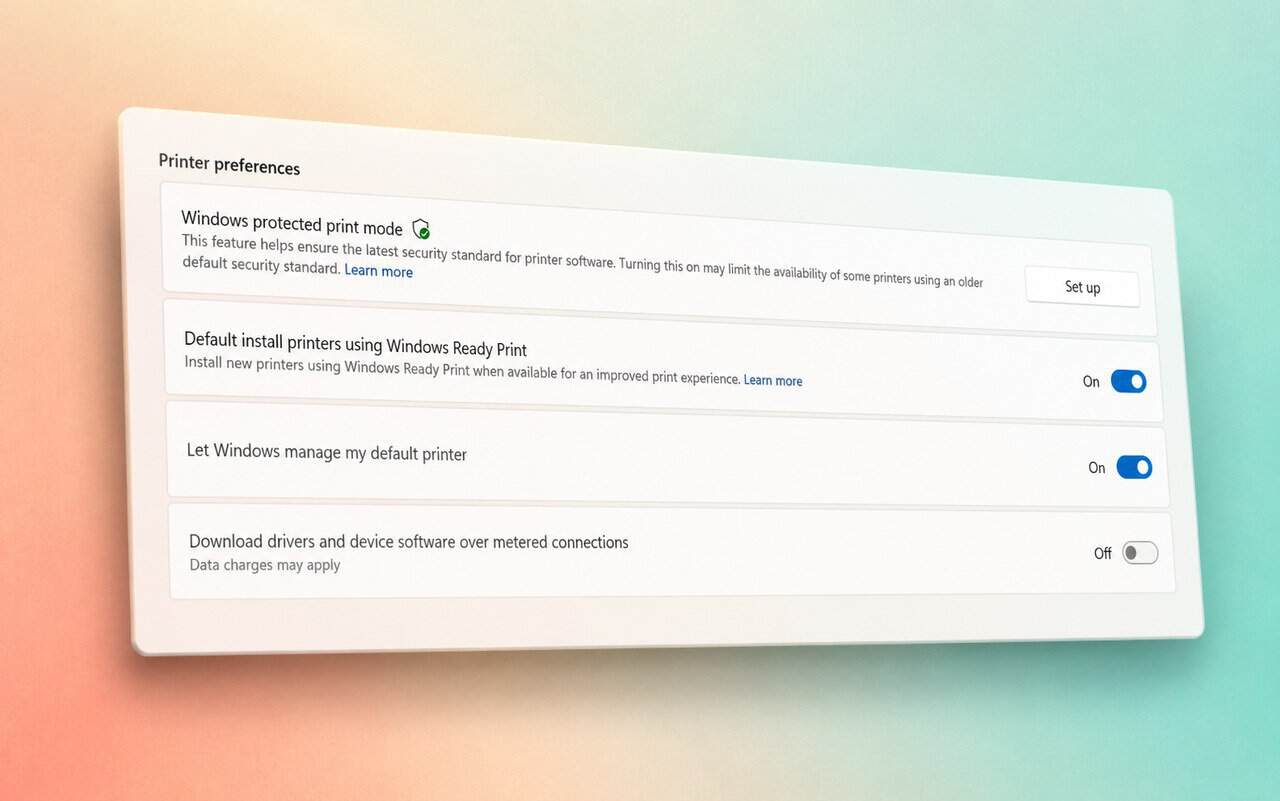
One of the most notable additions in KB5095093 is the expansion of Windows Ready Print.

Microsoft now installs supported printers using the Internet Printing Protocol (IPP) by default. The company says the change should simplify printer setup, improve compatibility, and increase reliability when connecting new printers.

Better Support for AI Workloads and Large Memory Systems

Microsoft has updated the Windows graphics kernel with an improved memory-management policy designed for modern AI workloads.

According to the company, PCs equipped with more than 32GB of RAM can now run larger local AI models more efficiently. The change arrives as more users rely on on-device AI applications and local large language models.

The update also improves display and graphics reliability in several areas, including:

  • More reliable rendering while scrolling in applications spanning multiple monitors
  • Better persistence of custom color profiles
  • Improved graphics stability across different display configurations
  • More reliable acrylic blur effects in the Start menu, Settings app, and lock screen

Windows Subsystem for Linux and VPN Improvements

Developers and power users will benefit from improvements to the Windows Subsystem for Linux (WSL).

Microsoft says mirrored networking mode now works more reliably when VPN connections are active, addressing a common complaint among users who rely on Linux development environments alongside corporate VPNs.

Search-related Group Policies should also apply more consistently across managed devices.

Touchpad, Input, and Location Setting Improvements

KB5095093 introduces new customization options for precision touchpads.

Users with compatible pressable touchpads can now adjust the size of the right-click zone by choosing between several available sizes.

Microsoft has also improved Japanese handwriting recognition, specifically when entering English characters.

Location settings have been made clearer as well. When Location Services are disabled, related options such as Default Location and Allow Location Override now appear greyed out to better reflect their unavailable status.

File Explorer and Desktop Reliability Improvements

Microsoft continues to refine File Explorer and the Windows shell experience.

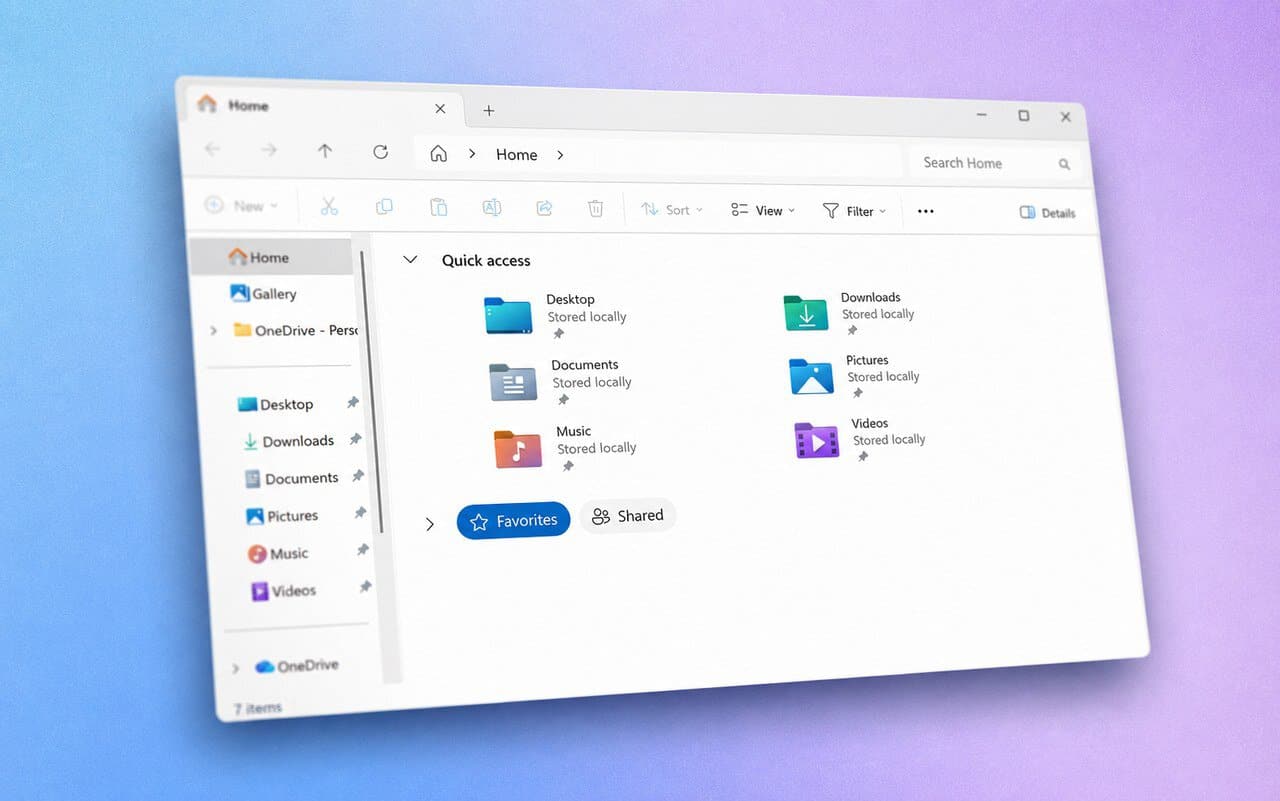
The update improves reliability when navigating to the Home page while OneDrive synchronization is active. Explorer.exe should also behave more reliably when switching between virtual desktops.

Additional fixes include:

  • Improved app launch reliability when shell extensions are installed
  • Reduced chances of blank gray taskbar icons appearing
  • Better notification badge updates across applications
  • Improved reliability when connecting to shared network resources
  • More stable explorer.exe behavior in several scenarios

Microsoft also resolved a Recycle Bin issue introduced after the June 2026 security update KB5094126. The permanent delete confirmation dialog now correctly displays the original file name instead of an internal Recycle Bin identifier.

Security, Networking, and Remote Desktop Changes

The update expands deployment of new Secure Boot certificates using enhanced device targeting data. Microsoft says devices will only receive the new certificates after demonstrating sufficient update reliability signals.

For enterprise environments, Microsoft improved Netlogon secure channel connections between domain controllers. Member servers should now connect successfully to older domain controllers deployed before 2025.

Networking reliability has received additional attention, with Microsoft improving access to shared network resources, including support for unauthenticated or null-session connections used by some legacy applications.

GIF Support Changes Coming June 30

Microsoft has switched the Windows emoji panel’s GIF provider from Google’s Tenor service to GIPHY following changes to the Tenor API.

The company warns that users will need the latest Windows updates installed by June 30, 2026, to continue using GIF search within the emoji panel.

Additional Fixes Included in KB5095093

Other improvements included in the update are:

  • Faster shutdown times for the Background Intelligent Transfer Service (BITS)
  • More reliable login and lock screen experiences with third-party credential providers
  • Improved reliability for shared network connections
  • Better taskbar notification badge behavior
  • More stable User Account Control (UAC) behavior after installing KB5089549
  • Reliability improvements throughout explorer.exe

KB5095093 builds on earlier additions already discovered in this preview cycle, including the new calendar-based Windows Update pause experience and several File Explorer enhancements that Microsoft began testing earlier this year.

Windows 11 KB5095093 Brings Major File Explorer, Bluetooth, and Networking Improvements

Microsoft has released the June 2026 optional preview update for Windows 11 under KB5095093, bringing the operating system to Build 26200.8737 on Windows 11 25H2 and Build 26100.8737 on Windows 11 24H2.

The update follows Microsoft’s recent rollout of new features such as Point-in-Time Restore and a redesigned update pause experience. However, KB5095093 includes a much broader set of improvements spanning File Explorer, Bluetooth connectivity, networking, voice typing, and system reliability.

File Explorer Gets Faster and Smarter

One of the biggest areas of focus in this update is File Explorer. Microsoft says users can now access quick actions directly from File Explorer Home by hovering over files. Available actions may include opening the file location or sending content to Copilot.

The feature now also supports work and school accounts that use Microsoft Entra ID.

Microsoft has also improved File Explorer startup performance and addressed several long-standing issues. The company fixed a bug that prevented the OneDrive shortcut from working correctly when File Explorer was launched with administrator privileges.

The address bar has received multiple improvements. It now properly supports paths that contain double backslashes and quotation marks, while the suggestion dropdown behaves more reliably and closes correctly after a selection.

Additional fixes include:

  • OneDrive files no longer appear duplicated in Favorites on File Explorer Home.
  • Text is no longer repeatedly selected while renaming files and folders.
  • Case-only filename changes now sync correctly across local and cloud-stored files.
  • The file rename experience has been refined.

Bluetooth Reliability Receives Major Upgrade

Microsoft has made extensive changes to Bluetooth performance and reliability throughout Windows 11.

The company says the microphone mute state now stays synchronized between the Windows audio mixer and Bluetooth Hands-Free Profile devices. Compatibility has also improved with several Bluetooth audio accessories.

AirPods users may notice faster pairing times, while microphone reliability has improved for Beats Studio Pro headsets.

Other Bluetooth improvements include:

  • Faster reconnection for classic Bluetooth audio devices after hibernation.
  • Better LE Audio reliability after connection interruptions.
  • Faster audio playback startup when using LE Audio devices with active microphones.
  • Improved voice call reliability for Hands-Free Profile devices.
  • More stable Bluetooth settings pages.
  • Better handling of Bluetooth device removal when radio hardware becomes unavailable.

Microsoft has also improved the interaction between Bluetooth devices and Phone Link. Outgoing calls initiated from a connected smartphone now remain on the phone while ringing and only transfer to the PC when the call is answered from Windows.

Additionally, incoming calls no longer ring on the PC when Do Not Disturb is enabled.

Voice Typing Expands to More Languages

Voice access and voice typing are gaining support for French, German, and Spanish.

Microsoft has also upgraded voice typing with real-time text improvement capabilities. The feature can automatically correct grammar, punctuation, and speech recognition mistakes while users dictate.

According to Microsoft, the updated dictation experience performs better even in environments with background noise.

Networking and Virtualization Improvements

The update delivers several networking enhancements aimed at both consumers and enterprise environments.

Confidential Virtual Machines now use SR-IOV hardware acceleration by default, helping improve network throughput in supported environments.

Microsoft also fixed a networking issue affecting nested Hyper-V virtualization configurations.

Additional networking changes include:

  • Improved Windows networking stack reliability.
  • Reduced Wi-Fi-related blue screen errors caused by power management issues.
  • Better cellular (WWAN) connectivity.
  • Improved IPv6 VPN support.
  • Better compatibility with third-party VPN solutions.

  • Improved support for SR-IOV server deployments.
  • Preservation of network adapter settings and bindings after operating system upgrades.

Additional Reliability Improvements

KB5095093 includes several smaller reliability fixes throughout Windows 11.

Microsoft improved the reliability of the inbox HD Audio driver and fixed a taskbar issue that could affect opening the Start menu from the left edge when taskbar icons were left-aligned.

As with other C-release updates, KB5095093 is optional and available through Windows Update as a preview release. Features are rolling out gradually, which means not every user will receive all changes immediately after installation.

In other Microsoft news, the company recently patched the AutoGen Studio AutoJack vulnerability chain that could have allowed malicious websites to trigger unauthorized command execution in certain development environments.

Windows 11 KB5095093 Update Adds Point-in-Time Restore, New Update Pause Controls

Microsoft has released a new optional preview update for Windows 11, introducing several quality-of-life improvements, accessibility enhancements, and a new recovery feature designed to make it easier to restore a PC to an earlier state.

The June 2026 preview update is available as KB5095093 and brings Windows 11 to Build 26200.8737 for version 25H2 and Build 26100.8737 for version 24H2. As a C-release, the update contains non-security changes that Microsoft plans to include in future monthly updates.

One of the biggest additions is a new Point-in-time restore feature, which allows users to roll back their PC to a recent restore point created automatically by Windows. Unlike traditional restore options that mainly affect system files and settings, the new feature can also restore applications, settings, and personal files, offering a more comprehensive recovery experience.

Windows Update gets easier pause controls

Microsoft is also rolling out a redesigned pause updates experience that was first spotted in testing earlier this year.

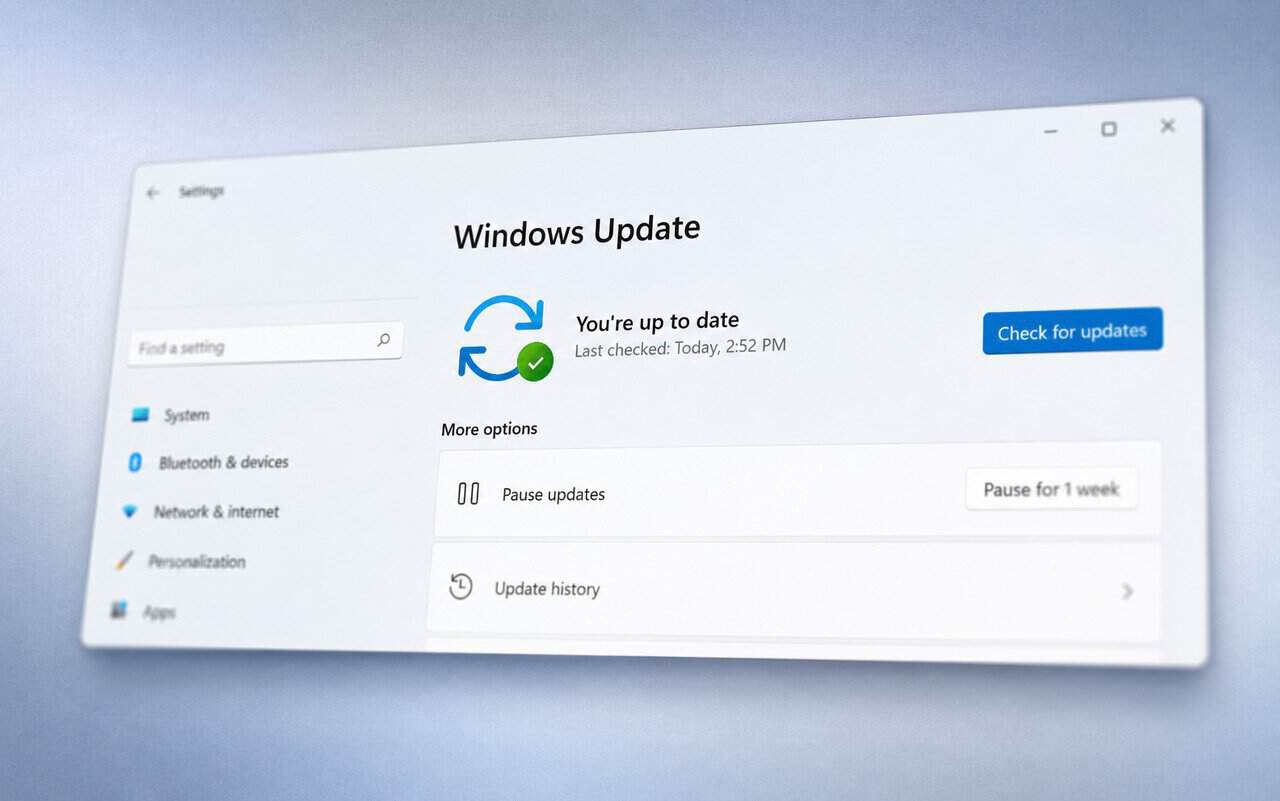
Instead of selecting a predefined number of days, users can now choose an exact end date when pausing updates through Settings > Windows Update. Updates can remain paused for up to 35 days, and users can extend the pause period by selecting a new date. Once the pause period ends, updates resume automatically, though users can pause them again if needed.

The change gives users more flexibility while maintaining Microsoft’s overall update schedule.

Widgets become less distracting

Widgets are receiving several changes aimed at reducing interruptions and improving reliability.

Under the new experience, Widgets will no longer open automatically when users hover over the Widgets icon. Microsoft has also reduced notifications and taskbar badges by default to create a quieter experience.

Additional Widgets improvements include:

  • Widgets open directly to the dashboard on first launch.
  • Settings are now easier to access through the navigation bar.
  • Dashboard icons display the number of active alerts.
  • Alert badges automatically clear after users leave the dashboard.
  • Improved reliability, responsiveness, and visual quality.

Microsoft says these changes should make Widgets more useful without constantly competing for attention.

New accessibility features arrive

Accessibility receives several notable upgrades in this release.

A new Screen Tint feature allows users to apply a full-screen color overlay to reduce eye strain and improve readability. Users can select from preset tint options, customize tint intensity, or enable the feature automatically based on their preferences.

The Magnifier tool also gains more precise controls. Users can now enter an exact zoom percentage instead of relying solely on preset zoom levels.

Microsoft has also added the ability to:

  • Adjust zoom levels in precise increments directly from the Magnifier window.
  • Change Magnifier zoom increments from the Magnifier bar.
  • Modify zoom behavior without opening the Settings app.

These updates should make Magnifier easier to use for people who require specific zoom levels for reading, navigation, or accessibility purposes.

Rolling out gradually

As with many recent Windows 11 preview releases, Microsoft is delivering some of these features through a gradual rollout. This means not all users will see every new capability immediately after installing KB5095093.

The June 2026 preview update is available now through Windows Update as an optional installation for supported Windows 11 24H2 and 25H2 devices.

Anthropic Launches Claude Tag for Slack With Shared AI Workspaces

Anthropic has announced Claude Tag, a new Slack integration designed to turn Claude into a collaborative teammate that can work directly inside Slack conversations. The feature is now available in beta for Claude Enterprise and Claude Team customers and will eventually replace the company’s existing Claude in Slack application.

Claude Tag allows organizations to add Claude to selected Slack channels and assign tasks simply by mentioning @Claude in a conversation thread. Once assigned, Claude can access approved tools, connected data sources, and workspace information to complete the request before posting results back into the same thread.

Unlike traditional chatbot interactions that are limited to a single user, Claude Tag operates as a shared AI resource within a channel. Team members can view ongoing work, pick up tasks started by colleagues, and collaborate with ease. Anthropic says this shared model helps Claude build context over time, reducing the need for employees to repeatedly provide the same information.

Designed for Asynchronous Teamwork

One of Claude Tag’s primary goals is to support asynchronous work. Employees can assign a task to Claude, leave the conversation, and return later after the work has been completed.

According to Anthropic, Claude can break larger requests into multiple steps and use connected tools to carry out more complex workflows. The system can also schedule follow-up actions and continue working on long-running tasks without requiring constant supervision.

An optional ambient mode extends these capabilities further by allowing Claude to proactively provide updates, track unresolved items, and follow up on outstanding work when necessary.

Enterprise Controls and Department Isolation

Anthropic has also focused on administrative controls and security management. Workspace administrators can determine exactly which channels Claude can access, as well as which tools and data sources it may use.

Organizations can create separate Claude instances for different departments, helping isolate information between teams and reducing the risk of cross-department data exposure. Administrators also gain access to activity logs, completed task reviews, and spending controls that can be applied at both the organization and channel level.

These controls are designed to help larger businesses deploy AI assistants while maintaining governance and visibility over how the technology is being used across the company.

Powered by Claude Opus 4.8

The new experience runs on Claude Opus 4.8, Anthropic’s latest flagship model announced in May. Anthropic says eligible customers will receive introductory credits to test Claude Tag during the beta period.

Claude Tag will eventually replace the current Claude in Slack app. Existing users will have a 30-day migration window to move their workflows and channels to the new platform.

The announcement highlights Anthropic’s broader push to integrate Claude more deeply into workplace productivity tools as competition intensifies among enterprise AI providers.

Anthropic Expands Its Enterprise AI Strategy

The launch comes during a busy period for Anthropic. The company has recently introduced updates to Claude Design that add code integration and direct editing capabilities, making it easier for teams to collaborate on software and design projects.

Anthropic has also updated its policies to allow identity and age verification checks for a limited subset of users whose accounts are flagged for potentially fraudulent activity. Additionally, in recent testing, Anthropic’s Mythos AI has reportedly managed to breach NSA systems, highlighting both the advanced capabilities and potential security implications of its emerging technologies, as detailed in this report.

Latest Firefox Update Fixes MP4 Playback, Language Bugs, and Performance Issues

Mozilla has started rolling out Firefox 152.0.2 to users on the Release Channel, delivering another round of bug fixes less than a week after the release of Firefox 152.0.1.

The previous update primarily addressed stability issues, including crashes affecting some systems powered by Intel Raptor Lake processors. Firefox 152.0.2 focuses on fixing usability, performance, and compatibility problems rather than introducing new features.

Firefox 152.0.2 Fixes Language and Settings Issues

One of the fixes targets Firefox’s Settings interface. Mozilla resolved a bug that caused certain Settings section headings to display placeholder text instead of properly translated names in some languages.

The company also fixed an issue that affected users who changed Firefox’s display language. In affected installations, content shown on the New Tab page could continue appearing in the previous language rather than matching the browser’s newly selected language.

These fixes should improve the experience for multilingual users and those who regularly switch Firefox’s language settings.

MP4 Playback Regression Resolved

Firefox 152.0.2 also addresses a regression that could prevent some MP4 video files from playing correctly.

While Mozilla has not provided detailed technical information about the issue, video playback regressions can affect a wide range of websites and streaming platforms. The fix should restore compatibility for users who encountered playback failures after updating to Firefox 152.

Encryption Performance Improvements

Another notable fix targets a performance regression that affected websites performing large numbers of encryption and decryption operations simultaneously.

Mozilla specifically mentioned Proton Drive as an example of a service that could experience slower performance due to the bug. Services that rely heavily on client-side encryption may benefit from improved responsiveness after installing Firefox 152.0.2.

The update should help reduce delays and improve overall performance when handling encryption-intensive workloads inside the browser.

Available Now Through Release Channels

Firefox 152.0.2 is already available through Mozilla’s release channels and can be downloaded manually from Mozilla’s FTP servers.

Existing Firefox installations should receive the update automatically over the next several hours through the browser’s built-in update mechanism.

The latest patch arrives shortly after the launch of Firefox 152, which introduced several larger changes across the browser.

Mozilla has also recently shared a roadmap outlining features and improvements planned for future Firefox releases. While Firefox 152.0.2 focuses entirely on fixes, it serves as another example of the company’s rapid update cycle aimed at addressing issues quickly after release.

For users affected by the language, video playback, or encryption-related problems, installing Firefox 152.0.2 should provide a smoother and more reliable browsing experience. For more details, check the official Firefox 152.0.2 release notes.

GTA 6 Pre-Order Pages Start Appearing Online Before Rockstar’s Big Day

GTA 6 pre-orders are still two days away, but the first signs of retailer activity are already starting to appear online. As reported by Notebookcheck, folks at GTABoom have spotted that some major stores have begun working behind the scenes ahead of Rockstar’s June 25 pre-orders.

One of the examples shared in the report is that of a German retail giant MediaMarkt. The retailer recently launched a dedicated GTA 6 campaign page featuring a teaser message that roughly translates to “something big is being created here.”

As of the now the said page doesn’t have editions, pricing (rumor), and purchase options. However, the page’s appearance suggests preparations are moving ahead behind the scenes.

Just to be clear, these are placeholder pages, which major retailer often create days before launch so stores can prepare inventory systems, marketing assets, and search visibility before pre-orders officially begin.

MediaMarkt’s new GTA 6 page appears to fit that pattern perfectly. The page currently acts as little more than a holding screen, but it can later be updated with editions, pricing, and purchase buttons once Rockstar gives retailers the green light.

That being said, no fully operational GTA 6 pre-order page has surfaced so far. Digital storefronts on PlayStation and XBOX continue to offer wishlist options, while actual purchasing remains unavailable.

OpenAI Expands Daybreak With GPT-5.5-Cyber and New Security Tools

OpenAI has unveiled a major expansion of its Daybreak cybersecurity initiative, introducing new AI-powered tools, partnerships, and programs aimed at helping security teams identify and remediate software vulnerabilities before attackers can exploit them.

The announcement builds on OpenAI’s growing focus on cybersecurity, a field where artificial intelligence has already accelerated vulnerability discovery. However, according to the company, finding flaws is no longer the primary challenge. The larger obstacle remains fixing them.

While AI can quickly uncover security weaknesses, development teams still face the time-consuming process of validating findings, assessing risk, developing patches, testing fixes, and deploying updates across production environments.

OpenAI Expands Codex Security Capabilities

As part of the Daybreak expansion, OpenAI highlighted the progress of Codex Security, its security-focused code analysis platform that first entered preview in March.

Since launch, Codex Security has reportedly scanned more than 30 million commits across over 30,000 codebases. According to OpenAI, human reviewers have marked more than 70,000 findings as fixed, while automated systems determined that over 500,000 additional findings had been resolved.

The company is now releasing an updated Codex Security plugin designed to support more of the vulnerability management lifecycle.

The new plugin can:

  • Perform deep security scans
  • Review recent code changes
  • Generate detailed security reports
  • Trace potential attack paths
  • Validate findings from multiple sources
  • Create codebase-specific patches for human review
  • Triage bug bounty reports and security advisories
  • Export results to vulnerability management platforms

OpenAI says the plugin can also process findings from external scanners, ticketing systems, bug bounty submissions, and security advisories, helping teams consolidate remediation workflows.

The platform integrates with existing security ecosystems through SARIF files, CodeQL queries, Codex CLI, and the Codex application.

GPT-5.5-Cyber Launches for Verified Defenders

Another major announcement is the limited release of GPT-5.5-Cyber, a specialized version of OpenAI’s latest model built specifically for cybersecurity professionals.

The model is being made available to verified defenders and security organizations through OpenAI’s Trusted Access for Cyber program.

According to OpenAI, GPT-5.5-Cyber achieved an 85.6% score on CyberGym, a cybersecurity evaluation benchmark. That compares with 81.8% for GPT-5.5 and 83.8% for Claude Mythos 5.

OpenAI says the model is optimized for security-focused tasks such as vulnerability analysis, attack path investigation, code review, remediation planning, and incident response workflows.

Daybreak Cyber Partner Program Brings Industry Support

OpenAI also announced the Daybreak Cyber Partner Program, which allows security vendors and service providers to integrate GPT-5.5-Cyber into commercial products and managed security services.

The goal is to give cybersecurity companies access to specialized AI capabilities while maintaining security-focused safeguards through Trusted Access for Cyber.

Initial partners include Accenture, Akamai, Cisco, Cloudflare, CrowdStrike, IBM, Palo Alto Networks, Proofpoint, SentinelOne, Wiz, Zscaler, and several other cybersecurity providers.

OpenAI said additional partners will join the program over time as the ecosystem expands.

Patch the Planet Targets Open-Source Security

Alongside the Daybreak announcements, OpenAI formally launched Patch the Planet, a collaborative effort focused on improving the security of critical open-source software projects.

OpenAI says the objective is to reduce the burden on maintainers by helping projects identify vulnerabilities, review findings, create patches, and improve long-term security workflows.

The Daybreak expansion signals OpenAI’s intention to become a larger player in defensive cybersecurity, combining AI-powered vulnerability discovery with remediation assistance, industry partnerships, and direct support for critical open-source infrastructure.

Oracle Laid Off 21,000 Employees in Last 12 Months Citing AI Adoption

If you think AI adoption isn’t causing layoffs across the tech industry, then you might want to think twice. Oracle has quietly revealed that its workforce shrank by roughly 21,000 employees over the past year, making it one of the biggest job reduction linked to the AI era so far.

Oracle is cutting jobs while spending billions on AI

The figures surfaced via Oracle’s latest regulatory filing, which showed the company ended fiscal 2026 with around 141,000 employees, down from approximately 162,000 a year earlier. That’s a workforce reduction of about 13%, even as Oracle continues reporting strong momentum in cloud computing and artificial intelligence.

In its filing, the company said artificial intelligence is increasingly being integrated into internal operations and could continue influencing staffing requirements in the future. Oracle also disclosed that restructuring and severance-related expenses jumped to roughly $1.84 billion during the fiscal year, a massive increase from the previous year’s $374 million.

At the same time, Oracle isn’t exactly pulling back on spending. The company is aggressively expanding its AI and cloud infrastructure footprint, with plans to invest tens of billions of dollars into data centers and computing capacity. Oracle has also emerged as a key infrastructure partner for major AI projects and companies looking for large-scale compute resources.

That being said, Oracle is hardly alone. Across the tech industry, multiple companies like Meta, Snao, HP, Amazon, and others, continue to reshape teams as AI changes how software is built, managed, and deployed. Industry trackers show tens of thousands of tech jobs have already disappeared in 2026 as organizations redirect resources toward AI-focused initiatives.

XBOX Wants to Find the Next Kojima Amid Studio Closure & Layoffs Rumors

There is a lot going on with XBOX right now. In between reports of layoffs, ongoing restructuring rumors, uncertainty surrounding multiple first-party studios, and a business reset might be taking shape behind the scenes. That’s what makes XBOX’s latest comments about creativity and game development particularly interesting.

XBOX says it wants to find the next Kojima

In a recent interview discussing OD with Entertainment Weekly, the upcoming project from Hideo Kojima and Kojima Productions, XBOX president Asha Sharma outlined the kind of future she wants to build for the platform (via IGN). The timing, however, has sparked plenty of discussion across the gaming community.

Sharma pointed to OD as an example of the type of ambitious project XBOX wants to support moving forward. “We need to make sure our platform is sufficiently open so more creators and developers can come on board and be successful,” Sharma said. She added, “The next Kojima is yet to be known.”

The comments came while discussing XBOX’s partnership with Kojima Productions and the unique nature of OD, a project that reportedly struggled to find support elsewhere before landing at XBOX.

The challenge isn’t necessarily what Sharma said. It’s when she said it. Reports over recent weeks have suggested that XBOX is preparing significant organizational changes, with multiple teams and studios facing uncertainty. While Microsoft has yet to publicly detail the full scope of any plans, speculation surrounding potential closures and layoffs has dominated industry conversations following the XBOX Games Showcase 2026.

OpenAI Launches Patch the Planet to Help Secure Open Source Software

OpenAI has announced a new open source cybersecurity initiative called Patch the Planet, a program designed to help maintainers identify, review, and fix security vulnerabilities in widely used open source projects.

The company is partnering with security firm Trail of Bits to provide direct support to maintainers who often struggle with limited time, funding, and resources despite maintaining software that powers much of the technology industry.

Rather than simply generating automated vulnerability reports, the initiative aims to provide hands-on assistance. Trail of Bits security engineers will work directly with project maintainers, helping them investigate issues, create patches, develop tests, and establish security workflows that can improve long-term project health.

Security Engineers and AI Tools Working Together

According to OpenAI, the program combines human expertise with AI-powered security tooling. OpenAI’s security systems, including Codex Security, will help identify and review potential code issues before they reach maintainers.

A key part of the initiative is reducing noise and unnecessary work for developers. Security engineers will validate findings before forwarding them, ensuring maintainers receive actionable reports instead of large volumes of automated alerts.

OpenAI said the goal is to lower the burden on maintainers, not add to it. The company wants to provide practical support that helps projects resolve vulnerabilities more quickly and efficiently.

Supporting the Backbone of Modern Software

Open source software forms the foundation of countless commercial applications, cloud platforms, developer tools, and enterprise services. However, many critical projects rely on small teams or even individual maintainers who often lack dedicated security resources.

Trail of Bits engineers will act as what the program describes as “code EMTs,” helping projects triage security problems, coordinate fixes, and strengthen development practices before vulnerabilities become larger threats.

The initiative reflects growing concern across the technology industry about the security of open source ecosystems. High-profile supply chain attacks and vulnerabilities have demonstrated how weaknesses in a single widely used project can affect thousands of organizations.

Long-Term Questions Remain

While Patch the Planet provides a new model for combining AI-assisted analysis with human security expertise, questions remain about how the program will scale over time.

OpenAI has not yet provided detailed information about how projects will be selected, how many maintainers can participate, or how the initiative will operate as demand grows.

The announcement comes as the company continues work on several other projects, including a reported social networking initiative. Meanwhile, OpenAI’s Codex CLI recently drew attention after reports suggested it could generate unusually high amounts of disk writes through extensive logging activity.

For open source maintainers, Patch the Planet could offer something many projects have long lacked: direct security assistance from experienced engineers rather than another queue of bug reports waiting to be reviewed.

Via TechCrunch

Google Announces New Verification Rules for Financial Advertisers Across Europe

Google has officially announced a major expansion of its financial advertiser verification program. As part of the change, the company has introduced stricter checks to virtually every country across the European Union (EU) and European Economic Area (EEA).

Google wants financial advertisers in the EU and EEA to prove they’re legitimate

According to the company, the rollout covers 24 additional countries and significantly expands a system that is already active in several European markets and other regions around the world. Under the expanded program, financial advertisers will be required to complete Google’s verification process and verify that they are authorized by the appropriate national financial regulator.

Rather than simply confirming an advertiser’s identity, Google says the new system checks credentials against official regulatory databases. The idea is to stop fraudulent financial promotions before they ever appear in front of users.

The company says the initiative builds upon its broader advertiser identity verification framework, which already covers more than 98% of ads shown across the European Union. Google also highlighted the scale of the problem it’s trying to address. According to the company, its systems blocked or removed more than 1.6 billion ads across the EU last year. Globally, its financial services verification framework has already helped block or remove 327.8 million unauthorized financial advertisements.

Businesses will have 30 days to comply

Google says the rollout will happen in phases, giving affected advertisers a 30-day window to complete the verification process. However, companies that fail to complete the checks within that timeframe may see their financial advertising campaigns restricted until verification is finalized.

Google is also cracking down on scammers, with the company linking Outsider Enterprise to 9,000 fake websites. In other Google-related news, the company will start using IP addresses for ads in Europe, while the UK wants to make search rankings more transparent.

OpenAI Codex CLI Bug May Wear Out SSDs With Excessive Logging

OpenAI’s Codex CLI is reportedly causing unusually high SSD write activity due to excessive diagnostic logging, raising concerns about potential long-term storage wear for users who leave the tool running continuously.

The issue was highlighted on June 14 by a GitHub user known as “1996fanrui,” who noticed abnormally high disk writes while using Codex CLI. Similar reports appear to have surfaced as early as April, suggesting the problem may have affected users for several months.

According to reports, the excessive writes originate from a local SQLite database located at ~/.codex/logs_2.sqlite. The database continuously records diagnostic information generated by the application.

Reports Point to Tens of Terabytes of SSD Writes

One user reported that Codex generated approximately 37TB of writes over a period of 21 days. If sustained for a full year, that rate would amount to roughly 640TB of writes annually.

For comparison, many consumer 1TB SSDs carry endurance ratings of around 600 terabytes written, or TBW, across their expected lifespan. While SSD endurance varies by model and manufacturer, sustained write activity at this level could significantly accelerate wear on affected drives.

The root cause appears to be Codex’s SQLite feedback sink operating at the global TRACE logging level by default. TRACE is the most verbose logging mode available and records large amounts of diagnostic information.

Reports indicate that the logs include raw WebSocket payloads, filesystem events, and other low-level telemetry that provides limited value for most users during normal operation.

Logging Controls Reportedly Do Not Work as Expected

Users have also reported that Codex’s logging system ignores the standard RUST_LOG environment variable, making it difficult to manually reduce logging verbosity.

Analysis shared in the GitHub discussion suggests that approximately 71% of the recorded data consists of TRACE-level logging noise. While useful for debugging specific issues, this level of detail is generally unnecessary for everyday usage.

The impact is further amplified by SQLite’s write patterns. Frequent insert-and-delete operations can generate significantly more physical SSD writes than the final database size would suggest, a phenomenon known as write amplification.

As a result, the actual storage wear may be considerably higher than users expect when looking only at the database file size.

Open Issue Remains Unresolved

OpenAI has recently released updates containing SQLite reliability improvements, but users report that those changes have not addressed the excessive write-rate problem.

At the time of writing, the GitHub issue remains open.

As a temporary workaround, Linux and macOS users can redirect the ~/.codex/logs_2.sqlite database to /tmp/, causing writes to be stored in RAM rather than on the SSD. This can dramatically reduce storage wear, although log data will be lost after a reboot.

In other OpenAI-related news, reports suggest the company is exploring the development of a social networking platform. Separately, claims have circulated online regarding Anthropic’s Mythos AI system and alleged cybersecurity testing results (report), although those reports remain unverified and should be treated with caution until independently confirmed.

Via NotebookCheck

AMD Warns Radeon Users of FSR Driver Issue on Windows 10 PCs

AMD, which yesterday confirmed FSR 4.1 support for Radeon RX 7000 GPUs, has now acknowledged a new issue affecting certain Radeon RX graphics card owners after the release of its latest Adrenalin software version.

AMD confirms driver problem on Windows 10 PCs following Adrenalin 26.6.2 release

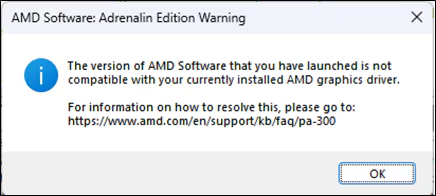
As reported by Neowin, AMD has published a support advisory warning that some Windows 10 users may encounter problems after installing AMD Software: Adrenalin Edition 26.6.2. According to the company, affected systems can display a yellow exclamation mark in Device Manager, preventing Radeon Software from launching normally.

The issue appears to impact users running Windows 10 alongside compatible Radeon RX graphics cards. AMD Software may immediately throw up an error message and refuse to launch rather than opening normally.

Users affected by the bug will see the following warning:

“The version of AMD Software that you have launched is not compatible with your currently installed AMD graphics driver.”

The message also directs users to AMD’s support documentation for additional troubleshooting information. While AMD hasn’t shared how widespread the issue is, the company has officially listed it as a known problem and says its engineering teams are actively investigating the root cause.

Image credit: Microsoft | AMD

Until a permanent fix is released, AMD has advised affected users to revert back to AMD Software: Adrenalin Edition 26.6.1. That workaround currently serves as the company’s only recommended solution for systems experiencing the launch failure.

Valve Confirms Some Steam Machines Will Use Single-Channel RAM

Valve’s newly launched Steam Machine is drawing attention over its hardware configuration, particularly its memory setup. While many early discussions have focused on performance expectations, new information suggests that not every Steam Machine will ship with the same RAM layout.

Memory Supply Issues Affect Hardware Configuration

According to Digital Foundry, Valve may use different memory configurations depending on the available DRAM supply. The report states that some Steam Machine units will ship with a single 16GB DDR5-5600 SO-DIMM module, while others may include two 8GB DDR5 modules.

The change reportedly comes as 8GB DDR5 SO-DIMM modules have become more difficult to source in the quantities required for mass production. The broader memory market has experienced supply constraints in recent months, leading to higher DRAM prices and tighter availability across multiple segments of the industry.

Valve originally expected the hardware rollout to happen sooner, but memory shortages appear to have affected production timelines.

A system equipped with two 8GB modules would operate in dual-channel mode, which traditionally offers higher memory bandwidth and can improve performance in certain workloads. By comparison, a single 16GB module operates in single-channel mode.

This has raised concerns among enthusiasts who worry that systems using a single memory module could deliver lower gaming performance than units equipped with two modules.

Valve Says Internal Testing Shows Little Difference

Valve engineer Yazan Aldehayyat stated that the company did not observe a measurable gaming performance difference between the two memory configurations during internal testing.

However, those claims have not yet been independently verified by third-party reviewers. Comprehensive benchmarks from hardware analysts will likely determine whether the difference remains negligible across a wider range of games and usage scenarios.

Until those tests become available, questions about the real-world impact of single-channel versus dual-channel memory on the Steam Machine will remain open.

Upgrades and Repairs Expected to Be User Friendly

One positive detail for enthusiasts is that the memory appears to be upgradeable. Accessing the RAM will require opening the device, but Valve is reportedly preparing official disassembly guides to help users perform upgrades and repairs.

The company is also working with iFixit to provide repair documentation and replacement components. That approach continues Valve’s broader push toward making its hardware easier to maintain and customize compared to many modern consumer electronics devices.

For users concerned about receiving a single-module configuration, the availability of upgrade guides and replacement parts could offer a straightforward path to installing a second memory module and enabling dual-channel operation.

As Steam Machine production continues amid ongoing DRAM supply challenges, hardware analysts will likely watch closely to see whether memory layout has any meaningful effect on gaming performance.

Via VideoCardz

SteamOS is Reportedly Getting NVIDIA Support, But Don’t Expect It Soon

For years, SteamOS has largely lived in the AMD world. The Steam Deck runs on AMD hardware, most SteamOS-powered handhelds rely on AMD chips, and anyone building a Linux gaming machine around Valve’s platform usually gets the smoothest experience with Team Red. Well, that may not be the case forever.

Valve wants SteamOS to reach more gaming PCs with NVIDIA support

According to a new report by The Verge, Valve is actively working to expand SteamOS support across a wider range of desktop hardware, including systems powered by NVIDIA graphics cards. The work is still ongoing behind the scenes, but the company appears serious about turning SteamOS into something much bigger than an operating system built primarily for handheld gaming devices.

Speaking with the news outlet, Valve engineer Pierre-Loup Griffais confirmed that SteamOS compatibility improvements remain a major focus internally. Worth noting that he revealed that Valve has assembled “a growing team” dedicated to NVIDIA support. “We’re collaborating with NVIDIA very closely,” Griffais said while discussing future SteamOS plans.

That statement alone is significant. NVIDIA remains the dominant force in the desktop graphics market, and wider support could dramatically expand the number of systems capable of running SteamOS without major compromises.

However, gamers shouldn’t expect an immediate rollout. Griffais suggested NVIDIA support may not launch during 2026, indicating that Valve still has substantial work ahead before the experience is ready for wider deployment.


Speaking of Valve, let’s not forget that the company has also confirmed the pricing of the Steam Machine. Reservations are now open via Steam, with the entry-level 512GB model priced at $1,049. For those who want a controller, a bundle is available for $1,128, since the Steam Controller is sold separately for $99. Valve is also offering a higher end 2TB version priced at $1,349, with a bundled option that includes the controller coming in at $1,428.

via: VideoCardz

Anthropic May Require Some Claude Users to Verify Identity With Government IDs

Anthropic is preparing to introduce identity verification checks for a small number of Claude users, potentially requiring government-issued identification documents and biometric data as part of account reviews.

The change appears in Anthropic’s updated privacy policy, which is scheduled to take effect on July 8. According to the company, the verification process will only apply in certain circumstances and primarily targets accounts flagged for potentially fraudulent activity.

Instead of immediately suspending or banning flagged accounts, Anthropic says users may be given an opportunity to appeal through an identity verification process. Depending on the situation, users could be asked to upload a photo of a passport, driver’s license, or another government-issued identification document.

Anthropic May Collect Selfies and Biometric Information

The updated policy also allows Anthropic to collect a selfie photo or video during the verification process. In some cases, the company may create and store a face geometry template generated from those images.

Face geometry templates are considered biometric information in some jurisdictions and may fall under specific privacy regulations. Anthropic says it may also retain verification results, including information about whether a user meets age requirements.

The company does not provide specific examples of what may trigger an identity check. Instead, it says verification may occur during platform integrity reviews, safety checks, compliance procedures, or when users attempt to access certain features.

Persona Will Handle Verification Checks

Anthropic says it uses Persona, a San Francisco-based identity verification company, to conduct the checks.

According to the updated policy, identity verification data may be used to:

  • Create and administer Claude accounts
  • Enforce Anthropic’s terms of service
  • Prevent fraud and abuse
  • Investigate unlawful activity
  • Resolve security and safety issues

Anthropic determines how long Persona can retain submitted identity documents, although the company has not disclosed a specific retention period. The company also did not provide details on when uploaded documents or biometric information may be deleted.

Because Persona stores data on its infrastructure, submitted information could potentially be subject to lawful requests from U.S. government authorities.

Separate From Fable and Mythos

Anthropic says the new verification policy is unrelated to its recent Fable or Mythos initiatives.

The clarification comes after reports that Anthropic’s Mythos AI was shut down following security concerns raised by Amazon. It was also recently reported that Mythos AI managed to breach NSA systems within just a few hours. It was also reported that Anthropic’s Mythos AI was shut down following security concerns raised by Amazon.

For most Claude users, the changes are unlikely to have any immediate impact. Anthropic says only a small subset of accounts flagged for suspicious or potentially fraudulent behavior will be asked to complete the verification process.

Via TechCrunch

Report: Anthropic’s Mythos AI Breached Nearly Every NSA Classified Systems in Just Hours

Anthropic has found itself at the center of that debate after abruptly restricting access to its advanced Fable 5 and Mythos 5 models following intervention from U.S. authorities. What began as a security concern has now evolved into a much bigger conversation about AI governance, national security, and control over frontier technology.

The controversy stems from a U.S. government directive issued earlier this month that required Anthropic to limit access to Fable 5 and Mythos 5. Rather than attempting to enforce nationality-based restrictions across users, Anthropic ultimately disabled access more broadly, impacting researchers and partners outside the United States.

The restriction immediately became headline after reports surfaced referencing comments made during a Senate Intelligence Committee discussion. According to a report from The Economist, Senator Mark Warner cited information allegedly provided by NSA and Cyber Command leadership regarding the cybersecurity capabilities of Anthropic’s Mythos model (via Tom’s Hardware). However, many of the claims circulating online remain unverified, and independent confirmation has not emerged.

Per the report, the shutdown directive came after an explosive Senate Testimony, in which, he claimed that Mythos AI breached NSA and Cyber Command systems within hours. “Encryption was a potent technology, but narrow in its application. AI is far more powerful and versatile. On June 11th Mark Warner, the vice-chair of the Senate Intelligence Committee, said that General Joshua Rudd, who leads the National Security Agency and the Pentagon’s Cyber Command, had told him that Mythos “broke into almost all of our classified systems, not in weeks, but in hours,” reported The Economist.

A previous report also claimed that Amazon CEO reportedly also had the role in advising the U.S. government about Fable 5’s advanced vulnerability discovery capabilities, which prompted in restriction of foreign access. Not to forget, Microsoft has also restricted Claude Fable 5 use as Anthropic’s new requirements allow prompts and outputs to be retained for up to 30 days.

As frontier models continue advancing, the battle over who controls them may become just as important as the technology itself.

WhatsApp Malware Campaign Targets Users With Fake Business Documents

A large-scale malware campaign is targeting WhatsApp users across several countries, using compromised accounts to distribute malicious files disguised as legitimate business and financial documents.

According to cybersecurity researchers at Kaspersky, the campaign has affected users in Brazil, India, Mexico, Singapore, the United Kingdom, Spain, Taiwan, Australia, Russia, Vietnam, and Malaysia. The attackers send deceptive WhatsApp messages that appear to come from trusted contacts, increasing the likelihood that recipients will open the attached files.

How the WhatsApp Malware Campaign Operates

The malicious attachments are VBScript files disguised as reports, billing statements, account notices, and other business-related documents. Researchers observed the files in multiple languages, suggesting that the operation targets victims worldwide rather than focusing on a single region.

Kaspersky believes the campaign spreads through compromised WhatsApp accounts. Once an account gets taken over, attackers use it to send malicious files to the victim’s contacts. The exact method used to compromise the WhatsApp accounts remains unknown.

If a Windows user downloads and opens one of the VBScript files, the malware infection chain begins. The script contacts attacker-controlled infrastructure and downloads additional malicious components. These secondary scripts then modify Windows Registry settings to weaken User Account Control (UAC) protections, making it easier for attackers to execute further actions on the compromised system.

The malware subsequently downloads a ZIP archive containing ManageEngine Endpoint Central, a legitimate remote management tool commonly used by IT administrators. In this campaign, however, attackers abuse the software to establish remote access to infected computers.

Researchers found that the software installs silently and communicates with attacker-controlled management servers, effectively giving threat actors control over the victim’s machine.

The infection method differs slightly depending on which WhatsApp client is used. Kaspersky noted that WhatsApp Web requires users to download the malicious file before it can execute. In contrast, the WhatsApp Desktop application may allow the file to launch directly through Windows Script Host, potentially reducing the number of steps required for infection.

Attribution Remains Unclear

Kaspersky has not linked the campaign to a specific threat actor. While researchers discovered indications of Chinese-language usage and some infrastructure overlaps with activity previously associated with ValleyRAT and Gh0st RAT operations, they emphasized that the available evidence is insufficient for confident attribution.

As a result, the campaign’s operators remain unidentified.

Users Urged To Verify Unexpected Files

Security experts recommend treating unexpected file attachments with caution, even when they appear to come from trusted contacts. Users should verify suspicious files through a separate communication channel before opening them and ensure that their security software remains fully updated.

In related cybersecurity developments, Microsoft recently patched the AutoGen Studio “AutoJack” vulnerability chain and attributed the Mastra AI npm supply chain attack to foreign threat actors. Meanwhile, researchers have also warned about the Prinz Eugen ransomware operation, which has been targeting businesses through manual intrusion techniques.

Via BleepingComputer

Capcom’s Next Spotlight Showcase is Set for June 25

Capcom isn’t waiting for Gamescom 2026 to start talking about its upcoming games. The Japanese publisher has confirmed that it has another Capcom Spotlight showcase is set for June 25.

At the showcase, you can expect Capcom to give players a fresh look at several major titles that are either arriving later this year or already building momentum ahead of launch.

The digital showcase is scheduled to air on June 25 at 2 PM PT, and Capcom has already revealed a chunk of its lineup. Confirmed appearances include Monster Hunter Stories 3: Twisted Reflection, Dragon’s Dogma 2: Dark Arisen, and Onimusha: Way of the Sword.

Among the highlights is Onimusha: Way of the Sword, which marks the franchise’s long-awaited return after more than two decades. The action title is currently scheduled to launch on September 25, though recent retailer listings have hinted that Capcom may be considering a slightly earlier release window.

Dragon’s Dogma 2: Dark Arisen is also expected to receive a substantial spotlight. Capcom recently confirmed the expansion launches on October 9 and introduces a brand-new region, fresh story content, and more.

Capcom Spotlight global start times & dates

RegionLocal TimeDate
Pacific Time (PT)2:00 PMJune 25
Eastern Time (ET)5:00 PMJune 25
UK (BST)10:00 PMJune 25
Central Europe (CEST)11:00 PMJune 25
India (IST)2:30 AMJune 26
Japan (JST)6:00 AMJune 26
South Korea (KST)6:00 AMJune 26
Australia (AEST)7:00 AMJune 26
New Zealand (NZST)9:00 AMJune 26

Are you excited for Capcom Spotlight showcase? What are your expectations from the presentation? Let us know in the comments below.

Samsung Unveils UFS 5.0 With Up to 10.8 GB/s Speeds for AI Devices

Samsung has unveiled what it calls the industry’s first and fastest UFS 5.0 storage solution, a new generation of flash storage designed to support the growing demands of artificial intelligence on mobile devices.

The company says UFS 5.0 is built specifically for future smartphones, XR headsets, AI wearables, and other devices that increasingly rely on on-device AI processing rather than cloud-based services.

As AI features become more advanced and large language models begin running directly on mobile hardware, storage performance has become a critical factor. Samsung says UFS 5.0 reduces latency and improves response times for AI workloads processed locally on devices.

More Than Twice the Speed of UFS 4.1

UFS 5.0 is based on the latest embedded memory interface standard from JEDEC and delivers bandwidth of up to 10.8 GB/s.

According to Samsung, the new storage reaches sequential read speeds of up to 10.8 GB/s and sequential write speeds of up to 9.5 GB/s. The company says this is more than twice as fast as its previous UFS 4.1 solution.

The increased performance could help accelerate AI model loading, image generation, content creation, advanced camera processing, and other data-intensive mobile applications.

Improved Power Efficiency

Alongside the performance gains, Samsung says UFS 5.0 improves power efficiency by more than 40% compared to its UFS 4.1 storage.

The company credits the improvements to technologies such as clock gating and multi-voltage support, which reduce unnecessary power consumption during storage operations.

Lower power use could help manufacturers extend battery life while continuing to add increasingly complex AI features to smartphones and wearable devices.

Smaller Design for Future Hardware

Samsung has also reduced the physical footprint of the storage package.

The UFS 5.0 package measures just 7.5mm × 13mm × 0.9mm, making it approximately 16.7% smaller than its predecessor.

The smaller size should provide device makers with greater flexibility when designing compact products such as foldable phones, smart glasses, XR headsets, and next-generation wearables.

Mass Production Starts Later This Year

Samsung plans to begin mass production of UFS 5.0 during the fourth quarter of this year.

The new storage will be available in capacities of up to 1TB and is expected to power future flagship smartphones, XR devices, AI wearables, and other next-generation mobile platforms.

The announcement comes as the technology industry continues investing heavily in AI infrastructure. While Samsung is focused on enabling more AI processing directly on devices, Microsoft recently announced plans to expand its datacenter footprint in Texas and has argued that the future of AI should not be controlled by only a handful of companies.

Microsoft Patches AutoGen Studio Bug Chain That Allowed Arbitrary Command Execution

Microsoft has disclosed and fixed a vulnerability chain dubbed AutoJack that could have allowed AI agents to execute arbitrary commands on a developer’s machine after visiting a malicious webpage.

The issue affected a development version of AutoGen Studio, Microsoft’s low-code interface for building and testing AI agents. Microsoft says the vulnerabilities were patched before any affected code reached a public PyPI release, meaning most users were never exposed.

The company confirmed that users who installed AutoGen Studio from PyPI, including the current autogenstudio 0.4.2.2 release, are not affected. The risk was limited to developers who built AutoGen Studio directly from the project’s GitHub repository during a brief development period before commit b047730.

How AutoJack Worked

Microsoft says AutoJack relied on a chain of three separate weaknesses that, when combined, could allow remote code execution on a developer’s machine.

The vulnerabilities included the MCP WebSocket trusting localhost connections, certain MCP API routes bypassing authentication checks, and the WebSocket accepting URL-provided server parameters that could be passed to process-launching code.

In Microsoft’s example attack scenario, an AI agent with web-browsing capabilities could visit a malicious website. The page could then establish a connection to AutoGen Studio’s local MCP endpoint through a WebSocket connection.

Because of the authentication gaps and trusted localhost behavior, the attacker could potentially instruct AutoGen Studio to launch arbitrary commands using the privileges of the logged-in developer.

The result could be full command execution on the host machine without the developer intentionally approving the action.

Security Recommendations for AutoGen Studio Users

Microsoft recommends treating AutoGen Studio primarily as a development prototype and running it inside isolated environments whenever possible.

Microsoft also cautions against using AutoGen Studio with agents capable of browsing the web or executing arbitrary code on systems exposed to untrusted content.

To reduce potential risks, users should run AutoGen Studio under a low-privilege account or within a sandboxed environment or container, helping to limit the impact of any future agent-driven remote code execution vulnerabilities.

The incident also follows several recent high-profile cybersecurity developments involving AI ecosystems. Microsoft recently attributed the Mastra AI npm supply-chain attack to the North Korean threat group Sapphire Sleet, while researchers have also warned about the emerging Prinz Eugen ransomware operation, which targets businesses and encrypts files without leaving a traditional ransom note.

As AI development platforms become more powerful, security researchers expect greater focus on preventing agent-driven attacks that bridge the gap between web content and local system access.

Via BleepingComputer

Outlook for Mac Update Removes Original Messages From Replies

Users are reporting a new issue in Outlook for Mac version 16.110 where email replies no longer display the original message beneath the compose window.

The bug appears to affect the legacy Outlook for Mac application. Instead of showing the original email thread when replying, affected users say they only see a blank compose area or their newly written response, making it difficult to reference the original conversation.

According to reports shared online, the issue surfaced shortly after updating to Outlook for Mac version 16.110. A discussion thread describing the bug has received more than 40 upvotes, suggesting that multiple users have encountered the same problem.

Microsoft Acknowledges the Outlook for Mac Reply Bug

Microsoft has officially acknowledged the issue in a support document.

The company confirmed that some users may find that original email content does not appear when composing replies in the legacy Outlook for Mac client. As a temporary workaround, Microsoft recommends switching to the newer Outlook for Mac experience until a permanent fix becomes available.

Microsoft has not yet provided a timeline for a resolution.

Workaround Currently Requires Moving to New Outlook

For affected users, Microsoft’s current guidance is straightforward.

While this workaround restores normal reply behavior for many users, some users may hesitate to switch due to ongoing concerns about performance and feature differences between the two Outlook versions.

Outlook Continues to Face User Complaints

The latest bug arrives amid broader criticism of Outlook’s transition strategy.

Some users have recently reported that the new Outlook experience feels slower than the classic version in certain scenarios, as highlighted in reports that the new Outlook experience feels slower than the classic version. Earlier this year, Microsoft also addressed an issue that caused images to break or display incorrectly in Outlook.

Despite those complaints, Microsoft continues to invest heavily in the newer client, with several new features currently in development.

One of the most anticipated upcoming additions is Unified Inbox support.

The feature will allow users to view emails from multiple accounts in a single inbox, reducing the need to switch between separate mailboxes. Unified Inbox has been a frequently requested capability among Outlook users who manage several email accounts, and Microsoft is finally adding a Unified Inbox to Outlook for Windows.

Microsoft has been gradually adding new functionality to modern Outlook clients as part of its long-term effort to consolidate the Outlook experience across Windows, Mac, and mobile platforms.

Via Neowin

AMD Finally Brings FSR 4.1 to Radeon RX 7000 GPUs With Support for 300+ Games

As rumored earlier this year, with the release of AMD Software, Adrenalin Edition 26.6.2, the company has officially rolled out FSR Upscaling 4.1 support for Radeon RX 7000 graphics cards, extending its newest AI-powered upscaling technology beyond RDNA 4 hardware for the first time.

AMD’s Senior Vice President and General Manager of Computing and Graphics, Jack Huynh, announced the news on X, and said Radeon RX 7000 owners can now access FSR 4.1 across more than 300 supported games using the latest driver update.

AMD adapts FSR 4.1 for RDNA 3

Unlike the implementation found on RDNA 4 GPUs, the new RDNA 3 version of FSR 4.1 required substantial changes under the hood. RDNA 4 graphics processors include native support for FP8 data processing, while RDNA 3 hardware relies on INT8 operations.

That difference meant AMD had to redesign the FSR 4.1 model specifically for RDNA 3 GPUs, converting the workload from floating-point to integer-based processing while maintaining image quality. According to AMD, visual fidelity remains comparable to the RDNA 4 implementation despite the architectural differences.

The company says this additional engineering work explains why RX 7000 users had to wait longer for support compared to owners of newer Radeon RX 9000 series graphics cards. AMD is also looking ahead of desktop GPUs. The company confirmed it is working on lightweight machine learning models designed to bring FSR 4.1 to RDNA 3-based APUs, where integrated graphics performance presents additional challenges.

Recent leaks linked to Valve suggest the INT8-based version of FSR 4.1 already runs on RDNA 3.5 hardware, fueling speculation that handheld gaming devices and future APUs could be next in line. That being said, AMD’s latest update narrows one of the biggest feature gaps between RDNA 3 and RDNA 4, giving RX 7000 users access to the company’s most advanced upscaling technology without needing new hardware.

Steam Machine Officially Launches With a $1,049 Starting Price

Valve has finally launched the Steam Machine, ending months of speculation around its pricing, hardware configurations, and availability strategy. Reservations are now open through Steam, with the entry-level model starting at $1,049 for a version equipped with 512GB of storage.

You can bundle Steam Controller with Steam Machine for $1,128 price

However, that price only gets you the mini gaming PC itself. The Steam Controller is sold separately for $99, although buyers can bundle it with the system for $1,128, effectively lowering the controller’s price to $79.

For players who need more storage, Valve is also offering a 2TB version priced at $1,349. A bundle that includes the Steam Controller raises the price to $1,428. The higher-capacity model also ships with two additional faceplates, giving owners a few extra customization options.

The Steam Machine enters a crowded market at a time when gamers are becoming increasingly sensitive to hardware pricing. Compared to the PlayStation 5 and Xbox Series X, Valve’s new system looks expensive on paper.

That being said, Valve isn’t marketing the Steam Machine as a traditional console. The company is positioning it as a compact gaming PC, a category where similarly powerful mini systems often cost significantly more.

According to Valve, rising memory costs have played a major role in the final pricing. The ongoing RAM shortage has not only increased manufacturing expenses but also affected supply availability.

Valve is limiting bots and scalpers

Rather than relying on a first-come, first-served launch, Valve has introduced a randomized reservation system to limit bots and scalpers. Players can register for their preferred configuration through June 25. Once reservations close, Valve will randomize the order and send purchase invitations to selected users. Those who miss the initial wave will automatically join the waitlist.

Valve says the 72-hour purchase window remains in place for invited buyers. Similar measures have also been announced for Steam Controller’s next sale.

Indian Fintech Founder, Kunal Shah, to Lead WhatsApp Globally, Meta CEO Confirms

Meta has named CRED founder Kunal Shah as the next leader of WhatsApp, replacing Will Cathcart after nearly seven years at the helm of the world’s largest messaging platform. The move marks a major shift for a service used by more than two billion people and hints Meta’s growing focus on India as a critical market for its future goals.

Meta appoints Indian entrepreneur and fintech founder Kunal Shah as the new global head and CEO of WhatsApp

Shah is best known for building CRED into one of India’s most recognizable fintech brands and for previously founding digital payments platform FreeCharge, which was acquired in 2015. Besides operating startups, he has built a reputation as one of India’s most influential angel investors and technology voices.

The leadership transition comes at a pivotal moment for WhatsApp. Under Cathcart, the platform expanded beyond messaging with encrypted backups, business tools, AI integrations, in-app advertising initiatives, and support for additional devices such as the iPad. Meta is now under pressure to turn WhatsApp into a larger business engine without disrupting the simplicity that made it indispensable worldwide.

In a statement announcing the appointment, Meta CEO Mark Zuckerberg said, “Kunal Shah will join Meta as WhatsApp’s next leader. Kunal built CRED into one of India’s most important technology companies, and he brings the kind of builder mentality and global perspective that will serve him well in running the world’s biggest messaging app. I look forward to working with Kunal to continue to make WhatsApp the best service for billions of people and millions of businesses.”

Meanwhile, Cathcart will remain at Meta and transition to a new role focused on developing next-generation products. The announcement also comes alongside Meta’s reported $900 million investment in CRED, further strengthening ties between the social media giant and India’s rapidly growing digital economy.

Microsoft Bets Big on AI With Massive 2GW Datacenter Project in Texas

Microsoft has announced plans to build a massive new datacenter campus in Pecos, Texas, in what the company describes as one of the largest single capacity expansions in its history. The project will add roughly 2 gigawatts (GW) of datacenter capacity, helping Microsoft keep pace with soaring demand for AI and cloud services from businesses, governments, healthcare providers, and educational institutions.

The investment will unfold over the next five to seven years and represents another major step in Microsoft’s aggressive push to secure the computing power needed for the AI era. As AI workloads continue to grow, access to reliable infrastructure is becoming just as important as access to advanced models.

Microsoft is betting big on West Texas

Besides expanding AI capacity, Microsoft has also announced the project as a long-term investment in West Texas. The company expects the campus to support more than 6,000 construction jobs at peak development and create hundreds of permanent operational roles once the facility becomes fully operational.

Reeves County Judge Leo Hung welcomed the announcement, stating:

“We are excited to welcome Microsoft to Pecos. This investment reflects the strength of our region and its ability to support innovation at a global scale. It will create new opportunities for local businesses, support workforce development and reinforce Pecos as a place where forward-looking companies can grow and thrive.”

Microsoft says it plans to bring workforce development initiatives, digital skills programs, and local business support efforts similar to those it has previously introduced in other parts of Texas.

The company is also taking an unusual approach to powering the facility. Rather than relying solely on the existing grid, the campus will initially operate using a dedicated behind-the-meter natural gas power facility built specifically for Microsoft’s own operations. According to the company, Microsoft will fund the required power generation infrastructure itself, allowing capacity to come online without placing additional demand on local energy resources.

Water usage remains a major talking point

While power consumption often dominates conversations around AI datacenters, water usage has become an equally important issue, especially in regions like West Texas.

Microsoft says the Pecos campus will deploy closed-loop cooling systems designed to dramatically reduce water requirements. The company claims the cooling infrastructure will only require an initial water charge when operations begin and should not need additional water consumption during normal operation.

In one of the more notable claims from the announcement, Microsoft says the datacenter’s total lifecycle water usage will be only a fraction of the amount consumed annually by a typical fast-food restaurant.

The company also plans to utilize non-potable water wherever possible to reduce pressure on local freshwater supplies. Microsoft says these efforts align with its broader environmental commitments, including its goal of becoming water positive by 2030.

How Modern Businesses Are Replacing Traditional Phone Systems

The days of the traditional phone systems will soon be over. At least that is what experts believe based on how modern businesses are replacing the classic approach with sophisticated communication alternatives. Flexibility, scalability, and globalization are the three main factors for speeding up this transition. The revolution goes far beyond simple cost cuts. It improves how well businesses handle their client support tasks, especially when using Windows PCs and laptops while supporting hybrid and remote work.

The Limitations of Traditional Phone Systems

The effectiveness of traditional phone systems was limited to the classic work settings—a central office, in-house telephony systems, and direct supervision.

However, these systems are now becoming less and less useful, as businesses are facing the limitations related to physical dependence, inefficient scalability, and less flexibility.

Businesses also need to realize that, unlike cloud-based phone systems,  the traditional method of telephony has only partial integration with other solutions and apps. This is not the case with cloud-based phone systems. Legacy telephony creates inefficiency and data disruption in the age of AI & ML.

Evaluating Modern Communication Alternatives

Many startups begin with Google Voice. However, in the long term, this platform might be too basic. That is why experts believe companies should evaluate the best alternatives to Google Voice in the very beginning. Compare things such as cloud-based call centers, integrated CRMs, and remote work tools.

Moreover, you will also need to consider future development plans to help you to assess the current communication systems positively. Watch for trends in business in 2026 and beyond; choosing scalable and adaptable software will reduce additional costs linked to development and migrations.

Why Businesses Are Moving Away From Legacy Phone Infrastructure

Scared to make the move? You are not alone. 

There are many reasons why upgrading your communication systems works, such as meeting new workforce expectations and ever-changing customer expectations. What is more, this is one of the most reliable cost-saving ideas as even a 1% reduction can improve efficiency.

Traditional telephony suffices no longer. Businesses need to up their game to stay competitive in markets that are already used to modern communication alternatives.

What Modern Business Communication Systems Look Like Today

Modern communication networks are changing to meet the needs of customers and businesses. They need to be flexible so they can work with apps and systems. No need to depend on desk phones and local hardware, as all communication tools operate online in the cloud.

What makes modern business communication systems so precious is the way they are user-oriented. Utilizing easy-to-use dashboards, these solutions allow agents to quickly make and take calls, check client data, and save main conclusions. What is more, these systems are now often backed by AI technology to improve reporting, real-time analytics, and even call transcription for further use.

Many communication platforms offer desktop programs for Windows users that can integrate with calendars, contacts and business apps. Employees can take calls, meetings and messages without the constant context switching between apps.

Key Features Replacing Traditional Phone System Capabilities

Modern cloud-based solutions are packed with awesome features. They fill the gaps existing in traditional phone systems by providing access to call forwarding, CRM integration, and thorough analytics.

Old-school call centers were primarily taking calls and making calls. The new approach is much more involved. Most importantly, it helps companies boost brand recognition, extend business operations into new areas, and enhance client experience.

How Cloud Communication Improves Customer Experience

Cloud communication enhances customer experience with quicker responses, omnichannel communication, and remote accessibility.

Customers who are served quickly, using various methods, and with on-point information, are more likely to stay satisfied. Measuring customer experience leads companies to useful knowledge in terms of gathering, comparing, and tracking service effectiveness.

Common Concerns About Replacing Traditional Phone Systems

While the move toward a cloud-based ecosystem seems inevitable, some companies still raise concerns about this transition.

One of the most commonly talked about issues involves the reliability of internet-based communication systems. Businessmen are often worried about losing their credibility. But modern systems are being continually improved to keep them up-to-date and safe and to ensure the best possible level of customer service.

For Windows-centric companies, the adoption process tends to be easier than expected because employees can continue to use familiar desktop environments while accessing new communication capabilities.

The Future of Business Communication

As cloud, AI, and omnichannel trends are becoming more popular, adopting the cloud assists in supporting a remote workforce, meeting client expectations, and staying competitive in the market. The sooner your company realizes that, the more likely you will achieve your corporate goals in terms of customer service.