App Launch Checklist: What to Do Before You Hit Publish

It’s always an exciting prospect to get a product to market. Extensive planning and preparation are required for groundbreaking innovations. Apps are digital creations with the potential to deliver transformative solutions across a wide range of use cases. Before release, publishers must follow a comprehensive app launch checklist to ensure due diligence.

In an ideal world, A/B testing, KWs, screenshots, and user reviews present favorably for a new product launch. Although it often feels like a hit-or-miss scenario given the industry’s rapid pace of change, the right digital marketing agency can offer a comprehensive solution to support the success of your app launch.

ASO Kicks into High Gear

We begin with ASO (App Store Optimization). Take your mind off apps for a moment and think of any product or service that’s available. Without effective marketing, it’s lost in cyberspace. ASO is about aligning the app’s metadata with the user’s intent. It’s basically hidden until it’s properly indexed.

The app needs to be built into the construct where it is housed, and where users search for apps. It should be easily found, referenced, and accessed. There is a clear synergy between App Store Optimization and Conversion Rate Optimization. These go together, hand in glove.

The framework goes beyond discovery and extends into the scroll-to-install journey. Right up front, it’s all about gaining visibility. No app can afford to remain invisible, after all the technical, resource, and innovative investments ploughed into it. It’s about establishing digital residency.

The whole point of launching an app on the App Store, Play Store, or a native platform is to gain traction for downloads and installations. Remember, visibility says everything without uttering a single word. It’s the visual thrust that drives your app’s success before users read the titles, descriptions, and metadata.

The Creative Elements

Much has been made of the visibility aspect of ready-to-publish apps. However, merely being visible is insufficient. The true barometer of a successful app is found in the creative elements that drive action through emotion. It’s a delicate balance because people are moved by different elements. However, certain features are winners across the board. Two such elements are high-fidelity screenshots and preview videos. These are indispensable aspects of the app launch checklist.

Companies that specialize in data-driven creatives (think A/B testing) can tell what creative elements drive action better. For example, whether it’s a blue button or a green button. It may be a UI shot or a lifestyle shot – these need to be tested and verified before the app is published.

Everyone in the tech industry talks about the three-second rule. A user will decide whether to download or scroll past an app in about three seconds. The screenshot should reveal the UI and solve a growing problem, or promise to deliver on expectations. This is the dividing line between a feature and a benefit.

Importantly, localized creatives are far superior for global application rollouts. Every jurisdiction, territory, or locality has its peculiarities, nuances, and preferences. Tailoring applications to local market conditions, even on a regional level, is a winning formula.

Organic Versus Paid Media

There are divergent opinions on this topic; suffice it to say that organic marketing (preferred) is often the flywheel effect. Paid marketing is especially important in an era where fierce competition dominates the tech scene.

Sure, it’s entirely possible to adopt the slow-growth approach, but competitors may rapidly overwhelm one another if they go for the paid media route. With regards to content focus, there are CPI and ROAS options.

Cost per install and return on ad spend are considered among the ranking models. Think of Apple Search Ads or Google App Campaigns as cases in point. Importantly, the paid media option feeds the organic algorithm. Consider all the rapid downloads and the pace at which they occur with a paid campaign. It shows that your app is trending and this is exactly what drives users to download and install the application.

It’s important to get the app up the rankings list as quickly as possible, because the competition is often off the charts.

What Happens Next?

Once all these elements are checked and rechecked, it’s time to hit the publish button. The checklist ends at retain. The content focus should be on user acquisition, known as UA, as well as myriad retention hooks.

A successful app launch is typically judged by day 30 retention, not by day one downloads. That’s an important point to bear in mind.

A full-service app agency can monitor real time data to pivot strategies within the first two days of app launch. The data and analytics that are compiled within the feedback loop are designed to make necessary changes based on real-world user behavior.

This app launch checklist is a broad outline to follow prior to hitting the publish button. Remember, the post-launch process is also a feedback loop. Changes may be necessary, as required by user feedback, current market conditions, or technological innovations. Either way, it’s a competitive advantage that you’re after. And it requires all hands on deck.
Intel Nova Lake Linux Drivers Confirm Xe3p Graphics Architecture

After leaked Intel Core Ultra 7 356H benchmarks and the rollout of XeSS 3 on Arc GPUs, Intel has now revealed more concrete details through upstream Linux development. According to VideoCardz, Intel has started upstream Linux driver work for Nova Lake-P, confirming the platform uses Xe3p_LPG for graphics.

Nova Lake adopts Xe3p graphics on Linux

The new Linux patches identify Nova Lake-P (NVL-P) as a client platform built from three distinct IP blocks. Xe3p_LPG handles graphics, Xe3p_LPM covers media, and Xe3p_LPD manages display output. Media and display support already existed in the driver, but the latest patch series adds full graphics enablement and completes NVL-P platform integration.

Intel also confirmed that not every Nova Lake chip will use the same GPU configuration. The company plans multiple iGPU variants across the lineup, which mirrors its recent strategy of segmenting graphics capabilities by product tier.

How Nova Lake fits Intel’s iGPU roadmap

The Linux changes line up with Intel’s recent integrated graphics cadence. Xe2 debuted with Lunar Lake, closing much of the gap to AMD’s RDNA 3.5–based Radeon 800M. Panther Lake is expected to move to Xe3, while Nova Lake follows with public Linux enablement tied to Xe3p.

Phoronix notes that the patches introduce nine PCI device IDs for Nova Lake-P graphics. Some of these IDs may never appear in retail hardware, as early enablement often includes placeholders or engineering samples.

At this stage, Xe3p_LPG appears to carry over the Xe2 feature set, with additional capabilities planned for later updates. Intel has not yet confirmed whether Nova Lake will launch first in laptops, desktops, or both, but the Intel Core Ultra 400 series, codenamed Nova Lake, is expected later this year.

Intel has also clarified that Arc branding restrictions may apply based on memory configuration, though this will not affect performance. In real-world terms, tests show that Arc iGPU gaming performance is comparable to an Xbox Series S in demanding titles like Alan Wake 2.

Forza Horizon 6 Confirms Full Cross-Save Support Across All Platforms

Forza Horizon 6 launches on May 19, and after revealing its initial car roster, the developers have now confirmed a major first for the series. The official social media account has announced full cross-save support across every supported platform.

According to Windows Central, cross-save will work across Xbox consoles, Xbox on PC, Steam, and PlayStation. This marks the first time a Forza Horizon title offers complete progression sharing across Xbox, PC, Steam, and PlayStation ecosystems.

Forza Horizon 6 will have full cross-save support across all platforms

With cross-save enabled, players can jump between platforms without losing progress. The shared data includes unlocked and purchased cars, traded vehicles, race progress, player level, and in-game currency.

Cars unlocked on one platform, such as Steam, will remain available when switching to another platform, including PlayStation 5 or handheld systems like Xbox Ally X. This approach gives players flexibility to move between console, PC, and portable setups.

DLC transfer details remain unclear

Playground Games has not yet confirmed whether DLC purchases will transfer between platforms in the same way as core progression. While cross-save ensures access to cars and progression, DLC entitlements may still remain platform-specific at launch.

In addition to cross-save, Playground Games has confirmed full cross-play multiplayer. Players on Xbox, PC, and PlayStation will race together once the PlayStation version launches later this year, further unifying the player base.

For players less interested in racing, Nintendo is scheduled to host a Direct presentation later today, which should bring updates on upcoming Switch titles and announcements.

Final Fantasy 7 Remake Part 3 Could Go Multiplatform at Launch

Final Fantasy 7 Remake continues its strong multiplatform momentum, and a new rumor points to a major shift in launch strategy for the trilogy’s final chapter.

Rumor suggests the end of PlayStation launch exclusivity for Final Fantasy 7 Remake

According to Windows Central, a new report claims that Final Fantasy 7 Remake Part 3 could launch simultaneously on PlayStation 5, Xbox, PC, and Nintendo Switch 2. If accurate, this would be the first time a Final Fantasy 7 Remake title skips PlayStation exclusivity at launch.

The report comes from industry insider and content creator Nate the Hate, who has previously shared accurate platform and release information. He speculates that Square Enix could hint at this strategy during a Nintendo Direct in 2026, potentially alongside broader multiplatform announcements.

Square Enix rethinks exclusivity strategy

The rumor aligns with earlier comments from Square Enix indicating that timed exclusivity may no longer make sense. The publisher previously acknowledged that Final Fantasy VII Rebirth underperformed as a PlayStation 5 exclusive, sparking internal discussions about expanding platform availability.

Multiplatform success already showing results

There is already evidence that this approach can work. Final Fantasy VII Remake Intergrade performed strongly on Xbox, debuting high on digital storefront charts and reinforcing confidence in broader releases.

Adding to the speculation, the Final Fantasy 7 Remake demo recently received an update on Nintendo Switch 2. Insider information also continues to point toward a future Xbox release for Rebirth, possibly as early as this summer.

For now, Square Enix has not confirmed any of these plans. Until an official announcement arrives, all details around Final Fantasy 7 Remake Part 3 remain speculative. Still, the signs suggest the trilogy’s finale could arrive on more platforms than ever before, right from day one.

Microsoft Details New AI Reliability Features Coming to Visual Studio 2026

Microsoft may be dialing back some of its “AI everywhere” messaging, but inside its developer tools, AI remains front and center.

Visual Studio 2026 doubles down on AI reliability

According to Neowin, Microsoft has outlined a new set of AI-focused enhancements currently in development for Visual Studio 2026. The company says reliability stands as the top AI priority this month, especially for agent-based coding experiences.

Microsoft continues to refine agentic workflows by improving progress indicators for long-running operations, strengthening failure handling with graceful recovery, and expanding diagnostics and logging. The company also works on UX improvements for model interactions, support for Agent Skills, and a new Unified Sessions view that brings all Copilot activity into a single place.

Planning Agent and deeper Copilot integration

Microsoft also develops a dedicated Planning Agent designed to manage multi-step planning and execution tasks. At the same time, an experimental project aims to integrate the Copilot CLI more tightly into Visual Studio Copilot, signaling a push toward more automated development workflows directly inside the IDE.

For teams using Model Context Protocol infrastructure, February’s focus shifts toward governance and auditability. Microsoft plans to add support for Client ID Metadata Documents, enabling scalable and auditable MCP management across enterprise environments.

Performance, guardrails, and editor behavior

Copilot in Visual Studio 2026 is also undergoing performance optimization. Microsoft is improving how Copilot handles large and complex contexts, while reducing and capping context windows to limit unexpected AI behavior. Integration with the code editor will become smoother, including a new keyboard shortcut that lets developers quickly accept Copilot suggestions.

When Copilot suggestions conflict with IntelliSense, Microsoft says IntelliSense will take priority, reinforcing predictability in everyday coding scenarios.

Microsoft cautions that this roadmap reflects work commitments rather than guaranteed delivery dates. Some or all of the announced features may not ship during February 2026.

In related news, the Copilot Studio extension is available in Visual Studio Code, so this is a perfect time to try it. Despite its heavy investment in Copilot, Microsoft has also acknowledged using Claude Code internally, underscoring a pragmatic approach to AI-assisted development.

GTA 6 Was Built Without Generative AI, Take-Two CEO Confirm

GTA 6 team concerns about AI have circulated for months, but new comments from Take-Two Interactive now clarify the studio’s stance.

Take-Two says GTA 6 does not use generative AI assets

In an interview with Gameindustry.biz, Strauss Zelnick confirmed that generative AI played no role in the development of Grand Theft Auto VI.

Zelnick stressed that Rockstar Games builds its worlds entirely by hand, not through procedural or generative systems. He described GTA 6 as being crafted “building by building, street by street, neighborhood by neighborhood,” and framed this approach as a key creative advantage.

According to Zelnick, generative AI cannot independently create great entertainment properties. His remarks suggest that Take-Two remains cautious about placing AI-generated content directly into flagship games like GTA 6.

Take-Two still embraces AI behind the scenes

Despite rejecting generative AI for GTA 6’s content, Zelnick made it clear that Take-Two supports AI more broadly. He said the company has relied on machine learning and AI systems for years across multiple studios.

Zelnick revealed that Take-Two currently runs hundreds of AI pilots and implementations. These tools already improve efficiency in certain production workflows, helping teams save time and reduce costs without replacing creative decision-making.

Outside the AI discussion, Take-Two has once again reaffirmed the release window for GTA 6. The company also confirmed that its marketing campaign will kick off this summer.

With The Game Awards 2026 date now set, GTA 6 could qualify for Game of the Year consideration if the launch stays on schedule.

Via TechPowerUp

Microsoft Adds Secure Boot Status Reporting to Intune for IT Admins

Microsoft is making it easier for IT administrators to monitor Secure Boot status across managed Windows devices, and the company has rolled out a Secure Boot certificate update, since the existing certificates are approaching expiration later this year.

Secure Boot has returned to the spotlight because expiring certificates could prevent Windows from applying certain security updates, increasing exposure to firmware-level attacks. Secure Boot plays a critical role in ensuring a PC starts with verified firmware and a trusted bootloader, and it remains a core hardware requirement for Windows 11 alongside TPM.

Secure Boot reporting arrives in Intune

According to Neowin, Microsoft has introduced a new Secure Boot status report inside the Microsoft Intune admin center, giving IT teams clearer visibility into device readiness.

Admins can find the report by navigating to Intune admin center > Reports > Windows Autopatch > Windows quality updates. The new view focuses on Secure Boot health across managed fleets and highlights devices that may need attention before certificate expiration causes issues.

The report shows which devices have Secure Boot enabled, which systems are fully up to date, and which devices require Secure Boot certificate updates. Admins can also drill down to see exactly which certificates are outdated, removing guesswork from remediation planning.

Focused on Windows Autopatch environments

The Secure Boot report applies only to devices managed through Windows Autopatch, reinforcing its role as a proactive management tool rather than a general diagnostic feature. Devices without Secure Boot enabled do not require any action related to certificate updates.

For supported devices, the report surfaces detailed metadata, including device name and model, OS version, Microsoft Entra device ID, system board information, manufacturer details, and current firmware or BIOS versions.

The new reporting capability helps administrators understand Secure Boot adoption across their organization, identify Secure Boot–enabled devices that need certificate updates, and plan firmware or BIOS update strategies with greater confidence. By flagging potential issues early, IT teams can reduce security risk and avoid disruptions tied to expired Secure Boot certificates.

In other Microsoft management news, the company is testing the KB5072046 update that would allow administrators to remove Copilot on managed devices, while Microsoft 365 admins will soon be required to use multi-factor authentication or lose access.

Microsoft Introduces AI Agents in OneDrive as Copilot Integration Expands

Despite earlier rumors that Microsoft could scale back its AI Everywhere push in Windows 11, the company continues to double down on agentic workflows. Microsoft is now expanding its AI strategy by integrating AI agents directly into OneDrive, bringing Copilot-style intelligence closer to users’ files and folders.

According to Neowin, Microsoft describes OneDrive agents as AI teammates that understand the context of your OneDrive data. These agents can answer questions, summarize content, and surface key details such as deadlines, action items, and document owners across multiple files.

OneDrive agents bring persistent context to Copilot

OneDrive agents are saved as .agent files and behave like standard items stored in OneDrive. Opening an agent launches a full Microsoft Copilot experience that stays grounded in the selected documents or folders, rather than focusing on a single file.

Unlike traditional Copilot interactions, agents maintain persistent context across up to 20 files. Users can name agents, add custom instructions, rename them later, and manage them through search and filters like any other OneDrive file.

Creating an agent requires a Microsoft 365 Copilot license. Users can create agents from the OneDrive web interface by selecting Create or Upload → Agent, or by choosing specific files or folders and selecting Create an agent.

Sharing and availability

Agents can be shared with other users, provided they have access to the underlying documents. Shared users receive the same Copilot experience, grounded in the same content set, which makes agents useful for team collaboration and ongoing projects.

Microsoft says OneDrive agents are now generally available. Any user with a Microsoft 365 Copilot license can start using them immediately.

OneDrive is not the only service seeing updates. Microsoft is also testing KB5074176, which addresses known OneDrive issues in Windows. At the same time, Copilot integration continues to expand elsewhere, with PowerPoint expected to receive AI-powered photo editing features in the near future.

Taken together, these updates suggest Microsoft remains firmly committed to embedding AI agents across its ecosystem, reinforcing its broader AI-first strategy rather than stepping away from it.

Steam Machine Launch Details Delayed Due to Hardware Supply Constraints

Valve has shared an update on its Steam hardware roadmap, and the news comes with a delay. In a newly published FAQ, Valve confirmed that it still cannot announce pricing or exact launch dates for its upcoming Steam devices, despite earlier plans to do so in early 2026.

The update follows AMD’s recent financial report, in which the company reaffirmed the Steam Machine shipping window while also warning that some challenges remain.

Steam Machine pricing and release date remain unconfirmed

When Valve revealed its refreshed Steam hardware lineup in November, it promised to share pricing and release details in early 2026. That window has now arrived, but Valve says it needs more time before making firm announcements.

The company reiterated that the overall first-half-of-2026 launch target remains unchanged, even though specific dates and prices stay undecided.

Memory and storage shortages cause setbacks

Valve pointed to worsening industry-wide shortages of memory and storage as the main obstacle. Rising DRAM and SSD constraints make it difficult to finalize costs and shipping schedules, especially for devices that rely on full PC-class components.

These supply issues hit the Steam Machine and the Steam Frame the hardest, as both products depend on higher-end hardware configurations compared to simpler accessories.

Market conditions remain unstable

Valve explained that fast-changing market conditions create too much risk for locking in pricing too early. The company wants to avoid sudden adjustments after launch, which could frustrate customers and partners alike.

For now, Valve plans to keep users informed as the situation evolves and says it will share more details once pricing and logistics stabilize.

With DRAM and SSD prices expected to rise further in 2026, delays like this may become more common across the PC and gaming hardware market.

Via Neowin

BrandCrowd Logo Maker Review: Can It Replace Traditional Design Tools?

Designers have long relied on traditional design tools like Illustrator or CorelDRAW to create logos and visual identities. These programs give fine‑grained control but come with steep learning curves and require design expertise. Meanwhile, online logo generators and logo maker platforms like BrandCrowd promise fast results with minimal technical skills. Today we will explore whether BrandCrowd’s workflow, features, and output quality can genuinely stand in for classic design software, especially for everyday users, startups, and small companies that do not have dedicated designers.

Traditional Design Tools Versus Modern Platforms

What Traditional Tools Offer

Traditional graphic design applications remain industry standards because they give designers total control over every visual detail:

  • Precise vector editing with path manipulation.
  • Full control over typography at the glyph level.
  • Integration with professional print workflows.
  • Unlimited layering, masking, and effects.

Tools like Adobe Illustrator or Affinity Designer have been the default choice for agencies and design professionals for decades due to these deep capabilities. But they also require training, time, and a creative foundation most everyday users do not have.

Limitations for Everyday Users

For someone launching a side business or building a personal brand, traditional design software can feel intimidating. Learning curves are steep, trial and error is common, and results depend heavily on design knowledge. Beginners often end up with inconsistent layouts, improper file exports, or logos that look great on screen but fall apart in print. This disconnect has created demand for simpler logo maker tools that automate repetitive tasks and reduce the need for design expertise.

What BrandCrowd Is and How It Works

BrandCrowd is an online logo generator and branding suite that focuses on usability. It offers:

  • A huge library of professionally crafted templates (over 230,000 designs).
  • A drag‑and‑drop editor that works right in your browser.
  • Suggestions powered by smart tools often called AI logo generator features, though they are based on structured templates rather than free‑form AI art.

Where a traditional tool forces you to build a logo from scratch, BrandCrowd asks for a few details and instantly shows you options to refine. Templates cover many industries and styles, so you can explore directions quickly without having to understand grids, bezier curves, or vector paths.

Workflow Comparison: Traditional Tools vs BrandCrowd

1. Starting a Project

Traditional Tools

  • You build from a blank canvas.
  • You choose fonts, icons, shapes, and layouts manually.
  • You must know how to organize layers and use vector tools.

BrandCrowd

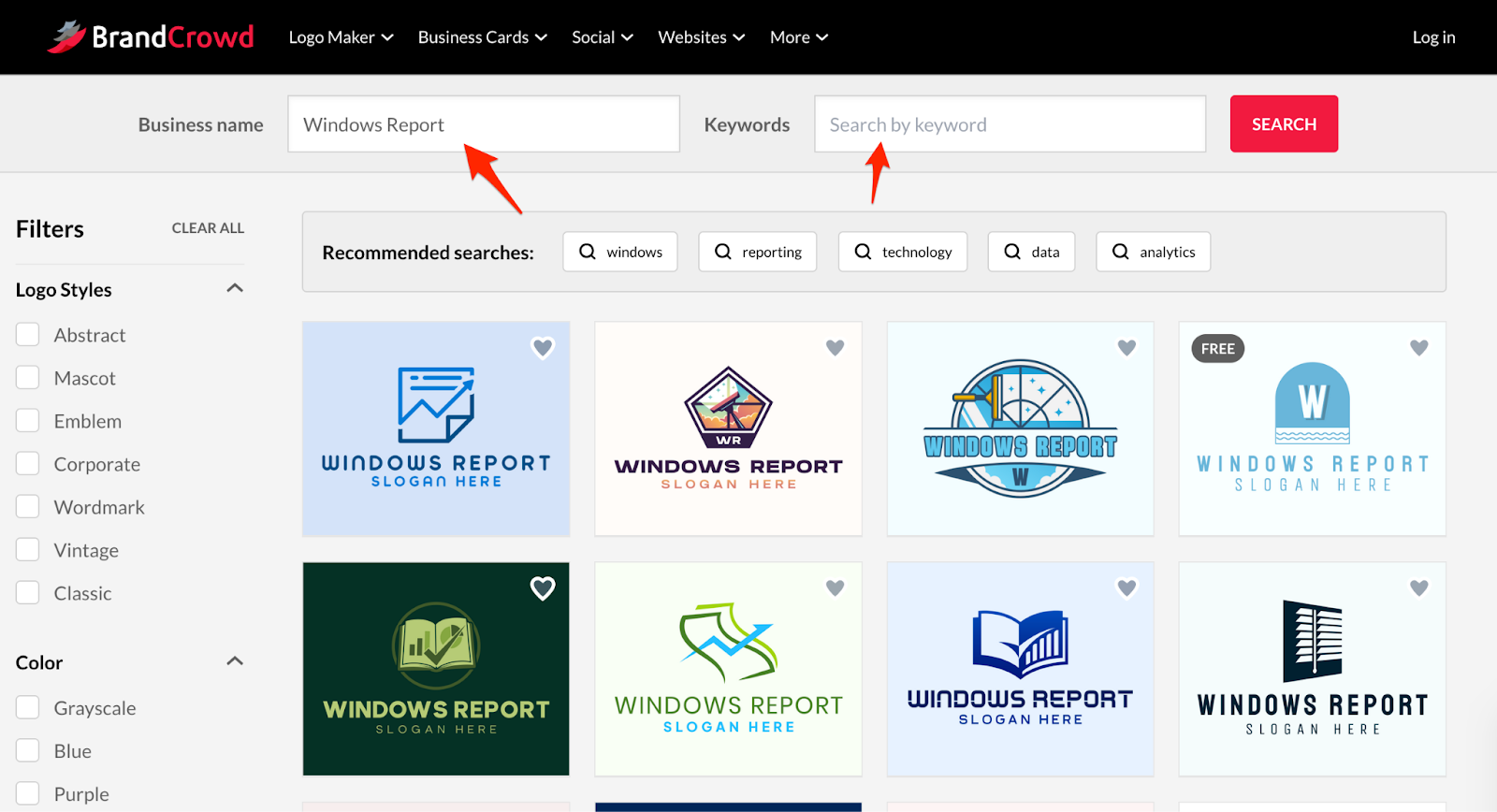
  • Enter your company name and keywords.
Getting Started - BrandCrowd
  • See relevant logos immediately based on a library of templates.
  • Select a starting point and customize colors, text, and layout.

BrandCrowd’s flow focuses on iteration and choice rather than construction. This makes it far more approachable for someone who simply needs a usable logo without learning design fundamentals.

2. Customization and Control

Traditional Tools

  • Unmatched freedom: move nodes, adjust kerning, create custom shapes.
  • Ideal for designers who need unique visuals.

BrandCrowd

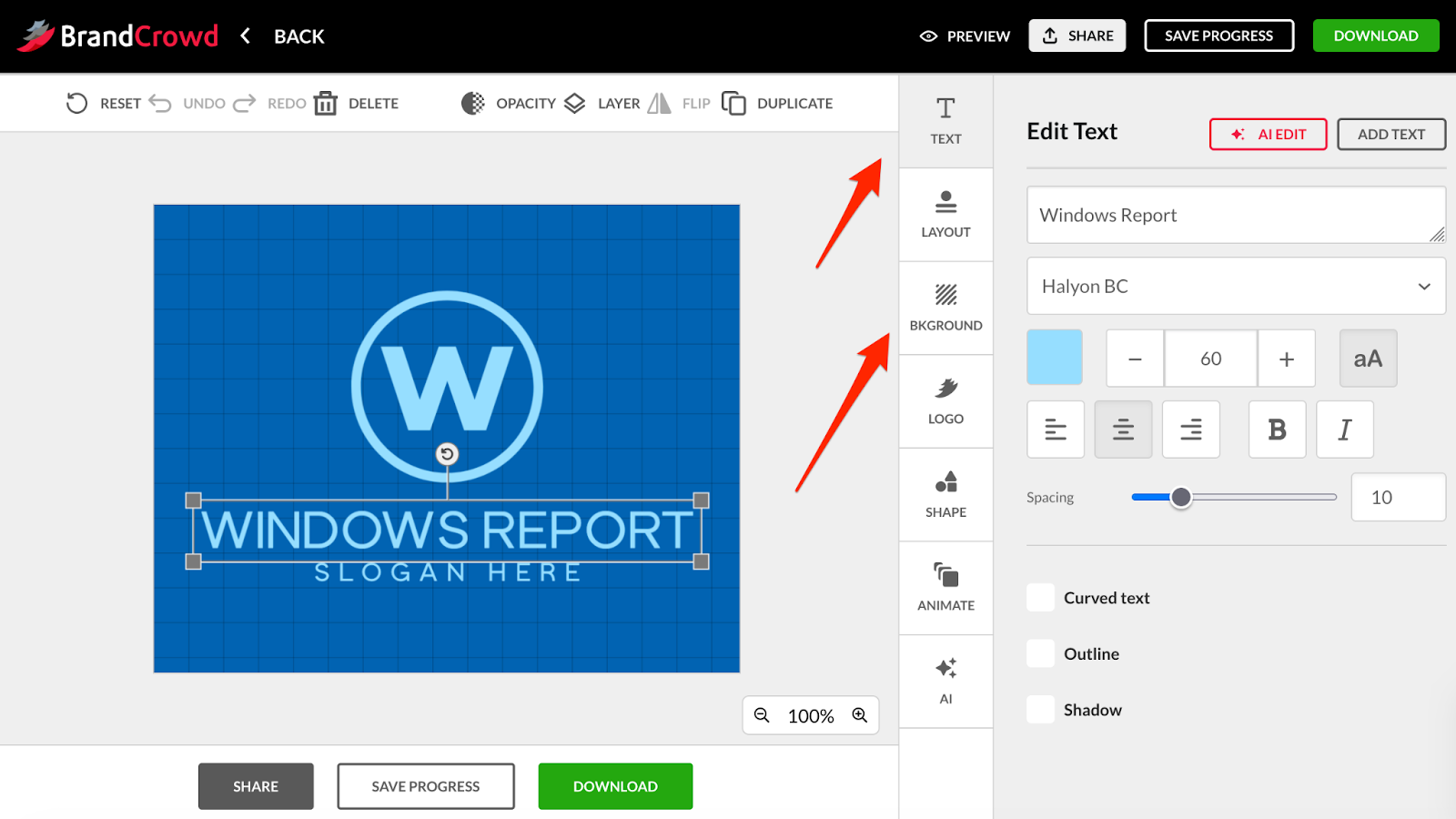
  • Predictable editing: change fonts, colors, layout blocks.
Edit logo in BrandCrowd
  • Limited deep design control: you cannot upload custom fonts or create native vector shapes from scratch.

BrandCrowd shines when you want a logo that looks good and functions well across digital and print without spending hours tweaking details. However, if your brand demands something highly unique or you want to sculpt every visual angle, traditional tools still win.

Template Quality and Design Outcomes

BrandCrowd’s template ecosystem comes from professional designers rather than being purely generated by an algorithm. This hybrid approach means logos tend to look intentional and structured, even if they are based on pre‑made patterns. 

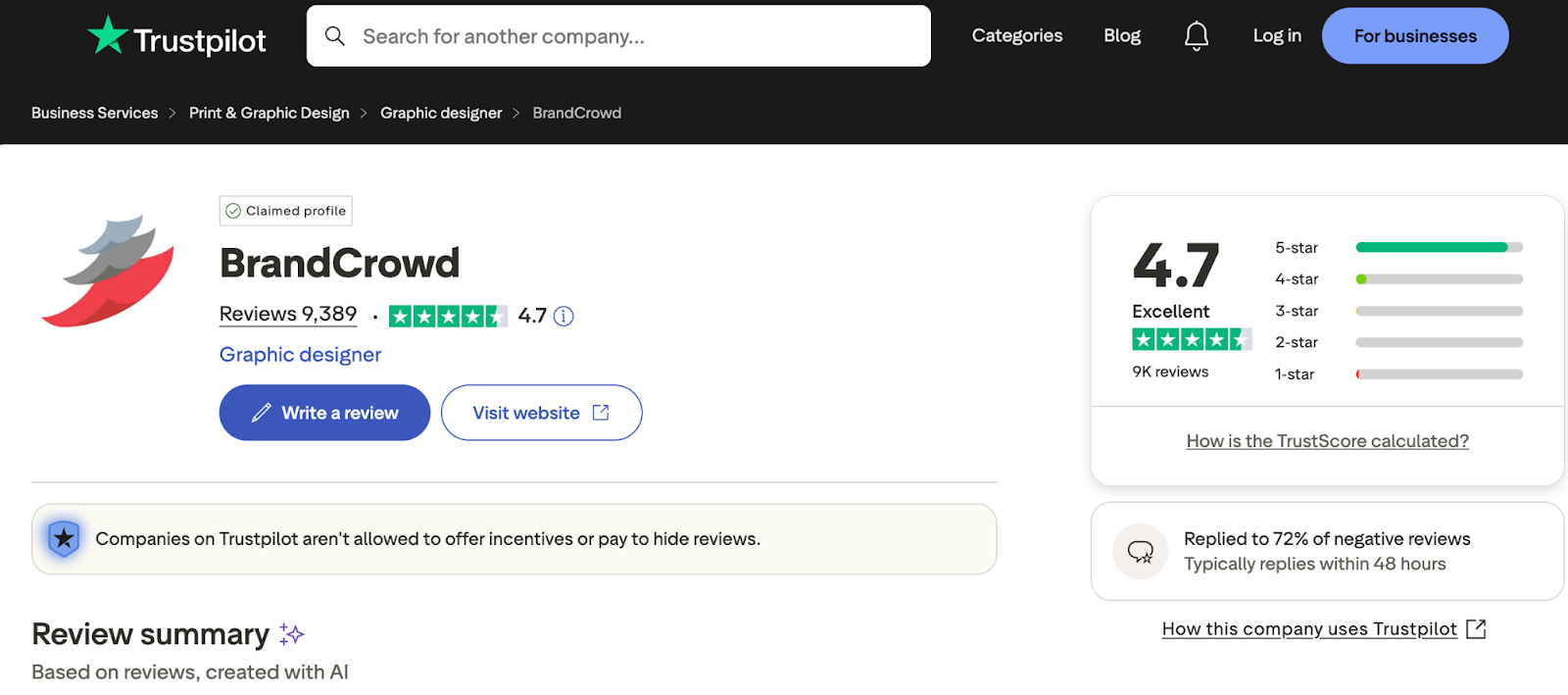
Users report that designs feel refined and usable for real business use, and the platform scores a strong rating around 4.7 out of 5 from thousands of reviews on Trustpilot.

BrandCrowd Trustpilot rating

One of BrandCrowd’s strengths is how it packages brand extensions into the workflow. After picking or editing a logo, the platform can carry your colors, fonts, and design style into business cards, social graphics, and other assets. 

This helps everyday users maintain a consistent identity without manual effort that would otherwise be required in traditional design tools.

Why We Recommend BrandCrowd

Real Efficiency

For most entrepreneurs and small business owners, the time from idea to usable logo matters. BrandCrowd lets you generate ideas quickly and refine them without advanced skills. Users often create logos in minutes rather than hours or days.

Quality Where It Counts

Templates in BrandCrowd’s library are crafted with professional design principles, and multiple file formats (like SVG, PDF, PNG, JPG) are available for export. This is critical for logos that must appear on websites, business cards, or merchandise.

Strong User Feedback

With nearly 10,000 customer reviews and high satisfaction scores, many users praise the ease of navigating the interface and the breadth of design options. While not perfect, BrandCrowd earns praise for helping users produce professional branding without a designer.

Pricing and Value

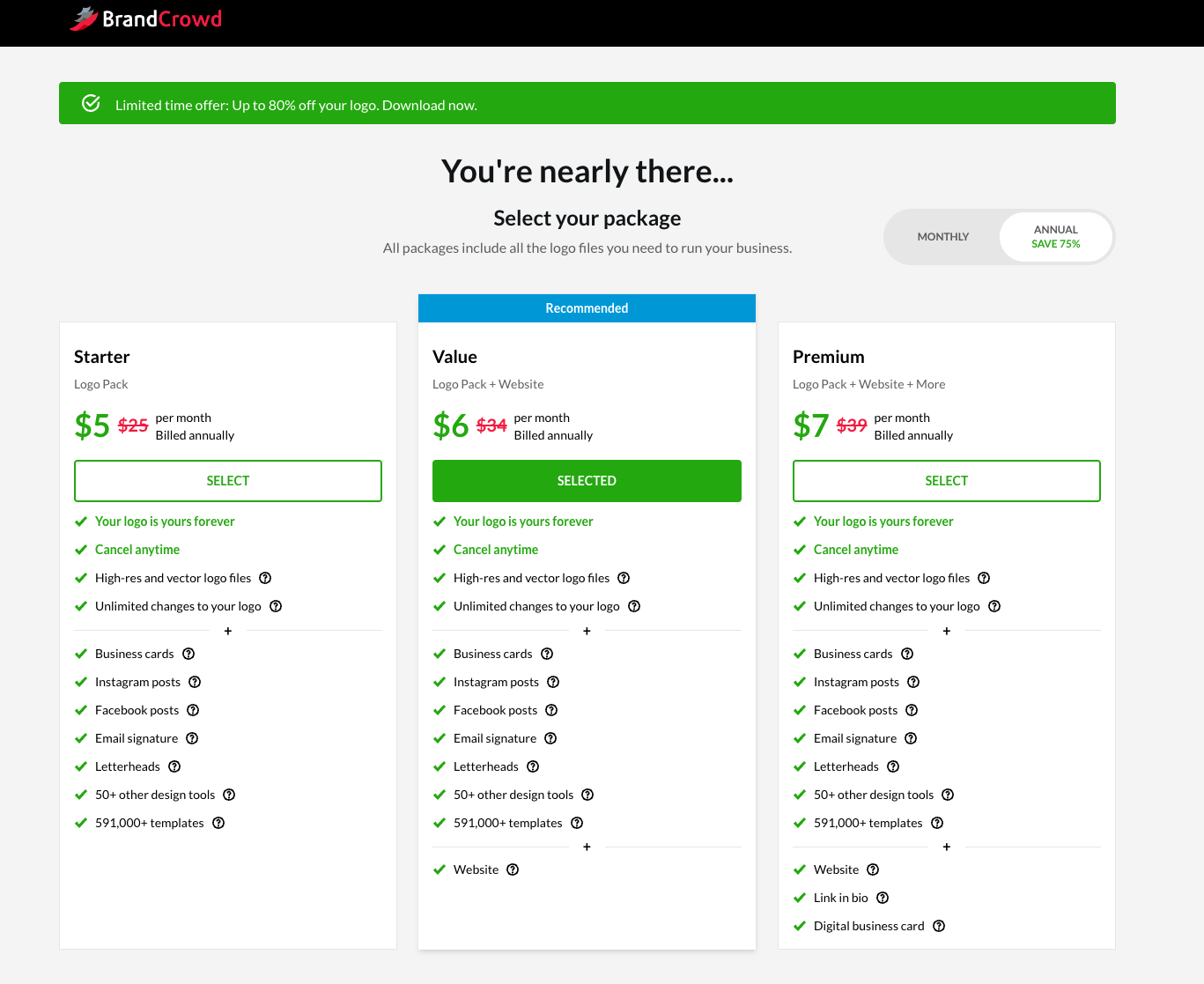
BrandCrowd offers a free tier where you can browse templates and start designing at no cost. Paid options unlock high‑resolution downloads and commercial rights. Plans are generally affordable compared to hiring a professional designer or buying software licenses for traditional tools.

BrandCrowd pricing

Be aware that some advanced features and exclusive logo ownership options require additional purchases. This means if you want a one‑of‑a‑kind logo that no one else can use, you may pay more than the base price to secure exclusivity.

Verdict: Does BrandCrowd Replace Classic Software?

For everyday users, startups, and small businesses, BrandCrowd is a compelling alternative to traditional design tools. It cannot replicate full creative freedom offered by professional‑grade software, but it bridges the gap between DIY logo creation and professional design output. Its focus on templates, structured editing, and branding workflow makes it ideal for anyone who wants a good logo quickly without mastering complex design skills.

If your goal is a distinctive, custom‑crafted brand symbol for a major market launch or trademark filing, traditional tools or a human designer remain more capable. For most real world logo and brand kit needs, BrandCrowd delivers professional results with a fraction of the effort and cost.

Nioh 3 Release Date and Global Launch Times Confirmed

Nioh 3 is almost here. After the demo gave players an early taste of its combat and open-field design, the full release date and exact unlock times are now confirmed.

Developed by Team Ninja and published by Koei Tecmo, Nioh 3 launches on February 6, 2026, for PlayStation 5 and Windows PC. PC players in the United States get early access, with the game unlocking late on February 5, depending on the region.

Nioh 3 global release times revealed

As EGamersWorld writes, the PC version unlocks earlier for U.S. players, while other regions follow on February 6.

February 5

  • West Coast US: 8 pm PST
  • East Coast US: 11 pm EST

February 6

  • UK: 4 am GMT
  • Europe: 5 am CET
  • Australia: 3 pm AEDT
  • New Zealand: 5 pm NZDT

What to expect from Nioh 3

Nioh 3 expands the series with open-field exploration, a shift from the more linear structure of earlier entries. Players can switch freely between Samurai and Ninja combat styles, creating more flexible builds and playstyles.

The story centers on Tokugawa Takechiyo during Japan’s Sengoku period, mixing historical locations with yokai-filled regions. Online multiplayer supports up to three players, allowing co-op progression through missions and open areas.

PC system requirements

For PC players planning to jump in at launch, the hardware demands are significant.

Minimum requirements

  • Windows 11
  • 16 GB RAM
  • Intel Core i5-10400 or equivalent
  • GeForce GTX 1060 or Radeon RX 5600 XT

Recommended for 1080p at 60 FPS

  • Intel Core i5-10600K or Ryzen 5 5600X
  • 16 GB RAM
  • GeForce RTX 3060 Ti or Radeon RX 6700 XT or better

The game needs around 125 GB of storage, and an SSD is required for smooth performance.

Nioh 3 launches in Standard and Digital Deluxe editions. The Deluxe edition includes a Season Pass that grants access to upcoming DLC. The current demo offers roughly six hours of gameplay, and all progress carries over to the full release.

At launch, Nioh 3 arrives on PC and PS5 with a reported six-month exclusivity window before expanding to additional platforms. In other gaming news, a Nintendo Direct is scheduled for today, raising expectations for more major announcements across the industry.

Microsoft Edge updates the InPrivate disclaimer to clarify tracking prevention in private windows

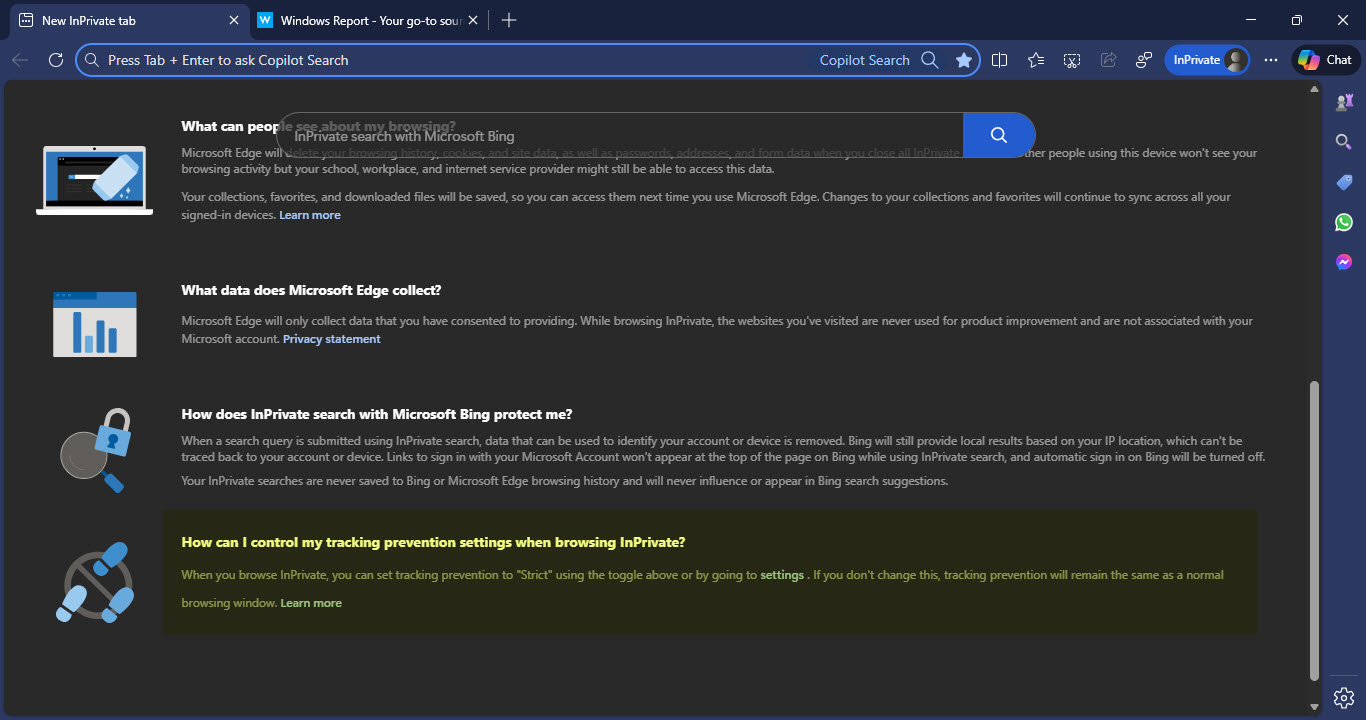
Microsoft Edge has updated the text on its InPrivate page to better explain how tracking prevention works during private browsing. The message states that InPrivate uses the same tracking level as a normal window unless you switch it to Strict, and it points to the toggle that controls this choice. The revised wording is now visible in the latest Edge release.

When you open an InPrivate window in Edge, a notice at the top explains what private browsing does. This update does not add new privacy controls. The option to always use Strict tracking prevention in InPrivate has been available in Edge’s settings for some time and continues to work the same way. Edge keeps the existing tracking level as the default unless Strict is chosen for private windows.

Recently, we reported that Edge’s InPrivate mode uses the same tracking prevention setting as normal windows. The updated InPrivate notice now explains this behavior more clearly.

The notice shown inside the InPrivate window now states:

How can I control my tracking prevention settings when browsing InPrivate?

When you browse InPrivate, you can set tracking prevention to “Strict” using the toggle above or by going to settings . If you don’t change this, tracking prevention will remain the same as a normal browsing window. Learn more

The only change is the explanation shown inside the InPrivate window. The revised wording makes clear that tracking prevention can match the regular browsing level when Strict is not selected. This clarification helps avoid confusion about where InPrivate protection begins and ends.

Edge’s InPrivate notice explains how tracking prevention behaves during private browsing. Image Credit: Venkat | WindowsReport.

InPrivate browsing still deletes local data such as history, cookies, and site data after all private windows close. Network-level and website tracking behavior continue to follow the tracking prevention level configured by the user.

This revision focuses on clarity rather than new functionality. Edge’s privacy behavior does not change, but the description on the InPrivate page now explains private browsing more clearly.

Windows 11 KB5074176 Fixes OneDrive and Dropbox Issues for Insiders in Canary Channel

Microsoft has just rolled out Windows 11 Insider Preview Build 28020.1546 (KB5074176) to the Canary Channel, giving early testers another chance to explore upcoming Windows improvements. While this build is not packed with features, it focuses on enhancing the everyday experience for those running pre-release versions of Windows 11.

The update addresses a few minor but important issues. Notably, Microsoft fixed problems with apps handling files stored on OneDrive or Dropbox, which should make cloud workflows more reliable for Insiders.

Besides that, general improvements and stability tweaks have been applied to smooth out the build for daily use. As with most Canary Channel releases, this build comes with some quirks. The desktop watermark currently shows the wrong build number, though Microsoft says this will be corrected in a future update.

Additionally, features in the Canary Channel often roll out gradually through Microsoft’s Control Feature Rollout system, so not all testers may see every change immediately. Speaking of updates, yesterday, Microsoft also pushed Windows 11 Insider Preview Build for testers enrolled in the Beta and Dev channels.

Jetpack Cat in Overwatch Is Real, and It’s Coming as a Superhero Earlier Than You Expected

Blizzard’s latest Overwatch Spotlight reveal made one thing clear: the studio is done playing it safe. As detailed in our full breakdown of everything announced at the Overwatch Spotlight 2026 reveal, Blizzard is preparing a bunch of experimental ideas for the game’s future. And nothing shows that better than Jetpack Cat. Yes, Jetpack Cat is real now.

Jetpack Cat expands Overwatch’s universe

Officially named Fika, the long-rumored flying feline is finally joining Overwatch as part of a five-hero drop, which is the boldest roster expansion the game has ever attempted. What once felt “too ridiculous for Overwatch” back in 2017 has suddenly become the centerpiece of Blizzard’s new creative direction.

Jetpack Cat will debut as a Support hero, but she doesn’t play like anything the role has seen before. Fika is Overwatch’s first permanent-flight character, capable of staying airborne while tethering teammates and carrying them across the map. She can also grab enemies mid-air and drop them into bad positions, or straight off the map, creating chaos that feels both playful and dangerous.

Her kit leans heavily into movement and disruption. Biotic Pawjectiles heal allies while damaging enemies, Purr emits a healing pulse that doubles as knockback, and Frenetic Flight gives her rapid acceleration in the air. Every ability ties back to the jetpack itself, a device built by Brigitte after she took Fika in as a stray.

Voice Actor Jennifer Hale brings Jetpack Cat to life

Blizzard says the timing finally feels right. Overwatch’s universe has matured, animal heroes are already established, so it seemed okay to take some bold bets. A flying cat no longer breaks immersion but instead expands it, especially now that voice actor Jennifer Hale is giving voice to Overwatch’s most ridiculous new hero, Jetpack Cat.

Jetpack Cat launches with Overwatch Season 1 on February 10, and whether players love her or fear her, one thing’s certain: Overwatch just got a lot weirder, and it seems Blizzard clearly wanted that.

Top Investor Calls Microsoft Stock Sell-Off “Absurd” Despite AI Capex Fears

Disclaimer: This article is for informational purposes only and does not constitute financial or investment advice. Stock market investments carry risk, and readers should conduct their own research or consult a qualified financial advisor before making any investment decisions.

Microsoft’s (NASDAQ: MSFT) latest earnings should have been a victory lap, but the stock sold off hard. After posting strong fiscal Q2 2026 results, Microsoft shares dropped nearly 15% in the days that followed. The reason wasn’t revenue. It wasn’t profit either. It was fear, specifically around how much cash Microsoft is pouring into AI infrastructure.

The numbers were, in fact, solid. Revenue climbed to $81.3 billion, up 17% year over year. Operating income jumped even faster, rising 21%. Azure continued to lead the charge, with cloud revenue up nearly 40%. On paper, this was a strong quarter. But the market focused elsewhere.

Capital expenditure soared to $37.5 billion, a massive 66% jump from last year. Investors reacted quickly, questioning whether Microsoft’s AI ambitions are starting to strain cash flow. In a market still sensitive to spending discipline, that was enough to trigger a sell-off.

Why a top investor sees opportunity in the drop in Microsoft’s stock price

Well, not everyone agrees with that reaction. Writing on The Motley Fool, Keithen Drury, a top-ranked investor, called the move “absurd.” He argues the market is punishing Microsoft for investing aggressively at exactly the right moment. Here’s an excerpt from his blog:

I think this sell-off is a bit absurd, and now is the perfect time to buy the dip on the stock. I have three reasons it’s an excellent choice now, and I think it can easily return to market-beating status over the next few months.

According to Drury, cloud demand remains strong, Azure continues to scale, and Microsoft’s long-term positioning hasn’t changed.

You may also like: AMD Smashes Records With $10.3B Q4 as AI and Data Center Demand Surge

OpenAI IPO angle

Well, there’s also the OpenAI angle here. Microsoft officially owns a 27% stake, and IPO rumors are heating up again. If that materializes, it could unlock significant value and offset concerns around near-term spending. Needless to say, valuation adds another layer. At roughly 26 times forward earnings, Microsoft is trading near levels it rarely touches. Historically, those moments haven’t lasted long.

via: TipRanks

Everything Announced At Overwatch Spotlight 2026 Reveal

Overwatch has spent the last few years quietly rebuilding momentum. Now, Blizzard is ready to push hard again. With today’s 2026 Spotlight roadmap reveal, the studio has laid out a full-year plan that focuses heavily on story, scale, and spectacle. And, guess what? 2026 belongs to the Reign of Talon.

Across four seasons, Blizzard is promising a steady flow of heroes, events, competitive updates, and esports moments, with everything starting sooner than expected.

Image credit: Blizzard

Season 1 kicks off the Reign of Talon era

Season 1 arrives on February 10, and Blizzard isn’t easing players into the year. Instead, it’s opening with one of the most aggressive content drops Overwatch has seen. Five new heroes debut at once: Mizuki, Emre, Domina, Anran, and Jetpack Cat Fika. Yes, that last one is real. Together, they represent half of the 10 heroes planned for release across 2026.

Season 1 also introduces the Conquest event, a narrative-driven mode that directly pits Overwatch against Talon. Alongside it comes a new hero sub-passives system, fresh mythic cosmetics, and a full reset of competitive ranks. Stadium mode gets upgrades, too. Vendetta enters the rotation, and the new hero builder feature expands customization. There’s even room for a lighter touch, with an Overwatch x Hello Kitty collaboration rounding out the season.

Season 2 blends celebration with competition

Season 2 shifts the tone slightly, mixing nostalgia with progression. A brand-new hero headlines the season, but the spotlight also falls on Overwatch’s 10th anniversary. Blizzard is using the milestone to roll out post-match accolades, giving players more feedback and recognition after games. Stadium continues to evolve with Ramattra joining the mode, while competitive fans get the OWCS Clash, another step in Blizzard’s esports push. New mythics return as expected, keeping customization moving forward.

Season 3 expands the world and the esports stage

By Season 3, Blizzard starts thinking bigger. A new Japan Night map arrives, adding a fresh visual identity to the rotation. Esports takes center stage as well, with Overwatch appearing at the Esports World Cup, tying the game more closely to global competition. Another new hero joins the roster here, paired with yet more mythics. The cadence is deliberate. Blizzard wants something meaningful to land every season.

Season 4 closes the year with BlizzCon energy

Season 4 serves as the year’s finale. One more hero launches, pushing the total closer to the promised 10. BlizzCon 2026 anchors the season, alongside the return of the Overwatch World Cup, signaling a strong finish for both casual and competitive players.

Blizzard has also teased that some future heroes may break expectations, including at least one Omnic character later in the year. All in all, the 2026 roadmap feels confident. Blizzard isn’t experimenting quietly anymore. It’s committing loudly. And if the Reign of Talon lands as planned, Overwatch could be heading into its most decisive year yet.

Call of Duty: Black Ops 7 & Warzone Season 02 Battle Pass Content Announced

Treyarch has just announced a major content drop for Call of Duty: Black Ops 7 and Call of Duty: Warzone with the launch of Season 02. Needless to say, there is plenty of stuff, but the highlight of this drop is the refreshed Battle Pass, BlackCell rewards, and a wave of new Store bundles. Black Ops 7 Season 2 will launch on February 5 at 9 AM PT on Xbox, PlayStation, and PC.

Season 02 Battle Pass brings over 100 rewards

At the center of Season 02 is the new Battle Pass, led by Guild scientist Victoria Atwood, a key figure in the escalating conflict between The Guild and JSOC forces. The premium Battle Pass costs 1,100 COD Points and includes more than 100 unlockable rewards, while the Battle Pass Bundle offers 20+ Tier Skips for 2,400 COD Points.

Not to forget, Season 02 also introduces three new free base weapons, which are available to all players by progressing through the Battle Pass. These include the REV-46 SMG, the EGRT-17 Assault Rifle, and the H311-SAW melee weapon. Each weapon brings a unique gameplay hook, from the REV-46’s ultra-fast fire rate to the EGRT-17’s ricocheting rounds and the H311-SAW’s devastating close-range damage.

For players looking for premium content, BlackCell Season 02 raises the bar. This season’s BlackCell offering introduces the Phantom Operator, an elite combat specialist equipped with adaptive electromagnetic armor. Meanwhile, BlackCell owners instantly unlock Phantom, an alternate “Eclipse” skin, 1,100 COD Points, two Mastercraft AK-27 blueprints with tracers and Death FX, exclusive cosmetics, and a 10% XP boost.

New Operators, Skins, and Weapon Blueprints

BlackCell further unlocks bonus rewards throughout the Battle Pass, including seven exclusive Operator skins and seven BlackCell-only weapon blueprints, spread across multiple pages. Players upgrading to BlackCell after purchasing the standard Battle Pass will receive their 1,100 COD Points refunded, making the upgrade more flexible.

Operator content is also another major highlight of this drop. Besides Atwood, Season 02 adds new skins for familiar faces like Mason, Falkner, Nikolai, Vermaak, Harper, and Reaper EWR-3, many with darker BlackCell variants featuring bionic enhancements and covert aesthetics. The Completion Page rewards alone include an Ultra Operator Skin for Atwood, animated cosmetics, and bonus COD Points.

Image credit: Activision

Store Bundles add Ultra and Mastercraft content

Besides the Battle Pass, Season 02 also expands the in-game Store with new Ultra, Reactive, and Mastercraft bundles. These packs introduce highly detailed Operator skins, animated weapon blueprints, custom inspections, tracers, and finishing moves, giving players plenty of premium customization options.

All that said, Season 02 looks all set to push Black Ops 7 and Warzone forward with deeper progression, stronger narrative beats, and a heavy focus on player choice. Whether you’re chasing free weapons or going all-in on BlackCell, there’s a lot waiting for you tomorrow.

Spotify Upgrades Lyrics Feature With More Translations, Offline Access & More

Spotify is rolling out three new upgrades to its lyrics feature, giving listeners a richer way to experience the songs and artists they love. Lyrics are already one of the platform’s most popular features, viewed hundreds of millions of times every day. The new updates make it easier to follow, understand, and enjoy the words in real time.

You can now read lyrics in your own language

Since launching translations in 2022, Spotify has gradually expanded the feature to meet listener demand. After reaching over 25 markets last year, translations are now available worldwide. Fans can unlock the meaning of songs across different languages.

For tracks with translations, tap the translate icon on the lyrics card. The translated lyrics appear beneath the original words. They match your device language, and you can switch back to the original lyrics at any time. These translations are available globally for Free and Premium users.

Follow along offline is now available for Premium users

Downloaded tracks now save the lyrics automatically. Whether you’re underground on your commute or flying at 30,000 feet, the words stay within reach without an internet connection. Offline lyrics are currently rolling out for Premium users worldwide.

See lyrics front and center

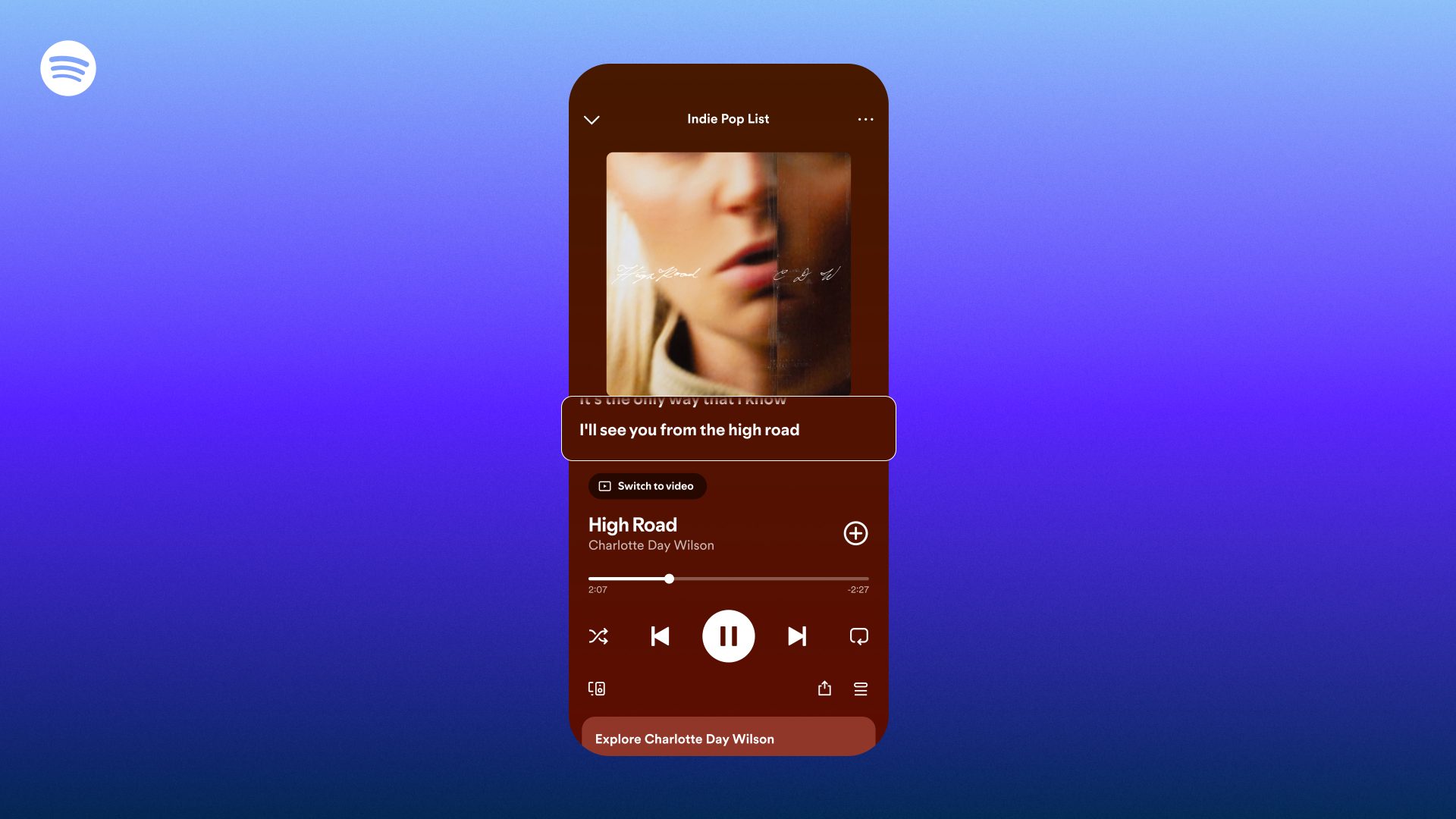
Lyric previews now appear directly beneath album artwork or short Canvas clips while songs play. Early tests suggest this layout makes it easier to engage with lyrics and helps listeners return to songs they discovered. You can also share favorite lines to social media directly from the Now Playing view.

Lyric previews are available globally for Free and Premium users on mobile and tablet. You can turn previews off anytime via the three-dot menu. Moreover, Spotify says these updates are designed to bring listeners closer to the music and artists they love, making the connection smoother and more seamless than ever.

Nintendo Direct February 2026 Partner Showcase Date, Time, Where to Watch & What to Expect

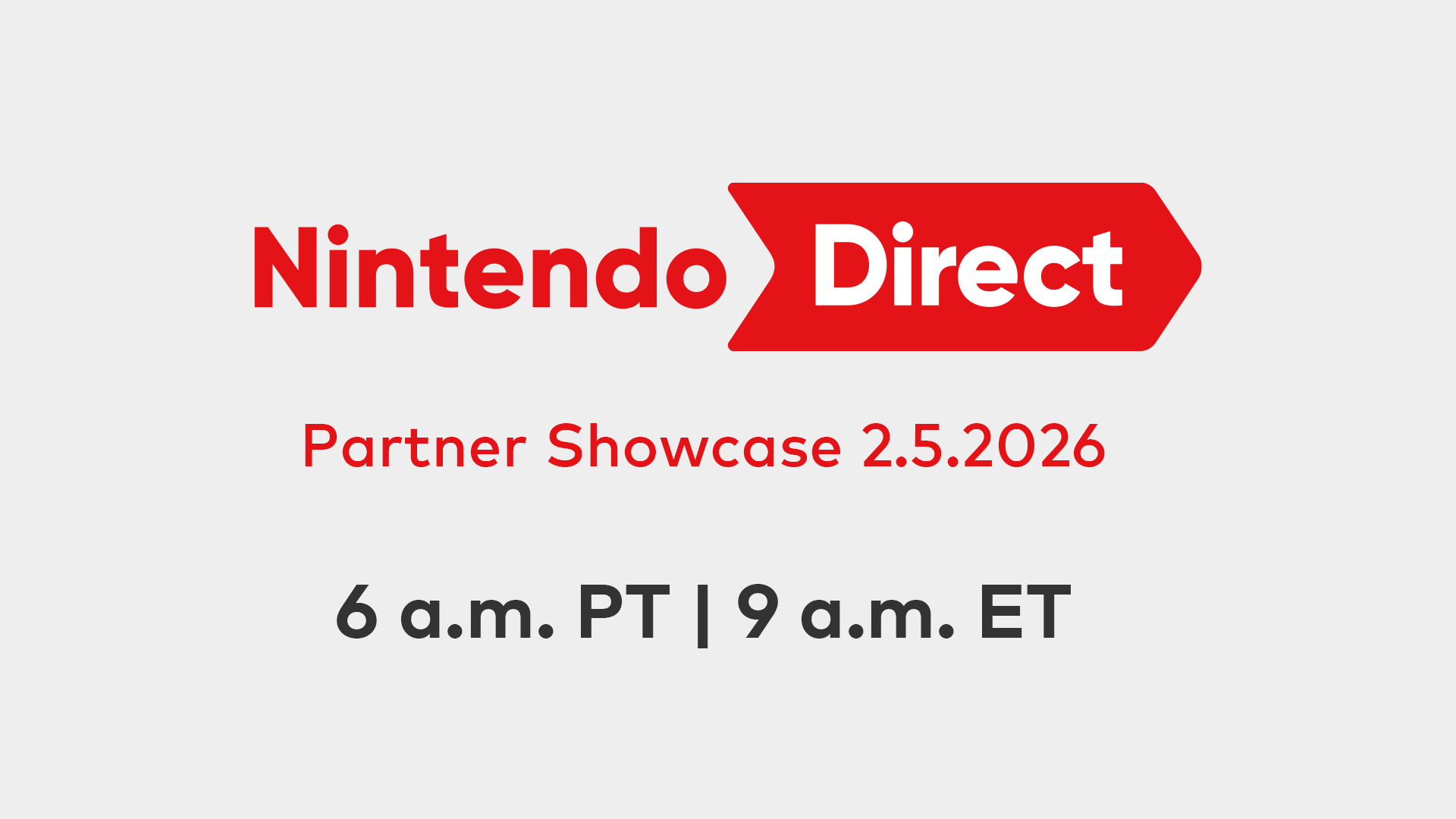
As expected, Nintendo has officially confirmed a new Partner Showcase livestream for February 2026. The event is set for tomorrow, February 5, at 6 AM PT, giving fans a quick look at upcoming games for both the Nintendo Switch and Nintendo Switch 2.

Image credit: Nintendo

Where to watch the Nintendo February 2026 Partner Direct

The livestream will be available on Nintendo’s official website and YouTube channel. You can directly watch the Nintendo February Partner Direct from below, too. We have embedded the YouTube stream link at the end of this article.

Additionally, you can also watch the event on your smart device via the Nintendo Today! app, as confirmed by Nintendo on X. The app is free and requires a Nintendo account to access. This gives viewers the flexibility to follow the showcase on the go.

What to expect and how long the event will last

While Nintendo hasn’t shared a full list of games, the showcase is expected to feature new Switch 2 titles, updates on previously announced games, and possible release windows for 2026. Partner Showcases often include trailers, gameplay reveals, and collaborations from Nintendo’s development partners. The event will roughly run for 30 minutes.

For the uninitiated, Partner Directs are Nintendo’s way of spotlighting third-party support, a key factor for the Switch 2’s success and overall game ecosystem. For players, this is an opportunity to see what’s coming in 2026 and plan their next gaming adventures.

NVIDIA Investigates Gaming Issues Caused by KB5074109 Patch in Windows 11

Windows 11’s first update of 2026, KB5074109, is causing more trouble than expected. Initially announced as a minor release focused on security fixes, the January patch has reportedly triggered black screens, visual glitches, and performance issues in several games for NVIDIA users. The problems have sparked widespread reports across Reddit, Feedback Hub, and NVIDIA forums.

NVIDIA is reportedly investigating gaming issues on Windows 11 post-January 2026 patch, KB5074109

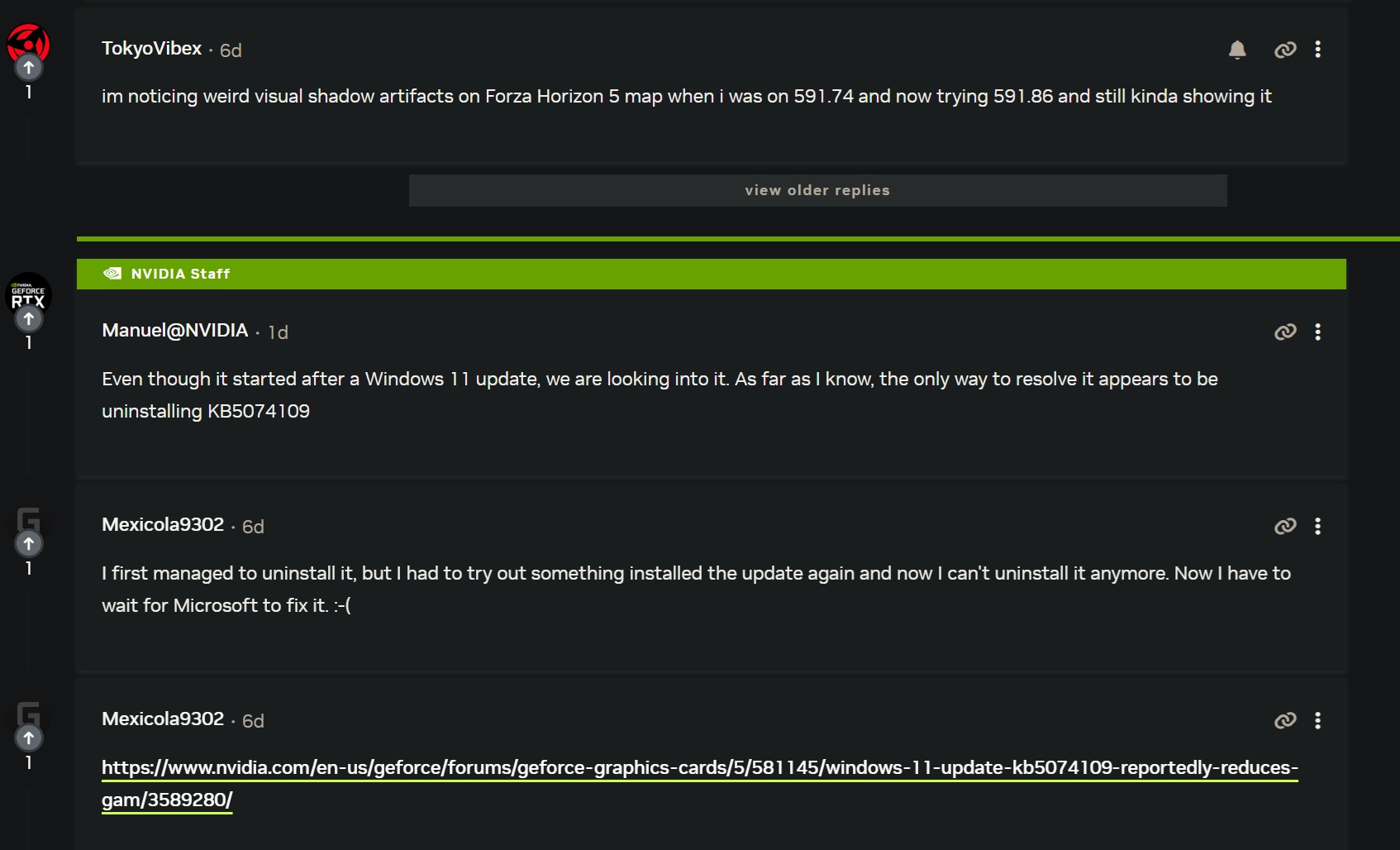
Folks over at Windows Latest recently spotted a reply on the NVIDIA forum by the company’s staff (Manuel), who confirmed that they are aware of the reports and are investigating the matter. The NVIDIA staff has suggested uninstalling KB5074109 to resolve some problems, especially artifacts in games. He noted that the black screens and graphic glitches began after the Windows update, but removing it restores normal performance.

Image credit: Windows Latest

Gamers on Nvidia.com describe black screens appearing before the desktop fully loads, desktop wallpaper resetting, and dropped frame rates in intensive games such as Forza Horizon 5. As noted by the news outlet, one user noted, “I noticed weird visual shadow artifacts on the Forza Horizon 5 map, and uninstalling KB5074109 fixed it.” Meanwhile, others have complained of FPS drops of 10–20, with 1% lows suffering even more.

Microsoft rolls out an optional fix, but artifacts persist

While Microsoft has released an optional update, KB5074105, which addresses the black screen in some environments, it does not appear to fix artifacts in games. However, many reported that the same update has now triggered camera and lock screen issues. As far as NVIDIA users are concerned, the company is actively looking into these issues, while advising users who experience severe problems to temporarily uninstall KB5074109.

Since KB5074109 is a critical security update, it’s advised to keep it installed if you are not having any issues at all. Are you facing other problems after installing the January 2026 patch? If yes, let us know in the comments below.

Microsoft Teams’ “People Skills” Feature Lets You Spot the Right Person for Any Task

Microsoft has multiple features planned for Teams for this year, including the controversial location tracking one. Now, the company has updated the Official Microsoft 365 Roadmap with yet another feature, which will help you figure out who’s best suited for a specific job at the workplace. The feature in question is “People Skills.”

People Skills let Teams surface employee expertise

Spotted by folks at TechRadar Pro, People Skills is designed to surface employee capabilities right on Microsoft 365 profile cards within Teams (via Windows Central). In other words, you’ll know who’s most qualified for a project without the endless back-and-forth emails or guessing games. The idea here is to boost collaboration, save time, and help employees build better professional connections, all within the flow of everyday work.
The feature comes at a time when hybrid and remote work are finally settling into a new normal. Now, with many organizations encouraging return-to-office plans, tools that streamline in-office collaboration are just as important. Microsoft, for example, expects employees living within 50 miles of a Microsoft office to work onsite at least three days per week by the end of February.

That said, Teams remains central to collaboration, now with smarter ways to connect talent with tasks. Not to forget, back in December, we also reported on Teams’ branded reaction and loop meeting notes feature.

Moreover, Microsoft expects the People Skills feature to reach general availability by March 2026. What do you make of this feature? Will you be posting your top skills to be highlighted in your boss’s eyes? Let us know in the comments below.

Western Digital Outlines HDD Roadmap Toward 140TB Drives

Despite ongoing memory shortages driving DRAM and SSD prices higher, storage manufacturers continue to push hard-drive innovation. According to VideoCardz, Western Digital has announced two new HDD technologies aimed at significantly boosting bandwidth and sequential performance.

Dual Pivot targets higher sequential I/O

Western Digital’s Dual Pivot technology introduces a second, independently controlled actuator mounted on its own pivot inside a standard 3.5-inch hard drive. WD says this approach can deliver up to 2× higher sequential I/O compared to traditional single-actuator HDDs.

Unlike earlier dual-actuator designs, Dual Pivot avoids trade-offs such as reduced usable capacity or the need for customer-side software changes. WD designed the technology to integrate cleanly into existing platforms, making it easier for enterprise and hyperscale deployments.

High Bandwidth Drives scale throughput further

Dual Pivot works alongside WD’s High Bandwidth Drive technology. This design allows simultaneous read and write operations using multiple heads across multiple tracks. WD claims High Bandwidth Drives can already deliver up to 2× bandwidth, with a longer-term roadmap targeting as much as 8× bandwidth as the technology matures.

When combined, Dual Pivot and High Bandwidth Drive technologies could increase sequential I/O by up to 4×, especially as HDD capacities continue to scale upward.

Roadmap points to massive capacity targets

A separate report from PC Watch focuses on WD’s long-term scaling goals rather than near-term products. These targets include up to 10 TB per platter and as many as 14 platters per drive, implying a theoretical ceiling of around 140 TB per HDD. WD has not attached a confirmed product timeline to these figures.

In the near term, WD confirmed that its 40 TB UltraSMR ePMR HDD is currently in qualification with two hyperscale customers. The company plans to begin volume production in the second half of 2026.

Looking further ahead, Western Digital still relies on HAMR (Heat-Assisted Magnetic Recording) to reach 100 TB HDDs by 2029, keeping magnetic storage competitive even as flash prices fluctuate.

In other industry news, Qualcomm and AMD are exploring SOCAMM2 memory for AI hardware, while SEAVIV has unveiled the AidaONE R27 all-in-one PC.

Xbox Eyes Nintendo Switch Emulation, Ryujinx Reportedly Tops Discord Community Poll

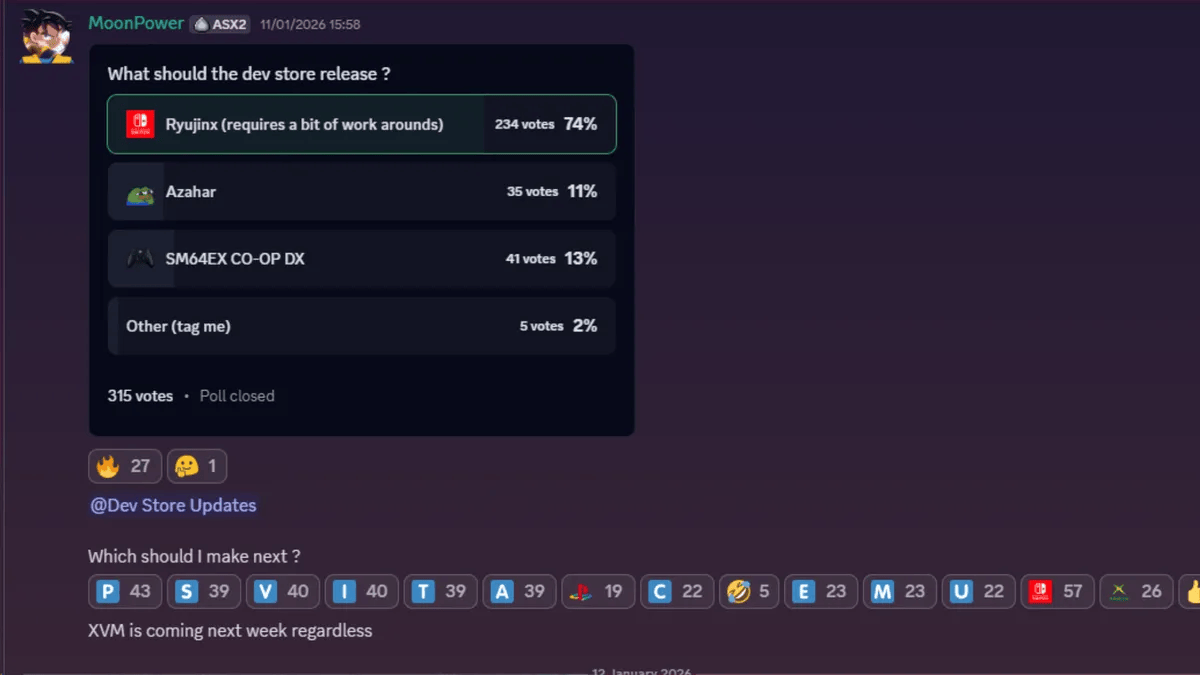
There’s no denying that Xbox consoles have gradually earned a reputation for emulation. Now, the focus is shifting to something far more ambitious: the Nintendo Switch. According to the reporting by folks at Windows Central, the Xbox emulation community is eyeing a potential Ryujinx port for Xbox Series X|S. The popular Nintendo Switch emulator recently topped a community poll inside the Xbox Emulation Hub Discord, hinting at where developer interest is heading next.

Image credit: Discord/ Xbox Emulation Hub Discord | via: Windows Central

If you’ve missed the context, Xbox hardware has already proven itself in this space. Through Xbox Dev Mode, users can run UWP apps that enable emulation for platforms like the GameCube, Wii, PlayStation 1, and PSP. Much of that progress comes from the Xbox Emulation Hub, which, as you may know, is a community-driven group focused on adapting emulators to Microsoft’s Universal Windows Platform that allows them to run across Windows and Xbox consoles.

That said, Ryujinx winning the poll doesn’t mean a release is imminent. There’s no official build yet, and development hurdles remain significant. But we can’t ignore the fact that the poll result suggests that Switch emulation is now the community’s top priority.

The team has also teased interest in Nintendo 3DS emulation, which would further expand Xbox’s unofficial emulation portfolio. It’s worth noting that emulation itself isn’t illegal. Legal trouble usually starts when copyrighted games, system files, or paid access enter the picture. Nintendo has aggressively pursued legal action in the past. So, it’ll be interesting to see how this project will be approached.

SEAVIV Unveils AidaONE R27 AIO With Ryzen AI Max+ 395

According to VideoCardz, SEAVIV has announced the AidaONE R27, a 27-inch all-in-one PC built around AMD’s Ryzen AI Max+ platform. Unlike most AIO systems, SEAVIV places all core hardware inside the stand rather than behind the display.

AidaONE R27 has all its hardware in its stand

The AidaONE R27 uses a unibody-style chassis with a glass front panel and an anodized aluminum rear and stand. SEAVIV lists the body thickness at just 15 mm, while the stand supports tilt adjustment from -5° to +21°. By relocating the system internals into the stand, SEAVIV keeps the display section slim and separates heat-generating components from the panel.

Powering the system is the AMD Ryzen AI Max+ 395, a 16-core, 32-thread processor with boost clocks up to 5.1 GHz. Graphics duties fall to the integrated Radeon 8060S iGPU, targeting workstation-class and creator-focused workloads rather than entry-level office use.

Core specifications and cooling

SEAVIV equips the AidaONE R27 with 128 GB of LPDDR5X-8000 memory, paired with a 2 TB PCIe 4.0 M.2 2280 SSD. A second M.2 2280 slot allows storage expansion. Cooling relies on a dual-fan, three-heatpipe design rated for up to 120 W of system power, while a 240 W external power adapter supplies energy.

4K display and built-in multimedia

The front panel features a 27-inch IPS display with a 3840 × 2160 resolution, 60 Hz refresh rate, 360 nits brightness, and full 100 percent sRGB color coverage. For video calls and conferencing, SEAVIV includes a 5 MP webcam based on the OmniVision OS05A10 sensor with an 86.7-degree field of view, along with dual digital noise-reduction microphones.

Audio output comes from two built-in 3 W speakers, positioning the system as a self-contained workstation without immediate need for external peripherals.

Connectivity and expansion options

Wireless connectivity uses the AMD RZ616 module, based on the MediaTek MT7922, with support for Wi-Fi 6 and Bluetooth 5.2. Wired networking stands out, thanks to dual 2.5 GbE RJ45 ports.

Port selection includes USB4 Type-C with DisplayPort output and Power Delivery, multiple USB 3.2 Gen 2 Type-A ports, one USB 2.0 port, HDMI 2.0 output, a 3.5 mm combo audio jack, a 3-in-1 SD card reader, and Kensington lock support.

SEAVIV has listed the AidaONE R27 on JD.com at 21,999 yuan, which translates to roughly $3,170 USD. That pricing places it firmly in the premium AIO segment. Buyers seeking a more affordable retro-styled desktop may want to look at alternatives like the Acemagic Retro X3 or MAINGEAR Retro98.

In other AMD-related news, the company recently confirmed the shipping window for the Steam Machine and shared new details on its upcoming next-generation Xbox chip.

Microsoft Officially Deprecates 3D Viewer App, Cut-off Date Set for July 2

Microsoft retired many of its legacy apps last year. Now, the company has started the new year by retiring another Windows app, 3D Viewer, in this case. The news comes via Windows Central, which spotted that the company has updated its list of deprecated features, which includes 3D Viewer.

3D Viewer won’t be downloadable starting July 2

Microsoft confirmed that the app will be removed from the Microsoft Store later this year, marking another step away from its short-lived Windows Mixed Reality era. For those unaware, 3D Viewer was once part of Microsoft’s Mixed Reality push.

Just to be clear, 3D Viewer is still available to download from the Microsoft Store. However, starting July 2, 2026, you won’t be able to download the app anymore. While the app won’t suddenly stop working for users who already have it installed, it will receive no future updates and will effectively be frozen in time.

Microsoft formally shut down Windows Mixed Reality in 2023, and Paint 3D, another flagship app from that initiative, was deprecated in 2024. 3D Viewer had lingered longer, especially on Windows 10, where it still comes preinstalled. Windows 11 users, however, were already required to download it manually.

Microsoft recommends a few alternatives

In the announcement, Microsoft now urges users to try alternatives. The company has recommended Babylon.js Sandbox for viewing 3D content. There’s also Microsoft’s newer Copilot 3D, which allows users to generate 3D models using AI, though it currently lives inside Copilot Labs and remains experimental.

Do you use 3D Viewer? Are you sad that it is going away soon? Let us know in the comments below.

Intel Arc iGPU Matches Xbox Series S Performance in Alan Wake 2

We recently covered Intel’s potential Arc branding changes based on memory configuration. While those labels do not affect real-world performance, they raised a bigger question: can Intel Arc devices realistically compete with home consoles? New benchmarks suggest the answer depends heavily on context.

According to VideoCardz, Intel’s Panther Lake integrated GPU can match or slightly exceed Xbox Series S performance in Alan Wake 2, based on a single test scene.

Panther Lake vs Xbox Series S performance comparison

The test ran on a Lenovo IdeaPad Pro 5 powered by an Intel Core Ultra X9 388H with Arc B390 graphics. With a 30 W power limit, the laptop averaged 29.54 frames per second, around seven percent higher than the Xbox Series S result in the same scene.

Digital Foundry selected the 30 W cap to reflect typical handheld PC power envelopes in the 25–35 W range. The comparison is not perfectly matched, since the console and PC use different settings. Xbox Series S outputs at 1440p using FSR 2 upscaling from an internal 720p and applies additional reductions to foliage and shadow quality.

When testers removed the 30 fps cap and disabled v-sync, the Panther Lake system averaged 32.77 fps. Increasing power toward roughly 45 W did not result in a meaningful performance uplift on the tested chassis. Digital Foundry noted that while the gain over Series S is modest, the laptop delivered smoother frame pacing and more consistent performance than the console in that scene.

PlayStation 5 comparison shows a clear gap

A second test using PlayStation 5-equivalent settings highlighted the limits of Panther Lake graphics. In that run, the PS5 averaged 55.25 fps, while the Intel laptop reached just 28.91 fps. That result gives Sony’s console roughly a 92 percent performance advantage.

These results remain limited to a single title, and Alan Wake 2 is known to behave unpredictably on mobile integrated GPUs, which makes broad conclusions difficult.

Arc B390 against older discrete GPUs

Separate testing from PC Games Hardware compared the Arc B390 with older discrete graphics cards. Arc B390 outperformed the GTX 1060 and Radeon RX 580, while trailing the RTX 2060 and Radeon RX 6600. Average power draw measured about 26.8 W, with short peaks near 31 W.

In ray tracing workloads, Arc B390 avoided last place and sometimes appeared steadier than the RX 6600, partly due to access to system memory rather than a fixed 8 GB VRAM pool. It kept pace with the RX 6600 in Doom: The Dark Ages and Metro Exodus Enhanced Edition, but memory-related issues surfaced in F1 25.

Panther Lake integrated graphics look competitive at very low power levels and show meaningful progress for Intel’s mobile GPU strategy. Availability and pricing remain major concerns, though. For many players, the Xbox Series S still represents the simplest and most cost-effective gaming option.

Those who prefer portability may want to consider devices like the ROG Xbox Ally, especially while discounts remain available. In other Intel GPU news, recent rumors claim the company may cancel the Arc B770 altogether, citing rising VRAM pricing as a key factor.

AMD May Prioritize 8GB Radeon GPUs as Board Partners Report Price Hikes

AMD’s Radeon lineup has stayed busy lately, with SAPPHIRE preparing a Crimson Desert–themed RX 9070 XT and a rare blower-style RX 7900 XT recently appearing online. Now, new rumors suggest a bigger strategic shift may be coming, driven by rising video memory costs.

According to a report from VideoCardz, posts on Board Channels claim increasing VRAM prices are shaping AMD’s Radeon GPU planning for 2026. Board partner discussions reportedly point to multiple pricing adjustments already underway.

We might see a Radeon price hike soon

The Board Channels posts claim AMD board partners implemented a cost price increase of roughly 5 to 10 percent in January. That adjustment allegedly translated into retail increases of up to around $40 on certain cards, depending on memory configuration.

Sources also speculate about another pricing adjustment planned for February or March, although they do not specify the size of the increase. The reported goal centers on narrowing the price gap between Radeon cards and competing NVIDIA GeForce models.

So far, neither AMD nor its add-in board partners have commented publicly on these claims. The January increase reportedly pushed distributors to stock up early, which could lead to uneven availability if sellers hold inventory ahead of further price changes.

Rumors point to a stronger focus on 8GB GPUs in China

Separate Board Channels posts claim AMD is adjusting supply planning for mainland China. The rumored shift prioritizes 8 GB models such as the Radeon RX 9060 XT 8GB and the Radeon RX 7650 GRE.

For higher-capacity cards, production reportedly remains focused on the Radeon RX 9060 XT 16GB and the Radeon RX 9070 XT. At the same time, output of the Radeon RX 9070 and Radeon RX 9070 GRE is said to be reduced, with the RX 9070 GRE never officially launching outside China.

These claims rely on board partner information and primarily reflect the Chinese market. Any broader global impact would likely appear later.

At this stage, all details remain unconfirmed rumors. Still, the direction does not surprise industry watchers. NVIDIA also reportedly plans to emphasize midrange RTX 50 series models with 8 GB or 12 GB of memory, suggesting that rising VRAM costs continue to influence GPU strategies across the market.

For now, AMD has not acknowledged any pricing changes or product mix adjustments, leaving the situation firmly in rumor territory.

Broadcom Announces First Enterprise Wi-Fi 8 Platform With Edge AI

While Qualcomm continues to preview the upcoming Wi-Fi 8 standard with a focus on reliability, Broadcom has moved first with an enterprise-grade implementation. According to Guru3D, Broadcom has announced what it calls the industry’s first enterprise Wi-Fi 8 access point and switching solution designed around edge AI processing.

Broadcom’s approach treats Wi-Fi 8 as more than a radio upgrade. Instead of launching a standalone chip, the company is positioning Wi-Fi 8 as a complete platform that combines access point silicon with a companion switching solution. The goal is to support wireless-first enterprise architectures in dense deployments where latency, visibility, and automation matter.

New platform integrates edge AI directly at the access point

On the access point side, Broadcom introduced a new accelerated processing unit, the BCM49438. This APU integrates traditional networking logic with dedicated AI acceleration, allowing access points to analyze telemetry, detect performance issues, and enforce policies locally.

By processing data at the edge, access points no longer need to continuously stream raw telemetry to centralized controllers. Broadcom frames this as a practical step toward “edge intelligence,” where automation and analytics happen directly at the access point rather than in the cloud or core network.

The BCM49438 platform pairs with Broadcom’s Wi-Fi 8 radio chips that debuted in October 2025, including the BCM43840, BCM43844, and BCM43820. According to Broadcom, the combined solution enables AI-assisted decision-making across Wi-Fi bands while improving RF visibility and responsiveness.

Sampling of the access point platform has already begun with select customers and partners, suggesting that enterprise vendors are actively testing Wi-Fi 8 designs ahead of commercial products.

New switching platform targets dense Wi-Fi 8 deployments

Alongside the access point silicon, Broadcom also announced a new switching platform built for high-density Wi-Fi 8 environments. The design uses Trident X3+ Ethernet switch silicon, identified as BCM56390, and supports multi-gigabit PHYs such as BCM84918, BCM54908, and BCM54908E.

The switch can scale up to 48 front-panel multi-gigabit ports, targeting enterprise sites where each access point requires a high-speed wired uplink. Broadcom also emphasizes security, highlighting MACsec support across ports and alignment with post-quantum cryptography requirements. This focus reflects the long refresh cycles common in enterprise networking hardware.

Power delivery is integrated into the switch platform through a PoE-related component, which Broadcom says simplifies large-scale access point deployments.

Overall, Broadcom is positioning its announcement as a full Wi-Fi 8 building block rather than a single chip launch, signaling that the transition to Wi-Fi 8 in enterprise environments may start sooner than expected.

In other tech news, Snapdragon X2 Elite Extreme is shaping up to be the fastest PC chip yet, and Qualcomm is also exploring SOCAMM2 memory for future AI hardware designs.

Intel May Quietly Shelve Arc B770 Over Costs and VRAM Pricing

Intel Arc has stayed in the spotlight lately after the company rolled out XeSS 3 support for Arc GPUs. Enthusiasts even managed to enable XeSS 3 on unsupported hardware using workarounds. Still, not all news looks positive for Intel’s discrete GPU ambitions.

Intel reportedly shelves Arc B770 due to financial concerns

According to Guru3D, Intel has quietly shelved the rumored Arc B770 consumer desktop GPU. The report cites anonymous sources and remains unconfirmed by Intel.

The sources describe the move as a business call rather than a technical failure. Intel reportedly decided the Arc B770 did not make sense from a return-on-investment perspective, despite the chip reaching a mature development stage.

Arc B770 had been positioned as the larger “Big Battlemage” desktop GPU based on the BMG-G31 configuration. Expectations pointed to 32 Xe cores, 16 GB of VRAM, and a 256-bit memory interface. Many saw it as a strong 1440p option with more memory headroom than competing 12 GB cards.

VRAM pricing and long-term costs play a role

The report highlights ongoing VRAM supply constraints and elevated memory prices as major obstacles. A 16 GB design would increase manufacturing costs and complicate pricing against established 12 GB GPUs. Intel would have needed aggressive pricing to make the extra memory compelling while still covering production expenses.

Beyond hardware costs, a discrete GPU launch brings long-term obligations. Driver development, validation, testing, and optimization add recurring operational costs. If sales volumes remain limited, those expenses significantly raise the per-unit burden.

In that scenario, a GPU can reach technical readiness yet still fail to justify a consumer launch.

Intel has not issued any formal statement regarding the Arc B770’s consumer release. If the report holds true, Intel’s near-term consumer GPU plans may stay focused on smaller Battlemage models. Larger Battlemage silicon could instead find a role in non-consumer or alternative markets.

In other Intel GPU news, the company may restrict Arc branding based on memory configuration. That change would affect naming rather than real-world performance, according to current information.

AMD Smashes Records With $10.3B Q4 as AI and Data Center Demand Surge

According to AMD’s financial report, the company achieved a GAAP gross margin of 54%, with operating income of $1.8 billion, net income of $1.5 billion, and diluted earnings per share of $0.92 for Q4.

On a non-GAAP basis, AMD delivered even stronger results. Gross margin reached 57%, operating income hit a record $2.9 billion, net income climbed to a record $2.5 billion, and diluted EPS reached a record $1.53.

AMD noted that Q4 results included a $360 million release of previously reserved AMD Instinct MI308 inventory. The quarter also included approximately $390 million in Instinct MI308 revenue to China. Excluding both items, Q4 non-GAAP gross margin would have been around 55%.

Full-year 2025 sets new records for AMD

For the full year 2025, AMD posted record revenue of $34.6 billion. GAAP gross margin for the year came in at 50%, with operating income of $3.7 billion, net income of $4.3 billion, and diluted EPS of $2.65.

On a non-GAAP basis, full-year gross margin reached 52%, operating income climbed to a record $7.8 billion, net income rose to a record $6.8 billion, and diluted EPS reached a record $4.17.

AMD CEO Lisa Su described 2025 as a defining year for the company, citing strong demand for high-performance CPUs and data center AI platforms. During the earnings discussion, she also reaffirmed the shipping window for the Steam Machine and addressed ongoing development work related to the next-generation Xbox.

Segment highlights show broad-based growth

The Data Center segment delivered Q4 revenue of $5.4 billion, representing 39% year-over-year growth. AMD attributed this performance to strong adoption of EPYC server CPUs and Instinct accelerators. Full-year Data Center revenue reached $16.6 billion, up 32% year-over-year.

The Client and Gaming segment reported Q4 revenue of $3.9 billion, up 37% year-over-year. Client revenue totaled $3.1 billion, increasing 34% on the back of strong Ryzen demand and continued market share gains. Gaming revenue reached $843 million, up 50%, driven by semi-custom SoCs and Radeon GPU sales. Full-year Client and Gaming revenue reached $14.6 billion, marking a 51% increase year-over-year.

The Embedded segment delivered Q4 revenue of $950 million, up 3% year-over-year. For the full year, Embedded revenue declined 3% to $3.5 billion, reflecting earlier inventory adjustments across end markets.

Outlook for Q1 2026

Looking ahead, AMD expects Q1 2026 revenue of approximately $9.8 billion, plus or minus $300 million. The forecast includes about $100 million in Instinct MI308 sales to China. At the midpoint, the outlook implies 32% year-over-year growth, alongside a 5% sequential decline from Q4 levels.

AMD also expects a non-GAAP gross margin of around 55% in the first quarter of 2026.

In other recent developments, AMD has launched the Ryzen 7 9850X3D desktop processor and unveiled the Kintex UltraScale+ Gen 2 FPGA family, further expanding its product portfolio.

Via TechPowerUp

Blower-Style SAPPHIRE Radeon RX 7900 XT Surfaces Online

We already know that SAPPHIRE is working on Crimson Desert–themed RX 9070 XT models, but a quieter, more utilitarian GPU just surfaced for buyers who want something different. A blower-style Radeon RX 7900 XT has now appeared online, marking the first time this RDNA 3 configuration shows up at retail.

As spotted by VideoCardz, the card appeared on Newegg with a full product listing and a clear render of what looks like an OEM-focused “Brown Box” design. The model carries the part number 11323-08-10G and targets workstation and multi-GPU environments rather than gaming showcases.

SAPPHIRE RX 7900 XT blower-style card spotted

This Radeon RX 7900 XT uses a traditional blower-style cooler that pushes hot air directly out of the rear exhaust. That design fits dense systems, rack-mounted workstations, and builds where internal airflow remains limited. Unlike triple-fan gaming cards, this model prioritizes thermal isolation over acoustics.

SAPPHIRE produces the card, and Newegg already lists it as in stock and sold directly by the retailer. The listing confirms a dual-slot layout with a compact 265.7 mm card length, which further reinforces its workstation-friendly positioning.

Radeon RX 7900 XT blower specifications

The Newegg listing confirms full RX 7900 XT specs, with no cutbacks compared to partner gaming cards:

  • 20 GB GDDR6 memory on a 320-bit bus at 20 Gbps
  • 5,376 stream processors
  • 2000 MHz game clock with boosts up to 2400 MHz
  • Display outputs: 1× HDMI 2.1 and 3× DisplayPort 2.1
  • Support for up to four displays
  • Dual 8-pin PCIe power connectors
  • 315 W TDP with a recommended 750 W PSU

Despite the blower cooler, the GPU retains standard RX 7900 XT power and display capabilities, making it suitable for professional visualization, compute workloads, and multi-display setups.

Newegg lists the card at $699.99, which puts it $200 below the RX 7900 XT’s original $899 MSRP from its 2022 launch. That pricing makes the blower-style model one of the more affordable ways to access full Navi 31 performance today, especially for users who value airflow control over RGB-heavy cooling designs.

In related AMD GPU news, Acer has introduced a white variant of its Nitro RX 9070, and AMD recently confirmed the Steam Machine release window during its Q4 2025 earnings call, signaling more RDNA-based hardware announcements ahead.

AMD Confirms Steam Machine Shipping Window and Next-Gen Xbox SoC Progress

As reported by VideoCardz, AMD used its Q4 2025 earnings call to outline the state of its semi-custom business, confirming two major active system-on-chip projects tied to future gaming hardware.

AMD Confirms Steam Machine Timeline and Progress on Next-Gen Xbox SoC

During the call, AMD CEO Lisa Su confirmed that Valve remains on track to begin shipping an AMD-powered Steam Machine early this year. While Su did not share a precise launch date, the confirmation suggests the long-rumored return of Steam-branded hardware is close.

Su also addressed the status of Microsoft’s next-generation Xbox hardware. According to AMD, development of the new Xbox semi-custom SoC is progressing well, with the chip program targeting readiness to support a 2027 console launch. As with previous generations, Microsoft will ultimately decide the final release timing.

AMD also warned that semi-custom SoC revenue is expected to decline in 2026 by a significant double-digit percentage. The company attributes this drop to the current console generation entering its seventh year, a phase that typically brings lower silicon demand before new hardware launches.

The comments on Steam Machine and Xbox hardware came as part of AMD’s broader semi-custom outlook. Looking further ahead, AMD and Microsoft announced a multi-year partnership in June 2025 focused on co-engineered silicon for future Xbox consoles and cloud gaming servers. Next-generation consoles are widely expected to adopt RDNA 5–based graphics architecture as part of this collaboration.

Outside of next-gen plans, AMD’s console ecosystem remains active today. For example, ASUS ROG Ally hardware tied to the Xbox ecosystem has recently seen price cuts, highlighting ongoing demand for AMD-powered gaming devices even as the industry looks toward its next hardware cycle.

EasySMX’s X05Pro Gaming Controller Brings Quiet Buttons and New Features for $35.99

If you are looking for an affordable PC or console gaming controller, there’s a new one in town. Here, I’m talking about the EasySMX X05Pro, the latest controller from the company’s popular X05 lineup, and it’s built with everyday gamers in mind.

EasySMX X05Pro gaming controller lands with pro triggers and an affordable price

EasySMX says the X05Pro has been designed keeping the feedback of more than 10,000 real players in mind. The result is a controller that focuses less on gimmicks and more on comfort, precision, and small quality-of-life upgrades that actually matter during longer gaming sessions.

One of the biggest changes comes with its redesigned quiet buttons. EasySMX has reworked the internal mechanics and added noise-dampening silicone, cutting down click sounds without losing tactile feel. That makes the X05Pro an easy fit for dorm rooms, shared apartments, or late-night gaming when you don’t want to wake the whole house.

The controller also features an upgraded 8-directional D-pad built with metal dome switches. Diagonal inputs feel more reliable, which is especially important for fighting games, retro titles, and 2D platformers where missed inputs can quickly ruin a run. Rounding things out is an ergonomic, anti-slip grip with a soft, sweat-resistant coating designed to stay comfortable during longer play sessions.

Comparision
Image credit: EasySMX

The X05Pro uses a dual-stage trigger vibration system with a 2+2 motor layout across the triggers and grips. Paired with two-stage trigger locks, players can switch between longer trigger travel for racing games and shorter travel for shooters. It’s a practical setup that adds immersion without overcomplicating things.

There’s also a limited edition Aurora Purple color

EasySMX positions the X05Pro as part of its “Gamer’s Choice” lineup, which is known for accessible pricing without cutting core features. The controller is available now in black and white for $35.99 via EasySMX’s website, Amazon, AliExpress, and other major retailers. Not to forget, there’s a limited Aurora Purple edition available for $39.99.

Image credit: EasySMX

AMD Unveils Kintex UltraScale+ Gen 2 FPGAs for Industrial and Defense Markets

AMD has unveiled a new product that sits far outside the consumer PC space, following the recent launch of its Ryzen 7 9850X3D desktop CPU. According to TechPowerUp, the company has officially introduced the Kintex UltraScale+ Gen 2 FPGA family, aimed squarely at long-lifecycle and reliability-focused industries.

Kintex UltraScale+ Gen 2 is designed for long-term, mission-critical use

The Kintex UltraScale+ Gen 2 family targets the mid-range FPGA segment, where it competes with solutions such as Intel Agilex 5 and Lattice Avant. AMD positions the new lineup for medical imaging, industrial automation, broadcast video, aerospace, and defense applications, rather than home or enthusiast users.

Unlike a simple node shrink, Gen 2 represents a substantial architectural refresh of the original 16 nm Kintex UltraScale+ platform. The first-generation series gained wide adoption thanks to its strong performance-per-watt profile, especially in ultrasound systems and 5G radio heads. However, rising edge bandwidth requirements eventually exposed limitations in I/O and memory support.

Modernized memory and connectivity

AMD addresses those constraints by overhauling the memory subsystem. Kintex UltraScale+ Gen 2 adds support for LPDDR4X, DDR5, and LPDDR5X, fully replacing DDR4. LPDDR support specifically targets compact IIoT and edge deployments, while also enabling demanding workloads such as 4K and 8K broadcast video processing.

Serial connectivity also receives a major upgrade. AMD moves from PCI Express Gen 3 to PCI Express Gen 4 and integrates dual 100G Ethernet MAC blocks. These changes enable real-time data aggregation for industrial networking and high-throughput edge systems.

Stability over node scaling

Despite competitors moving to newer manufacturing nodes, AMD continues to produce Kintex UltraScale+ Gen 2 on TSMC’s 16 nm FinFET process. The company prioritizes platform stability, reduced non-recurring engineering costs, and long-term supply guarantees over raw density gains.

AMD also highlights architectural advantages over rival offerings, including higher operating frequencies and LUT6-based logic instead of LUT4 designs, which can improve efficiency in complex designs.

Security and long-term availability

Security plays a central role in the Gen 2 platform. AMD adds CNSA 2.0-grade cryptography, bitstream encryption, and built-in anti-cloning protections. These features support deployment in zero-trust environments and safeguard sensitive intellectual property.

AMD has committed to product availability through 2045, aligning with the extremely long lifecycles common in regulated and mission-critical industries. Toolchain support arrives with Vivado and Vitis updates scheduled for Q3 2026, while engineering samples are expected in Q4 2026. AMD plans mass production for the first half of 2027.

Outside the FPGA space, AMD continues to explore SOCAMM2 memory for future AI hardware platforms. At the same time, an increasing number of Ryzen 9000-series CPUs have reportedly shown POST issues on certain ASRock motherboards, highlighting ongoing challenges on the consumer platform side even as AMD expands its industrial portfolio.

Positron Lands $230M Funding to Challenge NVIDIA’s AI Hardware

We already saw that Microsoft secured major memory supply deals to support its AI ambitions, but the competitive pressure in the AI hardware space continues to intensify as new players attract serious funding.

According to TechCrunch, Positron has raised $230 million in a Series B funding round aimed at accelerating the deployment of its high-speed memory and inference-focused AI chips. The round includes participation from the Qatar Investment Authority, reflecting Qatar’s broader strategy to build sovereign AI infrastructure and expand domestic compute capacity.

Funding signals growing demand for NVIDIA alternatives

Based in Reno and founded just three years ago, Positron has now raised slightly more than $300 million in total funding. The company previously secured $75 million last year from investors such as Valor Equity Partners, Atreides Management, DFJ Growth, Flume Ventures, and Resilience Reserve.

The timing of the investment highlights growing demand for alternatives to NVIDIA, particularly as hyperscalers and major AI developers explore options beyond traditional GPU-heavy architectures. Several large AI players, including OpenAI, have reportedly expressed dissatisfaction with certain aspects of NVIDIA’s latest AI accelerators, prompting interest in competing solutions.

Atlas targets power-efficient AI inference workloads

Positron claims its first-generation chip, Atlas, can match the performance of NVIDIA’s H100 GPU while consuming less than one-third of the power. The Atlas chips are manufactured in Arizona and focus on AI inference rather than large-scale model training, an area seeing rapid growth as companies shift from building models to deploying them at scale.

Beyond inference, Positron says its chips also perform strongly in high-frequency computing and video-processing workloads, expanding their appeal to data center operators focused on efficiency.

Meanwhile, NVIDIA continues to warn that AI demand remains intense. The company recently said TSMC may need to double chip production capacity to meet AI requirements, while also clarifying that any large investment into OpenAI would happen gradually rather than all at once.

GTA 6 Fans Breathe Easy as Take-Two Reconfirms November Release, Marketing to Start This Summer

After several delays and frustrations from the community, it seems that Grand Theft Auto VI is finally entering its marketing phase. Take-Two Interactive has confirmed that Rockstar Games will begin GTA 6’s marketing rollout this summer, while once again reaffirming the game’s November 19, 2026, release date.

This gives the game just enough time to join the The Game Awards 2026, as its date has been set.

Rockstar Confirms GTA 6 Marketing Starts This Summer, Release Still on Track

The update comes from Take-Two’s Q3 FY2026 earnings report, where the publisher struck a notably confident tone around its upcoming slate. In the earnings release shared with investors, Take-Two said Rockstar’s launch marketing for GTA 6 is scheduled to begin this summer, signaling that internal timelines are holding steady after multiple past delays.

Speaking to IGN alongside the earnings report, Take-Two CEO Strauss Zelnick said he feels “very good” about the current release date. He also acknowledged that confidence increases as marketing milestones approach, noting that teams typically do not commit to major promotional beats unless development is progressing as planned.

So far, Rockstar has released two cinematic trailers for GTA 6. They introduced dual protagonists Duval and Lucia Caminos, alongside the fictional state of Leonida and a modern reimagining of Vice City. Despite the lack of gameplay footage, anticipation remains high, with the game widely viewed as a potential Game of the Year contender.

In other gaming news, we’re getting new marriage candiates in Stardew Valley 1.7 and new Delta Force searson has just dropped, so don’t miss it.