Ubisoft Launches Free Ubisoft+ Premium Trial for XBOX and PC

Ubisoft has launched a new five-day free trial for Ubisoft+ Premium, giving PC and XBOX players temporary access to dozens of premium Ubisoft games. The promotion comes shortly after the company made headlines for shutting down two of its studios as part of ongoing restructuring efforts.

The free trial grants access to Premium Editions of several major Ubisoft titles, including Assassin’s Creed Shadows, Rayman 30th Anniversary Edition, and Avatar: Frontiers of Pandora – Complete Edition. In total, subscribers can access more than 60 games available through the Ubisoft+ Premium catalog.

How to Claim the Ubisoft+ Premium Free Trial

Players cannot activate the trial directly from an XBOX console. Instead, Ubisoft requires users to visit its website and select the “Premium – Free for 5 days” offer.

XBOX users must also link their Ubisoft account with their XBOX account before they can access the subscription benefits on console. Once the accounts are connected and the trial is activated, eligible games should appear as installable on XBOX within approximately 15 minutes.

Credit Card Required

Like many subscription-based trials, Ubisoft requires users to provide a valid payment method during registration. A credit card or PayPal account must be added during checkout to complete the sign-up process.

Players who do not cancel before the trial period ends will automatically transition to a paid Ubisoft+ Premium subscription and receive a charge for the next billing cycle.

However, users can cancel immediately after activating the trial while still retaining access to the service until the promotional period ends on June 23.

Ubisoft Pushes Subscription Growth

The promotion appears to be part of Ubisoft’s broader effort to attract new subscribers and encourage long-term adoption of Ubisoft+ Premium.

The offer also gives players an opportunity to sample newer Ubisoft releases without purchasing them individually, potentially increasing engagement across the company’s gaming ecosystem.

In other gaming news, XBOX recently began highlighting exclusive games directly on the dashboard and has also confirmed its presence at Gamescom 2026.

Via PureXbox

ChatGPT Gets Pronunciation Audio, World Cup Hub, Faster Photo Uploads & More

OpenAI has updated ChatGPT once again, and this time the focus is on features people use every day. The latest update for OpenAI’s AI assistant covers nearly every part of the experience across web, iOS, and Android, introducing new features for language learning, sports updates, app controls, and conversation management.

OpenAI updates ChatGPT with bunch of new fetures

One of the biggest additions is built-in pronunciation guidance. Users can now ask ChatGPT how to pronounce words in more than 60 languages and receive both text explanations and audio examples directly inside the conversation.

With the FIFA World Cup 2026 already underway, ChatGPT can now answer questions about schedules, teams, player matchups, country storylines, predictions, and potential tournament outcomes via a dedicated football experience.

Speaking of control, connected apps are getting more granular permission settings. Users can now decide whether ChatGPT should always ask before using an app, request approval only for important changes, or operate with fewer interruptions.

The web version is also receiving several quality-of-life improvements. Users can pin chats and projects directly from the sidebar, organize recent conversations by project, share chats with a single click, and turn highlighted responses into notes saved to their Library.

On iPhone, OpenAI says camera access and photo uploads are now noticeably faster. Meanwhile, Android users on paid plans can long-press the send button to select a different model for individual messages without changing their default settings. Not to forget, OpenAI also recently rolled out new scheduled tasks page for ChatGPT users.

Windows 11 Is Finally Getting an Option to Turn Off Bing Search Results

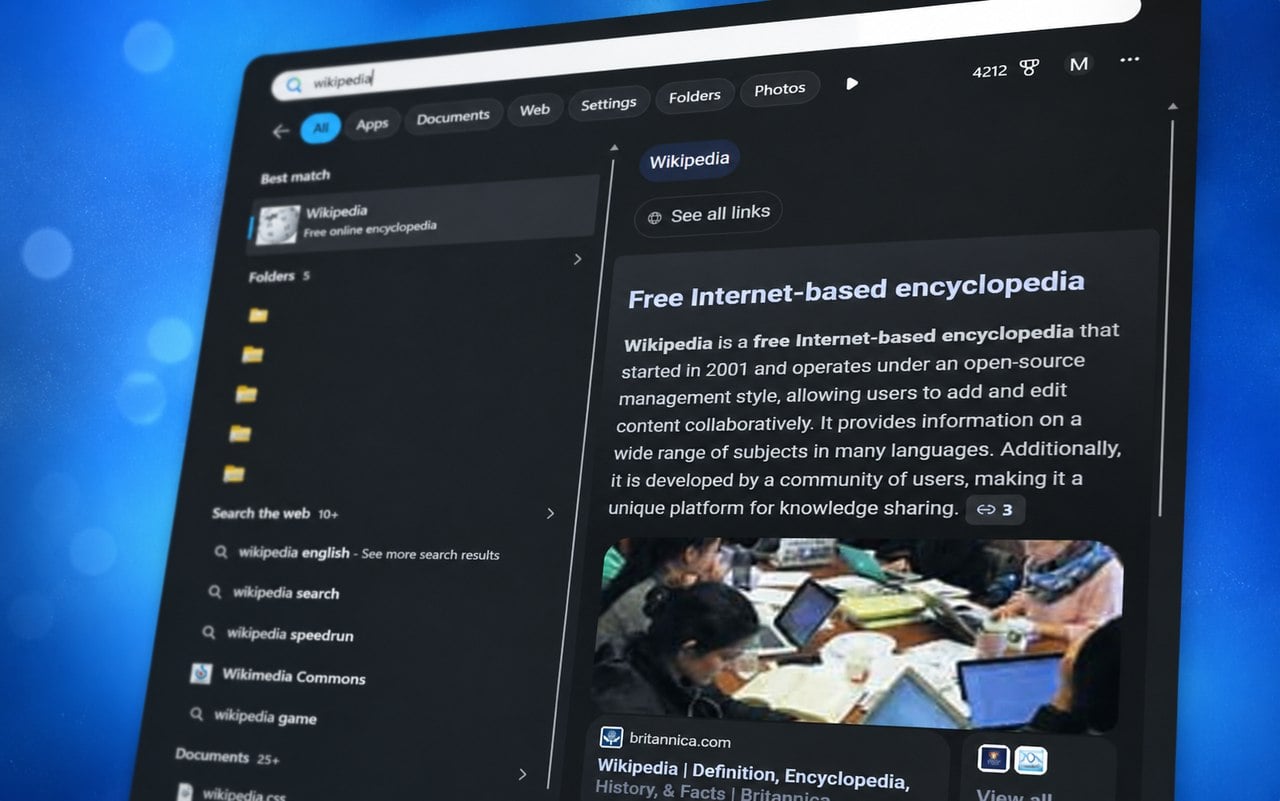
Microsoft recently improved Windows Search in the latest Insider build by making it easier to find apps even when users misspell their names. Now, the company is preparing another long-requested change.

According to Windows Latest, Microsoft has confirmed that Windows 11 users will soon be able to disable Bing-powered web results directly from the Start menu search experience.

Bing Results Can Be Turned Off Directly in Settings

The confirmation came from Microsoft’s March Rogers, who responded to user feedback on X and revealed that a dedicated option is on the way. Once enabled, the setting will allow users to remove Bing web results without relying on Registry edits, Group Policy changes, or third-party tools.

The new option will be located in the Settings app under Privacy & Security > Search.

Users will be able to toggle off web results, causing Windows Search to focus exclusively on local content.

Web content powered by Bing will no longer appear in Start menu search results.

The change affects more than just web search results.

Disabling Bing integration will also remove the Microsoft Rewards icon from the Windows Search interface. Users should also stop seeing Copilot promotions and advertisements that occasionally appear while searching for local files and apps.

In addition, the Windows Search homepage will no longer display content pulled from Microsoft services such as Bing, MSN, and related online feeds.

Bing Search Remains Enabled by Default

Microsoft is not removing Bing integration entirely. The feature will remain enabled by default on Windows 11 devices.

Users who want a purely local search experience will need to manually disable the option once it becomes available.

The company is currently testing the feature and has not announced an exact release date. However, given Microsoft’s public confirmation, the setting is expected to begin rolling out in a future Windows 11 update.

In other news, Microsoft recently confirmed a new Windows bug affecting the Recycle Bin after the June Patch Tuesday update. The company has also started rolling out a new Microsoft Authenticator sign-in experience that requires users to manually enter a verification number instead of simply approving a notification.

Microsoft Confirms New Windows Recycle Bin Bug After June Patch Tuesday Update

Microsoft has acknowledged a new issue caused by the June 2026 Patch Tuesday updates that affects the Recycle Bin across multiple supported versions of Windows.

According to Microsoft, the problem appears after installing update KB5094126. Users who attempt to permanently delete files from the Recycle Bin may notice that the confirmation dialog displays the file’s internal name instead of the actual file name.

The company says the bug is limited to the confirmation prompt and does not affect the file itself. The correct file name continues to appear in the Recycle Bin list view, and restoring the file returns it with its original name intact.

Recycle Bin Confirmation Dialog Shows Wrong File Name

When users permanently delete an item from the Recycle Bin, Windows normally displays a confirmation message showing the file name before removal. After installing KB5094126, that dialog may instead show an internal system name.

Microsoft stressed that the issue is cosmetic and does not result in file corruption, data loss, or incorrect file restoration. The problem only affects the text shown in the deletion confirmation window.

Users can still verify the correct file name directly within the Recycle Bin before deleting the item.

Nearly All Supported Windows Versions Affected

The issue affects most currently supported Windows client and server releases.

Microsoft has not provided a complete list of impacted versions, but the company confirmed that the bug is widespread across supported Windows platforms that received the June 2026 security updates.

At the moment, there is no publicly available workaround for consumers.

Fix in Development

Microsoft says it is actively working on a fix and plans to deliver it in a future Windows update.

The company has not yet confirmed whether the resolution will arrive through the next Patch Tuesday release or through an out-of-band update before then.

Commercial customers who need a workaround can contact Microsoft Support for Business for additional guidance. Microsoft has not publicly disclosed the workaround details.

Another Patch Tuesday Issue

The Recycle Bin bug is the latest issue linked to June 2026 Patch Tuesday updates.

Earlier this month, Microsoft acknowledged problems affecting the launch of some Microsoft Office applications after installing recent security updates. The company is continuing to investigate and address those reports.

In separate Patch Tuesday-related news, Microsoft recently resolved installation failures affecting Windows Server 2016 systems that attempted to deploy the June 2026 security update KB5094122 without first installing the required May 2026 update.

Via Neowin

XBOX Starts Highlighting Exclusive Games on Dashboard

Microsoft appears to be making XBOX exclusives more visible as the company continues to emphasize first-party content as part of its gaming strategy.

Exclusive Label Appears on XBOX Dashboard

According to Windows Central, XBOX has started testing or rolling out a new “EXCLUSIVE” label on the XBOX Series X|S dashboard. The label appears on game tiles and is designed to clearly identify titles that are exclusive to the XBOX platform.

Screenshots shared online show the label alongside an image of an XBOX Series X console. On some systems, however, the EXCLUSIVE tag appears without the console graphic, suggesting Microsoft may still be refining the feature before a wider rollout.

The new dashboard indicator arrives shortly after XBOX executives reaffirmed their commitment to exclusive games. XBOX Chief Strategy Officer Matthew Ball recently pushed back against speculation that Microsoft was moving away from exclusives, stating that players can expect “signature exclusives” from XBOX every year.

XBOX Makes Exclusives More Visible

The dashboard change may seem minor, but it represents a notable shift in how Microsoft is presenting its gaming lineup.

The new EXCLUSIVE label suggests Microsoft wants to make those titles easier to identify and reinforce the value of the XBOX ecosystem.

By placing the designation directly on the dashboard, XBOX users can quickly see which games are tied to the platform without having to search for additional information.

Strategy Questions Remain

The rollout comes during a period of significant change for XBOX. Microsoft has faced scrutiny over layoffs, reports of studio closures, and broader questions about the future direction of its gaming division.

Those developments have led some fans to express concerns about the company’s long-term commitment to certain studios and franchises. Recent reports have suggested that XBOX is reportedly planning major layoffs in July, while other rumors claim that XBOX may sell or shut down several studios. Leadership changes have also drawn attention, with XBOX Game Studios head Craig Duncan stepping down.

While Microsoft has not officially announced the feature, its appearance on XBOX consoles suggests the company is actively working to highlight exclusive content as it continues to shape the next phase of its gaming strategy.

Microsoft Warns of USB Malware That Replaces Cryptocurrency Wallet Addresses

Microsoft has warned about an active malware campaign targeting cryptocurrency users through clipboard hijacking and infected USB drives. The campaign, which researchers say has been active since at least February, can silently replace copied cryptocurrency wallet addresses with attacker-controlled addresses, potentially redirecting funds to cybercriminals.

According to Microsoft’s security researchers, the malware spreads through malicious LNK shortcut files placed on removable USB drives. When a victim opens one of these shortcut files, malicious code executes directly from the USB device and downloads additional payloads through a Tor-based infrastructure.

Malware Spreads Through Fake Document Shortcuts

After infecting a system, the malware searches for document files stored on the computer. It then hides the legitimate files and replaces them with malicious shortcut files that use the same names and icons.

As a result, users who attempt to open what appears to be a normal document unknowingly execute the malware instead.

The malware also establishes persistence by creating a scheduled task that monitors for newly connected USB drives. When a removable drive is detected, the malware copies itself to the device and creates additional malicious shortcut files, allowing it to spread to other systems.

Clipboard Hijacking Targets Cryptocurrency Wallets

One of the most dangerous components of the malware is its clipboard-stealing functionality.

Microsoft says the malware monitors clipboard contents every half-second, looking for cryptocurrency-related information. When it detects a wallet address, it replaces the copied address with one controlled by the attacker.

The malware can identify a wide range of cryptocurrency data, including BIP39 seed phrases used for wallet recovery, Ethereum private keys, Bitcoin Wallet Import Format (WIF) keys, and cryptocurrency wallet addresses across multiple blockchains.

Researchers observed support for several popular cryptocurrencies, including Bitcoin, Ethereum, Tron, and Monero.

To avoid raising suspicion, the attacker-controlled replacement addresses are designed to partially resemble the original wallet addresses, making fraudulent transactions harder to detect during quick visual checks.

Tor Network Helps Hide Activity

The malware uses the Tor network to conceal command-and-control communications and downloaded payloads. Additional malware components are retrieved from an .ONION address that is inaccessible through standard web browsers.

Researchers also found that the stealer component checks whether Windows Task Manager is running before activating, likely as an attempt to avoid detection by users investigating suspicious system activity.

Beyond clipboard theft, the malware can repeatedly capture screenshots of the victim’s screen and upload them to attacker-controlled servers. It also supports remote code execution, allowing threat actors to run additional commands on compromised devices.

Indicators of Compromise

Microsoft says behavioral monitoring offers a more reliable way to detect this campaign than traditional signature-based detection.

Security teams should watch for unusual activity involving wscript.exe, cscript.exe, PowerShell, cmd.exe, and curl.

Researchers also recommend monitoring for unexpected Tor-related activity, including connections to localhost:9050, which may indicate the presence of a Tor proxy used by the malware.

How to Protect Yourself

Users can reduce their risk by following several basic security practices:

  • Avoid connecting unknown USB drives to computers.
  • Verify cryptocurrency wallet addresses before sending funds.
  • Check the beginning and end of wallet addresses after pasting them.
  • Use endpoint security solutions with behavioral detection capabilities.
  • Monitor systems for unusual Tor-related network traffic.

The campaign serves as another reminder that cryptocurrency users remain a prime target for cybercriminals, particularly through malware designed to manipulate clipboard contents and intercept wallet transactions.

In related Microsoft security news, the company recently confirmed it is working on a fix for the RougePlanet exploit, addressed the Copilot SearchLeak vulnerability, and warned that Microsoft Teams is being abused by the Backdoor.Turn malware campaign.

Via BleepingComputer

Sony Plans to Keep Future Single-player Games Exclusive to PlayStation Consoles

Over the past few years, Sony gradually brought major first-party titles to PC, fueling speculation that the company was moving toward a platform-agnostic future. That might be finally changing, as few months ago Sony said that it will shift away from PC ports.

Sony president confirms single-player titles will remain exclusive to PS5

A new report around Sony’s PC strategy has suggested that the company is becoming more selective about which games leave its ecosystem. The latest comments on PlayStation exclusives come from Sony president and CEO Hideaki Nishino.

Speaking to Famitsu during the publication’s 40th anniversary celebration (via ResetEra), Nishino discussed a strategy that separates PlayStation’s portfolio into two distinct categories: single-player experiences designed to strengthen the console business and multiplayer titles built for reaching PC players.

“We’ve always determined platform selection based on the characteristics of each title. If releasing a title on PC would maximize the gaming experience, we’ll continue to consider that option. Our current main policy is that, for single-player games developed in-house, we will further refine the value of the gaming experience that PlayStation can offer. At the same time, we believe it is important for live-service games to reach a wider audience through online multiplayer, so we continue to view releases on both PS5 and PC as the standard. Regardless of the platform, we will make decisions based on the principle of delivering the best possible gaming experience that maximizes each title’s unique features.”

In case you are unaware, a popular insider previously cited an internal town hall and claimed that Sony will follow a similar strategy. Apparently, PlayStation’s narrative-driven titles would remain exclusive because previous PC releases generated lower-than-expected returns and diluted platform value.

What do you think about Sony’s exclusive strategy? Let us know in the comments below.

In other news, the PS6 release might slip to 2028 or even 2029 as analysts predict, and the company has submitted a patent for a new controller that can grip your fingers.

PS6 Release Date Might Slip into 2028 or 2029, New Industry Report Suggests

The traditional console cycle may be running out of steam. After years of predictable six-to-seven-year refreshes, rising hardware costs and global memory crunch are forcing gaming giants to rethink what comes next. That uncertainty is now casting a shadow over Sony’s next-generation plans.

PS6 release window may have moved to 2028 or even 2029

According to Embracer Group’s latest annual financial report, “some analysts believe” Sony is considering moving the launch of PlayStation 6 console from a previously expected 2027 window to 2028 or even 2029 (via RestEra).

The report points to two major factors behind the release window shift: higher memory prices fueled by AI demand and ongoing tariff volatility in the United States.

“Both factors could potentially have a negative impact on console retail prices, which would, in turn, hamper market growth,” the report states. “In the longer term, higher RAM costs could also cause operational delays to the launch of future consoles.”

The report further adds: “In fact some analysts believe that Sony is now considering pushing back the debut of its next PlayStation console from 2027 to 2028 or even 2029.”

Neither Sony nor Embracer identified the analysts behind the claim, and there is no indication that the PS6 has already been delayed internally. However, Sony has previously confirmed that investment in its next-generation PlayStation hardware is increasing, but key details around pricing, specifications, and launch timing remain under wraps.

Next-gen XBOX console is also facing the heat of memory crunch

Speaking of consoles, lets not forget that next-gen XBOX console, Project Helix, isn’t also immune to memory crunch. While XBOX CEO previously said that it would innovate and make radical changes to its business strategy to keep Project Helix’s price in check. As for release date, Project Helix XBOX is reportedly aiming for a late 2027 launch.

New Steam Controller Might Be Available to Order by September in the Best-Case Scenario

Just weeks after opening reservations for the new Steam Controller, the company is already warning prospective buyers that they could be waiting until 2027 to get their hands on one.

The updated timeline appears on the Steam Controller reservation page, where Valve is now assigning estimated order windows based on when users joined the queue. Depending on reservation timing, customers are being grouped into three delivery periods: by September 2026, by December 2026, or sometime in 2027.

Reservations first opened on May 8 after Valve introduced a queue system designed to manage demand and prevent stock shortages. At the time, the company confirmed that initial shipments would begin the following week but stopped short of providing a broader production roadmap. That has now changed.

Players with an active reservation can sign in to Steam and view their estimated order window directly on the Steam Controller page. Once their slot becomes available, they will still have a 72-hour window to complete the purchase before their place in line expires.

Valve has also added a notice stating that current reservations “indicate a 2027 date for shipping,” suggesting the backlog has grown significantly in a matter of weeks.

Google-Backed World’s First AI Arts Museum, Dataland, Opens in Los Angeles

If you have ever wondered how significant the impact of AI will be in our lives, you might get an idea from the fact that the tech is now stepping out of chat windows and into gallery walls… sort of. Google and media artist Refik Anadol are opening Dataland on June 20, a new venue claimed to be the world’s first museum dedicated entirely to AI-generated art.

Google and Refik Anadol bring AI art to life with Dataland museum

Located inside The Grand LA, the Frank Gehry-designed development in Los Angeles, Dataland spans 25,000 square feet and is home to large-scale visuals, sound, data, and machine learning into an immersive experience that changes in real time.

The launch marks the latest chapter in a collaboration between Google and Anadol that stretches back nearly a decade. Their previous projects have explored everything from quantum computing data to environmental datasets, but Dataland pushes those ideas into a permanent public space.

At the center of the opening exhibition is “Machine Dreams: Rainforest,” an installation powered by Refik Anadol Studio’s Large Nature Model. Trained on extensive environmental data, the AI system transforms information from the natural world into dynamic visual experiences projected across more than 1.2 billion pixels.

Google Cloud provides the underlying infrastructure, using Gemini models, diffusion systems, generative adversarial networks, and Compute Engine to power real-time interactions. Visitors can influence the experience through movement and emotional responses, while the space adapts with AI-generated soundscapes and even algorithmically enhanced scents.

Image credit: Refik Anadol Studio

Google Arts & Culture is also backing a new Dataland AI Artist Residency program. Four selected artists will receive $25,000 grants, mentorship from Refik Anadol Studio, and access to Google Cloud tools to create new AI-driven works.

As competition around generative AI increasingly focuses on productivity tools, Dataland highlights another front in the race: creativity. Google appears eager to show that AI’s future may extend far beyond work, reaching into culture, storytelling, and public spaces.

Microsoft Authenticator Now Requires Manual Number Entry for Personal Account Logins

Microsoft has started rolling out a new Microsoft Authenticator sign-in experience that requires users to manually enter a two-digit number during login, adding an extra layer of protection against accidental approvals and MFA fatigue attacks, according to Windows Central.

How the new Microsoft Authenticator sign-in process works

Previously, users logging in with Microsoft Authenticator could approve a sign-in request by selecting one of three displayed number options. Under the new system, users must type the two-digit code shown on the login screen directly into the Authenticator app before access is granted.

The change first appeared for enterprise and education accounts but is now beginning to reach personal Microsoft accounts as well. The rollout appears to be gradual, meaning some users may not see the updated prompt immediately.

Why Microsoft is making this change

Microsoft’s move comes as attackers increasingly rely on so-called MFA fatigue attacks. In these attacks, threat actors repeatedly send authentication prompts to victims in the hope that they eventually approve one by mistake.

Accidental approvals can also occur when users tap the wrong option or interact with their device unintentionally. By requiring manual number entry, Microsoft reduces the likelihood of these errors and makes unauthorized access attempts more difficult.

The updated authentication flow adds a small extra step to the login process, but it significantly improves security by ensuring users actively verify each sign-in request.

While the change may seem minor compared to larger authentication updates, it reflects Microsoft’s broader effort to move users toward stronger account protection methods. Earlier this year, the company began phasing out SMS authentication for personal Microsoft accounts in favor of more secure alternatives.

The new number-entry requirement is expected to make Microsoft Authenticator more resistant to common social engineering and prompt-spamming attacks while maintaining a relatively simple user experience.

In other news, Microsoft recently confirmed that a patch for the RougePlanet zero-day exploit is currently in development.

XBOX Confirms Gamescom 2026 Presence Amid Studio Closure Reports

XBOX has confirmed its return to Gamescom 2026 alongside its annual FanFest event, teasing hands-on access to upcoming titles. “XBOX + gamescom + FanFest… see you there. Be among the first to play what’s next – including the Gears of War: E-Day campaign. Stay tuned for more,” posted XBOX on X.

The announcement comes at a sensitive time for the company. In recent weeks, multiple reports and industry insiders have claimed Microsoft is preparing another round of layoffs across its gaming division, with some studios reportedly at risk of closure.

Microsoft has yet to publicly address those claims. That silence has fueled backlash online, with some players arguing that the timing of the Gamescom announcement feels disconnected from the ongoing conversation surrounding XBOX’s internal restructuring plans.

The scrutiny has intensified following reports that several studios could face significant changes despite recent public support from XBOX leadership. Rumors surrounding teams such as Ninja Theory have got attention in the aftermath of the XBOX Games Showcase, although Microsoft has not confirmed any of the claims.

For now, the company appears determined to keep its marketing roadmap unchanged. Gamescom 2026 kicks off on August 26 in Cologne, Germany, where XBOX is expected to showcase upcoming first-party projects and offer attendees an early look at Gears of War: E-Day. Reportedly, the company will also share playable demo of Gears of War: E-Day at the event.

GTA 6 Gets Its Pre-Order Date as Rockstar Unveils Official Cover Art

The road to Grand Theft Auto 6 just got a little shorter. After months of speculation and relentless fan anticipation, Rockstar Games has finally locked in a pre-order date for its biggest release yet.

In a post shared on X, Rockstar confirmed that pre-orders for Grand Theft Auto 6 will officially open on June 25 across digital storefronts and select retailers worldwide. The studio also unveiled the game’s official cover art, which is now available as downloadable artwork through its website.

The announcement marks the next major milestone in Rockstar’s marketing campaign following the release of the second trailer and the confirmation of the game’s delayed launch date.

“Pre-orders for Grand Theft Auto VI will officially begin on June 25 on digital storefronts and at other select retailers.”

While Rockstar has yet to reveal pricing details or outline the contents of any special editions, the opening of pre-orders suggests more information could arrive in the coming days.

Grand Theft Auto VI is currently scheduled to launch on November 19, 2026, for PlayStation 5 and Xbox Series X|S. The game takes players back to the state of Leonida, featuring dual protagonists Lucia and Jason in what is shaping up to be Rockstar’s most ambitious open-world experience to date.

That said, the timing of the announcement is notable. With less than five months remaining until launch, Rockstar appears to be entering the next phase of its promotional push, one that will likely include fresh gameplay reveals, collector’s editions, and additional story details.

For now, console players finally have a date to circle on the calendar, as the company is currently focusing on the console release. Meanwhile, experts predict that GTA 6 launch sales could reach 46 million units.

Microsoft Fixes Windows Server 2016 June 2026 Update Installation Failures

Microsoft has resolved a known issue that prevented some Windows Server 2016 systems from installing the June 2026 security update.

The problem affected servers that were not fully updated before attempting to install the June 2026 Patch Tuesday release. Affected devices could fail to install KB5094122 and display error code 0x80070002 or ERROR_FILE_NOT_FOUND during the installation process.

Cause of the Windows Server 2016 Update Failure

Microsoft said the issue primarily impacted systems that tried to deploy KB5094122 without first installing the May 2026 security update, KB5087537. As a result, some administrators were unable to successfully apply the latest security fixes to their Windows Server 2016 environments.

The company acknowledged the problem after reports from IT administrators and later confirmed the issue through service alert WI1395301 in the admin center.

According to Microsoft, the bug has now been fixed, and affected Windows Server 2016 devices should no longer experience installation failures when deploying KB5094122.

June Update Issue Now Resolved

Microsoft says administrators can now install the June 2026 security update normally, even on systems that previously encountered the installation error.

The issue highlighted the importance of maintaining updated prerequisites, as the missing May 2026 security update appeared to be a key factor behind the deployment failures.

For users running client versions of Windows, Microsoft also recently released the June 2026 Patch Tuesday update for Windows 11.

Additional Windows Server Fixes Released

The Windows Server 2016 update installation issue was not the only server-related problem Microsoft addressed recently.

The company also released fixes for a Windows Server 2025 issue that could unexpectedly trigger BitLocker Recovery after installing security updates. In addition, Microsoft resolved update deployment failures caused by a bug in the Windows Update Standalone Installer (WUSA), which affected some enterprise environments.

These fixes are part of Microsoft’s ongoing effort to address post-update issues reported by administrators and enterprise customers.

Via BleepingComputer

WhatsApp May Soon Let You Send Read-Once Text Messages

WhatsApp is working on a feature many users have requested for years: disappearing text messages that can only be read once.

According to a report from WABetaInfo, WhatsApp has started testing view-once text messages in the latest iOS beta and a recent Android pre-release build. The feature expands WhatsApp’s existing disappearing content options, which already include photos, videos, and voice messages.

The new capability allows users to send text messages that automatically disappear after the recipient opens and reads them. The goal is to provide an extra layer of privacy for sensitive conversations, such as passwords, personal information, or temporary instructions.

WhatsApp testing view-once text messages

In the current iOS beta version, users can write a message and then select a new “Send as view once” option before sending it.

Once the recipient opens the message, it can only be viewed a single time. After it is read, the message disappears and cannot be reopened.

WhatsApp is also introducing several restrictions designed to prevent recipients from saving or sharing the content. Users will not be able to copy the message text, forward it to other chats, share it outside WhatsApp, capture screenshots, or record their screen while viewing the message.

These protections mirror the safeguards already available for view-once photos and videos.

A privacy feature users have wanted for years

The addition of disappearing text messages closes a gap in WhatsApp’s privacy toolkit.

Some privacy-conscious users relied on a workaround by taking a screenshot of text and sending it as a view-once image. The new feature removes that extra step and offers a native solution directly within chats.

Meta has not announced an official release date for the feature.

However, the fact that view-once text messages have already appeared in Apple’s TestFlight beta program suggests development is progressing. Features that reach beta testing often move toward wider availability after additional testing and refinement.

As with many WhatsApp features, the rollout may begin gradually before becoming available to all users on iPhone and Android.

Meta continues expanding its apps

The new WhatsApp privacy feature arrives as Meta continues introducing new capabilities across its products.

The company recently launched premium subscription options for some of its services and has been investing heavily in artificial intelligence. Recent announcements include AI Mode for Facebook and a partnership with Reliance to help develop a large-scale AI data center project.

For WhatsApp users, however, view-once text messages may end up being one of the platform’s most practical privacy upgrades in years.

Via Engadget

Anthropic Supercharges Claude Design With Code Integration & Direct Editing

Anthropic is making its next move with a major update to Claude Design. After attracting more than one million users in its first week, Claude Design is getting a significant expansion focused on helping teams move faster between design, development, and deployment.

At the center of the update is deeper support for design systems. Users can now import components from GitHub repositories, existing design files, or raw uploads, allowing Claude Design to generate interfaces that align with company standards from the start. For larger organizations, Anthropic is also introducing new administrative controls that let teams approve and lock a single design system across projects.

Anthrooic deeply integrates Claude Design and Claude Code

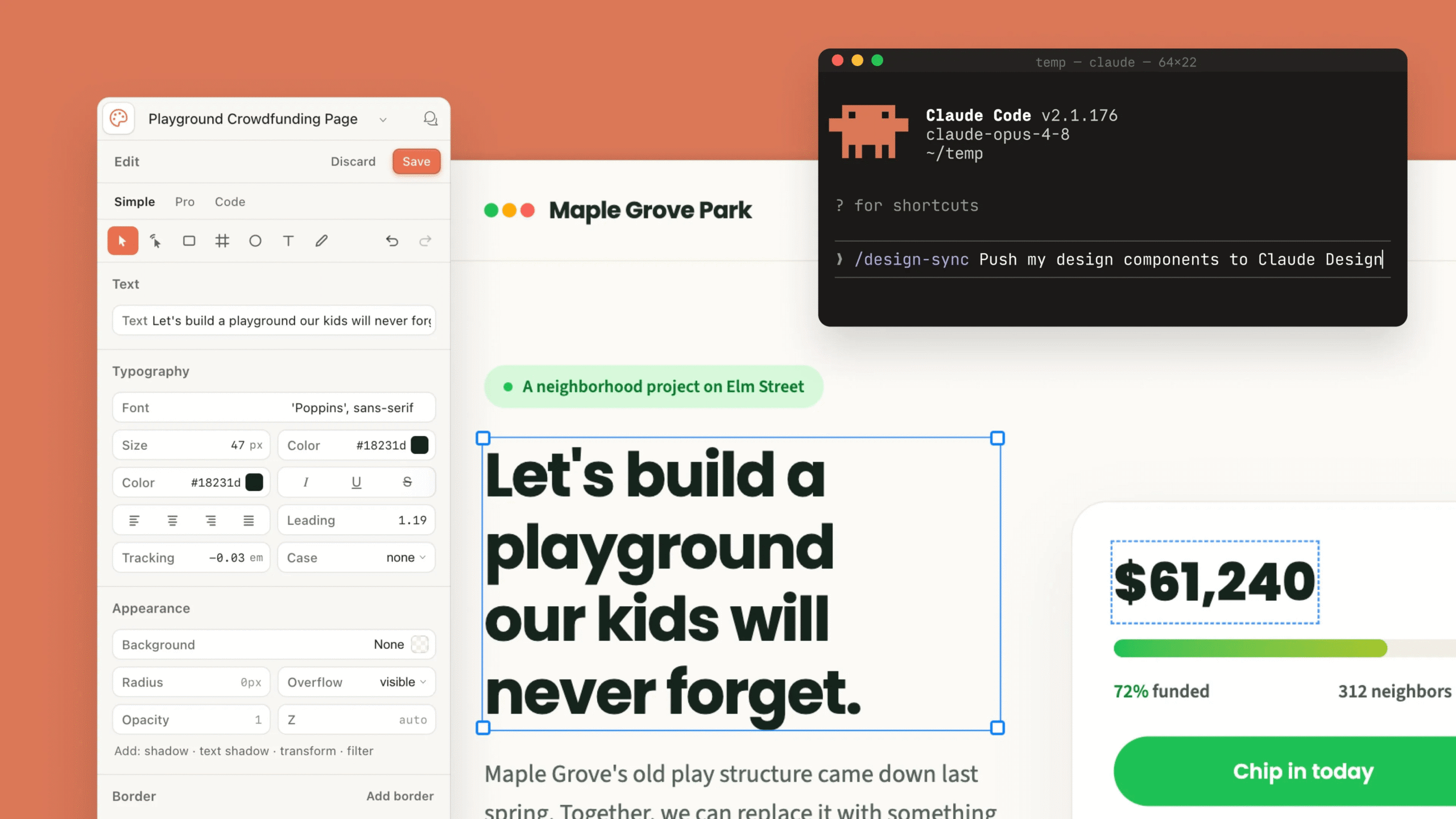
Anthropic is also deeply integrating the connection between Claude Design and Claude Code as well. Designers can use the new “/design-sync” command to pull existing design systems into projects, while developers can create, edit, and sync designs directly from the terminal using “/design.”

The company is also rolling out a rebuilt editor with direct canvas controls, giving users the ability to drag, resize, align, and fine-tune elements without relying entirely on prompts.

Besides design and code workflows, Anthropic is expanding Claude Design’s ecosystem with new integrations across Adobe, Canva, Gamma, Miro, Replit, Vercel, Wix, Lovable, Base44, and several other platforms.

Claude Design now lives directly in the Claude desktop app sidebar and remains available in beta for Pro, Max, Team, and Enterprise subscribers.

Codex App Users in Europe Get Computer Use, Memories, Chrome Extension & More

Earlier this month, OpenAI announced a major expansion for Codex that brings new business-focused plugins, interactive website creation, and workflow tools for teams far beyond software development. That’s not all; the company also recently revealed intentions to acquire Ona, which might expand Codex with secure cloud workspaces, helping AI agents handle long-running tasks.

Now, the company is expanding key Codex app features to users in the European Economic Area, the United Kingdom, and Switzerland. The update brings Computer Use support to both Windows and macOS, allowing Codex to interact directly with desktop applications by seeing, clicking, and typing on behalf of users.

The feature goes beyond traditional chat interactions and turns Codex into a more capable digital assistant for complex workflows. Not to forget, OpenAI is also rolling out the Codex Chrome extension in these regions. The extension enables browser-based tasks that require signed-in Chrome sessions, allowing Codex to work across multiple tabs in the background without interrupting the user’s browsing experience.

Memories are landing across Europe as well, giving Codex the ability to retain preferences, recurring workflows, repository conventions, and preferred tech stacks over time. However, the feature will remain disabled by default for users in the EEA, the UK, and Switzerland, reflecting stricter regional privacy requirements.

For ChatGPT Pro subscribers on macOS, OpenAI is additionally introducing Chronicle as an opt-in research preview. The feature helps Codex build contextual memories using recent on-screen activity.

Visual Studio Code Adds New AI Model Discovery and Browser Features

Microsoft has released Visual Studio Code 1.125, introducing several improvements focused on AI integration, browser functionality, extension management, and enterprise administration.

The latest update arrives just one week after the release of VS Code 1.124 and continues Microsoft’s push to make AI-powered development features easier to access and manage.

VS Code 1.125 Makes AI Models Easier to Discover

One of the biggest changes in Visual Studio Code 1.125 is a new way to discover and install AI model providers.

The Language Models editor now includes an “Install Model Providers” button. Clicking the button opens the Extensions view with a filtered list of extensions that add language model providers to VS Code.

Once installed, available AI models automatically appear in the model picker, making it easier for developers to switch between supported AI services without manually searching for compatible extensions.

The change comes as AI coding assistants become a core part of the development workflow. Microsoft has steadily expanded AI capabilities inside VS Code through GitHub Copilot and support for third-party language models.

Integrated Browser Gets Search and Remote Access Improvements

Microsoft is also expanding the capabilities of VS Code’s integrated browser.

Users can now perform web searches directly from the browser address bar. Searches use the developer’s preferred search provider, which can be configured through the workbench.browser.searchEngine setting.

For developers working in remote environments, the integrated browser can now proxy HTTP and HTTPS traffic through remote workspace connections.

This allows access to internal services, development environments, and ports that may only exist on the remote machine. The feature should prove useful for developers working with containers, cloud environments, or remote servers.

Extension Updates Become More Configurable

VS Code 1.125 also introduces a new setting called extensions.autoUpdateDelay.

The feature allows users to control how long VS Code waits before automatically updating extensions.

The addition arrives as software supply chain security continues to receive increased attention across the developer ecosystem. Giving users and administrators more control over extension update timing can help organizations validate updates before deployment and reduce the risk of unexpected changes affecting development environments.

GitHub Copilot Management Expands for Enterprises

Enterprise administrators are getting additional control over GitHub Copilot deployments.

Microsoft now supports the delivery of managed Copilot settings through native Mobile Device Management (MDM) platforms on both Windows and macOS.

Previously, organizations primarily relied on account-based enterprise configuration files. With the new approach, administrators can deploy policies directly through device management systems.

Any settings delivered through MDM appear as policy-enforced inside VS Code, preventing users from overriding them locally.

Microsoft says future releases will continue expanding the number of Copilot policy settings that organizations can manage centrally.

The release continues Microsoft’s broader effort to position Visual Studio Code as a central hub for AI-assisted development while adding more enterprise-grade management capabilities.

In other news, Microsoft is reportedly exploring DeepSeek V4 as a potential way to reduce operating costs for Copilot Cowork, its enterprise-focused AI productivity platform.

Google Gemini Co-Lead, Noam Shazeer, Joins OpenAI

The fight for AI dominance is no longer just about models, benchmarks, or data centers. It’s increasingly about who can attract and retain the people building the technology behind them. OpenAI, which recently filed for IPO, has hired one of Google’s most prominent AI leaders.

Gemini co-lead and Google vice president of engineering Noam Shazeer has announced that he is leaving the company to join the ChatGPT maker, OpenAI.

“I’m excited to share that I’ll be joining OpenAI and look forward to working with the exceptional team there,” Shazeer wrote in a post on X.

His departure from Google marks another high-profile transfer in an industry where talent has become one of the most valuable assets. These days, major AI companies have been aggressively competing for researchers and engineers capable of building next-generation models and agents.

“It was a difficult decision to move on. I’m incredibly proud of the amazing team at Google and everything we’ve built together. It has been an honor and a pleasure to work with all of you,” Shazeer added.

In August 2024, Google brought back Shazeer and Daniel De Freitas through a partnership with Character.AI, the startup they founded after leaving Google in 2021. The pair originally departed after Google chose not to aggressively pursue a chatbot initiative they had aced internally.

As competition intensifies across the AI industry, securing top talent may prove just as important as shipping the next breakthrough model.

Call of Duty: Black Ops 1 and 2 Are Finally Coming to PS5 and PS4 This July

Two of Call of Duty’s most celebrated entries are making their way to PlayStation hardware. Treyarch has officially confirmed that the original Call of Duty: Black Ops and Call of Duty: Black Ops 2 will launch on PlayStation 5 and PlayStation 4 this July.

The announcement was made from the official Treyarch account on X, which revealed that both ports are being developed in partnership with Iron Galaxy. The studio also confirmed that each game will include its full suite of content, including Campaign, Multiplayer, and Zombies.

For longtime fans, this marks the first time both titles will be officially playable on current PlayStation consoles. Originally released in 2010 and 2012, respectively, Black Ops and Black Ops 2 are widely regarded as high points for the franchise.

From the Cold War espionage storyline of the first game to Black Ops 2’s futuristic setting and branching campaign paths, both titles helped define an era of Call of Duty. There is one important caveat, however. Contrary of previous expectations, these releases are ports, not remasters or remakes.

That means players should not expect upgraded visuals, redesigned mechanics, or overhauled content. Treyarch has also yet to clarify how online services will function. Questions remain over server support, matchmaking systems, anti-cheat measures, and whether legacy progression systems will remain intact.

Are you excited to play Call of Duty: Black Ops 1 and 2 on PS4 and PS5? Let us know in the comments below.

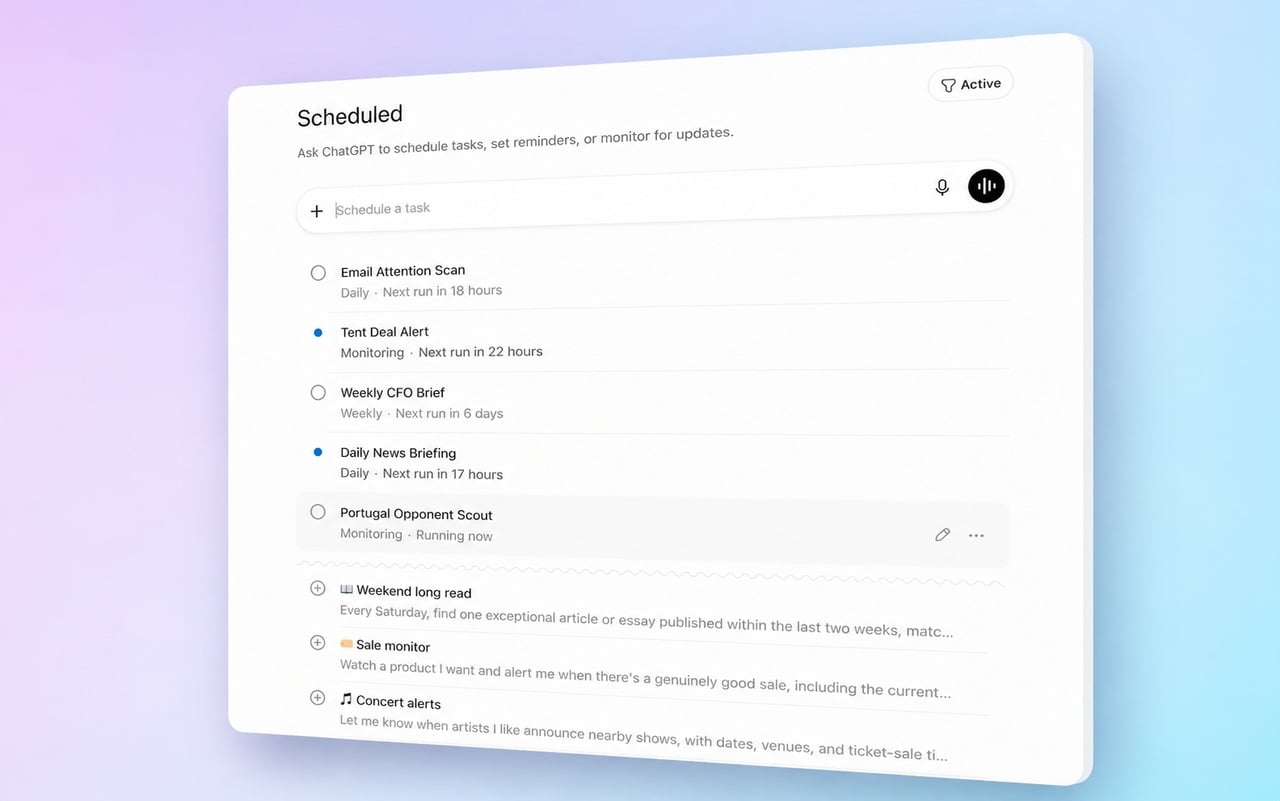
OpenAI Rolls Out New Scheduled Tasks Page for ChatGPT Users

OpenAI has expanded ChatGPT’s scheduled tasks feature with a new management hub, making it easier for users to view, edit, and control automated requests directly from the chatbot interface.

The update introduces a dedicated Scheduled page accessible from ChatGPT’s sidebar. The new section gives users a central location to manage all active tasks they have assigned to ChatGPT, including recurring requests, reminders, and monitoring jobs.

The rollout comes as OpenAI continues to add more autonomous features to ChatGPT ahead of the expected launch of GPT-5.6 and shortly after reports emerged that the company had filed paperwork related to a potential initial public offering (IPO).

ChatGPT Scheduled Tasks Get Dedicated Management Page

The new Scheduled page allows users to see every active task in one place. Users can check when a task is scheduled to run and make changes without having to revisit the original conversation where the task was created.

The page also includes controls that allow users to view all active scheduled tasks, check upcoming execution times, pause tasks temporarily, edit existing schedules, and delete scheduled requests.

The goal is to make automated workflows easier to manage as more users rely on ChatGPT for reminders, recurring summaries, and proactive information gathering.

Faster and More Reliable Task Execution

OpenAI says scheduled tasks have also become faster and more reliable.

Users can instruct ChatGPT to perform actions at a specific date and time, such as generating a report every Monday morning or sending a reminder before an upcoming event.

The system also supports broader time windows, allowing users to schedule tasks for general periods such as the morning, afternoon, or evening instead of specifying an exact time.

This flexibility allows ChatGPT to handle routine requests without requiring precise scheduling details.

Monitoring and Proactive Searches

One of the more advanced uses of scheduled tasks involves monitoring requests.

Users can ask ChatGPT to proactively search the web or connected applications and report back when relevant information becomes available. Examples include tracking product announcements, monitoring industry news, or watching for updates on a specific topic.

These capabilities move ChatGPT closer to functioning as a personal AI assistant that can complete tasks independently rather than waiting for users to initiate every interaction.

Availability

The updated scheduled tasks experience is rolling out to ChatGPT Plus, ChatGPT Pro, ChatGPT Business, and ChatGPT Enterprise users.

OpenAI has not announced when or if the feature will become available to Free users.

In related news, references to a potential ChatGPT for Science offering were recently spotted online, suggesting OpenAI may be exploring specialized experiences designed for research and scientific organizations.

OpenAI has not officially announced ChatGPT for Science, and details about the potential service remain limited.

Via Engadget

Google Is Testing a ‘High-Engagement Signal’ Trigger for Chrome’s 4GB AI Model Download

Google is preparing to change how Chrome downloads its controversial 4GB AI model. We spotted a new Chromium commit titled “Allow background model download to be triggered by signal” that suggests the company is rebuilding the download logic itself.

What happened

In early May 2026, a security researcher discovered Chrome was quietly downloading a ~4GB file to users’ devices without asking first. No consent prompt. No warning. Just a 4GB file showing up in your folder.

The file powers Gemini Nano, Google’s on-device AI model. Chrome uses it for scam detection, Help me write, tab organization, and webpage summarization. But here’s the thing: if you deleted it, Chrome downloaded it again. It didn’t matter if you ever used any of those AI features. If your device met Chrome’s hardware requirements, the file arrived anyway.

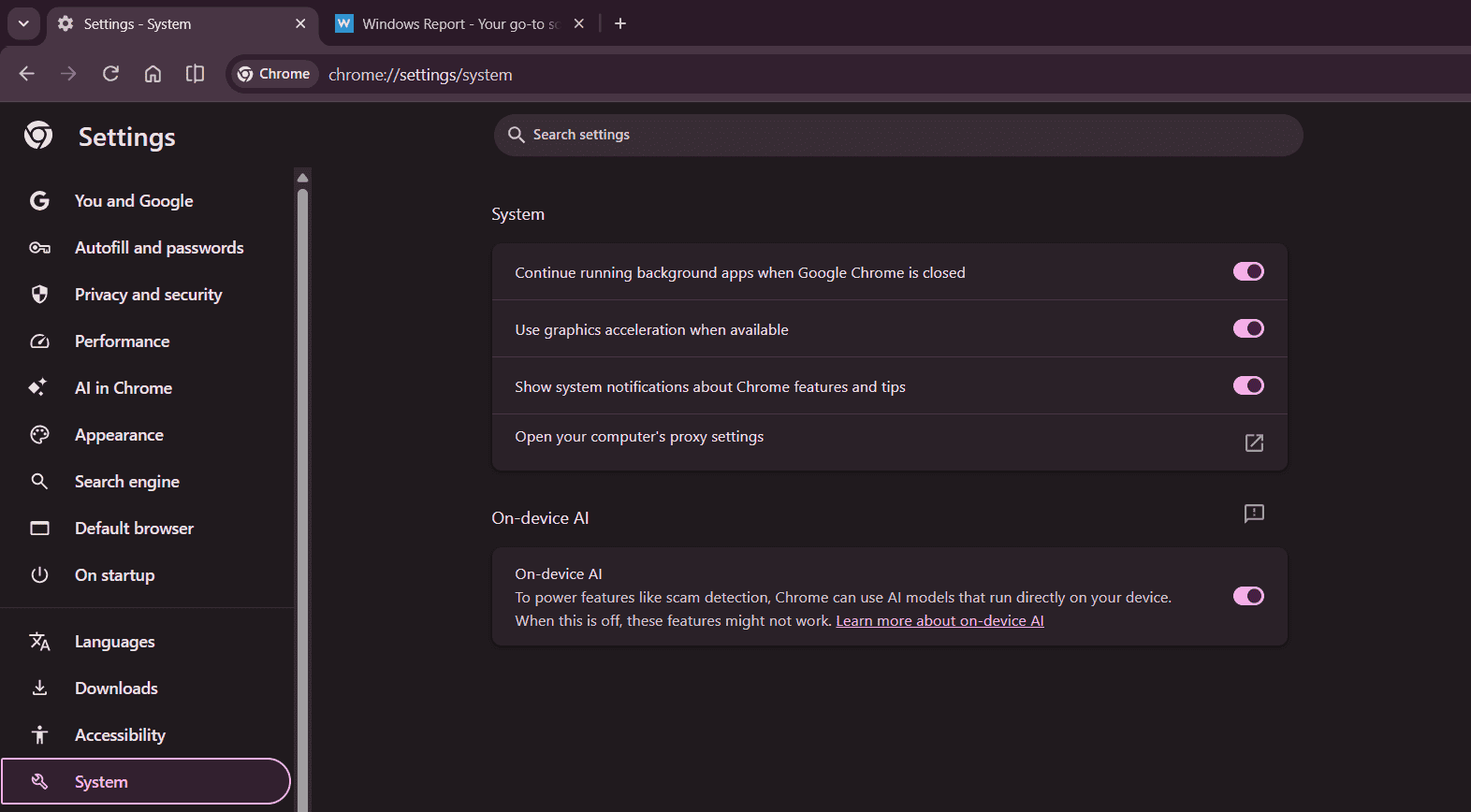
Google’s response was to publish a support page explaining the download and add a toggle under Settings > System to turn off on-device AI. Critics called it weak. Making users hunt for an opt-out to something they never opted into isn’t much of an answer.

What Google is preparing: signal trigger instead of automatic download

A new commit, still in review and not yet in the codebase, spotted by Windows Report, would restructure how Chrome decides to download the model. Before this, the download fired automatically on every eligible device. Under the new approach, Chrome would wait for a “high-engagement signal” before triggering the download. That means it would wait to see whether you actually use any AI features first.

The commit’s title makes the intent clear: “Allow background model download to be triggered by signal.” And the code comment explains it further:

Informs the ModelBroker that a high-engagement signal has been detected and the background download can safely proceed if otherwise capable.

If you never touch Help me write, tab organization, summarization, or any other on-device AI feature, Chrome has no signal to act on. The download wouldn’t happen.

But there’s an important caveat. The old unconditional download path still exists in the code. Google hasn’t removed it. They could still use it even if this commit lands. What this change would do is build an option for a smarter, signal-based approach. Whether Google fully switches to it is something we’ll keep watching.

What this means for you

If this change lands, most users who don’t use Chrome’s AI features might never see the 4GB file on their system.

It’d be Google’s first real move to make the 4GB download something users control, not something that just happens to them.

For users who do use those features, the download would still happen in the background without a prompt.

How to stop Chrome from downloading the AI model right now

If you’d rather not wait, you can turn off on-device AI downloads now:

  • Open Chrome
  • Go to Settings
  • Click System in the left sidebar
  • Toggle On-device AI off
Image Credit: Venkat | Windows Report.

If the file’s already on your system, you can delete it manually:

Windows:
C:\Users[YourName]\AppData\Local\Google\Chrome\UserData\Default\OptGuideOnDeviceModel\

Mac:
~/Library/Application Support/Google/Chrome/Default/OptGuideOnDeviceModel/

Just turn the toggle off first.

Otherwise, Chrome will re-download it.

As of now, Google hasn’t issued an official statement about this commit. But the code change speaks for itself.

Apart from this, Chrome is testing an AI Mode shortcut on the toolbar. Google is also working on stacked split views and an off switch for Gemini Skills in Chrome.

XBOX Promises More Exclusives, but Fans Still Doubt Microsoft’s Plans

Microsoft says it remains committed to bringing back major XBOX exclusives, but many fans remain unconvinced as the company continues to restructure its gaming business, as IGN reports.

Microsoft Reaffirms Upcoming XBOX Exclusives

Speaking about XBOX’s future plans, XBOX Chief Strategy Officer Matthew Ball reportedly confirmed that upcoming titles such as Gears of War: E-Day and Clockwork Revolution will remain exclusive to XBOX and PC. Ball said Microsoft has not discussed changing that strategy and added that more exclusive games are planned for the years ahead.

According to Ball, players can expect new “signature” XBOX exclusives every year as Microsoft invests in major first-party releases.

Microsoft’s position appears clear for now, but some players remain skeptical.

Fans Question Whether Plans Could Change Again

Much of the uncertainty comes from Microsoft’s recent business decisions and ongoing restructuring efforts across the company, such as the head of XBOX Game Studios stepping down.

Concerns grew after Microsoft announced Senua, the next game in the Hellblade franchise, shortly before reports surfaced claiming that developer Ninja Theory could face an uncertain future along with several other studios.

Although Senua remains in active development, the reports sparked debate about whether Microsoft could change direction on projects that have already been announced.

Some fans argue that exclusivity commitments may not be permanent if the company’s broader strategy changes in the future.

Others pointed to comments previously attributed to XBOX leadership suggesting that business plans can evolve when circumstances change.

As a result, some players continue to question whether games such as Gears of War: E-Day or Clockwork Revolution could eventually appear on PlayStation 5 years after launch.

XBOX Focuses on Major Franchises

Industry analysts increasingly believe Microsoft’s gaming strategy is shifting toward fewer, larger franchises with stronger commercial potential.

Recent reports suggest the company is accelerating development of future entries in major series, including Halo, Fallout, and The Elder Scrolls.

At the same time, analysts have warned that smaller prestige studios may face greater pressure because they generate less revenue than Microsoft’s biggest gaming properties.

The approach aligns with Microsoft’s broader effort to make XBOX a more financially sustainable business, with reports also pointing to additional major layoffs that could affect parts of the gaming division in the near future.

What This Means for Future XBOX Games

Microsoft’s latest comments indicate that exclusivity remains part of the company’s long-term strategy, at least for selected blockbuster releases.

Whether that strategy remains unchanged over the next several years remains an open question for many fans.

For now, Microsoft says Gears of War: E-Day and Clockwork Revolution will stay exclusive, and the company plans to continue delivering major first-party exclusives on a yearly basis.

The bigger question for players is whether future titles such as Halo, Fallout, or The Elder Scrolls will follow the same path, or whether Microsoft’s multiplatform ambitions will eventually reshape XBOX exclusivity once again.

XBOX Free Play Days Adds Assetto Corsa, PGA TOUR 2K25 & More This Weekend (June 18 – 21)

We are back with yet another pre-official XBOX Free Play Days lineup for this weekend. This weekend, starting today (June 18) through Sunday (June 21), you’ll have at least three games to play for free.

First of all, you have Assetto Corsa. Released back in 2016, the game is all about real sim racing. The game includes over 90 dream cars from Ferrari, Lotus, McLaren, Pagani, Alfa Romeo, Toyota, Maserati, BMW, Audi, Lamborghini, Ford, Mercedes-Benz, and Shelby, all rendered to an obsessive level of detail.

Assetto Corsa boasts 24 configurations from 15 legendary circuits, including Silverstone, Nordschleife, Imola, Monza, Barcelona, Spa-Francorchamps, and Brands Hatch.

Next in this weekend’s XBOX Free Play Days lineup is PGA TOUR 2K25. If you are into golf, it’s a no-miss this weekend. You’ll step into golf’s biggest stages and prove you can rise among the greats. The game lets you play some of the big golf tournaments like The PGA Championship, The U.S. Open, and The Open Championship.

Last but not least, you can also try Two Point Museum for free as part of this weekend Free Play Days lineup. It is a humorous, creative business simulation game where you act as a museum curator. You are tasked with designing and running exhibits, sending experts on expeditions to uncover rare artifacts, and managing your staff to keep visitors educated and happy.

It goes without saying that Microsoft may add more games to the lineup this weekend. If we come across more games when the official lineup goes live later today, we’ll let you know by updating this article. Whether these games will be free to play for all XBOX members or only XBOX Game Pass members also remain to be seen.

Source: Reddit/u/Oliomono

Google Will Use IP Addresses for Ads in Europe Starting August 2026

Google will begin using IP addresses for ad measurement and personalization across the European Economic Area (EEA), the United Kingdom, and Switzerland on or shortly after August 3, 2026, according to BleepingComputer. The move expands how Google uses data it already receives from advertisers and websites, raising fresh privacy concerns among regulators and privacy advocates.

Google already collects IP addresses through customer tags, software development kits (SDKs), HTTP requests, and advertiser uploads. These IP addresses have traditionally been used to route traffic, prevent fraud, and deliver advertising services. Under the new policy, Google will also use them to help identify devices for advertising measurement and personalization purposes.

The change is significant because IP addresses are classified as personal data under both UK and European privacy laws. As a result, any use of IP addresses for advertising purposes must comply with strict consent and transparency requirements.

Google Expands Device Identification Capabilities

As part of the rollout, Google plans to register under the IAB Europe Transparency and Consent Framework (TCF) for Feature 3. This feature covers identifying devices based on automatically transmitted information, including IP addresses and similar technical signals.

Google notes that Feature 3 itself is not a consent mechanism. However, when IP-based identification supports personalized advertising, advertisers must still obtain valid user consent before processing that data for personalization purposes.

The company says the update aligns with its broader privacy-focused advertising strategy, which increasingly relies on technologies designed to limit direct access to personal information.

Google highlighted several technologies that will support the initiative, including on-device processing, trusted execution environments (TEEs), secure multi-party computation (SMPC), and privacy-enhancing advertising measurement systems.

According to Google, some IP-based personalization features will not arrive immediately and are expected to roll out later in 2026 or during early 2027.

Privacy Concerns Remain

While Google presents the changes as part of a privacy-focused advertising framework, critics argue that combining IP addresses with other technical signals may increase the ability to track users across services and devices.

The timing has also attracted attention because the UK’s Information Commissioner’s Office (ICO) recently advised the government to maintain mandatory consent requirements for cross-service tracking and user profiling.

For now, Google says advertisers remain responsible for ensuring compliance with privacy regulations and the company’s EU User Consent Policy. Advertisers operating in affected regions must obtain valid consent before using data for personalized advertising.

Google also plans to introduce dedicated controls that will allow users to manage IP-based personalization preferences across Google services. Those controls are expected to arrive later in the rollout.

Until then, users can reject non-essential cookies when presented with consent banners, review and modify their advertising preferences in Google’s My Ad Center, and limit personalized advertising through existing Google account settings.

More Regulatory Pressure for Google

The advertising update arrives during a period of increased scrutiny for Google in the UK and Europe.

Recently, the UK’s Competition and Markets Authority (CMA) ordered Google to increase transparency around how Search rankings work and provide businesses with clearer information about ranking systems and complaint processes.

At the same time, the UK government is moving forward with plans to ban social media access for users under the age of 16, introducing stricter age-verification requirements across major online platforms.

Together, these developments highlight growing regulatory pressure on large technology companies as governments seek greater transparency, stronger privacy protections, and increased accountability for digital platforms.

OpenAI’s ChatGPT for Science Subscription Spotted Online

OpenAI may be preparing a new science-focused version of ChatGPT, according to references reportedly discovered in the platform’s web build.

The feature, called “ChatGPT for Science,” appears to be under active testing, though OpenAI has not officially announced it or confirmed how it will be offered to users.

At this stage, it remains unclear whether ChatGPT for Science will be available to all subscribers or limited to approved scientific organizations. Early indications suggest the service could be restricted to verified universities, research institutes, and other scientific institutions.

The discovery comes as OpenAI continues expanding its portfolio of AI tools aimed at specialized professional and research applications.

Science-Focused AI Efforts Continue

OpenAI has already introduced several initiatives designed specifically for scientific research. One of the company’s most notable recent projects is GPT-Rosalind, a specialized AI model built on its GPT-5.5 architecture.

Unlike standard ChatGPT products, GPT-Rosalind targets enterprise-scale life sciences research. The model is intended to assist with complex scientific workflows and research projects rather than everyday chatbot interactions.

Access to GPT-Rosalind is currently limited through a trusted-access deployment framework. Eligible organizations include major pharmaceutical companies, biotechnology firms, and verified research institutions conducting legitimate public-benefit scientific research.

OpenAI also requires enterprise-grade security controls and strict governance measures for organizations using the model.

What ChatGPT for Science Could Offer

While details remain scarce, ChatGPT for Science could extend some of OpenAI’s research-focused capabilities to a broader scientific audience.

The service may provide stronger grounding in scientific literature, technical research, and specialized academic topics than existing ChatGPT subscription tiers. It could also offer features tailored to researchers, educators, and scientific organizations.

If launched, the new offering would further expand OpenAI’s efforts to position AI as a tool for accelerating scientific discovery and research productivity.

No Official Launch Date Yet

OpenAI has not announced a release date for ChatGPT for Science, and the company has not publicly commented on the reported references found in its web application.

The reported testing comes at a time when OpenAI is actively expanding its AI portfolio. The company is reportedly working on additional model updates, and industry observers expect GPT-5.6 could be released later this month.

The development also arrives amid broader reports about OpenAI’s future growth strategy. The company is said to have confidentially filed for an initial public offering (IPO), a move that would underscore its long-term ambitions.

Separately, OpenAI recently announced plans to acquire Ona, which could enhance its data collection capabilities and strengthen the research infrastructure supporting its AI products.

Via BleepingComputer

AI Goes Mainstream as 49% of U.S. Adults Use Chatbots Like ChatGPT and Gemini

New Pew Research Center findings show that AI chatbot adoption continues to grow rapidly in the United States, with nearly half of American adults now using tools such as ChatGPT, Gemini, Copilot, and Meta AI.

According to the survey, 49% of U.S. adults use AI chatbots, up from 33% a year ago. The increase highlights how quickly generative AI has moved into everyday life, with people relying on these tools for research, work, creative projects, and other daily tasks.

AI becomes a mainstream tool

Research-related tasks remain the most common use case for AI. The study found that 42% of American adults use AI tools to research information, while 38% use them for work-related activities.

Other popular uses include entertainment, image and video editing, and seeking medical information.

The findings come as AI companies continue to expand their products across consumer and workplace environments. Earlier this year, Microsoft AI Chief Mustafa Suleyman reiterated that AI systems are intended to assist workers and improve productivity rather than replace them outright.

ChatGPT remains the market leader

Among major AI platforms, ChatGPT remains the most widely used chatbot in the United States.

Survey respondents reported that ChatGPT was the most widely used AI chatbot at 44%, followed by Gemini at 24%, Copilot at 17%, and Meta AI at 14%.

Skepticism remains widespread

Despite rising usage, many Americans remain cautious about AI’s long-term impact.

The survey found that 40% of adults believe AI will do more harm than good for society over the next two decades. Meanwhile, 31% expect AI to have a negative effect on their own lives.

Another 31% said they believe AI will bring a mix of positive and negative outcomes.

These concerns reflect an ongoing gap between AI adoption and public confidence in the technology’s broader consequences.

Privacy and regulation concerns dominate

Privacy remains one of the biggest concerns surrounding AI.

According to the survey, 71% of Americans believe AI will make their personal information less secure. Only 3% think AI will improve data security.

Confidence in oversight also remains low. About 67% of respondents said they have little or no confidence in the U.S. government’s ability to regulate AI effectively.

The survey also found that six in ten adults are not confident that companies developing AI will use the technology responsibly.

The findings arrive amid growing debate over AI governance, safety, and development speed. Several industry leaders and researchers have called for stronger oversight, while some organizations have argued that advanced AI development may require international coordination and stricter safeguards.

In other AI news, the Fable 5 and Mythos AI models were recently taken offline following a warning from Amazon.

Photoshop Gets Up to 20% Faster on Windows Thanks to New Microsoft Optimizations

Microsoft says Photoshop is getting faster on Windows thanks to new compiler-level optimizations developed in collaboration with Adobe. The improvements arrive as Microsoft continues to focus on performance enhancements across Windows, following the recent rollout of a Low Latency Profile and the discovery of hidden CPU tuning settings by enthusiasts.

According to Microsoft, the latest optimizations deliver up to 20% better performance on x86-64 (AMD64) systems. Arm-based Windows devices also benefit, with gains of up to 13%.

Adobe and Microsoft Use Real-World Data to Speed Up Photoshop

The performance improvements do not come from changes to Photoshop’s features or user interface. Instead, Adobe worked with Microsoft’s Visual C++ team to take advantage of enhancements in the Microsoft Visual C++ (MSVC) toolchain and a technology called Sample Profile Guided Optimization (SPGO).

SPGO allows developers to optimize applications using performance data collected from release builds that users run every day. Unlike traditional Profile Guided Optimization (PGO), the technique does not require special instrumented versions of an application.

This approach gives Adobe access to performance information gathered from real-world workloads rather than relying solely on synthetic benchmarks or internal testing scenarios.

Microsoft says SPGO helps the compiler identify frequently executed sections of code, often referred to as “hot paths.” Once identified, the compiler can optimize how that code is organized and executed.

The result is better processor utilization and faster execution of Photoshop tasks on both traditional Windows PCs and ARM-powered systems.

Not all Windows applications receive the same level of performance optimization, however. For example, some users continue to report that the modern Windows Media Player feels slower and less responsive than the legacy media applications it replaced. Complaints often focus on startup times, library navigation, and overall responsiveness on older hardware.

Microsoft Edge is Finally Getting Google Account Sign-in Support This July

Microsoft is finally easing one of the long-standing requirements of its Edge browser. Starting July 2026, users on Windows and macOS will be able to sign in to Microsoft Edge using a Google account.

Until now, Edge has primarily relied on Microsoft accounts for browser sign-in, syncing browsing data, and accessing features tied to profiles. While users could browse the web without signing in, anyone wanting to sync passwords, bookmarks, history, tabs, extensions, and settings across devices needed a Microsoft account. Well, that is about to change.

According to an official entry on the Microsoft 365 roadmap, spotted by Neowin, Edge users will soon see a Google account option directly within the browser’s profile menu and sign-in screen. The feature will roll out globally later this summer.

The move could lower a key barrier for users deeply invested in Google’s ecosystem. Many Chrome users rely on Google accounts to keep their browsing experience consistent across devices, and Microsoft appears to be removing one more reason to avoid switching to Edge.

Microsoft has not detailed exactly which syncing capabilities will be available when using a Google account. It also remains unclear whether users will gain full access to Edge services without linking a Microsoft account at some point during setup.

For businesses and managed environments, Microsoft is keeping control in the hands of administrators. Organizations can disable the feature using the “NonMicrosoftAccountSignInEnabled” policy.

GTA 5 Goes Free on PS5 and Xbox Series X|S for Last-Gen Players Ahead of GTA 6
GTA 5 is getting one more major boost before Rockstar turns its full attention to GTA 6. Starting tomorrow, players who own GTA 5 on PlayStation 4 or Xbox One can upgrade to the PlayStation 5 and Xbox Series X|S versions at no extra cost.

The move arrives nearly four years after Rockstar launched the enhanced editions as paid upgrades, bringing higher frame rates, sharper visuals, and faster loading times to current-gen hardware. With GTA 6 now locked in for November 19, 2026, Rockstar appears to be lowering the barrier for millions of players still stuck on last-gen consoles.

The free upgrade includes access to every enhancement introduced on PS5 and Xbox Series X|S. Players can migrate both Story Mode and GTA Online progress, while unlocking support for up to 4K resolution, 60 FPS gameplay, ray-tracing features, and significantly improved load times.

Rockstar is also bundling in newer GTA Online features, including Hao’s Special Works vehicles and upgrades, Career Progress rewards, and other content previously limited to current-gen platforms.

PC players have already received similar treatment. Earlier this year, Rockstar rolled out the Enhanced edition as a free upgrade, adding ray-traced ambient occlusion, global illumination, improved reflections, and higher frame-rate support.

There is one important limitation, however. GTA Online still does not support cross-play between PS4, Xbox One, and current-gen versions, meaning players who upgrade can only play with others on the same generation.

With GTA 6 just months away, Rockstar is giving GTA 5 one final spotlight moment while encouraging its massive player base to make the jump to newer hardware.

Windows 11 Hidden CPU Setting Unlocks Advanced Performance and Power Controls

Microsoft’s Windows 11 includes a hidden CPU tuning feature that can give users more control over performance, power consumption, and system responsiveness. The option, called Processor Performance Boost Mode, is disabled by default and requires a Registry modification to appear in Windows power settings.

The feature controls how aggressively Windows allows a processor to boost beyond its base operating frequency. It can help users prioritize maximum performance, better battery life, lower temperatures, or quieter fan operation depending on their needs.

Processor Performance Boost Mode is available on systems that support Collaborative Processor Performance Control (CPPC), a technology commonly found on modern AMD and Intel processors.

Hidden Setting Can Be Enabled Through the Registry

By default, Windows power plans only expose basic CPU controls such as Minimum Processor State and Maximum Processor State. However, users can unlock additional boost behavior options by modifying a Registry value.

The setting can be found at:

HKEY_LOCAL_MACHINE\SYSTEM\CurrentControlSet\Control\Power\PowerSettings\54533251-82be-4824-96c1-47b60b740d00\be337238-0d82-4146-a960-4f3749d470c7

Changing the Attributes value from its default setting to 2 makes Processor Performance Boost Mode appear under the Processor Power Management section of Windows power plans.

Because Registry changes can affect system behavior, users should create a backup or restore point before making modifications.

Multiple CPU Boost Profiles Become Available

Once enabled, Windows exposes several boost modes that change how the operating system manages processor frequency scaling.

Available options include:

  • Disabled
  • Enabled
  • Aggressive
  • Efficient Enabled
  • Efficient Aggressive
  • Aggressive At Guaranteed
  • Efficient Aggressive At Guaranteed

Each mode offers a different balance between performance and power efficiency.

Aggressive mode prioritizes faster and more sustained CPU boosting, making it suitable for demanding workloads such as gaming, content creation, and software development.

Efficient Enabled focuses more on reducing power consumption while still allowing the processor to boost when necessary.

Efficient Aggressive attempts to strike a middle ground between responsiveness and battery life.

The Guaranteed variants encourage the processor to deliver performance above its guaranteed operating level, with the Efficient Aggressive At Guaranteed profile attempting to maximize performance while maintaining better power efficiency.

Useful Alternative to Traditional Overclocking

Unlike manual overclocking, Processor Performance Boost Mode does not require users to adjust voltages or clock multipliers. Instead, it changes how Windows requests performance from the processor.

This makes the feature particularly useful for laptop owners who want to reduce heat and fan noise, extend battery life, or improve performance for specific workloads without making hardware-level changes.

Users who frequently switch between gaming, productivity, and mobile use may find the additional power profiles useful for fine-tuning system behavior.

In other news, Microsoft has quietly started rolling out a new Low Latency Profile feature in Windows 11 aimed at improving responsiveness in supported applications and workloads.

Via Wccftech

Surface Pro 12 and Surface Laptop 8 Business Editions Add Enterprise Features

Microsoft recently announced the consumer versions of the Surface Pro 12 and Surface Laptop 8, but the company had already introduced business-focused versions of both devices earlier this year. While the consumer and business models share many similarities, Microsoft’s enterprise lineup includes additional security, management, and deployment features aimed at organizations.

The business variants are officially known as Surface Pro for Business 12th Edition and Surface Laptop for Business 8th Edition. According to Windows Central, the distinction between consumer and business Surface devices now extends beyond processor choices.

For several years, Surface for Business devices remained the primary way to purchase a new Intel-powered Surface PC after Microsoft shifted consumer models to Qualcomm’s Snapdragon platform. That will continue for the next generation, with business customers able to choose between Intel processors and upcoming Snapdragon X2 chips.

Microsoft is expected to begin shipping Snapdragon X2-powered Surface for Business PCs on July 14, 2026. Both the Surface Pro 12 for Business and Surface Laptop 8 for Business will reportedly be available with either Intel or Snapdragon X2 configurations.

Enterprise Features Separate Business and Consumer Models

Although Surface for Business devices target organizations, Microsoft sells them publicly, allowing individual consumers to purchase them as well. Some buyers may consider the business models specifically to gain access to Intel-powered configurations.

However, business editions include several enterprise-focused features that may not provide much value for home users.

One of the most notable options is an integrated privacy screen. The feature reduces viewing angles, making it more difficult for people nearby to see information displayed on the screen.

Surface for Business devices can also ship with Windows 11 Pro or Windows 11 Enterprise instead of the standard consumer edition of Windows.

Additional enterprise capabilities include:

  • Advanced Exchange Warranty service
  • Device Firmware Configuration Interface (DFCI) cloud management
  • Windows Autopilot tenant pre-registration
  • Access to the Surface Management Portal
  • Native corporate domain onboarding during initial device setup

These features help IT departments deploy, manage, secure, and maintain large fleets of devices.

Windows 11 Pro and Potential 5G Options May Appeal to Consumers

While most enterprise features target business customers, some consumers may find certain additions attractive.

Windows 11 Pro remains one of the more practical differences, although consumer Surface owners can upgrade from Windows 11 Home separately.

Connectivity could also become a differentiator. Some Surface for Business models may offer 5G support, though Microsoft has not yet clarified whether upcoming Snapdragon X2 configurations will receive the same options.

For businesses, the additional management and security capabilities remain the primary reason to choose the enterprise versions. For consumers, the ability to buy Intel-powered Surface hardware may be the biggest attraction.

The latest Surface lineup shows that the difference between consumer and business Surface devices is no longer simply a choice between Snapdragon and Intel. Microsoft’s enterprise models now offer a broader package of management, deployment, security, and warranty benefits designed specifically for organizational use.

In other news, Microsoft is currently offering a free Surface Pro Keyboard with eligible Surface Pro 12 purchases in the United States as part of a limited-time promotion running through June 30.

Nintendo Investigates ShadowBytes Ransom Threat Over Employee Datales

Nintendo says it is investigating an incident after a ransomware and extortion group called ShadowBytes claimed it had stolen employee data and threatened to leak the information unless a ransom was paid.

According to a report from Kotaku, ShadowBytes published an extortion notice on June 12, claiming to possess 859MB of private Nintendo employee data. The group alleged that the dataset includes employee email addresses, full names, bank statements, and private conversations.

The threat actors reportedly demanded a $2 million ransom and gave Nintendo 48 hours to respond. The group warned that it would release the data publicly if an agreement was not reached.

ShadowBytes Shifts Pressure to TinyPulse

After Nintendo allegedly refused to pay, ShadowBytes escalated its campaign on June 14 by targeting TinyPulse, a third-party employee feedback and engagement platform used by Nintendo of America.

The group claimed it could release private employee communications and survey-related information if TinyPulse failed to negotiate.

The move suggests the attackers may have gained access to data through a third-party service rather than through Nintendo’s own infrastructure.

Nintendo Says Internal Systems Were Not Breached

Nintendo confirmed that it is aware of an issue involving TinyPulse but stated that its own systems were not compromised.

In a statement, the company said no personal customer information or financial customer data was accessed during the incident.

Nintendo added that the affected information appears limited to internal survey content involving a small subset of employees. According to the company, most of the data involved dates back several years.

The company also said it is working with TinyPulse to investigate the situation and address any potential impact.

In other Nintendo news, the company has confirmed that The Legend of Zelda: Ocarina of Time Remake is coming to the upcoming Switch 2. Meanwhile, FromSoftware’s The Duskbloods is set to receive a closed network test later this summer, giving players an early chance to experience the highly anticipated title.

Nintendo has also continued rolling out updates for both the current Nintendo Switch and Switch 2, focusing on system stability, performance improvements, and enhanced compatibility features as anticipation builds for the next-generation console.

Windows 11 Search Can Now Find Apps Even When You Mistype Their Names

Microsoft is testing a major improvement for Windows Search in Windows 11 Insider Experimental Preview Build 26300.8687, released on June 12, 2026. As Windows Latest writes, the update focuses on making app searches more forgiving when users mistype names, add extra characters, or enter only part of an app’s name.

The change addresses a long-standing frustration with Windows Search. Previously, Search could often correct misspelled Bing web searches while failing to locate installed applications with similar typing mistakes. As a result, users frequently saw web results instead of the apps they were actually trying to launch.

Windows Search Gets Typo Tolerance for Apps

With Build 26300.8687, Microsoft has added typo tolerance to the app-search portion of Windows Search. Users can now find installed applications even when search queries contain spelling mistakes or incomplete words.

The update aims to make launching apps faster and more reliable, particularly for users who do not remember exact app names or who make typing errors.

According to Microsoft, the new behavior applies specifically to local app searches, bringing them closer to the flexibility already seen in Bing-powered web results.

Settings Search Ranking Also Improved

Microsoft is also updating how Settings results appear in Search.

The company says more relevant Settings pages should now rank higher in search results, helping users reach commonly used configuration options more quickly. This change reduces the need to browse through multiple Settings categories to find a specific option.

Local Files Receive Higher Priority

The Search improvements extend beyond apps and settings.

Microsoft’s March Rogers confirmed that local file results are receiving greater priority as part of the ongoing Search updates. The goal is to surface locally stored content more prominently when users search from the Start menu or Search interface.

This adjustment should make Windows Search more useful for finding documents, folders, and other files without competing as heavily with web-based results.

Microsoft Tests Option to Disable Bing Results

Microsoft is also testing a new setting that would allow users to disable web suggestions in Windows Search entirely.

When enabled, the option turns Search into a local-only experience by removing Bing-powered web results. Reports indicate that Microsoft Store suggestions can also be disabled separately.

If the feature reaches stable releases, it would provide an easier alternative to the Registry modifications that many users currently rely on to remove Bing integration from Windows Search.

The web-results toggle remains in testing and is not yet available in stable Windows 11 builds.

Some Search Improvements Already Available

While several features remain exclusive to Insider builds, Microsoft has already shipped some Search improvements to all Windows 11 users through the June 2026 Patch Tuesday update, KB5094126.

One notable change reduces the number of characters required before file results begin appearing. Windows Search now starts showing file matches after two characters instead of three.

This small adjustment makes it easier to locate files and folders with short names and can speed up everyday searches.

The changes suggest Microsoft is continuing to refine Windows Search by prioritizing local content and making searches more forgiving. If the remaining experimental features reach stable releases, Windows 11 users could gain significantly more control over how Search behaves and what results it displays.

Sony Patents PlayStation Controller That Grips and Releases Your Fingers Mid-Game

Your next PlayStation controller might do more than vibrate. It could grab your fingers… like literally. That’s according to a recently spotted Sony patent, which outlines a concept for a PlayStation controller with buttons that dynamically change their firmness and, in some cases, physically hold a player’s finger in place to mirror actions happening in a game.

Sony patents a controller design than can literally grasp your fingers mid-game

The patent, first spotted by Cheat Happens, describes a system that uses magnetic mechanisms to alter the hardness of individual buttons in real time (via Dextero). The idea builds on the adaptive trigger technology introduced with the DualSense controller but pushes tactile feedback much further.

Wondering how exactly everything would work? Well, rather than simply increasing resistance, the controller’s buttons could soften, allowing a player’s finger to sink into them before hardening again. According to the patent filing, the effect could create a sensation that the controller is “grasping” the user’s finger.

Image credit: Dexerto

That opens the door to some unusual gameplay scenarios. A reload button could become harder to press when a weapon jams, while an action button could temporarily hold a player’s finger to simulate being grabbed by an enemy.

Other recent patents from Sony

This isn’t the first patent from Sony that hints at some unusual mechanism or design. Earlier this year, a patent from Sony hinted at a PS6 controller with a buttonless, adaptive design. Not to forget, Sony is also experimenting with PiP vertical video feeds like TikTok for PlayStation’s waiting screen.

All that said, patents don’t guarantee that a product will see the light of day. Companies often explore ideas years before deciding whether they fit into future hardware plans.

UK Regulator Orders Google to Make Search Rankings More Transparent

Google will have to make significant changes to its search business in the United Kingdom after the Competition and Markets Authority (CMA) ordered the company to improve transparency around how Search rankings work, according to Reuters.

The new requirements are designed to create a fairer environment for businesses that rely on Google Search and to address concerns about Google’s dominant position in the market. According to the CMA, Google handles more than 90% of search queries in the UK, giving it substantial influence over how consumers discover information, products, and services.

The regulator’s latest intervention follows its earlier decision to designate Google with “strategic market status,” a classification that gives the CMA greater authority to impose targeted rules on large digital platforms.

Google Must Make Search Rankings More Transparent

Under the new requirements, Google must rank organic search results using objective criteria and provide greater transparency about how its ranking systems operate.

The CMA said UK businesses have repeatedly raised concerns that Google’s ranking practices are not transparent enough and that major ranking changes can significantly affect traffic, sales, and visibility without sufficient warning.

Businesses also told regulators that unexpected ranking changes create uncertainty and make it harder to invest confidently in growth initiatives.

Will Hayter, Executive Director at the CMA, said the measures are intended to ensure Google Search works better for both businesses and consumers across the UK.

Google has been given six months to implement the fair-ranking requirement.

New Complaint Process for Businesses

The regulator also wants Google to establish clearer complaint and dispute resolution processes for businesses affected by Search decisions.

Many companies rely heavily on Google Search for customer acquisition, making ranking visibility a critical business factor. The CMA believes a more structured complaint process will provide businesses with a clearer route to challenge issues and seek explanations when problems arise.

Search Data Portability Requirement

Another major change involves search data portability.

Google must allow users to transfer their search data to authorized third parties. The CMA believes this requirement could improve competition by making it easier for users to switch services and use alternative search products.

Google has three months to implement the data portability requirement.

The regulator said additional measures could be introduced in the future if current remedies do not adequately address competition concerns.

Google Responds to CMA’s New Search Requirements

Google rejected claims that its current ranking systems are unfair or insufficiently transparent.

However, the company confirmed it will continue working with the CMA while maintaining the integrity and security of its search systems.

Part of Broader UK Tech Regulation Efforts

The latest action is part of a wider effort by UK regulators to increase oversight of major technology companies.

The UK government is also preparing a social media ban for users under 16, with age-verification requirements expected to become mandatory for major platforms. At the same time, Microsoft continues to face scrutiny from UK regulators over concerns related to its business software ecosystem and market influence.

Meanwhile, Google recently attracted attention after being spotted promoting Chrome downloads directly on its homepage when users visit from competing browsers.

The CMA said it will continue monitoring Google’s compliance and may impose additional obligations if necessary.