FIX: Windows 10/11 update error 0x800ffff

Windows 10 updates are mandatorily distributed, which implies that you can pause them but not avoid them permanently. Along with that, they’re prone to various malfunctions which comes in large array of errors.

One of the common update errors goes by the code 0x800ffff.

When this error occurs, users are unable to download and install latest updates, starting with cumulative minor patches and reaching to major updates.

In case you’re experiencing this error in Windows 10, make sure to check the steps we provided below and address it properly.


Solving these Windows update issues is too complicated? Choose an easier way with these tools!


How to fix Windows Update error 0x800ffff in Windows 10

Table of contents:

  1. Run Update troubleshooter
  2. Temporarily disable antivirus
  3. Run SFC scan
  4. Use DISM
  5. Reset Update services
  6. Install update manually

Solution 1 – Run Update troubleshooter

First things first. When something like this occurs, the initial step should be running the dedicated Update Troubleshooter. And the simplest one, for that matter.

Only once you concur that the update issue isn’t resolved this way, you can turn to additional steps.

The aforementioned troubleshooter should reset the update halt by resetting some of the update-related processes. Here’s how to run it in a few simple steps:

  1. Go to the Settings app.
  2. Head over to Updates & Security > Troubleshooting.
  3. Find Windows Update and click it.
  4. Now, go to Run the troubleshooter.
  5. Follow further on-screen instructions and let the wizard find any issues.
  6. Restart your computer.

Looking for the best troubleshooting tool? Here are our top picks.


Solution 2 – Temporarily disable antivirus

In the modern state of the internet, an antivirus is a must. However, there are a lot of reports about an antivirus solution blocking the Windows Update feature for certain users.

The main suspects are McAfee and Norton, but that tends to change since most of the other antimalware solutions can inflict the same issues.

We wouldn’t advise removing the antivirus completely, but rather disabling it for the time being until the updates are successfully distributed and installed.


Why you should disable McAfee before updating Windows 10? Find out from our handy guide!


Solution 3 – Run SFC scan

Due to the corruption of the essential system files, the updates (which are an inclusive part of the latest Windows iteration) will get blocked.

In order to address this and fix possible faults in the system integrity, you should run SFC. System File Checker is the right tool for the job and here’s how to run it:

    1. In the Windows Search bar, type CMD.
    2. Right-click on Command Prompt and run it as an administrator.
    3. In the command box, type the following command and press Enter:
      • sfc/scannow
    4. Wait for the scanning procedure to end and retry updating.

Solution 4 – Use DISM

When SFC falls short, the DISM should take its place. The ”Deployment Image Servicing and Management” tool is, just like SFC, run through the elevated command console.

Once you run it, it’ll check for the corruption of the system files and restore them to their default values. By doing so, it’ll fix your update error.

Here’s how to run DISM in the Command Prompt:

  1. Type cmd in Search, right-click on the Command Prompt and run it as an administrator.
  2. In the command line, copy-paste these lines one by one and press Enter after each:
    • DISM /online /Cleanup-Image / ScanHealth
    • DISM /Online /Cleanup-Image /RestoreHealth
  3. Wait until the procedure ends (it might take up to 10 minutes).
  4. Restart your PC.

Epic guide alert! Everything you need to know about working with DISM.


Solution 5 – Reset Update services

Resetting update services can be done in various ways but we reckon that the one which includes batch script is the most rewarding. It’s simple to run and it’ll save you a lot of time, additionally.

If you want to get accustomed to creating this batch script on your own, make sure to check the steps provided in this article.

Solution 6 – Install update manually

Finally, if none of the previous steps fixed the ”0x800ffff” error, there’s still an alternative.

Namely, if you’re certain which exact update is causing the issue, you can acquire it manually and avoid the error at hand.

Follow these instructions to download and install the troublesome update and fix the issue:

  1. Copy the name of the troubled update file.
  2. Go to Microsoft Catalogue here.
  3. Paste the name in the dedicated search box.
  4. Download the file. Make sure that it responds to your system architecture (x86 or x64).
  5. Install the update file.
  6. Restart your PC.

What to do if Windows update won’t install? Check out our handy guide!


That’s it. Don’t forget to share alternative solutions or questions regarding the ones presented in the comments section below. We look forward to hearing from you.

RELATED STORIES YOU SHOULD CHECK OUT:
Google’s upcoming Chrome 66 brings automatic autoplay muting

Google will shortly release Chrome 66 that will come with a much-awaited feature, automatic autoplay muting. This means that the future version of Chrome will not play audio from a website if some conditions are not checked. This will stop the frustrating noise made but random tabs when you least expect it.

There also another change included in the new version of the browser and it refers to the fact that Chrome will expose more data about the media decoding capabilities of the host PC, but this features did not attract too much interest from users.

Chrome’s target is improved user experience

Google has been improving Chrome’s way of handling user interruptions. For instance, Chrome 64 offered users the ability to permanently mute particular websites, and this handy features also persisted across multiple browser sessions. Back in February, Google also launched a new built-in ad blocker that turned out to be extremely useful. It’s true that previous versions of Chrome were able to mute entire tabs, but this new autoplay block feature is more complex, attempting to understand whether the user wants autoplay to function or not.

How automatic autoplay muting features works

Here’s how the new feature will work. Autoplay will only be allowed under the following conditions:

  • If the video has no sound
  • If the user clicked or tapped on the website in order to interact with it
  • If the user added the website to the Home Screen
  • If the user showed previous interest in the media included in that particular website

Users’ interest in media is measured by Media Engagement Index

The MEI explanatory document presents relevant autoplay criteria more in-depth. First of all, media must be significant, with a minimum frame-size, playback time and audio track.

Videos that don’t meet all these criteria are not counted for the purpose of determining whether users are interested in autoplay video. If the video meets all the requirements, the user must choose to interact with it and must have visited the website for at least five times before the autoplay function will be enabled. The final MEI score is reached by dividing the number of video playbacks by the total number of visits. If the score is higher than 0.7, the website will be allowed to autoplay video.

According to Google, the MEI score will help media heavy websites such as YouTube or Netflix to rely on autoplay for their core experiences.

RELATED STORIES TO CHECK OUT:

Microsoft Store on Windows 10 gains new “Devices” tab dedicated to Windows PCs and hardware

As Microsoft continues to converge its various store offerings into the Microsoft Store across Windows 10, online, and physical stores, the Microsoft Store app on Windows 10 has picked up a new update that adds a whole new tab (via Windows Central).

The new tab, named “Devices”, is a place for users to go if they’re on the look out for new Windows-based PCs and hardware. Upon visiting the new section, you are presented with a range of choices, such as Surface devices, gaming PCs, Xbox, accessories, and more.

Microsoft Store - Devices - Windows 10

This new area of the Microsoft Store makes it even easier for people on Windows 10 to pick up new devices, as well as see what’s coming up, with the option to pre-order some items.

Have you seen the new Devices tab in the Microsoft Store?

Microsoft’s foldable Windows 10 Andromeda is also reffered to as Project AND

We know that Microsoft has been working for quite a while at one of its latest projects, the Andromeda device (Surface Phone/Journal). More news popped up, and it does nothing else but confirm the existence of this device. The company usually provides all kinds of code names to the devices that it’s working on. As you may know, the Xbox One x used to be called Project Scorpio for instance. Now, latest reports say that Andromeda is also called Project AND.

The Andromeda device is set to create a new category for mobile computing

WalkingCat was the user who tweeted the news. The AND in the Project AND may be referring to Andromeda or something else, but we’ll have to wait some more before we find out exactly what the letters stand for.  The Andromeda device is also called the Surface Phone, and it’s set to create a new category for mobile computing. Microsoft has always envisioned a portable PC with telephony implemented. Such a device could easily adapt to various situations. Microsoft seems to be working on making the PC more mobile.

Microsoft has over 90% market share in the PC area

Even if this company has such a huge market share in the PC category, the problem is that people work on their PCs in their offices or homes. They don’t carry their computers wherever they go. Considering that mobile processors are becoming more powerful, smartphones are receiving more PC-like features as well.

This may be considered bad news for Microsoft because it might lead users away from their PCs. This is the moment when always-connected PCs step in. PCs with mobile connectivity can be naturally used anywhere. On the other hand, they’re still not pocketable devices such as smartphones. People believe that Microsoft is currently trying to solve the issue with its Andromeda or Surface Phone.

Andromeda is expected to be a foldable device

More people believe that the Andromeda device or the Surface Phone will be foldable, in other words, pocketable. It will also be productive when it’s unfolded while, pocketable when folded. The device is also said to have telephony enabled, and this means that it could very well serve as a replacement for smartphones and tablets as well, this way, creating a brand new category.

Surface Pro gets March 2018 update for LTE and non-LTE models

Microsoft has just released the latest update for the Surface Pro (2017) both LTE (model 1807) and non-LTE (model 1796) variants. Each one of these two models will receive a set of different firmware updates. This update manages to patch your devices from potential security vulnerabilities, fixing a few security issues that were revolving around Microsoft Edge and it also improves battery life and reliability. Check out all the details below.

Updates and fixes targeted at LTE Surface Pro (2017)

Here’s the changelog for the LTE devices:

  • The Surface System Aggregator Firmware – Firmware – 234.2110.770.0 fixes the potential security vulnerabilities that also include Microsoft security advisory 180002.
  • The Surface System Aggregator – Firmware – 234.2110.1.0 enhances the battery reliability, and it’s also important to note the fact that Surface System Aggregator Firmware v233.2102.1.0 is required to install this update.

Fixes and updates for non-LTE Surface Pro (2017) devices

READ ALSO: What to do when your Surface Pro 4 screen vibrates

Here’s the changelog for these non-LTE devices:

  • The Surface UEFI – Firmware – 233.2110.770.0 fixes the potential security flaws that also include Microsoft security advisory 180002.
  • The Surface System Aggregator Firmware – Firmware – 233.2111.256.0 enhances battery reliability.

Getting the Surface Pro (2017) March 2018 Firmware Update

You will be able to download Microsoft’s Surface updates from the Windows Update via Settings. All you have to do is follow these steps below:

  • Head over to Start – Settings – Update & Security – Windows Update
  • Click on Check for Updates

If your Surface Pro (2017) system has not yet installed the update, it should become displayed in the Windows Update right now. You also have the ability to download the cumulative and current firmware and drivers as well as the Surface Pro (2017) from Microsoft’s official website. There you’ll also be able to check out more details on system requirements, installation instructions and more.

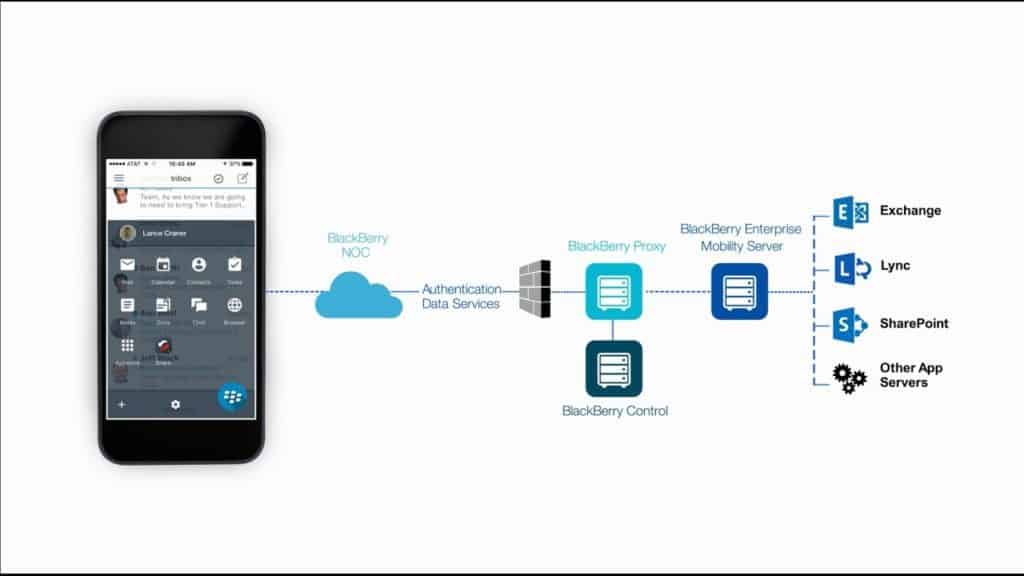
Microsoft teams up with BlackBerry to offer Office mobile apps via BlackBerry Dynamics

Microsoft just announced that the company is teaming up with BlackBerry to provide a brand new solution called BlackBerry Enterprise Bridge. The solution comes in handy because, until this decision, enterprise users had to edit their Microsoft Office files outside of their organization’s secure managed app environment. Through the solution offered by Microsoft and BlackBerry, they will be able to seamlessly use native Microsoft mobile apps via BlackBerry Dynamics apps such as BlackBerry Work for instance.

BlackBerry Enterprise Bridge’s advantages

BlackBerry Enterprise Bridge is a BlackBerry Dynamics enabled app while at the same time Microsoft Intune protected. While using it, users will get the chance to share documents while document fidelity and data encryption remain preserved. It’s also important to note that data leakage policies will be applied.

Crating a hyper-secure way for joint customers to use native Office 365 apps

Carl Wiese, the president of Global Sales at BlackBerry stated that the company has always led the market with various innovative ways of protecting corporate data on mobile devices. Now, the company understood that there is a high need for a super secure way for joint customers to use native Office 365 mobile apps.

READ ALSO: How to install BBM app (Blackberry Messenger) on Windows

The solution is BlackBerry Enterprise Bridge, and it mirrors an excellent example of how both companies continue to enable workforces to be more productive in the connected world that we live in. All of this will be secured as highly as possible.

Customers are looking for trustworthy partners

Judson Althoff, executive vice president of Worldwide Commercial Business at Microsoft believes that in today’s digital era, everyone is looking for trusted partners. Customers choose Microsoft 365 for enhanced productivity and collab tools deliver powerful innovation in a secure way. The partnership with BlackBerrry will take all of this to the next level and provide enterprises with new high standards for more secure productivity according to Althoff.

This partnership will probably trigger high interest from banks, law firms, healthcare providers, central governments and more.

Sea of Thieves now available on Windows 10 and Xbox One

Sea of Thieves, one of the most hotly anticipated multiplayer games of 2018, has finally arrived on both the Xbox One and Windows 10. Rare, the game’s developer, first announced Sea of Thieves at E3 2015, which was supposed to launch last year. However, the game has finally sailed out on Windows 10 and the Xbox One this March. This is a new swashbuckling multiplayer extravaganza in which players embark on pirate quests to plunder loot and treasure stowed away on deserted islands.

Sea of Thieves has been under development for a few years with Rare launching an Insider Programme to get some player feedback for it. Mr Neate, the executive producer at Rare, stated: “We’ve taken a unique approach with Sea of Thieves, from launching our Insider Programme in December 2016, where we invited our first 1,000 players into the first Technical Alpha, through a series of Alpha tests, our Closed Beta and Scale Tests, to the recent Final Beta where everyone was given the opportunity to play. We have worked with our community throughout this process.”

Now Sea of Thieves is finally out, you can engage in some swashbuckling action in both player vs. player and co-operative game modes. Players can select to play solo or in crews of two to four pirates that navigate through choppy seas to islands where they can plunder the loot. Thus, the multiplayer battles take place on both land and sea.

https://www.youtube.com/watch?time_continue=63&v=-HEQTG3QSFA

The game is retailing at $59.99 for both Windows 10 and Xbox One. Note that this is a Xbox Play Anywhere title, which means you can play it on both Xbox One and Windows 10 with a digital purchase. Furthermore, multiplayer battles are not just restricted to their respective platforms either; so you can take on Windows 10 players while playing Sea of Thieves on Xbox One.

Microsoft Studios has also released a Xbox One S Sea of Thieves Bundle and limited edition game controller.The Sea of Thieves bundle packages the Xbox One S with a copy of the game. In addition, the bundle includes one-month Xbox Live Gold subscription and Xbox Pass trial. A limited edition Sea of Thieves styled controller is also available at$74.99.

To celebrate the game’s release, Microsoft Studios launched The Quest for Golden Bananas competition. The contest began on March 19 and includes a series of riddles for teams. The crews that solve the riddles first get entered into grand final with the winners winning 18-carat gold bananas.

The jury is now out on whether Sea of Thieves lives up to its hype. However, this is still one of most exciting Rare titles since Microsoft acquired the developer. You can check out the Sea of Thieves website for further game details.

Google Chrome now supports Windows 10 Action Center notifications

The Action Center is a part of Windows 10 that displays UWP app notifications. Yet, Google declined to update its flagship browser with support for Action Center notification when Windows 10 first launched. Thus, Chrome has relied on its own notification system to display website and app notifications within the browser. However, the times are changing, and Google has just released an update for Chrome Canary to support Win 10 Action Center notifications.

Chrome users have requested that Google update its browser to support Action Center notifications since 2015. However, a Chrome support moderator initially stated: “Thanks for the input and ideas! We’ve discussed this quite a bit and decided not to integrate with the system level notification at this time… Maybe we can revisit it in a few years when most users are on Win 10.”

That same support moderator also stated: “On Win 10, using the native notification system would mean that all notifications could show briefly before disappearing but they could also not show, depending on a user setting. All notifications would show as coming from Chrome. They would not be actionable, and so on.”

Things have changed, and Google is now whistling a very different tune. The search engine giant is now testing support for Windows 10 notifications within Chrome Canary. Canary is an experimental version of Chrome primarily for developers that Google tries out its latest browser innovations on. As such, the company has not implemented support for Action Center notifications in the stable version of the browser as of yet. Google has not even announced when we can expect Chrome stable to include Win 10 notification support.

When Chrome stable does support Windows 10 notifications, users will get Chrome notifications in the Action Center much the same as UWP apps. For example, you could get new Gmail email notifications in the Action Center. Google will initially implement its browser’s Action Center notifications as a flag that you can toggle on or off via the flags page. A Chromium engineer explained, “This allows the user to manually opt into using Windows native notifications instead of Chrome’s version of the notifications.”

It is not entirely surprising that Google delayed Win 10 notification support for its flagship browser. After all, Google does not release apps for its services on the Windows Store or on Windows Phone. The company even ditched support for Exchange ActiveSync, which Windows Phone users needed for syncing their mobiles with Google services. Thus, Google usually holds back support for Microsoft products.

It might still be some time before Chrome notifications arrive on Windows 10. Still, Chrome support for Windows 10 notifications is better late than never. If you can’t wait for Chrome‘s Action Center notifications, press the Download Chrome Canary button on this website page. Alternatively, browse with Edge that already sends notifications to the Action Center.

Microsoft inks deal with ClearSky Data for Server Message Block (SMB) technology

Microsoft announced today a licensing agreement with enterprise storage company ClearSky Data. With the new partnership, ClearSky will be able to leverage Microsoft’s Server Message Block (SMB) file transport technology for its cloud-based storage solutions.

By licensing its SMB intellectual property to ClearSky, Microsoft is making it possible for users to seamlessly move data between ClearSky’s service and Windows tools. “This agreement demonstrates Microsoft’s commitment to licensing our SMB intellectual property to enable innovative cloud solutions that integrate with the Windows ecosystem,” said Micky Minhas, head of Microsoft Technology Licensing.

In the press release, ClearSky CTO and co-founder Laz Vekiarides said that “our partnership with Microsoft offers ClearSky Data the opportunity to provide a more robust network file sharing protocol for our enterprise customers moving to the cloud. This will help our customers get to the cloud seamlessly and more easily access their programs and efficiently manage their data, which is key to the success of their cloud operations.”

Pocket Casts podcast app launches in Windows Store in beta

Roughly nine months ago, I wrote about the state of podcasting, or lack thereof, on the Windows platform. My general thesis was that Microsoft should do a bit more to promote the vibrant community of podcasters through some software frameworks that would encourage listeners while also putting dollars in the pockets of niche content creators, all the while bolstering discovery and use of its nascent music app, Groove.

Fast forward nine months and Microsoft has shuttered its music app, shipped its small user base to Spotify and have shown no interest in providing an ecosystem driven solution for Windows users for podcast discovery.

Fortunately, Windows developers haven’t given up on users and the folks behind the multiplatform podcast app Pocket Casts has brought its ware to the Windows Store for auditory entertainment deprived users. Pocket Casts developers Shifty Jelly has launched a beta version of their podcast app in the Windows Store, that brings listening tracker and stats, variable speed controls, multi-device progression tracking, fluid resizing and OS based dark theme support.

Unfortunately, all of the listed features of Pocket Casts beta for Windows 10 is held behind a paywall for what equates to the use of a polished web app. To become a beneficiary of all of the app’s features, users need to have paid account, and the $3.99 some Windows Phone users paid back in 2015 does not apply. Users will need to have to or have had shelled out the $9.00 USD from the browser-based version of Pocket Casts to enjoy the subset of features offered on other platforms on their Windows 10 device.

Perhaps, Shift Jelly is paving the way for a PWA future where its app works on Windows 10 S devices, or maybe they saw an easy cash grab from a podcast starved platform full of potential users, either way, Windows 10 users now have the option to sync their podcast lists and listens across their smartphone and desktop finally.

Pocket Casts Desktop
Developer:
Shifty Jelly
Price:
Free

Xbox Insider Hub adds links to Feedback and Insider Blog

Microsoft yesterday announced some new enhancements for the Xbox Insider Hub. There are now new links to Xbox Feedback and the Insider blog, helping ensure Insiders never miss out any new content.

Though a bit of a small feature (seen below) it should be much appreciated for those who are looking to keep up with Xbox related builds and news via the Xbox Insider Blog. It also makes it easier for Insiders to access Xbox Feedback, which is the go-to place to suggest new features and improvements for Xbox and the Xbox mobile apps.

It is nice to see that Microsoft is making things easier for Xbox Insiders, who just like Windows Insiders, frequently install new builds and are always on the lookout for new content. You can learn more about The Xbox Insider program here, and check our previous post on how the Xbox Insider team collects your feedback.
Telstra Calling for Office 365 announced for mid-2018 Australia launch

Telstra, Australia’s largest telecommunications company, has just signed a major deal with Microsoft that will allow them to be the exclusive service provider for Office 365’s phone call functionality.

The company will be launching a new product called, Telstra Calling for Office 365, in the middle of this year which will allow clients to make traditional telephone calls from within Office 365 apps such as Skype for Business and Microsoft Teams. Telstra Calling for Office 365 is said to be a standalone product, not bundled with any other Telstra service.

“Launching a product like this caters for, not just the large enterprises, but more importantly the hundreds and hundreds of thousands of Australian organisations that will need to re-plumb and rewire their communications and collaborations environment ahead of a number of things changing in the market like the NBN,” said Telstra’s executive director of global products, Michelle Bendschneider, in an interview with the Financial Review. “We’re going after opportunity that is close to the core of the business we know and understand deeply, but also embraces technology that is close to the type of business that we know how to serve really, really well.”

Future Windows Updates will be fast, silent and won’t affect your work

Windows updates usually come twice a year and are completely free of charge. But, as many users have noticed, the offline time spent to reboot was way too long and it’s annoying when your PC takes too long to update.

For the next major Update, Windows Fundamentals team officially announced to include a much faster reboot phase. An improvement of 38% has been made last October dropping the average time for the Fall Creator’s Update to 51 minutes. The improvements will continue by moving portions of the work done during the offline phase and placing it in the online phase.

A reduction of 63% from the Creators Update

All of the offline time will be reduced to an average of 30 minutes in the upcoming Windows 10 Update release. This basically means that Windows Updates will be fast, silent and won’t affect your work – until you’ll be prompted to restart.

Microsoft posted on their official blog a detailed comparison of the old feature update installation process versus the new installation model and the changes done since the release of Fall Creator’s Update:

windows 10 update time comparison table

In the previous Creators Update, the offline phase was completed in an average time of 82 minutes. The Fall Creators Update improved to about half of that time. This time, the major update of Windows 10 should include an offline phase of just 30 minutes. But, how will that affect your system performance?

The upside is the shorter offline period — the other side is the update might actually take longer overall. You can continue your work as Microsoft moved part of his work into the online phase, but keep in mind the extra load your system carries along in the background when it’s time to update. Afterward, a reboot will be done to complete the update and you’ll be able to enjoy the fresh new features.

Being aware of the Windows 10 Spring Creators Update coming, it’s a good idea to set your restart schedule. You can set a specific time for the Windows Update Restart Scheduler in three simple steps:

  1. Open the Settings menu and click Update & recovery
  2. Go to Windows Update and click Check for updates
  3. Click Restart options and schedule a convenient time you want the restart to apply new updates

Windows Update is known for causing countless glitches and technical errors. Here at WindowsReport, we’ve written about quite a few of them, so check them out:

Windows 10 build 16299.334 is out is fixes for Bluetooth, PDF rendering and more

Microsoft has just released a second cumulative update for Windows 10 version 1709 this month. This one is the build 16299.334, and it follows the build 16299.334 which was released last week as this month’s Patch Tuesday Update.

This latest patch should appear as “KB4089848” in Windows Update, and it comes with a pretty long list of quality improvements. Among highlights, Microsoft mentioned a fix for an issue where Bluetooth devices no longer work after a restart, and there is also another fix for a PDF rendering issue in Microsoft Edge. The full changelog can be seen below:

  • Addresses issue with a GDI handle leak in the Windows Ribbon control.
  • Addresses issue where users can’t select OK after entering credentials in command line on Windows Server version 1709.
  • Addresses issues where Bluetooth devices fail to receive data after a restart.
  • Addresses issue where, during BitLocker decryption or encryption of a drive, files protected with the Encrypting File System (EFS) may become corrupted.
  • Addresses issue where the server may occasionally encounter an error during file transfer. The error is “Stop D1 in tcpip!TcpSegmentTcbSend”.
  • Addresses issue where an iSCSI RESET might trigger a cluster failover.
  • Addresses issue in MPIO where pass-through SCSI requests might lead to a stop error if the disk is pending removal.
  • Addresses issue where processing of group policies may fail, and policies may be removed as a result. This occurs if the length of the Windows Defender Firewall policy rule exceeds 260 characters.
  • Addresses issue caused by a new privilege in Windows Server 2016 and Windows 10 version 1709 named “Obtain an impersonation token for another user in the same session”. When applied using Group Policy to those computers, gpresult /h fails to generate reporting data for any setting configured by the Security Configuration Engine (SCE) extension. The error message is “Requested value ‘SeDelegateSessionUserImpersonatePrivilege’ was not found”. The Group Policy Management Console fails to show the privilege in the Settings tab for a GPO where the setting has been configured.
  • Addresses issue where errors may occur when accessing WebDAV files or folders on a SharePoint site if the file or folder name contains multibyte characters.
  • Addresses issue where the Remote Desktop License report gets corrupted when it exceeds the 4 KB size limit.
  • Addresses issue where an Azure point-to-site VPN connection that uses IKEv2 may fail when the user’s device contains a large number of trusted root certificates.
  • Addresses rendering issue in Microsoft Edge for PDF documents with backgrounds created using various third-party publishing tools.
  • Addresses issue where a media platform stops responding when changing cameras rapidly on a device.
  • Addresses issue where a media platform stops responding, which affects media playback in Microsoft Edge, Internet Explorer, and Microsoft PowerPoint.
  • Addresses issue with spatial audio when used in connection to Dolby Atmos for Headphones.
  • Addresses issue where a credential prompt that requires administrative privileges appears when a standard user account performs the first logon to a Windows 10 device that has been deployed using Windows Autopilot.
  • Addresses issue where tiles in the Start menu aren’t preserved when upgrading from Windows 10 version 1607 to Windows 10 version 1709.
  • Addresses issue with Spell Check and custom dictionaries.
  • Addresses issue with the press and hold feature when using a pen in Tablet mode.
  • Addresses issue with editing web password fields using a touch keyboard.
  • Addresses issue where some Bluetooth card readers don’t work after a restart.

It’s quite unusual for Microsoft to push a new update just a week after Patch Tuesday, especially with so many additional fixes. Anyway, you’re welcome to download this new patch now and let us know in the comments if you notice some improvements thereafter.

Plex News brings 190 video news sources to Xbox One consoles

The Xbox One Plex app has just added the new Plex News feature which allows users to view video content from 190 different news sources.

Some of the news providers include major brands such as AP, IGN, Reuters, and The Financial Times however over 100 of them are smaller local channels. Plex News is available to view for free by anyone with the Plex app installed on their Xbox One. A Premium subscription isn’t required as the news content is supported by ads.

Plex users can customize their own news sources so those who might want less Vox and more Sky News should have little to worry about.

The Xbox One Plex app can already be used to watch live TV, movies, and TV shows and the addition of Plex News makes it even more feature-packed. Are you a Plex user? Let us know how you use the app in the comments below.

Plex
Plex
Developer:
Plex
Price:
Free

Grab Hitman Spring Pack for free on Xbox One for a limited time

The Hitman Spring Pack is now available to download for free on Xbox One consoles. This limited edition download essentially allows gamers to play a selection of content from the main Hitman video game for free. This isn’t just a demo though as it comes with 24 Xbox Achievements and a large amount of playable content. Here’s the official description.

Welcome to sunny Sapienza! Download the HITMAN Spring Pack and experience everything from Episode 2: Sapienza. Take on the ‘World of Tomorrow’ campaign mission, complete 20 levels of location mastery to earn new gear, unlock more items from Challenge Packs and test your skills in Escalation Contracts – plus get access to Contracts Mode and future Elusive Targets in Sapienza. Downloading the HITMAN Spring Pack will also give full access to everything included in the ‘ICA Facility’ location.

The Spring Pack includes: 3 Campaign missions, including all cut-scenes, 12 Escalation Contracts, 120+ Challenges, and 24 Achievements.

The Hitman Spring Pack will be available to download until April 3rd.

HITMAN™ - Spring Pack

Microsoft Learning Tools, with 10 million monthly active users, adds new features to Immersive Reader

Microsoft recently announced that Microsoft Learnings Tools surpassed 10 million monthly active users, and today the company detailed some new features for the free toolset. Indeed, those using the free reading and writing tools can now enjoy new features in Immersive Reader such as Picture Dictionary, Custom Parts of Speech Colors, and Roaming Settings.

With the new Picture Dictionary in the Immersive Reader, Microsoft partnered with Tobii Dynavox to allow students to click on a word and immediately see a related picture. They’ll also have the ability to “Read Aloud” as many times as they would like in order to better comprehend the material. See it in action below.

Finally, with Custom Colors for Parts of Speech, students can use colors to see representations of nouns, verbs, and adjectives. This is meant to be used with the Roaming settings, allowing for a student to roam with the Immersive Reader across various platforms and apps.

These are some pretty useful teaching and learning features, and it is great to see Microsoft empowering educators to achieve more. All features are rolling out today to Word Online, OneNote Online, OneNote for Windows 10, OneNote iPad, Outlook on the Web, and Outlook.com. You can learn more by checking here.

Nivaura launches blockchain-based investment product, the world’s first, built on Azure

A new company, Nivaura, has created the world’s first blockchain-based investment product built using Azure, Microsoft’s cloud technology. As noted in a Microsoft News Center UK blog post, Nivaura is competing with IBM to deliver their product. In this 2016 video, Nivaura CEO and CPA (Chief Product Architect) Avtar Sehra, a quantum physicist, explains what Nivaura was able to do to build up their product using blockchain with Microsoft Azure in under a year.

More people are directing their focus on blockchain technology. In case you need a refresher, blockchain is a peer-to-peer distributed registry. Blockchain cannot be modified in any way, which makes it more secure, but you can add elements to it to suit your needs. Blockchain is the basis for cryptocurrencies such as Bitcoin.

In November 2017, Nivaura launched the world’s first automated bond issuance using their blockchain platform technology with help from Microsoft Azure. Nivaura’s blockchain technology automated all the necessary financial documentation needed for the transaction and everything was done using the Ethereum public blockchain network. At launch, Sehra reinterated what Nivaura can do for large investment companies like JPMorgan:

“What we’re showing is you can use open public infrastructure for regulated financial instruments, which is a very critical step, because from the earliest stages we’ve always believed public infrastructure is a viable way forward for particular instruments that don’t necessarily have high volume secondary markets.

As cryptocurrencies or tokenised fiat-currencies become a more accepted form of payment mechanism it will lead to an increasing uptake in using public blockchain infrastructure for registration, clearing and settlement of the securities.”

Only time will tell if more financial companies will make the jump towards using blockchain for automating financial transactions. Stay tuned.

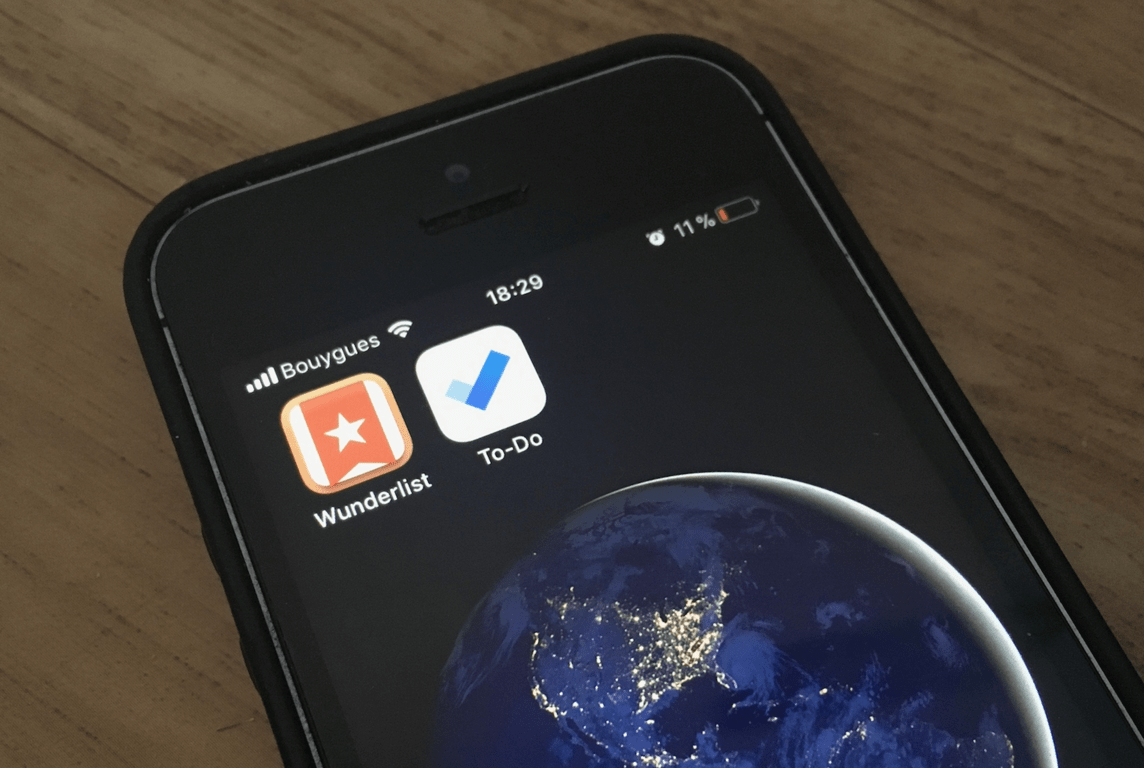
Problems moving to Azure have slowed Microsoft’s transition from Wunderlist to To-Do

Despite Microsoft acquiring the excellent task manager app Wunderlist three years ago, the company announced last year that it would soon be replaced with a brand new product called Microsoft To-Do. The Redmond giant never really clarified the need to start from scratch, and it’s fair to say that there is still a big feature gap between Wunderlist and To-Do.

Microsoft still plans to bring most of Wunderlist’s features to To-Do, but the process is taking longer than expected. Wunderlist founder Christian Weber, who left Microsoft after the To-Do launch shared some details about the challenging transition process yesterday.

In a series of tweets spotted by German blog Dr Windows (via The Verge,), Weber explained that “Wunderlist’s API runs on Amazon Web Services, and should then be ported to Azure. But that was extremely time-consuming, so everything had to be rewritten.” Weber also explained that the team originally planned to keep Wunderlist alive for a year while getting Microsoft To-Do up and running, but the complicated transition from AWS to Azure eventually led Microsoft to keep Wunderlist alive for the time being.

As of today,  Wunderlist still works as usual even though it’s no longer getting new features. However, many power users still prefer using it over Microsoft To-Do, even though the latter better integrates with Outlook.com and Office 365 accounts.

Microsoft may be widely considered as a productivity expert as of today, but you can’t deny that the company probably has too many similar products for managing tasks. Between Outlook tasks, Cortana reminders, Wunderlist, To-Do or Planner (for Office 365 only), it can be hard to figure out what to use and which task management solutions play nice with other Microsoft products. The Redmond giant recently promised new features for To-Do including list sharing and Cortana integration, though you may want to keep using alternatives for the time being.

First reviews for Windows 10 on ARM PCs are out, and they’re not great

The first Always Connected PCs powered by a Qualcomm Snapdragon 835 are coming this Spring, and the first reviews have been published this week. Laptop Mag looked at the HP Envy x2, and The Verge checked the Asus NovaGo.

Both reviews highlighted the excellent battery life and convenience of having a laptop that’s always connected to the Internet, but the most interesting part of the reviews was performance details. Well, the bad news is that some Win32 apps like Google Chrome are almost unusable on these machines

As you may know, Windows 10 on ARM PCs can run Win32 apps through emulation, though with several limitations (only 32-bits apps are supported). Here is what Laptop Mag had to say about Win32 apps support on the HP Envy x2:

The HP Envy x2’s major weakness is its laggy performance, as its Qualcomm 835 CPU and 4GB of RAM don’t provide a ton of speed, especially when you’re running non-Windows store apps. I first noticed this when I tried to open Chrome from the desktop, but accidentally opened two windows, because the first was taking so long to generate that I had tapped the screen again.

The Verge echoed this sentiment, adding that popular Win32 apps that have been ported to the Microsoft Store with Microsoft’s Desktop Bridge also performed badly on the Asus NovaGo:

The Chrome issues extend to web-wrapper or Electron-based apps, such as Slack, which have abysmal and frustrating performance. I ended up using Slack in a tab within the Edge browser, which performed much better than the Slack app downloaded from the Microsoft Store.

The Asus NovaGo.

The HP Envy x2 is a $999.99 machine, while the Asus NovaGo will start at $599. Both laptops will be available to purchase in the US later this Spring, but it remains to be seen if there will be many early-adopters willing to buy these machines. Being always connected is great, but pricing may be too high when you consider the sub-par performance in certain scenarios.

To be clear, both machines will ship with Windows 10 S, and customers who will stick with Microsoft Edge and other UWP apps should have a good experience. Not everyone needs Google Chrome or legacy desktop apps, and these customers should be pretty happy with a Windows 10 on ARM PC. However, the fact that bridged Win32 apps available in the Store don’t perform well is quite concerning. As The Verge pointed out, these machines are not really meant to be used by power users:

Overall, while there were some definite pluses to using the Windows on Snapdragon computer (long battery life, silent design, and integrated connectivity), I couldn’t wait to go back to using any one of the other Intel PCs I’m used to. Between the app compatibility issues and the general feeling that I was always pushing the machine to the edge and it was barely holding on, using the NovaGo as my primary work computer hasn’t been a very pleasant experience. In fact, it reminds me a lot of using a low-end Chromebook.

Microsoft and Qualcomm deserve credit for making full Windows 10 work on a smartphone processor, and the Snapdragon 835 is definitely no slouch. Of course, first-gen products can never be perfect, and hopefully, future models powered by the Snapdragon 845 will have better performance.

However, Windows 10 on ARM PCs will also have to compete with Always Connected PCs with Intel processors and Qualcomm modems, just like Microsoft’s Surface Pro with LTE. While PCs with Intel chips will always be more expensive than those using Qualcomm’s, full compatibility with x86 desktop apps and drivers should remain a main selling point in the near future.

Sea of Thieves first impressions: Is Microsoft’s pirate game all it’s cracked up to be?

Sea of Thieves, the much-anticipated pirate game from Microsoft Studios, was finally released on Xbox One and Windows 10 yesterday. The game is a $59.99 purchase, but it’s also the first Microsoft Studios title to launch with Xbox Games Pass, Microsoft’s new gaming subscription service. As a happy subscriber, I was pretty excited to try the game on day one yesterday.

Microsoft has been marketing Sea of Thieves like crazy this past couple of weeks, and I really wanted to know if the company could have a hit on its hands. After trying the game for the first time yesterday, I’m really not sure about that. There are some really great elements in Sea of Thieves, especially the graphics and the navigation. But other than that, I’m afraid it’s much less ambitious than what I thought.

First of all, I’m afraid the first hour of gameplay will be very frustrating for most gamers, and those who have very little patience may give up very quickly. There is zero tutorial when you begin the game, and it took quite some time to figure what to do at the outpost where I began my session.

You have to use the coordinates on the maps to figure out where to go.

For my first playthrough, I chose to play the game alone as I didn’t want any distractions while trying to understand the gameplay. You start the game at a random outpost, where you can speak to merchants and purchase quests from three different factions. At the beginning of the game, the only quests you can do are treasure and animal hunts, and I couldn’t figure out how to complete the second ones.

Once you choose some quests to complete, you can head over to your boat and you and your crew will have to vote for the quest you want to complete. If you choose a treasure hunt, you’ll get a map showing you the coordinates of a buried chest. You’ll then have to check where the coordinates are on the map table below the deck and add a mark on it if you want to. There is no HUD in Sea of Thieves, so you’ll have to do a lot of back and forth between the ship’s wheel and the map table (below the deck) to figure out where you’re going.

Despite its cartoon graphics, Sea of Thieves is a really pretty game.

Navigation is pretty simple in Sea of Thieves: to leave an outpost, you raise the anchor and deploy sails. It’s worth noting that Rare’s water tech is absolutely incredible, and sailing the seas feels very good.

However, the world of Sea of Thieves feels quite empty so far. During my first playthrough, I didn’t see any other pirate ships or players, and I found nothing to do on the different islands I visited. At some point, I came across a place called Skull Keep, which looked like a big wooden fort defended by cannons. I expected to have to fight either pirates or hordes of skeletons, but the whole place was completely empty. I only discovered a door which needs a special key to be opened, but the game gave me no clues about where to find it.

I expected to find lots of enemies in this fort, but it was completely empty.

In some ways, Sea of Thieves seems almost too realistic. You have to figure out everything yourself, and playing the game alone can be quite difficult and frustrating. Overall, I think the lack of a real tutorial is a bad design choice. As an example, I unfortunately sunk my own ship at some point after hitting a rock near an outpost. Actually, I only realized that my ship was sinking once I was on the ground.

After seeing my ship disappear into the sea, I had no idea how I could get another one. After going in circles for about 10 minutes without knowing what to do, I spotted some green smoke leaking from where I had lost my ship. As it turned out, this was actually a mermaid, and these can help you teleport to a brand new ship. Thanks for making that part so obvious for players, Rare.

If you lost your ship, mermaids can teleport you back to a new one.

After 2 hours of gameplay, I finally managed to find a buried chest on an island. Once you find a chest, which will always be protected by skeletons, you’ll have to bring it back to an outpost and collect your reward. You gain reputation points every time you complete a quest, which unlocks more difficult missions. As for the gold you earn, you can only use it for cosmetic items, which for me isn’t exciting at all.

For now, I’m afraid the game can become repetitive very fast. The various fetch quests seem to be pretty much all the same to me, and there’s simply not much else to do in the game once the novelty wears off. Combat isn’t great either, as the game’s skeletons offer almost zero challenge. Worse, there is nothing to loot in the game except bananas, wood planks, and cannonballs, which aren’t hard to find at all.

I feel like the game really lacks an interesting progression system, and there also needs to be more reasons to complete quests than just unlocking cosmetic items. The saving system is also a bit obscure: it looks like you can’t store chests somewhere, and you just start with a brand new ship at a random outpost every time you log in.

There are not a lot of things to do at the game’s various outposts.

Overall, Sea of Thieves still looks like an early-access game, with very little content. $59.99 seems high for what seems to be a slim, though very pretty package. There is also very little dialogue in the game, no documents to read except mission orders, and almost no music. All in all, the world of Sea of Thieves looks very shallow compared to the one from Assassin’s Creed IV: Black Flag, which remains the gold standard for pirate games to this day.

I have yet to try playing the game with a squad, but I’ve also read some bad things about the multiplayer experience. As Polygon pointed out, there are no “safe zones” in the game, and other pirates can wait at outposts to ambush you and steal all your chests. In a game called “Sea of Thieves,” maybe some encounters with actual thieves were to be expected? Anyway, this sounds like a very frustrating experience for gamers, and I hope Rare is aware of it.

Thieves will try to steal your precious chests.

Despite its flaws, it’s probably too early to know if Sea of Thieves could be a hit. Again, I found the lack of real tutorial really annoying, but even with that omission, I think the game is probably easier to understand than Minecraft. The latter became massively popular over the years, even though I never had the patience to learn how to play it.

It’s great that Sea of Thieves is free with Xbox Games Pass, and for now, I wouldn’t recommend anyone to buy the game full price (it’s probably never a good idea to buy games on day one, anyway). If you know what to expect and have some friends to play with, you’ll probably have some fun in Sea of Thieves. However, the steep learning curve and lack of content will probably push casual gamers away really quickly.

Microsoft and Rare deserve credit for trying something different with Sea of Thieves, but I’m not sure the pirate game is what the Xbox really needs right now. It’s been years since Rare last released a hit game, and it doesn’t seem like the talented studio behind the cult-classic shooters Goldeneye and Perfect Dark released the best game it could create. If you’re looking for the ultimate pirate adventure, I’m afraid Ubisoft’s Assassin’s Creed: Black Flag remains much more fun and immersive, for now at least.

While this isn’t a definitive review, you only have one chance to make a good first impression, as the adage says. And to be perfectly honest, I was pretty close to rage quitting after the first 30 minutes of gameplay. It got better when I finally started to understand the game’s core mechanisms, and I do plan to keep playing the game this week. Sea of Thieves seems to be more fun with some friends on board, and this is also something that I’ll have to explore over the coming days. If you already had the opportunity to try Sea of Thieves, I’d love to read what you think about the game so far.

How to fix your laptop if it shuts down when overheating

Laptop users are familiar with laptop heat especially when they’ve been using their computers long enough, and it starts to get hot, sometimes it overheats, and eventually shuts down.

The reason it shuts down is so that it prevents permanent damage from happening, or even catching fire. But while the latter may not happen all the time, overheating has been linked to other human dangers such as infertility and even skin problems.

When laptops produce heat, it is generated by the CPU and its graphics card, and different laptops handle such heat differently once it is generated – some blow air using fans, others use the metal chassis as a heat sink to conduct the heat into the air, from your laptop.

Other causes could be a non-functioning fan, blocked air ducts/vents, and these can reduce your computer’s life so you need to resolve it as soon as possible. There are solutions both to manage the temperature and cool your laptop systems, and fix laptop overheating shutdown.

FIX: Laptop overheating shutdown

Table of contents:

  1. General troubleshooting
  2. Change power options
  3. Test hardware failure
  4. Select Power settings to shut off laptop when not in use
  5. Check heat sinks
  6. Minimize background tasks
  7. Check for the latest driver updates/installs

1. General troubleshooting

One of the ways you can cool down your laptop is to raise it in open air on a laptop stand, or use some books under the laptop, so it can get as much air as possible to stay cooler, and help the fans blow without hindrances. You can also turn on power saving options on your computer so it can use less power and thus generate less heat.

Other things you can do include unplugging from the power outlet as the power cord also heats up while doing its work, stay away from hot environments, use a laptop cooling pad, turn it off for some time so it can cool down, and keep it serviced every so often to ensure fans and vents are cleared of dust and hair which clog them up.

Did any of these fix the laptop overheating shutdown issue? If not, try the next solution.

2. Change power options

  • Click Control Panel and select Hardware and Sound
Laptop overheating shutdown
  • Click Power option
Laptop overheating shutdown
  • Go to Change plan setting
Laptop overheating shutdown
  • Change advanced power settings
Laptop overheating shutdown
  • Click Processor power management
Laptop overheating shutdown
  • Go to Maximum processor state and change it to 65-70 percent
Laptop overheating shutdown

Did this help? If not, go to the next solution.

3. Test hardware failure

If laptop overheating shutdown persists after you clean the vents and move to a cooler room, then there’s a likelihood that a hardware component may be damaged. Test your laptop to see if the memory, processor or graphics hardware have failed. Most laptops have diagnostic software to verify hardware failures.

4. Select Power settings to shut off laptop when not in use

Most operating systems allow you to change power settings. Use these settings to turn off the display when you are not actively using your computer. If you frequently leave your computer on when you leave it, then changing the power setting to turn off your monitor when it is not being used can help keep your computer running at a cooler temperature.

5. Check heat sinks

Laptop overheating shutdown

Sometimes laptop overheating shutdown may be due to a loose heat sink or fan that isn’t operating the way it should. You could find that the heat sink on your processor is unattached, or one retaining clip is out of place, so it lodges the wrong way. In this case, clean and re-grease the heat sink or CPU, put the heat sink or retaining clips back in place and you’re good to go.

6. Minimize background tasks

You can also get laptop overheating shutdown problems due to background tasks such as defragmentation and virus scans. You can use the task scheduler to ensure these tasks are executed only when your laptop is not being heavily used.

7. Check for the latest driver updates/installs

You can install the latest drivers through Device Manager or going to your device’s manufacturer website and find the latest versions, then uninstall the old, and install the new ones.

Here’s how to use Device Manager to check for driver updates:

  • Right click Start, select Device Manager
Laptop overheating shutdown
  • Click Display adapters to expand it
Laptop overheating shutdown
  • Right click on the driver
  • Select Update driver software

If you don’t have any driver updates available, right click on the graphics card driver and click Uninstall, then restart your computer, or use Windows Update settings as shown below:

  • Click Start
  • Select Settings
Laptop overheating shutdown
  • Select Update & Security
Laptop overheating shutdown
  • Select Windows Update
Laptop overheating shutdown
  • Click Check for updates
Laptop overheating shutdown

If you find this task too time-consuming, you have the option to use dedicated driver updater software.

These are professional tools that can find and install the latest driver versions for your hardware. You can set them up to do regular driver scans so you won’t have to worry about outdated or damaged drivers in the future.

Let us know if any of these solutions worked by leaving a comment in the section below.

Assassin’s Creed Rogue comes to Xbox One in new 4K Remastered edition

Assassin’s Creed Rogue Remastered is now available to play on all Xbox One consoles. This game is a remaster of the original Assassin’s Creed Rogue video game which was originally launched on the Xbox 360 back in 2014 and was the final Assassin’s Creed title to made for that console generation.

This new Xbox One version of Assassin’s Creed Rogue features 4K resolution when played on the Xbox One X consoles, an improved graphics engine to create a more immersive world, and bonus content from the Xbox 360’s Deluxe Edition. Here’s the official description.

Created by Ubisoft Sofia, the studio that developed the original Assassin’s Creed Rogue, Assassin’s Creed® Rogue Remastered will offer an even more beautiful and immersive gaming experience that invites fans of the series and new players alike to discover or rediscover Shay’s adventures in 18th-century North America. The darkest chapter of the Assassin’s Creed franchise, now featuring 4K resolution, enhanced graphics with denser crowds, improved environment rendering, shadow resolution upscale, and much more!

Also included: Two bonus missions from the original deluxe edition, two packs full of weapons, outfits and customisation items for your ship, and the Bayek’s Legacy outfit.

Are you excited to play Assassin’s Creed Rogue Remastered on the Xbox One? Let us know in the comments below.

Assassin’s Creed® Rogue Remastered

0x8024a112 Windows Update Error: 4 Ways to Fix it

Are you getting Windows Update Error Code error 0x8024a112? Read on! This post will address this problem.

Sometimes, after running a Windows update, the system refuses to restart, resulting in the error 0x8024a112, which usually displays with the text:

We’re having trouble restarting to finish the install. Try again in a little while. If you keep seeing this, try searching the web or contacting support for help. This error code might help: (0x8024a112).

The error appears due to factors such as terminated service, corrupted system file, or incomplete update, which requires a restart.

Hence, Windows Report has compiled the following solutions for solving the error problem.

How do I fix error code 0x8024a112?

Before we head to the complex one, here are a few quick solutions to try:

  • Restart the computer.
  • Disable any third-party antivirus, firewall, VPN, or similar software running on the PC.

If none work, head to the fixes listed next.

1. Run the Windows Update troubleshooter

  1. Press Windows + I to open Settings, and click on Update & Security.
  2. Select Troubleshoot from the navigation pane, and click on Other troubleshooters.
  3. Select Windows Update and click on Run the troubleshooter. windows 10 error 0x8024a112
  4. Click Next to run the Windows Update troubleshooter, then follow the instructions on the screen.windows 10 error 0x8024a112

Windows Update troubleshooter is Windows 10’ built-in program that automatically detects and fixes most incorrect settings on your PC resulting in Windows Update 0x8024a112 failure.

2. Run System Restore in safe mode

Tip icon Tip
Ensure you can identify the restore point date before the error message first appeared. Also, System restore does not affect your files, documents, or personal data.
  1. Boot Windows into Safe Mode.
  2. Press Windows + R to open Run, type rstrui.exe, and hit Enter.system restore to fix 0x8024a112
  3. Select Choose a different restore point and click Next.
  4. Pick a restore point from the list, and click Next.choose restore point
  5. Verify the restore details, click Finish, and then wait for the process to complete.

Safe mode is a diagnostics mode in Windows that starts your PC with only basic files and drivers running.

However, you can perform a system restore in safe mode to revert back to a certain restore point on your system devoid of error 0x8024a112.

3. Remove the Software Distribution folder

Tip icon Tip
This solution contains steps that are part of modifying the registry. Please note that serious problems may occur if you do this incorrectly. Ensure you follow these steps correctly and carefully.
  1. Press Windows + S to open Search, type Command Prompt, and click on Run as administrator.cmd
  2. Stop the BITS, Cryptographic, MSI Installer, and Windows Update Services by typing the following commands and hitting Enter after each: net stop wuauserv net stop cryptSvc net stop bits net stop msiserver
  3. Rename the SoftwareDistribution and Catroot2 folders by executing these commands:Ren %systemroot%\SoftwareDistribution SoftwareDistribution.old Ren %systemroot%\system32\catroot2 catroot2.old
  4. Restart the services you disabled earlier with the following commands: net stop wuauserv net stop cryptSvc net stop bits net stop msiserver
  5. Close the Command Prompt and restart the computer.

Try running Windows Updates again to check if the Windows 10 error 0x8024a112 has been resolved.

4. Perform a Clean Boot

  1. Press Windows + R to open Run, type msconfig, and hit Enter.
  2. Go to the Services tab, and then select Hide all Microsoft services checkbox, and click on Disable all.windows 10 error 0x8024a112
  3. Go to the Startup tab and click on Open Task Manager.
  4. Select each of the apps here individually and click Disable if the option appears near the corner.
  5. Finally, reboot your PC

Clean boot is a procedure in Windows that starts your PC in a clean state devoid of software conflicts.

These conflicts, most especially related to error 0x8024a112, can be caused by applications and services that start up and run in the background whenever you start Windows normally.

To successfully perform a clean boot on Windows 10, you have to be logged on as the administrator.

You should be able to find and download available updates after trying out any of the solutions we mentioned above without coming across the 0x8024a112 update error in Windows 10.

Before you leave, do check the best Windows Update repair tools and get one today to fix such errors seamlessly.

If you have any questions or suggestions, the comments section is below.

Windows Server 2019 is coming in the second half of 2018, Windows Insiders can download first preview today

The Windows Server team just announced a first preview build of Windows Server 2019, the latest version of the server OS to be available in the second half of 2018. Windows Server 2019 is built on the foundation of Windows Server 2016, which the company says is the version that saw the fastest adoption ever.

Windows Server 2019 has been designed for hybrid cloud scenarios, with the company saying that “hybrid cloud enables a future-proof, long-term approach.” Project Honolulu, Microsoft’s browser-based solution for server administration will also allow customers to easily integrate Azure services such as Azure Backup.

Project Honolulu’s management dashboard for Azure Backup in Windows Server 2019 Preview.

The next version of the server OS will also bring some new security features, including a native integration of Windows Defender Advanced Threat Protection. “This gives customers access to deep kernel and memory sensors, improving performance and anti-tampering, and enabling response actions on server machines,” the company explained.

Windows Defender ATP will be embedded in Windows Server 2019.

The first preview build of Windows Server 2019 is available today for Windows Insiders. Microsoft says that the new server OS will have the same licensing model as Windows Server 2016, and there will be both a Semi-Annual Channel release and Long-Term Servicing Channel (LTSC) release for customers.

Windows Server gets a new build, too, vNext LTSC 17623

Windows 10 PCs aren’t the only devices receiving new builds today, users in need of updates to Windows Server are in luck today.

Alongside the Windows 10 Insider preview build 17127 for Fast Ring PCs, customers using Windows Server are now getting vNext LTSC build 17623 today.

The LTSC in the title for Windows Server stands for Long-Term Servicing Channel and it combines both Desktop experiences as well as Server Core with support for over 18 server languages and the bits for the next Windows Server Semi-Annual Channel release.

According to the latest Windows Blog post, customers can look forward to the following:

  • In-place OS Upgrade (from Windows Server 2012 R2, Windows Server 2016)
  • Application compatibility – please let us know if any server roles or applications stops working or fails to function as it used to

Other tidbits in the release include extending clusters with Cluster Sets, deep platform sensors, and response actions to address memory and kernel vulnerabilities and attacks via Windows Defender ATP. Exploit Guard prevention capabilities, Network protection, Controlled Folder Access, Failover Cluster removal and shielding for virtual machines are also new items for Server customers to play around with this new 17623 build.

Customers can try out the new build via an iSO formatted in 18 languages and download it after registering as an Insider which will then walk through the rest of the download and install process.

As with many Insider programs, testers participate at their own risk and Windows Server build 17623 there are a handful of known issues that still need a little attention from the Server engineering department.

  • Known issues
    In‑place OS upgrade: Domain Controllers. During an in-place OS upgrade, Active Directory (AD) Domain Controllers (DC) might not be upgraded correctly. So, back up any AD DCs before performing an in-place OS upgrade.
  • Editing or creating policies for AppLocker can cause the MMC snap-in to crash when generated rules for a packaged app.
  • After upgrading the operating system, the AppX database may have corrupted entries, which causes problems for components that use those entries.

Testing of the Windows core may fail because of a timeout while attempting to load the test libraries.

Microsoft announces new DirectX Raytracing API for DirectX 12

Microsoft made a pretty big announcement for game developers at the Games Developer Conference yesterday. The company unveiled a new DirectX Raytracing API for DirectX 12, which will be able to supplement current rendering techniques to improve visual quality in video games.

For those unfamiliar with it, raytracing is a technique that is often used for CGI in films, but some games also use the technology for some tasks like pre-calculating the brightness of virtual objects. “DXR will initially be used to supplement current rendering techniques such as screen space reflections, for example, to fill in data from geometry that’s either occluded or off-screen.  This will lead to a material increase in visual quality for these effects in the near future,” Microsoft explained.

Raytracing calculates what a pixel would look like if a virtual world had real light.

Leaving some of the technical details aside, you should know that Microsoft’s goal to bring real-time raytracing to video games, with dedicated hardware acceleration and seamless integration with existing DirectX 12 content. According to the company, the new API could “open the door to an entirely new class of techniques that have never been achieved in a real-time game.”

Microsoft said that developers can use existing hardware to get started with DirectX Raytracing, and popular game engines such as Unity, EA’s Frostbite and Epic Game’s Unreal Engine will soon natively support the API. It remains to be seen if DirectX Raytracing can lead to a graphics revolution, but developers now have a powerful new tool to make it happen.

Microsoft makes changes to its Service Agreement, to take effect May 1st

Have you ever curled up under the covers on a rainy day with a good service agreement as your choice of entertainment? I haven’t either, but Microsoft is making some changes and updates to its Microsoft Services Agreement and for the next month you may want to familiarize yourself with the new terms before they become permanent fixtures in your life as of May 1, 2018.

A quick FAQ posted to the Microsoft blog regarding Service Agreements covers some of the items users will need to know about their products going forward, such as which services are and are not covered by the newly adjusted Services Agreement. Another handful of Service Agreement topics are covered including what changes are actually being made, how are parents of children with access to Microsoft services being held accountable, and how users can go about accepting the new terms for their respective services.

Despite many of the adjustments being run-of-the-mill semantic tweaks, we suggest every user of Microsoft products or service take a look at the updated terms located here for their own piece of mind.

Microsoft reduces “offline time” for Windows 10 featured updates to an average of 30 minutes

Microsoft’s Joseph Conway, a Senior Program Manager on the Windows Fundamentals team, recently took to a blog post to explain the company has acted on a top request from Windows 10 users. Indeed, he says Microsoft worked on the phases of Windows Update to help reduce the “offline time” when Windows 10 is unusable during featured updates.

According to Conway, there are four phases in the installation of a featured update, each of which is done in online and offline phases, with multiple reboots required. An online phase happens in the background while the device and OS are running, and means the user can continue working on a PC. An offline phase, meanwhile, means the OS is not running, and there will be an offline period where the user can’t use their PC.

Here’s how updates word under the old model, with an average offline time of 82 minutes for installation of the Creators Update.

Online Phase of Update:

  • PC checks for available feature updates (manually or automatically)
  • Feature update payload is downloaded
  • PC waits for a required reboot to begin update installation

Offline Phase of Update:

  • PC reboots to begin update installation process
  • User content is prepared for migration
  • New operating system is placed into a temporary working directory
  • Drivers and other required operating system files are migrated
  • User content is migrated
  • PC reboots and completes the update
  • OOBE begins

Now, with the upcoming Redstone 4 release, Conway says Microsoft has done additional work to reduce the offline time to just 30 minutes. He provided the following explanation, saying Microsoft worked to move portions of the mitigation process from offline phase to the online phase:

Online Phase of Updates:

  • PC checks for available feature updates (manually or automatically)
  • Feature update payload is downloaded
  • User content is prepared for migration
  • New operating system is placed into a temporary working directory
  • PC waits for a required reboot to begin update installation

Offline Phase of Updates:

  • PC reboots to begin update installation process
  • Drivers and other required operating system files are migrated
  • User content is migrated
  • PC reboots and completes the update
  • OOBE begins
  • Average Offline time of 30 minutes (Insiders Program)

With these changes, the online portion of a featured update should take longer to complete, but most users will not feel the slowdown. At any rate, these are some welcome changes, helping speed up the update process and make it less infuriating for most Windows 10 users. Do you like these changes? Or do you feel that Windows Updates still take too long? Let us know your thoughts below.

Here are the launch times for Sea of Thieves in your area

After months of anticipation, the moment is finally here for those who have been waiting for Sea of Thieves. The game is launching 9 PM PDT tonight on March 19 here in the United States, so here is a quick look at what time you can start playing in some other popular regions across the world.

If you’re located in New Zealand, you can start playing at 11:00 UTC on March 19th, 2018. Similarly, if you’re in Australia, you can start playing at on March 19th at 13:00 UTC. Finally, if you’re in India, you can start playing on March 19th at 18:30 UTC. Of course, you can check the full list of launch times for other regions here.

In other news, Sea of Thieves will be getting a Day One Patch, complete with the latest in pirate eyewear. Microsoft has also heavily marketed the title by launching a pirate out of a cannon, offering Sea of Thieves free with an Xbox One X, and even sending people on a real-life treasure hunt.

Fix: Touchscreen not working on ASUS laptop

Issues with touchscreens are quite common, especially on Windows 8/8.1 where Microsoft still was experimenting with hybrid input. There are various reported issues, glitches and lackluster performance on Asus laptops powered by Windows 8. But, of course, the gravest issue is when the touchscreen won’t react at all.

For that purpose, we enlisted the most common solutions, so make sure to check them out below. If you’ve encountered any touchscreen issues, these instructions should come in handy.

How to fix Touchscreen issues on Asus laptops in Windows 8/8.1

Table of contents:

  1. Reinstall Graphics drivers
  2. Check the HID-compliant touchscreen drivers
  3. Reset calibration for touchscreen
  4. Disable USB Selective Suspend
  5. Refresh your system

Solution 1 – Reinstall Graphics drivers

As we already stated, these sudden touchscreen issues emerge mostly after Windows updates your drivers on its own. There are various drivers in the game, but the best thing to start with is to reinstall graphics drivers.

Nonetheless, it’s recommended to skip the system resources while doing so. What you’ll need to do is to navigate to the official Asus support website, locate your device, and download proper drivers.

In order to ease it on you, here’s how to do it in a few simple steps:

  1. Navigate to the Asus’ Download Center, here.
  2. Enter your device’s name and locate GPU drivers.
  3. Download the driver package and extract it.
  4. Now, in the Windows Search bar, type Device and open Device Manager from the list of the results.
  5. Expand Display adapters.
  6. Right-click on your GPU and click on ”Update Driver software”.
  7. Choose to browse for drivers on your PC and navigate to the driver package you downloaded and unpacked.
  8. Wait for the installation to complete and restart your laptop.

Update drivers automatically

If you don’t want the hassle of updating drivers manually, we strongly suggest doing it automatically by using a third-party tool. Using a dedicated tool is a time-saver solution and will keep you safe from any PC malfunction.

⇒ Get Fortect Driver Updater

Solution 2 – Check the HID-compliant touchscreen drivers

While we’re referring to drivers, there’s a chance that the touchscreen drivers are the ones causing the problem. These drivers are mostly generic and Windows Update should be enough to get you going. What you’ll need to do is to look for the exclamation mark beside HID-compliant touchscreen drivers.

If that’s the case, your touchscreen drivers are faulty, hence you won’t be able to use this feature on your Asus laptop/hybrid. Here’s how to check HID-compliant touchscreen drivers and resolve the issue at hand:

  1. In the Windows Search bar, type Device, and open Device Manager.
  2. Navigate to Human Interface Devices and expand this section.
  3. Right-click on HID-compliant touchscreen drivers click on ”Update Driver Software” in the contextual menu.
  4. Here, you can individually update all HID-compliant touchscreen drivers or select the ones with the exclamation point and update only those.
  5. Also, right-click on every respective driver and open Properties.
  6. Under Power Management, uncheck the ”Allow the computer to turn off this device to save power”.
  7. After you’re done, restart your laptop.

Solution 3 – Reset calibration for touchscreen

Another possible resolution for the touchscreen misbehavior is to reset the calibration settings. Namely, it’s not unusual for Windows updates to meddle with your settings, changing them in the process. This can cause a large variety of errors and the touchscreen isn’t an exception.

Follow these instructions to reset calibration settings and, hopefully, address touchscreen issues for good:

  1. In the Windows Search bar, type Calibrate and open ”Calibrate the screen for pen or touch input”.
  2. Under the Display tab, click Reset to restore the default calibration values.
  3. Confirm changes and restart your PC.

Solution 4 – Disable USB Selective Suspend

The previous step covered the power management of the individual devices. However, there’s more to power settings than this. Namely, a lot of users managed to resolve the issue by disabling USB selective suspend, an option which disables USB’s automatically in order to preserve power and add to battery longevity.

This can be done by following these steps:

  1. Click on the Battery icon and open Power options.
  2. Click on ”Change plan settings” under your preferred power plan.
  3. Select ”Change advanced power settings”.
  4. Expand USB settings > USB selective suspend setting.
  5. Set both options to ‘Disabled’ and confirm changes.

Solution 5 – Refresh your system

This isn’t the last resort (a clean reinstallation is still an option), but this way you’ll get to keep your files unharmed while resetting the system to its original values. This procedure is simple to run and it should be safe. However, just in case, we advise you to backup your data from the system partition before starting.

Follow these instructions to reset your Asus laptop to its default values:

  1. Open Settings.
  2. Click Update and recovery.
  3. Click Recovery.
  4. Expand ”Refresh your PC without affecting your files”.
  5. Click Get started.

Finally, if none of the aforementioned steps worked out for you, make sure to send the ticket to the manufacturer. Touch screens are a touchy subject (no pun intended), and most of the time they’re hard to address on your own if the issue emerged due to hardware malfunction.

Also, don’t forget to share your thoughts on the subject or add some alternative solutions. You can do so in the comments section below.

Xbox news recap: Shadow of the Tomb Raider trailer releases, New avatars will ship “when they’re ready” and more

Welcome to our weekly Xbox news recap series, where we go over the top stories of the past week in the world of Xbox. Let’s get started.

Shadow of the Tomb Raider trailer releases

The trailer teasing Shadow of the Tomb Raider has been released, giving us a 20 second look into the world that Square Enix is sharing with us in the Fall of this year. Included in the trailer was the release date for the game, and the announcement that pre-orders are open. Shadow of the Tomb Raider will be launching on September 14th, and we’ll see a full reveal on April 27th.

Xbox Avatars will ship “When they’re ready”

Rumors that the new Xbox avatars would be coming out in April were dispelled by Xbox’s Mike Ybarra this week, when he told us that the avatars will “ship when they’re ready.” The new avatars will look quite a bit better than the ones we’ve been using for so long, and will include a ton of customization options to help people better express themselves.

PUBG crosses 5 million players on Xbox One

Although Fortnite has been overshadowing it in the news lately, PUBG is still a force to be reckoned with. It was recently announced that the Battle Royale giant has surpassed 5 million players on the Xbox One alone, making it one of the most successful non first-party games that Microsoft has put onto the platform.

Xbox One mobile players can now cross-play with Xbox, PC

Fortnite has now been updated in order to support cross-play between Xbox players, PC players, and Mobile players. While it isn’t so easy to get into Fortnite Mobile at the moment (unless you have a friend willing to send you an invite) the community is going to be growing considerably as a result of this some time in the future.

Thanks for joining us. To keep up to date with all the latest Xbox news, keep a close eye on our Xbox One tag.

Microsoft wants to know Windows 10 users’ thoughts on bringing Feedback Hub to the web

Feedback Hub is Microsoft’s way of collating user feedback from users of Windows 10. The app not only gives users an avenue to express concern, report bugs, and make suggestions, but it also acts as a useful tool that provides the right diagnostic information at the right time, which is usually necessary for debugging a reported issue. As it’s baked into the OS through an app, obtaining this diagnostic information per report is extremely useful for Microsoft.

However, a Microsoft software engineer on the Feedback Hub team recently took to Twitter to respond to some users’ requests to bring the Feedback Hub to the web, so that it can be accessed in a web browser or while not at your Windows 10 PC.

Soliciting Thoughts: Feedback Hub web presence? from Windows10

As noted, Devin on the Feedback Hub team isn’t saying Microsoft will bring it to the web, but that it is listening to requests to make it happen and would like to know why people feel they need the ability to access it from the web.

Having the Feedback Hub on the web would bring some potential benefits to users. If you weren’t at your PC and suddenly thought of the next cool idea, it would be a case of opening your favourite web browser and posting the idea. It would also make it easier to get involved in comments, being able to respond on-the-go, as well as upvoting things while you’re out and about. The only obvious drawback being that, when it comes specifically to bug reports, Microsoft wouldn’t necessarily be able to obtain the diagnostic data for that report.

What are your thoughts on bringing the Feedback Hub to the web? Let us know in the comments!

NET Framework 4.7.2 arrives in April alongside Redstone 4

The .NET Framework 4.7.2 is feature complete and has been available for testing since February 5, 2018, for members of the .NET Framework Early Access community. Now we have the information that it’s about to be released.

The latest stable Framework (4.7.1) was released on October 17, 2017, and it came with changes based on developer feedback. Many improvements were made to accessibility in narration, high contrast and focus control areas, configuration builders, ASP.NET Execution step feature, ASP.NET HttpCookie parsing, enhancements in Visual Tree for WPF applications, performance, and reliability.

Official blog post confirmed the release of .NET Framework 4.7.2.

Microsoft is trying to conceal future update release, but certain details have already leaked which suggest that users will soon benefit from the new improvements. Sneaking information from the official Microsoft blog post, we can share two major updates coming together.

I hope the Release Date is 05.04.2018 for Spring Creators Update, Windows 10 everytime in Dependency with .NET Framework. Now this Framework (4.7.2) is Testphase, is that right ????.
Hi Christian, we don’t have a final release date for the 1803 version yet but it’s probably around this date. Framework 4.7.2 will be most likely be released with RS4.

As you can see, Microsoft is reportedly planning to release both the Spring Creators Update and Framework 4.7.2 at the beginning of April.

Now it’s time to add a new date on the history of .NET Framework release in this overview offered by Wikipedia:

Overview of NET Framework release history

.NET Framework 4.7.2 is the next version of the .NET Framework. As development continues on the original .NET Framework, Microsoft has released build 3052 a preview of .NET Framework 4.7.2 with updates to ASP.NET, ADO.NET, WCF, WPF, and even Windows Forms.
While testing, build 3052 includes improvements in several areas shared in this representative set:

  • [ASP.NET] Support for SameSite cookie in ASP.NET
  • [ASP.NET] Support for ASP.NET Dependency Injection
  • [ClickOnce] Per-monitor support for WPF and HDPI-aware VSTO apps deployed via ClickOnce
  • [SQL] Always Encrypted enhancements in SQL Connectivity
  • [Networking & BCL] Enhanced .NET Framework support for .NET Standard 2.0
  • [BCL] Cryptography improvements
  • [WPF] Diagnostic enhancements

Wonder if it will come exactly one year after the release of .NET Framework 4.7? Place your best guess in the comments below and keep up to date with recent changes.

Microsoft’s new Cloud Gaming division will reach gamers on any device

Microsoft recently announced that it’s launching a Cloud Gaming division in order to reach as many gamers as possible in the coming years.

Yes, Microsoft believes that cloud gaming is the future of gaming and it definitely doesn’t want to miss this train. This new division will allow the company to further develop game streaming and improve its existing game streaming service – the Xbox Game Pass.

Microsoft wants to break platform barriers

Although there is not much information available about the new Cloud Gaming division, its leader, Kareem Choudhry, revealed that one of its main goals is to bring content to gamers on any device.

Choudhry is a 20-year Microsoft veteran who has a lot of experience when it comes to Xbox-related tasks.

Indeed, the Redmond giant has some bold plans. It is estimated that there will soon be 2 billion gamers in the world, and Microsoft wants to reach as many of them as possible.

Microsoft also wants to convince game developers and game publishers to rely more on its cloud services among other things. This will also improve the multiplayer gaming experience allowing gamers who use different platform devices to play together.

cloud gaming microsoft

Taking into account the success of the Xbox Game Pass, the company wants to use the same recipe when it comes to cloud gaming. Most likely, the upcoming cloud gaming service will be a subscription-based service.

Despite Microsoft’s good intentions, convincing gamers to choose its cloud gaming platform won’t be an easy task when there are already so many reliable alternatives.

There is also another variable to take into account: Will developers and publishers accept to use Microsoft’s technology and, subsequently, its game streaming service? Or will the company’s cloud gaming service have the same fate as Windows 10 Mobile?

RELATED STORIES TO CHECK OUT:

This PowerShell script blocks Windows 10’s bloatware and telemetry features

Ever since Microsoft released the first Windows 10 version, users have been criticizing the company for adding a bunch of unnecessary bloatware and suspicious telemetry and privacy features.

However, removing Windows 10 bloatware is not an easy task, especially if you’re not a tech-savvy user. Fortunately, there are quite a few specialized programs out there that help you get rid of unwanted Windows 10 content.

All you need to do is download and install the respective software, run it and wait until it completes the scan and bloatware removing process.

The only downside to using some of these bloatware removing tools is that they tend to specialize. This means that you will only be able to remove particular types of bloatware.

We recently came across an interesting PowerShell script that allows you to block the majority of default bloatware and telemetry features running on Windows 10.

Here are some of the key features that this script disables:

  • Telemetry, Wi-Fi Sense, Smart Screen, app suggestions, background apps
  • Lock Screen Spotlight, location tracking, map updates, feedback, advertising ID, Cortana, error reporting
  • AutoLogger, DiagTrack, WAPPush, Admin Shares, SMB1, NetDevicesAutoInst, Firewall, Defender, Defender Cloud,
  • Update driver, update restart,Home Groups, shared experiences, remote assistance, remote desktop, autoplay, autorun, Sleep button, Action Center, Lock Screen, shutdown from Lock Screen, Task Manager details,
  • File delete confirmation, Taskbar search box, People icon, tray icons, sync notifications, and more.

At the same time, this script hides a series of documents from PC or Explorer, including: desktop files, documents, downloads, music, pictures, videos, and more.

The script also adds a series of app tweaks to the table that allow you to uninstall various apps and features, such as: OneDrive, Windows Store, Xbox features, Adobe Flash, HyperV, and other such options.

Before you run this PowerShell script, you may want to read it in order to understand what exactly it does.

You can get the script from GitHub.

RELATED STORIES TO CHECK OUT: