Leak Claims Capcom Has Started a New Resident Evil 1 Remake

A new Resident Evil 1 remake may already be in development, according to industry leaker Dusk Golem, as reported by Insider Gamer. The timing alone makes the claim easy to understand: the original Resident Evil launched in 1996, which puts the survival-horror classic at 30 years old.

Capcom already revisited the first game once in a major way. The 2002 Nintendo GameCube remake modernized visuals, expanded environments, and refined the overall feel while keeping the core identity intact. That version now sits more than two decades behind us, and the age gap fuels fresh speculation that Capcom wants to rebuild the mansion for modern hardware again.

The leak points to “full production,” but the timeline sounds long

The report claims the new remake recently moved into full production, while the project remains in very early development. That combination matters. Early production usually signals real momentum, but “very early” also means the team can still change direction, re-scope features, or even shelve the concept.

The leak also suggests fans should not expect this soon. If Capcom ships the remake at all, the release window could land four to seven years out based on the current development timeline mentioned in the report. That estimate lines up with how long big-budget remakes can take when studios aim for modern visuals, expanded systems, and broader platforms.

Capcom’s remake strategy keeps paying off

Capcom has spent years investing heavily in Resident Evil, often juggling new entries and remakes at the same time. That approach built steady momentum for the franchise, with the series now sitting at nearly 200 million copies sold worldwide.

Recent results also support the idea that Capcom sees remakes as a reliable pillar, not a side project. Resident Evil Requiem reportedly sold more than 5 million copies in under a week, which adds even more pressure to keep the pipeline full with both fresh games and reimagined classics.

Other rumored remakes keep circulating

The rumor mill does not stop at Resident Evil 1. The same broader wave of chatter has included talk of a Resident Evil: Code Veronica remake, with Requiem’s success adding fuel to those expectations. Fans have asked Capcom to revisit Code Veronica for years, so any sign of movement tends to travel fast.

Still, leaks rarely guarantee anything. Studios explore concepts, build prototypes, and cancel projects all the time, especially when priorities shift or schedules tighten. That risk grows when a project sits in early development, where teams still test direction and scope.

RE Engine likely sits at the center of the plan

If Capcom does greenlight another Resident Evil 1 remake, the most likely technical foundation is the RE Engine. Capcom has used it across recent Resident Evil releases, including Resident Evil Village and several modern remakes, which makes it the obvious choice for another high-profile rebuild.

Using a familiar engine also lets Capcom reuse pipelines, tools, and expertise across multiple teams. That helps explain how the company can keep both new entries and remakes moving at once, even when each project demands a polished, cinematic presentation.

Nothing in this report counts as confirmation, so the next real milestone would come from Capcom itself. Fans will likely watch for hints like internal staffing shifts, long-lead marketing beats, or an official remake roadmap that frames what comes after the current slate.

Until that happens, this remains a compelling rumor with a long runway. The franchise’s anniversary timing fits, the remake track record fits, and the sales momentum fits. Only Capcom can turn it into a real announcement.

In other news, Ubisoft has confirmed an Assassin’s Creed Black Flag remake, and fresh chatter suggests Tencent could face pressure around its influence across several gaming studios.
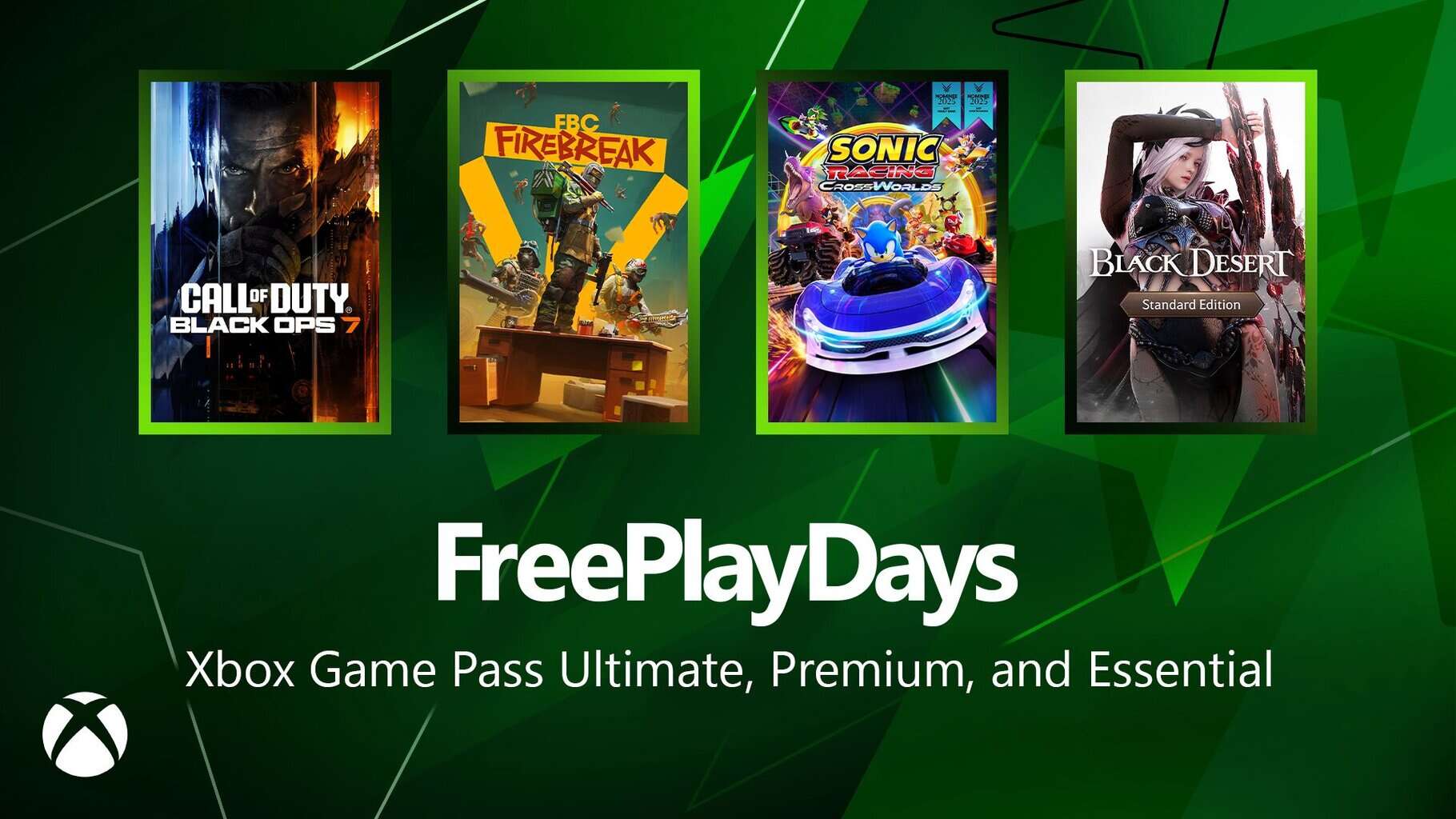

Xbox Free Play Days Brings Sonic Racing CrossWorlds, Black Desert, Black Ops 7 & More This Weekend (March 5-8)

[UPDATE: March 5, 2026 | 11:11 IST] Xbox Free Play Days is back for another weekend. This time around, Microsoft is highlighting two titles for Game Pass members, while a couple of additional games are also available for all Xbox players to try for a limited time. According to the official Xbox Wire blog post, Xbox Game Pass Ultimate, Premium, and Essential members can play Sonic Racing: CrossWorlds and Black Desert between Thursday, March 5 and Sunday, March 8. Both games are included as part of the Free Play Days promotion, allowing subscribers to try them without purchasing the full title. In addition to the Game Pass titles mentioned above, Microsoft confirmed that FBC: Firebreak and Call of Duty: Black Ops 7 are also available as free trials for all Xbox members during the same weekend. These additional trials do not require an Xbox Game Pass subscription.


[ORIGINAL STORY] We saw some interesting games coming to Xbox Game Pass in March, and Microsoft already kicked things off by revealing Wave 1 for the month. The first batch adds more variety across genres, with a mix of new drops and familiar staples designed to keep the schedule moving through early March.

Free Play Days Leak Adds Two More Games to Try

That’s not all, as upcoming Free Play Days games have been leaked. The leak comes from a Reddit user named Oliomono, who claims the next Free Play Days window will run from now until Monday, March 9, around 7 PM UTC, and include:

  • Sonic Racing: CrossWorlds
  • Black Desert

Free Play Days usually ends on Mondays at 7 PM UTC, and part of the lineup can often start earlier, typically around Wednesday at 11 PM UTC, depending on the region and subscription tier.

What Players Can Expect From the Two Picks

Sonic Racing: CrossWorlds offers quick, arcade-style racing built around speed, drifting, and momentum-heavy boosts, making it an easy weekend try.

Black Desert sits on the other end of the spectrum as a long-running MMORPG with action combat and deep progression systems, so the limited-time access works well for testing a class and getting a feel for its pacing.

In other Xbox Game Pass news, the service reportedly added 39 new games to its Stream Your Own Game library, expanding the list of owned titles players can stream without installing locally.

Anthropic and Pentagon Restart Claude Talks After Military-Use Clash

Anthropic CEO Dario Amodei has reopened negotiations with the U.S. Department of Defense after earlier talks collapsed over how the military could use the company’s Claude AI models, according to CNBC.

The renewed discussions reportedly involve Emil Michael, the Pentagon’s under-secretary for research and engineering, after a breakdown late last week centered on restrictions Anthropic wanted to place on military use.

Why the Anthropic and Defense Department talks collapsed

The negotiations fell apart after disagreements over guardrails for Claude on defense networks.

Anthropic reportedly pushed for guarantees that the models would not support domestic surveillance or autonomous weapons systems. The Defense Department reportedly argued it needs the ability to use the technology for any lawful purpose.

Amodei reportedly said the talks unraveled after the Pentagon requested the removal of language referencing “analysis of bulk acquired data,” which Anthropic feared could enable large-scale surveillance.

Fallout inside Washington

After the breakdown, President Donald Trump directed federal agencies to stop using Anthropic tools.

Defense Secretary Pete Hegseth also threatened to designate Anthropic as a national security supply-chain risk, according to the report.

The Pentagon had previously awarded Anthropic a $200 million contract that would let Claude run on classified government networks, making it the first major AI model deployed in that setting, CNBC said.

OpenAI deal adds fuel to the dispute

The standoff intensified as OpenAI signed a separate Pentagon deal, which sparked backlash online.

OpenAI CEO Sam Altman later said the agreement may have moved too quickly and argued that officials should not label Anthropic a security risk, according to the report.

The dispute underscores a widening fault line in AI: companies want enforceable limits on how customers use powerful models, while governments want flexibility for security missions.

As talks restart, both sides now face a sharper question than contract size or deployment speed: who decides the boundaries when advanced AI moves into military and intelligence workflows?

Former Xbox Executive Says Sony Already Sees Steam Machines as a Future Rival

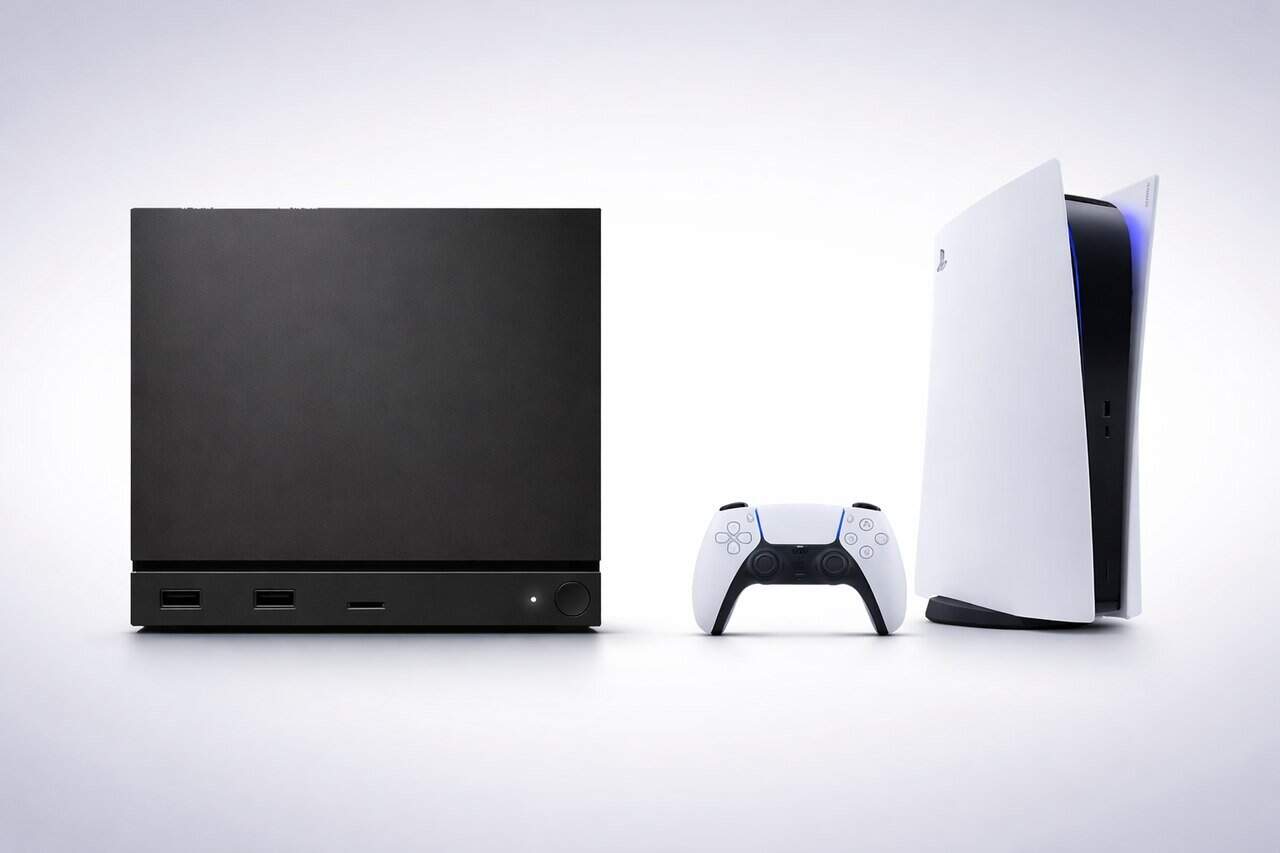
Valve’s return to the living room may still happen on schedule, even though the Steam Machine launch faced delays due to hardware supply constraints. AMD confirmed that the shipping window for the upcoming console-style device remains unchanged despite the setbacks.

The delays sparked debate among gamers about whether a SteamOS-powered console could realistically compete with established platforms like PlayStation and Xbox.

Former Xbox executive says Sony is watching Valve closely

According to Wccftech, former Xbox executive Mike Ybarra believes Sony already views Valve as a potential competitor in the console market. According to comments highlighted in a recent report, he suggests Sony is paying closer attention to Valve’s long-term strategy around SteamOS gaming devices.

Ybarra argues that uncertainty around Xbox’s current direction could also influence how Sony evaluates new competitors entering the living room gaming space.

If Valve expands its Steam Machine lineup with third-party hardware partners, the company could introduce multiple SteamOS-based systems targeting different price ranges and performance levels.

Steam ecosystem could offer several advantages

Ybarra pointed out that Valve already controls one of the largest PC gaming ecosystems, which could help Steam Machines compete with traditional consoles.

Steam Machines and SteamOS devices could benefit from several advantages tied to the existing Steam platform. These include a vast game catalog, an established user base, and features already familiar to PC players.

Steam’s ecosystem currently offers access to more than 7,000 games along with a massive active community of players.

Valve also provides features uncommon in the console space, such as a refund policy that allows players to return games after several hours of gameplay. The platform also includes a family library sharing system and free multiplayer without requiring a subscription service.

Hardware flexibility could also play a role. Steam Machines may appear across a wide range of configurations, from relatively affordable systems around $500 to higher-end gaming PCs designed for the living room.

Skepticism remains around pricing and console identity

Not everyone in the gaming community believes the concept will succeed. Some critics argue that Steam Machines could struggle if prices remain significantly higher than traditional consoles.

Others say Valve may need stronger console-style features or exclusive experiences to convince mainstream players to move away from established platforms like PlayStation.

Still, the idea of a flexible console powered by the Steam ecosystem continues to attract interest, particularly among PC gamers who want a living room experience without leaving the Steam platform.

A more competitive console generation ahead

If Valve successfully establishes SteamOS devices in the living room, the move could reshape the console market before the next generation arrives.

Sony may need to adapt its strategy for the PlayStation 6 if Valve manages to gain meaningful traction with Steam Machines and third-party hardware partners.

At the same time, Microsoft is adjusting its own console plans. Xbox leadership has already hinted at a renewed focus on hardware, and in an optimistic scenario, the next-generation Xbox could arrive as early as 2027.

With Valve potentially entering the console space and both Sony and Microsoft preparing for the future, the next generation of gaming hardware could become one of the most competitive and unpredictable in years.

Marathon ESRB Page Unexpectedly Lists PS4 and Xbox One Versions

Marathon launches today, March 5, following Bungie’s recent Server Slam test and a fresh look at early post-launch plans. Bungie says the Server Slam went well, hitting 143,000 concurrent players.

ESRB page unexpectedly lists Marathon for last-gen consoles

Right now, Bungie has only confirmed Marathon for PC, PlayStation 5, and Xbox Series X|S. That lineup matches the game’s current-gen focus, including dense environments and modern visual features.

Eurogamer reports that Marathon’s ESRB rating page also lists PlayStation 4 and Xbox One versions, even though Bungie has not announced them. The ESRB rating labels the game T for Teen, citing Animated Blood, Language, and Violence.

That listing points to two realistic explanations. The ESRB entry could contain a simple platform error, or it could reveal unannounced last-gen versions early. Rating boards have surfaced extra platform details ahead of official announcements before, so the listing has sparked immediate speculation.

Can PS4 and Xbox One handle Marathon?

If Bungie plans last-gen releases, the big question centers on performance. The Server Slam reportedly ran smoothly on PS5, Xbox Series X|S, and PC, but older consoles already show limits in large, always-evolving shooters. Games like Fortnite and Apex Legends still run on last-gen hardware, yet they increasingly highlight the gap.

Marathon’s stylized art direction could help Bungie scale visuals down more easily than a hyper-realistic shooter. Even so, the game’s overall design targets current-generation systems, so a last-gen port would likely demand major compromises.

Separate from the platform mystery, Bungie has confirmed players will get rewards regardless of the platform they use, which supports a more unified progression approach across the game’s ecosystem.

For now, Bungie has not commented on the ESRB platform listing, and reporters have contacted the studio for clarification.

Microsoft Closes a Longstanding GPP Debugging Gap With Event ID 4117

Microsoft has already taken steps to improve GPP debugging through Local Group Policy support for GPP debug logging, and it’s now fixing another long-running headache: understanding why a Group Policy Preferences (GPP) item failed in the first place.

For years, a failed GPP action often produced only Event ID 4098 in Event Viewer. That entry rarely included enough detail to act on, so admins had to fall back on verbose logging, manual verification, and deep log reviews to track down the real cause.

Event ID 4117 explains why GPP failed

According to Neowin, Microsoft has added a new Event ID 4117 that spells out the specific reason a GPP configuration failed. The company introduced it in the January 2026 updates for Windows 11 (24H2 and 25H2) and Windows Server 2025.

Microsoft will keep Event ID 4098 for compatibility, but admins can now use Event ID 4117 to get clearer, more deterministic diagnostics.

What the new diagnostics look like

Event ID 4117 can point to common failure causes and pair them with practical next steps, such as:

  • A missing source file, which pushes you to confirm the file exists and that the path matches the GPP configuration.
  • File access denied errors, which usually require fixing NTFS or network share permissions tied to the policy action.
  • Folder deletion failures, which often trace back to permissions, ownership issues, or locked files.
  • Invalid drive map paths, which can involve UNC path mistakes, DNS problems, broken targeting rules, or stale drive mappings.

Microsoft says these clearer messages reduce guesswork and cut the time it takes to identify configuration problems. The company also hints at more Group Policy diagnostics improvements down the road.

In related changes, Microsoft has added a new Print Screen key policy, and it has expanded Windows ESU to include Windows 10 LTSB 2016 and Windows Server 2016.

OpenAI Upgrades Prism With Codex CLI and GPT-5.3

OpenAI has stayed busy lately, rolling out GPT-5.3 Instant and the Codex app for Windows. However, that’s not all, and as Neowin writes, the company has pushed a major upgrade to Prism, its AI-powered workspace built for scientific writing and collaboration.

Prism targets researchers who juggle too many separate tools. It brings writing, PDFs, LaTeX work, citations, and team collaboration into one environment, so users can keep research projects in a single place instead of bouncing between apps.

Codex CLI integration turns Prism into a runnable workspace

The headline feature in this update is Codex CLI integration. With it, Prism can run code and tackle computational tasks directly inside the workspace. That means researchers can analyze datasets, compile large LaTeX projects, generate charts and figures, and iterate on drafts without leaving Prism.

OpenAI also positions Prism as a more automated workflow engine. The workspace can run “compile > inspect > revise” loops, where it executes a task, checks the output, and then improves the result in repeated cycles.

Prism moves from GPT-5.2 Thinking to GPT-5.3

When Prism launched in January, it ran on GPT-5.2 Thinking. OpenAI has now upgraded Prism to GPT-5.3, which the company says improves reasoning and overall workflow performance.

With Codex CLI in the mix, Prism can also handle longer, more complex research workflows. OpenAI highlights better context handling and memory compaction for multi-file projects, along with persistent sessions, direct file access, and support for long-running tasks tied to data analysis or document generation.

OpenAI says it plans more research-focused capabilities and deeper integrations with commonly used scientific tools. Prism now supports global access for ChatGPT Free, Go, Plus, and Pro users.

Microsoft Ships KB5075039 to Repair Windows 10 Recovery Environment Bug

Windows has its share of bugs, and one of the more frustrating ones hit the Windows Recovery Environment (WinRE), where keyboard and mouse input stopped working and made recovery tools hard to use.

Reports first linked the issue to Windows 11, but Neowin notes that Windows 10 users also ran into a similar WinRE problem after the October 14, 2025, update KB5068164, which ended up breaking parts of the recovery experience.

Microsoft confirms the Windows 10 WinRE bug months later

Microsoft acknowledged the Windows 10 side of the issue in February 2026, months after users started flagging problems. The delay fits a familiar pattern where community reports surface first and official confirmation arrives later.

KB5075039 rolls out as the recovery update fix

Microsoft now ships a dedicated recovery update: KB5075039, a Windows Recovery Environment update for Windows 10 versions 21H2 and 22H2 dated March 3, 2026.

The update applies Safe OS Dynamic Update KB5073933 to improve Windows recovery features and specifically targets cases where WinRE would not start after installing KB5068164.

Devices need at least 250 MB of free space for the installation. If the system falls short, Windows won’t offer the update in order to avoid installation failures and recovery partition issues.

Windows 11 WinRE changes continue, while other update bugs pile up

On the Windows 11 side, Microsoft has pushed multiple dynamic updates aimed at WinRE reliability over time, even as Windows 11 updates keep drawing complaints for unrelated breakages.

One recent headache involves wired internet issues after updates, where users report problems tied to the removal of the Dot3Svc folder. Separately, one Windows 10 user reported an unexpected upgrade to Windows 11 while away from their PC.

Pollo AI: The Ultimate Multi-Model Hub for One-Click Viral Videos

Pollo AI is an all-in-one AI creative platform that brings together several of the industry’s most recognized video generation engines, including Seedance, Sora 2, Kling AI, and Google Veo 3. The single hub is designed for Windows users who want to produce high-quality content without needing a complex technical setup or multiple high-cost subscriptions.

With over 4 million monthly active users and 14 million in funding, Pollo AI has proven it’s the fastest way to go from a quick idea to a viral-ready clip.

How the Generation Hub Works on Windows (Web)

Pollo AI treats video creation as a unified workflow. Whether you have a written idea or a professional photo, the path to a high-fidelity video follows the same intuitive logic.

How to Create Your Video

  1. Select Your Input: 

Text to Video: Use this when you want to generate a scene from scratch.

Image to Video: Use this to add motion to your existing photos or digital designs.

  1. Pick Your Engine: Switch between top-tier models like Sora 2 or Kling AI to find the perfect cinematic style for your project.

Switch between top-tier models like Sora 2 or Kling AI to find the perfect cinematic style for your project.

  1. Refine Your Prompt:

For Text: “A quiet street in a futuristic city at night, neon signs reflecting in puddles on the ground, a car driving past slowly.”

For Image: “A person standing on a mountain ridge; the wind moves their jacket and hair, clouds drift slowly in the background, cinematic feel.”

  1. Set Technical Specs:

Aspect Ratio: 9:16 (TikTok/Shorts) or 16:9 (YouTube).

Duration: Select 4 to 8 seconds for optimal social engagement.

  1. Generate:

One click starts the process. If the result isn’t exactly what you wanted, you can quickly adjust a few words in your prompt and try again.

Top Features

Multi-Model Integration

Instead of logging into five different sites, you have access to various leading AI engines in one dashboard. This is a significant time-saver for creators who need to experiment with different styles. E.g., using Kling AI for realistic movement or Sora 2 for a more cinematic look.

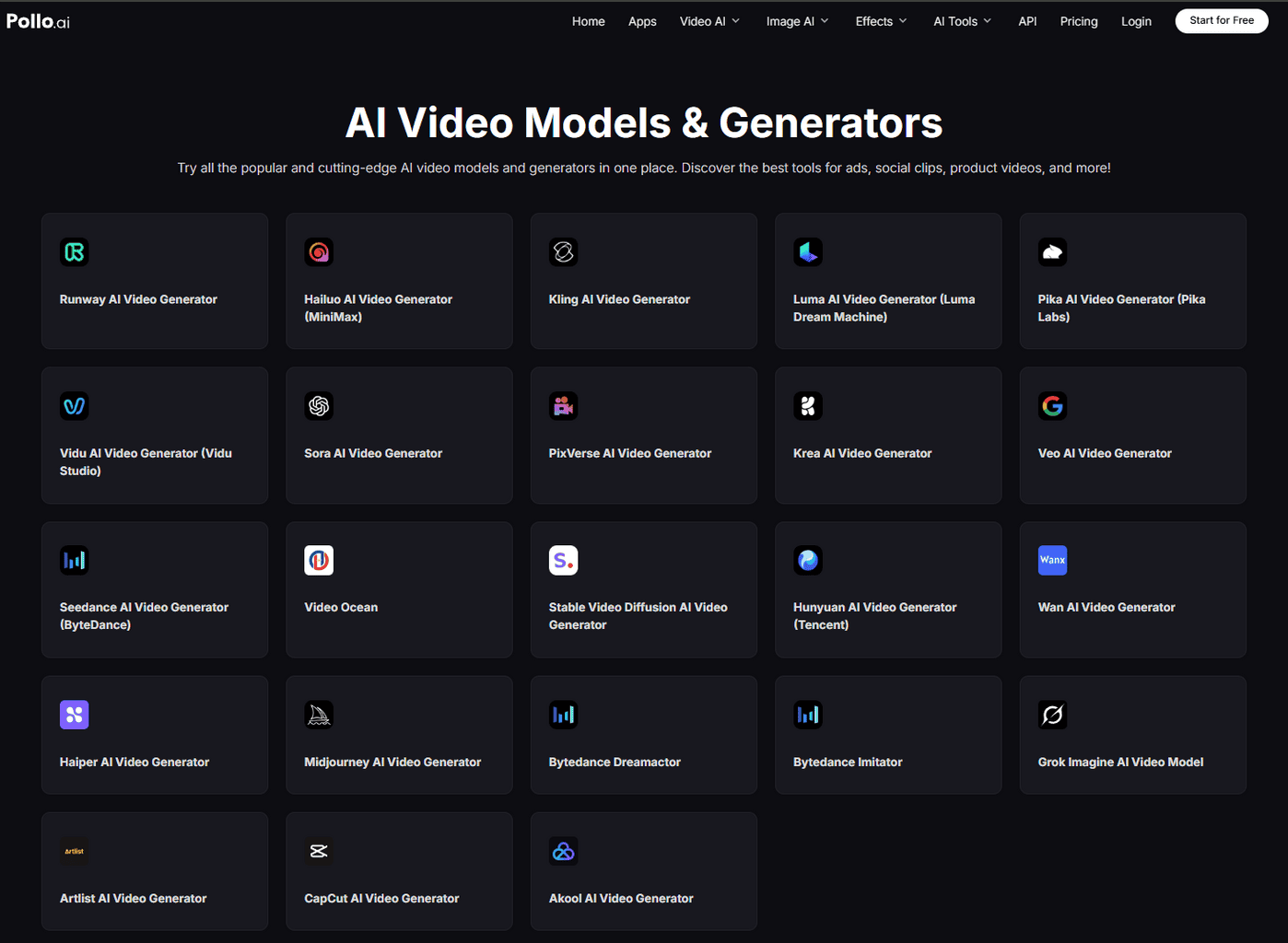
Pollo AI models

Zero Learning Curve

The interface is clean and functional. You don’t need to be an expert in prompt engineering or video editing to get started. New users can use free credits to test the tools on their Windows browser before deciding if they need a paid plan.

Viral Templates for Quick Inspiration

Pollo AI includes a library of trending templates. These are essentially pre-set styles based on what is currently performing well on social media. You can simply upload your own subject into a template, and it will handle the more difficult aspects like camera movement, lighting, and color grading for you.

Tools for the Creator Economy

Beyond basic video generation, the platform includes specialized tools like an AI Avatar for presentations and an AI Short Video Generator for social media. For anyone working from a Windows desktop, it’s a versatile set of tools for quick content production.

Final Thoughts

Pollo AI is about reducing the friction between having an idea and seeing it on a screen. You don’t need a high-end render farm or professional editing skills to tell a story anymore; you just need a clear concept and the right tools on your PC.

So, stop overthinking it. Jump into Pollo AI and see what you can create. Your next viral video is literally just one click away.

OpenAI Brings the Codex App to Windows With a New Native Sandbox

According to Neowin, OpenAI has officially launched the Codex app for Windows, bringing its coding agent experience to Microsoft’s desktop ecosystem after the macOS debut last month. The release also follows GPT-5.3-Codex, the model the app uses to run agent-driven coding tasks.

Codex arrives on Windows through the Microsoft Store

Developers can download the Codex app now through the Microsoft Store. OpenAI positions the Windows release as a native experience that fits into existing workflows, without forcing developers to abandon familiar tools.

A Windows-native sandbox keeps agents contained

OpenAI faced a core Windows challenge: stopping AI agents from gaining broad access to the local file system. To address it, OpenAI built its first Windows-native agent sandbox in collaboration with Microsoft, relying on OS-level security controls such as restricted tokens, filesystem ACLs, and dedicated sandbox isolation.

This approach aims to let agents operate inside Windows development environments, including PowerShell, while limiting what they can touch.

Open-sourcing the sandbox could enable similar apps

OpenAI has also open-sourced the sandbox, which could let other companies build comparable agent apps for Windows using the same isolation approach. That move could also accelerate the adoption of safer, Windows-native execution environments for agent-based tools.

Parallel coding agents and review-first workflows

Like the macOS version, the Windows Codex app lets developers run multiple coding agents at the same time while keeping tasks separated. Each agent runs inside its own isolated worktree to avoid conflicts, and the app supports diff inspection and review before changes get merged.

It also supports switching between tasks and projects, reusable skills built on tools and scripts, automation for repetitive workflows, and integration with Codex CLI and IDE extensions to preserve existing setups.

To mark the Windows launch, OpenAI now lets ChatGPT Free and Go users try Codex, while Plus, Pro, Business, Enterprise, and Edu users receive double rate limits until April 2.

In other news, OpenAI has released GPT-5.3 Instant, and the company is allegedly working on its own GitHub alternative.

a1.art Review: Most Versatile AI Art Generator for Windows?

If you’ve spent hours struggling with complex prompts or switching between apps to create creative visuals, you know how frustrating it can be.

Now, AI art generators like a1.art aim to fix this. It is a browser-based “all-in-one” hub that handles images, videos, and face swapping in one place. It promises professional results without needing a high-end PC or technical skills.

Over the past few months, I have been testing A1.art on Windows to see if it really works for daily tasks. From its over 200,000 filters to its new video features, here is a simple look at what this tool can actually do.

a1.art Review: Why it is the Most Versatile AI Art Generator for Windows Users?

Best For: Digital creators, social media managers, and hobbyists who want high-quality images and videos without needing a powerful PC. 

Available: Web browser (optimized for Windows) and mobile. 

Why it’s worth: a1.art is an all-in-one AI creative generator designed to simplify the entire digital art process. It lets you create professional visuals without learning complex software. While most AI tools focus on just one task—like generating a single image—a1.art combines massive style libraries with advanced video and face-swap tools.

What makes a1.art stand out is its versatility. It isn’t just for making random art; it is built for people who need specific looks—like 3D anime, cyberpunk, beautiful sari, or realistic product shots—that are ready to use immediately.

The browser-based layout is clean and requires no technical skills to navigate. You simply pick a style, type a short prompt, or upload your image, and the cloud servers do the rest. For Windows users, it provides a “pro-level” studio experience that runs smoothly even on a basic laptop.

Best Features: What can you do with a1.art?

The versatility of a1.art is rooted in its feature set, which caters to both casual hobbyists and digital professionals. Here is a breakdown of the core functionalities that define the platform:

  • Diverse AI Image Generation: You can generate art in seconds by typing a sentence or uploading a photo. With a library of 200,000+ styles, including “clay avatar,” “oil painting,” and “watercolor,” it meets every creative need.
  • Intelligent Personalization: The platform learns your preferences to recommend suitable styles and tools. It even offers customized tutorials to help refine your specific creative voice.
  • Professional Editing Tools: Beyond simple generation, you get access to brushes, color pickers, and layer management. You can manually adjust textures and brush strokes to ensure the final artwork is unique.
  • Community and Learning: The active community feed lets you share work and exchange tips. Users can join art competitions or take online courses to improve their skills.
  • New Group Photo Feature: A powerful new addition allows you to create group photos using templates. By uploading a layout and individual photos, the AI precisely controls face positions and edge details to generate a seamless, styled group shot.
a1.art prompting

How to Use a1.art on Windows (Web)

One of the platform’s greatest strengths is its low barrier to entry. You don’t need to install any apps. Here is a quick guide for Windows users:

  1. Access and Login: Simply navigate to a1.art via Microsoft Edge or Google Chrome and log in to your account. You can create an account using your email.
  2. Select Your Filter: Upon entering the dashboard, you can directly use other people’s models or add some of their own prompts and other things to build your own models.
  3. Generate the Artwork: Enter your text prompt or upload an image, click the “Generate” button, and wait a few moments to see the results of your AI-generated image.
  4. Share with the community: If you are satisfied with the result, you can then download these directly to your Windows Downloads folder in high resolution or share them with the community gallery.
Comic portrait using a1 art

Pros and Cons

To remain objective, it is important to acknowledge that no tool is perfect for every scenario. Here’s how I rate it based on my personal experience:

Pros:

  • All-in-One Utility: Having image, video, and face-swapping in one subscription is highly cost-effective.
  • Massive Style Diversity: The 200K+ filters drastically reduce the time spent “fighting” with complex prompts.
  • Generous Free Tier: The daily free credits allow users to test the platform thoroughly before committing to a paid plan.
  • Works on any PC: It runs flawlessly on any PC with an internet connection; no expensive RTX GPU is required.

Cons

  • Connectivity Dependent: Being a cloud-based tool, you cannot use it offline. If your internet is unstable, your creative process will be too.
  • Choice Overload: For new users, filters can be overwhelming. Finding the “perfect” style occasionally feels like searching for a needle in a haystack.

Final Verdict

Is a1.art the most versatile AI art generator for Windows users? For the vast majority of people—from social media managers to hobbyist digital artists—the answer is yes.

While “power users” who enjoy tinkering with code might still prefer local setups, a1.art represents the future of AI creativity: centralized, simplified, and incredibly diverse. If you are looking for an AI art creator that saves your time and doesn’t require any technical skills, a1.art is a top-tier recommendation for your Windows creative toolkit.

Microsoft’s New Phi-4 Vision 15B Model Decides When to Activate Deep Reasoning

Microsoft has released Phi-4-reasoning-vision-15B, a new open-weight multimodal AI model designed to handle both visual and reasoning tasks.

The 15-billion-parameter model can process images, understand interface elements, and perform complex mathematical reasoning while remaining relatively lightweight compared to many modern AI systems.

A multimodal model with adaptive reasoning

Phi-4-reasoning-vision-15B supports several advanced capabilities, including image captioning and UI element grounding. The model can also solve complex reasoning problems such as mathematical queries and analytical tasks.

One of its most notable features is the ability to automatically decide when deeper reasoning is required.

Instead of forcing users to manually enable or disable reasoning, the model activates its internal “thinking mode” when a task requires more advanced processing. For simpler queries, it responds immediately without entering a heavier reasoning process.

This adaptive approach could improve efficiency, although it may also produce less predictable behavior in certain scenarios.

Training strategy focused on quality data

Microsoft trained the model on approximately 200 billion tokens, which is relatively small compared to many modern AI systems that rely on training datasets exceeding one trillion tokens.

The company focused on carefully curated, high-quality training data rather than raw scale. During the training process, GPT-4o assisted with data generation and evaluation, helping refine the model’s reasoning capabilities.

This approach allowed Microsoft to build a capable multimodal system without requiring massive computational resources.

Benchmark results show mixed but promising performance

In benchmark testing, Phi-4-reasoning-vision-15B delivered competitive results in several categories and occasionally outperformed larger models.

However, the model also lagged behind some competing systems in other areas, producing mixed results overall.

Microsoft published balanced benchmark comparisons that include both strengths and weaknesses instead of highlighting only favorable outcomes.

A lightweight option for developers

Despite its capabilities, the Phi-4 model family often receives less attention than competing open-weight models such as Qwen-based systems from Chinese developers.

Even so, Phi-4-reasoning-vision-15B offers strong performance relative to its size, which could make it attractive for developers who need efficient AI systems that run on smaller hardware setups.

The model is already publicly available, and developers can download the weights through Microsoft’s AI platforms and model repositories.

In other Microsoft news, the company has announced the dates for its Build 2026 developer conference and is preparing a design update for SharePoint.

Microsoft is also testing a new Copilot feature that allows links to open directly inside the Copilot interface instead of launching a separate web browser.

Via Neowin

Slay the Spire 2 Brings Co-Op Runs to Early Access on Windows

Gaming news stays busy after Ubisoft confirmed an Assassin’s Creed Black Flag remake and Capcom reported Resident Evil Requiem passed 5 million sales in its first week.

Now, indie fans can jump into Slay the Spire 2, which starts its Early Access journey today on Windows PC.

Slay the Spire 2 Early Access launches today on PC

According to Polygon, Developer Mega Crit set March 5, 2026 as the Early Access launch date for Slay the Spire 2, with the release locked to PC via Steam at the start.

The studio also frames the sequel as a return to the tower after a long dormancy, with new threats and new discoveries across fresh climbs.

Co-op multiplayer leads the headline features

Mega Crit says Slay the Spire 2 lets up to four players team up in a new co-op mode, including multiplayer-focused cards and team synergies.

The developers also plan to expand and rebalance content throughout Early Access, adding more cards, events, environments, and enemies as the build evolves.

Slay the Spire 2 keeps the core solo roguelike deck-building loop while adding several new mechanics designed to shake up decision-making during a run:

  • Enchantments that add buffs and modify cards as you play
  • Enemy card afflictions that apply negative effects directly to your cards
  • Quest cards that introduce run objectives and progression hooks

Slay the Spire 2 global launch time

Coverage around the launch points to a 1:00 p.m. ET start time. Common launch times by region include:

  • 10:00 a.m. PT
  • 1:00 p.m. ET
  • 6:00 p.m. GMT
  • 7:00 p.m. CET
  • 3:00 a.m. JST (March 6)

Outside of releases, a new report says the White House is debating whether Tencent should keep stakes in major game companies, with the discussions tied to national security concerns.

Copilot Could Soon Open Web Links Inside the App, No Browser Needed

Microsoft has added GPT-5.3 Instant to Copilot and Copilot Studio, and now the company plans a new feature that keeps link-based work inside the Copilot desktop app.

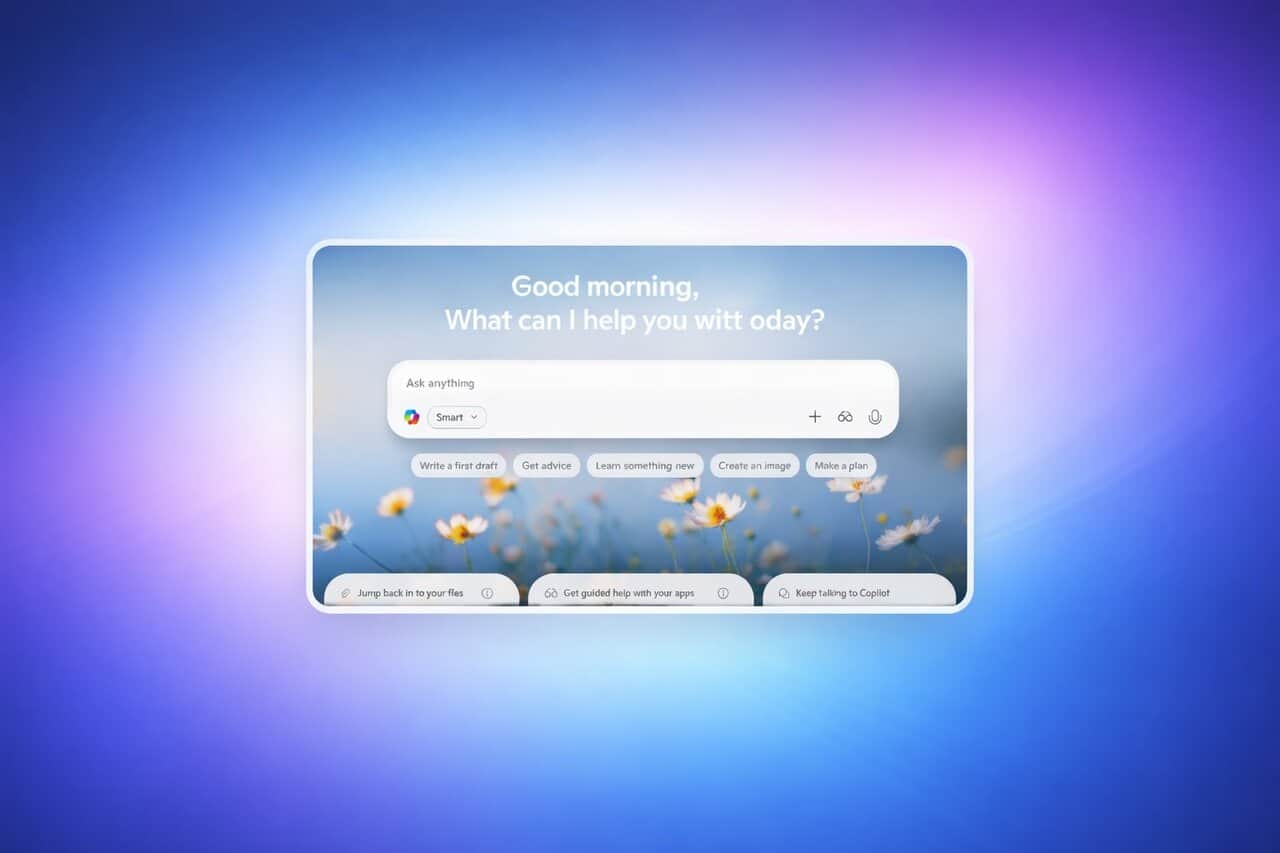
According to Neowin, instead of sending you to a browser, Copilot can open web links in a side pane next to the chat. You keep the conversation and the page visible at the same time, which cuts down on tab switching during research and writing.

When you click a link in Copilot chat, the page loads inside the Copilot window. The layout places the webpage on one side and your conversation on the other, so you can reference sources while you keep prompting.

Microsoft also lets Copilot use the opened page as context for tasks. You can ask it to summarize what you see, pull out key facts, or use the content to help draft an email or document.

Permissions, password sync, and privacy questions

Microsoft keeps webpage access disabled by default and requires you to grant permission before Copilot can use page content. The company also added an option to sync website passwords with Copilot, which can help it access pages that require a login.

That convenience can raise privacy concerns because it involves sharing more personal data with Microsoft. Some users previously flagged cases where Copilot features processed sensitive content without clear consent, and Microsoft says it addressed that issue with a data loss prevention update.

Chat history keeps the sources you used

Copilot saves webpages you open alongside the chat history. That setup lets you return later and review the same sources in the same thread.

Microsoft is rolling out the feature to Windows Insider testers running Copilot version 146.0.3856.39 or newer. Microsoft has not shared a public release date yet, but the company expects broader availability later.

Outlook for Windows Will Get Automapped Calendars After Months of Delays

Microsoft is preparing another wave of Microsoft 365 changes, with Agent mode, smart editing, and new Copilot-powered tools on the way. Now, the company is also finally ready to roll out automapped calendars in Outlook for Windows after months of delays.

According to Microsoft 365 roadmap ID 415168, automapped calendars will soon appear automatically when users move between classic Outlook and the new Outlook for Windows. Microsoft first surfaced this feature back in September 2024, but the rollout timeline kept slipping.

Outlook is finally getting automapped calendars by default

The update will let automapped calendars show up automatically instead of forcing users to go through manual steps. That should make switching between the classic Outlook desktop app and the new Outlook for Windows much less frustrating.

Before this change, users could still access those calendars, but they did not appear by default after switching clients. That created confusion, especially for people who expected the same calendar view across both Outlook experiences.

Microsoft says users will find the feature here:

Outlook > Calendar icon > My Calendars > Automapped calendar

The change affects both classic Outlook for Windows and the new Outlook for Windows desktop app.

Microsoft delayed the feature several times

According to the Microsoft 365 Admin Center message ID MC906502, Microsoft changed the release schedule more than once.

The company first planned to start the rollout in early February 2026 for Targeted Release. It then moved General Availability to early March 2026, but that date also slipped.

Microsoft now plans to begin rolling out the feature in mid-April and finish by the end of April.

That delay makes this another example of a Microsoft 365 feature taking much longer than expected to reach users, even after Microsoft publicly lists it on the roadmap.

Admins do not need to do anything

Microsoft will enable the feature automatically, so admins do not need to take any action before rollout. Still, organizations may want to notify users about the change and update internal help documentation, especially if teams often switch between classic Outlook and the new app.

That matters because users who rely on shared or delegated calendars may notice the update right away once Microsoft enables it.

This Outlook change arrives as Microsoft also prepares a broader Microsoft 365 update with Agent mode and smart editing features. On top of that, the company is adding a Copilot capability that aims to help eliminate meeting conflicts in Outlook.

In other Microsoft 365 news, Microsoft is also still planning to roll out the work-location feature in Teams again, this time with an opt-out control after backlash from users.

Via Neowin

Windows 12 Rumors Debunked As No Credible Launch Evidence Emerges

Windows 11 market share has grown quickly in recent months, and that momentum helped fuel a fresh wave of Windows 12 rumors. This time, the speculation picked up after a PCWorld report suggested that the next Windows release, codenamed Hudson Valley Next, could arrive in 2026.

The report sparked confusion around Windows 12

The article that triggered the discussion was not an original investigation. It was a translation of a German article from PC-Welt, but the first version did not include proper citations or source links.

That made the piece look like exclusive reporting, which quickly added more weight to existing rumors about Microsoft’s next operating system.

PCWorld executive editor Brad Chacos later added an editor’s note that addressed the issue directly and apologized for how the article appeared when it first went live.

The publication has since updated the story to clarify that PCWorld was only reviewing existing clues and rumors surrounding Windows 12. It also said it is reviewing its internal process to avoid similar confusion in the future.

Windows 12 rumors have circulated for years

Talk about Windows 12 did not start with this article. Speculation has circulated since 2022, when reports claimed Microsoft could return to a three-year Windows release cycle.

Since then, the rumor mill has pointed to leaked interface concepts, possible subscription ideas, and a stronger focus on AI-powered features. Those claims kept the idea of a new Windows version alive, even without any official confirmation from Microsoft.

Windows 11 still looks like Microsoft’s main focus

Right now, there is no credible evidence that Windows 12 will launch soon. Microsoft appears far more likely to keep building on Windows 11 instead of replacing it with a brand-new operating system in the near future.

That could mean another major Windows 11 update arrives first, potentially version 26H2. Microsoft is also reportedly preparing a platform shift for Windows 11, while 26H1 is expected to target Snapdragon X2 systems rather than current PCs.

For now, the latest Windows 12 buzz looks more like another round of recycled speculation than a sign of an imminent launch.

Via Neowin

Ubisoft Finally Confirms Assassin’s Creed Black Flag Remake

After months of rumors, rating board listings, and other clues, Ubisoft has officially confirmed that an Assassin’s Creed IV: Black Flag remake is in development. The project is titled Assassin’s Creed: Black Flag Resynced, putting an end to the speculation surrounding one of the series’ most beloved entries.

Ubisoft shared the news in a recent blog post, where it confirmed the remake and revealed a first image. However, the company stopped short of offering gameplay details, a release window, or a deeper look at what has changed. For now, fans only know that Edward Kenway’s story will return in a new form.

Black Flag remake is finally official

The announcement follows months of reports suggesting that Ubisoft was preparing to revisit Black Flag. The game had appeared on multiple international rating boards, while Ubisoft’s reupload of music connected to the title only added fuel to the rumors.

Now, the company has made it official. Assassin’s Creed: Black Flag Resynced is real, and Ubisoft has confirmed that development is underway.

That alone is a major moment for the franchise, since Black Flag remains one of the most popular Assassin’s Creed games ever released. Its mix of naval combat, pirate exploration, and Edward Kenway’s story helped it stand out from the rest of the series, so a remake has long been seen as one of the most requested projects in the franchise.

Ubisoft also shared updates on other Assassin’s Creed games

Alongside the Black Flag remake reveal, Ubisoft also provided a broader update on the future of the Assassin’s Creed series.

The company said that Assassin’s Creed: Shadows is entering its final phase of support. Future updates will continue, but they will arrive less often and on a smaller scale. Even so, Ubisoft teased that a few surprises still remain before the team fully shifts focus to other projects.

Ubisoft also briefly addressed Assassin’s Creed Codename Hexe, the darker entry set in Europe during the witch trials. The game remains in development at Ubisoft Montreal, but the publisher made it clear that the project is still a long way off, so fans should not expect fresh updates anytime soon.

Then there is Assassin’s Creed Codename Invictus, which Ubisoft confirmed is still in development. This title will focus on multiplayer and is being built by a team that includes veterans from For Honor. Ubisoft described it as a new take on multiplayer for the franchise, which suggests it may not match every earlier rumor.

Jade, Unity, and future Assassin’s Creed plans

Ubisoft also confirmed that Assassin’s Creed Jade, the mobile game set in China, is still alive despite the long silence around it.

Meanwhile, Assassin’s Creed: Unity is getting a 60 FPS update on PlayStation 5 and Xbox Series X|S, giving that older title a fresh boost on current hardware.

The publisher added that it is considering bringing cooperative gameplay back to the series, which could please longtime fans. Ubisoft also revealed that one Assassin’s Creed project was recently canceled during early development, though ideas from it will still help shape future games.

Outside of gaming, Ubisoft said work continues on other Assassin’s Creed media projects, including the live-action Netflix series, with more information expected later.

In other gaming news, Resident Evil Requiem has sold 5 million copies in less than a week.

Via MP1st

Gemini 3.1 Flash-Lite Launches as Google’s Fastest & Most Cost-Efficient Gemini 3 Model Yet

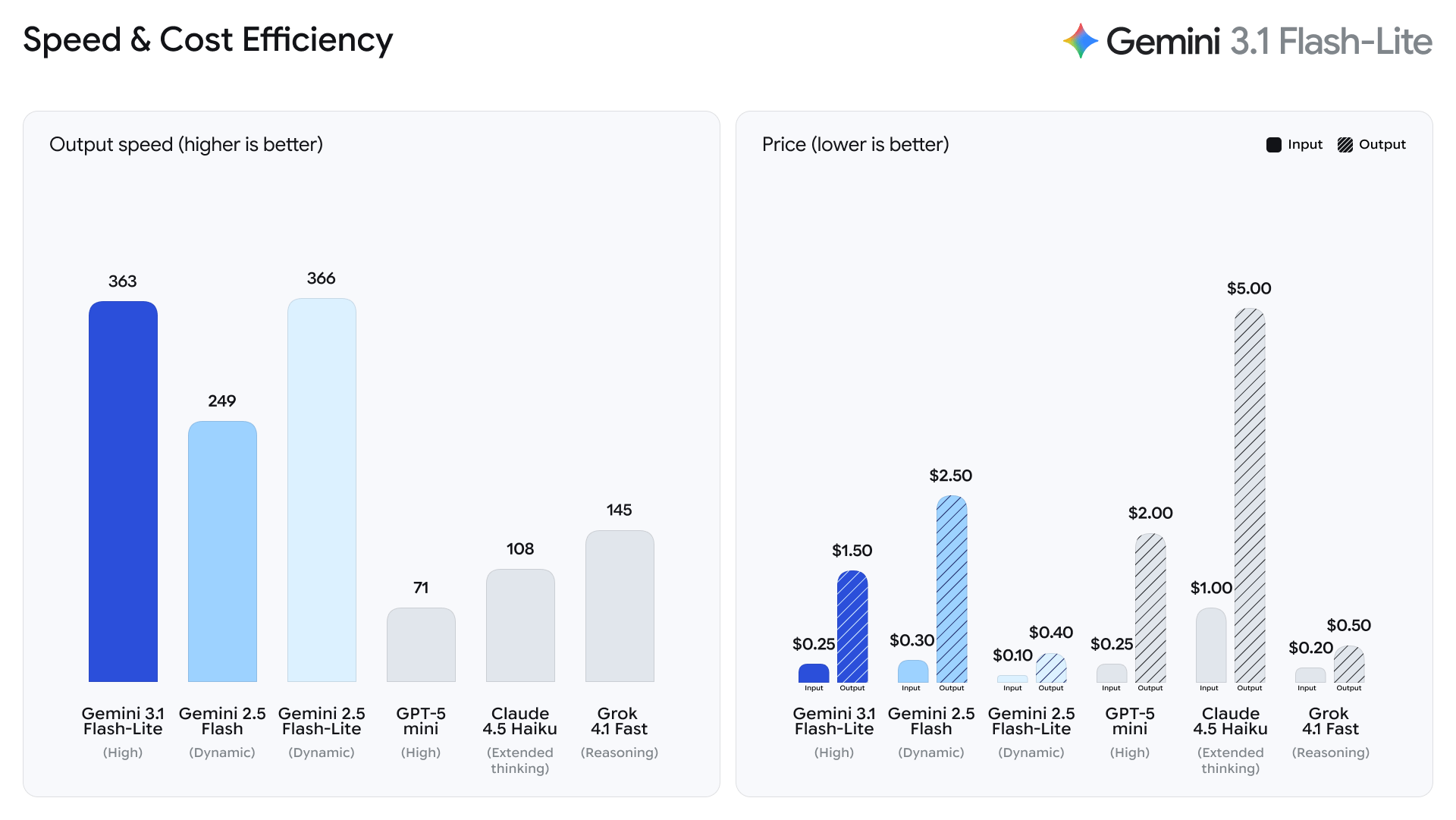
Google has just announced Gemini 3.1 Flash-Lite, which the company says is the fastest and most cost-efficient model in the Gemini 3 series so far. Starting today, Gemini 3.1 Flash-Lite is rolling out in preview to developers through Google AI Studio via the Gemini API. Enterprise customers can also access it through Vertex AI.

A cost-efficient model designed for heavy developers demand

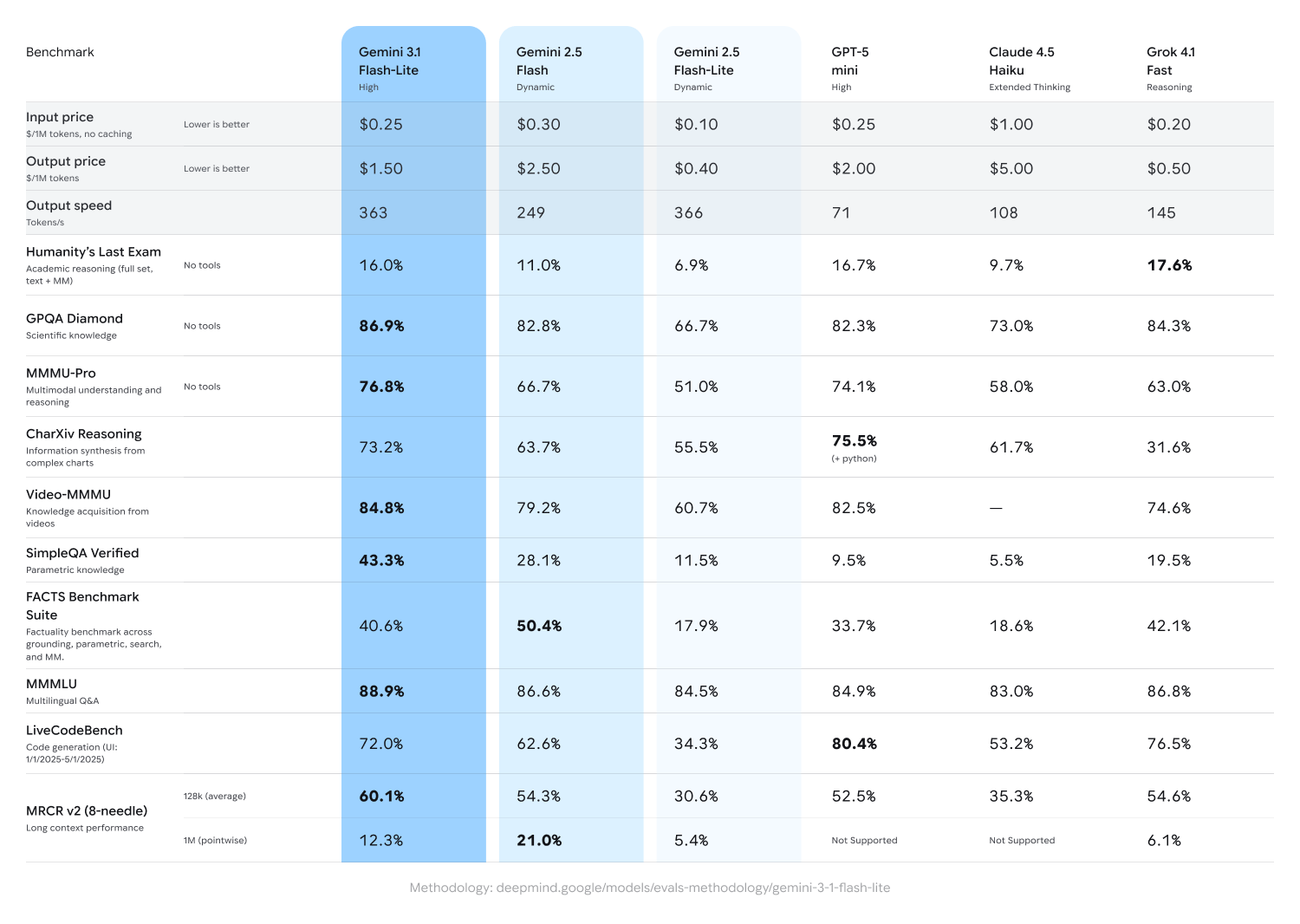
At $0.25 per million input tokens and $1.50 per million output tokens, Google has positioned Gemini 3.1 Flash-Lite as a scale-first model. The company further adds that it outperforms Gemini 2.5 Flash with a 2.5x faster time to first token and offers 45% faster output speed, based on Artificial Analysis benchmarks.

Image credit: Google

Gemini 3.1 Flash-Lite is designed for developers building real-time experiences. Think of high-frequency translation, content moderation, and large-scale automation tasks where cost and latency matter just as much as intelligence. Well, Flash-Lite doesn’t seem to compromise much on quality. It scored 1432 on the Arena.ai leaderboard and posted strong benchmark numbers, including 86.9% on GPQA Diamond and 76.8% on MMMU Pro. Google claims it even surpasses advanced Gemini models from earlier generations in some areas.

Image credit: Google

Adaptive intelligence without the hefty price tag

Besides raw speed, Gemini 3.1 Flash-Lite includes adjustable “thinking levels” inside AI Studio and Vertex AI. Developers can choose how much reasoning the model applies to a task, helping manage cost while scaling performance. Early testers, including companies like Latitude and Cartwheel, say the model handles complex inputs with precision while maintaining instruction accuracy. Speaking of AI models, let’s not forget that Microsoft today also added OpenAI’s latest GPT-5.3 Instant model to Copilot Chat and Copilot Studio.

Microsoft Adds GPT-5.3 Instant to Copilot Chat and Copilot Studio, Foundry Support Next

OpenAI released GPT-5.3 Instant as the successor to GPT-5.2 Instant, and it’s already rolling out everywhere. The new model now serves as the default for all ChatGPT users, replacing GPT-5.2 Instant as the standard “quick” option.

Paid ChatGPT users won’t lose access to the previous model right away. OpenAI will keep GPT-5.2 Instant available for three months under the Legacy Models section, giving subscribers time to compare behavior, outputs, and consistency before the older option disappears.

Microsoft brings GPT-5.3 Instant to Copilot, Copilot Studio, and Foundry

Microsoft confirmed that GPT-5.3 Instant now powers parts of its Copilot ecosystem.

In Microsoft 365 Copilot Chat, the model shows up as “GPT-5.3 Quick response.” In Copilot Studio, it appears as “GPT-5.3 Chat,” aligning the naming with where users build and deploy custom Copilot experiences.

Microsoft will also make GPT-5.3 Instant available through Microsoft Foundry APIs, which should let developers and enterprises build AI features and apps on top of the model across internal tools and workflows.

Microsoft highlights enterprise-focused upgrades

Microsoft positioned GPT-5.3 Instant as a practical upgrade focused on real usage, especially in workplace settings:

  • Proportionate Safety aims to reduce unnecessary refusals while keeping responses balanced.
  • Adaptive Guidance can adjust a request that needs changes and keep the conversation moving.
  • Grounded Resolution uses integrated web search and reasoning to provide clearer answers rather than dumping link lists.
  • Reliable Performance targets steadier tone, clearer explanations, stronger instruction following, and less need for manual cleanup.

Microsoft said paid Microsoft 365 Copilot users get priority access, while free users receive standard access.

Updated Thinking and Pro models land next

OpenAI also confirmed that updated Thinking and Pro models are coming soon. Microsoft expects those upgraded models to integrate into Copilot and Microsoft 365 Copilot as well, which points to continued alignment between OpenAI’s newest model tiers and Microsoft’s AI product stack.

Outside of OpenAI and Microsoft, Meta is testing AI Shopping Research, while Anthropic is rolling out Claude Memory Free, signaling more competition around personalization and commerce-focused AI features.

Via Neowin

Microsoft Brings Back Teams Work-Location Tracking With New Opt-In Controls

Microsoft is tweaking its upcoming Microsoft Teams work-location feature again, this time making it opt-in after user backlash.

The feature, which Microsoft delayed in the past due to similar complaints, now shows up in the Microsoft 365 roadmap as disabled by default. Microsoft still plans to ship it, signaling the company wants the functionality in Teams, but with clearer user control.

Teams work-location sharing will be opt-in

The system aims to show coworkers where someone works from by combining signals from Teams presence and Outlook calendar working hours. Users will decide whether they share work-location details with colleagues inside their organization.

Microsoft says it won’t access or store the location data, and only people within the same company will see it.

Two types of location signals

Microsoft plans to support two separate “location” inputs inside Teams:

  • Planned work location: Users set it through Outlook or Teams calendar settings, either as a recurring choice or a one-time entry.
  • Actual work location: Users set it manually, or Teams updates it automatically when a user checks in.

The goal is to reduce manual status updates and help coworkers quickly understand whether someone works remotely or from the office.

Automatic detection depends on office hardware

Teams can auto-update location only when office buildings support compatible devices and Wi-Fi access points that can identify specific rooms. Without that infrastructure, Teams will stick to broader labels like remote or in-office work.

Teams should clear the location at the end of a user’s working hours, and it shouldn’t update outside scheduled work time.

Microsoft says it won’t become an attendance tool

Microsoft frames the feature as a collaboration aid, not an employee monitoring system. The company says admins won’t get historical location data, and users can change or remove their location at any time.

Microsoft has pushed this rollout back multiple times, and the latest timeline now points to April 2026.

In other news, the company is previewing upcoming features for OneDrive, Word, and Teams for Microsoft 365.

Via Windows Central

Resident Evil Requiem Sells 5 Million Copies In Under A Week

Resident Evil Requiem has already crossed a major sales milestone, even after an early leak forced CAPCOM to address the situation publicly. According to CAPCOM, the game has surpassed 5 million copies sold worldwide just six days after its February 27 launch.

The strong opening also appears to match the game’s early momentum on PC. Requiem reportedly broke Steam concurrency records for the franchise shortly after release, suggesting an unusually large day-one audience for a Resident Evil title.

Steam Reviews Stay Strong After Launch Week Surge

Requiem’s reception on Steam looks just as dominant as its sales pace. The game currently holds an “Overwhelmingly Positive” rating, with about 96% positive reviews, pointing to strong satisfaction even as the initial hype settles.

Beyond Steam, the game also ranks among the top user-scored releases on Metacritic, where it sits tied with Clair Obscur: Expedition 33.

CAPCOM Avoids “Fastest-Selling” Label, But The Numbers Look Clear

While CAPCOM confirmed the 5 million figure, the company did not explicitly call Requiem the fastest-selling Resident Evil game. Still, the timing makes the comparison hard to ignore.

Resident Evil Village needed roughly nine months to reach 5.7 million copies, and the Resident Evil 4 remake reached 5 million in under four months. Requiem hitting 5 million units in under a week puts it far ahead of previous entries in early sales, based on those public milestones.

DLC Rumor Mentions Leon Kennedy Expansion

A new rumor adds to the post-launch chatter. Leaker Dusk Golem claims CAPCOM is already developing a DLC expansion that focuses on Leon Kennedy, though CAPCOM has not confirmed any expansion plans.

Outside of sales and rumors, Requiem also received a day-one patch on Switch 2, signaling early support work for Nintendo’s new platform version.

Via Wccftech

Report Says Washington Weighs Forcing Tencent Out of Key Game Studio Stakes

A new report from Financial Times claims the Trump administration has started discussing whether Tencent should keep its investments in game companies based in the United States and allied countries, with national security cited as the core concern.

Why Tencent’s gaming stakes draw scrutiny

The discussion reportedly focuses on whether Tencent’s ownership and minority stakes could create data-privacy risks or give China outsized influence over major gaming platforms, studios, and live-service ecosystems that handle massive amounts of user data.

Tencent’s footprint across gaming

Tencent’s footprint spans the industry, and the report points to some of its best-known holdings, including Riot Games and Turtle Rock Studios as fully owned operations, plus significant minority positions such as Epic Games and Pocket Gems.

Tencent also holds investments across multiple international publishers and studios, which could widen the impact if any forced sell-off expands beyond the U.S.

What a forced divestment could change

If the administration pursues a divestment push, it could create real disruption for ongoing projects and long-term publishing plans. Tencent has poured billions into the sector over the years, and studios often rely on stable ownership structures for funding, hiring, and multi-year roadmaps.

Any forced change in ownership could ripple into board governance, strategic direction, and partner negotiations, even if day-to-day development stays intact.

Broader context

The report also notes that scrutiny around Tencent’s influence in gaming has circulated in U.S. politics for years, with recurring concerns about data collection and platform scale.

Those concerns have gained more weight as games and launchers have evolved into always-online services that track accounts, social graphs, purchases, and cross-device behavior.

Elsewhere in gaming, Highguard is set to shut down next week, while Microsoft has patented a system that could let an AI helper take over your game session. Xbox is also rolling out its Wave 1 Game Pass lineup, with games like Cyberpunk 2077 and Silksong in the mix.

Via Insider Gaming

Microsoft Previews New OneDrive, Word Copilot, and Teams Updates for Microsoft 365

Microsoft is making various changes, and the company is introducing high-volume email to Exchange Online. The company also plans a big Microsoft 365 by introducing Agent mode and smart editing features. But that’s not all.

According to Neowin, Microsoft has now outlined another set of Microsoft 365 updates aimed at smoothing out everyday workflow issues in three of its most-used apps: OneDrive, Word, and Teams. The changes focus on clearer troubleshooting, more direct AI assistance, and better control over meeting content and notifications.

OneDrive will flag exactly what breaks the 520-character limit

OneDrive’s sync client will soon handle overlong file paths in a more useful way. Instead of showing vague warnings, OneDrive will point to the exact folder or folders that push a path past the 520-character limit, which should make cleanup faster when deep directory structures spiral out of control.

Microsoft also plans to reduce noise when more than one location triggers the same issue. When multiple paths exceed the limit, OneDrive will group them into one combined warning instead of firing off several separate alerts.

Microsoft expects this OneDrive sync client update for Windows and macOS to arrive in May 2026.

Copilot in Word will start editing documents from chat by default

Microsoft continues to push Copilot deeper into the writing workflow. In Word, Copilot will soon edit documents directly from the chat interface by default, which makes the chat feel less like a suggestion box and more like a hands-on editor.

Microsoft says the edits will stay transparent, reviewable, and reversible, so you can see what changed and roll back anything you don’t want. The company has started rolling out this behavior this month.

Teams adds better control over AI meeting content and channel notifications

Teams will also get a set of practical updates that target two common complaints: too much automated meeting content, and too many channel notifications.

Starting next month, Teams will let users delete AI-generated meeting content from the meeting chat recap page. That includes transcripts, AI summaries, recordings, and notes. Teams will leave shared files alone, so this change won’t remove documents that people posted to the meeting chat.

Teams will also introduce centralized channel notification settings, so users can manage notifications from one place instead of adjusting each channel one by one. Microsoft wants this change to cut down notification overload and make channel management less tedious.

Taken together, these updates show Microsoft leaning into two themes at once: making AI features easier to control and removing small friction points that waste time at scale.

In other news, Microsoft is bringing Claude-powered AI to SharePoint.

Microsoft 365 Brings High Volume Email To Exchange Online For Internal Mass Mail

Exchange keeps evolving, and Microsoft now plans to drop the PowerShell Credential parameter in favor of MFA-based sign-in. Alongside that shift, Microsoft 365 also prepares a new option for organizations that need to send a lot of internal email without hitting the usual Exchange Online limits.

High-volume email targets internal mass communication

Microsoft 365 is introducing High Volume Email (HVE) to support large-scale internal communication under message ID MC1243552. Microsoft currently offers the feature in Public Preview, and it expects General Availability in March.

Microsoft will also offer HVE for free during a promotional period that runs until May. After that window ends, Microsoft plans to move HVE to a transaction-based pricing model.

Why Microsoft added HVE to Exchange Online

Exchange Online enforces multiple sending limits, including recipient rate limits, recipient limits, and message rate limits. Those guardrails work for normal mail flow, but they can get in the way for organizations that run internal mass-mailing, operational updates, or automated internal notifications at scale.

HVE aims to cover those internal scenarios that exceed standard Exchange limits. Microsoft also positions HVE as a fit for business applications and devices that need to generate large volumes of internal messages.

Where admins will manage HVE and track usage

After an admin enables HVE, the Exchange admin center will show a dedicated High Volume Email page under Mail flow. From there, admins can create and manage Mail User accounts configured specifically for HVE.

Microsoft also plans a new High Volume Email report inside the Exchange admin center under Reports > Mail flow. That report should help administrators monitor usage as they ramp up internal sending through the new flow.

HVE works as an opt-in feature, and it does not change the default email sending limits for normal mail flow. Microsoft says organizations do not need to prepare anything ahead of time, but teams may want to refresh internal documentation that outlines email sending policies and the approved paths for high-volume internal mail.

Microsoft is also tightening email access rules through Intune for devices that fail compliance checks, and it has warned users about a recent OAuth phishing exploit.

Via Neowin

Google Chrome Doubles Its Release Pace With a Two-Week Cycle

Google Chrome will shift from a four-week release cadence to a two-week cadence starting with Chrome 153 on September 8, according to Bleeping Computer.

The change brings two stable releases each month instead of one, and it applies to both the beta and stable channels on Desktop, Android, and iOS.

What changes for Chrome users

Google plans to ship smaller, more frequent milestone updates, which should make rollouts feel less disruptive and help engineers debug issues faster.

The Dev and Canary channels will keep their current development schedules, while the Extended Stable branch will stay on an eight-week cycle for enterprise environments that prefer slower updates.

Chrome will continue installing updates in the background, so most users should not need to change anything. You may see restart prompts more often because Chrome will reach new milestones twice a month, and new features may appear more frequently for the same reason.

Security updates and the patch gap

Security fixes will still arrive with milestone updates, but Chrome already ships weekly security patches to reduce the “patch gap.” Google introduced weekly patching in August 2023 to shorten the time attackers have to exploit known vulnerabilities.

Researchers recently spotted a Google-themed phishing campaign, and attackers have also abused exposed Google API keys. Google also rolled out Nano Banana 2, giving users another fresh update to check out.

Hackers Abused Legit Certificates to Sneak Into Work PCs

Microsoft Defender Experts uncovered a phishing operation that targets enterprises by posing as a routine work activity. We saw recently that OAuth was abused for phishing attacks, and now hackers have shifted to abusing legitimate certificates to gain access to your PC.

Victims receive emails that resemble meeting invites, PDFs, or familiar download prompts, and the links claim to update apps like Microsoft Teams, Zoom, Google Meet, or Adobe Reader. When a user clicks, the download arrives as a fake installer that disguises malware as a legitimate update.

A real EV certificate, obtained through a fake company

The campaign relies on digitally signed malicious files, which gives them a layer of trust at a glance. The malware carried an abused Extended Validation (EV) certificate issued to a company called TrustConnect Software PTY LTD, and EV certificates tend to benefit from stricter identity checks and stronger reputation signals.

Investigators concluded the attackers did not steal the certificate because they instead created a fake company identity, built a convincing AI-generated website, and then legitimately purchased the EV certificate to sign their payloads.

Persistence on Windows, then remote access via legitimate RMM tools

After execution, the malware establishes persistence inside Windows by placing itself in Program Files, registering as a Windows service, and adding a Run registry key. It then launches encoded PowerShell to install legitimate Remote Monitoring and Management tools, including ScreenConnect, Tactical RMM, and Mesh Agent.

Those tools often appear in real corporate environments, so the attacker activity can blend into normal IT traffic patterns, and the operators often install multiple RMM agents so they keep access if defenders remove one.

MaaS monetization and why revocation didn’t fully solve it

Researchers say the actors shifted the operation into Malware-as-a-Service and rent out signed malware plus supporting infrastructure for about $300 per month in cryptocurrency. Proofpoint and The Cert Graveyard worked to get the EV certificate revoked on February 6, but the revocation did not backdate, so malware already signed with that certificate can still look valid to Windows even after the revocation event.

DocConnect appears as the next evolution

The attackers have begun testing a newer variant called DocConnect, which reportedly includes improved control panels, better real-time communication, and fake Windows Update screens designed to push victims into trusting the flow.

Researchers warn the campaign remains active, and they urge organizations to treat unexpected download prompts and “update” links as high-risk, even when the files look properly signed.

Microsoft has unveiled a new Defender Deployment onboarding experience, and researchers also spotted a phishing campaign impersonating Google’s security website.

Via Neowin

OpenAI Said to Be Developing Its Own GitHub-Style Code Platform

According to Reuters, OpenAI reportedly has a code-hosting platform in the works, designed to compete with GitHub. The project remains early, but OpenAI has already discussed offering it to existing customers, which signals a push beyond models and into the tooling developers use every day.

GitHub instability helps explain the timing

The report lands after months of GitHub service disruptions that slowed down teams, broke CI pipelines, and disrupted cloud-based dev environments.

Incidents reportedly included network and packet-loss problems that interfered with dependencies used to build devcontainer images, along with knock-on effects for GitHub Actions and even global mobile notifications. More disruptions followed in February, including a configuration issue that affected scaling across regions and triggered timeouts across Copilot features like chat, coding agents, and code review.

By March, more reports pointed to day-to-day friction, including cases where certain AI models vanished from IDE menus due to enterprise policy changes.

This creates friction with Microsoft

A competing platform would put OpenAI on a more direct collision path with Microsoft, which owns GitHub and also supports OpenAI through its cloud infrastructure and broader partnership.

The situation looks even more complicated because Microsoft has signaled that it wants to reduce reliance on any single AI provider over time. Meanwhile, OpenAI has expanded its funding and partnerships, which has forced public clarification around how the Microsoft relationship evolves going forward.

OpenAI keeps expanding, even when it stirs controversy

The same expansion pattern has shown up elsewhere. OpenAI has pushed into new markets quickly, even when the move creates partner tension or public backlash.

That includes a recent defense-related deal that triggered strong criticism online, which prompted Sam Altman to address the controversy directly.

Nothing suggests an imminent launch, and the platform still sits in early development. Still, the direction matters: if OpenAI ships a serious GitHub alternative, it could bundle hosting, CI, and AI-native coding workflows into one stack, and that would reshape how developers pick tools, not just which model they use.

Via Neowin

OpenAI Debuts GPT-5.3 Instant With a “Less Dramatic” Chat Style

OpenAI has faced a turbulent week after a controversial defense contract triggered widespread backlash online, prompting CEO Sam Altman to address criticism around the deal and the company’s direction.

Despite the noise, OpenAI has now released a new small AI model called GPT-5.3 Instant, positioned as an update to GPT-5.2 Instant. The company says this release focuses less on raw capability leaps and more on how the model behaves in everyday conversations.

GPT-5.3 Instant targets a more natural tone

OpenAI says earlier Instant versions could sound overbearing or oddly dramatic, sometimes responding with exaggerated reassurance or making unnecessary assumptions about a user’s emotions or intent.

With GPT-5.3 Instant, the company aims to cut back on lines like “Stop. Take a breath.” and similar phrasing that can derail normal conversations. The goal: more direct answers that feel calmer, simpler, and less performative.

Fewer refusals and more focused responses

OpenAI also says GPT-5.3 Instant should refuse fewer requests unnecessarily. Instead of shutting down harmless prompts or over-explaining policy boundaries, the model should provide more useful, on-topic replies when it can.

The company frames this change as part of making Instant models more practical for daily use, especially for quick questions where users want a straightforward response.

Improved browsing summaries and reduced hallucinations

Beyond tone, GPT-5.3 Instant reportedly improves how it reasons over web search results. OpenAI says the model can generate more accurate summaries when browsing and should hallucinate less than the prior version.

Still, OpenAI describes GPT-5.3 Instant as a small GPT variant, so users should keep expectations modest compared with the company’s larger flagship models, especially for complex reasoning or long-form writing.

OpenAI says GPT-5.3 Instant is available to all users, not just premium subscribers, making it a broadly accessible update focused on polish rather than power.

Via Neowin

Microsoft Shares the Dates for Its Build 2026 Developer Conference

Microsoft has announced the dates for its Build 2026 developer conference, confirming the event will run on June 2–3, 2026, in San Francisco. Build remains the company’s annual gathering centered on developer tools, platform updates, and emerging technologies.

For 2026, Microsoft describes Build as a two-day conference built around hands-on sessions and technical discussions tied to real-world AI development. The company will stream keynotes and sessions online for free, while in-person attendance will require a $1,099 ticket.

A Build aimed at AI and enterprise developers

Microsoft positions Build 2026 primarily for AI developers, technical leaders, and enterprise developers. Attendees can expect hands-on workshops, peer debugging sessions, and discussions with engineers who build and run production AI systems.

The company also plans to spotlight AI development workflows, models, agents, and multi-model systems used in real deployments. Microsoft says developers will gain access to new AI capabilities through GitHub and Microsoft Foundry tools, reinforcing the event’s technical and enterprise emphasis rather than consumer announcements.

Registration details and visa support

Registration is already open on the official website. Microsoft also says it may help with visas for approved attendees, and it will refund tickets if visa applications get denied.

In other news, Microsoft has warned about a new OAuth phishing technique and clarified its relationship with OpenAI after the Amazon investment. As for Windows 11, recent updates reportedly broke Ethernet connections for some users by removing the Dot3Svc directory.

Via Neowin

Microsoft Patents AI System That Could Take Over Xbox Gameplay for Players

Microsoft has filed a new patent that suggests AI could take control of a game session and play on behalf of the player, according to Neowin.

Microsoft Patents AI-Controlled “Helper” for Xbox Games

The patent, titled “State Management for Video Game Help Sessions,” outlines a cloud-based system that would let players request a “helper” during gameplay.

This helper could either be another human player or an AI model capable of temporarily taking full control of the game session.

Unlike traditional co-op assist features, the proposed system would allow the AI to completely take over gameplay. Players could effectively hand over the controller and watch as the AI completes difficult sections, bosses, or puzzles on their behalf.

The patent describes managing game states in the cloud so control can shift seamlessly between the player and the helper. That could reduce frustration in challenging moments while keeping overall progress intact.

Filed Before Xbox Leadership Shift

The patent was originally submitted in 2024, before Asha Sharma stepped in as Xbox CEO following Phil Spencer’s retirement.

Sharma has recently emphasized putting the console back at the center of the Xbox experience, though there is no indication this patent connects directly to her strategy.

As with most patents, there is no guarantee the feature will ever become a consumer product. Tech companies often secure intellectual property around experimental concepts without committing to launch plans.

AI in Gaming Continues to Expand

The filing arrives as AI-driven features gain momentum across the gaming industry. Sony, for example, has patented a “Soft Pause” concept that could allow AI to step in rather than simply freezing gameplay.

While Microsoft has not confirmed any plans to implement AI gameplay takeover features, the idea reflects a broader industry shift toward AI-assisted experiences.

Whether such a system appears in a future Xbox platform remains uncertain. Reports suggest a next-generation Xbox console could arrive around 2027, but for now, the AI helper concept remains on paper.

In other news, Wave 1 for March has been revealed for Xbox Game Pass.

Highguard Shutting Down March 12 After Short-Lived Launch

Highguard will permanently shut down on March 12, marking a swift end for the free-to-play multiplayer siege shooter developed by Wildlight Entertainment.

According to Game Informer, the studio confirmed the closure after struggling to maintain a stable player base. The game launched on January 26, meaning it will go offline in less than two months.

Player interest dropped after the early surge

Wildlight said more than 2 million players tried Highguard at launch. However, engagement declined quickly, preventing the team from building a sustainable live-service ecosystem.

The game faced mixed reactions following its reveal at The Game Awards 2025. Some players praised its concept, while others criticized its timing in an already crowded live-service market.

Layoffs cast doubt on long-term plans

Shortly after release, Wildlight laid off most of its staff. Reports indicate fewer than 20 employees remain at the studio.

Before launch, the developer had outlined a year-long content roadmap. Those plans became uncertain once layoffs began and player numbers dropped.

Wildlight will keep servers online until March 12. A final update will arrive before shutdown, introducing a new Warden, a new weapon, skill trees, and account level progression.

Studio’s future remains unclear

Wildlight did not share details about its long-term future. The studio was founded by former Respawn Entertainment developers who previously worked on Apex Legends and Titanfall.

Highguard received generally decent reviews, but it lacked the refinement needed to compete with more established titles in the genre. Its rapid shutdown echoes the fate of Concord, another live-service shooter that closed shortly after release.

The situation highlights how difficult it has become to launch and sustain new multiplayer live-service titles in today’s competitive market.

Meanwhile, Marathon has surpassed 143,000 players during its Server Slam test event, signaling strong early interest ahead of release.

Microsoft Warns of New OAuth Phishing Technique Abusing Trusted Login Redirects

Microsoft is taking security seriously, recently rolling out a new Defender deployment onboarding experience. Now, the company is warning about a sophisticated OAuth phishing technique that abuses legitimate authentication flows.

OAuth Redirect Feature Used in Phishing Campaigns

Researchers from Microsoft Defender have uncovered phishing campaigns that misuse OAuth’s built-in redirection behavior to deliver malware and redirect victims to malicious websites.

Importantly, the attack does not break the OAuth protocol or steal authentication tokens directly. Instead, it exploits how OAuth handles error redirection flows, abusing already existing behavior.

How the OAuth Phishing Technique Works

Attackers begin by registering a malicious OAuth application inside their own Microsoft or Google tenant. They configure the app’s redirect URI to point to a domain they control.

Next, they generate a crafted OAuth login link that appears legitimate, often using trusted domains such as login.microsoftonline.com. The link contains specific parameters designed to trigger a silent authentication failure, such as using prompt=none or requesting an invalid scope.

Victims receive the link through phishing emails disguised as e-signature requests, Teams invitations, or password reset notifications. When the victim clicks the link, it opens a real Microsoft or Google login endpoint.

The identity provider processes the request and detects an authentication error. Because OAuth is designed to redirect users back to the application’s registered redirect URI in case of failure, the browser is automatically sent to the attacker-controlled domain.

This creates a convincing attack chain where the victim moves from a trusted authentication page to a malicious site without obvious warning signs.

Malware Delivery and Credential Harvesting

Once redirected, attackers can automatically trigger a ZIP file download containing malware or present a phishing page that captures credentials and session cookies.

In more advanced cases, the downloaded payload executes PowerShell commands, performs system reconnaissance, side-loads a malicious DLL, and connects to a command-and-control server.

Through this technique, attackers may gain credentials, session access, or even endpoint control, all without exploiting a software vulnerability.

The method also provides reconnaissance benefits. Error responses during the OAuth flow can reveal whether an account exists or whether it requires interactive authentication, giving attackers additional intelligence.

Microsoft Response and Mitigation Guidance

Microsoft has already disabled several malicious OAuth applications linked to these campaigns. However, the company notes that similar activity continues to surface and requires ongoing monitoring.

To reduce risk, Microsoft recommends strict governance of OAuth applications, limiting user consent permissions, and routinely reviewing app registrations and granted scopes. Administrators should also apply Conditional Access policies to restrict misuse of trusted identity redirects.

The company has published detailed security guidance on its official blog to help organizations strengthen protections against this emerging threat.

In related developments, Microsoft recently enhanced Windows Server 2026 security with a new baseline configuration and dropped legacy credential-based support for Exchange Online PowerShell in favor of multi-factor authentication, reinforcing its broader push toward stronger identity security.

Microsoft Stock Trading Above $400 Amid “Microslop” Chaos and Xbox Rumors

Microsoft stock (NASDAQ: MSFT) is trading higher as it recovers from a recent dip below $400. As of Tuesday, March 3, 2026, shares are hovering around $401.87, up $3.32 (~ 0.83%) during afternoon session. Analysts remain confident, maintaining a “Strong Buy” stance, with an average price target of $594.02, suggesting nearly 50% upside.

As Microsoft stock is recovering, the company is also dealing with a wave of online backlash. Discord users have been mocking Microsoft as “Microslop.” Microsoft tried to curb the trend by banning the term, but users adapted with leetspeak variants like “Microsl0p,” forcing temporary posting restrictions on some members.

Meanwhile, rumors around the Xbox console have added fuel to the fire. As reported by folks at TipRanks, searches for “Is Xbox being discontinued?” spiked after reports hinted that new Xbox head Asha Sharma might rethink the console’s strategy. Queries like “Is Xbox coming to an end” spiked over 2,400%. Seamus Blackley, one of the original Xbox creators, has reportedly reassured fans that while challenges exist, Xbox isn’t going anywhere, noting that “progress requires introspection and realism.”

All that said, Microsoft stock is holding strong. Investors appear focused on fundamentals rather than online chatter. The recent jump hints that the dip below $400 was temporary, and the market is steadily regaining confidence in Microsoft stock.

Disclaimer: This article is for informational purposes only and does not constitute financial or investment advice. Stock market investments carry risk, and readers should conduct their own research or consult a qualified financial advisor before making any decisions. Stock prices and percentages reflect the time of writing and may change due to market volatility. Please verify current quotes before acting on any information.

Xbox Game Pass March 2026 Wave 1 Brings Cyberpunk 2077, Planet of Lana II & More

March is off to a flying start on Xbox Game Pass with a mix of day-one releases and returning favorites. Whether you want to race in F1 25, explore a haunted kingdom, or dive into Night City, there’s something for everyone this month.

Games coming to Xbox Game Pass in early March

A few titles, like Final Fantasy III and Kingdom Come: Deliverance II, are landing on Xbox Game Pass today. These games will be playable across Cloud, Xbox Series X|S, and PC. Tomorrow, March 4th, to a T, joins the Game Pass service. It is a quirky, colorful adventure about a teen and their dog navigating life in a small town.

Racing fans can gear up for the EA Sports F1 25, which will be available to play on March 4, across Cloud, Xbox Series X|S, and PC. Notably, Game Pass Ultimate subscribers can also claim a 5,000 XP Boost through March 31.

Planet of Lana II: Children of the Leaf lands on March 5, in which you embark on a cinematic sci-fi adventure with Lana and her companion Mui. The game revolves around solving clever puzzles, uncovering secrets, and confronting dangers in this breathtaking platformer. The title is available day one on Xbox Game Pass. If you are someone who likes constructing empires from scratch, start playing Construction Simulator on March 10.

As expected, Cyberpunk 2077 is coming to Xbox Game Pass, and it’s coming very early, on March 10th. You can return to Night City as V and navigate a high-stakes heist gone wrong. Meanwhile, Hollow Knight: Silksong releases on Xbox Game Pass on March 12. Besides these popular titles, Call of Duty: Warzone Black Ops Royale is coming to Xbox Game Pass on March 13. You can drop into a fresh battle royale experience on the Avalon map.

Games Leaving Xbox Game Pass on March 15th

Some titles are leaving Game Pass on March 15, so now’s the time to finish up or grab the 20% discount to keep playing: Bratz Rhythm & Style, Enter the Gungeon, F1 23, He is Coming, Lightyear Frontier, and Mythwrecked: Ambrosia Island.

Blue Prince Releases Today on Switch 2, Mixtape, Moonlighter 2 & Denshattack Coming Later This Year

Nintendo Switch 2 owners are in for a treat this year, as several exciting indie releases were confirmed during today’s Indie World showcase. From dungeon delves to puzzle challenges and narrative adventures, the new lineup promises something for every type of player.

Moonlighter 2 Promises Bigger Dungeons and Cozy Hubs

The follow-up to the popular indie hit Moonlighter is making its way to Switch 2. Moonlighter 2 expands the original experience, offering a variety of dungeons to explore and hub areas where players can sell loot and gear up for the next run. Nintendo has yet to reveal a concrete release date, but the game is expected to launch sometime later this year.

Blue Prince Arrives With Enhanced Controls

Blue Prince is launching on Switch 2 today, giving players a fresh puzzle-filled adventure. The game challenges players with mysterious, shifting rooms and intricate puzzles. Switch 2 players will enjoy mouse support, making it easier to interact with the game’s environments. The title is available now via the Nintendo eShop.

Mixtape Lands on Switch 2 in May

Fans of story-driven games can look forward to Mixtape, which releases on 7th May 2026. Developed by Beethoven & Dinosaur and published by Annapurna Interactive, the game blends 90s nostalgia with a rich, era-defining soundtrack. The Switch 2 version will bring the finalized edition to players for the first time.

Denshattack Adds Switch 2 Exclusive Content

Finally, Denshattack is confirmed for Switch 2 with a 17th June 2026 release date. This high-energy, off-the-rails action-adventure will also feature a demo on the eShop and an exclusive in-game skin for Switch 2 players.

With these releases, Nintendo Switch 2 is set to deliver a diverse mix of gameplay experiences, from fast-paced combat to relaxing dungeon management and challenging puzzles.

NVIDIA Reportedly Reduces Rubin HBM4 Bandwidth Target Amid Supply Constraints

NVIDIA has reportedly scaled back its original HBM4 bandwidth goals for Rubin ahead of launch, as memory suppliers work through production limits.

Even with the adjustment, Rubin is still expected to fuel major HBM4 demand across the AI hardware market.

NVIDIA Lowers Rubin HBM4 Performance Target Amid Supply Constraints

According to TechPowerUp, NVIDIA has adjusted its HBM4 memory expectations for the upcoming “Rubin” GPUs after suppliers faced challenges reaching the company’s original bandwidth goals.

NVIDIA initially targeted 22 TB/s of total memory bandwidth for the Rubin platform. Early shipments, however, are now expected to deliver closer to 20 TB/s, which translates to roughly 10 Gbps per pin for HBM4.

Bandwidth Targets Scaled Back

NVIDIA’s Rubin roadmap shows how ambitions evolved over time. In March 2025, the company reportedly aimed for 13 TB/s on the VR200 NVL72 system. By September 2025, that figure increased to 20.5 TB/s, and at CES 2026, NVIDIA confirmed a 22 TB/s target.

The new 20 TB/s expectation marks a slight step down from those peak projections. While still industry-leading, the adjustment suggests that supplier limitations are influencing real-world performance.

Supplier Pressure on SK hynix and Samsung

Current HBM4 supply for Rubin is expected to come exclusively from SK hynix and Samsung. SemiAnalysis reports that SK hynix will supply around 70% of HBM4 for VR200 NVL72 systems, while Samsung will account for the remaining 30%.

Micron has reportedly exited the HBM4 supply chain for Rubin. Instead, Micron is expected to provide LPDDR5X memory for the “Vera” CPUs, which can support up to 1.5 TB of system memory.

This shift allows Micron to focus on CPU-side memory, offsetting its absence from the HBM4 segment.

AMD’s Instinct MI455X accelerator offers 19.6 TB/s of memory bandwidth. NVIDIA’s original 22 TB/s target would have placed Rubin clearly ahead. Even at around 20 TB/s, Rubin is expected to maintain a competitive edge, though with a narrower margin than previously projected.

NVIDIA had planned to achieve higher bandwidth through faster DRAM speeds and improved interconnects across CPU, GPU, and system fabric. Supplier constraints now appear to limit how far those ambitions can go in initial shipments.

Despite the adjustment, Rubin remains positioned as a flagship AI platform with aggressive performance goals. In related developments, NVIDIA has already shipped its first Vera Rubin VR200 samples to customers, while Samsung continues refining HBM4E memory with significant power efficiency gains.