RTX 5090 Enthusiasts Push ASUS Matrix vBIOS With Dangerous Hardware Mods

NVIDIA GPU shortage concerns haven’t slowed down extreme modding efforts, and the latest experiments around the RTX 5090 highlight how far enthusiasts will go to unlock more power.

With RTX 5070 Ti prices already rising and pointing to tightening supply, high-end users continue pushing flagship cards beyond stock limits, sometimes through risky and irreversible hardware changes.

ASUS ROG Matrix RTX 5090 vBIOS attracts modders

One of the main drivers behind the current wave of experimentation is ASUS’ anniversary flagship. As VideoCardz writes, the ASUS ROG Matrix GeForce RTX 5090 30th Anniversary Limited Edition ships with an aggressive 800 W power-limit vBIOS, instantly making it attractive to overclockers and modders.

That firmware has now become a target for cross-flashing attempts on other RTX 5090 models, with the goal of unlocking higher power limits and additional performance headroom.

Results so far remain inconsistent. According to reports shared on the HardwareLuxx forums, the Matrix vBIOS does not flash cleanly on ASUS’ own ROG Astral lineup. The ROG Astral LC RTX 5090 appears particularly problematic, even though it comes from the same manufacturer.

At the same time, some RTX 5090 cards from other vendors reportedly accept the Matrix vBIOS without major issues, suggesting the limitation comes from model-specific hardware differences rather than a universal firmware block.

High-risk hardware workaround surfaces

Community investigation has pointed to subtle wiring differences within the Astral series itself. On the black ROG Astral RTX 5090, the rear fourth fan reportedly shares a connection with the front middle fan, while the white ROG Astral RTX 5090 uses a dedicated connector for that fourth fan. This distinction matters because the Matrix vBIOS expects separate fan control lines, and mismatched wiring can prevent the firmware from initializing correctly.

A HardwareLuxx forum user known as “turbogear” claims a workaround exists, but it sits firmly in extreme modding territory. The proposed solution requires a physical PCB modification involving the EEPROM, including changes to the SI signal line and repositioning a tiny resistor so the line switches from a pull-down to a pull-up configuration. This permanently alters the card, voids the warranty, and carries a real risk of destroying the GPU.

Testing of this modification remains very limited. Reports indicate it has been performed on three black ROG Astral RTX 5090 cards, all using custom water-cooling setups. The same approach does not work on air-cooled Astral models because of fan control differences, which further limit its practical appeal.

This mod clearly targets a tiny group of enthusiasts willing to risk expensive hardware for incremental gains and should not appeal to mainstream buyers.

Meanwhile, broader market dynamics continue to shift, with industry chatter suggesting NVIDIA plans to focus the RTX 50 series more heavily on midrange models in the near term as supply pressure and pricing volatility continue to shape the GPU market.

NVIDIA Pushes Final Security Driver for Maxwell and Pascal GPUs

NVIDIA has stayed in the spotlight recently, and not for reassuring reasons. Reports of an expected GPU shortage now look very real, as RTX 5070 Ti prices continue to surge at retailers. At the same time, NVIDIA has quietly delivered another major update that affects millions of older graphics cards.

The company has released a new driver that officially confirms the end of Game Ready performance updates for several legacy GPU architectures.

NVIDIA Publishes Driver Update for Maxwell, Pascal, and Volta

According to Neowin, NVIDIA has published a security-only display driver for GeForce GPUs based on the Maxwell, Pascal, and Volta architectures. This update marks a clear shift away from performance tuning, feature additions, and game-specific optimizations for these older cards.

The new driver serves strictly as a software security update and applies only to GeForce GPUs based on the Maxwell, Pascal, and Volta architectures. NVIDIA does not include any performance improvements, game optimizations, or feature enhancements in this release. The update arrives as NVIDIA 582.28 WHQL and focuses exclusively on patching security vulnerabilities.

The 582.28 WHQL release addresses five high-severity vulnerabilities that could potentially impact affected systems: CVE-2025-33217, CVE-2025-33218, CVE-2025-33219, CVE-2025-33220, and CVE-2025-33237.

NVIDIA has not disclosed exploit details, but the severity rating makes this update strongly recommended for users still running these GPUs.

Known Issues Will Remain Unfixed

Because these architectures no longer receive Game Ready drivers, NVIDIA has confirmed that some known bugs will not be resolved:

  • Counter-Strike 2: Text distortion when using non-native resolutions
  • Like a Dragon: Infinite Wealth: Light flickering on some systems after the update

Since performance and compatibility updates have ended, these issues are effectively permanent for affected hardware.

If you’re unsure whether your system falls into this category, the impacted series include:

  • Maxwell: GeForce GTX 900 Series, GTX 700 Series
  • Pascal: GeForce GTX 10 Series
  • Volta: Titan V series

The oldest desktop GPUs still receiving full Game Ready driver support now come from the GTX 16 Series, NVIDIA’s last non-RTX lineup.

The 582.28 WHQL driver remains available for download from NVIDIA’s official website for users who need the latest security patches on legacy hardware.

Elsewhere, NVIDIA has signaled that the upcoming RTX 50 series will prioritize midrange GPUs for now. For users who can’t justify a GPU upgrade, there’s some good news too, as GeForce NOW is now available on Linux, offering another way to keep gaming without new hardware.

NVIDIA’s Q1 2026 RTX 50 Series Supply Reportedly Focuses on Just Three Midrange GPUs

NVIDIA’s RTX 50 lineup is already on the market, but new details suggest its near-term supply is far from evenly distributed. Instead, most shipments appear to be concentrated around a small group of GPUs.

8GB models to dominate NVIDIA’s Q1 2026 RTX 50 shipments

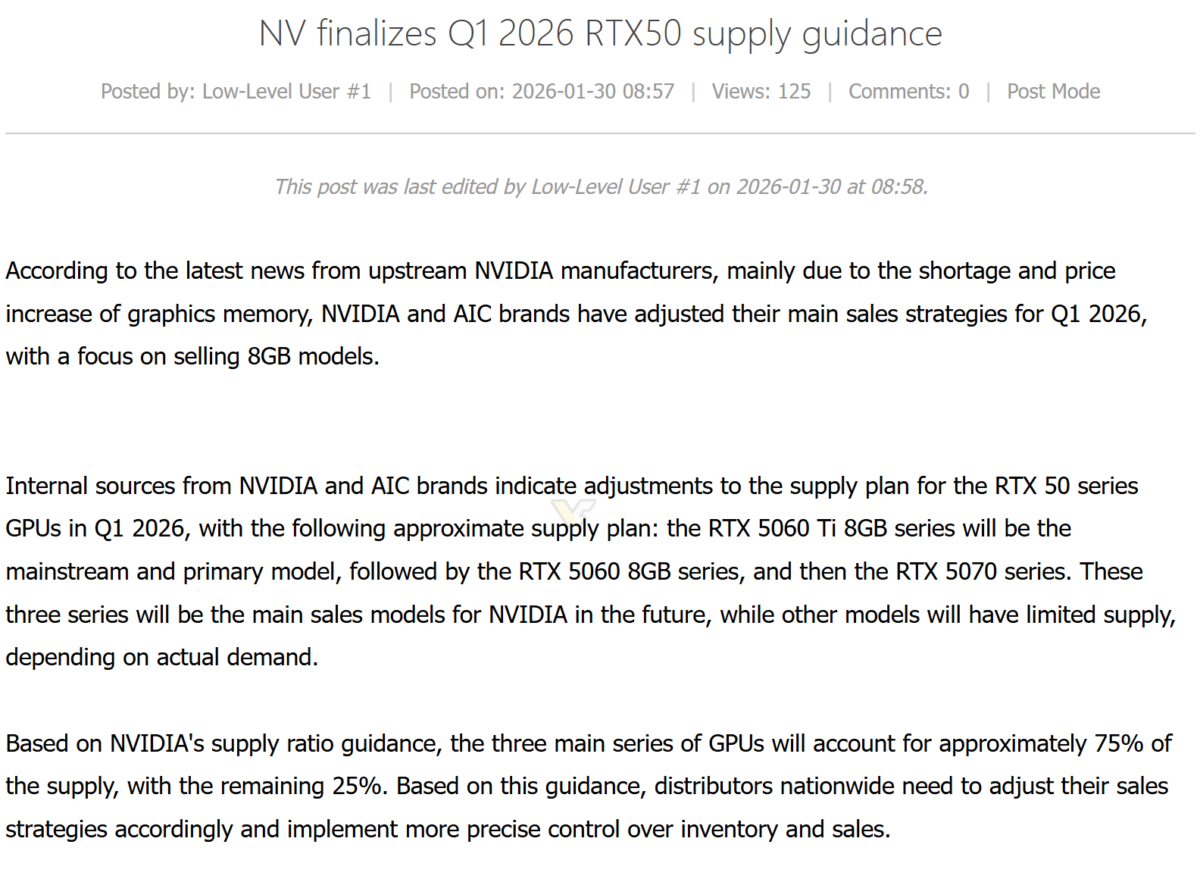
The news comes via VideoCardz, which spotted a new report from Board Channels claiming that three RTX 50 models account for roughly 75% of NVIDIA’s total GPU supply for Q1 2026. Per the report, those GPUs are the GeForce RTX 5060 8GB series, RTX 5060 Ti 8GB series, and RTX 5070 12GB series. Yes, most of those feature either 8GB or 12GB of memory.

Image source: Broad Channels | via: VideoCardz

The report further notes that the RTX 5060 8GB is the most popular card for the quarter, with the RTX 5060 Ti 8GB being the second-most common option. The RTX 5070 reportedly follows behind them, rounding out the top three GPUs in terms of shipment volume.

Most of the remaining 25% of supply is reportedly spread across other RTX 50 models. Board Channels also noted that availability across the lineup remains segmented. In short, memory capacity continues to influence how many units partners are able to ship.

Earlier this month, a report claimed that the RTX 5070 Ti had already reached end-of-life. However, ASUS later clarified those claims. All that said, the key takeaway from the report is that NVIDIA’s Q1 2026 RTX 50 supply appears heavily centered on a few midrange GPUs.

OpenAI’s Sora AI Video App Sees Sharp Drop After Early Success

OpenAI is making headlines again as it reshapes its business and product lineup. While the company reportedly looks for new funding from major tech firms and phases out older GPT-4 models in favor of newer systems, fresh data suggests its Sora AI video app has started to slow down after an explosive debut.

According to Neowin, early signs point to fading momentum for Sora just weeks after its initial success.

Sora downloads and revenue decline in early 2026

Appfigures data shows a sharp drop in user interest. Sora downloads fell 32% in December 2025 and then slid another 45% in January 2026, settling at roughly 1.2 million installs for the month.

Spending declined at a similar pace. Consumer purchases dropped 32% month over month, reaching about $367,000 in January, which signals weaker monetization alongside falling installs.

Sora launched as a breakout hit. The app briefly claimed the No. 1 spot on the U.S. App Store and reached one million downloads faster than ChatGPT, a milestone that highlighted intense early demand.

That momentum has since cooled. Sora now sits near No. 101 overall on the U.S. App Store and around No. 181 on Google Play, marking a steep decline in visibility across both platforms.

Competition and constraints weigh on growth

Analysts link the slowdown to a mix of fading launch hype, copyright-related content limits, and growing pressure from rival platforms. Competing tools from Google, including Gemini, and a broader push into AI products from Meta have crowded the market and raised the bar for sustained engagement.

Despite the recent downturn, Sora still holds millions of lifetime installs and meaningful cumulative revenue, which suggests that a core group of users continues to rely on the app even as growth slows.

At the same time, OpenAI faces broader financial strain. The company reportedly expects losses of up to $14 billion this year, adding pressure to convert high-profile AI launches into durable, profitable products as competition across the AI sector continues to intensify.

OpenAI Cleans Up ChatGPT Lineup, Drops GPT-4o and GPT-4.1 Models

OpenAI may lose up to $14 billion this year, and the company is already reshaping its product strategy. Recent moves include introducing ads for Free and Go plans, and now OpenAI plans a major cleanup of its ChatGPT model lineup.

According to Neowin, OpenAI will retire several legacy AI models from the ChatGPT interface on February 13, 2026.

Multiple GPT-4-era models will leave ChatGPT

OpenAI plans to remove the following models from the consumer ChatGPT model picker: GPT-4o, GPT-4.1, GPT-4.1 mini, and OpenAI o4-mini.

These retirements add to previously announced removals, including GPT-5 Instant and GPT-5 Thinking. After February 13, users will no longer see these models as selectable options inside ChatGPT.

OpenAI will keep legacy models available through the OpenAI API for now. This decision gives developers and existing integrations more time to adapt, instead of forcing an immediate migration.

For end users, OpenAI will automatically move conversations and projects that rely on retired models to GPT-5.2 once the change takes effect.

OpenAI now concentrates development on newer GPT-5-series models. The company says these models reflect user feedback and include broader capability improvements, which makes maintaining older models less practical.

Still, the decision may frustrate part of the user base. Some users strongly prefer the tone, creativity, or behavior of models like GPT-4o, and they may not welcome a forced switch to newer versions.

This model cleanup fits into a wider restructuring effort. OpenAI wants to simplify its offerings while highlighting newer capabilities across its AI stack.

At the same time, the company reportedly seeks up to $60 billion from major tech partners. OpenAI also continues work on Prism AI Workspace, a dedicated workspace aimed at scientific research and academic writing.

Together, these moves signal a company under heavy financial pressure, but also one that wants to narrow its focus as it scales toward more advanced, enterprise-oriented AI systems.

Most Game Developers Are Choosing Windows PC Over Consoles, GDC Survey Reveals

If you’ve ever wondered what platforms game developers are prioritizing behind the scenes, a new survey from GDC sheds light on it, and the details are quite striking, to say the least. According to the “State of the Game Industry” survey, game developers are increasingly prioritizing Windows PC over consoles (via TheGameBusiness).

GDC survey reveals Windows PC dominates developer priorities

The survey, which collected responses from over 2,000 industry professionals worldwide, offers a clear picture of platform focus for 2026. Interestingly, a staggering 80% of respondents plan to develop games for Windows, which is a clear indication of the dominance of Steam.

In comparison, only 40% said they would target PlayStation 5 or the upcoming Nintendo Switch 2. Apparently, not many game developers are interested in Xbox, as the survey revealed only 20% of participating developers plan to build for the platform, which is reportedly a significant drop from last year’s 34% (via Windows Central).

That said, some niche platforms have registered developer attention. The Xbox Ally, a PC-compatible system, accounted for 7%, while Xbox Cloud Gaming stood at around 5%. Meanwhile, the Steam Deck drew 40% of developer interest, on par with PlayStation 5, suggesting handheld PCs have been getting the attention alongside desktop Windows.

Consoles face growing pressure from PC-first development

The survey highlights a growing challenge for console makers when it comes to developer interest. Even though the PS5 still has a massive install base, ease of publishing and platform friction seem to matter more than raw reach. Windows, on the other hand, is simply easier to work with, which is why many studios default to PC first.

Looking at the year-over-year numbers, Windows PC continues to be the safest and most flexible platform for developers, while consoles are becoming more selective targets. Well, it could be one of the reasons why Microsoft is pushing the next Xbox closer to a PC experience, allowing developers to stick with familiar Windows tools and workflows.

Microsoft Pushes Sentinel Migration Deadline to 2027 After Customer Feedback

Microsoft continues to draw attention after reporting a solid 16.7% revenue increase, but the company is also making important adjustments to its enterprise security roadmap.

Microsoft has now confirmed that it is extending the migration deadline for Microsoft Sentinel customers, responding directly to feedback from large organizations struggling with complex transitions.

Sentinel migration deadline moves into 2027

Microsoft previously announced that Sentinel customers would need to migrate management and monitoring workflows from the Azure portal to the Defender portal.

That timeline has now changed, according to Neowin. The original migration deadline of July 1, 2026 has been pushed back to March 31, 2027, giving customers nearly nine additional months to complete the transition.

Microsoft says the extension was requested primarily by organizations managing Sentinel deployments at scale. These environments often require extended planning cycles, in-depth testing, and formal validation before major operational changes can go live.

While many customers have already migrated to the Defender portal, Microsoft acknowledged that others need more time to ensure continuity, compliance, and reliability. The additional runway allows teams to evaluate new capabilities and adapt internal processes before committing fully.

Microsoft reiterated that the Defender portal will receive the majority of future Sentinel updates, making long-term reliance on the Azure portal increasingly difficult unless compatibility requirements demand it.

Microsoft urged IT administrators and security leaders to begin migration planning as early as possible, even with the extended deadline, to avoid operational pressure closer to 2027.

Alongside Sentinel changes, Microsoft recently introduced a new GitHub Copilot Skill for Azure Static Web Apps Deployments, expanding AI-assisted workflows for developers working with cloud infrastructure.

The company has also reaffirmed its privacy commitments, emphasizing transparency, user control, and responsible AI use as security and automation capabilities continue to expand across its ecosystem.

Together, these updates reinforce Microsoft’s broader strategy of consolidating security under the Defender portal, accelerating AI adoption, and giving enterprises more flexibility to transition without disruption.

AMD Ryzen 7 9800X3D’s Price Drops Following the Launch of 9850X3D

AMD’s Ryzen 7 9800X3D has suddenly gotten cheaper, but we expected it for one simple reason: the launch of AMD’s Ryzen 7 9850X3D. According to multiple reports online, a fresh retail listing shows the Ryzen 7 9800X3D dropping to $443.99 on Amazon, 7% down from its original $479.99 price.

When the Ryzen 7 9800X3D launched in November 2024, it quickly became one of the most popular gaming CPUs on the AM5 platform. AMD’s 3D V-Cache design played a big role in its success, especially in CPU-limited games where extra cache helps stabilize frame times and ease memory strains. Those plus points don’t suddenly disappear just because a newer chip exists.

A new flagship changes the value equation around the Ryzen 7 9800X3D

The arrival of the Ryzen 7 9850X3D reshuffles AMD’s gaming lineup. The new chip now holds the “best gaming CPU” title, but the performance gap over the 9800X3D is widely described as incremental rather than dramatic. However, the existence of the new chip can make it tricky for buyers to decide whether to go for peak, raw performance, or value. That context shifts the buying decision away from chasing peak performance and toward value.

At $443.99, the Ryzen 7 9800X3D is sitting roughly $15 above its reported all-time low. For many buyers, that’s the sweet spot. You’re getting near-flagship gaming performance without paying early-adopter pricing.

The Ryzen 7 9800X3D remains especially strong at 1080p and 1440p, where high refresh rate gaming can expose CPU limitations. At 4K, strain on the GPU is given, but at lower resolutions, X3D chips continue to shine. With the 9850X3D now on top, the Ryzen 7 9800X3D isn’t obsolete. All that said, it slides into a new role of being a former flagship that now makes more sense on price alone.

Will you buy the Ryzen 7 9800X3D at a discounted price? Let us know in the comments below.

Microsoft Wants to Add a Flexible Taskbar-Style Dock to PowerToys

PowerToys remains one of the most useful utilities available for Windows users, and Microsoft wants to push it even further with a bold new idea.

According to Neowin, Microsoft is proposing a new PowerToys feature called Command Palette Dock, a secondary, taskbar-style interface designed for faster access to tools and extensions.

PowerToys might finally bring us a customizable taskbar

Microsoft shared the proposal on the PowerToys GitHub repository, complete with detailed explanations and early concept images. The idea centers on quick interaction rather than replacing existing workflows.

Unlike the standard Windows taskbar, the Command Palette Dock could sit on any edge of the screen. Users would gain instant access to pinned Command Palette extensions without opening the full Command Palette UI.

Source: GitHub

The design focuses on awareness and speed, allowing users to glance at available tools and act immediately.

The proposal describes a highly customizable dock experience:

  • Move the dock to any side of the screen
  • Pin favorite Command Palette extensions for one-click access
  • Adjust background styling and opacity
  • Control where extensions appear and reorder them freely

Microsoft describes the concept as significantly more flexible than the default taskbar, with a look that feels closer to a next-generation Windows interface than today’s UI.

Command Palette Dock has not been confirmed for release. Microsoft labels it as an early-stage proposal and actively requests community feedback.

If enough users support the idea, Microsoft may bring the dock to a future version of PowerToys, but no timeline exists yet.

While Microsoft experiments with new PowerToys features, the company has also released KB5074105. Early reports suggest some users experience camera and lock screen issues after installing the update.

At the same time, Windows 10 continues to regain market share, even as Microsoft maintains an aggressive push toward Windows 11. The trend highlights ongoing hesitation among users when it comes to upgrading, despite Microsoft’s steady stream of new features and UI experiments.

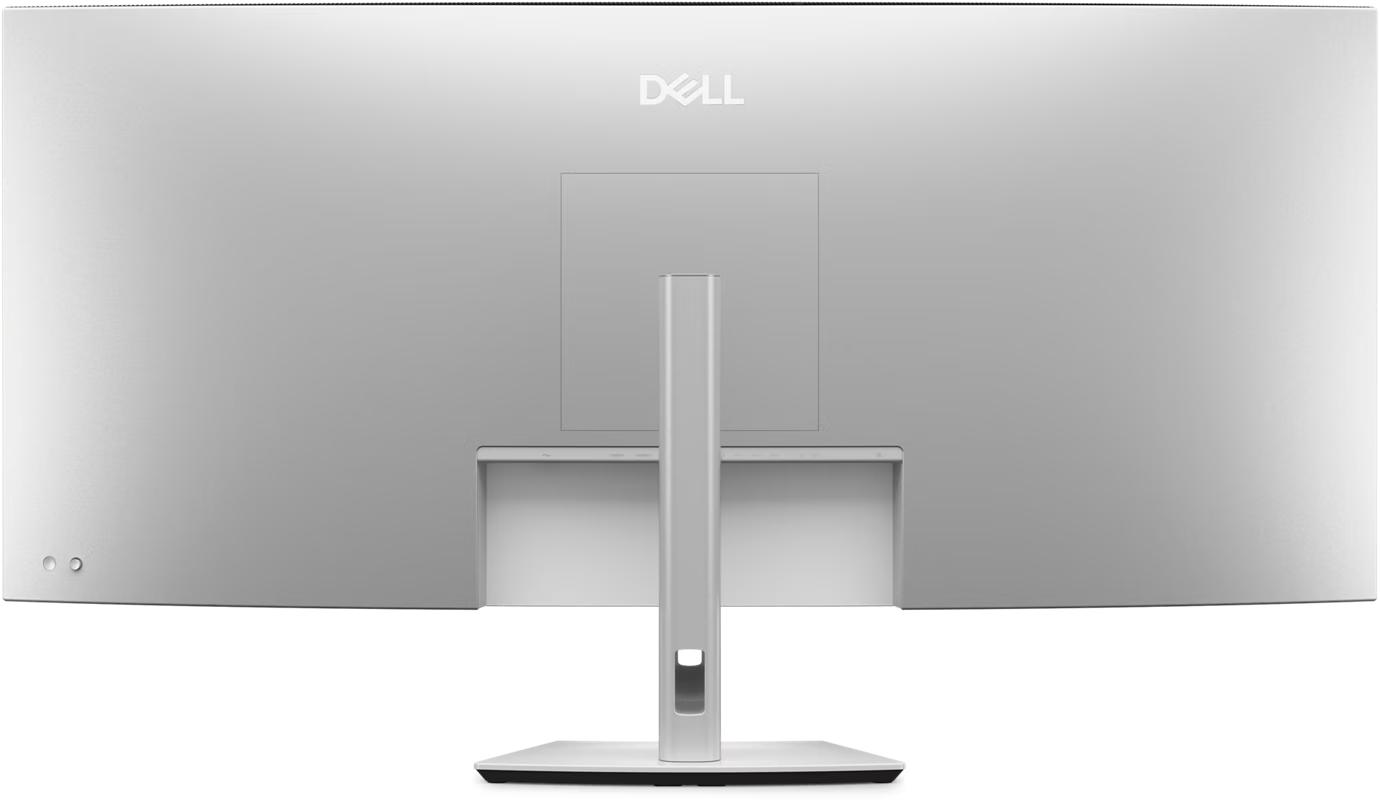
Dell UltraSharp U5226KW Now Available, a 52-inch 6K Curved Monitor With Thunderbolt 4

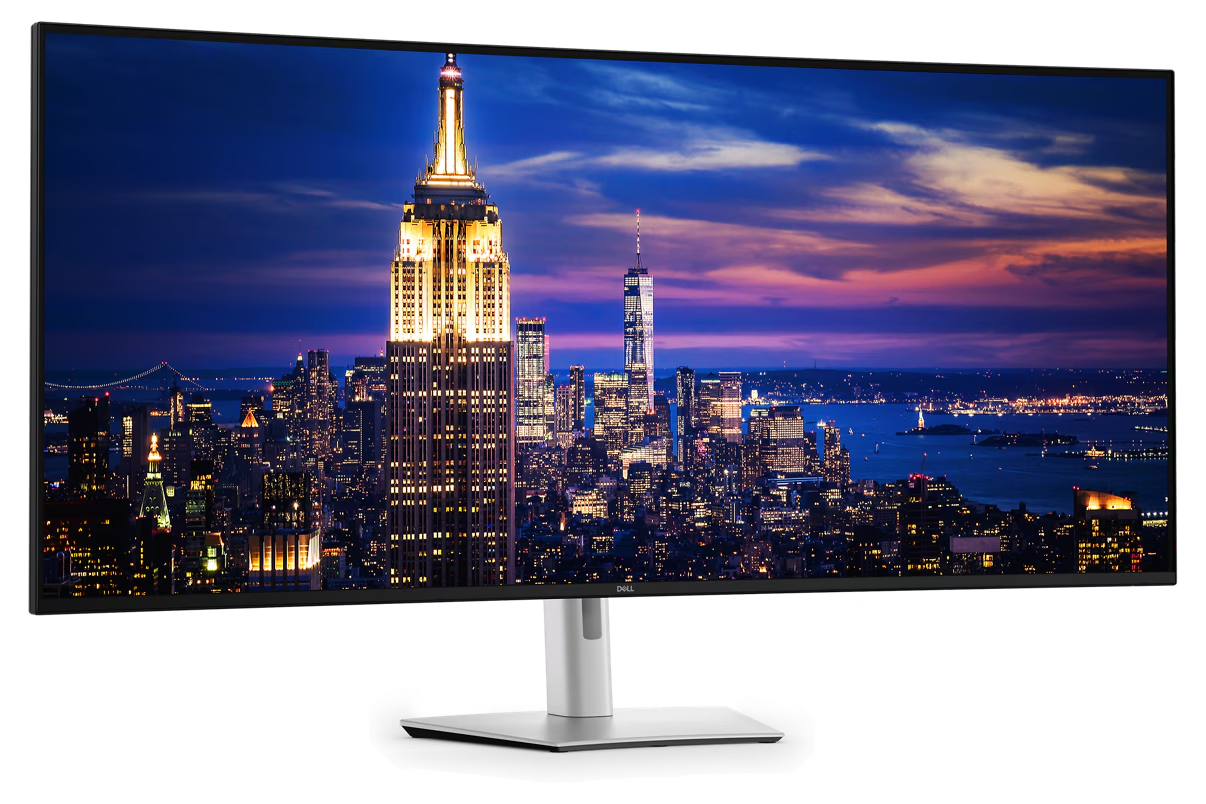
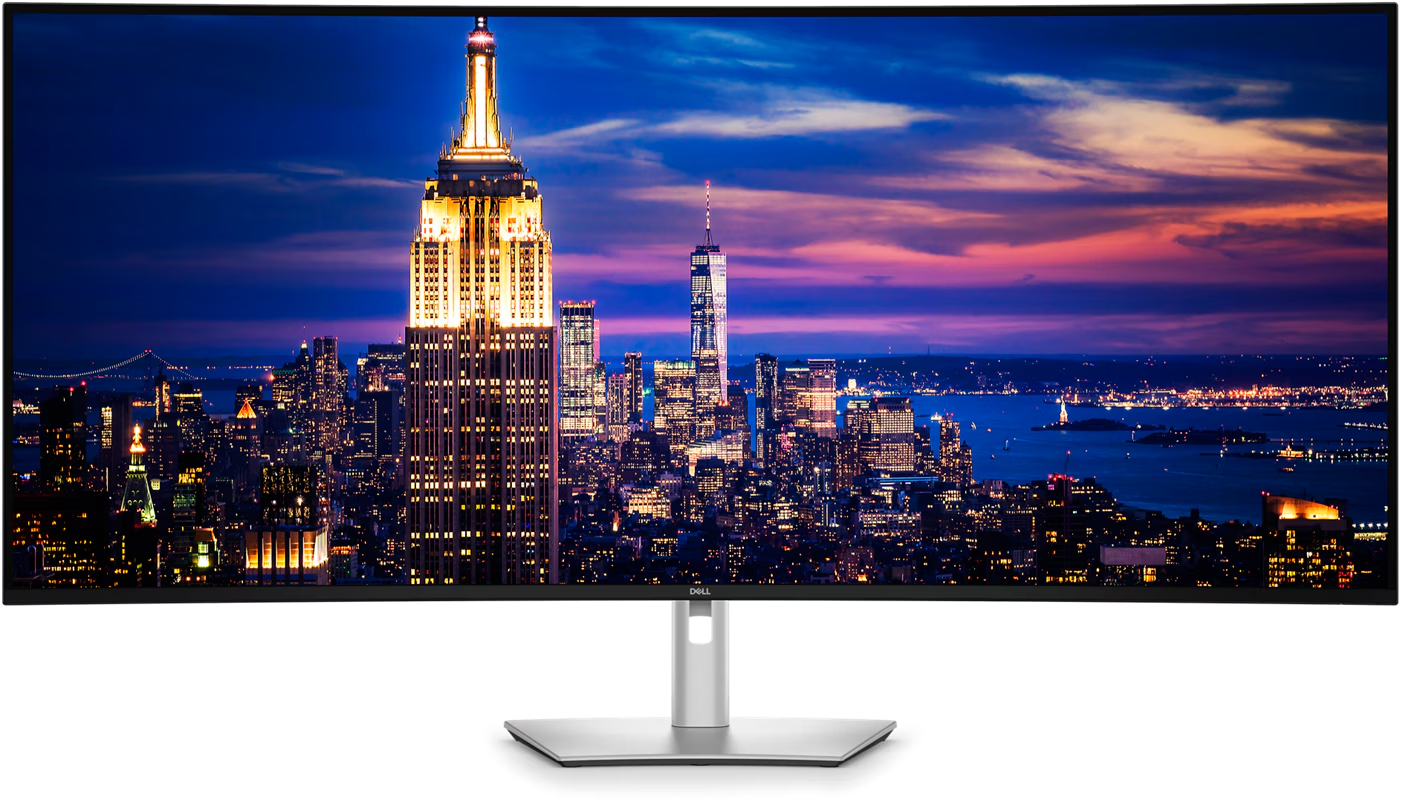
If you have been eyeing a curved ultrawide monitor for some time now, there’s one new in town from Dell. The company has officially unveiled the Dell UltraSharp U5226KW. It is a 52-inch curved ultrawide monitor that is designed to replace both your display and your docking station.

Large ultrawides aren’t exactly rare anymore, but Dell’s latest model is clearly built for users who want one screen to handle everything with a single cable. Speaking of specs, the Dell U5226KW features a 6K 6144 × 2560-resolution display panel based on IPS Black technology and a 2000:1 contrast ratio, which is notably higher than what standard IPS panels usually deliver.

monitor-ultrasharp-u5226kw-gallery-2
Image: Dell

The monitor also supports a 120Hz refresh rate, a 5 ms gray-to-gray response time, and up to 1.07 billion colors, making it equally suited for productivity-heavy setups and creative workloads.

High-resolution IPS Black panel with wide color support

The Dell UltraSharp U5226KW offers 400 nits of brightness alongside wide color coverage, including 99 percent DCI-P3 and Display P3. On top of that, Dell has factory-calibrated the panel, keeping Delta E below 1.5, which should appeal to professionals who rely on consistent, accurate colors.

Moving on, the screen uses a 4200R curvature paired with 178-degree viewing angles. It helps maintain consistent visuals across its massive width. On most desks, it will replace a multi-monitor setup entirely, not sit next to one.

Built-in dock with Thunderbolt 4 and Ethernet

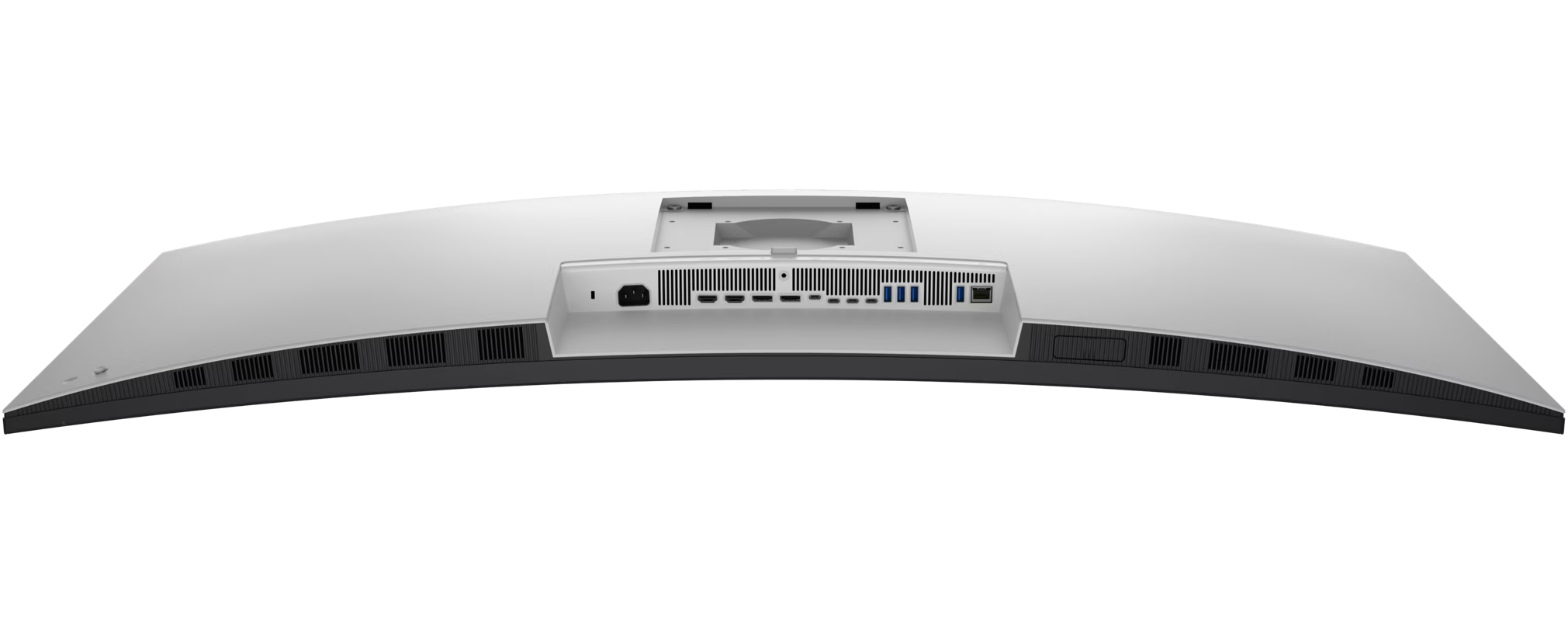
Connectivity is where the UltraSharp U5226KW really standsout. The monitor includes Thunderbolt 4 with up to 140W power delivery, allowing compatible laptops to handle video output, data transfer, and charging through a single cable. Dell has also added a 2.5Gb Ethernet port and a full USB hub, cutting down the need for an external dock.

For users juggling multiple systems, features like Picture-by-Picture and a built-in KVM switch allow one keyboard and mouse to control more than one computer. The port selection includes two HDMI inputs, two DisplayPort inputs, and several USB-A and USB-C ports with charging support.

Needless to say, the Dell UltraSharp U5226KW is a beast, at least on paper. Moreover, the monitor also supports tilt, swivel, and height adjustment, and it weighs over 18 kg, which means it also requires some desk planning. The new monitor starts at $2,233, as Dell positions the UltraSharp U5226KW in the high-end workspace category.

Article feature image source: Dell

Windows 11 KB5074105 Update Triggers Camera and Lock Screen Issues

Microsoft has released the new KB5074105 update for Windows 11 versions 24H2 and 25H2, but early adopters are already reporting problems shortly after installation. The update is listed as having no known issues, yet user feedback suggests otherwise.

Reports are starting to surface only days after rollout, raising concerns for users who installed the update as soon as it became available.

Users report camera failures and lock screen issues after installing KB5074105

According to reporting from Neowin, complaints have appeared on Microsoft Q&A and community forums pointing directly to KB5074105. Several users say their built-in camera begins blinking on and off continuously once the update finishes installing.

In affected systems, camera apps, websites, and video conferencing tools report hardware failure, while no image or video output appears at all. Multiple users confirmed that uninstalling KB5074105 immediately restored normal camera functionality, strongly indicating that the update caused the issue.

Another reported issue involves the Windows 11 lock screen clock widget. One user noted that the clock briefly appears after locking the device, then crashes roughly two seconds later before disappearing entirely.

At this stage, it remains unclear whether uninstalling KB5074105 resolves the lock screen clock problem, as limited reports exist compared to the camera-related failures.

Not all feedback has been negative. Other users report that Windows 11 continues to function normally after installing KB5074105. In these cases, the only noticeable change involved the taskbar taking close to one minute to load after a reboot.

This behavior may relate to background configuration tasks running after the update rather than a permanent bug, as systems appeared stable once the process completed.

KB5074105 is an optional update, not a mandatory security patch, meaning users are not required to install it. Those experiencing issues can uninstall the update through Windows Update history or pause updates to prevent it from reinstalling.

The cautious approach may appeal to users following Microsoft’s recent struggles with post-update bugs. The company recently confirmed that the KB5074109 update caused boot failures on some business PCs, forcing Microsoft to issue a second emergency update to fix Outlook and other critical problems.

For now, users will be watching closely to see whether Microsoft acknowledges these new KB5074105 reports and delivers a follow-up fix.

China reportedly approves DeepSeek to buy NVIDIA H200 AI chips with conditions

The drama around NVIDIA H200 AI chips doesn’t seem to stop anytime soon. What began as a tough U.S. export ban has slowly turned into a carefully managed reopening. Now, according to Reuters, China has green-lighted leading AI startup DeepSeek to purchase NVIDIA’s H200 chips, with conditions still being finalized.

China conditionally clears DeepSeek to buy NVIDIA H200 AI chips

The H200 sits at the center of today’s AI arms race. The chip, as you may know, is built for large-scale model training and inference. It also offers massive memory bandwidth through HBM3e, along with a massive efficiency boost.

For companies training increasingly large language models, fewer H200 chips can now handle workloads that previously required far larger clusters. That makes it one of the most sought-after AI accelerators on the market right now.

Earlier, access to chips like the NVIDIA H200 looked nearly impossible for Chinese firms. The U.S. initially blocked shipments altogether, citing national security concerns. However, the Trump administration loosened the export ban, but under strict terms. Each sale will reportedly come with a 25 percent cut, keeping volumes and exposure tightly controlled.

China’s response was cautious. While the country needs advanced AI hardware to keep pace globally, officials have also been wary of undermining local chipmakers. Relying too heavily on U.S. suppliers risks slowing domestic AI efforts in the long run. As a result, approvals have been selective rather than wide open.

MAINGEAR Retro98 Brings Back Beige PCs With RTX 5090 and Ryzen X3D Power

With AMD pushing performance forward through processors like the Ryzen 7 9850X3D and reports pointing to a possible Ryzen 9 9950X3D V2 refresh, not every PC enthusiast wants a futuristic-looking tower. For those drawn to late-1990s nostalgia paired with modern muscle, MAINGEAR has introduced something very different.

As VideoCardz reports, MAINGEAR has announced Retro98, a limited-run lineup of retro-styled desktop PCs built around SilverStone’s FLP02 “beige box” chassis, while still packing today’s high-end components inside.

Despite its retro design Retro98 series packs a punch

The Retro98 series fully embraces classic PC aesthetics without sacrificing practicality. The front panel includes a working “Turbo” button, inspired by SilverStone’s original design, which switches system fans to maximum speed for instant cooling. The case also features a key-lock style control layout, a front temperature display, concealed front I/O ports, and deliberately visible cable routing to reinforce the old-school look.

Despite the retro exterior, Retro98 systems target modern gaming and enthusiast workloads, with clearly tiered hardware options.

Retro98 | 5070

  • Intel Core Ultra 7 265K
  • NVIDIA GeForce RTX 5070
  • 32GB DDR5-6000
  • 2TB NVMe Gen4 SSD
  • MSI Z890 Gaming Plus WiFi
  • 360mm AIO liquid cooling

Retro98 | 5080

  • AMD Ryzen 7 9800X3D
  • NVIDIA GeForce RTX 5080
  • 32GB DDR5-6000
  • 2TB NVMe Gen4 SSD
  • MSI X870E Gaming Plus WiFi
  • 360mm AIO liquid cooling

Retro98 | 5090

  • AMD Ryzen 7 9850X3D
  • NVIDIA GeForce RTX 5090
  • 32GB DDR5-6000
  • 2TB NVMe Gen4 SSD
  • MSI X870E Gaming Plus WiFi
  • 360mm AIO liquid cooling

Retro98α (open-loop flagship)

  • AMD Ryzen 9 9950X3D
  • NVIDIA GeForce RTX 5090
  • 64GB DDR5-6000
  • 4TB Kingston FURY Renegade NVMe Gen5 SSD
  • ASRock X870E Nova WiFi
  • Custom Alphacool CPU and GPU liquid loop
  • Dual radiators (360mm + 240mm)

MAINGEAR is treating Retro98 as a true limited-edition release rather than a mass-market product. The company is producing just 32 standard Retro98 systems alongside only six units of the flagship Retro98α model. All configurations are already available, with sales handled exclusively through MAINGEAR’s own online store.

Pricing reflects both the premium hardware and the niche nature of the design. The entry-level Retro98 | 5070 starts at $2,499, while the Retro98 | 5080 moves up to $3,499. The higher-end Retro98 | 5090 comes in at $4,999, and the fully custom Retro98α flagship pushes pricing to $9,799, placing it firmly in showcase-PC territory.

In other hardware news, benchmark results for Intel’s upcoming Core Ultra 7 356H processor have surfaced online, offering an early look at Panther Lake mobile performance ahead of its official launch.

Possible Ryzen 9 9950X3D V2 Surfaces in ASUS Demo Video

AMD recently launched the Ryzen 7 9850X3D, but new signs suggest the company may already test a revised high-end X3D processor behind the scenes.

As reported by Guru3D, an ASUS China video sparked speculation after viewers noticed a desktop folder labeled “9950x3dv2” on a test system. The label does not confirm an official product, yet it looks far more like an internal identifier than a random or temporary file name.

9950x3dv2 folder suggests another version in the works

The presence of a clearly named folder points toward structured partner-level validation rather than an isolated engineering experiment. Hardware partners typically use precise labels only when a component matters enough to warrant sustained testing across firmware, power behavior, and stability.

The most intriguing detail is the “V2” suffix. In enthusiast hardware, that usually signals an iteration instead of a brand-new SKU. For a Ryzen 9 X3D-class processor, such a revision often focuses on refined silicon stepping, adjusted boost behavior, and improved power or thermal tuning rather than changes to core counts.

That approach fits well with how X3D processors evolve. The stacked cache design influences thermals, voltage behavior, and boost algorithms in ways standard CPUs do not. Even modest adjustments to firmware, cache management, or power limits can produce meaningful gains in gaming and mixed workloads without altering the underlying architecture.

At this stage, no specifications, clocks, cache details, or launch window exist. The folder name alone cannot confirm availability or performance targets. The most grounded takeaway remains simple: ASUS appears to test a CPU internally labeled “9950x3dv2,” which has reignited discussion around a refreshed Ryzen 9 X3D flagship from AMD.

If similar identifiers emerge from other partners or appear in leaked benchmarks, stronger confirmation will likely follow quickly.

Elsewhere in the hardware space, Qualcomm and AMD reportedly evaluate SOCAMM2 memory for future AI hardware, highlighting shifting approaches to high-bandwidth memory. At the same time, early benchmark results for the Intel Core Ultra 7 356H have surfaced online, offering a first glimpse at Intel’s upcoming Panther Lake mobile platform.

Windows 11 KB5074105 Improves Cross-Device Resume, Smart App Control, and MIDI Support

We already knew KB5074105 was on the way after it appeared in the Release Preview Channel, and now the update is officially here. As spotted by Neowin, Microsoft has released the January 2026 non-security update KB5074105 for Windows 11 versions 24H2 and 25H2, bringing a mix of new features, accessibility improvements, and system fixes.

KB5074105 expands Cross-Device Resume and Smart App Control

The most notable change is the expansion of Cross-Device Resume in KB5074105. Windows 11 now lets you continue activities started on your Android phone directly on your PC, based on the apps and services you already use. This includes resuming Spotify playback, continuing work in Word, Excel, or PowerPoint, and picking up browsing sessions without starting over. The feature pushes Windows further toward a more seamless phone-to-PC experience.

Microsoft has also expanded language support for the Settings Agent for Copilot+ PCs, making guided help inside the Settings app available to more users worldwide. This change improves accessibility and usability for non-English installations.

Another long-awaited update removes a major limitation around Smart App Control. With KB5074105 installed, you can now turn Smart App Control on or off without performing a clean Windows install. The option sits inside Windows Security under App & Browser Control, giving users more flexibility when adjusting security settings.

The update also introduces native support for MIDI 1.0 and MIDI 2.0, including full WinMM and WinRT MIDI 1.0 compatibility with built-in translation. This addition targets musicians, creators, and developers who rely on modern MIDI workflows in Windows.

Accessibility sees further improvements as Narrator now offers more control over how it announces on-screen elements. Users can decide which details are spoken and adjust their order to better match how they move through apps.

Voice Access now features a streamlined setup process that makes getting started much easier. The redesigned experience walks users through downloading the appropriate speech model for their language, selecting an input microphone, and learning how Voice Access can assist with everyday tasks on a Windows PC.

Voice Typing is receiving a small but meaningful upgrade with a new Wait time before acting setting. This option lets users control the delay before a spoken command is executed, making voice input more flexible for different speaking speeds and helping improve overall recognition accuracy.

In Settings, Microsoft is adding a new Device card to the home page that surfaces key system specifications and usage details at a glance. From there, users can jump directly to the System > About section for more detailed information about their PC.

On the security side, Windows Hello Enhanced Sign-in Security now supports peripheral fingerprint sensors, expanding biometric sign-in options beyond built-in hardware.

KB5074105 also fixes a wide range of issues across the system. Microsoft addressed Start Menu reliability problems, resolved cases where the lock screen could become unresponsive, improved File Explorer responsiveness when navigating network locations, and fixed a bug that caused desktop icons to shift unexpectedly when opening or renaming files.

This remains an optional update, but it stands out for delivering meaningful features rather than just routine maintenance. Users can install KB5074105 now through Windows Update or wait to see how it behaves before broader rollout.

Crimson Desert Shows Off Mech Combat and Expansive Open-World Action

With several high-profile releases on the horizon, April already has its lighter moments locked in with Tomodachi Life: Living the Dream, but players craving large-scale action have something far more intense to look forward to. Crimson Desert has received an extensive new gameplay showcase that offers the clearest look yet at its ambitious scope.

As reported by GameSpot, Pearl Abyss has released a 15-minute features overview video ahead of the game’s March 19 launch. The footage highlights a wide range of mechanics, including high-mobility traversal using a grappling hook, large-scale combat involving a pilotable mech, and even dragon riding that lets players soar across the world.

New characters, traversal systems, and a living open world

Crimson Desert follows Kliff, a mercenary protagonist fighting to save the medieval-fantasy continent of Pywel, a land fractured by political struggles and supernatural forces. The new footage introduces two additional playable companions, each designed to dramatically change combat flow.

One is a swift female warrior wielding an oversized claymore-style blade alongside a flintlock pistol, while the other is a heavily armored male fighter who combines brute strength with a massive axe and an arm-mounted cannon reminiscent of classic sci-fi weaponry.

Traversal plays a central role in the experience, with mid-air jumps, grappling hook swings, and free-flight on a dragon allowing players to move seamlessly across Pywel. The mech showcased in the video brings a different scale entirely, enabling missile-based destruction during large combat encounters and reinforcing the game’s cinematic ambitions.

Originally envisioned as a prequel to Black Desert Online, Crimson Desert has since evolved into Pearl Abyss’ first fully single-player title. Alongside its intense action, the game blends swordplay, wrestling-style melee techniques, and magic combat with quieter side activities such as cooking, fishing, crafting, and hunting, aiming to create a dense and reactive open world.

Crimson Desert launches on March 19 for PC, PlayStation 5, and Xbox Series X|S. Elsewhere in gaming, Nioh 3 recently received a free demo on Steam, while ARC Raiders rolled out a new anti-cheat system as developers continue refining their upcoming releases.

Intel Core Ultra 7 356H Leak Hints At Stronger Multicore, Weaker iGPU

Intel stays busy even as AMD rolls out new hardware like the Ryzen 7 9850X3D. Fresh leaks now shed light on Intel Core Ultra 7 356H, an upcoming Panther Lake mobile processor that targets thin-and-light laptops and premium notebooks.

According to reporting from TechPowerUp, Intel plans to equip the Core Ultra 7 356H with a 16-core hybrid design, combining 4 performance cores and 12 efficiency cores.

Leaked Core Ultra 7 356H benchmarks appear ahead of launch

Performance results surfaced on X ahead of official embargoes, revealing early Cinebench R23 and 3DMark Steel Nomad Light scores. These leaks offer a first look at how Panther Lake behaves in real-world workloads.

CPU performance: multicore gains, single-core stalls

The leaked numbers point to meaningful improvements in multicore workloads. Compared to last-generation Intel mobile chips, the Core Ultra 7 356H scales better when all cores engage, which should benefit productivity tasks like rendering and compilation.

However, single-core performance appears largely unchanged. The results line up closely with previous Intel mobile CPUs, suggesting Panther Lake focuses more on parallel workloads than per-core speed gains.

CPUCinebench R23 Single-CoreCinebench R23 Multi-Core
Intel Core Ultra 7 356H2,01320,721
Intel Core Ultra 7 255H~2,060~18,679

Integrated graphics take a hit

The most surprising part of the leak involves graphics performance. The Core Ultra 7 356H uses the Intel Graphics 4 Xe3 iGPU, which features fewer execution units than the Arc 140V iGPU found in the outgoing Core Ultra 7 255H.

As a result, the leaked benchmarks indicate a noticeable drop in integrated GPU performance, especially in synthetic graphics tests.

CPU3DMark Steel Nomad Light iGPU Score
Intel Core Ultra 7 356H2,110 points
Intel Core Ultra 7 255H~3,279–3,532 points (DX12 / Vulkan)

Taken together, the leaks suggest a clear trade-off. Panther Lake delivers stronger CPU multicore performance, but sacrifices integrated graphics horsepower. That balance could affect gaming, GPU-accelerated workloads, and creative apps that rely on the iGPU.

This also places Intel in a tougher competitive position against AMD. AMD’s Ryzen AI 400 APUs already appear in shipping laptops and show strong CPU and iGPU performance compared to current-generation Intel mobile chips.

Beyond Panther Lake, Intel continues to expand its ecosystem. The company works on a dedicated handheld gaming platform and recently rolled out XeSS 3 support for Arc GPUs through a new driver update, signaling ongoing investment in gaming and graphics technologies.

More clarity should arrive once Intel lifts embargoes and announces full Panther Lake specifications. For now, the leaks paint a picture of a CPU-focused upgrade with a notable graphics compromise.

Tomodachi Life: Living the Dream Will Release on Nintendo Switch This April

Nintendo has officially locked in the release date for Tomodachi Life: Living the Dream. The long-awaited life simulation game is set to launch on April 16, 2026, and the digital edition is now available for preorder at $59.99 on Nintendo Store. Notably, preloading is also supported, which means that players can jump in as soon as the game goes live.

Nintendo Store listing had confirmed that the game will be available on Nintendo Switch, with support across all major play modes. That includes TV mode, Tabletop mode, and Handheld mode, giving players flexibility in how they manage their island and its residents.

Tomodachi Life returns with deeper Mii customization

Tomodachi Life: Living the Dream builds on the series’ signature concept. Players populate an island with Mii characters, then watch what happens when they all live together. Miis can be based on friends, family, celebrities, or entirely original creations.

Nintendo says customization goes deeper this time. Players can update physical traits, personalities, and quirks, including new face customization options not seen in earlier entries. Those who prefer speed can also create Miis quickly by answering simple questions. Once done, Miis start forming relationships of their own. They chat, argue, fall in love, drift apart, and generally behave in unpredictable ways. The result is an island full of humor, drama, and surprises.

Island building, gifts, and online features confirmed

Besides relationships, players act as caretakers. That means giving Miis food, clothes, items, and advice as they navigate everyday problems. Over time, Miis may even adopt words and phrases taught to them.

Players can also design and shape the island itself, placing homes, shops, restaurants, and entertainment spots. Decorating interiors, gifting furniture, and customizing environments all play a role in keeping Miis happy.

Worth noting that the game has an estimated file size of 6.2 GB and supports Nintendo Switch Online, including Save Data Cloud. With preorders live and a spring 2026 launch confirmed, Tomodachi Life is shaping up to be one of Nintendo’s more charming releases this year.

Nintendo Store listing had confirmed that the game will be available on Nintendo Switch, with support across all major play modes. That includes TV mode, Tabletop mode, and Handheld mode, giving players flexibility in how they manage their island and its residents. Moreover, Nintendo has reportedly confirmed that you can also play Tomodachi Life: Living the Dream on Switch 2.

Microsoft Promises to Save Windows 11 From Its Own Mess This Year

If you are a Windows 11 user, you know that last year wasn’t great for the operating system, and Microsoft is solely to blame. The company made a mess of its latest operating system, thanks to buggy updates, aggressive Copilot push, and whatnot. And honestly, 2026 hasn’t looked good so far for Windows 11, given all the bugs and issues (1) (2) (3) (4) (5) introduced by the latest Patch Tuesday update for Windows 11.

The company has been trying to contain the disaster, but there are still many issues that are far from being fixed. Windows 11 users are frustrated and angry about how Microsoft has handled Windows 11 in the last year, and let me tell you, it’s well aware of it. Well, Microsoft has now assured that it’ll work towards making Windows 11 better this year.

Microsoft has internally shifted focus to fix Windows 11 issues

As reported by The Verge’s Tom Warren in his weekly newsletter, Notepad, Microsoft has directed Windows engineers to shift focus toward fixing long-standing performance and reliability issues (via Windows Central). Internally, the effort is being described as “swarming,” a process where engineers are redirected to fix problems from scratch. Windows 11 issues that have been piling up will reportedly be dealt with utmost priority.

Microsoft is expected to spend the rest of the year addressing the most common pain points users have raised. In a statement to Notepad, Pavan Davuluri, president of Windows and devices, acknowledged the situation directly. He says:

The feedback we’re receiving from our community of passionate customers and Windows Insiders has been clear. We need to improve Windows in ways that are meaningful for people. This year you will see us focus on addressing pain points we hear consistently from customers: improving system performance, reliability, and the overall experience of Windows.

The company is making some progress, but there’s lot to be done

Some of the planned changes are expected to be basic but overdue. These include fixing broken elements of dark mode and modernizing parts of Windows that have felt untouched for nearly a decade. While Microsoft has made progress in areas like driver stability and reducing Blue Screen of Death errors, several everyday issues remain unresolved. File Explorer’s performance is another key area, which has been frustrating users for a long time now. In some cases, Linux systems are even running Windows games more smoothly than Windows itself.

No doubt, promises have been made. But the direction where Windows 11 heads in 2026 will be defined by Microsoft’s approach. If the company remains proactive in listening to user feedback and acts upon flagged issues quickly, there’s still a chance for the company to make Windows 11 an OS the majority of users would love.

As a Windows enthusiast and long-time insider, I have my fingers crossed. All we can hope now is that Microsoft treats Windows 11 as its priority and not some side product. So, do you think Microsoft will fix Windows 11 to its core? We’d love to hear what you have to say; drop your comments below.

Call of Duty: Black Ops 7 & Warzone Season 2 Roadmap Reveals Blackout-Inspired Battle Royale Mode Among Major Updates

Call of Duty fans are getting an early look at what’s coming next. Activision has officially revealed the roadmap for Call of Duty: Black Ops 7 and Warzone Season 2, detailing new maps, modes, weapons, events, and cosmetic content. While the roadmap is packed with updates, one announcement has made fans excited.

Warzone is getting a Blackout-inspired battle royale mode

A brand-new battle royale mode is coming to Warzone later this season. The mode is set to land with the mid-season update and will take place on the upcoming Avalon map. What makes it interesting is how different it sounds from Warzone’s current formula.

Image: Activision

According to Treyarch and Raven Software, the new mode has been built from the ground up. More importantly, it takes clear inspiration from Blackout, the original battle royale experience that launched with Call of Duty: Black Ops 4 back in 2018.

Unlike modern Warzone matches, which revolve around custom loadouts and calling them in mid-game, this new mode leans toward a more traditional setup. Players will drop into the map and loot weapons and gear directly from the environment, relying on what they find rather than pre-built loadouts.

That should induce more unpredictability into each match, something longtime fans of Blackout often praise. Every drop, fight, and rotation could feel different, depending on what players manage to scavenge early on.

Details are limited, but more is coming soon

As of now, the mode’s official name hasn’t been revealed, and specific gameplay mechanics remain under wraps. Activision says more details will be shared closer to the mid-season launch. Also, it’s worth noting that Call of Duty: Black Ops 7 is included with Xbox Game Pass on both Xbox and PC. Players will need Xbox Game Pass Ultimate or PC Game Pass to access it, and the game supports Xbox Play Anywhere with cross-progression.

For now, Warzone fans will have to wait. But if this new mode delivers on its Blackout inspiration, Season 2 could feel very different. If you are willing to read every bit of the details mentiobed in the massive roadmap, check out the official announcement post.

Signal Now Allows You to Pin Messages in One-on-One & Group Chats

Signal is rolling out a feature users have been asking for a long time now. The privacy-focused messaging app is now adding pinned messages to both one-on-one and group chats, making it easier to keep important details visible.

Until now, key information often got lost in fast-moving conversations. This update aims to fix that. The feature is rolling out gradually with the latest version of Signal. Once available, pinned messages will appear at the top of chats, helping users quickly find critical information without scrolling endlessly.

Image: Signal

Pinning a message on Signal is simple. Users can long-press on a message, photo, poll, or file and select the pin option. Once pinned, the message becomes visible at the top of the chat for everyone who was part of the conversation when the message was originally sent.

Signal allows up to three pinned messages per chat. This limit helps keep things organized, especially in busy group conversations. In group chats, admins can also control who is allowed to pin messages through group settings, preventing misuse or clutter.

However, pinned messages won’t appear if the original message isn’t in your chat history. This usually happens if you joined a group after the message was sent or if you deleted the original message earlier.

Signal also gives users control over how long messages stay pinned. When pinning a message, users can choose between 24 hours, 7 days, 30 days, or forever. Once the selected duration ends, the message automatically unpins itself.

If a chat already has three pinned messages and a new one is added, Signal will automatically remove the oldest pinned message to make room. Users can also manually unpin messages at any time by tapping the pin icon. Users who want early access to upcoming features can also join Signal’s beta program to test changes before they roll out widely.

NVIDIA’s new GeForce NOW app brings RTX gaming to Linux PCs

NVIDIA is finally giving Linux gamers something to get excited about. The company has rolled out a native GeForce NOW app for Linux PCs in beta, which allows desktop users to access GeForce RTX performance directly from the cloud. Until now, Linux users were limited to browser-based streaming or Steam Deck–focused solutions. Not to mention, it could be a big deal for Linux users.

NVIDIA’s native GeForce NOW app finally lands on Linux

The new GeForce NOW Linux app comes with support for Ubuntu 24.04 and newer, and it’s designed for desktop and laptop users. NVIDIA says the app provides a seamless native experience that fits with Linux desktop workflows. In a real-life scenario, it will turn compatible Linux systems into RTX-powered gaming machines, with all rendering handled in the cloud.

Using the app, players can now stream supported PC games at up to 5K resolution at 120 fps, or 1080p at up to 360 fps. That’s a big jump over NVIDIA’s earlier Linux experience, which was primarily built for the Steam Deck and capped at lower resolutions and frame rates.

Desktop-first experience with cloud RTX power

If you’ve used GeForce NOW on Linux before, you’d know it was designed mainly for handheld use. The new beta app moves away from that approach. It now offers a PC-focused experience, similar to what’s already available on Windows and macOS. GeForce RTX features like ray tracing, NVIDIA DLSS 4, and RTX 5080-class performance are streamed directly to your system.

With this launch, Linux joins Windows, macOS, Chromebooks, mobile devices, and smart TVs in NVIDIA’s GeForce NOW ecosystem. Besides Linux expansion, NVIDIA has also added ten new titles to GeForce NOW. Games like The Bard’s Tale IV: Director’s Cut and The Bard’s Tale Trilogy are now available. Moreover, Team Jade’s Delta Force is set to land on the cloud on February 3.

AMD Launches Ryzen 7 9850X3D Gaming Processor; Check Where to Buy Now

As promised, AMD’s fastest gaming-focused processor is finally available to buy from online retail stores. The Ryzen 7 9850X3D has started appearing at major stores, listed at its official MSRP of $499, as reported by Wccftech. The company announced the chip back at CES 2026.

AMD Ryzen 7 9850X3D officially launched, now available on Amazon, Newegg, and more

As reported by the news outlet, the Ryzen 7 9850X3D processor is available at several major retailers. Amazon, Newegg, and B&H Photo Video are all listing the Ryzen 7 9850X3D at its $499 MSRP, with stocks available, at least in the US.

At $499, the Ryzen 7 9850X3D costs $20 more than its predecessor. That price bump comes with a higher boost clock. The new chip offers a 400MHz boost out of the box, while keeping most other specs unchanged.

That means you still get 96MB of L3 cache with 3D V-Cache, a 120W TDP, and RDNA 3.5-based integrated graphics with two compute units. While the core specs are similar, in real-life scenarios, the higher clocks translate into a noticeable boost in gaming performance. Not to forget, the Ryzen 7 9850X3D uses the AM5 socket, so it’s compatible with a wide range of popular motherboards that support chipsets like A620, X670, X670E, and more.

Not available on BestBuy and Walmart yet

Sadly, if you are searching for it at Best Buy and Walmart, you won’t find the processor yet. It’s reportedly not listed as a standalone CPU yet. While Micro Center promised to make it available at launch, the report says otherwise—only the prebuilt option is apparently available.

As it happens, every time, we expect more retailers to list the processor as soon as availability expands.

Article feature image source: AMD

Sharp Unveils Raspberry Pi Smart Display Module at ISE 2026 With Built-In Edge AI

After several days dominated by headlines around Microsoft’s Maia 200 AI chip and its memory deal with SK Hynix, single-board computers are back in focus. This time, attention shifts to Raspberry Pi, which quietly made a notable appearance at ISE 2026 with a new professional display solution.

As reported by TechPowerUp, Sharp is showcasing an unreleased product called the Raspberry Pi Smart Display Module at ISE 2026 in Barcelona.

A compute module built directly into displays

The Smart Display Module acts as an adapter board for the Raspberry Pi Compute Module 5 and targets professional signage and AV installations. Instead of relying on external media players, extra cables, or separate power supplies, the module allows displays to run directly from the embedded compute hardware.

Key features include low-power, high-quality display output, HDMI support for a second independent video stream, and an M.2 expansion slot for optional AI acceleration. The module follows the Intel Smart Display Module (SDM) specification, which lets it slot directly into compatible displays and draw power from the screen itself.

By embedding the computer inside the display, installations become cleaner, more reliable, and easier to maintain. Sharp positions the module for environments such as flight information systems, retail signage, corporate displays, and industrial use cases. Users can install it without specialist tools.

Edge AI comes to digital signage

A major highlight is built-in support for edge AI workloads. Through M.2-compatible AI accelerators, the Smart Display Module enables local analytics, real-time processing, and private, on-device AI tasks without relying on cloud services. This approach allows businesses to deploy AI-powered digital signage while keeping data processing local.

Raspberry Pi technology already powers hundreds of thousands of screens worldwide, and the Smart Display Module expands that ecosystem with modular, AI-capable display computing. Sharp confirmed the product will launch later in 2026, with live demos available at its ISE booth from February 3–6 at Fira de Barcelona, Gran Via.

Meanwhile, in other tech news, Microsoft continues to post strong revenue growth, even as Xbox hardware sales show continued declines.

Arc Raiders Headwinds Patch Adds Escalating Anti-Cheat Penalties

Embark has released the latest Arc Raiders January update, officially labeled version 1.13.0 and branded as the Headwinds update. The patch delivers new content and gameplay changes, but one quiet addition has quickly become the main talking point across the community.

The new anti-cheat system in ARC Raiders is now available

According to reporting from TechPowerUp, the update introduces a new progressive anti-cheat punishment system that replaces the game’s earlier enforcement approach. As of January 2026, Embark now applies a three-strike model designed to escalate penalties instead of issuing immediate permanent bans.

Under the new rules, a first cheating offense results in a 30-day ban. A second offense increases the suspension to 60 days, while a third violation triggers a permanent account ban. Embark appears to aim for stronger deterrence while still allowing room for correction before removing players permanently.

The change follows growing pressure from the community, which has repeatedly asked for stricter anti-cheat measures. Reports have circulated about players abusing the system by selling weapon blueprints for real money, a practice that directly impacts game balance and progression.

At the same time, some players remain cautious. Concerns about false positives persist, with claims from users who say bans hit their accounts despite not cheating. The new structure attempts to address both sides by enforcing tougher rules without immediately locking players out forever.

Alongside the update, NVIDIA GeForce released a new Game Ready Driver that adds specific optimizations for the latest Arc Raiders update, helping PC players get smoother performance following the Headwinds rollout.

Xbox Free Play Days Brings Fallout 76, Grounded 2, and More This Weekend

[UPDATE, 29 Jan, 2026, 21:40 IST] All games listed below are free to play for all Xbox players during Free Play Days. For Honor and Dead by Daylight are available at discounted price of $2.99 and $11.99, respectively. Similar to Fallout 76, you can also enjoy For Honor until February 5th. You can check more details in the Xbox Wire blogpost, which got published moments ago.


[ORIGINAL STORY] It’s Thursday again, which means we have a fresh Xbox Free Play Days lineup for you. Although the company hasn’t announced it officially via an Xbox Wire blog post, folks over at TrueAchievements have spotted the games that will be free to play this weekend (from January 29 to February 1).

Xbox Free Play Days brings four games for you this weekend

This weekend, Xbox Game Pass subscribers will soon be able to play all Xbox players will be able to Fallout 76, For Honor, Dead by Daylight, and Grounded 2.

As of writing, the games are not live on the Xbox Store. If you are willing to deep dive into Grounded 2, For Honor, and Dead by Daylight, you should be quick. That’s because the news outlet reports that these games will be available to play only up to February 1. Meanwhile, the free trial for Fallout 76, which is reportedly live now, will run through February 5.

If you are looking to grab Fallout 76, it’s the right time now. Microsoft is offering a limited-time sale where the game is available to buy at an 80 percent discount for just $7.99. The original price of the game, as listed on the Xbox Store, is $39.99. It’ll be interesting to see whether it will get any further cut during Xbox Free Play Days. The same goes for the remaining games like For Honor, Dead by Daylight, and Grounded 2.

As always, players can purchase any of the featured games at limited-time discounted prices and keep all achievements and Gamerscore earned during the event. Discounts and availability may vary by region, so it’s worth checking the Xbox Store early before the weekend ends.

Qualcomm And AMD Look To SOCAMM2 Memory To Supercharge AI Hardware

The AI hardware race keeps accelerating, and memory design now sits at the center of innovation. After Microsoft entered the field with its Maia 200 chip and secured supply through a deal with SK Hynix, other chipmakers have started to explore alternative ways to scale AI performance.

SOCAMM2 gains attention as AI memory demands grow

According to TechPowerUp, Qualcomm and AMD are reportedly evaluating the use of SOCAMM2 memory in future AI-focused products. The approach targets higher memory capacity and bandwidth, two critical factors for modern AI workloads.

The renewed interest follows NVIDIA’s “Vera” CPU, which uses LPDDR5X memory on the SOCAMM form factor. This design delivers up to 1.2 TB/s of memory bandwidth and supports as much as 1.5 TB of LPDDR5X memory, allowing large AI models to remain fully resident in fast system memory.

How Qualcomm and AMD could adopt SOCAMM

Qualcomm and AMD aim to use SOCAMM as a complement to HBM memory already deployed on AI accelerators. SOCAMM would act as a large, high-speed memory pool, reducing reliance on SSD or flash storage transfers and improving overall system efficiency.

For AMD, potential integration paths include pairing Instinct MI accelerators with EPYC CPUs using SOCAMM or developing a new AI system architecture built around the memory format. Qualcomm could expand its existing AI200 and AI250 accelerators, which already support up to 768 GB of LPDDR5 per card, by adding SOCAMM-based memory expansion instead of soldered designs.

Beyond performance gains, SOCAMM enables modular system configurations. Manufacturers can scale memory capacity by adding or removing modules without major PCB redesigns or complex soldering.

This flexibility becomes increasingly valuable as memory prices continue to rise, with even DDR4 experiencing notable price spikes.

Microsoft Teams Prepares a Fresh Round of Updates for Work Users

Microsoft Teams is preparing another wave of updates for organizational users, building on recent changes like custom consent messages for meeting recordings. According to reporting from Neowin, Microsoft is working on several new features scheduled to roll out over the coming months.

All features that are coming to Teams in the upcoming months

One of the more developer-focused updates brings mobile-friendly code blocks to Microsoft Teams. On mobile devices, code blocks will appear as attached objects with file-style previews.

Opening them reveals a rich view with syntax highlighting, line numbers, and scrollable containers, making it easier to review and discuss code while away from a desktop. Microsoft plans to begin rolling this out in early February, with wider availability by mid-February.

Microsoft has also pushed back the rollout of its redesigned call feedback screen. Originally expected by the end of the month, the update is now scheduled for mid-to late-February. The new interface includes updated problem tokens and simplified navigation.

Microsoft cautions that reports of poor call quality may rise, not because call performance has declined, but because users will find it easier to submit feedback.

Another update focuses on message management. A new “quick view” UX for Drafts will make it easier to find, locate, and navigate unsent messages. Microsoft will introduce this feature to Targeted Release users next month, followed by general availability in March.

On the security side, Teams will soon allow users to report suspicious one-on-one calls directly to their IT administrators and Microsoft. Reports will include limited metadata, and the feature will be enabled by default, with the option for admins to disable it. Microsoft expects this capability to reach general availability by April 2026.

These changes follow earlier protections such as brand impersonation safeguards. Microsoft has also delayed plans for location tracking and recently made some premium features available to Enterprise users at no additional cost, reinforcing its broader focus on usability, security, and value across Teams.

Samsung Confirms Smart Glasses Launch for 2026, Enters AI Wearable Race

Samsung has officially confirmed plans to launch its first smart glasses in 2026, pushing the project from long-running rumors into a clear product timeline. The announcement positions Samsung as the latest major player entering the AI-powered wearable market.

According to SamMobile, the confirmation came during Samsung Electronics’ latest earnings call, where executives outlined the company’s strategy for immersive, AI-driven experiences across its device ecosystem.

Multiple Models of Samsung Smart Glasses Planned

Samsung described its upcoming smart glasses as delivering “rich, immersive multimodal AI experiences.” The wording suggests that artificial intelligence, rather than visual overlays alone, will sit at the core of the product’s functionality.

The company appears to be prioritizing natural interaction methods such as voice, audio, and contextual awareness, aligning with broader trends in AI-first hardware.

Early information suggests the smart glasses may run on Android XR, a system designed specifically for extended reality devices. The first-generation model may not include a full augmented reality display but is still expected to feature cameras, microphones, and speakers.

Previous reports point to a possible 12-megapixel camera, a 155mAh battery, and a Qualcomm AR1 chipset. Gemini is expected to power many of the AI features, enabling real-time assistance and multimodal interactions.

Samsung is reportedly working on two smart glasses variants, identified as SM-O200P and SM-O200J. These models are believed to offer minor differences, potentially tied to design or regional availability.

A second-generation version with a built-in AR display could follow later, possibly launching in 2027, signaling a gradual rollout strategy.

Samsung has partnered with eyewear brands Gentle Monster and Warby Parker, indicating a focus on comfort, style, and everyday wearability.

Support for Nearby Device Scanning and Glasses Quick Pair has already appeared in Samsung software, suggesting the ecosystem is preparing for smart glasses connectivity.

Samsung’s move comes as competition intensifies across the AI hardware space. OpenAI is pushing deeper into AI devices and is reportedly seeking up to $60 billion in new funding, while Apple is also rumored to be working on a wearable AI pin, underscoring rising interest in assistant-first hardware.

With major tech companies racing to define the future of AI wearables, Samsung’s 2026 smart glasses could mark a key step in bringing AI-first devices to mainstream consumers.

RTX 5070 Ti Prices Surge at US Retailers Despite NVIDIA Denials

Rumors that GeForce RTX 5070 Ti production would stop have circulated for weeks, but both NVIDIA and ASUS have publicly denied those claims. Despite the denials, retail pricing tells a different story, with clear signs pointing to tightening supply and rising costs for buyers.

Retail listings point to a limited supply and aggressive pricing

As spotted by VideoCardz, a major U.S. retailer now shows RTX 5070 Ti listings climbing into four-digit territory. This outcome does not come as a surprise. Several board partners, including ZOTAC, previously warned that an NVIDIA GPU shortage was likely as demand remained high across multiple segments.

Many current listings resemble scarcity pricing rather than standard add-in-board partner premiums, suggesting that availability rather than features now drives costs.

Pricing behavior at Best Buy highlights the trend. Multiple mainstream partner models sit well above $1,000, while only a small number remain close to the $999 level. Retail patterns suggest either limited allocation, aggressive third-party seller pricing, or a mix of both.

Retail pricing systems appear to react quickly to low supply and sustained demand, regardless of official statements. Denials from NVIDIA and ASUS do not guarantee healthy inventory, as small shipment volumes can still push prices higher once stock tightens.

Some RTX 5070 Ti models remain available in the $859–$839 range, often tied to mail-in rebates. These offers mostly apply to Ventus variants, which remain less popular and lack a strong reputation for cooling performance.

So far, neither NVIDIA nor ASUS has commented on the recent price increases. The situation also reflects broader market pressure, as reports indicate DDR4 memory prices are rising alongside growing demand for DDR5, adding further strain to overall PC component pricing.

Windows 10 Makes a Comeback as Windows 11 Loses Momentum

Despite Windows 11 reaching more than one billion users faster than Windows 10, new data suggests the newer operating system has started to lose momentum.

Windows 11 growth shows signs of slowing

According to the latest Statcounter figures, Windows 11 has seen a noticeable slowdown after briefly overtaking Windows 10 in global desktop market share last year. Over the past two months of tracked usage, Windows 10 has begun gaining ground again, reversing part of Windows 11’s earlier growth.

MonthWindows 11Windows 10
October 202555.18%41.71%
November 202553.7%42.7%
December 2025~50.7%~44.6%

This trend isn’t entirely surprising. We previously reported that Windows 11 market share has been slipping, even as Microsoft continues to push upgrades through new hardware and software incentives.

Statcounter hasn’t offered an official explanation for the recent changes, and the data doesn’t come from an official Microsoft report. Even so, the numbers suggest a clear pattern: many users continue to delay the move to Windows 11.

Windows 10 officially went out of support on October 14, 2025, unless covered by Microsoft’s Extended Security Updates (ESU) program. Despite that, market share data shows a large number of users still rely on the older operating system.

Germany provides a clear example. Recent reports indicate that roughly 48% of home users continue to use Windows 10, even after support ended.

While users hesitate to upgrade, Microsoft’s overall business performance remains strong. The company recently reported a 16.7% revenue increase, showing that slower Windows 11 adoption hasn’t translated into weaker financial results.

Via VideoCardz

Microsoft Delivers Strong Growth as Xbox Revenue and Hardware Sales Decline

Microsoft reported solid performance in its latest earnings, delivering 16% revenue growth. Cloud services and enterprise products continued to drive results, keeping the broader business on a strong trajectory despite mixed performance across divisions.

Xbox gaming revenue continues to decline

According to reporting from GameSpot, Microsoft’s gaming revenue fell 9% compared to the same period last year. Revenue from content and services, which includes Xbox Game Pass, declined by 5%, reflecting tougher comparisons against a stronger first-party release lineup in the prior year.

Microsoft said last year’s content strength heavily influenced the year-over-year drop and expects a similar single-digit decline in Q3 for the same reason.

Xbox hardware revenue dropped 32% year over year, with a 70% sales drop in 2025, extending a decline that has now lasted three consecutive financial years. The company does not expect this trend to reverse in the near term.

Rising console prices continue to weigh on demand. Higher hardware costs, driven in part by increased component prices and competition from AI-focused buyers, have pressured sales across multiple markets.

While Xbox struggles, Microsoft’s broader business remains resilient. The company recently secured a supply agreement with SK Hynix to support production of its upcoming Maia 200 chip, strengthening its long-term AI and data center strategy.

With cloud and AI driving growth and gaming under pressure, Microsoft appears increasingly aligned with a multiplatform approach for Xbox Game Studios. The strategy reflects changing market conditions as the company prioritizes scale, services, and long-term platform reach over hardware-led growth.

Microsoft Rolls Out New Firmware Update for 12-Inch Surface Pro

Microsoft continues to update its Surface lineup, and the smaller Surface Pro model is now getting attention. After a recent firmware release for Surface Pro 10, Microsoft has started rolling out a new firmware update for the 12-inch Surface Pro.

As reported by Neowin, the update focuses on security, reliability, and input improvements. Microsoft says it addressed potential security vulnerabilities that could lead to unexpected shutdowns and, in certain scenarios, privilege escalation.

What’s new in the latest Surface Pro firmware update

One of the key areas addressed involves Surface Slim Pen 2 reliability. Microsoft fixed an issue where the pen could unexpectedly lose pairing after inking. The update also improves pen erasing stability and corrects cursor misalignment that occurred while hovering, resulting in a more accurate and consistent pen experience.

The firmware also introduces a new management option aimed at IT administrators. Organizations can now disable the stop error triggered by holding the power button for an extended period. Administrators can control this behavior by setting the PowerButtonBugcheck registry value to 0, simplifying device management in enterprise environments.

In related company news, Microsoft recently reported a 16.7% increase in revenue and secured a supply agreement with SK Hynix to support production of its upcoming Maia 200 AI chip, signaling continued investment in both hardware and AI infrastructure.

Surface Pro 10 Gets New Firmware as Microsoft Addresses Security and Connectivity Issues

Microsoft has stayed in the spotlight recently after reporting a 16.7% revenue increase, but the company has also faced challenges. Alongside ongoing work to address recent boot failures affecting some business PCs, Microsoft has pushed out a new firmware update aimed at improving device reliability.

New Firmware Brings Security and Wi-Fi Fixes

As reported by Neowin, Microsoft released a firmware update for the Surface Pro 10 that focuses on security, connectivity, and overall stability.

The update fixes security vulnerabilities affecting the Neural Processing Unit and Wi-Fi components. It also addresses issues linked to Intel PROSet/Wireless software that could allow denial-of-service attacks. Microsoft also resolved camera instability problems that caused unexpected resets while devices operated in disconnected standby mode.

Wi-Fi performance receives notable improvements in this release. The firmware fixes slow connection speeds even when devices sit close to wireless access points. It also corrects cases where systems used low-power Wi-Fi levels instead of country-specific limits, which reduced performance in certain regions.

Microsoft continues to deliver these improvements through regular Surface firmware updates, and the company recommends installing the latest version as soon as it becomes available.

Beyond device updates, Microsoft recently secured a memory supply deal with SK Hynix for its Maia 200 AI chips. At the same time, the company has faced criticism over water usage tied to its expanding AI data center operations, keeping Microsoft firmly in the tech news cycle.

OpenAI Seeks $60B From Nvidia, Amazon, and Microsoft to Fuel AI Expansion

Recent reports suggest that OpenAI could lose as much as $14 billion this year, highlighting the growing financial pressure behind large-scale AI development. Despite the projected loss, the company is reportedly deep in negotiations to secure massive new funding from major tech players.

OpenAI reportedly seeks up to $60B in new funding

According to The Information, OpenAI is in advanced talks to raise up to $60 billion in fresh investment. Several technology giants are said to be involved, each exploring different levels of financial and strategic commitment.

Nvidia is reportedly negotiating the largest share of the potential investment, which could reach as high as $30 billion. Nvidia already counts as an OpenAI investor and supplies the specialized chips used to train and run its AI models, making it a natural partner as computing demands increase.

Microsoft is also expected to participate, though its contribution may stay below $10 billion. Meanwhile, Amazon is reportedly discussing an investment that could exceed $20 billion, depending on broader cloud infrastructure and commercial AI agreements.

The push for funding reflects OpenAI’s rapidly rising operational costs. Reports claim the company’s power usage reached 1.9 gigawatts in 2025, driven by the scale of AI training workloads. OpenAI has stated, however, that its data centers will not increase electricity bills for local residents.

Sources say OpenAI is close to receiving formal term sheets, though none of the companies have made an official announcement. Separately, OpenAI is also working on Prism AI Workspace, a new tool aimed at supporting scientific writing.

Via Techzine

Windows 11 Reaches 1 Billion Users Worldwide, Outpacing Windows 10

Microsoft remains in the spotlight following its latest financial results, and the company has now confirmed another major milestone for its flagship operating system.

As reported by Neowin, Windows 11 has officially reached more than 1 billion users worldwide, marking a significant adoption achievement just a few years after launch.

Microsoft confirmed the milestone during its fiscal Q2 2026 earnings call, where it also revealed that overall revenue increased by 16.7% year over year. Windows 11 reached the 1 billion user mark in 1,576 days since its initial release in October 2021.

Windows 11 Beats Windows 10 Adoption Timeline

The adoption pace puts Windows 11 ahead of its predecessor. Windows 10 took approximately 1,706 days to reach the same milestone, meaning Windows 11 achieved it around 130 days faster.

Microsoft attributed part of this acceleration to the approaching end of support for Windows 10 and a more assertive upgrade strategy. The company has actively encouraged both consumers and enterprises to move to the newer platform, supported by new hardware cycles and deeper integration of modern system features.

Despite the rapid growth of Windows 11, Windows 10 continues to maintain a strong presence in certain markets. Recent figures indicate that about 48% of users in Germany still rely on Windows 10, highlighting regional differences in upgrade adoption.

While Windows 11 has crossed the 1 billion user threshold, other industry reports suggest its overall market share has recently declined. Looking ahead, Microsoft is preparing a major platform transition later this year, with indications that users could see two different Windows builds become available before the end of the year.

The move signals that Microsoft’s Windows strategy remains in flux, even as the operating system reaches record-breaking adoption levels.