Windows 11 Drops .NET Framework 3.5 From Optional Features in Future Builds

According to Neowin, Microsoft is removing .NET Framework 3.5 from the Optional Windows Features menu in future versions of Windows 11. The change marks a shift in how legacy .NET components are delivered and maintained on modern Windows systems.

Until now, Windows users could enable .NET Framework 3.5 manually through Optional Windows Features to support older applications. Newer systems shipped with .NET Framework 4.8 enabled by default, while 3.5 remained available as an optional toggle.

With the upcoming change, Microsoft moves .NET Framework 3.5 to a standalone installation model. Users will no longer find it listed in Optional Features and must install it separately when an application requires it.

Change starts with Windows 11 Canary builds

Microsoft introduced the removal in Windows 11 Insider Preview Build 27965, released through the Canary Channel in October 2025. Every Windows 11 build released after that point, including future public versions, follows the same approach.

Windows 10 and Windows 11 versions up to 25H2 remain unaffected. Systems running those releases will continue to show .NET Framework 3.5 as an optional Windows feature.

Alongside .NET Framework 3.5, Microsoft also removed several related components from Optional Features. These include ASP.NET 3.5, .NET Extensibility 3.5, WCF HTTP Activation, and WCF non-HTTP Activation, further signaling the company’s intent to phase out legacy frameworks.

Microsoft says the decision aligns with the .NET Framework product lifecycle, which ends on January 9, 2029. The company continues to encourage developers and customers to migrate to newer, actively supported .NET versions where possible.

For users who still rely on older software, Microsoft published official documentation that explains how to install .NET Framework 3.5 using an offline installer. The guidance also covers enabling related components through PowerShell scripts, ensuring compatibility remains available when required.

In related updates, Microsoft now enforces TLS 1.2 for Azure Blob Storage connections. At the same time, KB5074105 introduces several Windows changes, including the removal of the option to delete Windows Update files through Storage Cleanup.

The same update also lifts previous App Control limitations, making it a recommended install for users running supported Windows versions.

Microsoft Blocks 1.5M Neocities Sites on Bing, Founder Blasts AI Support System

Neocities, the indie web host that aims to revive the spirit of early personal websites, has been blocked by Microsoft’s Bing search engine, removing roughly 1.5 million user sites from its search index. This led those sites, including both the main domain and subdomains, to no longer appear in Bing search results, effectively hiding them from users relying on the engine and services that depend on Bing’s index.

Speaking with Ars Technica, who first reported the story, Kyle Drake, founder of Neocities, said that he attempted “everything” to resolve the issue, including buying ads on Bing to contact a human support representative (via Windows Central). Once inside Bing’s webmaster tools, he encountered an automated support process that left open tickets unacknowledged.

After the report, Microsoft removed some inappropriate blocks, and the Neocities front page reappeared in search results. But many subdomains that should rank well remain excluded, Drake said.

Microsoft has pointed to policy enforcement aimed at keeping low‑quality or unsafe content out of Bing, but it has not identified specific problems or communicated clearly with Neocities about why valid sites were blocked, according to Drake.

The situation raises bigger questions about search engines and content visibility. Bing itself has faced criticism in the past for censoring or filtering results in different regions.

In the blog post from late January, Drake has urged users not to rely on Bing or Bing‑powered engines, noting that Google and other major search engines still index Neocities normally. He also warned that blocked results could expose users to phishing risks if misleading sites surface in place of legitimate ones.

Neocities says it will update the public if Bing reverses its decision or engages meaningfully on remediation.

Valve’s Steam Survey: Windows 11 Still Leading, Windows 10 Holding Its Ground

Microsoft has been under massive scrutiny by Windows 11 users about how it has been handled by the company in the past few years. Complaints about broken updates and injecting AI features here and there across the OS have poured in from all parts of the world. Well, Microsoft has heard all the feedback and has assured to move away from its “AI Everywhere” strategy this year.

Windows 11 is still an undisputed leader on Steam

That said, according to the latest Steam Hardware & Software Survey, Windows 11 is still the most popular choice among Steam players (via Neowin). Windows 11 reportedly leads with 66.71%, thanks to better support for modern hardware and gaming features.

Surprisingly, Windows 10 is still holding its ground, as Valve’s survey hints that the OS is running on 27.79% of gaming PCs of Steam players as of February 2026. That’s a small increase from last month, but still a big thing given that the official support for the OS was killed three months back. Having said that, Windows 10 sits right below, in second place, after Windows 11 in Valve’s survey.

Speaking of other OS versions, Windows 7 barely hangs on with 0.08%. Overall, Windows dominates Steam with 94.62% of the platform’s users. Linux and macOS fill the remaining slice. Linux holds 3.38%, with Arch Linux the most common choice, while macOS has 2.01%, led by the 26 Tahoe version on Apple Silicon Macs.

NVIDIA remains the most popular GPU brand among Steam gamers

On the hardware side, gamers seem to favor 16GB of RAM (40.24%), six-core processors (28.45%), and the desktop NVIDIA RTX 4060 GPU (4.16%). NVIDIA remains the most popular GPU brand at 73.24%, while AMD takes 18.44%. CPUs, meanwhile, look more balanced, with Intel at 55.64% and AMD close behind at 44.36%. Most players still game at 1080p with 8GB of video memory.

Windows 11 KB5074105 Changes Storage Cleanup, Windows Update Files no Longer Listed

Microsoft has introduced a notable security change in the latest optional Windows 11 update. The KB5074105 release adds a new administrator requirement when users open Storage settings, triggering a User Account Control prompt by design.

Storage settings now require admin approval after KB5074105

According to WindowsLatest, with KB5074105 installed, opening the Storage page in Settings now asks for administrator approval on standard user accounts. According to Microsoft, the change ensures that only administrators can access protected storage locations and system-level files.

Microsoft says the goal is to reduce the risk of unauthorized users or background processes deleting critical data or system components. The prompt appears before the Storage settings page loads, rather than when users attempt specific actions.

Temporary files cleanup shows fewer options

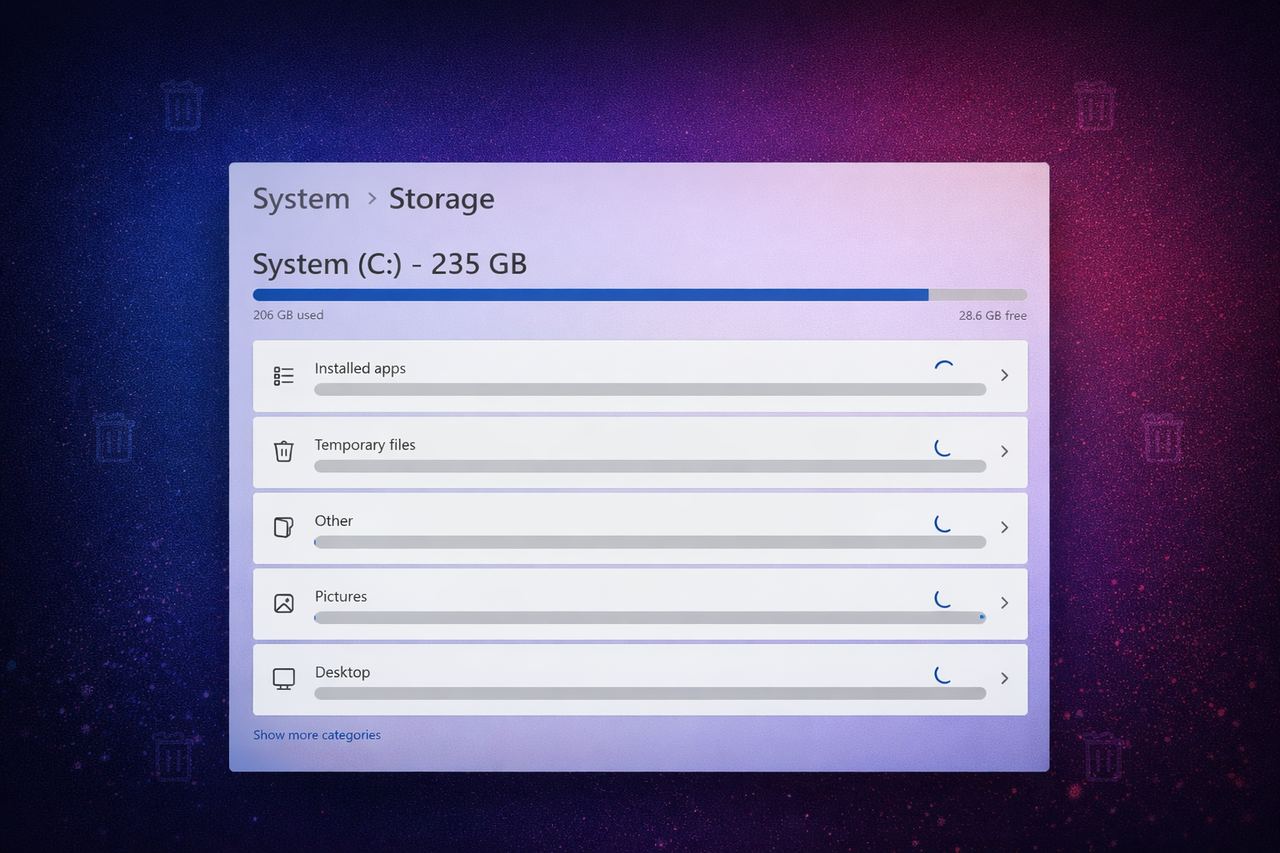
The update also changes how cleanup tools appear inside Settings. After installing KB5074105, the Temporary files section no longer lists certain categories, including some Windows Update-related cleanup items.

Those options have not been removed entirely. Users can still access them by launching Disk Cleanup with elevated or system permissions, which continues to expose cleanup areas no longer visible in the Settings app.

Beyond the security-related change, KB5074105 includes several fixes and improvements for Windows 11, including a solution for File Explorer freezing during startup.

The update also removes Smart App Control limitations, making it easier for users to turn the feature on or off. At the same time, some users report new issues after installing the update, including camera malfunctions and lock screen problems.

Because KB5074105 is an optional preview update, it does not install automatically. Users can choose to skip it entirely if they want to avoid the new admin prompt or potential issues, and wait for changes to roll into a future mandatory Patch Tuesday release instead.

Flickr Alerts Users of Possible Data Breach Exposing Emails, IP Addresses, Location & Account Info

Flickr, one of the internet’s oldest and most popular photo-sharing communities, is alerting users to a possible data breach. The potential breach stems from a vulnerability at a third-party email service provider.

Here’s the list of data that may have been exposed in the Flickr data breach

According to Flickr, exposed user data includes:

  • Real names,
  • Email addresses,
  • Flickr usernames,
  • Account types,
  • IP addresses,
  • Location info,
  • General account activity

Meanwhile, Passwords and payment card information were not affected, the company said. Fortunately, Flickr reported that it shut down access to the affected system within hours of being informed about the flaw on February 5, 2026. In emails sent to affected users, the company stated, “This flaw may have allowed unauthorized access to some Flickr member information. We shut down access to the affected system within hours of learning about it.”

According to BleepingComputer, the company did not disclose which third-party provider was involved or how many users were impacted. That said, Flickr has apologized for the incident and assured users that it is taking immediate steps to strengthen system architecture, enhance monitoring of third-party providers, and prevent similar issues in the future.

What Users Should Do

Flickr is urging users to review their account settings for any unusual activity and to be cautious of phishing attempts that may leverage exposed account information. Users are also advised to update passwords, especially if the same credentials are used on other platforms. More importantly, the company emphasized that it will never request passwords via email.

Microsoft Word Gets Smarter Arrow Navigation for Screen Readers

Microsoft has quietly rolled out a key accessibility update for Word on Windows. Users who currently rely on screen readers can now navigate documents more intuitively using the up and down arrow keys, following the logical reading order rather than just the visual layout.

Arrow keys in Word now follow reading order

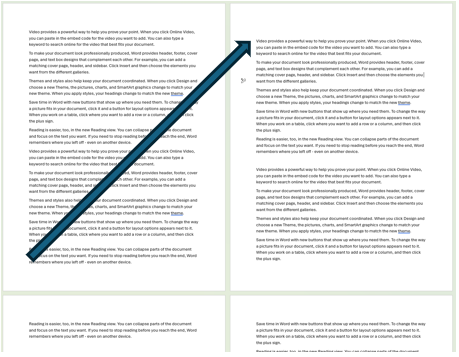
Prior to this update, pressing the up or down arrows could skip important content. Columns, tables, text wrapped around images, dropped caps, and multi-page layouts often confused navigation, leaving screen reader users missing lines or entire sections. The new feature fixes that.

With the update enabled, arrows move through text as a sighted reader would naturally read it. Columns are navigated top to bottom, multi-page layouts flow correctly, and tables now follow a logical sequence from column to column and row to row. Text around images and dropped-cap paragraphs are also fully supported, so no content is skipped.

How to enable the new navigation in MS Word

By default, the feature is off. To turn it on:

  1. Open Word on Windows and press ALT + F to access the File menu.
  2. Press T for Options, then A for Accessibility.
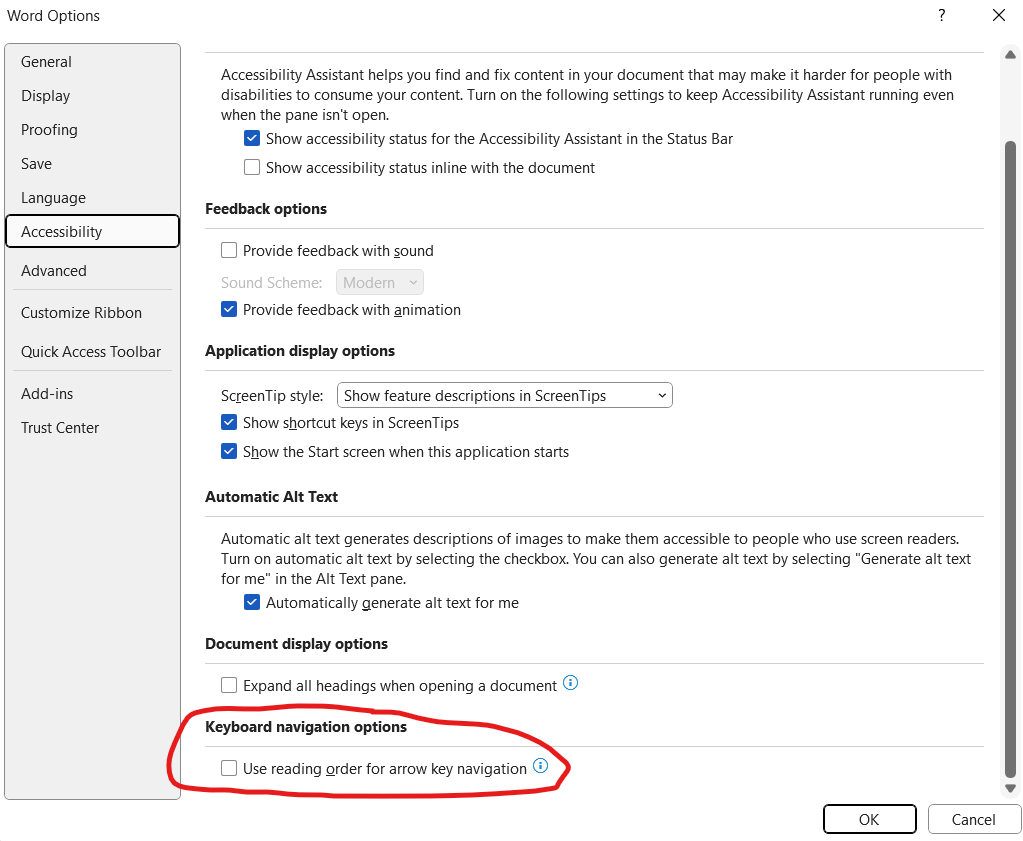
  3. Tab to Use reading order for arrow key navigation and press Space to enable.
  4. Press Tab to OK and hit Enter to apply.

Once activated, the arrows now move logically through every part of your document—columns, multi-page layouts, tables, text around images, and dropped caps. This ensures screen reader users get the full context and don’t miss anything, just like sighted readers.

Microsoft says that this update is now available for Word for Windows users running Version 2603 (Build 19727.20000) or later.

MSI Announces Three New X870 and X870E AM5 Motherboards

As Guru 3D reports, MSI Computer Japan has announced three new AM5 motherboards for the domestic market, based on AMD’s X870E and X870 chipsets. The new boards launch on February 13, 2026, and target flagship, compact, and mainstream desktop builds.

All three models share several platform-level features designed for next-generation Ryzen systems.

Three new MSI AM5 X870E/X870 motherboards announced

It’s important to mention that the following features are common across all three boards.

  • 64 MB BIOS ROM
  • USB4 support up to 40 Gbps
  • SPS-based power delivery tuned for sustained Ryzen CPU workloads

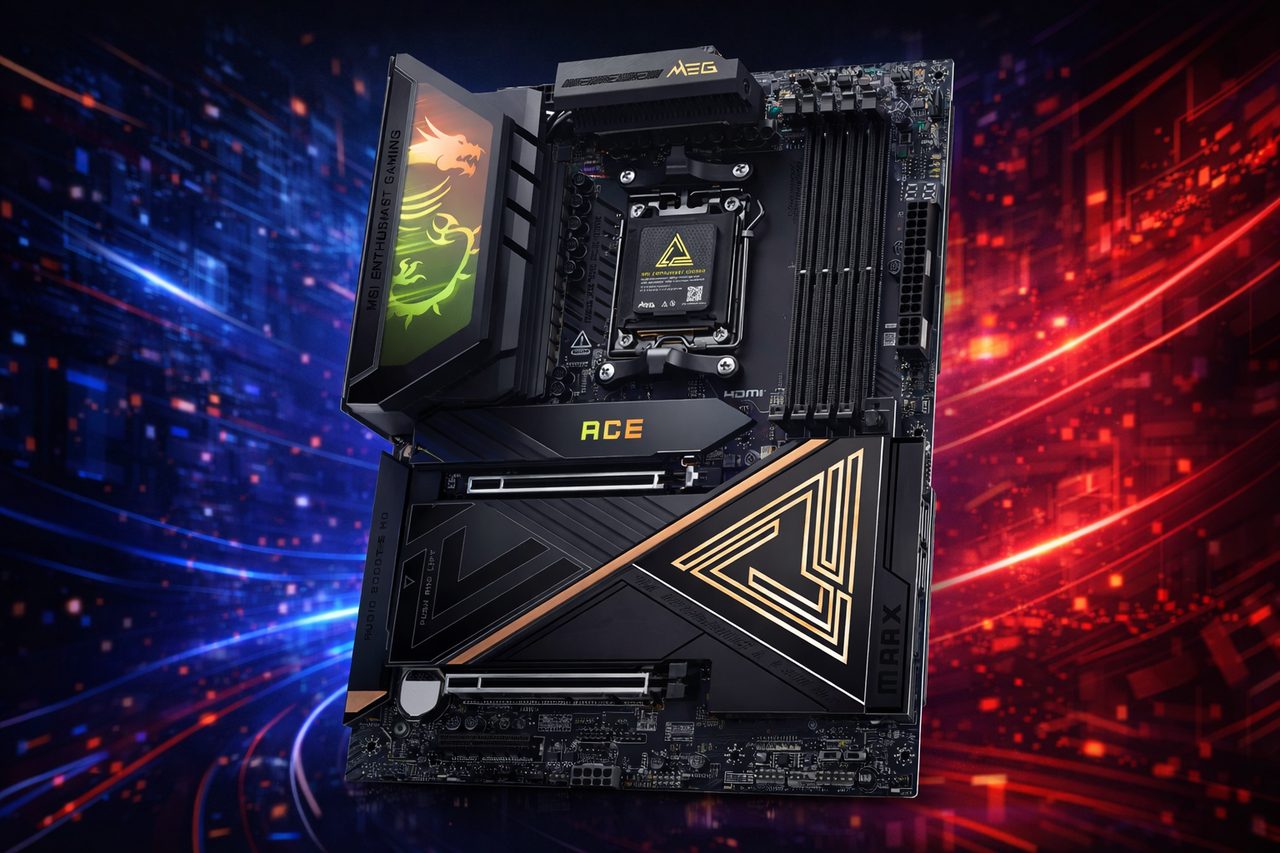
MEG X870E ACE MAX targets flagship AM5 builds

Source: MSI

The MEG X870E ACE MAX sits at the top of MSI’s new lineup and focuses on extreme power delivery, storage expansion, and connectivity.

  • Chipset: X870E
  • VRM: 18+2+1 phases with 110A SPS, wave-fin heatsinks, and direct-touch cross heatpipe
  • Memory: Up to DDR5-9000, four DIMMs, up to 256 GB

Storage support includes two PCIe 5.0 x4 M.2 slots, three PCIe 4.0 x4 M.2 slots, and four SATA ports. Expansion options feature two PCIe 5.0 x16 mechanical slots and one PCIe 5.0 x4 slot.

Networking is equally high-end with dual 10GbE and 5GbE LAN, plus Wi-Fi 7 and Bluetooth 5.4. Audio uses Realtek ALC4082 paired with an ESS 9219Q DAC. MSI lists the board at $820.

MPG X870I EDGE TI EVO WIFI brings X870 to Mini-ITX

Source: MSI

For small form factor systems, MSI introduced the MPG X870I EDGE TI EVO WIFI, built around the X870 chipset in a Mini-ITX layout.

  • Chipset: X870
  • VRM: 8+2+1 phases with 110A SPS
  • Memory: Up to DDR5-10000, two DIMMs, up to 128 GB

The board offers one PCIe 5.0 x4 M.2 slot, two PCIe 4.0 x4 M.2 slots, and two SATA ports. GPU support comes from a single PCIe 5.0 x16 slot.

Connectivity includes 5GbE LAN, Wi-Fi 7, and Bluetooth 5.4, while audio relies on the Realtek ALC4080 codec. The listed price is $369.

PRO X870E-S EVO WIFI aims for mainstream AM5 users

Source: MSI

The PRO X870E-S EVO WIFI targets more affordable builds while retaining PCIe 5.0 and modern connectivity.

  • Chipset: X870E
  • VRM: 12+2+1 phases with 60A SPS
  • Memory: Up to DDR5-8200, four DIMMs, up to 256 GB

Storage includes one PCIe 5.0 x4 M.2 slot, two PCIe 4.0 x4 M.2 slots, and four SATA ports. Expansion covers one PCIe 5.0 x16 slot alongside additional PCIe 4.0 and PCIe 3.0 slots.

Networking features 5GbE LAN, Wi-Fi 7, and Bluetooth 5.4, with audio handled by the Realtek ALC897 codec. MSI lists this model at $235.

In other news, MSI Afterburner is set to add a new Power Guard Support feature, expanding monitoring and protection options for modern GPUs.

Separately, recent reports of Ryzen 9000 no-POST issues on ASRock boards have prompted an official response, with ASRock acknowledging the problem and actively investigating potential fixes.

EU Charges TikTok Over Addictive Design Amid Rising Mental Health Concerns

TikTok is already involved in ongoing legal proceedings examining the impact of social media on mental health, and the pressure is now increasing from European regulators as well.

According to Associated Press, the European Commission has issued preliminary charges against TikTok, accusing the company of breaching EU digital rules by using so-called “addictive design” features that encourage compulsive behavior, particularly among children and teenagers.

EU targets TikTok with preliminary charges over addictive design

The Commission says a two-year investigation found TikTok failed to properly assess and mitigate risks linked to key platform features such as autoplay, infinite scroll, push notifications, and highly personalized recommendation systems. Regulators argue these design choices can undermine self-control and contribute to negative physical and mental health outcomes for minors and other vulnerable users.

EU officials claim TikTok’s design continuously rewards engagement while ignoring warning signs of compulsive behavior, including prolonged late-night activity by younger users. Regulators also argue that TikTok relies too heavily on time-management tools that are easy to bypass and parental controls that require excessive effort and technical knowledge to use effectively.

Commission pushes for structural design changes

The European Commission says TikTok should rethink the basic design of its service. Regulators want significant changes to infinite scrolling behavior, stronger and enforced screen-time breaks, particularly at night, and modifications to how TikTok’s highly personalized recommendation system operates for younger users.

TikTok has strongly denied the accusations, calling the Commission’s conclusions “categorically false and entirely meritless.” The company says it already offers tools such as customizable screen-time limits, sleep reminders, and teen accounts that allow parents to restrict access and encourage healthier usage habits. TikTok says it will challenge the findings through all available legal means.

If TikTok’s response is deemed insufficient, the EU could issue a formal non-compliance decision under the Digital Services Act. The law allows regulators to impose financial penalties of up to 6 percent of a company’s global annual revenue. No deadline has been set for a final ruling.

Usage data raises alarm among EU regulators

Regulators say TikTok has around 170 million users across the EU and claim a significant portion are minors. Usage data cited during the investigation has raised further concerns:

  • About 7 percent of children aged 12 to 15 spend four to five hours per day on TikTok
  • TikTok is the most-used social platform after midnight among users aged 13 to 18

EU officials say these figures highlight growing risks related to sleep disruption, compulsive behavior, and long-term mental health effects among younger users.

The case unfolds alongside broader legal action targeting social media companies over their impact on mental health. As pressure mounts, platforms such as WhatsApp are already developing parental control features, increasing scrutiny on TikTok to strengthen its own protections.

In other developments, TikTok is now majority-owned by U.S. interests, adding another geopolitical layer to the company’s regulatory challenges in Europe.

With oversight accelerating across the region, the coming months are expected to determine whether TikTok makes meaningful changes to how its platform operates and how it addresses concerns around child safety and mental health.

Via Yahoo News

Intel’s Arc B390 Pulls Ahead of AMD in Linux Gaming Benchmarks

Intel Panther Lake Arc iGPU performance on Linux now mirrors the gains previously seen on Windows. Earlier testing showed Intel’s Arc iGPU can match the Xbox Series S in terms of gaming performance, and new benchmarks suggest Linux users may see even stronger results.

New testing indicates Intel’s latest integrated graphics outperform AMD’s current flagship AI iGPU when systems run on Linux, giving Intel a clear edge in low-power gaming.

Intel Arc B390 delivers clear Linux gaming gains over AMD

According to Phoronix, Intel’s Panther Lake integrated graphics, branded as Arc B390, deliver a consistent performance advantage over competing AMD and older Intel platforms in Linux gaming workloads.

The review focuses on a laptop powered by an Intel Core Ultra X7 358H with Arc B390 iGPU. Phoronix compared it against systems running AMD Ryzen AI processors and earlier Intel Core Ultra designs.

Results show Arc B390 maintaining the same lead on Linux that reviewers already observed on Windows.

Benchmark results versus AMD and older Intel iGPUs

Phoronix reports the following average gaming performance uplifts on Linux:

  • 1.23× higher performance compared to an AMD Ryzen AI 9 HX 370 iGPU
  • 1.53× higher performance compared to Core Ultra 7 258V (Lunar Lake)
  • 1.72× higher performance compared to Core Ultra 7 155H (Meteor Lake)

These gains position Panther Lake as one of the fastest integrated graphics solutions for Linux users focused on gaming and GPU-accelerated workloads.

Power profiles play a key role in performance

Intel emphasized the importance of proper power tuning. The tested laptop shipped with a conservative, balanced mode that limited performance.

In MSI’s default balanced configuration, power limits ranged from roughly 15W to 30W, with average CPU power around 16.9W. After switching to a dedicated performance profile and applying recommended workarounds, average CPU power climbed to about 28W.

Peak power reached roughly 1.25× higher than the Ryzen AI 9 HX 370 system, which helped Arc B390 sustain its performance lead.

Phoronix warns that Arc B390 results vary widely depending on laptop firmware, power limits, and active performance profiles. Early Panther Lake laptops may require software updates and manual tuning to consistently hit the higher performance levels shown in testing.

For Linux users, this means Panther Lake offers strong potential, but real-world results will depend heavily on OEM configurations.

In related Intel Arc news, users recently pushed Arc A380 FPS higher using XeSS 3 workarounds. However, rumors suggest Intel may cancel the Arc B770 due to rising VRAM pricing pressures, which could limit future high-end Arc desktop options.

Via VideoCardz

DLSS 4.5 Delivers Cleaner Reflections Without In-Game Denoisers, Testing Shows

We expect NVIDIA to roll out DLSS Dynamic Multi-Frame in April, but new testing already highlights surprising DLSS behavior in real games.

As reported by VideoCardz, Digital Foundry discovered unexpected image quality improvements in NVIDIA DLSS 4.5 Super Resolution.

Preset M and Preset L produced cleaner ray-traced reflections when testers disabled a game’s built-in denoisers.

Unusual DLSS 4.5 behavior results in Crysis 3 and Silent Hill 2

In tests with Crysis 3 and Silent Hill 2, turning off native denoising reduced reflection boiling and blur. Reflections appeared more stable and noticeably sharper, especially during motion-heavy scenes.

Ray-traced effects begin with sparse samples, which forces games to rely on denoisers to control noise and temporal instability. These filters often soften fine detail and can smear reflections, leading to blur and instability in fast-moving scenes.

DLSS Ray Reconstruction is not involved

This behavior does not involve DLSS Ray Reconstruction, which NVIDIA introduced with DLSS 3.5 as an AI-based denoiser replacement.

Digital Foundry notes that Ray Reconstruction has not yet been updated for the newer DLSS 4.5 model, meaning the results come purely from DLSS Super Resolution.

The findings suggest DLSS 4.5 can act as a stronger denoiser than some in-game solutions. However, conflicts appear when games apply standard denoising before DLSS Preset M or L, which can reduce overall image quality.

This behavior complicates plug-and-play use. Achieving the best image quality may require disabling in-game denoisers, which often means tweaking settings or modding games. That extra step reduces accessibility for average players.

NVIDIA allows users to test this behavior through the NVIDIA app using “DLSS Override – Model Preset,” either globally or per game.

NVIDIA’s recommended mappings are:

  • Preset M for DLSS Performance
  • Preset L for DLSS Ultra Performance
  • Preset K for all remaining DLSS modes

In other NVIDIA news, reports indicate delays for RTX 50 SUPER GPUs. Separate rumors suggest NVIDIA could cut RTX 50 series supply by up to 40 percent in the Chinese market, potentially tightening availability further.

MANGMI Pocket Max launches with 7-inch 144Hz OLED and Snapdragon 865

We have seen multiple new handhelds lately, including AYANEO’s KONKR FIT, and now MANGMI is stepping in with another Android-based device. The company has officially announced the Pocket Max, its second handheld gaming system, built around a larger high-refresh OLED display and a strong focus on Android gaming and cloud streaming.

MANGMI Pocket Max focuses on Android gaming and streaming

The Pocket Max targets stable performance for emulation, native Android titles, and high-bitrate cloud gaming. MANGMI positions the device primarily for streaming games from PC, PlayStation, and Xbox, rather than running PC titles locally.

Hardware specifications

  • Snapdragon 865
  • Adreno 650 graphics
  • 8 GB LPDDR4X RAM
  • 128 GB UFS 3.1 storage
  • 7-inch OLED (AMOLED) display
  • 8000 mAh battery
  • 27 W fast charging

High-refresh OLED display

The 7-inch AMOLED panel delivers a 1920 × 1080 resolution with a 144 Hz refresh rate. According to MANGMI, the display offers a 100,000:1 contrast ratio, 150 percent sRGB color gamut coverage, up to 800 nits peak brightness, and a 2 ms response time, making it suitable for fast-paced games and low-latency streaming.

Controls and input system

MANGMI highlights its control setup as a key feature of the Pocket Max. The device uses a magnetic modular button system that supports both mechanical micro-switch modules and conductive rubber modules. It also includes TMR analog sticks and linear Hall effect triggers, aiming to improve durability and input precision.

Software experience

The Pocket Max ships with Android 13 and M SPACE 2.0. The updated frontend introduces an upgraded launcher, a quick sidebar, screen mapping tools, device spoofing features, and network access control designed for emulation and streaming use cases.

Connectivity options include Wi-Fi 6, Bluetooth 5.1, USB 3.1 Type-C with video output support, a 3.5 mm headphone jack, and a microSD card slot. The device features active cooling and measures 254.87 × 101.06 × 17.45 mm, with a total weight of 450 grams.

The MANGMI Pocket Max goes on sale today through MANGMI’s official online store. Pricing starts at $199.99 for the Super Early Bird offer running from February 5 to February 12, followed by an Early Bird price of $219.99.

While the Pocket Max looks impressive for Android gaming and game streaming, it is not designed for native PC gaming. Users who want to run PC titles locally may find better value in devices like the ASUS ROG Xbox Ally, especially when discounted, as the industry waits to see what Intel’s rumored handheld gaming project delivers next.

Via VideoCardz

Intel and AMD Face Server CPU Shortages as Prices Jump in China

A global memory shortage continues to ripple through the hardware industry, and manufacturers are looking towards Chinese-made memory to meet the growing demands. and it is no longer limited to GPUs and DRAM modules. According to a new report from Reuters, server CPU prices from Intel in China have started to rise sharply, driven by strong enterprise and data center demand.

The report points out that Intel’s server processor delivery lead times have now stretched beyond six months. This reflects tight supply conditions across the data center market as hyperscalers and large enterprises accelerate infrastructure refresh cycles.

Server CPU prices surge in China amid TSMC supply pressure

AMD is experiencing similar constraints. Its EPYC server processors depend heavily on TSMC, which remains stretched by global AI demand. Manufacturing timelines at TSMC have lengthened in recent weeks, limiting AMD’s ability to scale EPYC output quickly.

To make matters worse, NVIDIA has reportedly urged TSMC to boost production to meet surging AI accelerator demand. This competition for wafer capacity adds further strain on CPU supply at a critical time.

Intel acknowledges hyperscaler shortfalls

Intel CEO Lip-Bu Tan acknowledged the issue during the company’s Q4 earnings call. He stated that Intel failed to fully meet hyperscaler demand because of server CPU supply limitations, highlighting how tight the market has become.

At the same time, hyperscalers continue upgrading server infrastructure, increasing demand for newer x86 platforms, and amplifying pressure on already constrained supply chains.

Retail impact could follow enterprise prioritization

As seen during recent GPU shortages, both Intel and AMD are expected to prioritize enterprise and hyperscaler customers over consumer and gaming segments. This shift could result in fewer CPUs reaching retail channels, leading to higher prices for desktop processors and affecting gamers and PC builders.

The CPU situation unfolds alongside other troubling signals. Recent rumors suggest NVIDIA may cut RTX 50 series GPU supply to China by up to 40 percent, while GeForce RTX 5070 Ti prices continue rising in the United States. That’s not all, as DRAM and SSD price increases are also widely expected.

Taken together, these developments point to a challenging period ahead for regular users and PC enthusiasts, as shortages and pricing pressure spread across CPUs, GPUs, and memory components.

Via Wccftech

DRAM shortage pushes HP, Dell, and ASUS to evaluate Chinese-made memory

A global DRAM shortage is starting to reshape PC supply chains, and major manufacturers are reportedly considering Chinese-made memory for the first time. Rising costs and limited availability are forcing OEMs to explore alternative suppliers to keep upcoming product launches on track.

According to a Nikkei Asia report, several leading PC makers have begun evaluating DRAM from ChangXin Memory Technologies (CXMT) as pressure mounts from surging memory prices.

Major OEMs reportedly testing CXMT memory

The report names HP, Dell, Acer, and ASUS as companies evaluating CXMT DRAM as a potential supply option.

HP has reportedly started qualifying CXMT memory internally and may use it in non-US markets if DRAM supply remains tight and prices stay elevated through mid-2026. Dell is also said to be qualifying CXMT DRAM, while Acer may rely on Chinese memory if its China-based contract manufacturers source it directly. ASUS has reportedly asked its China-based production partners to help secure alternative memory supplies for certain notebook projects.

The same laptops could ship with different memory suppliers

If qualification turns into mass production, identical laptop models could ship with different memory suppliers depending on the region or factory. This practice already exists in the PC industry, but the ongoing DRAM shortage could make these differences more visible, even when product listings only mention capacities such as “16GB RAM” or “1TB SSD.”

For consumers, identifying the memory vendor may prove difficult without part numbers, teardowns, or detailed retailer SKUs. Still, lower prices from alternative suppliers could outweigh brand concerns if performance and compatibility remain comparable.

The situation affects more than just next-generation memory. As shortages intensify, DDR4 prices are also climbing, increasing cost pressure on entry-level and midrange PCs.

In related supply news, NVIDIA may reportedly cut RTX 50 GPU supply to China by up to 40 percent, adding to broader concerns about component availability.

Via VideoCardz

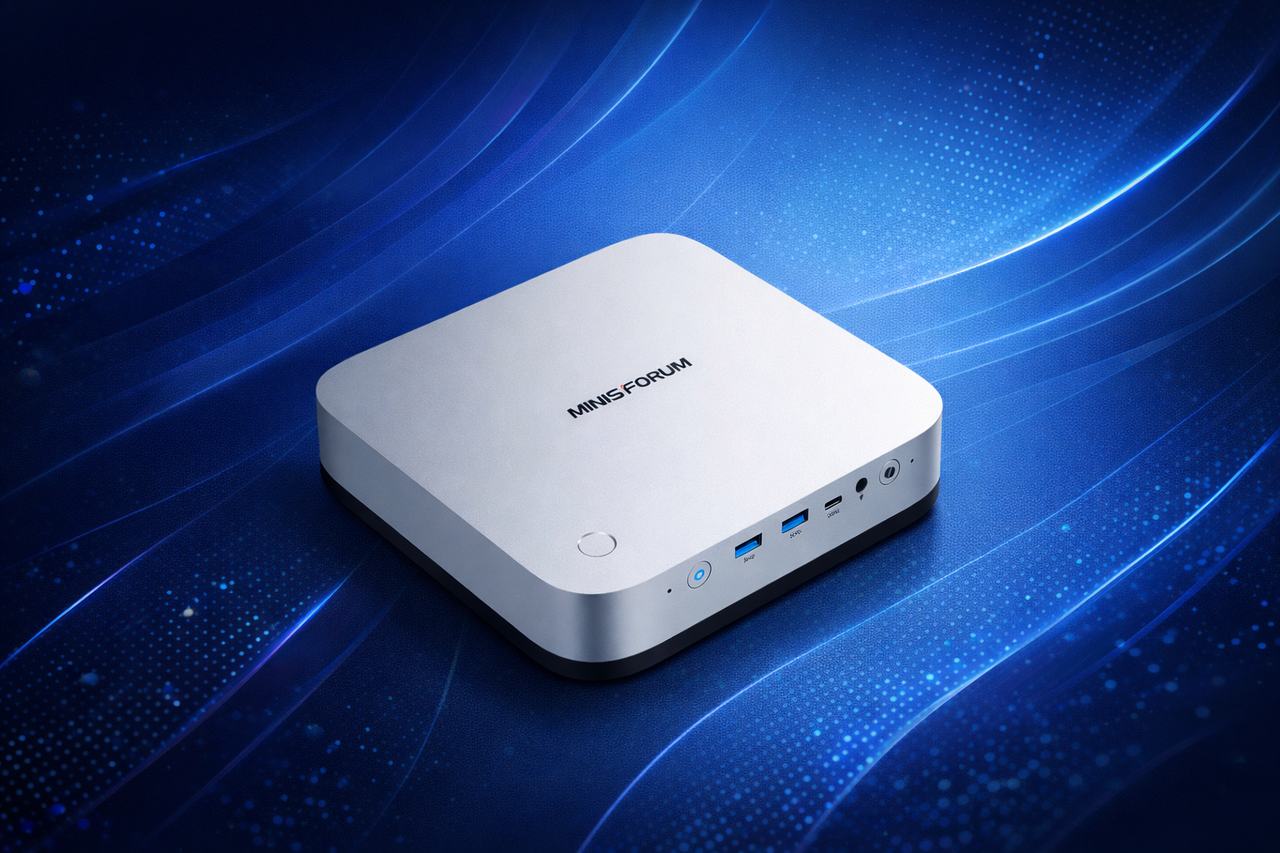
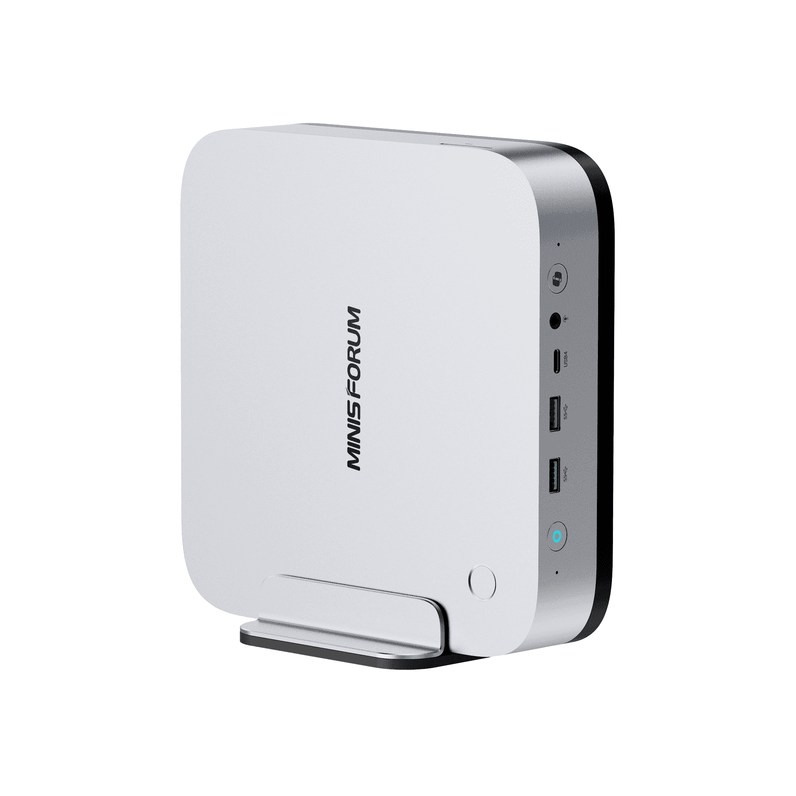
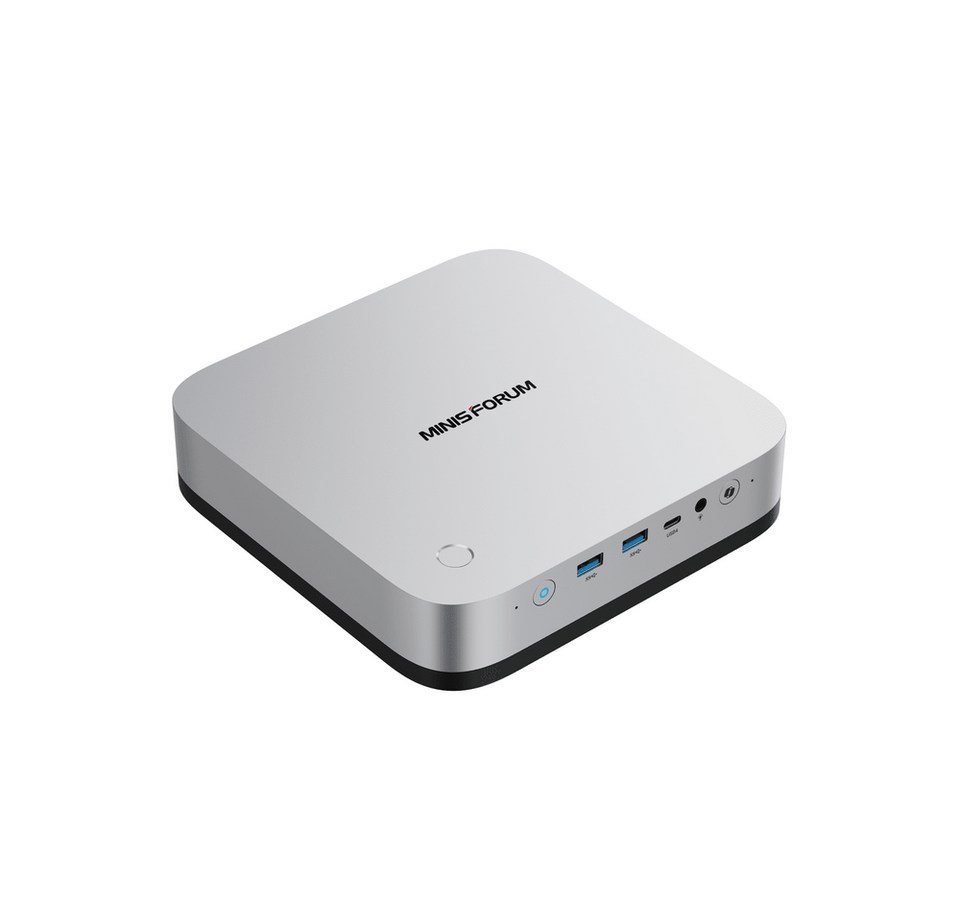
Minisforum AI X1 Pro-470 Focuses on in-device AI with Ryzen AI 9 HX 470

We recently saw the SEAVIV AidaONE R27 AIO, but users looking for a much more compact system now have a new option. Minisforum has officially launched the AI X1 Pro-470, a small-form-factor mini PC designed around AMD’s latest Ryzen AI platform with a strong focus on local AI workloads.

AI X1 Pro-470 focuses on the in-device AI

According to Guru3D, the system is powered by the AMD Ryzen AI 9 HX 470 processor. The chip integrates a dedicated NPU rated at 86 TOPS, targeting local AI inference, AI-assisted media workflows, speech recognition, and experimentation with local models.

By running AI tasks locally instead of in the cloud, the AI X1 Pro-470 allows users to keep sensitive data on-device, improving privacy while reducing reliance on external services.

Storage and memory built for heavy workloads

Despite its compact size, storage expandability stands out as a key feature. The AI X1 Pro-470 supports up to three M.2 PCIe 4.0 SSDs, with a maximum total capacity of 12 TB. This setup suits multi-drive configurations for datasets, scratch space, or project archives.

Memory support scales up to 128 GB of DDR5, an unusually high ceiling for a mini PC and closer to workstation-class systems. However, with DRAM prices expected to rise, many users may opt for more modest configurations.

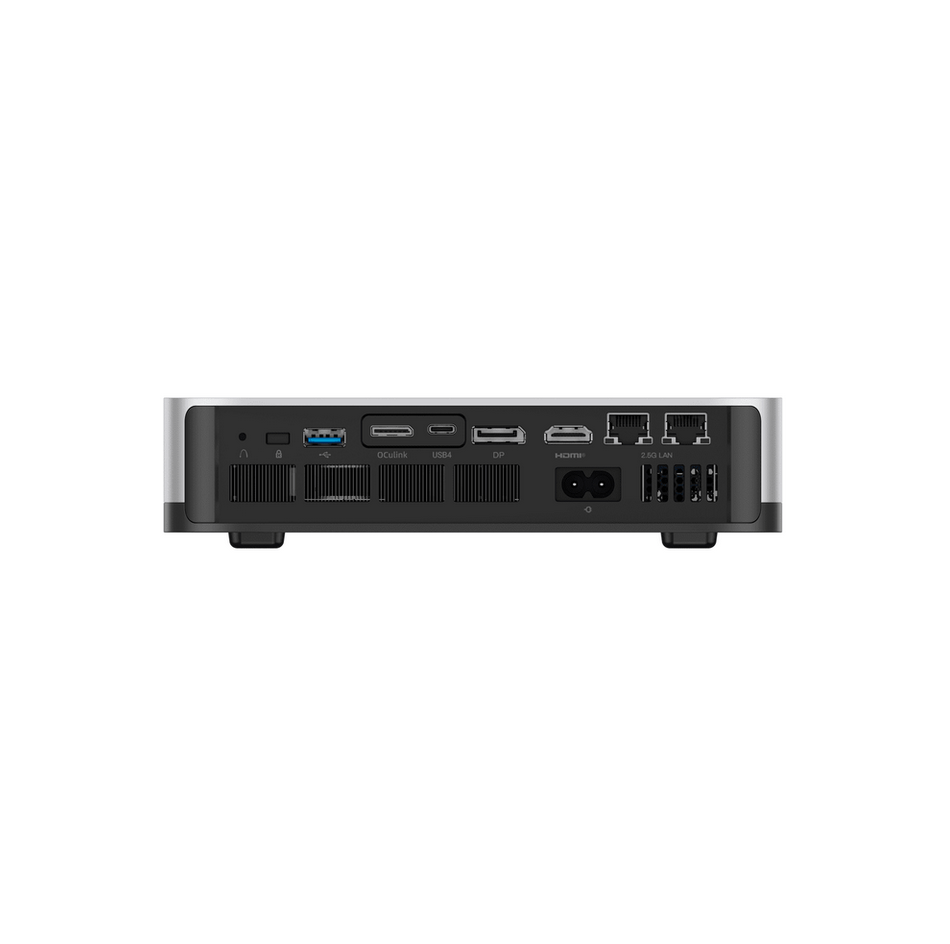
Graphics are handled by the integrated Radeon 890M, which covers everyday GPU acceleration, creative workloads, and light gaming. For users who need additional GPU compute, Minisforum includes a native OCuLink port.

This allows direct connection to an external discrete GPU, offering a flexible upgrade path without moving to a full desktop tower.

Display, connectivity, and networking options

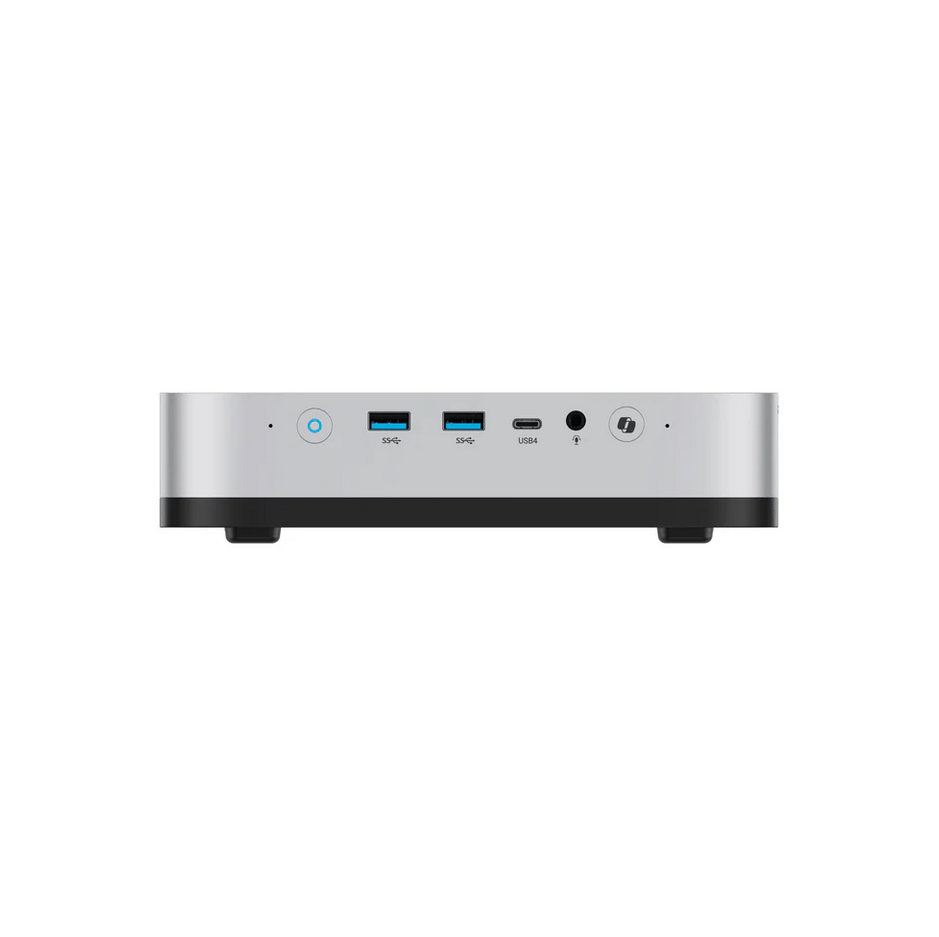
The AI X1 Pro-470 offers dual USB4 ports alongside HDMI and DisplayPort outputs. The system supports up to four displays simultaneously and can drive a single display at up to 8K resolution.

Networking features include Wi-Fi 7, Bluetooth 5.4, and dual 2.5GbE Ethernet ports, making the device suitable for office workstations, home labs, and compact server deployments.

Minisforum adds several quality-of-life features, including fingerprint login, a noise-canceling microphone, and dual speakers for meetings and basic daily use without extra peripherals.

Cooling relies on a PCM thermal solution with dual copper heat pipes and active airflow. Minisforum claims CPU temperatures stay below 80°C under load, with noise levels kept under 45 dB.

Power is supplied by an internal 135 W PSU, and Minisforum highlights USB4 one-cable connectivity to help reduce desktop cable clutter.

Pricing starts at $634 for a barebones configuration, while a preconfigured model with 32 GB of RAM and a 1 TB SSD is priced at $1,052.

For users who prefer a retro aesthetic over cutting-edge AI performance, alternatives like the Acemagic Retro X3 or MAINGEAR Retro98 may be worth considering, but Minisforum’s AI X1 Pro-470 clearly targets compact systems with serious on-device AI capabilities.

Next-Gen Xbox Controller With Wi-Fi Could Arrive in 2026, Report Claims

As major releases like GTA 6 are expected to dominate the market this year, Microsoft appears to be rethinking its release timing. Recent reports suggest the company may launch Halo and other Xbox titles earlier to avoid competing directly with Rockstar’s upcoming blockbuster.

Alongside these scheduling considerations, Microsoft also seems to be preparing new gaming hardware.

Next-generation Xbox controller reportedly approved

According to a report from The Verge, Microsoft has greenlit a next-generation Xbox controller revision planned to launch later this year. The focus of this new controller reportedly centers on improving responsiveness, particularly for cloud-based gaming.

Wi-Fi connectivity aims to reduce latency

Journalist Tom Warren reports that the controller was originally scheduled for a 2024 release alongside a now-canceled Xbox Series X refresh. After changes in Xbox leadership, Microsoft reportedly paused the project before later approving it again.

The key upgrade involves built-in Wi-Fi connectivity. Microsoft reportedly wants to move away from relying solely on Bluetooth in order to reduce input latency, especially when using Xbox Cloud Gaming. This shift could make streaming-based play feel closer to local gameplay.

The controller is believed to descend from the long-rumored Xbox “Sebile” controller that surfaced publicly in 2023. However, the report does not confirm whether previously rumored Sebile features are included. Current coverage focuses only on latency improvements, leaving other potential upgrades unverified.

The Verge also references earlier reporting suggesting that an Elite Series 3 controller could arrive this year. Warren does not confirm those plans, but notes that such a release would align with a broader next-generation controller rollout if it happens closer to 2026.

Microsoft has not officially announced the controller, and all details remain based on reporting. Features, timing, and even the final product lineup could still change.

For players interested in alternatives, third-party options like the EasySMX X05Pro already target low-latency performance on Xbox and PC platforms.

Via PureXbox

Chrome for Android may soon show personalized notifications based on browsing activity

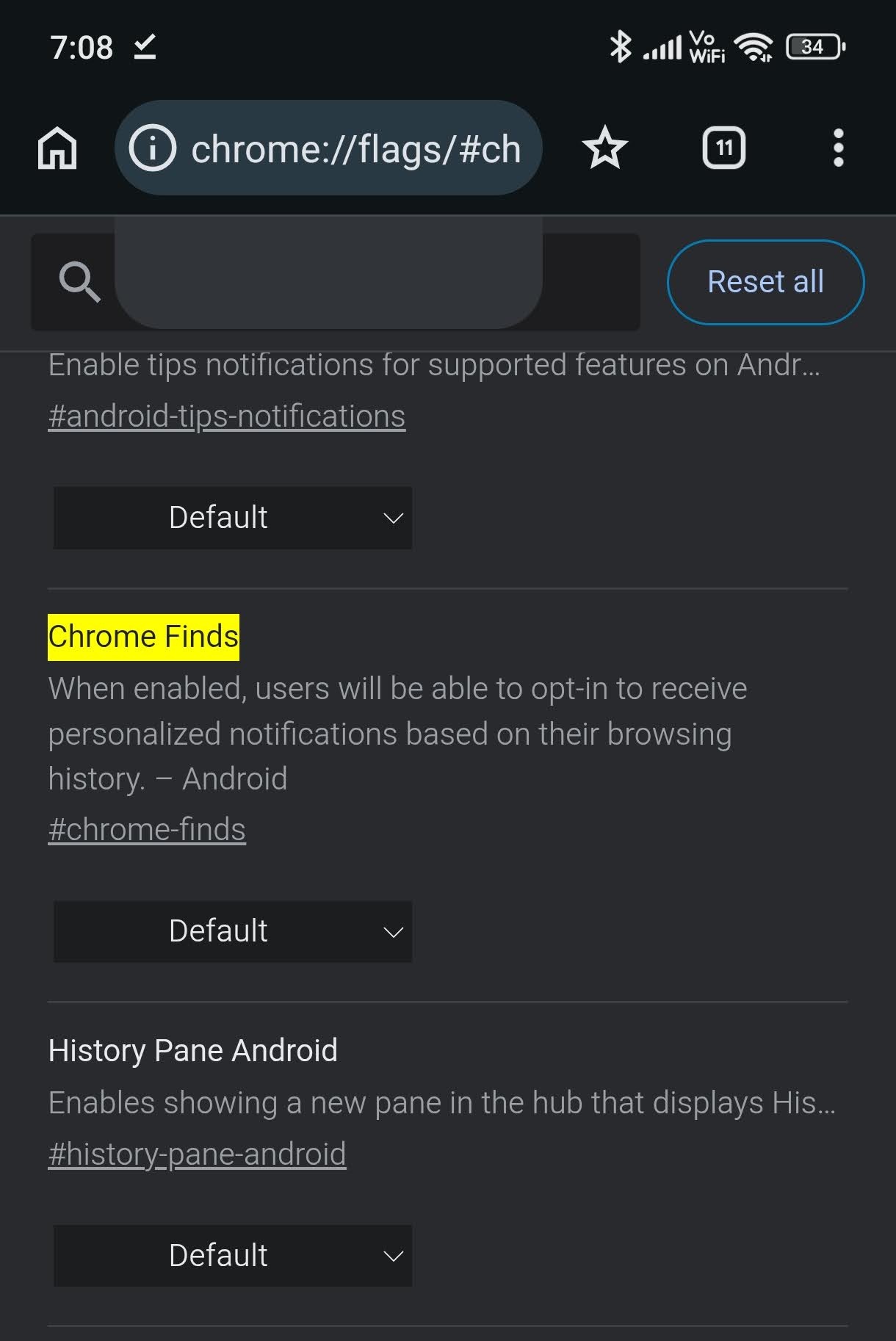
Google is testing a new feature in Chrome for Android called Chrome Finds, which may deliver personalized notifications based on a user’s browsing activity. The experiment is visible as a flag in Chrome Canary and offers an early look at how the feature could work in the future.

Chrome already supports notifications on Android. Chrome Finds works as an opt-in discovery feature that could use them to surface useful content after a browsing session ends instead of limiting discovery to search results. Users stay in control.

Chrome Finds could turn the browser into a lightweight discovery feed that brings back useful pages even after you stop searching. This could reduce the need to search again for pages you already found useful.

The feature could remind users about unfinished pages, related topics, or updates from frequently visited sites. These suggestions would arrive through Chrome notifications rather than inside the main browsing view.

Chrome Finds flag. Image Credit: Venkat | WindowsReport.

Recent development activity reveals more about how the feature may work.

Chrome is preparing a grouped notification system for Finds. Related items could appear inside a single summary notification instead of separate alerts, which would keep notifications easier to handle and reduce distraction.

Google has added the core switch required to enable Chrome Finds across Chrome builds. Developers are also preparing internal tools that help refine how Chrome selects content for suggestions. These tools help developers review browsing patterns and improve relevance before any wider release.

Current development work also points to limits on the types of images that grouped notifications can use, which may help keep the visual style consistent across alerts.

Chrome Finds is still experimental in Chrome Canary. Google has not shared any public release plans.

NVIDIA Delays RTX 50 SUPER as RTX 60 Launch Reportedly Slips to 2028

We recently saw rumors that NVIDIA might cut RTX 50 GPU supply to China by as much as 40%, and now fresh claims point to bigger changes across its gaming roadmap, including delays to the RTX 50 SUPER refresh and uncertainty around the next generation.

As VideoCardz reports, NVIDIA has reportedly delayed the GeForce RTX 50 SUPER lineup, with internal decisions traced back to December. The update follows earlier chatter about constrained supply and shifting priorities inside the company.

AI demand reshapes NVIDIA’s GPU priorities

According to a report from The Information, NVIDIA managers paused the RTX 50 SUPER refresh to prioritize AI accelerators. The report points to tight global memory availability and rising memory costs as the key drivers behind the move.

While the claims echo previous coverage around RTX 50 SUPER delays, the report adds a more significant wrinkle. NVIDIA’s next-generation GeForce RTX 60 series may miss its original 2027 window. Sources say the company initially targeted mass production for late 2027, but the schedule could now slip into 2028.

RTX 50 supply tightens as focus shifts away from gaming

The same report claims NVIDIA is scaling back production of current RTX 50 series gaming GPUs, which lines up with already limited retail availability across several regions. Some industry chatter suggests the GeForce lineup could lean more heavily toward midrange models moving into early 2026, rather than pushing frequent high-end refreshes.

Sources also say NVIDIA adopted a SKU prioritization strategy to avoid launching multiple cards with identical memory configurations. That approach has not meaningfully improved supply. Memory constraints continue to push NVIDIA to reserve capacity for AI accelerators, reinforcing a short-term shift away from consumer GPUs.

Claims about RTX 60 timing remain difficult to verify, since even well-connected insiders rarely see firm long-term production schedules. If the report holds true, gamers could face a longer than usual gap between GeForce generations, unless AI demand eases and NVIDIA rebalances its priorities.

In related news, separate reports suggest NVIDIA plans to release DLSS Dynamic Multi Frame Generation in April, which could bring near-term performance gains even as hardware updates slow.

ARC Raiders Confirms Expedition 2 Character Wipe With Better Long-term Rewards

After a recent ARC Raiders update introduced an escalating anti-cheat system, Embark Studios is moving forward with the next character wipe event. The studio has now confirmed details for Expedition 2, the second progression reset designed to give players a fresh start while offering permanent progression benefits.

Expedition 2 schedule is now locked in

Expeditions are optional character resets that allow players to restart with a new Raider in exchange for long-term upgrades that stack across future events. The first Expedition launched in December after a short delay, and while participation was solid, Embark acknowledged that the requirements felt too demanding compared to the rewards after player pushback regarding the reward system.

Expedition 2 now has a confirmed schedule. Sign-ups open on February 25, and players have until March 1 to opt in. Once the opt-in window closes, participants begin the Expedition with a fresh character and work toward permanent progression rewards.

Permanent rewards for participating

Players who complete the Expedition unlock permanent upgrades that carry over into future playthroughs.

Cosmetics:

  • Patchwork outfit (evolved)
  • Scrappy cosmetics
  • Expedition Indicator icon that upgrades with each completed Expedition

Bonuses:

  • Stash space increased from 12 to 24 slots
  • Up to 5 Skill Points, including catch-up points from the first Expedition
  • Up to 85 total Skill Points for players completing their second Expedition

Consecutive rewards that stack:

Players who participate in multiple Expeditions receive improved bonuses.

  • XP boost increased from 5 percent to 10 percent
  • Scrappy materials boost increased from 6 percent to 12 percent
  • Repair value increased from 60 percent to 70 percent

Outside of Expedition-specific changes, Embark confirmed that several progression systems remain unaffected by the wipe. Cosmetics, Raider Deck progress, unlocked map regions, leaderboard placement, Trials, Codex entries, Raider Tokens, and the Trophy Display Project all carry over without interruption.

Players who missed Skill Points during the first Expedition also get another chance to catch up. Missing points can now be claimed by exiting Expedition 2 with 300,000 Stash Value per point, a significant reduction from the 1 million Stash Value requirement used previously.

Embark also addressed a recent issue where no map conditions were appearing in-game, confirming that the problem has already been resolved.

With improved rewards, easier progression catch-up, and stronger anti-cheat systems now in place, ARC Raiders continues to refine its progression model ahead of future updates.

Via Neowin

Microsoft Confirms Exchange Web Services Shutdown for Exchange Online in 2027

Microsoft has already warned customers about risky local Exchange Online mailbox moves, and now the company has delivered another major Exchange-related announcement. This time, the focus is on the long-term future of Exchange Web Services.

Microsoft confirms Exchange Web Services shutdown timeline

Microsoft has confirmed that the Exchange Web Services (EWS) API for Exchange Online will shut down completely on April 1, 2027, ending almost two decades of service.

EWS has served as a cross-platform API for accessing Exchange mailbox data, including email messages, calendar meetings, and contacts. It supports both Exchange Online and on-premises Exchange versions going back to Exchange Server 2007.

Key dates administrators need to know

Microsoft outlined a phased retirement plan that stretches across 2026 and early 2027.

  • By the end of August 2026, admins who configure application allowlists can avoid automatic blocking.
  • In September 2026, Microsoft will auto-populate allowlists for tenants that did not create their own, based on observed usage.
  • Starting October 1, 2026, EWS will be blocked by default in Exchange Online.
  • On April 1, 2027, Microsoft will shut down EWS completely, with no exceptions.

Admins can keep EWS running temporarily after October 2026 by relying on application allowlists. Microsoft also plans to run temporary “scream tests” that disable EWS to expose hidden dependencies before the final cutoff. IT administrators will receive monthly Message Center notifications with tenant-specific usage reports and reminders.

The retirement applies only to Microsoft 365 and Exchange Online. On-premises Exchange Server deployments will continue to support EWS.

For developers, Microsoft recommends migrating to the Microsoft Graph, which now offers near-complete feature parity with EWS for most scenarios.

Hybrid Exchange environments explained

Microsoft also clarified how hybrid environments should prepare for the transition.

  • On-premises mailboxes can continue using EWS.
  • Cloud mailboxes must move to Microsoft Graph.
  • Autodiscover will guide applications to the correct mailbox location.
  • Only Exchange Server SE will support Graph calls to Exchange Online in hybrid setups.

According to Microsoft, EWS no longer meets modern requirements for security, scale, and reliability.

This shutdown does not come as a surprise. Microsoft first warned in 2018 that EWS would stop receiving new features. A follow-up notice in September 2023 confirmed that retirement would begin in October 2026, giving organizations several years to plan migrations.

In other Exchange and Azure news, Microsoft has started enforcing TLS 1.2 for Azure Blob Storage and has pushed the Sentinel migration deadline to 2027, signaling a broader push toward modern security standards across its cloud services.

Via BleepingComputer

Sony Announces Guerrilla’s Horizon Hunters Gathering With Intense Co‑Op Action

Guerrilla has officially announced Horizon Hunters Gathering, a new co-op action game set in the Horizon universe. The game lets up to three players team up as Hunters to take on deadly machines in tactical, skill-based combat. Guerrilla says the game builds on the precision of the Horizon titles while embracing team dynamics, offering players a fresh way to experience the world of Horizon.

Tactical hunts and game modes

Horizon Hunters Gathering is designed around replayable and challenging hunts. Guerrilla is revealing two modes at launch: Machine Incursion, a high-intensity mission with waves of machines led by a formidable boss, and Cauldron Descent, a multi-stage trial with ever-changing rooms and brutal machine encounters.

Both modes will be available in the upcoming closed playtest via the PlayStation Beta Program for PS5 and PC. Players can dive in, provide feedback, and help shape the game before it launches.

Players can choose from a roster of uniquely skilled Hunters, each with distinct melee or ranged abilities. Hunter roles include a rogue-lite perk system, letting teams craft builds that suit their playstyle. Hunters have personal motivations and struggles, adding depth to the narrative. The campaign story is fully canon, with new mysteries, characters, and threats, though Guerrilla is keeping most details under wraps for now.

Players will explore a variety of environments that bring missions to life, each offering unique challenges and opportunities for team strategy. Between missions, the social hub Hunters Gathering lets players connect, customize Hunters, upgrade gear, visit vendors, and prepare for the next adventure.

You may also like: Microsoft Eyeing to Release Halo & Other Big Xbox Games Early in 2026 to Dodge GTA 6 Craze

Closed playtests, cross-play, and community

The first closed playtest is set for the end of February, open to sign-ups through the PlayStation Beta Program. Horizon Hunters Gathering supports cross-play between PS5 and PC, as well as cross-progression for players using the same PlayStation account. Guerrilla plans to provide regular updates and playtest announcements in the months ahead, and they’ve launched a dedicated Horizon Hunters Gathering Discord for fans and testers.

Multiplayer has always been part of Guerrilla’s DNA, and this co-op hunting experience has been years in the making. The team hopes these playtests give players a glimpse of the scale and complexity of the game, or better yet, let them experience it firsthand.

Microsoft Eyeing to Release Halo & Other Big Xbox Games Early in 2026 to Dodge GTA 6 Craze

Last year, several Microsoft executives teased that 2026 would be the year of Xbox. For those who don’t know, this year, Xbox is celebrating its 25th anniversary. But if you are among those who are interested in knowing Xbox’s 2026 roadmap, a report by Tom Warren for The Verge may have just spilled the beans for you.

Xbox 2026 rumored schedule points to Halo in summer, Fable likely in fall

According to Warren, Xbox’s internal release calendar is shaping up around the brand’s 25th anniversary. To celebrate it in its own way, Microsoft is reportedly planning to release entries across four of its biggest franchises, Forza Horizon, Halo, Gears of War, and Fable, all within the same year.

We already have one date locked in. Forza Horizon 6 launches on May 19, 2026, a detail Microsoft Playground Games confirmed during the recent Xbox Developer Direct. It has also confirmed that the racing game will come with cross-save support on all platforms.

Warren’s sources familiar with Microsoft’s plans say Halo Campaign Evolved, the single-player remake of the original 2001 Halo, is currently targeting a summer release window. Meanwhile, Fable is still on track for fall, matching what Playground Games has officially shared. Gears of War: E-Day, the upcoming prequel starring Marcus Fenix and Dominic Santiago, is reportedly also aiming for the second half of the year.

Fear of GTA 6 clash

With Grand Theft Auto VI reconfirmed to launch on November 19, Microsoft reportedly wants nothing to do with that collision. With Take-Two confirming GTA VI’s marketing push begins this summer, Xbox is expected to move its biggest releases earlier in the year, rather than risk being sidelined by the GTA 6 wave. December, as usual, is reportedly being treated as a last resort.

Besides popular franchises, Xbox’s slate fills out quickly. Double Fine’s multiplayer project, Kiln, is said to be targeting April. New Starfield content is also expected “soon,” alongside a long-rumored PlayStation 5 version. One regional report even claims an April 7 PS5 launch, though Microsoft hasn’t confirmed that yet. Elsewhere, Fallout 3 Remastered is reportedly still deep in development, with no clear release window and little expectation that it will land in 2026.

Next-gen Xbox controllers and free ad-supported Cloud Gaming

If you are here looking for some details about hardware, Microsoft is said to be preparing next-generation Xbox controllers, which will reportedly feature built-in Wi-Fi to reduce latency, especially for cloud gaming. And speaking of cloud, Xbox is reportedly close to testing free, ad-supported Xbox Cloud Gaming with Insiders ahead of a wider rollout later in 2026.

Which of the games are you most excited for? Let us know in the comments below.

OpenAI Releases GPT-5.3-Codex, Says Internal Team Was “Blown Away” by Development Speed

OpenAI has announced GPT-5.3-Codex, a major upgrade that pushes Codex beyond writing code into handling full, end-to-end professional work on a computer. Interestingly, the launch coincides with the release of Anthropic’s Claude Opus 4.6 (rumor). You can read official details about it here.

GPT-5.3-Codex combines speed, autonomy, and real-world execution

Coming back to GPT-5.3-Codex, the new model combines the frontier coding strengths of GPT-5.2-Codex with the wider reasoning and knowledge capabilities of GPT-5.2. The result is a single agent that can research, use tools, debug, deploy, and execute long-running tasks with far less hand-holding.

OpenAI says GPT-5.3-Codex is also 25% faster, making it better suited for complex workflows that stretch across hours or even days. One standout detail is how the model helped build itself. OpenAI reveals that early versions of GPT-5.3-Codex were used internally to debug training runs, manage deployments, analyze evaluations, and even diagnose unexpected test results. In practice, the AI accelerated its own development cycle.

On benchmarks, GPT-5.3-Codex sets new highs. It leads SWE-Bench Pro, which tests real-world software engineering across multiple languages, and significantly outperforms previous models on Terminal-Bench 2.0, a measure of practical command-line and system skills. It also shows major gains on OSWorld, a benchmark focused on completing real productivity tasks inside a visual desktop environment.

The latest model expands beyond coding with a stronger security focus

Besides raw coding, OpenAI positions GPT-5.3-Codex as a general professional agent. It can build full web apps, design presentations, analyze spreadsheets, write documentation, and manage operational tasks across the software lifecycle. In demos, the model autonomously iterated on games and production-ready websites over millions of tokens.

As far as security is concerned, OpenAI classifies GPT-5.3-Codex as “high capability” for cybersecurity tasks and has deployed its most comprehensive safeguards yet, alongside new programs aimed at strengthening defensive security research.

GPT-5.3-Codex is now available to paid ChatGPT users across the Codex app, CLI, IDE extensions, and web, with API access planned next.

Intel’s Core G3 Panther Lake Handheld Chips Could Launch in Q2 2026, Missing Earlier Expectations

If you caught up with Intel’s announcement at CES 2026, you probably know that the company has already confirmed that dedicated Panther Lake SoCs for gaming handhelds are coming in 2026. What remains unclear is how early in the year those chips will realistically ship with the gaming handhelds.

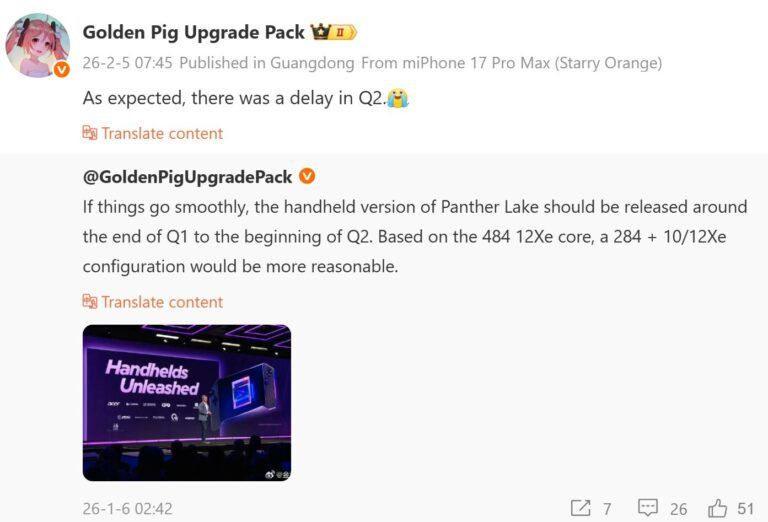
Now, we may have details on that, thanks to popular leaker “Golden Pig Upgrade,” who suggested Intel’s Panther Lake handheld chips may launch at the end of Q1 2026, rather than the earlier late-Q1 window (via Videocardz). That being said, nothing has come from Intel in this matter as of now.

Image credit: Weibo (Translated) | via Videocardz

Panther Lake is Intel’s first serious attempt to challenge AMD’s growing dominance in the gaming handheld space. AMD’s Zen 5-based chips currently power most high-end handhelds, setting a high bar for efficiency and sustained gaming performance.

Let’s not forget that rumors point to two Panther Lake handheld chips, one with a 16-core CPU and 12 Xe3 GPU cores, another with 10 Xe3 units, though Intel hasn’t confirmed any specs yet.

Although the Panther Lake chip is ready in the first half of 2026, adoption will depend heavily on device makers. Designing, validating, and shipping a new handheld platform typically adds months beyond chip availability. Manufacturers like MSI have historically been quick to adopt Intel silicon in its Claw handheld lineup and are expected to lead any Panther Lake rollout. All that said, the custom Panther Lake SoC for gaming handhelds remains on track for 2026.

NVIDIA to Reportedly Release DLSS Dynamic Multi Frame Generation and MFG 6x in April

NVIDIA is reportedly closing in on the release of one of its most talked-about RTX 50-series features. The news comes from HardwareLuxx (via Videocardz), which suggests that NVIDIA’s DLSS Dynamic Multi Frame Generation (MFG) and the top-end DLSS Multi Frame Generation 6x mode will release in April 2026.

NVIDIA points to April release window for Dynamic Multi Frame Generation & 6x mode

NVIDIA reportedly shared the update with HardwareLuxx during their recent company visit in Munich, where the company confirmed that both features are tracking toward the same release window. While the company previously grouped MFG under a vague “spring” timeline, April now appears to be the most concrete target.

Dynamic Multi Frame Generation
Image credit: NVIDIA

To catch you up, Dynamic MFG is a new system that dynamically adjusts how many generated frames are inserted based on scene complexity and performance demands. Last month, at CES 2026, the company even explained that the driver can scale frame generation on the fly. In lighter scenes, it may push up to 6x frame generation, while heavier moments can drop to 3x or even lower to maintain stability.

As an example, the news outlet mentions that a 240 Hz display no longer needs a rigid output of 240 frames per second. The system adapts instead, preventing unnecessary overhead. HardwareLuxx reports that the multiplier switching happens quickly and without visible issues, even during frequent changes.

Not to forget, the April release window also applies to Multi Frame Generation 6x, which NVIDIA has positioned as part of its RTX 50-series feature set. Once the update lands, RTX 50 owners should automatically get access via driver updates.

Image credit: NVIDIA

Multi Frame Generation support is fragmented across GPU vendors

NVIDIA already has Multi Frame Generation in place, capable of producing up to three extra frames per rendered frame. Intel is moving in a similar direction with XeSS 3 Multi Frame Generation, though official support remains limited to Panther Lake hardware. That restriction hasn’t stopped enthusiasts, however, with workarounds enabling XeSS 3 MFG on Intel Arc GPUs, reportedly tripling frame rates in Cyberpunk 2077 despite the lack of formal driver support.

Claude Opus 4.6 Launches With Smarter Coding, Research, and Office Skills

As earlier rumored, Anthropic has just released Claude Opus 4.6. The new model improves coding, research, and everyday office tasks, while adding the first 1M token context window in beta for its Opus-class models. Claude Opus 4.6 sees major improvement in planning, sustains agentic tasks longer, and works reliably across larger codebases.

Claude Opus 4.6 Excels in Coding, Knowledge Work, and Long-Context Reasoning

Anthropic mentions that it can now also perform better code reviews, catch mistakes, and handle debugging autonomously. Apart from coding, Opus 4.6 can run financial analyses, process spreadsheets, manage documents, and even create presentations. Within Cowork, where Claude multitasks independently, Opus 4.6 applies all these abilities automatically on your behalf.

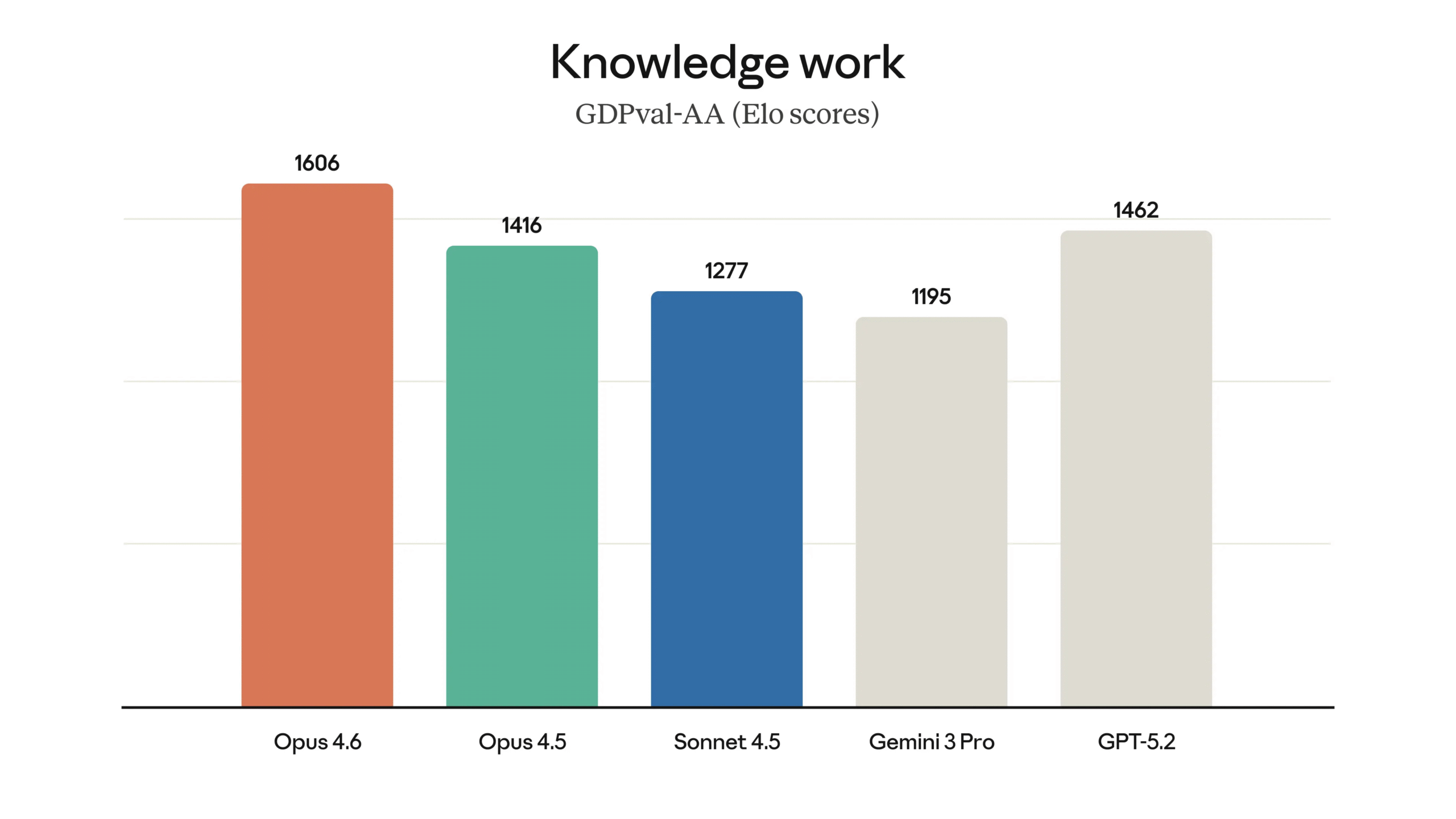
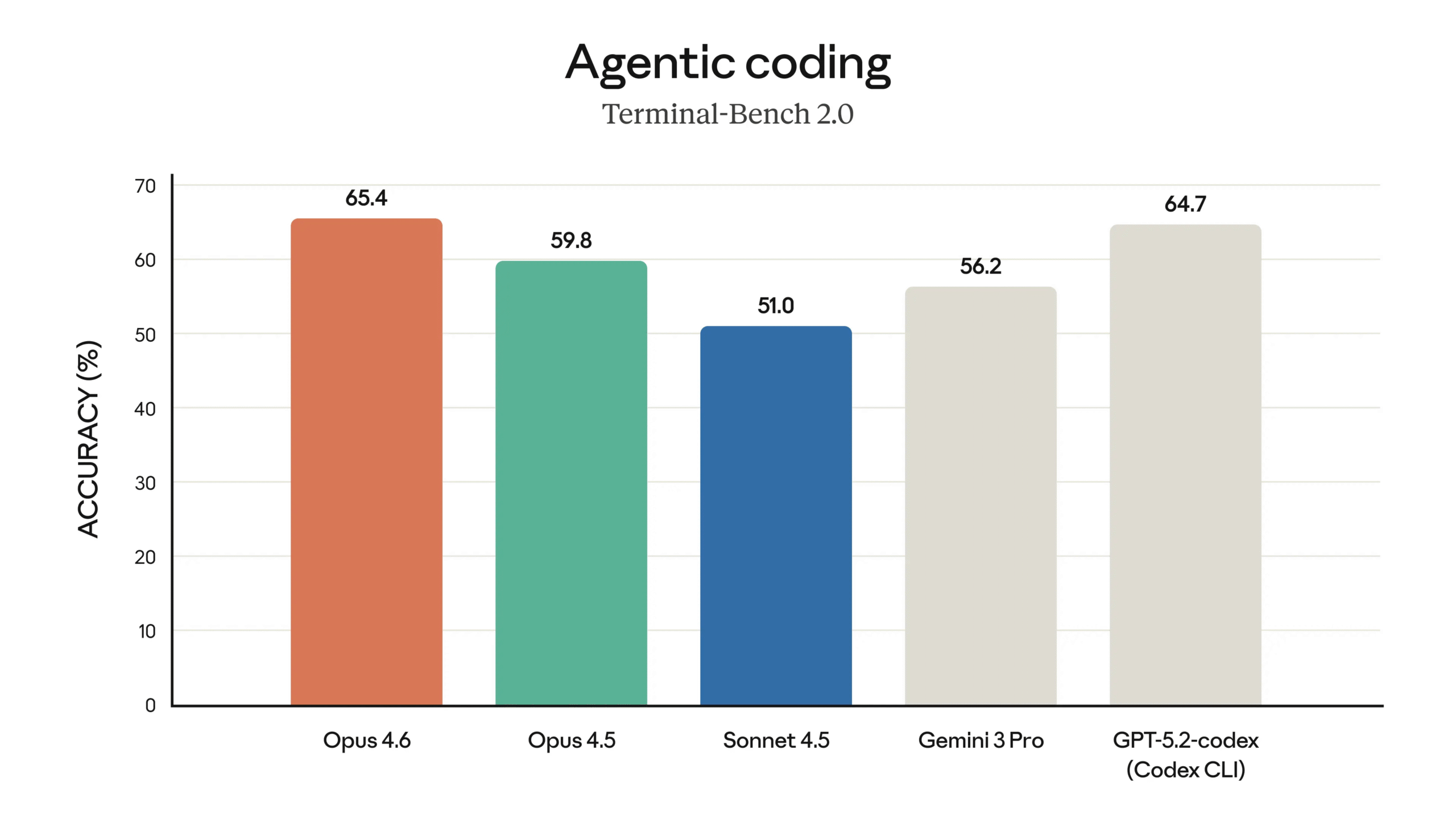
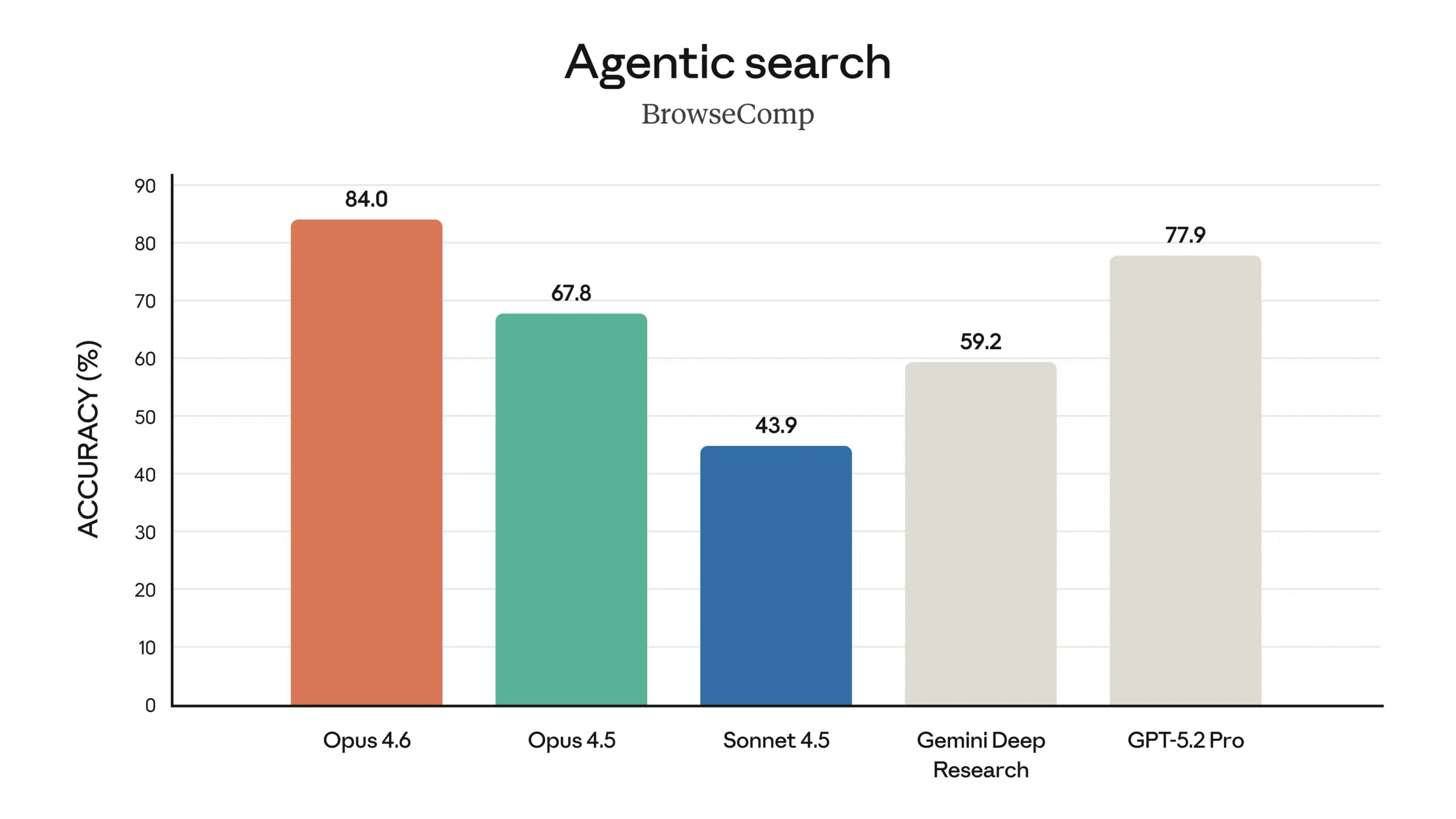
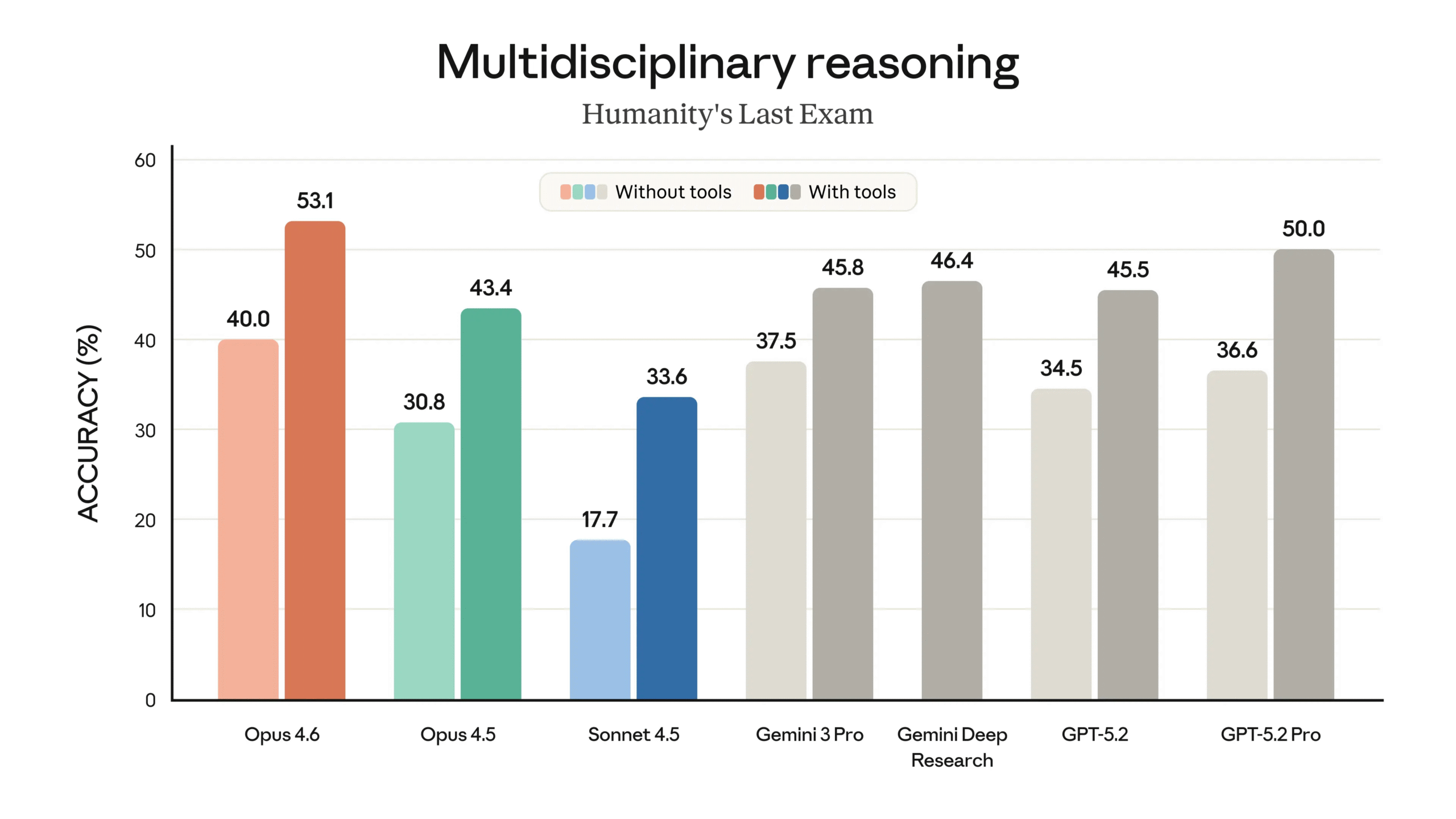
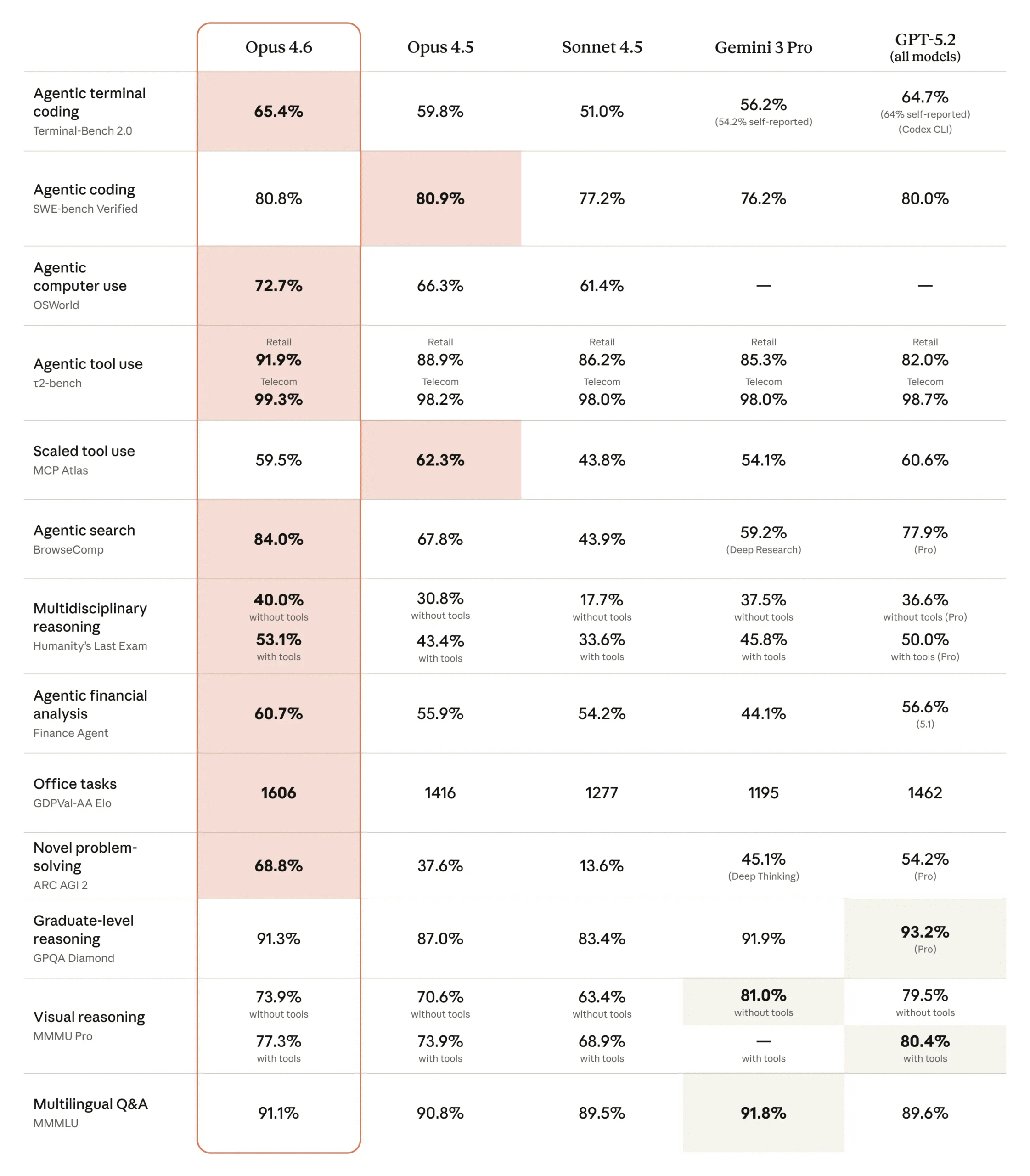
In terms of performance, the model stands out across several benchmarks. It scores highest on the agentic coding evaluation Terminal-Bench 2.0, tops Humanity’s Last Exam, and outperforms GPT-5.2 and its own predecessor on GDPval-AA, a test for economically valuable tasks in finance, legal, and other sectors. BrowseComp evaluations also show its superior ability to locate hard-to-find online information.

Moving on, Opus 4.6 brings longer-context reasoning to the table. It can track hundreds of thousands of tokens, pick up subtle details, and reduce “context rot” in long sessions. On tests like MRCR v2, Opus 4.6 achieved 76% accuracy, compared to just 18.5% from Sonnet 4.5, demonstrating a giant leap in long-context performance.

Comparison chart
Image credit: Anthropic

Safety, developer controls, and office integration

Anthropic hasn’t compromised on the safety part either. That’s because Opus 4.6 maintains low rates of misaligned behavior, low over-refusal rates, and shows strong safeguards, including six new cybersecurity probes. The model is also used to detect and patch vulnerabilities in open-source software, supporting defensive cybersecurity tasks.

Not to forget, developers get new controls with the API. Adaptive thinking lets Claude decide when deeper reasoning is useful, effort settings adjust intelligence and speed, and context compaction lets longer-running tasks complete without hitting limits. Outputs now reach 128K tokens, with premium options for tasks above 200K. US-only inference is also available.

Office integration expands further, as Claude in Excel can now handle long, multi-step tasks with improved performance and structured data reasoning. In PowerPoint, Claude is now available as a research preview. The AI model also lets users convert Excel outputs into on-brand slides automatically. Moreover, Agent teams in Claude Code can now run tasks in parallel, coordinating autonomously on large, read-heavy workloads.

Claude Opus 4.6 is available today via claude.ai, API, and all major cloud platforms, making it easier for developers and enterprise teams to tackle complex tasks with smarter, more capable AI.

Nintendo Direct Partner Showcase February 2026: All Game Announcements

The February 2026 Nintendo Direct Partner Showcase has wrapped up, and it has finally given us a quick insight into which third-party games are coming to Nintendo Switch 2 this year. While first-party titles are still under wraps, the spotlight was on third-party releases. And that’s what we are going to talk about in this quick roundup. Just in case you couldn’t catch up with all the announcements, keep reading!

All Announcements from the Nintendo Direct February 2026 Partner Showcase

Orbitals & Paranormasight: The Mermaid’s Curse

The showcase kicked off with Orbitals, a cooperative sci-fi adventure where you team up with a friend and explore different areas using gadgets like the Liquid Launcher. Players can even cuddle adorable pets along the way. Orbitals launches on Switch 2 in Summer 2026.

Speaking of Paranormasight: The Mermaid’s Curse, it’s a sequel to 2023’s Paranormasight: The Seven Mysteries of Honjo. The game is set on a mysterious island, where players switch between characters to unravel a mermaid’s curse. The game hits Nintendo Switch on February 19.

Tactical and Sports Announcements

Football gets its moment with Captain Tsubasa 2: World Fighters and eFootball Kick-Off!. Players can enjoy anime-inspired and classic football matches, respectively. Captain Tsubasa 2 arrives in 2026, while eFootball Kick-Off! launches this Summer. If you are into golf, PGA Tour 2K25 is also releasing on February 6.

Fantasy, RPGs, and Survival Hits

RPG and adventure fans have plenty to look forward to. The Adventure of Elliot: The Millennium Tales sends players through four ages of changing landscapes, releasing June 18. Valheim also comes to Switch 2, where Viking-inspired survival crafting will be on offer. You can play this game along with 9 other players online later this year. Not to forget, Hollow Knight: Switch 2 Edition updates the classic with enhanced visuals and smoother frame rates, and is available now.

Square Enix will be launching Final Fantasy VII Rebirth on June 3. Meanwhile, Pragmata, a sci-fi adventure, lets players dive into an environment with hacking robots and fighting an evil AI. The game will launch on April 24, with a demo available the same day.

Action, Strategy, and Monster Hunts

Gamers can test their tactical skills in Shadow Tactics: Blades of the Shogun (March 18) or save the world in Monster Hunter Stories 3: Twisted Reflection (March 13). Fantasy fans can also explore Granblue Fantasy: Relink – Endless Ragnarok (July 9) and Tales of ARISE – Beyond the Dawn Edition (May 22).

Iconic Worlds Return

Classic franchises are also getting Switch 2 updates. Resident Evil Requiem, Resident Evil Biohazard Gold Edition, and Resident Evil Village arrive February 27, with themed Amiibo figures coming later this Summer. Fallout 4 Anniversary Edition launches February 24, allowing players to revisit the wasteland. And Indy fans will tackle Indiana Jones and the Great Circle on May 12.

There Are a Few Surprises, Too

Other notable releases include The Elder Scrolls IV: Oblivion Remastered, which lands later this year. Besides that, the Partner Showcase also gave us a glimpse of Kyoto Xanadu (Summer), Digimon Story Time Stranger (July 10), Culdcept BEGINS: Switch 2 Edition (July 16), Goat Simulator 3 (April 1), and Disney Dreamlight Valley: Switch 2 Edition (March 25). Moreover, classic collections like Super Bomberman Collection and Console Archives will also be released later this year.

From survival adventures to tactical strategy, sports, and nostalgic remasters, the Nintendo Direct Partner Showcase February 2026 offered a massive lineup. Not to mention, Nintendo Switch 2 players have a lot to look forward to, with releases stretching across the year.

Now that the roadmap for third-party titles for Nintendo Switch is out, which one are you the most excited for? Let us know in the comments below.

Xbox Free Play Days Brings NBA 2K26, Civilization VI & More for Free This Weekend (Feb. 5-8)

It’s first Thursday of February 2026, which means we are in for yet another Xbox Free Play Days. lineup. This weekend, you will be able to try six games in total.

Games you can try this weekend during Xbox Free Play Days

The price reflected beside the title’s name are discounted ones and are applicable for the duration of current Xbox Free Play Days.

All the aforementioned games are free to try for Xbox Game Pass Ultimate, Premium and Essential members starting today, February 5th through Sunday, February 8th.

As usual, if you end up liking any of the aforementioned game, you can grab them at their respective discounted prices during Xbox Free Play Days.

Which of these games are you most excited for? Let us know in the comments below.

MSI Afterburner Adds Power Guard Support for RTX 50 and RX 9000 GPUs

ASUS recently introduced its Level Sense feature aimed at protecting graphics cards, and now other vendors are moving in the same direction with their own hardware-level safety measures.

As VideoCardz reports, MSI has announced a new lineup of power supplies at CES 2026 that focus heavily on GPU protection. While the units are not yet available, MSI confirmed they will introduce two new safety technologies called GPU Safeguard and GPU Safeguard+.

MSI Afterburner will work with the new GPU Safeguard protection

The GPU Safeguard features continuously monitor the 12V-2×6 power connector for abnormal behavior. If the system detects an issue, the power supply can trigger an audible buzzer warning and, if the condition persists, force a system shutdown to prevent hardware damage.

MSI designed these power supplies around modern 16-pin 12V-2×6 connectors, ensuring compatibility with next-generation graphics cards such as NVIDIA GeForce RTX 50 and AMD Radeon RX 9000.

On the software side, MSI is aligning these protections with its popular tuning tool. MSI Afterburner, maintained by developer Unwinder, has received updates to fully support GeForce RTX 50-series GPUs, particularly MSI models.

These updates improve monitoring and control paths for newer power designs and sensors, while also preparing Afterburner for tighter integration with hardware-level GPU safety mechanisms.

Power Guard avoids shutdowns by lowering GPU power limits

While effective, a forced shutdown can still result in potential data loss if the user is not present. To address this, an upcoming Afterburner update introduces a new software layer called Power Guard, exposed through GPU Safeguard+.

Instead of cutting power entirely, Power Guard applies a predefined emergency profile that reduces GPU power limits to stabilize the system. On NVIDIA GPUs, the default emergency limit is set to 75 percent power, easing electrical and thermal stress while keeping the system running.

MSI notes that this default limit may still prove too high in certain scenarios, and additional configuration options may be introduced in future updates.

Meanwhile, elsewhere in the hardware space, more users continue to report No-POST issues on Ryzen 9000 processors paired with ASRock motherboards. ASRock has officially acknowledged the problem and says it is actively working toward a solution.

OpenAI Launches Frontier to Turn AI Agents Into Enterprise Coworkers

Despite the clear advantages AI brings to enterprises, many organizations still struggle with how agents are built, deployed, and governed.

AI fragmentation across clouds, data platforms, and applications has made complexity more visible, with agents often deployed in isolation and lacking shared context.

This fragmentation has added operational overhead and created what OpenAI describes as an “AI opportunity gap” between what modern models can do and what organizations can realistically deploy at scale.

From isolated pilots to AI coworkers

To address this gap, OpenAI has introduced Frontier, a new platform designed to help enterprises build, deploy, and manage AI agents that do real work. Frontier is positioned as a step beyond isolated pilots, enabling AI coworkers that can operate across an entire business rather than within narrow, disconnected workflows.

Early Frontier adopters include HP, Intuit, Oracle, State Farm, Thermo Fisher, and Uber. Existing customers such as BBVA, Cisco, and T-Mobile have already piloted the platform.

How Frontier is built for enterprise scale

Frontier is built around how enterprises already scale people, applying those same principles to AI coworkers. OpenAI says these agents gain shared organizational context, onboarding and institutional knowledge, the ability to learn through experience and feedback, and clear identities with defined permissions and boundaries.

The platform focuses on understanding how work happens across systems, enabling agents to plan, act, and solve real-world problems using tools and computers. Continuous evaluation and feedback help improve quality over time, while identity, permissions, and governance aim to ensure trust in production environments.

Connecting siloed systems into a shared context

A core part of Frontier is its ability to connect siloed systems such as data warehouses, CRMs, ticketing tools, and internal applications into a shared intelligence layer. This unified context gives AI coworkers a consistent understanding of workflows and business outcomes, reducing the friction that often limits enterprise AI deployments.

Agents built on Frontier can work with files and code, use tools and applications, and build memory from past interactions to improve performance over time. They can run across local environments, enterprise clouds, or OpenAI-hosted runtimes, with Frontier prioritizing low-latency access to OpenAI models for time-sensitive tasks.

Security, governance, and real-world deployment

Security and governance play a central role in Frontier’s design. Each AI coworker has a unique identity, with explicit permissions and enforced guardrails, making the platform suitable for sensitive and regulated environments.

OpenAI also pairs customers with Forward Deployed Engineers to help design, deploy, and scale agents in production. These engineers provide a direct feedback loop between enterprise deployments and OpenAI research, feeding real-world insights back into both the platform and underlying models.

Open standards and partner ecosystem

Frontier is built on open standards, allowing enterprises to integrate existing data sources, applications, and even third-party agents. OpenAI is also working with Frontier partners, including Abridge, Clay, Ambience, Decagon, Harvey, and Sierra.

Frontier is available today to a limited set of customers, with broader availability planned over the coming months. OpenAI frames the challenge not as whether AI will change work, but how quickly organizations can turn agents into a lasting competitive advantage.

Alongside Frontier, OpenAI is retiring older ChatGPT models and has recently partnered with Snowflake to bring AI more deeply into enterprise data workflows. The company has also launched the Codex app for macOS, expanding its tooling for developers and enterprise users alike.

Intel Arc A380 Hits Triple FPS With XeSS 3 Using Unofficial Workaround

Intel has recently brought XeSS 3 to Arc GPUs, and the community has already started pushing the feature beyond its official limits. Users have discovered ways to enable XeSS 3 Multi Frame Generation on unsupported Intel Arc graphics cards, with some titles seeing nearly three times higher frame rates.

XeSS 3 workaround triples framerate in Cyberpunk 2077

As Wccftech reports, there is currently no official driver that enables XeSS 3 MFG on Alchemist-based Arc GPUs, despite Intel already announcing the feature. Right now, official XeSS 3 MFG support remains limited to Panther Lake platforms.

That has not stopped users from experimenting. One widely shared workaround involves copying two DLL files from the Graphics_101.8362 driver folder into the newer Graphics_101.8425 folder. This long-used method has previously enabled newer Intel graphics features on unsupported hardware, and it appears to work again with XeSS 3.

Using this approach, a YouTuber successfully enabled XeSS 3 MFG on the Intel Arc A380, an entry-level Alchemist GPU released nearly four years ago. After applying the workaround, Intel Graphics software exposed options for 2x, 3x, and 4x Frame Generation modes, confirming that the feature was active.

Performance testing focused on Cyberpunk 2077 running at 1080p on Low settings. With XeSS 2 set to Ultra Quality and no frame generation, performance hovered around 50 to 60 FPS. Enabling XeSS 3 Frame Generation pushed frame rates dramatically higher, landing in the 130 to 150 FPS range.

Workaround comes with input lag when using 4x Frame Generation

The gains came with compromises. At 4x Frame Generation, testers noticed clear input lag along with some ghosting artifacts. At 3x Frame Generation, input lag dropped to minimal levels while performance stayed close to 120 FPS, making it the most usable configuration. Given the Arc A380’s low-end positioning, these trade-offs were expected.

Despite the downsides, XeSS 3 MFG could meaningfully extend the usability of older Intel Arc GPUs, allowing them to run modern supported titles far more smoothly than before. While this remains an unofficial workaround, it highlights how much performance potential may still exist in Intel’s Arc lineup.

In other Intel-related news, the company may restrict Arc branding based on memory configuration, although this change would not affect performance in any way.

NVIDIA May Cut RTX 50 GPU Supply to China by Up to 40%

Earlier speculation suggested that China had approved DeepSeek to purchase NVIDIA H200 AI accelerators, but new reports now point in the opposite direction for consumer GPUs. As VideoCardz reports, recent posts from Board Channels discussing RTX 50-series prioritization closely align with current market behavior.

New rumors point to significant RTX 50 shipment cuts for China

NVIDIA has publicly denied intentionally limiting shipments of specific RTX 50 models and maintains that all SKUs continue to ship. Despite that stance, several RTX 50-series GPUs now sell well above MSRP, suggesting a tighter real-world supply than official statements imply.

A December rumor from Board Channels claimed NVIDIA planned to cut RTX 50 GPU supply by 30–40 percent. A newer post now alleges that overall GPU supply to mainland China could drop by roughly 30 percent compared to a normal quarter. The information reportedly comes from upstream NVIDIA sources and add-in board partners.

The same report claims Chinese AIB brands and distributors have been advised to manage inventory conservatively, avoid aggressive discounting, and keep pricing aligned. That guidance implies further upward price pressure if supply tightens and competitive price cuts are avoided. The strategy appears specific to China, with no indication of similar supply adjustments in North America or Europe.

China often acts as an early indicator for broader GPU market trends, since many graphics card assembly lines operate there. Changes in regional supply behavior frequently surface later in global pricing and availability.

NVIDIA has acknowledged broader market constraints, stating that demand for GeForce RTX GPUs remains strong while memory supply continues to face limitations. The company says it is working with suppliers to increase memory availability. While NVIDIA has not announced official price increases, RTX 5070 Ti prices have already risen in the U.S., reflecting ongoing supply pressure.

In related news, NVIDIA has suggested that TSMC may need to double chip manufacturing capacity to meet growing AI and GPU demand, underscoring how stretched the global semiconductor supply chain has become.

ASRock Releases Official Statement on Growing Ryzen 9000 Issues

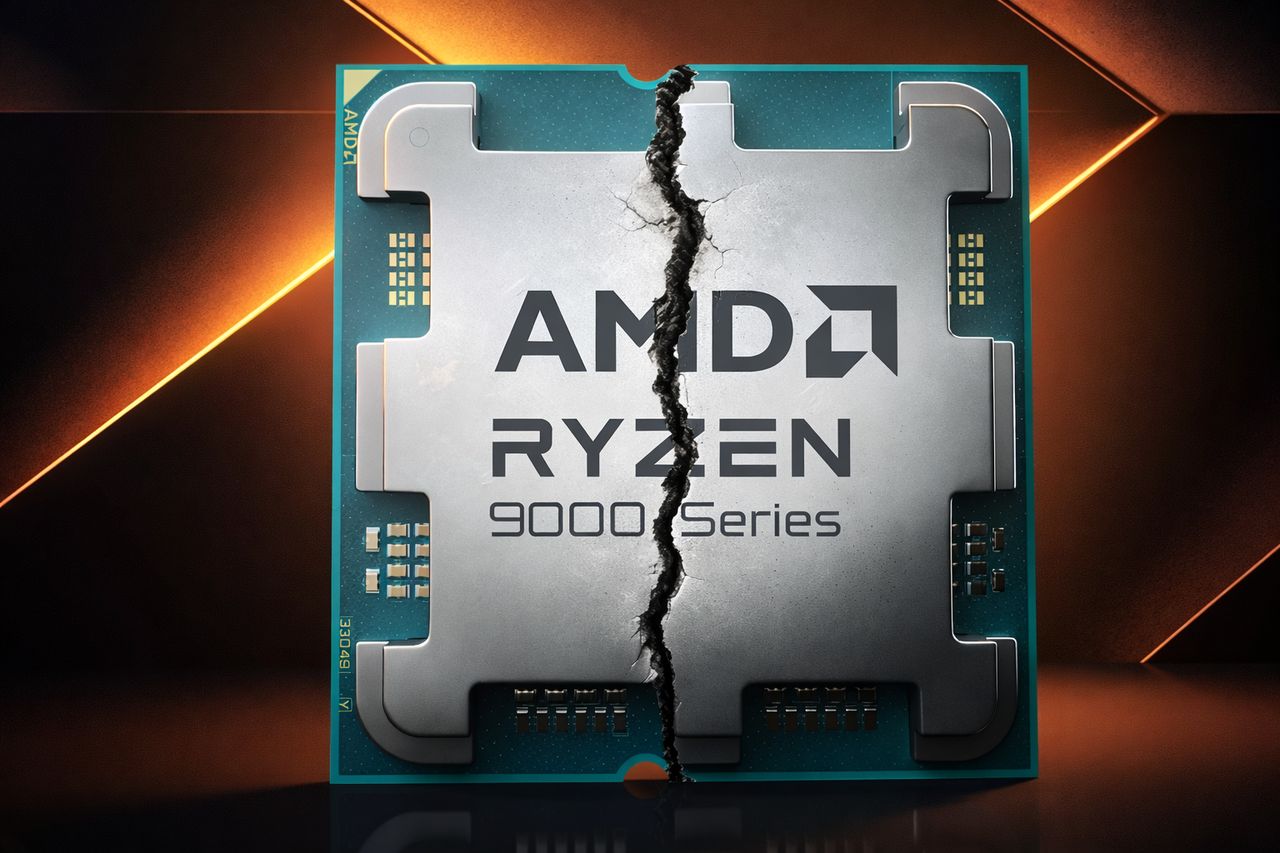
Over the past few days, users have reported multiple Ryzen 5 9600X failures alongside wider Ryzen 9000 no-POST issues on ASRock motherboards. ASRock has now officially acknowledged the situation and says it is actively investigating the problem.

ASRock finally responds to Ryzen 9000 issues

In a recent blog post, ASRock confirmed it is closely monitoring reports related to the performance and behavior of AMD Ryzen 9000 series processors on its AMD platforms. The company has initiated internal reviews and verification processes following increased community discussion around the issue.

ASRock says it is working closely with AMD to validate system behavior across a broad range of hardware configurations. The focus remains on BIOS optimization and improving overall system stability, with the goal of ensuring reliable operation for affected Ryzen 9000 CPUs.

The company also emphasized that user feedback plays a key role in its development and validation process. Customers experiencing boot failures or related issues are encouraged to contact ASRock Technical Support while the investigation continues.

ASRock has not disclosed the underlying cause of the failures or provided a timeline for a fix. Still, the public acknowledgment offers some reassurance that the issue is recognized and actively being addressed.

Separately, new rumors suggest AMD may increasingly focus on 8 GB Radeon graphics cards as GPU pricing pressure continues to build.

Via TechPowerUp

Claude Opus 4.6 and Thinking Model Spotted, Release Expected Today

Recently, rumors pointed to the imminent release of Claude Sonnet 5, but new information suggests that a different launch may happen first.

New Claude Opus models spotted in Perplexity API

The information comes from a post shared by leo on X, who spotted new model references while inspecting the Perplexity API. According to the findings, the API includes mentions of Claude Opus 4.6 and Claude Opus 4.6 Thinking, indicating that new Opus-tier models could debut as soon as today.

Based on the API descriptions, Claude Opus 4.6 appears labeled as the most advanced Claude model, while Claude Opus 4.6 Thinking is described as a reasoning-focused model with explicit “thinking” capabilities. This strongly suggests Anthropic is expanding its lineup with models tailored for deeper reasoning tasks.

Sonnet 5 may arrive later than expected

The same post suggests that Claude Sonnet 5 could still launch, but not as soon as earlier leaks claimed. If accurate, this would mean previous reports about an imminent Sonnet 5 release may have jumped the gun, even though the model still seems to remain on Anthropic’s roadmap.

So far, Anthropic has not made any official announcement regarding Claude Opus 4.6, Opus 4.6 Thinking, or Sonnet 5. As always, plans may change before public confirmation.

Separately, Anthropic continues to push Claude deeper into enterprise workflows. Microsoft has started using Claude Code alongside Copilot for certain development scenarios, and Claude recently introduced a new Cowork feature designed to improve collaboration in business environments.

We’ll keep you updated as soon as Anthropic shares official details or confirms the new Claude models.

Microsoft to Retire Standalone SharePoint Online and OneDrive for Business Plans

We saw that Microsoft recently introduced AI agents in OneDrive, but that’s not the only change underway. The company has now confirmed plans to discontinue standalone SharePoint Online and OneDrive for Business subscriptions, marking a broader push toward Microsoft 365 bundles.

The announcement appeared on Partner Center and was first highlighted by Neowin. It targets business customers and IT administrators who still rely on standalone plans instead of Microsoft 365 Business or enterprise suites. Microsoft is not ending sales immediately, but it wants customers and partners to start preparing for the transition.

Microsoft plans to retire certain SharePoint Online and OneDrive plans

Microsoft plans to phase out the following standalone subscriptions for SharePoint Online / OneDrive for Business:

  • Plan 1, priced at $5 per user per month with 1 TB of storage
  • Plan 2, priced at $10 per user per month with 5 TB of storage

Both plans also include extra features designed for larger organizations, even though Microsoft says overall adoption remains limited.

Why Microsoft is ending these plans

Microsoft says low customer demand compared to bundled Microsoft 365 offerings played a major role in the decision. The company also points to higher operational costs associated with maintaining standalone products, along with what it describes as unintended or nonstandard usage patterns.

By retiring these plans, Microsoft aims to simplify its portfolio and steer customers toward integrated subscriptions.

Timeline for the retirement

Microsoft outlined a gradual, multi-year transition. New customer sign-ups will stop on May 31, 2026, followed by the end of sales in June 2026. Subscription renewals will no longer be allowed after January 2027, and the standalone plans will be fully retired by December 2029. After that point, customers will need to move to Microsoft 365 suites, storage capacity add-ons, or pay-as-you-go options.
Microsoft encourages partners and administrators to begin planning now by reviewing customer tenants and evaluating suitable Microsoft 365 Business, E3, or E5 subscriptions. The company also recommends helping customers migrate, optimize, or archive data ahead of the final retirement dates. Microsoft says it will continue providing documentation, tools, and guidance throughout the transition period.

The news comes alongside other recent platform updates. New AI features are on the way for Visual Studio 2026, and Microsoft has added Secure Boot reporting to Microsoft Intune, giving IT admins improved visibility into device security across managed environments.

Via Neowin

Steam Survey Signals Intel Comeback While AMD Takes a Step Back

While AMD has confirmed that the Steam Machine shipping window remains unchanged, hardware constraints appear to have pushed back detailed launch plans. At the same time, new data from Valve highlights an interesting shift in the PC gaming CPU landscape.

As reported by TechPowerUp, Valve has released the January edition of the Steam Hardware and Software Survey, showing Intel posting its first CPU share gain in several months.

Intel’s Steam decline pauses in January

Intel’s consumer CPU share among Steam users rose to 56.64% in January, up 0.25% compared to December. This increase breaks a steady downward trend that began after September, when Intel still held 58.61% of the market.

The following months showed consistent declines, with Intel dropping to 57.82% in October, 57.30% in November, and 56.39% in December. January’s reversal suggests Intel’s losses may have stabilized, hinting at a possible short-term rebound in the consumer CPU segment.

AMD sees a small pullback after months of gains

AMD recorded a modest decline in January, with its CPU share slipping by 0.19% to 43.34%. Despite this dip, AMD remains well ahead of where it stood just a few months ago.

AMD’s share climbed from 41.31% in September to 43.53% in December, before easing slightly in January. Much of this growth has been driven by strong demand for Ryzen 9000X3D processors, which have become a popular choice among PC gaming enthusiasts.

Intel’s current Arrow Lake CPUs have faced early criticism, particularly regarding gaming performance. However, ongoing price cuts and firmware updates have helped improve both perception and real-world results.

Attention now turns to the rumored Arrow Lake Refresh, expected around March or April. Leaks, including references to a Core Ultra 9 290K Plus, suggest higher out-of-the-box frequencies and additional tuning aimed at addressing current shortcomings. If these improvements land as expected, they could play a role in shaping future Steam survey results.

ASUS Reveals ROG Strix XG27UCG Gen2 With 4K/162Hz and 485Hz Refresh Modes

ASUS has stayed in the spotlight recently, following the introduction of its Level Sense GPU feature and the launch of the ROG Kithara gaming headset. Now, the company is adding to that momentum by revealing the full specifications of its upcoming gaming monitor.

According to VideoCardz, ASUS has published the complete product page for the ROG Strix XG27UCG Gen2, also referred to as XG27UCGR. The listing strongly suggests the monitor is close to retail availability.

ROG Strix XG27UCG is a dual-mode display that targets esports and 4K gaming

The standout feature of the ROG Strix XG27UCG Gen2 remains its dual-mode operation. Users can instantly switch between high-resolution and ultra-high-refresh presets using a dedicated hotkey.

The finalized specifications confirm two operating modes:

  • 4K resolution at up to 162 Hz
  • 1080p resolution at up to 485 Hz with Frame Rate Boost enabled

ASUS previously claimed this mode switch can deliver up to three times more visible frames in high-refresh scenarios, targeting competitive esports players.

Panel and image quality details

The monitor uses a 27-inch Fast IPS panel with a native 3840 × 2160 resolution and an anti-glare coating. ASUS lists a typical brightness of 400 nits, with HDR peak brightness reaching 600 nits.

Contrast ratio is rated at 1300:1, with HDR10 support and VESA DisplayHDR 400 certification included. These specs position the panel as a balance between competitive performance and HDR-capable visuals.

Motion handling and gaming features

ASUS equips the XG27UCG Gen2 with a 1 ms GTG response time, dropping as low as 0.3 ms in optimal conditions. The monitor also supports ELMB Sync, which allows backlight strobing to operate alongside variable refresh rate technology.

Signal tables on the product page confirm dual refresh ranges, including 1080p at up to 485 Hz over HDMI, DisplayPort, and USB-C. Variable refresh support appears comprehensive, with G-SYNC Compatible labeling and FreeSync compatibility both listed.

Smart Pixel upscaling and console support

For image processing, ASUS highlights its Smart Pixel technology. The feature aims to improve image clarity when running games in 1080p high-FPS mode by scaling content to 4K more cleanly.

Console support includes HDMI 2.1 VRR at 4K 120 Hz for PlayStation 5 and Xbox Series X, along with Auto Low Latency Mode. When connected to Nintendo Switch 2, output caps at 4K 60 fps.

ASUS has not announced pricing or a release date yet, but the appearance of a full product page suggests availability is not far off. In other ASUS news, the ROG Xbox Ally recently received a discount, making it a tempting option while the deal lasts.