Chrome tests “Google Recommended Browser Settings” Pop-Up in Windows 11

Google is preparing to show a new “Use Google recommended browser settings” pop-up in Chrome that asks users to make it the default browser in Windows 11. The dialog opens from the browser menu and takes users to Windows Settings to complete the change.

The pop-up reads as follows :

Use Google recommended browser settings

Get easy access to the features you know, love, and trust by setting Chrome as your default browser.

Click Open settings below
Click Set default in your Windows settings

      Set later
      Open settings

      Selecting “Open settings” launches the Windows Default Apps page, where Chrome can be set as the system browser. Users can also choose Set later to dismiss the prompt without making any changes.

      Image Credit: Venkat | WindowsReport.

      Google has been testing more ways to promote Chrome as the default browser. Recently, we reported that Chrome is trying to show a default prompt during the first-run experience. It is now experimenting with another method. In addition to the InfoBar, Chrome is testing a bubble-style dialog, visible in the screenshot above.

      In addition to the bubble dialog, Chrome can display a smaller infobar at the top of the browser window when it is not set as the default browser.

      The change is being tested behind the Default Browser Prompt Surfaces flag on Mac, Windows, Linux, and ChromeOS, with options such as “Enabled with infobar” and “Enabled with bubble dialog.”
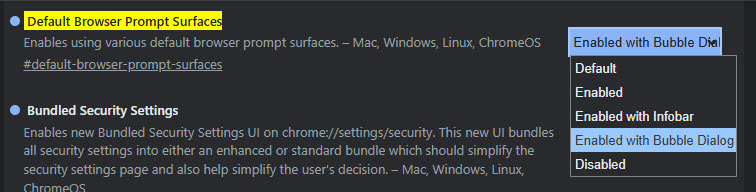
      Image Credit: Venkat | WindowsReport.

      Code changes reveal that Chrome selects the type of default browser prompt based on how many times a user dismisses it. After three declines, Chrome switches to the experimental surface, such as the bubble dialog. After additional declines, it falls back to the infobar. Another update modifies the field-trial configuration and sets the bubble dialog as the active surface.

      Windows users may recognize the pop-up. Edge has long used a recommended browser settings dialog in Windows 11, and Chrome now uses a comparable format in this test.

      Google Launches Nano Banana 2 With Faster 4K AI Image Generation

      Google has introduced Nano Banana 2, officially known as Gemini 3.1 Flash Image, as its newest AI image generation model. The launch follows the company’s recent rollout of Gemini-powered feedback tools in Google Classroom, signaling broader AI expansion across its ecosystem.

      Nano Banana 2 blends the speed of Gemini Flash with the higher intelligence and visual quality associated with Nano Banana Pro. Google positions the model as a solution for fast, iterative creative workflows while preserving strong visual fidelity.

      Designed for speed and creative iteration

      Nano Banana 2 focuses on rapid image generation, quick edits, and continuous refinement. It narrows the gap between high-end quality output and fast response times, an area where earlier image models often required trade-offs.

      The model leverages Gemini’s real-time web-grounded knowledge to improve contextual accuracy. That enables more precise rendering of specific subjects, structured diagrams, infographics, and even data visualizations.

      Instruction-following capabilities have also improved. The system handles complex, multi-layered prompts with greater nuance and consistency.

      Stronger text rendering and subject consistency

      One of the key upgrades involves text rendering. Nano Banana 2 produces clearer, more legible in-image text and supports translation or localization directly within generated visuals.

      Google says the model maintains subject consistency across workflows, supporting up to five distinct characters and roughly 14 objects within a single creative session. This improves storytelling, branding work, and multi-frame design tasks.

      Visual fidelity sees enhancements in texture depth, lighting balance, and fine detail while keeping generation speed competitive.

      Production-ready output up to 4K

      Nano Banana 2 supports output resolutions from 512px up to full 4K. It also offers flexible aspect ratios suitable for professional content, advertising assets, and social media formats.

      Google positions Nano Banana Pro as the maximum-fidelity option for high-end creative needs, while Nano Banana 2 targets creators who prioritize speed, iteration, and workflow efficiency.

      Broad rollout across Google services

      Nano Banana 2 is rolling out immediately across multiple Google products. It becomes the default image generation model in the Gemini app across Fast, Thinking, and Pro modes.

      Google AI Pro and Ultra subscribers retain access to Nano Banana Pro through regeneration options.

      Integration extends across Google Search (including AI Mode and Lens), the Gemini API, AI Studio, Vertex AI, Flow, and Google Ads. Flow users will receive Nano Banana 2 as the default image generator with zero credit cost.

      The rollout expands availability to 141 new countries and adds support for eight additional languages.

      AI media verification and provenance

      Google continues strengthening AI media verification. Nano Banana 2 content includes SynthID watermarking and C2PA Content Credentials for provenance tracking.

      According to Google, SynthID verification within the Gemini app has already been used more than 20 million times to identify AI-generated media.

      The announcement comes amid heightened competition in the AI space. Anthropic recently alleged it faced attempts by Chinese AI companies to replicate its models. Meanwhile, Microsoft has introduced Copilot Tasks, aiming to transform Copilot into a more autonomous AI agent capable of executing multi-step workflows.

      With Nano Banana 2, Google appears focused on balancing performance, scale, and production-ready output as AI image generation becomes increasingly embedded across consumer and enterprise platforms.

      Resident Evil Requiem Gets Day One Patch on Switch 2, amiibo Release Date Confirmed for July

      Capcom has quietly pushed a day one update for Resident Evil Requiem, just as the game launches on Nintendo Switch 2. At a time when players expect a smooth first boot experience, the publisher is urging users to install Version 1.1.0 before jumping in. The title is also launching simulatenously on Xbox Series X|S, PlayStation 5, and PC.

      Day one patch goes live, amiibo release date confirmed for late July

      The news comes via Nintendo Life, which cites Nintendo’s official Japanese website in reporting that the Ver. 1.1.0 update contains “several fixes.” Specific details have not been shared, but the patch is labeled essential prior to gameplay. If it hasn’t downloaded automatically, players will likely see a prompt at launch.

      That being said, the absence of detailed patch notes leaves some room for speculation. It’s unclear whether the fixes address performance, stability, or minor launch bugs. These days, day one patches have become standard practice across the industry, especially for large-scale releases like this one.

      Speaking of other titles, Resident Evil Requiem releases alongside Resident Evil 7: Biohazard Gold Edition and Resident Evil Village Gold Edition on Switch 2. The timing suggests Capcom wants to aggressively push for the franchise on Nintendo’s latest platform.

      Back in earlier announcements, Capcom also revealed new amiibo figures based on Grace Ashcroft and Leon S. Kennedy. Now, we have a confirmed date. Both amiibo are scheduled to launch on July 30, 2026.

      Microsoft Unveils ASUS NUC 16 and Dell Pro Desktop for Windows 365 Cloud PCs

      Microsoft is expanding its Windows 365 cloud PC ecosystem with new partner hardware from ASUS and Dell. The move strengthens its push to deliver full Windows desktops through the cloud.

      Windows 365 streams a complete Windows PC experience from Microsoft’s cloud infrastructure, similar in concept to Xbox Cloud Gaming but designed for business productivity instead of entertainment.

      New ASUS NUC 16 built specifically for Windows 365

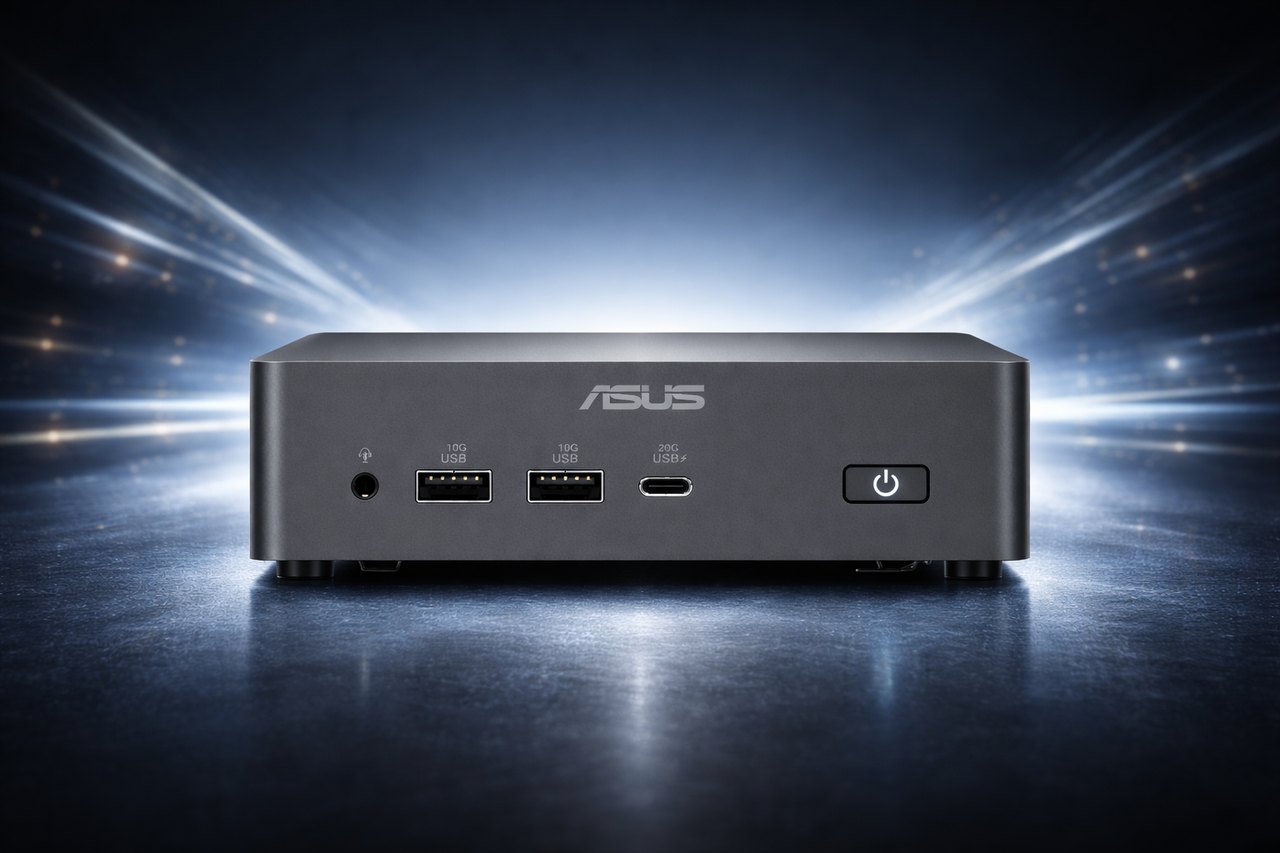
      One of the new devices is the ASUS NUC 16 for Windows 365, a compact mini PC with a 0.7-liter footprint.

      The device can mount directly behind a monitor, creating a clean thin-client workspace with minimal desk clutter. It supports up to three displays and includes front-facing USB Type-A, USB Type-C ports, and a headphone jack for easy peripheral access.

      Unlike traditional desktops, the ASUS unit does not focus on heavy local workloads. Instead, it acts as a dedicated endpoint for accessing Windows 365 Cloud PCs.

      Microsoft confirmed the ASUS NUC 16 will launch in the United States and Europe in Q3 2026 for commercial customers.

      Dell Pro Desktop for Windows 365 targets global enterprises

      Dell is also introducing the Dell Pro Desktop for Windows 365, a purpose-built thin client designed for enterprise deployments.

      The device features a small vertical desktop design with flexible mounting options. Like the ASUS model, it supports up to three monitors and offers accessible front ports for peripherals.

      Dell plans to make the Pro Desktop available in 58 countries, reflecting Microsoft’s broader global push for Windows 365 adoption.

      Windows 365 continues to target enterprise users

      Windows 365 remains primarily aimed at enterprise and commercial customers rather than consumers.

      Performance and availability depend on regional cloud infrastructure, since the Windows experience streams directly from Microsoft data centers. Low latency and stable connectivity remain key requirements for optimal performance.

      Microsoft is also introducing Bluetooth peripheral support during the Windows Cloud PC onboarding process in 2026. This change will simplify first-time setup for wireless keyboards, mice, and headsets.

      Another upcoming update will allow customizable login screen branding. Companies will soon be able to add their own logo, organization name, and wallpaper instead of the default Windows 11 Bloom-style background.

      The hardware expansion aligns with Microsoft’s broader AI roadmap. The company recently confirmed that Microsoft 365 Copilot will receive corporate branding support and AI watermarking capabilities.

      In addition, Copilot Tasks will transform Copilot into a more autonomous AI agent capable of handling multi-step workflows. At the same time, Microsoft continues expanding Copilot capabilities across other Microsoft 365 applications, deepening AI integration throughout its productivity ecosystem.

      By combining purpose-built cloud hardware, Windows 365 streaming, and deeper Copilot integration, Microsoft continues to position its Cloud PC platform as a central pillar of enterprise IT strategy heading into 2026.

      Via Neowin

      Microsoft Introduces Copilot Tasks to Turn AI Into an Autonomous Digital Worker

      As AI agents become more mainstream in 2026, Microsoft is stepping directly into the autonomous automation space with a new feature called Copilot Tasks. The company aims to move beyond simple AI responses and into full task execution.

      Microsoft unveils Copilot Tasks to compete in the AI agent race

      AI tools such as OpenAI’s Codex, Anthropic’s Claude Code, and Perplexity Computer have pushed the industry toward systems that can plan and execute multi-step operations. Microsoft’s Copilot Tasks follows that same direction, positioning Copilot as an active digital operator rather than a passive assistant.

      Copilot Tasks works like an intelligent to-do system that actually completes assignments. After receiving natural language instructions, the system analyzes the request, breaks it into structured steps, and carries out the workflow automatically in the background.

      How Copilot Tasks performs actions

      Copilot Tasks runs inside its own virtual computer environment. It uses a built-in web browser along with app and service integrations to execute tasks across different platforms.

      The system can browse websites, create and edit documents, draft emails, schedule meetings, and coordinate actions between apps. It also supports recurring and scheduled tasks based on user preferences, allowing automation to continue without repeated prompts.

      Users remain in control throughout the process. Copilot presents its plan for review, and users can refine, pause, or cancel tasks at any point. For sensitive actions such as payments or sending communications, the system requires explicit approval before proceeding.

      Designed for consumers and enterprises

      Microsoft aims to simplify agent-style automation by removing the need for manual configuration or complex workflow setups. Instead of building structured pipelines or configuring external tools, users can describe what they want in plain language and allow Copilot to handle execution.

      The feature targets consumers, developers, and enterprise customers alike. This move aligns with Microsoft’s broader strategy of embedding Copilot across Windows, Microsoft 365, Edge, and cloud services.

      Limited research preview now available

      Copilot Tasks is launching in a limited research preview phase. Microsoft plans to expand access gradually as it collects feedback and improves reliability, safety controls, and performance.

      Interested users can join a waitlist to test the feature during its early rollout. For those seeking an open-source alternative with similar automation capabilities, projects such as OpenClaw offer comparable agent-style solutions outside Microsoft’s ecosystem.

      With Copilot Tasks, Microsoft signals a clear shift toward autonomous AI systems that not only answer questions but also execute real-world digital work.

      Via Neowin

      Acer Launches Affordable 144Hz Full HD IPS Monitors in Nitro and KA Series

      Acer has expanded its display lineup with four new 144Hz Full HD IPS monitors, offering a more affordable alternative to recent 240Hz gaming panels. The refreshed models upgrade previous 120Hz screens to 144Hz, targeting both gamers and everyday users.

      The new lineup splits into two families: the gaming-focused Nitro VG0 series and the more general-purpose KA0 series. Each range includes 23.8-inch and 27-inch variants.

      144Hz Upgrade Across the Lineup

      According to Guru 3D, all four monitors feature 1920×1080 non-glare IPS panels with wide viewing angles and 99% sRGB color coverage. The move to 144Hz improves motion clarity in games and delivers smoother scrolling and UI navigation during daily use.

      Acer positions these models as a balance between performance and affordability, especially for users who do not need premium 240Hz or 360Hz refresh rates.

      Nitro VG0 Series Targets Competitive Gaming

      The Nitro VG0 models include the 23.8-inch VG240YP6bmipx and the 27-inch VG270P6bmipx. These displays focus on esports and fast-paced gaming.

      They offer a 1ms response mode using VRB (Visual Response Boost), designed to reduce motion blur during rapid gameplay. Support for AMD FreeSync helps minimize screen tearing and improve frame pacing.

      Nitro models cater primarily to shooters, competitive multiplayer titles, and high-speed gaming workloads.

      KA0 Series Focuses on Versatility

      The KA0 family includes the KA240YP6bmix (23.8-inch) and KA270P6bmix (27-inch). These monitors prioritize broader device compatibility rather than gaming-specific features.

      In addition to HDMI, KA0 models include D-Sub (VGA) inputs, making them suitable for legacy systems and older PCs. This makes them appealing for office environments, classrooms, and mixed-use setups.

      Built-In Audio and Eye Comfort Features

      All four monitors include integrated 2W + 2W stereo speakers for basic audio output. While not a replacement for dedicated speakers, they provide convenience for casual use.

      Acer also includes blue-light reduction and flicker-free backlighting across the lineup, aiming to reduce eye strain during extended sessions.

      Availability and Market Context

      The new Acer 144Hz monitors launch on February 26, 2026, through major electronics retailers in Japan. Pricing remains listed as open price, meaning final retail costs will vary by region and seller.

      The announcement arrives as both Acer and ASUS have reportedly taken down their German support websites due to sales-related restrictions. Meanwhile, users seeking higher refresh rates at competitive pricing may also consider alternatives such as the AGON Q27G4ZD.

      With this refresh, Acer appears to target users who want smoother 144Hz performance without stepping into premium 240Hz territory.

      SK Hynix and Sandisk Unveil High Bandwidth Flash to Rival HBM for AI

      SK Hynix and Sandisk have unveiled a new High Bandwidth Flash (HBF) initiative under the Open Compute Project. The move positions HBF as a new AI memory tier between HBM and SSD storage.

      The announcement follows SK hynix’s recent HBM3e supply deal with Microsoft, further highlighting the race to secure advanced memory for AI accelerators.

      A New Memory Tier for AI Inference

      According to VideoCardz, SK hynix and Sandisk are leading a dedicated workstream within the Open Compute Project (OCP) to standardize High Bandwidth Flash.

      HBF targets AI inference workloads and aims to deliver far higher capacity than High Bandwidth Memory (HBM) without falling back to slower, traditional storage-like access patterns.

      Sandisk describes HBF as a NAND-based memory solution tailored specifically for AI accelerator systems. The concept focuses on balancing bandwidth, capacity, and power efficiency.

      Performance and Capacity Targets

      According to the companies, HBF could provide roughly 8× to 16× the capacity of HBM in target AI designs.

      First-generation specifications include:

      • Up to 1.6 TB/s read bandwidth
      • 256Gb per die
      • 16-die stacks reaching up to 512GB capacity

      HBF stacks are designed to match HBM4 in footprint, stack height, and power profile. This alignment should simplify integration into next-generation AI accelerators.

      Internal simulations suggest HBF can achieve performance within 2.2% of “unlimited-capacity HBM” in inference workloads. The test reportedly used an 8-bit Llama 3.1 405B model.

      The comparison assumes unlimited HBM capacity, meaning it primarily evaluates bandwidth behavior rather than the real-world capacity advantage HBF offers.

      Built on Advanced NAND and 3D Stacking

      HBF relies on Sandisk’s BiCS NAND roadmap and its CMOS directly Bonded to Array (CBA) architecture.

      The companies are developing proprietary 3D stacking techniques aimed at 16-die configurations. These designs target improved thermals and reduced warpage, both critical in dense AI hardware environments.

      Unlike DRAM-based memory such as HBM, HBF is non-volatile. It does not require refresh power, which may translate into better energy efficiency in large AI clusters.

      Roadmap: Scaling Beyond 3 TB/s

      The roadmap outlines significant performance growth:

      • Gen2 aims for over 2 TB/s read bandwidth
      • Gen3 targets up to 3.2 TB/s read bandwidth

      Future stack capacities could scale to 1TB and even 1.5TB per stack. The companies also project lower power consumption, with Gen2 and Gen3 potentially dropping to 0.8× and 0.64× of Gen1 power levels.

      No official deployment timeline has been announced. For now, both firms treat OCP standardization as the next major milestone.

      The announcement lands as the AI memory race accelerates. Samsung recently revealed HBM4, while NVIDIA’s upcoming Rubin architecture is widely expected to drive further HBM4 demand.

      If HBF gains traction, it could reshape how AI accelerators handle inference workloads, offering a middle ground between ultra-fast HBM and high-capacity SSD storage.

      Intel Releases New Arc Driver With Major Performance Gains and Fixes

      Intel has released a new Arc Graphics driver that boosts performance, adds Game On support, and fixes major issues across Arc GPUs and Core Ultra systems.

      Intel Arc 32.0.101.8531 Beta driver adds performance boosts and fixes

      According to VideoCardz, Intel has rolled out the Arc Graphics 32.0.101.8531 BETA driver for its Arc ecosystem. The update follows Intel’s recent move to bring XeSS 3 support across all Arc GPUs.

      The new driver delivers “Game On” support for upcoming and major releases, including Marathon, Resident Evil Requiem, and World of Warcraft: Midnight (DLC). Support extends to Arc B-series, Arc A-series, and Intel Core Ultra processors with built-in Arc graphics.

      Performance improvements across Arc and Core Ultra platforms

      Intel highlights notable performance gains in several DirectX 12 titles.

      In The Witcher 3 (DX12), users can see up to a 35% average FPS uplift at 1080p High on Core Ultra Series 3 compared to driver version 31.0.101.8509.

      For Resident Evil Requiem, Arc B-series GPUs gain up to 7% at 1080p Ultra and 6% at 1440p Ultra. Arc A-series GPUs show even larger improvements, with gains reaching up to 40% at 1080p Ultra and 30% at 1440p Ultra.

      These improvements target both discrete Arc GPUs and integrated Arc solutions inside Core Ultra chips.

      Bug fixes for major titles and stability improvements

      The 32.0.101.8531 Beta driver also addresses multiple crashes and visual issues.

      Crash problems in John Carpenter’s Toxic Commando (DX12) have been resolved across supported Arc and Core Ultra platforms. Intel also fixed menu flickering in PUBG: Battlegrounds (DX12) on Core Ultra Series 3 iGPUs.

      Cinematic flickering corruption in Hogwarts Legacy (DX12) has been corrected for Core Ultra Series 3 systems.

      Known issues still remain

      Despite the improvements, Intel lists several known problems.

      Naraka Bladepoint may crash when Ray Tracing is enabled on Arc GPUs and Core Ultra systems. The Finals, Star Citizen, and Mafia: The Old Country can also crash on certain configurations.

      Users may notice terrain corruption in No Man’s Sky (Vulkan) on some setups. Visual artifacts can appear in Topaz Video AI when specific AI models run on various Intel GPU tiers.

      Professional users may encounter viewport corruption in DaVinci Resolve Studio, particularly during HDR resizing, and PugetBench may crash on some Arc systems.

      Several titles, including Call of Duty: Black Ops 6, Dune: Awakening, and Battlefield 6, may still exhibit flickering or corruption.

      Intel Graphics Software itself continues to face stability issues. The app can crash when users reset settings or navigate certain pages. Performance metrics may also display incorrect values when both integrated and discrete GPUs are enabled simultaneously.

      The driver release comes as Intel pushes broader architectural and AI initiatives. Reports suggest the company is moving back toward a more unified core architecture, while officials believe Panther Lake could drive AI PC adoption beyond 50% this year.

      With regular performance tuning and game-specific optimizations, Intel appears focused on strengthening its Arc ecosystem across both desktop GPUs and integrated Core Ultra platforms.

      AMD FSR 4.1 Leak Suggests Quiet Driver Testing Behind the Scenes

      AMD’s FSR roadmap has remained unusually quiet in recent months, especially around FSR 4 and the Redstone feature set. Now, a new leak suggests the company may be testing an updated FSR 4.1 build behind closed doors.

      According to VideoCardz, a recently surfaced DLL file, amdxcffx64.dll, appears linked to FSR-related driver functionality. The file reportedly comes from an unreleased Radeon Adrenalin 26.2.2 driver build.

      Leaked Driver Points to FSR 4.1 Work in Progress

      The build in question is said to belong to AMD’s invite-only Vanguard beta testing program. That suggests the software remains in early internal testing rather than nearing public release.

      Early user comparisons highlight minor image quality tweaks. Some testers report improved foliage detail and slightly better stability in complex scenes. However, performance appears largely unchanged compared to previous FSR 4 builds, based on limited early benchmarks.

      Due to the restricted nature of the leak, broader validation across engines and titles remains incomplete. Community testing has not yet confirmed consistency in motion clarity or artifact reduction.

      Experimental Testing on Unsupported GPUs

      Interestingly, a Reddit user reportedly tested the leaked DLL on a Radeon RX 7900 XTX — a GPU that does not officially support FSR 4. That raises questions about whether AMD is experimenting with broader hardware compatibility or if this is simply a byproduct of driver-level testing.

      Some users have attempted to inject the leaked file using third-party tools such as OptiScaler. While the DLL reportedly carries a valid digital signature and does not immediately trigger security warnings, using unofficial binaries carries real risks. These include driver instability, Windows integrity check failures, and potential security vulnerabilities

      As of now, FSR 4 remains tied to RDNA 4 hardware. AMD has not announced plans to expand official support to earlier RDNA generations.

      The leak does not confirm any imminent public release. Instead, it suggests AMD continues refining FSR internally while keeping its next steps under wraps.

      In related developments, AMD recently introduced Ray Regeneration support for Crimson Desert. Meanwhile, despite broader GPU price hikes across the market, reports indicate Radeon RX 9000 series cards may see price adjustments due to softer demand.

      Microsoft Unveils New Xbox Free Play Days Games Through March 2

      Microsoft has announced a new Xbox Free Play Days lineup, giving Game Pass subscribers free access to several titles through March 2.

      According to True Achievements, this weekend’s Free Play Days selection includes a mix of new releases, indies, and a major upcoming shooter test.

      Xbox Free Play Days runs through March 2

      Game Pass subscribers can download and play selected titles for free until Monday, March 2. As usual, any progress or achievements earned during the event will carry over if players decide to purchase the games.

      This weekend’s featured titles include:

      • Marathon
      • Atari 50: The Anniversary Celebration
      • Stuffed
      • Moving Out 2
      • Anno 117: Pax Romana

      The lineup blends nostalgia, co-op chaos, strategy, and a high-profile multiplayer test.

      Marathon headlines the weekend with Server Slam

      Marathon takes center stage as part of its ongoing Server Slam test ahead of its full launch on March 5. The large-scale playtest gives Xbox players early access to Bungie’s PvP extraction shooter set on Tau Ceti IV.

      However, Marathon currently does not support Xbox achievements during the Server Slam period. Players can test gameplay and servers, but achievement hunters will need to wait for the full release.

      Moving Out 2 and achievement-friendly options

      Moving Out 2 is already included across all Game Pass tiers, but it may also be temporarily accessible to all Xbox users during the Free Play Days event.

      For completionists, Moving Out 2 achievements can reportedly be finished in around 20 hours. Meanwhile, Atari 50: The Anniversary Celebration is estimated to take between 15 and 20 hours for full achievement completion.

      Completion estimates remain unclear for Anno 117: Pax Romana and Stuffed, though both offer players a chance to sample different genres without committing to a purchase.

      A trial window for upcoming and lesser-known games

      Free Play Days continues to serve as a discovery tool for both upcoming releases and smaller titles. Players can test gameplay mechanics, performance, and overall appeal before deciding to buy.

      Some trial limitations, including potential time restrictions or feature caps, have not yet been fully clarified for every title in the lineup.

      The update arrives as new data suggests Xbox Game Pass can drive more than 500,000 additional players to popular releases shortly after launch. At the same time, rumors continue to circulate that Microsoft may enhance the Game Pass Ultimate subscription in the near future.

      With a mix of strategy, co-op fun, retro classics, and a major multiplayer test, this weekend’s Free Play Days event offers something for nearly every type of Xbox player.

      NVIDIA Ships First Vera Rubin VR200 AI Rack Samples to Customers

      NVIDIA has reported full-year 2025 revenue of $215.9 billion, including $68.1 billion in Q4. Despite the record-breaking year, gaming revenue fell 13% due to ongoing DRAM shortages that continue to pressure GPU supply.

      According to TechPowerUp, NVIDIA has begun shipping the first Vera Rubin VR200 rack samples to customers, marking an important step in its next-generation AI infrastructure rollout.

      Vera Rubin VR200 enters early customer hands

      NVIDIA confirmed that it has started shipping Vera Rubin VR200 rack samples to select customers. Volume production shipments of full Vera Rubin systems are scheduled for the second half of 2026.

      The Vera Rubin platform combines the Vera CPU, Rubin GPU, NVLink 6 switch, ConnectX-9 SuperNIC, BlueField-4 DPU, and Spectrum-6 Ethernet switch into a unified AI infrastructure stack. NVIDIA says the system is designed to power trillion-parameter AI models while improving efficiency compared to previous generations.

      The company claims Rubin may require only one-fourth the number of GPUs compared to Blackwell for certain workloads and could reduce inference costs by up to 10 times.

      Rubin architecture and performance details

      Each Rubin GPU delivers around 50 PetaFLOPS of FP4 compute, while the two-GPU Superchip configuration reaches roughly 100 PetaFLOPS of FP4 performance. The GPU integrates two reticle-sized compute chiplets and eight HBM4 memory stacks, resulting in 288 GB of HBM4 per GPU and approximately 576 GB per Superchip.

      Rubin also introduces a modular, cable-free tray design aimed at improving resiliency and simplifying servicing compared to the Blackwell platform.

      Vera CPU and system memory

      The Vera CPU features 88 custom Armv9.2 “Olympus” cores with 172 threads. The system supports up to 1.5 TB of LPDDR5X memory in the SOCAMM form factor, enabling large-scale AI workloads with high bandwidth and low latency.

      NVIDIA expects strong adoption from major cloud model builders as companies continue scaling next-generation AI models.

      Feynman chips and ARM laptop CPUs on the horizon

      Looking ahead, NVIDIA may unveil additional silicon at GTC 2026. CEO Jensen Huang has hinted that previously unseen chips will debut at the event, with industry reports pointing to possible Feynman AI processors.

      In parallel, NVIDIA is reportedly preparing a return to laptop CPUs with ARM-based N1 chips, signaling broader ambitions beyond GPUs and data center accelerators.

      With record revenue, expanding AI infrastructure, and new architectures in development, NVIDIA continues to shift its center of gravity toward AI, even as its gaming segment faces short-term supply challenges.

      NVIDIA Gaming Revenue Drops 13% as DRAM Shortage Tightens Supply

      NVIDIA’s gaming business is starting to feel the pressure from ongoing DRAM shortages, even as annual growth remains strong.

      The company’s Q4 FY2026 earnings show that gaming revenue declined 13% quarter-over-quarter, landing at $3.7 billion. Despite the sequential drop, revenue still climbed 47% year-over-year, driven largely by demand for its Blackwell-based GPUs.

      What’s driving the gaming revenue dip and what it means for GPU supply

      NVIDIA officially attributed the quarter-over-quarter decline to inventory moderation following strong holiday sales. After an aggressive Q3, the company appears to have adjusted shipments to rebalance channel stock.

      However, analysts and broader market indicators suggest that tight memory supply played a significant role. CFO Colette Cress acknowledged that securing enough memory remains a major challenge, and the company expects supply conditions to remain “very tight” for the next several quarters.

      That outlook signals potential pressure on GPU availability throughout 2026.

      Memory constraints ripple across the GPU market

      The DRAM shortage is not isolated to NVIDIA. A significant share of global memory production is currently being allocated to AI accelerators and data center infrastructure, leaving less capacity for consumer GPUs.

      At the same time, newer GPU generations demand more memory and higher-bandwidth configurations, which further strains supply chains.

      Retail pricing already reflects these constraints. Recent surges in high-end GPU prices, including RTX 5090 and RTX 5070 models, indicate that limited availability continues to affect the market. Reports also point to potential delays in next-generation launches across the industry, with rumors suggesting that future architectures could slip further out than previously expected.

      Short-term caution, long-term recovery

      NVIDIA’s gaming outlook now leans more heavily on year-over-year recovery rather than near-term acceleration. While Blackwell demand remains strong, the company does not expect memory conditions to ease quickly.

      Industry observers similarly anticipate that GPU supply and pricing may remain volatile for several quarters. Stabilization will likely depend on improved DRAM output and a better balance between AI-driven infrastructure demand and consumer hardware production.

      Beyond gaming, NVIDIA continues to expand its broader portfolio, with developments in laptop CPU initiatives and next-generation AI architectures potentially coming into focus at upcoming events such as GTC 2026.

      For now, the key takeaway remains clear: even strong demand cannot fully offset structural supply constraints in the memory market, and the impact is starting to show in quarterly gaming results.

      Via Wccftech

      Perplexity Computer Debuts With Multi-Model AI Agent Workflows

      Perplexity AI has introduced Perplexity Computer, a new agent-based AI platform designed to execute complex tasks from a single prompt.

      The launch follows recent AI model releases across the industry, including updates from OpenAI, but Perplexity’s new system focuses on workflow automation rather than just model performance.

      Perplexity releases a general-purpose AI agent

      Perplexity Computer works as a general-purpose AI agent capable of handling end-to-end tasks.

      Users enter one prompt, and the system automatically breaks it into smaller tasks and subtasks.

      The platform then spawns multiple sub-agents to handle research, document creation, browsing, data processing, and other actions. Each task runs in its own isolated compute environment with a real filesystem, browser access, and tool integrations.

      Parallel workflows and isolated environments

      One of the standout features is the ability to run multiple Perplexity Computers in parallel.

      Users can manage several workflows at the same time, with each environment operating independently.

      This setup allows businesses and advanced users to automate research, reporting, and content generation tasks without manually switching between tools.

      Model-agnostic architecture

      Perplexity Computer uses a model-agnostic design, meaning it selects different AI models depending on the job.

      According to the company, Anthropic’s Opus 4.6 currently serves as the core reasoning and orchestration engine.

      Google’s Gemini handles deep research tasks, while image and video generation rely on Nano Banana and Veo 3.1.

      For faster, lightweight tasks, the system uses Grok, and for long-context recall and broader search capabilities, it integrates ChatGPT 5.2 from OpenAI.

      This flexible structure allows Perplexity to swap in newer or improved models over time without redesigning the entire platform.

      Availability and rollout

      Perplexity Computer is currently available to Perplexity Max subscribers. A wider rollout to Enterprise Max users is expected in the coming weeks.

      The launch positions Perplexity as more than an AI-powered search engine, shifting toward a unified AI workflow platform built around autonomous agents.

      Meanwhile, in related AI industry news, Anthropic recently claimed that Chinese AI companies attempted to copy its Claude models during what it described as a coordinated campaign, adding to ongoing tensions in the global AI race.

      Via Neowin

      Ryzen AI 400 Gorgon Point Desktop Chips Rumored for Q1 2026

      AMD Ryzen AI 400 desktop APUs could arrive in the first half of 2026, according to a new leak. The rumored launch window points to Q1 2026, signaling potential good news for AM5 users despite Zen 6 delays.

      Recent reports have suggested that AMD’s Zen 6 “Olympic Ridge” architecture will not be ready until next year. However, attention now shifts to the Ryzen AI 400 series, which appears closer to release.

      Leaks Suggest Ryzen AI 400 Desktop Launch in Q1 2026

      According to TechPowerUp, AMD showcased its Ryzen AI 400 “Gorgon Point” mobile APUs at CES 2026. These chips are based on Zen 5 and Zen 5c cores and target next-generation AI-enabled laptops.

      At the same event, AMD also previewed AM5-based Ryzen AI 400 desktop APUs. While official specifications remain under wraps, a fresh leak suggests these desktop variants could hit the market as early as Q1 2026.

      The new information comes from Moore’s Law Is Dead, who shared details about a potential first-half 2026 launch. The leaker also published a short promotional clip that allegedly shows a Ryzen AI 400 Pro processor installed in an AM5 socket.

      Although AMD has not confirmed the specifications, the desktop APUs are expected to use silicon similar to the Strix Point architecture. Compared to their mobile counterparts, desktop versions would likely feature revised power management profiles and higher clock speeds.

      Rumored Specs: 12 Cores, RDNA 3.5, and 60 TOPS NPU

      Rumors point to a top-tier configuration with 12 CPU cores, split between 4 high-performance Zen 5 cores and 8 efficiency-focused Zen 5c cores. On the graphics side, the integrated GPU could include up to 16 RDNA 3.5 compute units.

      AI performance appears to be a major focus. The chips are expected to feature an NPU capable of delivering around 60 TOPS, positioning them for AI-driven desktop workloads and local inference tasks.

      If these details prove accurate, Ryzen AI 400 desktop APUs could become a key addition to the AM5 platform, especially for users looking to build AI-optimized systems without relying on discrete accelerators.

      In related developments, AMD recently announced an AI GPU partnership with Meta and formed a multi-year agreement with Nutanix to build an open enterprise AI platform. Together, these moves highlight AMD’s broader push into AI across both consumer and enterprise markets.

      For now, AMD has not provided an official release date or full specifications for the Ryzen AI 400 desktop lineup. More details are expected in the coming months as the rumored Q1 2026 window approaches.

      Microsoft Replaces Teams Designer Features With Copilot

      Microsoft Teams is set to fully retire the Designer bot and Designer banners by February 27, according to a new admin update. The move shifts creative features directly under Microsoft 365 Copilot.

      Microsoft previously introduced several upcoming Teams changes, including prompts to open links in Edge and Express Voice Enrollment. Now, the company is finalizing the removal of older creative tools inside Teams.

      Designer bot and banners officially removed from Teams

      According to the Microsoft 365 Admin Center under message ID MC1197104, Microsoft will fully retire the standalone Designer bot and Designer channel banners by Friday, February 27.

      The phaseout began in mid-January and has rolled out gradually to global users. Once the retirement is complete, users will no longer install or access the standalone Designer bot in chats.

      Microsoft will also remove the legacy interface used to create channel announcement banners. Most users already report limited or no access ahead of the final cutoff.

      Copilot becomes the new creative hub in Teams

      Microsoft will consolidate AI-powered creative features under Copilot in Teams. Copilot will now handle image generation and other creative tasks that the Designer bot previously managed.

      The company continues to unify AI capabilities into a single toolset across Microsoft 365 apps. This shift aligns with its broader strategy to expand Copilot’s footprint across collaboration and productivity workflows.

      Microsoft confirmed that no backend configuration or admin action is required for the deprecation. However, administrators should update internal training materials and help desk documentation to prevent confusion among users who relied on the older tools.

      The Designer removal follows other Copilot-related changes across Microsoft’s ecosystem. Copilot will soon open automatically in Edge when users click Outlook email links, further embedding AI into daily workflows.

      Microsoft has also begun removing Copilot App Skills from Excel, signaling continued refinement of how Copilot integrates across apps.

      With the Designer bot and banners officially retired, Copilot now stands as the primary AI-powered creative assistant inside Teams, reinforcing Microsoft’s push toward a unified AI experience across its services.

      Via Neowin

      AMD Invests $150M in Nutanix to Build Open Enterprise AI Platform

      AMD and Nutanix have announced a multi-year strategic partnership to develop an open, full-stack AI infrastructure platform aimed at enterprises.

      The move comes shortly after AMD signed a major AI GPU agreement with Meta, signaling the chipmaker’s broader push into scalable enterprise AI infrastructure.

      Open AI Platform for Enterprise, Cloud, and Edge

      The collaboration between AMD and Nutanix focuses on building a production-ready platform designed to support agentic AI applications across enterprise data centers, hybrid cloud setups, and edge environments.

      The joint platform will combine silicon innovation, open runtime software, and enterprise cloud orchestration into a unified stack. Nutanix Cloud and Nutanix Kubernetes Platform will receive optimization for AMD EPYC CPUs and AMD Instinct GPUs, strengthening performance for AI workloads.

      AMD recently denied rumors of delays surrounding its upcoming Instinct MI455X accelerator, reinforcing its roadmap confidence as it expands AI partnerships.

      ROCm Integration and Open Ecosystem Strategy

      As part of the agreement, AMD’s ROCm software and Enterprise AI ecosystem will integrate directly into Nutanix’s AI stack. The goal centers on delivering scalable infrastructure that supports both open-source and commercial AI models without locking customers into proprietary frameworks.

      Both companies emphasized architectural flexibility and interoperability, positioning the platform as an alternative to closed AI ecosystems. The strategy aims to attract enterprises seeking long-term control over their AI deployments.

      $150 Million Equity Investment and Joint Engineering

      AMD will invest $150 million in Nutanix common stock at $36.26 per share. The deal is expected to close in Q2 2026, pending regulatory approvals and customary closing conditions.

      In addition, AMD will fund up to $100 million in joint engineering and go-to-market initiatives. The funding will accelerate development of the co-engineered AI infrastructure and expand its reach through a broad OEM ecosystem.

      Focus on Inference and Agentic AI

      The jointly developed platform targets high-performance inference workloads, which increasingly dominate enterprise AI usage. The infrastructure will deliver accelerated inference using AMD Instinct GPUs alongside EPYC CPUs, supported by high core-density compute and unified lifecycle management.

      Hybrid deployment capabilities will allow enterprises to run AI agents, multimodal inference services, and industry-specific intelligent applications across on-premises and cloud environments.

      The first wave of the agentic AI platform is expected to reach the market in late 2026.

      With this partnership, AMD and Nutanix aim to compete aggressively in the rapidly expanding market for open, scalable enterprise AI infrastructure.

      In other news, AMD is also bringing ray regeneration technology to the upcoming Crimson Desert, further expanding its footprint in gaming graphics innovation.

      Marathon Server Slam Starts February 26 Ahead of Full Launch

      Marathon is one of the most anticipated games this season, topping Steam’s paid charts as soon as preorders went live. Now, players finally get a chance to jump in early.

      According to IGN, Bungie will host a Marathon “Server Slam” test from February 26 to March 2, 2026, giving fans a large-scale preview before launch.

      Marathon Server Slam Kicks Off Today

      The Server Slam acts as a stress test ahead of the full release on March 5, 2026. The game launches on PC, PS5, and Xbox Series X|S. Start times for the event are:

      • PST: 10 AM (Feb 26)
      • CST: 12 PM (Feb 26)
      • EST: 1 PM (Feb 26)
      • GMT: 6 PM (Feb 26)
      • CET: 7 PM (Feb 26)
      • JST / Beijing: 3 AM (Feb 27)
      • AEST: 5 AM (Feb 27)
      • NZST: 7 AM (Feb 27)

      Bungie will use the event to test servers, anti-cheat systems, and gather player feedback before launch.

      What Players Can Access During the Test

      Marathon is a PvP extraction shooter set on Tau Ceti IV, where players take on the role of cybernetic mercenaries known as Runners exploring a lost colony.

      During Server Slam, players can explore two zones: Perimeter and Dire Marsh. Early contracts will be available for five factions: CyberAcme, NuCaloric, Traxus, MIDA, and Arachne.

      Five of the six launch Runner shells will be playable, along with the scavenger Rook experience. Players can run solo, squad up in crews, use proximity chat, and even form temporary alliances mid-match.

      Progress Carries Launch Rewards

      Progress made during the Server Slam unlocks rewards for the full release.

      Completing the first mission grants the Standard Arrival Cache, which includes implants, cores, mods, and weapons.

      Reaching Runner Level 10 unlocks the Enhanced Arrival Cache with upgraded gear.

      Hitting Runner Level 30 unlocks the Deluxe Arrival Cache, featuring deluxe implants, advanced mods, additional weapons, and an enhanced backpack.

      Platform-Exclusive Bonuses

      Platform-specific rewards will also be available at launch as previously confirmed. PlayStation Plus users receive themed weapon charms inspired by Ghost of Yōtei, Death Stranding 2, and Helldivers 2.

      Steam players get an exclusive Crowbar weapon charm. Xbox Series X|S players receive the Emerald Clutch and Emerald Catch charms.

      With Marathon’s official launch just days away, the Server Slam offers one final opportunity for players to test the extraction shooter at scale before release.

      In other gaming news, launch times for Resident Evil Requiem have now been revealed, so players should preload the game to ensure they can jump in the moment servers go live.

      Resident Evil Requiem Launch Times, Preload, and Early Access Details

      Early copies of Resident Evil 9 surfaced online ahead of release, prompting Capcom to address the leak publicly. Despite the situation, the official launch remains on schedule.

      According to VICE, Resident Evil Requiem (RE9) officially launches on Friday, February 27, 2026. Due to global time zone differences, some players will gain access as early as February 26.

      Capcom confirmed the global rollout plan and shared a regional unlock time map to clarify when players can jump in.

      Global unlock times across platforms for Resident Evil Requiem

      Resident Evil Requiem will launch simultaneously across major platforms, but exact times vary slightly depending on storefront listings.

      • PlayStation 5: 9 PM PT / 12 AM ET (midnight)
      • Nintendo Switch 2: 9 PM PT / 12 AM ET (midnight)
      • PC (Steam): Conflicting listings between 7 PM PT (10 PM ET) and 9 PM PT / 12 AM ET

      Valve’s Steam page currently lists February 26 at 7 PM PT (10 PM ET), while Capcom’s official unlock map shows 9 PM PT / 12 AM ET. The Steam countdown labels the timing as “approximate,” which suggests adjustments could occur closer to release.

      Xbox players may once again benefit from the New Zealand time zone trick, which can grant earlier access depending on regional settings.

      Preload now available

      Preload for Resident Evil Requiem is already live on PlayStation 5, Nintendo Switch 2, and PC via Steam.

      Players who pre-ordered can download the full game in advance directly from their library. Preloading helps avoid heavy server traffic during launch hours and ensures immediate access once the game unlocks in their region.

      The game will automatically become playable once the official release time hits locally. Here’s the table of expanded launch times across the globe.

      RegionLocal TimeDate
      North America (PT)9:00 PMFebruary 26
      North America (ET)12:00 AMFebruary 27
      United Kingdom (GMT)5:00 AMFebruary 27
      Europe (CET)6:00 AMFebruary 27
      Japan (JST)2:00 PMFebruary 27
      Brazil (BRT)2:00 AMFebruary 27
      Australia (AEDT)*1:00 PMFebruary 27
      New Zealand (NZDT)*3:00 PMFebruary 27

      In other gaming news, Marvel’s Wolverine recently received an official release date for PlayStation 5, giving fans another major title to look forward to this year.

      ASUS Rolls Out AM5 BIOS Update After BitLocker Lockouts

      ASUS has begun deploying BIOS version 2102 to resolve a BitLocker recovery issue affecting its 600- and 800-series AM5 motherboards, according to Wccftech.

      The problem surfaced after users installed Beta BIOS version 2101. Many reported that BitLocker requested the 48-digit recovery key on every boot, effectively locking them out of their systems.

      ASUS Releases BIOS Update to Fix BitLocker Recovery Loop

      Affected systems entered a persistent recovery loop even after users attempted standard troubleshooting steps. Downgrading the BIOS, clearing the TPM, resetting CMOS, and deleting Secure Boot keys often failed to fix the problem.

      In several cases, the issue continued despite reflashing firmware or reverting to previous BIOS versions. This led to speculation that Secure Boot logs may have been corrupted during the update process.

      ASUS has now officially acknowledged the issue.

      BIOS 2102 Includes New AGESA Microcode

      The newly released BIOS 2102 includes an AGESA microcode update to version 1.3.0.0a. The update aims to correct how the firmware interacts with TPM and Secure Boot components that can trigger BitLocker.

      BitLocker, Microsoft’s built-in full-disk encryption feature in Windows, automatically activates recovery mode when it detects security-related hardware or firmware changes. Modifications involving TPM, Secure Boot, or certain BIOS settings can cause the system to request the recovery key on startup.

      However, some users reported that disabling BitLocker before flashing BIOS 2101 did not prevent the repeated recovery prompts.

      With BIOS 2102 now rolling out, ASUS expects affected systems to return to normal operation without requiring repeated recovery key entry.

      The BIOS fix arrives as ASUS continues expanding its hardware lineup. The company recently launched the ASUS ExpertBook B3 G2 notebooks, and new ASUS Dual Evo RTX 5070 graphics cards were spotted online.

      Meanwhile, Ryzen enthusiasts are still waiting for official confirmation after the Ryzen 9 9950X3D V2 appeared in a recent ASUS demo video.

      Valve Faces Lawsuit in New York Over Loot Boxes

      New York has filed a lawsuit against Valve over loot boxes in games such as Counter-Strike, escalating legal pressure on gambling-like mechanics in video games.

      According to Reuters, the case was brought by New York Attorney General Letitia James, who argues that Valve’s loot box systems violate state gambling laws. In the complaint, James describes loot boxes as “quintessential gambling,” claiming they expose players, especially minors, to addictive behavior patterns.

      Allegations focus on harm to minors

      The lawsuit claims that loot boxes allow users to gamble for virtual prizes and that these systems disproportionately harm children and adolescents. Officials argue that early exposure to gambling-style mechanics increases the risk of addiction later in life.

      New York also accuses Valve of profiting from what it considers illegal gambling systems embedded within its games and platform. The state seeks a permanent injunction that would stop Valve from promoting or operating the disputed mechanics. Financial penalties, fines, and disgorgement of profits are also part of the requested relief.

      Part of wider global scrutiny

      The case adds to growing international attention on loot boxes and similar monetization models.

      Earlier this month, an Austrian court ruled that loot boxes in EA Sports FC and Ultimate Team do not qualify as gambling under local law. Meanwhile, Brazil has moved to ban loot boxes for users under 18, with enforcement set to begin in March 2026.

      The outcome of the New York lawsuit could influence how U.S. regulators approach loot boxes in the future. While a complete ban appears unlikely, a ruling against Valve could reshape how such mechanics are designed, marketed, and restricted, particularly when minors are involved.

      The Steam ecosystem faces additional challenges

      In other Steam-related developments, recent data shows Intel users are regaining share on the platform. At the same time, Valve has attributed past Steam Machine delays to hardware supply constraints.

      Supply pressures have also affected Steam Deck OLED availability, with the device periodically going out of stock in certain regions.

      The New York case now places additional legal pressure on one of the industry’s largest digital storefront operators, potentially setting the stage for broader regulatory changes across the gaming market.

      Via Wccftech

      Microsoft is Removing Excel Copilot App Skills After User Feedback

      Microsoft is removing the standalone App Skills feature in Excel as it continues to streamline Copilot across Microsoft 365. The move follows broader changes to Data Loss Prevention (DLP) after Copilot was able to access sensitive emails.

      According to Neowin, Microsoft is consolidating Excel’s App Skills into a more unified Copilot experience, centered around Copilot Chat and Agent Mode.

      App Skills Being Phased Out in Excel

      App Skills allowed users to trigger Excel actions using conversational prompts powered by Copilot. Users could create charts, generate formulas, and manipulate data using natural language commands.

      The feature appeared inside the Copilot drop-down menu in the Excel ribbon. Microsoft has now removed that standalone entry point as part of a broader UX redesign.

      The company says customer feedback highlighted confusion caused by multiple Copilot access points within Excel. The consolidation aims to simplify the interface and reduce fragmentation.

      Copilot Chat and Agent Mode Take Over

      Microsoft is merging App Skills functionality into Copilot Chat and Agent Mode.

      Copilot Chat focuses on analysis, insights, and data exploration. It helps users understand spreadsheets rather than directly modifying content.

      Agent Mode acts as the more powerful interface. It handles task execution and deeper interactions inside Excel, positioning itself as the long-term replacement for App Skills.

      The redesign was first shared with enterprise customers in November 2025. Rollout began late last year and should now reach most users.

      Some users may still see the App Skills option temporarily. If selected, it may return an error as Microsoft finalizes the removal.

      Advanced Features Still Missing

      Agent Mode does not yet fully replicate every App Skills capability.

      Advanced Analysis tools powered by Python in Excel remain unavailable in both Agent Mode and Copilot Chat. Deeper text analysis features have also not migrated yet.

      Microsoft plans to integrate these advanced capabilities into the unified Copilot experience in future updates.

      Part of Broader Copilot Changes

      The Excel change arrives alongside other Microsoft 365 Copilot updates.

      The company is also introducing AI watermarking for generated content and allowing organizations to add corporate logos to Copilot environments.

      Additionally, Copilot will now open automatically in Edge when triggered from Outlook emails, further embedding the AI assistant across Microsoft 365 workflows.

      With Excel’s App Skills nearly gone, Microsoft continues to reshape Copilot into a centralized, policy-driven AI system that balances automation with enterprise governance.

      Copilot Will Launch Automatically in Edge From Outlook Emails

      Microsoft is expanding Copilot once again, this time by integrating it deeper into Edge and Outlook workflows. The company plans to automatically open the Copilot side pane in Edge when users click links from Outlook, further positioning Copilot as a core productivity tool.

      According to the Microsoft 365 roadmap, the new feature will load webpages in Edge alongside the Copilot pane whenever a user opens a link directly from Outlook. The goal is to streamline workflows by providing AI assistance without requiring users to manually launch Copilot.

      Copilot will summarize and suggest actions

      With the update, Copilot will analyze the opened webpage and generate a summary of its content. It will also highlight key points and surface actionable suggestions based on the page.

      Those suggestions may include drafting email replies, scheduling follow-ups, or extracting relevant information that can be used in ongoing conversations. The integration aims to reduce context switching between email and browsing.

      Microsoft previously introduced a basic Outlook context pane in Edge in 2023, but it was not enabled by default. The upcoming upgrade enhances that experience with more advanced AI-powered capabilities.

      General availability planned for May

      The rollout is scheduled to begin in May, with general availability expected shortly after. The feature will target personal and business users who already have access to Copilot within Microsoft 365.

      It remains unclear whether the Copilot side pane will be optional or enabled by default once the update reaches users.

      Part of a broader Copilot push

      The move fits into Microsoft’s broader strategy of embedding Copilot across its ecosystem. Copilot has already expanded into Office apps, document workflows, and various web experiences.

      In related Copilot updates, Microsoft 365 Copilot is set to receive AI watermarking and corporate branding features. The company is also expanding Data Loss Prevention controls to block Copilot from accessing sensitive documents.

      Meanwhile, Outlook users are still waiting for the delayed Web People Hub feature, and Microsoft has acknowledged an invisible cursor issue affecting Classic Outlook.

      Via Neowin

      Xbox Game Pass Drives 500K+ Player Surges for Major Releases

      Xbox Game Pass continues to prove its value as new data reveals major player spikes for recent additions, even as speculation grows about Microsoft’s broader Xbox strategy.

      According to a new analysis from Alinea Analytics, recent titles added to Xbox Game Pass saw significant engagement boosts across console, PC, and cloud platforms. The data arrives amid reports that Microsoft may be considering future Game Pass Ultimate expansions, though the company has not confirmed any changes.

      Alinea Analytics highlights Game Pass impact

      Alinea Analytics examined several high-profile games that recently joined the subscription service. The findings point to Game Pass as a powerful discovery engine, especially for large third-party releases.

      Star Wars: Outlaws leads engagement surge

      The Ubisoft sci-fi adventure saw the biggest boost after joining Game Pass.

      Around 595,000 players accessed the game across Xbox, PC, and cloud, with roughly 100,000 users jumping in on day one via the subscription service.

      The numbers suggest Game Pass played a major role in accelerating adoption beyond traditional sales.

      Warhammer 40,000: Space Marine 2 builds on strong base

      The shooter attracted approximately 544,000 players after landing on Game Pass.

      Before joining the service, the title had already surpassed one million Xbox sales and averaged around 30,000 daily active users. About 57% of its Game Pass audience had previously played Gears 5, pointing to strong overlap with Microsoft’s core shooter fanbase.

      Source: Alinea Analytics

      Death Stranding Director’s Cut finds new audience

      Hideo Kojima’s expanded edition reportedly brought in about 512,000 new players through Game Pass.

      The data reinforces the platform’s role in reintroducing established titles to fresh audiences and extending their lifecycle.

      Resident Evil Village sees cross-platform comparison

      Capcom’s survival horror entry gained roughly 500,000 players after joining Game Pass.

      The same title reportedly reached 852,000 players on PlayStation Plus Extra after being added the same day. Analysts attribute the difference largely to PlayStation’s larger install base.

      The Xbox version also benefited from Xbox Play Anywhere support, allowing shared progression between console and PC.

      Ninja Gaiden: Ragebound gains niche traction

      The retro-inspired 2D action title drew around 102,000 players through Game Pass.

      While smaller in scale, the numbers highlight how the service also benefits mid-tier and niche releases that might otherwise struggle for visibility.

      Game Pass remains a key growth driver

      Overall, Alinea’s data suggests that Xbox Game Pass significantly increases exposure and player adoption for newly added titles. Even games that already performed well at retail experienced renewed momentum once they entered the subscription catalog.

      The findings arrive at a time when Microsoft reportedly explores possible expansions to Game Pass Ultimate, though no official roadmap has surfaced.

      Broader Xbox uncertainty persists

      The strong engagement metrics contrast with recent internal speculation about Xbox’s long-term direction. Reports indicate that the “This is an Xbox” strategy raised skepticism inside the company, and Xbox co-creator Seamus Blackley has publicly speculated that an eventual Xbox sunset could draw nearer as Microsoft focuses more heavily on AI.

      At the same time, the new Xbox CEO has promised a renewed focus on gaming hardware and the core console business, signaling that Microsoft does not plan to abandon Xbox in the near term.

      For now, the latest data suggests that Xbox Game Pass remains one of Microsoft’s strongest consumer-facing services, driving engagement across blockbuster and niche titles alike.

      Via Windows Central

      RTX 5090 Extreme Overclock Burns Connector During 1200W Stress Test

      NVIDIA RTX 5090 connector melting has surfaced again, but this time the reported failure appears linked to extreme overclocking rather than stock hardware usage. Although this particular case stems from overclocking, some users continue to speculate that MSI connectors may be responsible for other melting incidents.

      RTX 5090 connector melts during extreme overclock test

      A new incident involving the RTX 5090 has been reported, and it centers on a heavily modified setup. According to VideoCardz, an Overclock.net user known as “Vinz” shared details of a melted connector on a Thermal Grizzly WireView monitoring device while testing an ASUS ROG Astral GeForce RTX 5090.

      The graphics card was running well beyond factory specifications. The user had applied a shunt modification and flashed an XOC-class BIOS to unlock significantly higher power limits for sustained stress testing during gaming and benchmarks.

      Temperature warnings reportedly ignored

      During testing, the WireView device repeatedly issued temperature alarms. It reportedly displayed temperatures as high as 124°C on the PSU-to-WireView input side, while the GPU-facing output side remained around 42°C.

      The user initially believed the readings were inaccurate because the adapter did not feel excessively hot to the touch, and GPU-side monitoring appeared normal. However, the following day, the connector showed visible burn damage and proved difficult to remove from the WireView unit.

      Damage is limited to the monitoring adapter

      According to the report, the damage affected only the external connector area on the WireView side. The GPU’s power socket and the PSU connectors reportedly showed no visible signs of damage.

      After discovering the issue, the user reverted to the original 4×8-pin to 12VHPWR adapter configuration. Subsequent testing under a reported 1200W load showed temperatures in the low-to-mid 40°C range, suggesting normal behavior once the extreme setup was removed. The user is now considering replacing the WireView due to connector wear.

      Extreme modifications raise connector risks

      Shunt mods and XOC BIOS firmware significantly raise power limits beyond standard specifications. Such modifications typically void warranties from both GPU manufacturers and accessory makers. Running sustained high loads while ignoring repeated thermal alerts likely increased the risk of connector failure in this case.

      Thermal Grizzly describes WireView as a monitoring tool equipped with sensors and alarms. It does not function as a protective device that prevents connector damage. The company also states that its extended warranty does not cover modified GPU configurations.

      This is not the only recent RTX 5090-related power issue. A separate report recently detailed a case where an RTX 5090 was allegedly permanently damaged after a second 16-pin connector was added.

      Unlike earlier incidents where users questioned connector designs, this latest case involved aggressive hardware modifications that exceeded normal operating conditions. The situation highlights the growing risks tied to extreme overclocking on next-generation high-power GPUs.

      Microsoft Confirms Windows 11 Will Keep Legacy Printer Drivers

      Microsoft has confirmed it is not dropping support for legacy printer drivers on Windows 11, following confusion sparked by a recent roadmap update.

      The clarification comes after reports suggested V3 and V4 printer drivers were being deprecated, raising concerns among users and IT admins who rely on older hardware.

      Microsoft says legacy printer drivers stay on Windows 11

      According to Windows Central, Microsoft has confirmed that support for legacy V3 and V4 printer drivers remains in place on Windows 11.

      The confusion began when an update on the Windows Roadmap indicated that these drivers were being deprecated. Microsoft now says that the information was inaccurate and has removed the entry.

      Printers that already work on Windows 11 will continue to function without any required action from users. The operating system still supports legacy drivers for existing devices.

      What is actually changing in 2026?

      While Microsoft is not ending support, it is tightening certification rules.

      Starting January 15, 2026, new legacy printer drivers submitted to the Windows Hardware Quality Labs (WHQL) and Windows Update will face case-by-case approval. This move aligns with Microsoft’s End of Servicing Plan for third-party printer drivers.

      The key point: this policy affects driver certification and distribution, not compatibility for end users.

      If your printer already works on Windows 11, it should continue working for the foreseeable future.

      Why were users worried

      The reaction stems from Microsoft’s recent pattern of removing or modernizing legacy features in Windows 11 and related services.

      In recent years, Microsoft deprecated features such as Collections in Edge and Send to Kindle in Word. The company has also rolled out Microsoft Planner updates that removed certain legacy elements.

      Because of these changes, many assumed printer driver support might follow the same path.

      No full deprecation for V3 and V4 drivers

      Despite stricter submission rules, Microsoft has made it clear that legacy V3 and V4 printer drivers are not being fully deprecated at this time.

      Older printers should continue to operate normally on Windows 11, and businesses that depend on legacy hardware do not need to rush into upgrades based on the recent roadmap confusion.

      For now, the change focuses on how new legacy drivers enter the ecosystem, not on removing support from devices already in use.

      NVIDIA GTC 2026 Could Reveal 1.6nm Feynman AI Chips

      NVIDIA’s GTC 2026 keynote could introduce the company’s next major AI architecture. New reports suggest the rumored “Feynman” chips may make their first public appearance at the event.

      According to Korean outlet Chosun Biz, NVIDIA may use GTC 2026 to unveil early details about its next-generation silicon. CEO Jensen Huang has already hinted that the keynote will showcase technologies that have not yet been revealed publicly.

      Feynman Chips Tied to TSMC’s A16 (1.6nm) Process

      Reports claim Feynman will rely on TSMC’s cutting-edge A16 (1.6nm) node. The A16 process introduces advanced features such as Super Power Rail (SPR) and next-level transistor scaling designed for improved efficiency and performance density.

      NVIDIA is widely expected to become the first major customer to adopt A16 during early high-volume manufacturing. Broader industry adoption may take longer, as chip designers will need to adapt architectures to fully benefit from the new node.

      If accurate, this would position NVIDIA at the forefront of semiconductor scaling once again, continuing its aggressive push in AI hardware.

      Possible Groq LPU Integration for AI Workloads

      One of the more intriguing rumors points to the integration of Groq’s Language Processing Unit (LPU) technology. LPUs are designed for ultra-low latency AI inference, particularly for language models and specialized workloads.

      Integrating LPUs alongside GPUs could signal a shift toward hybrid AI acceleration platforms. Reports suggest NVIDIA may use advanced packaging techniques, potentially including hybrid bonding similar to stacked 3D cache approaches.

      Such integration would likely increase manufacturing complexity but could significantly reduce latency for AI-driven applications.

      Architecture Preview at GTC 2026

      The Feynman reveal could mirror previous architecture showcases such as the Vera Rubin roadmap presentation. Instead of full product launches, NVIDIA may provide architectural insights, performance targets, and long-term AI strategy details.

      Production for Feynman reportedly may begin around 2028, with customer shipments potentially arriving between 2029 and 2030, depending on rollout plans.

      GTC 2026 is scheduled to start on March 15 in San Jose, California, where NVIDIA traditionally outlines its long-term AI and data center strategy.

      In other developments, NVIDIA recently divested its remaining ARM shares, while reports indicate NVIDIA N1 laptop chips could arrive later this year, signaling renewed expansion into consumer silicon.

      Via Wccftech

      Microsoft 365 Copilot Will Get Corporate Logos and AI Watermarks

      Microsoft recently fixed an issue where Microsoft 365 Copilot could summarize confidential emails. Now, the company is moving further to prevent similar risks by introducing new data loss prevention-related safeguards and additional admin features.

      According to Neowin, Microsoft is rolling out two new administrative controls for Microsoft 365 Copilot, focused on branding and AI content transparency.

      Microsoft adds corporate branding to Copilot

      Microsoft will allow administrators to add a corporate logo to the Copilot app footer starting in late March. The goal is simple: help employees instantly recognize that they are using an official, organization-managed Copilot environment.

      The feature relies on the existing organization theme configuration in the Microsoft 365 Admin Center. At launch, only the logo will appear in the footer, without support for custom colors or full interface theming.

      This visual cue could help reduce phishing risks, especially as fake AI tools and cloned enterprise portals become more common. By clearly identifying a secure work environment, companies can lower the chance of employees entering sensitive data into unauthorized platforms.

      Mandatory watermarking for AI-generated media

      Microsoft has also updated its timeline for mandatory watermarking policies tied to AI-generated content.

      Visual and audio watermarking for AI-altered content will arrive in the Cloud Policy service by mid-March. Administrators must manually enable the watermarking policy for it to take effect.

      Once activated, watermarks will apply to AI-generated or AI-modified multimedia content. This includes videos created in Clipchamp and audio overviews generated from Word documents.

      Static image watermarking rolled out separately in late February. However, image watermarking currently works as a user-level setting, while video and audio watermarking operate under tenant-wide policies.

      The move aligns with growing compliance demands around synthetic media transparency. Enterprises increasingly need clear labeling of AI-generated content to meet regulatory, ethical, and internal governance standards.

      In other news, Microsoft has started rolling out an auto summary feature for Copilot Notebook. The new capability aims to streamline content review and improve productivity by automatically generating concise overviews of notebook material.

      With branding controls, watermarking policies, and new productivity features, Microsoft continues to expand Copilot’s enterprise footprint while tightening oversight and transparency controls.

      MSI Launches SPATIUM M571 DLP Gen5 SSD With 14,500 MB/s Speeds

      MSI has introduced the SPATIUM M571 DLP, a new flagship PCIe 5.0 NVMe SSD, expanding its Gen5 storage lineup amid ongoing scrutiny over RTX 50-series connector concerns.

      MSI Launches SPATIUM M571 SSD

      According to Guru 3D, MSI has officially unveiled the SPATIUM M571 DLP, a high-end PCIe 5.0 NVMe SSD designed for gamers, content creators, and workstation users seeking extreme throughput.

      The launch comes as MSI remains under the spotlight over recent RTX 50 connector melting allegations, an issue the company has not yet publicly addressed. Despite the controversy, MSI continues to expand its hardware portfolio with new storage and motherboard products.

      Phison E28 Controller Built on 6nm Process

      At the core of the SPATIUM M571 DLP sits the Phison PS5028-E28 controller, built on a 6nm process. The controller targets higher efficiency while maintaining next-generation Gen5 performance levels.

      The drive uses the standard M.2 2280 form factor and connects via PCIe 5.0 x4, with support for the NVMe 2.0 specification. MSI plans to offer the SSD in 1TB, 2TB, and 4TB capacities.

      LPDDR4 DRAM cache is included to improve sustained performance and handle heavy mixed workloads more effectively.

      Up to 14,500 MB/s Sequential Reads

      MSI claims the SPATIUM M571 DLP can reach sequential read speeds of up to 14,500 MB/s and sequential write speeds of up to 11,000 MB/s.

      Random performance scales depending on capacity. The 1TB model reaches up to 1.3 million IOPS in random reads, while the 2TB and 4TB versions reportedly climb to around 2.5–2.6 million IOPS. Maximum random write performance is rated at up to 2.6 million IOPS.

      Endurance ratings stand at 700 TBW for the 1TB model, 1,400 TBW for 2TB, and 2,800 TBW for the 4TB version. MSI backs the drive with a five-year warranty.

      Data Loss Protection and Power Efficiency

      One notable feature is Data Loss Protection, designed to safeguard data during abnormal power events. This could appeal to users running demanding workloads or operating in environments where power stability may fluctuate.

      Maximum power consumption is reported at around 6.5W, which may benefit compact systems and thermally constrained builds. However, real-world performance will depend heavily on cooling solutions, sustained write behavior, and overall controller efficiency.

      Expanding MSI’s Hardware Portfolio

      The SPATIUM M571 DLP positions itself as a consumer-focused flagship Gen5 SSD, offering high throughput and large capacity options without entering enterprise territory.

      In other MSI-related developments, the company recently introduced new X870 and X870E motherboards, and rumors suggest a Frieren-inspired GeForce GPU may also be in the works.

      With PCIe 5.0 adoption gradually increasing across modern platforms, MSI’s latest SSD signals that Gen5 storage is moving further into the high-performance consumer mainstream.

      New DLP Update Stops Copilot From Reading Sensitive Office Files

      Microsoft is expanding DLP controls to block Microsoft 365 Copilot from processing confidential files, following a recent email summarization issue that raised privacy concerns.

      Microsoft expands DLP protections for Microsoft 365 Copilot

      After a bug allowed Microsoft 365 Copilot to summarize confidential emails, the company is tightening its data protection rules across Office apps.

      According to Bleeping Computer, Microsoft will expand Data Loss Prevention (DLP) enforcement to prevent Copilot from accessing restricted Word, Excel, and PowerPoint documents.

      The new safeguards will apply regardless of where the file is stored, including local devices, SharePoint, and OneDrive. This marks a major shift from the previous limitation, where Purview DLP policies only enforced restrictions on files hosted in SharePoint and OneDrive.

      Client-side sensitivity label detection

      Microsoft will deliver the enhancement through the Augmentation Loop (AugLoop) Office component between late March and late April 2026.

      Once deployed, Copilot will no longer read or process documents labeled as restricted under existing DLP policies. The system will enforce protections automatically for organizations that already block Copilot from accessing sensitivity-labeled content.

      The update requires no administrative action for eligible tenants.

      Instead of relying on Microsoft Graph and SharePoint or OneDrive URLs to detect labels, Office clients and AugLoop will now read sensitivity labels directly from the file on the client side. This change ensures consistent enforcement across both cloud and locally stored documents.

      By shifting label detection to the client level, Microsoft closes a key enforcement gap and strengthens protection for confidential corporate data.

      While Microsoft tightens controls, it continues to expand Copilot integrations across its ecosystem.

      The company has started rolling out Copilot Notebook auto summary and recently unveiled Ask Copilot integration inside File Explorer on Windows 11, signaling that AI features remain central to its broader strategy even as compliance safeguards increase.

      Marvel’s Wolverine Gets Official 2026 Release Date on PS5

      Sony has shared major updates recently, from its Soft Pause gameplay patent to new details about its biggest exclusives. Now, one of the most anticipated PlayStation titles finally has a launch date.

      According to IGN, Insomniac Games has officially confirmed that Marvel’s Wolverine will launch on September 15, 2026. The announcement arrived through a short social media post accompanied by a six-second teaser, catching many fans by surprise.

      A Surprise Reveal After Months of Silence

      The timing raised eyebrows across the gaming community. The title failed to appear during a recent State of Play event, despite heavy speculation that Sony would showcase it there.

      Originally teased at The Game Awards in 2021 with a brief cinematic reveal, the project has seen limited official updates since. Development details remained scarce, and long stretches of silence left fans wondering about its progress.

      Complicating matters, a major 2023 cyberattack on Insomniac led to leaked material tied to the project. Despite that setback, the studio continued development behind the scenes.

      Darker Tone and Familiar Faces

      A more detailed and noticeably brutal trailer surfaced last year, offering a clearer look at the game’s tone and setting. Sony previously described the project as a “global thriller,” hinting at an international storyline.

      The trailer confirmed that Liam McIntyre will voice Wolverine. McIntyre is widely recognized for portraying Spartacus and for voicing JD Fenix in the Gears franchise.

      Fans can also expect appearances from iconic Marvel characters such as Mystique and Omega Red, suggesting a story deeply rooted in the X-Men universe.

      Sony confirmed that Marvel’s Wolverine will launch exclusively on the PlayStation 5. That decision reinforces Sony’s strategy of strengthening its first-party lineup with high-profile single-player experiences.

      The announcement adds fresh momentum to PlayStation’s roadmap. Reports suggest the PlayStation 6 could arrive in 2028 or 2029, while Sony has already stated that it does not plan to increase PS5 prices in 2026, offering reassurance to current console owners.

      With a firm release date now in place, Marvel’s Wolverine shifts from long-awaited mystery to a defined milestone in Sony’s exclusive portfolio.

      New Xbox Chief Promises “Return to Xbox” and Hardware Focus

      Phil Spencer has officially retired as CEO of Microsoft’s gaming division after 38 years at the company and a decade leading Xbox. His departure marks the end of an era for the brand, as Microsoft appoints a new leader with deep AI roots.

      Asha Sharma, formerly CEO of Microsoft’s CoreAI division and a 2024 hire, has stepped in as the new head of Xbox. Her appointment immediately sparked debate within the gaming community, especially after Xbox co-creator Seamus Blackley suggested that Microsoft could eventually phase out Xbox in favor of artificial intelligence.

      A new chapter for Xbox as leadership changes and hardware plans take shape

      Sharma’s background in AI has raised concerns among some fans who fear that gaming could lose priority inside Microsoft.

      Those concerns intensified amid reports that the “This is an Xbox” campaign faced internal skepticism and was viewed by some as underperforming. The strategy aimed to expand Xbox beyond traditional consoles and position it across multiple devices, but critics argued that it blurred the brand’s identity.

      Against this backdrop, Sharma’s first public messaging appears carefully crafted to reassure long-time players.

      “Return to Xbox” and a renewed hardware focus

      In an interview with Windows Central, Sharma described her strategy as a “Return to Xbox,” centered on the brand’s original spirit of surprise, rebellion, and fun. She emphasized her commitment to Xbox fans and acknowledged their long-term investment in the ecosystem.

      Notably, Sharma stated that her strategy begins with the console and hardware. She hinted that announcements related to new Xbox hardware could arrive “soon,” although Microsoft has not confirmed any timeline.

      Recent speculation has suggested that the next-generation Xbox might launch in 2027, but the company has not publicly validated those reports.

      At the same time, Sharma reaffirmed Microsoft’s goal of meeting players across multiple devices. Xbox will continue working to reduce the divide between console, PC, and other platforms, maintaining its multiplatform publishing approach in the short term.

      Multiplatform plans remain intact

      Current plans to release Xbox games on multiple platforms are not expected to change. Microsoft will continue supporting cross-platform launches, even if some titles debut as timed console exclusives.

      Matt Booty, the new Chief Content Officer, reinforced that Xbox remains structured around being a first-party game creator, not just a publisher. He stressed that the company remains committed to first-party publishing in close partnership with its platform team.

      Sharma acknowledged recent challenges facing Xbox but expressed confidence in long-term growth. She said she plans to listen, evaluate past decisions, and focus on delivering results rather than making empty promises.

      Her forward-looking tone appears designed to counter claims that Xbox could be sunsetted in favor of AI-driven priorities. For now, the future of Xbox rests on whether this “Return to Xbox” vision can translate into tangible hardware and software wins.

      Via Wccftech

      Discord Delays Age Verification Rollout After Backlash

      Discord has delayed its controversial age verification rollout after massive backlash from users concerned about privacy and data security.

      Discord delays global age verification rollout

      Discord has officially postponed the global rollout of its age verification and “Teen-by-Default” policy until the second half of 2026. In a recent blog post, the company confirmed that the update is now expected no earlier than July 2026.

      The delay follows intense criticism from users worldwide who objected to the proposed verification requirements. Many were particularly uncomfortable with the idea of submitting video selfies or government-issued IDs just to access age-restricted channels.

      Nitro cancellations and search surge

      The reaction was immediate. Searches for “Discord alternatives” reportedly surged by 10,000% shortly after the announcement, reflecting growing frustration within the community. Some users began canceling their Nitro subscriptions in protest, citing privacy risks and concerns about how sensitive data would be handled.

      Discord attempted to calm fears by explaining that age verification data is processed locally on users’ devices and deleted immediately after verification. Despite those assurances, skepticism remained high across social platforms.

      Past data breach adds to trust concerns

      Trust in the platform has remained fragile, especially after a previous hack exposed the data of around 70,000 users last October. Following that breach, Discord ended its partnership with the third-party vendor involved in the incident.

      The company also cut ties with Persona, a verification provider it had tested in the UK. Persona, which is also used by Roblox and Reddit, has faced scrutiny over surveillance and data handling practices, further intensifying user concerns.

      New approach: non-identifying verification methods

      For the eventual global rollout, Discord says it plans to rely more heavily on so-called non-identifying verification systems. These may include credit card-based age checks and internal age estimation technology designed to reduce the need for document uploads.

      According to Discord, its internal system could automatically verify the age of more than 90% of users without requiring official ID submission. However, stricter regions such as the UK, Australia, and soon Brazil will still require facial age estimation or government ID verification to comply with local laws.

      Transparency and privacy promises

      To rebuild trust, Discord has pledged greater transparency around its verification partners. The company says it will publicly document all vendors involved and clearly outline their data handling policies.

      It also promises strict security and privacy reviews, minimal data retention limits, and short-term storage of submitted information only where legally required. Discord acknowledged past missteps and stated that it aims to restore confidence through clearer communication and stronger privacy safeguards before attempting another global rollout in 2026.

      In other gaming developments, Microsoft’s “This is an Xbox” initiative has reportedly been viewed internally as a struggling strategy, with several insiders describing it as a misstep that failed to meet expectations and sparked skepticism within the company.

      AMD and Meta Sign Massive Multi-Year AI GPU Partnership Worth Up to $100B

      AMD has pushed back against rumors of an Instinct MI455X delay as speculation swirls around its next wave of AI hardware. At the same time, reports suggest the upcoming Ryzen AI MAX 500 platform could feature LPDDR6 memory and RDNA 5 graphics. The clarification arrives just as Meta and AMD announce a massive multi-year AI infrastructure partnership.

      Meta and AMD sign multi-year AI infrastructure agreement

      Meta and AMD have signed a multi-year agreement to deploy up to 6 gigawatts (GW) of AMD Instinct GPUs across Meta’s global AI infrastructure.

      AMD Instinct GPUs are high-performance data center accelerators designed to compete directly with NVIDIA’s H100-class chips. The 6GW figure refers to compute capacity, not raw electricity usage.

      Analysts estimate the total value of the deal could exceed $100 billion if fully realized.

      What 6 gigawatts really means

      Delivering 6GW of AI compute capacity would likely require hundreds of thousands of high-end GPUs deployed across multiple data centers worldwide.

      Industry analysts estimate potential revenue of $15–20 billion per gigawatt. That translates to roughly $90–120 billion in total revenue over the lifetime of the agreement.

      However, not all of this revenue represents new business. Meta already purchased AMD hardware before this expanded commitment.

      Meta receives performance-based AMD share warrant

      As part of the agreement, AMD granted Meta a warrant to purchase up to 160 million AMD shares at a locked-in price.

      If the warrant fully vests, Meta could potentially own around 10% of AMD. The structure ties share unlocks directly to hardware delivery milestones.

      The first tranche unlocks once AMD delivers the first 1GW of Instinct GPU hardware. This model aligns financial incentives with execution and supply performance.

      AMD expects to begin delivering the first GPUs under this agreement in the second half of 2026. The deal spans multiple generations of the Instinct GPU lineup.

      Meta diversifies beyond NVIDIA

      Just one week before this announcement, Meta signed a separate hardware deal with NVIDIA.

      By partnering with both AMD and NVIDIA, Meta appears to diversify its AI hardware supply chain. This strategy reduces dependency on a single vendor during a period of intense AI chip demand.

      The move also signals growing confidence in AMD’s data center roadmap, especially amid concerns over rumored MI455X delays.

      In parallel developments, AMD announced support for Alibaba’s Qwen 3.5 model. The move strengthens AMD’s position in the broader AI software ecosystem.

      Together, these announcements suggest AMD continues to push aggressively into large-scale AI infrastructure despite market speculation.

      With delivery set for 2026 and beyond, the AMD–Meta agreement could become one of the largest AI hardware deals in tech industry history.

      Via Neowin

      KB5077241 Now Officially Available With New Emoji, Sysmon Integration, and Secure Boot Updates

      We wrote about KB5077241 extensively in the past, and we’re happy to inform you that the update has moved from the Release Channel and is now officially available to all eligible users.

      This broader rollout means the update has cleared testing phases and is ready for wider deployment across supported Windows 11 systems. Users can now manually install it as an optional update, gaining access to new features, performance improvements, and important security enhancements ahead of its inclusion in a future cumulative release.

      KB5077241 Now Officially Available With New Features and Security Fixes

      New Features That Are Gradually Rolling Out

      • Emoji 16.0 adds a new set of emojis across major categories to the emoji panel.
      • First sign-in restore is now part of Windows Backup for Organizations for Entra hybrid joined devices, Cloud PCs, and multi-user environments.
      • Quick Machine Recovery (QMR) is now automatically on non-domain-joined, unmanaged Windows Pro devices.
      • A built-in network speed test is available from the taskbar via Quick Settings or the system tray network icon.
      • A new account menu entry in Start links to the Microsoft account benefits page.
      • Camera pan and tilt controls are now available in Settings for supported cameras.
      • Sysmon functionality is now built natively into Windows for system event monitoring and threat detection.
      • Widget Settings now open as a full-page experience in the Widgets app.
      • Support for setting .webp files as desktop backgrounds has been added.
      • RSAT support is now available on Windows 11 Arm64 devices as an optional feature.

      Improvements & Enhancements

      • Taskbar overflow behavior is improved when using an uncombined taskbar with multiple app windows.
      • Search improvements include group headers showing result counts and a hover preview for results.
      • Storage Settings dialogs have a more modern design and improved temporary file scanning performance.
      • The Windows Update Settings page responsiveness has been improved.
      • Login and lock screen reliability has been improved.
      • Nearby Sharing reliability for large file transfers has been enhanced.
      • Projecting pane reliability (Win + P) has been improved.
      • Printing performance (spoolsv.exe) is smoother during high-volume printing.
      • File Explorer reliability improvements for Network page device display.
      • Display performance improvements reduce resume-from-sleep time on heavily loaded systems.
      • Improved reliability when resuming from sleep on docked laptops with the lid closed and connected to AC power.
      • Updated Task Manager icon for the search process (magnifying glass).

      File Explorer Changes

      • Added “Extract all” option in the command bar when browsing non-ZIP archive folders.
      • Fixed issue where Shift-clicking or middle-clicking the File Explorer taskbar icon could reopen the current instance instead of a new one.

      Reliability Fixes & Miscellaneous

      • Improved reliability of the project pane display.
      • Fixed small visual issues with taskbar autohide, Windows Security credential pop-ups, and the print dialog.

      Security & System Changes (Rolling to All Users)

      • Secure Boot updates now include high-confidence device targeting data for phased certificate rollout.
      • Devices receive new Secure Boot certificates only after sufficient successful update signals.
      • BitLocker reliability improved to prevent system freezes after entering the recovery key.

      KB5077241 remains an optional update and can be installed via Settings > Windows Update or through the Microsoft Update Catalog.

      With its broader availability, this update delivers meaningful usability upgrades, enterprise improvements, and stronger security protections. Users who want early access to the latest refinements can install it now, while others can expect these changes to arrive automatically in a future cumulative release.

      Microsoft Hardens Windows Server 2026 With New Security Baseline

      Microsoft has strengthened its Windows Server security posture once again, rolling out a refreshed baseline package while expanding protections across core services.

      According to a report from Neowin, Microsoft has updated the security baseline package for Windows Server 2025, introducing tighter controls aimed at enterprise and government environments running complex Microsoft infrastructure.

      Windows Server 2025 security baseline updated

      Security baselines provide pre-configured Group Policy Objects (GPOs), registry settings, and hardened security configurations that organizations can deploy to standardize protection across servers.

      With version 2602, Microsoft has introduced several changes designed to reduce privilege escalation risks and close legacy attack vectors.

      One of the most notable updates disables sudo command mode on Member Servers (MS) and Domain Controllers (DCs). This move reduces the risk of User Account Control (UAC) bypass and limits potential abuse of elevated privileges.

      ROCA protections move to block mode

      Microsoft has also strengthened protection against Return of Coppersmith’s Attack (ROCA), a cryptographic vulnerability affecting certain RSA keys.

      Validation of ROCA-vulnerable Windows Hello for Business keys now runs in Block mode on domain controllers. This change prevents the use of potentially compromised authentication keys rather than simply auditing them.

      Internet Explorer automation disabled

      Legacy components continue to receive attention. Internet Explorer 11 launch through COM automation has been disabled due to ongoing security concerns.

      At the same time, Mark of the Web (MotW) tagging now applies to files downloaded from the internet or other untrusted sources. MotW enables built-in safeguards such as SmartScreen filtering and automatic macro blocking in Microsoft Office applications.

      Expanded NTLM auditing and RPC hardening

      Microsoft has enhanced visibility and control over NTLM authentication across the domain.

      Audit Incoming NTLM Traffic now enables auditing for all accounts on Member Servers and Domain Controllers. Domain controllers also enforce full NTLM authentication auditing, while outgoing NTLM traffic to remote servers is set to audit all activity.

      These measures give administrators clearer insight into legacy authentication usage as Microsoft continues pushing organizations toward modern alternatives.

      Remote Procedure Call (RPC) settings have also been tightened. Connections are enforced over RPC over TCP with authentication enabled, while RPC listeners on Member Servers use Kerberos over TCP.

      Print Spooler and policy adjustments

      The Print Spooler policy now allows secure client impersonation using RESTRICTED SERVICES\PrintSpoolerService, addressing security concerns without disabling essential printing services.

      Microsoft also removed a policy preventing the downloading of enclosures, noting it does not apply to Windows Server 2025.

      In addition, the company shared guidance on Secure Boot certificate expiration and SMB Server hardening, reinforcing its broader platform security strategy.

      These changes follow Microsoft’s recent enforcement of TLS 1.2 for Azure Blob Storage, part of a wider effort to phase out outdated encryption standards.

      Separately, Microsoft has expanded the Windows 10 Extended Security Updates program to include LTSB and certain Server editions. The company also introduced peripheral fingerprint support for Enhanced Windows Hello Sign-In via update KB5077230, further strengthening device-level authentication.

      With the updated Windows Server 2025 baseline, Microsoft continues tightening enterprise security defaults as organizations prepare for increasingly complex threat landscapes.

      Acer Launches Three Nitro Gaming Monitors With 240Hz and Ultra-Wide Panels

      Acer Nitro gaming monitors are expanding the ultra-wide and high-refresh segment, as three new curved models launch with aggressive pricing and AMD FreeSync Premium support.

      Recently, Dell introduced budget-friendly SE2726HG and SE2726HGS displays for gamers. Now, Acer is targeting players who want ultra-wide immersion or 240Hz performance without spending a fortune.

      According to Guru3D, Acer has unveiled three new Nitro monitors built on a shared platform design, offering curved VA panels, similar connectivity, and immediate availability through regional stores.

      Acer targets ultra-wide and 240Hz gamers

      All three Nitro models feature curved VA panels, AMD FreeSync Premium support, and identical port selections with 2× HDMI 2.1 and 1× DisplayPort 1.4. The lineup includes two 34-inch 21:9 UWQHD displays and one 27-inch Full HD option.

      The monitors share a clean, minimal chassis design, basic tilt adjustment, and VESA mounting support, making them suitable for desk setups or wall mounts.

      ED340CURW0bmiipx: 34-inch 240Hz ultra-wide flagship

      The ED340CURW0bmiipx leads the lineup with a 34-inch curved UWQHD (3440×1440) panel running at 240Hz and a 1ms response time.

      It delivers 99% sRGB coverage and a 10-bit-class color pipeline supporting around 1.07 billion colors. The panel offers a 3,000:1 contrast ratio and 250 cd/m² brightness.

      The stand supports tilt from -5° to 20°, and the monitor includes 100×100 mm VESA mounting. Acer lists its dimensions at 808 × 206 × 457 mm with a weight of about 6.1 kg.

      At $272.39, it positions itself as a high-refresh ultra-wide option for competitive and immersive gaming.

      ED340CURJ0bmiipx: 120Hz ultra-wide alternative

      The ED340CURJ0bmiipx keeps the same 34-inch UWQHD (3440×1440) resolution but lowers the refresh rate to 120Hz and uses a 1500R curve.

      It shares the same chassis, port layout, and 99% sRGB coverage as the 240Hz model. Acer lists a slightly higher contrast ratio of 3,500:1 and the same 250 cd/m² brightness.

      Priced at $187.19, this model targets users who want ultra-wide screen real estate without paying for 240Hz performance.

      ED270W0bmiipx: Compact 27-inch 240Hz option

      The ED270W0bmiipx shifts to a 27-inch Full HD curved panel with a 240Hz refresh rate and 1ms response time.

      It keeps the 1500R curve and FreeSync Premium support, offering 99% sRGB coverage with around 16.77 million colors. Acer lists a 4,000:1 contrast ratio and 250 cd/m² brightness.

      This model uses 75×75 mm VESA mounting and features a smaller chassis measuring 611 × 199 × 456 mm, weighing roughly 3.9 kg.

      At $124.76, it stands out as an affordable high-refresh display for esports-focused players.

      Pricing, warranty, and positioning

      Acer backs the monitors with a three-year product warranty, though panel and backlight coverage is limited to one year.

      With prices starting below $130 and topping out under $300, the new Nitro lineup aggressively targets budget-conscious gamers who still want ultra-wide immersion or 240Hz performance.

      For users seeking alternatives, the AGON Q27G4ZD may appeal to those looking for different panel characteristics, while the JAPANNEXT 31.5-inch monitor could suit non-gaming setups that prioritize size over refresh rate.