Microsoft’s Experiences and Devices Head Rajesh Jha to Retire in July

Microsoft has confirmed yet another leadership shakeup, this time within its Experiences + Devices division. Longtime leader Rajesh Jha prepares to retire after more than three decades at the company. Jha shared the news with employees in an internal email, which was later made public. Jha notes that he will step down from his role as Executive Vice President on July 1. After retiring, he will stay in an advisory role.

Pavan Davuluri and others will directly report to Microsoft CEO Satya Nadella

As part of the leadership transition, Jha outlined some changes to its executive structure. Perry Clarke, Charles Lamanna, Pavan Davuluri, and Ryan Roslansky will report directly to CEO Satya Nadella as Executive Vice Presidents. Jeff Teper, meanwhile, will assume the role of Executive Vice President. Whereas, Sumit Chauhan and Kirk Koenigsbauer will become Presidents within the organization.

Despite the organizational changes, Jha says the company’s major priorities remain unchanged. “Our priorities around SFI, QEI, and Copilot remain unchanged – let’s keep the intensity here,” notes Jha in the email.

Microsoft CEO Satya Nadella also praised Jha’s contributions, describing him as a key leader within the company. Nadella noted that Jha’s leadership helped shape the company’s operational discipline and long-term strategic direction. Speaking of new executives, Nadella noted, “And as we look to the future, the opportunity ahead is expansive. We have the depth of talent, the product ethos, and a clear sense of purpose as a company to ensure our technology advancements accrue to our mission of empowerment.”

Not the first leadership shakeup of the year

Let’s not forget that last month, Microsoft’s Gaming division also underwent a massive leadership shakeup. Phil Spencer retired after nearly four decades in the company. Meanwhile, Sarah Bond, often linked to the “This is an Xbox” marketing campaign, also stepped down. Now, Asha Sharma is the new CEO of Xbox, who is also overseeing the development of the next-gen Xbox console, codenamed “Project Helix.”

Microsoft Announces PlayFab Foundation Mode to Expand Cross-Platform Game Services

Microsoft has announced a new developer offering that focuses on simplifying cross-platform game development. Announced during GDC 2026, the Foundation Mode for PlayFab is new program that gives Xbox developers access to core backend services across multiple gaming platforms at no additional cost.

PlayFab Foundation Mode is all about cross-platform development

Microsoft says any game shipping on Xbox can use PlayFab’s core services across platforms, including PlayStation, Nintendo Switch, Steam, Epic Games Store, and mobile devices. Developers don’t need an Azure subscription or payment setup to begin. Once a studio commits to releasing its game on Xbox, the PlayFab services can be used during development, testing, and after launch.

The offering includes seven core service pillars designed to support modern live-service games.

Identity allows developers to create unified player accounts that work across different platforms. Meanwhile, Progression is all about supporting cross-platform saves, player profiles, and statistics, ensuring players can continue progress regardless of where they play. Community services include cross-platform friends lists, guild systems, leaderboards, and real-time voice and text chat. Multiplayer is all about offering matchmaking, lobbies, and networking powered by Microsoft Azure’s global infrastructure.

Other services include live service management tools for title updates and notifications, economy systems for in-game currencies and items, and telemetry through Game Data Stream to help developers analyze player behavior. Last but not least, PlayFab Foundation Mode is entering public preview for new Xbox titles, with developers able to request access through PlayFab Game Manager.

Speaking of Xbox and Game Pass, let’s not forget that these titles are leaving the Game Pass in April.

Xbox Free Play Days Brings Four Titles for Game Pass Members & Diablo 4 Trial for Everyone This Weekend

It’s Thursday, which means we are in for yet another Xbox Free Play Days lineup for this weekend. Starting March 12, until March 15, Sunday, Xbox Game Pass Ultimate, Premium, and Essential members can start playing four titles.

This weekend’s Xbox Free Play Days includes four games for Game Pass subscribers

This weekend’s Free Play Days includes Killing Floor 3, Bassmaster Fishing, Worms W.M.D, and Tropico 6. Killing Floor 3, the latest entry in Tripwire Interactive’s co-op shooter series will be available to play with current Season 3 update, called Operation: Deep Freeze. It sends players to an abandoned Arctic research base where a new type of enemy has reportedly emerged.

Meanwhile, Bassmaster Fishing focuses on competitive fishing tournaments using licensed Bassmaster events. It is available at a discounted price of $3.99 (usually $19.99). Next in the lineup is Worms W.M.D, which returns with its signature turn-based battles. Meanwhile, strategy fans can jump into Tropico 6, which is discounted from $39.99 to $9.99 during this weekend’s Xbox Free Play Days.

Diablo IV opens trial for all players

Alongside the Game Pass lineup, Diablo IV is offering a free trial for every Xbox player. The open trial runs from March 11 at 10 a.m. PT through March 18 at 10 a.m. PT. During the trial, players can explore the game’s campaign and level characters up to level 25. Do note that the progress made during the trial carries forward if the game is later purchased or accessed via Xbox Game Pass.

Acer Launches TravelMate P4 and P2 Copilot+ PCs With Intel Core Ultra Series 3 SoCs

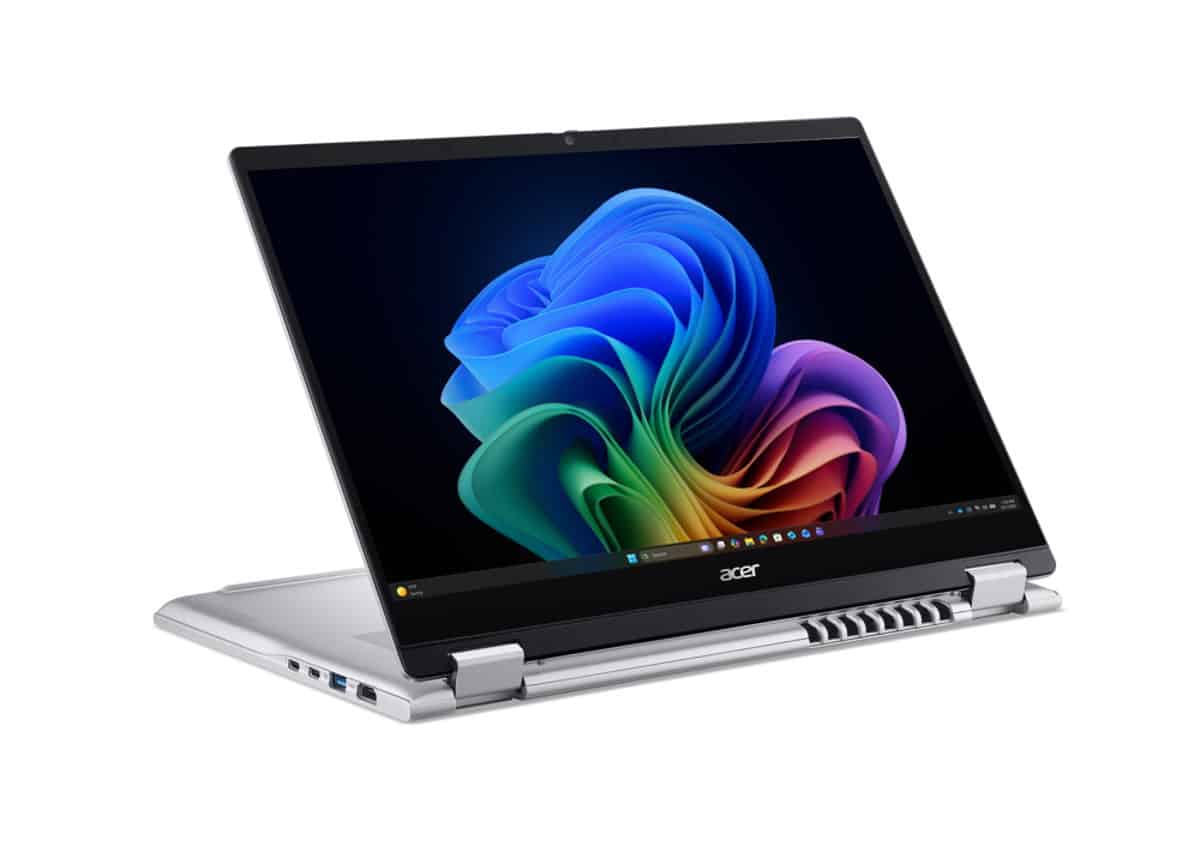
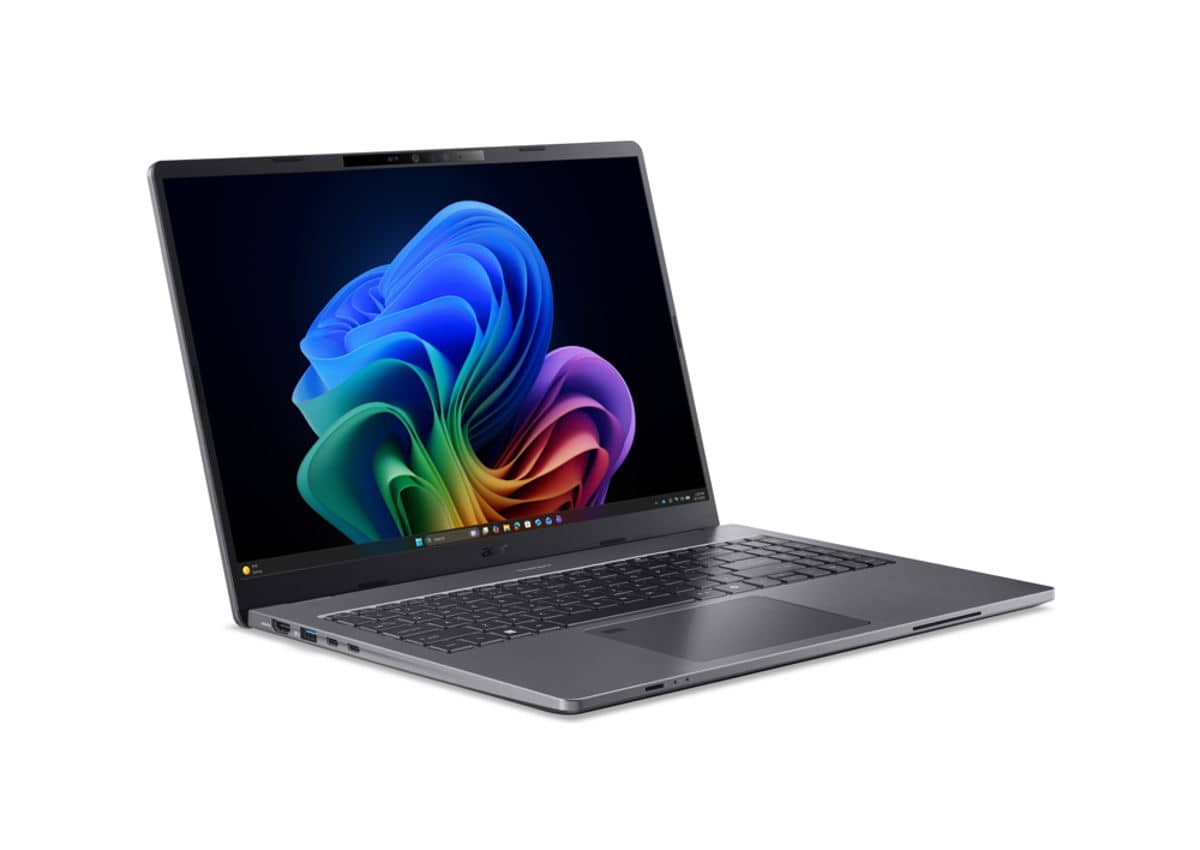
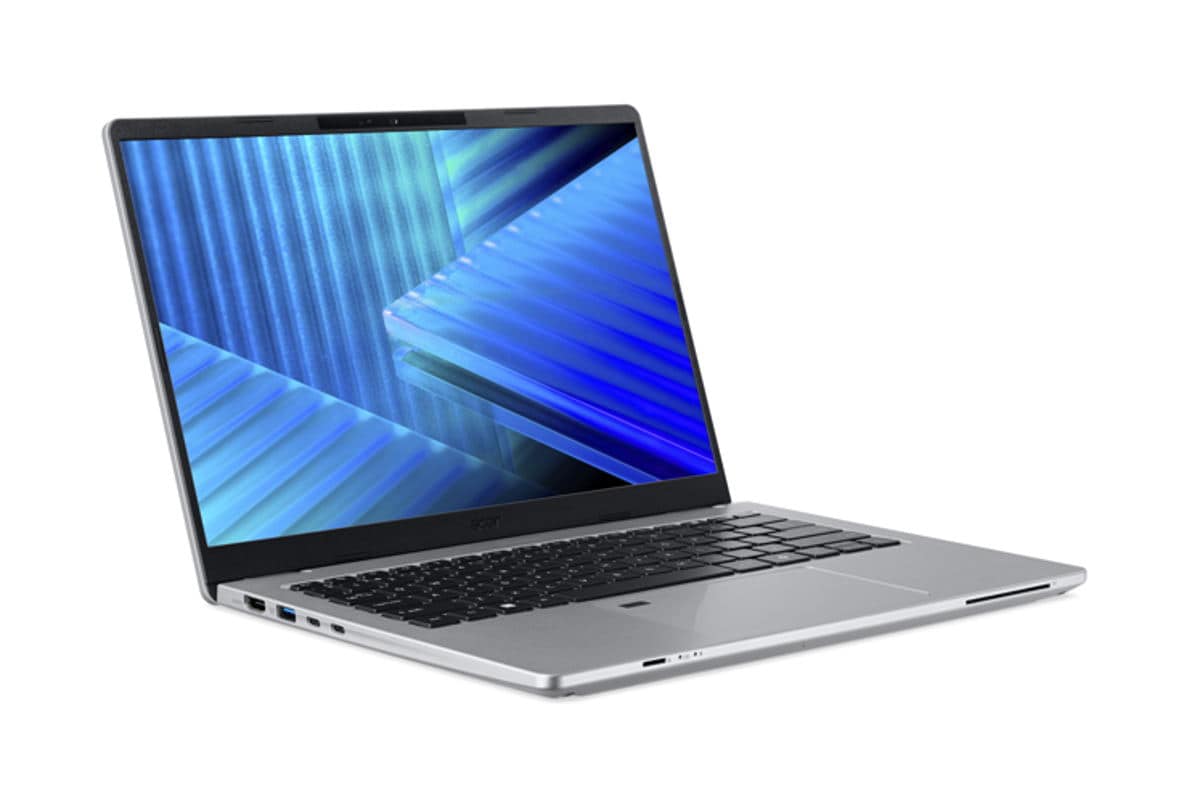
If you are eyeing a business laptop that packs AI features, Acer may have just dropped something that you might want to take a look at. Acer’s new TravelMate Copilot+ PCs lineup includes the TravelMate P4 14 AI, P4 Spin 14 AI, P2 16 AI, and P2 14 AI, which will run on Intel Core Ultra Series 3 processors with Intel vPro.

Display, design, connectivity, and productivity features

Speaking of the design, all the Travelmate laptops are designed with a focus on portability and connected productivity. The TravelMate P4 models come with a lightweight aluminum chassis, Wi-Fi 7 connectivity, and Thunderbolt 4 ports, which balance performance with mobility. Display options include WUXGA or a higher resolution 3K panel with 2880×1800 resolution and full sRGB color coverage.

Both displays use a 16:10 aspect ratio to provide more vertical workspace, and they support multiple 4K external displays through dual USB-C ports and HDMI. The Spin model adds a 360-degree hinge, touchscreen support, and a built-in stylus for tablet-style use.

Image credit: Acer

Meanwhile, the TravelMate P2 14 AI and P2 16 AI focus on productivity and battery life. They feature WUXGA IPS displays with narrow bezels, optional LTE connectivity for remote work, and rapid charging that reaches 50 percent in about 30 minutes. Not to forget, the new laptops are also MIL-STD-810H certified for durability and available in TCO-certified configurations for sustainability goals.

AI and security features

Acer has also integrated AI features in these laptops, such as Acer PurifiedVoice, which uses AI noise reduction to improve call audio. Meanwhile, Acer PurifiedView enhances video clarity during meetings. Additionally, Acer TravelMateSense software helps optimize battery performance, and fast charging can bring batteries to about 80 percent within an hour.

Apart from hardware and AI features, the new Copilot+ PCs include Microsoft’s Secured-core PC protections, a discrete Trusted Platform Module, fingerprint sensors, and optional features such as Acer’s Chassis Intrusion Alarm, which alerts users if the device casing is opened. Acer has also integrated the lineup with Commercial BIOS and Acer Office Manager tools designed to simplify fleet management for organizations that oversee large device deployments.

Availability

Acer says that these laptops will be available in North America from June 2026, in EMEA from June 2026, and in Australia from May 2026. Moreover, it’s worth noting that the exact specifications, prices, and availability of these laptops will vary by region. 

In other news, laptop prices could rise by up to 40% as hardware costs continue to increase.

Mozilla Delays End of Firefox Support on Windows 7 Again

Mozilla has announced that it will extend support for Firefox 115 ESR once again, giving users on older operating systems more time to continue using the browser securely.

The extended support release (ESR) version of Firefox was originally scheduled to reach end-of-life in February 2026. However, Mozilla has now pushed the deadline back to August 2026, providing an additional six months of security updates.

The decision mainly affects users running older platforms such as Windows 7, which no longer receive official operating system updates.

Firefox Remains One of the Last Browsers for Older Operating Systems

Mozilla explained that a significant number of users still rely on unsupported operating systems. Because of this, the organization decided to maintain Firefox 115 ESR as a secure browsing option for those systems.

Currently, Firefox is one of the few major browsers that still works on legacy platforms like Windows 7. Most competing browsers have already ended support for these operating systems.

Firefox 115 ESR also continues to support older macOS versions, including macOS 10.12, macOS 10.13, and macOS 10.14.

Mozilla Still Encourages Users to Upgrade

Although support has been extended, Mozilla continues to recommend that users upgrade to modern operating systems whenever possible.

Upgrading allows users to receive the latest Firefox versions with new features, performance improvements, and ongoing security updates. In most cases, this means moving to Windows 10 or later, or macOS 10.15 and newer.

Mozilla also noted that it will review the situation again before August 2026, which means the support window could potentially be extended once more if many users still depend on the ESR version.

New Firefox Updates and Future Plans

While Firefox 115 ESR continues serving older platforms, the main Firefox release channel keeps receiving updates. Mozilla recently released Firefox 148.0.2, which addresses several bugs and stability issues.

Looking ahead, Mozilla may also introduce a redesigned user interface known internally as Nova.

Meanwhile, other browsers are also evolving. For example, Microsoft is currently developing a new feature for Edge that will allow users to create desktop shortcuts for individual browser profiles.

Via Neowin

Ex-Windows Boss Praises MacBook Neo, Says Microsoft Was “Early” on ARM PCs

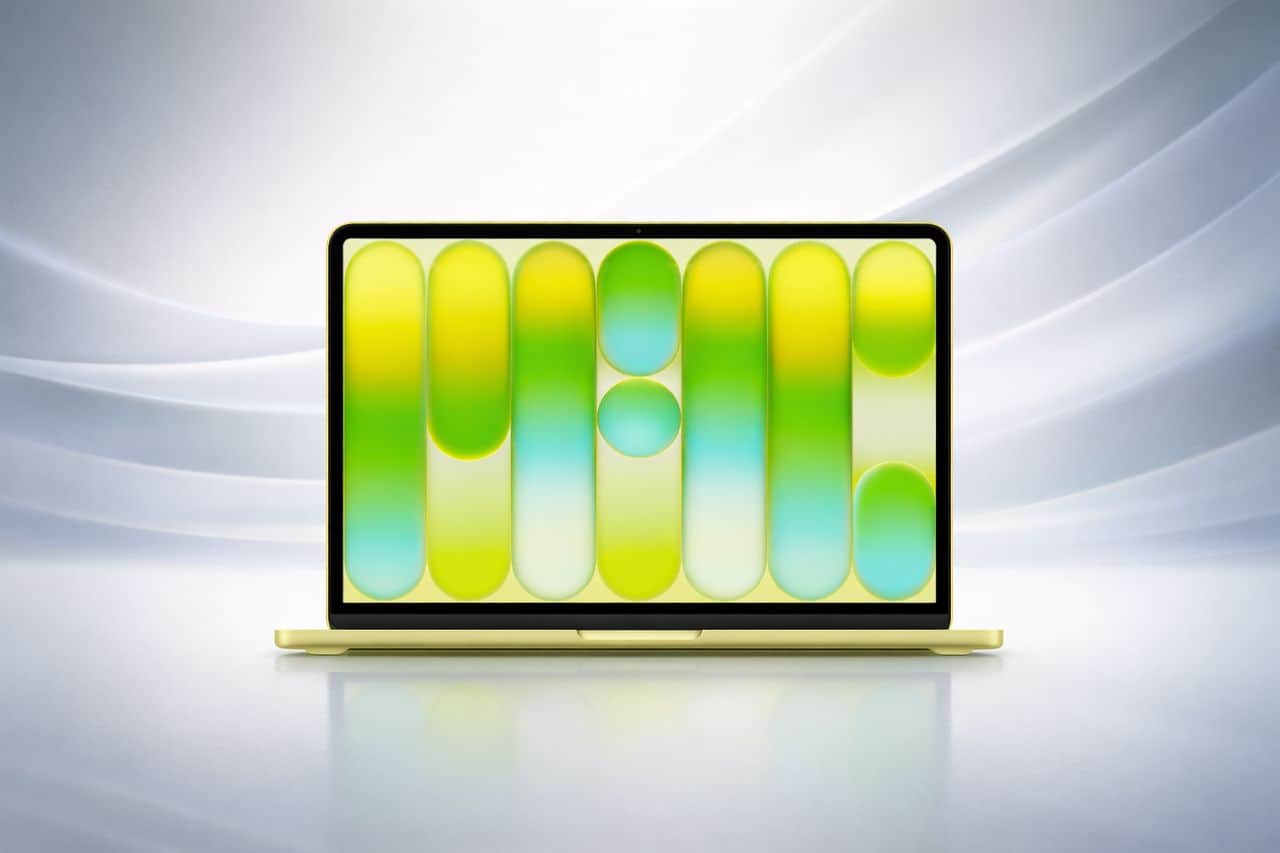
Apple’s new MacBook Neo is drawing attention not only for its performance and design, but also for what it represents in the evolution of ARM-based computing. The device recently earned praise from former Microsoft Windows chief Steven Sinofsky, who suggested the laptop reflects a strategy Microsoft once considered pursuing.

Apple has prominently featured Microsoft Office in promotional materials for the MacBook Neo, positioning the device as a productivity-focused laptop for professional workloads. The approach highlights Apple’s growing confidence in ARM-based systems as capable replacements for traditional x86 PCs.

Sinofsky Reflects on Microsoft’s Original ARM Strategy

Steven Sinofsky led Microsoft’s Windows division from 2009 to 2012 and oversaw the launch of Windows 8 and the original Surface RT. During his tenure, he strongly supported the idea that Windows should eventually transition away from x86 processors toward an ARM-based architecture.

Reflecting on Apple’s new device, Sinofsky said the MacBook Neo reminded him of the long-term direction he had envisioned for Windows and Surface. According to comments reported by Windows Central, Microsoft originally explored the possibility of shifting its ecosystem toward ARM hardware rather than maintaining it as a secondary platform.

Resistance From Developers and the Legacy App Model

At the time, however, the proposal faced resistance from both developers and users who relied heavily on existing Windows applications built for x86 systems. The legacy Windows software model created challenges for security, efficiency, and power consumption on newer mobile-focused hardware.

Sinofsky argued that the traditional Windows app ecosystem made it difficult to optimize devices designed for battery-efficient ARM processors. He suggested a cleaner platform could have enabled Microsoft to build laptops, desktop all-in-ones, and cellular-connected devices powered entirely by ARM chips.

Windows RT and the End of the Long-Term Vision

Windows RT represented Microsoft’s first attempt to bring that vision to market, but adoption struggled due to limited application compatibility and confusion among users. Sinofsky departed Microsoft shortly after the launch of Windows 8, ending his ability to continue pushing that strategy internally.

Looking back, he believes that if Microsoft had continued along that path, the company might have achieved a position similar to Apple’s with the MacBook Neo within a few years.

ARM Competition Continues to Intensify

Recent performance comparisons show how far ARM computing has progressed across the industry. Early benchmarks suggest that Qualcomm’s upcoming Snapdragon X2 Elite Extreme processor can compete with some Apple silicon configurations, though it still trails certain M5-based systems in raw performance.

Despite the challenges that followed Windows RT and Windows 8, Sinofsky praised the team behind that release. He argued the project delivered a level of innovation rarely seen in a single Windows version.

According to him, the strategy the team pursued at the time may have arrived too early for the market, but it was not fundamentally flawed.

AI-Written Windows 11 Debloat Script Sparks Debate Over Performance Gains

Microsoft continues to push artificial intelligence features across its ecosystem, even after reports that the company was stepping back from its “AI Everywhere” messaging. Recently, the company introduced Copilot Tasks and also demonstrated the Ask Copilot feature for Windows 11.

As AI integration expands, some users have started experimenting with ways to remove these additions from their systems. One recent example involves an AI-generated script designed to debloat Windows 11.

AI-Generated Windows Debloating Script Sparks Debate

A Reddit post highlighted by Neowin gained attention after a user shared a PowerShell script created with the help of AI tools. The script reportedly removes several background processes from Windows 11 in an attempt to improve system performance.

According to the user, the script was generated using AI assistance and information gathered from YouTube tutorials. After running the script, the user claimed their system showed improved responsiveness.

The post also included Task Manager screenshots indicating that around ten background processes had been removed after running the script.

Performance Improvements Remain Unclear

Despite the claims, the evidence presented raised questions among other users. The screenshots shared in the post appeared to show higher CPU usage on the modified system compared to the original state.

The debloated system reportedly showed around 10 percent CPU usage, even though the user stated that performance had improved.

The hardware involved also added to the skepticism. The system used an AMD Ryzen 9 5950X processor, a high-end CPU that typically handles background processes without noticeable impact on everyday workloads.

Critics pointed out that removing only a small number of background services rarely results in meaningful performance gains on modern hardware.

Risks of AI-Generated Scripts

Beyond the debate about performance benefits, the discussion also highlighted potential risks. Running scripts generated by AI tools can introduce stability issues if the commands remove essential Windows components or system services.

AI-generated code can occasionally misinterpret instructions or produce incomplete scripts. When executed without proper review, such scripts may delete important files, disable core features, or create unexpected system behavior.

For that reason, many experts recommend avoiding scripts that modify operating system components unless they are fully understood and verified.

Growing Interest in Windows Debloating

The Reddit discussion reflects a broader trend among some Windows users who prefer leaner systems with fewer background services. Third-party debloating tools and scripts have existed for years, but AI tools now make it easier for users to generate custom scripts.

However, the situation also illustrates the potential downside of automated code generation when used without technical knowledge or proper verification.

While AI tools can help automate complex tasks, modifying operating system processes remains a sensitive operation that can affect stability and security.

In other Microsoft-related developments, the company recently introduced faster file search capabilities for Office web apps.

Microsoft Quietly Deletes Posts With “This Is an Xbox” Tagline as Focus Shifts to Project Helix

Yesterday, at GDC 2026, Microsoft officially shared a few details about the next-generation Xbox console, Project Helix. With that, the company appears to be shuttering another chapter of its gaming strategy that it launched back in 2024. Here, we are talking about the “This Is an Xbox” marketing campaign, which, according to Game Developer, is being taken down from official posts on the Xbox Wire blog [link1, link2 (tag)] (via Wccftech).

The rise and fall of the “This Is an Xbox” marketing campaign

When the company first launched the campaign under the leadership of recently retired Phil Spencer and the then Xbox CEO, Sarah Bond, it said that almost any device could be an Xbox, and not just consoles. Smart TVs, handheld devices, VR headsets, and smartphones were all presented as gateways to the Xbox ecosystem. That messaging may have given a hint to players that Xbox consoles weren’t the priority for the company anymore.

Despite the goal of putting the Xbox front and center in players’ living rooms, the campaign was mocked heavily online, which reportedly caused internal conflict. A report by The Verge from last month hinted that the ad campaign had offended Xbox employees, as they felt the message diminished the importance of Xbox consoles at a time when its sales were under pressure.

Xbox consoles back in focus under new CEO, Asha Sharma

Now that the next-gen Xbox console, codenamed Project Helix, has officially entered the scene under the leadership of new Xbox CEO Asha Sharma, Microsoft appears to be hinting at a renewed focus on Xbox consoles. A few days back, Satya Nadella also reaffirmed to Xbox developers that the gaming platform will continue to get support from Microsoft, as it remains one of the fundamental pillars of the company.

The next-generation console, expected to arrive later next year, will use AMD’s custom chip and feature next-generation DirectX and FSR Diamond, hinting at strong performance, which has been hinted by a prominent industry leaker.

Not to forget, the company has also confirmed that Xbox Mode will release on Windows 11 PCs in select markets next month, which is Microsoft’s effort to unify the Xbox and Windows experience. As Sharma noted in the teaser post of Project Helix, the next-gen Xbox console will allow players to play both Xbox and PC games. Last but not least, Microsoft, at GDC 2026, also hinted that backward compatibility will make a return this year. You can read more about it in our separate coverage.

Article feature image source: Microsoft | via: IGN

Peral Abyss Shares Crimson Desert’s System Requirements and Performance Specs

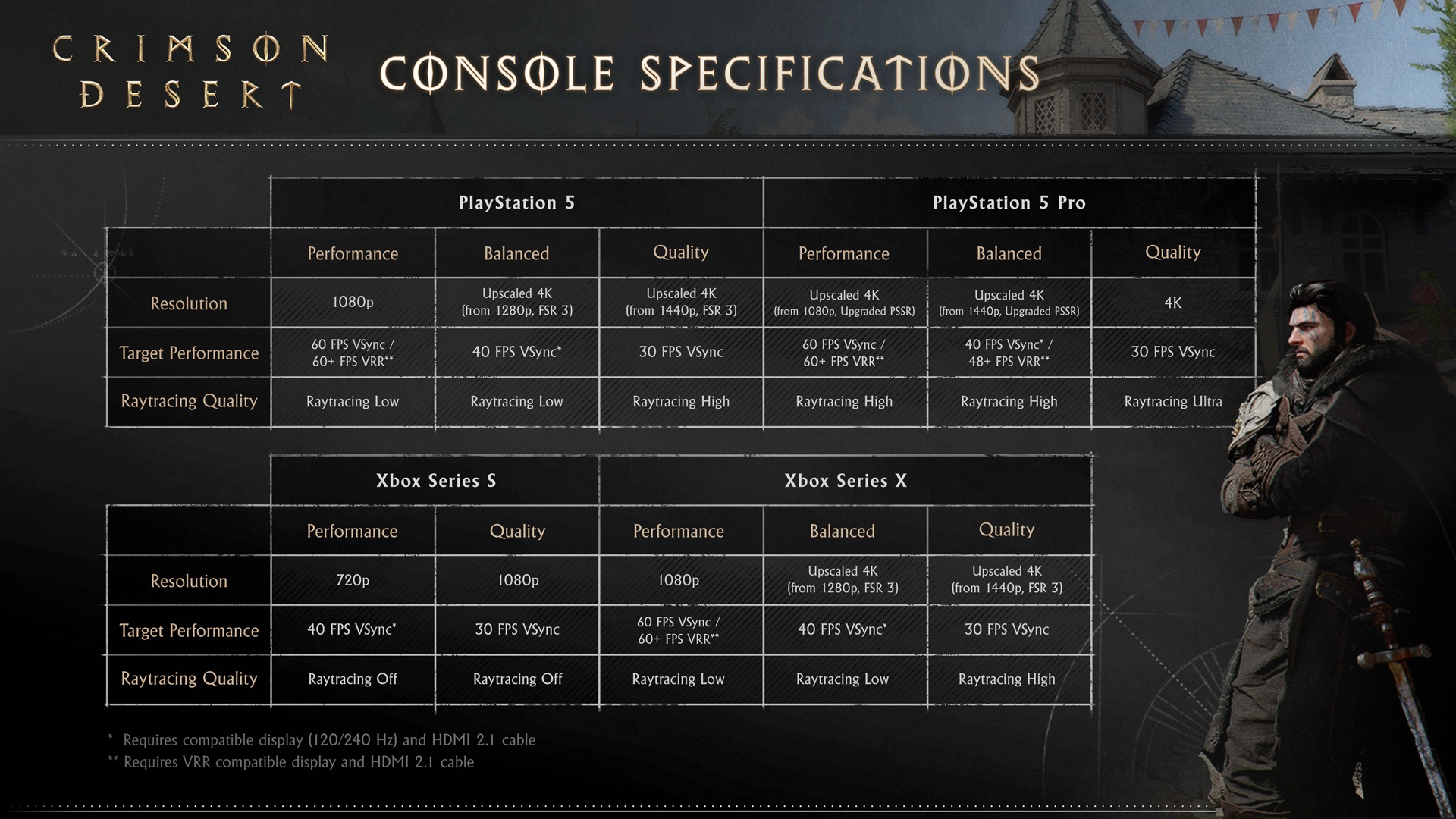
Pearl Abyss is all set to release Crimson Desert on Xbox Series X|S, PC via Steam, and handheld devices like the ROG Xbox Ally series on March 19, 2026. Ahead of the release, the studio has quietly shared the game’s specifications for the Xbox Series X|S, PC, and the ROG Xbox Ally.

Xbox Series X should offer a similar experience to PS5 when in Crimson Desert

On Xbox Series X, you can expect performance as on PS5. The console will support all three, Performance, Balanced, and Quality modes, which allow players to prioritize buttery-smooth gameplay or improved visuals. Performance mode targets higher frame rates with lower rendering demands, while Balanced and Quality modes shift toward sharper visuals and ray tracing improvements.

The Xbox Series S, however, offers fewer options for players, as it only supports Performance and Quality modes. Performance mode prioritizes smoother gameplay but lowers resolution to 720p. Quality mode improves visual clarity but drops the frame rate target.

Image credit: Pearl Abyss

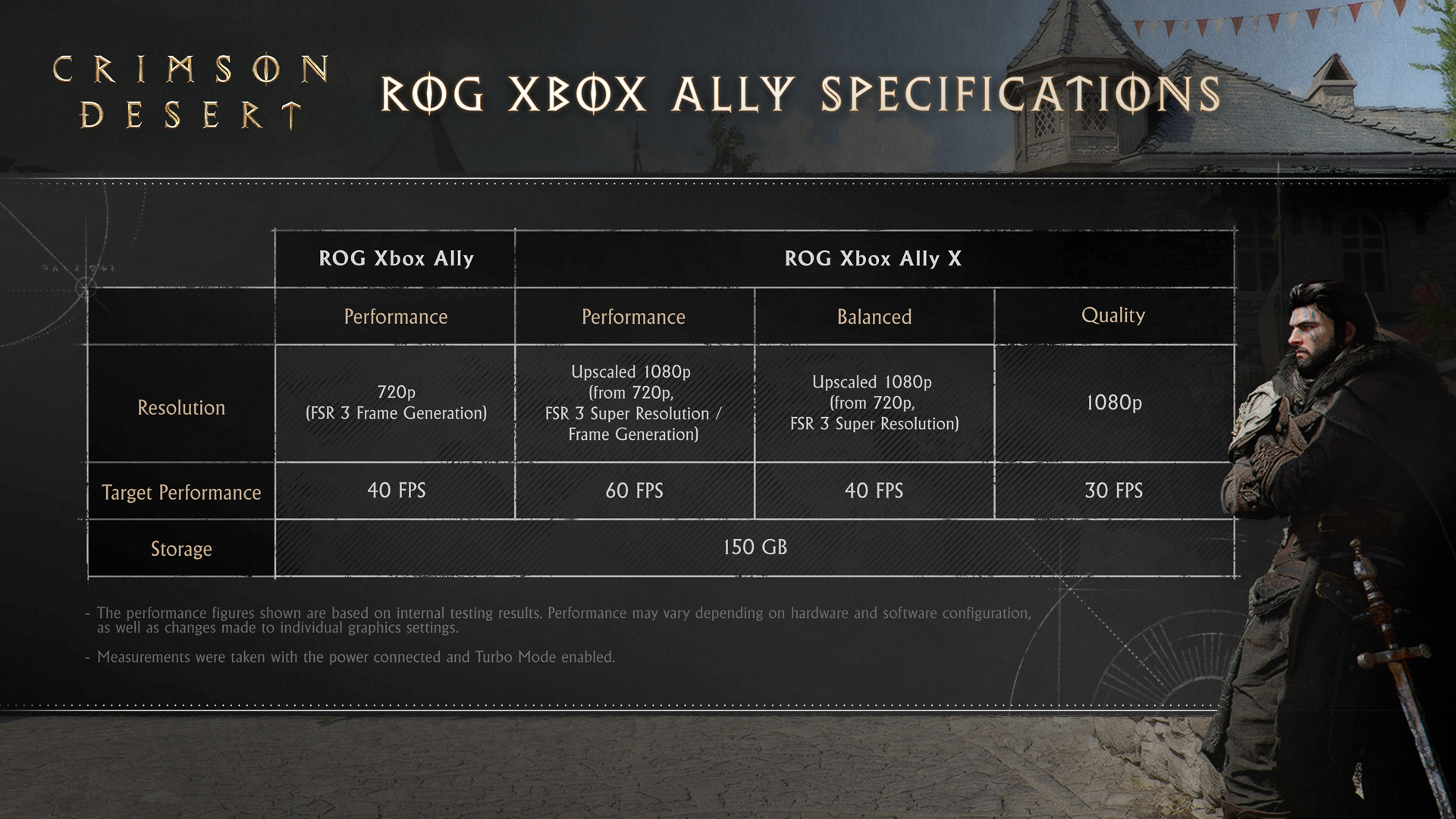
If you prefer playing Crimson Desert on handhelds like the standard ROG Xbox Ally, it will run primarily in a Performance mode, while targeting 720p resolution at around 40 FPS. The beefier ROG Xbox Ally X expands those choices, as it adds Balanced and Quality modes alongside Performance. Speaking of storage requirements, both ROG Xbox Ally devices require 150GB of storage, hinting at the ever-growing size of modern open-world titles.

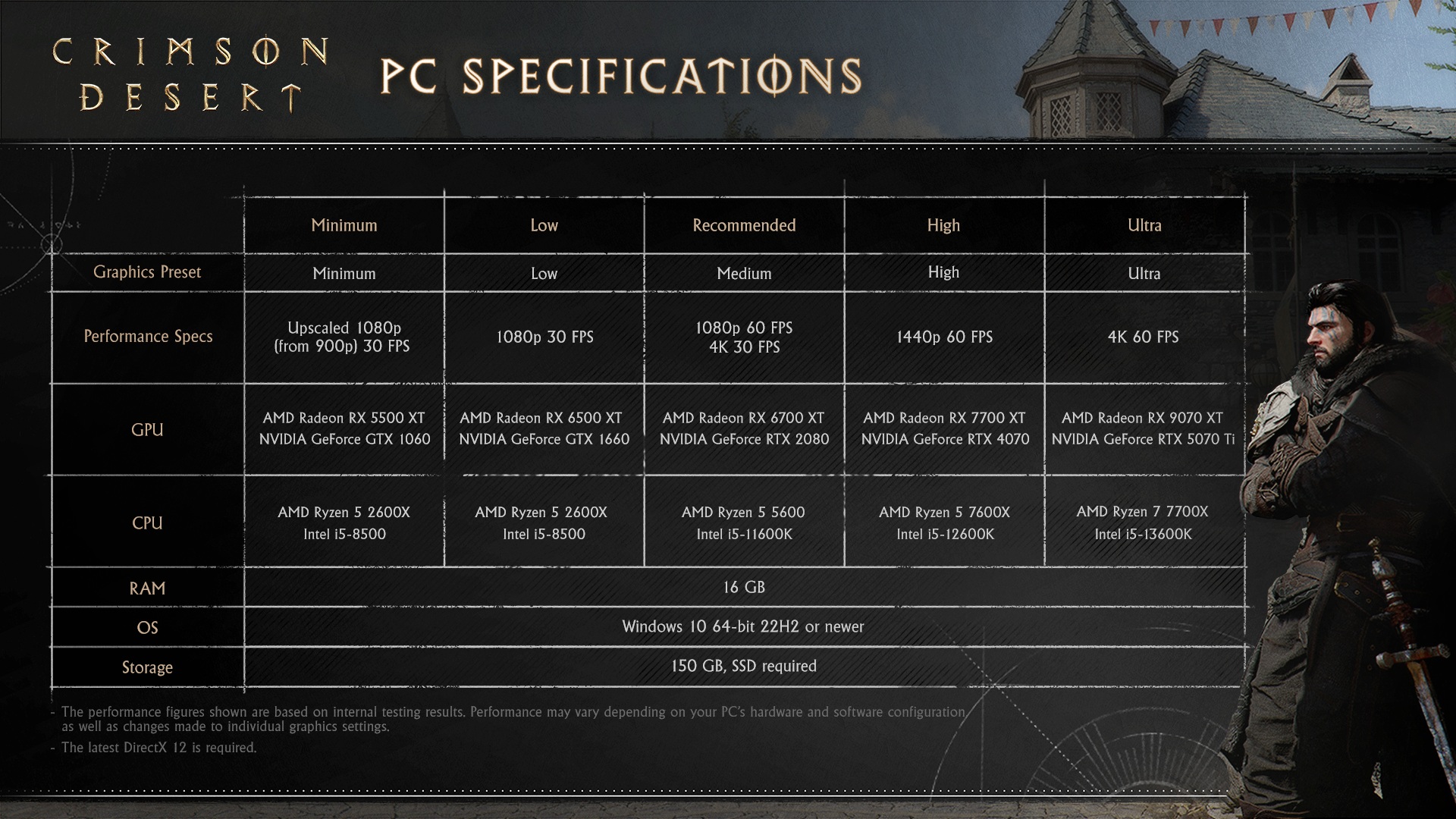
PC players, meanwhile, will need increasingly powerful hardware depending on their desired settings. Pearl Abyss says that players using an Nvidia GeForce GTX 1060 or AMD Radeon RX 5500 XT, paired with an Intel Core i5-8500 or AMD Ryzen 5 2600X, should be able to run the game at 30 FPS.

To play the game at 1080p at 60 FPS, or even 4K at 30 FPS, the studio recommends a system featuring an Nvidia GeForce RTX 2080 or AMD Radeon RX 6700 XT. That setup should be paired with a higher-end processor, such as the Intel Core i5-11600K or AMD Ryzen 5 5600, to keep performance stable during longer sessions. Not to forget, the upcoming RPG is expected to showcase AMD’s Ray Regeneration tech, as part of the company’s FSR Redstone feature set. The company has also bundled the title as a new promotion relating to high-end Ryzen processors, Radeon graphics cards, and more.

Playing the game at Ultra settings, as expected, will be an expensive affair

Running Crimson Desert in 4K at 60 FPS with Ultra settings pushes the requirements into far more expensive territory. According to the official specifications, players will need a GeForce RTX 5070 Ti or Radeon RX 9070 XT, alongside a powerful CPU like the Intel Core i5-13600K or AMD Ryzen 7 7700X. Pearly Abyss notes that to run Crimson Desert on your Windows PC, you should be good with 16GB RAM and at least 150GB of free SSD. OS requirements include Windows 10 64-bit 22H2 or newer.

That being said, these specs offer an early glimpse at what players might expect. Performance could still change with optimization patches closer to launch. All that said, Crimson Desert is looking to offer a large open world and cinematic combat experience to players.

Edge Update Will Let Users Create Desktop Shortcuts for Specific Browser Profiles

Microsoft continues to refine its Edge browser with small usability improvements, and a new feature currently in development aims to make profile management easier.

According to Microsoft 365 Roadmap entry 558311, Microsoft Edge will soon introduce a native option that allows users to create desktop shortcuts for individual browser profiles.

Edge will add profile desktop shortcuts on Windows

The upcoming feature introduces a new toggle in Edge profile settings that lets users create or remove a profile-specific desktop shortcut directly from the browser.

Once enabled, the shortcut opens Edge using the selected profile automatically. This approach allows users to launch separate browsing environments without switching profiles manually after opening the browser.

The feature will be available only on Windows devices, with the rollout expected to begin in May.

Simplifying access for multiple browser profiles

At the moment, Edge does not offer a built-in method for creating profile-specific desktop shortcuts. Users typically rely on manual workarounds or command-line shortcuts if they want separate launch icons for different profiles.

The new toggle simplifies the process and makes it easier for people who rely on multiple profiles. This includes users who keep work, personal, or project-specific browsing environments separated.

Opening the correct profile directly from the desktop can reduce friction for users who frequently switch between accounts during the day.

Part of ongoing Edge usability improvements

While the feature may seem minor, it reflects Microsoft’s broader focus on incremental usability improvements across the browser.

Microsoft has recently tested several interface changes in Edge, including a redesigned permissions page and a new button designed to make it easier to set Edge as the default browser.

At the same time, the company has also removed certain features from the browser. One example is the Collections feature, which Microsoft recently discontinued in Edge.

The upcoming profile desktop shortcut option shows that the company continues refining everyday workflows while adjusting which tools remain part of the browser experience.

Via Neowin

Resident Evil Veteran Suggests Non-Scary Mode for Requiem

Resident Evil Requiem has quickly become one of Capcom’s biggest recent hits, surpassing 5 million copies sold worldwide. The strong launch has encouraged the developers to begin working on additional story content, suggesting that the company plans to expand the game further with future updates.

The game continues the series’ tradition of blending survival horror with action gameplay. Players explore dangerous environments, solve puzzles, and face intense encounters designed to create constant tension.

Hideki Kamiya suggests a “non-scary” mode

While the horror focus is central to the experience, one veteran creator has proposed an unusual idea.

According to Push Square, Hideki Kamiya suggested adding a “non-scary” mode to Resident Evil Requiem. Kamiya previously worked on Resident Evil 2 and later became known for creating titles such as Devil May Cry, Bayonetta, and Viewtiful Joe.

While watching gameplay with colleagues at Clovers, Kamiya explained that he would personally prefer an option that reduces the horror intensity. He said he mainly wants to enjoy the puzzles and combat without dealing with the game’s more frightening elements.

Accessibility options could broaden the audience

Resident Evil Requiem was designed primarily as a horror-focused action game, meaning fear and tension are core parts of the experience.

However, Kamiya’s suggestion highlights a growing trend toward accessibility options in modern games.

Some horror titles already offer features that reduce the intensity of enemy encounters. Games such as SOMA and Crow Country include modes that remove or limit enemies, allowing players to focus more on exploration and story rather than survival mechanics.

A similar approach in Resident Evil Requiem could allow players who dislike heavy horror elements to still experience the game’s puzzles, environments, and narrative.

Unclear if Capcom will consider the idea

For now, the idea remains purely a suggestion. Capcom has not indicated that it plans to introduce a non-scary mode, and the Resident Evil series has historically leaned heavily into its survival horror identity.

Still, the discussion reflects how modern games increasingly experiment with optional modes that tailor the experience to different types of players.

Capcom is also seeing strong momentum across its portfolio. The company recently confirmed that the Pragmata demo has passed two million downloads, showing strong interest in its upcoming sci-fi action title.

Microsoft Adds Faster File Search to Word, Excel, and PowerPoint Web Apps

If you ever felt it was daunting to search your files in Office web apps, the latest update from Microsoft will ease that headache a little. In the latest Tech Community blog post, Microsoft announced that it is rolling out a new feature to make searching your Word, Excel, and PowerPoint files on the web faster and more intuitive.

Searching files inside Word, Excel, and PowerPoint web just got easier

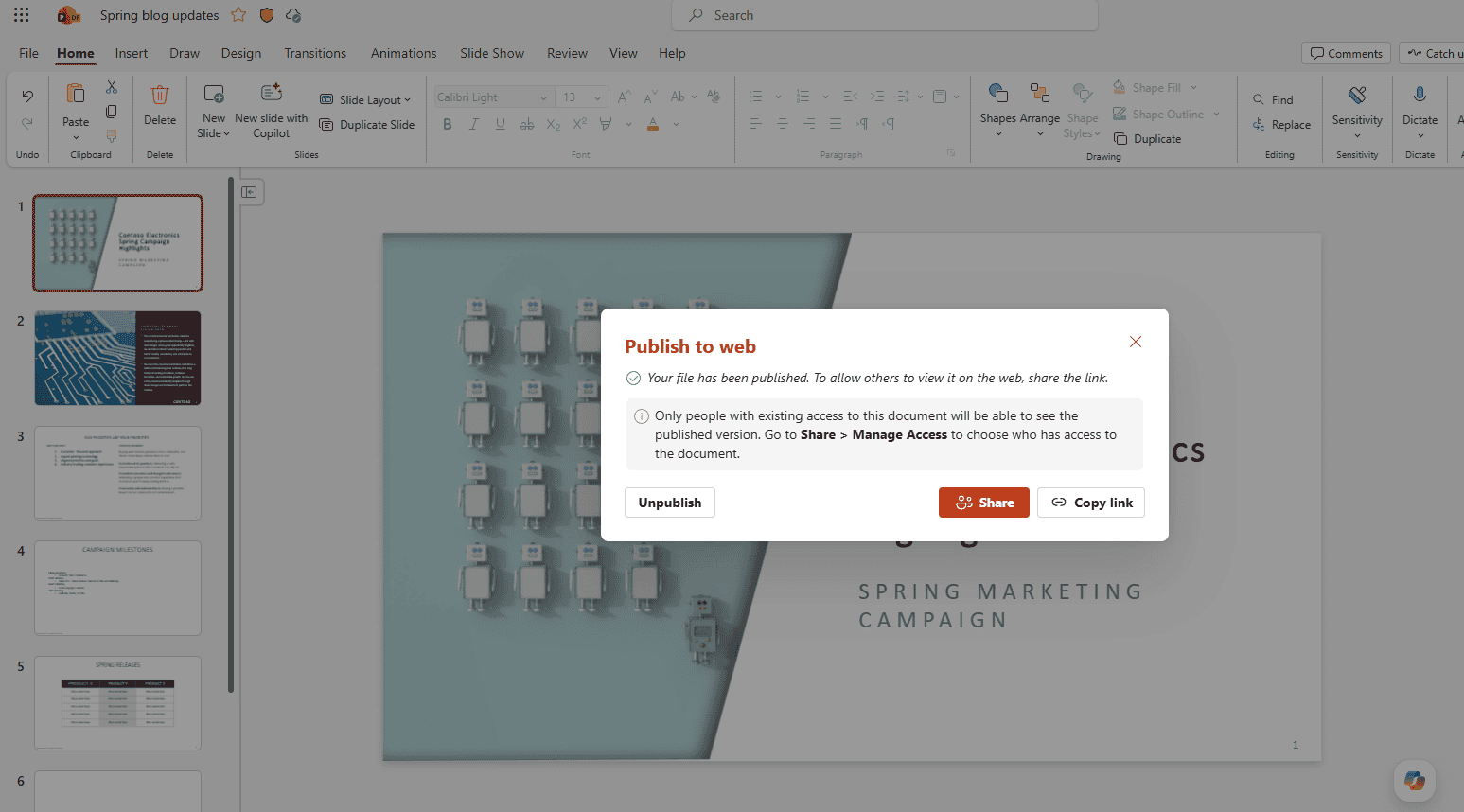
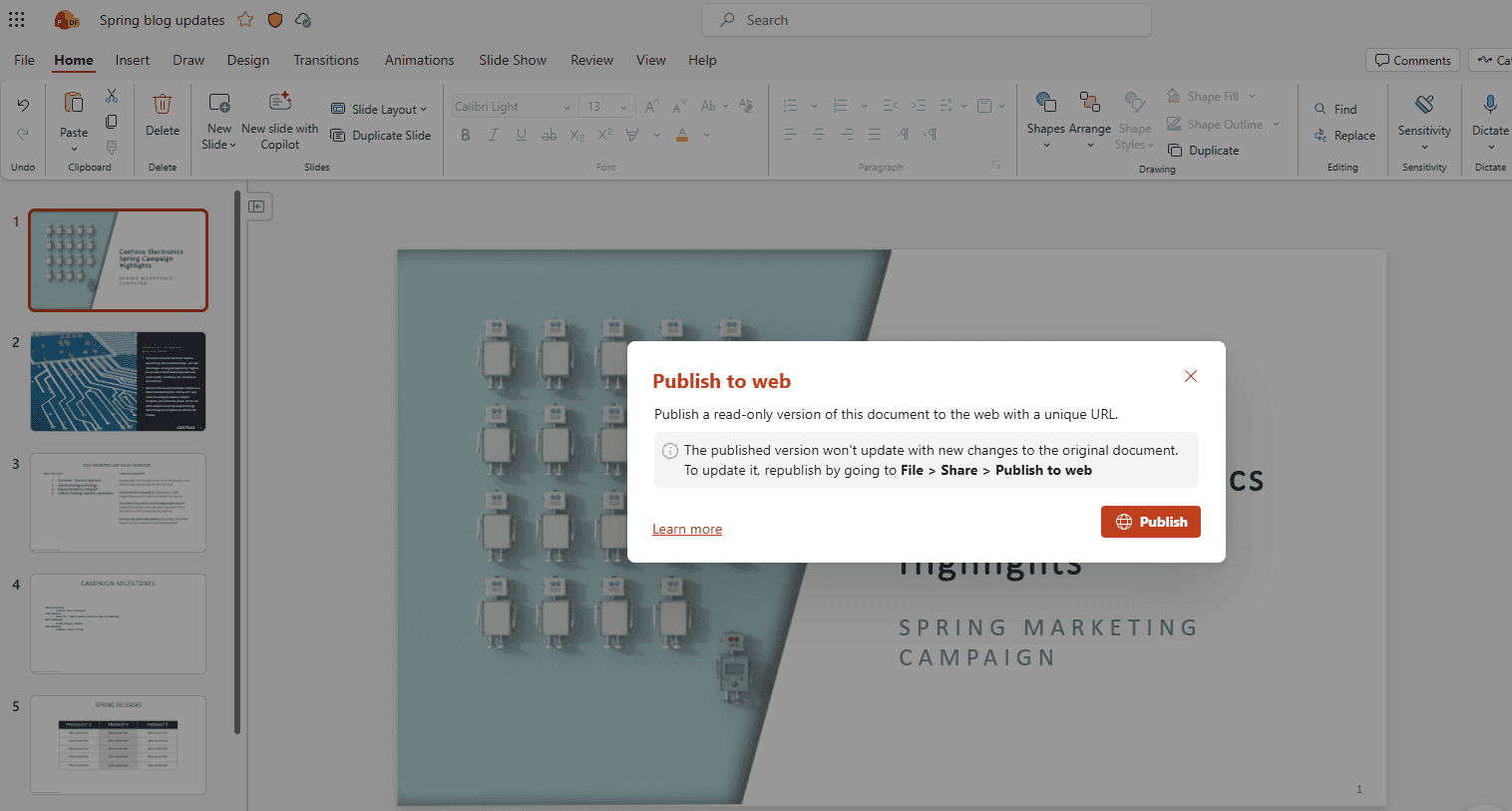
As part of the update, all three Office apps now allow you to search for files directly from the Search box in the header of each web app. As you type, the relevant results will be shown in a handy drop-down, as seen below.

Image credit: Microsoft

Microsoft says that the new feature works across the web app homepages: PowerPoint.cloud.microsoft, Word.cloud.microsoft, and Excel.cloud.microsoft. When you click the files from the drop-down, they immediately open. This cuts the hassle of manually looking for files from the apps’ homepage.

Tips & availability

Microsoft says that if you haven’t worked on a file recently, initial searches may not return results. However, the company suggests opening an existing file and refreshing the page, then typing the filename or even metadata such as the author’s name to trigger suggestions. The update will benefit those who are juggling multiple projects or collaborating on shared files.

The search feature is currently rolling out to all commercial Microsoft 365 users of Word, Excel, and PowerPoint for the web. Speaking of Microsoft apps, let’s not forget that the company has announced that it will stop spamming Teams users’ inboxes with recording expiration emails starting this June.

Microsoft Brings Fireworks AI to Foundry to Accelerate Open Model Deployment

Organizations are increasingly adopting open AI models to gain greater control over performance, costs, customization, and compliance. However, fragmented tools and complex infrastructure still make it difficult for many teams to deploy and scale these models.

Microsoft aims to simplify this with its Foundry platform. The company has now announced the public preview integration of Fireworks AI with Microsoft Foundry, bringing high-performance open-model inference capabilities directly into Azure.

Microsoft Foundry aims to unify the AI development lifecycle

Microsoft Foundry is designed as a centralized control plane for enterprise AI workloads. The platform combines model management, deployment, evaluation, agent development, and governance features in a single environment.

The goal is to help organizations move from experimentation to production faster while maintaining consistent infrastructure and operational oversight. Foundry also includes enterprise-grade capabilities such as governance controls, observability tools, and security features to support compliance at scale.

Fireworks AI integration brings high-throughput inference

The new integration adds Fireworks AI’s inference infrastructure to the Foundry ecosystem. Fireworks AI specializes in optimized serving stacks designed to run large AI models efficiently.

According to Microsoft, Fireworks AI already processes more than 13 trillion tokens each day and handles roughly 180,000 requests per second. Its infrastructure can generate more than 1,000 tokens per second on large models, making it suitable for demanding enterprise workloads.

Through Microsoft Foundry, developers can access Fireworks AI capabilities directly from Azure endpoints. This allows organizations to evaluate and deploy models without building their own custom serving infrastructure.

Developers can access several major open models

The integration gives developers access to a growing catalog of open models through the Foundry platform. Supported models currently include:

  • DeepSeek V3.2
  • OpenAI gpt-oss-120b
  • Kimi K2.5
  • MiniMax M2.5

These models can be evaluated and deployed within the same environment used for enterprise management and governance.

The system also supports bring-your-own-weights (BYOW), allowing teams to deploy custom or fine-tuned models alongside the hosted catalog.

Flexible deployment options for experimentation and production

Developers using Fireworks AI within Foundry can choose between different deployment models depending on workload requirements.

For early testing and experimentation, serverless pay-per-token inference allows teams to run models without reserving dedicated infrastructure. This approach helps developers quickly evaluate different models and performance configurations.

For production workloads, Microsoft offers provisioned throughput units (PTUs). These provide predictable performance levels and consistent capacity for applications that require stable response times and throughput.

Part of Microsoft’s broader open AI strategy

The Fireworks AI integration reflects Microsoft’s broader strategy to support the full lifecycle of open AI models within Azure. Instead of forcing organizations to manage multiple tools and infrastructure layers, the company is positioning Foundry as a single platform for evaluating, deploying, and operating AI systems.

By combining high-performance inference with enterprise governance and development tools, Microsoft hopes to make it easier for organizations to build scalable AI applications using open models.

The company says the approach reduces operational complexity while giving developers flexibility to experiment with different models and deployment strategies.

AI ecosystem competition continues to accelerate

The Foundry update comes amid rapid developments across the AI ecosystem.

Microsoft recently announced Wave 3 of Microsoft 365 Copilot, introducing new agentic AI capabilities designed to automate tasks across enterprise workflows.

Meanwhile, Google has expanded Gemini AI features across its Workspace productivity tools, and OpenAI has launched a program offering six months of free ChatGPT Pro access to open-source developers who build using its Codex platform.

As enterprises continue exploring open models and AI infrastructure platforms, competition between major technology companies is expected to intensify.

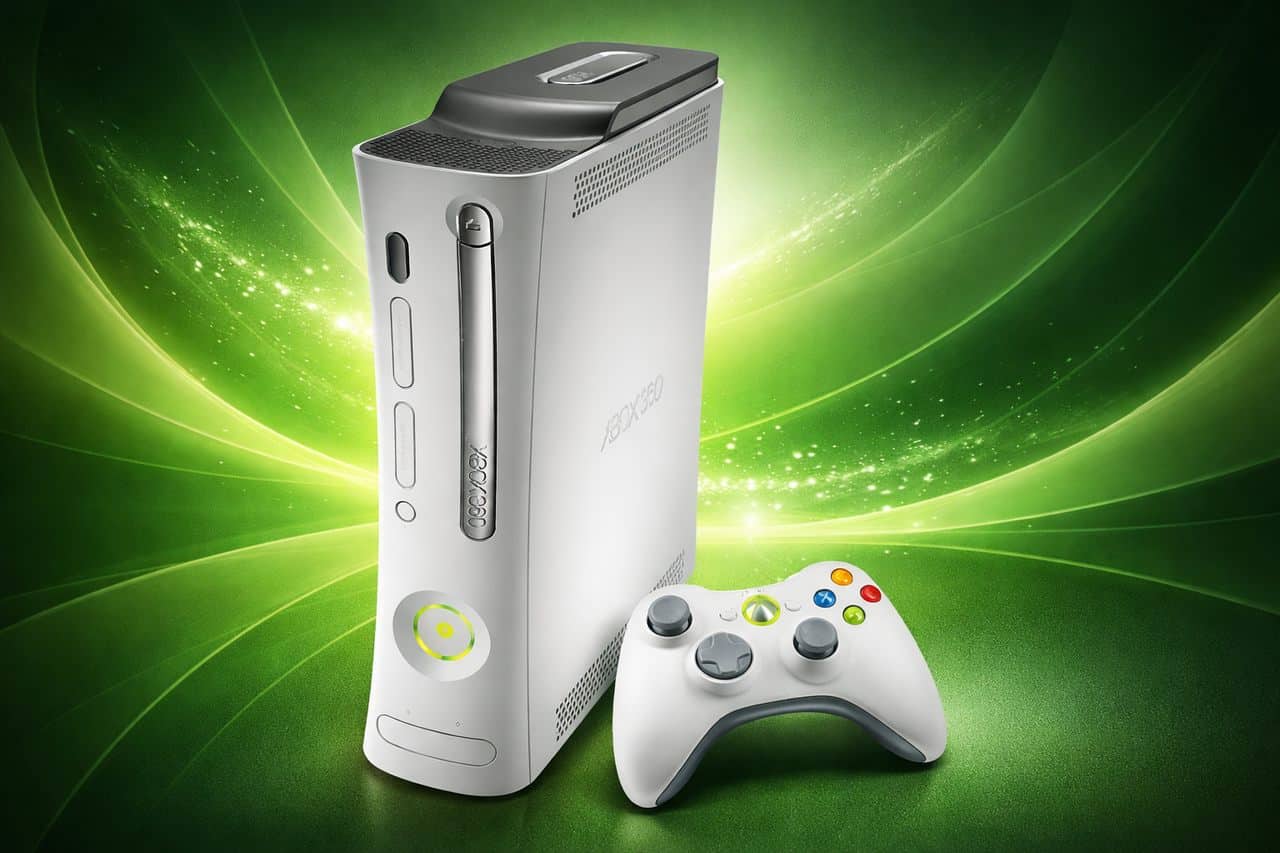
Xbox Backwards Compatibility Program Set to Return in 2026, Microsoft Says at GDC

Xbox backward compatibility has been one of the most valued features in Microsoft’s gaming ecosystem since its launch in 2015. Although Microsoft previously announced in 2021 that no new titles would be added due to licensing and legal challenges, the company has now confirmed that the program will return in some form later in 2026.

The announcement came during Microsoft’s keynote presentation at GDC 2026, where the company outlined several initiatives focused on the future of the Xbox ecosystem.

Microsoft Plans New Ways to Play Classic Xbox Games

During the presentation, Xbox VP of next generation Jason Ronald revealed that Microsoft is exploring new methods to bring classic titles back to modern platforms.

According to Ronald, the company is currently working on “new ways to play some of the most iconic games from our past.” The initiative will also align with Xbox’s upcoming 25th anniversary celebration later this year.

Microsoft reiterated its long-term commitment to preserving games across four generations of Xbox hardware. This includes the original Xbox, Xbox 360, Xbox One, and Xbox Series X|S.

The backwards compatibility program, originally launched in 2015, allowed older Xbox titles to run on newer consoles through emulation technology. The program significantly expanded over the years but eventually stopped adding new games in 2021 because of licensing limitations and technical hurdles.
Possible Expansion to Windows 11 PCs

Recent announcements at GDC suggest that the revived backwards compatibility initiative could extend beyond consoles.

Microsoft also revealed several ecosystem changes that could make this possible, including a new “Xbox mode” for Windows 11 PCs scheduled to launch next month.

The company is also developing a unified Game Development Kit (GDK), designed to simplify game development across both Xbox consoles and Windows PCs.

These developments have sparked speculation that classic Xbox and Xbox 360 games could eventually run directly on Windows 11 systems. Such a move would rely on Microsoft’s existing emulation technology, currently used to power backwards compatibility on Xbox One and Xbox Series X|S hardware.

However, Microsoft has not officially confirmed plans to bring the program to PC.

Xbox Platform Changes Announced at GDC

The renewed focus on legacy game support arrives alongside several broader changes to the Xbox platform.

Microsoft confirmed that it is working on a new console project known as Project Helix, which is described as a hybrid between a PC and a traditional console. Reports suggest the device will use an AMD system-on-chip and support technologies such as the next generation of DirectX and FSR.

Microsoft also teased an unidentified Xbox hardware device during the event, which some observers believe could be a new Xbox developer kit.

While details remain limited, Microsoft’s latest announcements indicate that the company plans to preserve access to classic Xbox titles while expanding the Xbox ecosystem across multiple devices.

As Xbox approaches its 25th anniversary, backwards compatibility appears set to remain a central part of the platform’s long-term strategy.

Via Windows Central

Sony Reportedly on Track to Launch PS6 and PlayStation Handheld in Holiday 2027

Sony’s next-generation console, PlayStation 6 (aka PS6 in short), has been all over the news since late last year. While the next-gen Xbox console has been confirmed to feature AMD’s custom SoC, Sony has been mum about PS6 all this time. However, the rumor mill is doing its job, as we keep hearing some other news about the upcoming gaming console from Sony.

PS6 and PlayStation Handheld reportedly still targeted for Holiday 2027

While previous rumors have been hinting at a possible 2028 or even 2029 launch, a latest claim by industry leaker KeplerL2 suggests that both the PS6 and a rumored PlayStation handheld are still targeting a Holiday 2027 release (via Notebookcheck). Do note that the latest claim is in line with Moore’s Law Is Dead (another tipster), who previously said that pushing the PS6 launch too far could cost Sony more than releasing it in 2027.

Here, it’s worth noting that Microsoft expects to ship alpha hardware to developers in 2027. So, we are assuming the next-gen Xbox console could be released in late 2027, if everything stays on track. So, it makes more sense for Sony to stay on the 2027 launch window than pushing it further, to avoid catching up with the intense competition with Project Helix.

Although the late launch has been linked to the memory crunch and the rising cost of internal components, it seems Sony’s and Microsoft’s plans haven’t been dented by the ongoing situation.

If KeplerL2’s claims turn out to be accurate, awaiting fans can still expect the next-gen PlayStation console and a potential new handheld device within the next 18 months. The timeline also hints that Sony may maintain competitive momentum against Microsoft’s upcoming Project Helix console.

Will the volatile market situation affect the PS5 price?

At a time when the memory market remains volatile, sticking to the original launch window may be a bold but calculated move. If you are also worried about the PS5 price hike due to the situation around internal components, fortunately, Sony has hinted that it won’t immediately hike the price of the current console. However, it plans to offset the market volatility by monetizing existing players. So, you might end up paying more for the in-game content, subscriptions, and more.

Will Sony be able to meet the 2027 window, or could unforeseen supply issues push fans to wait longer? Let us know your thoughts in the comments below.

Valve Pushes Back Against New York Loot Box Lawsuit

Valve is facing growing legal pressure over its loot box system as lawsuits emerge in the United States while a much larger case unfolds in the United Kingdom.

The company is now dealing with legal action from both the State of New York and the State of Washington. The complaints claim that loot boxes in Valve titles operate similarly to gambling mechanics because players spend money for a chance to receive rare virtual items.

The lawsuits specifically focus on several major Valve games, including Counter-Strike 2, Dota 2, and Team Fortress 2. Regulators argue that these systems encourage players to purchase randomized rewards that can later hold monetary value through resale or trading.

Valve Says Loot Boxes Are Comparable to Collectibles

Valve publicly addressed the situation in a letter posted to its New York community on Steam.

The company stated that it does not believe its loot box mechanics violate New York gambling laws. Instead, Valve compared them to physical collectible products such as baseball card packs and blind-box toys.

According to Valve, these products operate under a similar model where buyers purchase a sealed package without knowing exactly which item they will receive. Some items may be rare and therefore more valuable than others, but the purchase itself does not constitute gambling.

Valve said it has been cooperating with the New York Attorney General’s office since early 2023 in order to explain how its systems work.

Valve Says It Already Cracks Down on Skin Gambling

The company also stressed that it does not support third-party gambling websites that use Valve items or skins.

Valve stated that accounts linked to gambling operations are shut down because such activity violates the Steam Subscriber Agreement. The company added that it has issued cease-and-desist orders to several Counter-Strike skin gambling websites in the past.

According to Valve, it does not cooperate with external gambling platforms and actively works to prevent the misuse of in-game items for betting.

Proposed Changes Raise Privacy and Trading Concerns

The dispute also involves several proposed changes suggested by the New York Attorney General.

One proposal would require loot box items to become non-tradable, preventing players from selling or exchanging them through the Steam Community Market. Valve strongly opposes this change and argues that the ability to trade items is a core part of the platform’s ecosystem.

Another proposal would require Valve to collect additional user data to detect whether players are using VPN services in New York. Valve said implementing such measures would require collecting intrusive information from users worldwide and could negatively affect player privacy.

Courts Will Decide the Future of Loot Boxes

Valve said it will comply with any laws that are ultimately passed regarding loot boxes, but decided not to settle under the proposed conditions.

The company believes the suggested restrictions could damage its community and trading systems. As a result, Valve stated that the courts will ultimately determine whether its loot box mechanics violate gambling regulations.

The outcome could influence how randomized in-game rewards are regulated across the gaming industry.

In other gaming developments, Valve recently introduced its new Steam Machine Verified and Steam Frame Verified programs during GDC 2026. These certification labels aim to define performance and compatibility standards for games running on the upcoming Steam hardware platforms.

Via Windows Central

Microsoft Confirms ‘Xbox Mode’ Will Launch on Windows 11 in Select Markets This April

At GDC 2026, Microsoft confirmed that its upcoming Xbox console, codenamed Project Helix, will be powered by AMD’s custom SoC and feature multi-frame generation. Alongside that announcement, Microsoft also confirmed that it is taking its gaming expertise directly into Windows. The company has also confirmed “Xbox Mode” will roll out on Windows 11 in April in select markets.

Xbox Mode brings console experience to Windows 11, this April

As Microsoft notes, the feature will give players “a familiar full-screen and controller-optimized Xbox experience while embracing the openness of Windows.” In other words, you can switch effortlessly between productivity tasks and gaming on your Windows PCs.

With Xbox Mode, players can access these titles across devices, “whether through purchases, subscriptions like Xbox Game Pass, or from other leading storefronts.” The integration will work with Xbox Play Anywhere, so that progress, saves, and purchases carry over seamlessly between PC and console. Players no longer need to repurchase games or worry about losing hours of gameplay.

Microsoft further reports that the Xbox Play Anywhere catalog now includes over 1,500 games. That includes contributions from more than 500 development teams. The company also mentions that this cross-device commitment is part of its strategy to unify the Xbox and Windows ecosystems.

The new mode comes at a time when Xbox is celebrating its 25th Anniversary. Microsoft has also confirmed that 2026 will be a big year for classic Xbox games. The company, in the announcement, talks about the return of iconic franchises like Halo and Gears of War, alongside major third-party releases.

Meanwhile, games created by independent developers are also set to feature in this year’s Xbox catalog. These include titles like Beethoven & Dinosaur’s Mixtape and Crimson Desert from Pearl Abyss, which showcase creativity across the platform.

Next-Gen Xbox “Project Helix” Will Use AMD’s Custom SoC & Feature ‘FSR Diamond’

After teasing mysterious Xbox hardware at the GDC 2026, Microsoft has finally shared some extra details about its next-generation Xbox console. Codenamed Project Helix, the console will run both Xbox and PC games while pushing graphics and performance boundaries, as pointed out by some industry insiders. Besides teasing a collab with AMD for Project Helix, the company also previewed Xbox Mode for Windows 11, a full-screen experience that optimizes gameplay while keeping PC flexibility.

Project Helix to be powered by a custom AMD SoC and feature ‘FSR Diamond,’ Microsoft confirms at GDC

Speaking of Project Helix, Microsoft says that the upcoming Xbox console will be powered by a custom AMD SoC. It’ll be co-designed for the latest DirectX and “FSR Diamond” technology. Microsoft promises multi-frame generation, neural rendering, and ML upscaling, delivering a huge leap in ray tracing and overall visual quality. Intelligence is integrated into the graphics and compute pipeline, boosting efficiency, scale, and realism for more immersive worlds.

Do note that Project Helix won’t hit stores this year. Microsoft plans to ship alpha hardware to developers in 2027, suggesting a late-2027 launch. Alongside the new console, the company will celebrate 25 years of Xbox with classic games and new ways to experience its iconic franchises.

By merging console performance with PC support, Project Helix and Xbox Mode aim to unify gaming across devices. With AMD’s custom silicon and AI-powered graphics, Microsoft is laying the foundation for the next generation of immersive, high-performance play.

Xbox Mode on Windows 11

Starting in April, Xbox Mode will reach select Windows 11 markets. The feature reduces background processes and system overhead, which gives a console-like experience on a PC. Combined with Xbox Play Anywhere, players can carry progress, purchases, and saves seamlessly across platforms, making cross-device play simpler than ever.

Meta Rolls Out New Tools to Combat Scams Across WhatsApp, Facebook, and Messenger

Meta today announced new anti-scam tools across WhatsApp, Facebook, and Messenger as part of an effort to limit fraud on its platforms. The company also says it is expanding its use of AI systems to detect scams faster while working more closely with law enforcement and industry partners.

Meta steps up AI scam detection efforts across its apps

On WhatsApp, the company is rolling out alerts for suspicious device-linking requests. Scammers sometimes trick users into sharing their phone number or scanning a QR code that links their WhatsApp account to another device. The new warning shows where the request is coming from and gives users a chance to reconsider before proceeding.

Meanwhile, Facebook is also testing alerts for suspicious friend requests. If an account shows unusual signals, such as having very few mutual friends or listing a different country location, users may see a prompt suggesting they review the request carefully before accepting it. 

Image credit: Meta

Last but not least, Messenger is expanding advanced scam detection to more countries. When chats with new contacts show patterns linked to common scams, such as suspicious job offers, the system can warn users and offer the option to submit messages for an AI review.

Meta says AI is also helping detect impersonation scams involving celebrities, public figures, and brands. The systems analyze signals across text, images, and context to identify deceptive activity and fake websites designed to mimic legitimate ones. To combat scams, the company is also expanding advertiser verification. 

In 2025, Meta removed more than 159 million scam ads globally. In India alone, the company banned over 12.1 million pieces of ad content, with more than 93 percent removed proactively. It also took down 10.9 million accounts linked to scam centers. Recently, Meta also joined a global operation with law enforcement that shut down over 150,000 accounts related to scam networks in Southeast Asia.

Meta further says awareness remains critical in the fight against scams. Earlier this year, it launched the third edition of its “Scam se Bacho” campaign in India with the Indian Cyber Crime Coordination Centre and SEBI.

Claude AI Down for Thousands Right Now, Anthropic Confirms Outage

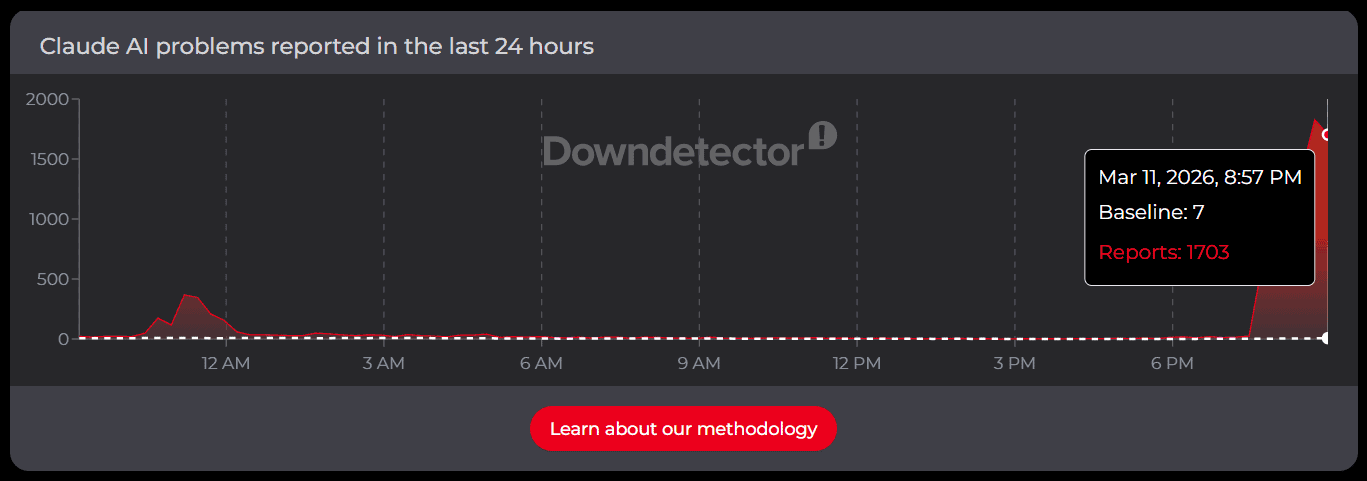
If you are facing issues with Claude right now, you must know that it’s not just you. Thousands of users are reportedly facing issues with the AI assistant. At the time of writing this, Downdetector shows over 1,700 user reports. So, it’s obvious that users are still facing issues with Claude right now. We’ll update this article as we hear updates from Anthropic.

Image credit: Downdetector

According to the Claude status page, the company first acknowledged the issue around 14:44 UTC on March 11, 2026, when the team said it had begun investigating reports of errors affecting Claude.ai.

While details remain limited, the disruption appears to be impacting normal interactions with the AI assistant. Shortly after the initial update, Anthropic confirmed that users are also facing login and logout issues in Claude Code. The update, posted at 14:47 UTC, suggested that authentication systems related to the platform may be experiencing instability.

In the third update at 15:27 UTC, Anthropic mentioned that the team is still investigating the issue. As of now, the company has not shared a timeline for a fix or confirmed the root cause of the errors. This isn’t the first time Anthropic’s AI assistant has faced a widespread issue this month. Earlier this month, Claude users faced issues with the AI assistant for two days straight.

In the latest update at 15:44 UTC, Anthropic has confirmed that it is “currently investigating issues with Claude Code and Claude.ai. Some users may be unable to log in, and others may experience slower than usual performance. The Claude API is not affected.”

This is a developing story…

Steam Machine and Steam Frame Verified Programs Unveiled at GDC 2026

Valve has shared new details about its upcoming gaming hardware ecosystem, confirming that Steam Machine and Steam Frame devices will launch this year. The announcement follows earlier reports that the console’s development had a rocky period and faced potential delays.

According to VideoCardz, Valve presented the official requirements for its Steam Frame Verified and Steam Machine Verified labels during a session at GDC 2026, outlining how games will be certified for the new platforms.

Steam Machine Verified builds on Steam Deck standards

Valve first announced in November 2025 that the Steam Deck Verified program would expand beyond the handheld device to include Steam Machine and Steam Frame hardware.

The Steam Machine Verified label acts as a higher-performance extension of the Steam Deck certification system. Any game already marked as Steam Deck Verified will automatically qualify as Steam Machine Verified, meaning developers will not need to run additional testing for the new platform.

Controller input expectations will remain the same as those required for Steam Deck titles. This ensures that games fully support controller-based navigation and gameplay.

Valve’s reported performance target for Steam Machine Verified certification is 30 frames per second at 1080p. The company also noted that it will not test display resolution scaling or user interface legibility for games targeting the Steam Machine.

Steam Frame Verified focuses on standalone VR compatibility

Valve also introduced Steam Frame Verified, a separate certification category designed for games playable on the Steam Frame standalone device.

The certification applies to both VR and non-VR titles, but games must be fully playable using Steam Frame and controllers.

Performance targets differ depending on the type of game. Standalone VR games must reach 90 frames per second, while standalone 2D games must achieve 30 frames per second at a resolution of 1280×720.

Unlike the Steam Machine certification, games targeting Steam Frame Verified must also feature user interfaces that remain clearly readable on the device.

Steam Frame is designed for low-latency PC streaming

Valve describes Steam Frame as a standalone VR headset designed primarily for low-latency PC streaming, while still supporting standalone VR and non-VR experiences.

The device will maintain compatibility with SteamVR and OpenXR, allowing it to run both streamed PC VR content and native applications developed for those platforms.

Steam Machine targets the living-room gaming space

The Steam Machine appears positioned as a living-room gaming system similar to the Steam Deck model, but designed for higher performance and larger displays.

Valve did not clarify whether performance targets for the certification programs allow the use of technologies such as upscaling or frame generation.

Sony reportedly views Steam Machine as a potential competitor in the home console space, suggesting that the launch of Valve’s new hardware lineup could make 2026 a notable year for living-room gaming platforms.

Galaxy Book6 Ultra, Pro, and Base Models Launch Worldwide With Intel Core Ultra Chips

Samsung recently launched the Galaxy Book6 series in Europe, and the laptops are now expanding to global markets. According to Neowin, the lineup is currently available in the United States through Samsung.com, BestBuy.com, and Samsung Experience Stores.

Samsung Expands Galaxy Book6 Series Worldwide

The Galaxy Book6 family includes three models: Galaxy Book6 Ultra, Galaxy Book6 Pro, and the standard Galaxy Book6. These laptops target the premium Windows market and combine Intel’s latest processors with Samsung’s AMOLED display technology.

Pricing starts at $2,449.99 for the Galaxy Book6 Ultra, $1,599.99 for the Galaxy Book6 Pro, and $1,249.99 for the base Galaxy Book6. However, the base model is not currently available directly from Samsung’s online store at the time of writing.

FeatureGalaxy Book6 UltraGalaxy Book6 ProGalaxy Book6
Operating SystemWindows 11 HomeWindows 11 HomeWindows 11 Home
RAM32GB16GB or 32GB16GB
Storage1TB1TB512GB
Display16-inch14-inch or 16-inch16-inch
ProcessorIntel Core Ultra X7 358H or Core Ultra 7 356HIntel Core Ultra 7 356HIntel Core Ultra 7 Series 3
GraphicsIntel Arc B390Intel integrated graphicsIntel Graphics
Starting Price$2,449.99$1,599.99$1,249.99

Powered by Intel Core Ultra Series 3 Processors

All models in the Galaxy Book6 lineup use Intel Core Ultra Series 3 processors built on the company’s advanced 18A process node.

Samsung claims the chips deliver up to 60% faster CPU performance compared to previous generations. The processors also include integrated neural processing units capable of up to 50 TOPS of AI performance for on-device workloads.

AMOLED Displays and Premium Features

The Galaxy Book6 Pro and Ultra models feature upgraded Dynamic AMOLED 2X touch displays designed to deliver higher brightness and smoother visuals.

These displays support up to 1,000 nits peak HDR brightness, adaptive refresh rates between 30Hz and 120Hz, and improved anti-reflective coatings for better visibility in bright environments.

In other Samsung-related developments, the company could raise NAND flash prices due to growing demand, and it has also refined its HBM4E memory to improve power efficiency.

Microsoft Teases Mysterious Xbox Hardware at GDC Days After Project Helix Confirmation

Microsoft’s Gaming division underwent a leadership shakeup last month after longtime Xbox head Phil Spencer announced his retirement after nearly four decades at Microsoft. Around the same time, Sarah Bond, who many expected to eventually lead Xbox, also revealed plans to step away from the gaming division. Asha Sharma has now assumed the role of Xbox CEO to lead Microsoft’s gaming efforts.

A few days later, Sharma teased the next-gen Xbox console codenamed “Project Helix,” a concept that reportedly dates back to around 2016 and focuses on a new generation of high-performance Xbox hardware designed to run both Xbox and PC games.

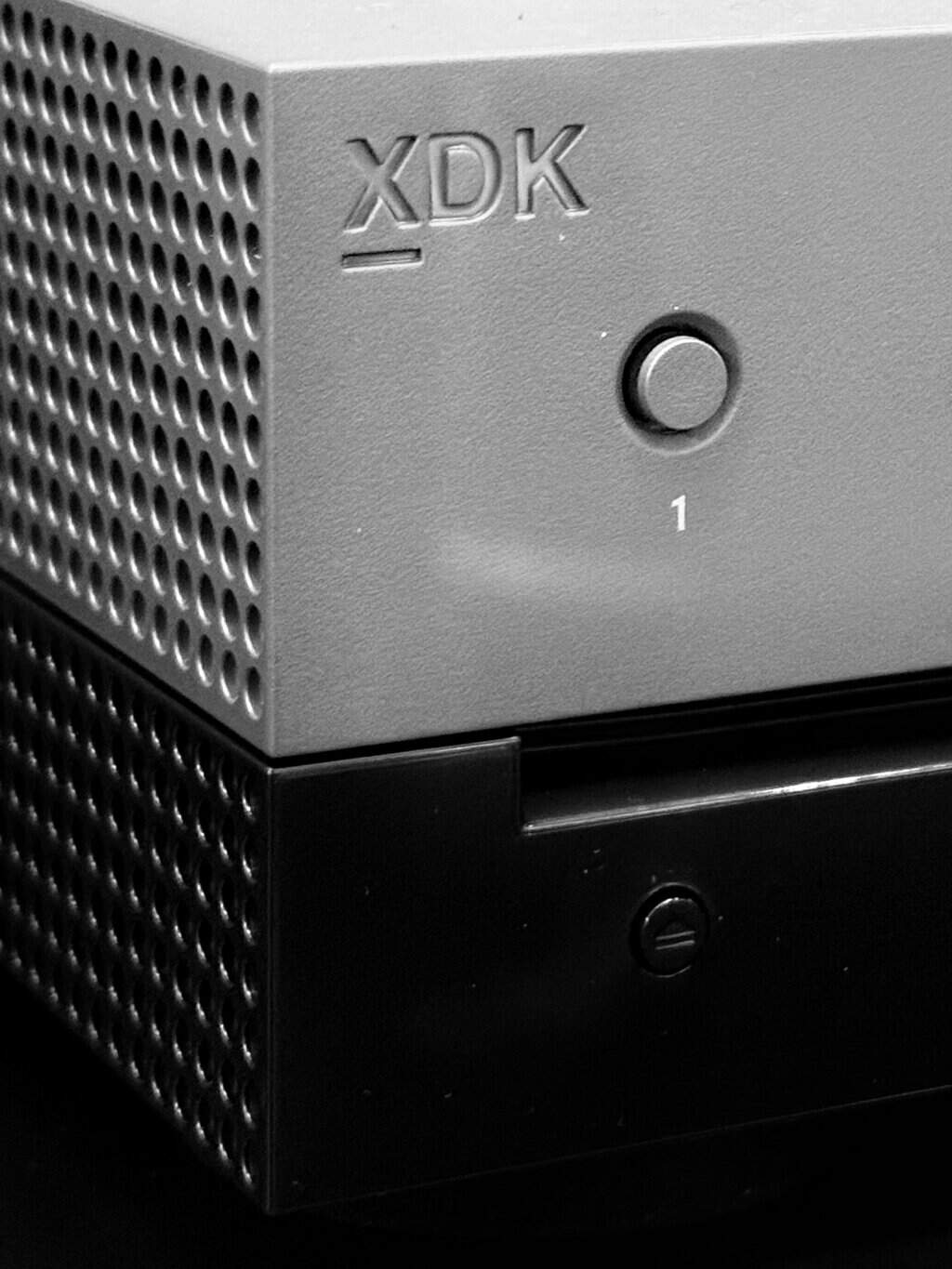
With that context in place, Microsoft has now shared a small teaser, a set of images, on the official Game Development at Microsoft account on X. The caption remains brief but intriguing, simply stating, “Xbox at GDC. Sneak peek.”

Image credit: Microsoft

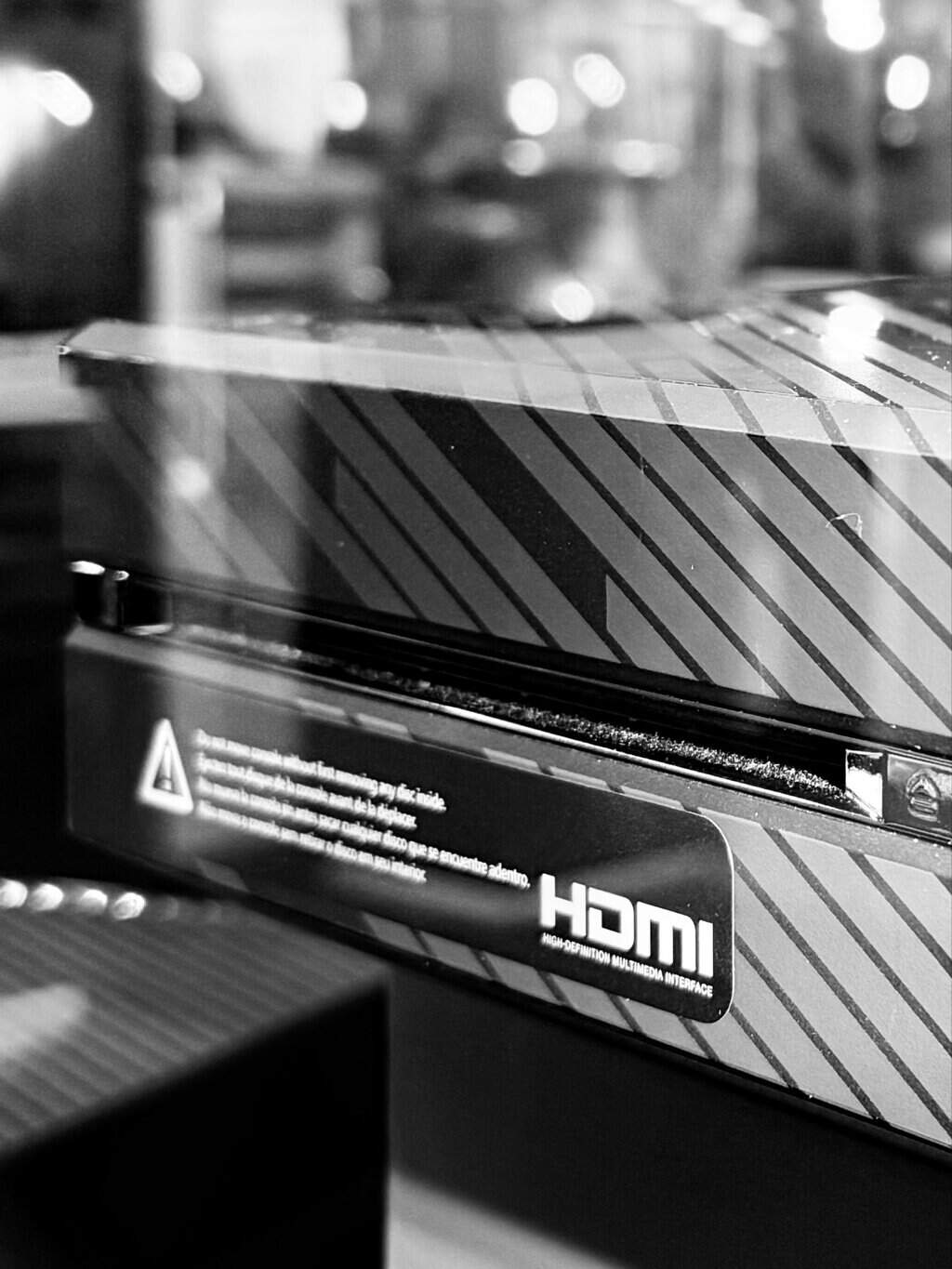
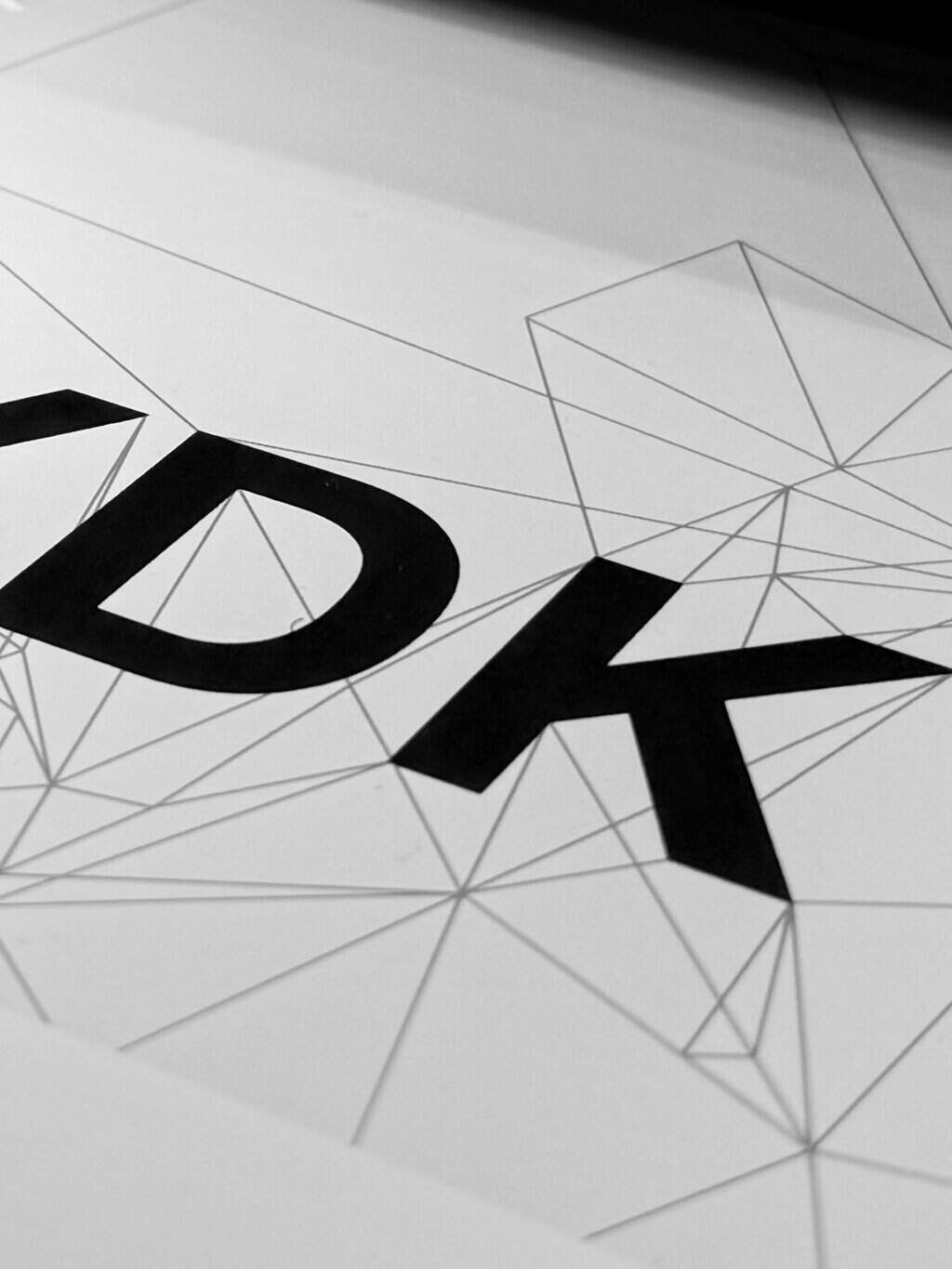
As you can see, the images attached below show a black console shell with “XDK” embossed on the side. For those unaware, it usually refers to an Xbox Developer Kit used by game studios. Developer kits are early versions of hardware provided to developers so they can build and optimize games before a console launches.

While Microsoft has not confirmed exactly what the hardware is, the photos have sparked speculation online. Some users pointed out that the design looks quite similar to an Xbox One dev kit. All that said, Microsoft hasn’t officially linked the teaser images to Project Helix. However, the timing and its presence at the GDC floor suggest the company might be building anticipation for future Xbox hardware.

With the recent leadership shakeup, Xbox developers had a lot going on in their minds, which has been addressed by Microsoft CEO Satya Nadella, who was hosted by the new Xbox CEO. In the internal Q&A, Nadella reaffirmed that the company will continue to invest in Xbox as it remains one of the fundamental pillars of Microsoft. 

Article feature image source: Microsoft

Pragmata Demo Crosses 2 Million Downloads on All Platforms

We saw Pragmata during the recent Capcom Spotlight presentation, and the demo quickly became available for download on all major platforms. Now the early preview has already reached an impressive milestone.

Pragmata Demo Reaches Major Milestone as Capcom Prepares for Launch

According to IGN, Capcom confirmed that the Pragmata demo has surpassed two million downloads. The demo offers players an early look at the upcoming sci-fi action adventure set in the near future and introduces the game’s core mechanics and setting.

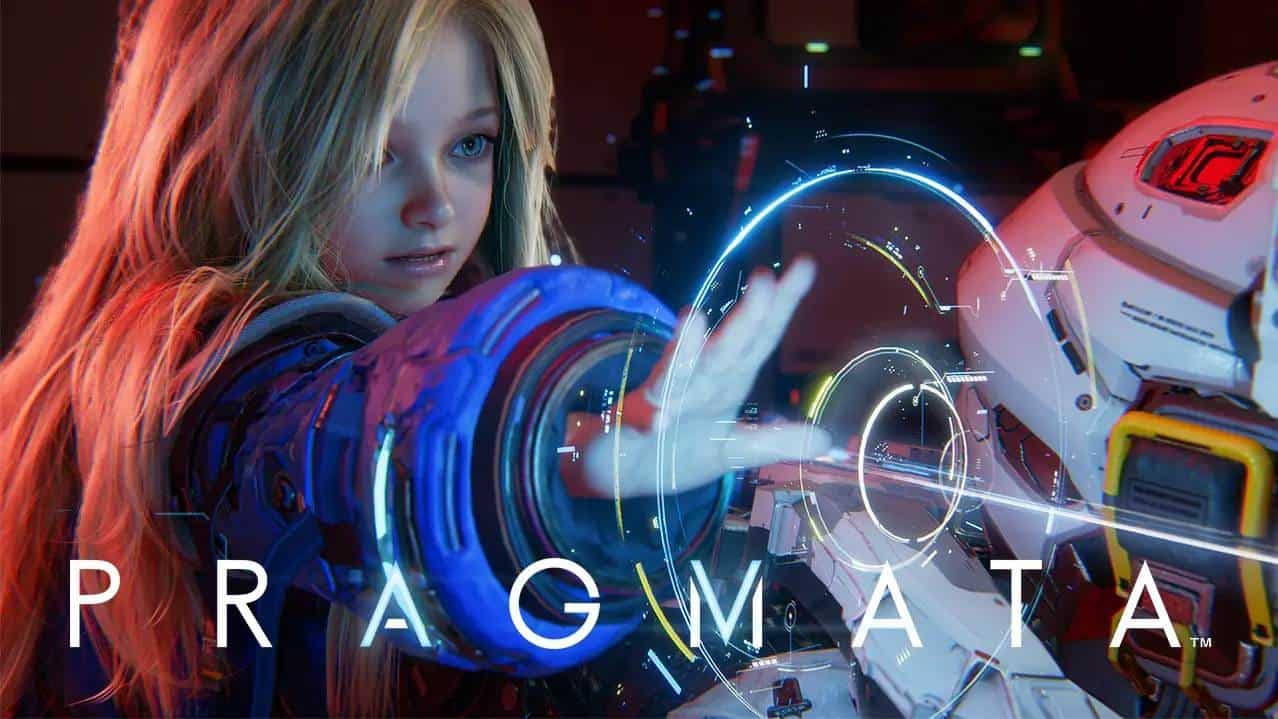
Pragmata follows two protagonists, Hugh and Diana, as they navigate a mysterious lunar research facility. The story unfolds across a futuristic environment where players must uncover the secrets behind the station while working together to survive.

The demo allows players to explore parts of the lunar research station that will appear in the full game. It also introduces the narrative tone and setting that Capcom is building for the sci-fi adventure.

Combat and Hacking Mechanics Highlight the Gameplay

The demo highlights the game’s tactile combat system, which combines real-time action with hacking mechanics. During encounters, players must manage both characters’ abilities, blending combat with puzzle-like hacking elements that affect enemies and the environment.

The gameplay also focuses on cooperative mechanics between Hugh and Diana, encouraging players to coordinate their abilities to overcome enemies and environmental challenges.

Capcom Encourages Players to Replay the Demo

Capcom has encouraged fans to replay the demo multiple times. According to the developer, additional details and gameplay elements can appear on repeat playthroughs, offering more insight into the mechanics and story.

Completing the demo also unlocks a special reward in the form of an illustration featuring Diana.

Release Date Moved Forward and Deluxe Edition Revealed

The demo has also helped increase interest in the upcoming title, with Capcom confirming that Pragmata has already reached two million wishlists.

Alongside the milestone announcement, Capcom revealed that the game’s release date has been moved forward. Pragmata will now launch on April 17 instead of the previously planned April 24.

Capcom also showcased the Deluxe Edition of the game, which includes the Shelter Variety Pack and additional digital content.

In other gaming news, information about the PlayStation Plus March Game Catalog has reportedly leaked online.

Intel Reveals Core Ultra 7 270K Plus and Core Ultra 5 250K Plus With Higher Core Counts

We were all waiting impatiently for the Arrow Lake refresh, and it has finally arrived. Unfortunately, information about the rumored Intel Core Ultra 9 290K Plus cancellation appears to be accurate, as Intel did not announce this model.

Intel introduces Core Ultra 200S Plus desktop processors

According to VideoCardz, Intel has announced Core Ultra 200S Plus desktop processors, expanding the Arrow Lake-S lineup. The launch introduces four new unlocked SKUs aimed at enthusiasts and gamers: Core Ultra 7 270K Plus, Core Ultra 7 270KF Plus, Core Ultra 5 250K Plus, and Core Ultra 5 250KF Plus.

Higher core counts across the lineup

The main upgrade in the refresh is higher core counts on several models. The Core Ultra 7 270K Plus features 24 cores in total, configured as 8 performance cores and 16 efficiency cores, while the Core Ultra 5 250K Plus includes 18 cores with a configuration of 6 performance cores and 12 efficiency cores.

Retail availability for the new processors begins on March 26, 2026, with Intel’s suggested pricing starting at $299 for the Core Ultra 7 270K Plus and $199 for the Core Ultra 5 250K Plus.

Faster memory support and new BIOS profiles

Intel has also improved memory support with the new processors. They now officially support DDR5-7200 memory, which is an increase from the previous DDR5-6400 standard.

The chips also support Intel Core Ultra 200S Boost BIOS profiles that enable DDR5-8000 memory overclocking, and they introduce early support for 4-rank CUDIMM memory modules.

Intel says compatible Intel 800-series motherboards may eventually support modules with capacities of up to 128GB per DIMM.

Higher die-to-die frequencies and performance gains

Another improvement involves the internal communication speeds between chip components. Intel states that die-to-die frequency has increased by up to 900 MHz compared to previous models such as the Core Ultra 7 265K and Core Ultra 5 245K. The company also describes the Core Ultra 7 270K Plus as its fastest 125W-class desktop gaming processor so far.

According to Intel, the new processors deliver noticeable performance improvements compared to earlier chips and competing products. The company claims up to 15% better gaming performance compared to current Core Ultra Series 2 desktop processors, as well as up to 103% higher multithreaded performance versus competing CPUs in similar segments. Intel also says content creation performance can reach up to twice the speed of rival processors in certain workloads.

Intel Binary Optimization Tool debuts

The processors introduce a new software feature called Intel Binary Optimization Tool. This feature acts as a binary translation optimization layer designed to improve performance in some games, working through Intel Application Optimization (APO) and remaining optional for users who want to enable it.

The processors remain compatible with existing Intel 800-series chipset motherboards, which allows current platform users to upgrade without replacing their boards. Intel also noted that more motherboard models supporting the platform will appear throughout 2026.

In other news, Intel recently introduced Core Series 2 and Panther Lake Core Ultra X9 chips. The company has also brought XeSS 3 technology to all Arc graphics cards.

Google Expands Gemini-Powered Chrome Features to India, Canada, and New Zealand

Google is expanding Gemini-powered Chrome features to users in India, New Zealand, and Canada. The latest features in Chrome are powered by Gemini 3.1, which first landed in the U.S. back in January this year. To catch you up, Gemini-powered Chrome browsing has been available to U.S. users since September last year.

Gemini 3.1-powered features in Chrome expand beyond the U.S

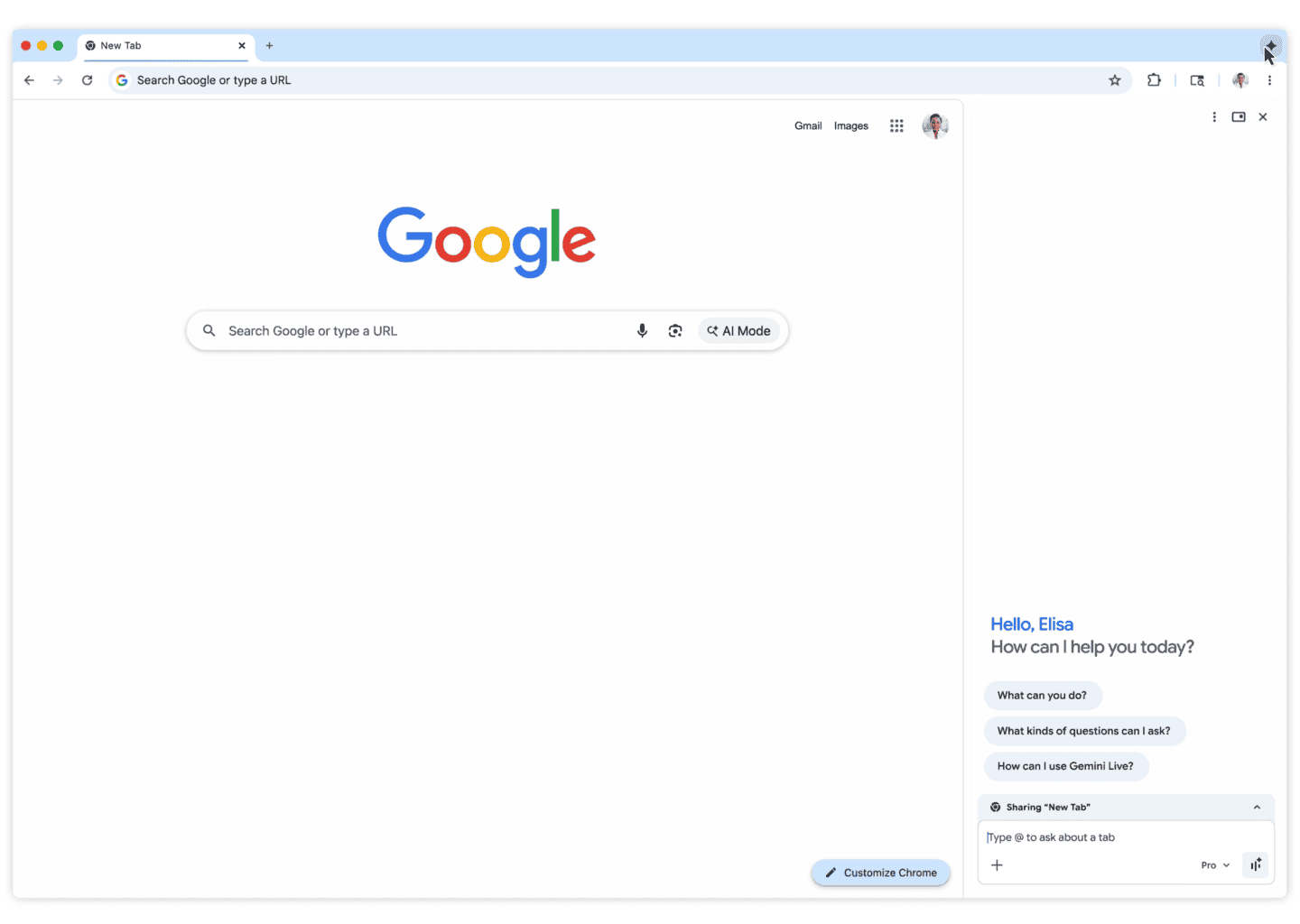
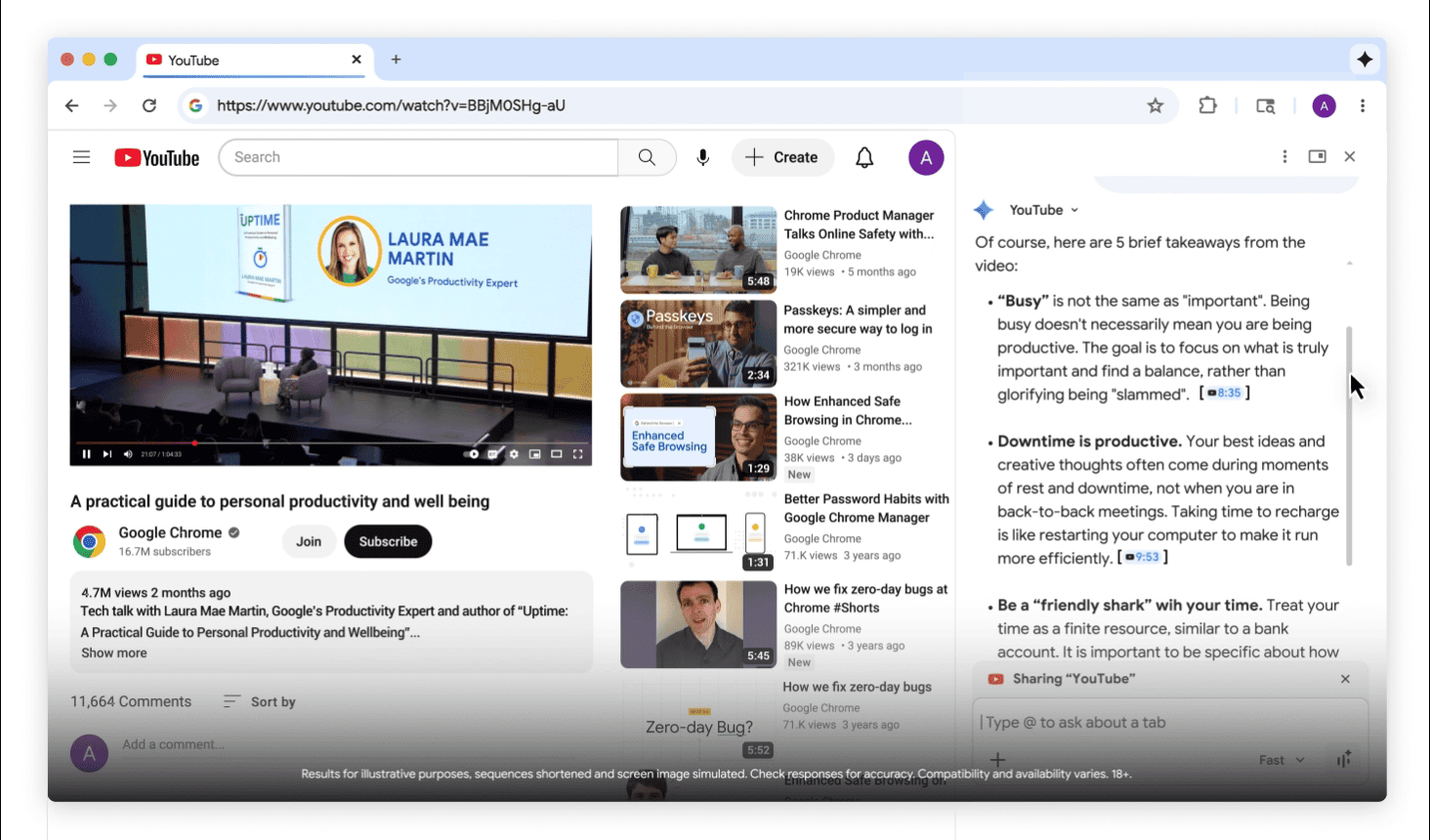
As part of the rollout, Gemini now works as a built-in assistant that sits inside the browser. You can open the side panel and ask questions, summarize long web pages, or generate ideas without switching tabs. Earlier this year, Windows Report also reported that Gemini features were available in Chrome Beta for some Indian users. At the time, Gemini could do all the things we just pointed out before.

Image credit: Google

For example, Gemini can turn a lengthy article into key points, create study quizzes, or adjust recipes based on dietary preferences. Chrome can even remember previously visited pages, which helps you close the endless stack of tabs many people keep open. That’s not all; Google is also expanding language support to more than 50 languages, including Hindi, French, and Spanish.

Gemini inside Chrome also integrates with several Google services. You can interact with Gmail, Maps, Calendar, and YouTube directly from the browser’s side panel. In other words, things like drafting emails, checking locations, scheduling meetings, or summarizing YouTube videos can be done without leaving the current tab.

Image credit: Google

If you are into shopping, Chrome’s AI tools can also analyze multiple open tabs at once. This allows users to compare products across sites or combine research into a single summary. Google is also integrating the Nano Banana 2 image model, which allows users to edit images directly on web pages using prompts. In other news, Google is also testing Gemini antiscam protection in Chrome.

As noted by Google, the latest rollout will initially reach desktop and iOS users, including those on Mac, Windows, and Chromebook Plus devices. On Android, you can activate Gemini while using Chrome or other apps simply by holding the power button.

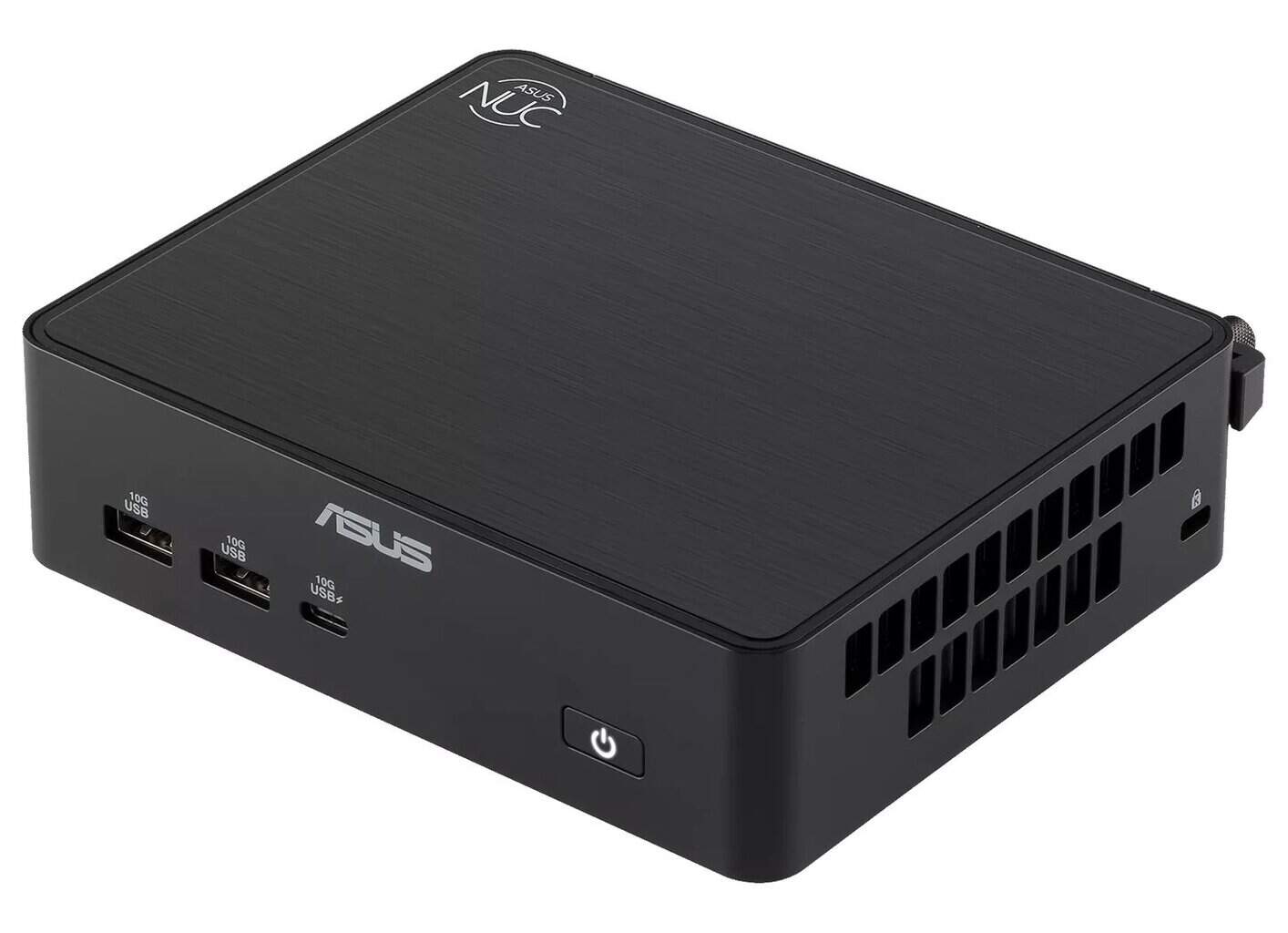
ASUS NUC 16 Pro Debuts With Intel Panther Lake and Up to 180 TOPS AI Power

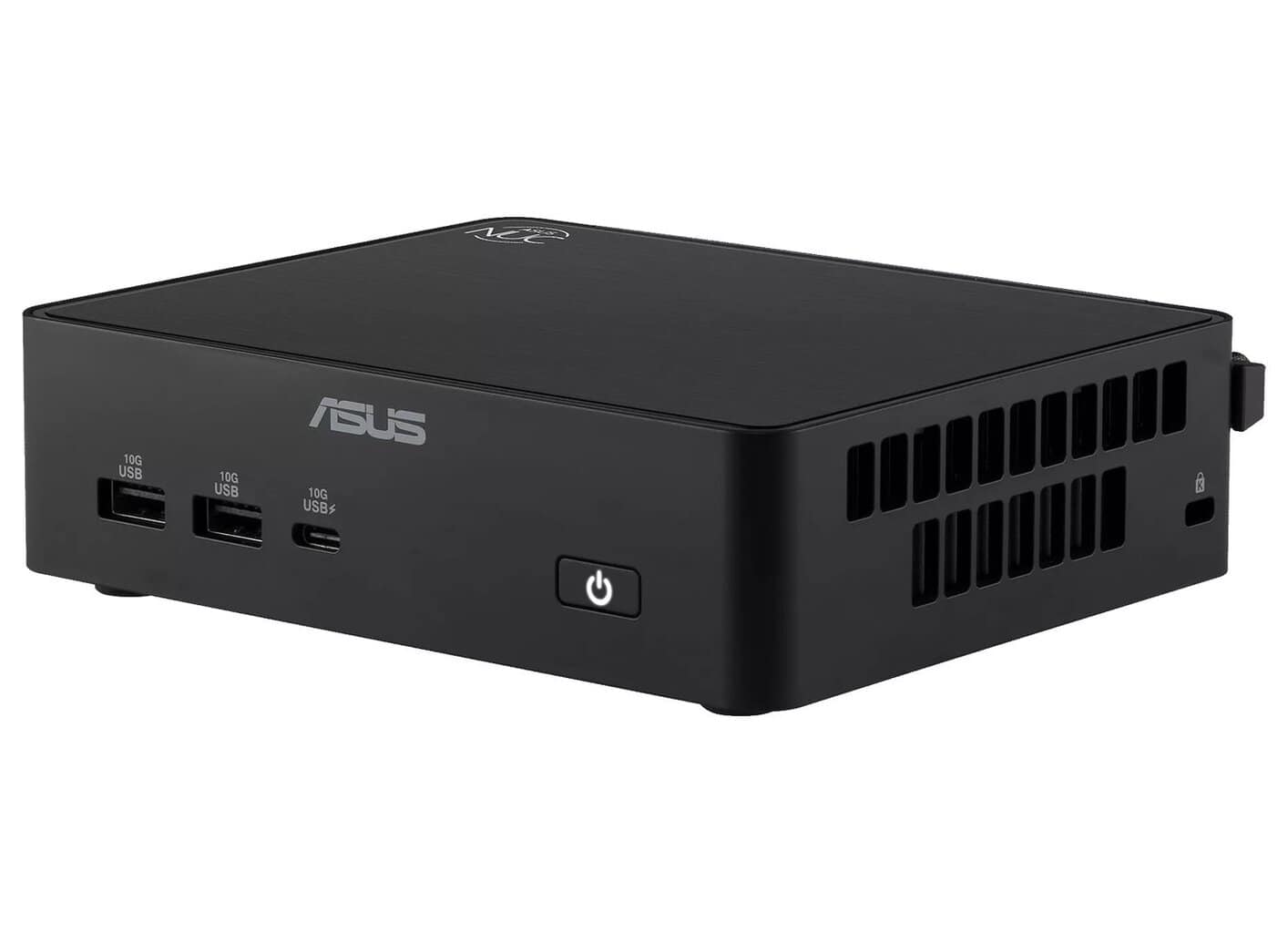
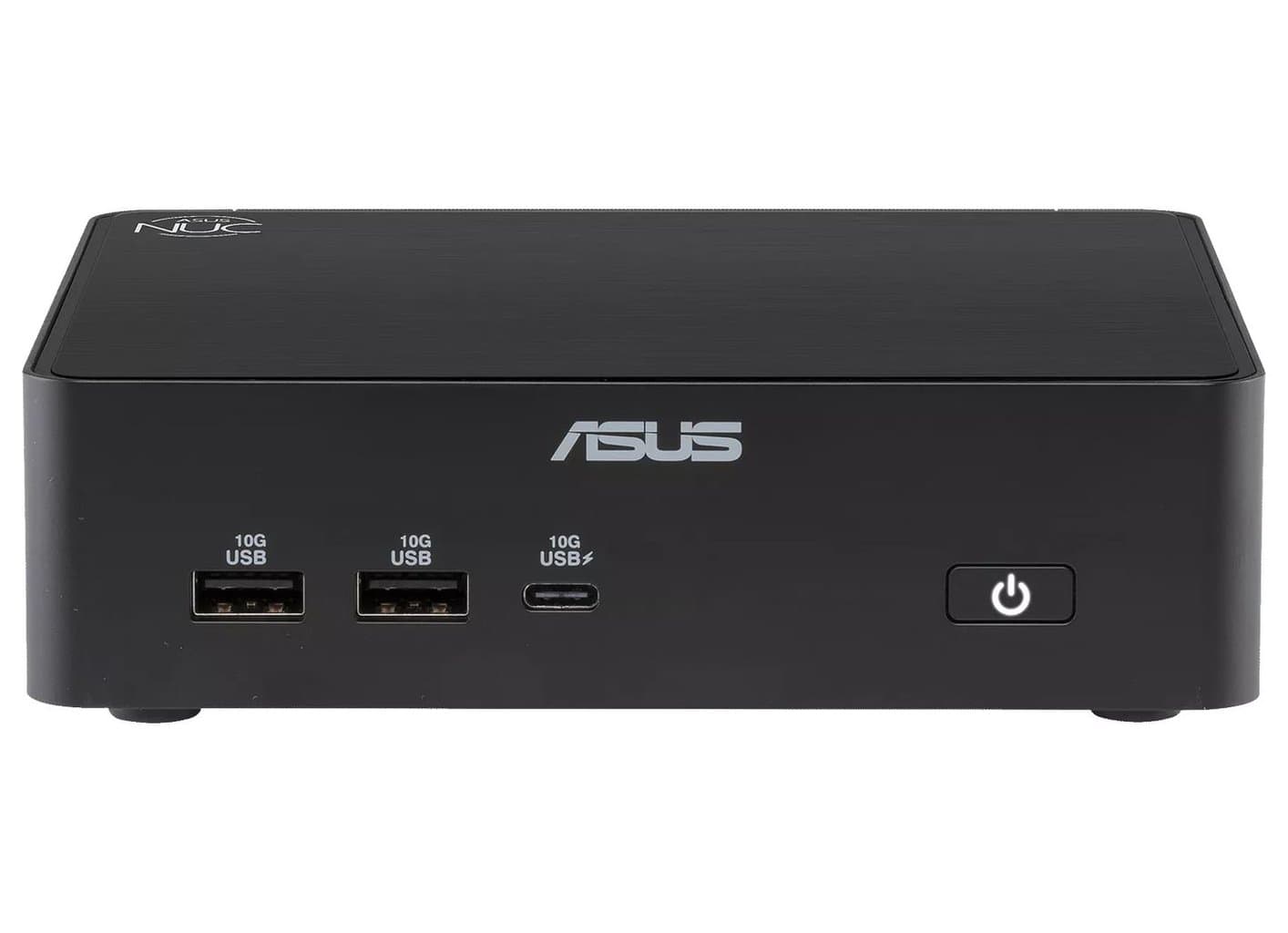
We recently saw the ASUS NUC 16 unveiled, and now ASUS has begun selling the NUC 16 Pro in China, introducing one of the first compact desktops powered by Intel Panther Lake.

The system was originally unveiled during CES 2026, and the first retail configuration is now available in the Chinese market with a price of RMB 10,999 (about $1,602).

ASUS launches NUC 16 Pro with Panther Lake

According to VideoCardz, the new NUC 16 Pro targets the high-end mini PC market rather than typical office-focused compact systems. The first retail configuration features the Intel Core Ultra X7 358H processor paired with 32GB of RAM and a 1TB SSD.

The device is part of the first wave of mini PCs based on Intel’s Panther Lake architecture, also known as Core Ultra Series 3. The lineup can scale to higher-end processors, including models based on the Intel Core Ultra X9.

Integrated graphics options include the Intel Arc B390, bringing improved graphics performance compared with earlier NUC generations.

Focus on AI performance

One of the main selling points of the Panther Lake platform is AI acceleration. ASUS says the NUC 16 Pro platform can deliver up to 180 TOPS of AI performance, positioning it for AI workloads, development tasks, and advanced productivity applications.

The platform also supports up to 96GB of LPDDR5x-8533 memory on higher-end configurations, giving the compact system significantly higher memory bandwidth.

Compact design with upgrade support

Despite its small form factor, ASUS designed the NUC 16 Pro with upgradeability in mind. The system features dual-fan cooling and supports two M.2 storage drives with PCIe Gen5 and Gen4 compatibility.

The chassis uses a tool-less design that allows users to open the system and access components more easily. This approach simplifies upgrades and maintenance compared with many sealed mini PC designs.

Modern connectivity options

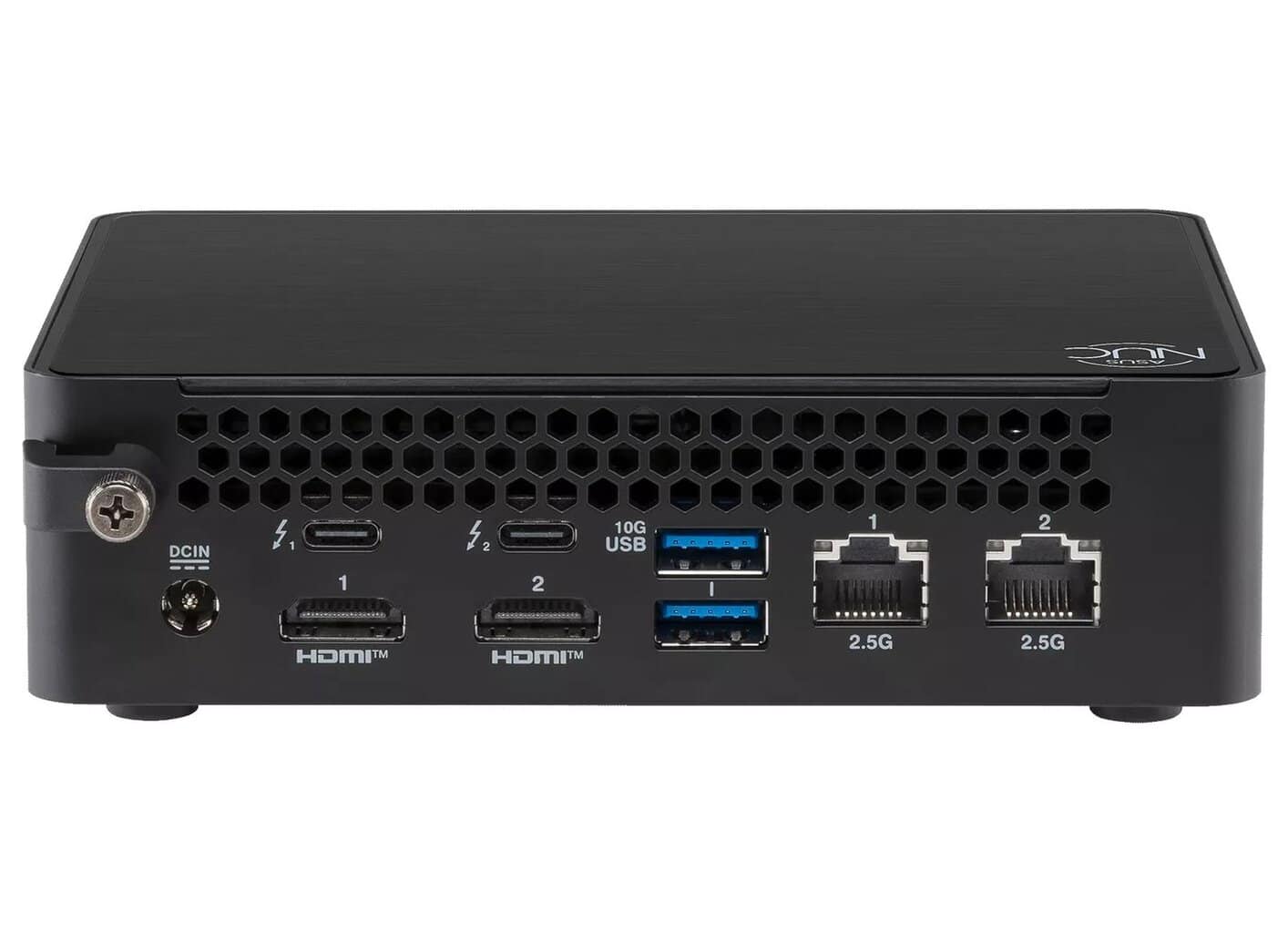
The Core Ultra X7 358H configuration includes modern connectivity designed for high-end users. It offers dual 2.5GbE Ethernet ports for fast wired networking alongside Wi-Fi 7 and Bluetooth 6.0 support.

The system also includes two Thunderbolt 4 ports and two HDMI 2.1 outputs, enabling multi-display setups and high-speed external devices. USB 3.2 Gen 2 ports are available on both the front and rear panels for additional peripherals.

Image source: VideoCardz

Premium pricing raises questions

While the hardware specifications are strong for a mini PC, the price has raised some concerns. At roughly $1,600, the current model is not even the top-tier Panther Lake configuration.

Higher-end variants with a Core Ultra X9 processor and larger memory capacities could push pricing even further. As a result, the NUC 16 Pro appears aimed at premium compact workstation buyers rather than typical home users.

In other ASUS-related news, the company recently introduced the ASUS ExpertBook B3 G2, while early benchmark leaks suggest the Snapdragon X2 Elite Extreme may struggle against upcoming Apple M5 chips.

Framework Increases DDR5 Prices, Updates Laptop and Desktop Configuration Costs Too

Yesterday, a TrendForce report hinted that laptop prices may go up by 40 percent if the DDR5 RAM and CPU pricing maintains its upward trend in 2026. Now, Framework has shared another monthly update on component pricing, and the latest one suggests memory and storage costs are still moving upward.

For those unaware, Framework is a U.S.-based consumer electronics company focused on creating highly modular, repairable, and upgradeable laptops. In a March 9 update, the company confirmed it has adjusted pricing on several parts and configurations after running through older, lower-cost inventory.

According to Framework, pricing on DDR5 SO-DIMMs has increased to around $13 to $18 per GB, depending on the capacity (via Videocardz). The company says the change is related to the higher supplier costs as well as the reduction of earlier inventory that had been purchased at lower prices.

Framework notes that it uses a Weighted Average Cost model when calculating prices. As a result, once cheaper stock is sold through, newer orders purchased at higher costs start to affect pricing.

The situation around SDDs is the same. Framework says it has started running out of lower-cost storage inventory and has adjusted pricing on certain capacities to reflect the current market rates. However, some models, such as 2TB, 4TB, and 8TB SN850X drives, are still being sold below the current market prices as the company is clearing remaining stock.

Notably, the pricing change extends beyond the internal components. Framework has further confirmed that it has also updated prices for the Framework Desktop and some pre-built Framework Laptop 16 configurations. The company has also hinted that similar price adjustments may be done in the coming months for the remaining Framework Laptop 13, Laptop 16, and Laptop 12 pre-built systems.

The company says rising LPDDR5x memory costs contributed to the desktop adjustments. Meanwhile, some Laptop 16 configurations were repriced after the company sold through earlier inventory that included lower-cost memory and storage components.

Article feature image source: Framework

Microsoft Introduces Passkey Authentication for Windows Devices Through Entra

Microsoft is expanding its passwordless security strategy by introducing passkey support for Microsoft Entra on Windows devices. The feature enables phishing-resistant authentication using Windows Hello, allowing users to sign in without traditional passwords.

According to information published in the Microsoft Messaging Center, the update will allow passwordless sign-in on unmanaged Windows devices. Until now, these devices have often relied on standard passwords instead of modern authentication methods.

Passkeys stored securely inside Windows Hello

With the new feature, users will be able to create device-bound passkeys that are stored inside the Windows Hello secure container. Users can unlock the passkey using facial recognition, fingerprint authentication, or a PIN.

Passkeys rely on cryptographic keys tied directly to the device. Because the credentials never travel across the network, attackers cannot intercept them through phishing or credential-stealing malware.

Each Microsoft Entra account registers its own passkey on every device used. Multiple Entra accounts can exist on the same Windows machine, but each account generates a separate passkey.

Passkeys also remain local to the device. They do not sync across multiple computers, which means users must register a new passkey for each Windows device they use.

Designed primarily for unmanaged Windows devices

Microsoft says the feature mainly targets unmanaged devices that are not joined to an organization’s Entra environment. Windows Hello for Business will remain the recommended authentication solution for managed, Entra-joined, or registered corporate devices.

Administrators who want to test the feature during the preview phase must complete several configuration steps in Microsoft Entra:

  • Enable the Passkeys (FIDO2) authentication method in Entra Authentication Methods policies
  • Create a passkey profile that includes the required Windows Hello AAGUID identifiers
  • Assign the configuration to the appropriate user groups

Microsoft also notes a limitation involving Windows Hello credentials. Users cannot register a passkey if a Windows Hello for Business credential already exists inside the same secure container.

The company says this restriction could be lifted in the future when users reach more than 50 total credentials across passkeys, Windows Hello for Business, and Mac platform credentials.

Part of Microsoft’s broader passwordless push

The move continues Microsoft’s long-term push toward passwordless authentication across its ecosystem. In May 2025, the company announced that newly created Microsoft accounts would be passwordless by default.

Microsoft plans to release the Microsoft Entra passkey feature in public preview between mid-March and late April 2026 for global tenants. Government cloud environments, including GCC, GCC High, and DoD, are expected to receive the rollout between mid-April and mid-May 2026.

In other cybersecurity developments, Exchange Online recently dropped support for the Credential parameter in favor of stronger multi-factor authentication methods. Security researchers have also warned about attackers spreading malware through social engineering campaigns on Microsoft Teams.

Meanwhile, Microsoft also confirmed that PCs enrolled in Windows Autopatch will begin receiving hotpatch security updates by default starting in May.

Via Bleeping Computer

[UPDATED] PlayStation Plus March 2026 Catalog Officially Confimed: Warhammer 40,000: Space Marine 2 & More

[UPDATE 22:00 IST | March 11, 2026] In the latest PlayStation blog post, Sony has confirmed the following games for this month:

PlayStation Plus Extra & Premium

  • Warhammer 40,000: Space Marine 2
  • EA Sports Madden NFL 26
  • Persona 5 Royal
  • Persona 5 Royal – Ultimate Edition
  • Blasphemous 2
  • Metal Eden
  • The Lord of the Rings: Return to Moria
  • Astroneer

PlayStation Plus Premium

  • Tekken Dark Resurrection

[ORIGINAL STORY] March already looks busy for Xbox Game Pass subscribers with a bunch of blockbuster games like Cyberpunk 2077 and other coming to the service. Well, if you are a PlayStation owner and subscribed to PlayStation Plus Extra or Premium, you might be in for a treat as well. It has been reported that several games are expected to join the PlayStation Plus Game Catalog this month.

The news comes via Dealabs insider Billbil-kun, who has a strong track record when it comes to PlayStation Plus leaks. According to the tipster, Warhammer 40,000: Space Marine 2 (PS5) will headline the Game Catalog lineup for March 2026. Alongside it, another major title is said to be joining the service: Persona 5 Royal, which will reportedly be available on both PS5 and PS4.

The rumored list also includes Madden NFL 26 (PS5), Metal Eden (PS5), The Lord of the Rings: Return to Moria (PS5), and Astroneer (PS4). If accurate, that would give PlayStation Plus subscribers a mix of shooters, RPGs, sports titles, and survival experiences this month.

For PlayStation Plus Premium members, the leak also mentions a single addition to the Classics Catalog. The PSP fighting game Tekken: Dark Resurrection is reportedly set to join the lineup. Interestingly, the report also notes that Final Fantasy XVI and Dragon’s Dogma 2 are not expected to appear in the catalog this month, despite speculation among fans.

Sony has not officially confirmed the lineup yet. However, according to the leak, more details should be shared when the company announces the March Game Catalog additions on March 11.

New Phase Controller Splits in Half and Turns Into a Gaming Mouse

A startup called Pixelpaw Labs has revealed a new device called Phase, a split gaming controller designed to transform into a PC mouse when the two halves connect together. The device aims to combine the functionality of a traditional gaming mouse, controller, and mobile gamepad into a single portable accessory.

According to TechPowerUp, the two controller halves attach using magnets and pogo-pin connectors, allowing them to snap together and form a mouse. When separated, each half functions as part of a full controller layout similar to traditional console gamepads.

A hybrid controller and mouse in one device

In mouse mode, the Phase controller includes a 16,000 DPI sensor and supports both USB-C wired connectivity and wireless operation. Instead of a traditional scroll wheel, the device uses a touch-sensitive surface on the left-click area that allows users to scroll using gestures.

When used as a controller, the two halves function like a standard gamepad layout. The right half includes ABXY buttons and a joystick, while the left half features a joystick and D-pad. Each side also includes a shoulder button and a trigger.

The design has been compared to Nintendo’s Joy-Con controllers, though Pixelpaw Labs includes additional control options and PC-focused features.

Wireless gaming features and custom software

The controller supports 2.4 GHz wireless connectivity with a 1 kHz polling rate, along with Bluetooth support for broader device compatibility.

Pixelpaw Labs also plans to provide custom driver software that will allow players to remap controls. A dedicated customizable layer button will let users assign system commands or secondary functions without interrupting gameplay inputs.

The company is also developing a separate accessory called Phasegrip. This docking attachment combines the two controller halves into a handheld gaming controller designed for mobile gaming sessions.

Image source: TechPowerUp

Kickstarter launch planned

Phase has not launched yet and is expected to debut through a Kickstarter campaign. Pixelpaw Labs is currently offering a $20 refundable pre-launch deposit that includes a 15% discount on the Kickstarter price.

The company expects Kickstarter pricing to start at $159 for the base device, or $188 when bundled with the Phasegrip accessory.

As with many crowdfunded hardware projects, the device carries typical Kickstarter risks and may not reach full production.

In other gaming news, Minecraft LIVE has been scheduled for a future event, Overwatch recently introduced a crossover event with NieR: Automata, and Capcom confirmed that Resident Evil Requiem will receive additional content in upcoming updates.

Google Brings Powerful Gemini AI Features to Docs, Sheets, Slides and Drive

Google has long been pushing Gemini deep into most of its apps and services for a long time now. Now, the company is targeting Microsoft’s Copilot wave 3 announcement by expanding the role of Gemini inside its productivity apps. The company yesterday announced new beta features for Gemini in Docs, Sheets, Slides, and Drive, which make document creation and collaboration faster and more personalized.

Gemini now helps you write and create Sheets and Slides

Google, in the announcement post, says that Gemini can help you “Go from a blank doc to a final draft.” In Google Docs, Gemini can now generate a full first draft based on prompts and contextual information from a user’s files, emails, and the web. You can then edit sections, adjust tone, or unify writing style across the document using natural language prompts.

The company has also highlighted tools such as “Match writing style” and “Match doc format.” These allow Gemini to make a document’s tone or layout in line with a reference file. This way, it is easier to keep formatting consistent across documents.

In Sheets, Gemini acts more like a colleague working on the same spreadsheet. You can simply describe what you want, and Gemini can generate entire spreadsheets, including tables, dashboards, and organized data. A feature called “Fill with Gemini” can also fill in missing information, summarize data, or pull real-time details from Google Search.

Meanwhile, Google Slides is also getting some assistance from Gemini. The AI assistant can now generate fully editable slides based on prompts and contextual information from files or emails. You can ask the assistant to adjust layouts, match presentation themes, or simplify slide designs. Google is also working on a feature that will generate entire presentation decks from a single prompt.

Besides that, Google Drive is also becoming more interactive with a new “Ask Gemini” feature. Rather than simply searching for files, you can ask questions in natural language and receive AI-generated summaries of relevant documents.

New beta features rolling out to Google AI Ultra & Pro subscribers

Search results may now include an “AI Overview” at the top, summarizing key details with citations from the user’s files. The new features are rolling out in beta starting today for Google AI Ultra and Pro subscribers. They are available globally in English for Docs, Sheets, and Slides, while the Drive features are initially limited to users in the United States.

Firefox Update Fixes YouTube Autoplay Bug and NVIDIA Video Issues

Mozilla has released Firefox 148.0.2, a small but important update focused on stability, bug fixes, and security improvements. While recent Firefox updates introduced AI-related features, this release focuses entirely on reliability rather than new functionality.

The update is already rolling out through automatic browser updates and is also available from Mozilla’s official Firefox download page.

Firefox 148.0.2 fixes several browser bugs

Mozilla addressed multiple issues affecting everyday browsing and website compatibility.

One fix resolves a bug where searches entered in the Firefox Home search field were redirected to the address bar. This occurred even for users who had disabled search handoff through advanced settings.

Another fix addresses problems with web-based rich text editors. Some users reported that formatting options such as bold or italic text failed to apply correctly in certain editors.

YouTube autoplay behavior was also corrected in this release. Some videos could start playing automatically even when autoplay was disabled, an issue that particularly affected users relying on screen readers.

Mozilla also fixed a layout issue where absolutely positioned elements intended to appear centered were incorrectly aligned to the left during initial page load.

Another smaller fix resolves a problem where the “Switch to Tab” suggestion appeared blank in the address bar for pages that lacked a title.

Fix for NVIDIA GPU video quality issue on Windows

Firefox 148.0.2 also resolves a video playback problem affecting Windows systems with NVIDIA graphics cards.

Users reported reduced video quality when NVIDIA Video Super Resolution was enabled. Mozilla has corrected this issue so that enhanced video upscaling features work properly during playback.

Mozilla patches three high-risk security vulnerabilities

In addition to bug fixes, the update includes patches for three security vulnerabilities rated as high risk.

The vulnerabilities addressed in Firefox 148.0.2 include:

  • CVE-2026-3845 – Heap buffer overflow in the Audio/Video playback component in Firefox for Android
  • CVE-2026-3846 – Same-origin policy bypass vulnerability related to CSS parsing
  • CVE-2026-3847 – Multiple memory safety issues

Memory safety bugs are especially concerning because attackers sometimes exploit them to execute malicious code.

Due to these security fixes, Mozilla strongly recommends that users update to Firefox 148.0.2 as soon as possible.

Firefox continues expanding AI features

Although Firefox 148.0.2 does not introduce new features, Mozilla has recently been experimenting with artificial intelligence integrations.

Earlier updates introduced an AI workspace inside the browser, while another update added a setting allowing users to disable AI tools if they prefer a traditional browsing experience.

Meanwhile, early signs of more advanced AI functionality have appeared in Firefox Nightly builds. Reports suggest that real assistant-style models and support for running local large language models could be coming to the browser in the future.

Via Neowin

Why Microsoft Distanced Itself From Xbox During the Console Wars

Microsoft and Xbox are now closely connected, with company leadership frequently reaffirming long-term support for the gaming division. However, that close association did not always exist.

In the early 2000s, Microsoft deliberately tried to distance the Xbox brand from the broader Microsoft identity while competing against Sony’s PlayStation 2 and Nintendo’s GameCube.

Microsoft wanted Xbox to stand on its own

According to a report from Windows Central, Microsoft initially worried that the company’s corporate image could hurt Xbox’s chances with gamers.

At the time, Microsoft faced antitrust scrutiny in the United States and Europe. Executives feared that strong Microsoft branding could make the console less appealing to players and more vulnerable to criticism from regulators.

To help grow the brand, Microsoft hired Peter Moore, former president of Sega, and appointed him vice president of the company’s Interactive Entertainment Business.

Moore became known for his aggressive marketing approach and willingness to directly challenge rivals such as Sony.

Microsoft leaders reportedly believed the Xbox division needed someone willing to compete loudly in the console market.

Bill Gates wanted Microsoft in the living room

Former Microsoft CEO Bill Gates viewed gaming as a critical part of the company’s long-term strategy.

He worried that Sony could dominate home entertainment if Microsoft failed to enter the living room market.

Gates believed Microsoft risked remaining limited to office software such as Windows, Excel, and PowerPoint if it did not expand beyond PCs.

Video games offered the most direct way for Microsoft to build a presence in home entertainment systems. That vision ultimately shaped the strategy behind the Xbox 360.

Xbox 360 was built as more than a console

Microsoft designed the Xbox 360 not only as a gaming console but also as a broader entertainment platform.

The company promoted the system with the tagline “A living entertainment experience powered by human energy.”

To strengthen the Xbox identity, Moore and the Xbox team intentionally minimized Microsoft branding on the console and its marketing.

Xbox packaging and advertisements focused almost entirely on the Xbox name instead of the Microsoft brand.

The goal was to ensure gamers viewed Xbox as a dedicated gaming brand rather than another Microsoft product.

Bill Gates reportedly supported the strategy and allowed the team to develop Xbox as a separate identity.

The Xbox 360 era helped define the brand

The approach ultimately proved successful. The Xbox 360 became one of the most successful consoles of its generation and helped establish Xbox as a major global gaming brand.

Many fans still consider the Xbox 360 period the golden age of the Xbox ecosystem. The console helped solidify Xbox as a direct competitor to Sony in the global console market.

Today, Microsoft positions Xbox as a central part of its gaming strategy, closely tied to Windows, cloud services, and Game Pass.

However, the company faces new challenges. Reports indicate that Xbox revenue has declined in recent periods, increasing pressure to evolve the platform.

Future hardware plans may focus on deeper PC compatibility. Rumors surrounding a next-generation console project, reportedly known internally as Project Helix, suggest Microsoft could further merge Xbox and Windows ecosystems.

Some reports also claim that Microsoft considered unifying Xbox and Windows gaming platforms nearly a decade ago, an idea that now appears closer to reality.

Office 365 Apps Get New ‘Publish to Web’ Feature for Easy External Sharing

Microsoft is rolling out a new Publish to web feature for Excel for the web and PowerPoint for the web, with Word for the web set to follow soon. As noted by the company, the feature helps enterprise users share publish-ready documents externally without revealing internal edits, comments, or version history.

The new feature ensures streamlined external sharing

The new Publish to web feature generates a clean, view-only web link for files stored in SharePoint. Once published, external recipients see only the updated content. To use Publish to web, users must open a worksheet or presentation in Excel or PowerPoint for the web, then select File > Share > Publish to web. A single click generates a public link, which can then be shared with external recipients.

If you want the recipent to view the updated version of the worksheet or presentation, you can simply republish it. However, if you want to instantly revoke access, simply use the Unpublish option.

Image credit: Microsoft

Speaking of the feature, Product Manager on the PowerPoint team, Ekta Dwivedy, “It’s not uncommon to accidentally expose internal comments, version history, or speaker notes, and leak sensitive information or appear unprofessional. Publish to web solves that in one click.”

Publish to web is now available for users with a Microsoft 365 Enterprise license, provided the files are stored on SharePoint. Word for the web will support the feature in the near future.

EU Switches to OpenDocument Format After LibreOffice Criticizes Excel XLSX Use

LibreOffice and Microsoft Office have long maintained a strong rivalry. In the past, the LibreOffice community openly criticized Microsoft’s Ribbon interface design, and the tension has surfaced again, this time involving the European Commission and its consultation process for the Cyber Resilience Act.

LibreOffice group challenges the Excel format used by EU

The Document Foundation (TDF) recently criticized the European Commission for publishing a feedback form for the Cyber Resilience Act using the Excel XLSX format.

According to TDF, using XLSX conflicted with the goals of the Cyber Resilience Act, which aims to promote open standards and reduce dependency on proprietary software platforms.

TDF argued that requiring citizens to use a format closely associated with Microsoft’s software ecosystem could create unnecessary barriers for people who rely on open-source office tools.

The organization also reiterated long-standing criticism of Office Open XML (OOXML), the format used for files such as XLSX. While OOXML was approved as an ISO standard, TDF maintains that relying heavily on it still contributes to vendor lock-in.

European Commission responds within 24 hours

Following the complaint, the European Commission quickly updated the consultation materials.

The EC’s technology department, Directorate‑General for Communications Networks, Content and Technology, published an additional version of the form using the OpenDocument Spreadsheet format.

The change reportedly occurred within 24 hours of the issue being raised.

TDF described the move as a positive step toward interoperability and open standards, noting that the ODS format aligns with open document initiatives supported by the open-source community.

The foundation is now encouraging European citizens to submit their Cyber Resilience Act feedback using the ODS version of the form.

Ongoing debate around document standards

The situation highlights an ongoing debate about the use of proprietary versus open document formats in public institutions.

Advocates of open standards argue that formats like ODS improve accessibility, ensure long-term compatibility, and reduce reliance on a single vendor’s software ecosystem.

Supporters of Microsoft’s formats, however, often point out that OOXML remains widely adopted across businesses and governments.

Meanwhile, Microsoft continues expanding its productivity ecosystem. The company recently announced new agent-driven AI capabilities across Office apps as part of the latest Microsoft 365 Copilot Wave 3 update.

Microsoft Office was also highlighted in the recent MacBook Neo promotional campaign, reflecting the suite’s continued prominence across different platforms.

Via Neowin