Sony Reportedly Struggling With PS6 Pricing Amid GDDR7 Memory Crisis

Sony executives reportedly admitted during recent earnings discussions that the launch timing for the rumored PlayStation 6 remains undecided, with the biggest factor for the delay being rising RAM prices and shortages.

The company is struggling to balance next-generation expectations with manufacturing costs, especially as GDDR7 memory pricing continues to rise across the industry.

Memory prices may shape the PS6 launch window

Modern gaming consoles rely heavily on large unified memory pools and high memory bandwidth to handle advanced graphics, ray tracing, AI systems, and large open-world assets.

Industry analysts reportedly believe memory shortages could continue until 2030, creating additional pressure for console makers preparing next-generation hardware.

That situation reportedly leaves Sony in a difficult position. The company must either raise prices, thus alienating potential buyers, or reduce hardware power to keep the console at a more affordable launch price.

Sony reportedly considering smaller memory configurations

Known AMD leaker KeplerL2 claims Sony has limited options if it wants to avoid an extremely expensive console.

According to the leaks, major hardware cutbacks could damage consumer expectations around what qualifies as a true “next-generation” system.

Sony reportedly still wants the system to include at least a 1TB SSD, but other areas may see reductions. Current rumors suggest the console could ship with 24GB of RAM and a 128-bit memory bus instead of more aggressive configurations.

KeplerL2 reportedly claims a smaller memory bus could reduce bill-of-material costs by roughly $60 while also improving chip yields during manufacturing. The approach would allegedly allow Sony to disable defective memory controllers more efficiently on partially faulty chips.

Developers reportedly prefer larger RAM pools

The same leaks claim developers increasingly prefer more memory capacity over pushing bandwidth numbers higher.

Modern games reportedly face growing memory pressure due to asset streaming demands, ray tracing data, AI systems, and increasingly large texture sizes. Developers allegedly see larger memory pools as more important for future titles than extremely high bandwidth alone.

Sony also reportedly wants to avoid launching a console with an excessively high retail price while many players still remain satisfied with the PlayStation 5.

Some rumors currently point to a possible $699 launch price for the PlayStation 6, although Sony has not officially confirmed any specifications, pricing, or release timing. However, it’s speculated that we might see the new console in 2027 or early 2028.

Leaks additionally claim Sony wants the system to remain competitive with Project Helix, without falling behind in performance.

Via Wccftech

Gears of War: E-Day Release Date Rumors Heat Up Following New Sponsorship Clue

Microsoft will officially reveal Gears of War: E-Day during the upcoming Xbox Games Showcase on June 7. The company has already confirmed a dedicated Direct for the shooter, although release details still remain under wraps.

A new promotional tease may have hinted at Gears of War: E-Day’s release window

Now, a fresh clue may have narrowed things down further. Ahead of the upcoming “WWE Triplemania” event scheduled for September 11 to 13, the VP of content and development at the company, Jeremy Borash, shared a promotional image online featuring Gears of War: E-Day as one of the event sponsors. In fact, the same image was seen in the event’s teaser video shared by official Lucha Libre AAA Worldwide account on X.

Well, the post itself does not directly confirm a launch date. However, the timing has sparked speculation that Microsoft could be planning a release somewhere around September.

If Gears of War: E-Day lands in September, Microsoft may effectively stack three major first-party releases within just a few months. Forza Horizon 6 is coming in a few days, while reports suggest that Halo: Campaign Evolved is eyeing a possible July launch. Fable is still also officially targeting Fall 2026 release as of now.

All that said, the latest Gears of Wars: E-Day release date rumor is purely based on the above tease, and nothing has been officially confirmed yet. Previously, Xbox COO told that the dedicated Direct will run 30-minute after Xbox Showcase, where you can expect gameplay reveal, story details, and possibly the release date.

New BitLocker Bypass Tool Can Unlock Some Windows 11 PCs in Under Five Minutes

Security researchers at Intrinsec have released a proof-of-concept tool called BitUnlocker that reportedly bypasses BitLocker encryption on some Windows 11 systems in under five minutes. The research, first highlighted by Cyber Security News, demonstrates how attackers with physical access can exploit an older trusted Windows boot chain to retrieve BitLocker keys without triggering recovery prompts.

The attack relies on CVE-2025-48804, a vulnerability Microsoft patched in July 2025. Researchers say the flaw affects the Windows Recovery Environment and the way Windows handles deployment images during boot.

Attack abuses older trusted Windows boot components

According to the researchers, the attack requires direct physical access to the target device. Attackers reportedly boot the system from a USB flash drive containing an older, vulnerable Windows boot manager alongside a malicious payload.

The exploit takes advantage of the fact that Secure Boot still trusts the legacy “Windows PCA 2011” certificate chain on many systems. Because the boot manager remains properly signed, the TPM continues to treat the boot process as trusted and automatically releases BitLocker decryption keys.

As a result, Windows does not display a BitLocker recovery screen or warning message during the attack.

Why BitLocker protections fail in this scenario

BitLocker normally relies on TPM validation to detect unauthorized boot modifications. In this case, the malicious boot manager still appears legitimate because it carries a trusted Microsoft signature.

Researchers say this creates a dangerous gap where older vulnerable boot components remain valid even after security patches become available.

The proof-of-concept reportedly appends a malicious payload to a trusted Windows boot image while maintaining the trusted boot chain. Once the vulnerable boot environment loads successfully, attackers can access encrypted data without knowing the BitLocker password.

Some Windows systems remain protected

The attack does not work remotely and still requires hands-on access to the machine. Systems configured with TPM plus a pre-boot PIN remain protected because the attacker cannot automatically retrieve the required authentication factor.

Researchers also say systems migrated to the newer Windows UEFI CA 2023 certificate chain through Microsoft’s KB5025885 mitigation path are not vulnerable to this technique.

Organizations that fully revoked older boot certificates and updated Secure Boot trust chains also reduce exposure significantly.

Growing concerns around BitLocker and Windows security

The BitUnlocker release arrives as Windows users continue reporting BitLocker-related issues after recent updates. April Patch Tuesday updates reportedly triggered unexpected BitLocker recovery prompts on some systems, causing confusion for enterprise and consumer users alike.

Meanwhile, security researchers continue demonstrating new attack techniques involving AI-assisted phishing and authentication bypass attempts. Another recent proof-of-concept called GhostLock showed how attackers could abuse legitimate Windows file APIs to temporarily block access to SMB-shared files without administrator privileges.

While BitUnlocker remains a proof-of-concept tool rather than an active widespread threat, the research highlights ongoing concerns around legacy trust chains, Secure Boot compatibility, and physical device security in modern Windows environments.

Forza Horizon 6 Leak Reveals Early 4K PC Performance Benchmarks

Forza Horizon 6 has leaked ahead of launch, and some users have already started testing the game’s PC performance. Early benchmark results shared online suggest the racing title pushes modern GPUs heavily once ray tracing features are enabled.

According to reports highlighted by VideoCardz, one Reddit user tested the leaked build on a high-end AMD gaming system running at 4K resolution with Extreme settings enabled.

Early 4K benchmark results surface online

The reported test system included a Radeon RX 9070 XT paired with a Ryzen 7 9800X3D, 32GB of RAM, and Windows 11 build 26100.8246. The user also reportedly used AMD driver version 32.0.31007.1017.

The benchmark used these settings:

  • 3840×2160 resolution
  • Extreme graphics preset
  • Ray-traced reflections set to High
  • Ray-traced global illumination set to High
  • FSR 4.1 Balanced enabled
  • Frame generation disabled

The leaked benchmark reportedly produced:

SettingResult
Average FPS63 FPS
Average latency37.6ms
GPU limitation72.9%
Stutters2
VRAM usage10.63GB

The results suggest Forza Horizon 6 could become one of Microsoft’s more demanding racing games on PC, especially when ray tracing features remain active at 4K.

AMD driver reportedly upgrades the game to FSR 4.1 automatically

One interesting detail from the leak involves AMD’s FidelityFX Super Resolution support. Users claim the leaked build ships with an older version of FSR by default.

However, AMD Adrenalin drivers reportedly upgrade the game automatically to FSR 4.1 when running on Radeon RX 9000 GPUs. That could explain why the benchmark used FSR 4.1 Balanced despite reports claiming the game itself includes an older implementation.

The PC version reportedly supports both ray-traced reflections and ray-traced global illumination. Reports also suggest Microsoft internally targets hardware like the Radeon RX 9070 XT and GeForce RTX 5070 Ti for the game’s Extreme RT preset at high settings.

Developers reportedly preparing bans for leaked copies

The leak also sparked backlash from developers. Reports claim some users have already received lifetime bans after modifying the leaked build.

Developers also reportedly plan to issue hardware bans for players caught using unauthorized leaked versions of the game. That would prevent affected systems from accessing the game even after release.

The situation resembles previous major gaming leaks where publishers aggressively targeted players distributing, modding, or accessing unfinished builds before launch.

eBay Officially Rejects GameStop’s $56 Billion Takeover Bid Calling It “Neither Credible Nor Attractive”

Last week, GameStop surprised everyone after reportedly offering nearly $56 billion to acquire eBay. Ryan Cohen, CEO of GameStop reportedly pitched the deal as a way to combine collectibles, gaming, resale, and enthusiast commerce under one ecosystem. After Cohen’s claim of his account being banned from platform, today eBay has officially rejected GameStop’s takeover offer, calling the proposal inadequate and not credible enough to pursue further.

eBay says GameStop’s proposal is neither credible nor attractive

In an open letter to GameStop CEO, Ryan Cohen, eBay’s Chairman of the Board of Directors, Paul S. Pressler officially rejected the bid calling it an “unsolicited proposal.” As noted in the letter, eBay’s board of directors said it has “concluded that your proposal is neither credible nor attractive.” Here’s what’s mentioned in the open letter to GameStop CEO, Ryan Cohen:

“The Board, with the support of its independent advisors, has thoroughly reviewed your proposal and has determined to reject it.

We have concluded that your proposal is neither credible nor attractive. We have taken into account such factors as 1) eBay’s standalone prospects, 2) the uncertainty regarding your financing proposal, 3) the impact of your proposal on eBay’s long-term growth and profitability, 4) the leverage, operational risks, and leadership structure of a combined entity, 5) the resulting implications of these factors on valuation, and 6) GameStop’s governance and executive incentives.

eBay is a strong, resilient business that has delivered meaningful results over the past several years. We have sharpened our strategic focus, strengthened execution, enhanced our marketplace and seller experience, and consistently returned capital to shareholders. With its differentiated global marketplace and a clear strategy, eBay’s Board is confident that the company, under its current management team, is well-positioned to continue to drive sustainable growth, execute with discipline, and deliver long-term value for our shareholders.

Our team remains focused on executing our strategy and driving our business forward in the best interests of the company, our shareholders, our employees, and millions of buyers and sellers around the world.”

Do you think a GameStop and eBay merger could have actually worked, or was the proposal too ambitious from the start?

Microsoft Accused of Mimicking Google Search Inside Edge Again

Microsoft is facing renewed criticism over controversial Bing behavior inside Microsoft Edge after reports claimed the company still displays a Google-like interface when users type “Google” into the Edge address bar.

According to Windows Latest, users searching for Google inside Edge may see a minimalist Bing page featuring a large centered search bar and a simple illustration that resembles Google’s homepage styling. Instead of opening Google directly, Bing reportedly intercepts the query and keeps users inside Microsoft’s search ecosystem.

Critics say the design confuses users

Critics argue the interface could confuse inexperienced users into believing they have already reached Google. Typing into the search field reportedly triggers another Bing search rather than redirecting users to Google Search itself.

The criticism arrives while Microsoft continues aggressively promoting Bing and Edge through rewards campaigns, sweepstakes promotions, and various incentives tied to Microsoft services. Some observers claim the company relies too heavily on interface tricks rather than competing purely on product quality.

Google and Mozilla previously criticized Microsoft

Parisa Tabriz previously criticized Microsoft over similar practices, reportedly describing them as tactics designed to “confuse users & limit choice.” Critics argue Microsoft already has the resources, AI infrastructure, and engineering talent needed to compete directly without controversial UI behavior.

The situation also revives older complaints surrounding Microsoft’s handling of browser and search defaults in Windows. Mozilla previously criticized Microsoft over Edge promotions, Copilot integrations, and friction surrounding browser choice inside Windows.

Some critics believe Bing would benefit more from positioning itself as a cleaner and simpler alternative to Google instead of visually imitating Google’s interface. The controversy also highlights broader concerns about how major tech companies influence user behavior through browser integrations and default search experiences.

Microsoft Apps Get Revamped Copilot Experience With Faster Access, Keyboard Shortcuts & Smarter Suggestions

Microsoft has been gradually expanding Copilot across Word, Excel, PowerPoint, Outlook, Teams, and SharePoint. As you may know, Microsoft’s AI assistant is integrated deeply inside Microsoft 365 apps to help users write, summarize, edit, and manage content faster. Now, Microsoft is rolling out a redesigned Copilot experience with smarter suggestions, simplified entry points, and keyboard-focused navigation.

Microsoft redesigns Copilot with smarter suggestions and simpler access

Microsoft says many users still struggle with figuring out how to start using Copilot. To address that, the company is now adding proactive suggestions directly inside the Copilot button. Users can hover over the button or use keyboard shortcuts to begin interacting with Copilot instantly. Microsoft notes that Copilot can eventually edit content directly from conversations.

The company is also reducing Copilot entry points to just two locations. The first is a Copilot icon placed at the bottom-right corner. The second appears contextually whenever users select or interact with content. Speaking of customization, users can also dock the Copilot button while focusing on documents. Soon, Microsoft will even allow dragging the icon beside content areas for easier access.

Image credit: Microsoft

Copilot now focuses heavily on keyboard-first workflows

Alongside the redesign, Microsoft is introducing smarter suggestions that evolve as users refine content. Suggestions become increasingly specific depending on selected text size. For example, whole documents receive drafting help, while selected words receive rewrite and correction suggestions.

Image credit: Microsoft

Microsoft is also simplifying keyboard shortcuts across Microsoft 365 apps. Users can now press F6 to focus on the Copilot button quickly. Windows users additionally get Alt + C, while Mac users receive Cmd + Control + I shortcuts.

PlatformShortcutAction
Windows (Win32 and Web)Alt + CSets focus on the Copilot button in the canvas. If the Copilot Chat pane is already open, focus moves to the chat edit box so you can begin typing immediately.
Mac (Desktop and Web)Cmd + Control + ISets focus on the Copilot button in the canvas.
All platformsF6Moves focus to the Copilot button in the canvas.

The updated Copilot experience is rolling out to Word, Excel, and PowerPoint for Windows and Mac now, with web support is coming later. Microsoft says wider availability should arrive by early June on Windows via Build 2606 (Version 19822.20182) or later and on Mac via Build 16.108 (Version 26050324) or later.

Microsoft Reportedly Removes Senior Israel Staff Amid Azure Compliance Investigation

Microsoft has reportedly removed multiple senior employees, including Microsoft Israel general manager Alon Haimovich, following an internal investigation tied to Azure infrastructure usage and potential legal exposure in Europe.

According to reports first covered by Globes and highlighted by PC Gamer, the investigation focused on concerns surrounding how Microsoft Azure cloud systems were allegedly used by Israeli authorities, particularly regarding surveillance and intercepted data connected to the West Bank.

The report claims some of the infrastructure involved relied on European-based Azure servers. That reportedly triggered concerns inside Microsoft over possible EU regulatory scrutiny and broader legal compliance risks.

Microsoft allegedly feared potential exposure tied to European privacy and data handling regulations if sensitive surveillance-related information ended up stored or processed through infrastructure located inside Europe.

The company has not publicly confirmed the exact reasons behind the leadership changes.

Microsoft Israel now reportedly overseen by Microsoft France

Following the reported removals, Microsoft Israel is now allegedly operating under temporary oversight from Microsoft France while the company searches for a new general manager.

The reported restructuring arrives during a period of growing pressure surrounding Microsoft’s cloud and AI contracts connected to Israeli government and military systems.

Microsoft faces growing internal and external pressure

Microsoft has faced increasing criticism from activists, employees, and shareholders over government cloud contracts tied to Israel.

Employee protests previously targeted Microsoft headquarters, with demonstrators demanding the company reconsider cloud and AI agreements connected to Israeli military operations.

The company has also reportedly blocked some Azure and AI services for the Israel Defense Ministry in certain scenarios, adding to the controversy around its regional business operations.

Microsoft recently launched an anonymous internal employee portal intended to let workers raise concerns regarding potential technology abuse and ethical issues tied to company products and contracts.

Nimbus contract loss remains significant

The controversy also comes after Microsoft lost Israel’s major Nimbus cloud contract. The large government cloud deal ultimately went to Google and Amazon instead of Microsoft.

The Nimbus project became one of the most politically sensitive cloud infrastructure deals in the region, drawing global attention from both supporters and critics of large-scale government cloud partnerships.

OpenAI’s New ‘Daybreak’ Initiative Could Change Vulnerability Detection Forever

It’s not hidden anymore that cybersecurity threats are evolving fast, with some reports hinting that threat actors are even using even using AI to bypass systems. As a result, major AI companies are now racing to stay ahead before such attacks happen.

Among them is OpenAI, which recently announced its upgraded cybersecurity model, GPT-5.5-Cyber. Now, the company has announced a new initiative called “Daybreak,” which comes just in time when AI is changing both cyberattacks and digital defense strategies.

OpenAI’s Daybreak initiative focuses on using frontier AI models to identify security flaws

OpenAI says Daybreak is built around a simple idea. Software should be resilient by design instead of relying only on patches after vulnerabilities appear. According to the company, modern AI models can now reason across codebases, identify hidden vulnerabilities, validate fixes, and analyze unfamiliar systems much faster than before.

The company also says Daybreak combines OpenAI models with Codex to help security teams during software development. That includes secure code reviews, threat modeling, dependency risk analysis, and remediation guidance.

At the same time, OpenAI acknowledges that these same AI capabilities could also be abused by attackers. That’s why, Daybreak includes safeguards, verification systems, accountability measures, and trust-focused protections. That said, the larger goal appears to be centered around helping developers detect risks before it reaches users.

Major cybersecurity companies are already backing the initiative

Several major cybersecurity firms are already backing OpenAI’s Daybreak initiative, including Cloudflare, Cisco, CrowdStrike, Palo Alto Networks, Oracle, Zscaler, Akamai, and Fortinet. OpenAI says it will work closely with government and industry partners before rolling out more cyber-capable AI systems in the coming weeks.

Intel CEO Says New Intel and NVIDIA Products Are in Development

Intel CEO Lip-Bu Tan has confirmed that Intel’s collaboration with Jensen Huang and NVIDIA remains active, signaling that major joint hardware projects are still moving forward.

Intel and NVIDIA partnership appears to be expanding

Tan made the comments during a ceremony at Carnegie Mellon University, where he placed an honorary doctorate hood on Huang. During the event, Tan stated that Intel and NVIDIA are “developing exciting new products,” reinforcing reports that the companies continue working closely together despite competing in several markets.

One of the most anticipated projects tied to the partnership involves rumored Intel x86 SoCs featuring integrated NVIDIA GeForce RTX graphics. The reported platform, currently known under the codename “Serpent Lake,” could combine Intel CPU technology with NVIDIA GPU IP inside thin-and-light laptops and compact systems.

If the project launches, it could significantly improve gaming performance, AI acceleration, media workloads, and graphics capabilities on lower-power devices. It would also represent one of the most notable Intel-NVIDIA collaborations in years.

The cooperation reportedly extends beyond consumer hardware. Intel is also said to be developing custom Xeon CPUs tailored for NVIDIA AI infrastructure and server platforms. NVIDIA already deploys Intel Xeon processors in some HGX server systems, and future custom chips could potentially power larger SuperPOD AI clusters and hyperscale GPU-heavy deployments.

AI competition is pushing rivals closer together

The deeper partnership highlights how rapidly the AI market continues reshaping the semiconductor industry. Despite historical rivalry and Intel’s own Arc GPU business, companies increasingly mix CPU and GPU vendors to optimize AI systems and cloud infrastructure.

The collaboration also arrives during a busy period for Intel. The company recently hired former Qualcomm executive Alex Katouzian, acknowledged the existence of Arc G3 graphics chips, and released updated Wi-Fi and Bluetooth drivers.

Via TechPowerUp

Sega Officially Cancels “Super Game” Live-Service Project

Sega has officially canceled its long-discussed “Super Game” initiative, according to the company’s latest Sega Sammy financial results presentation.

The project had previously been described by Sega executives as a massive long-term global platform focused on ecosystem-driven gaming and recurring revenue. At one point, the company claimed the initiative could eventually generate more than 100 billion yen in lifetime revenue.

However, Sega now appears to be stepping away from that strategy.

Sega moves away from live-service ambitions

In its financial presentation, Sega cited ongoing struggles with free-to-play and Games-as-a-Service projects as a major reason behind the cancellation.

The company specifically referenced the weak performance of Sonic Rumble Party, which reportedly failed to meet expectations.

As part of the shift, Sega says more than 100 developers will now move toward traditional game development instead of live-service-focused projects. The publisher also confirmed it will lower the priority of future F2P and GaaS initiatives.

Despite canceling the project, Sega stated there will be no additional cancellation costs tied to the decision.

Classic Sega franchises still planned

While “Super Game” is gone, Sega says it still plans to continue reviving classic franchises.

The publisher has recently pushed nostalgia-focused projects involving older IPs, and the latest update suggests Sega may now focus more heavily on traditional premium releases instead of long-term live-service ecosystems.

The cancellation also reflects broader struggles across the gaming industry, where several publishers have started scaling back expensive live-service plans after weak player retention and rising development costs.

In other gaming news, Forza Horizon 6 has reportedly leaked ahead of launch, with some players already receiving lifetime bans for modding the game. Reports also claim developers may issue hardware bans for users accessing leaked versions early. Meanwhile, around 30 new games are joining the Xbox platform this week.

Via Nintendo Life

ASUS May Revive Its Legendary ROG Crosshair Motherboard for 20th Anniversary

We’ve seen some amazing motherboards from ASUS over the years, but one of the most notable remains the original ROG Crosshair. The motherboard was released in 2006, and it seems that ASUS is planning something big for its 20th anniversary (via NotebookCheck).

ASUS is working on a 20th-anniversary ROG Crosshair motherboard 

The original motherboard had an advanced BIOS, onboard controls, and an extensive cooling system that featured copper heatsinks spanning across the board. Despite its unique design, this motherboard had great overclocking support, and the copper heatsink helped with thermal regulation and system stability.

It seems ASUS wants to pay tribute to the original board, as it showed a new motherboard with a similar design in a teaser video. In the video, you can see the iconic heatsink along with the modern ROG branding.

Unfortunately, no information regarding the specs is available at the moment, but ASUS has filled regulatory listings with names such as ROG Crosshair X870E Edition 20 and ROG Crosshair 2006. Therefore, it’s speculated that the new motherboard will use the AM5 socket and an X870E chipset, but this remains unconfirmed for the time being.

In other ASUS news, the new ROG Xbox Ally update brings improved docking, Auto SR Preview, and more. If you’re not a gamer, you may be interested to know that the company has launched the ASUS Zenbook A16, powered by the Snapdragon X2 Elite Extreme CPU.

GitHub Mobile Now Allows Developers Create Repositories On the Go

GitHub Mobile just made it easier to create new repositories without jumping through extra steps. The update feels built for speed, especially when you’re away from a laptop. You can now create repositories directly inside the GitHub Mobile app. The process works on both iOS and Android, with slightly different navigation.

New repo creation goes fully mobile

On iOS, users can open Home or Profile, tap the plus button, and choose “Create repository.” On Android, the option sits inside Home or the Repositories section in Profile.

From there, setup stays straightforward. You pick your account, name the repository, choose visibility, and add a short description if needed.

You can further decide whether to use a template or start fresh. With a template, setup options are limited to branch selection. Without one, you can add a README, .gitignore, and license before finishing.

Once created, the repository opens instantly so you can start working right away. It removes the need to switch devices just to set up a project.

At a time when developers are constantly moving between devices, this update makes it easier for developers to kick off side projects and quick fixes right from mobile.

In related company news, GitHub recently also patched a severe RCE flaw affecting enterprise servers recently. Also, it’s worth noting that Microsoft has shifted GitHub Copilot to token-based pricing.

Are you a developer? If yes, will you be using GitHub Mobile to create new repositories? Let us know in the comments below.

Google Search is Down for Some Users, Reports Hint at “Internal Server Error”

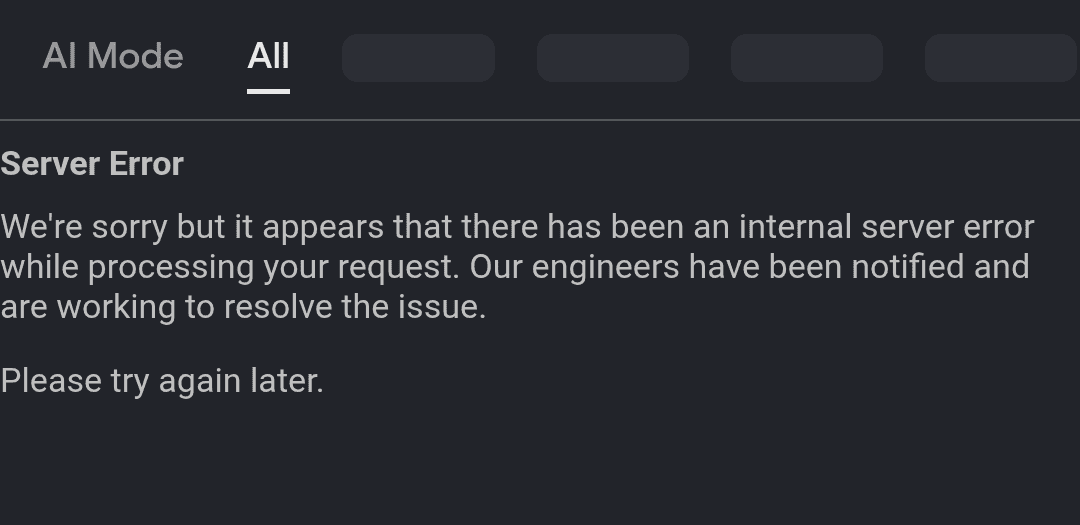
If you recently tried using Google Search and received an internal error message, you might be among a small group of users experiencing the issue right now. Yes, Google Search appears to be down, but only for some users.

Prior to writing this, I was hit by the same error message seen below when I trying to search something on Google. The message read, “We’re sorry, but it appears that there has been an internal server error while processing your request. Our engineers have been notified and are working to resolve the issue. Please try again later.”

As of now, Google Search is working fine for us, but it seems a few users around the globe are still experiencing this internal error issue.

Over on Reddit, many users confirmed seeing a similar message while using Google Search. However, for most users, the service now appears to be back to normal.

Image credit: Reddit/u/Adventurous_Shape_34

DownDetector also shows similar signs, with the spike slowly settling back to normal levels.

Image credit: DownDetector

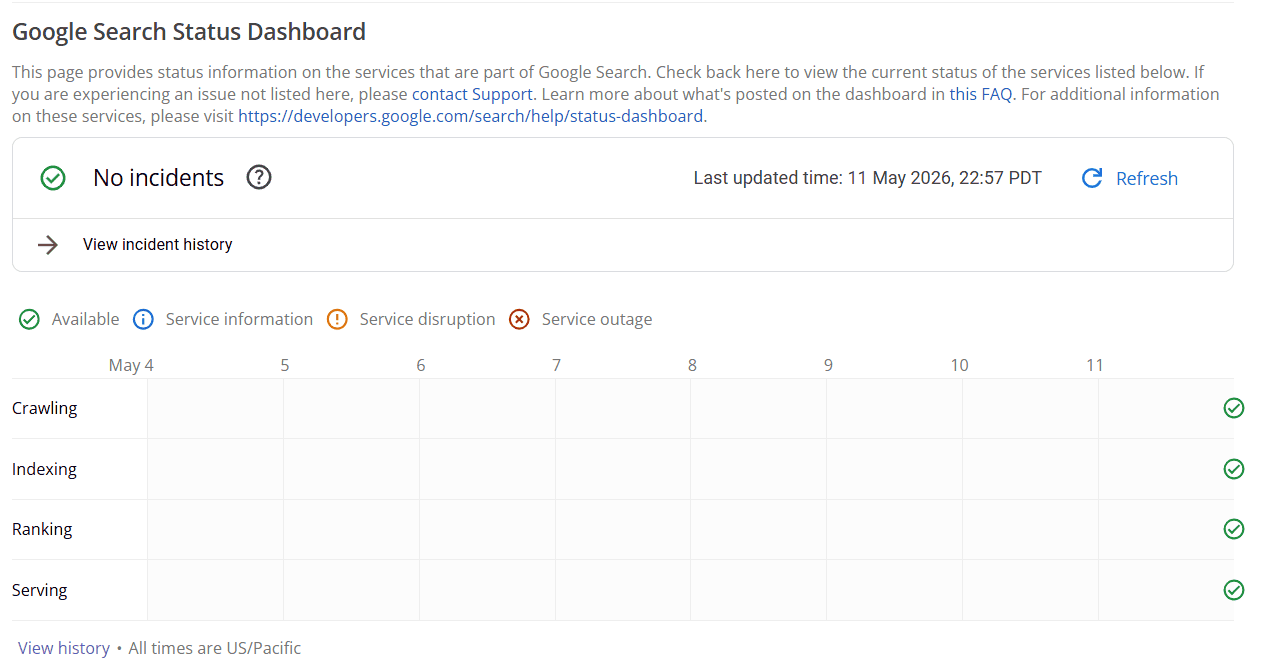
At the time of writing this, the official Google Search Status Dashboard shows “no incidents.” We’ll keep you updated if we hear anything from Google on this matter.

Image credit: Google

In case you are still trying to figure out why Google Search isn’t working for you, make sure to check our guide.

This is a developing story…

Chrome Is Redesigning PWA Installs With a Windows-Like Setup Experience

Google is updating how Progressive Web Apps (PWAs) dialogs look when you try to install them in Chrome Canary. The old version was a simple, small pop‑up box. Now, it looks much more like a native app installation on Windows, with multiple screens that include an intro, options, progress, and a final confirmation similar to a typical Windows app setup.

PWAs are websites that users can install and use like regular desktop or mobile apps. In Chrome, supported websites can open in their own dedicated window, appear in the taskbar or Start menu, and work separately from normal browser tabs.

Back in March, I reported that PWAs in Chrome were getting a multi‑view install flow dialog. The feature is now fully working, though still behind a flag, and it reminds you that you are installing PWAs on Windows, albeit through Chrome. To be fair, Google is making the installation experience unique to each platform, whether that’s Windows, Mac, Linux, or ChromeOS.

Here is what has changed and how it looks today.

Chrome’s new PWA install dialog resembles native Windows app installs

Chrome clearly states that you can “access this site in a dedicated window on your computer” and offers a Next button and a Learn more link that take you to Chrome’s Help Center page to give more context about how to use web apps in Chrome.

The Next button explains that Chrome is adding the app to Chrome Apps and creating a desktop shortcut and taskbar pin, all of which you can configure directly in the dialog, something that was not available in the current version during PWA installation.

Like a Windows app, the Chrome app installation shows a progress screen and then a confirmation dialog with options to open the tab in the app and close the dialog.

You may feel at home with Chrome’s new PWA install experience on Windows, but the extra steps may not please everyone. Keep in mind this may also depend on the app and how the developer adds options, so the experience may vary from app to app.

To uninstall the app, you can use the uninstall option in the app menu or remove it from the Settings app in Windows 11, just like any regular Windows app. Chrome has supported that for some time.

As of now, the feature is fully working and is still behind the “Web App Install Dialog” flag in Chrome Canary. Enable the flag and give the new PWA installation experience a try in Chrome on Windows, Mac, Linux, and ChromeOS.

Let us know what you think of the new PWA install dialog redesign in the comments below, and whether you like it or not.

GhostLock Tool Abuses Windows APIs to Block Access to SMB Files

A security researcher has released a proof-of-concept tool called GhostLock that shows how legitimate Windows file APIs can be abused to make local and SMB-shared files temporarily inaccessible.

The research, created by Kim Dvash of Israel Aerospace Industries, focuses on the Windows CreateFileW() API and its dwShareMode parameter. By opening files with dwShareMode = 0, an attacker can request exclusive access and block other users or applications from opening the same files.

How GhostLock works

When GhostLock keeps file handles open, affected users may see STATUS_SHARING_VIOLATION errors. The files do not need to be encrypted, deleted, or modified. They simply remain unavailable while the exclusive handles stay active.

The tool can recursively open large numbers of files across SMB network shares. It can also continuously reacquire file handles, making recovery harder if defenders only close some sessions or restart affected applications.

The most concerning detail is that the technique reportedly does not require administrator privileges. A standard domain user account could carry out the attack if it has access to the targeted shared files.

Why this is not ransomware

GhostLock does not behave like traditional ransomware. It does not encrypt files or demand payment. Instead, it creates disruption by abusing normal file-locking behavior inside Windows.

Access returns when the SMB session ends, the GhostLock process stops, or the system reboots. Windows then closes the active file handles and releases the locked files.

Even so, the operational impact could be serious. In a business environment, locked shared files could disrupt finance teams, legal departments, production workflows, or any service that relies on shared storage.

Detection may be difficult

The attack mainly generates legitimate file-open requests, which makes it harder to catch with tools that focus on encryption, mass file writes, or suspicious file modifications.

Dvash recommends watching for large numbers of open files with ShareAccess = 0. However, this signal may appear more clearly at the file server or storage management layer than in standard Windows event logs, EDR telemetry, or network flow data.

The researcher also published defensive material, including SIEM detection queries, NDR detection rules, and whitepaper templates to help organizations test their exposure.

Why it matters

GhostLock shows that attackers do not always need malware that destroys or encrypts data. They can also weaponize legitimate Windows functionality to create outages, distract IT teams, and buy time during an intrusion.

A disruption like this could act as a decoy while attackers steal data, move laterally, or expand access elsewhere in the network.

The research follows other recent security developments, including reports of a TCLBanker Trojan spreading through WhatsApp and Outlook, and a fake OpenAI Privacy Filter repository used to distribute malware. OpenAI has also released GPT-5.5-Cyber in a limited preview for security defenders working against emerging threats.

Via Bleeping Computer

Hackers Used AI to Develop First Known Zero-Day 2FA Bypass, Google Researchers Say

Google’s Threat Intelligence Group has reportedly discovered an unknown threat actor of using AI to develop a working zero-day exploit, raising fresh concerns about how quickly offensive AI is evolving in the wild.

AI reportedly used to bypass system defenses

In an extensive report, security researchers noted that they believe hackers used AI to discover and weaponize a previously unknown flaw in a widely used system administration tool. The vulnerability could reportedly bypass multi-factor authentication; a layer of security many organizations rely on beyond passwords.

That kind of access would normally require deep manual research. In this case, researchers say the process appears to have been accelerated with AI assistance, potentially reducing the time needed to turn a bug into a usable exploit.

“For the first time, GTIG has identified a threat actor using a zero-day exploit that we believe was developed with AI. The criminal threat actor planned to use it in a mass exploitation event but our proactive counter discovery may have prevented its use. Threat actors associated with the People’s Republic of China (PRC) and the Democratic People’s Republic of Korea (DPRK) have also demonstrated significant interest in capitalizing on AI for vulnerability discovery,” noted Google in the report.

The company described its confidence in AI involvement as “high,” although it stopped short of naming the cybercrime group or the affected software. The exact model used also remains unconfirmed, though Google said it was not Anthropic’s Mythos or its own Gemini models.

Inside the hidden race between defenders and attackers

The attempt was ultimately blocked after Google notified the software developer, who patched the flaw before it could be widely exploited. System administration tools, like the one targeted here, are especially sensitive since they control servers, accounts, and access permissions across entire organizations.

Anthropic previously warned that advanced models could pose national security risks, and even delayed broader release of its cyber-security model, Mythos. Meanwhile, governments, financial institutions, and tech companies have been quietly coordinating on AI misuse scenarios.

All that said, researchers suggest this may be one of the first documented cases of AI contributing directly to a zero-day exploit in real-world conditions. It is still unclear how frequently such methods are already being used by cybercriminals.
Forza Horizon 6 Dev Warns of Franchise-Wide & Hardware Bans for Playing Leaked Version

If you have been following latest news around Forza Horizon 6, you probably know that early PC builds reportedly leaked online over the weekend. Needless to say, there are multiple reports online claiming that some players have reportedly booted up playable builds ahead of release. Now, the studio behind the game has stepped in with a strict warning.

Playground Games breaks silence on Forza Horizon 6 leak

In a post on X from a few hours ago, Playground Games distanced the leak from any pre-load system issue, confirming it was not an accidental rollout. The studio made it clear that this was not a backend mistake.

Not to mention, Playground Games has issued a strict warning for those playing the leaked version ahead of the official release date.

In the post, Playground Games noted, “We are aware of reports that a build of Forza Horizon 6 has been obtained prior to its release and can confirm this is not the result of a pre-load issue. We are taking strict enforcement action against any individuals found accessing this build including franchise-wide and hardware bans. We encourage fans to sit tight for the game’s release on May 19.”

At least one player has allegedly been handed a ban until the year 9999

Not to forget, after reports of the leak started circulating, a viral screenshot widely shared online suggested that at least one player who allegedly played the leaked Forza Horizon 6 was handed a ban until the year 9999. Yes, you read that correct. Although the details regarding that specific ban are unconfirmed, Playground Games’ stance on accessing the leaked build suggests it won’t shy away from implementing such drastic measures.

As of now, the leak itself appears to be limited to PC, with no confirmed Xbox build circulating. As always, we recommend refraining from accessing the leaked build and waiting for the official launch date to enjoy the game.

Meta Sued by California County Over Facebook and Instagram “Scam” Ads

Meta has found itself again under legal pressure after Santa Clara County reportedly filed a lawsuit that raises serious questions about how the company handles advertising on its biggest platforms, Facebook and Instagram (via Bloomberg).

The lawsuit reportedly accuses Meta of violating California’s false advertising and unfair business practices laws, and defrauding “seniors and families with scam ads.” In a separate report, Reuters notes that the lawsuit is filed in the Santa Clara County Superior Court and cites its report from last December, alleging that may have earned up to $7 billion annually from so-called “high-risk” scam advertisements.

For those unaware, these ads reportedly show clear signs of fraud but were still allowed to circulate across its platforms. The county is seeking restitution, civil damages, and a court order that would block Meta from continuing what it calls unfair business practices.

That’s not all; the lawsuit also suggests Meta was aware of scam ads but did not fully clamp down. Rather, it implemented “guardrails” that limited enforcement when it risked hurting revenue. The lawsuit further claims that Meta’s systems, including its AI tools, may have helped scammers create more convincing ads.

Speaking of the scale of issue, Santa Clara County Counsel Tony LoPresti, in a statement to Reuters told, “The scale of Meta’s misconduct has reached ​an extraordinary level, and it needs to stop. As civil prosecutors in Silicon Valley, we have a special duty ‌to hold ⁠tech companies accountable to the law.”

In a related company news, Meta is reportedly facing internal backlash after introducing a new employee monitoring program directly related to its AI ambitions under CEO Mark Zuckerberg. The backlash comes as employees allegedly describe the monitoring system as invasive and raising concerns about workplace surveillance.

OpenAI Just Announced a New Company Built Around AI Deployment

OpenAI has officially announced the new OpenAI Deployment Company, which it says would help further push AI deeper into real-world enterprise systems. The company also revealed that it had acquired Tomoro and brought almost 150 Forward Deployed Engineers into its portfolio.

OpenAI moves from models to full deployment systems

The latest announcement suggests that the company no longer intends to limit itself to developing models for APIs and other chatbots but will move to build full-scale deployment systems using artificial intelligence systems.

The new Deployment Company will embed Forward Deployed Engineers directly inside organizations. These engineers will work alongside leadership teams to identify high-impact use cases, redesign internal processes, and convert AI capabilities into production-grade systems that run daily operations.

Putting it simply, it is less about offering tools and more about rebuilding how companies actually function around intelligence systems. Notably, the OpenAI Deployment Company is not operating alone. It is backed by a broad coalition of investment and consulting firms including TPG, Bain Capital, Goldman Sachs, SoftBank, McKinsey & Company, and others.

This structure reportedly gives OpenAI access to more than 2,000 companies across multiple industries through partner networks, turning the Deployment Company into a large-scale AI adoption channel rather than a traditional product arm.

Speaking about the new company, Denise Dresser, Chief Revenue Officer at OpenAI, says, “AI is becoming capable of doing increasingly meaningful work inside organizations. The challenge now is helping companies integrate these systems into the infrastructure and workflows that power their businesses. DeployCo is designed to help organizations bridge that gap and turn AI capability into real operational impact.”

Tomoro acquisition adds immediate enterprise muscle

As mentioned at the start, OpenAI has acquired Tomoro, an applied AI consulting and engineering firm known for deploying AI into live enterprise environments. This move helped OpenAI bring roughly 150 specialists from day one, giving the new unit immediate operational depth.

These engineers have previously worked on large-scale systems for companies including Tesco, Virgin Atlantic, and Supercell, where reliability and workflow integration are important. That experience now feeds directly into OpenAI’s enterprise push.

Last but not least, OpenAI is positioning itself closer to enterprise infrastructure than a standalone AI provider. The emphasis is now on embedding AI into decision-making, operations, and long-term business transformation. That said, the success of this model depends heavily on how well organizations can actually restructure around AI rather than simply integrate it on top of existing systems.

One Forza Horizon 6 Player Reportedly Got Banned Until the Year 9999 After Modding the Game

Forza Horizon 6 is still more than a week away from launch, but as it happens most of the time, big games like this one aren’t immune to leaks. Over the weekend, reports started circulating online that early PC files for the racing title had somehow leaked, allowing players to access and allegedly crack the game before release.

According to multiple online claims, roughly 155 GB worth of Forza Horizon 6 data leaked across piracy forums after files reportedly became accessible through Steam backend systems. The leak quickly spread across Reddit, SteamDB discussions, and modding communities, where users claimed they were already booting into playable versions of the game days ahead of launch.

The player allegedly got banned until the year 9999

Well, it seems things have now escalated even further, with Playground Games now hinting that it hates modding. According to a Reddit post thread (now deleted), Forza Horizon 6 players who have been caught using modded or cracked copies are reportedly receiving massive hardware bans directly from the Forza Community Team (via ). And no, we are not talking about a one-week suspension here.

One screenshot quickly went viral, suggesting a player has been banned until December 31, 9999. Yes, literally the year 9999. Notably, it’s not confirmed yet, so we recommend taking this piece of information with a grain of salt.

However, since the suspension message reportedly states the player was banned for “Cheating/Unallowed Modding,” there’s a good chance that the details might be legit. That’s because, it is possible that Microsoft and Playground Games may already be aggressively tracking modified executables linked to leaked builds.

Some Reddit users also claimed at least one banned player was already known within Forza modding circles for regularly experimenting with cheat menus. That being said, it remains unclear whether every leaked-copy player is getting flagged automatically or whether the bans are specifically targeting users injecting modified files into the game.

Looks like Playground Games isn’t playing around

With official launch just over a week away, needless to say, Playground Games isn’t going easy on modders. What makes this situation especially notable is how quickly banning appears to have started. Usually, leaked builds circulate quietly for days before publishers react publicly. Well, in this case, the banhammer seemingly arrived almost immediately.

As of now, neither Microsoft nor Playground Games has officially commented on the leak. But with extensive ban reports surfacing online, the message appears to be loud and clear: touching leaked or modded copies may completely revoke your access before the game even launches.

Do you think a “year 9999” ban is justified for modding a leaked copy, or is the Forza team going completely overboard here?

30+ Games, Including Subnautica 2, Join Xbox This Week (May 11-15)

If you have been wondering which new games are heading to Xbox this week, Microsoft has officially shared the list. As confirmed by Xbox Wire post, over 30 games will join Xbox between May 11 and May 15, meaning this week looks packed for players. From cozy camper van adventures and horror-filled Backrooms exploration to the long-awaited arrival of Subnautica 2 in Game Preview, Xbox players are getting a little bit of everything over the next few days.

The headline Xbox addition this week is Subnautica 2 (Game Preview) launching on May 14 as day one Game Pass title. The underwater survival sequel supports up to four-player co-op and introduces an entirely new alien world to explore. Moving on, Backrooms, Call of the Elder Gods, and Directive 8020 are all dropping within days of each other.

All games coming to Xbox this week (May 11 to 15)

GameRelease Date
OutboundMay 11
Nitro Gen OmegaMay 11
Black JacketMay 12
Call of the Elder GodsMay 12
Directive 8020May 12
Snack and Quack: Duckling StepsMay 12
Habitat Shapes: The Tropical JourneyMay 13
Milky Way TD Survivors AutobattlerMay 13
Yomi 2May 13
Subnautica 2May 14
BackroomsMay 14
BlockonMay 14
GallipoliMay 14
Hidden Memory: Neko’s LifeMay 14
Journey of Johann: To The SkyMay 14
Menace from the Deep: Complete EditionMay 14
RoadOutMay 14
Slime JumperMay 14
Tiny Lands 2May 14
Underling UprisingMay 14
Aery: Calm HorizonMay 15
Bandits on WestMay 15
Countryside Farm CluesMay 15
Dentist BlingMay 15
Middle Evil: The PriestMay 15
PawbayMay 15
Saccharine EchoMay 15
Slots & DaggersMay 15
Solomon Snow: First ContactMay 15
SummerhouseMay 15
Zumba World: The Marble Monster AdventureMay 15

Which of the aforementioned game are you most excited for? Let us know your picks in the comment section below. As a reminder, Discord has also announced Xbox Game Pass starter edition for Nitro subscribers. Meanwhile, eligible Xbox Game Pass subscribers will be getting Discord Nitro benefits later this month.

EU May Restrict U.S. Cloud Giants, Including Microsoft, from Handling Sensitive Government Data

Europe may finally be ready to put on the brakes with its overreliance on cloud services from American tech companies. If everything goes ahead as planned, it could be one of the largest shakeups in cloud infrastructure in years.

Europe may restrict Microsoft, Google, and Amazon from handling critical government data

The news first reported by CNBC late last week suggests that the European Commission is currently exploring rules limiting the use of US-based cloud providers for handling sensitive data by EU governments and other public institutions.

The rulemaking process is said to be included in the “Tech Sovereignty Package” set to be released on May 27 by the EU. Although there are internal negotiations currently taking place within the European Union, the direction thus far is quite evident: Europe needs more control over its important data and access rights.

The proposals, according to officials involved in the negotiations, may impose restrictions on the utilization of non-European cloud services by government entities in the EU in critical industries. This involves financial, legal, and healthcare infrastructure sectors.

CNBC quoted a Commission official who said that the “core idea is defining sectors that have to be hosted on European cloud capacity.” Another official reportedly added that “U.S. cloud providers could face restrictions in certain sensitive and strategic sectors.”

It is important note that such measures will not entirely exclude AWS, Microsoft Azure, and Google Cloud from government contracts. However, the new measures will likely target how these firms process sensitive workloads.

Europe’s growing “digital sovereignty” push is becoming very real

In light of increasing geopolitical tensions with the United States, Europe seems less willing to depend solely on American providers of digital infrastructure.

One of the key issues reportedly causing anxiety for the region involves the United States’ CLOUD Act of 2018, through which American agencies can compel companies based within the US to provide them with data irrespective of where it may be physically located.

This issue has been pushing Europe towards its “digital sovereignty” agenda for quite some time. Earlier this month, multiple reports pointed out France plans to replace Windows with Linux and adopt EU tech solutions to boost digital sovereignty and reduce reliance on Microsoft. Not to forget, a $2.8 billion lawsuit against Microsoft over Windows Server pricing has recently also moved to trial in the UK.

Dell SupportAssist Update Reportedly Causing BSOD and Reboot Loops on Windows 11 PCs

Dell users are reportedly experiencing repeated Blue Screens of Death and random reboot loops after a recent update tied to Dell SupportAssist software. According to reports highlighted by Neowin, some affected users initially believed a broken Windows 11 update caused the issue.

The crashes reportedly include frequent BSODs, kernel power critical errors, and unexpected restarts. Some users claim their systems crash roughly every 30 minutes, making affected PCs difficult to use reliably.

Community members investigating the problem reportedly analyzed crash dumps with WinDbg and traced the failures back to Dell SupportAssist-related services. Several users said uninstalling SupportAssist, SupportAssist Remediation, and the OS Recovery Plugin immediately stopped the crashes.

Users initially blamed Windows 11

Because the failures appeared after recent system updates, many users reportedly assumed Microsoft or Windows Update caused the instability. However, the findings suggest third-party OEM utilities may instead be responsible.

This situation highlights how preinstalled manufacturer software can sometimes trigger major Windows stability issues, including BSODs, boot loops, and even BitLocker recovery prompts.

Dell has not officially responded yet

Dell has not released an official statement about the reported issue so far. Some users speculate the lack of response may relate to reduced weekend support availability.

For now, affected users across community forums continue recommending the removal of Dell SupportAssist components as a temporary workaround until Dell provides a permanent fix.

In other Microsoft-related news, Xbox Mode reportedly still has issues with secondary displays, while Microsoft recently defended its new Windows 11 CPU boost feature amid online criticism.

Eligible Xbox Game Pass Members to Get Discord Nitro Benefits Later This Month

After multiple leaks and rumors, Discord today confirmed that Nitro subscribers now get free access to a starter edition of Xbox Game Pass. As previously leaked, Discord Nitro subscribers will get a library of 50+ PC and console games to download and play anytime they want. The company has further confirmed that the Nitro membership remains at the same $9.99 per month or $99.99 per year.

Discord Nitro benefits are heading to Xbox Game Pass subscribers later this month

As far as Game Pass members are concerned, they are also getting a treat from Xbox. In the announcement post, Xbox confirmed, “Soon, eligible Xbox Game Pass subscribers will also receive Discord Nitro benefits as part of our ongoing partnership. This will start later this month.”

As far as perks are concerned, Xbox Game Pass members will receive 250 Discord Orbs every month alongside a 1.2x bonus multiplier for completing Discord Quests. That’s not all; Xbox Game Pass members will also get automatically applied discounts inside the Discord Shop.

Since Xbox has used the word “eligible,” it’s unclear subscribers of which Xbox Game Pass plan will get the perks later this month. That said, Xbox has further confirmed that it’ll “keep working alongside Discord to bring players closer together.”

While the company hasn’t shared complete redemption details yet, it has promised to share details on how eligible Xbox Game Pass subscribers can access these Discord benefits.

Xbox Game Pass Starter Edition Officially Announced for Discord Nitro Users

Discord and Xbox are officially expanding their partnership once again, but this time, things are going far beyond voice chat integration and game streaming. While the details of the new partnership leaked last month, both Xbox and Discord have officially announced that Discord Nitro members are now getting Xbox Game Pass included as part of a brand-new “Nitro Rewards” push. Whereas Xbox Game Pass subscribers are also set to receive Discord Nitro perks later this month.

Discord Nitro now includes Xbox Game Pass and gaming rewards

Between Xbox Game Pass, Discord Nitro, and premium gaming hardware discounts now getting bundled together, both companies appear to be leaning heavily into the idea of an all-in-one gaming lifestyle subscription. Speaking of the biggest change, Discord has officially confirmed that eligible Nitro members now receive a starter edition of Xbox Game Pass at no additional cost.

According to Discord, the bundle includes access to a library of over 50 PC and console games alongside 10 hours of cloud gaming support. In the announcement post, Discord says the idea is to reduce “friction” around trying new games rather than forcing players to purchase every title individually. The company specifically highlighted games like Fallout 4, Stardew Valley, DayZ, Deep Rock Galactic, Overcooked 2, and Grounded as part of the lineup.

That’s not all. Nitro members are also getting new hardware discounts, including up to 30% off Logitech G products, 15% off SteelSeries gear, and 20% off KontrolFreek accessories.

Xbox Game Pass users are also getting Discord Nitro perks soon

On the Xbox side, eligible Game Pass subscribers will soon begin receiving Discord Nitro-related benefits as part of the partnership expansion. Those perks will include 250 Discord Orbs every month, 1.2x bonus Orbs for completing Quests, and automatic Discord Shop discounts. Discord is also rolling out a new “Usage” and rewards-focused experience designed to keep Nitro members more engaged across gaming services.

At a time when subscription fatigue is becoming increasingly common across gaming and streaming services, both Xbox and Discord appear to be betting that stacking perks, rewards, cloud gaming, social features, and hardware discounts together may keep players locked deeper into both ecosystems.

Google’s “Gemini Omni” AI Video Model May Have Leaked via the Gemini App

In the past few days, rumors and leaks around Google’s upcoming Gemini Omni model have been circulating online frequently, especially considering its expected announcement at Google I/O this year. Well, in what seems to be a fresh leak originating from the Gemini app itself, Gemini Omni model may have just leaked.

As noted by TestingCatalog on X, a Reddit user seems to have spotted the new “Omni” model inside the Gemini mobile app. It seems Google is working on a powerful new multimodal video model capable of remixing clips, editing videos directly in chat, and generating cinematic scenes with synchronized audio.

While Google already offers Veo for video generation, the new findings suggest Gemini Omni may become something much larger and far more integrated into the Gemini ecosystem itself.

Leaked Gemini Omni video model may be a major step beyond Veo

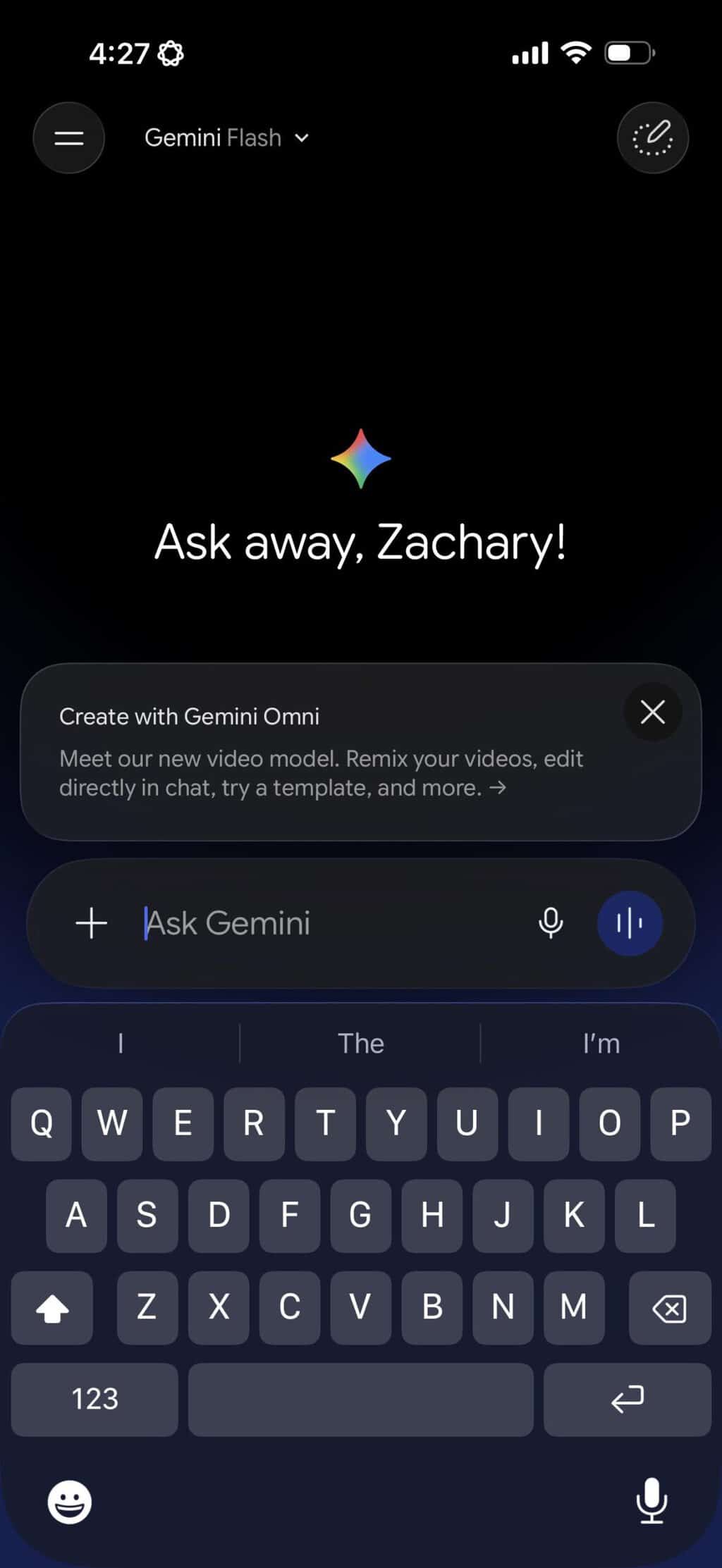
According to the findings, the Gemini app now contains references to a new “Gemini Omni” video model. In the leaked screenshot, the description of the Omni model reads, “Meet our new video model. Remix your videos, edit directly in chat, try a template, and more.”

That wording alone strongly suggests Google wants users creating and editing videos directly inside Gemini conversations rather than jumping between separate tools. The user who spotted the references to the model appears to have used it after other Redditors encouraged him to try it out.

He further claims the model appears to consume usage limits quickly, with Google reportedly preparing a new “Usage” tab for both web and mobile users to monitor generation activity.

Image credit: Reddit/u/Zacatac_391

Interestingly, early feedback suggests Gemini Omni may already outperform Veo in several areas. The user also praised the model’s prompt adherence, smoother camera angle transitions, stronger scene coherence, and significantly improved voice generation quality.

Here’s a quick look at the video allegedly generated using the new Omni model:

At a time when rivals like OpenAI are also pushing toward more capable AI agents and creative tools, Google increasingly appears ready to position Gemini Omni as more than just another chatbot upgrade ahead of Google I/O.

Microsoft Defends Windows 11’s New Performance Boost Feature Amid Online Backlash

Microsoft is reportedly testing a new Windows 11 performance feature called Low Latency Profile, designed to improve responsiveness across the operating system. According to The Verge, the feature temporarily boosts CPU frequency in short bursts to make common Windows interactions feel noticeably quicker.

The optimization reportedly targets areas users interact with constantly, including the Start menu, context menus, flyouts, File Explorer, and application launches. Microsoft appears focused on reducing the small delays and sluggish animations that some Windows 11 users have criticized since launch.

Microsoft reportedly saw major responsiveness gains

Internal testing allegedly showed substantial performance improvements in both Windows interface responsiveness and Microsoft applications. Reports claim Microsoft observed up to 40% faster app launch times and up to 70% faster Start menu and context menu responsiveness.

Apps reportedly benefiting from the feature include Microsoft Outlook, Microsoft Store, Paint, and File Explorer. Instead of permanently increasing CPU clocks, Windows briefly ramps up processor frequency when the user interacts with foreground elements, then lowers performance levels again once the action finishes.

Similar technology already exists on other platforms

The reported behavior closely resembles CPU scheduling techniques already used by macOS, Linux distributions, and modern smartphones. Rather than maintaining high sustained performance, the system dynamically prioritizes interactive foreground tasks to make the operating system feel more responsive.

Scott Hanselman publicly defended the approach after criticism emerged online. Hanselman reportedly argued that smartphones already use similar boosting behavior and noted that Apple and Linux platforms implement comparable scheduling techniques.

Critics say Microsoft should optimize Windows 11 further

Some critics accused Microsoft of masking Windows 11 sluggishness instead of addressing deeper software inefficiencies. Others argued the company should focus more heavily on reducing system bloat instead of relying on temporary CPU bursts to improve perceived responsiveness.

The feature reportedly forms part of a broader Windows 11 optimization effort currently underway at Microsoft. The company has recently worked on File Explorer improvements, reducing Copilot clutter, modernizing WinUI components, and making Windows Update behavior less disruptive.

Microsoft is also reportedly developing File Explorer preloading optimizations to improve launch times further. In addition, recent Experimental builds revealed the return of the classic Refresh button inside the modern Windows 11 context menu.

Microsoft appears focused on making Windows 11 feel faster

The broader strategy suggests Microsoft wants Windows 11 to feel significantly quicker without requiring users to upgrade hardware. Instead of depending entirely on raw CPU performance, the company appears increasingly focused on smarter task prioritization, lower interface latency, and improved responsiveness throughout the operating system.

Microsoft Wants You on Bing So Bad It’s Offering $1 Million Cash, Mercedes-Benz Cars & More

In the past, Microsoft has tried to pull Chrome users to Edge by offering a chance to win up to $1 million or a luxury car. Well, that promotional stunt seems to be in motion again, but this time Microsoft wants you to use Bing to browse the internet. So, what’s on offer this time around, you may ask? Well, Microsoft is now literally dangling $1 million in cash, Mercedes-Benz cars, Xbox hardware, and even Apple AirPods, and it says a lot about the state of the modern search engine war.

Microsoft is giving away cash, cars, and gadgets to Bing users

As reported by Windows Latest, Microsoft has been displaying “$2,000,000 Total Prize Drop” banners to users who search using Bing. While some may confuse it with one of those internet pop-up scams people instantly avoid. But this one is real, coming right from Microsoft, and rapidly approaching its May 21 deadline. The company also features the name and photos of winners of these massive prizes on its rewards page.

Image credit: Windows Latest

Speaking of the promotion, Microsoft’s Rewards Ultimate Giveaway Sweepstakes offer gives one lucky user a chance to win staggering $1 million cash prize. While others may walk away with Mercedes-Benz cars. Beside the whopping $1 million in cash and Mercedes-Benz cars, Microsoft is also giving away Copilot+ PCs, Xbox gear, Microsoft 365 subscriptions, and surprisingly, Apple AirPods.

Image credit: Microsoft

The campaign becomes even more aggressive once users enter Microsoft’s Rewards dashboard. Installing Edge, setting Bing as default search, backing up files through OneDrive, trying Copilot, and subscribing to Microsoft 365 all unlock additional entries. In short, Microsoft is no longer simply asking people to try Bing. It is actively rewarding users for changing their digital habits.

At a time when Microsoft claims Bing has crossed 1 billion users globally, the company still appears willing to spend millions trying to pull people away from Google Search. Despite years of AI integrations, Copilot features, and Windows-level promotion, changing default search behavior remains incredibly difficult. Microsoft knows that competing with Google requires more than just a good product now. Apparently, it may also require giant checks, luxury cars, and a lot of giveaways.

Valve May Be Preparing Steam Machine Reservation Queue System

Valve could be getting ready to introduce a reservation queue system for the Steam Machine, based on newly discovered Steam backend code spotted by SteamTracking and Reddit user “pepeizq”, as VideoCardz reports.

The discovery comes shortly after the Steam Controller reportedly sold out quickly, with many units appearing on resale platforms like eBay. Valve will handle the controller shortage through a reservation queue system, and newly uncovered backend references suggest the company may expand the same approach to future Steam hardware.

New Steam Backend Code References Reservation Features

A recent Steam community JavaScript update reportedly added several new reservation-related fields and hardware package references. The code mentions multiple Valve hardware products, including Steam Machine, Steam Frame, Steam Controller, and Steam Deck.

The newly discovered Steam Machine package IDs include:

  • 1629447
  • 1629446
  • 1629458
  • 1629460

SteamDB findings reportedly connect those package IDs through changelist inference to AppID 4165910, listed internally as “Hardware Steam Machine.”

Multiple Steam Machine Configurations May Be Planned

Community speculation on Reddit suggests Valve could launch several configurations of the rumored device. Current theories point toward 512GB and 2TB variants, potentially sold either with or without a Steam Controller bundle.

Part of that speculation comes from Valve previously confirming support for both 512GB and 2TB storage options alongside microSD expansion capabilities.

While Valve has not officially announced the Steam Machine or its specifications, the backend package structure appears to align with multiple hardware configurations.

Reservation System Mirrors Steam Controller Rules

The same backend update reportedly expanded the Steam Controller reservation queue system as well, hinting at a broader hardware reservation infrastructure inside Steam.

Existing Steam Controller reservation rules reportedly include:

  • Steam account must remain in good standing
  • Purchase history required before April 27, 2026
  • Users receive a 72-hour purchase window after invitation

Those restrictions likely aim to reduce scalping and automated purchases, especially after rapid sellouts affected previous Valve hardware launches.

Pricing Still Unknown

Valve has not revealed official pricing for any Steam Machine hardware. However, earlier retailer placeholder listings reportedly referenced both 512GB and 2TB versions with relatively high pre-release pricing.

For now, Valve has not confirmed the existence of a new Steam Machine. Still, the newly discovered Steam backend references continue fueling speculation that new Steam hardware may arrive sooner than expected.

Microsoft Brings Classic Refresh Option Back to Windows 11 File Explorer

Microsoft appears to be reversing another controversial Windows 11 design change by restoring the classic “Refresh” option directly inside the modern File Explorer context menu.

According to Windows Latest, the change is currently testing in Windows 11 Experimental Build 26300.8376 and also adds a direct “Print” option to the redesigned right-click menu. Until now, both actions required users to open the older legacy menu through “Show more options.”

Microsoft continues restoring missing Windows 10 functionality

Windows 11’s modern context menu has faced criticism since launch for removing familiar shortcuts and slowing down common workflows. Many users complained that basic actions required extra clicks compared to Windows 10.

Microsoft previously defended the redesign by arguing that Refresh functionality already existed in File Explorer’s address bar. However, users continued requesting traditional right-click access anywhere inside folders and desktop views.

The upcoming change suggests Microsoft is gradually walking back some of the more restrictive decisions introduced with the Windows 11 redesign.

File Explorer improvements continue across recent builds

The updated File Explorer experience reportedly includes several additional usability improvements aimed at reducing friction for everyday users and power users alike.

Microsoft is working on faster context menu performance, smoother keyboard navigation across Explorer UI elements, and less cluttered flyouts. The company also plans to improve the Details view by displaying file sizes in more readable formats such as KB, MB, and GB, instead of always showing values exclusively in KB.

The address bar is also receiving fixes for paths containing double backslashes and quotation marks. Microsoft reportedly improved how renamed files appear and fixed issues where address bar suggestions failed to close properly.

Bigger Windows 11 cleanup effort underway

The latest File Explorer changes align with Microsoft’s broader effort to restore missing Windows 10 functionality while modernizing Windows 11 using newer WinUI 3 technologies.

Recent preview builds already revealed testing for smaller taskbar modes, movable taskbar functionality, and additional File Explorer optimizations. Microsoft is also reportedly preparing a modern file properties dialog and faster File Explorer loading through preloading improvements.

The company appears increasingly focused on improving usability after years of criticism surrounding Windows 11’s simplified interface decisions.

Microsoft-Commissioned Report Fires Back at MacBook Neo with Bold Windows 11 Laptops’ Performance Claims

Ever since its launch, Apple’s $599 MacBook Neo has rattled parts of the Windows PC market. Not to mention, Apple’s budget laptop caters to the needs of budget buyers and college students alike. Even so, Apple also highlighted the budget MacBook running all the essential Microsoft Office products deliberately in its MacBook Neo promo videos.

Well, Microsoft is aware of the popularity of the MacBook Neo, which is why it is now doing every bit it can to push back with benchmark numbers of its own. As first reported by folks at Tom’s Guide, Microsoft recently commissioned research company Signal65 to compare a group of Windows 11 laptops against Apple’s latest budget MacBook Neo. Not to mention, Microsoft is heavily highlighting hardware value, performance, and bundled software advantages.

Microsoft-commissioned report claims MacBook Neo can’t keep up with Windows 11 PCs in terms of performance

According to the report, Signal65 tested the 8GB/256GB MacBook Neo against several Windows 11 systems, including the Lenovo IdeaPad Slim 3x, HP OmniBook 5, Lenovo Yoga 7i, and HP OmniBook X Flip. According to the report, every Windows laptop shipped with 16GB RAM and between 512GB to 1TB storage, while also offering more ports like HDMI 2.1, Thunderbolt 4, USB-A, and SD card readers.

The report cites Cinebench 2026 benchmarks where all the Windows 11 laptops beat the MacBook Neo on the multi-thread test. The report notes, “Across all four promotional systems, multi-thread CPU performance ranged from 2.3x to 3.1x faster than the 5-year-old reference system, providing additional headroom for more demanding computing scenarios.” Meanwhile, in real-life battery life tests, Windows PCs reportedly offered 12-56% better battery life, resulting in longer runtimes during office application usage and more time between recharges.

That’s not all. Some metrics from the report, highlighted by folks at Windows Latest, also point out that Adobe Photoshop workflows on select Windows laptops were reportedly up to 58% faster than Apple’s budget MacBook. Meanwhile, Procyon Office Productivity tests reportedly showed performance leads of up to 27%, while Microsoft Word workloads were said to run up to 1.8 times faster.

The comparison isn’t entirely straightforward

While the Microsoft-commissioned report also notes “stronger graphics and gaming ecosystem,” it’s worth noting that the Lenovo Yoga 7i and HP OmniBook X Flip are way more expensive than the MacBook Neo. So, it’s obvious that those Windows PCs will come out looking better in comparison to the MacBook Neo.

Also, keep in mind that the MacBook Neo is designed to be a budget laptop, allowing college students to get through their work and daily tasks. Surely, the report doesn’t factor in portability and a few other aspects, so there’s always a question about whether the comparison holds up. That being said, Microsoft isn’t just proving that Windows 11 laptops are specs-heavy with this commissioned report.

Microsoft’s Ultimate College Bundle

Signal65’s whitepaper also talks about significantly better overall value when “factoring in” the benefits of Microsoft’s recently unveiled “Ultimate College Bundle.” For those unaware, purchasing select Windows 11 PCs through June 30, or until stock lasts, can get you the following perks:

  • 1 year of Microsoft 365 Premium
  • 1 year of Xbox Game Pass Ultimate
  • A free design-your-own Xbox Wireless Controller

All that said, Microsoft is doing everything it can to make buyers pick Windows 11 laptops over the MacBook Neo. More of it also comes from the increasing popularity of the MacBook Neo, with some reports now even claiming that Apple is running out of A18 Pro chips for the MacBook Neo and may require a new batch from TSMC to fulfill the growing demand.

Article feature image source: Microsoft

Xbox Fans Have Already Cast 350,000 Votes for Backwards Compatibility Games

Microsoft may not have officially revived the Xbox backwards compatibility program yet, but demand from players already appears massive.

Xbox VP of next-generation Jason Ronald recently pointed fans toward an unofficial Xbox Game Preservation voting website where users can request older titles for potential backwards compatibility support. According to Pure Xbox, the site has already recorded more than 350,000 total votes and roughly 40,000 unique submissions from Xbox players.

The voting system reportedly allows users to submit up to 10 votes per day across original Xbox and Xbox 360 games.

Original Xbox classics dominate requests

Many of the most requested original Xbox titles come from the early 2000s era of arcade racers, platformers, and licensed action games.

Leading requests reportedly include:

  • The Simpsons: Hit & Run
  • Jet Set Radio Future
  • Need for Speed: Underground 2
  • Sonic Heroes
  • Def Jam: Fight for NY
  • Burnout 3: Takedown
  • Spider-Man 2
  • Ultimate Spider-Man
  • Crash Twinsanity
  • Sonic Riders

Several of these games remain unavailable on modern Xbox hardware despite maintaining strong cult followings years later.

Xbox 360 requests heavily focused on Activision-era titles

The Xbox 360 category appears dominated by older licensed games, especially Transformers and Marvel-related releases.

Top requests reportedly include:

  • Transformers: War for Cybertron
  • Transformers: Fall of Cybertron
  • Need for Speed: Most Wanted
  • Transformers: Devastation
  • Transformers: Dark of the Moon
  • Spider-Man: Shattered Dimensions
  • Transformers: The Game
  • Transformers: Revenge of the Fallen
  • Spider-Man: Web of Shadows
  • Deadpool

Many of these titles disappeared from digital storefronts years ago due to expired licensing agreements.

Licensing could become the biggest obstacle

Even if Microsoft decides to expand backwards compatibility support again, bringing many of these games back may prove difficult.

Older racing games often include licensed music that requires renegotiation. Marvel and Transformers titles also involve multiple rights holders, publisher agreements, and expired distribution deals.

Microsoft would also need to ensure the games function properly on modern Xbox Series X|S hardware while maintaining performance and stability standards.

Demand for preservation remains strong

Outside major franchises, players also pushed for several lesser-known cult classics, including Alpha Protocol, Eternal Sonata, Brute Force, Wet, The Saboteur, Darkwatch, Gun, Singularity, Remember Me, and 25 to Life.

The voting activity highlights how much interest still exists around Xbox game preservation and legacy support across both the original Xbox and Xbox 360 generations.

In other Xbox news, questions still remain around Microsoft’s long-term exclusivity strategy, although more Project Helix details are reportedly expected later this year.

RPCS3 Introduces Strict Rules for AI-Generated Code Contributions

RPCS3 has updated its contributor guidelines to crack down on low-quality AI-generated code submissions, as the emulator project faces growing frustration over what developers describe as “AI slop” pull requests, according to Neowin.

The PlayStation 3 emulator team says contributors must fully understand, test, and take ownership of any code they submit, even if AI tools helped generate parts of it.

RPCS3 Tightens Rules Around AI-Assisted Development

Under the new guidelines, RPCS3 still allows developers to use AI tools for tasks such as research or reverse engineering assistance. However, maintainers made it clear that blindly submitting generated code will no longer be tolerated.

The project now requires contributors to disclose when AI tools were involved in a pull request. Developers must also explain which sections were AI-generated and what human testing or review took place before submission.

RPCS3 says maintainers may immediately close pull requests that fail to include proper disclosure.

The project also clarified that communication with maintainers must come directly from humans rather than autonomous AI agents.

Developers Say AI PRs Waste Maintainer Time

According to RPCS3 developers, many recent AI-generated submissions created extra review work while offering little value.

Maintainers claim some pull requests arrived untested, contained incorrect implementations, or introduced functionality regressions that could break parts of the emulator if merged.

The team warned that repeated violations of the updated rules could result in repository bans.

In a recent public statement, RPCS3 developers directly told users to “stop submitting AI slop code pull requests.” The project also argued that RPCS3 reached technical maturity long before modern large language models existed.

Community Debate Continues

The stricter stance triggered criticism from some AI advocates and so-called “vibe coders,” who argued that AI-assisted development should remain more open.

RPCS3 developers appeared largely unmoved by the backlash and continued defending the stricter moderation policy.

The situation reflects a broader issue across open-source software communities, where maintainers increasingly report burnout from reviewing low-quality AI-generated contributions.

Many projects now face a growing divide between developers embracing AI-assisted workflows and maintainers prioritizing long-term code quality, stability, and accountability.

In other RPCS3 news, the emulator recently improved ARM64 support and was also spotted running on jailbroken PlayStation 5 consoles.

‘My Nintendo Store’ to Be Renamed to ‘Nintendo Store’ on May 27

As previously rumored, Nintendo announced a price hike for the Switch 2 console in the US and many other regions, including Japan. While the US price hike is set to take effect from September 1, 2026, Nintendo is making a small but noticeable branding change to its digital storefront later this month.

Over on X, the company has confirmed that “My Nintendo Store” will officially be renamed to “Nintendo Store” starting May 27.

Nintendo is simplifying the name of its online storefront

Speaking of the change, Nintendo says the rename only affects the storefront branding itself. The company has clarified that there will be no changes to the actual service content, meaning purchases, accounts, and existing features should remain exactly the same after the transition.

At a time when major gaming platforms, including Xbox, are increasingly streamlining branding across services and ecosystems, this change appears to be part of Nintendo’s effort to simplify its online identity in the Switch 2 era.

While this storefront rename is much smaller in comparison to news delivered by the company in the recent past, it may help create a more unified branding approach globally.

For those unaware, the “My” branding has been closely linked to Nintendo’s account ecosystem for years through services like My Nintendo Rewards and the My Nintendo Store itself. As of now, Nintendo hasn’t announced any additional platform or storefront redesigns alongside the rename.

All that said, Nintendo players are quite happy with this subtle branding change. Many feel that the new name is “a lot cleaner.” Not to forget, Nintendo has also promised a strong lineup of Switch 2 games to offset the rising cost of the console in many regions.

Microsoft Confirms Outlook Quick Steps Bug in Classic Outlook

Microsoft has acknowledged a new bug affecting Quick Steps in classic Outlook for Microsoft 365. The issue impacts Version 2512 (Build 19530.20138), where some Quick Steps suddenly appear grayed out and become unavailable.

According to Microsoft, the problem happens when Outlook determines certain Quick Step actions “can’t be fulfilled.” Reports indicate the bug commonly affects actions such as clearing message flags and removing categories from emails.

Quick Steps is one of the long-standing productivity features in classic Outlook. It allows users to automate repetitive email tasks such as moving messages, forwarding emails, marking mail as read, assigning categories, and creating custom workflows with keyboard shortcuts.

Outlook Users Reportedly Complained for Months

Microsoft says the Outlook team is currently investigating the issue, though users reportedly complained about the behavior for months before the company formally acknowledged it.

For now, Microsoft shared several temporary workarounds. One option involves assigning keyboard shortcuts directly to affected Quick Steps through the “Manage Quick Steps” menu and the Shortcut key dropdown.

Another workaround involves rolling back Outlook to Version 2511 (Build 19426.20218). Microsoft also suggested temporarily switching to Outlook on the web or the new Outlook app until a permanent fix arrives.

To roll back Outlook, Microsoft recommends running the following command:

officec2rclient.exe /update user updatetoversion=16.0.19426.20218

The company additionally advised users to disable Office auto-updates temporarily, otherwise the problematic build may reinstall automatically.

In other Outlook-related developments, Microsoft recently confirmed the shutdown of Outlook Lite and retired the Contact Masking feature. Separately, security researchers also linked the new TCLBanker Trojan to campaigns spreading through Outlook and WhatsApp.

Via Neowin