Arc Raiders Riven Tides Update Drops with New Map, Big Enemies, Fresh Event & More

Arc Raiders players have just received the Riven Tides Patch 1.26.0. The latest patch brings a new map, fresh enemies, balance changes, and a long list of gameplay fixes. The update expands the Rust Belt experience with new exploration zones, loot systems, and combat adjustments designed to reshape how raids unfold.

Riven Tides update brings new map and ARC threat

The biggest addition is the Riven Tides map, which introduces an abandoned shoreline, Exodus port, and the Panorama Azzurro hotel. Players will also encounter Beachcombing, a new map condition that allows buried treasure hunting using specific tools, adding a new layer of exploration risk and reward.

A new ARC enemy called the ARC Turbine also joins the battlefield, patrolling aerial zones. However, its exact behavior and counter strategies remain unclear, pushing players to discover its mechanics in real time.

Several new items are also introduced, including the Powered Descender gadget, Crash Mat throwable, White Flag deployable, Dockmaster’s Detector, and the Avian Alarm project. A new “Last Resort” event lets players earn rewards through ship model collection and XP progression across maps.

Weapon balance, ARC tweaks, and system changes

The update also overhauls weapon economy and durability systems. Upgrading weapons now restores 25 percent durability, while spawn rates and durability ranges have been adjusted across map zones to increase tension in high-tier areas.

Durability loss per shot has also been rebalanced, favoring higher-tier weapons, while knocked-out penalties have been reduced. ARC enemy presence has been adjusted too, with Comets and Fireflies reduced in beginner-focused sessions to ease early-game difficulty.

Combat items like Trigger ‘Nade and Photoelectric Cloak have also been tuned, alongside buffs to the Bettina weapon, which now deals higher damage but fires slower.

System fixes, stability updates, and known issues

The patch also includes wide-ranging fixes across ARC behavior, maps, audio, UI, and performance systems. Issues like broken aim assist, stuck enemies, animation bugs, and audio glitches have been addressed.

Several known issues still remain, including rare purchase bugs, missing quest completion in Riven Tides, and visual glitches in spectator mode. Some ARC units may still spawn incorrectly or behave unpredictably in certain areas.

You can find the full release notes for the update here.

WhatsApp Reportedly Working on Native Cloud Backup with Default End-to-End Encryption

All this while, WhatsApp users on Android and iOS had the option to back up their chats to Google Drive and iCloud. While it has been useful for WhatsApp users out there, the issue around backups eating up cloud storage has always been there.

Well, Meta is fixing exactly that, as the company is developing a first-party cloud backup for WhatsApp. That’s according to a report by WABetaInfo, hinting that Meta is looking to reduce reliance on third-party cloud services.

WhatsApp is developing its own chat backup system, moving away from Google Drive and iCloud

The in-development feature would let users choose between existing cloud providers or WhatsApp’s own storage. If selected, WhatsApp could offer around 2GB of free storage for chat backups. It may not sound like much, but it does create a separate space that doesn’t interfere with your main cloud quota.

Notably, backups stored on WhatsApp’s cloud will reportedly be end-to-end encrypted by default. Users may also get multiple protection options, including passkeys, passwords, or a 64-digit encryption key. Passkeys, in particular, could simplify things. Rather than remembering complex credentials, users can rely on device-based authentication like fingerprint or face unlock.

Image credit: WABetaInfo

Paid storage tipped, rollout still unclear

Speaking of storage limits, 2GB likely won’t cut it for heavy users. The news outlet further hints that WhatsApp may introduce a 50GB paid tier priced at around $0.99, though that figure isn’t final yet. It’s also unclear whether the free storage will be available to all users or be part of a future subscription tier.

As of now, the feature is still under development and is expected to roll out in phases. Speaking of new features, let’s not forget that WhatsApp is also testing a premium subscription with a major focus on customization.

PowerToys Update Lands With New Features and UI Enhancements for Windows

Microsoft has released PowerToys v0.99.0 for Windows 11 and Windows 10, continuing its push to improve customization and productivity tools for advanced users. The update introduces new features while refining existing utilities to better align with modern Windows design and workflows.

Core PowerToys experience

PowerToys remains a free, open-source suite developed by Microsoft, widely used for enhancing everyday tasks on Windows systems. Tools like FancyZones for window layouts, PowerToys Run for quick launching, and utilities such as Color Picker and PowerRename continue to form the core experience.

Power Display adds quick screen control

The highlight of this release is a new feature called Power Display. This system tray tool allows users to adjust brightness, contrast, and color profiles directly, without navigating deeper system menus. It supports custom display profiles, making it easy to switch between settings with a single click.

Integration with Light Switch enables automatic adjustments based on system theme changes, adding a layer of smart automation.

Grab And Move introduces Linux-style window control

Another major addition is Grab And Move, a feature inspired by Linux window management behavior. Users can hold ALT and left-click anywhere on a window to drag it, or use ALT and right-click to resize it. This approach removes the need to interact with title bars or window edges, offering a faster and more flexible way to manage windows.

Command Palette and Dock improvements

Microsoft also introduced several improvements to existing components. The Command Palette and Dock now include a compact mode, persistent calculator history, and improved pinning options. Text and image viewing extensions have been enhanced to deliver a smoother preview experience.

Keyboard Manager and ZoomIt updates

Keyboard Manager received usability updates, allowing users to adjust remappings through dropdown menus and disable specific keys or shortcuts more easily. Meanwhile, ZoomIt now supports scrolling screenshots, expanding its utility for presentations and documentation.

UI and performance refinements

Other refinements focus on performance and visual consistency. Image Resizer has been migrated to WinUI 3, bringing it closer to the Windows 11 design language. Advanced Paste has also improved reliability, particularly in apps like Microsoft Teams and Visual Studio Code.

PowerToys v0.99.0 shows Microsoft’s steady push toward a more refined and customizable Windows experience. Alongside these updates, Microsoft continues working on broader changes through its K2 plan, including a new system spinner and a modernized Run dialog, signaling a continued effort to unify design and improve usability across Windows.

Via Neowin

Meta Expands AI Energy Strategy With Space-Based Solar Investment

Meta is doubling down on artificial intelligence, combining infrastructure expansion with cost-cutting measures. The company has secured access to AWS Graviton cores through its partnership with Amazon Web Services, while also planning to lay off around 8,000 workers to offset rising AI-related spending.

At the same time, Meta is investing heavily in new energy technologies to support the growing power demands of AI systems and large-scale data centers.

Meta Moves Into Experimental Energy Solutions

Meta has announced partnerships with Overview Energy and Noon Energy, signaling a shift toward building a more reliable and clean energy backbone for its infrastructure.

Overview Energy is working on space-based solar technology that uses satellites in geosynchronous orbit to collect solar power continuously. This approach allows energy generation even at night, as collected power is transmitted back to Earth for conversion into electricity. Meta has reserved up to one gigawatt of this capacity, with an orbital demonstration planned for 2028 and early commercial deployment expected around 2030.

Noon Energy is developing long-duration energy storage systems designed to last over 100 hours. The company relies on solid oxide fuel cells and carbon-based storage, which significantly extends how long renewable energy can be stored and used. Meta has secured up to 1GW and 100 GWh of storage capacity, with a pilot project expected by 2028.

AI Growth Is Reshaping Energy Needs

The rapid expansion of AI and cloud infrastructure is driving a surge in energy demand across the industry. Meta’s strategy focuses on addressing key limitations of renewable energy, including inconsistent generation and limited storage duration.

By combining space-based solar with long-duration storage, the company aims to create a continuous supply of clean energy for its operations. If successful, these technologies could improve grid reliability and reduce dependence on traditional energy sources.

AWS Chips and Layoffs Reflect Strategic Shift

Meta’s use of AWS Graviton chips highlights a broader effort to optimize performance and efficiency for AI workloads. These processors are designed to handle large-scale computing tasks more efficiently, aligning with Meta’s infrastructure goals.

The planned layoffs of 8,000 employees reflect a shift in priorities, as the company reallocates resources toward AI development, data centers, and supporting technologies. The move underscores how capital-intensive AI has become, particularly when paired with energy and hardware investments.

Meta’s AI ambitions have also encountered regulatory challenges. Chinese authorities recently blocked their planned acquisition of Manus AI, a Singapore-based startup with Chinese origins.

Meta is building a long-term AI strategy that extends beyond software into infrastructure and energy. While many of these initiatives remain in early stages, the company is positioning itself to control both the computational and energy foundations of future AI systems.

Via Neowin

Memory Costs “Will Impact” Project Helix Pricing & Availability, Says Xbox CEO

Xbox has finally shared a bit more context around its next-gen console plans. Unfortunately, it’s not about the launch window, as that’s still not happening, at least not before late 2027. While that timing isn’t official, the company has passed on some details officially about what’s slowing things down for Project Helix behind the scenes.

Memory costs now part of the equation for next-gen Xbox console “Project Helix”

In a recent interview with Game File, Xbox CEO Asha Sharma made it clear that Project Helix pricing won’t be straightforward this time (via GamingBible). She said:

“All of these things are an equation. Memory costs will impact pricing, will impact availability. As we think about being where the world plays, we will take that into consideration. So, we’re not ready to share a launch timeline right now. The world’s pretty dynamic. My number one focus, though, is to focus on what’s in our control, build a great console to play great games, including your PC games.”

That pretty much sums up where things stand. Memory costs are not just a background issue anymore, they’re directly shaping how the console will be priced and how widely it can be available at launch.

Dev kits coming, but launch still far off

At GDC 2026, Microsoft said early versions of the hardware will start going out to developers in 2027. That doesn’t say anything about a consumer release, it just confirms the project is still in early phases. As of now, there’s no pricing, no launch window, and no clear production plan. With memory costs in play, it looks like Project Helix could end up denting your wallet more than what many would have anticipated.

Project Helix is not a typical Xbox console

For those unaware, Project Helix is already confirmed as Microsoft’s next-gen Xbox hardware. The bigger shift here is that it’s being built as a hybrid system, designed to run both Xbox console titles and PC games. Microsoft has also confirmed that the system will use a custom AMD SoC, built around next-gen DirectX and FSR support. So, this is clearly more than just a standard console refresh.

Marathon Tops Xbox Playtime Charts As Engagement Beats Popularity

As Windows Central reports, Marathon ranked #1 on Xbox in the United States for average hours played per user during the week ending April 18, 2026. The data comes from Circana, shared by industry analyst Mat Piscatella, and highlights a key distinction: the ranking reflects engagement, not total player count.

This means Marathon did not necessarily attract the most players, but those who played it spent more time in-game than users of any other title on Xbox during that period. It outperformed other major releases in terms of session length and player retention.

Xbox engagement rankings highlight player commitment

Other titles that followed closely in engagement include Kingdom Come: Deliverance II at #2 and Crimson Desert at #3. These games also showed strong player commitment, though they did not match Marathon’s average playtime per user.

The data suggests that Xbox players are spending significantly more time per session in Marathon compared to other top titles, reinforcing its strong engagement performance.

Platform leaders in weekly average hours per US player – week ending Apr 18 2026:Xbox – 1) Marathon 2) KCDII 3) Crimson DesertPlayStation – 1) Path of Exile 2) Neverwinter 3) StarfieldSteam – 1) NGU Idle 2) Idle Hero TD 3) Rocky IdleKinda fun. Source: Circana Player Engagement Tracker

— Mat Piscatella (@matpiscatella.bsky.social) 2026-04-27T15:32:50.048Z

Performance varies across platforms

The trend looks different on other platforms. On PlayStation, Marathon does not appear in the top three for engagement, while Starfield secured the #3 spot following its recent launch.

On Steam, the game also failed to reach the top engagement rankings, despite reports from Forbes suggesting that PC remains its strongest platform in terms of sales. This contrast indicates that while the game sells well on PC, it does not generate the same level of sustained playtime per user.

A niche hit with strong retention

The data points to a pattern often seen with niche titles: lower reach paired with high engagement. Marathon appears to follow that model, building a dedicated player base rather than aiming for broad mainstream appeal.

In practical terms, this level of engagement can prove valuable over time. Strong retention and longer sessions often translate into sustained communities, ongoing monetization opportunities, and long-term relevance, even without blockbuster player counts.

In other gaming news, Xbox has announced its Summer Game Fest Play Days 2026 lineup, while new reports suggest a Resident Evil Requiem mini-game may arrive soon.

Separately, rumors continue to circulate about a potential Assassin’s Creed 1 remake, adding to the growing list of upcoming projects in development.

Asha Sharma Confirms Xbox “Working” On Dynamic Background for New Logo

Last week, Xbox unveiled its new logo that features a glass-like effect, which many fans loved. Well, shortly after the redesigned logo started making rounds online, players began asking for a dynamic background version on Xbox consoles. The good news for fans is that the request didn’t go unnoticed.

Over on X, a fan asked whether the new logo could be turned into a dynamic background for Xbox Series X|S. In response, Xbox CEO Asha Sharma replied with a simple but telling update, saying Xbox is already “working on it!” (via TrueAchievements).

Although the repose is short, it suggests that Xbox is now actively considering user feedback in real time, rather than letting requests sit for months. Not to forget, when Asha Sharma and Matt Booty announced big plans for Xbox last week, both added that “our new north star will be daily active players.”

That’s not all, the announcement also included work to be done through four priorities, among which “Experience” is also one. Speaking of which, Xbox has promised to “overhaul discovery, customization, social, and personalization to connect the community.”

At a time when platform updates often feel slow, which Asha Sharma acknowledged recently, this kind of quick acknowledgment from leadership gives a positive impression to fans. As of now, there are no details, yet on what the final implementation will look like or when it might arrive.

But the fact that the idea moved from a fan suggestion to a confirmed work-in-progress so quickly shows a shift in how Xbox is handling community input. Not to forget, recently Asha Sharma also directly acknowledged a post from an Xbox Insider who claimed that the recent achievement update “bricked” their console. You can read more about it here.

Microsoft Expands DirectX 12 With Shader Model 6.10 and AgilitySDK 1.720

Microsoft is pushing DirectX 12 forward with new preview releases that target performance, AI workloads, and developer flexibility, as Wccftech reports. The latest Shader Model 6.10 and AgilitySDK 1.720 introduce deeper GPU control, modern rendering tools, and improved parallel execution.

The update builds on earlier releases like Shader Model 6.9 and DXR 1.2, signaling a continued focus on real-time graphics and machine learning integration.

Linear algebra APIs bring AI into shaders

Shader Model 6.10 introduces LinAlg, a new set of linear algebra APIs designed for GPU shaders. These APIs allow developers to run matrix operations directly inside shaders, which opens the door for real-time neural rendering.

This change improves performance for machine learning tasks, image processing, and advanced visual effects. Higher bandwidth matrix multiply-accumulate operations also help accelerate complex workloads without relying on external compute pipelines.

Better control with new wave-level intrinsics

Microsoft added new wave-level intrinsics, including GetGroupWaveIndex() and GetGroupWaveCount(). These functions give developers visibility into how threads are grouped and executed on the GPU.

Developers can now optimize workloads more safely across different GPU architectures. The update removes the need for fragile workarounds that depended on fixed wave sizes, improving portability and stability.

Shared memory limits removed for complex workloads

Another key improvement targets group shared memory. Shader Model 6.10 removes the long-standing 32 KB limit, which previously restricted more advanced rendering techniques.

Developers can now query available memory at runtime using MaxGroupSharedMemoryPerGroup and define limits at compile time with the new GroupSharedLimit attribute. This enables more demanding scenarios like large-scale tile culling and heavy matrix computations.

DirectX 12 gains parallel execution improvements

Alongside shader updates, Microsoft introduced changes to Direct3D 12 through batched asynchronous command lists. This update removes the requirement for strictly sequential command execution.

Independent GPU tasks can now run in parallel, reducing stalls and improving overall performance. Developers only need to handle synchronization when tasks depend on each other, which simplifies optimization.

Broad hardware support across GPU vendors

The new features already show wide industry support. NVIDIA enables most capabilities across RTX GPUs, while AMD supports them on RDNA 3 and RDNA 4 architectures. Intel also supports parts of the update on Arc B-Series GPUs, with additional features planned.

Some capabilities remain in progress. For example, NVIDIA will add support for certain wave-level features later, while Intel plans to expand compatibility for the new linear algebra APIs.

A step toward AI-driven graphics pipelines

This update reflects a broader shift in graphics development. Microsoft continues to merge traditional rendering with AI and machine learning, giving developers more tools to build advanced visual experiences.

By improving GPU efficiency, removing legacy limits, and enabling real-time AI workloads, Shader Model 6.10 and AgilitySDK 1.720 mark another step toward more flexible and powerful graphics pipelines.

In related developments, NVIDIA has been working on a DLSS 4.5 over-the-air update alongside a new Streamline SDK, while AMD recently released FSR 4.1 with its own SDK, highlighting growing competition in AI-powered rendering technologies.

Resident Evil Requiem Director Says Mini-Game in “Final Stages,” Release Imminent

Shortly after the release of Resident Evil Requiem, Director Koshi Nakanish confirmed that post-launch content would include a mini-game, something longtime players have come to expect from the series. Now, in a recent interview, the game director has dropped a fresh update suggesting that the mini game could be arriving very soon.

A mini-game release may be closer than expected, game director says development is in final stages

In an interview with Denfaminicogamer, director Akishi Nakanishi and producer Masato Kumazawa shared new details about the upcoming mini-game (via Wccftech). When asked about its status, Nakanishi said (machine-translated), “However, as for the mini-games, it is already in the final stages of development.”

That alone hints that the release might not be far off. Interestingly, the mini-game is confirmed to be single-player and “based on the battles of the main story,” which suggests a combat-heavy experience rather than something completely separate.

Adding a bit more context, Nakanishi also mentioned, “For those who have cleared the main story and thought, ‘I haven’t gone on a rampage yet!’… I think you will enjoy it.” That line alone gives a fair idea of the kind of gameplay loop players can expect here.

Likely linked to post-story completion timing

On the other hand, producer Kumazawa hinted at how and when players might access it. He noted, “This mini-game is a content that is released by clearing the main story.” So, it won’t be available right away and will likely act as a post-game reward.

He also added that it could be “just right to play if you clear it during Golden Week,” which runs from April 29 to May 5 in Japan. That timing strongly suggests the mini-game could drop around that window, or at least very shortly after.

YouTube Reportedly Testing Conversational “Ask YouTube” Search Experience

In the past few months, YouTube has been rolling out a few new features and testing a bunch of experimental ones lately. Earlier this month, the video streaming platform announced that it will start showing image posts and carousels in your Shorts feed as part of the latest experiment involving some creators. Now, according to a report by The Verge, the company has started testing a new feature that “that feels more like a conversation.”

The “Ask YouTube” feature mimics the functionality AI Mode

YouTube is now experimenting with a new AI-powered search feature that feels more like a conversation than a traditional query. The feature, currently available to select Premium users in the US, introduces an “Ask YouTube” button directly inside the search bar.

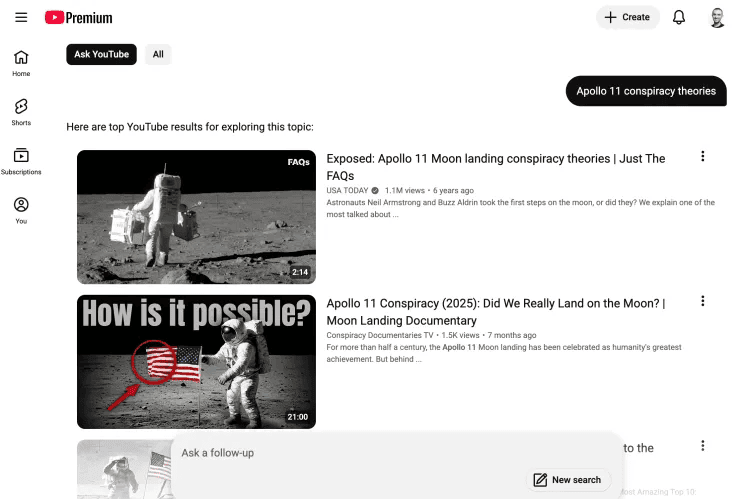
Once enabled, users can type natural questions instead of keywords. For example, when you enter prompts as seen below, the Ask YouTube feature to generate a full response page. Interestingly, you are not just provided with list of videos. In fact, YouTube combines text summaries, long-form videos, and Shorts into a single, structured result.

Ask YouTube screengrab (2)
Image credit: The Verge

From the looks of it, the AI generates a quick overview at the top, followed by curated video sections such as key moments, related clips, and even Shorts grouped around the topic. It also suggests follow-up questions, allowing users continue the search without starting over.

Image credit: The Verge

AI summaries meet video search, but accuracy still a concern

Google has long relied on AI summaries for Search now, and it seems YouTube is moving in that direction too. If the company went on to roll out this feature to masses, it could change how users interact with content on the platform. Speaking of rollout, the feature is currently limited to YouTube Premium users aged 18 and above in the US. But YouTube says it’s already working on expanding access beyond that group.

All that said, early testing suggests the system isn’t perfect. In some cases, the AI-generated summaries reportedly included factual errors, which raises questions around reliability. That’s something we’ve already seen with AI search tools elsewhere, and YouTube doesn’t seem immune to it.

Steam Hardware Rollout Slowed by DRAM Shortages, Steam Deck 2 Development Lags

Valve has unveiled the pricing for the Steam Controller while delaying broader hardware announcements due to ongoing memory supply issues. The move highlights how component shortages continue to shape release timelines across the company’s ecosystem.

The decision to release the controller first comes down to practicality. Unlike other upcoming devices, it does not depend on DRAM, making it easier to produce and ship in the current market conditions.

Steam Controller Launch Moves Ahead of Other Devices

As reported by TechPowerUp, Valve initially planned to launch the Steam Controller alongside the Steam Machine. That plan changed due to volatility in DRAM pricing and supply constraints affecting hardware production.

Steve Cardinali confirmed that Valve does not require all devices to launch simultaneously. This allowed the company to move forward with the controller while finalizing details for the rest of its lineup.

The Steam Controller remains positioned as a companion device for the Steam Machine. However, the staggered rollout suggests Valve now prioritizes flexibility over synchronized launches.

DRAM Shortages Continue to Disrupt Valve’s Hardware Plans

Memory shortages have become a major obstacle for Valve’s upcoming devices. The Steam Machine faces the biggest impact because it relies heavily on on-package and mobile RAM.

Brad Lynch reports that the Steam Frame appears less affected by these constraints. If supply issues persist, Valve could release Steam Frame ahead of the Steam Machine, reversing the originally expected order.

Valve continues to work on pricing and release timing for the Steam Machine. The company has not confirmed a final launch window yet.

Steam Deck 2 Development Focuses on a Major Leap

Valve also confirmed ongoing work on the next-generation Steam Deck. In an interview with IGN, Pierre-Loup Griffais explained that the company is not interested in incremental upgrades.

Instead of releasing a minor refresh, Valve aims for a meaningful generational leap in performance. The goal includes higher power without compromising battery life.

This approach means the Steam Deck 2 will depend on future advancements in system-on-chip technology. Valve has no fixed timeline and will release the device only when the hardware meets its expectations.

A Gradual Rollout Strategy for Valve’s Ecosystem

Valve’s current strategy reflects a shift toward staggered hardware releases. By launching products independently, the company can adapt to supply chain challenges without delaying its entire lineup.

While the Steam Controller arrives first, the broader ecosystem will take more time to materialize. Steam Machine pricing and availability remain pending, and Steam Deck 2 development continues without a defined release window.

The situation shows how hardware innovation now depends as much on supply stability as on technological progress.

Microsoft Teams to Soon Get Improved Download Manager, Faster Call Transfers & AI Meeting Notes

Microsoft has been actively adding new features to Teams lately, and it seems that trend is not slowing down. This time, we have spotted three new features in the Microsoft 365 Official Roadmap that will improve downloads, calling, and meeting workflows. Just to be clear, all three features are currently in development, with rollouts expected between June and July 2026.

Improved download manager brings better visibility

Starting with downloads, Microsoft is working on an upgraded download manager for Teams, expected to roll out in June 2026. The update focuses on better visibility, control, and accessibility when handling files. Once available, users will be able to open the download manager directly from the title bar or through a keyboard shortcut. More importantly, downloads can be tracked without blocking chats or channel activity, which should make multitasking a bit smoother during active conversations.

Call transfer gets faster and more intuitive

On the calling side, Microsoft is improving how call transfers work on desktop. The upcoming update will introduce a more streamlined workflow, reducing the steps required to transfer calls. It will also bring smart transfer suggestions, helping users quickly find the right person to redirect a call. The feature is planned for global rollout across Windows and Mac platforms with general availability starting June 2026.

AI-powered notes expand to in-person meetings

Moving to meetings, Microsoft is also bringing AI-powered notetaking to in-person sessions through Teams Rooms on Android. This feature is expected to roll out in July 2026. Powered by Copilot’s Facilitator agent, it can capture real-time notes, decisions, and action points during meetings. Notes can be displayed on room screens and later shared through meeting recaps. Microsoft notes that if the notes are not saved, they are automatically deleted, ensuring no data remains in the room.

All that said, Microsoft appears to be focusing on making Teams more efficient across everyday tasks, whether it’s managing files, handling calls, or keeping track of meetings.

Windows 11 Set to Remove Legacy Spinner and Replace It With Modern Design

Microsoft is continuing its gradual overhaul of legacy visuals in Windows 11, this time targeting one of the oldest elements still visible to users: the loading spinner.

According to Neowin, the company is testing a replacement for the long-standing spinner animation that appears during key system moments such as sign-in, sign-out, and restarts.

Legacy spinner finally gets replaced

The existing loading spinner dates back to Windows 8, where it first appeared in 2012. Despite multiple visual updates since then, including the shift to a more modern design language in Windows 11, this specific UI element remained unchanged.

In the latest Dev Channel preview build (26300.8289), Microsoft has quietly introduced a new version of the spinner. The updated animation matches the modern boot spinner already used during system startup, bringing better visual consistency across different parts of the operating system.

The change has not been officially announced and remains hidden by default.

Hidden feature requires manual activation

Users running preview builds can enable the new spinner manually using ViVeTool, a popular utility for unlocking experimental Windows features.

The process involves enabling feature ID 59728252 and restarting the system. Once activated, the updated spinner replaces the legacy animation in supported scenarios.

As with many Dev Channel features, there is no guarantee this change will roll out to all users in its current form.

Part of a broader UI cleanup effort

This update fits into Microsoft’s wider push to eliminate outdated UI elements across Windows 11. The company has previously acknowledged that several legacy components still exist, including parts of the Windows installation experience that have yet to receive a modern redesign.

Recent preview builds have also introduced other visual refinements. A redesigned Run dialog has already been spotted, signaling that Microsoft is actively revisiting long-neglected interface components.

Small changes, long-term impact

While the spinner update may seem minor, it reflects a consistent direction. Microsoft continues to refine visual cohesion without disrupting core functionality.

Each incremental change moves Windows 11 closer to a unified design language, aligning older system components with the Fluent Design principles that define the modern Windows experience.

For users, these updates may go unnoticed individually, but collectively they shape a more polished and consistent operating system over time.

Microsoft Exchange Online to Block Legacy TLS Connections Starting July 2026

Microsoft is moving forward with another major security update for Microsoft Outlook, continuing its effort to eliminate outdated infrastructure across its ecosystem. The company has confirmed that older encryption protocols will soon stop working for key email connections in enterprise environments.

As reported by Neowin, Microsoft will deprecate TLS 1.0 and TLS 1.1 for POP3 and IMAP4 connections in Exchange Online, forcing organizations to transition to modern encryption standards.

Legacy encryption finally reaches end of life

Microsoft plans to fully block legacy TLS connections starting in July 2026. This change follows years of gradual phase-out efforts, including a 2023 opt-in option that temporarily allowed organizations to continue using older protocols.

That fallback option will now disappear. Systems that still rely on TLS 1.0 or 1.1 will lose the ability to connect to Exchange Online services entirely.

The reason behind the move is straightforward. Older TLS versions no longer meet modern security standards and expose systems to potential vulnerabilities. Most enterprise traffic already uses TLS 1.2 or higher, making the transition less disruptive for organizations that kept their infrastructure updated.

What this means for businesses

Organizations that still depend on outdated encryption will need to act quickly. Microsoft advises IT administrators to audit their systems, identify any legacy dependencies, and upgrade all affected services to TLS 1.2 or newer.

Failure to do so will result in broken email connectivity, especially for services using POP3 or IMAP4 protocols. This could impact automated systems, legacy applications, or older email clients still running in enterprise environments.

At the same time, Microsoft reassured users of on-premises Microsoft Exchange Server that support will continue until 2035. This gives businesses more flexibility if they are not yet ready to fully transition to cloud-based infrastructure.

Part of a wider Microsoft security overhaul

This change is not happening in isolation. Microsoft has been systematically removing legacy TLS support across its entire ecosystem. The company has already eliminated these older protocols from Windows 11 and disabled them across Microsoft Azure.
The broader goal focuses on strengthening security and pushing organizations toward modern encryption standards. By enforcing TLS 1.2 or higher, Microsoft aims to reduce attack surfaces and align with current industry practices.

Outlook issues continue despite recent fixes

While Microsoft works on long-term security improvements, Outlook users have recently faced more immediate problems. A recent outage disrupted access to email services, and reports suggest that some users still experience login issues even after the fix rolled out.

These ongoing problems, combined with upcoming infrastructure changes, highlight the challenges Microsoft faces as it modernizes one of its most widely used platforms.

Outlook Login Issues Ongoing as Users Report Repeated Lockouts

Microsoft has confirmed a recent outage affecting Microsoft Outlook, which left many users locked out of their accounts. The company rolled out a fix and stated that services are slowly recovering, but the experience on the user side tells a different story.

According to Neowin, a significant number of users still cannot access their inboxes even after the recovery update. This suggests the outage may have overlapped with a separate issue that has reportedly been affecting accounts for weeks.

Login errors continue after recovery

The most common message users encounter reads, “You’ve tried to sign in too many times with an incorrect account or password,” even when credentials are correct. Many say that resetting their password allows temporary access, only for the problem to return shortly after.

Users on Reddit also report that recovery methods fail over time, with secondary accounts becoming locked as well. This creates a frustrating loop where attempts to regain access trigger further restrictions instead of resolving the issue.

The problem appears especially common among Hotmail accounts, pointing to a possible account-type-specific bug rather than a system-wide outage alone.

Complaints grow as support falls short

Frustration has spread across Reddit, where multiple users describe nearly identical scenarios. Despite these reports, Microsoft’s support infrastructure, which relies heavily on automated tools, has not delivered consistent solutions.

In several cases, Microsoft’s own account diagnostics indicate that everything is working as expected, even while users remain locked out. This disconnect has made it harder for affected individuals to escalate the issue or receive meaningful assistance.

No official acknowledgment of ongoing bug

Microsoft has addressed the initial outage but has not yet listed this recurring login problem as a known issue. Without formal recognition, users lack clear guidance on whether the issue is being actively investigated or when a fix might arrive.

For now, many remain unable to reliably access their email, with the lockout cycle continuing despite repeated recovery attempts.

At the same time, Microsoft continues to expand Microsoft Copilot integration in Outlook, aiming to improve email and calendar management through AI-powered features. The company is also preparing to phase out Outlook Lite, signaling a broader shift toward a more modern and feature-rich ecosystem.

While these updates highlight future improvements, they offer little relief to users still dealing with ongoing access issues today.

Assassin’s Creed 1 Remake Rumors Grow Following Ubisoft’s Latest Announcement

Ubisoft has officially confirmed Assassin’s Creed: Black Flag Resynced, signaling a return to one of the franchise’s most popular entries. The project is expected to launch soon, though the company has not shared a specific release date yet.

Reports from TechPowerUp also point to new leaks suggesting Ubisoft may be working on additional remakes within the Assassin’s Creed series. One claim, attributed to known leaker xjØnathan, indicates a remake of the original game could already be in development.

Black Flag Resynced Signals Broader Strategy

Ubisoft appears to treat Assassin’s Creed: Black Flag as a test case for its remake plans. The “Resynced” version involves a large number of internal studios, including teams in Singapore, Barcelona, Bordeaux, Kyiv, and Quebec, among others.

This level of collaboration suggests Ubisoft is investing heavily while still taking a measured approach. Early indications point to possible changes in scope, with features like multiplayer and DLC potentially reduced or removed to streamline development.

Leak Hints at Assassin’s Creed 1 Remake

While Ubisoft has not confirmed a remake of the original Assassin’s Creed, multiple reports suggest it remains under consideration. The idea aligns with earlier rumors that the publisher wants to revisit older entries in a more modern format.

Any decision to move forward will likely depend on how well Black Flag Resynced performs after release. Ubisoft seems to prioritize minimizing risk while testing player demand for remastered or rebuilt titles.

Strong Early Interest From Players

Despite limited official details, Black Flag Resynced has already generated significant momentum. The game reportedly attracted nearly 30,000 followers on Steam within just two days of its announcement.

That early interest could play a key role in shaping Ubisoft’s roadmap for future remakes. A strong launch may accelerate development of additional projects, including a possible return to the series’ origins.

For now, Ubisoft has only confirmed Black Flag Resynced, leaving other remake plans unannounced. Still, the combination of leaks, studio involvement, and early player engagement points to a broader strategy taking shape behind the scenes.

In other gaming news, Xbox has revealed its lineup for Summer Game Fest Play Days 2026, highlighting upcoming titles set to be showcased during the annual event.

Microsoft Brings Agentic Copilot to Outlook for Email and Calendar Management

Copilot in Outlook is now getting a major upgrade, turning it into a more agentic experience across email and calendar on Windows and web. Until now, Copilot mostly handled individual tasks like drafting emails, summarizing threads, or finding meeting times. It worked, but it still needed constant input for everything around it, especially follow-ups, scheduling conflicts, and inbox clutter.

Copilot in Outlook moves beyond basic email help

With the latest update, Copilot can now actively manage your inbox instead of just responding to commands. It can prioritize emails, surface important messages, draft follow-ups, and help keep your inbox organized without manual effort.

On the calendar side, it goes further by handling ongoing changes. It can detect conflicts, reschedule meetings, adjust 1:1s, and even block focus time based on your schedule patterns and preferences.

That being said, the key change here is that Copilot is no longer just reacting, it’s continuously working in the background to keep things on track.

Smarter scheduling and time management

Copilot can also step back and analyze your upcoming week, suggest which meetings to skip or delegate, and help reduce overload by reorganizing time around priorities.

It can prepare meeting agendas, pull context before calls, and highlight what matters most so you’re not walking into meetings unprepared.

Rolling out through Frontier program

These new agentic features are rolling out via the Frontier program for Outlook on Windows and web. Microsoft is clearly testing a more hands-off approach where Copilot manages more of the workflow over time.

GitHub Copilot Officially Switches to Usage-Based Billing Starting June 1

As previously leaked, On Monday, GitHub announced a major change as to how Copilot will be priced and billed, moving the product away from its current request-based model toward full usage-based billing starting June 1, 2026.

At its core, the change replaces premium request limits with a monthly allocation of GitHub AI Credits across all Copilot plans. Rather than counting interactions, usage will now be measured through token consumption, including input, output, and cached tokens, based on model-specific API rates.

Copilot moves to usage-based billing model

In the announcement post, GitHub says the change reflects how Copilot has evolved beyond a simple coding assistant into a more agentic system that can handle long, multi-step development tasks. In this setup, usage is no longer uniform, since a quick prompt and an extended autonomous coding session no longer carry the same compute cost.

That being said, pricing tiers themselves are not changing. Copilot Pro stays at $10 per month, Pro+ at $39, Business at $19 per user, and Enterprise at $39 per user, with each plan receiving equivalent monthly AI Credit allocations.

Code completions and next edit suggestions will remain included without consuming credits, while heavier workloads will draw from the new credit pool. GitHub also confirmed that Copilot code review will now consume both AI Credits and GitHub Actions minutes.

Transition period and preview billing rollout

To ease the transition, GitHub will introduce a preview billing experience in early May, allowing users and admins to track projected usage before the full rollout in June. This will be accessible through the Billing Overview page on GitHub. Not to forget, GitHub is also removing fallback models once credits are exhausted, replacing them with budget-based controls instead.

For individual users, Pro and Pro+ plans will include credits equal to their subscription value, while annual subscribers will temporarily remain on the current system before migrating later. Businesses and enterprises will also receive pooled usage, allowing unused credits to be shared across teams rather than locked per user.

Moreover, admins will get better control over spending limits, with options to cap or allow overages depending on organizational needs.

Valve Confirms Steam Controller’s Release Date & Price, Promises News on Steam Machine Soon

In the past few days, rumors and leaks around Valve’s new Steam Controller have been at an all-time high. From the spotting of an original unboxing video listing on SteamDB to a leaked $99 price tag, and today’s release date leak, details about the new gaming controller from Valve have been all over the place. Well, Valve has finally stepped in and confirmed everything that has been leaked in the past few days.

Valve confirms Steam Controller’s release date and pricing, promises more updates on Steam Machine

The Steam Controller will release on May 4 at 10 AM PT with a $99 price tag. As far as regional pricing is concerned, it looks like this: $149 CAD / €99 / £85 / $149 AUD / 449 PLN. Surprised to see varied pricing? Well, IGN received a statement from Valve regarding this. In a note to the news outlet, the company explained that “pricing varies by region due to distribution costs, import duties/tariffs, and market conditions.”

As far as availability is concerned, Valve is launching the Steam Controller on Steam in the U.S., Canada, U.K., EU, and Australia. Those in Japan, South Korea, Hong Kong, and Taiwan can get it through the official distributor (Komodo Station). Ahead of the official news, Valve programmer Pierre-Loup Griffais sat down in an interview with IGN, where he said that some news about Steam Machine will be out soon. Here’s what Griffais said when asked about the Steam Machine release:

“We don’t have exact details about the timeline to share today, and we’re hard at work on trying to get them out the door. I think we are definitely expecting to roll out some news soon about that, but in general, I think things are going well.”

Here’s what you can expect from Steam Controller

In an unboxing and overview video published on Valve’s YouTube channel, the company confirmed that the new Steam Controller introduces a puck-based wireless system that also doubles as a charging station. The controller pairs automatically via USB-C once connected to a PC, allowing low-latency wireless gameplay, while a solid white LED signals a stable connection.

Valve positions the puck as the fastest and most reliable way to play wirelessly, aiming to simplify setup for plug-and-play use. The controller also launches directly into Steam’s Big Picture mode using the Steam button, creating a console-like interface that aligns closely with the Steam Deck experience and suggests a more unified ecosystem across Valve devices.

In terms of input design, the Steam Controller features next-generation magnetic thumbsticks built for improved durability and responsiveness, alongside dual trackpads that can be fully customized for mouse-like aiming, radial menus, or strategy-style controls. A gyro system is also included for motion-based input, now enhanced with capacitive grip sensors that detect finger placement on the handles. This allows gyro to activate or deactivate dynamically, while also enabling customizable actions like weapon wheels or map access triggered through grip release and sensitivity tuning.

The controller further includes four remappable grip buttons for expanded control options, reinforcing its flexible input approach.

Steam Controller Full Specifications

CategoryDetails
Controls and InputGamepad controls with A, B, X, Y buttons; D-pad; L & R analog triggers; L & R bumpers; View & Menu buttons; Steam & QAM buttons; 4x assignable grip buttons
Thumbsticks2x full-size magnetic thumbsticks (TMR) with capacitive touch
Haptics4x haptic motors; 2x LRA motors in trackpads for HD tactile feedback; 2x high-output LRA motors in grips for rumble and game haptics
Trackpads2x 34.5mm square trackpads with haptic feedback; pressure-sensitive with configurable click strength
Gyro6-axis IMU
Grip Sense2x capacitive sensors along back handles

Connectivity

TypeDetails
Steam Controller Puck2.4GHz wireless connection; ~8ms end-to-end latency; 4ms polling rate (at 5m); supports up to 4 controllers per puck; USB-C PC connection
BluetoothBluetooth 4.2 minimum (5.0+ recommended)
USBUSB-C tethered play support

Power

CategoryDetails
ChargingSteam Controller Puck charging interface; USB-C connector
Battery8.39 Wh Li-ion battery
Battery Life35+ hours gameplay (varies with usage; reduced when used with Steam Frame tracking)

Size and Weight

ItemMeasurement
Steam Controller111mm x 159mm x 57mm
Steam Controller Puck50mm x 28mm x 9mm
Steam Controller Weight292g
Steam Controller Puck Weight16g

EA Sports UFC 6 Releases on Xbox Series X|S & PS5 on June 19 for $69.99

EA Sports has officially announced UFC 6, and it now carries a confirmed June release window. The next entry in the long-running fighting series is heading to current-gen consoles, with a noticeable push toward sharper presentation and deeper personalization.

UFC 6 launch details and editions

The game will release on June 19 for PlayStation 5 and Xbox Series X|S with a price tag of $69.99 in the US and £69.99 in the UK.

As leaked earlier, EA is also offering an Ultimate Edition at $99.99 / £99.99, which comes with 7 days of early access starting June 12.

Pre-orders for either edition include an Iconic Moments Bundle featuring fighter skins for Korean Zombie, Miesha Tate, and Leon Edwards. It’s a small but targeted incentive aimed at long-time fans of the franchise.

The Ultimate Edition goes much further this time, bundling a Fighter Pass with eight UFC legends, plus two at launch and six added later. EA is also introducing an Expansion Pass linked to new modes arriving across Winter 2026 and Summer 2027, alongside a VIP Pass packed with cosmetics and progression boosts.

Speaking of scale, EA says UFC 6 is “powered by fighters,” with upgraded striking systems and motion tech designed to make matches feel more lifelike. The studio is also pushing narrative-driven elements to give fights more emotional weight inside the Octagon.

Speaking of games, let’s not forget that over 45 games are coming to Xbox in May 2026, including some additions to Xbox Game Pass, too.

OpenAI Ends Microsoft Exclusivity in Updated Deal, Now Free to Expand Beyond Azure

Microsoft and OpenAI have announced a major update to their partnership, drastically changing how both companies will work together going forward. The new agreement focuses on flexibility, long-term stability, and scaling AI across platforms.

Microsoft and OpenAI update partnership terms

As part of the revised deal, Microsoft will remain OpenAI’s primary cloud partner. This means OpenAI products will still launch first on Microsoft Azure, unless Microsoft cannot support specific capabilities.

However, OpenAI is no longer locked to Azure. The company can now offer its products across other cloud providers as well, which is a big shift from the earlier setup.

Microsoft will continue to have access to OpenAI’s models and products through 2032, but the license is now non-exclusive. On the financial side, Microsoft will no longer pay revenue share to OpenAI. That said, OpenAI will continue sharing revenue with Microsoft through 2030, with the same percentage but under a capped structure.

Microsoft also remains a major shareholder in OpenAI, meaning it still benefits from the company’s growth.

Focus moves to scaling AI and infrastructure

Both companies say the partnership will now focus more on scaling AI infrastructure. This includes expanding data center capacity, working on next-gen chips, and pushing AI use cases across areas like cybersecurity.

The updated agreement keeps the partnership intact but gives both sides more freedom to explore new opportunities.

Now the bigger question is, with OpenAI opening up to other cloud providers, how will this impact Microsoft’s position in the AI race?

These 45+ New Games Are Confirmed to Join Xbox in May 2026

If you have been wondering what Xbox has in offer for you in May 2026, you have landed in the right place. Earlier today, in a separate article, we detailed some of the big games coming to Xbox Game Pass next month. Well, in this one, we have a comprehensive list, featuring 49 games, which will join Xbox in May 2026, courtesy of PureXbox.

List of games coming to Xbox in May 2026

Among the 49 games, most fans are awaiting the Forza Horizon 6, 007: First Light, and Subnautica 2. Here, it’s worth noting that Subnautica 2 is rumored to enter early access in May, though the exact date is unclear for now. Here’s a complete list of the games with their Xbox release date.

Game TitleRelease Date
Cat From Hell 2May 1
ConstanceMay 1
Dr. Psycho: Hospital EscapeMay 1
Moon Raider: Anniversary EditionMay 1
Pixie PlatesMay 1
Plantera 2: Golden AcornMay 1
This is Fine: Maximum CopeMay 1
MotorsliceMay 5
Wax HeadsMay 5
The Tag-Along ObsessionMay 6
Tri6: Infinite 2May 6
Froggy Hates SnowMay 7
Haneda GirlMay 7
MixtapeMay 7
Priest Simulator: Vampire ShowMay 7
WILL: Follow The LightMay 7
Akuma RiseMay 8
Decline’s DropsMay 8
HydroneerMay 8
Call of the Elder GodsMay 12
Directive 8020May 12
NITRO GEN OMEGAMay 12
OutboundMay 14
RoadOutMay 14
Darksiders: Warmastered EditionMay 19
Forza Horizon 6May 19
R-Type Dimensions IIIMay 19
Atomic OwlMay 20
BeastroMay 21
Coffee Talk TokyoMay 21
GalipolliMay 21
King of TokyoMay 21
Psyvariar 3May 21
STARBITESMay 21
Bubsy 4DMay 22
LEGO Batman: Legacy of the Dark KnightMay 22
Luna AbyssMay 26
Realm of InkMay 26
Yerba BuenaMay 26
007 First LightMay 27
Echo Generation 2May 27
Bluey’s Quest for The Gold PenMay 28
BlueberryMay 28
Crashout CrewMay 28
Necrophosis: Full ConsciousnessMay 28
Nickelodeon Extreme Tennis: Next!May 28
Story of Seasons: Grand BazaarMay 28
RV There Yet?May TBD
Subnautica 2May TBD

Which of the aforementioned games are you excited for the most? Let us know in the comments below. As a reminder, Xbox has also confirmed its lineup for Summer Game Fest Play Days 2026.

Xbox Announces Summer Game Fest Play Days 2026 Lineup

Xbox has confirmed its lineup for Summer Game Fest Play Days 2026, bringing a diverse mix of titles from studios across the globe. From co-op survival to experimental indie concepts, the showcase appears packed with hands-on demos for attendees.

Xbox reveals Summer Game Fest Play Days lineup

The company has confirmed the presence of developers from regions like the U.S., Canada, Poland, China, South Korea, and Australia eager to share their work at Summer Game Fest Play Days. Leading the lineup is Grounded 2, which will feature a 30-minute co-op demo where players take on a new lizard boss called King Dozer. For those unaware, the sequel builds on community-driven features, including rideable “Buggies,” which were heavily requested in the original game.

Another standout title is Aniimo, for which attendees can have 15 to 30-minute of demo to its open-world creature-collecting gameplay. Yo can transform into creatures for exploration and combat. Meanwhile, Grave Seasons provides a longer demo of around one hour, blending farming sim mechanics with a darker twist. Gameplay involves allowing players to prevent or ignore a potential murder during a week-long gameplay loop.

Speaking of action-heavy titles, Gungrave Gore: Blood Heat delivers a 20 to 30-minute demo focused on fast-paced, combo-driven combat, while Valor Mortis offers a 30-minute look at its first-person soulslike experience set in a reimagined Napoleonic era.

Indie creativity also takes center stage

It’s not just big names, though. Erosion includes a 30-minute demo built around time-based consequences in a roguelike world, while Don’t Fret stretches to a 40-minute session mixing horror and music in a surreal setting. On the lighter side, Way to the Woods offers a 20-minute cinematic adventure featuring a deer and fawn, and My Arms Are Longer Now provides a one-hour demo leaning into absurd humor with a unique heist concept.

Speaking of games, let’s not forget that 49 titles are coming to Xbox in May 2026, among which Forza Horizon 6 and Subnautica 2 are also the ones.

Windows 11 Run Dialog Gets Modern Redesign in Preview Builds

Microsoft is working on a modern version of the Windows Run dialog, aiming to align it with the overall Windows 11 design language, as reported by WindowsLatest.

The classic Run tool, accessed via Win + R, has remained largely unchanged for years. Its outdated appearance now stands out against Windows 11’s Fluent Design, prompting Microsoft to refresh the interface while keeping its functionality intact.

Hidden Modern Run Dialog Appears in Preview Builds

A redesigned version of the Run dialog already exists in preview builds, but it remains hidden by default. Users must enable it manually through advanced settings, suggesting Microsoft is still testing the experience before a wider rollout.

The updated interface introduces a slimmer and more compact layout. It resembles a floating search bar rather than a traditional dialog box, signaling a shift toward a cleaner and more minimal design approach.

The icon now follows Fluent Design principles and appears on the left side. The input field sits centered, while the Run button has been moved to the right, creating a more balanced and modern layout.

Microsoft is also considering adding advanced features to the new Run dialog over time, although no specific functionality changes have been confirmed yet.

Image source: WindowsLatest

Dark Mode Support Also in Testing

Alongside the visual redesign, Microsoft is testing dark mode support for the Run dialog. This change does not affect how the tool works but ensures it matches the system-wide theme.

The update focuses entirely on visual consistency, allowing the Run dialog to blend seamlessly with other modern Windows 11 components.

Optional Upgrade, Classic Version Remains

Microsoft plans to keep the modern Run dialog optional. Users who prefer the classic interface will still be able to use it, which helps avoid disruption to existing workflows.

This approach reflects Microsoft’s broader strategy of gradually modernizing legacy components without forcing immediate changes on users.

Part of a Broader Windows 11 Refresh

The redesigned Run dialog is part of a wider effort to improve visual consistency across Windows. Microsoft continues to update older system elements while preserving their core functionality.

In parallel, the company is working on its K2 plan aimed at improving Windows 11, while also rolling out enhancements to Modern Standby to make devices more power efficient.

China Blocks Meta’s $2B Manus AI Deal Amid Rising Tech Tensions

China has blocked Meta’s planned $2 billion acquisition of Manus, as CNBC writes, a move that highlights growing restrictions around AI deals and cross-border tech investments.

According to reports, the decision came from China’s National Development and Reform Commission, which intervened despite Manus being headquartered in Singapore. The startup focuses on agentic AI systems designed to automate complex, multi-step tasks, an area Meta has been actively expanding into.

Regulatory pressure blocks Meta’s AI expansion

Meta first announced the deal in December as part of its broader push to strengthen its AI portfolio. At the time, Manus co-founder Xiao Hong welcomed the partnership, signaling strong alignment between the two companies. However, the agreement never reached completion.

Chinese regulators ultimately canceled the acquisition, pointing to compliance requirements and increasing oversight of foreign involvement in AI-related businesses. Even though Manus operates out of Singapore, its Chinese roots placed it under Beijing’s regulatory scope, which continues to apply to many startups founded by Chinese nationals abroad.

Rising geopolitical tensions reshape tech deals

The decision reflects a broader trend. China has tightened control over strategic sectors like artificial intelligence, especially when foreign companies attempt to acquire or partner with domestic-linked firms. This approach limits how easily Chinese-founded startups can engage in deals with U.S. tech giants.

At the same time, geopolitical tensions between the United States and China continue to shape the global tech landscape. U.S. officials have raised concerns about intellectual property risks tied to AI collaborations. In a recent memo, Michael Kratsios accused China of large-scale IP theft in the AI sector, adding further pressure to already strained relations.

The collapse of the Meta-Manus deal signals how difficult cross-border AI partnerships have become. Regulatory barriers, national security concerns, and competing strategic interests now play a central role in shaping such transactions.

In parallel developments, Meta is reportedly planning to lay off around 8,000 employees as it reallocates resources toward artificial intelligence. The company has also partnered with Broadcom to develop custom AI chips, underscoring its long-term commitment to the space despite setbacks.

Via Neowin

Google Workspace Apps’ New Redesigned Gradient Icons Leaks

Google is reportedly redesigning icons for its Workspace apps, with new gradient-based icons rolling out across core services like Gmail, Drive, and Calendar. The latest redesign marks one of the biggest changes in Google’s iconography in recent years.

Google pushes gradient icons across Workspace apps

At a time when Google is doubling down on AI-powered features across its apps, the new icons appear to reflect that direction. The gradient style, already seen in products like Gemini and Maps, is now expanding across Workspace app icons, according to 9to5Google.

Notably, Google is moving toward clearer shapes and more distinct color identities, while also removing the page-like background container for a cleaner look. This comes after users have criticized the company for icon similarity. For those unaware, the previous design language forced all four Google colors into most icons, making them harder to distinguish. Now, that’s changing.

Speaking of specific changes, here is what you can expect out of the new icons:

  • Google Docs: Retains the paper-like icon, but now uses a cleaner, more focused blue look
  • Google Sheets: Switches to a landscape layout, reflecting spreadsheet orientation more naturally
  • Google Slides: Also adopts a landscape format, making it in line with presentation use
  • Google Drive: Drops red, keeping green, yellow, and blue with a more rounded triangular shape
  • Gmail: Keeps its “M” envelope but is now heavy on red, improving recognition
  • Google Calendar: Returns to a more classic, skeuomorphic style with a dominant blue tone
  • Google Meet: Completely moves to a bold, yellow-focused camera icon
  • Google Chat: Introduces a pill-shaped message bubble with a friendlier design
  • Google Keep: Removes the background container to highlight the light bulb more clearly
  • Google Voice: Keeps its core shape but adopts softer, more rounded edges
  • Google Forms: Drops the paper motif for multiple-choice bubbles, while purple remains the main color
  • Google Sites: Switches from dark blue to a lighter shade, with a horizontal layout reflecting desktop web
Image credit: 9to5Google

As of now, there’s no word on when the redesigned icons will reach the masses.

Steam Controller Release Date in Japan Reportedly Set for May 4


These days, Valve’s Steam Controller has been circulating in the news more often, mostly because of its imminent release. Last week, a listing of an unboxing video on the SteamDB site sparked speculation about its near release. And it seems the release is indeed near.

An early review leaks May 4 as the release date of the Steam Controller in Japan

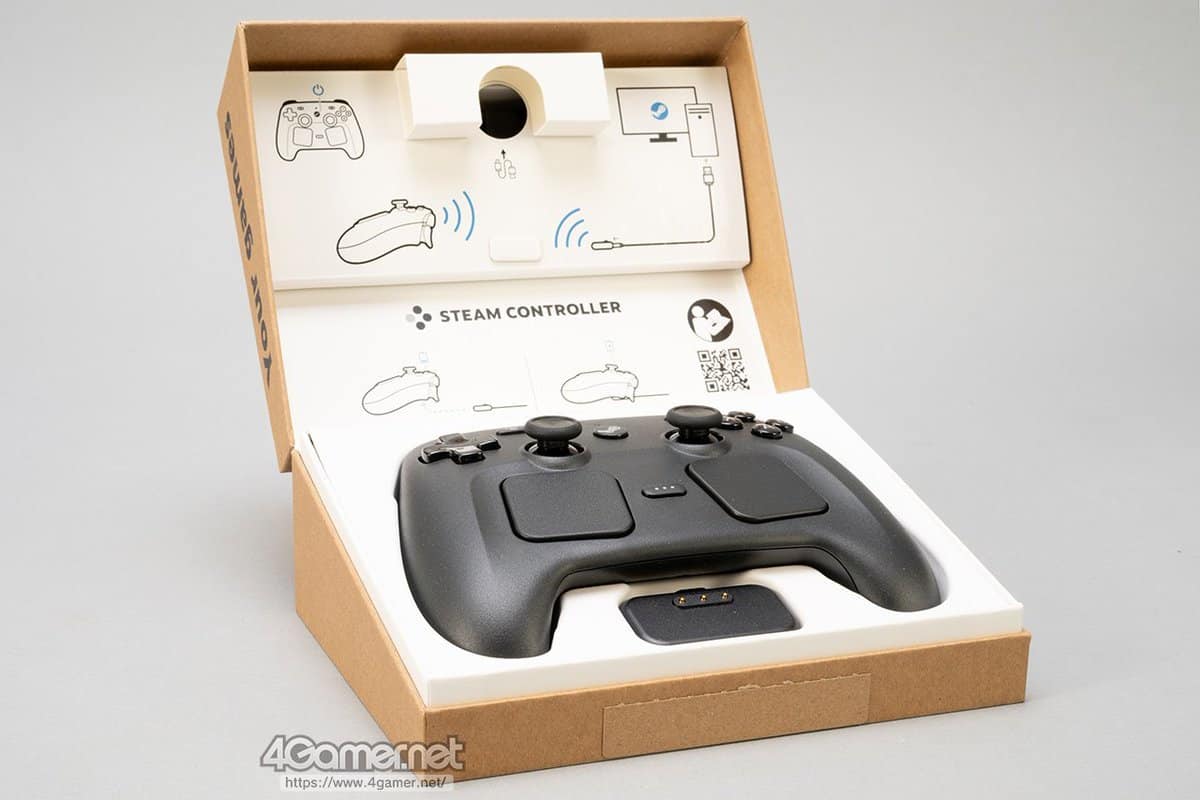
In a now-deleted review by 4Gamer, spotted first by Videocardz, the Steam Controller’s release date was leaked. It’s coming in Japan on May 4. Reportedly, the article was indexed by Google, and the meta description (machine-translated) reads, “Valve’s Steam Controller, a wireless and wired gamepad for Steam-compatible PCs and devices, will be released in Japan on May 4 at 3 PM [JST].”

The news outlet was quick to pull some images from 4Gamer’s review, which showcase the retail box of the device and more. Take a look yourself:

Image Source: 4Gamer

Previous leak hints at $99 price tag

The leak around the Steam Controller’s release date comes after a YouTube review briefly showcased the new controller. However, the video has been taken down, but not before leaking some key specs of the gaming controller and the $99 price tag.

According to YouTube channel Techy Talk, the Steam Controller will feature dual trackpads for mouse-like precision control, along with magnetic thumbsticks to eliminate stick drift. The controller also reportedly comes with HD rumble, four back buttons, integrated gyro controls, haptic feedback, and an 8.39Wh Li-ion battery.

Official announcounment could be incoming

With the release date and pricing now popping up online, it seems Valve is finally getting ready to release the Steam Controller. All that said, Valve is yet to make an official announcement about the price and the release date. If the details are accurate, we are not that far away from the launch. Now, with leaks already on the internet, the official announcement could be on its way.

What do you think about the Steam Controller? Will you be getting one once it launches? Let us know in the comments below.


Xbox Could Become More Open as Microsoft Explores New Platform Direction

Asha Sharma has shared a new direction for Xbox, signaling a shift toward a more open and flexible gaming ecosystem. In a joint memo with Matt Booty, she emphasized making the platform more accessible to creators while giving players more control over how they play.

The goal is to move beyond the traditional closed console model and toward an ecosystem where customization, creativity, and user-driven experiences take priority.

What “open Xbox” actually means

In an interview with Stephen Totilo of Game File, Sharma clarified that “open” does not necessarily mean immediate structural changes like supporting multiple storefronts. Instead, the focus remains on expanding freedom for both players and creators.

She described a future where users can extend their gameplay experience more easily and developers gain better access to tools and distribution. The idea centers on flexibility rather than a complete overhaul of how Xbox hardware currently operates.

Storefront decisions still under discussion

Sharma acknowledged that discussions have taken place around companies like Epic Games potentially bringing their storefront to future Xbox systems. However, she made it clear that no final decisions have been reached, and the company continues to evaluate its options.

When asked about handheld devices such as the ROG Xbox Ally, Sharma said she was not involved in earlier decisions regarding storefront strategy. She noted that future plans will be shaped through collaboration between internal teams and external partners, suggesting that the direction is still evolving.

A broader shift across Xbox strategy

This push toward openness reflects a wider transformation within Microsoft’s gaming division. The company appears to be rethinking how its platform operates in response to growing demand for flexibility and cross-platform experiences.

At the same time, other Xbox-related developments continue to surface. Discord Nitro subscribers are expected to gain access to a Starter Edition of Xbox Game Pass, signaling further integration between gaming services. Reports also point to internal discussions around platform exclusivity and a branding reset, which could reshape how Xbox positions itself in the market.

Although key implementation details remain undecided, the overall direction suggests a more adaptable Xbox ecosystem. The company is clearly exploring ways to give players more choice while allowing creators to play a bigger role in shaping the platform.

How far this openness will go, especially when it comes to storefronts and system-level changes, will depend on decisions that are still in progress.

Via Insider Gamer

[UPDATE] Outlook Is Down Right Now, Hundreds of Users Face Sign-in & Email Access Issues

[UPDATE: 27 April 2026 | 12:59 PM UTC] In an update on X, Microsoft has shared additional details about the issues users have been facing while accessing Outlook. The company notes, “We’ve discovered some users may experience intermittent sign‑in failures, including “too many requests” errors, or unexpected sign‑outs.” As of now, Microsoft is “analyzing service telemetry further to identify any potential next steps and mitigation actions.”


[ORIGINAL STORY] If you are unable to access your emails or couldn’t sign into Outlook.com, it’s because the service is facing an issue right now. Yes, Outlook is down for hundreds of users right now.

Users report access and sign-in issues on Outlook.com

In its Service Status page and Microsoft 365 Status on X, Microsoft has confirmed some users are unable to access their accounts. The issue was last updated on April 27, 2026, at 10:15 AM UTC, and remains under investigation. The company has further added that the next update will be released on April 27, 2026, at 11:30 AM UTC.

Per Microsoft, users are experiencing login problems or difficulty loading their inboxes, though the full scope of the issue is still unclear. Microsoft has acknowledged the problem on its service status page, labeling it as a “service degradation.” That typically means the platform is still running, but with reduced functionality for some users rather than a complete outage.

That being said, the company has not yet shared a detailed explanation or root cause. There is also no confirmed timeline for when services will fully return to normal, which could be frustrating for affected users. As of now, it appears Microsoft is actively working on a fix, with updates expected as the investigation continues.

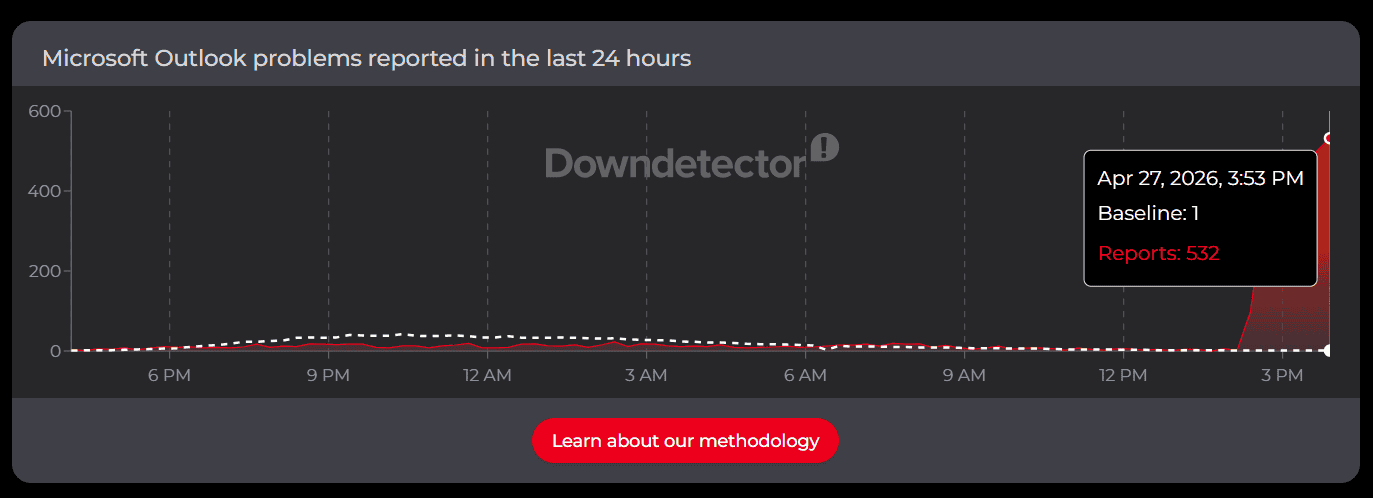
It’s unclear how widespread the issue is or whether it will escalate further, but the situation highlights how dependent many users are on cloud-based services. When we last checked DownDetector, it shows elevated rates in user reports.

Image credit: DownDetector | Timezone: IST

We’ll share an update when we hear next from Microsoft.

This is a developing story….

Xbox Game Pass (Starter Edition) Confirmed Games Leak Ahead of Launch

Last week, the Xbox CEO teased a partnership with Discord over Game Pass. At the time, the details were under wraps, but it eventually slipped through. On Friday, a new Game Pass tier, called Xbox Game Pass (Starter Edition) was leaked, with free access planned for Discord Nitro subscribers.

In a separate leak, an account on X hinted that the new Game Pass tier will not just feature first-party titles, but there will also be a lot of games from third-party publishers. Guess what? We now have the full list of games confirmed at launch for Xbox Game Pass (Starter Edition), thanks to Dealabs leaker billbil-kun.

In a post from last week, the tipster added that “the Game Pass Starter Edition will not give access to online multiplayer on consoles.” It’s also worth noting that “free-to-play games like Call of Duty: Warzone will not have a ‘Game Pass Starter’ tag.” Notably, the tipster has leaked all 58 games confirmed to launch with Xbox Game Pass (Starter Edition).

Games confirmed to launch with Xbox Game Pass (Starter Edition)

  1. Among Us
  2. ASTRONEER
  3. Batman: Arkham Knight
  4. Celestial
  5. Chivalry 2
  6. Cities: Skylines – Remastered (including Cities: Skylines – Windows 10 Edition & Cities: Skylines – Xbox One Edition)
  7. Control (including Control Ultimate Edition)
  8. Crash Team Racing Nitro-Fueled
  9. DayZ
  10. Dead Cells
  11. Deep Rock Galactic
  12. Descenders
  13. Dishonored 2
  14. Disney Dreamlight Valley
  15. DOOM 64
  16. DOOM Eternal
  17. Fable Anniversary
  18. Fallout 4
  19. Fallout 76
  20. Firewatch
  21. Gang Beasts
  22. Gears 5 (including GOTY Edition)
  23. Golf With Your Friends
  24. Grounded
  25. Hades
  26. Halo 5: Guardians
  27. Halo Wars 2
  28. Hellblade: Senua’s Sacrifice
  29. Human Fall Flat
  30. INSIDE
  31. LIMBO
  32. Medieval Dynasty
  33. Monster Sanctuary
  34. Ori and the Will of the Wisps
  35. Overcooked! 2
  36. PAYDAY 2: CRIMEWAVE EDITION
  37. PowerWash Simulator
  38. Psychonauts (Windows 10)
  39. Psychonauts 2
  40. Retro Classics
  41. Slay The Spire
  42. SnowRunner
  43. Spiritfarer: Farewell Edition
  44. Stardew Valley
  45. State of Decay 2: Juggernaut Edition
  46. Stellaris
  47. SUPERHOT: MIND CONTROL DELETE
  48. Superliminal
  49. Teenage Mutant Ninja Turtles: Shredder’s Revenge
  50. The Elder Scrolls Online: Standard Edition
  51. Totally Reliable Delivery Service
  52. TUNIC
  53. Unpacking
  54. Vampire Survivors
  55. Warhammer 40,000: Darktide
  56. Warhammer: Vermintide 2
  57. World War Z (including World War Z: Aftermath)
  58. Wreckfest

As far as launch is concerned, the tipster adds that the Xbox Game Pass (Starter Edition) could be available “by mid-May 2026 at the latest.”

Xbox Handheld Gets 28 More Games in Latest Compatibility Update

Microsoft has rolled out a fresh batch of handheld-ready games for Xbox devices on April 26, 2026, expanding support for portable play. As reported via True Achievements, the update includes both fully optimized titles and newly compatible games, with some also available through Xbox Game Pass.

13 Games Now Optimized for Xbox Handheld Devices

This batch focuses on titles specifically enhanced for handheld performance, controls, and display scaling:

  • Atomic Heart (Windows)
  • Bassmaster Fishing
  • Black Jacket
  • Combat Kart
  • Construction Simulator
  • Darwin’s Paradox
  • Decollate Decoration
  • Hades II
  • Nocturne Routes
  • Star Fire: Eternal Cycle
  • Tears Revolude
  • Unmourned
  • Urban Jungle

Notably, Hades II joins the list as both an optimized title and part of the Xbox Game Pass library.

15 More Games Gain Handheld Compatibility

In addition to optimized titles, Microsoft added broader support for more games that can now run on handheld Xbox devices:

  • Christmas Mutilator
  • Dosa Divas
  • Find My Frogs
  • Hacked: The Streamer
  • Incantation
  • Jay and Silent Bob: Chronic Blunt Punch
  • KIBORG
  • MOUSE: P.I. For Hire
  • NBA 2K26 (Windows)
  • One Card One Shot – Mafia
  • Pengilo
  • People of Note
  • Pro Wrestler Story
  • Tiny Bookshop
  • Without a Dawn

Some of these, including NBA 2K26 and Tiny Bookshop, are also available via Game Pass.

Xbox Continues Expanding Handheld Support

This update signals Microsoft’s ongoing push into handheld gaming, steadily increasing the number of supported titles. More Xbox Game Pass games are expected to receive handheld compatibility in future updates, improving the overall portable experience.

In parallel, Microsoft has officially revealed the Xbox Game Pass April Wave 2 lineup, while early details about the May 2026 lineup have also surfaced.

Additionally, the full list of games arriving on Xbox between April 27 and May 1 has been announced, giving players even more options across console and handheld platforms.

Intel Finally Acknowledges Arc G3 Chips for Handheld Gaming Devices

Intel has finally acknowledged its rumored handheld-focused chips, Arc G3, after months of speculation, as VideoCardz writes. The company hinted at these processors during a recent interview, pointing toward a potential debut in the near future.

First official confirmation of Arc G3

For months, reports suggested that Intel was preparing a new lineup of chips aimed at handheld gaming devices. Until now, the company has stayed silent.

That changed after Robert Hallock, VP and GM of the Enthusiast Channel Segment, mentioned “Arc G3” publicly in an interview with PC Games Hardware. This marks the first time Intel has officially acknowledged the naming of the chips.

Hallock noted that he is not directly involved with the Arc G3 project, but confirmed the branding and general direction.

Built for handhelds and ultra-thin systems

Arc G3 chips are expected to target handheld gaming PCs and compact notebooks, using Intel’s upcoming Panther Lake architecture.

According to Hallock, devices in this category require longer development cycles. OEM partners typically need between two and three years to design, test, and bring products to market, which explains the delayed visibility of these chips.

Expected specs and variants

Leaks and early reports suggest two main variants:

  • Arc G3
  • Arc G3 Extreme

Both models are rumored to feature a 14-core CPU layout:

  • 2 performance cores (P-cores)
  • 8 efficiency cores (E-cores)
  • 4 low-power cores (LP-cores)

The GPU configuration appears to be the main differentiator:

  • Arc G3 Extreme: 12-core Xe3 GPU
  • Arc G3: 10-core Xe3 GPU

Clock speeds could reach:

  • Up to 4.7 GHz CPU on the Extreme model
  • Around 4.6 GHz on the standard version
  • GPU frequencies around 2.3 GHz (Extreme) and 2.2 GHz (standard)

Memory support is expected to include LPDDR5X-8533, slightly below the faster configurations planned for higher-end Panther Lake chips.

Possible Computex 2026 debut

While Intel has not confirmed a launch date, recent reports point to a possible reveal at Computex 2026.

The timing aligns with earlier rumors that placed Arc G3’s arrival in Q2 2026, suggesting Intel may soon enter the growing handheld gaming market alongside established players.

If confirmed, Arc G3 could become a key part of Intel’s strategy to compete in portable gaming and low-power performance devices.

Windows 11 Modern Standby Changes Bring Shorter Sleep Timers and Better Efficiency

Microsoft is rolling out updated default power and sleep settings in Windows 11 to improve how devices enter low-power states and reduce unnecessary energy usage. The changes apply to both Modern Standby systems and older S3 sleep devices, with a clear focus on cutting idle time and extending battery life.

The update introduces shorter timers for screen-off and sleep modes, along with deeper system-level tweaks that limit background activity and unwanted wake events.

Shorter timers aim to save energy faster

Microsoft adjusted default timers to make devices enter low-power states more quickly when idle.

On Modern Standby devices, the system now turns off the screen after three minutes on battery and five minutes when plugged in. The device enters sleep at the same intervals, significantly reducing idle power consumption.

For systems using the older S3 sleep state, screen-off behavior matches Modern Standby, but sleep kicks in later. Devices enter sleep after ten minutes on battery and fifteen minutes when plugged in, maintaining a balance between responsiveness and power savings.

Modern Standby gets stricter power controls

Modern Standby, based on the S0 low-power idle state, allows devices to stay connected and perform background tasks while using minimal power. It enables near-instant wake and behaves similarly to smartphones in standby mode.

With updates introduced in Windows 11 24H2 and expected in 25H2, Microsoft added new safeguards to prevent excessive battery drain. If the system detects abnormal power usage during standby, it automatically restricts wake sources.

In this restricted mode, users can only wake the device using the power button or by opening the lid. This change reduces unexpected wake-ups caused by background processes or apps.

Input and wake behavior updated

Microsoft also refined how input and wake interactions work during sleep states.

Input suppression now applies both on battery and when plugged in, ensuring consistent behavior across power conditions. The power button will no longer wake a device if the lid is closed and no external display is connected.

If a monitor is attached, the restriction does not apply, and the display may still turn on. Voice wake functionality has also been removed as a wake source, further limiting unintended activations.

S3 sleep still supported on older hardware

While Modern Standby continues to evolve, Microsoft maintains support for the S3 sleep state on older systems and some desktops.

S3 fully powers down most components while keeping RAM active, resulting in lower power consumption but slower wake times compared to Modern Standby. The updated timers ensure these systems still benefit from improved energy efficiency without compromising usability.

Focus on battery life and reduced background activity

The overall goal of these changes is clear: reduce energy consumption, extend battery life, and limit unnecessary background activity during idle periods.

By tightening sleep timers and restricting wake behavior, Microsoft aims to deliver a more predictable and efficient power management experience across different hardware types.

In other news, Microsoft officials recently explained why File Explorer can feel inconsistent due to a mix of legacy and modern components. The company has also fixed the Drop Tray feature, with a rollout expected soon, and confirmed that IT administrators will gain the option to remove Copilot from Windows 11.

Via Neowin

Microsoft’s Internal “Windows K2” Plan Reportedly Aims to Fix Windows 11 for Good

After years of criticism, Microsoft has finally promised to fix Windows 11 from scratch, giving users what they have wanted all these years. As part of the latest effort, Microsoft has rolled out improvements to the Windows Update experience, with many changes coming down the line.

Microsoft wants to regain user trust with its “Windows K2” plan

Now, Windows Central reports that the company is quietly working on a major internal effort called Windows K2, which is reportedly aimed at fixing Windows 11 and rebuilding user trust after growing criticism.

Microsoft is focusing on making the OS faster, more stable, and more polished. A fourth pillar, Community, is also part of the plan, with efforts to reconnect with users through feedback, Insider programs, and public engagement. Performance is a major priority of Windows K2. Microsoft is working to improve system speed across areas like File Explorer, UI elements, and gaming. Windows 10 currently outperforms Windows 11 in some cases, and K2 aims to close that gap.

The company is also reportedly targeting better gaming performance to compete more closely with SteamOS. Reliability improvements include making Windows Update less disruptive, with a long-term goal of requiring restarts only once a month. At the same time, Microsoft is reducing system bloat and optimizing memory usage, so Windows runs better on both low-end and high-end devices.

On the design side, K2 focuses on “craft,” meaning a cleaner and more responsive user experience. This includes bringing back missing features like taskbar customization and rebuilding core UI elements using WinUI 3. A new system compositor is expected to improve responsiveness, with the Start menu reportedly becoming up to 60% faster.

Many unpopular changes likely to be addressed

That’s not all, Microsoft is moving away from rapid feature releases and focusing more on quality. Internally, teams now have stricter standards before features reach public builds. The initiative also addresses unpopular changes. Ads in the Start menu may be removed, and MSN integration in widgets could become optional rather than default.

Windows K2 is already rolling out in parts, with more updates expected through previews in the coming months.

Windows 11 File Explorer Still Feels Inconsistent, Microsoft Reveals Why

Microsoft has confirmed the reason behind inconsistent scrolling behavior in File Explorer, following reports highlighted by WindowsLatest. Users have long noticed that some areas feel smooth, while others remain choppy and outdated.

Smooth vs. jagged scrolling depends on the UI layer

According to Microsoft, the difference comes down to how each part of File Explorer is built. The Home and Gallery sections use modern WinUI 3 components powered by the Windows App SDK, which allows smoother animations and fluid scrolling.

Traditional folder views, however, still rely on older Win32-based architecture. This legacy system handles mouse-wheel scrolling in fixed line increments, which results in the more abrupt, jagged movement users experience.

Microsoft’s Tali Roth confirmed that this mix of technologies directly causes the uneven scrolling behavior.

Legacy features complicate modernization

Classic folder views continue to support a wide range of advanced features, including type-ahead search, automatic column resizing, multiple layout modes, and deep system integrations. These capabilities remain tightly connected to older Windows components.

Migrating everything to a modern UI framework is not straightforward. Many of these features depend on legacy systems that cannot be easily replaced without breaking functionality.

This same need for backward compatibility explains why older elements like Control Panel still exist in Windows.

A hybrid File Explorer creates uneven user experience

File Explorer currently operates as a hybrid of old and new technologies. While newer sections like Home and Gallery feel smoother, they offer fewer features compared to traditional folders.

At the same time, classic views remain more powerful and flexible but lack modern fluidity. This split results in an inconsistent experience across the app.

The issue also extends to usability. File Explorer still prioritizes mouse and keyboard input, while touch interactions feel less natural due to limited gestures and outdated interface elements.

Microsoft taking a gradual approach

Microsoft is aware of the feedback and continues to monitor user reports. Instead of redesigning File Explorer from scratch, the company is updating it step by step.

Current efforts focus more on improving performance and reliability rather than achieving full visual consistency.

The root cause remains clear: File Explorer carries layers of legacy design from older Windows versions, combined with newer UI frameworks. Until those layers fully align, inconsistencies will likely persist.

This is not an isolated issue. Microsoft has already acknowledged that other parts of Windows 11, including the installation interface, also need modernization. Meanwhile, engineers have previously revealed internal causes behind earlier File Explorer crashes, showing that deeper system changes are still underway.

Sony Increases PS5 & PlayStation Portal Prices in Southeast Asia

Sony has announced a fresh round of price increases for the PS5 lineup, but this time the new pricing will be affecting Southeast Asian players. Not to forget, Sony recently increased the prices of the PS5 Standard Disc Edition by $100, while the Pro model received a $150 increase in the US starting April 2. The previously hiked prices have been applicable for the U.K. and Japan.

PS5 price hike reaches Southeast Asia

For the Southeast Asia market, the increased prices will be applicable starting May 1, 2026, on the purchase of the PS5 lineup along with the PlayStation Portal across select markets.

Sony says that the latest PS5 price hike is the result of “continued pressures in the global economic landscape.” As of now, players in Singapore, Malaysia, Thailand, Indonesia, the Philippines, and Vietnam will be hit by the increased price of the PS5 console family.

Here’s a quick look at the new pricing of the PS5 family:

CountryProductPrevious SRPNew SRPChangeChange %
SingaporePS5SGD 799SGD 849+SGD 50+6.3%
SingaporePS5 Digital EditionSGD 669SGD 764+SGD 95+14.2%
SingaporePS5 ProSGD 1,069SGD 1,167+SGD 98+9.2%
SingaporePlayStation PortalSGD 295.90SGD 347+SGD 51.10+17.3%
MalaysiaPS5MYR 2,499MYR 2,799+MYR 300+12.0%
MalaysiaPS5 Digital EditionMYR 2,069MYR 2,499+MYR 430+20.8%
MalaysiaPS5 ProMYR 3,849MYR 3,999+MYR 150+3.9%
MalaysiaPlayStation PortalMYR 999MYR 1,099+MYR 100+10.0%
ThailandPS5THB 18,690THB 20,990+THB 2,300+12.3%
ThailandPS5 Digital EditionTHB 15,690THB 18,790+THB 3,100+19.8%
ThailandPS5 ProTHB 29,490THB 30,990+THB 1,500+5.1%
ThailandPlayStation PortalTHB 7,790THB 8,380+THB 590+7.6%
IndonesiaPS5IDR 9,699,000IDR 11,399,000+IDR 1,700,000+17.5%
IndonesiaPS5 Digital EditionIDR 8,199,000IDR 9,999,000+IDR 1,800,000+22.0%
IndonesiaPlayStation PortalIDR 3,599,000IDR 5,199,000+IDR 1,600,000+44.5%
PhilippinesPS5PHP 30,790PHP 40,032+PHP 9,242+30.0%
VietnamPS5VND 13,300,000VND 16,900,000+VND 3,600,000+27.1%

Source: Sony

As you can see in the aforementioned table, the Philippines records the biggest PS5 increase, jumping a whopping 30%. Vietnam sits in second place, recording a major price hike for the PS5, standing at a 27% increase.

PlayStation Portal also sees price increase in some regions

Sony has also increased the PlayStation Portal price across Singapore, Malaysia, and Indonesia. Among them, Indonesia sees the largest, 44.5% price increase. All that said, it appears Sony is standardizing pricing globally, though uneven increases hint at region-specific adjustments.

If you live in any of the aforementioned regions and are looking to buy any of the affected products, make sure you get them right away.