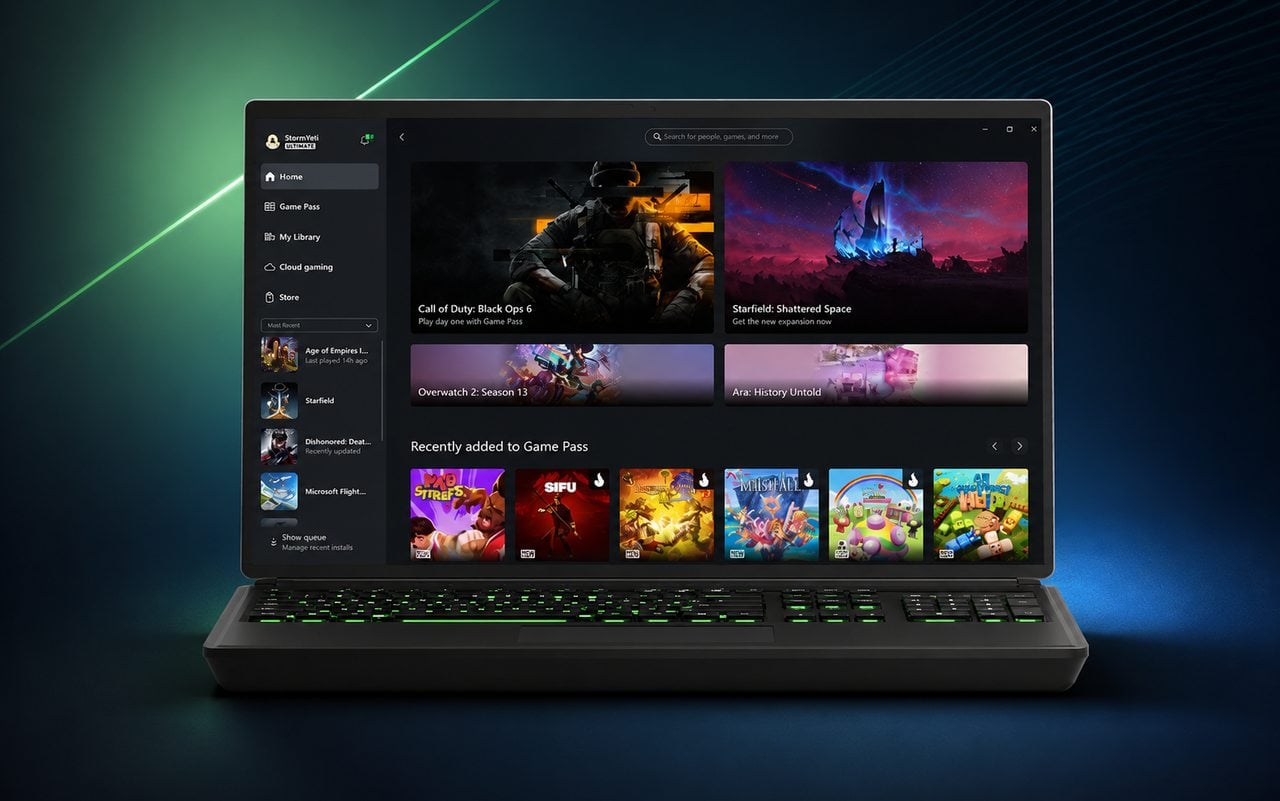
ESA Calls Minecraft Community Servers “Illegal” During Stop Killing Games Hearing

Stop Killing Games has become a bigger gaming industry debate as lawmakers, preservation advocates, and publishers clash over what should happen when online games lose official server support.

The movement argues that publishers should not sell games that can later become completely unplayable once servers shut down. Supporters say companies should provide a reasonable way to preserve access, such as offline modes, community servers, or other alternatives that keep purchased games usable.

The issue has already attracted attention in Europe, where the European Union reviewed the Stop Killing Games initiative a few months ago. Now, a similar debate has surfaced in California.

California Hearing Puts Game Preservation Back in Focus

The topic came up during a California State Senate committee hearing about the Protect Our Games Act, also known as AB 1921, as Windows Central writes.

During the hearing, Minecraft and Call of Duty came up as examples of games where community-run servers could help preserve access after official support ends.

The argument was simple. If a game depends on servers, publishers could offer a path for communities to keep those servers running instead of letting the game disappear completely.

ESA Pushes Back Against Community Servers

ESA representative Jennifer Gibbons rejected that argument during the discussion.

She claimed that community servers are “illegal” and said the ESA considers them a form of piracy. She also argued that these servers do not have any official affiliation with Microsoft.

Gibbons also raised safety concerns, especially around Minecraft community servers. Her argument suggested that community-run servers may not follow the same safety standards used by Microsoft-operated services.

Why the ESA’s Argument Is Controversial

Calling community servers broadly “illegal” seems difficult to defend.

Minecraft has a long history of community-run servers, and they remain a major part of the game’s culture. Players use them for custom modes, private worlds, minigames, roleplay, and long-running online communities.

Microsoft and Mojang do not appear to treat all community servers as automatically illegal. Mojang also provides official usage guidelines that explain how community servers can operate.

That distinction matters. A server can lack official Microsoft affiliation without automatically becoming piracy.

Gibbons is correct that community servers do not represent Microsoft unless Microsoft directly operates or approves them. However, that does not make every community server unlawful by default.

In other gaming news, XBOX has confirmed that Call of Duty: Modern Warfare 4 will not launch on XBOX Game Pass on day one.

Microsoft is also shifting its XBOX funding strategy as part of a broader restructuring effort. That change suggests the company may focus more carefully on where it invests across its gaming business.

Windows 11 KB5095093 Fixes Massive Disk Space Bug

Microsoft has updated the changelog for Windows 11 KB5095093 with new details about fixes that were not listed when the update first launched.

KB5095093 is a C-release update for Windows 11 versions 24H2 and 25H2. While the update already included several known improvements, Microsoft has now confirmed additional fixes, including a File Explorer responsiveness improvement and a storage-related bug fix.

File Explorer Gets Faster When Mounting Disk Images

One of the newly confirmed changes affects File Explorer.

Microsoft says File Explorer should become more responsive when users mount disk images. This should help users who regularly open ISO or other disk image files directly in Windows 11.

However, this improvement has a catch. Microsoft says it is rolling out gradually, which means not every user will see the change immediately after installing KB5095093.

KB5095093 Fixes Capability Access Manager Storage Problem

The more important fix targets a storage issue linked to Capability Access Manager.

Some Windows 11 users had reported that the CapabilityAccessManager.db-wal file was consuming unusually large amounts of disk space. In one case, a user claimed the related service had taken up around 70GB of additional storage.

The issue gained attention on Microsoft’s support forums and across the web, as affected users struggled to understand why their system drive was losing so much free space.

Microsoft has now updated the KB5095093 changelog to confirm that the update improves disk space usage for the CapabilityAccessManager.db-wal file.

Unlike the File Explorer improvement, this fix is not part of a gradual rollout. Installing KB5095093 should resolve the disk space problem for affected Windows 11 users.

KB5095093 also includes another useful fix for Windows 11 users who rely on GIFs in the Emoji panel.

Microsoft confirmed that it fixed GIF search and loading problems in the panel. The issue appeared after Tenor retired its API, which caused Windows 11’s GIF feature to show errors or stop loading results properly.

Windows 11 now uses a different GIF provider, and the update should restore GIF functionality for affected users.

In other Microsoft news, the company has also launched WSL Containers in public preview.

Via Neowin

Microsoft Explains Why GIFs Stopped Working in Windows 11

GIFs in the Windows 11 emoji panel recently stopped working for some users, but Microsoft says the problem was not caused by a Windows bug.

The company clarified that the issue came from a third-party service dependency. Windows 11 previously relied on Tenor, Google’s GIF service, to show animated GIFs inside the emoji panel.

Tenor API Shutdown Broke GIFs in Windows 11

Tenor recently retired the API used by Windows 11. After that change, the emoji panel started showing a “service is not available” error when users tried to access GIFs.

This made the issue look like a Windows problem, especially because it appeared inside a built-in Windows 11 feature. However, Microsoft says the backend service used to provide GIFs was no longer available.

Microsoft Moves Windows 11 GIFs To GIPHY

Microsoft has already released a fix for the broken GIF experience. Windows 11 now uses GIPHY as the new GIF provider instead of Tenor.

The change was included in the KB5095093 update, which Microsoft released on June 23, 2026.

After installing the update, users should once again see GIFs in the Windows 11 emoji panel. The GIF results now come from GIPHY rather than Tenor.

How To Fix The Windows 11 GIF Error

Users who still see the “service is not available” message need to install the latest Windows 11 C-release update from Windows Update.

Once the update has been installed, the GIF panel should start showing GIPHY results.

Windows 11 Versions Affected

The issue affects Windows 11 versions 24H2, 25H2, and 26H1.

Microsoft says most Windows 11 users could eventually run into the problem if they do not install the latest updates. That is because the old Tenor API dependency no longer works, meaning older builds cannot continue using the previous GIF backend.

This is not a security issue, but it does affect a visible part of the Windows 11 user experience.

More Windows 11 Changes Are Coming

The GIF fix comes as Microsoft continues to push users toward newer Windows 11 releases.

In other Windows news, Microsoft has warned users to upgrade from Windows 11 version 24H2 as its support window draws closer to the end. The company has also recently explained what caused a decades-old lock file error in Windows.

For now, users affected by the broken emoji panel GIFs should install the latest Windows 11 update to restore the feature.

Via Neowin

Microsoft to Reportedly Layoff Thousands Across XBOX, Sales, and Consulting Teams

Over the past few months, tech and gaming companies have been laying off employees while redirecting billions of dollars toward AI. Speaking of recent developments, XBOX has already been caught in the middle with reports of studio closures, budget cuts, and business reset.

Now, it looks like Microsoft’s restructuring efforts could soon expand far beyond its gaming division.

Microsoft reportedly plans to lay off less than 2.5% of its total workforce in the coming days

That’s according to a new report by Business Insider, which suggests that Microsoft is getting ready for another round of layoffs that could affect thousands of employees across the company. The report, citing people familiar with the matter, says the cuts are expected to impact sales, consulting, and XBOX. Apparently, the official announcement is planned as early as next week.

Unlike last year’s restructuring, this round is expected to be smaller. Per the news outlet, the layoffs will affect less than 2.5% of Microsoft’s roughly 220,000-person workforce, although that still translates into thousands of positions. Some employees whose roles are eliminated may reportedly be offered alternative positions within the company.

Speaking of XBOX, the latest report follows weeks of speculation surrounding Microsoft’s gaming business. Reports have already pointed to layoffs, internal restructuring, and uncertainty around several XBOX Game Studios. Earlier reports also suggested additional gaming division layoffs were expected shortly after Microsoft’s new fiscal year began.

Not to forget, the company introduced a voluntary retirement program for eligible U.S. employees, reducing the need for more workforce reductions this time around. As of now, Microsoft has not officially announced the layoffs, and the reported timeline could still change. Until the company confirms the plans, the details should be treated with a grain of salt.

Call of Duty: Modern Warfare 4 Won’t Launch Day-One on Game Pass, XBOX Reminds Players

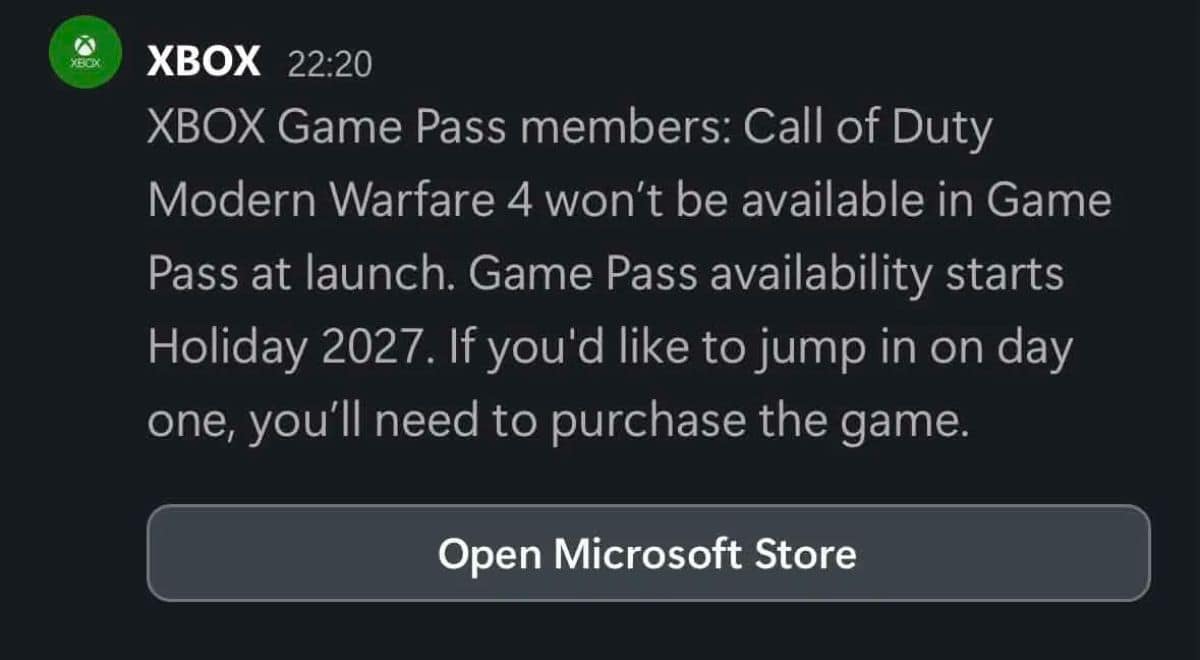
If you were hoping your Game Pass subscription would give access to Call of Duty: Modern Warfare 4 at launch, XBOX has another reminder for you. The company has started sending notifications directly to Game Pass subscribers, making it clear that this year’s Call of Duty won’t be playable through the service on day one.

The message, first spotted by Insider Gaming, tells subscribers that “Game Pass availability starts Holiday 2027” and adds that players wanting to jump in at launch will need to purchase the game separately. The notification also includes a button that takes users straight to the Microsoft Store listing for Modern Warfare 4.

Image credit: Insider Gaming

In case you’re unaware, at the time of cutting Game Pass prices, Microsoft confirmed that starting with Modern Warfare 4, future Call of Duty entries would no longer launch day one on Game Pass Ultimate or PC Game Pass. Rather, new releases will join the subscription service during the following holiday season, roughly a year after their retail debut.

That also means Game Pass subscribers who don’t buy Modern Warfare 4 separately will effectively stay one entry behind the annual Call of Duty release cycle. Unless Microsoft changes course in the future, this delayed release model is expected to apply to upcoming titles as well.

As of now, XBOX hasn’t announced any additional exceptions to the new policy. The latest notification simply serves as another reminder that Modern Warfare 4 will require a standalone purchase if players want access on launch day, with its Game Pass debut currently scheduled for Holiday 2027.

Google Cloud Turns Spanner Into a Data Platform for AI Agents

Google Cloud is expanding Spanner with new database, search, and multi-cloud features as it tries to make the distributed database a stronger foundation for AI agents.

The company says enterprises need a more unified data layer so AI agents can access context, understand relationships, and make better decisions. Google argues that fragmented systems make it harder for agents to act reliably because relevant information often sits across different databases, search tools, and analytics platforms.

Google Adds Graph, Vector, and Full-Text Search to Spanner

One of the biggest additions is Spanner Graph, a feature designed for relationship-based data. This should help developers model and query connections between entities, such as customers, products, transactions, accounts, or services.

Google is also adding integrated vector search to Spanner. Vector search plays a key role in AI applications because it helps systems find semantically similar data, rather than only exact keyword matches.

Full-text search is also coming to Spanner, giving developers another way to search operational data without moving it into a separate search engine.

Google Targets AI Agents With Unified Enterprise Data

The update focuses heavily on AI agents. These systems need access to accurate and connected business data to reason through tasks, answer questions, trigger workflows, or support decision-making.

Google says agents perform better when they can access all relevant data in one place. In practice, that means an AI agent could use structured records, relationship data, text search, and vector search without relying on multiple separate systems.

This could reduce data movement and simplify development for companies building AI tools on top of operational data.

Spanner Gets Cassandra-Compatible Endpoint

Google is also adding a Cassandra-compatible key-value endpoint to Spanner. This gives teams another way to connect existing applications to Spanner without fully rewriting how those applications interact with their database layer.

The feature appears aimed at organizations that already use Cassandra-style workloads but want Spanner’s distributed architecture and managed database capabilities.

Google Claims Major Vector and Analytics Performance Gains

Google says Spanner’s ScaNN-powered vector search can support indexes with more than 10 billion vectors. That scale matters for enterprises that need to search across large volumes of embeddings for AI retrieval, recommendations, personalization, or semantic search.

Spanner is also getting a new columnar engine. Google claims this engine can make some analytical scans up to 200 times faster.

Spanner Omni Brings Multi-Cloud Support

The new Spanner capabilities are not limited to Google Cloud. Google is also promoting Spanner Omni, a downloadable and containerized version of Spanner that can run on Kubernetes outside Google Cloud.

Supported environments include Microsoft Azure, AWS, on-premises infrastructure, and edge deployments.

This gives Google a way to pitch Spanner to companies that do not want all critical data locked inside one cloud provider. It also supports enterprise setups where data must run closer to users, applications, or regulated infrastructure.

Availability and Pricing Remain Unclear

Google says customers interested in the full-featured edition should contact the company.

The company has not shared clear public details on broader commercial availability. Separate pricing information has also not been announced.

For now, the update shows where Google wants to take Spanner next. The company is turning the database into a broader data layer for AI agents, combining operational data, search, graph, analytics, and multi-cloud deployment options.

Separately, Google has also limited Meta’s access to Gemini AI recently, while the company continues to rework its Gemini AI coding team.

Microsoft Brings Anthropic Claude Sonnet 5 to Foundry for Enterprise AI Workloads

Microsoft is wasting no time expanding the AI model lineup inside Foundry. Just a day after announcing general availability for Claude in Microsoft Foundry, the company has now confirmed that Anthropic’s latest Claude Sonnet 5 model is also officially available for enterprise customers building AI applications on Azure.

Microsoft expands Foundry AI lineup with general availability of Claude Sonnet 5

Claude Sonnet 5 comes as Anthropic’s newest Sonnet-class model and succeeds Sonnet 4.6. Microsoft says the upgraded model is designed for production workloads, particularly coding, AI agents, workflow automation, document creation, and professional knowledge tasks. Developers can access it directly through Microsoft Foundry while continuing to use existing Azure authentication, networking, governance, billing, and security controls.

For teams, Microsoft says Sonnet 5 is built to handle large codebases, multi-file development, debugging, refactoring, and complex implementation work with fewer correction cycles. The company also highlights stronger reliability for AI agents, allowing them to better manage tool calls, maintain context across multiple steps, recover from errors, and complete longer workflows with higher accuracy.

Outside software development, Microsoft says the model can also assist with spreadsheet analysis, report creation, document drafting, presentations, financial reviews, and research tasks. The company notes that Sonnet 5 performs incremental reasoning and verifies its own work, helping improve accuracy in enterprise scenarios where precision matters.

In case you are wondering about pricing, Anthropic is running a promotional $2 per million input tokens and $10 per million output tokens through August 31, 2026. After that, pricing will move to $3 per million input tokens and $15 per million output tokens. Microsoft says Claude Sonnet 5 is available immediately through Microsoft Foundry for developers and enterprise customers building production AI solutions.

GTA 6 Could Release on Nintendo Switch 2 in 2027, Insider Hints at Porting Progress

GTA 6 has been making rounds online more than ever, especially after pre-orders went live late last month. Following leaked details about NPC behavior and the in-game social platform, yet another report has emerged, and this time there’s some good news for all the Nintendo fans who have been waiting to hear for months.

GTA 6 on Nintendo Switch 2 could be a reality next year

According to Spanish insider Nash Weedle, Rockstar has reportedly overcome the biggest technical hurdles preventing GTA 6 from running on the Nintendo Switch 2. The leaker, who previously claimed late last year that a Switch 2 version was already in development, now says the project has made significant progress and that the major hardware challenges have been addressed.

The latest update also claims Nintendo has been working alongside Rockstar and Take-Two to help make the port a reality. According to Nash Weedle, experts familiar with Nintendo Switch 2 have reportedly joined development efforts, although the game is not expected to launch on the handheld this year.

The report doesn’t specify exactly what changed technically, but it aligns with what developers have already demonstrated on Nintendo’s new hardware. Several visually demanding current-generation games are already targeting the console using NVIDIA’s DLSS upscaling technology.

Rockstar is also believed to have built scalable rendering pipelines for GTA 6, partly to accommodate the Xbox Series S version, which could make adapting the game to lower-powered hardware more feasible.

As of now, Rockstar Games, Nintendo, and Take-Two Interactive haven’t acknowledged a Nintendo Switch 2 version of GTA 6. That means this should still be treated as a rumor rather than a confirmation. In case you are unaware, GTA 6 will release on November 19th on XBOX Series X|S and PlayStation 5. There’s no word on the PC release, but rumors hint that it might be delayed.

Chrome could show AI Mode shortcut even when Google isn’t your default search engine

Google introduced AI Mode as a conversational search experience for Google Search and integrated it into Chrome. The company is now testing a change in Chrome Canary that could make the AI Mode shortcut available even when users choose a different search engine.

Right now, AI Mode entry points in Chrome are tied to Google’s search experience. With Google Search set as the default provider, users see AI Mode shortcuts in places like the omnibox and the Google-powered New Tab page.

If users switch to Bing, Yahoo, DuckDuckGo, Yandex, or another provider, those entry points disappear as Chrome replaces Google’s search surfaces with the selected provider’s experience.

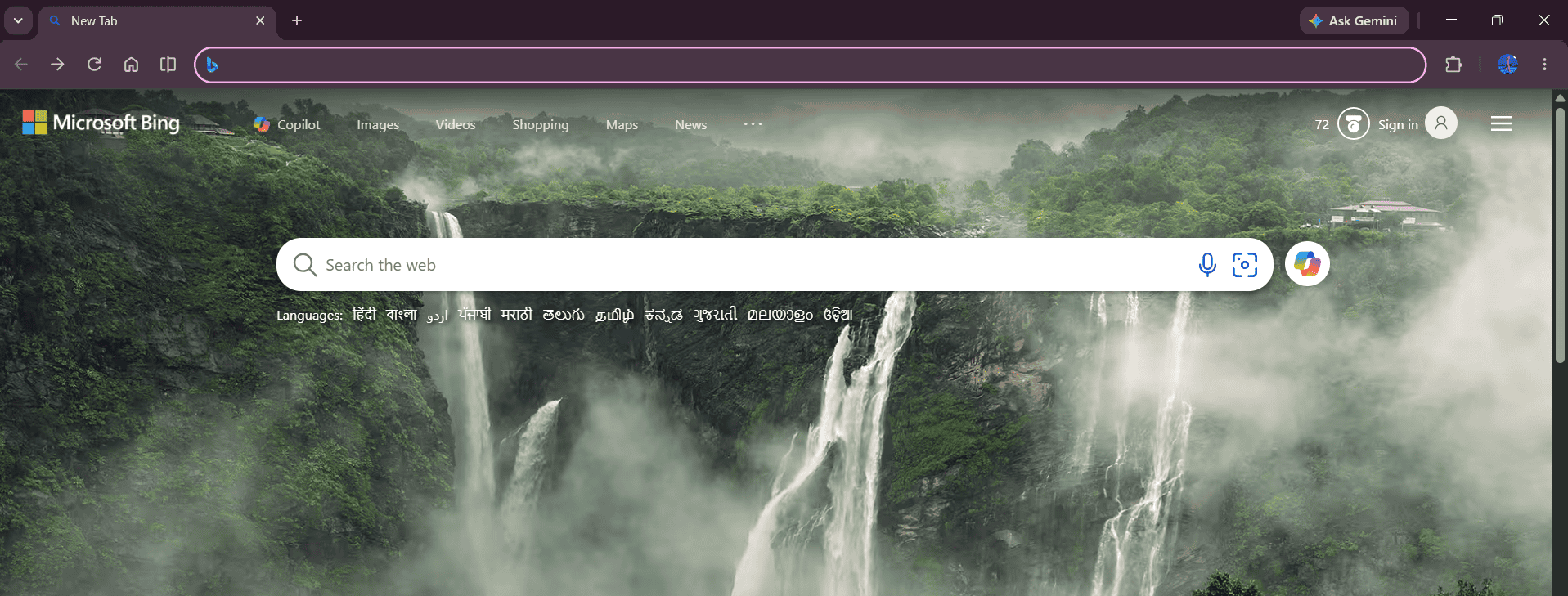
Image Credit: Windows Report.

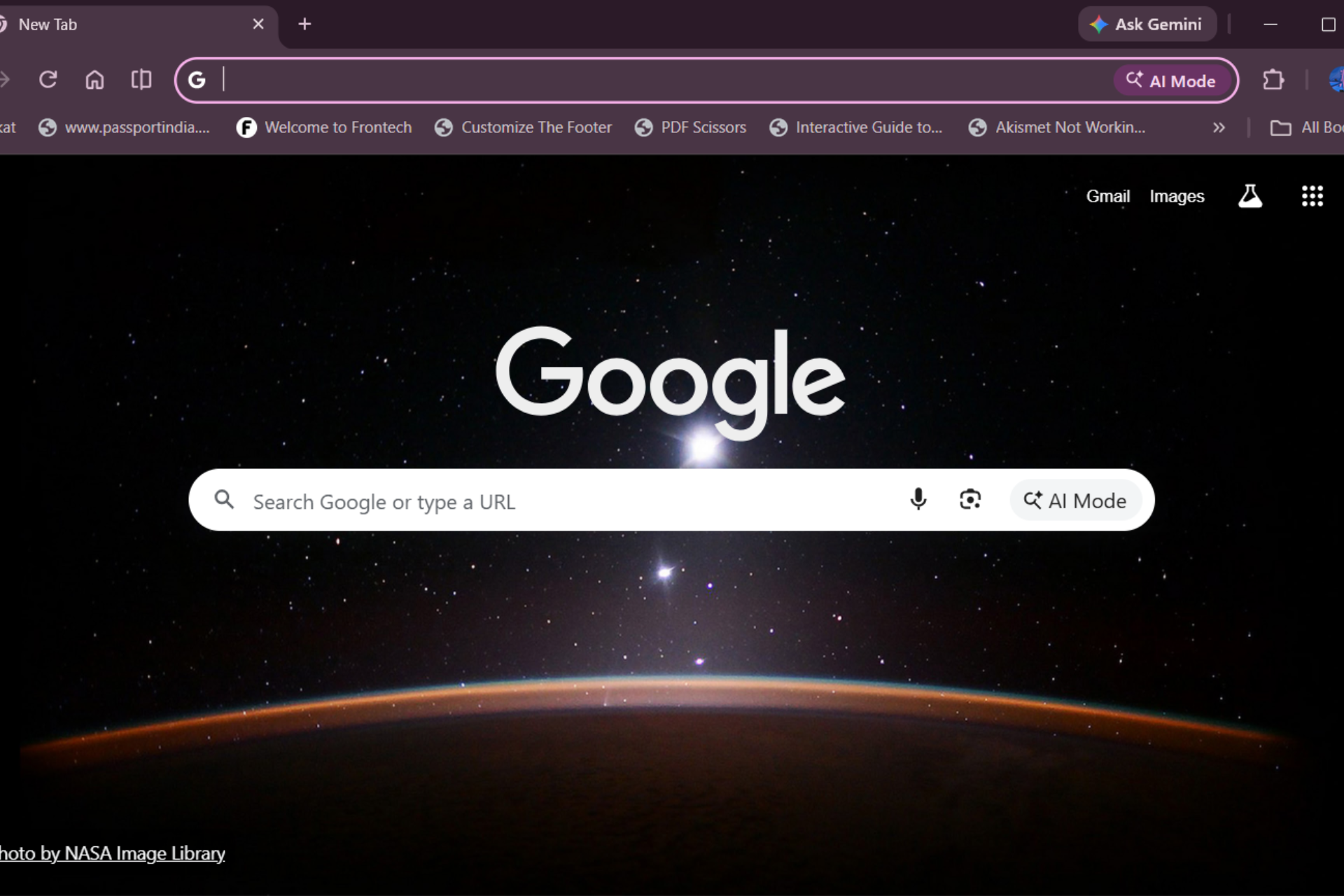
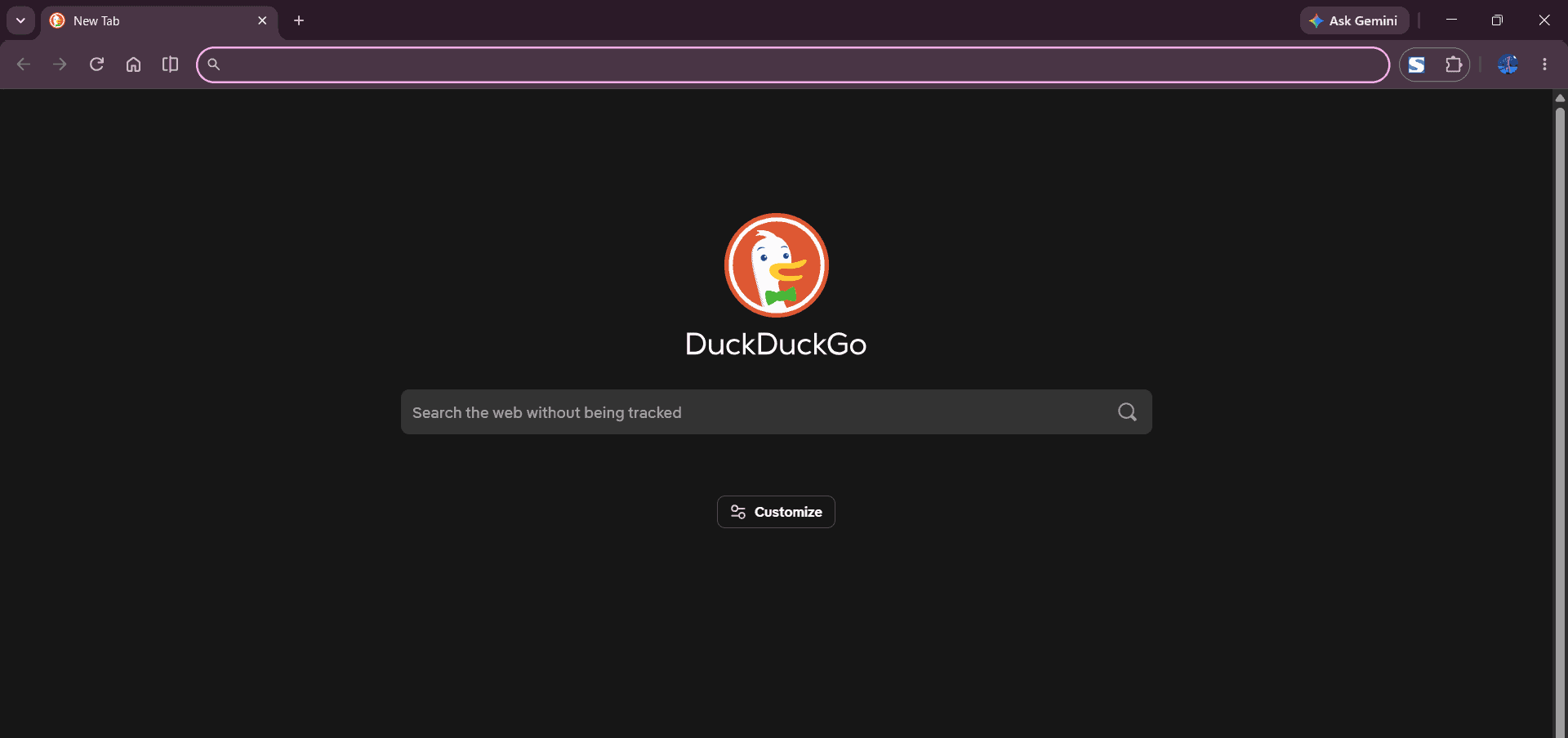
As shown in the attached screenshots, when Bing or DuckDuckGo is set as the default search engine, the New Tab page changes to reflect that provider. That contrasts with Chrome’s New Tab page when Google Search is selected, which shows the familiar Google logo and search bar.

Image Credit: Venkat | Windows Report.

Chrome tests AI Mode shortcut for third-party search engines

A new Chrome Canary flag called “AIM 3P entrypoint” suggests the change. Its description reads: “Enables the omnibox AI Mode entrypoint for third-party search engines.”

Image Credit: Windows Report.

Chrome is testing access to the AI Mode shortcut beyond Google Search defaults. The flag doesn’t reveal the final user experience.

AI Mode provides AI-generated answers and supports follow-up questions, offering an alternative to traditional search results. Google has steadily expanded access to it, including a recent Canary test that sent omnibox searches straight to AI Mode instead of standard results.

The feature is being tested in Chrome Canary on Windows, Mac, Linux, and ChromeOS. If it ships, Chrome users could continue to see the AI Mode shortcut regardless of which supported search engine they choose.

As of testing, the flag doesn’t yet change the AI Mode shortcut’s behavior for non-Google search engines. The button remains hidden with Bing or DuckDuckGo set as default, even with the flag enabled.

Anthropic Says U.S. Lifts Export Controls on Claude Fable 5 and Mythos 5

Anthropic has confirmed that the U.S. Department of Commerce has lifted export controls on Claude Fable 5 and Claude Mythos 5, clearing the way for limited access to return.

The company said it received official notice about the change and now plans to begin restoring access to Claude Fable 5 today. Claude Mythos 5 will remain available only to select companies for now.

Claude Fable 5 access is returning

The launch of Claude Fable 5 and Claude Mythos 5 faced major disruption after the models reportedly raised security concerns soon after release.

The models drew attention because of their advanced capabilities, including reports that they identified vulnerabilities in NSA-linked systems. That incident reportedly played a role in the government restrictions that followed.

Anthropic has spent the period since then working to restore access under government review. The company previously managed to bring back Claude Mythos 5 for approved use cases after receiving U.S. government approval.

Now, Claude Fable 5 appears to be the next model returning to users.

Mythos 5 will stay limited

While the Commerce Department has lifted export controls on both models, Anthropic is not fully reopening access to Claude Mythos 5.

The company said Mythos 5 will remain limited to select companies. This suggests Anthropic and U.S. officials may still treat the model as more sensitive than Fable 5.

Anthropic has not said which companies will keep access, how approvals will work, or whether more customers can apply later.

Global availability remains unclear

It remains unclear whether Claude Fable 5 will return for all users globally. Availability outside the United States has not been confirmed.

Some users have also speculated that access to the new models could require government ID verification, especially if Anthropic applies stricter compliance checks for advanced models.

Anthropic continues expanding elsewhere

The update comes as Anthropic continues to expand Claude across major enterprise platforms.

Claude models are now available in Microsoft Foundry on Azure, giving more businesses access to Anthropic’s AI models through Microsoft’s cloud ecosystem.

Anthropic has also just released Claude Sonnet 5, the newest model in its Sonnet lineup. The company says Sonnet 5 improves reasoning, coding, agentic tasks, tool use, and general knowledge work compared with Claude Sonnet 4.6.

For now, Anthropic users can expect Fable 5 access to start coming back first, while Mythos 5 remains under tighter limits.

Via BleepingComputer

Anthropic Launches Claude Sonnet 5 as Its New Default AI Model

Claude Sonnet 5 launch marks Anthropic’s latest update to its mid-range AI model lineup, with improved reasoning, coding, tool use, and agentic performance.

Anthropic has released Claude Sonnet 5 as the successor to Claude Sonnet 4.6. The new model skips the expected 4.x naming path and moves directly to version 5, signaling a larger update than a minor Sonnet refresh.

The company says Sonnet 5 closes much of the performance gap with Claude Opus 4.8 while keeping the Sonnet line positioned as a faster and more affordable option for everyday AI work.

Claude Sonnet 5 improves reasoning, coding, and tool use

Anthropic says Claude Sonnet 5 improves over Sonnet 4.6 across several important areas, including reasoning, agentic tasks, tool use, coding, and general knowledge work.

The model targets users who need strong performance for writing, research, software development, automation, and multi-step workflows. Anthropic also says Sonnet 5 should perform more reliably when using tools or working through longer agentic tasks.

That makes the update especially important for Claude Code users and developers building applications through the Claude API.

Claude Sonnet 5 still trails Opus 4.8 in advanced coding

Claude Sonnet 5 does not beat Opus 4.8 across the board.

In agentic coding, Sonnet 5 scores 63.2%, compared with 58.1% for Sonnet 4.6. That marks a clear improvement over the previous Sonnet model.

However, Opus 4.8 still leads in agentic coding with a score of 69.2%. For users handling the most complex coding tasks, Opus remains Anthropic’s stronger public model.

Sonnet 5 reportedly beats Opus 4.8 slightly on at least one knowledge-work benchmark, but Opus 4.8 still appears stronger for the most demanding reasoning and coding workloads.

Safer agentic workflows

Anthropic says Claude Sonnet 5 shows fewer undesirable behaviors than Sonnet 4.6.

The company describes the model as safer for agentic use cases, where AI systems complete multi-step tasks with tools or external context. Anthropic also says Sonnet 5 should hallucinate less and deliver more consistent results during agentic workflows.

Claude Sonnet 5 availability

Claude Sonnet 5 is rolling out across every Claude plan.

The model is now the default option for Free and Pro users. Max, Team, and Enterprise subscribers also get access.

Anthropic is also making Claude Sonnet 5 available through Claude Code and the Claude API, giving developers and enterprise customers direct access to the new model.

Claude Sonnet 5 pricing

Claude Sonnet 5 launches with lower temporary pricing than Sonnet 4.6.

The model costs $2 per million input tokens and $10 per million output tokens during the launch discount period. That pricing runs until August 31.

After the discount ends, Claude Sonnet 5 will cost $3 per million input tokens and $15 per million output tokens.

In other news, Anthropic’s ecosystem continues to expand as Claude models are now generally available in Microsoft Foundry on Azure. This move makes it easier for developers and enterprises to integrate Claude into their existing cloud workflows, bringing its capabilities for coding, reasoning, and automation directly into Microsoft’s platform.

Microsoft Speeds Up Quantum-Safe Security Roadmap for 2029

Microsoft accelerates quantum-safe security plans as the company warns that organizations may need to replace today’s encryption sooner than expected.

The company says current quantum computers still cannot break modern encryption. However, Microsoft argues that businesses, governments, and software makers should prepare now because the risk window has changed.

Microsoft is now moving faster with its post-quantum security roadmap, with a target to transition critical products and services to quantum-resistant cryptography by 2029.

Microsoft says quantum risk is no longer a distant problem

Microsoft says post-quantum security was once treated as a future issue. That view has changed as quantum computing research continues to advance.

The company warned that cryptographically relevant quantum computers could arrive sooner than previously expected. These machines would be powerful enough to threaten widely used public-key encryption systems.

Microsoft did not publicly explain which specific advances pushed it to accelerate the timeline. Still, the company says organizations should not wait until quantum computers become a practical threat.

The main concern is “harvest now, decrypt later”

One major risk comes from “harvest now, decrypt later” attacks.

In this scenario, attackers steal encrypted data today and store it for years. Once quantum computers become powerful enough, they could try to decrypt that old information.

Microsoft is pushing post-quantum cryptography

Microsoft is focusing on post-quantum cryptography, also known as PQC.

PQC replaces current public-key encryption algorithms with new methods designed to resist attacks from quantum computers. These algorithms aim to protect encrypted communications even after quantum hardware becomes more powerful.

Other companies, including Apple, Google, and Signal, have also started adding quantum-resistant encryption to their products and services.

Microsoft wants critical services ready by 2029

Microsoft plans to move its critical products and services to PQC by 2029.

This work falls under the Microsoft Quantum Safe Program. The company is also adding quantum-safe requirements to its Secure Future Initiative, which already covers broader security changes across Microsoft products and internal systems.

The goal is not only to adopt new algorithms. Microsoft also wants its platforms to handle future cryptographic changes more easily.

Crypto-agility becomes a major priority

Microsoft says crypto-agility will play a key role in the transition.

Crypto-agility means systems can swap encryption algorithms without requiring a full redesign. This matters because cryptographic standards can change over time, especially as quantum research develops.

Microsoft also wants organizations to modernize network cryptography with protocols such as TLS 1.3. The company is preparing systems for hybrid and post-quantum key exchange methods, which could help bridge current encryption with future quantum-safe standards.

Microsoft is also looking beyond encrypted connections.

The company wants to modernize trust chains used for code signing, certificates, software updates, and hardware-backed key protection. These systems help verify that software, updates, and devices can be trusted.

In other quantum computing news, Microsoft has revealed the Majorana 2 quantum chip and recently rejected claims that Python errors are undermining its quantum research.

Via BleepingComputer

New Outlook Gets Full PST Support, but Classic Outlook Is Still Required

New Outlook .PST support is now fully released, giving users a better way to open and search Outlook data files inside Microsoft’s newer email app, according to Windows Latest.

Microsoft has been working to close the gap between New Outlook and Classic Outlook, but the newer client still lacks several advanced features that long-time Outlook users rely on. It also continues to lag behind Classic Outlook in some areas, including notification performance.

The latest improvement focuses on PST files, one of the most important missing pieces for users with archived mail, old accounts, or local Outlook data.

New Outlook now has advanced PST support

Microsoft confirmed through its Outlook Feedback portal that advanced PST support is now fully available in New Outlook, as reported by Windows Latest.

The company has also published support guidance explaining how PST files work in the newer Outlook app.

This is a major step forward because New Outlook previously offered only basic PST support.

One of the biggest missing features was proper search support. That has now been fixed, meaning users can search through PST content more effectively inside New Outlook.

How to add .PST files in New Outlook

Users can now add .PST files in New Outlook by going to Settings > Data files > Add files.

This gives users a clearer path for opening local Outlook data files without relying only on Classic Outlook’s older interface.

One big limitation remains, as Classic Outlook is not completely removed from the process.

For now, Classic Outlook must still be installed in the background for PST files to open in New Outlook. Microsoft also says New Outlook and Classic Outlook must use the same architecture.

That means both apps need to match as either 32-bit or 64-bit versions.

This requirement may disappoint users who expected New Outlook to handle .PST files fully on its own. It also shows that Microsoft’s newer client still depends on Classic Outlook for some legacy features.

Microsoft plans to remove the Classic Outlook dependency

Microsoft says the Classic Outlook requirement for .PST support will be removed later this year.

Once that happens, New Outlook should become more independent when handling local Outlook data files.

However, Microsoft has also suggested that PST development for New Outlook may be close to finished. After Classic Outlook is no longer required and bulk import for Mail, Calendar, and Contacts becomes available, the company does not plan to keep developing PST support further.

Unified Inbox is also coming to Outlook

PST support is not the only Outlook improvement in development.

Microsoft is also adding Unified Inbox support to Outlook, which should make it easier for users to manage messages from multiple accounts in one place.

At the same time, Microsoft has retired Contact Masking, a move that has frustrated some users who relied on the feature for privacy and contact management.

For now, the update brings New Outlook closer to Classic Outlook, but it also highlights how much the newer app still depends on legacy Outlook features.

Microsoft Recaps All New Excel Features Added in June 2026

Microsoft has detailed the latest Excel updates released across Windows, Mac, and the web during June 2026.

The update cycle was larger than usual, with several Copilot-focused additions arriving alongside smaller usability improvements. The biggest changes include Copilot personalization rules, broader work data grounding, support for more file types, and a cleaner way to handle blocked PivotTable expansion.

Excel Copilot Gets More Personal

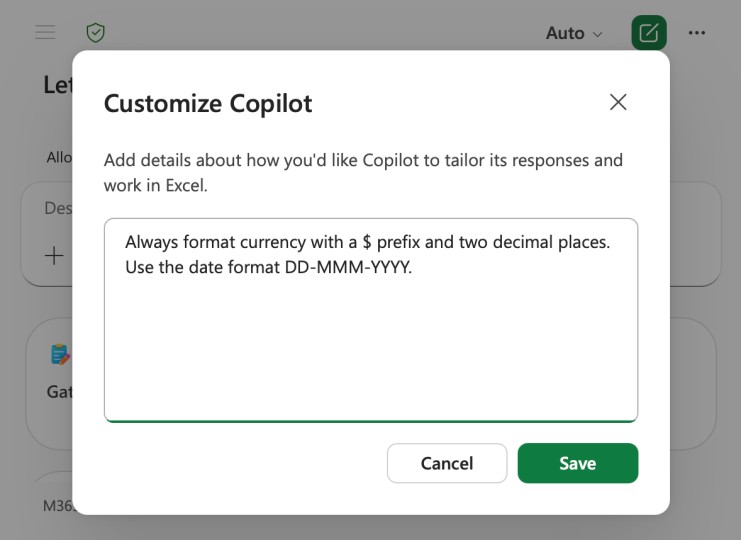
Excel now supports Copilot personalization rules, allowing responses to better match user preferences.

This means Copilot can respond in a way that more closely reflects how a user wants to work in Excel. For example, users may be able to guide Copilot toward preferred explanation styles, formatting habits, or workbook-specific expectations.

Image credit: Microsoft

Microsoft is also expanding how commercial customers can ground Copilot responses in work data.

Through the file picker, Copilot in Excel can now use more business context from sources such as people, emails, meetings, channels, the web, Loop, and other connected work data. This should help Copilot provide answers that better match the user’s actual workplace content instead of relying only on the current spreadsheet.

Copilot in Excel Now Supports More File Types

Copilot in Excel also gained support for analysis across more than 30 additional file types.

The newly supported formats include JSON, XML, GIF, BMP, SVG, SQL, ASPX, and more. This expands the range of files users can bring into Excel-related Copilot workflows.

PivotTables Get a Cleaner #SPILL! Error

Microsoft also improved how Excel handles blocked PivotTable expansion.

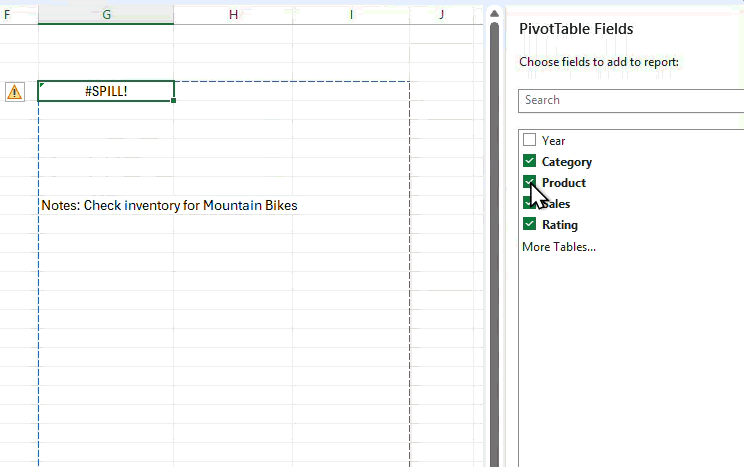
Previously, when a PivotTable could not expand because another cell, object, or value was blocking it, the issue could be harder to diagnose. Excel now collapses the blocked PivotTable expansion into a single #SPILL! error cell.

Image credit: Microsoft

This should make the problem easier to spot and fix. Users can click the error and identify what blocks the PivotTable from expanding.

Copilot Chat in Excel now includes navigable links.

When Copilot mentions specific changes in a workbook, users can jump directly to those changes from the chat response. This should make Copilot easier to use in larger spreadsheets where edits, formulas, or recommendations may sit across different sheets and cell ranges.

The feature also makes Copilot’s responses more practical because users do not have to manually search for every referenced change.

Excel for Windows and Mac Gets Insider Copilot Features

Excel for Windows and Mac also received new Copilot features, though some remain limited to Insiders for now.

Custom Copilot skills are now available to Excel Insiders on Windows and Mac. These skills allow organizations or advanced users to extend Copilot with more specialized capabilities.

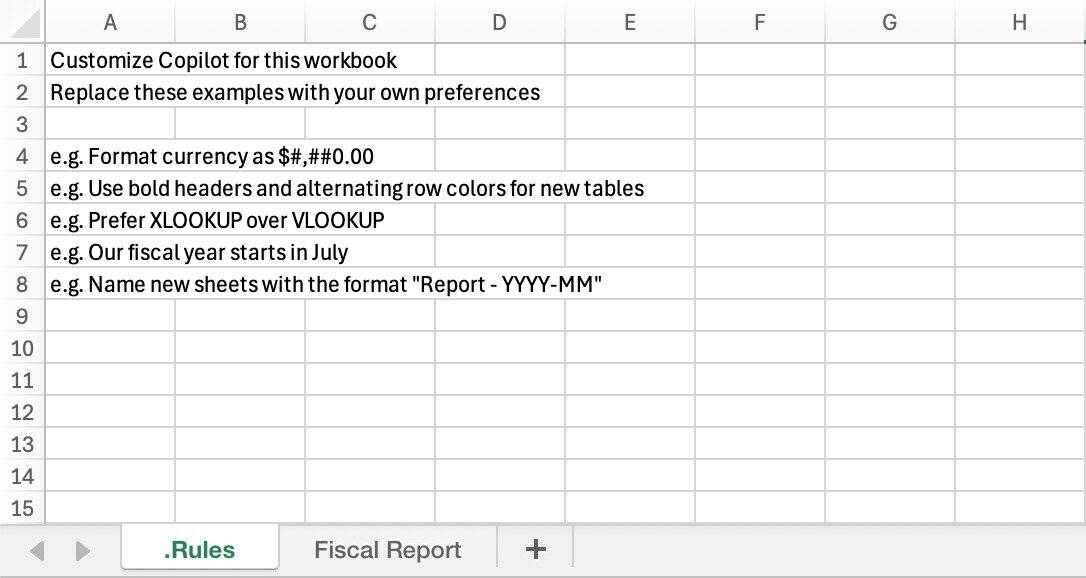
Microsoft also introduced workbook rules for Copilot. These rules can be documented in a separate .Rules sheet, giving users a way to define instructions that Copilot should follow inside a workbook.

Image credit: Microsoft

This could help teams keep Copilot aligned with internal spreadsheet standards, naming rules, formatting preferences, or business-specific requirements.

June’s Excel update stands out as one of the more exciting releases in recent months, especially with the growing focus on Copilot features. From personalization rules and expanded file support to improved work data grounding and workbook rules, the update highlights how quickly Excel’s AI capabilities are evolving.

Alongside these additions, practical improvements like the PivotTable #SPILL! fix and navigable Copilot Chat links make everyday tasks smoother. With this level of progress in June, it will be interesting to see what new features and refinements arrive in July.

Microsoft Shifts XBOX Funding Strategy as IO Interactive Deal Ends

Microsoft’s XBOX funding cuts are reportedly expanding beyond internal studios, as the company reviews where it spends money across its gaming business.
Microsoft is reportedly preparing a major round of layoffs across its XBOX division, with cuts expected to begin in July. Early reports claimed that several studios could face serious changes, including Compulsion Games and Arkane Studios, with insiders claiming that additional layoffs might be massive.

The restructuring may not only affect XBOX-owned teams. Reports have also pointed to several layoffs at Assembly, a major XBOX partner that provides PR, communications, media planning, and marketing services.

XBOX Restructuring May Reach More Studios

Newer reports suggest that more first-party XBOX studios could also be affected as Microsoft looks at its gaming costs. The company appears to be reviewing both internal development and external publishing deals.

That means the cuts may not stop at studios directly owned by Microsoft. Third-party projects funded or supported by XBOX could also face changes.

This shift comes as Microsoft tries to make XBOX more sustainable after years of heavy spending on studios, content, and major acquisitions.

IO Interactive’s Fantasy Game Loses Microsoft Partnership

IO Interactive has announced that its partnership with an unnamed “external partner” has ended. According to Bloomberg, that external partner was Microsoft.

The studio has reportedly spent the past five years working on a fantasy game that has long been rumored to be connected to XBOX. The project was also believed to be a potential XBOX exclusive.

IO Interactive says the game has not been canceled and remains planned. However, the end of Microsoft’s involvement raises questions about how the studio will continue funding development.

The company has warned that the end of the partnership could lead to layoffs on the development team.

It remains unclear whether IO Interactive will fund the fantasy game itself, scale the project down, or look for another publishing partner. The studio has said the project will continue, but losing Microsoft support could still force changes.

Microsoft Says It Is Reassessing Gaming Investment

Microsoft says it is reassessing where it invests in gaming and focusing on its “highest priorities.”

The company also says it is not reducing its overall gaming investment. Instead, Microsoft claims it expects to spend roughly the same amount on content as it did last year.

The difference appears to be where that money goes. Microsoft may continue spending heavily on gaming, but it may now prioritize safer projects, major franchises, and content with clearer financial returns.

This fits with recent comments from Microsoft leadership that XBOX needs to become more self-sufficient. The company has invested heavily in gaming for years, but it now appears to want stronger results from that spending.

Microsoft Warns Windows 11 24H2 Users to Upgrade Before Support Ends

Microsoft has warned Windows 11 24H2 Home and Pro users that the release will soon reach the end of support, according to Windows Central.

Windows 11 version 24H2 Home and Pro editions will stop receiving updates on October 13, 2026. After that date, affected PCs will no longer receive monthly security updates.

The end of support also means users will stop getting preview updates, technical support, time zone updates, and fixes for known issues. Devices will continue to work, but they will become more exposed over time if users stay on an unsupported version.

Windows 11 24H2 support ends in October 2026

The deadline applies to consumer editions of Windows 11 24H2. Microsoft supports Windows 11 Home and Pro feature releases for 24 months, while commercial editions receive a longer 36-month support window.

Since Windows 11 24H2 launched in 2024, its consumer support cycle is now nearing its end. Microsoft is encouraging users who remain on 24H2 to move to Windows 11 25H2.

Windows 11 25H2 is the current shipping version and remains fully supported. For Home and Pro users, it will continue receiving updates until October 2027.

Upgrade to Windows 11 25H2 should be small

The move from Windows 11 24H2 to Windows 11 25H2 should not feel like a major platform upgrade. Both versions share the same underlying codebase, so Microsoft treats the update as an enablement-style upgrade.

That means the update mainly turns on newer features and version changes already present in the system, instead of replacing the OS with a large new platform release.

The same approach is expected for Windows 11 26H2. Microsoft has indicated that the enablement package is less than 200KB for most users, making the upgrade much smaller than a traditional feature update.

Windows 11 26H2 will also be an option

Users who do not want to move to Windows 11 25H2 right away can wait for Windows 11 26H2, which is expected to roll out in fall 2026.

Windows 11 versions 24H2, 25H2, and 26H2 all use the Germanium platform release. Because the underlying OS platform remains the same, upgrading from 24H2 should carry fewer compatibility risks than a full platform jump.

This should help users and IT teams avoid some of the disruption usually linked to larger Windows feature updates.

Commercial Windows 11 24H2 users get more time

The October 13, 2026 deadline does not apply to commercial customers running Windows 11 24H2. Commercial editions receive 36 months of support instead of 24 months.

Windows 11 24H2 commercial editions will remain supported until October 12, 2027.

For regular Home and Pro users, however, the message is clear: Windows 11 24H2 is approaching the end of support, and upgrading to Windows 11 25H2 or 26H2 will soon become necessary to keep receiving security updates.

In other news, Microsoft has extended Windows Server 2022 hotpatching support until 2027.

Insiders Claim Massive XBOX Layoffs Could Hit Multiple Studios

XBOX is reportedly preparing for a major round of layoffs as Microsoft’s financial year comes to a close, with several studios said to be at risk as the company looks to reshape its gaming business.
Rumors about new XBOX job cuts have been circulating for several weeks, but recent claims suggest the scale could be much larger than a routine restructuring. Long-time game producer George Broussard has claimed that the upcoming cuts could become the largest single layoff event in gaming history.

Broussard also warned that the move could make XBOX deeply unpopular among players and developers for a long time, especially if the cuts affect major studios or lead to project cancellations.

XBOX layoffs could affect multiple studios

According to recent reports, several well-known XBOX studios may be vulnerable during the restructuring process. Undead Labs, Double Fine, Compulsion Games, and Ninja Theory have all been mentioned as studios that could face uncertainty.

The reports claim that some of these teams may try to find alternative funding or attempt to regain independence if Microsoft decides to reduce its support. However, if no solution is found, some affected studios could allegedly face closure.

Even studios that remain open may not escape the cuts. Broussard suggested that surviving teams could still lose staff as Microsoft scales back spending across the XBOX business.

Microsoft may focus on its biggest franchises

The reported layoffs appear to be part of a broader effort to make XBOX more financially sustainable after years of heavy investment in studios, subscriptions, cloud gaming, and acquisitions.

Microsoft CEO Satya Nadella has previously said that XBOX needs to become more sustainable, and the company now appears to be moving toward a more focused strategy.

That could mean fewer risky projects and a stronger focus on major franchises with proven commercial value. Franchises such as Fallout, Call of Duty, and The Elder Scrolls may become even more important to Microsoft’s gaming strategy.

XBOX restructuring may continue through the week

The full scale of the XBOX layoffs may not become clear until later in the week. However, the latest reports suggest the cuts could affect multiple parts of the division, not only individual studios.

The situation has already spread beyond Microsoft’s internal teams. Related companies have also been affected, including Assembly, a major agency partner.

For now, Microsoft has not shared the full details of the reported restructuring. Still, the latest claims point to a major shift for XBOX as the company tries to reduce costs and focus on its most profitable gaming priorities.

Via Push Square

Revised Nintendo Switch 2 Model Spotted With Updated LCD Screen

A revised Nintendo Switch 2 model may have surfaced on a Chinese resale site, suggesting that Nintendo could already be preparing a hardware adjustment for its new console.

The reported model was spotted by Nintendo Patents Watch and is said to use a Sharp LCD panel. The panel reportedly has significantly redesigned inputs compared to the standard Switch 2 display, which suggests the change may involve more than a routine internal parts swap.

Reported Switch 2 Revision Uses a Sharp LCD Panel

According to the report, the alleged revised Switch 2 model still uses an LCD display rather than an OLED panel. That means this does not appear to be the Switch 2 OLED model that many players have been waiting for.

The bigger point is the design of the display hardware. The redesigned inputs could indicate that Nintendo is testing or preparing a revised display assembly for future Switch 2 units.

A new model of Switch 2 LCD panel, most likely by Sharp, has surfaced on a Chinese resale site (img 1). Compared with the launch model from Innolux (img 2), the exposed circuit, connector, and cables are significantly different (imgs 3-4), indicating an updated design—not merely a minor revision.1/

— Nintendo Patents Watch (@ninpatentswatch.bsky.social) 2026-06-29T17:19:07.320Z

One possible reason for the change could be ghosting. Some early Switch 2 users have reported ghosting issues on the launch model’s LCD screen, and a revised panel could help Nintendo improve motion clarity or overall display performance.

The Revision Could Also Be Linked to Europe’s Battery Rules

Another possibility is that the reported hardware change is tied to a revised European Switch 2 model designed with a removable battery.

For now, there is no confirmation that the model spotted online is tied to Europe, displays improvements, or has any specific launch plan.

Switch 2 Still Uses LCD Instead of OLED

The current Nintendo Switch 2 comes with a 7.9-inch LCD screen. The display supports 1080p output, HDR10, and variable refresh rate up to 120Hz.

Nintendo previously explained that it chose LCD technology because of the improvements made during the console’s development. Nintendo’s Tetsuya Sasaki said the company reviewed available display options and decided to stick with LCD for the Switch 2.

That decision disappointed some users who wanted an OLED screen at launch, especially after the original Switch received an OLED model later in its lifecycle.

Nintendo has not announced a new Switch 2 model, and the company has not confirmed any display revision. Until official details arrive, the report should be treated as an early hardware leak rather than a confirmed product update.

The report comes as Nintendo’s new console remains under close attention from players and analysts. In other recent Switch 2 news, it has also been reported that sales in Japan dropped after a price increase.

Via Video Games Chronicle

Amazon Reportedly Looks Beyond Claude for Some AI Workloads

Amazon is reportedly considering alternatives to Anthropic’s Claude models for some internal AI workloads, as the company looks for ways to reduce costs.

According to The Information, Amazon may use OpenAI models or its own Nova AI models in some services instead of relying only on Claude. The reported evaluation comes despite Amazon being one of Anthropic’s biggest investors and one of its most important cloud partners.

The possible shift appears to be linked to the cost of using Claude inside Amazon services. Anthropic has reportedly raised the cost of using its models, prompting Amazon to look at more affordable options for certain workloads.

Amazon’s Anthropic Partnership Remains Important

The report does not necessarily mean Amazon’s relationship with Anthropic is weakening.

Amazon is not only a Claude customer. It is also a major Anthropic investor and infrastructure partner. Anthropic has committed to spend more than $100 billion over 10 years on AWS technologies, including Amazon’s Trainium AI chips.

That commitment makes the relationship much deeper than a standard customer-vendor deal. Anthropic depends heavily on AWS for cloud infrastructure, while Amazon benefits from having Claude models available across its AI services.

Nova Gives Amazon an In-House Option

Amazon has already been building its own AI model family through Nova.

The company announced Nova in late 2024 for Amazon Bedrock. The models were designed for text, image, and video tasks, giving AWS customers a wider set of AI options inside Amazon’s cloud.

Amazon originally positioned Nova around cost efficiency and lower latency. Those two areas could make Nova attractive for internal workloads that do not need the most expensive frontier model available.

Using Nova would also give Amazon more control over pricing, deployment, optimization, and hardware integration. That could matter as Amazon continues investing in Trainium chips and other AWS AI infrastructure.

OpenAI Is Now a More Realistic AWS Option

OpenAI has also become a more practical option for AWS customers.

Earlier this year, OpenAI brought its latest models and Codex coding agent to Amazon Bedrock. That move followed changes to OpenAI’s previously more restrictive Microsoft cloud arrangement.

OpenAI’s presence on Bedrock gives AWS customers access to more model options without leaving Amazon’s cloud. It also means Amazon can compare Claude, Nova, and OpenAI models more directly for cost, speed, and performance.

As for OpenAI, the company has announced GPT-5.6 in limited preview, adding another advanced model option for companies evaluating AI systems.

Amazon is not the only major tech company looking at more affordable alternatives. Microsoft is reportedly considering using DeepSeek V4 for some AI workloads, showing that even the largest AI buyers are trying to balance performance with cost.

For Amazon, the question may not be whether Claude remains important. The bigger question is where Claude makes financial sense and where OpenAI or Nova models could do the job at a lower price.

Amazon May Not Fully Switch Away From Claude

The report does not suggest that Amazon has made a final decision.

It also remains unclear whether Amazon would fully move any major workloads from Claude to OpenAI or Nova models. The company could simply use different models for different tasks.

That would allow Amazon to keep Claude in areas where Anthropic’s models perform best, while using Nova or OpenAI models for workloads where cost matters more.

For now, Amazon’s evaluation appears to reflect commercial pressure rather than a damaged partnership. Claude, Nova, and OpenAI could all play a role in Amazon’s AI strategy as the company looks for the right balance between performance, cost, and control.

XBOX Expands Stream Your Own Game With 70 More Titles

XBOX has expanded its Stream Your Own Game library again with another 70 titles for June 2026, as True Achievements reports. The new batch allows players to stream these games through XBOX Cloud Gaming, as long as they already own them digitally.

Players also need an active XBOX Game Pass Essential, Premium, or Ultimate subscription to use the feature. This marks the final Stream Your Own Game update for June 2026.

The latest update covers a wide range of genres, including RPGs, horror games, racing titles, sports games, simulators, and action games.

Pathologic, Warhammer, Ravenswatch, And More Join The Library

Some of the most notable additions include Pathologic 2 and Pathologic 3, which should appeal to fans of dark, story-driven games.

Top-down action RPG fans also have several new options. Ravenswatch, Warhammer 40,000: Inquisitor – Martyr, Warhammer: Chaosbane, and Warhammer: Chaosbane Slayer Edition now support owned-game cloud streaming.

SpeedRunners has also joined the library ahead of its sequel’s July launch, giving players another reason to return to the fast-paced platform racer.

The update also includes several sports and racing games, such as AFL 23, AFL 26, Cricket 22, Rugby 25, Test Drive Unlimited Solar Crown, WRC 9, WRC Generations, and Tour de France 2024.

All 70 XBOX Stream Your Own Game Additions For June 2026

AFL 23AFL 26Ambulance Life: A Paramedic Simulator
Animal HospitalAsterigos: Curse of the StarsAsterix & Obelix: Heroes
Black SkylandsCat Rescue StoryClash: Artifacts of Chaos
ClusterTruckCricket 22Crown Wars: The Black Prince
DucksideGangs of SherwoodGarden Life: A Cozy Simulator
Handball 17Handball 21Happy’s Humble Burger Farm
Hello EngineerHello Neighbor: Hide and SeekHellpoint
Hunting SimulatorJustice SucksLovely Planet
Mayhem in Single ValleyMonopoly: Star Wars Heroes vs. VillainsMonster Truck Championship (XBOX One)
Monster Truck Championship (XBOX Series X|S)Mr. ShiftyMy Fantastic Ranch: Unicorn & Dragons
No Time To ExplainNot For BroadcastNova Strike
Overpass 2OverpassParty Hard
Party Hard 2Pathologic 2Pathologic 3
Punch ClubPunch Club 2: Fast ForwardRavenswatch
Rhythm SproutRiMS Racing (XBOX One)RiMS Racing (XBOX Series X|S)
Rogue LordsRUGBY 18Rugby 25
Slime 3K: Rise Against DespotSpeedRunnersStreets of Rogue
Taxi Life: A City Driving SimulatorTennis World TourTest Drive Unlimited Solar Crown
The EscapistsThe Escapists 2The Escapists: The Walking Dead
The Final StationTour de France 2023Tour de France 2024
Train Life: A Railway SimulatorTrash SailorsUndungeon
War HospitalWarhammer 40,000: Inquisitor – MartyrWarhammer: Chaosbane Slayer Edition
Warhammer: ChaosbaneWildshade: Unicorn ChampionsWRC 9
WRC Generations

With over 120 owned games added to cloud streaming in June alone, XBOX is clearly accelerating its push to make digital libraries more accessible across devices. This momentum is expected to continue into July, with 50+ XBOX games already confirmed for release, alongside 20+ titles arriving this week.

XBOX is also expanding its ecosystem further, adding handheld support for 34 more games this week and growing the XBOX Game Pass July 2026 lineup with 12 confirmed titles. Together, these updates highlight Microsoft’s ongoing commitment to expanding player choice, accessibility, and value across its platform.

XBOX Layoffs Hit Assembly Staff, But Agency Still Works With Microsoft

XBOX layoffs are reportedly widening as Microsoft continues a major restructuring of its gaming business, but a new clarification suggests one recent round of cuts was not caused by XBOX ending work with one of its PR partners.

The latest concern involves Assembly, a major external agency that has supported XBOX with media planning, communications, marketing research, and broader PR work. Early reports suggested Microsoft had cut ties with the agency, but that claim has now been clarified.

Bloomberg reporter Jason Schreier said Assembly’s layoffs were part of an agency-wide reorganization, not the result of XBOX ending its contracts with the company. Some employees who worked on the XBOX account were affected, but Assembly is still continuing to work with XBOX.

Assembly Layoffs Hit Some XBOX PR Staff

Assembly has been one of Microsoft’s major external partners for XBOX communications and marketing support. The agency has worked across several areas tied to public relations, campaign planning, and media strategy.

The layoffs drew attention because they came as XBOX is already facing reports of broader job cuts and possible studio closures. That timing led to speculation that Microsoft had ended or reduced its relationship with Assembly.

Correction: Today's Assembly layoffs were part of an agency-wide reorganization and were not related to Xbox ending contracts. People on the Xbox account were laid off but the agency is still continuing to work with Xbox, I'm told

— Jason Schreier (@jasonschreier.bsky.social) 2026-06-29T23:53:00.306Z

However, the situation appears more limited. According to Schreier’s clarification, Assembly’s cuts were tied to a broader internal reorganization at the agency itself. The affected employees included some people who had worked on XBOX, but the agency has not lost the XBOX account.

XBOX Restructuring Continues

The clarification does not remove the larger uncertainty around XBOX. Microsoft’s gaming division is still expected to face additional layoffs as the company pushes to improve profitability.

XBOX is currently going through a major restructuring under CEO Asha Sharma. Reports suggest Microsoft wants to make the gaming business more financially efficient, and Microsoft CEO Satya Nadella has also said the company is focused on improving profitability across the division.

Bloomberg’s Jason Schreier previously reported that larger XBOX layoffs are expected after Microsoft’s fiscal year ends. That has raised concerns that more teams and studios could be affected in the coming weeks.

For now, the confirmed point is that Assembly has not been dropped by XBOX. The layoffs at the agency were part of a wider internal reorganization, although some staffers who worked with XBOX were affected.

More details about Microsoft’s broader XBOX layoffs are expected after the company’s fiscal year closes.

Via Windows Central

CISA Says Microsoft Defender BlueHammer Flaw Is Now Used in Ransomware Attacks

CISA says ransomware gangs are now exploiting a Microsoft Defender privilege escalation vulnerability known as BlueHammer, as BleepingComputer reports.

The flaw, tracked as CVE-2026-33825, was patched by Microsoft on April 14, 2026, as part of the company’s April Patch Tuesday updates. However, security researchers later reported that attackers had already used the bug as a zero-day before the fix became available.

BlueHammer is a high-severity vulnerability in Microsoft Defender. According to Microsoft, the issue comes from insufficient access control granularity, which can allow an authorized local attacker to elevate privileges on a targeted Windows system.

BlueHammer Was Added to CISA’s Exploited Vulnerabilities List

CISA added CVE-2026-33825 to its Known Exploited Vulnerabilities catalog on April 22, shortly after Microsoft released its patch.

The agency has now updated the entry to warn that the vulnerability is being used in ransomware campaigns. That makes the flaw more urgent for organizations that have not yet installed April’s security updates.

Microsoft has not yet marked CVE-2026-33825 as exploited in attacks, even though CISA’s latest update links the flaw to ransomware activity.

Attackers Can Use the Flaw to Gain Higher Privileges

BlueHammer requires local access, so an attacker must already have some level of access to the device. However, once inside, the vulnerability can help them gain far more control.

Security researcher Will Dormann said the flaw is not easy to exploit, but successful exploitation can expose the Security Account Manager database. The SAM database stores password hashes for local Windows accounts.

Attackers could use that access to escalate to SYSTEM privileges. SYSTEM-level access gives attackers broad control over the compromised Windows machine, which can help ransomware operators disable defenses, move deeper into networks, or prepare systems for encryption.

Researchers Reported Zero-Day Exploitation

Huntress Labs previously reported that threat actors had already exploited CVE-2026-33825 before Microsoft issued a patch.

Those attacks reportedly showed signs of hands-on-keyboard activity, which means attackers were actively controlling parts of the intrusion instead of relying only on automated malware.

The vulnerability also drew attention after a security researcher known as Nightmare Eclipse leaked details in early April. The leak reportedly included proof-of-concept exploit code and was described as a protest against Microsoft’s vulnerability disclosure process.

Organizations Should Apply the April Patch Tuesday Update

The main fix for BlueHammer arrived with Microsoft’s April 14, 2026 Patch Tuesday release.

Organizations should make sure all affected Windows systems have received the relevant Defender security update. Security teams should also review endpoint logs for signs of privilege escalation, suspicious local account access, and attempts to dump or access password hashes.

Because CISA now links the flaw to ransomware campaigns, unpatched systems may face a higher risk of post-compromise escalation. Even though BlueHammer does not allow remote compromise by itself, it can give attackers the permissions they need after gaining initial access through phishing, stolen credentials, exposed services, or malware.

Microsoft Explains Windows’ Decades-Old File Lock Error

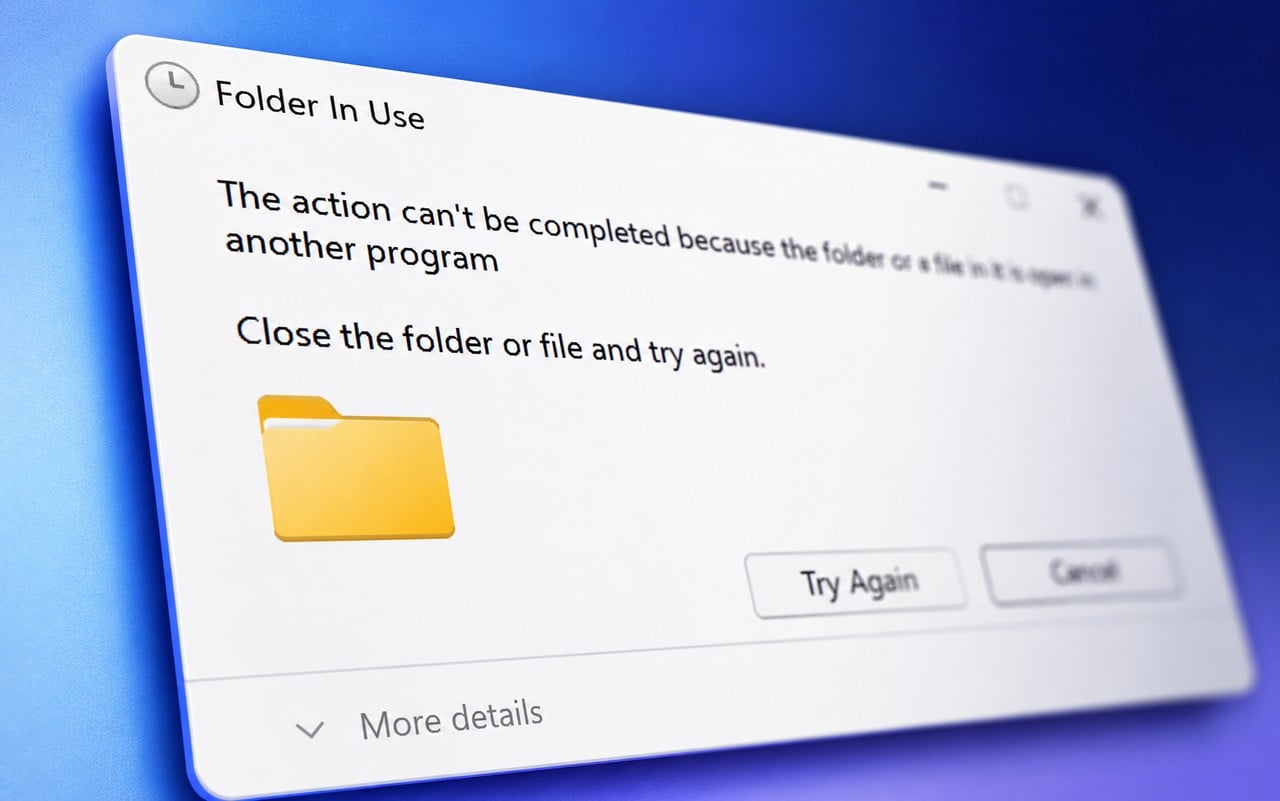
Windows users have seen the same confusing message for years: “The action can’t be completed because the file is open in another program.”

The warning appears when Windows blocks users from deleting or renaming a file. It usually means another process still has access to that file, even if the app that appeared to use it has already been closed.

Mark Russinovich, Azure CTO and Microsoft Technical Fellow, recently explained why this long-standing Windows behavior still happens. Russinovich first ran into the problem in the 1990s, and it eventually pushed him to build tools that could show what Windows was hiding from users.

Why Windows Says A File Is Open In Another Program

The error usually comes down to something called a file handle.

A file handle is a Windows reference that tracks which process is using a file. When a program opens a document, video, DLL, image, archive, or other file, Windows creates a handle so it can manage access to that file.

Windows blocks deletion or renaming while that handle exists. The reason is data protection. If Windows allowed users to remove or replace a file while another program still used it, the app could crash or data could become corrupted.

That explanation sounds simple, but the problem feels confusing because closing the visible app does not always release every handle connected to the file.

Why Closing The App Does Not Always Unlock The File

Russinovich pointed out that several background actions can keep a file locked after users think they have closed it.

One common cause is antivirus scanning. Security software can open a file in the background while checking it for threats. Even if the user has already closed Word, Media Player, File Explorer, or another visible app, the antivirus process can still hold the file open.

Network activity can also cause the error. A file may remain locked if another PC on the same network still references it through a shared folder or remote file operation.

The trickiest case involves DLL files. If Windows loads a file as a Dynamic Link Library, it may not appear as a normal open file handle. Instead, Windows maps it into a process’s memory.

That means regular file-handle checks may not immediately reveal the culprit. In DLL-related cases, users may need to terminate the entire application that has the file loaded in memory.

How Russinovich Built Tools To Find Locked Files

Russinovich created the Handle command-line tool after encountering this problem himself in the 1990s.

Handle is part of Microsoft’s Sysinternals suite, a collection of advanced Windows troubleshooting utilities. The tool can show which process has a file open, including the process name and process ID.

Process Explorer offers a graphical alternative that can search for handles and DLLs, making it easier to find which process has locked a file without relying on command-line tools, and there are also more modern, user-friendly options like PowerToys File Locksmith, which lets users right-click a file to see which processes are using it and quickly end them before retrying the delete or rename action.

For regular users, this is the easiest modern alternative to Sysinternals. It brings the same basic troubleshooting idea into a simpler interface.

Russinovich’s Workaround For Locked Files

Russinovich also suggested a workaround for some locked-file cases: rename the file first.

In some situations, Windows may allow users to rename a locked file even when it does not allow immediate deletion. After renaming it, users can place a fresh copy with the original name in the same folder.

The old, renamed file can then be deleted later, once the locking process releases it.

This workaround will not fix every case, especially when a file remains actively mapped into memory, but it can help users replace files without rebooting the system.

In other Microsoft news, the company has explained who is affected by the Microsoft Authenticator root-blocking policy. Microsoft has also confirmed that Point-in-time Restore is now available for everyone.

Via Windows Latest

Microsoft Clarifies Who Authenticator Root Blocking Affects

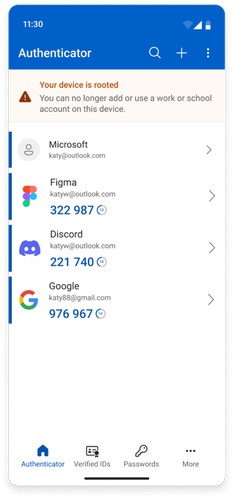
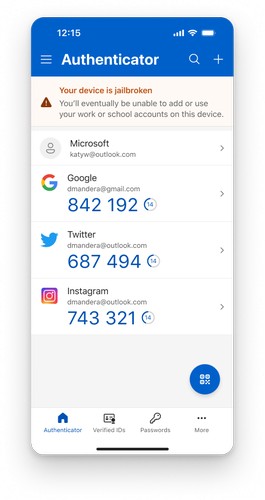
Microsoft has clarified who will be affected by the new jailbreak and root detection policy in Microsoft Authenticator, as spotted by Windows Latest. The restriction applies to Microsoft Entra credentials, which means work and school accounts, not personal Microsoft accounts or standard third-party 2FA codes.

The change matters for users who rely on Microsoft Authenticator to access company, school, university, Microsoft 365, Teams, Outlook work, Azure, or Intune accounts. If the device is rooted or jailbroken, Authenticator may eventually block those work or school sign-ins.

Microsoft says the feature is enabled by default for affected customers. There is no opt-out option for the Authenticator jailbreak and root detection policy.

Microsoft Authenticator Blocking Targets Entra Work and School Credentials

The restriction applies to accounts managed through Microsoft Entra. These typically include work or school accounts.

That means services like Outlook, Teams, SharePoint, OneDrive for Business, and Microsoft 365 can be affected when users sign in with a Microsoft work or school account.

The policy does not currently apply to personal Microsoft accounts. Microsoft also does not plan to apply it to standard third-party 2FA codes stored in Authenticator for now.

Third-Party 2FA Codes Should Keep Working

Users who store regular third-party 2FA codes in Microsoft Authenticator should still be able to use those codes on rooted or jailbroken devices.

However, there is one important exception. If a third-party service uses “Sign in with Microsoft” through a company Entra account, the work account sign-in path could still fall under the new restriction.

In other words, Authenticator codes for regular third-party logins should continue working, but Microsoft work or school account authentication may not.

Microsoft Will Roll Out the Block in Phases

Microsoft will not immediately lock users out. The rollout will happen in phases, giving affected users time to move to a supported device or remove root or jailbreak changes.

First, Authenticator will show a warning that the device appears to be rooted or jailbroken. Users will initially be able to continue after seeing the warning.

Image credit: Microsoft

A persistent banner will then remain on the Authenticator home page. This banner will remind users that their device does not meet the required security state.

Final Phase Will Block New Credentials and Sign-Ins

In the final phase, users on rooted or jailbroken devices will be blocked from creating new credentials or signing in through Microsoft Authenticator.

To regain access, users will need to reverse the jailbreak or root changes. They can also switch to another supported device that meets Microsoft’s security requirements.

The rollout was originally planned for February 2026, but Microsoft says it is still being phased in. The company now expects the rollout to finish around mid-2026, with users expected to see changes by the end of July.

Microsoft Says the Change Improves Account Security

Microsoft says the new detection policy is designed to improve account security. Rooted and jailbroken devices can bypass some platform protections, which creates additional risk for organizations using Microsoft Entra authentication.

The estimated gap between rollout phases is around one month. This phased approach should help organizations prepare users before the final blocking stage begins.

In another Authenticator security improvement, Microsoft now requires manual number entry as an extra protection step. Microsoft has also detailed recent security upgrades in Edge for Business as part of its broader push to protect enterprise accounts and data.

Claude Models Are Now Generally Available in Microsoft Foundry on Azure

Anthropic’s Claude models are now generally available in Microsoft Foundry on Azure, expanding the company’s partnership with Microsoft and NVIDIA.

The rollout gives enterprises access to Claude models through Microsoft’s AI development platform, with the Azure-hosted option now available for production use.

Microsoft says the models run on NVIDIA GB300 Blackwell Ultra systems, a setup designed for companies building autonomous and domain-specific AI agents.

Microsoft Offers Two Claude Deployment Options

Claude models in Microsoft Foundry are available through two deployment models.

The first option, “Hosted on Azure,” runs fully on Azure infrastructure and is now generally available. The second option, “Hosted on Anthropic infrastructure,” remains in preview.

The Azure-hosted option matters for organizations that need tighter control over procurement, compliance, governance, and data-processing requirements. For many enterprises, keeping AI workloads inside Azure can simplify internal approval processes and cloud spending management.

Claude Expands Microsoft Foundry’s AI Model Lineup

Microsoft Foundry currently lists 11 Claude models. The lineup includes newer models such as Claude Opus 4.8 and Claude Sonnet 4.6, alongside unavailable Mythos and Fable models.

The broader Claude availability gives developers and enterprise teams more choice when building AI apps and agentic systems in Microsoft’s cloud ecosystem.

Instead of relying only on Microsoft’s own AI models, customers can now use Anthropic’s Claude models through the same Azure-based platform they already use for development, deployment, billing, and governance.

Claude Billing Runs Through Azure Marketplace

Microsoft is billing Claude usage in Foundry through Claude Consumption Units, also called CCUs.

According to Microsoft, CCUs convert token usage based on Anthropic’s published per-model token rates. The usage then appears through Azure Marketplace and shows up on the customer’s Azure invoice.

Eligible Claude usage can also count toward a Microsoft Azure Consumption Commitment, which could make the models more attractive for large enterprises already committed to Azure spending agreements.

Microsoft, NVIDIA, and Anthropic Deepen Their AI Partnership

The general availability of Claude on Azure is part of a broader partnership between Microsoft, NVIDIA, and Anthropic.

Anthropic has committed to buying $30 billion in Azure compute capacity. The company is also contracting additional Azure capacity of up to one gigawatt.

NVIDIA and Microsoft also said they would invest up to $10 billion and $5 billion in Anthropic, respectively.

The partnership gives Anthropic access to large-scale cloud and GPU infrastructure, while Microsoft strengthens Azure’s position as a platform for multiple frontier AI model providers.

For enterprise customers, the main change is practical: Claude models are now easier to buy, deploy, and manage inside Microsoft’s cloud.

Microsoft Is Renaming Xbox Mode to XBOX Mode in Windows 11

Microsoft is preparing to rename “Xbox mode” in Windows 11 to “XBOX mode,” according to a change spotted in the latest Windows Insider build.

The feature only recently arrived in Windows 11 with the May 2026 Security Update, but Microsoft already appears to be adjusting its branding. Instead of “Xbox mode,” the feature now shows up as “XBOX mode,” matching the company’s broader shift toward all-caps XBOX branding.

XBOX Mode Gets a Branding Update

The change was spotted by X user @phantomofearth in Windows 11 Experimental Build 26300.8758.

Microsoft did not mention the rename in the official release notes for the build, so the change appears to be a quiet branding update rather than a major feature change. For now, there is no indication that XBOX mode works differently from Xbox mode.

The most visible difference is the name itself.

Microsoft Pushes All-Caps XBOX Branding

The rename fits with Microsoft’s recent move toward using “XBOX” more consistently across its products and public-facing channels.

Microsoft has already started using the all-caps XBOX name across parts of its website, social media handles, and Microsoft Store branding. Renaming the Windows 11 feature to “XBOX mode” brings the operating system closer to that updated identity.

It also suggests Microsoft wants a more unified gaming brand across Windows, console, cloud, and store experiences.

XBOX News Continues Beyond Windows 11

The rename comes as Microsoft’s gaming business faces a busy news cycle.

In other XBOX-related developments, reports suggest Microsoft may be pausing some third-party game deals while preparing broader internal changes, including possible studio shutdowns. At the same time, more than 50 titles are reportedly joining the platform in June, giving players a large batch of new games to watch.

For now, the Windows 11 change remains small but noticeable. Microsoft appears to be standardizing the XBOX name across more parts of its ecosystem, and Windows 11 is now part of that shift.

Via Windows Central

Microsoft Extends Windows Server 2022 Hotpatching Support Until 2027

Microsoft has announced that it is extending hotpatching support for Windows Server 2022 until October 2027, giving organizations another year of reboot-free security updates beyond the original mainstream support timeline.

The extension applies specifically to Windows Server 2022 Datacenter: Azure Edition and takes effect immediately. Microsoft says the existing hotpatch update schedule will continue unchanged throughout the extended period.

One More Year of Hotpatching Support

Hotpatching allows Microsoft to install many security updates without requiring administrators to restart their servers after every monthly update.

Instead of replacing files that require a reboot, hotpatching updates in-memory code while workloads continue running. This helps organizations maintain higher availability and reduce planned downtime for critical services.

The newly announced extension means eligible systems can continue receiving hotpatch security updates through October 2027 instead of October 2026.

Microsoft says the extension provides customers with an additional year of reboot-free monthly security updates, reduced servicing disruptions for production workloads, faster deployment of security fixes, and improved uptime for business-critical applications.

Not Every Update Can Skip a Restart

Although hotpatching significantly reduces the number of required reboots, it does not eliminate them entirely.

Certain updates will still require a server restart. These include standard Windows updates that are not delivered as hotpatches, along with non-Windows components such as .NET updates and other software that cannot be applied in memory.

Administrators should therefore continue planning occasional maintenance windows even when using hotpatching.

Eligibility Requirements

The extended support applies only to systems running Windows Server 2022 Datacenter: Azure Edition.

Servers must also be enrolled in the hotpatch update program to receive the extended servicing period.

Microsoft confirmed that the hotpatch servicing cadence remains unchanged through October 2027, meaning enrolled devices will continue receiving monthly security updates without requiring a restart whenever the updates qualify for hotpatch delivery.

Windows Server 2022 Support Continues Until 2031

While hotpatch support now runs through October 2027, the overall Windows Server 2022 lifecycle remains unchanged.

Windows Server 2022 Datacenter, Datacenter: Azure Edition, Standard, and Essentials editions will continue receiving extended support until October 14, 2031.

Organizations using Azure Edition can therefore benefit from an additional year of reboot-free security servicing while continuing to receive long-term support for the operating system.

Other Microsoft News

Microsoft has also been busy with several other Windows and server-related updates.

Recent announcements include fixes for Windows Update problems caused by the WUSA installer bug, refreshed Windows 11 and Windows Server installation ISOs that include the latest security definitions, and the release of a new version of Azure Linux.

Via BleepingComputer

Microsoft Teams Gets New Bot Security Controls for Meetings

Microsoft is rolling out new security controls in Microsoft Teams that give organizations more control over bots joining meetings. The update introduces stricter admission policies, clearer bot identification, and new warnings designed to reduce the risk of unauthorized or misconfigured bots accessing sensitive conversations.

Microsoft first began working on bot detection capabilities earlier this year, and the latest rollout builds on those efforts with new administrative controls and participant safeguards.

Teams Now Requires More Control Over Bot Access

One of the biggest additions is a new Teams admin policy called “Manage external bots and their access to meetings.” By default, external bots must receive manual approval from the meeting lobby before they can join.

Image credit: Microsoft

Organizations that prefer stricter controls can disable the bot admission experience altogether.

For the highest level of protection, Microsoft recommends allowing only meeting organizers and co-organizers to manage bot access. This reduces the chance that another attendee accidentally admits a bot into a confidential meeting.

The new approach gives IT administrators more predictable control over how automated participants enter meetings.

Teams Can Now Identify Bots More Accurately

Microsoft has also improved how Teams distinguishes automated participants from real people.

Instead of relying only on existing verification methods, Teams now uses infrastructure signals to determine whether a participant is a bot. This allows the platform to recognize automated attendees more reliably during the admission process.

Microsoft is also preparing a registration program for independent software vendors. Developers will be able to register their bots with Microsoft, allowing Teams to recognize them as known bots.

Registered bots can then receive trusted status, while unknown or suspicious bots can be flagged as potential security risks. This should help organizers make faster decisions when approving meeting participants.

Additional Safety Measures Arrive

The rollout also introduces several interface changes designed to prevent accidental bot admission.

Microsoft is removing the existing one-click “Admit” option for identified bots. Instead, Teams will display confirmation prompts whenever organizers admit participants if bots are included in the request.

Image credit: Microsoft

The “Admit all” option is also becoming more cautious. If the waiting room contains bots, organizers will receive a warning before everyone is admitted into the meeting.

Image credit: Microsoft

At the same time, Microsoft is retiring the current CAPTCHA verification system previously used for bots.

More Bot Management Features Are Planned

Microsoft says additional bot management capabilities are already on its roadmap.

Future updates are expected to include:

  • Organization-wide bot allow-lists
  • Expanded administrator policies
  • Detailed audit logs
  • Administrative reports
  • More granular bot management settings

These additions should give IT departments greater visibility into how bots are used across their organizations while making it easier to enforce security policies.

Teams Continues to Expand Beyond Security

The bot security improvements arrive alongside several other Teams enhancements that Microsoft is preparing.

The company is introducing a dedicated Recap experience that makes meeting summaries easier to access after calls. Microsoft is also expanding PowerPoint Live with additional functionality to improve presentations during Teams meetings.

As AI assistants become a larger part of everyday meetings, Microsoft’s latest security changes aim to ensure organizations can benefit from automation without giving up control over who, or what, joins their conversations.

Microsoft Launches WSL Containers Public Preview With Docker-Like CLI and GPU Support

Microsoft has released WSL Containers in public preview, giving Windows developers a built-in way to build, run, and manage Linux containers without relying on Docker Desktop for many common workflows.

The release arrives just after Microsoft clarified that WSL Containers are not “WSL 3,” ending speculation surrounding the new feature.

The preview is available through the latest pre-release version of Windows Subsystem for Linux. Developers can install it by running wsl –update –pre-release, which adds a new container command-line tool named wslc.exe alongside a programmable API for Windows applications.

A familiar container experience for Docker users

Microsoft designed wslc.exe to feel familiar to developers who already work with Docker and other container platforms. The syntax closely matches existing container tools, reducing the learning curve for users moving to WSL Containers.

The CLI also ships with a built-in alias called container.exe, giving developers another way to access the same functionality.

Developers can even launch a complete Ubuntu KDE desktop inside a Linux container by exposing the required ports, showing that WSL Containers can handle far more than simple command-line applications.

GPU acceleration brings AI workloads to Windows containers

One of the most notable capabilities is built-in GPU support.

By passing the –gpus all flag, containers can access the host system’s graphics hardware, allowing machine learning frameworks such as PyTorch to use GPU acceleration directly from inside Linux containers running on Windows.

This built-in GPU access removes another layer of setup that developers previously handled through third-party container environments.

New API lets Windows apps embed Linux containers

Alongside the CLI, Microsoft introduced a new WSL Container API that allows Windows developers to integrate Linux container functionality directly into native applications.

Instead of launching external command-line tools, applications can programmatically create sessions, pull container images, start containers, and interact with running Linux processes.

The company has already integrated the technology into development tools including MSBuild and CMake, allowing developers to define container operations directly inside project files rather than relying on external scripts.

Faster file sharing and improved networking are on the way

Microsoft is also preparing additional improvements for future WSL releases.

A new default file system based on virtiofs aims to improve file sharing performance between Windows and Linux environments, reducing one of the longstanding bottlenecks for WSL users.

The company is also testing an experimental networking mode called consomme, which routes Linux networking through Windows to improve compatibility with enterprise VPNs and corporate networking environments.

Better isolation through lightweight virtual machines

Although WSL Containers build on Windows Subsystem for Linux, they do not execute inside a standard WSL distribution.

Instead, each application or CLI session creates its own lightweight Hyper-V utility virtual machine in the background.

Microsoft says this architecture improves security by isolating workloads, making it harder for one application’s containers to inspect or interfere with another application’s environment.

Microsoft’s Linux strategy continues to evolve

The public preview represents another step in Microsoft’s ongoing embrace of Linux and open-source development.

The company has also continued expanding its Linux investments with the recent release of Azure Linux 4.0, reinforcing a sharp shift from its historical stance toward Linux.

50+ XBOX Games Are Coming In July 2026

XBOX players have another busy month ahead, with dozens of new games scheduled to arrive throughout July 2026, as PureXbox reports. The lineup includes major new releases, highly anticipated remakes, DLC expansions, sports titles, RPGs, and several indie games launching across the month.

Among the biggest highlights is DOOM: The Dark Ages – Revelations, a brand-new campaign expansion that continues the Slayer’s story. Ubisoft is also bringing back one of its most beloved games with Assassin’s Creed Black Flag Resynced, while the popular open-world RPG Wuthering Waves finally makes its XBOX debut.

All new XBOX games coming in July 2026

July 1

  • Clarity: The Seven Demons of Vanguardia
  • Mayor May Knott
  • Tallowmere

July 2

  • Avatar Legends: The Fighting Game
  • Hyperwired
  • TV Studio Story

July 3

  • Bone Marrow 2
  • Independence Day Festive Finds
  • In Fair Spirits
  • Scholar Adventure: Mystery of Silence
  • Swamp TD 2
  • Tanky Tanks – Reloaded
  • The Legend of Fireball
  • Zaxoid

July 6

  • Winds of Arcana: Ruination

July 7

  • DOOM: The Dark Ages – Revelations Expansion

July 9

  • Assassin’s Creed Black Flag Resynced
  • EA SPORTS College Football 27

July 10

  • Echoes of Aincrad
  • Palworld 1.0
  • Tower Dominion
  • Wuthering Waves

July 13

  • Ascend to ZERO

July 14

  • D-topia

July 15

  • Cozy Grove: Camp Spirit
  • Denshattack!
  • ShapeHero Factory
  • The Mound: Omen of Cthulhu

July 16

  • 70s Style Robot Anime Geppy X
  • Farlands
  • K-pop Idol Stories: Road to Debut
  • Moss: The Forgotten Relic
  • Puppergeist
  • Wreck Runners

July 21

  • Planet Crafter

July 23

  • Club Soko
  • CULTIC
  • Dodo Duckie
  • High Times

July 24

  • Forever Skies Deluxe Edition

July 28

  • Gothic
  • Go North

July 29

  • Mistfall Hunter
  • Truck-kun is Supporting Me From Another World?

July 30

  • Kusan: City of Wolves
  • Leafy Corner
  • Truxton Extreme
  • Turnip Mountain

July 31

  • PAW Patrol: Dino World

Release date to be announced

  • Shift at Midnight
  • Speedrunners 2: King of Speed

More XBOX games are on the way

July’s release schedule is already one of the busiest months of the year, but even more content is arriving for XBOX players.

So far, 12 games have been confirmed for XBOX Game Pass in July, with more announcements likely to follow as the month progresses. Players looking for something to play immediately also have more than 20 new XBOX games launching this week, making it an especially active period for the platform.

With major franchises, indie titles, sports games, RPGs, remakes, and expansions all arriving in the coming weeks, July is shaping up to offer something for nearly every type of XBOX player.

XBOX FanFest Attendees Start Receiving Emails for Free XBOX Series X25 Console

XBOX surprised some of its biggest fans with an unexpected giveaway following this month’s XBOX Games Showcase, confirming that every eligible XBOX FanFest attendee will receive a free XBOX Series X25 limited-edition console.

The announcement came from XBOX CEO Asha Sharma during the FanFest event held after the showcase. Fans attending the celebration with eligible FanFest badges were told they would receive Microsoft’s newly unveiled XBOX Series X25, a special console created to celebrate XBOX’s 25th anniversary. The news prompted loud cheers from the audience and quickly spread across social media.

As PureXbox writes, attendees began sharing emails confirming their free consoles, providing another important detail: deliveries are expected to begin when the XBOX Series X25 launches in November. Microsoft has not yet announced an exact release date.

A Rare Reward for XBOX’s Most Dedicated Fans

Unlike a sweepstakes or limited drawing, every qualifying XBOX FanFest attendee will receive the console at no cost. That makes the giveaway one of the biggest perks Microsoft has ever offered to members of its XBOX fan community.

The confirmation emails circulating online have reassured attendees that the giveaway is proceeding as planned, even though the hardware has not yet entered retail channels.

Pricing Still Unknown

Microsoft has yet to reveal how much the XBOX Series X25 will cost when it becomes available to the public.

That has led to plenty of speculation. Following Microsoft’s recent XBOX hardware price increases, many observers expect the limited-edition console to carry a premium price tag. Some estimates place it at around $799.99 or higher, although Microsoft has not confirmed any pricing.

The company is expected to announce official pricing, pre-order information, and retail availability closer to the November launch.

High Demand Expected

Even with higher XBOX hardware prices this year, the XBOX Series X25 is widely expected to become one of Microsoft’s fastest-selling limited-edition consoles.

Collectors, long-time XBOX fans, and players who missed previous special editions are likely to compete for limited stock once pre-orders open. Limited production combined with the console’s anniversary design could make availability challenging after launch.

For XBOX FanFest attendees, however, those concerns do not apply. Their consoles are already reserved, making the giveaway an especially valuable bonus for attending this year’s showcase.

XBOX Reportedly Pauses New Third-Party Game Pass Deals Amid Ongoing Reset

A lot is going on in the gaming industry right now, and XBOX is at the center of it, unfortunately. From reported studio closures and layoffs to negotiations, XBOX’s internal reset plan is showing effect somewhere else. Speaking of effects, a new industry claim suggests Microsoft could be slowing, or temporarily pausing, new third-party Game Pass deals as the company continues its broader Xbox restructuring.

As reported by Insider Gaming, the claim surfaced during a recent episode of The Business of Video Games Podcast, where Arrowhead Game Studios CEO Shams Jorjani spoke with Caboodle Games founder Fernando Rizo about the current state of Game Pass negotiations.

According to Rizo, conversations at a recent industry event hinted at unexpected behind the scene development involving XBOX that third-party game developers wouldn’t want to hear.

“I was at a trade show in Italy, had some nice lunches, some nice dinners with industry colleagues. Word on the street was that loads of people who were in the frame for Game Pass deals. You know, nothing was inked yet, but the deals were in advanced discussions. Everybody got the rug pulled out from under them.”

When Jorjani asked whether Microsoft had stopped signing new Game Pass deals altogether, Rizo stopped short of making that claim. Rather, he suggested his own interpretation was that negotiations appear to be “on pause,” while acknowledging that it was ultimately his personal read on the situation rather than confirmed information.

More recently, speaking of Game Pass’ current position, Moon Studios CEO Thomas Mahler argued that subscription platforms depend on a steady stream of premium content that creates a fear of missing out among players. Without major releases that users feel compelled to play immediately, he believes many subscribers will eventually question the value of paying a monthly fee.

For now, it’s important to note that Microsoft has not confirmed any pause in third-party Game Pass agreements. Until Microsoft addresses the claims, reports of paused Game Pass deals should be treated with a grain of salt.

Microsoft Upgrades Edge for Business with New AI Security and DLP Features

Microsoft has expanded the security capabilities of Edge for Business with new protections designed to help organizations secure corporate data, control AI usage, and defend against modern browser-based attacks.

The company says Edge for Business now includes many enterprise security features by default, allowing IT administrators to manage browser sessions across both managed and unmanaged devices while integrating closely with Microsoft’s broader security ecosystem.

Edge for Business adds deeper enterprise security

Microsoft positions Edge for Business as a secure enterprise browser that works alongside Microsoft Defender, Microsoft Purview, and Microsoft Entra. Because these services integrate directly with the browser, organizations can enforce security policies without relying heavily on third-party browser management tools.

On managed corporate devices, browser sessions are automatically governed by organizational policies. For employees working on personal or unmanaged devices, companies can apply many of the same protections through dedicated Edge work profiles.

According to Microsoft, this approach helps organizations protect corporate data regardless of where employees access company resources.

One of the biggest additions focuses on the growing problem of “shadow AI”, where employees use unauthorized AI services to process company information.

Microsoft targets shadow AI in the browser

If employees attempt to access AI applications that their organization has not approved, administrators can redirect them toward sanctioned services such as Microsoft 365 Copilot instead. The feature is available through a pay-as-you-go licensing model.

Microsoft says the goal is to keep sensitive business information within the data protection boundaries already defined through Microsoft Purview, reducing the chances of confidential information leaving the organization’s approved environment.

New DLP protections for contractors and unmanaged devices

Microsoft has also expanded Data Loss Prevention (DLP) capabilities inside Edge for Business.

For contractors using an Entra ID work profile, organizations can prevent files from being downloaded directly to local devices. Instead, documents can be saved to the contractor organization’s OneDrive, helping companies maintain control over sensitive information.

Image credit: Microsoft

Additional browser controls allow administrators to block copying and pasting between managed and unmanaged apps, prevent screenshots in protected environments, and restrict downloads from selected websites.

Image credit: Microsoft

They can also block extensions, themes, hosted apps, and custom scripts, while limiting extension installation to approved add-ons and still allowing users to request additional extensions through IT.

These controls aim to reduce accidental data leaks while giving administrators more flexibility over how employees interact with corporate resources.

Edge now uses on-device AI to detect browser scams

Microsoft is also introducing a new AI-powered protection against browser-based scams and scareware.

Unlike traditional reputation-based protection that checks websites against known malicious lists, the new feature analyzes what appears on the user’s screen using an on-device computer vision model.

Image credit: Microsoft

Because the AI runs locally, it can identify suspicious scareware pages or fake security alerts even if they originate from previously unknown websites.

Running the model locally also means the feature consumes system resources. Microsoft therefore enables it by default only on devices equipped with at least 2GB of RAM and four CPU cores.

The company says local processing also improves privacy since content analysis does not depend on sending browsing data to cloud services.

In separate announcements, Microsoft recently confirmed it is removing the AI Search History feature from the browser. Edge has also received renewed praise from many users after years of criticism, with recent performance improvements helping reshape its reputation among both Windows and Mac users.

For enterprise customers, however, Microsoft’s latest focus is clearly security, combining browser management, AI governance, and data protection into a single platform aimed at reducing risks across modern workplaces.

Minecraft is Down Now; Login, Game Launch & Server Connection Issues Reported

If you’re having issues with Minecraft right now, you’re not alone. At the time of writing, we’ve spotted a significant spike on Downdetector, with nearly 500 user reports submitted early this morning.

Image credit: Downdetector | Timezone: IST

Over on X, multiple players are reporting that they are unable to log in or access the game. Many users say they are being greeted with the error message: “Please wait, encountered an error during authentication.” when attempting to launch or sign in to Minecraft.

As of now, the issue appears to be a widespread service disruption affecting players across multiple regions. Mojang has not yet provided an official explanation or an estimated time for a fix.

That said, the majority of user reports point to authentication and access-related issues rather than gameplay itself. Based on the reported problems. The outage graph remained relatively quiet throughout most of the previous 24 hours before a sudden spike in reports, suggesting the issue began abruptly.

What you can do as a Minecraft player during server outage

If you’re affected by the outage:

  • Check the official Minecraft and Mojang status pages for updates.
  • Wait a few minutes before attempting to log in again.
  • Avoid repeatedly restarting the launcher, as this is unlikely to resolve a server-side issue.
  • Monitor outage trackers to see when reports begin to decline.

As always, we’ll update this article if we hear any official update.

This is a developing story…

Microsoft Confirms WSL 3 Doesn’t Exist, Explains What WSL Containers Really Is

Microsoft has confirmed there is no such thing as WSL 3, clearing up confusion that spread after reports mistakenly described the newly announced WSL Containers feature as a next-generation version of the Windows Subsystem for Linux, as Windows Latest writes.

No WSL 3, Microsoft clarifies confusion

Craig Loewen, Microsoft’s Product Manager for WSL, addressed the rumors on X, stating plainly that “there is no such thing as WSL 3.” Instead, WSL Containers is a new capability built on top of the existing WSL 2 architecture rather than a replacement for it.

The clarification comes after Microsoft introduced WSL Containers during Build 2026, where the company unveiled a new way for developers to build and manage Linux containers directly from Windows without relying on third-party software such as Docker Desktop.

WSL Containers expands WSL 2 instead of replacing it

WSL Containers arrives as an additional feature for WSL 2, which already uses a lightweight virtual machine to run a real Linux kernel. Rather than introducing an entirely new subsystem, Microsoft is extending the existing platform with native container capabilities.

The new feature allows developers to create, run, and manage Linux containers directly from Windows using a new command-line utility called wslc.exe. The syntax closely resembles Docker commands, making it easier for developers already familiar with Docker-based workflows.

For many developers, WSL Containers could eliminate the need to install Docker Desktop. While it has always been possible to install Docker Engine manually inside a WSL 2 distribution, the new approach removes much of that setup and maintenance.

This is particularly attractive for larger organizations, where Docker Desktop licensing and management requirements can become an additional administrative burden.

Enterprise management built in

IT administrators can configure WSL Containers through Group Policy or Mobile Device Management (MDM), allowing organizations to control which containers users may run and where approved container images can originate.

These controls help enterprises enforce security policies while still giving developers access to modern Linux container workflows.

Microsoft says WSL Containers will be delivered as a standard WSL update rather than requiring a new version of Windows, allowing existing WSL users to receive the feature without performing a major operating system upgrade.

Another sign of Microsoft’s Linux strategy

The announcement also reflects Microsoft’s broader effort to make Windows a more attractive platform for Linux-first development.

The clarification that WSL 3 does not exist also arrives as Microsoft continues expanding its Linux investments. The company recently released Azure Linux 4.0, the latest version of its in-house Linux distribution, highlighting just how far Microsoft’s strategy has shifted from its historical stance toward open-source software.

For developers already using WSL 2, WSL Containers represents an evolution of the existing platform rather than the beginning of a new generation. Microsoft’s message is simple: WSL 2 remains the foundation, while WSL Containers adds native container functionality on top of it.

HP Bets Big on OpenAI Frontier for AI-Powered Work

Yesterday, HP announced a strategic partnership with OpenAI that will see the Frontier platform rolled out across customer-facing services and internal operations. Rather than limiting AI to experimental projects, HP says it plans to use Frontier across multiple parts of the business.
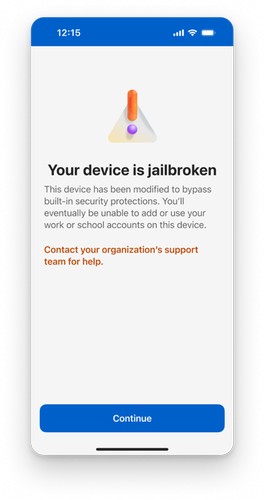
HP goes all-in on OpenAI frontier to transform customer experience and internal operations

The rollout will initially focus on customer and partner experiences, employee productivity, software development, and customer telemetry powered by its Workforce Experience Platform (WXP), which recently earned a Leader position in Gartner’s 2026 Magic Quadrant for Digital Employee Experience Management Tools.

The partnership follows several months of evaluation after HP began testing OpenAI Frontier in February 2026. During that period, the company assessed the platform’s enterprise capabilities, including agentic AI features, security, governance, integrations, and deployment across business workflows. HP says those tests convinced it that OpenAI’s models and long-term roadmap aligned with its AI strategy.
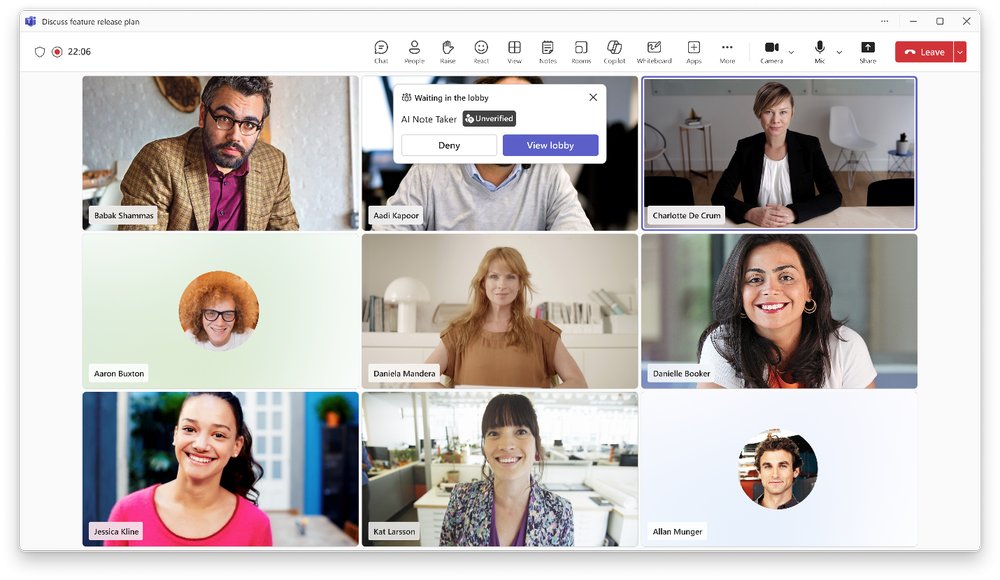
“With OpenAI there is an opportunity to fundamentally rethink how AI can deliver better outcomes. With the use of Frontier platform, HP is planning to build a more consistent experience across store, partner, chat, and voice experiences, giving customers and partners faster ways to get answers, complete routine workflows, and move toward resolution. It reflects the ambition of our AI strategy to deliver real-world outcomes at scale,” said Prakash Arunkundrum, Chief Strategy and Transformation Officer at HP Inc.

OpenAI also described the partnership as an important milestone for enterprise AI adoption. “HP is showing what enterprise transformation looks like when AI becomes an operating layer connected to the systems and workflows where work already happens,” said Denise Dresser, Chief Revenue Officer at OpenAI.

Moreover, she added that HP had already generated value from OpenAI APIs, ChatGPT, and Codex, and the expanded Frontier partnership would help scale those deployments into repeatable enterprise systems.