Microsoft will now let its partners keep key patents for co-created new technologies

In a lengthy blog post yesterday, Microsoft president Brad Smith announced the Microsoft Shared Innovation Initiative. The initiative is based on a set of principles and is designed to give customers “clarity and confidence” when working with Microsoft on new technologies.

According to Smith, the initiative covers seven areas, all of which are designed to help Microsoft customers grow their businesses through technology, and help Microsoft improve their platform products. Under the new guidelines, the Redmond giant says it will allow partners that co-developed new technologies with Microsoft to own key patents and industrial design rights that result from the collaboration. “Microsoft will receive a license back to any patents and design rights in the new technology that results from the shared innovation, but the license will be limited to improving our platform technologies,” Smith added.

Other highlights from the guidelines are below:

  • We won’t impose contractual restrictions that prevent customers from porting to other platforms the new, shared innovations they own.
  • We will work with customers to ensure transparency and clarity on all IP issues as the shared innovation project moves forward.
  • We’ll continue to learn from this work and use this learning to improve further our shared innovation work.

The Shared Innovation Initiative builds on the Azure IP Advantage program, which the company introduced last year. That program helps Microsoft customers help fight legal claims against intellectual property (IP) in the cloud. “We believe this initiative and these principles offer a path that will ensure that the co-creation of digital technologies creates new economic value to companies throughout the economy and around the world, rather than for just a few select companies in the tech sector,” Smith said.

Evernote update brings over 100 new emoji to the Windows 10 app

The official Evernote app has updated to Version 6.11 on Windows PCs and tablets running Windows 7, 8, 8.1, and 10. This latest update improves the drag-and-drop functionality, improves the loading of notes, adds a new zoom feature to the image gallery, and brings support for over 100 new emoji. Here’s the official release notes.

Improved:

  • Improved drag and drop support for lists, to-dos, and tables
  • Added incremental zoom control in the image gallery mode
  • Added support for hundreds of emojis using typebehind including ??????
  • Improved the performance of note loading

Fixed:

  • An issue where some clipped content is not visible in notes
  • An issue where words added to the dictionary aren’t remembered between app launches
  • An issue where some notebooks are not listed when moving a note from a joined notebook
  • An issue where attached PDFs and Images are sometimes not searchable
  • An intermittent issue where new users can sometimes see no content after first launch
  • An issue where a new note is created in the default notebook when a stack is selected instead of the first notebook in the stack
  • An issue where rotating an image or annotating it results in the size of the image getting reset
  • An issue where Google drive links cannot be opened when the enable descriptive links is checked
  • Several workchat issues including one where a user is taken back to the “All Notes” view after a sync is performed
  • Several top crashes

The official Evernote app is a traditional Windows app that ironically replaced the modern touch-enabled app that launched during the Windows 8 era. Do you use Evernote on your Windows device? Let us know if you enjoy using it (or not!) in the comments below and make sure to like us on Facebook to get the latest Windows 10 app update news every day.

Evernote
Evernote
Developer:
Evernote
Price:
Free+

Play Neo Geo The King of Fighters ’99 on your Xbox One right now

The classic Neo Geo video game, The King of Fighters ’99, is now available to play on Microsoft’s family of Xbox One consoles.

The King of Fighters ’99 originally launched on the Neo Geo system in, as the name would suggest, 1999 and was later ported to the original PlayStation console, the Dreamcast, and Windows PC. It’s the sixth game in the King of Fighters series and is now one of many Neo Geo titles that Xbox One owners can play.

This Xbox One version of The King of Fighters ’99 features all of the original arcade game’s content in addition to visual settings to make it look like the original machine display and Xbox Live-powered online leaderboards. Here’s the official game description and link.

“THE KING OF FIGHTERS ’99” is a fighting game released by SNK in 1999. This entry in this series marks the beginning of the “NESTS” chapter of the KOF story, and focuses on the new character K’ instead of Kyo Kusanagi. This entry introduces a new Striker Match mode, adding an even more strategic element to the classic KOF game system.

The “ACA NEOGEO” series has faithfully reproduced many classic NEOGEO masterpieces. Players can change various game settings such as game difficulty, and also reproduce the atmosphere of arcade display settings at that time. Players can also compete against each other from all over the world with their high scores. Please enjoy the masterpiece that built a generation for video games.

Have you played any classic Neo Geo games on your Xbox One console? Let us know in the comments below and make sure to follow us on Twitter for more Xbox One video game news.

Microsoft Launcher update fixes bugs for all users

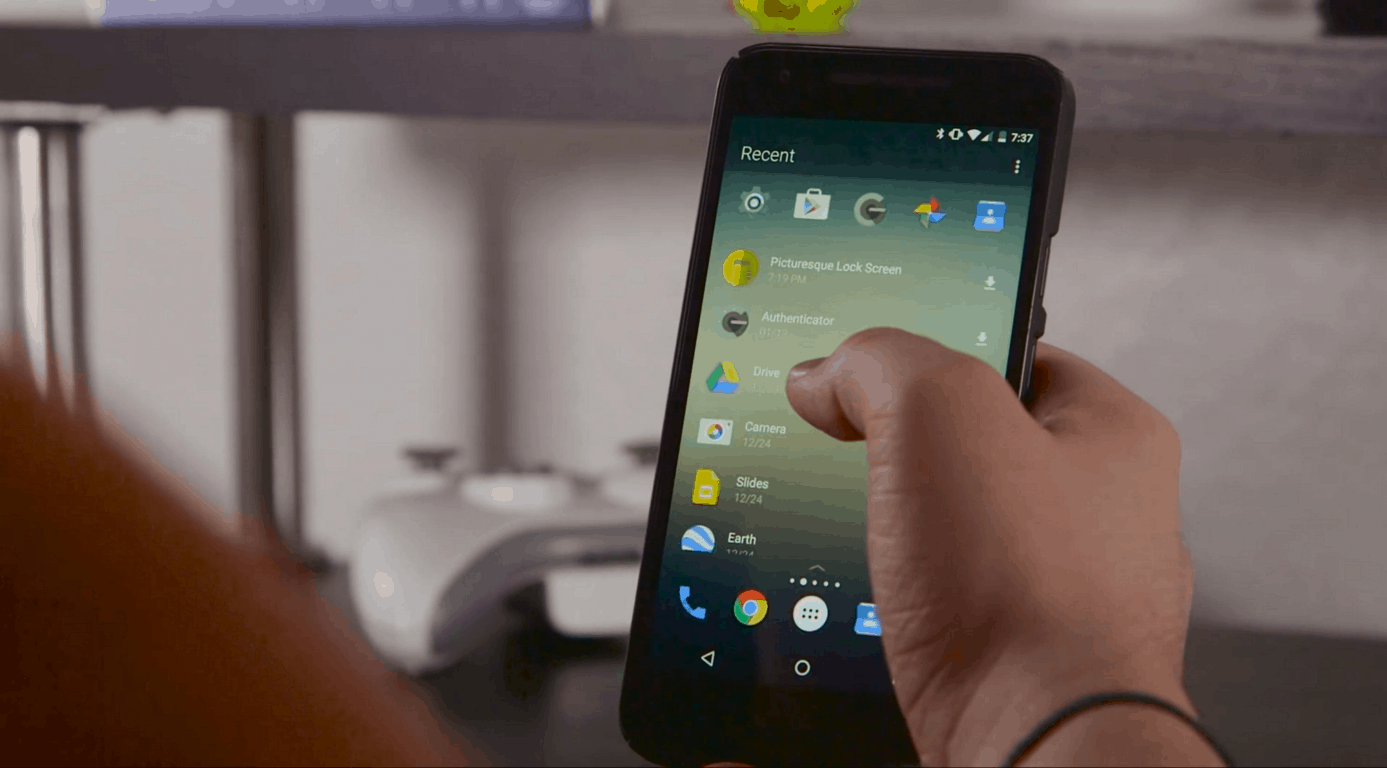
Microsoft Launcher has just rolled out a new update to Android users which brings it to Version 4.7.5 and squashes a variety of bugs that had been plaguing many. These fixes were first tested with beta testers a few weeks ago and they’re now available for everyone to experience.

Here’s the official release notes.

  • Fixed top crashes and App Not Responding Errors;
  • Support applying icon pack over single custom-set icons;
  • Adjustments to wallpaper settings experience;
  • Fixed several badge count issues;
  • Performance/memory/CPU improvements

Microsoft Launcher provides a way for users to fully customize their Android device using a variety of wallpapers, themes and accent colors, icon packs, gestures, and features. It also allows for more connectivity between an Android smartphone and a Windows PC with select file syncing between the two devices once the initial setup connection is made.

Do you use Microsoft Launcher? Let us know in the comments below.

Microsoft Launcher
Microsoft Launcher
Price:
Free

Windows 7 KB4099950 fixes NIC settings and IP address issues

Microsoft provided cumulative Spectre and Meltdown protection with Windows 7 Monthly Rollup KB4088875 and security update KB4088878. However, many users have experienced various issues after installing the respective patches.

As a result, Microsoft rolled out a new update for Windows 7 Service Pack 1 and Windows Server 2008 R2 to fix these problems.

KB4099950 is a maintenance update to fix the problems with the virtual network adapters caused by the security updates of Patch Tuesday in March. The bug was replacing the existing adapter and breaking down network connections as Microsoft said:

A new Ethernet Network Interface Card (NIC) that has default settings may replace the previously existing NIC, causing network issues after you apply this update. Any custom settings on the previous NIC persist in the registry but are unused

Downloading and installing the new update

This update can be downloaded and installed automatically from Windows Update. Alternatively, the standalone package for this update is also available on the Microsoft Update Catalog website.

microsoft updates catalog

Please be aware that if you have installed one of the above-mentioned updates and then manually restored the adapters, you have to uninstall the update. Afterward, install the new update KB4099950 and then KB408875 or KB408878.

Microsoft is not aware of any issues affecting this update, so the install process should go smoothly and you shouldn’t encounter any issues afterwards either.

Have you installed KB4099950 on your Windows 7 computer yet? Tell us more about your experience in the comments below.

RELATED STORIES TO CHECKOUT:

‘Free up space now’ cleans Windows 10 junk files in less than 2 minutes

Whether you like it or not, junk files constantly pile up on your Windows 10 computer when you browse the Internet or use apps and programs on your machine.

The Windows 10 Spring Creators Update now makes it much more easier for you to clean all those junk files and speed up your computer.

If you’re an Insider, you can already test this new feature. If you don’t want to enroll in the Insider Program, all you need to do is wait for a few more days until Microsoft rolls out the Spring Creators Update.

‘Free up space now’ is available on the Settings page

Free up space now windows 10

To use this new option, go to the Settings app > System > Storage > Free up space now. This feature allows you to clean a series of junk file categories, including:

  • Windows upgrade log files
  • Non-critical Windows Defender files
  • Thumbnails
  • Temporary data
  • Previous Windows installations
  • Temporary Internet files
  • Device driver packages
  • Delivery optimization files

But there’s already a similar option available, you may say. Indeed, you can also use Disk Cleanup to clean temporary files and other types of junk files, but this new feature is much faster.

Of course, it all depends on the amount of junk files that you stored on your computer, but many users confirmed that ‘Free up space now’ usually cleans your computer in less than 2 minutes — which is great.

It took like 2 mins to clean up all these junks compare to “Disk Cleanup” with “cleanup system files” which usually takes an eternity.

This feature is a more user-friendly approach to GUI and is perfect for touch devices.

Speaking of junk files, here are some tools that you can use to remove them for good:

Have you already used the ‘Free up space now’ feature? What would you change about it? Tell us more about your experience in the comments below. 

How to fix Minecraft error code 5 on Windows PCs

Some Minecraft players get an error code 5 error message when they launch that game. The full error message states: “Mojang native launcher updater. Problem moving C:\Program Files (x86)\Minecraft\tmp\tmpLauncher.exe to MinecraftLauncher.exe with error code 5.” Consequently, the game doesn’t run when that error message pops up. These are a few resolutions for Minecraft error code 5.

Fix Minecraft error 5 on Windows 10

  1. Run Minecraft as Administrator
  2. Copy the tmpLauncher File to the Minecraft Folder
  3. Update the Minecraft Launcher
  4. Update Java Version

1. Run Minecraft as Administrator

  • Launching games with elevated admin rights can kick-start them. So, try running Minecraft as an administrator first. This is how you can launch Minecraft as an administrator.
  • First, right-click the Minecraft Launcher to open its context menu.
  • Select the Properties option to open the window shown directly below.
  • Click the Compatibility tab in the snapshot below.
  • Select the Run this program as an administrator option on the Compatibility tab.
  • Press the Apply and OK buttons.

2. Copy the tmpLauncher File to the Minecraft Folder

  • Some Minecraft players have fixed error code 5 by copying the tmpLauncher file to the Minecraft folder. To do that, open this folder in File Explorer: C:\Program Files (x86)\Minecraft\tmp.
  • Next, right-click tmpLauncher.tmp and select Copy.
  • Open the C:\Program Files (x86)\Minecraft folder in File Explorer.
  • Right-click Minecraft.exe and select the Delete option. Click the Yes button to confirm.
  • Then right-click an empty folder space in File Explorer and select the Paste option.
  • Right-click the tmpLauncher.tmp file and click Rename.
  • Enter Minecraft.exe as the new file title for tmpLauncher.tmp, and press the Yes button on the dialog box window that opens.

3. Update the Minecraft Launcher

Downloading a new Minecraft launcher is another fix for error code 5. You can download a new launcher from the hyperlink included in Minecraft’s Nativelog.txt file. This is how you can update the game’s launcher.

  • Open the game’s Nativelog.txt file (in the Minecraft folder), and copy the hyperlink in Nativelog that includes MinecraftLauncher.exe with the Ctrl + C hotkey.
  • Then open a browser.
  • Press Ctrl + V to paste and open the copied URL, and download the Minecraft launcher from that page.
  • Then drag the new MinecraftLauncher.exe to the Minecraft folder to replace the original launcher.
  • Right-click the old Minecraft.exe and select Delete to erase it.

4. Update Java Version

Minecraft is a game that requires Java to run. As such, it might also be worth checking if your Java version is the most update one. This is how you can update Java.

  • First, press the Win key + R keyboard shortcut.
  • Enter ‘appwiz.cpl’ in Run, and press the OK button.
  • Next, input ‘Java’ in the search box to check your Java version as shown in the snapshot directly below.
  • If your version is not the latest Java 8 Update 161, select Java and press the Uninstall button to remove it.
  • Next, open this page and select to download a 32 or 64-bit Java version. You’ll need the 32-bit version for 32-bit browsers and 64-bit Java for 64-bit browsers.
  • Open your browser’s about page to check if it’s a 64 or 32-bit browser. For example, in Chrome you can click Customize Google Chrome > Help > About Google Chrome to open the tab shown directly below.
  • Open the Java setup wizard to install the latest version.

One, or more, of those fixes will probably get Minecraft up and running on your Windows desktop or laptop once more. To fix other Minecraft error messages in Windows 10 and 8, check out this article.

Posted in Fix

FIX: Only install apps from Microsoft Store in Windows 10/11

Microsoft remodeled its Store and name it Microsoft Store recently. There’s still so much to improve, but the question is still what to do to make both end-users and developers drop the Win32 applications and migrate to UWP.

Until they figure it out (if they ever will), there are some options which prevent users from installing third-party applications from “unknown sources”.

This can be addressed simply and if you’re stuck with UWP apps exclusively, look at the bottom for the resolution.

How to allow standard Win32 desktop applications to install in Windows 10

Every informed Windows 10 user will see through the obvious Microsoft ambitions to completely replace standard Win32 applications with the UWP ones. It’s easier and safer to integrate them into the system, it’s simpler to monetize, and, most importantly, this makes Windows ecosystem closer to Android and Apple.

We all know how successful those two are. But, while we can see the idea behind the “only Microsoft Store apps allowed” concept, UWP apps are still ages behind the competition: both in numbers and in quality. And it’s 2018 already.

And that’s where the Microsoft, kind of, crosses the borders with enforced marketing. Just like with the Edge browser, which isn’t bad per se, but it’s far from perfect. Furthermore, given that end-users have a choice, most of them will stick with the legacy desktop applications. And those come from the third-party sources rather than recently-remodeled Microsoft Store.

Even though there are prompts by UAC and Windows Defender about possible dangers, you can still install any third-party program with the proper installer and compatibility traits.

There’s an option which might be enabled and it’ll prevent installing non-Store applications. You can disable it with ease and here’s how to do it:

  1. Press Windows key + I to summon the Settings app.
  2. Choose Apps.fix you can only install apps from the microsoft store
  3. Choose Apps & features from the left pane.
  4. Under the “Installing apps“, expand the drop-down menu.
  5. Choose “Allow apps from anywhere” and exit Settings.fix you can only install apps from the microsoft store

That should allow you to install whatever you want. However, this doesn’t mean that the UAC won’t limit certain applications that want to make changes to the system. Run them as administrator to avoid that.

That shoud do it. In case you have questions, suggestions, or just a thought about UWP experience, make sure to tell us in the comments section below.

RELATED ARTICLES YOU SHOULD CHECK OUT:

Microsoft’s next gen HoloLens may ship with an ARM processor and new Windows 10-based OS

It’s now been two years since Microsoft started shipping its HoloLens headsets to developers and businesses, and we already know that the company is working on a successor. Harry Shum, executive vice president of Microsoft’s Artificial Intelligence (AI) and Research group revealed last year that the next-gen HoloLens would feature a dedicated AI coprocessor for implementing deep neural networks, but Microsoft is apparently planning some other exciting updates as well.

According to a new report from Windows Central, the next HoloLens is currently codenamed “Sidney,” and it could feature an ARM processor providing better battery life and LTE connectivity. As a reminder, the first gen HoloLens is powered by an Intel Cherry Trail processor, providing up to three hours of battery life.

The report also says that Microsoft’s new HoloLens headset may provide a wider field of view compared to the first generation device. It’s true that there’s quite a difference between the reality and what Microsoft usually show in marketing videos, and Microsoft hopefully found a way to improve the field of view in the new version.

In addition to hardware improvements, Microsoft’s new HoloLens could also introduce some exciting software changes according to this new report:

HoloLens 2 will run a version of Windows 10 built on Windows Core OS. This version of Windows 10 is codenamed Oasis, and is a Mixed Reality-specific experience that runs on HoloLens 2 and likely other Mixed Reality devices in the future. HoloLens 2 will also feature CShell, Microsoft’s new adaptable UI that works across all device types.

This isn’t the first time we hear that Microsoft is working to adapt Windows 10 to new devices and scenarios. A couple of weeks ago, a previous report revealed that Microsoft’s new Composable Shell for Windows 10 devices would debut on the next-gen Surface Hub later this year.

It’s still not clear when Microsoft plans to announce its new HoloLens headset, though. In a recent blog post on LinkedIn, HoloLens inventor Alex Kipman shared that “we have some exciting work planned for 2018 that I can’t wait to share in the coming months.” The first HoloLens headset was unveiled back at Microsoft’s Build 2015 developer conference, and it remains to be seen if we could hear more about the new HoloLens during Build 2018 in May.

Windows 10 RS5 build 17639 brings Bluetooth battery percentage in Settings, Windows Calculator Improvements

Microsoft is rolling out today the Windows 10 RS5 build 17639 to Windows Insiders who have opted into Skip Ahead, and the new bits brings the next wave of improvements for Windows Sets. The Sets experience is already one of the most exciting new features coming with Redstone 5, but this latest preview build also introduces two notable additions.

The first one is the addition of Bluetooth battery percentage in the Windows 10 Settings app. If your Bluetooth devices support this feature, you can now check their battery percentage in Bluetooth & other devices, as seen in the image below.

This new RS5 build also ships with a new version of Microsoft’s Windows Calculator app, which can now correctly calculate square roots for perfect squares. This probably won’t be useful for many, but Microsoft provided the following details for power users:

Windows Calculator has been updated (version 10.1803.711.0) to now correctly calculates square roots for perfect squares (integers that are squares of other integers). Because of the arbitrary precision arithmetic library used by the Calculator app, the square root calculation is an approximation calculated using the Exponential Identity function.

Previously, when you would calculate the square root of 4, the result would be 1.99999999999999999989317180305609 which would be rounded to 2 when displayed, because we calculated enough digits to do the rounding correctly. However, as soon as you subtract 2, you would see the remaining digits.

After this update, the square root calculation now recognizes perfect squares and correctly returns exactly 2 for the square root of 4.

Do you use many Bluetooth devices with your Windows 10 PC, and do you find it useful to be able to check their battery levels right in the Settings app? Let us know in the comments below.

Skip Ahead Windows Insider RS5 build 17639 fixes include Disk Management and list Settings crashes under known issues

What’s better than new features for an Insider build? Perhaps, fixes and improvements to previously introduced features, for some.

With Windows Insider preview build 17639, Skip Ahead testers are greeted with some spit and polish for some features that were in dire need of addressing.

General changes, improvements, and fixes for PC

  • We fixed an issue resulting in duplicate entries in Disk Management.
  • We fixed an issue that could result in certain UWP apps silently terminating when minimized.
  • We fixed an issue resulting in certain devices with BitLocker enabled unexpectedly booting into BitLocker recovery in recent flights.
  • We fixed a race condition that could result in the taskbar not autohiding after opening and closing the Start menu while a fullscreen window was visible.
  • We fixed an issue where typing in Start would switch to a blank Cortana screen if Start was open when the PC went to sleep.
  • We fixed an issue when using Arabic as your display language where after using the X to close the touch keyboard in a UWP app text field it might stop coming up automatically in that field.
  • Sometimes having too many choices can be confusing and less is more. That is why this new build has consolidated the places where users can adjust their display brightness by removing the display brightness slider in Control Panel Power Options and the “Display brightness” section under Power Options Advanced Settings. Don’t worry! You can still adjust your display brightness via Settings > System > Display settings, the Action Center, and via keyboard hotkeys.

As with most releases, build 17639 also has its Known Issues list, but fortunately, Insiders aren’t looking a daunting bullet point for this Skip Ahead preview.

Known issues

  • If you open Settings and clicking on any links to the Microsoft Store or links in tips, Settings will crash. This includes the links to get themes and fonts from the Microsoft Store, as well as the link to Windows Defender.
  • On resuming from sleep, the desktop may be momentarily visible before the Lock screen displays as expected.
  • When Movies & TV user denies access to its videos library (through the “Let Movies & TV access your videos library?” popup window or through Windows privacy settings), Movies & TV crashes when the user navigates to the “Personal” tab.

With all the Microsoft re-org and seeming reprioritization of Windows and its development, it’ll be interesting to see how frequently Skip Ahead builds are released as well as what feature sets we begin to see emerge.

New build 17639 for Skip Ahead, available now, adds Sets improvements, more

Microsoft just announced the release of another Skip Ahead build, this one numbered 17639, and it’s available now for download for your bleeding edge test machines.

The new build features “the next wave” of improvements to Sets, the tabbed experience for Explorer and beyond. Here’s a quick roundup of the improvements:

  • You can now drag and drop tabs within and between Sets Windows
  • Tabs are now “bubbled up” in ALT + TAB
  • Settings for Sets get improvements
    • Sets gets its own section at Settings>System>Multitasking, and is searchable
    • The ALT + TAB feature above has its own settings:
  • Based on Feedback, it’s getting easier to group two File Explorer windows together, a work in progress:
    • To start with, you no longer need to hold CTRL on the new tab page to launch a File Explorer window in a tab (this was a temporary necessity with the last wave). We’ve also added a new keyboard shortcut to open a new tab when a File Explorer window is in focus: Ctrl + T. Remember, you can use Ctrl + N to open a new window, and Ctrl + W to close the window/tab.
  • Sets Tabs and Windows are easier to open via the File Menu, or by right-clicking.
  • There are new right-click context options available within Sets by clicking on a tab
  • Previous tabs get improvements:
    • You can now pick and choose which Previous Tabs you want to restore, instead of only being able to restore all tabs. Note: if you use the Sets activity card in Timeline, it will automatically restore all tabs.
    • You can now restore Previous Tabs from any type of activity – whereas with the previous wave of features we only supported restoring tabs when the primary window was a document.
    • When you open a document that previously had tabs, a prompt will appear offering to restore those tabs, and the Previous Tabs button will be in the filled state. For things that aren’t documents, a prompt will not automatically appear, but you’ll know that there are tabs available to restore because the Previous Tabs button will be in the filled state.
    • We added an animation to the experience when there are no Previous Tabs available to be restored.

There are a few more improvements and fixes based on Insider feedback:

  • We fixed an issue where the active tab color wouldn’t be visible until you hovered over it.
  • We’ve been working on our polish, and you’ll notice that switching between open tabs is now a lot smoother.
  • We’ve improved the reliability when restoring tabs, fixing some issues where tabs didn’t restore as expected.
  • We fixed an issue where closing a tab in a Set then immediately opening a new tab might result in the window unexpectedly maximizing.

… and of course there are some known issues:

  • File Explorer ribbon doesn’t stay pinned open across restart.It may take some time for the app exclude list in Sets settings to populate the first time it’s opened.
  • Sometimes it takes two tries to bring up an inactive tab from the taskbar.
  • There’s a chance that you may see an unexpected second row of tabs when you open the new tab page.
  • When you launch an app or website from the new tab page, there’s a chance focus will change to a different tab.
  • The “filled” state of the restore icon in Sets will remain filled even though you’ve restored all tabs.
  • We’re aware of an issue that causes Narrator to read extra text when invoking Alt + Tab, and we’re working on a fix.
  • The new tab may sometimes open blank. Closing the tab then opening it again should resolve this issue.

Finally, Microsoft is planning to implement Sets within Office, first for Office Insiders. Check out the blog post for all the details and get to downloading!


Microsoft’s Chinese chatbot XiaoIce now using “full duplex voice sense” in technology breakthrough

Microsoft today shared they have reached a technological breakthrough by developing a new way to allow people to have a more natural conversation with an AI-powered chatbot. The breakthrough happened in China, where the XiaoIce Microsoft chatbot can now operate in “full duplex voice sense” by listening to a user, digesting the information, and then responding more naturally at the same time.

Microsoft says that the advancements means the chatbot is also able to predict what the person talking will say next. Microsoft’s Li Zhou, engineer lead for XiaoIce, says this is a common skillset natural to us humans, but not yet common to chatbots. See a sample conversation in action below with the Xiamo Yeelight smart speaker.

More than 200 million people have used the XiaoIce Microsoft chatbot, providing the necessary knowledge base for such a breakthrough. This is not to be confused with productivity assistants like Cortana, which are designed to help assist with tasks. The XiaoIce chatbot can engage in interesting banter with people, much like you would with someone you know in person. Microsoft is working to apply the same technology to Microsoft Zo here in the United States, so best to keep tuned for more in the months ahead.


Windows 10 RS4 build 17133.1004 is now rolling out to HoloLens

Just last week, HoloLens owners got their first preview build of the upcoming Redstone 4 update for the Mixed Reality headset. Well, yet another RS4 build is now rolling out to HoloLens, and this time it is the same build 17133.1004 build that previously rolled out to Windows Insiders on PC (via Windows Central.)

This latest build is only available for HoloLens users who already installed the previous Insider build (17123) and it should be showing up now under Windows Update. Unlike before, however, HoloLens owners won’t need to wipe their headset to install and can update just as they would normally. There’s not much new in this build, and it just brings general fixes for speech reliability and overall reliability for the headset. Microsoft also notes a known issue with this build where users may experience reliability issues when using voice to place Skype calls for the first time.

With the Xbox Spring Update now rolling out to Omega Insiders, and the PC version of the Redstone 4 release just picking up small bug fixes, development of Redstone 4 is basically complete. Given today’s HoloLens news, the build numbers are now lining up across Microsoft’s three Windows 10 platforms, so best to keep tuned for more.

Microsoft tries to create qubits and lead quantum computing research

Microsoft researchers teamed up with Niels Bohr Institute academics to try and transform computing with quantum computers. If they manage to succeed, Microsoft will place itself as the leader of a race with a fantastic prize that involved solving problems that are beyond the capabilities of traditional computing.

In a laboratory in Copenhagen, with the help of a few white cylinder-looking fridges that are cooled to almost absolute zero. These cylinders help create a qubit which is the foundation of a quantum computer.

Microsoft has to demonstrate the creation of a qubit publicly

The team is led by Prof. Charlie Marcus, and it works in collaboration with other labs in the Netherlands, the US, and Australia in Microsoft’s program for quantum research, as BBC reports.

Scientists are going down a different route than the ones taken by its competitors, and they’re trying to create qubits using a subatomic particle named the Majorana particle.

Microsoft’s progress in isolating the Majorana particle

By isolating the particle, Microsoft believes that this will trigger more stability of the qubit and this would be terrific the company’s competitors are using other ways which are more exposed to errors. Microsoft basically has to invent a particle that has never existed before and then use it for computing.

According to Prof. John Morton from the University College in London who researches the use of silicon to build qubits, this whole thing is that:

[…] one of those things that on paper look incredibly exciting, but physics has a habit of throwing up spanners in the works.
Until we see the demonstration, we don’t know how well these Majorana qubits developed by Microsoft will really behave.

Microsoft’s target is a commercially relevant quantum computer

Such a computer would have the ability to solve real problems, and it’s set to be completed in maximum five years. Microsoft’s director of quantum computing business development, Dr. Julie Love says that a quantum computer would allow solving problems that have never been solved with the help of traditional computing:

What it allows us to do is solve problems that with all of our supercomputers running in parallel would take the lifetime of the universe to solve in seconds, hours or days.

Overall, Microsoft is dead serious in creating quantum hardware as soon as possible.

RELATED STORIES TO CHECK OUT:

Xbox Live Rewards becomes Microsoft Rewards in June

Xbox Live Rewards and the quests that are provided by it along with the various types of currencies haven’t been the most straightforward approach, and it seems that this program eventually reached the end. Microsoft used Xbox Live Rewards to treat gamers for their Xbox activity and Xbox Store purchases.

Microsoft updates the Xbox Live Rewards website

microsoft rewards

When you enter Xbox Live Rewards website, the first thing you see is the grand announcement saying that:

Xbox Live Rewards is becoming Microsoft Rewards – In June, Xbox Live Rewards will become Microsoft Rewards in the United States. You can read more about this change in our FAQs.

Xbox Live Rewards is now available in 17 markets, and this transition looks to be a global one because the announcement that greets users when they enter the Xbox Live Rewards website was seen in more locations including Canada, France, Germany and the UK.

What does this transition involve?

The transition to Microsoft Rewards implies that all Xbox Live Rewards activities and offers will stop and members can earn MyVIP Gems and unlock MyVIP Perks until May 31, 2018.

They can claim any open Gems and Perks until June 15, 2018. After June 15 unredeemed MyVIP Gems will be transformed to Microsoft Rewards points. The rate will be one MyVIP Gem to one Microsoft Rewards point.

Existing Xbox Live Rewards members don’t need to do anything

Microsoft FAQ describes that existing members will be automatically switched to Microsoft Rewards membership in June, by the end of the month. Any pending Rewards Credits that have been left in an Xbox Live Rewards account will get converted to local currency and then deposited in Microsoft accounts.

Members will get a whole year in which they’ll be able to spend the credits on digital items found in the Microsoft Store.

You can choose to opt out of the transition

Xbox Live Rewards members who have not joined Microsoft Rewards will be able to skip the transition by June 15, 2018. If they choose this option, they won’t earn Xbox Live Rewards Credits anymore. Their pending Xbox Live Credits will still be deposited into Microsoft accounts as local currency.

Considering all these changes, it’s pretty clear that Microsoft is extremely interested in the expansion of the company’s Rewards Program. You can learn more about it on the official website of Xbox Live Rewards.

RELATED STORIES TO CHECK OUT:

FIX: Can’t upload pictures from my camera on Windows 10/11

Many users like to take pictures and store them on their PC, but according to some users there are certain problems with image transferring on Windows 10.

Users reported that they can’t upload pictures from their camera on Windows 10. This can be a major problem, especially if you’re a photographer, so let’s see how to fix it.

Can’t upload pictures from my camera on PC [FIXED]

  1. Set the Pictures folder to default path
  2. Check the Pictures folder permissions
  3. Add the picture folders to an archive
  4. Use a card reader
  5. Format your SD card
  6. Use your camera software to upload pictures
  7. Disable OneDrive
  8. Update the firmware on your camera
  9. Check your USB cable and ports
  10. Use File Explorer
  11. Use a different computer

Solution 1 – Set the Pictures folder to default path

If the path to the Pictures folder is changed for any reason, you might not be able to upload pictures to Windows 10 from your camera. Fortunately, you can easily fix this issue by doing the following:

  1. Locate the Pictures folder, right click it and choose Properties.
    upload-pictures-camera-folder-properties-menu
  2. Now go to the Location tab and click the Restore Default button.
    upload-pictures-camera-restore-default
  3. Click Apply and OK to save changes.

Solution 2 – Check the Pictures folder permissions

Some users claim that changing the permissions for Pictures folder fixes this issue, so let’s see how to do that. This process involves changing certain core settings of your operating system, therefore it might not be a bad idea to create System Restore point just in case anything goes wrong.

To change the permissions of the Pictures folder do the following:

  1. Locate the Pictures folder, right click it and select Properties from the menu.
  2. Go to Security tab and click the Edit button.
    upload-pictures-camera-edit
  3. You should see several accounts. Like in our example, you might have several Account Unknown entries.
  4. Delete Account Unknown entries by selecting them and clicking the Remove button. Some users claim that you should delete all accounts except your account, Administrators and SYSTEM.
    upload-pictures-camera-permissions
  5. After you’re done click Apply and OK to save changes.

Few users claim that you need to also change the permissions for all subfolders in the Pictures folder. To fix this issue make sure that your user account has full control of Pictures folder and all its subfolders.

Solution 3 – Add the picture folders to an archive

This isn’t a permanent solution, but it can allow you to transfer your photos from your camera to your PC. To add your pictures folder to an archive do the following:

  1. Connect your camera to the PC.
  2. Access the camera using the File Explorer and locate the pictures folder.
  3. Right click the folder and choose Add to archive option.
    upload-pictures-camera-add-to-archive
  4. After you create an archive, move it to your PC and extract the pictures.

Solution 4 – Use a card reader

Another useful workaround might be using a card reader. According to several users, they were unable to transfer their pictures from the camera, but after removing the SD card and connecting it to the card reader there were no problems with the file transfer.

Solution 5 – Format your SD card

Sometimes these types of problems are caused by problematic SD card, and you can fix them by formatting the card. Keep in mind that formatting the card will delete all files that are stored on it, so be sure to back them up if you can.

To format an SD card simply open the options menu on your camera and choose the Format card option. Once the card is formatted you should be able to import pictures to Windows 10.

As an alternative to formatting you can use a different SD card and check if the issue appears again. If the problem still appears, try formatting that SD card and check if everything works after that.

Solution 6 – Use your camera software to upload pictures

If you can’t transfer pictures from your camera to Windows 10, we suggest that you try using your camera’s software. According to users, they managed to fix this problem by using their camera’s software for file transfer. If you don’t have this software be sure to download it from your camera manufacturer’s website.

Solution 7 – Disable OneDrive

OneDrive is a great cloud storage service, but it seems that OneDrive is causing certain problems when transferring images from your camera. According to users, disabling OneDrive usually fixes this error, and in order to disable OneDrive you need to do the following:

  1. Press Windows Key + S and enter group. Select Edit group policy from the menu.
    upload-pictures-camera-group-policy
  2. Navigate to Local Computer Policy > Computer Configuration > Administrative Templates > Windows Components > OneDrive in the left pane.
  3. In the right pane double click Prevent the usage of OneDrive for file storage.
    upload-pictures-camera-prevent
  4. Once the new window opens select Enabled option and click Apply and OK to save changes.
    upload-pictures-camera-prevent-2

Solution 8 – Update the firmware on your camera

According to users, you can fix this problem by updating your camera’s firmware. Few users reported that this solution worked on a Fujifilm cameras but you can try this solution even if you own a different brand of camera.

Bear in mind that updating firmware on your camera can be potentially dangerous and cause permanent damage to your camera, therefore extra caution is advised.

Solution 9 – Check your USB cable and ports

If the cable you’re using to transfer photos with is faulty, this may explain why you can’t upload any photos from your camera to your PC. It’s also possible that the culprit be your PC’s USB port.

Make sure that this is not a hardware issue and try to transfer your photos using a different cable and then switch ports. Also, make sure there are no dust particles trapped in your USB port.

Solution 10 – Use File Explorer

Some users confirmed they fixed this problem by opening File Explorer and dragging the photos to their Pictures folder.

I opened file explorer, then opened the camera, and dragged the file to my Pictures folder and it copied fine that way. Ridiculous that Microsoft isn’t more helpful, or provided a fix.

Solution 11 – Use a different computer

If you still can’t transfer your photos from your camera to your computer, try using a different computer. In rare cases,  hardware compatibility issues may occur blocking your photo transfer. Unfortunately, fixing this problem is sometimes impossible especially if you’re using a rather old computer.

Not being able to upload pictures from your camera to Windows 10 PC can be a big problem, but we hope that you managed to fix this issue after using one of our solutions.


READ ALSO:

Assassin’s Creed IV: Black Flag and Divinity II The Dragon Knight Saga join Xbox One backward compatibility

Assassin’s Creed IV: Black Flag and Divinity II: The Dragon Knight Saga are the latest Xbox 360 games to be added the Xbox One Backward Compatibility list today. The first one was the last game from the main series to be released on the Xbox 360 back in 2013 (it was also released on next gen consoles the same year), and it’s set set in the 18th century Caribbean.

If you enjoy Sea of Thieves on the Xbox One, the world of Assassin’s Creed IV: Black Flag is much more vibrant and mixes open-world exploration on both the seas and the ground. Of course, there is also a healthy dose of ship customization and naval combat.

As for Divinity II: The Dragon Night Saga, it’s the first episode in the Divinity action-RPG franchise to be released on the Xbox 360. This version actually includes the original game as well as its expansion called Flames of Vengeance.

These are two very cool additions to kick off the month of April. Yesterday, the Xbox team teased some exciting OG Xbox backward compatibility news for next week, so hopefully this means we’ll see more cool old games being added to the list later this month.

Microsoft Teams to allow retention policies, rolling out now

In a pickle, choosing between which chat communication solutions best fit your work environment?

Perhaps Microsoft could tempt you with the inclusion of Teams retention policies being included in Office 365 security and compliance center.

Yesterday, the Office team began rolling out the retention policies to Office 365’s security compliance center and estimate the full breadth of the release should be concluded within the next few weeks.

What does this mean for your average admin in charge of maintaining the office’s communication platforms?

  • What are retention policies for Teams?
    For most organizations, the volume and complexity of their data is increasing daily – email, documents, Teams messages, and more. To manage or govern this information is important for admins need to:Comply proactively with industry regulations and internal policies that require organizations to retain content for a minimum period – for example, the Sarbanes-Oxley Act might require you to retain certain types of content for seven years.
  • Reduce their risk in the event of litigation or a security breach by permanently deleting old content that organizations are no longer required to keep.
  • Help organizations share knowledge effectively and be more agile by ensuring that their users work only with content that’s current and relevant to them.

With a Teams retention policy, you can:

  • Decide proactively whether to retain content, delete content or both – retain and then delete the content based on time.
  • Use the SCC Policy creation user experience or Teams Retention PowerShell cmdlets
  • Set different retention durations for Teams Chats v/s Teams Channel Messages.
  • Target the entire organization with these location rows and target specific users (for Teams chat retention) and specific
  • Teams (For Teams channel message retention)
  • Use retention policies with the SharePoint & OneDrive location rows to address the Files in Teams.

In addition, IT Admins can choose what to do with content in chats, whether it be retaining or deleting, use the eye-friendly SCC policy creation center to create rules and guidelines, schedule different retention durations, target entire departments using location rows and location rows to establish retention policies for Sharepoint and One drive folders.

Once again, the update is currently rolling out, but for those interested, there are some FAQ sheets to mull over, here. Microsoft seems to be pouring a lot of resources into Teams to help it catch up in the market while also being competitive with current offerings. The company has eDiscovery of calls and meetings planned for Teams, as wells as implementing Data Prevention of conversations and files found in Teams as well addressing the current round of feedback and audit logs for the month.

Microsoft plans to beef up Power BI with Forerunner Software technology acquisition

Microsoft announced in a blog post yesterday that they’ve acquired technology from Forerunner Software that “includes, among other things, client-side rendering of Reporting Services (*.rdl) reports, responsive UI widgets for viewing reports, and a JavaScript SDK for integrating reports into other apps.” According to the SQL Server Reporting Services Team Blog post, SRSS users are looking for more out of those reporting services, and this new technology should help bolster SRSS and provide more and better reporting information.

In addition, the Forerunner technology will move the Report Viewer from a purely ASP.NET Web Forms control to a “client-side/JavaScript-based Report Viewer you can integrate into any modern app.”

The blog post cautions that “these are large undertakings,” and there’s no timeline to share as of yet, but this is one more signal that Microsoft is serious about both extending its position with PowerBI, and furthering its goals with acquisitions.

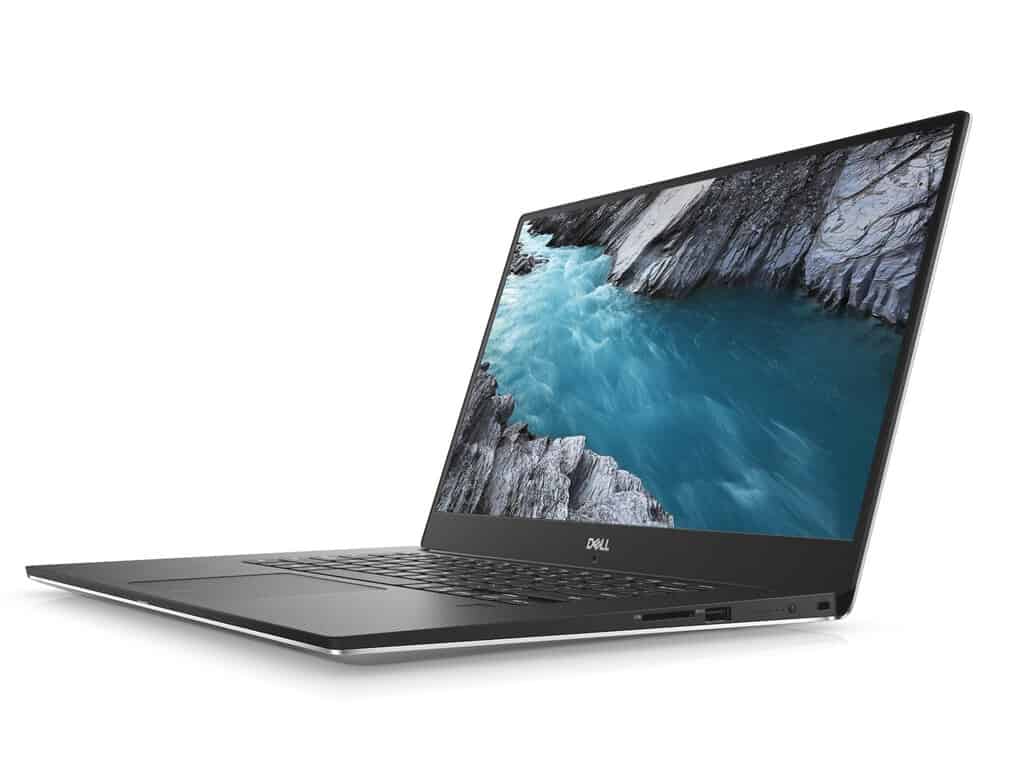
Dell announces new XPS 15, and it’s a beast

Dell today announced the 2018 refresh of their XPS 15 lineup, and the device is a true beast. The 2018 Dell XPS 15 9570 packs a familiar design and build, but with improved insides, including options for the NVIDIA GeForce GTX 1050Ti, and Intel’s freshly announced Core i9 processor (via Windows Central.)

The base model of the unit starts at $999 and comes with integrated graphics and Intel’s Core i5-8300H CPU. Also included onboard low-end models is a 56WHr battery, and a 97WHr battery on the higher end models, with a total promise of 21.5 hours of battery life. Both models boast Dell’s slim InfinityEdge display, though there’s a 4K display option available. Finally, Dell also improved the Thunderbolt 3 port to support four PCIe lanes instead of two, which is always important.

Preorders for the XPS 15 9570 open up on April 16th. Do you think this is a device that you might purchase? Let us know your thoughts in the comments below.

New Microsoft 365 security and compliance center to help expand on unified administration experience

Yesterday, Microsoft announced the rollout of the Microsoft 365 security and compliance center. This new center offers the same experiences as Office 365 security and compliance center and is designed to help expand on the unified administration experience that is part of the Microsoft 365 vision.

According to Microsoft, the Microsoft 365 security and compliance center enables data administrators, compliance officers, security administrators, and security operations to “discover security and compliance controls across Office 365, Enterprise Mobility + Security, and Windows in a single place.”  As an example, a data administrator can use the center to easily access Azure Information Protection and Microsoft Cloud App Security to help report on their data.

Administrators can log into the experience like they normally do by visiting this link, or by visiting the Microsoft 365 admin center. Microsoft will also continue to integrate and streamline administration experiences across Microsoft 365 over the next few weeks, so best to keep tuned for more.

Microsoft enables peer-to-peer digital payments on Microsoft Kaizala

Microsoft has enabled digital payments services on Microsoft Kaizala in India by integrating the mobile payment services of Yes Bank and MobiKwik. The feature will allow users to quickly send or receive money without having to leave the Kaizala app.

Users will be able to make peer-to-peer payments in one-to-one and group chat conversations via the MobiKwik wallet and via Yes Bank’s Unified Payment Interface (UPI) integration. The UPI payment integration works with all participating 86 banks.

Microsoft Kaizala, a mobile-only product designed for large group communications and work management, enables organizations to take business workflows to its Firstline workforce. This feature will now enable organizations to disburse micro-payments, enable bill expense reimbursements, and pay travel allowances on the go to its mobile workforce.

When we launched Microsoft Kaizala for India in July 2017, we provided consumers as well as businesses with a secure chat platform to collaborate and be productive, on the go. Microsoft Kaizala is used by thousands of organizations across different industry verticals for their day-to-day workflows today and is growing. Payment transactions within the app was a key demand from our users for getting work done and we are happy to offer it today in collaboration with YES Bank and MobiKwik.

– Rajiv Kumar, Corporate Vice President, Office Product Group, Microsoft.

Launched in July 2017 in India, Microsoft Kaizala is being used by over 900 organizations as well as few government departments already.

Surface Pro 3 Can’t Connect to This Network [Fix]

Many reported that Surface Pro 3 can’t connect to this network and this can be an issue since you won’t be able to access Internet at all.

This can occur if Microsoft Surface network adapter not working, but there’s a way to fix this issue, and in today’s guide we’re going to show you the best ways to do it.

So without further ado, let’s get started, shall we?

Why does it keep saying can’t connect to this network?

  • Issues with your network connection or router can cause this issue to appear.
  • Temporary glitches with your Surface or router can cause issues such as this.
  • Incorrect date and time can sometimes lead to this and many other problems.
  • Power saving features on your Wi-Fi adapter can prevent network from working.

What can I do if Surface Pro 3 can’t connect to this network?

1. Preliminary checks

Check the WiFi settings:

  1. Click Start and select SettingsSurface Pro won't connect to WiFi Windows 10
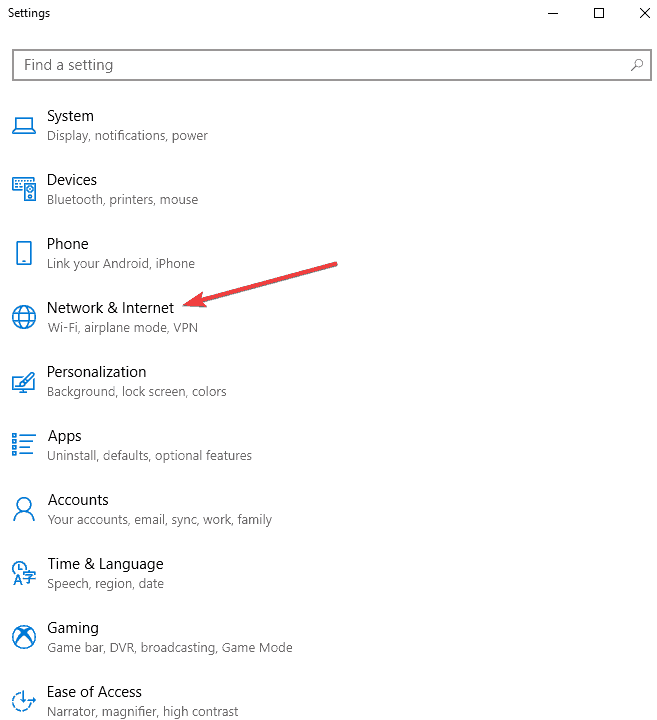
  2. Select Network & Internet.Surface Pro won't connect to WiFi Windows 10
  3. Select WiFi.
    Surface Pro won't connect to WiFi Windows 10
  4. Make sure WiFi is On and that Airplane mode is Off.

Check the password for your router

  1. Click Start button and select Settings
  2. Select Network & Internet
  3. Select Status
  4. Select Network and Sharing Center.
  5. In Network and Sharing Center, next to Connections, select your Wi-Fi network name.
    Surface Pro won't connect to WiFi Windows 10
  6. In Wi-Fi Status, select Wireless Properties.Surface Pro won't connect to WiFi Windows 10
  7. In Wireless Network Properties, select the Security tabSurface Pro won't connect to WiFi Windows 10
  8. Select the Show characters check box. Your Wi-Fi network password is displayed in the Network security key box
Surface Pro won't connect to WiFi Windows 10

These are just a couple of simple checks to perform if Surface Pro 3 can’t connect to this network.

2. Check your network on a different device

  1. Use your phone or any other Wi-Fi device.
  2. Try connecting to the network on that device.
  3. If you can’t connect on other devices, the issue may be with the network or your hardware.

3. Restart your network hardware and reconnect

  1. Remove the power cord from your router or modem.
  2. After all lights are out, wait thirty seconds and plug back the modem again.
  3. Wait for the modem to boot.
  4. Restart your Surface and try to connect again.

4. Restart your Surface Pro and reconnect

  1. Restart (don’t shut down) your Surface Pro.
  2. Select Start   
  3. Select Power

  4. Select Restart to restart your Surface and re-connect to Wi-Fi.
     

Sometimes a quick restart is all you need if Surface Pro 3 can’t connect to this network.

5. Check Date and Time settings

  1. Go to Start, and select Settings and choose Time & language.
  2. Make sure the info is correct or make changes as necessary.
  3. Try to connect to your Wi-Fi network

6. Forget the old network

  1. Swipe from the right to display Charms menu
  2. Select Settings
  3. Select the Wireless network list
  4. Right click or press and hold the network you want to forget
  5. Select Forget this network

  6. Restart the Surface Pro device

In case Surface Pro 3 can’t connect to this network, try removing all the networks and check if that solves your problems.

7. Check if MAC address filtering is enabled

  1. Log in to your router.
  2. Turn off MAC filtering temporarily to see if it is causing the Surface Pro not to connect.
  3. Add the MAC address of your Surface to your router’s authorized list.

If you want to find the MAC address, do the following:

  1. Select the search box in the taskbar, enter cmd, and in the search results select Command Prompt.
  2. Run the following command: ipconfig /all

  3. Find the Physical Address. This is the MAC address for your Surface.

Now make sure to add your device’s MAC address to the list of allowed addresses and that should help with Surface Pro 3 can’t connect to this network error.

8. Run Windows network troubleshooter

  1. Right click Start
  2. Select Control Panel
  3. Select Network and Internet
    Surface Pro won't connect to WiFi Windows 10
  4. Select Network and SharingSurface Pro won't connect to WiFi Windows 10
  5. Go to the search box and type Identify and repair network problems
  6. Select Identify and repair network problems to run it following the instructions carefully

9. Install updates

  1. Install updates by either using a wired connection, using another connection.
  2. Install the missing updates on your devices.
  3. After installing updates, restart your surface and reconnect to Wi-Fi to see if it helps.

10. Reconfigure Wi-Fi adapter

  1. Right click Start and select Device Manager

  2. Right click your Wireless adapter and select Properties
  3. Click Power Management tab
  4. Uncheck Allow the computer to turn off this device to save power
  5. Click OK
  6. Change the default power plan and switch from high energy savings to low

11. Check TCP/IP settings

  1. In the search box, type CMD
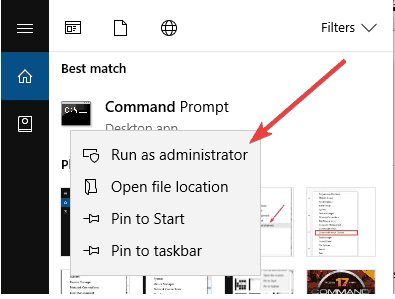
  2. From the search results, right click Command Prompt and tap Run as administrator.
    Surface Pro won't connect to WiFi Windows 10
  3. Type the following command and press Enter after each command.
    netsh int tcp set heuristics disabled
    netsh int tcp set global autotuninglevel=disabled
    netsh int tcp set global rss=enabled
    netsh int tcp show global
  4. Type Exit and press Enter.

We hope that these steps helped you fix Surface Pro 3 can’t connect to this network error message.

This isn’t the only issue, and many reported that Surface Pro won’t connect to iPhone’s hotspot, so you might want to check that guide for more solutions.

Did any of these solutions help? Let us know in the comments section below.

Download KB4096309 to fix connectivity issues in Windows 10

Many Windows 10 users still run the Anniversary Update, and Microsoft takes good care of this user segment. As a result, the company just rolled out a brand new update for their systems, KB4096309 which takes the OS version to Windows 10 version 14393.2156.

This update comes with a few quality improvements, but there are no operating system features packed in it.

KB4096309 improvements and fixes

According to Microsoft’s changelog for the update, the patch fixed an issue that caused “operational degradation or a loss of environment” due to all kinds of problems related to connectivity.

These issues are mainly revolving around environment configurations that were triggered by the installation of the previous build, KB4088889 released back on March 22, 2018, or by KB4088787 which was released on March 13, 2018. This is the only fix that is packed in the update.

If you installed earlier updates, it’s important to note that only the new fixes contained in this package will be downloaded and installed on your system.

There are no known issues included in this latest update at the moment. In order to get the standalone package for the update, you should head to Microsoft Update Catalog’s website.

Improvements for Windows Update client

As a quick reminder, any Windows 10 device that’s configured to receive the updates automatically from Windows Update (including Enterprise and Pro editions) will get the latest Windows 10 Feature Update.

This will be based on device compatibility and also Windows Update for Business deferral policy and it will not be applied to long-term servicing editions.

RELATED STORIES TO CHECK OUT:

Next Inside Xbox live show to air April 10, Microsoft teases some OG Xbox backward compatibility news

Inside Xbox, the new monthly live broadcast featuring Major Nelson and other notorious Xbox team members, will be back next week with some exciting news. Tina Summerford, Director of Programming at Xbox announced today that the team will kick off the show with an update about OG Xbox backward compatibility:

One of our most common requests is for Original Xbox Backward Compatibility news, and we’ll be starting off the show with a big update on just that. Stay tuned next Monday for a full breakdown of the news and content you can expect on Inside Xbox. Mostly full that is, as we reserve the right to keep a moment or two fully under wraps for a proper surprise.

Original Xbox Backward Compatibility was one of the highlights of Microsoft’s E3 2017 press conference, and a first selection of 13 OG Xbox titles became available to play back in October. The Xbox team previously explained that making these old games playable on the Xbox One is quite difficult, especially when game publishers no longer exist, or when games use music that is now unlicensed, etc. “Fans hold the key here,” senior director of Xbox console marketing Albert Penello told IGN last year. “We’re doing the work. In some cases there are legitimate business reasons it can’t happen. But the more that fans can drive that message back to the publishers, the more we can do.”

The next episode of Inside Xbox will air Tuesday, April 10 at 3:30 p.m. PDT / 6:30 p.m EDT, and you’ll be able to watch it on Mixer, Twitch, YouTube and Facebook. Let us know what are the new OG Xbox games you would like to see being added to the Xbox One Backward Compatibility list.

Microsoft opens Azure regions in Australia and New Zealand

Microsoft announced today they have opened up new Azure regions in Australia and New Zealand. This now means Microsoft is the only global cloud provider that is delivering cloud services designed to address the requirements of the Australian and New Zealand governments.

The cloud infrastructures in the two regions are being delivered through a partnership with Canberra Data Centres. According to Microsoft, the key element in the new Australia Center regions is the ability for Microsoft customers to “deploy their own applications and infrastructure within Canberra Data Centres directly connected via Azure ExpressRoute to Microsoft’s global network.”

This new Australia Central region is restricted to the community of Australian and New Zealand governments and critical national infrastructure sectors. Microsoft already offers Azure from Azure from three cities in Australia including Sydney, Melbourne, and Canberra with connectivity to Perth, Brisbane and Auckland in New Zealand.

Microsoft hopes that the new Azure regions can fit the needs of both Australian and New Zealand banks, utilities, transport, and telecommunications. You can learn more about today’s announcement by checking here.

First Twitter PWA update on Windows 10 brings several usability improvements

A couple of days ago, Twitter became the first developer to update their app to a PWA format on Windows 10 Redstone 4 and Redstone 5 devices. Though it was an excellent proof of Microsoft’s new concept for Windows 10 apps, the PWA shipped with several bugs in the initial release. Lo and behold, the app has received its first round of updates, bringing several usability improvements (via Windows Central.)

With the latest improvements, you’ll no longer see a request to review the app every time it is launched. You’ll also notice that the end user cookie dialogue will no longer pop up once you dismiss it. Finally, also new is the ability to paste images directly from your clipboard and into a tweet.

All of these improvements are automatically rolling out, so you won’t need to go to the Windows Store for any updates. This is one of the many benefits of the PWA, and you can expect for Twitter to add more features in the coming weeks, such as live tile support and the ability to upload video.

Please keep in mind you only will be seeing the Twitter PWA if you’re a Windows Insider on the Spring Creators Update (Redstone 4) or the Skip Ahead Ring (Redstone 5.) Everyone else should be getting this PWA once Redstone 4 ships later this month.

Twitter
Twitter
Developer:
Twitter Inc.
Price:
Free

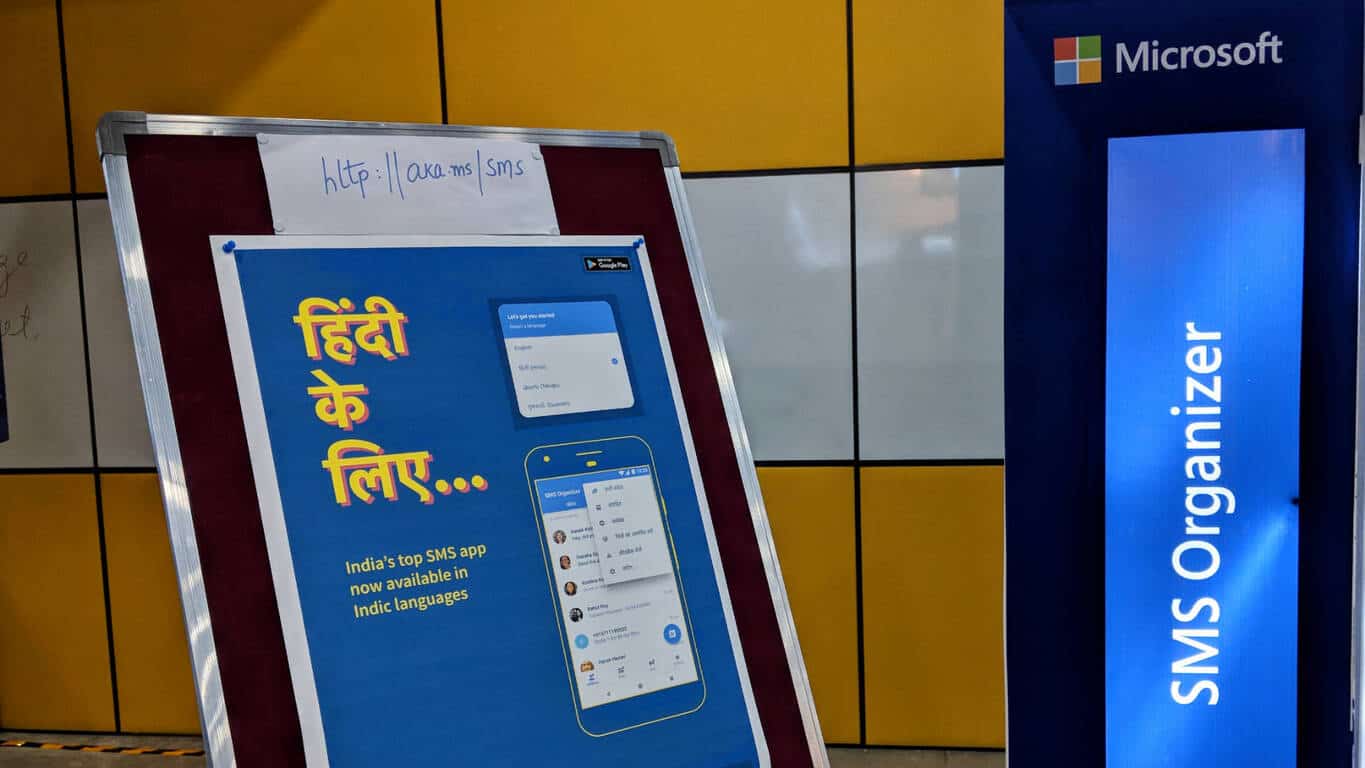
One of our favorite Microsoft apps, SMS Organizer, gets a UI refresh and support for Indian languages

A Microsoft Garage product, SMS Organizer is a light-weight app for Android smartphones that uses advanced machine learning algorithms to pick out messages and classify them based on priority. In India, every transaction with a business or a government entity triggers an SMS and there are several promotional messages every day too that clutter up an already busy SMS Inbox.

The app helps users manage their SMS by sifting through the contents of each message and categorizing them based on utility and importance. Interestingly, all the classification and interpretation happens locally on the device and does not require any server-side interaction.

The highlight of SMS Organizer is the Smart cards feature. The machine learning algorithm built into the app reads through the messages you receive and highlights key information via cleaner and at-a-glance information cards. The SMS Organizer also sets reminders for actions mentioned in the messages – like bill payments or travel tickets. It blocks spam messages from sending notifications and alerts so that you aren’t interrupted by non-essential messages.

The latest update to SMS Organizer brings a more ‘darker’ UI (see the sample screenshots – leftmost screenshot is before the update) which I’m a big fan of. The new cleaner UI simplifies the app and makes it more intuitive.

The update also adds support for Indian languages – Hindi and Telugu. The developers will be adding support for more languages going forward.

SMS Organizer is a simple solution to a common problem that saves users from the torrent of unnecessary spam and makes sure you don’t miss out on important messages. Give it a whirl if you’re in India, and let us know how you like it.

SMS Organizer
SMS Organizer
Price:
Free

Windows 10 news recap: Microsoft Planner to get a UWP app, Microsoft to drop internal “Redstone” name for future Windows 10 updates, and more

Welcome back to our Windows 10 news recap, where we go over the top stories of the past week in the world of Microsoft’s flagship operating system.

Microsoft Planner is getting Guest Access support, UWP app also in the works

Microsoft’s visual teamwork planning tool, Microsoft Planner, is to receive its own UWP app for Windows 10 in the future, according to Planner’s UserVoice. This news comes after the fact that iOS and Android already have an app for Planner.

Microsoft will reportedly stop using “Redstone” internal codename for future Windows 10 updates

It is reported that, from 2019, Microsoft is planning to simplify its internal codenames for major Windows 10 updates, dropping the “Redstone” name that we’ve come to expect for every major update to the operating system.

Windows 10 Build 2017

Windows Org’s Terry Myerson shuffled out at Microsoft in shakeup

In the latest company-wide reshuffle by CEO Satya Nadella, Terry Myerson is stepping down from heading up Microsoft’s Windows & Devices Group, leaving 21 years of being at Microsoft behind him.

Terry Myerson Windows 10 S

An exiting Terry Myerson reveals interesting Windows usage stats

Following the announcement of Terry Myerson’s exit from the company, Myerson has revealed some interesting usage statistics from Windows, particularly the Windows Insider Program, on LinkedIn:

One of my favorite things about leading Windows has been the Windows fans. Through good times and bad, I’ve loved your feedback. I’ve loved your passion for our work. I’ve loved your applause when we’ve done great work and I’ve loved the push to do better. One of my deeply held lessons from my Exchange days was the importance of that feedback loop with customers and fans, and that’s why we created the Windows Insider Program so we could build Windows 10 led by your feedback. Now with 15 million members, you continue to make our product and our team better each and every day. Thank you.

Today, we are now approaching 700 million active Windows 10 users, commercial usage is growing 84% year over year, Xbox One is running a Windows 10 core, Surface is leading PC innovation, HoloLens is bringing breakthroughs to computer vision, our universal Microsoft store enables Xbox GamePass, Azure reserved instances, and Office distribution and the OEM ecosystem is revitalized with profitable growth. Last year, we finished the year with over $8B in operating income from our segment.

That’s it for this week. We’ll be back next week with more Windows 10 news!

Microsoft news recap: Satya Nadella reshuffles the company, Terry Myerson leaving Microsoft after 21 years, and more

Microsoft news recap is a weekly feature highlighting the top Microsoft news stories of the past week. Sit back, grab some coffee, and enjoy the read!

Satya Nadella reshuffles Microsoft

In an letter to employees, Microsoft CEO Satya Nadella announced a reshuffle of the company, which means that the Windows division is no longer an overarching entity covering various areas of the business, but instead sits on in its own area under the Experiences & Devices group. Below is how the new structure will look:

  • Experiences and Devices, led by Rajesh Jha
    • Devices – Panos Panay, Chief Product Officer
    • Windows, led by Joe Belfiore
    • New Experiences and Technology, led by Kudo Tsunoda
    • Enterprise Mobility and Management, led by Brad Anderson
  • Cloud + AI Platform, led by Scott Guthrie
    • Azure, led by Jason Zander
    • Business Applications Group, led by James Phillips
    • Universal Store and Commerce Platform, led by Eric Lockard
    • AI Perception & Mixed Reality, a new team led by Alex Kipman
    • AI Cognitive Services and Platform, led by Eric Boyd
  • AI + Research, led by Harry Shum

Terry Myerson says thank you for 21 years at Microsoft

As part of Satya Nadella’s reshuffle of the company, Terry Myerson will be stepping down as Executive Vice President of the Windows and Devices Group, marking 21 years at Microsoft.

LinkedIn will soon include auto-playing video ads in your Newsfeed

In a move that will bring LinkedIn ever-closer to its rivals, such as Facebook and Twitter, the professional-oriented social network will be rolling out auto-playing video ads. These ads have been tested with over 700 advertisers since last October, and now LinkedIn is ready to begin rolling them out to all advertisers. Sound will be turned off by default on auto-playing video ads.

LinkedIn

Microsoft announces April 3 registration date for Ignite conference

Registration for Microsoft’s annual Ignite conference opens on 3rd April. The conference will take place in Orlando, Florida between 24th September to 28th September.

That’s it for this week. We’ll be back next week with more Microsoft news!

Xbox Insider update: Another Alpha build, Beta & Delta receive previous Alpha build

Hot on the heels of the earlier Alpha build for Xbox Preview Program members, the Xbox team are releasing another build for those on the Alpha ring, while moving the previous Alpha build, that contained 2 audio fixes, to the Beta and Delta rings.

The new Alpha build comes in at build number 1804.180329-1920 and fixes an issue with Achievements, whereby notifications and tracking would fail. The same Known Issues from the previous Alpha build (see here) remain in this build.

It’s not just those on Alpha that are getting all the fun this Easter weekend however, as Beta and Delta are receiving Alpha’s previous build, this build comes in at build number 1804.180328-1922 and delivers 2 fixes for audio issues:

Audio

  1. Fixed an issue in which some users may experience a black screen or a console crash when the default audio is set to Dolby Atmos.
  2. Fixed low audio volumes some users have been encountering in various apps and games.

This build comes with the following known issues to watch out for:

Pi-hole

  • Pi-hole users may encounter issues signing in, creating, or recovering accounts upon downloading the 1804 update. This is due to a new configuration file which is downloaded from a URL Pi-hole blocks by default.
  • Workaround: Add clientconfig.passport.net to the Pi-hole allowed IP address list.

Netflix

  • Netflix on Monitor only works at 1080p and does not support 1440p – Netflix is aware of the issue.  Workaround : If watching Netflix on a Monitor/LCD please set the display output to 1080p.

HDR Issues

  • Some users are discovering that some games are not showing in HDR – Please file feedback when you encounter this to help in the investigation.

Controller sharing/ Co-pilot vibration issues

  • Some users may experience a problem with a controller vibrating non-stop when using the share controller or the co-pilot feature.

Profile Color

  • Sometimes users may encounter the incorrect Profile color when powering on the console.

Home

  • Some users are reporting when quitting a game or app via the guide Home is not loading and you see a black screen.

Audio

  • Hulu app volume is lower and being investigated.

If you’re on either Alpha, Beta, or the Delta ring, then your console will prompt to update the next time it is turned on.

Discrete GPU is still causing frequent micro-freezes on Windows 10 [FIX]

Many Windows 10 users who own laptops which have Intel CPU + GTX 1050/1050Ti/1060/1070 have long been complaining about micro-freezes. More specifically, whenever you try to do some action on the OS, discrete GPU triggers and causes 0.5 second micro-freezes.

Users report that these micro-freezes that lock up their computers can be triggered by various actions, including:

  • Right clicking on desktop
  • Selecting the battery-icon
  • Launching a browser
  • Opening Control Panel
  • Loading a new tab, and so on.

This problem has been bugging users ever since the Creators Update was launched. The Fall Creators Update is affected as well and users are wondering if the Spring Creators Update will feature the same issue.

Powerful laptops freeze with basic operations

The most annoying and frustrating part for users is that this problem occurs on medium and high-spec machines.

I have this issue with the Dell 7577 with 1060 max-Q. I’ve been saving for 4 years since my previous laptop to buy a new and powerfull gaming laptop. First thing I noticed when testing where these microstutters, the laptop even performs worse than my 4 year old laptop in terms of basic functionality. The micro-stutters really ruin the experience.

Intel recently released an update for their HD graphics driver and the release notes confirm it reduces stuttering in laptops equipped with discrete graphics. Most users who installed driver version.4982 reported they didn’t notice any improvements as far as micro-freezes are concerned.

However, some users have been luckier. Stuttering is no longer there when opening problematic programs.

Mine got fixed with the latest update for some reason. HP OMEN 15 user with the i7-7700HQ + 1050 TI.

The Redditor who posted the information quoted above also confirmed that he runs Windows 10 version 1709. So, if you’re still experiencing micro-stutters, try updating your computers to the latest Windows version and then install the latest Intel driver updates. Hopefully, this solution will work for you.

More issues for NVIDIA 10-series GPUS

This is not the only issue affecting computers powered by Intel CPUs and NVIDIA 10-series GPUs. If you put a strain on your GPU and temperatures increases, your computer fans may not react at all. To enable GPU cooling you need to use the Sleep feature.

[…] my notebook fans (dual fan system, HP pavilion 15) does not react to GPU temperatures(only CPU) until PC is entered to Sleep and wake up again.

How to fix micro-freezes in Windows 10

So, if you’re still experiencing short freezes that last for less than a second, maybe the solution listed below will help you fix the problem. Although this workaround is specific for gaming, users confirmed it helped them fix stuttering/freezes and lags on the desktop as well, so do give it a try.

  1. Go to Start > type ‘control panel’ > double-click on the first result to launch Control Panel
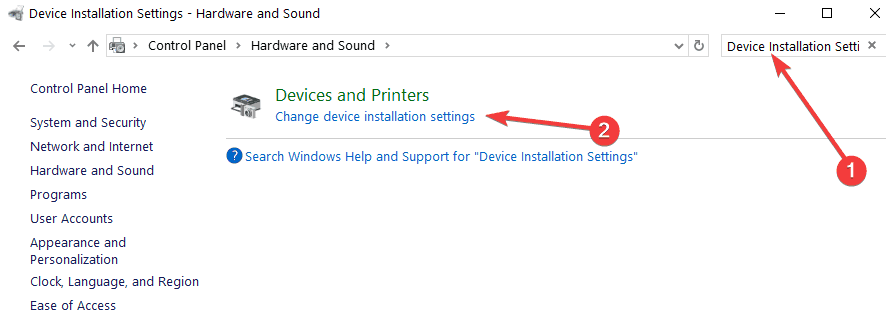
  2. In the search box, enter ‘Device Installation Settings’Device Installation Settings
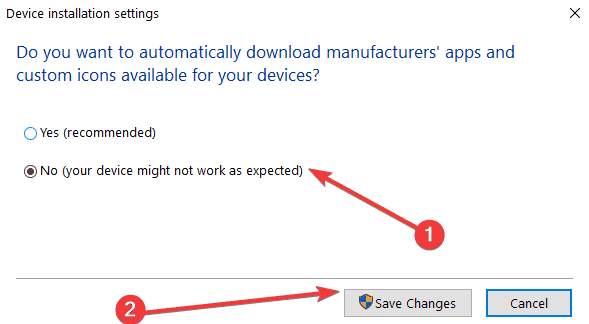
  3. Select the first result > select ‘No’ to turn off Windows driver auto-updating disable driver auto-update
  4. Download and launch CRU (Custome Resolution Utility)
  5. Select the monitor you’re using
  6. Go to ‘Detailed resolutions’ > Deleted everything on ‘Standard resolutions’
  7. Navigate to ‘Extension blocks’ > select the resolution that’s available > select ‘Edit’
  8. If there are any lists of refresh rates under the ‘Extension Blocks’ window, simply delete them all except for 164.999 Hz/ 144 Hz depending on which one you want to use
  9. Restart your PC > enable G-SYNC for full screen only
  10. You can also enable it for full screen  and windowed mode if you want.

There you go, we hope that these suggestions helped you fix the annoying micro-freezing affecting your computer.

If you came across other solutions to fix this problem, feel free to list the steps to follow in the comments below.

RELATED FIXES:

Homegroup cannot be set up in Windows 10/11 [BEST SOLUTIONS]

Networking is a crucial part of every computer, especially if you need to share files and collaborate with other users. This is extremely important if you’re working in a company or if you want to share files between two computers.

To do this, you first need to set up a Homegroup, but Windows 10 users are reporting an error that says “Homegroup cannot be set up on this computer”.

How can I fix issues with the homegroup in Windows 10?

Homegroup is a useful feature that allows you to easily share files across the PCs in the same network, but many users reported that they are unable to create a Homegroup on Windows 10.

Speaking of Homegroup issues, these are some of the most common problems that users experienced with Homegroups:

  • Cannot connect to Homegroup Windows 10 – Sometimes you might not be able to connect to a Homegroup on your PC. This can be a big problem, but you might be able to fix it by turning off all PCs and setting up a new Homegroup.
  • Can’t create Homegroup only join – If you’re having this problem, be sure to delete the content of PeerNetworking directory and try to create your Homegroup again.
  • I can’t create, join, or use a Homegroup – This is another problem with Homegroup that you might encounter. If this happens, make sure that the necessary Homegroup services are enabled.
  • Homegroup cannot be created on this computer, detected, removed – There are various issues with Homegroups that can occur on your PC, but if you have any of these problems, you should be able to fix them using one of our solutions.
  • Homegroup cannot access other computers, see other computers – If you can’t see other computers in your Homegroup, you might have to change security permissions for MachineKeys and PeerNetworking directories.
  • Homegroup Windows 10 not working – This is a general problem that can occur with Homegroups and in order to fix it, be sure that IPv6 is enabled.

Solution 1 – Delete files from PeerNetworking folder

  1. Go to C:WindowsServiceProfilesLocalServiceAppDataRoamingPeerNetworking.
  2. Delete idstore.sst and move on to Step 3. If deleting idstore.sst doesn’t work, go back to C:WindowsServiceProfilesLocalServiceAppDataRoamingPeerNetworking and delete all files and folders in it and go back to Step 3.
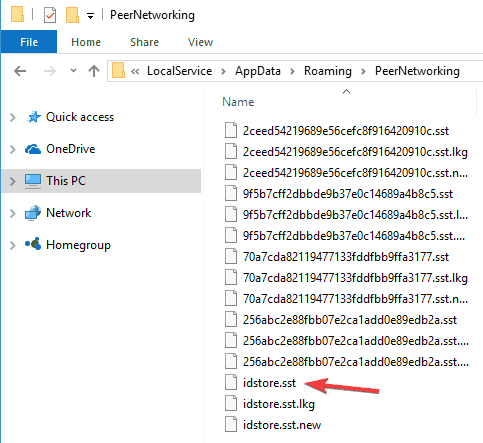
    Homegroup cannot be removed
  3. Go to the Network Settings and Leave the Homegroup.
  4. Repeat this for all the computers in your network.
  5. Turn off your computers.
  6. Turn on just one, and create a new Homegroup on it.
  7. This Homegroup should be recognized on all of your computers now.

Can’t delete certain files and folder in Windows 10? Check out this guide and fix the issue in just a couple of steps.


Solution 2 – Enable Peer network grouping services

Sometimes it can happen that services needed for Homegroup to work are disabled for some reason, but there’s a way to enable them.

  1. In the Search bar type services.msc and press Enter or click OK.
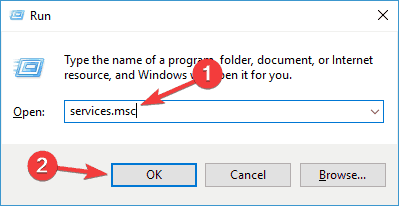
    Can't create Homegroup only join
  2. Search the list for Peer Network Grouping, Peer Network Identity Manager, Homegroup Listener and Homegroup Provider.
  3. If those services are disabled or set to manual set them to Automatic and leave your Homegroup.
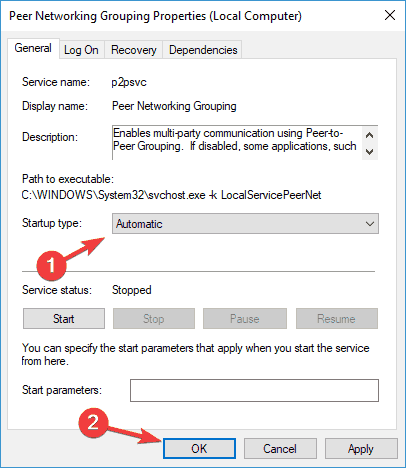
    Cannot connect to Homegroup Windows 10
  4. Create new Homegroup and see if it works.

We have to mention that you might have to do this for all the computers in your network.

If you encounter peer networking error 1068 on Windows 10, you can solve it by following this handy guide.


Solution 3 – Allow Full Control to MachineKeys and PeerNetworking folders

  1. Find:
    • C:ProgramDataMicrosoftCryptoRSAMachineKeys
  2. And then find:
    • C:WindowsServiceProfilesLocalServiceAppDataRoamingPeerNetworking
  3. Right click each folder and choose Properties.
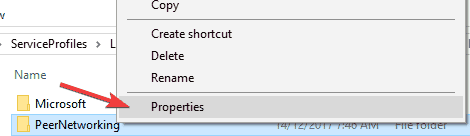
    Homegroup cannot see other computers
  4. Go to Security tab. You’ll see a group of users, click on a group, and press Edit.
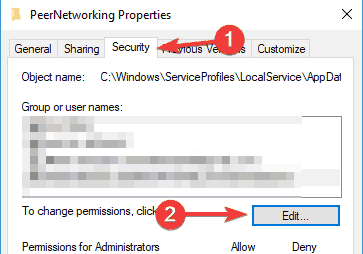
    Homegroup cannot be detected on this computer
  5. From the list of options, click Full Control.
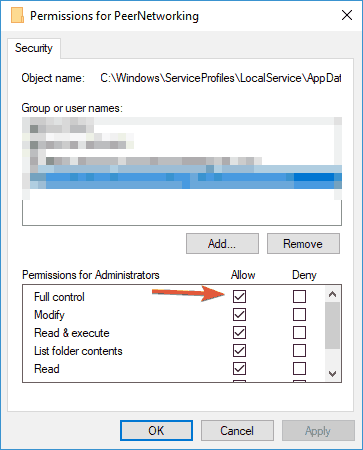
    I can't create, join, or use a Homegroup
  6. Repeat the process for all that you wish to have access to your Homegroup.

We have to mention that you might have to do this for all of your computers in a network.

Homegroup cannot be set up on this computer is an annoying Windows 10 error, and if none of these solutions were helpful, maybe you should perform a clean install as a last resort.


If you need to take ownership of a file or a folder in Windows 10, this guide will help you do just that.


Solution 4 – Rename MachineKeys directory

If you can’t set up a Homegroup on Windows 10, the issue might be related to MachineKeys folder. However, you can fix the issue simply by renaming the MachineKeys directory. To do that, just follow these steps:

  1. Navigate to C:ProgramDataMicrosoftCryptoRSA directory.
  2. Now locate MachineKeys, right click it and choose Rename from the menu.
  3. Change the name from MachineKeys to MachineKeys-old.
  4. Now create a new folder called MachineKeys and give full control permissions to Everyone and all users on your PC. To see how to do that, be sure to check the previous solution for more information.

After recreating the MachineKeys directory, the issue should be completely resolved and you’ll be able to set up a Homegroup once again. Many users reported that this solution worked for them, so be sure to try it out.


Rename your files and folders automatically. Here are the best file renaming tools available right now.


Solution 5 – Turn off all PCs and create a new Homegroup

If you’re unable to set up a Homegroup in Windows 10, the issue might be other PCs. Other PCs in your network can sometimes interfere and cause issues with Homegroup to appear. However, you can fix the problem simply by doing the following.

  1. First, stop all services beginning with Home and Peer on all computers.
  2. Now go to C:WindowsServiceProfilesLocalServiceAppDataRoamingPeerNetworking directory and delete all contents of that folder. Do this for all PCs in your network.
  3. Now shut down all computers in your network except one. Make sure that the PCs are completely turned off. If needed, unplug them from the wall outlet just to be sure.
  4. Now you should have only one PC running. Restart the HomeGroup Provider service on this PC.
  5. Now create a new homegroup on this PC.
  6. Restart all PCs in your network and join the newly created homegroup.

This solution might be a bit complicated, but several users reported that it works, so be sure to try it out.


Solution 6 – Make sure that your clock is correct

If you can’t set up a Homegroup on your PC, the problem might be your clock. Several users reported that their clock was incorrect and that caused the problem with Homegroup to occur.

If you can’t set up a Homegroup on your computer, be sure to check if the time is correct. To adjust the time on your PC, do the following:

  1. Right click the clock in the right corner of your Taskbar. Choose Adjust date/time from the menu.
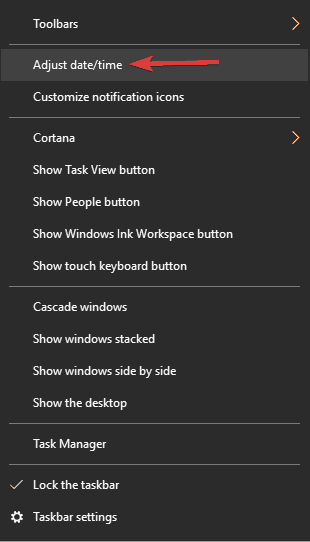
    Homegroup Windows 10 not working
  2. Uncheck Set time automatically and turn in back on after a few seconds. This should automatically set your time. You can also turn off this feature and click the Change button to set the time manually if you want.
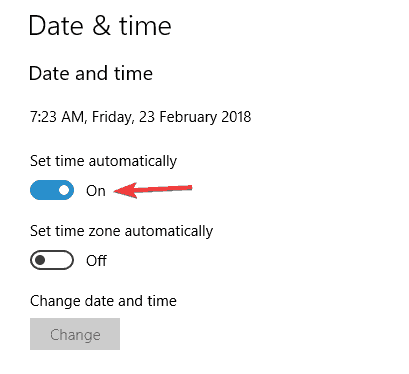
    Homegroup cannot access other computers

This is an unusual solution, but several users reported that adjusting their clock fixed the problem for them, so be sure to try it.


See if your Windows Time service is working properly by following this step-by-step guide.


Solution 7 – Check the Homegroup password

Many Windows 10 users reported that they can’t join a Homegroup because they don’t have the necessary password. This can be an annoying problem, but there’s a way to fix it. To fix this issue, simply do the following:

  1. Open the Settings app. You can do that quickly by pressing Windows Key + I.
  2. When Settings app opens, navigate to Network & Internet section.
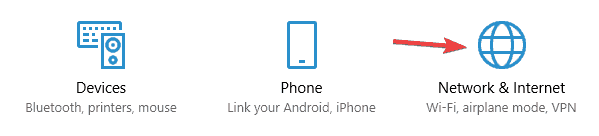
    Homegroup Windows 10 not working
  3. Select Ethernet from the menu on the left and choose HomeGroup from the right pane.

After doing that, you should be able to see the password for your Homegroup and use that password to connect other PCs. Keep in mind that this solution works only if you already have a Homegroup set up on your PC.


If you’re having trouble opening the Setting app, take a look at this article to solve the issue.


Solution 8 – Make sure that IPv6 is enabled on all PCs

If you’re unable to set up a Homegroup, the issue might be the IPv6 feature. According to users, this feature might be disabled on some computers and that can cause this issue to appear.

However, you can easily fix the problem by enabling IPv6. To do that, just follow these steps:

  1. Click the network icon in the bottom right corner and select your network from the menu.
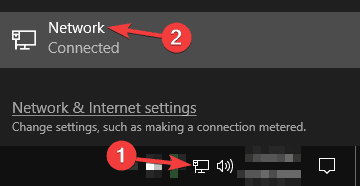
    Homegroup cannot be created on this computer
  2. Now select Change adapter options.I can't create, join, or use a Homegroup
  3. Right click your network connection and choose Properties from the menu.
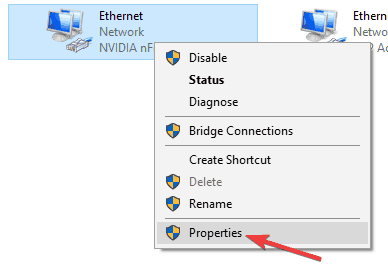
    Can't create Homegroup only join
  4. Locate Internet Protocol Version 6 (TCP/IPv6) and make sure that it’s enabled. Now click OK to save changes.
    Cannot connect to Homegroup Windows 10
  5. Repeat these steps for all PC on your network.

After enabling IPv6 for all PCs, you should be able to set up Homegroup without any problems.


Solution 9 – Change the computer name

If you’re having Homegroup problems on your PC, you might be able to solve them simply by changing the name of the affected PCs.

By changing the computer name, any configuration problems that you have with Homegroup should be resolved. To change the name of your computer, do the following:

  1. Press Windows Key + S and enter name. Select View your PC name from the list of results.
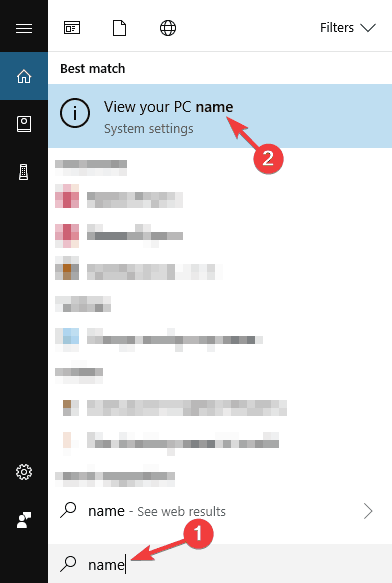
    I can't create, join, or use a Homegroup
  2. Now click the Rename this PC button.
    Can't create Homegroup only join
  3. Enter the new computer name and click Next.
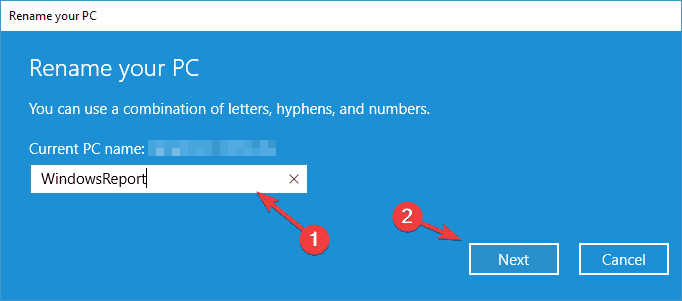
    Cannot connect to Homegroup Windows 10
  4. After changing the name, restart your PC to apply changes.

Keep in mind that you need to repeat this step for all computers in the network that are affected by this issue. After doing that, you should be able to connect to Homegroup without any problems.


Want to rename your PC faster? Check out this dedicated guide on how to quickly change your PC’s name.


If you have any other Windows 10-related issues you can check for the solution in our Windows 10 Fix section.

READ ALSO:

Microsoft in big reshuffle as Windows chief, Terry Myerson leaves

Seattle tech giant, Microsoft, announced Thursday that a major reorganization which will establish two main engineering teams was afoot.

This comes in the wake of Windows chief Terry Myerson, leaving the company after 21 solid years of service, where he oversaw the Windows and devices group as the executive Vice President.

In a detailed memo, Microsoft Chief Executive Satya Nadella, outlined the new changes which will see the current executive VP of the product group, Rajesh Jha, head the experiences and devices team, while Scott Guthrie, who is currently executive VP of the cloud and enterprise group, will now head the cloud and AI team.

Myerson and Microsoft depart on good terms

In a post on his LinkedIn profile, Myerson, who oversaw the company’s Exchange and Windows 10 products said his leaving the firm fills him with many emotions.

I’m mostly filled with gratitude and optimism – gratitude for the experiences I have had and optimism for the future ahead – both for Microsoft and myself.

On his part, CEO Nadella said that the company had been planning for Myerson’s transition to pursue his next chapter outside Microsoft, but lauded him for his role in shaping the reorganization.

Terry has been instrumental in helping me arrive at this new organizational structure, and I deeply appreciate his leadership and insight as we’ve worked through the opportunity that lies ahead. Over the past several years, Terry and the WDG team transformed Windows to create a secure, always up-to-date, modern OS. His strong contributions to Microsoft over 21 years from leading Exchange to leading Windows 10 leave a real legacy.

The reshuffle comes at a time when the tech leviathan is refreshing its strategy to align with the next phase of the tech world as it evolves, having missed the bus in mobile to leading giants, Google and Apple, so this is a significant moment for the company.

Currently, the big frontiers are AI and cloud services, which will be at the core of computing development, so the company is fighting to stay ahead of the pack, with strong contenders like Amazon and Google, among others pushing hard.

Other changes include the role of executive VP of Microsoft Azure, which will be filled by Jason Zander, and AI and research which will be headed by Harry Shum.

Former Microsoft employee parses Nadella’s re-org words, and it’s not looking pretty for Windows

Many of us are still calibrating the words from Microsoft CEO Satya Nadella regarding the company’s most recent re-org that saw the departure of the highest seated Windows executive and a shuffling of the deck chairs which ultimately sets a path for cloud growth that will eventually overshadow the company’s licensing of its operating system.

However, 17-year veteran of Microsoft and former employee Tim Sneath sees yesterday’s public re-org announcement as a dog whistle to the end of Windows as a core business for the company, and that its relevancy could be ceded much sooner than Nadella and company may be leading on.

In a Medium post, (via MSPU) Sneath explains what many of yesterday’s new title announcements may mean for the future of Microsoft as viewed by someone who worked at the company for 17 years, and many of his observations seem more substantial than the surface corporate speak Nadella used to introduce the promotions, reassignments, and figurative demotions:

Satya’s mail unsurprisingly underplays how far Windows is being scattered to the four winds. It seems that Joe Belfiore will continue to lead the Windows experience team (essentially, the user space), with the old core OS division (the kernel team) moving under Azure. (Again, hard to overstate the significance of that — the Windows kernel is now an implementation detail under a team that famously “loves Linux”). The HoloLens team also seems to move under Azure, which may be its death knell after a stuttering start — I can’t imagine that this is seen as core to the cloud business.

Sneath also examines the holes in Nadella memo that put into question, more recent tangential Windows developments such as Cortana, UWPs, Surface and the not too distant marketing re-org that was supposed to improve customer and partner relationships for the company.

Cortana is unmentioned in the email, although one assumes that it is divided across product units with the underlying platform under the AI Cognitive Services team and the Windows experience team being responsible for how it is exposed. This is strikingly different to how Amazon are treating Alexa, with thousands of people having been hired to that group over the last couple of years, including a good chunk of Microsoft’s old evangelism team if my LinkedIn network is anything to go by.

Partner relationships are now no longer under Windows either — another major shift — although it’s interesting that Satya’s mail here focuses in on the hardware community without any mention of the ISVs on which Windows’ success has been built.

For client developers, the relevance of UWP must be even more questionable. With the Windows store increasingly focused on non-app products (books, videos, music) and now being moved under Azure, further shake-ups there can be expected. And XAML Standard, touted in the keynotes of last year’s Build as the strategy through which Microsoft would unify various incompatible dialects and UI technologies such as Xamarin, WPF and UWP, has clearly fallen victim to politics, with the repo seeming to be dead and its goals having been drastically watered down.

Sneath’s post underscores the uncertainty that follows a massive re-org within a company, as well as the corporate double-speak Nadella, has become so adept at using when discussing the current and future prospects of Microsoft. The stock market has reacted exceptionally well to Nadella’s leadership of Microsoft but it should be noted that Microsoft isn’t a cloud leader yet, and yesterday’s re-org announcement puts into question the viability of a partnership with the company regarding Windows and services tied to the operating system such as Office, HoloLens, and Azure.