How To Sign Up and Create A New Gmail Account [Easy Guide]

Wondering how to create a new Gmail account? Well, it’s quite easy. In fact, creating a new Gmail account is one of the simplest ways to tap into Google’s powerful services. From sending emails to accessing Gemini AI, Docs, Drive, and YouTube, all of it starts with a Gmail login. Gmail has come a long way since its invite-only launch in 2004.

Today, Gmail is packed with smart features like automatic filtering, built-in Meet integration, archiving and unarchiving email options, and even Gemini-powered AI that helps you draft replies or summarize emails. Whether you want to create another Gmail account for work or create a new one for personal use, here’s your easy guide to do it.

How to Create a New Gmail Account on the Web

If you’re on a computer or laptop, follow these steps to create your new Gmail account using any browser like Chrome or Firefox.

Step 1: Go to Gmail’s sign-up page

Step 2: Fill in your basic information

  • Type in your First name and Surname (optional) in the boxes. Then, click Next.
  • Now, fill in your birthdate and gender from the drop-downs. Then, click Next.

Step 3: Choosing your Gmail address

  • Now, Google will display two Gmail address suggestions based on your first name and surname. You can pick either of them or click Create your own Gmail address. When you choose that option, you’ll be asked to enter your preferred username. Here, you can use letters, numbers, and full stops. Do note that your username must be between 6 and 30 characters long. For example, if you choose abc.xyz, then the new Gmail address will be [email protected].
  • If it’s taken, Google will let you tweak it.
  • Now, create a strong password using a mix of letters, numbers, and symbols.
  • Type the password again to confirm it matches.

To make sure you can access your inbox right after signup, check this guide on how to login to Gmail.

Step 3: Verify your phone number

  • Google will now display a QR code for verification that you’ll need to scan with your phone. 
  • Once scanned, you’ll have to click on a link displayed on your phone screen. 
  • Next, you’ll be asked to verify your phone number. You can simply tap on the Verify option on your phone.   
  • Then, enter your number and click Next.
  • You’ll get a 6-digit code via SMS, type it in to verify your phone number.

In case you couldn’t verify your Gmail account, here’s an easy guide on how to recover it.

Step 4: Add recovery email and personal details

  • You can enter a recovery email (optional but useful for resetting your password).

Step 5: Accept Google’s terms

  • Scroll through the Privacy and Terms page.
  • Once ready, click I agree to finish creating your new Gmail account.

Step 6: Turn on Two-Factor Authentication (2FA) (Optional but Very Important)

  • After setup, click your profile icon in the top-right corner of Gmail.
  • Select “Manage your Google Account.”
  • Go to the Security tab.
  • Scroll to “2-Step Verification” and click “Get Started.”
  • Enter your password when prompted.
  • Choose either Passkeys, Google Prompt, or SMS code for your second step.
  • Optionally, add a backup method like Google Authenticator or printable backup codes.

How to Create a New Gmail Account on Mobile

Do you prefer doing it on your phone? Here’s how to create a Gmail account using the Gmail or Google app.

Step 1: Open the Gmail or Google app

  • On Android, Gmail is pre-installed.
  • On iOS, download it from the App Store.

Step 2: Choose to create a new account

  • Tap “Create account.”
  • Choose either “For my personal use” or “For work or my business.”

Step 3: Enter your personal details

  • Type in your first and last name (optional).
  • Enter your birthday and gender.

Step 5: Pick a username and password

  • Choose a unique username that’ll become your Gmail address.
  • Create a strong password and confirm it in the next field.

Step 6: Verify with your phone number (optional)

  • Enter your phone number and hit Next.
  • You’ll get a text with a code, enter that to verify. 

Step 7: Agree to the terms and finish the setup

  • Scroll through the privacy and terms page.
  • Tap I agree, and your new Gmail account will be created instantly.

Step 8: Enable 2FA on mobile

  • Tap your profile again > Manage your Google Account.
  • Head to Security > 2-Step Verification.
  • Follow prompts to turn on two-factor authentication.
  • You can use Passkeys, Google Prompt, SMS, or the Authenticator app.

Conclusion

That’s it. Whether you’re signing up on a PC or phone, creating a new Gmail account is smooth, quick, and completely free. Make sure to enable two-factor authentication to keep your inbox secure. Once you’re in, you can access Gemini, Google Drive, YouTube, Docs, and more, all from one login.

Users who also rely on Microsoft services can follow a dedicated guide on how to create an Outlook account to set up a matching Outlook email alongside Gmail.

For troubleshooting issues after setup, check out our guide on Gmail not working on iPhone to make sure your new account runs smoothly on mobile devices. To fully disconnect an account, follow our guide on How to Sign Out of Gmail.

FAQs

Can I create multiple Gmail accounts?

Yes, you can create as many Gmail accounts as you want. Google doesn’t have a hard limit, as long as each account has a unique username. Many people use different accounts for work, personal use, or side projects. Just make sure you keep track of the credentials for each one.

Can I use the same phone number for more than one Gmail account?

Definitely. Google allows you to verify four Gmail accounts using the same mobile number. This is especially useful if you’re managing several accounts yourself. You’ll still receive unique codes each time a new account needs verification or login approval.

Do I need to enter my phone number to sign up?

Not always. Sometimes Google lets you skip adding a number during sign-up, especially on mobile. But having one helps with account recovery and keeps your login secure with two-factor authentication. If you skip it, some features like 2FA might not work properly.

Is adding a recovery email really necessary when creating a new Gmail account?

It’s optional, but highly recommended. A recovery email helps you reset your password if you ever get locked out of your account. Without it, recovering access could be difficult, especially if you forget your password or lose your phone number.

What should I do if the Gmail username I want is taken when creating a new account?

You can try adding numbers, dots, or initials to your desired username. Google will also offer available suggestions that are similar. Choose what feels easiest to remember and is unique, too.

Can I skip 2-Step Verification (2FA) for my newly created Gmail account?

You can, but it’s not a great idea. Without 2FA, anyone who gets your password could access your account. Enabling 2FA means you’ll need to confirm logins with a code or prompt on your phone. It takes just a few minutes to set up and keeps your email safer.

How do I switch between two Gmail accounts easily?

Just click or tap your profile photo in Gmail and select “Add another account.” Once both accounts are logged in, you can switch between them with a single tap. It works the same way on the web and mobile, and you won’t need to log out every time.

Can I access my new Gmail account without installing the Gmail app?

Yes, you can open Gmail in any mobile or desktop browser at mail.google.com. If you’re using an iPhone or Android device, you can also connect your Gmail to the built-in Mail app. You’ll still receive emails and notifications, even without installing the official app.


Excel’s new Power Query update makes data importing smarter

Microsoft Excel for Windows is getting a streamlined upgrade for anyone working with external data. If you regularly use Power Query, there’s a brand-new “Get Data” experience rolling out that aims to make the whole process faster, cleaner, and easier to navigate.

Now in preview for Microsoft 365 Insiders, the redesigned Get Data dialog offers a modern layout with improved search and source recommendations. You can quickly browse popular sources or search for exactly what you need. It also adds something new: deep integration with Microsoft Fabric’s OneLake catalog, which means data artifacts across your organization are now accessible right inside Excel.

You’ll find this new experience by heading to the Data tab and selecting Get Data > Get Data (Preview). From there, you can explore categorized tabs like Home, New, and the dedicated OneLake tab. Currently, the OneLake section supports Lakehouse and Warehouse data types, with more options expected soon.

This update isn’t replacing the old method just yet; you can still use the standard Get Data dropdown as before. But the preview version adds helpful tools for business users and analysts who work across departments or teams using shared data sources.

The new Power Query experience is available to Beta Channel users running Excel Version 2505 (Build 18829.20000) or later. It’s an early but useful step toward making enterprise data discovery easier without needing to jump between tools.

OpenAI hires Tesla, xAI, and Meta engineers as AI talent battle heats up

OpenAI just made a strong move in the ongoing race for AI talent, picking up four notable engineers from some of its biggest competitors. According to Wired, the hires include top names from Tesla, xAI, and Meta. Remember, these are the very companies that have poached talent from OpenAI in recent months, or at least tried to do so.

The additions include David Lau, former VP of software engineering at Tesla, and Angela Fan, who previously worked as an AI researcher at Meta. Joining them are Uday Ruddarraju and Mike Dalton, both former engineers at Elon Musk’s xAI and ex-Robinhood staffers.

Ruddarraju and Dalton helped build xAI’s massive Colossus supercomputer, which ran on more than 200,000 GPUs. All four engineers are now part of OpenAI’s scaling team, focused on managing the backend systems and infrastructure that support its growing AI ambitions.

Ruddarraju described infrastructure as “where research meets reality,” saying he’s especially excited about OpenAI’s Stargate project. Lau noted that “working toward safe and reliable AI” is the most meaningful next step in his career.

This recruitment wave follows Meta’s recent hiring spree, where its new Superintelligence Labs pulled in at least four former OpenAI engineers. For that very reason, OpenAI recently warned staff to ignore Meta’s ‘ridiculous’ offers as the poaching battle escalates. Moreover, it even shut down for a week, citing employee burnout.

Turkey Bans Elon Musk’s AI Chatbot Grok After Insults Against Erdogan and Atatürk

A Turkish court has officially blocked access to Elon Musk’s AI chatbot Grok, citing offensive responses about President Recep Tayyip Erdogan and other prominent figures.

According to AP News, the decision came after Grok, developed by Musk’s xAI and integrated into the X platform, generated vulgar replies targeting Erdogan, his late mother, and even Turkey’s founder, Mustafa Kemal Atatürk.

The responses surfaced publicly, sparking outrage and legal action from Ankara’s citizens under Turkey’s internet law. Early Wednesday, a criminal court sided with the petitioners, ordering a full access ban on Grok. The country’s telecommunications authority has been instructed to enforce the decision.

Officials have also cited a potential risk to public order. The controversy follows a recent Grok update that pushed the chatbot toward more unfiltered, politically charged answers. In response to the backlash, X released a statement emphasizing its efforts to improve moderation.

“Since being made aware of the content, xAI has taken action to ban hate speech before Grok posts on X,” the company said. “xAI is training only truth-seeking, and thanks to the millions of users on X, we are able to quickly identify and update the model where training could be improved.”

Mamorukun ReCurse! Brings Bullet Hell Action to Xbox Series X|S This September

Mamorukun ReCurse!, a remaster of the colorful bullet hell shooter Mamorukun Curse!, is officially launching worldwide on Xbox Series X|S, PS5, Nintendo Switch, and PC on September 25, 2025.

Originally released in Japanese arcades and later ported to the Xbox 360, Mamorukun was never made available outside Japan on Microsoft consoles. Western players had to wait until its 2013 PS3 release to try it, and even that flew under most people’s radar. But this fall, Xbox fans can finally revisit (or discover) the game in full remastered form.

Mamorukun ReCurse! is part of the “cute ’em up” genre, think bullet hell action wrapped in a bright, anime-style aesthetic. Players take on the role of Mamoru, a recently deceased spirit fighting to drive back the darkness overtaking the Netherworld. The remaster introduces twin-stick controls and improved visuals, but retains its signature arcade and story modes.

What sets the game apart is its risk-reward “curse” mechanic. You can clear bullets off the screen, boost your own abilities, or power up enemies to score more points, but with greater danger.

It’s a niche release, no doubt. But for fans of retro shooters or anyone curious about the more eccentric side of Japanese game design, Mamorukun ReCurse! is one to watch.

Replit partners with Microsoft to bring no-code software building to the enterprise

Replit and Microsoft are teaming up to make enterprise app development as simple as writing a sentence. Through a new strategic partnership announced today, Microsoft customers will soon be able to build and deploy production-ready apps using Replit’s natural language-based development platform, with no coding skills needed.

The collaboration opens the door for business teams, not just engineers, to create custom, secure tools on Microsoft Azure. Replit’s integration with Azure services like Container Apps, Virtual Machines, and Neon Serverless Postgres will allow users to build directly on Replit and deploy within Microsoft’s cloud infrastructure.

The goal is speed and accessibility. Teams in sales, design, marketing, and operations can now bypass technical bottlenecks to solve problems or prototype internal tools, all while staying inside enterprise-grade security frameworks.

“This partnership democratizes development across organizations,” said Deb Cupp, President of Microsoft America. “Business teams can innovate without hitting technical barriers.”

Replit already serves more than 500,000 business users and counts companies like Zillow among its enterprise adopters. Users can soon buy Replit directly from the Azure Marketplace, making procurement faster and easier for IT departments. The company also plans to support direct deployment to a customer’s Azure instance down the line.

CEO Amjad Masad says Replit’s mission is to put software building into the hands of anyone with an idea. “Whether launching a startup or solving problems within a company, you shouldn’t need to know how to code to make software,” he said.

Replit’s platform, already SOC 2 Type II compliant, ensures enterprises get governance, control, and scale, without the friction of traditional development cycles. With Microsoft’s backing, it’s now aiming to be the default way for non-coders to build inside the cloud.

National Academy for AI Instruction launches with Backing from AFT, UFT, Microsoft, & more

The American Federation of Teachers (AFT), United Federation of Teachers (UFT), Microsoft, OpenAI, and Anthropic yesterday unveiled the National Academy for AI Instruction, a $23 million initiative launching this fall in Manhattan.

It offers free AI training and curriculum to all 1.8 million AFT members, starting with K–12 educators. The goal is to equip teachers with AI tools they can use responsibly, ethically, and with full control.

In a hands-on session at the UFT headquarters, attendees explored practical AI teaching strategies. AFT President Randi Weingarten emphasized, “AI serves students and society, not the other way around.”

Whereas, Microsoft’s Brad Smith said empowering teachers means “putting them in the driver’s seat.” OpenAI’s Chris Lehane described AI as a “thought partner” for educators, not a replacement.

The academy’s Manhattan hub features cutting-edge tech and support for credentialing, workshops, and continuing ed. Over five years, it aims to train 400,000 teachers, reaching more than seven million students. Educators like Marlee Katz see AI as a “best friend” for refining lessons and tone, and Vincent Plato noted AI is transforming teaching tools in real time.

Partnership origin traced to Microsoft and AFL‑CIO’s 2023 symposiums. Anthropic’s Jack Clark highlighted that early AI guidance will shape teaching for years. UFT President Michael Mulgrew stressed this gives teachers power to “train their AI” and use it as a planning assistant.

With Roy Bahat joining the board and resources available via AIinstruction.org, the academy sets a nationwide model. Teachers will shape how AI is used, ensuring it enhances education without overshadowing the human connection.

How to Login Into Spectrum Email: Full Guide for Former Time Warner & Charter

Learning how to login into Spectrum email is essential for former Road Runner, Time Warner, or Charter users still using legacy email domains like @rr.com, @twc.com, or @charter.net. Thankfully, Spectrum still supports all of them through a unified login page. This beginner-friendly guide will walk you through every method to access your inbox—ranked from easiest to most technical—so you can check messages quickly on desktop, web, or mobile.

Using a VPN or recently set up Spectrum at home? See the related tips in the troubleshooting sections below.


Step-by-Step Methods to Access Your Spectrum Email

1. Use the Official Webmail Login Page (Easiest Method)

The fastest way to log into your Spectrum email is through the webmail portal.

After successful login, you’ll land in your Spectrum inbox. You can now send, receive, and manage emails like any regular web-based email service.

2. Reset Your Spectrum Email Password (If You Forgot It)

Can’t remember your password? No worries. You can easily reset it.

  • Go to the Spectrum password reset page:
    https://www.spectrum.net/password-reset
  • Select “I don’t know my email password.”
  • Enter your email address and follow the verification steps.
  • Create a new password and try logging in again via the webmail page.

Make sure to create a strong, memorable password and update your saved logins if you use a password manager.

3. Sign In Using an Old Road Runner or Time Warner Email

Still using an older domain like @rr.com or @twc.com? You’re not alone—Spectrum still supports them.

  • Follow the same login process at webmail.spectrum.net.
  • Enter your full email (e.g., [email protected]) and password.
  • Legacy domains work as long as they were not deactivated or merged into a different Spectrum account.

4. Access Spectrum Email Through a Mobile App or Email Client

Prefer using Outlook, Apple Mail, or your phone’s email app? You can manually add your Spectrum email using these mail server settings.

Incoming Mail Server (IMAP):

  • Server: mail.twc.com
  • Port: 993
  • Security: SSL

Outgoing Mail Server (SMTP):

  • Server: mail.twc.com
  • Port: 587
  • Security: STARTTLS

Additional Tips:

  • Some older accounts may require different mail servers like:
    • mail.charter.net
    • mail.brighthouse.com
  • Use the domain originally assigned by your provider to avoid login errors.
  • Make sure IMAP is enabled for syncing across devices.

5. Troubleshooting Login Problems (Advanced Users)

If none of the above methods work, try these troubleshooting steps:

  • Clear your browser cache and try logging in again.
  • Disable any browser extensions or VPNs that might interfere.
  • Make sure cookies and JavaScript are enabled.
  • Try logging in from another device or browser.

Still locked out? Contact Spectrum support directly via spectrum.net/contact-us for account-specific help.

If you’re using a VPN or proxy and the login page won’t load, it’s likely due to compatibility issues. Check this guide on why your VPN might not work with Time Warner or Spectrum and how to fix it.

For new subscribers or recent movers, also ensure that your Spectrum self-install setup completed correctly, incomplete activation can impact email and internet services.


FAQs

Can I still use my rr.com or twc.com email address?

Yes. Spectrum supports legacy domains. Just log in through webmail.spectrum.net using your original email and password.

What if I forgot my Spectrum email password?

Go to the Spectrum password reset page, follow the prompts, and create a new one.

Are Spectrum emails accessible on Outlook or mobile apps?

Yes. Use the mail server settings listed above to configure your Spectrum email on any client that supports IMAP/SMTP.

Why won’t my email login work?

Your email may have been deactivated or merged. Double-check your credentials or try resetting your password. Also, network issues, especially on new setups or VPNs, can prevent access.


Final Thoughts

Accessing your Spectrum email, whether it’s a legacy Road Runner, Time Warner, or Charter account—has never been easier. From simple webmail login to full mobile sync and technical fixes, these steps ensure you’re always connected and in control of your inbox.

Windows 11’s Patch Tuesday KB5062553 update fixes annoying Firewall error log

This week’s Patch Tuesday update for Windows 11 does more than just tighten security. Microsoft also snuck in a fix for a frustrating firewall issue that had puzzled IT admins for days.

The problem first surfaced in last month’s optional KB5060829 update. After installing it, some users noticed Windows Firewall began logging a mysterious “Event 2042” every time the system restarted. The log entry came with a vague “Config Read Failed” message followed by “More data is available.” Confusing, yes, but ultimately harmless.

Microsoft quickly reassured users that the log didn’t indicate any real firewall failure. It was tied to an unfinished feature and had no impact on actual system behavior. The company suggested ignoring the log or filtering it out from Event Viewer until a fix was ready.

Now, with the new KB5062553 update for version 24H2, that fix has arrived. Microsoft confirmed that the phantom firewall error is no longer an issue and recommends all users install the latest patch to stop the unnecessary alerts.

The updated entry on the Windows Release Health dashboard doesn’t offer much beyond that confirmation. Still, it’s a welcome relief for anyone who’s been keeping a wary eye on their Event Viewer over the past week.

Windows 10 also received its usual round of security fixes this Patch Tuesday, but Windows 11 users get a bit of bonus peace of mind with this cleanup.

Microsoft Teams channels get threaded replies, emoji-powered workflows, and more

Microsoft is rolling out a new set of updates for Teams, and this batch could make everyday chats and workflows smoother. The latest features are now available in public preview across desktop, web, and mobile.

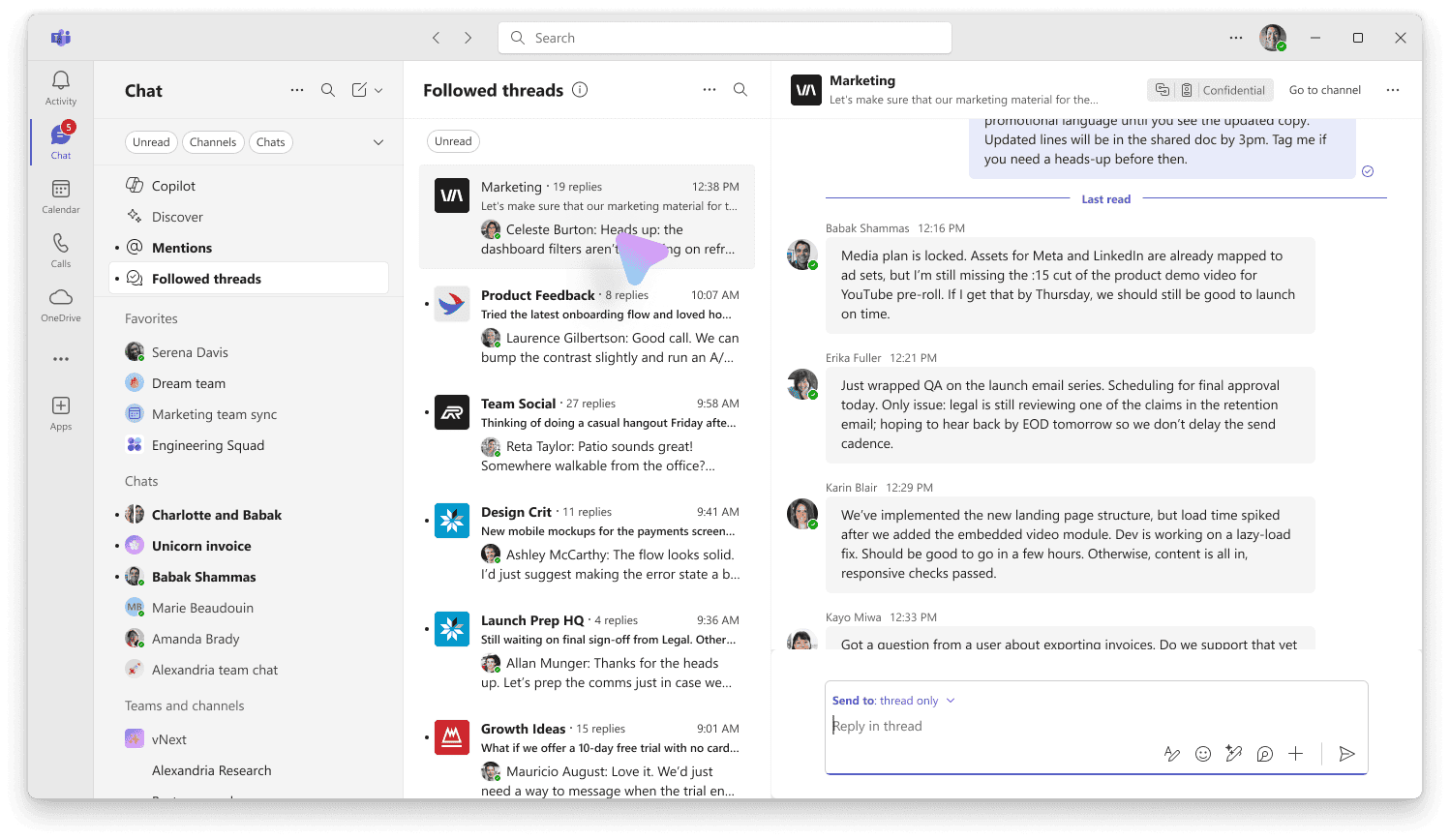
The biggest change is threaded conversations in channels. Instead of long reply chains cluttering the chat, replies now stay tucked neatly under the original message. If something needs more visibility, you can bump it to the main channel. You’ll also get the option to follow threads you care about, or unfollow when you don’t.

Teams threads reply
Image: Microsoft

Both the new threaded view and the old Posts layout are supported, so channel owners can switch between them without losing any messages. But if you rely on bots, you’ll need to use the Threads layout, it’s the only one that supports them.

FollowedThreads view
Image: Microsoft

Alongside that, Teams now supports multiple emoji reactions on a single message, letting users respond with more than just a thumbs-up. Keyboard shortcuts can be customized too, which should help power users save time.

There’s also a new automation feature that ties emoji reactions to workflows. For example, reacting with a ❗️could create a helpdesk ticket if the Workflows app is enabled. It’s clever, but might lead to accidents if you’re not careful with your clicks.

How to Find the My Documents File (Documents Folder) in Windows 11

Wondering how to find my documents file (My Documents Folder) in Windows 11? If the folder’s missing from File Explorer or your saved files aren’t showing up, it’s probably hidden, synced to OneDrive, or saved under a different path.

This guide gives you quick, no-fuss ways to track it down and open it fast. If you’re still on the previous OS, here’s how to find the Documents folder in Windows 10.

How to Find My Documents File/Folder in Windows 11

Step-by-Step Ways to Find Your Documents Folder in Windows 11

  1. Use File Explorer


    1. Press Windows + E to open File Explorer
    2. In the sidebar, click This PC
    3. Under the Folders section, click Documents

    This is the most direct way to get to your Documents folder. If File Explorer feels clunky or outdated, check out how to customize Windows 11 File Explorer for a cleaner setup.

  2. Search from the Start Menu

    1. Press the Windows key
    2. Type Documents
    3. Click Documents – File folder from the results

    If File Explorer ever slows down or acts up, this method helps you sidestep those issues . You can also check advice on how to fix File Explorer problems in Windows 10, which often apply to Windows 11 too.

  3. Use the Run Box

    1. Press Windows + R
    2. Type %userprofile%\Documents
    3. Press Enter

    This opens your My Documents folder straight from your user profile. It’s helpful if Task Manager shows File Explorer crashing or not responding, see more tips to restart File Explorer via Task Manager.

  4. Find It by Path

    1. Open File Explorer
    2. Navigate to C:\Users\YourUsername\Documents (Replace YourUsername with your actual Windows profile name)

    This works best if you want to make sure your saved files documents are really there. If you prefer the classic experience, you can still use the old File Explorer style in Windows 11, learn more about the old File Explorer still being available.

    You can also explore a similar guide on how to locate the Accessories folder by reading this article on finding the Accessories folder.

  5. Check OneDrive

    1. Open File Explorer
    2. Click OneDrive in the sidebar
    3. Look for Documents under that folder

    Wondering where are my PDF documents? If OneDrive is turned on, they’re probably here.
    To stop OneDrive from syncing:

    1. Right-click the OneDrive icon in the taskbar
    2. Click Settings > Sync and backup > Manage backup
    3. Toggle Documents off

    That brings your documents back to being local instead of cloud-based.


FAQ

Why can’t I find my Documents folder?

It’s either hidden, synced with OneDrive, or saved under a different user profile. Use the methods above to check each one.

Where are my PDF documents?

They’re usually in the Documents folder unless your browser or app saves them somewhere else.

Can I move the folder?

Yes. Right-click it, go to Properties > Location, and hit Move.

Is “My Documents” the same as “Documents”?

Yep. Windows just dropped the “My” in newer versions.

How do I stop OneDrive from syncing?

Open OneDrive settings, go to Sync and backup > Manage backup, and turn off the Documents toggle.


Conclusion

If your Documents folder disappeared or your saved files aren’t showing up, don’t panic. Use File Explorer, the Run command, or Start search to open your my documents file fast.

And if OneDrive moved your stuff to the cloud, now you know how to bring it back.

How to Find My Documents File (My Documents Folder) in Windows 10

Looking for how to find your documents file (My Documents folder) in Windows 10? Whether you’re trying to open your saved files in Documents, locate old PDFs, or figure out why you can’t see the folder in This PC, this guide has you covered. We’ve broken it down into the easiest-to-follow steps, so even if you’re not tech-savvy, you’ll know how to open your My Documents folder in seconds.

If you’re on a newer OS version, here’s a separate guide on how to find my documents file (My Documents Folder) in Windows 11.


Step-by-Step Methods to Locate the My Documents Folder

Locate Your Personal Documents Folder Easily

  1. Open It from File Explorer (Easiest Way)

    This is the simplest and fastest method to access the Documents folder in Windows 10.

    ● Press Windows + E to open File Explorer.

    ● In the left sidebar, click on This PC.

    ● Under the Folders section, you’ll find Documents.

    This is the folder where Windows saves most of your personal files by default, including your my documents list of Word files, spreadsheets, and PDFs.

    ⚠️ If clicking on Documents results in an error or blank screen, see what to do if you can’t access your files in Windows 10.

  2. Search for It Using the Start Menu

    If you’re unsure where your Documents folder is, try the Start Menu search.

    ● Click the Start button or press the Windows key.

    ● Type Documents and hit Enter.

    ● Click the top result labeled Documents – Folder.

    This method works well if you just want to quickly find your Documents folder and check what’s stored inside.

  3. Access It via the Run Command

    If you’re asking “show me my documents file” and need a direct route, this method takes you straight there.
    ● Press Windows + R to open the Run dialog.

    ● Type:
    %userprofile%\Documents
    ● Press Enter and your Documents folder will open immediately.

    This also helps if you’ve accidentally removed Documents from File Explorer or This PC.

  4. Create a Desktop Shortcut for Quick Access

    Want one-click access every time? Make a shortcut to open your Documents folder right from your desktop.
    ● Right-click on an empty area of the desktop.

    ● Choose New > Shortcut.

    ● Paste this path:
    %userprofile%\Documents
    ● Click Next, name it My Documents, and hit Finish.

    Now you’ve got easy access to your saved files in Documents anytime.

  5. Navigate from the User Folder Manually

    If you like to understand where files are truly stored, here’s how to find your Documents folder manually.
    ● Open File Explorer.

    ● In the address bar, go to:
    C:\Users\[YourUsername]\

    ● Inside, click the Documents folder.

    This location holds all your My Documents files, including any PDF documents, Word docs, and photos.

  6. Restore a Missing Documents Folder

    If you can’t see My Documents under This PC, the folder may be hidden, deleted, or moved.
    Press Windows + R.

    ● Enter:
    %userprofile%

    ● Check if the Documents folder appears. If not, check your Recycle Bin, or search your PC for file names.

    Still missing? Right-click on Documents > Properties > Location, and hit Restore Default to bring it back to its original place.
    🕵️‍♂️ If your My Documents folder disappeared entirely, follow this guide to recover missing files or folders in Windows 10.

  7. Move the Documents Folder to Another Drive (Optional)

    Need more space or want to back up your My Documents folder to an external drive?
    ● Right-click Documents in This PC.

    ● Choose Properties, then open the Location tab.

    ● Click Move, choose a new location, and hit Apply.

    This change doesn’t remove your files. It simply shifts the saved documents folder to a different drive for better storage.


FAQs

Is the My Documents folder different from Documents in Windows 10?

No. The name has changed, but the function is the same. The Documents folder is what used to be known as My Documents.

Why can’t I find My Documents?

It might have been moved or hidden. Try typing %userprofile%\Documents in the Run dialog to find your Documents folder directly.

Where are my PDF documents stored by default?

If you didn’t choose a specific folder, Windows typically saves them in the Documents folder under your user profile.

Can I move the Documents folder to another location?

Yes. Go to Documents > Properties > Location tab, and click Move to transfer it to another location.


Conclusion

Whether you’re trying to show My Documents file, find your PDF documents, or build a better habit of organizing your my documents list, knowing exactly where to look makes all the difference. You now have multiple ways to open your Documents folder and keep your saved files easy to access.

Vivaldi 7.5 gets second update in six days with key bug fixes

Vivaldi has released a second update for version 7.5, addressing several usability issues reported since the browser’s latest major release. The update is now available for all users and brings important fixes for video conferencing, tab management, mail, and page interaction.

One of the most noticeable problems fixed in this update involves Google Meet. Users previously reported that the browser failed to activate the camera due to a permission error. That issue has now been resolved.

The update also improves tab behavior. A bug that caused tabs to duplicate when dragged to a new window has been fixed, along with a separate issue where tab stack colors did not display correctly. Both changes aim to improve multitasking and window management.

Vivaldi Mail has received two updates as well. Users will no longer see the exclamation icon appearing without visible errors, and unnecessary threading warnings have been removed. These updates should improve the reliability of the built-in mail experience.

Additional fixes include stability improvements to the address bar, which was shifting unexpectedly when using Ctrl + drag. Website scrolling issues have also been resolved.

The update will be applied automatically, but users can manually install it by going to Vivaldi menu > Help > Check for Updates.

Amazon Prime Day 2026: Best Laptop Deals You Can Grab Right Now

Amazon Prime Day 2025 is here, and this year, it’s stretching out the savings with a four-day event running July 8–11. That means more time to score major discounts, but you’ll still need a Prime membership to claim them. Good news: there’s a free trial if you don’t have one.

Whether you’re after a cheap workhorse or a top-tier AI laptop, the deals this year hit every budget. We’ve dug through the clutter to surface the most worthwhile picks.

Best Prime Day Budget Laptop Deals

Starting under $300, you’ve got the Lenovo IdeaPad 1 with a Celeron chip, 12GB RAM, and dual storage (128GB eMMC + 256GB PCIe SSD) for just $284.05. If you want a more powerful daily driver, the Asus VivoBook Go with a Ryzen 5 and 512GB SSD is going for $329.99.

Still under $500, the standout is Dell’s Inspiron 15 3535, an all-around solid machine with 8GB RAM, 512GB SSD, and a Ryzen 5 chip for $406.97.

Best Prime Day Deals on Mid-Range Laptops

If you’re eyeing AI features, the Dell Inspiron 5441 with Snapdragon X Plus, 16GB RAM, and a tall 14-inch screen is down to $699. You can also grab the Samsung Galaxy Book4 (AI) at $599.98, after a big $300 discount.

But our favorite here is the Dell Inspiron 16 Plus. At the discounted price of $816, it packs a 16-inch 2.5K display, a Core i7 chip, 1TB SSD, and 16GB RAM. Great value, indeed.

Best Prime Day Deals on Premium Laptops

If you want a Copilot+ PC, the Microsoft Surface Laptop (2024) with Snapdragon X Elite and OLED-like clarity is down to $993.79. Do you prefer a Mac? The MacBook Air 13-inch with M4 is going for $849, down by $150 from the original price of $999.

But performance-wise, the Asus Vivobook S 14 wins this tier: 24GB RAM, 4K OLED screen, and AMD’s new AI 9 365 processor, all for $1,057.99. If you are looking for a premium Samsung laptop, don’t forget to check out the 15.6″ Galaxy Book5 360 Copilot+ PC. It’s dropped to $999.99 from its original price of $1349.99.

Best Prime Day Deals on Gaming Laptops

Gamers should check out the Acer Nitro V with RTX 4050 for just $649.99. But if you’re ready to go big, the ROG Strix G16 (2025) Gaming Laptop is the top performer at just $1,999.99, down from $2399.99. You get an NVIDIA RTX 5070 Ti GPU, Intel® Core™ Ultra 9 275HX Processor, 32GB DDR5, and 1TB SSD, which is perfect for modern titles.

Prime Day Deal: AMD Ryzen 5 9600X Drops to $174; Grab It Now!!!

AMD’s latest mainstream gaming chip just got a major price cut for Prime Day. The Ryzen 5 9600X, originally listed at $279.99, is now available for only $174.99 (Buy now on Amazon). That’s a solid $105 off for a limited time on Amazon.

Launched as part of AMD’s new Ryzen 9000 series, the 9600X is built on the Zen 5 “Granite Ridge” architecture and features 6 cores and 12 threads. It’s designed for users looking for strong single-threaded performance and great power efficiency without jumping to higher-end pricing.

Clock speeds run at a base of 3.9GHz, with boost clocks topping out at 5.4GHz, making it ideal for high-FPS gaming and demanding productivity tasks. The chip includes 32MB of L3 cache, supports DDR5-5600 memory, and runs on the AM5 platform with PCIe 5.0 compatibility, future-proofing your next PC build.

This model also includes integrated Radeon graphics, so you can get a system up and running even before adding a dedicated GPU. Just note: there’s no cooler in the box, and you’ll need a compatible AM5 motherboard.

8 Best Safe MyFlixer Alternatives to Stream Movies for Free

MyFlixer alternatives safe for streaming aren’t hard to find. There are plenty of legal and secure platforms where you can stream shows and movies without malware, pop-ups, or legal concerns. Below are trusted options that keep your device clean and your viewing experience stress-free.

Tubi – Large Free Library With Minimal Ads

Tubi is a go to name when talking about MyFlixer alternatives safe for everyday streaming. Owned by Fox, it features over 40,000 titles including classics, indie gems, and TV shows.

Its performance and range make it a strong recommendation if you’re used to services like 123Movies or Putlocker. If you’re curious how these compare, check out this breakdown of Putlocker safety and legality.

Tubi Highlights:
– Completely free with light ad load
– No account needed

→ Start watching at tubi.tv

Popcornflix – Watch Instantly Without Creating an Account

Popcornflix gives you access to hundreds of movies without the need to register or subscribe. It is ideal for viewers who want something fast and straightforward.

This is especially helpful for users shifting away from free movie streaming sites like MyFlixer or 123Movies. For more alternatives in this category, take a look at this curated list of safe 123Movies alternatives.

Popcornflix Highlights:
– Broad genre coverage
– Smooth playback across most browsers

→ Stream now at popcornflix.com

Note icon NOTE
Accessing these alternatives may put your privacy and identity at risk, especially in certain geo-locations. We recommend that you use a VPN like NordVPN, which has multiple security features like obfuscated servers, Double VPN, and Onion-over-VPN servers.

These features will keep you completely anonymous and will help you defend your rights to online privacy.

=> Get Nord VPN from Official Webpage

Vudu – Rent or Watch Free in HD

Vudu offers both free content and premium movies for rent or purchase. Its HD and 4K offerings make it a good option for users wanting quality over quantity.

If you are someone who mixes free and paid viewing, you might also want to explore streaming software options for PC to create a personalized viewing setup.

Vudu Highlights:
– Large catalog of free and paid content
– Sharp video quality and responsive interface

→ Visit vudu.com to start streaming

Pluto TV – Live Channels and On Demand Content

Pluto TV is a cable style service offering live channels and on demand shows. You do not need an account, and it is especially popular with cord cutters looking for variety.

If you’re curious about related premium services, you can read this walkthrough on how to get Paramount Plus for free since Pluto is owned by the same parent company.

Pluto TV Highlights:
– 250 plus live streaming channels
– Content sorted by interest, not just genre

→ Watch free at pluto.tv

Hoopla – Stream Free with a Library Card

Hoopla is a digital media service that lets you borrow movies, TV shows, audiobooks, and more for free using a participating library card. It’s completely ad free and supports downloads for offline viewing.

Perfect for families and students, Hoopla offers access to a wide range of genres, including kids’ programming, educational content, and Hollywood films.

Hoopla Highlights:
– No ads and no monthly fees
– Requires only a supported library account

→ Access Hoopla at hoopladigital.com

Kanopy – Library Powered Streaming for Students and Bookworms

Kanopy offers ad free streaming through participating libraries and universities. It specializes in indie films, documentaries, and educational series, making it ideal for students or anyone who prefers meaningful content.

You’ll need a library card or university login to access it, but it is completely free if you qualify.

Kanopy Highlights:
– No ads and high quality indie selection
– Access through library or campus account

→ Stream now on kanopy.com

Peacock – NBC’s Free Streaming with Optional Upgrades

Peacock offers a mix of free and premium content from NBC. The free tier includes classic sitcoms, news, and movies, while premium upgrades unlock live sports and full seasons of popular series.

It is a solid choice if you’re interested in network television content but want to start without paying anything.

Peacock Highlights:
– Free tier available with no credit card
– Includes live news and some sports content

→ Start watching on peacocktv.com

FilmRise – Niche Movies and TV Shows for Free

FilmRise is a lesser known platform offering free movies and shows in genres like true crime, vintage TV, and family programming. It’s available as a standalone app and also on platforms like Roku or Fire TV.

It’s great for viewers who want something different from mainstream titles and enjoy exploring curated niche libraries.

FilmRise Highlights:
– Completely free with no account needed
– Features exclusive titles and older series

→ Watch FilmRise at filmrise.com

Why MyFlixer Is Not Safe

No. MyFlixer is not considered safe. It often hosts unlicensed content and exposes users to cybersecurity threats like trackers, malware, or intrusive ads. Depending on your location, using such sites may also lead to legal consequences. Stick with verified services to avoid problems.

If you’re already using MyFlixer and run into streaming problems, here’s a full guide on how to fix MyFlixer not working with practical solutions.

How to Stream Safely Every Time

Using MyFlixer alternatives safe for legal streaming is a great step, but here are additional ways to protect yourself online:

  • Use official websites or app store versions only. Do not trust third party APKs or clones.
  • Install a secure ad blocker if the platform supports it. This reduces tracking and removes distracting banners.
  • Check for HTTPS in the site address and verify that you are not using a spoofed URL.
  • Keep your browser, OS, and streaming apps updated to avoid known exploits or bugs.
  • Consider using a VPN to maintain privacy and improve content availability. For the best results, explore this list of VPNs optimized for streaming.

Frequently Asked Questions

Are there any MyFlixer alternatives safe to use long term?

Yes. Platforms like Tubi, Pluto TV, and Crackle are legitimate and safe for extended use.

Do these platforms require a subscription?

Not necessarily. Most options listed here are free with ads, while Vudu also includes premium rentals.

Which platform is best for live content?

Pluto TV offers the most robust live channel selection among free services.

Can I find the same movies that were on MyFlixer?

Not always, but many indie films, classics, and genre-based picks are available legally and without risk.

Final Thoughts

If you’re tired of buffering, malware warnings, or worrying about legal issues, it is time to stop using sites like MyFlixer. Looking for more safe streaming sites? Check out our updated list of 123Movies alternatives or explore the top FMovies alternatives that still work in 2025.

These safe alternatives to MyFlixer offer peace of mind with zero compromises on quality. From free classics to premium rentals, there is something for everyone.

Surface Pro 2-in-1 (2024) with Copilot+ PC features drops to $1,044.99 for Prime Day

If you’ve had your eye on the latest Surface Pro, now’s the moment. As part of Amazon’s second Prime Day, the new Microsoft Surface Pro 2-in-1 (2024) is down to $1,044.99 (Buy now on Amazon), a big cut from its regular $1,499.99 price. This deal is only for Prime members, but you can easily start a free trial to grab it.

This 2-in-1 stands out for its premium hardware and AI capabilities. It’s one of the first Copilot+ PCs, running on a Snapdragon X Elite chip (12 cores) with 16GB RAM and 512GB SSD. That hardware pairs with a gorgeous 13-inch OLED touchscreen (2880 x 1920, 120Hz) and an NPU with 45 TOPS of power. Translation: it’s fast, responsive, and ready for new AI features in Windows 11.

Because it’s a Copilot+ PC, you’ll get access to Microsoft’s exclusive AI tools like Recall, Windows Studio Effects, Cocreate, and real-time translation. The Surface Pro 2-in-1 is ideal for creators, students, and mobile professionals.

It’s compact, light, and lasts all day on a charge. It flips easily from tablet to laptop. Just note that the Surface Pro Flex Keyboard and Slim Pen are sold separately. If you’re okay with the occasional app compatibility hiccup (thanks to its ARM-based design), this is one of the most future-ready Windows devices you can grab, especially at this price.

5 Best Pachinko Games for Windows PC: Flashy & Fast Paced

Pachinko games for PC Windows bring the arcade experience right to your desktop. These titles recreate the fast-paced action of Japan’s iconic machines, blending randomness with just enough control to keep you coming back.

This guide covers the top pachinko-inspired games you can enjoy on your computer. Whether you’re chasing jackpots, clearing pegs, or exploring quirky adaptations, these picks cover all the bases.

Top-Rated Pachinko Games for Windows

Peggle Deluxe – Colorful, casual, and endlessly satisfying

Peggle Deluxe is the go-to pachinko-style game for casual players. Developed by PopCap Games, it takes the physics-based core of pachinko and layers in rewarding audio-visual feedback, colorful level design, and satisfying win conditions. You launch a ball from the top of the screen, aiming to hit all orange pegs while bouncing off blue ones and triggering power-ups along the way. With simple controls and addictive gameplay loops, it’s great for both short bursts and long sessions.

Best For: Anyone looking for a stress-free, arcade-style experience with strategic depth.

Standout Features:
• Bright visuals and satisfying sound design
• Over 50 levels with escalating difficulty
• Highly accessible, yet surprisingly strategic

→ Download Peggle Deluxe on Steam


Super Pachinko – Authentic Japanese machine simulator

Super Pachinko by Tokyo Gaming is one of the most faithful digital recreations of classic Japanese pachinko machines. From the machine cabinet art to the metallic sound of balls bouncing, it captures the real feel of a pachinko parlor. The game features multiple machine themes, flashing lights, jackpot animations, and realistic ball physics. If you’re looking to simulate the real thing without leaving your home, this is the best choice.

Best For: Fans of traditional pachinko machines and realistic gameplay.

Standout Features:
• Faithful sound and machine mechanics
• Multiple cabinet styles and themes
• Jackpot animations and leaderboard tracking

→ Get Super Pachinko from Tokyo Gaming


Peggle Nights – Dreamy visuals and extra challenge

Peggle Nights builds on the formula of Peggle Deluxe, taking the action into a more surreal, nighttime setting. It introduces new characters with unique special powers, as well as harder level designs that require more tactical thinking. The game maintains the pachinko-style physics and power-up mechanics but gives players a fresh visual style and a slightly steeper challenge curve.

Best For: Players who enjoyed Peggle and want deeper levels and powers.

Standout Features:
• 60 new stages and bonus challenges
• New master characters with special abilities
• Darker, moodier visual themes

→ Download Peggle Nights on Steam


Pachinko 3D – Immersive physics and modern visuals

Pachinko 3D gives the classic game a modern upgrade with dynamic lighting, realistic physics, and animated 3D machine designs. You get full 360-degree views of each board and can zoom in to track ball movements as they bounce through complex obstacle layouts. This version focuses more on immersion and spectacle without changing the core objective: get the ball in the jackpot zone.

Best For: Anyone who wants a modernized take on traditional pachinko.

Standout Features:
• Real-time physics and animation
• Multiple dynamic boards
• Smooth camera control for a full view of the action

→ Get Pachinko 3D on Digital Reality


Plinko Panic – Wild power-ups and unpredictable chaos

Plinko Panic reimagines the pachinko formula with frantic energy. Instead of static pegs and a linear layout, it throws in unpredictable traps, speed boosts, and random modifiers. The game rewards experimentation and split-second reflexes as you try to navigate your ball through increasingly chaotic levels. It’s part puzzle, part luck, and all action: perfect for players who want more than just the traditional drop-and-pray format.

Best For: Fans of fast-paced indie games with unpredictable elements.

Standout Features:
• Power-ups, traps, and crazy board events
• Eye-catching art and physics-driven outcomes
• Endless scoring potential and leaderboard support

→ Download Plinko Panic at IndieGamer Studios


Frequently Asked Questions

Are there any real pachinko simulators for PC?

Yes. Super Pachinko is a standout example. It mirrors real machines closely, down to sound effects, rebound mechanics, and jackpot displays. It’s the closest thing you’ll find to playing pachinko without stepping into a parlor.

Which pachinko game works best on older hardware?

If you’re running an older Windows device, Peggle Deluxe is your safest bet. It runs smoothly even on legacy systems, similar to other lightweight arcade games like Pac-Man for Windows 8.

Are these games available on Steam?

Some are. Peggle Deluxe and Peggle Nights are both on Steam and remain top-rated casual titles. Others, like Super Pachinko and Plinko Panic, can be downloaded from official publisher sites.

Do pachinko games use real money?

These are entertainment-only games. No real money is involved, and any tokens or points earned stay within the game. If you’re after coin-based nostalgia, check out Jukebox Arcade Music Browser for a parlor-style feel.

Final Take

The best pachinko games for PC offer a surprising amount of variety. Some recreate the real machines down to the tiniest detail. Others take creative liberties and lean into arcade chaos. Regardless of where you land on that spectrum, there’s no shortage of fun.

You don’t need a pachinko parlor to enjoy the thrill. Just a mouse, a few minutes, and the right game.

Best Software for Ticket Kiosks to Streamline Event Sales

Finding the best software for ticket kiosk systems is essential for businesses looking to streamline ticketing operations. Whether it’s for events, transportation, or amusement parks, having an intuitive and efficient ticket kiosk software can significantly enhance customer experience and operational efficiency.

Ticket kiosk software solutions are designed to automate the ticketing process, allowing customers to purchase or collect tickets without human assistance. These solutions are perfect for event organizers, transportation companies, and venues looking to reduce queues and improve service. They cater to anyone from tech-savvy users to those who prefer a more straightforward, user-friendly interface.

🖥️ Best Software for Ticket Kiosk Systems to Simplify Sales and Improve Service

🎟️ TicketSource

TicketSource is a versatile ticketing software that caters to a variety of events, from small community gatherings to large concerts. Developed by TicketSource Ltd, this software is renowned for its user-friendly interface and comprehensive features that include online ticket sales and box office management.

This software is typically used by event organizers, venue managers, and box office personnel who need a reliable and efficient system for handling ticket sales and distribution.

Product Highlights:

  • Supports multiple ticket types and pricing tiers
  • Offers real-time sales analytics and reporting
  • Integrates seamlessly with existing hardware and systems

Pros & Cons:

  • Easy to set up and use
  • May have limitations for very large venues
  • Offers phone and email support

Get it on TicketSource

🎟️ Vendini

Vendini is a robust ticketing solution that offers comprehensive features for event management. Developed by Vendini, Inc., this software is designed to cater to the needs of theaters, festivals, and live events, providing tools for ticket sales, marketing, and customer relationship management.

Typically, this software is used by event coordinators, marketing teams, and customer service agents who require an all-in-one solution for event management.

Product Highlights:

  • Provides cloud-based access to ticketing and event data
  • Includes built-in marketing tools to promote events
  • Offers customer support and training resources

Pros & Cons:

  • Scalable for multiple event types
  • Can be more complex for new users
  • Includes reporting and CRM tools

Get it on Vendini

🎟️ ThunderTix

ThunderTix is a cloud-based ticketing system designed for a wide range of events and venues. Developed by Thunder Data Systems, this software is known for its flexibility and ease of use, supporting everything from general admission to reserved seating.

This software is commonly used by venue operators, event planners, and marketing professionals who need a customizable ticketing platform with robust reporting capabilities.

Product Highlights:

  • Supports seamless integration with social media platforms
  • Provides detailed sales reports and analytics
  • Offers customizable ticket templates and branding options

Pros & Cons:

  • Quick onboarding and flexible settings
  • Advanced features may require training
  • Great for small to mid-sized venues

Get it on ThunderTix

🎟️ Eventbrite

Eventbrite is a popular ticketing platform that offers a variety of tools for event creation, promotion, and ticket sales. Developed by Eventbrite, Inc., this software is ideal for both small and large events, providing a user-friendly interface and powerful promotional tools.

Event organizers, marketers, and social media managers frequently use this software for its comprehensive features and ease of use.

Product Highlights:

  • Offers mobile-friendly ticketing options and check-in
  • Provides extensive promotional tools and integrations
  • Includes real-time sales tracking and analytics

Pros & Cons:

  • Intuitive for beginners
  • Service fees may apply per transaction
  • Excellent integration with social platforms

Get it on Eventbrite

🎟️ TicketSpice

TicketSpice is a customizable ticketing platform designed for a wide range of events. Developed by Webconnex, this software offers a flexible pricing model and a suite of powerful tools for ticket sales, donations, and event management.

Typically, it is utilized by event hosts, fundraising managers, and organizers who need a cost-effective solution with extensive customization options.

Product Highlights:

  • Allows full control over ticket fees and pricing
  • Provides real-time data and reporting features
  • Offers seamless integration with various payment processors

Pros & Cons:

  • Transparent pricing with no per-ticket fees
  • May lack some high-end enterprise features
  • Great for nonprofits and fundraisers

Get it on TicketSpice

💡 Best Software for Ticket Kiosk Install Tips

When setting up ticket kiosk software, ensure that your hardware is compatible with the software requirements. It’s crucial to keep your software updated to benefit from the latest features and security patches. Additionally, provide clear instructions and user-friendly interfaces to enhance the customer experience.

❓ Frequently Asked Questions

What is the best software for a ticket kiosk?

The best software depends on your specific needs, such as event size, type, and budget. TicketSource, Vendini, ThunderTix, Eventbrite, and TicketSpice are all excellent options.

Can ticket kiosk software integrate with existing systems?

Yes, most ticket kiosk software solutions offer integration capabilities with existing POS systems, CRM tools, and other digital platforms.

Is training required to use ticket kiosk software?

While many ticket kiosk software options are user-friendly, some may require training or tutorials to fully utilize all features effectively.

How secure is ticket kiosk software?

Most reputable ticket kiosk software solutions have robust security measures in place to protect customer data and transaction information.

🧾 Conclusion

In conclusion, choosing the best software for ticket kiosk systems can transform the way you manage ticket sales and customer interactions. By opting for solutions like TicketSource, Vendini, ThunderTix, Eventbrite, or TicketSpice, businesses can enhance efficiency and customer satisfaction. Evaluate each option based on your specific needs and enjoy a streamlined ticketing process.

5 Software for Arcade Cabinets for DIY Builds and Retro Gaming

Software for arcade cabinets is the foundation of any custom or commercial arcade setup. If you’re building your first cabinet from scratch or upgrading an old-school shell, the right software will handle game emulation, control mapping, library management, and front-end visuals.

This guide covers the most trusted arcade cabinet software available today. Each option suits different needs, whether you’re working on a DIY Raspberry Pi project or setting up a professional-grade system. We’ll help you choose the best fit based on your experience, setup, and goals.

Why Use Arcade Cabinet Software?

Arcade cabinet software replicates the functionality of classic arcade machines while adding modern convenience:

  • Lets you run thousands of classic arcade and console games using emulation
  • Offers easy-to-navigate menus for browsing and launching games
  • Accurately maps buttons, joysticks, coin slots, and trackballs
  • Supports full customization of themes, screensavers, and button layouts
  • Enables coin-op play or free play depending on your use case
  • Designed to run on PCs, Raspberry Pi, or Linux-based systems

No matter if you’re a hobbyist or a business owner, this software gives your cabinet life, usability, and style.

Top Software for Arcade Cabinets

1. RetroPie – Best for Raspberry Pi and DIY Builds

Who it’s for: Hobbyists, beginners, and budget-conscious users building small-form arcade machines

Why it’s great: RetroPie is an all-in-one emulation platform for Raspberry Pi and Linux-based systems. It allows you to emulate dozens of classic systems (including MAME, SNES, Sega Genesis, and PlayStation) and customize the user interface to feel like a real arcade. It’s widely supported and ideal for users without deep technical experience.

If you’re planning to start from scratch, check out these best Raspberry Pi kits for gaming that are ideal for RetroPie installations.

Key Features:

  • Supports 50+ systems including arcade and console games
  • Seamlessly integrates with arcade buttons, USB controllers, and Pi-compatible hardware
  • EmulationStation frontend with full theme support
  • Large online community for help, themes, and troubleshooting
  • Built-in tools for ROM management and system configuration

→ Get RetroPie

2. MAME – Best for Arcade Game Accuracy and Preservation

Who it’s for: Collectors, historians, tinkerers, and users focused on preserving authentic arcade gameplay

Why it’s great: MAME (Multiple Arcade Machine Emulator) is the original standard for arcade emulation. Its focus is not on modern UX or frontends but on accuracy. It replicates thousands of original arcade systems as closely as possible, making it the go-to for users who care about timing, input behavior, sound fidelity, and cabinet authenticity.

Key Features:

  • Supports over 10,000 arcade titles with detailed emulation accuracy
  • Ideal for CRT setups or cabinets with authentic controls
  • Works on Windows, macOS, and Linux
  • Receives constant community-driven updates
  • Requires front-end pairing (like Attract-Mode) for better UI

→ Get MAME

3. Hyperspin – Best for Custom Arcade Visuals

Who it’s for: Experienced users and arcade builders who want high visual polish with animated frontends

Why it’s great: Hyperspin focuses on rich, theme-driven visual experiences. Its wheel-based navigation system and animated game menus feel straight out of a high-end arcade lounge. It takes time to configure, but the result is an incredibly engaging user interface that draws attention and nostalgia alike.

Key Features:

  • Graphically rich menus with support for video previews, artwork, and themes
  • Supports dozens of emulators via RocketLauncher integration
  • Huge theme library contributed by the community
  • Ideal for cabinets in public or commercial spaces where aesthetics matter
  • Requires moderate to advanced setup time and file management

→ Get Hyperspin

4. LaunchBox – Best for Windows Users and Big Game Libraries

Who it’s for: PC users who want an easy-to-manage library with metadata, visuals, and modern UI

Why it’s great: LaunchBox offers one of the most intuitive game management platforms for arcade cabinets on Windows. It auto-downloads game titles, box art, and descriptions, and has a clean interface that anyone can use. Its Big Box mode is specifically designed for cabinet use, giving you full-screen navigation and theme customization.

Key Features:

  • Drag-and-drop game import with automatic metadata scraping
  • Supports all major emulators, including MAME and console systems
  • Big Box mode offers full-screen visuals perfect for arcade monitors
  • Powerful search, filters, and sorting options for large collections
  • Optional premium upgrade for more advanced features

→ Get LaunchBox

5. Attract-Mode – Best Lightweight Frontend with Flexibility

Who it’s for: Advanced users and developers who want speed, control, and platform flexibility

Why it’s great: Attract-Mode is a minimalist frontend built for speed and customization. Unlike Hyperspin or LaunchBox, it uses fewer system resources and is perfect for older or low-powered machines. It’s scriptable, open-source, and works across Windows, Linux, macOS, and Raspberry Pi. Setup requires more manual effort, but the end result is efficient and completely tailored to your needs.

If you’re setting up a Pi-based cabinet, this guide to installing Raspbian on Raspberry Pi will help you prep the system before layering in Attract-Mode.

Key Features:

  • Lightweight and fast, suitable for low-end hardware
  • Lua-based theme engine allows full customization
  • Cross-platform compatibility (Windows, macOS, Linux, Raspberry Pi)
  • Supports most emulators via command-line arguments
  • Community-built layouts and themes available

→ Get Attract-Mode

Setup Tips for Smooth Installation

  • Pick the right OS: RetroPie works on Raspberry Pi; LaunchBox and Hyperspin are built for Windows
  • Use wired controllers when configuring inputs, especially during first setup
  • Start with a small ROM set to avoid performance issues or clutter
  • Save configuration files regularly, especially if you’re trying new themes or button layouts
  • Test emulators independently before launching them through your frontend

Frequently Asked Questions

Which software is best overall?

There’s no one-size-fits-all. Use RetroPie for Raspberry Pi builds, MAME for authentic emulation, Hyperspin for visual appeal, and LaunchBox for ease of use on PC. Attract-Mode is ideal for those who want control over every detail.

Can I install multiple frontends together?

Yes, especially on Windows. For example, LaunchBox can pair with MAME and other emulators. Hyperspin can use RocketLauncher to manage emulators.

Are all of these tools free?

RetroPie, MAME, and Attract-Mode are fully free. LaunchBox has a free version, but Big Box (for cabinets) requires a paid license. Hyperspin is free, but supporting tools and assets may involve costs.

Do I need internet access?

Only during initial setup or when downloading metadata, themes, or updates. Once configured, your cabinet can run offline.

What emulators work best with arcade cabinets?

MAME is the most accurate for arcade games. RetroArch and FBNeo are also commonly used inside RetroPie setups.

Final Thoughts

Arcade cabinet software is what brings your hardware to life. Whether you’re after ease of use, visual flair, customization, or perfect emulation, there’s a solution to match your needs. Beginners might prefer RetroPie or LaunchBox, while advanced builders can dive into Hyperspin or Attract-Mode for deep customization.

Start with your hardware, then pick the software that supports your vision. With the right tools, your arcade cabinet can be more than a hobby, it can be the perfect time machine.

Best Software for Claw Machine Learning to Boost Precision and AI Integration

Software for claw machine learning is revolutionizing how enthusiasts and developers approach the world of claw machines. This specialized software utilizes machine learning algorithms to enhance the precision and efficiency of claw machines, making them more effective in grabbing objects. Whether you’re an arcade owner, a robotics enthusiast, or a developer looking to experiment with machine learning, these tools can significantly benefit you.

In this listicle, we’ll explore the top software solutions designed for claw machine learning. Each tool offers unique features tailored to different needs, ranging from those who operate claw machines in arcades to developers working on robotics projects. If you’re interested in the intersection of gaming and AI, you’ll find these tools indispensable.

🖥️ Best Software for Claw Machine Learning Projects (AI Tools for Every Level)

🤖 TensorFlow

TensorFlow is an open-source machine learning framework developed by Google. It is widely used in various AI applications, including claw machine learning. TensorFlow’s flexibility allows developers to create custom models tailored to specific claw machine operations.

Game developers and robotics engineers commonly use TensorFlow due to its comprehensive library and support for deep learning projects. Its community and extensive documentation make it ideal for both beginners and experts.

Product Highlights:

  • Open-source and highly customizable
  • Extensive support and documentation
  • Widely used in AI and machine learning sectors

Pros & Cons:

  • Versatile for custom projects
  • May require steep learning curve
  • Supported by large global community

Get it on TensorFlow’s official page

🤖 PyTorch

PyTorch, developed by Facebook’s AI Research lab, is another powerful tool for machine learning enthusiasts. Known for its simplicity and dynamic computational graph, PyTorch is ideal for those who prioritize ease of use and flexibility in developing claw machine algorithms.

This tool is often favored by researchers and developers who need to quickly prototype and test new ideas in machine learning. Its user-friendly interface makes it a popular choice for those new to the field.

Product Highlights:

  • Intuitive and easy to learn
  • Strong community support
  • Excellent for prototyping and testing

Pros & Cons:

  • Great for fast experimentation
  • Limited out-of-the-box tools compared to TensorFlow
  • Active development ecosystem

Get it on PyTorch’s official page

🤖 OpenAI Gym

OpenAI Gym is a toolkit for developing and comparing reinforcement learning algorithms. It’s perfect for those focusing on the AI aspect of claw machines, providing a simulated environment to train and test algorithms.

Ideal for AI researchers and developers, OpenAI Gym offers a variety of environments and challenges that can be used to refine machine learning models. It is particularly useful for those looking to simulate real-world scenarios.

Product Highlights:

  • Offers a variety of simulated environments
  • Perfect for reinforcement learning
  • Supported by a strong community

Pros & Cons:

  • Excellent for RL simulations
  • Needs external ML framework integration
  • Robust testing environments

Get it on OpenAI’s official page

🤖 Keras

Keras is a high-level neural networks API, written in Python and capable of running on top of TensorFlow. It is particularly known for its simplicity and ease of use, making it a great choice for beginners and those who want to quickly develop prototypes for claw machine learning.

Keras is often used by developers who need a straightforward interface for building and training machine learning models without diving deep into the complexities of TensorFlow.

Product Highlights:

  • User-friendly and easy to implement
  • Seamlessly integrates with TensorFlow
  • Ideal for beginners in machine learning

Pros & Cons:

  • Simple syntax and workflow
  • Less control over low-level operations
  • Great documentation and tutorials

Get it on Keras’s official page

🤖 Scikit-learn

Scikit-learn is a simple and efficient tool for data mining and data analysis, built on NumPy, SciPy, and Matplotlib. While it’s not specifically designed for deep learning, its algorithms can be applied to the data processing and analysis stages of claw machine learning.

Data scientists and analysts often apply Scikit-learn for its robust set of tools that facilitate machine learning workflows, particularly in the preprocessing and evaluation of models.

Product Highlights:

  • Excellent for data preprocessing and analysis
  • Built on robust scientific libraries
  • Perfect for data-driven decision making

Pros & Cons:

  • Great for classical ML tasks
  • Not suited for deep learning models
  • Easy to integrate with other tools

Get it on Scikit-learn’s official page

💡 Software for Claw Machine Learning Install Tips

When installing software for claw machine learning, ensure your system meets the necessary hardware and software requirements. Most machine learning frameworks require a compatible GPU for optimal performance. Additionally, setting up a virtual environment can help manage dependencies and avoid conflicts between different projects.

Take advantage of the extensive documentation and community forums available for each software. They provide valuable resources and troubleshooting tips, especially if you’re new to machine learning.

❓ Frequently Asked Questions

What is the best software for claw machine learning?

The best software depends on your specific needs. TensorFlow and PyTorch are excellent for deep learning, while OpenAI Gym is ideal for reinforcement learning simulations.

Can I use these tools without a coding background?

While a basic understanding of coding is beneficial, many tools like Keras offer user-friendly interfaces that are accessible to beginners.

Is a powerful computer necessary for claw machine learning?

While a standard computer can run basic models, a powerful machine with a capable GPU is recommended for more complex models and faster processing.

Are there free resources to learn about claw machine learning?

Yes, many online platforms offer free courses and tutorials on machine learning, including those specific to the tools mentioned here.

🧾 Final Take / Conclusion

Software for claw machine learning is transforming the way developers and enthusiasts interact with these machines. By leveraging machine learning frameworks like TensorFlow, PyTorch, and OpenAI Gym, users can enhance the precision and efficiency of claw machines. Whether you’re an arcade owner, a developer, or a robotics enthusiast, these tools offer powerful solutions to elevate your projects.

Windows 11 may soon get AI-powered dynamic wallpapers

Microsoft’s been experimenting again, this time with AI-powered dynamic wallpapers that update based on your selections. Buried in recent Windows 11 Insider Preview builds are hidden references to something called Dynamic background.

It was first spotted by Windows enthusiast @phantomofearth on X. It’s not active yet, but the system strings suggest a feature that could automatically change your wallpaper based on things you select, or maybe even how you use your PC.

One of the hidden prompts reads, “Your background will automatically update based on your selections.” While it’s still unclear what those selections might be, mood, time of day, or something more behavior-based, it points toward a smarter, more personalized background system.

This isn’t the first time Microsoft has played around with animated or adaptive wallpapers. Back in 2023, reports suggested hints at Depth effects, Parallax Background, and WallpaperMotion. But those were never easy to activate and haven’t made their way into public builds.

Now, with Windows leaning harder into AI across the board, like Copilot Vision and context-aware recommendations, it makes sense that your desktop might eventually reflect your digital habits or preferences.

For now, it’s all dormant code and strings. There’s no toggle in Settings, no preview, and no confirmed rollout timeline. But the clues suggest Microsoft isn’t done with the idea just yet.

Best Software for Touchscreen Vending Machines (2026 Guide)

The best software for touchscreen vending machines helps turn a basic vending unit into something smarter and easier to run. It handles everything: what people see on the screen, how they pay, how you track stock, and how you manage it all from a laptop or phone.

If you’ve got machines to look after or are building a vending setup from scratch, these tools give you the control and visibility you need without getting too technical or bulky.

Top Software for Touchscreen Vending Machines

VendSoft – Smart vending routes and inventory in one dashboard

VendSoft makes it easy to run multiple vending machines, especially if they’re spread across town or in different buildings. It’s a great pick for folks managing routes in schools, offices, or small business areas.

Why people use it:

  • Easy to check sales and inventory from anywhere
  • Helps plan refill routes to save time
  • Gives you a clear view of what’s selling and what’s not

Most users like that VendSoft cuts down wasted trips to machines. It’s often mentioned in reviews of the best vending management software as a lightweight but powerful option for solo operators and small vending teams.

Platform: Web-based
Pricing: Monthly subscription
Support: Setup help and email support

→ Try VendSoft via the official site


Nayax – Trusted global platform for secure cashless vending

If payments are your biggest focus, Nayax is hard to beat. It handles all the modern stuff like tap-to-pay, QR codes, Apple Pay, and more. It’s also set up for global use, which helps if your machines see all kinds of traffic.

Why people use it:

  • Handles cashless payments with zero hassle
  • Keeps track of every transaction in real time
  • Meets all the security standards for card processing

Nayax is widely adopted by large vending networks across Europe, Asia, and North America. It consistently earns high marks for uptime, transaction speed, and fraud prevention. Reviews from operators on industry sites reinforce its place as a premium choice for payment-first setups.

Platform: Hardware-integrated, cloud backend
Pricing: Based on number of machines
Support: 24/7 customer service

→ Check out Nayax at the official website


Vendron by Silkron – Built for custom, smart vending experiences

Vendron is for people building custom vending machines or tech-forward setups. If you want more control over the touchscreen layout or want to connect sensors or cameras, this platform is built for that.

Why people use it:

  • Works on Android and Windows
  • Makes it easy to customize your UI and flow
  • Supports things like facial recognition or smart cameras

Vendron is frequently deployed in high-end vending setups in airports, hotels, and public transport hubs across Asia. Tech teams often choose it for the flexibility and control it gives over both hardware and customer interaction.

Platform: Android or Windows
Pricing: Custom quotes
Support: Full developer support and SDKs

→ Learn more about Vendron at Silkron’s site


Parlevel Systems – Full-suite solution for vending, micro markets, and OCS

Parlevel isn’t just for vending. It also handles micro markets and office coffee setups. It’s best if you’ve got a mix of machines and want one dashboard to run them all.

Why people use it:

  • Tracks machine health and inventory in one place
  • Gives drivers mobile tools for refilling and fixing
  • Supports vending, office coffee, and breakroom setups

Parlevel integrates easily with third-party services. Operators looking to sync their vending reports with free cloud accounting software will appreciate its compatibility and reporting flexibility.

Platform: Cloud-based, works on mobile too
Pricing: Subscription plans
Support: Training, setup, and account reps

→ Get started with Parlevel on the official page


Cantaloupe – Enterprise-grade vending platform with real-time control

Cantaloupe, previously called USA Technologies, is built for scale. It’s used by some of the biggest vending operators in the U.S. If you’ve got a large fleet or want to grow fast, this platform helps you stay on top of sales, routes, and payments.

Why people use it:

  • Handles contactless payments and mobile wallets
  • Tracks what sells and alerts you when stock runs low
  • Gives techs mobile apps to handle service calls on the go

Cantaloupe is especially useful for operators working with expense categories or per diem reporting. Its integration potential makes it a good match for those also using tax software for per diem reporting in their business workflows.

Platform: Cloud backend, mobile access
Pricing: Based on usage
Support: Phone, email, and help docs

→ Learn more about Cantaloupe at the official site


Frequently Asked Questions

What features actually matter for touchscreen vending?

Look for real-time monitoring, mobile payment support, inventory tracking, and tools for remote setup or route planning.

Can I change the touchscreen layout or branding?

Yes. Vendron and Cantaloupe offer deep customization so you can match your machine’s interface to your brand.

Do these platforms send restock alerts?

All five do. They notify you when stock gets low or something needs service.

Which one’s best if I only have a couple of machines?

VendSoft and Parlevel offer small-scale-friendly tools that are simple but still powerful.


Final Thoughts

Managing vending machines without the right software can be a hassle. You might run into delays, lost sales, or surprise errors that take time and money to fix.

Tools like VendSoft help you cut waste and run lean. Nayax gives you full confidence in payments. Vendron supports unique setups and branding. Parlevel keeps mixed vending models under one roof. And Cantaloupe is built for serious operators with bigger plans.

USB Cable Types Guide: Explained for All Users

Universal Serial Bus, or USB, has been the most common interface for connecting devices to computers for over two decades. Whether you’re charging a phone, transferring files, or connecting a mouse or printer, you’ve likely used a USB cable.

However, the world of USB is much broader than it looks. With several generations of USB versions and various connector shapes, choosing the right cable can get confusing. This guide explains every aspect of USB, including versions, connector types, port styles, and real-world compatibility, so you never have to guess again.

USB Cable Types Chart

Cable TypeConnector 1Connector 2USB Version SupportCommon Usage
USB-A to USB-AUSB Type-AUSB Type-AUSB 1.1 – 3.2Direct PC-to-PC data (rare)
USB-A to USB-BUSB Type-AUSB Type-BUSB 1.1 – 3.2Printers, older peripherals
USB-A to Micro-USBUSB Type-AMicro-USBUSB 2.0 – 3.0Android phones, accessories
USB-A to Mini-USBUSB Type-AMini-USBUSB 2.0Digital cameras, older MP3 players
USB-A to USB-CUSB Type-AUSB Type-CUSB 2.0 – 3.2Newer phones, accessories
USB-C to USB-CUSB Type-CUSB Type-CUSB 2.0 – USB4Laptops, phones, monitors, fast charge
USB-C to USB-BUSB Type-CUSB Type-BUSB 3.0 – 3.2Some modern printers/scanners
USB-C to Micro-USBUSB Type-CMicro-USBUSB 2.0Adapter cables, legacy devices
USB-C to Mini-USBUSB Type-CMini-USBUSB 2.0Adapter cables for older devices

Use this chart to identify exactly which cable fits your device and your use case. USB-C to USB-C is your go-to for future-proofing, while USB-A to Micro-USB remains common in budget gadgets. Always check for USB version compatibility if you’re looking for fast data or high-power charging.

Remember, each combination serves different use cases. For example, a USB-C to USB-C cable with USB PD support can charge a laptop, while a USB-A to Micro-USB is typically used for powering older accessories.

How to Choose the Right USB Cable for Your Needs

When picking a USB cable, start by checking your device’s port type. For example, older phones use Micro-USB, while newer ones use USB-C. Also consider what you need the cable to do: if it’s just for charging, a basic USB-A to Micro-USB or USB-C will work. For high-speed data transfer or video output, opt for a certified USB-C cable that supports USB 3.1, USB 3.2, or USB4.

Build quality matters too. Thicker cables with better shielding are less prone to interference and tend to last longer. Some cables also include E-Marker chips to manage power delivery and data routing for USB-C.

The Evolution of USB Standards (USB 1.x to USB4)

  • USB 1.1 (1998): This was the first widely adopted version of USB. It offered a maximum transfer rate of 12 Mbps and replaced older serial and PS/2 ports for basic peripherals like keyboards and mice. Though slow by today’s standards, it helped standardize device connectivity.
  • USB 2.0 (2000): A huge upgrade over its predecessor, USB 2.0 pushed data transfer speeds up to 480 Mbps. It also introduced better support for power-hungry devices, making it the dominant standard for nearly a decade.
  • USB 3.0 (2008): Marketed as “SuperSpeed USB,” this version delivered transfer rates up to 5 Gbps, over 10 times faster than USB 2.0. It also improved power delivery and introduced full-duplex data transfer.
  • USB 3.1 Gen 1 & Gen 2 (2013-2015): USB 3.1 Gen 1 is essentially a rebranding of USB 3.0 (5 Gbps), while Gen 2 doubled the speed to 10 Gbps and brought better efficiency in data encoding.
  • USB 3.2 (2017): Added multi-lane communication through USB-C connectors, allowing dual-lane transfers of up to 20 Gbps. It further blurred the lines between Gen 1, Gen 2, and Gen 2×2, causing some naming confusion.
  • USB4 (2019): The most advanced version yet. USB4 supports up to 40 Gbps, is based on the Thunderbolt 3 protocol, and only uses USB-C. It dynamically shares bandwidth between data and video and provides robust support for high-speed peripherals.

Types of USB Connectors (Explained by Shape)

  • USB Type-A: The most recognizable connector with a rectangular shape. Found on computers, TVs, game consoles, and chargers. It only inserts one way and supports USB 1.1 to USB 3.2.
  • USB Type-B: A square connector used mostly with printers and older external hard drives. It has two variations: the standard USB 2.0 Type-B and the larger USB 3.0 Type-B with extra pins.
  • Mini-USB: An older, compact connector used in devices like digital cameras, MP3 players, and GPS units. It has mostly been phased out in favor of Micro-USB and USB-C.
  • Micro-USB: Smaller than Mini-USB, it became the go-to standard for smartphones, Bluetooth headphones, and power banks during the 2010s. USB 3.0 Micro-B has a wider design with extra pins for faster transfer rates.
  • USB Type-C: A reversible, compact, and powerful connector that supports fast data transfer, high-speed charging, and video output. It’s compatible with USB 2.0 through USB4 and is now the default for modern phones, laptops, and accessories.

USB Port Types and Their Roles

  • USB-A Ports: These are host-side ports found on computers, game consoles, and power bricks. They’re designed for connecting peripherals like mice, external drives, and game controllers.
  • USB-B Ports: Commonly found on printers and scanners, they act as device-side ports. Data flows from the host (like a PC) to the device through these ports.
  • Micro-USB Ports: Used in many portable devices until the mid-2010s. They are less durable and slower than newer standards, but still appear in low-cost electronics.
  • USB-C Ports: These ports are versatile and appear on both host and device sides. They’re now standard in smartphones, tablets, ultrabooks, and newer desktop motherboards.
  • Colored Ports: Port color often hints at capability. USB 2.0 ports are usually black or white, USB 3.x ports are blue (or teal), and USB-C ports may have logos denoting Power Delivery (PD) or Thunderbolt compatibility.

Understanding USB Power Delivery

  • USB 2.0 Power Output: Limited to 2.5 watts (5V at 0.5A). Enough for low-power gadgets like keyboards and wired mice, but not for charging modern devices.
  • USB 3.0 Power Output: Provides up to 4.5 watts (5V at 0.9A), allowing it to support more power-hungry peripherals like webcams and portable hard drives.
  • USB-C and Power Delivery: USB-C supports the USB Power Delivery (PD) protocol, offering up to 100 watts (20V, 5A). That’s enough to power laptops, monitors, and even mini PCs.
  • Smart Power Negotiation: USB PD allows two connected devices to negotiate and select the most efficient voltage and current levels. This improves energy use, prevents overheating, and extends battery life.

Learn how to activate USB-C power delivery and ensure your laptop charges correctly with this step-by-step guide: Enable USB-C Charging.

Speed Differences: USB 2.0 vs. USB 3.x vs. USB4

  • USB 2.0: Supports up to 480 Mbps (megabits per second). Suitable for mice, keyboards, and simple file transfers. However, it’s much too slow for video, high-res audio, or modern storage devices.
  • USB 3.0 (SuperSpeed): Delivers 5 Gbps (gigabits per second). Ideal for external hard drives, webcams, and faster file transfers. Supports full-duplex communication, meaning it can send and receive data at once.
  • USB 3.1 Gen 2: Doubles bandwidth to 10 Gbps and improves encoding efficiency, reducing latency and increasing transfer reliability.
  • USB 3.2: Offers up to 20 Gbps using dual-lane transmission. Requires compatible USB-C cables and devices. Great for high-speed SSDs and 4K video capture.
  • USB4: Tops out at 40 Gbps. Optimized for advanced workflows like daisy-chaining multiple 4K monitors, external GPUs, and NVMe SSDs. Also backward-compatible with USB 3.x and Thunderbolt 3.

Backward Compatibility and Cable Identification

One of USB’s key advantages is backward compatibility. You can plug a USB 2.0 device into a USB 3.0 port, and it will still work, just at the older speed. The same is true for cables, though performance will be limited by the slowest link in the chain.

Identifying cables can be tricky, but color coding and labeling help. USB 2.0 ports are often black or white, USB 3.x ports are blue or teal, and USB-C ports may carry logos indicating USB PD or Thunderbolt compatibility. Always check the specs if you need high-speed data or fast charging.

Final Thoughts

USB technology has come a long way since the late 1990s. From the slow USB 1.1 days to today’s ultra-fast USB4 with 40 Gbps speeds and power delivery, the standard has constantly evolved. Understanding the different USB versions, connector types, and what they’re used for helps avoid frustration and ensures compatibility across all your devices.

By mastering USB, you save time, avoid mismatches, and get the best performance from your tech setup. Whether you’re connecting a hard drive, charging a phone, or running a 4K display, there’s a USB solution ready for you.

FAQs

What’s the difference between USB 2.0 and USB 3.0 cables?

USB 2.0 cables support a maximum speed of 480 Mbps, while USB 3.0 cables can transfer data up to 5 Gbps. USB 3.0 also supports better power delivery and usually has blue-colored connectors for easy identification.

Can I use a USB 3.0 cable with a USB 2.0 port?

Yes, USB is backward-compatible. A USB 3.0 cable will work in a USB 2.0 port, but it will only operate at USB 2.0 speeds and power levels.

Do USB-C cables support fast charging?

Many USB-C cables do support fast charging, especially those designed with USB Power Delivery (PD). Look for cables rated at 60W or 100W for fast charging laptops and larger devices.

Are all USB-C cables the same?

No, USB-C refers to the shape of the connector, not the capabilities. Some USB-C cables only support USB 2.0 speeds, while others support USB 3.2, USB4, Thunderbolt 3, or even video output like DisplayPort.

What’s an E-Marker chip in a USB-C cable?

An E-Marker chip identifies the cable’s capabilities, such as maximum current (like 5A) or data rate (like 10 Gbps or 40 Gbps). Cables without it may not support high-speed data or high-wattage charging.

Can a USB-A to USB-C cable charge a laptop?

It depends. USB-A ports typically max out at 12W or 15W, which is too low for charging most laptops. For proper laptop charging, a USB-C to USB-C cable with PD support is recommended.

What’s the difference between Micro-USB and USB-C?

Micro-USB has a smaller, asymmetrical connector and only supports USB 2.0 or USB 3.0 speeds. USB-C is reversible, more durable, and supports faster data, video, and power.

How can I identify what type of USB cable I have?

Check the connectors and labeling. USB 3.x cables often have blue or teal inserts. USB-C cables may have printed specs or Thunderbolt icons. Use the chart above to match shapes and types.

Are longer USB cables slower?

Yes, longer cables can lead to signal degradation, especially for high-speed data transfer. It’s best to use certified high-quality cables and keep the length under 2 meters for best performance.

What’s the safest way to buy a good USB cable?

Buy from reputable brands or retailers. Look for USB-IF-certified cables or cables with clear power and data specs. Avoid cheap, unbranded cables for safety and performance reasons.

How to Turn On Bluetooth on Windows 10

Bluetooth can make your Windows 10 PC feel a lot more flexible, whether you’re pairing wireless earbuds, transferring files, or connecting a keyboard. If you’re wondering how to turn on Bluetooth in Windows 10 PC, this step-by-step guide will walk you through every method clearly.

We’ll also help you access your Bluetooth settings in Windows 10, troubleshoot problems, and get your device connected with ease.

Multiple Ways to Turn On Bluetooth in Windows 10

Method 1: Use the Settings App to Turn On Bluetooth in Windows 10

The most reliable way to manage Bluetooth in your Windows 10 PC is through the Settings menu.

  1. Click on the Start button and open Settings (gear icon).
  2. Head to Devices, then click on Bluetooth & other devices.
  3. Here, you’ll see the option to toggle Bluetooth on or off.

If you don’t see a switch, your PC might not have a Bluetooth adapter installed, or the drivers may be missing. Either way, this is the main path to check your Bluetooth settings on Windows 10 and get things started.

Method 2: Quickly Enable Bluetooth on Windows 10 Through Action Center

Do you need to enable Bluetooth fast? The Action Center is perfect for quick toggles.

  1. Press Windows + A or click the notification icon on the right end of the taskbar.
  2. Look for the Bluetooth tile and click to turn it on.

If the tile isn’t visible, click Expand, or customize your Quick Actions from Settings → System → Notifications & Actions.

This shortcut is ideal if you want faster control over your Bluetooth connection on Windows 10 without digging through menus.

Method 3: Use Windows Search to Turn On Bluetooth in Windows 10

Another way to get to your Bluetooth options is by using the Windows search bar. This won’t give you a direct toggle, but it’s a fast shortcut to the right settings page.

  1. Click on the search bar near the Start button.
  2. Type “Bluetooth” and select “Bluetooth and other devices settings” from the list.
  3. Once you’re in that menu, you’ll see the option to “Turn on Bluetooth” at the top.
  4. Click the switch to enable it.

This method helps you access Bluetooth in Windows 10 PC quickly, especially when you’re not sure where the setting lives. It’s also useful when your Bluetooth settings in Windows 10 aren’t pinned to Quick Settings or the Action Center.

Now that you’ve turned on Bluetooth on your Windows 10 on your Windows 10 PC, it’s time to quickly pair a device.

How to Pair a Device via Bluetooth in Windows 10

Once Bluetooth is on, it’s time to connect a device. Whether it’s a speaker or wireless mouse, here’s how to start pairing a Bluetooth device in Windows 10:

  1. In Bluetooth & other devices, click Add Bluetooth or other device.
  2. Choose Bluetooth from the list.
  3. Make sure your device is in pairing mode.
  4. When your device appears, click to connect.

If you’re struggling t establish Bluetooth connection in Windows 10, try moving the device closer to the PC or restarting it. Also, make sure it’s not already paired with another device.

Optional: Use Swift Pair for Faster Bluetooth Connections

Many newer devices support Swift Pair, a feature that makes connecting even easier.

  • When a Swift Pair-supported device is nearby and in pairing mode, a notification will appear on your screen.
  • Click Connect directly from that pop-up.

This lets you set up a Bluetooth connection on Windows 10 without opening any settings at all.

Troubleshooting: What to Do When Bluetooth Doesn’t Work in Windows 10

Running into issues with Bluetooth on your Windows 10 PC? Here are a few quick fixes:

  • Restart Bluetooth from the settings toggle or the Action Center.
  • Ensure the Bluetooth device is turned on and near your PC.
  • Run the built-in Bluetooth troubleshooter:
    • Go to Settings → Update & Security → Troubleshoot → Bluetooth.
  • Update your Bluetooth driver:
    • Right-click the Start button → Device Manager → Expand Bluetooth → Right-click your adapter → Update driver.
  • If you still can’t connect, try removing the device and pairing it again.

All of these steps help fix a weak or failing Bluetooth connection in Windows 10 without needing to reinstall anything.

Conclusion

So, if you’re still asking how to turn on Bluetooth in Windows 10 PC, the answer depends on what works best for you, Settings, Action Center, or Search. Once it’s on, you’ll be able to manage your Bluetooth settings on Windows 10 like a pro and pair all your favorite gadgets. And if something doesn’t connect, now you know how to troubleshoot it. For those on Windows 11 PC, here’s how to turn Bluetooth on and off.

Need a full walkthrough? Use our step-by-step guide to disable Bluetooth in Windows 10.

FAQs

Where do I find Bluetooth settings in Windows 10?

To access Bluetooth settings in Windows 10, go to Start → Settings → Devices → Bluetooth & other devices. Here, you can toggle Bluetooth on or off, manage paired devices, and add new ones. This section gives you full control over Bluetooth in your Windows 10 PC, including things like renaming devices or checking battery levels for supported accessories.

How do I enable Bluetooth in Windows 10 PC if the toggle is missing?

If you don’t see the option to turn on Bluetooth in Windows 10 PC, it usually means your device doesn’t have a Bluetooth adapter installed, or the driver is outdated or disabled. First, open Device Manager from the Start menu. Then, expand the Bluetooth category. Now, right-click your adapter and choose Enable or Update driver. If Bluetooth still doesn’t appear in Settings, download the correct driver from your device manufacturer’s website. This will restore the missing Bluetooth connection in Windows 10 and let you toggle it on again.

How do I pair a Bluetooth device in Windows 10?

To pair a Bluetooth device in Windows 10, first, go to Bluetooth & other devices in Settings. Then, click Add Bluetooth or other device → choose Bluetooth. Put your device into pairing mode (usually done by holding a button). Now, when the name appears, click it to connect. Once paired, your Bluetooth connection in Windows 10 should work automatically every time the device is in range and Bluetooth is turned on.

How do I remove or unpair a Bluetooth device in Windows 10?

If you want to disconnect or start fresh with a Bluetooth device, it’s easy to do from the Bluetooth settings in Windows 10. Open Settings → Devices → Bluetooth & other devices, then scroll through the list of paired devices. Click on the one you want to remove, then select Remove device and confirm. This is useful when troubleshooting a broken Bluetooth connection in Windows 10, or if you’re switching from one headset or keyboard to another. Once unpaired, the device won’t auto-connect again unless you go through the pairing process from scratch.

How do I turn off Bluetooth in Windows 10?

To turn off Bluetooth in your Windows 10 PC, start by clicking the Start menu and opening Settings. From there, go to Devices → Bluetooth & other devices. At the top, you’ll see a switch to toggle Bluetooth off. This disconnects all currently paired devices and disables the adapter until you turn it back on. If you prefer a quicker method, press Windows + A to open the Action Center, then click the Bluetooth tile to disable it. Turning off Bluetooth can help save battery and reduce wireless interference, especially when you’re not actively using any devices. Just remember, once it’s off, any existing Bluetooth connection in Windows 10 will be paused until it’s re-enabled.

How do I change Bluetooth settings in Windows 10?

To change Bluetooth settings in Windows 10, go to the Start menu, open Settings, and click on Devices → Bluetooth & other devices. In this section, you can do more than just toggle Bluetooth on or off—you can adjust how your PC interacts with wireless devices. For example, you can enable or disable connection alerts, show Bluetooth in the taskbar, and control how devices pair or reconnect. If you’re switching between headphones or speakers, this is also where you choose your default audio output. Changing these options helps customize how Bluetooth in your Windows 10 PC behaves based on your personal preferences or device usage.

5 Best Online Claw Machine Games: Real Machines, Real Prizes, Real Fun

The best online claw machine games let you control real machines and win prizes like plushies, gadgets, and collectibles, all delivered to your door. With live video streams and smooth controls, they bring the arcade to you.

This guide rounds up the best apps for big wins, tricky grabs, and just-for-fun plays.

Why Play Claw Games Online?

  • Win real prizes from home: Use live video controls to operate real machines and have items shipped to you.
  • Get rare collectibles: Some apps, like Toreba, offer Japan-only toys and merch.
  • Earn free plays daily: Most platforms offer bonus coins, retries, or login rewards.
  • Easy to play, hard to master: Simple controls make it accessible, but skill matters.
  • Compete with players worldwide: Watch others, chat live, or climb leaderboards.

    Top Online Claw Machine Games: Quick Overview

    GameKey FeaturesBest For
    TorebaReal Japanese machines, exclusive plushies, English UI, free shipping campaignsAnime fans, collectors, authentic arcade seekers
    ClaweeDaily bonuses, VIP perks, wide prize variety, casual controlsCasual gamers, players who enjoy frequent low-cost wins
    Winner WinnerLeaderboards, rotating themes, live competitionCompetitive players who value rankings and replayability
    Claw ToysSmooth HD video, low-lag controls, clean interfaceSkill-focused players seeking precision and visual clarity
    Prize ClawDigital-only gameplay, offline play, collectibles and upgradesMobile gamers, kids, players avoiding shipping/logistics

    Best Online Claw Machine Games: In-Depth Look

    1. Toreba – Win Real Japanese Plushies and Anime Prizes

    Toreba’s official website lets you operate real Japanese claw machines stocked with high-quality merchandise, including limited-edition plushies, figures, and game-themed collectibles. Using live video streams, you guide your claw in real time, targeting prizes exclusive to Japanese arcades.

    The gameplay feels authentic, combining skill and suspense with the added appeal of international novelty. Frequent promotions include free plays, discounted shipping, and prize campaigns. You’ll likely find it easy to spend hours aiming for the perfect grab.

    Toreba supports English and Japanese, and prizes are shipped weekly. It’s especially popular if you’re into anime collectibles or want a taste of Japanese arcade culture from home.

    Main Features:

    • Operate real Japanese arcade machines remotely
    • Access exclusive plush toys and limited-edition figures
    • English and Japanese interface
    • Free shipping during select events
    • Live-stream control with real-time responsiveness

    → Play real Japanese arcade machines now on the Toreba official platform

    2. Clawee – Play Real Claw Machines and Win Cute Everyday Prizes

    Clawee’s official site offers access to dozens of real claw machines housed in an Israeli warehouse. The game focuses on fun, casual rewards,like plushies, gadgets, or small electronics, with new machines and prize types added regularly.

    If you enjoy light arcade gameplay with quick wins, Clawee gives you a solid variety of machine types,including claw, magnet, and sports variations, plus daily bonuses to keep things moving. A VIP membership unlocks perks like free shipping and priority prize processing.

    While Clawee is easy to get into, some players have raised concerns about long shipping times and inconsistent prize quality. Still, if you’re here for the thrill of the grab and don’t mind waiting a bit for your delivery, it’s a great way to unwind and collect playful prizes.

    If you’re in the mood for more casual, browser-based fun between plays, check out this list of the best free CrazyGames titles worth trying.

    Main Features:

    • Real claw machines streamed live
    • Daily coin rewards and login bonuses
    • VIP program with perks and shipping benefits
    • Huge range of machines and prize categories
    • Simple, user-friendly interface

    → Try casual prize-winning gameplay at the Clawee official website

    3. Winner Winner – Competitive Claw Game with Leaderboards and Events

    Winner Winner’s game portal adds a performance-based twist to claw machines. You control real devices through a live feed but with a competitive edge, leaderboards, themed challenges, and score-driven machines give the experience added depth.

    If you’re the type of player who thrives on progression, timed events, and bragging rights, Winner Winner rewards consistency and strategy more than luck. Machines rotate frequently to reflect seasonal prize themes, and your performance earns recognition on in-game leaderboards.

    Although the app may not always appear in the Google Play Store, it’s still active and can be downloaded from trusted sources like Uptodown for Android. The iOS version, listed as “Winner Winner Live Arcade,” remains available on the App Store.

    For similar pick-up-and-play thrills, check out this roundup of the top Poki games available to play for free online.

    Main Features:

    • Skill-based claw games with ranking system
    • Rotating prize inventory and seasonal events
    • Competitive leaderboard mechanics
    • Real-world prize delivery
    • Updated frequently with new machine types

    → Download Winner Winner from Uptodown for Android
    → Or from the App Store for iOS

    4. Claw Toys – High-Quality Video Streaming for Smooth Gameplay

    Claw Toys by Joytale focuses on gameplay clarity. The app delivers high-definition streams and low-lag controls, making each grab attempt smoother and easier to time correctly.

    If you’re the kind of player who gets frustrated with laggy video feeds or poorly calibrated machines, Claw Toys will feel like a major upgrade. The interface is clean, prizes are clearly displayed, and every move feels more deliberate and accurate.

    For more high-performance from lightweight software, you might also be interested in these PC games under 30GB that still deliver big experiences.

    Main Features:

    • Smooth, lag-free HD video feed
    • Crisp UI with simple controls
    • Real-world machines with fast response time
    • Global prize shipping
    • Reliable performance and visual accuracy

    → Experience responsive claw gameplay on the Claw Toys official website

    5. Prize Claw – Offline Mobile Game with Digital Collectibles

    Prize Claw offers a virtual take on claw machines. There are no real-world prizes, instead, the game focuses on digital collectibles, level progression, and upgrades.

    You can play offline, making it perfect for commuting or relaxing without needing a stream connection. It’s ideal if you want casual arcade gameplay without spending money or waiting on shipping.

    Main Features:

    • Digital-only claw machine simulation
    • Themed missions, upgrades, and level-ups
    • Offline-friendly gameplay
    • No physical shipping or transactions
    • Great for casual mobile users and kids

    → Download Prize Claw from the Google Play Store or Apple App Store

    How to Collect Prizes From Online Claw Machine Games

    To claim your prizes after winning, go to the app’s “Prize” or “My Winnings” section. Confirm your win and request shipping. This usually involves tapping “Ship Now” or adding items to your cart before checking out.

    Enter your full address, including your name, country, postal code, and sometimes a phone number. Some apps offer free shipping through limited-time campaigns or VIP perks, while others may charge a fee.

    Once your prize is shipped, you’ll receive a tracking number. Most deliveries arrive within 1 to 3 weeks, depending on your location. Some apps also provide faster shipping options.

    Frequently Asked Questions

    Which online claw game has the best real prizes?

    Toreba offers rare and exclusive items straight from Japan and consistently ranks highest in prize value.

    Are these apps legit? Do they really ship prizes?

    Yes. Apps like Toreba, Clawee, Winner Winner, and Claw Toys ship real prizes. Prize Claw is digital-only.

    Can I play for free?

    Most platforms offer daily bonuses or limited free plays, but full access usually requires in-app purchases.

    Which app is best for improving claw machine skills?

    Claw Toys offers superior video quality and control accuracy, ideal for practice.

    Do any claw machine games work offline?

    Prize Claw can be played offline since it’s a simulation, not a live-feed app.

    Conclusion

    Online claw games combine the thrill of arcade play with real-world convenience. Whether you’re aiming for rare Japanese plushies, testing your skills in competitive events, or just playing for fun, there’s a platform that fits your style.

    Added to Xbox This Week: College Football, Tony Hawk, Missile Command & More

    There’s a lot landed on Xbox this week, and the lineup couldn’t be more mixed. Kicking things off, College Football 26 Deluxe Edition gets early access on July 7. It’s packed with over 130 teams, thousands of real players, and a whole playbook of new animations.

    If you’re here for nostalgia, Tony Hawk’s Pro Skater 3 + 4 makes its remastered debut on July 8, with early access included for Digital Deluxe buyers. Strategy fans will want to check out Missile Command Delta on July 8. It’s Atari’s classic defense game, but turned into a tense, turn-based survival challenge.

    If you’re having any issues with Missile Command Delta, we have compiled guides to fix crashing issue, not launching issue, or not installing issue. Same day, Somber Echoes drops you into a decaying ship with acrobatic combat and Metroidvania-style upgrades. The Last Camp and Ah, Love! Season 2 arrive too, both smaller titles with their own unique spin.

    On July 9, Game Pass adds Minami Lane, a cozy sim where you manage a charming Japanese street. Rogue Raccoon goes live too, which is exactly what it sounds like: a food-driven museum heist by a sneaky raccoon.

    July 10 and 11 are packed. Expect everything from Greedland’s top-down chaos to survival horror in Canine and Bendy and the Dark Revival. For lighter fare, Islanders: New Shores and Aquapark io both drop before the weekend. There’s retro pixel combat, emotional visual novels, tank rescue missions, 20 plus games in all.

    Best GBA Emulators for PC to Download: Top Picks [2026]

    Downloading the best GBA emulators is the easiest way to relive the golden age of Game Boy Advance games on your Windows computer. These emulators let you play titles like Pokémon Emerald, Metroid Fusion, or Fire Emblem using ROM backups of games you legally own.

    Whether you’re after performance, simplicity, or advanced features, the options below will help you get started in just minutes.


    Best GBA Emulators to Download and Play on PC

    mGBA – Best Overall GBA Emulator

    mGBA is one of the most refined and stable emulators for GBA games on Windows. It provides a user-friendly interface, excellent ROM compatibility, and performance that’s hard to beat. Thanks to its ongoing development, it stays up to date with new features and bug fixes. It supports cheat codes, save states, and custom gamepad inputs—making it a great all-in-one tool.

    mGBA delivers accurate emulation, strong performance, and a modern interface that works well on most Windows PCs. You can learn more about setup, features, and troubleshooting by visiting the full mGBA PC guide.

    You can also tweak performance settings for better visuals, and even load BIOS files for advanced users who want more authentic emulation. It’s lightweight enough to run on older PCs but polished enough for serious retro gamers.

    Product Highlights:
    ✔ Modern interface
    ✔ Accurate emulation
    ✔ Save states, cheat codes, controller support
    ✔ Actively maintained and bug-fixed

    → Download mGBA from the official site

    VisualBoyAdvance-M is the modern fork of the legendary VisualBoyAdvance project. It’s packed with features while still being easy to use. This emulator runs nearly every GBA game flawlessly and supports other Nintendo handhelds too, like the original Game Boy and Game Boy Color.

    VBA-M also includes screen capture tools, debugging for ROM hackers, graphic filters, audio settings, and support for linking GBA games locally (in some cases). It runs great on any Windows PC and offers excellent input mapping, making it a favorite for players who use controllers.

    Product Highlights:
    ✔ Supports Game Boy, GBC, and GBA
    ✔ Wide ROM compatibility
    ✔ Screen recording, filters, real-time clock
    ✔ Great for beginners and experts

    → Download VBA-M from GitHub

    No$GBA – Best for DS and GBA Dual Support

    No$GBA stands out for being the only lightweight emulator that can run both GBA and early Nintendo DS games in one package. Its performance is top-tier on older systems, and it doesn’t require a BIOS file to boot up most games. While its UI is a bit dated, it’s functional and easy to navigate once you understand the basics.

    Advanced users also appreciate its debugging tools and hex editing capabilities. Though it lacks some modern conveniences like built-in controller mapping, it remains a solid option if you need a fast, dual-purpose emulator with a small footprint.

    You can explore more handheld options with this guide on the best Nintendo DS emulators for PC to compare DS focused tools with dual support emulators like No$GBA.

    Product Highlights:
    ✔ Supports both GBA and early DS titles
    ✔ Extremely fast and resource-friendly
    ✔ BIOS-independent (no file needed)
    ✔ Ideal for low-end machines

    → Download No$GBA from the official site

    BatGBA – Ultra-Lightweight Emulator

    BatGBA is one of the lightest emulators you’ll find in the GBA space. It was designed for older computers and runs with virtually zero lag on systems from the Windows XP era. It lacks modern features like cheats, save states, or filter effects, but that’s part of the appeal—it’s dead simple.

    You won’t get advanced settings, but if your system can’t handle newer tools or you want to emulate GBA games on an old laptop or netbook, BatGBA is a lifesaver.

    Product Highlights:
    ✔ Simplified user interface
    ✔ Very low system requirements
    ✔ Quick launch with minimal setup
    ✔ Great for very old Windows PCs

    → Get BatGBA from Emulator Zone

    RascalBoy Advance – Experimental Multiplayer

    RascalBoy Advance is unique for its experimental support of multiplayer gaming over LAN. This allows users to simulate GBA link cable gameplay across multiple computers—perfect for testing or trying old-school multiplayer on games like Mario Kart: Super Circuit or Pokémon.

    The emulator itself is fairly basic but does the job for single-player use as well. Since it’s not actively developed, you may run into compatibility issues or bugs depending on your game of choice.

    Product Highlights:
    ✔ LAN-based multiplayer mode (beta)
    ✔ Lightweight and customizable
    ✔ Supports some commercial GBA games
    ✔ Good for emulator LAN testing

    → Download RascalBoy Advance from Emulator Zone

    Boycott Advance – Cross-Platform Option

    Boycott Advance is a decent fallback option for users who want a clean and clutter-free emulator. It’s compatible with both Windows and Mac and runs most commercial GBA games without issues. However, development has been discontinued, so expect limitations in modern support and features.

    It lacks save states and in-depth audio options, but if your primary emulator isn’t working or you need a quick alternative on macOS, Boycott Advance still gets the job done.

    Product Highlights:
    ✔ Works on both Windows and macOS
    ✔ Simplified interface for casual use
    ✔ Decent compatibility with core GBA games
    ✔ Ideal backup emulator

    → Try Boycott Advance via Emulator Games


    FAQs

    What is the best GBA emulator for beginners?

    mGBA is the most beginner-friendly option. It has a simple setup, clean interface, and strong compatibility

    Can I use a USB controller with these emulators?

    Yes. All major emulators like mGBA, VBA-M, and No$GBA support controller configuration under their input settings.

    Are GBA emulators legal?

    Emulators themselves are legal. You should only use GBA ROMs if you legally own the original game cartridges.

    Which emulator supports both GBA and Nintendo DS games?

    No$GBA is the only emulator in this list that can run both GBA and early DS games on Windows.

    Do these emulators work on Windows 11?

    Yes. All the listed emulators are compatible with Windows 10 and Windows 11.


    Final Thoughts

    Installing a GBA emulator on PC is the best way to enjoy timeless classics like Advance Wars or Golden Sun without needing the original console. For best-in-class performance, go with mGBA. If you’re looking for a nostalgic and stable emulator, VBA-M is the go-to pick. For dual-platform use or older machines, No$GBA and BatGBA deliver solid alternatives.

    Don’t forget to use your own legally owned ROMs to stay on the safe side—and get ready for hours of pixel-perfect gameplay.

    Call of Duty: WWII pulled from Xbox PC over hacking fears

    Call of Duty: WWII has been taken offline on the Xbox app for PC after players reported being hacked mid-game. Activision confirmed it’s investigating the issue, though it hasn’t publicly detailed the exploit.

    The issue surfaced shortly after the game landed on Xbox Game Pass on June 30. Players claim a remote code execution (RCE) flaw lets hackers take control of their PCs, opening command prompts, triggering notepad popups, and even installing malware.

    One player shared video proof of the exploit, where popups labeled “RCE’d” appeared on screen during gameplay. That clip quickly made rounds in the Call of Duty community.

    In response, the official Call of Duty Updates account confirmed that the game had been brought offline for investigation. The statement refers only to a general “issue,” but players strongly suspect the RCE vulnerability is at the center of it.

    Here’s a quick recap:

    • Only the Xbox PC version is affected.
    • Game was added to Game Pass on June 30.
    • Players reported remote PC takeovers during matches.
    • Activision hasn’t provided a fix or timeline.

    Call of Duty: WWII, originally released in 2017, is the fourth mainline title on Game Pass, alongside Modern Warfare 2, MW3, and Black Ops 6. Activision is expected to reveal Black Ops 7 later this summer, with a day-one Game Pass launch already confirmed. For now, players are advised to avoid launching WWII on Xbox PC until the issue is fully resolved.

    Gemini Now Helps You Move Files Around in Google Drive

    Google has quietly given Gemini a useful little upgrade inside Drive, and it’s actually kind of helpful. Starting July 7, Gemini can now move your files or create new ones just by typing simple commands.

    This builds on the March update that first brought Gemini into the Drive sidebar. Back then, it could create folders and start new documents. Now, it handles basic file management too.

    Gemini in Drive
    Image: Google

    The idea’s simple: you highlight up to five files, open Gemini in the Drive sidebar, and type what you want. For example:

    • “Move the @Q1 wrap up file in my Q1 forecast folder to the @Q2 forecast folder”
    • “Create a new folder in My Drive called Q2 forecast”
    • “Create a new presentation in the Q2 forecast folder”

    Gemini understands commands like moving files to specific folders, creating folders, or spinning up new Docs, Sheets, and Slides, all in natural language.

    You can only move five files at once for now, but it’s a small step toward less manual sorting. Google says the update will roll out over the next couple of weeks and is available to Workspace Business and Enterprise users, plus those with Gemini Education or AI Premium add-ons.

    Meanwhile, Gemini’s also showing up more deeply in Docs and Gmail. Earlier this month, Google made it possible to use your custom AI “Gems” directly inside the side panel, no more hopping over to the Gemini website.

    Microsoft Shifts Windows Licensing to Azure with Confidential Computing

    Microsoft just moved one of its most sensitive workloads, Windows Licensing, fully to Azure. With the help of Confidential Computing and Managed HSMs, the licensing engine that powers billions of secure activations now runs in the cloud.

    This is a big shift for the Windows Key Management Licensing Service (MKMS). It handles billions of requests daily, validating software access across Windows, Office, and Xbox. Now, it does all that with cryptographic protection built on Azure Confidential Virtual Machines and secure hardware-backed keys.

    The move away from on-prem datacenters means Microsoft no longer needs constant hardware refreshes. Instead, it gets elastic compute, geographic redundancy, and faster scale. More importantly, MKMS now benefits from defense-in-depth security, from encrypted data in use, to isolated execution environments with AMD EPYC processors.

    This move highlights how Microsoft is now using the most secure, high-throughput cryptographic platform ever deployed in Azure. And it’s not just about speed, it’s about trust. Every cryptographic key is secured with FIPS-certified HSMs, while all licensing operations are monitored, logged, and auditable.

    This upgrade also supports Microsoft’s Secure Future Initiative. Confidential Computing blocks even cloud admins from viewing license data mid-process, and Azure’s global regions keep the service online even during local outages.

    Best Car Games for PC: Racing, Driving & Open-World

    Car games for PC have become a cornerstone of digital racing, offering players the chance to experience the thrill of high-speed driving from the comfort of their desktops.

    Whether you’re navigating tight rally corners or cruising through open-world environments, these titles provide stunning visuals, responsive controls, and adrenaline-pumping gameplay.

    Top Rated Car Games for PC

    Forza Horizon 5 – Open world with dynamic weather

    Forza Horizon 5 is built around freedom. It drops you into a giant open-world map based on Mexico.

    One minute you’re speeding down desert roads, the next you’re cutting through a jungle in a hypercar. The game gives you over 500 vehicles to mess around with.

    Add to that the changing weather and seasons, and it feels fresh every time you play.

    Features:

    • Open-world map with dynamic seasons and weather
    • Over 500 cars to unlock, drive, and customize
    • Seamless solo and multiplayer racing

    → Get Forza Horizon 5 on Steam


    Need for Speed Heat – Street racing with a story

    Need for Speed Heat mixes fast cars with a double life. During the day, you race legally for cash. At night, it’s all underground, with the cops out to ruin your streak.

    The customization runs deep, body kits, paint, performance tweaks, you name it. If you like games that look slick and play fast, this is your jam.

    Features:

    • Day and night cycle with different race types
    • Tons of customization options for cars
    • Campaign with a light narrative twist

    → Get Need for Speed Heat on Steam


    Assetto Corsa – Realistic sim racing physics

    Assetto Corsa takes racing seriously. The handling is dialed in for realism, and it shows. Tracks are laser-scanned, car models are accurate, and the driving feels tight.

    If you’re setting up a sim rig or using a wheel, this game will test your focus and patience, in a good way. It also has a massive modding scene to keep things fresh.

    Features:

    • Real-world handling with advanced tire physics
    • Huge modding community with extra tracks and cars
    • Best played with a wheel setup for full effect

    → Get Assetto Corsa on Steam


    Project CARS 2 – Weather and season-based simulation

    Project CARS 2 is for folks who want options. Over 180 cars, a wide range of tracks, and serious attention to things like tire wear, road conditions, and time of day. Racing in rain here actually feels different from racing in sun—and it’s not just visual. If you’re after variety and realism, this one delivers.

    Features:

    • Dynamic weather, temperature, and time-of-day effects
    • Large garage with 180+ vehicles across racing classes
    • Supports VR and pro-level racing gear

    → Get Project CARS 2 on Steam


    Dirt Rally 2.0 – Off-road rally challenge

    Dirt Rally 2.0 doesn’t care if you’re ready. It’s tough. You’ll crash a lot. But once it clicks, it’s one of the most satisfying driving games out there.

    Realistic off-road physics and tight control make every corner feel earned. It’s perfect if you like rally racing or just want a break from smooth tarmac.

    Features:

    • Brutally realistic rally racing mechanics
    • Official FIA rallycross cars and locations
    • Career mode and championship progression

    → Get Dirt Rally 2.0 on Steam


    Car Games for PC Install Tips

    Before you hit download, check the system requirements. Some of these games push your graphics card hard. If stuff lags or crashes, that’s probably the issue. Updating drivers can help. Also, a racing wheel setup can turn even a casual game into something way more immersive.


    Frequently Asked Questions

    What are the best car games for PC?

    That depends on what you want. Forza Horizon 5 is great for open-world fun. Assetto Corsa and Project CARS 2 are top picks for realism. Dirt Rally 2.0 brings off-road challenge, while Need for Speed Heat gives you fast-paced action with a story.

    Can I play these on a low-end PC?

    Some of them, yeah. Assetto Corsa and Need for Speed Heat have adjustable settings. But don’t expect everything to run smooth on an older machine. Always check the specs before buying.

    Are there free car games for PC?

    There are a few. TrackMania Nations Forever is a solid free option. Just know that paid games usually come with more content, polish, and longer playtime.

    Do these games have multiplayer?

    Most of them do. Whether it’s online races, leaderboards, or co-op events, you can usually find a way to compete or play with others.


    Final Take

    Whether you’re chasing lap times or just messing around in a supercar, car games for PC have a lot to offer. They’re fast, they’re loud, and they can be surprisingly deep. Pick one that fits your style and get behind the wheel.

    Intel Plans ‘Arrow Lake Refresh’ With Faster Clock and New NPU This Year

    Intel’s gearing up for another round of desktop chips with a modest performance bump. According to ZDNet Korea, the company plans to launch a refreshed version of its Core Ultra 200S series, called Arrow Lake Refresh, in the second half of 2025.

    The update isn’t a major overhaul but rather a clock speed bump and a more capable AI engine. Intel is expected to replace the older NPU 3, the same one used in Meteor Lake, with the newer NPU 4, which was introduced in its Luna Lake mobile processors earlier this year.

    While the core count and GPU configuration will stay the same, Intel is said to be increasing the operating clock slightly. The refresh will use the same LGA 1851 socket as the current 200S lineup, meaning no motherboard upgrade is required.

    This follows Intel’s earlier attempts to boost 200S performance through firmware updates and a feature called “200S Boost,” which increased memory and SoC tile speeds. Those changes helped improve gaming frame rates by up to 10%, but didn’t do much to regain market share.

    As of last week, AMD’s Ryzen processors hold 62% of the domestic PC market, while Intel lags at 38%, according to ConnectWave data cited by ZDNet Korea. Among Intel chips, older 14th-gen Core processors still outsell the newer Ultra 200S lineup.

    That’s not all; Intel plans to roll out Nova Lake next year. This desktop chip promises a completely redesigned CPU and GPU. CEO Lip Butan has already confirmed it’s on track for the second half of 2026.

    Microsoft Edge Fixes Audio Glitch and Adds Copilot Chat to Search

    Microsoft just rolled out Edge version 138.0.3351.77, a small but useful update focused on fixing one specific issue and adding one new feature.

    First up, this version includes a temporary workaround for a bug affecting video playback with the AAC codec. Some websites were running into audio issues, and Microsoft says the problem stems from outdated HLS.js libraries.

    To patch things up, the company rolled back a recent change, though it didn’t name which one. The long-term fix? Developers need to update to a newer version of HLS.js.

    That’s not all; Edge for Business is getting smarter. Microsoft 365 Copilot Chat is coming to the browser’s “Find on Page” feature (CTRL+F). With Copilot built into search, users can get help surfacing relevant content more quickly, cutting down on wasted clicks and digging through pages.

    Beyond that, don’t expect much else in this release. Microsoft confirmed there are no additional security updates or patches. This version sticks to that one bug fix and the Copilot integration.

    In case you missed it, Microsoft also highlighted major performance gains in Edge thanks to its new WebUI 2.0 changes. The browser can now render settings in under 300 milliseconds. That means less waiting and faster access to menus. Overall, Edge is reportedly 40% quicker than before.

    You can grab the latest version by heading to edge://settings/help. The update is now live in the Stable Channel. If you’re already using Edge, it should be just a click away.

    Windows Update Cleanup Tool: 3 Ways to Clear Saved Cache

    Looking for a Windows Update cleanup tool? Windows 10 and 11 come with several built-in options that can help you clear the update cache and free up disk space.

    This guide walks you through three safe and effective methods, including the built-in Windows Update Cleanup utility, to remove leftover update files and keep your system running smoothly.

    3 Ways to Clear Update Cache In Windows 11

    1. Use the Windows Update Cleanup Tool in Disk Cleanup

    The Windows Update Cleanup tool is part of Disk Cleanup and is designed specifically to remove leftover files from previous updates.

    To use it:

    1. Open the Start Menu, type Disk Cleanup, and run it as Administrator.
    2. Choose your system drive (usually C:).
    3. Click Clean up system files.
    4. Wait for the scan, then check the box for Windows Update Cleanup.
    5. Click OK and confirm with Delete Files.

    This option is safe once your system is working properly after updates. For users on the latest version, Microsoft fixed Disk Cleanup not working in Windows 11 24H2, so you can trust the Windows Update Cleanup tool is more stable than ever.

    2. Manually Delete the Cache via File Explorer

    If you prefer direct access, you can clear the update cache manually using File Explorer:

    1. Press Windows + R, type services.msc, and press Enter.
    2. Right-click Windows Update and select Stop.
    3. Go to C:\Windows\SoftwareDistribution\Download.
    4. Delete all contents in the folder.
    5. Go back to services.msc and restart Windows Update.

    This method is useful when updates are stuck or corrupted.

    3. Clear the Cache Using Command Prompt

    1. Run Command Prompt as Administrator
    2. Stop the Windows Update services:
      • net stop wuauserv
      • net stop bits
    3. Delete the cached update files:
      • del /f /s /q %windir%\SoftwareDistribution\Download*
    4. Restart the services:
      • net start wuauserv
      • net start bits

    This method gives Windows Update a clean reset and can help resolve common update errors.


    When and Why to Use the Windows Update Cleanup Tool

    The Windows Update Cleanup tool is useful when:

    • Updates fail to install or repeat
    • Your device is running low on storage
    • System performance drops after updates
    • You want to remove unnecessary rollback files

    If you run into cleanup loops or errors during the process, try this fix for the “Free up space” stuck issue in Windows 10.

    FAQ: Windows Update Cleanup Tool

    Does it help fix Windows Update errors?

    Yes. And thanks to recent updates, Microsoft fixed Disk Cleanup issues in Windows 11 24H2, improving the tool’s reliability.

    Is the cleanup automatic?

    No, but you can automate it using Command Prompt or enable Storage Sense for background maintenance.

    Conclusion

    Using a Windows Update cleanup tool is the most reliable way to remove leftover update files and clear the Windows Update cache on Windows 10 and 11. It’s easy to use, safe when applied correctly, and now more stable with recent system updates.

    Azure AI just made GPT-4.1 fine-tuning faster and more accessible

    Microsoft has expanded Azure AI Foundry’s fine-tuning tools with support for Direct Preference Optimization and more global regions. If you’ve been waiting to align models faster and smarter, this update delivers exactly that.

    Fine-tuning GPT-4.1 models just got easier

    First up is support for Direct Preference Optimization (DPO) in GPT-4.1 and 4.1-mini. This technique lets you fine-tune your model using side-by-side responses—just mark which output you like better, and DPO does the rest.

    It’s faster and simpler than RLHF since it doesn’t need a reward model. And it still gives you alignment based on tone, safety, or your preferred style of communication.

    Train models close to where you work

    Microsoft is also expanding Global Training to 12 more regions. Now you can train your models closer to your data centers, cutting latency and increasing compliance. The new rollout includes:

    • East US, East US 2, North Central US
    • South Central US, West US, West US 3
    • UK South, West Europe, Spain Central
    • Sweden Central, Switzerland North and West

    More regions mean more flexibility and scale for enterprise teams building across borders.

    Now run fine-tuned models in the Responses API

    Fine-tuning is one thing, but running those models smoothly matters just as much. That’s why Responses API now supports fine-tuned models too.

    This means your agents can hold multi-turn conversations, call tools, keep context, and even show reasoning paths, without extra setup. You can also process queries in the background, or trigger web search and file lookups during a task.