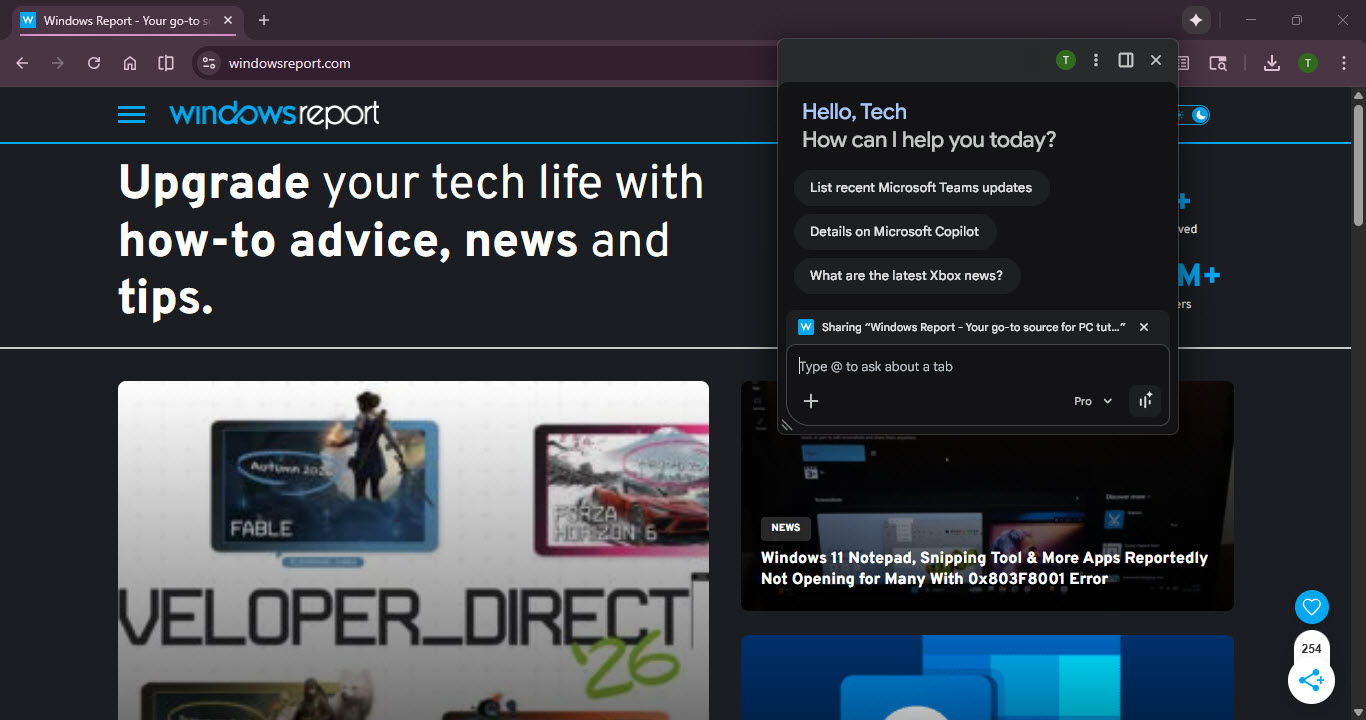
Chrome is testing a new startup option on Windows

Google is testing a new startup option in Chrome Canary. The feature lets users decide whether Chrome should open automatically when Windows starts

Until now, users who wanted Chrome to open at startup had to depend on Windows Startup apps, Task Manager, or custom shortcuts in the Startup folder. These methods work, but they live outside the browser. Many users miss them or configure them incorrectly.

The new setting under On startup brings this control into Chrome’s own settings. That makes it easier to find and manage.

Users can find the option in Settings under On startup as “Open Chrome when my computer starts.” The toggle stays turned off by default.
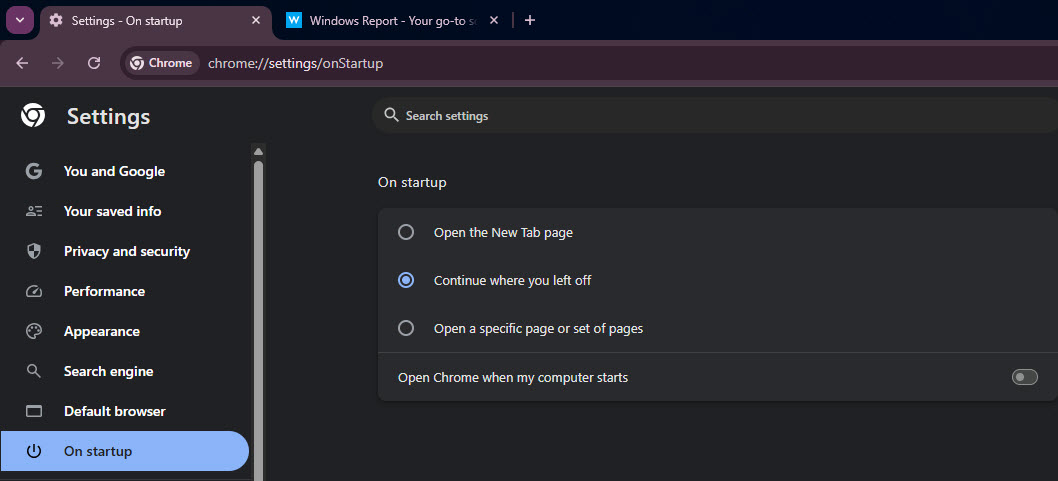
The new “Open Chrome when my computer starts” toggle under Settings in the On startup section in Chrome Canary. Image Credit: Venkat | WindowsReport.

When enabled, Chrome launches shortly after Windows login. It opens like a normal browser window instead of running quietly in the background.

During testing on Windows 11, Chrome restored the previous session when “Continue where you left off” was selected. Tabs and windows reopened just as they do after a regular browser restart.

Firefox already offers an optional setting that lets the browser open automatically when the computer starts. Users can find it under Settings in the General section as an auto-start option.

Chrome is now testing a similar one, though the feature is still limited to Canary and is currently under development. This behavior benefits users who work mainly in the browser and want Chrome ready as soon as they sign in.

Google is also testing a feature in Chrome that notifies users when the default browser changes on Windows 11. The new startup setting is another change targeted toward Windows.

YouTube Creators Sue Snap Over Alleged AI Training Using Their Videos

A new legal battle is taking shape over how AI companies source training data, and this time the spotlight falls on Snap.

According to TechCrunch, a group of YouTube content creators has filed a proposed class action lawsuit against Snap, accusing the company of using their videos without permission to train AI models.

Creators accuse Snap of unauthorized AI training

The plaintiffs collectively run three YouTube channels with a combined audience of around 6.2 million subscribers. They allege that Snap used their video content to develop AI-powered features, including the “Imagine Lens,” which allows users to edit images using text-based prompts.

The lawsuit was filed in the U.S. District Court for the Central District of California and claims that Snap trained its AI systems using the HD-VILA-100M dataset and other large video-language datasets. The complaint states that these datasets were intended strictly for academic and research use, not for commercial AI products.

Alleged violations and demands

The creators argue that Snap violated YouTube’s terms of service, bypassed technological protections, and exceeded licensing limits by repurposing the datasets for commercial AI development. They seek statutory damages and a permanent injunction that would prevent Snap from using their content for future AI training.

This case adds Snap to a growing list of tech companies already facing similar lawsuits over AI data practices, including Nvidia, Meta, and ByteDance.

The lawsuit reflects a broader wave of copyright disputes tied to AI training datasets, with dozens of cases already filed across the tech industry. At the same time, social media companies continue to face separate legal pressure over alleged negative impacts on mental health.

In related developments, YouTube recently experienced service issues, and TikTok also suffered a brief outage, underscoring ongoing operational and legal challenges across major social platforms.

Microsoft Expands Windows 365 Cloud PC Rentals to Brazil South

Microsoft continues to scale its cloud services globally, even as it deals with recent service hiccups. After resolving Azure Desktop Connections issues with an emergency update, the company now pushes Windows cloud PCs to more regions.

According to Neowin, Microsoft now lets users rent a full Windows PC in the cloud through Microsoft’s Windows 365, and the service has just expanded to a new geographic location.

Windows 365 cloud PCs arrive in Brazil South

Microsoft has expanded Windows 365 availability to the Brazil South region, opening subscriptions to more businesses and eligible users. While Brazil South previously worked as a limited exception for certain customers, Microsoft now enables general access for all eligible Windows 365 subscribers.

By launching Windows 365 in Brazil South, Microsoft aims to reduce latency and improve overall performance for users in the region. Local availability also helps organizations meet regional data and compliance requirements while delivering a smoother remote desktop experience.

Windows 365 provides Cloud PCs, which run as fully virtualized Windows machines hosted in Microsoft’s cloud. Users can stream these Cloud PCs to almost any device, including laptops, tablets, and low-power hardware, while keeping apps, settings, and files consistent across sessions.

The expansion highlights Microsoft’s broader strategy to make cloud-based Windows more accessible worldwide, especially for hybrid work environments.

In related news, Microsoft has also released an emergency fix for a zero-day exploit affecting Office, so users should update their software as soon as possible.

Intel Brings XeSS 3 Multi-Frame Generation to Arc GPUs

Intel is pushing forward with graphics features even as the industry braces for a potential NVIDIA GPU shortage, releasing a new Windows graphics driver with some notable additions.

As VideoCardz reports, Intel has started shipping XeSS 3 support with Multi-Frame Generation in its latest driver. This marks the first public rollout of the feature that Intel previously teased in connection with its upcoming Panther Lake platform.

XeSS 3 introduces multi-frame generation

Multi-Frame Generation builds on standard XeSS Frame Generation by inserting up to three AI-generated frames between two rendered frames. This increases the frame ratio from 1:1 to as high as 3:1, aiming to deliver smoother motion without raising the native rendering workload.

Intel ties the feature directly to its newest platforms. The launch driver targets Core Ultra Series 3 systems equipped with built-in Arc B390 and B370 graphics, signaling a focus on next-generation mobile and integrated GPUs.

Broad hardware support and availability

At the same time, the driver supports a wide range of existing hardware. This includes Arc A-series and Arc B-series discrete GPUs, along with multiple generations of Core Ultra processors that feature integrated Arc graphics.

Intel also confirmed that XeSS 3 remains compatible with existing XeSS 2 titles. Developers can enable the new generation of features without rebuilding their rendering pipelines from scratch.

Users may gain access to XeSS 3 and Multi-Frame Generation controls through Intel Graphics Software override options, depending on how each game exposes XeSS settings. Actual in-game support still depends on individual developer implementation, so availability will vary from title to title.

The update ships as Intel Arc Graphics driver version 32.0.101.8425 / 32.0.101.8362 (WHQL). Intel lists January 26, 2026 as the official posting date, confirming that XeSS 3 now arrives through standard public driver updates rather than internal previews.

In other industry news, NVIDIA is reportedly preparing ARM-based chips, while AMD has announced its upcoming Ryzen AI 400 series lineup.

NVIDIA GPU Shortage Fears Grow as ZOTAC Warns of Sharp Price Hikes

Hardware prices continue to climb, and the pressure is now spreading deeper into the graphics card market. After ASUS confirmed price increases and reports suggested higher costs for the Nintendo Switch 2 due to hardware shortages, attention has shifted to NVIDIA’s GPU ecosystem.

According to VideoCardz, ZOTAC Korea issued an official notice through its TagTag Mall account, warning that graphics card supply conditions are worsening rapidly. The company points to constrained memory availability and reduced GPU shipment volumes as the core issues driving the situation.

ZOTAC flags availability gaps and rising GPU prices

ZOTAC states that some graphics card models may not be available “for a while,” signaling short- to mid-term shortages across multiple product lines. The notice confirms significant price increases for both the RTX 5090 and the RTX 5060, showing that the impact extends beyond flagship GPUs into mid-range offerings.

Interestingly, ZOTAC does not mention the RTX 5070 Ti, despite earlier rumors suggesting it would face the most severe supply constraints due to allocation changes from NVIDIA.

To soften the blow for consumers, TagTag Mall temporarily reduced reward points to 0 percent in an effort to keep final retail prices as low as possible under current market conditions.

Memory shortages raise broader industry concerns

ZOTAC Korea describes the situation as serious enough to raise questions about whether GPU manufacturers and distributors can maintain stable operations. The company highlights ongoing memory supply shortages and announced reductions in GPU supply volumes as the main drivers behind the instability.

ZOTAC also warns that achieving a stable GPU supply in the future may prove difficult, especially for products not manufactured through Samsung’s production lines. The notice adds that recent wholesale pricing updates appear “unreasonable,” with particularly steep increases affecting both high-end and mid-range models.

The warning aligns with earlier reports of board partner price hikes and growing pricing pressure from both NVIDIA and AMD. The demand strain appears so severe that, in South Korea, thieves have reportedly begun targeting DDR5 RAM specifically, underscoring how tight the memory market has become.

If these trends continue, gamers and PC builders may face higher prices and limited availability across much of the GPU lineup in the months ahead.

Germany Sticks With Windows 10 as Extended Support Deadline Approaches

Windows 11 continues to face adoption resistance, with many users choosing not to upgrade. As planned, Microsoft is now moving Windows 10 into its Extended Security Updates phase beyond the original free support deadline, but users are still not upgrading.

Users still refuse Windows 11 as Windows 10 Extended Support nears its end

According to Windows Central, Windows 10 will receive extended support until October 13, 2026. This move gives consumers access to security updates and minor fixes after the original end-of-support date of October 14, 2025. Microsoft has already started this phase by releasing its first extended security update, KB5073724.

Because extended support now runs through late 2026, users do not need to upgrade immediately. After that date, however, Windows 10 will stop receiving security patches unless users arrange alternative support options.

Despite Microsoft’s continued push toward Windows 11, many users remain hesitant. Data shared by ESET shows that in Germany, 48 percent of home users still prefer Windows 10, narrowly trailing Windows 11 at 49.5 percent. This gap highlights how evenly split the user base remains, even years after Windows 11’s release.

This sustained preference suggests that many users feel satisfied with Windows 10 or worry about Windows 11’s hardware requirements, compatibility issues, or performance changes. For others, delaying the upgrade simply feels more practical.

At the same time, Windows 11 tells a different story in gaming circles. Steam data shows that more than 66.6 percent of users now run Windows 11, making it the dominant operating system among gamers and early adopters.

The continued use of Windows 10 after the end of free support reflects a broader global trend of slow migration. Despite Microsoft’s efforts to encourage upgrades, a large portion of the user base still sees little urgency to move on.

In related developments, Microsoft has also rolled out a second emergency update for Windows 11, along with an emergency fix addressing an Office zero-day exploit.

ARC Raiders Update Expands PvP and Progression With New Content Update

We got an update for ARC Raiders not that long ago, but now update 1.13.0 for ARC Raiders is now live as of January 27, 2026, introducing new PvP matchmaking options, a fresh progression system, and a broad set of fixes and polish improvements.

Solo vs squads matchmaking targets veteran players

The most notable addition is a Solo vs Squads matchmaking option for players level 40 and above. Those who opt in can challenge full squads alone and receive a 20% bonus XP, whether they extract successfully or get eliminated. The feature aims to reward high-risk playstyles while giving experienced Raiders a new way to test their skills.

Trophy display introduces long-term goals

Update 1.13.0 also adds a new long-term progression feature called the Trophy Display. Players can collect rare ARC parts from increasingly difficult enemy groups, with each milestone unlocking blueprints, Raider Tokens, emotes, a guitar cosmetic, and a substantial coin reward. The system gives long-term players clearer goals beyond individual raid success.

Buried City gets new environmental mechanics

The Buried City map now includes a new environmental condition centered around flocks of birds gathering near chimneys. These birds store shiny trinkets and enable new traversal mechanics through bird traps and added ziplines. The changes encourage more rooftop movement and expand vertical combat opportunities throughout the map.

New augments, quests, and social improvements

Two new Epic Augments and seven new quests arrive with this patch, offering more strategic variety and structured objectives during raids. Social features also see upgrades, including open party settings that let friends join more easily, improved squad invites, and better integration for players waiting in matchmaking queues.

Bug fixes improve combat, audio, and maps

The update fixes several achievement tracking issues so progress now registers correctly. ARC unit behavior has also improved, with enemies handling obstacles more reliably and behaving more consistently in combat.

Audio fixes restore missing emote voice lines and resolve multiple voice chat dropout and connection issues. Map-level fixes address collision bugs, stuck locations, and extraction exploits across Dam Battlegrounds, Buried City, Spaceport, and Stella Montis, alongside improved loot placement and ARC spawn behavior.

A wide range of general bug fixes and polish changes are included, such as crash fixes, smoother movement, UI improvements like better mouse smoothing and expanded gamepad rebinding, and other quality-of-life enhancements.

Developers also list several known issues, including a missing pop-up explaining Solo vs Squads availability and some cosmetics not appearing until after purchase. These are expected to be resolved in future patches.

Separately, ARC Raiders was recently cracked, with blueprints reportedly being sold outside the game. This development has raised concerns about in-game balance, and players are now waiting to see how the developers respond.

Microsoft Copilot to Soon Get M365 Graph Integration for Smarter, More Personal Answers

Microsoft continues to expand its AI push, and Copilot is getting another meaningful upgrade. After recent additions like Copilot personalities and upcoming image generation in PowerPoint, the company is now working on deeper integration that should make Copilot feel far more personal and useful.

According to the Microsoft 365 Roadmap and first spotted by WindowsReport, Microsoft Copilot has started using the M365 Graph to generate responses. This change allows Copilot to pull from a broader set of signals across Microsoft 365, which should result in more relevant, contextual, and personalized answers for users.

Copilot gets smarter with M365 Graph integration

By tapping into M365 Graph, Copilot can better understand a user’s work context, preferences, and recent activity across Microsoft 365 services. Instead of generic replies, Copilot can now tailor responses based on real usage patterns, making suggestions and summaries feel more aligned with how people actually work.

Microsoft is also improving transparency around personalization. Updated settings make it easier to see what Copilot remembers, review stored preferences, and manage Copilot memory directly, giving users clearer control over their AI experience.

The feature remains in development, but Microsoft plans to roll it out in March across desktop, mobile, and web platforms.

This is not the only Copilot-related change on the horizon. Microsoft 365 Copilot may soon add watermarks to AI-generated content, a move that would help clearly identify AI-created materials and address growing concerns around content authenticity.

Elsewhere, Microsoft recently pushed an emergency fix for an Office zero-day exploit and urged users to update immediately. The company also warned users to stay cautious when opening files from unknown sources, highlighting ongoing security risks alongside its rapid AI expansion.

Together, these updates show Microsoft pushing Copilot toward deeper personalization while tightening control, transparency, and security across its ecosystem.

Microsoft PowerPoint Is Getting Copilot AI Photo Editing

Microsoft Copilot continues to expand across Windows and Microsoft 365, and the next stop appears to be PowerPoint. After recent tests around Copilot personalities and AI content watermarks, Microsoft is now preparing an AI-powered photo editing feature built directly into its presentation app.

Copilot brings prompt-based photo editing to PowerPoint

According to the Microsoft Roadmap, first spotted by WindowsReport, PowerPoint will soon allow users to edit images using Copilot with a single text prompt. Until now, users typically switched to Copilot chat or external image editing apps to make visual changes. This update removes that extra step and keeps everything inside PowerPoint.

With the upcoming feature, users will be able to describe the edit they want in natural language and let Copilot handle the rest. Microsoft has not shared detailed examples yet, but the focus appears to be fast, in-context image adjustments without leaving a slide.

Microsoft plans to start rolling out the Copilot image editing feature globally in February. Access will be limited to Microsoft 365 subscribers, and availability may vary depending on region and tenant configuration during the initial rollout.

As with other Copilot features, Microsoft will likely expand capabilities over time once early feedback comes in.

The PowerPoint update arrives alongside broader Copilot experimentation, including customizable Copilot personalities and ongoing work on watermarking AI-generated content in Microsoft 365.

Separately, Microsoft recently released an emergency Office security fix addressing a zero-day exploit. While supported versions received the patch, some older Office releases may remain vulnerable, highlighting Microsoft’s push to keep users on actively supported software.

More details about Copilot updates and Office security changes are expected in the coming weeks as Microsoft continues refining its AI-first productivity strategy.

Xbox Rolls Out Console-Like Cloud Gaming Web Dashboard in Public Preview

Xbox has stayed firmly in the spotlight this week. Alongside rumors of a second Developer Direct later this year and criticism over low-effort achievements on its store, the company has now unveiled another notable update.

New Cloud Gaming web redesign is here

In a new blog post, Xbox announced the public preview of a redesigned Cloud Gaming web interface. The update brings the browser experience much closer to the look and feel of the Xbox console dashboard, replacing the older layout with a cleaner and more structured design.

The refreshed interface aims to feel instantly familiar to console players, with clearer navigation and a more visually consistent presentation. According to Xbox, the redesign supports Microsoft’s broader goal of building a unified, device-agnostic ecosystem where cloud gaming feels consistent across browsers and consoles.

Source: Xbox Wire

Players can already access the new interface through the public preview, although Xbox warns that bugs and rough edges remain. The company plans to continue refining the experience based on user feedback as testing progresses.

Early impressions suggest the new web UI marks a clear improvement over the previous version and could hint at wider changes across Xbox’s cross-device services in the future.

To try the redesigned interface, users need to enable Preview Features under Account settings. The update may take around 10 minutes to activate, and Xbox advises testers to expect occasional issues during this public preview phase.

In related news, Xbox recently hosted a Developer Direct showcase, so be sure to catch our full recap.

Via Windows Central

Microsoft Introduces GitHub Copilot Skill for Azure Static Web Apps Deployments

Microsoft continues to push customers toward Azure Monitoring ahead of planned legacy shutdowns, recently issuing Azure Monitor alerts to warn administrators of upcoming changes. At the same time, the company is rolling out new developer-focused tools designed to make Azure-based workflows easier and faster.

New GitHub Copilot Skill targets Azure Static Web Apps

As Neowin reports, Microsoft has released the Azure Static Web Apps Skill for GitHub Copilot. The new automation tool focuses on simplifying how developers deploy web projects to Azure Static Web Apps.

The skill allows developers to configure and deploy projects using simple natural language instructions directly inside GitHub Copilot, removing the need to manually run or remember complex command-line workflows.

The Azure Static Web Apps Skill is built as an Agent Skill, a modular and self-contained package that teaches Copilot how to execute a specific development workflow. Each skill lives in a simple folder structure and includes a SKILL.md file that defines instructions and logic for the agent.

Because Agent Skills rely on an open standard, they are not limited to GitHub Copilot alone and can also work with other compatible AI agents. Copilot automatically detects when a relevant skill should apply based on the user’s prompt, so developers do not need to manually enable or configure anything.

Once triggered, the Azure Static Web Apps Skill determines which tools to use for the task, selecting between the Static Web Apps CLI and the main Azure CLI as needed. It also handles key configuration steps, such as generating and configuring the staticwebapp.config.json file, setting the correct build output path, and avoiding common deployment errors.

Developers can start the entire process with a single prompt, after which Copilot guides the workflow by installing required tools, initializing the project, and deploying it to Azure.

The skill is publicly available on GitHub, making it easy for developers to review, adopt, and integrate into existing projects. Its release comes as Microsoft continues to experiment with multiple AI coding tools internally, including the adoption of Claude Code alongside Copilot.

Taken together, the new Azure Static Web Apps Skill and ongoing Azure Monitoring changes highlight Microsoft’s broader strategy of combining AI-driven automation with tighter control over its cloud platform as it prepares for upcoming service shutdowns and transitions.

Meta Plans Paid Subscriptions for Instagram, Facebook, and WhatsApp

Meta is continuing its internal restructuring following recent Reality Labs layoffs, and the company is now turning its attention to new revenue streams across its major social platforms.

As advertising growth faces pressure and costs remain under scrutiny, Meta is increasingly looking beyond ads to diversify how it monetizes its massive user base.

Paid tiers planned for Instagram, Facebook, and WhatsApp

According to TechCrunch, Meta plans to begin testing premium subscription offerings on Instagram, Facebook, and WhatsApp in the coming months.

The subscriptions will unlock exclusive features, productivity tools, and expanded AI-powered capabilities, while the core versions of each app will remain free for all users.

Meta does not plan to introduce a single bundled subscription. Instead, the company will test different subscription models and pricing structures for each app, with distinct feature sets designed around how users interact with Instagram, Facebook, and WhatsApp.

This approach allows Meta to tailor paid features more closely to each platform rather than forcing a one-size-fits-all plan.

AI sits at the center of Meta’s subscription strategy. The company plans to integrate Manus, the AI agent it acquired for around $2 billion, directly into its premium offerings. At the same time, Meta will continue selling standalone Manus subscriptions to business customers.

Meta is also considering charging for advanced AI tools such as Vibes video generation. This would mark a shift from a previously free model to a freemium approach, where subscribers gain higher usage limits and expanded capabilities.

Early details on Instagram’s premium features

Early reports suggest that Instagram’s paid tier could include the ability to create unlimited audience lists, see which followers do not follow back, and view Stories without notifying the poster.

Meta has not yet shared specific details about what premium features might be offered on Facebook or WhatsApp, though more information is expected as internal testing progresses.

The upcoming subscriptions will be developed separately from Meta Verified. However, Meta plans to apply insights gained from the verified program when shaping its broader subscription strategy across platforms.

Alongside monetization efforts, Meta continues to work on new parental control features for WhatsApp and remains involved in an ongoing court case examining the impact of social media platforms on youth mental health.

Taken together, these moves highlight a broader shift in Meta’s business strategy, as the company looks to balance cost-cutting measures with new paid offerings to support long-term growth.

Microsoft Confirms Active Office Zero-Day Exploit, Deploys Emergency Fix

Microsoft just cannot catch a break. After releasing a second emergency update, KB5078127, to address escalating Outlook issues, the company has now pushed another urgent security update to deal with an actively exploited Office vulnerability.

Office zero-day already exploited in the wild

According to Neowin, Microsoft has released an out-of-band security update for a serious Office zero-day flaw already used in real-world attacks. Microsoft tracks the vulnerability as CVE-2026-21509 and classifies it as a security feature bypass issue in Microsoft Office.

The flaw affects several Office versions, including Microsoft Office 2016, Office 2019, Office LTSC 2021 and 2024, and Microsoft 365 Apps for Enterprise. Attackers exploit the issue by supplying untrusted input into a vulnerable security decision process, which allows them to bypass Office’s built-in security protections.

To carry out the attack, threat actors only need to convince a victim to open a malicious Office document. The exploit does not require elevated privileges, which makes phishing and targeted email attacks particularly effective.

Microsoft has already addressed the issue for Microsoft 365 Apps and Office LTSC 2021 and 2024 through a server-side update. Users may need to restart their Office applications to ensure the fix applies correctly. However, older MSI-based versions, such as Office 2016 and Office 2019, have not yet received patches. Microsoft says updates for those versions will arrive as soon as possible.

Because attackers actively exploit this zero-day vulnerability, Microsoft strongly recommends installing available updates immediately and avoiding Office files from untrusted sources. For systems that cannot yet receive a patch, Microsoft has published an official workaround to help reduce the risk of exploitation.

This latest emergency update adds to a growing list of recent issues for Microsoft. Microsoft 365 experienced a service outage recently, and the company also confirmed that it shared BitLocker recovery keys with authorities for the first time as part of an ongoing investigation.

Highguard Is Out Now, Blending PvP Raids, Base Sieges, and Fantasy Combat

After a quiet reveal, Highguard has officially launched, and new details now show what players can expect from the ambitious free-to-play shooter.

Developed by Wildlight Entertainment, a newly formed studio made up of veterans from Apex Legends, Titanfall, and Call of Duty, Highguard aims to stand out in a crowded multiplayer space. According to Xbox Wire, the game combines elements of MOBAs, survival shooters, and capture-the-flag into a competitive PvP raid experience.

The game features two teams of three players facing off in matches where the main objective is simple: destroy the enemy base before they destroy yours. Highguard embraces a fantasy-themed setting, blending spells, firearms, and mount-based combat with creatures such as bears, horses, panthers, and gryphons.

Highguard game brings base building, raids, and escalating matches

Each match begins with both teams fortifying their base. Players vote on one of six base types available at launch, with each option offering specific strengths and weaknesses. Once the match starts, players head into the map to gather crystals, which they can use to upgrade their weapons, gear, and abilities.

A special mid-match event introduces the Shieldbreaker sword. When it appears, teams can capture it and deliver it to the enemy base to trigger a raid phase. This causes a siege tower to spawn, cracking the base shield and acting as a forward respawn point for attackers. During the raid, players breach walls, plant bombs on three key objectives, and defend them until detonation, in a setup similar to classic bomb-defusal modes.

If attackers destroy the main core, the base falls instantly and the match ends. If the base survives, the match resets into a new phase with increased power levels and stronger gear on both sides. Most matches last between 10 and 30 minutes, depending on how quickly teams can execute successful raids.

Weapons, Wardens, and post-launch plans

Highguard launches with 10 weapons, two weapon slots per player, and additional raid tools such as a rocket launcher, explosive sledgehammer, and zipline gun. The game also includes eight playable Wardens at launch, with one Warden allowed per team and no duplicates. Each Warden features a passive ability, a tactical ability with a cooldown, and a charge-based ultimate ability.

Wildlight Entertainment has already confirmed ongoing support, with plans to release new content every month. Ranked mode is coming soon, alongside additional modes, including a mount racing mode. All future gameplay content will remain free, with monetization limited strictly to cosmetic items.

Highguard is available now on PC, PlayStation 5, and Xbox Series X|S, making it easy for players to jump in and try the game at no cost.

In other gaming news, Code Vein 2 is now available for early access, while Final Fantasy 7 Remake continues to gain momentum on Nintendo Switch 2.

Code Vein 2 Release Date Set, Launch Coming Soon

The past few days have felt busy for the gaming world, with Highguard launching and more releases lining up. Another notable title is close behind, as Code Vein 2 moves toward its full launch later this month.

Code Vein 2 Early Access has begun

According to Xbox Wire, Code Vein II targets fans of action-heavy RPGs, expanding on the original’s combat systems and narrative scope. Players step into the role of a Revenant Hunter, wielding a mysterious Jail artifact embedded in their back, while traveling into the past in an attempt to prevent the world’s collapse in the present.

A major focus of the sequel sits on its partner system. Each partner brings distinct abilities that influence combat, including direct support, stat boosts, special skills, and resource regeneration. Players can fight alongside a summoned partner who attacks independently, or choose an assimilation approach that merges the partner with the player character, unlocking enhanced stats, powers, and abilities for a more aggressive playstyle.

Combat depth also comes from the Link Points system, which represents the bond between the player and their partner. A stronger bond unlocks additional traits and stat bonuses, while taking damage reduces Link Points and weakens those benefits. Only three partners have been revealed so far, but the system already adds a layer of risk and decision-making to encounters.

Partners can revive the player when HP drops to zero, but this safety net comes with clear limits. Each revival temporarily incapacitates the partner, increases the cooldown for future saves, and restores less health every time. The mechanic encourages players to learn enemy patterns and master combat rather than rely on repeated revivals.

Code Vein 2 release date is sooner than you think

Code Vein 2 is currently available in early access for Deluxe, Ultimate, and Collector’s Edition owners. The full release arrives on January 30, 2026, for Xbox Series X|S, PlayStation 5, and PC.

In other gaming news, Final Fantasy VII Remake sales have surged on Nintendo Switch 2, while PlayStation fans continue to look ahead to the upcoming Fable.

Chrome Wants Websites to Label AI vs. Human Content

Google’s Chrome team has filed a new proposal for AI content disclosure on the web, which would let websites clearly state which parts of a page were written by humans and which were created with AI.

Put simply, publishers would be able to tag individual sections of a web page with labels such as human-written, AI-assisted, or AI-generated. This works at the paragraph level, not just for the whole page.

Why Chrome is proposing AI content disclosure

Many pages already mix both types of content. A news article may be written by a reporter, while a summary box or FAQ section is produced with AI. Right now, there is no shared method to disclose this in a way that browsers, search engines, or accessibility tools can understand consistently.

The proposal introduces a new HTML attribute called “ai-disclosure”. Website owners would use it to describe how specific content was created. Optional fields also allow publishers to add extra context, such as the AI model used or the company behind it.

Regulation is driving this push. The EU AI Act will require machine-readable labels for AI-generated content from August 2026. Without a shared standard, publishers would resort to custom labels that platforms and tools cannot reliably interpret.

The entry was added to Chrome Platform Status on January 26 and links to an independent explainer document. It does not include a rollout timeline, a Chrome experiment, or confirmation that the feature will ship.

For now, this is an early proposal rather than a confirmed Chrome feature. Other browsers have not shared public support.

That’s not all. Google has started making Gemini in Chrome available to some users in India and Chrome Canary now makes it easier to ask AI about webpages.

[UPDATE: YouTube’s Response] Is YouTube Down or Another Ad Blocker Crackdown? Users Report Widespread “Content Isn’t Available” Error

[UPDATE | 04:23 AM IST, January 27, 2026] In a response to a post on X, which reports similar error we talked below, YouTube has officially responded, “Hi there! Have you tried clearing your cache & cookies? Also, logging out & signing back in might fix the issue. Let us know how it goes.” If you are also getting similar error, make sure to try the aforementioned, and let us know in the comments below.


[ORIGINAL STORY] If you are trying to watch videos on YouTube, but consistently getting “this content isn’t available, try again” error, you’re not alone. Folks over at Neowin first reported this issue, however, when digging up r/YouTube subreddit, Windows Report found out that the issue could be linked to ad blockers.

Some users confirmed that disabling ad blockers fixed the “this content isn’t available, try again” error

In a Reddit post, a user claims that YouTube refuses to open any videos. Apparently, the issue plagued the YouTube’s mobile website for the user. However, a quick look at the comments under the post confirms that users on PC are also affected by this issue.

Although Google hasn’t confirmed or denied the issue, the real reason behind the “this content isn’t available, try again later” error could be ad blockers. Some users have confirmed that after deactivating ad blockers, YouTube videos streamed normally.

Image credit: Reddit/u/GodlyCree

Those not using ad blockers or VPNs are also facing similar issue

That said, some YouTube users, including “Premium” subscribers, claim that they are facing similar issue even though they don’t have any ad blockers or VPNs enabled. For example, one Reddit user (u/GodlyCree) claims that videos fail to load upon the initial click. However, when the page is refreshed or navigated back and then forwarded again, the video reportedly opens normally. It’s unclear why it is happening. However, the claims I talked about earlier in this article gives a hint that this could be related to ad blockers.

YouTube has long been cracking down on ad blockers, so it could be one of those tactics from the company. But, the question here is: why is it happening for YouTube Premium users?

This is a developing story, we’ll update it as soon as we hear anything from the company.…

Microsoft Officially Enters the AI Chip Race With the Launch of Maia 200

Microsoft has kicked off 2026 with the official launch of the Maia 200 AI chip. That’s the new in-house silicon built for large-scale AI deployments. In the announcement post, the company says the chip is designed to push performance per dollar, especially for newer models that make heavy use of low-precision compute.

Maia 200 is built on TSMC’s 3nm process, and delivers top-notch performance

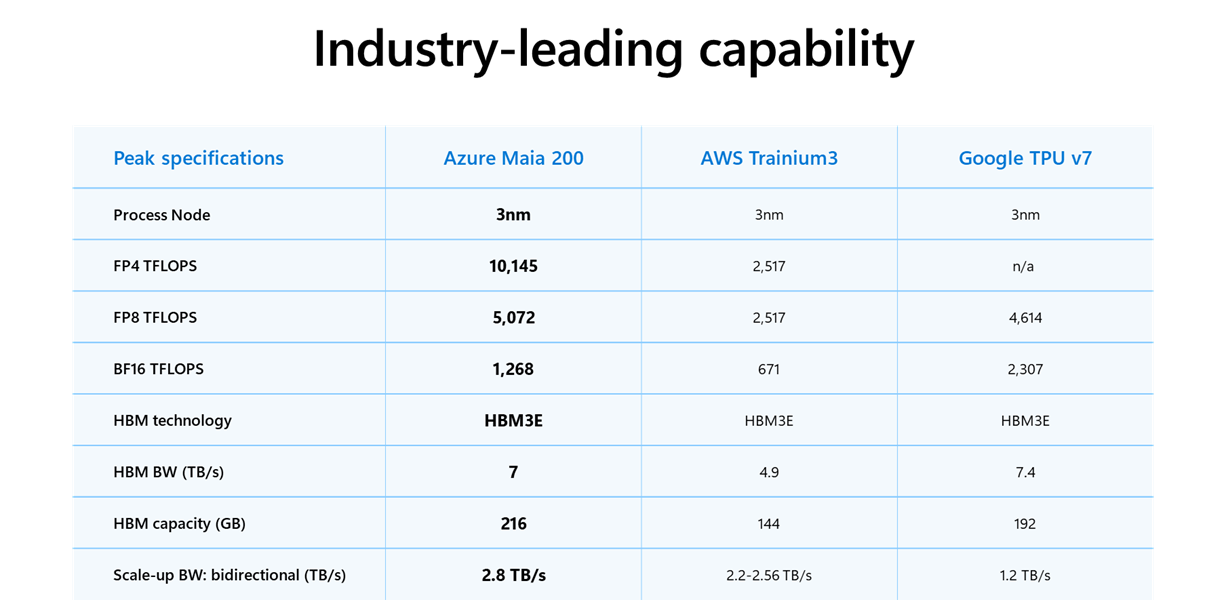
Microsoft’s Maia 200 AI chip is built on TSMC’s 3nm process and packs over 140 billion transistors. It is designed specifically for low-precision compute. Microsoft claims the chip can offer more than 10 petaFLOPS of FP4 performance. That’s not all; it also delivers over 5 petaFLOPS at FP8, all within a 750W power envelope.

Image credit: Microsoft

To address memory demands, Maia 200 comes with 216GB of HBM3e memory, which offers up to 7 TB/s of bandwidth. That comes with 272MB of on-chip SRAM and custom data movement engines. The company further notes that this memory setup is designed to keep performance consistent even as models grow larger and more complex.

Ethernet-based scaling at cloud scale

As far as system is concerned, Maia 200 uses a two-tier scale-up network built on standard Ethernet rather than proprietary fabrics. Each chip exposes 2.8 TB/s of bidirectional bandwidth, which supports predictable performance across clusters of up to 6,144 chips. Nit to forget, Microsoft has used four Maia chips inside a single tray, which are connected directly using non-switched links. This keeps communication local, while helping reduce power use and overall costs.

Image credit: Microsoft

The AI chip is built for for Azure from day one

Maia 200 is already live in Microsoft’s US Central datacenter region, with more regions planned. The AI chip has been integrated directly with Azure’s control plane,which allows for security, telemetry, diagnostics, and management at both the chip and rack levels.

Image credit: Microsoft

Last but not least, Microsoft is also previewing the Maia SDK, which includes PyTorch support, a Triton compiler, optimized kernels, and low-level programming tools for developers who want extra control. Just in case you are looking for some extra information, feel free to check here.

Fable Explodes on PlayStation as Trailer Hits One Million Views

During Developer Direct 2026, Microsoft showcased the new Fable and confirmed that the long-awaited reboot will launch on PlayStation alongside Xbox.

According to Push Square, PlayStation fans have responded with overwhelming enthusiasm. The teaser trailer uploaded to the official PlayStation YouTube channel has already surpassed one million views.

A million views later, PlayStation players are clearly ready to visit Albion

The trailer has gathered more than 26,000 likes and currently shows over twice the views of the same video on the Xbox YouTube channel. That difference partly reflects audience size, as PlayStation’s channel has roughly three times more subscribers than Xbox’s.

Even so, the numbers highlight genuine excitement. This marks the first time a Fable game will arrive on a PlayStation console, ending the franchise’s long-standing Xbox exclusivity and opening the door to a much broader audience.

The reboot comes from Playground Games, which aims to modernize Albion with updated visuals, refined combat, and the series’ trademark humor. Cross-platform availability also signals Microsoft’s continued shift toward releasing first-party titles beyond its own hardware ecosystem.

As for timing, Microsoft expects Fable to launch on PlayStation 5 this autumn. In related news, fresh industry chatter suggests that Xbox may prepare a second Developer Direct showcase later this year, potentially bringing more announcements to both Xbox and PlayStation audiences.

Final Fantasy 7 Remake Switch 2 Sales Explode as Retailers Run Out of Stock

It was revealed not long ago that Final Fantasy 7 Remake would land on Nintendo Switch 2, and now the game’s early sales paint a very clear picture. With the title officially out, initial reports suggest a strong commercial start for Square Enix’s flagship remake.

According to The Gamer, Final Fantasy 7 Remake Intergrade on Switch 2 is already selling extremely well, based on early availability data and player reports.

Final Fantasy 7 Remake for Switch 2 is selling out

Shortly after launch, users on X began reporting that physical copies of the game had sold out at several major retailers, including Target, GameStop, and Best Buy.

Fans and collectors continue to report limited or nonexistent stock in stores, suggesting demand quickly outpaced initial supply. This kind of sell-through usually points to strong preorder numbers combined with high day-one interest.

Beyond physical sales, the game appears to be performing well digitally. Early placements on the Nintendo eShop indicate high player interest, and strong digital sales could push Final Fantasy 7 Remake into the list of top-selling Switch 2 titles shortly after launch.

While Nintendo and Square Enix have not released official sales figures yet, the combination of sold-out physical editions and visible digital momentum tells a convincing story.

That’s not the end of Final Fantasy news. Insiders still claim that Final Fantasy 7 Rebirth remains on track for an Xbox release in the future. Meanwhile, Switch 2 owners may not have to wait long for more Square Enix content, as Kingdom Hearts Integrum Masterpiece is also expected to arrive on the platform soon.

If this early performance holds, Final Fantasy VII Remake could become one of the Switch 2’s most important third-party launches to date.

Landmark Trial Targets TikTok, Meta, and YouTube Over Alleged Youth Mental Health Harm

After recent turbulence across social media platforms, including TikTok’s service outage following its US ownership shift, attention is now turning to a legal battle with far wider implications.

As reported by Reuters, a high-profile social media addiction trial is set to begin in Los Angeles County Superior Court. The case marks the first time major platforms must defend themselves in court over claims that their products contribute to a youth mental health crisis.

Social networks on trial over alleged mental health harm

The plaintiff is a 19-year-old California woman who says she became addicted to social media at a young age due to attention-driven design choices used by Meta, TikTok, and YouTube.

She alleges that prolonged use fueled depression and a broader decline in her mental health, and she is seeking to hold the companies legally responsible for that harm.

This lawsuit is considered a bellwether, with multiple similar cases expected to reach trial throughout 2026.

The jury will determine whether the companies acted negligently and whether social media use was a substantial factor in the plaintiff’s mental health issues, as opposed to other influences such as the specific content viewed or offline life circumstances.

Mark Zuckerberg is expected to testify during the proceedings. Evan Spiegel had also been expected to appear, but Snap settled its portion of the lawsuit on January 20.

YouTube plans to argue that its platform differs meaningfully from short-form, algorithm-driven services like Instagram and TikTok. TikTok has declined to comment on its legal strategy.

Safety campaigns under scrutiny

As legal pressure increases, tech companies have ramped up public messaging around youth safety. Meta continues to expand parental control tools across platforms such as WhatsApp, while Snapchat has rolled out updates to its Family Center with additional parental supervision features.

Advocacy groups argue that companies are aggressively shaping public opinion while these cases move through the courts, leaving parents with conflicting signals about platform safety.

Critics warn that corporate influence, unclear accountability, and competing safety claims may obscure potential long-term harm to children and teenagers, just as the issue shifts from public debate into formal legal scrutiny.

Xbox Under Fire as Low-Effort Achievement Games Flood the Store

We recently saw Developer Direct showcase several high-quality upcoming games, but a growing problem continues to shadow the Xbox platform. Despite strong first-party announcements, Xbox struggles with a surge of low-effort titles designed primarily to farm achievements.

As Windows Central reports, new data from TrueAchievements reveals that nearly 40 percent of all Xbox games released in 2025 qualify as so-called “Gamerscore spam” or shovelware. Developers design these titles to deliver easy achievements rather than meaningful gameplay.

Shovelware releases spike dramatically in 2025

Out of roughly 2,200 games released on Xbox last year, about 880 fell into the shovelware category. That marks a 204 percent increase compared to 2024, when analysts identified around 290 similar titles.

This wave of low-effort games injected millions of Gamerscore points into the Xbox ecosystem. According to the report, shovelware alone accounted for more than 21,600 achievements and over two million Gamerscore points, heavily skewing achievement totals across the platform.

Achievement value and discovery concerns grow

Critics argue that the explosion of easy-achievement games cheapens the value of Gamerscore and undermines players who pursue achievements through skill or long-term commitment. Storefront discovery also suffers, as genuine indie and premium titles struggle to stand out among hundreds of near-identical releases.

The situation has reignited broader concerns around moderation, quality control, and long-term trust in digital storefronts tied to achievement systems.

In contrast, Sony has already taken action on similar issues. The company previously removed large numbers of shovelware titles from the PlayStation Store, signaling a more aggressive approach to maintaining storefront quality.

Whether Xbox plans to follow a similar path remains unclear, but the growing volume of shovelware continues to fuel debate within the gaming community.

Meanwhile, Microsoft may be preparing a second Xbox Developer Direct later this year. On the PlayStation side, recent leaks suggest that Undisputed could join PlayStation Plus in February 2026, adding another major title to Sony’s subscription lineup.

Xbox Rumored to Be Planning a Second Developer Direct in 2026

Recently, we covered Developer Direct 2026, but it seems Microsoft might not be done with showcases just yet.

According to PureXbox, Xbox may be planning a second Developer Direct event in 2026. The information comes from insider speculation and ongoing industry chatter, rather than any official announcement.

Rumors point to another Xbox showcase later this year

Sources suggest that a second Developer Direct could follow the one held earlier in the year, opening the door for additional game reveals, progress updates, and new announcements. While details remain unclear, the rumored showcase could feature a mix of first-party projects, third-party partnerships, and updates from Xbox Game Studios.

There’s currently no confirmed date, but speculation places the potential event sometime later in 2026, possibly during late spring or summer. Microsoft and Xbox have not commented on the reports, so the information should be treated strictly as rumor.

Developer Direct 2026 already delivered major announcements

The first Developer Direct of 2026 showcased several notable titles, including Forza Horizon 6 and the new Fable.

The event also introduced Beast of Reincarnation, while players looking for a more relaxed experience got a look at Kiln.

If a second Developer Direct does happen, it could signal that Xbox still has more announcements lined up for 2026. Until Microsoft makes anything official, though, these reports remain speculation rather than confirmed plans.

TikTok Users Worldwide Hit by Major Outage Days After U.S. Takeover

If you missed it, TikTok is now majority owned by U.S. companies, but the transition appears to have come with turbulence. Over the weekend, users around the world began reporting major service disruptions that affected core features of the platform.

TikTok users report widespread service disruptions

According to The Verge, the issues surfaced early Sunday morning and quickly spread across regions. Many users said they couldn’t upload videos at all, while others saw their clips stuck “under review” for hours or never published.

Upload failures, login problems, and broken FYP feeds

Beyond upload issues, users also reported trouble logging into their accounts. Others noticed that the For You Page algorithm stopped refreshing properly, showing repetitive or outdated content. Comment sections failed to load for some users, further adding to frustration.

Outage tracking services showed a sharp spike in reports early Sunday. While service appeared to improve later in the day, some users said problems lingered into Monday, suggesting the disruption was not fully resolved.

The timing of the outage quickly drew attention, as it followed closely after TikTok’s U.S. ownership transition. This led to speculation about backend changes or infrastructure adjustments causing instability.

Some users also raised concerns about political content suppression or censorship. However, reports of identical issues outside the United States point toward a broader technical problem rather than region-specific moderation changes.

Despite the scale of the disruption, TikTok has not issued an official statement acknowledging the outage or explaining what went wrong.

In related developments, Google Photos is testing a TikTok-style vertical video feed, while Microsoft recently confirmed it provided BitLocker recovery keys to authorities during an ongoing investigation.

Microsoft Releases New Windows Terminal Builds With Stability Improvements

Microsoft has been actively improving its command-line tools, recently releasing WinApp CLI for developers. Alongside that update, the company has also pushed a quieter update for Windows Terminal, delivering new Preview and Stable builds focused on fixes and stability rather than major new features.

Two Windows Terminal versions released

As reported by Neowin, Microsoft has released updated versions of Windows Terminal for both the Preview and Stable channels. The changes are described as modest, with the upcoming Windows Terminal 1.25 update expected to continue refining performance, reliability, and overall polish.

Windows Terminal Preview 1.24.10212.0 changes

The latest Preview build introduces several under-the-hood improvements and bug fixes:

  • Removed the unnecessary TerminalAzBridge executable
  • Caption buttons now dim correctly when the window is out of focus
  • Restored compatibility with Chinese and Japanese IMEs
  • Improved UI thread safety to prevent memory-related crashes
  • Fixed a threading error dialog when loading settings
  • Resolved hangs when pasting large amounts of text with paste warnings enabled
  • Terminal process now exits correctly when the last window fails to close
  • Added a speculative fix for an XAML focus-related crash
  • Fixed an issue where acrylic effects overrode the tab row background color

Windows Terminal Stable version 1.23.20211.0 updates

The new Stable release focuses on targeted fixes and standards support:

  • Added support for DECSET 2026 Synchronized Output
  • Fixed a crash caused by a stray Microsoft.UI.Xaml.dll appearing in the system PATH
  • Improved localization for Cut, Copy, and Paste menu options in the settings UI

Windows Terminal Preview and Stable builds are available through GitHub and the Microsoft Store.

This Windows Terminal update arrives as Microsoft continues addressing broader Windows issues. The company recently released a second emergency update to fix Outlook problems, while reports persist of the KB5074109 update causing boot failures on some Windows systems.

Undisputed Reportedly Coming to PlayStation Plus Essential in February 2026

Sony just wrapped a strong month for PlayStation Plus Extra, but early leaks already point to what Essential subscribers may get next.

According to VideoGameChronicle, the main free PlayStation Plus Essential game for February 2026 leaked ahead of the official announcement.

Undisputed leaked as February’s flagship PS Plus game

The leak comes from billbil-kun, a well-known insider with a long track record of accurate PlayStation Plus reveals.

He claims that the headline Essential title for February 2026 will be Undisputed, a licensed boxing game that arrived on consoles in October 2024. The title stands out thanks to its official licenses and a roster of more than 70 real-world fighters from boxing’s past and present.

So far, no details have surfaced about the other two Essential games expected to join the lineup. The leaker suggests those additional titles will be smaller in scope compared to Undisputed.

If the leak proves accurate, subscribers should be able to claim the February Essential games between February 3 and March 3, 2026.

Meanwhile, Sony continues to face complaints from Premium subscribers, with multiple reports pointing to ongoing problems with PlayStation 3 game streaming. Sony has not shared an official fix yet.

If you play on Xbox, you may also want to check out our recap of Developer Direct 2026, which showcased several upcoming first-party titles.

Microsoft Tests Copilot Personality Selector to Let Users Choose AI Response Styles

Microsoft has been working nonstop on Copilot, recently rolling out the Real Talk feature to make conversations feel more natural. Now, the company is quietly testing another personalization upgrade that could change how users interact with its AI assistant.

Copilot finally gets a personality selector

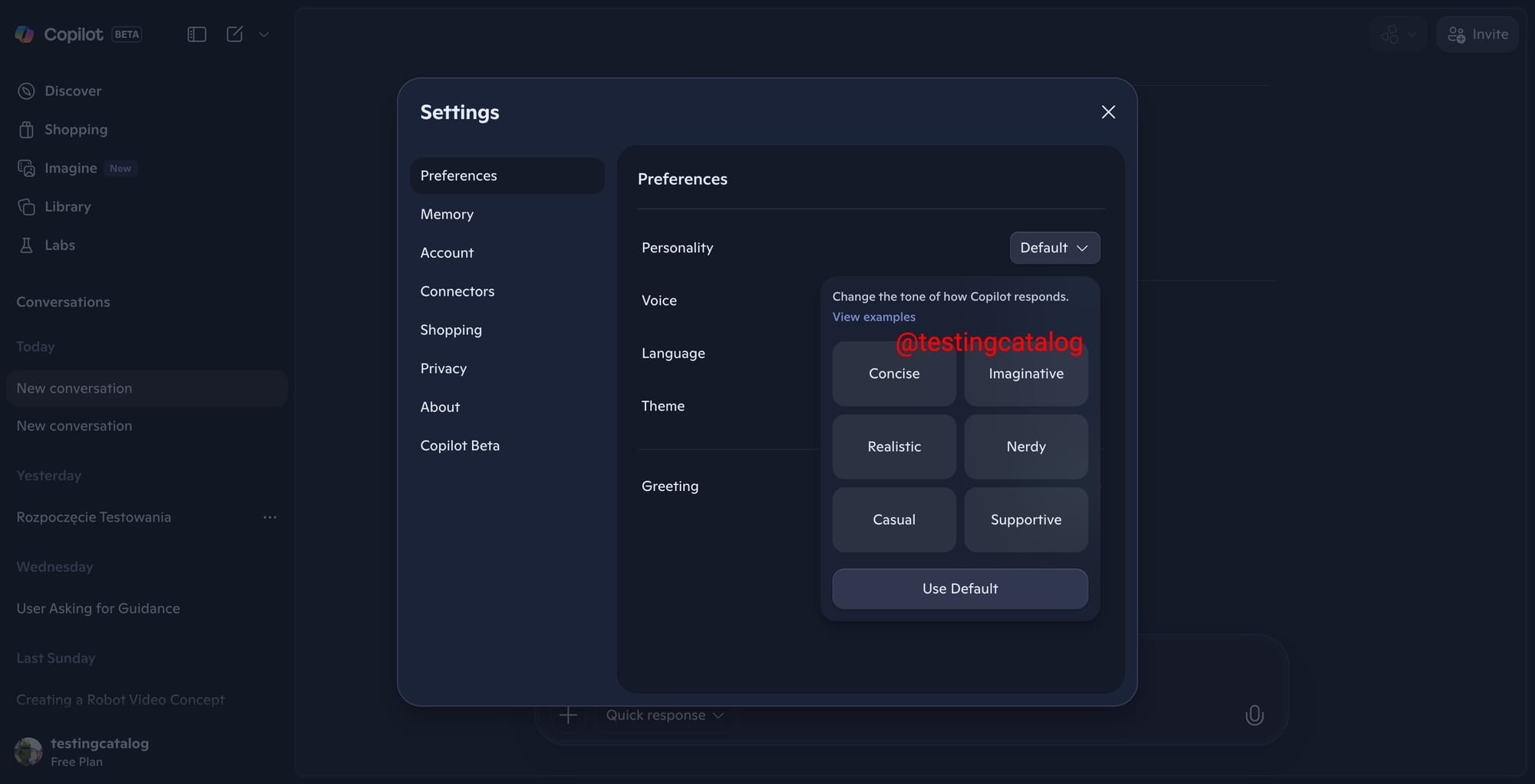
As Testing Catalog reports, Microsoft has started rolling out a new personality selector inside Copilot. The feature allows users to choose between different response styles, giving them more control over how Copilot communicates.

Source: Testing Catalog

The selector appears as part of a broader experiment called Personality Studio, which shows up directly in the Copilot chat interface. At launch, the options remain limited, and most users can only access the default or concise response style.

Microsoft is taking a cautious, phased approach with this rollout. The company plans to expand the available personalities over time as it gathers feedback and refines the experience.

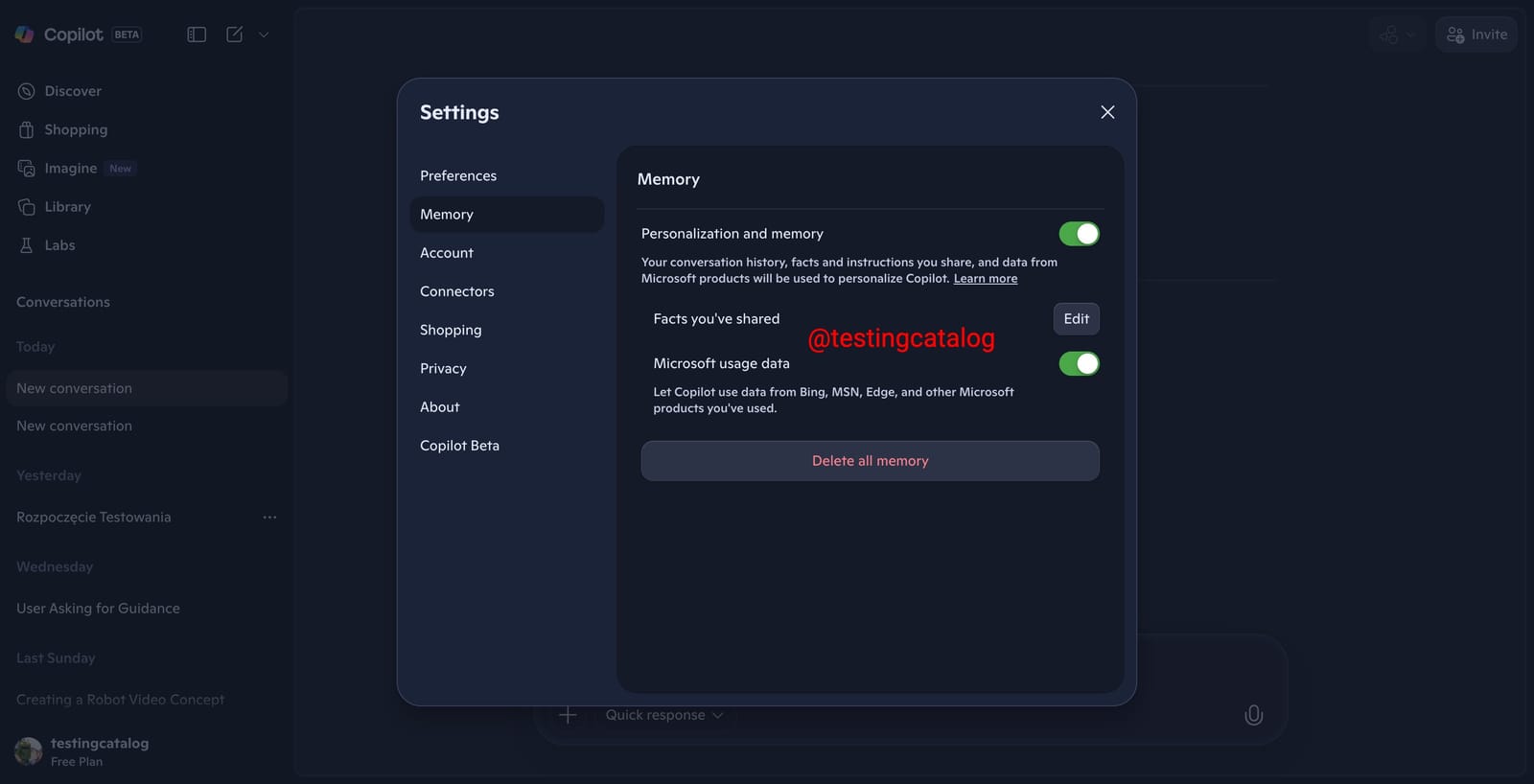
The personality selector sits alongside new memory management controls, which Microsoft has integrated into the same preferences area. These tools let users manage how Copilot remembers context, preferences, and session-related details, reinforcing Microsoft’s push toward deeper personalization.

Source: Testing Catalog

Work also continues on other Copilot enhancements. Current tests hint at a dedicated reminders category and possible video generation support in future updates, although Microsoft has not confirmed timelines.

Many users see this feature as long overdue, since response tone plays a major role in how helpful an AI assistant feels. At the same time, Microsoft continues to experiment beyond Copilot.

The company recently acknowledged that it has started adopting Claude Code alongside Copilot during development, signaling a multi-tool AI strategy rather than reliance on a single assistant.

Elsewhere in the AI space, ChatGPT has also introduced improvements. Its Temporary mode can now use personalization settings and memories, showing that major AI platforms are racing toward more customized user experiences.

Microsoft Rolls Out Custom Consults and Transfers for Dynamics 365 Contact Center

Microsoft issued an Azure Monitor alert earlier today, but the company also rolled out a notable upgrade across its business services portfolio.

According to the Microsoft 365 Admin Center, Microsoft has announced the general availability of customizable consults and transfers for Dynamics 365 Contact Center, with the rollout starting today.

Customizable consults arrive at Dynamics 365 Contact Center

The new capability gives administrators far more precise control over how live customer interactions move between agents and service queues. During an active session, admins can now decide whether a consultation or transfer goes to a specific queue or directly to an individual representative, helping route requests to the most appropriate support resource.

All configuration takes place in the Copilot Service admin center, where admins can define detailed routing logic. Microsoft says the system relies on FetchXML queries to filter eligible recipients, apply custom business rules, and surface only the most relevant queues or representatives during consults and transfers.

For agents, Microsoft says the update simplifies daily workflows. The interface surfaces only relevant contacts, reduces clutter during live sessions, and enables faster collaboration when consultations or escalations are required. The company also expects less manual searching and more accurate escalation handling.

From an organizational perspective, Microsoft positions the feature as a way to prevent misrouted calls and support tiered service models more effectively. By tightening routing logic, companies can improve resource utilization and ensure customer issues reach the right teams faster.

Deployment has already started, and adoption remains optional. Existing workflows continue to function without disruption, and organizations that want the new functionality must enable and configure it manually in the Copilot Service admin center.

This rollout arrives alongside several other Microsoft service changes. Microsoft Planner recently received a major redesign, and Microsoft also confirmed it handed over BitLocker recovery keys in a recent investigation, a move that has raised renewed privacy concerns.

Via Neowin

Azure Monitor Alert: Microsoft Halts Legacy Agent Data Uploads Ahead of March Shutdown

Microsoft continues its push toward Azure Monitor Agent adoption, and the company is now entering the final phase before retiring legacy monitoring infrastructure.

According to Neowin, Microsoft will pause all data uploads for legacy Log Analytics agents in Azure Monitor for 12 hours on January 26, 2026.

Azure Monitor legacy agent uploads paused for 12 hours

The pause will run from 12:00 AM to 12:00 PM PT and serves as a validation test ahead of the permanent shutdown of legacy backend services.

Microsoft confirmed that any data cached during this 12-hour window will be permanently lost. Once uploads resume, users will not be able to recover missing telemetry.

Final warning before the March 2026 shutdown

This pause marks the final warning stage before Microsoft permanently shuts down legacy Log Analytics backend services in March 2026.

All Azure subscriptions that still rely on legacy agents will be affected. Systems that have not migrated to Azure Monitor Agent will experience monitoring gaps and permanent telemetry loss.

Log Analytics agents were officially retired in 2024, but Microsoft allowed an extended transition period. That grace period ends with a hard shutdown scheduled for March 2, 2026.

Microsoft requires users to migrate to Azure Monitor Agent and configure Data Collection Rules to maintain uninterrupted monitoring.

By moving to Azure Monitor Agent, Microsoft aims to deliver a unified monitoring platform that removes duplicate data billing, integrates directly with Microsoft Defender for Cloud, and replaces multiple legacy monitoring tools.

Organizations that delay migration risk losing critical observability data during the January pause and beyond.

In other Microsoft news, the company has pushed a reliability-first update for Azure Database for MySQL. It has also recently handed over BitLocker recovery keys to the FBI during the Guam case investigation.

Microsoft Hands BitLocker Recovery Keys to FBI in First Known Law Enforcement Case

Microsoft takes security seriously, but recent events highlight the limits of that protection when legal orders enter the picture. After hackers abused SharePoint for phishing campaigns and found ways to bypass Windows Security, Microsoft now faces scrutiny over how it handles encrypted user data.

According to Forbes, the Federal Bureau of Investigation served Microsoft with a search warrant in a corruption investigation tied to Guam. The request asked Microsoft to provide BitLocker recovery keys to unlock data stored on three encrypted laptops.

Microsoft confirms handing over BitLocker keys

The laptops relied on BitLocker, Windows’ built-in full-disk encryption system. BitLocker automatically encrypts data and requires a recovery key for access. Users can store these keys locally, but Microsoft recommends saving them in the cloud for easier recovery.

In many cases, Microsoft cannot comply with law enforcement requests because users never upload their recovery keys. In the Guam investigation, however, Microsoft had access to the keys and handed them over after receiving a valid legal order. The company confirmed it receives roughly 20 BitLocker key requests per year.

This case marks the first known instance where Microsoft provided BitLocker recovery keys directly to law enforcement. Microsoft also stressed that it does not build backdoors into its encryption systems. In 2013, the company refused government requests to weaken BitLocker through built-in access mechanisms.

Civil liberties groups raise concerns

Civil liberties advocates warn that this precedent could encourage broader government access to encrypted personal data. They cite risks such as government overreach, large-scale access to private files, and potential threats to personal safety if encryption protections weaken over time.

Security experts argue that Microsoft made an architectural choice that allows access to user data when recovery keys exist in the cloud. Cryptographers suggest the company should move toward encryption models where only users control their keys, leaving service providers unable to comply even under legal pressure.

Other major tech companies take different approaches. Apple designs its encryption so it cannot access user keys, even when served with warrants. Meta, through services like WhatsApp, allows encrypted cloud backups but still does not publicly disclose cases of handing over encryption keys.

Forensic experts confirm that agencies like the FBI and ICE cannot technically break BitLocker encryption without recovery keys. Without Microsoft’s cooperation in the Guam case, investigators likely would not have accessed the data.

Critics warn that once governments gain reliable access to encrypted devices through legal channels, similar demands will grow, potentially normalizing state access to private digital information.

This is not the only recent development involving Microsoft, as the company also dealt with a Microsoft 365 outage earlier this month.

ChatGPT Temporary Mode Upgrade Brings Memory and Style Preferences

OpenAI continues to test new features across its products, including ChatGPT, while also working on new task and workflow tools and its first dedicated AI device. Alongside these efforts, the company is now experimenting with notable changes to how Temporary chats work in ChatGPT.

ChatGPT’s temporary chat will get access to personalization settings

As reported by BleepingComputer, OpenAI is testing a major upgrade to the Temporary chat feature in ChatGPT.

Until now, Temporary chats always started with a completely clean slate. They did not reference previous conversations, saved memories, or personalization settings. These chats never appeared in chat history and were not used for model training.

With the new update, Temporary chats can now access a user’s personalization settings. This includes things like preferred writing style, tone, and saved memory context.

The conversation itself still remains temporary and does not show up in chat history. However, ChatGPT can now respond in a way that better matches how users normally interact with the assistant.

Users who prefer the old behavior will still have control. OpenAI allows personalization in Temporary chats to be turned on or off, depending on user preference.

For safety and abuse prevention, OpenAI notes that it may retain a copy of Temporary chats for up to 30 days, even though they remain excluded from training.

This update is not the only recent change. OpenAI has also introduced an age prediction system in ChatGPT, designed to better protect underage users.

Despite the steady rollout of new features and experiments, concerns remain around OpenAI’s finances. Some analysts estimate that the company could lose as much as $14 billion this year, driven by high infrastructure costs and rapid expansion.

Even so, OpenAI continues to push forward with feature upgrades, safety improvements, and new product categories, signaling that innovation remains its top priority.

Highguard Release Date Set: Free-to-play FPS Launches January 26, 2026

Recently, Microsoft hosted Developer Direct, giving players a closer look at upcoming titles like Forza Horizon 6 and the next Fable. While those games focus on open-world exploration and storytelling, players who want a more competitive experience should keep an eye on Highguard.

Highguard, a new free-to-play FPS, is launching today

According to GameRant, Highguard will release on January 26, 2025. The game was officially announced during The Game Awards 2025 and immediately stood out thanks to its development pedigree.

Highguard is a free-to-play first-person shooter created by developers who previously worked on Apex Legends and Titanfall. The game blends fast-paced gunslinging with fantasy elements, offering a competitive twist that separates it from traditional military shooters.

In Highguard, players step into the role of wardens, elite fighters who combine ranged weapons with supernatural abilities. The gameplay focuses on mobility and vertical combat, with mystical mounts playing a central role during matches. This design encourages aggressive playstyles and quick decision-making, especially in competitive scenarios.

At launch, Highguard will arrive first on PC through Steam. The developers also confirmed versions for PlayStation and Xbox, although they have not shared exact release dates for consoles yet.

Highguard global release date and times

As for the exact release times, check the list below:

RegionTimezoneRelease Times & Dates
United StatesPST (UTC-8)9:00 AM on January 26th, 2026
MST (UTC-7)10:00 AM on January 26th, 2026
CST (UTC-6)11:00 AM on January 26th, 2026
EST (UTC-5)12:00 PM on January 26th, 2026
BrazilBRT (UTC-3)2:00 PM on January 26th, 2026
United Kingdom (UK)GMT (UTC+0)5:00 PM on January 26th, 2026
GermanyCET (UTC+1)6:00 PM on January 26th, 2026
RussiaMSK (UTC+3)8:00 PM on January 26th, 2026
United Arab Emirates (UAE)(UTC+4)9:00 PM on January 26th, 2026
PakistanPKT (UTC+5)10:00 PM on January 26th, 2026
IndiaIST (UTC+5:30)10:30 PM on January 26th, 2026
China, Singapore, Hong KongCST (UTC+8)1:00 AM on January 27th, 2026
JapanJST (UTC+9)2:00 AM on January 27th, 2026
AustraliaAEDT (UTC+11)4:00 AM on January 27th, 2026
New Zealand (Auckland)NZDT (UTC+13)6:00 AM on January 27th, 2026

At the moment, the developers have not shared details about available game modes or whether players will be able to preload the game before launch.

In other gaming news, Marathon has been dominating Steam charts following the opening of preorders, showing strong early interest from competitive shooter fans.

KB5074109 Update Causes Boot Failures on Windows 11 Devices

Microsoft has struggled with update-related issues since releasing the January 2026 Patch Tuesday updates for Windows 11. While the company already pushed emergency fixes for shutdown problems and Azure Virtual Desktop disruptions, new reports suggest the situation is not fully resolved.

According to BleepingComputer, Microsoft is now investigating reports of some Windows 11 devices failing to boot after installing the latest security updates.

Windows 11 PCs hit by UNMOUNTABLE_BOOT_VOLUME error

Affected systems show a black crash screen with the error message “UNMOUNTABLE_BOOT_VOLUME” during startup. In many cases, users must rely on manual recovery steps to get the system running again.

So far, reports only mention physical devices. Virtual machines do not appear affected at this time.

The issue appears linked to the KB5074109 cumulative update, which Microsoft released in mid-January as part of Patch Tuesday. Users began reporting boot failures shortly after installing the update.

Microsoft has acknowledged the reports and is actively investigating whether KB5074109 caused the regression. The company has asked affected users and IT administrators to submit logs and feedback through the Feedback Hub to help identify the root cause.

This boot failure bug adds to a growing list of Windows 11 problems tied to the January 2026 updates. Users have also reported reboot loops, system instability, and other post-update issues related to KB5074109.

Alongside the boot problems, many users reported that Outlook Classic became unusable after installing the January updates. Microsoft has already released an emergency update that resolves the Outlook issue, but other Windows 11 bugs remain under investigation.

Microsoft has not shared a timeline for a fix yet. Users experiencing boot failures may want to delay installing the affected update until more information becomes available.

Gemini in Chrome is now available to some users in India

Google is rolling out “Gemini in Chrome” to select users in India. The feature is active in the Beta channel, while the Stable version still does not offer access.

Until now, Google had made Gemini in Chrome available first to users in the United States. Access was blocked in other regions, including India. Access has now started opening for some users in India, beginning with the Chrome Beta channel.

Google recently made AI Mode in Search available in India as well.

Until recently, the Gemini panel opened with a message saying the feature was not available in this region. That block is now gone for me.

Gemini works fully in Chrome Beta

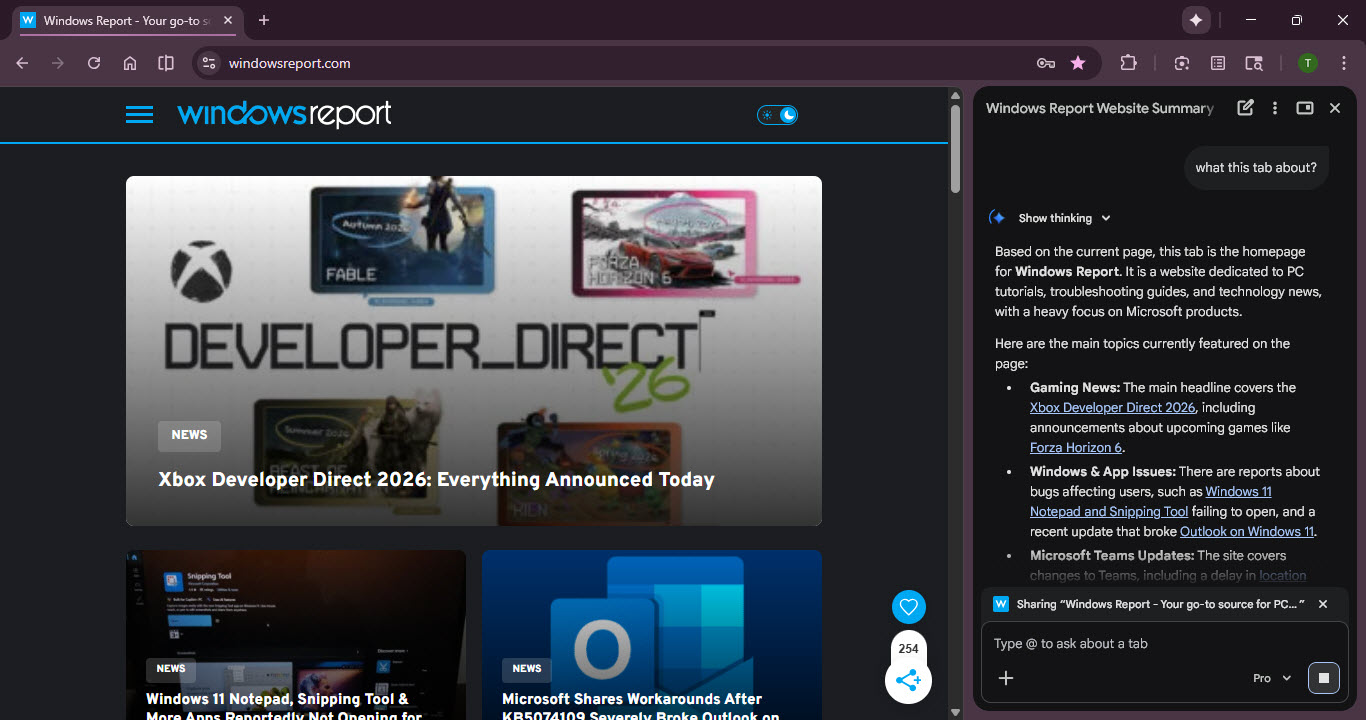
Once enabled, Gemini works directly inside the browser. It can summarize the current tab, answer questions about open pages, and open from the toolbar button. It also supports keyboard shortcuts such as Alt + G and includes Gemini Live with microphone access.

This confirms that the feature is genuinely active, not just visually exposed.

Gemini answering questions about the current tab inside Chrome.

The Gemini button and panel are not available by default in Stable, even when signed into the same Google account. Access currently stays limited to the Beta channel for affected users.

Gemini chat opens in a pop-out window inside Chrome Beta. Image Credit: Venkat | WindowsReport.

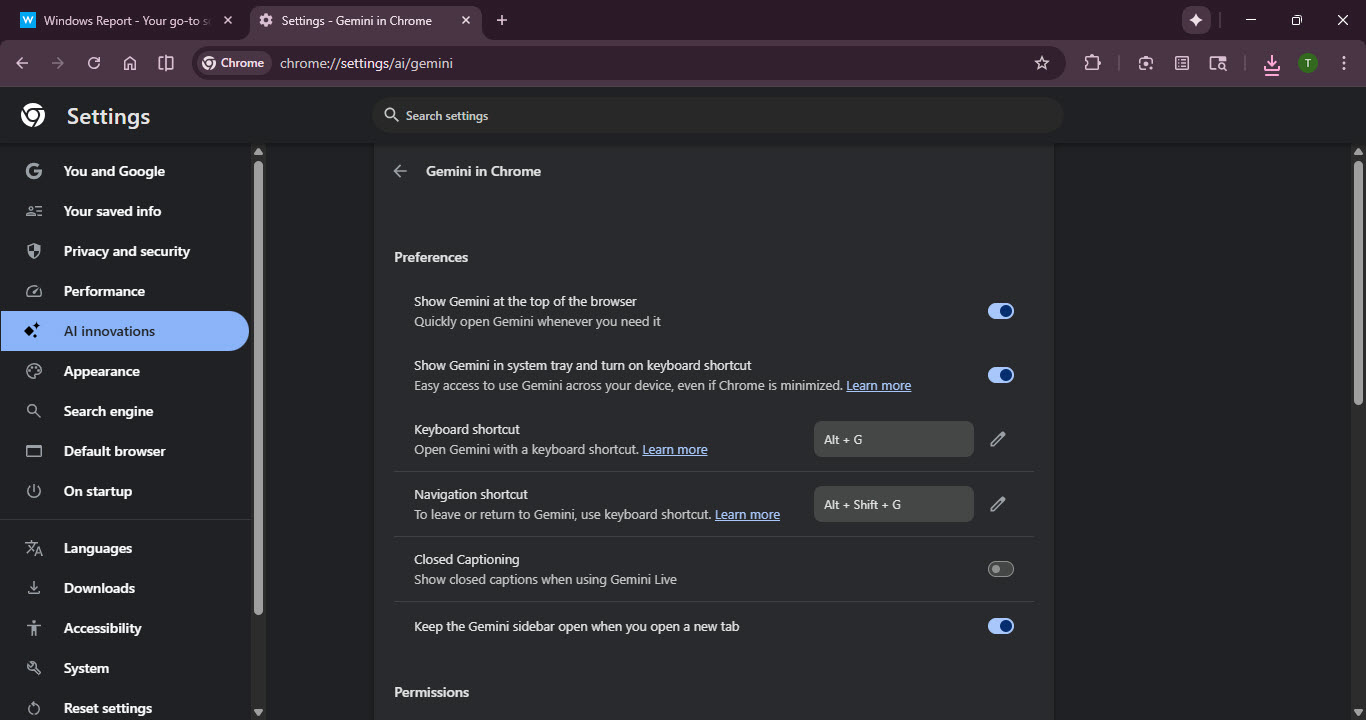
Chrome Beta also includes a dedicated settings page under AI innovations for “Gemini in Chrome”.

Users can see options for:

  • Sidebar behavior
  • Keyboard shortcuts
  • System tray access
  • Gemini Live captions
Chrome Beta includes a dedicated settings page for Gemini under AI innovations. Image Credit: Venkat | WindowsReport.

Some controls related to browsing on the user’s behalf are locked and labeled as managed, even on personal devices. Chrome policy checks confirm that no enterprise management is active, which suggests these limits are being enforced by Google during the rollout.

Not every user in India has access yet.

Microsoft Releases Second Emergency Update, KB5078127, to Fix Windows 11’s Cloud File & Outlook Issues

The first Patch Tuesday update for Windows 11 in 2026 turned out to be a disaster. After pushing an emergency update last week, Microsoft has now released a second emergency update to deal with problems introduced by January’s updates.

Second emergency Windows 11 update, KB5078127, out to fix cloud file issues

Yesterday, Microsoft rolled out KB5078127, an out-of-band update for Windows 11 versions 24H2 and 25H2, aimed at fixing file system issues tied to cloud storage services like OneDrive and Dropbox. The update is cumulative and builds on fixes included in KB5074109 and the earlier emergency patch KB5077744.

According to Microsoft, devices that installed updates released on or after January 13 began showing serious problems when opening or saving files stored in cloud-based locations. In some cases, affected apps became unresponsive or crashed unexpectedly, making everyday workflows unreliable.

Outlook users were hit hard

The issue was especially noticeable in certain Outlook configurations where PST files are stored on OneDrive. Microsoft confirmed that Outlook could hang indefinitely and fail to reopen unless users manually ended the process or restarted their system. Some users also reported missing Sent Items or Outlook re-downloading emails that were already present.

If this sounds familiar, KB5078127 is designed to address exactly those symptoms. The update is now available via Windows Update for systems that already installed KB5074109 or KB5077744, and it can also be downloaded manually from the Microsoft Update Catalog.

January 2026 Patch Tuesday fallout continues

The January patch, KB5074109, has reportedly also broken Sleep Mode on some PCs, while few other users are having issues with frequent app crashes and system lockups. Although the update does address a false security alert linked to the WinSqlite3.dll file, it has introduced new problems elsewhere.

Microsoft has warned that KB5074109 could lead to insecure Windows Deployment Services (WDS) deployments on Windows Server systems. At the same time, some PCs are failing to install the KB5074109 update altogether, throwing various error codes during installation.

Last but not least, NVIDIA users are reporting random black screens after installing the latest patch, while enterprise users say KB5074109 has disrupted Azure Virtual Desktop connections, leading Microsoft to issue an updated advisory.

For now, Microsoft says KB5078127 should stabilize file access and Outlook behavior tied to cloud storage. Whether this finally puts an end to Windows 11’s rough start to 2026 remains to be seen.

Outlook for iOS Crashes on iPad, Microsoft Shares Temporary Workaround

After a rough stretch that included a Microsoft 365 outage and a Windows update that severely disrupted Outlook Classic, Microsoft is once again dealing with problems tied to its email client. This time, the issue affects Outlook on iPad.

Outlook for iOS crashes and freezes on iPad

Microsoft has confirmed that Outlook for iOS version 5.2602.0 can crash or freeze on iPad devices. Users report the app becoming unresponsive shortly after launch, making it difficult or impossible to access email.

According to Microsoft, the problem comes from a recent code change designed to refresh tabs when feature flags update, instead of restarting them entirely. That change introduced instability on iPad, leading to crashes and freezes during normal use.

Until a permanent fix arrives, Microsoft advises users to rely on a temporary workaround. Launch Outlook while Airplane Mode is enabled, then turn Wi-Fi or cellular data back on once the app opens. This method helps the app bypass the problematic behavior during startup.

Microsoft has already completed a fix and submitted it to Apple. However, the update may take up to 24 hours to appear in the App Store due to Apple’s review process.

The company logged the issue as a Microsoft 365 admin center incident because of its noticeable impact on users, especially those who rely on Outlook on iPad for daily work.

This comes shortly after a recent Windows update caused major problems for Outlook Classic, forcing Microsoft to publish an official workaround. On a more positive note, Microsoft continues to develop new search filters for Outlook, signaling that improvements remain in progress despite the recent setbacks.

Via BleepingComputer